LTCC, Bijou Park fuel project to be done without chain saws

By Kathryn Reed

Thousands of trees will be removed from nearly 200 acres in the heart of South Lake Tahoe this month.

The fuels reduction project is concentrated on the campus of Lake Tahoe Community College and across Al Tahoe Boulevard at Bijou Community Park. Work will not interfere with graduation or the upcoming disc golf tournament.

Nor should it disturb neighbors. This is because the loud hum of chain saws won’t be audible.
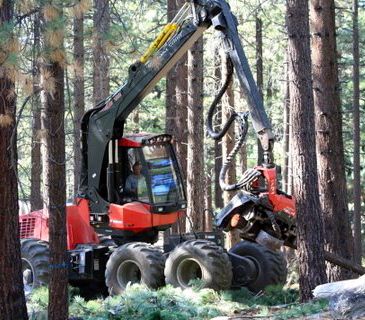
The equipment used in 2009 at Cold Creek is being used this year. Photo/Danielle Banchio

The equipment used in 2009 at Cold Creek is being used this year. Photo/Danielle Banchio

“There are two standard pieces of equipment. One is a harvester. That does the job of what a gentleman and a chain saw did. It is mechanized equipment. An automated saw cuts the tree at the base and lays it on the ground,” explained Danielle Banchio of North Valley Resource Management. “The forwarder is the second piece of equipment. It follows the harvester through the stand and picks up the logs. It looks like a mini logging truck.”

The ground disturbance is kept to a minimum because a skidder is not used.

College officials were told the equipment often attracts spectators because it is still unique.

The only disruption to the college should be some of the trails behind it near Trout Creek will be off-limits while crews are working. Equipment will be brought in on South Tahoe Public Utility District roads when possible to reduce the need to be in the college parking lot.

“We will get some of the logs and use them at the Ledbetter Terrace,” Sue Niehoff, vice president of Business Services said.

Work could start this week, next week at the latest. Completion is expected to take at least three weeks.
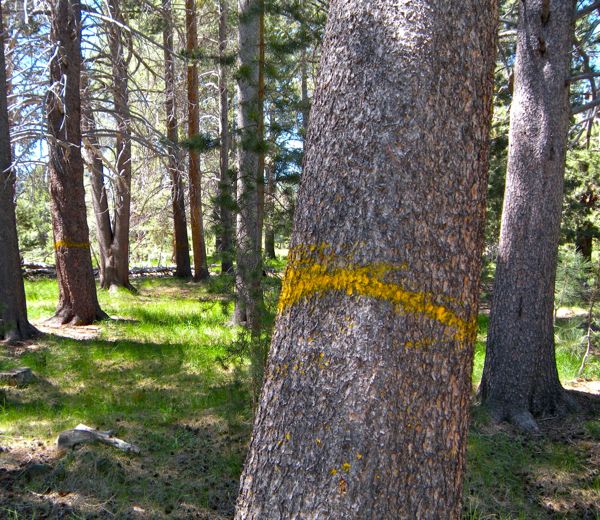
Trees at Lake Tahoe Community College will come down this month. Photo/Kathryn Reed

Trees at Lake Tahoe Community College will come down this month. Photo/Kathryn Reed

Cross Check Services, a logging company in Olympic Valley, will be cutting the trees. No more than 500,000 board feet is expected to be culled from the 190 acres. Some of the smaller trees will be used for firewood.

Banchio, who is a registered forester, was hired by the South Lake Tahoe Fire Department as the consultant. Her firm based out of Taylorsville is responsible for designing the project, deciding what treatment to use, and writing the environmental documents for the Tahoe Regional Planning Agency and CalFire.

“We are conducting thinning from below. We will start with the smallest, most suppressed trees with a live green crown,” Banchio said. “There aren’t many ladder fuels. We are not seeing 6-foot Manzanita. In that area we need to thin the tree crown.”

The idea is in a wind-driven fire, like Angora in 2007, the flames jump from treetop to treetop because the crowns are so close together. Projects like this one are designed to reduce that threat. If a fire occurs, ideally it stays on the ground where it is easier to fight and spreads less quickly.

Money for the project is coming from federal stimulus, Southern Nevada Public Land Management Act, and a U.S. Forest Service grant.

Banchio, who is in her third year of working with South Lake Tahoe, expects the city’s fuel reduction projects to be completed in 2011.



Digging for Washoe artifacts delays Sawmill bike path

By Kathryn Reed

Cultural resources belonging to the Washoe Indians have delayed construction of the extension of the Sawmill Bike Trail for at least one year.

The Washoe summered in Lake Tahoe and fished in the Upper Truckee River. Their presence is throughout the South Shore.

Completion of the Sawmill Bike Trail is at least two years away. Photos/Kathryn Reed

Completion of the Sawmill Bike Trail is at least two years away. Photos/Kathryn Reed

El Dorado County officials, the ones behind the trail project, are involving the Washoe in every step. They have met at the site and other places to ensure everyone’s interests are addressed.

The people that make the rules don’t seem to care this area has been disturbed for years, that cars drive on it every day and snowplows regularly traverse it.

Nor do the feds care the soil is compacted and much of the area covered in asphalt. Cultural deposits will be sought about 1-foot deep.

In the odd way projects get funding, not every holder of the checkbook would have required the level of research currently being undertaken. Because it’s federal dollars funding the bulk of the project the National Environmental Policy Act must be followed. This means looking for sensitive cultural resources.

Completion of the NEPA study is also required to obtain some of the rights-of-way. Easements from California State Parks, California Tahoe Conservancy, U.S. Forest Service and private landowners will need to be secured.

“We hope to have a draft work plan to Caltrans (this) week. Then we can conduct the field work,” said Brendan Ferry, senior planner with the county’s Department of Transportation. “If something is found, it’s a whole other story. If there’s a burial ground, it’s a major issue. Hopefully, nothing is found.”

If California’s financial situation weren’t so bleak, the California Tahoe Conservancy would have paid for the two miles of trail. But the CTC’s cash flow is at a trickle and had to give up on this project.

The county is getting Federal Highway Administration money that is being passed through to Caltrans and then to the county. Caltrans is pulling cash from its Congestion Mitigation for Air Quality fund.

Cyclists currently must share the shoulderless Sawmill Road with cars.

Cyclists currently must share the shoulderless Sawmill Road with cars.

The project, which was supposed to be done this summer, could start next summer. It will be broken into two phases. The first will go from Lake Tahoe Boulevard to Echo View Estates. The second goes from Echo View to Highway 50 to connect with the bike trail bridge that was completed last summer.

“We really want to get this project built for the community. It will be nice when we can link Meyers to the Y,” Ferry said.

The project could cost close to $3 million.

Connecting the Class 1 trail to the bridge will be an engineering feat because of the wetlands in the area and the stilt house on the corner of Sawmill Road and Highway 50.

“We will need to build a retaining wall. We can do it, but it will be expensive,” Ferry said.

He said at one time the CTC was looking at buying the corner lot. That would have made securing easements easier and possibly allowed for a different design.

A road bike rider turned from Sawmill Road onto the bridge headed toward Meyers.

A road bike rider turned from Sawmill Road onto the bridge headed toward Meyers.

“It is 8-feet-wide with shoulders, fences, drainage, culverts, rock-lined channels. The design is fairly detailed. We have the design basically done,” Ferry said. “We were ready to build it this year. We are just running into paperwork issues.”

Ferry said by late August or early September a decision should be made about starting the trail in summer 2011.


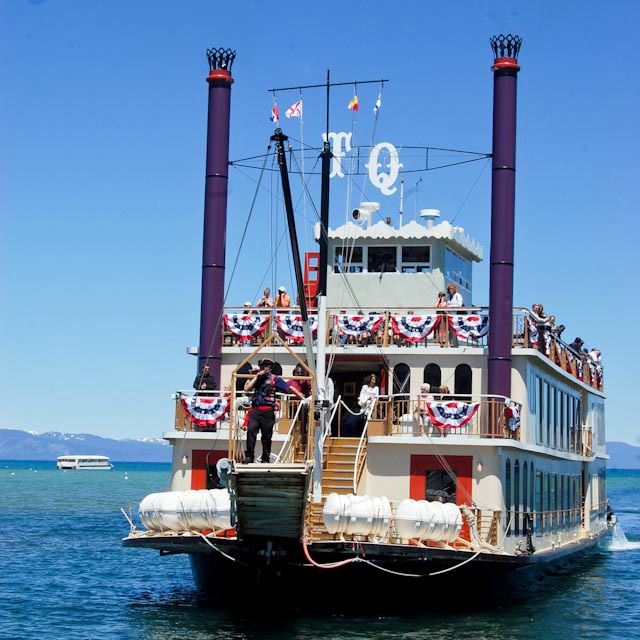
Tahoe Queen and ‘Twainiacs’ come out on top

TahoeQueen1

Tahoe Queen Photos/Austin Fay

By Austin Fay

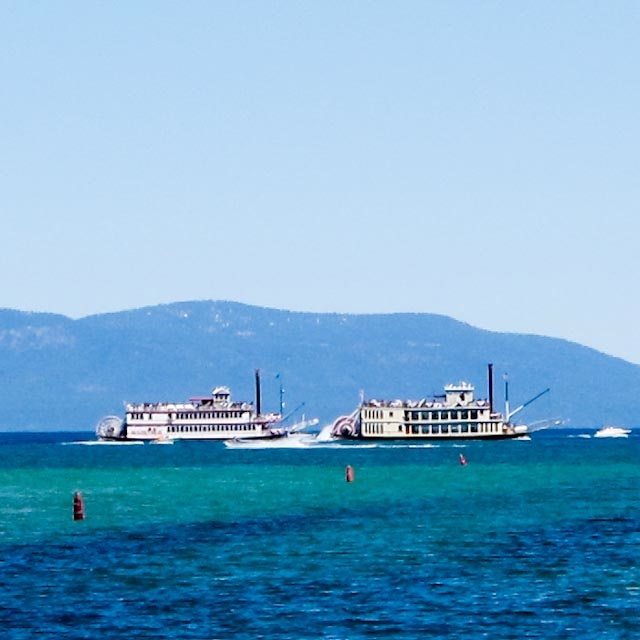
Blue waters churned as throngs of people gathered along the lake to top off the South Shore Summer Series with an old-fashioned sternwheeler race. The water, however, was not so summery — the tradition of the losing captain walking the plank into the lake was nixed.

“It was a little too nippy this year,” said Capt. Jerry Summers.

The Tahoe Queen, with 168 passengers on board, won the Great Lake Tahoe Sternwheeler Race on Sunday against its rival, the M.S. Dixie II, still leading the series 8-6.

The race usually goes to the larger boat with a bigger engine, “but with a little help from Tahoe Tessie … we had her underneath the boat for the last quarter mile,” Summers said.

CaptainJerrySummersandQueen

Capt. Jerry Summers and the Tahoe Queen.

Frosty-haired Mark Twain impersonator McAvoy Layne was on the old-style boat, giving words of encouragement and telling tall tales in his signature white suit and black bowtie.

“Truth is one of our most valuable resources, and that’s why I try to conserve it,” Layne joked.

It was a momentous weekend at Zephyr Cove for “Twainiacs,” history buffs and other riff-raff who came to celebrate the forthcoming publication of a 100-year delayed Mark Twain autobiography with a pie-eating contest, a mock gunfight and a “Bald-Faced Liars” contest.

Austin Sass, director of marketing at Zephyr Cove Resort commented on the rarity of such an event like this in Tahoe.

Race

A battle to the finish.

“Finding a setting where you can have a fun and intellectual event like this, it just doesn’t happen too often here in the mountains,” Sass said.


Watery, snowy trail make it impossible to find destination

By Kathryn Reed

Snowshoes would have been more useful than hiking boots. Poles really would have been welcome. A trail would have been the best thing to have.

Such are the hazards of hiking in spring in Lake Tahoe. Two weeks ago a jaunt to Lily Lake was interrupted by gobs of snow. So much snow we didn’t really know where we were. We knew we were along the Glen Alpine Creek, but that was about it.

Water covers much of the Glen Alpine area. Photos/Kathryn Reed

Water covers much of the Glen Alpine area. Photos/Kathryn Reed

A couple with their three dogs was going to backpack over Memorial Day weekend. They didn’t really know where they were either as they searched for a safe place to cross the raging water.

I’m not sure there was a safe place. And with the snow melting rapidly, people in the know are not advising crossing streams, rivers and creeks.

Some guys coming out of Desolation Wilderness with fishing poles said they couldn’t make it to the lake – there are several from this trailhead – because of all the snow.

So much for thinking this was going to be one of those lower elevation hikes where snow wouldn’t be a problem. Despite the balmy weather of the past few days, this trail that leads to Gilmore and Grass lakes as well at Mount Tallac may not be in much better shape.

An abundance of water made following the trail difficult without waders in late May. Skirting the side and going off trail made it navigable. It’s bound to be more flooded now.

The initial marshy area that is a meadow most seasons has a robust eco-system. Geese swim between the blades of grass. Swallows zoom by. The ribbit of frogs sing out, but none is visible.

With all this standing water, mosquito season is bound to be a doozie. Bug repellant will be needed for future hikes now that the temperatures are staying above freezing.

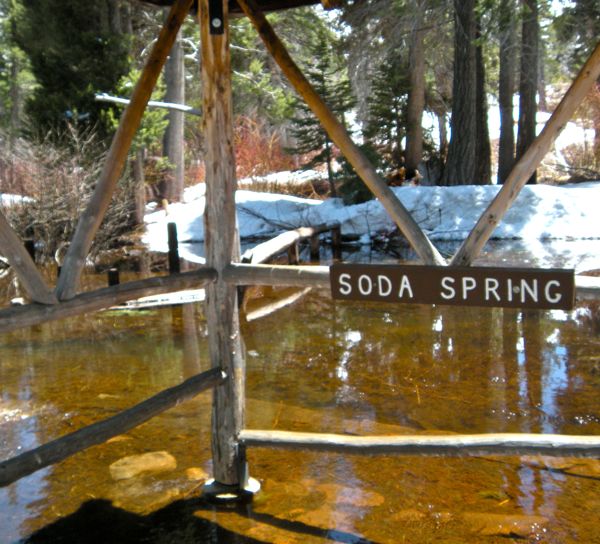
The old buildings of Glen Alpine are worth a visit and an easy trek from the parking lot on the far side of the store at Fallen Leaf Lake. Normally water gurgles from Soda Spring, the one place where it’s safe to drink the water.

On this day standing water is everywhere.

Not much farther up and we hit snow. No problem, lots of tracks to follow. But then the tracks go where I know the trail really doesn’t go, but I don’t want to break trail. We become lemmings.

An expanse of granite unfolds before us. Ah, that famous Sierra silver. Boulders beacon us to sit in the sun and have a bite to eat.

Onward we forge. I’m sure the lake is not far away. It probably wasn’t. But the tracks we chose to follow didn’t take us there. Eventually, we knew it was time to turn around.

Despite intentions to backtrack, we instead did a bit of a circuitous route through the snow.

I’ll save Glen Alpine for a summer or fall hike in the future.

ngg_shortcode_0_placeholder


Millions in grant dollars keep public entities afloat

s;tBy Kathryn Reed

Even in these economic times, grants continue to be available to public agencies, often from other public agencies.

In the 2009-10 South Lake Tahoe budget, the capital improvement program is receiving 35 percent of its budget from federal grants and 29 percent from state grants. That can be partially broken down to 21 percent from the U.S. Forest Service, 19 percent California Tahoe Conservancy and 11 percent Federal Aviation Administration.

The money the city receives from grantees goes toward Explore Tahoe, roads, erosion control, buildings and grounds, redevelopment, housing, equipment and the airport.

The road at the airport got paved this week with an FAA grant.

“Most of the city’s grant funding is for capital projects,” explained Christine Vuletich, city finance director.

She said in the five years she’s been on the job she’s noticed an uptick in grant dollars being secured even though the city does not have a grant writer.

Although the grant dollars are designated for specific purposes, it’s likely the items those dollars go toward wouldn’t otherwise be funded, especially when cash is in such short supply these days.

South Lake Tahoe is not unique in trying to obtain grant dollars. Most public agencies do. Lake Tahoe Unified School District has $30 million in grants to add to the $54 million bond voters approved – all for facilities.

South Lake Tahoe’s Public Works Department obtains several grants each year for erosion control. Housing grants are another biggie for the city.

Vuletich does not have it broken down as to how much each department receives in grant funding.

On Tuesday the City Council approved the application for a grant from the U.S. Department of Justice. The police department is asking for $16,883, which would be spent on equipment like Tasers, patrol rifle, handgun magazines, tactical ballistic blanket, ammunition and laptop computer.

Also at the meeting this week was a report by Nancy Kerry, redevelopment and housing manager, about the successes her department has had in the last year with grants and what the goals are for the coming year.

“What is great about looking back over the last year from what we applied and then received is to realize we did very well in our percentage of grants funded,” Kerry said after the meeting. “The number of applications funded indicates it was time well spent, a good use of taxpayer resources.”

She said the primary reasons the grants are needed is that it means jobs, stimulates business and in turn could help stabilize the housing market if people can keep paying their mortgages or rents.

“As for housing grants, those end up helping people get into their first home. That’s good to have full-time owners in homes rather than second homeowners or renters. That’s good for property taxes for the city and good for the neighborhoods and community,” Kerry said.

Grants this year include the $1.5 million Housing and Urban Development grant to remove lead based paint from homes in the city. It’s creating jobs for contractors, money for Lake Tahoe Community College because it’s providing some of the education, and cash for Barton Memorial Hospital because it will test children for lead disease

Kerry was in Tennessee last week for a seminar for all recipients of the lead based paint grant. (The trip is paid from the grant, not out of city coffers.) There she was able to tap into what the feds are looking for in 2010-11 grant applications.

“Right now the federal programs are focused on collaboration. They are looking for cities that can work well together, perform well and come up with innovative collaborative solutions to issues,” Kerry said. “HUD is blending (Department of Energy) money and housing money into new Green Healthy Homes Initiative. The GHHI is the concept or theory that if homes are healthier, kids would be healthier and a healthier home is a green home, too.”

Each year about $20 billion is spent on children’s illnesses, including asthma and allergies. The idea is the GHHI might help reduce the need for all those dollars.

“We’ll take a look at funding opportunities for these kinds of programs because those too would go to the local contractors primarily, which help to circulate the funding among local workers and services,” Kerry said.


Fallen Leaf worried about invasive species from Tahoe

By Kathryn Reed

FALLEN LEAF LAKE — Property owners at Fallen Leaf Lake are doing everything they can to keep their body of water more pristine than Lake Tahoe.

With aquatic invasive species already in the larger alpine lake, the smaller one is hoping to not have the same fate befall it.

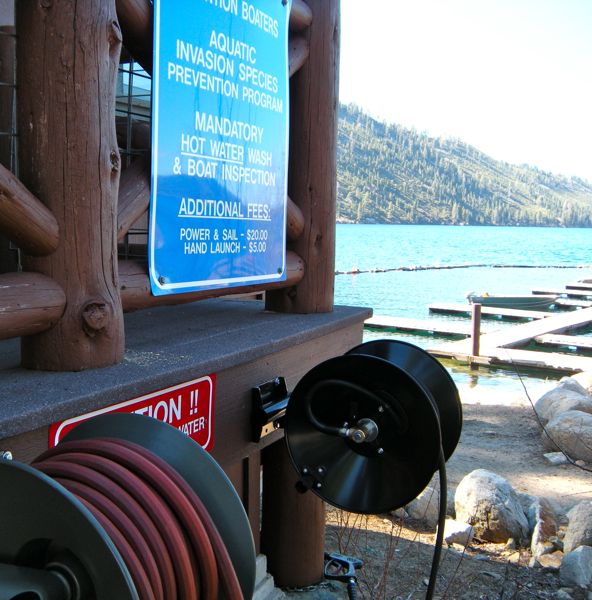
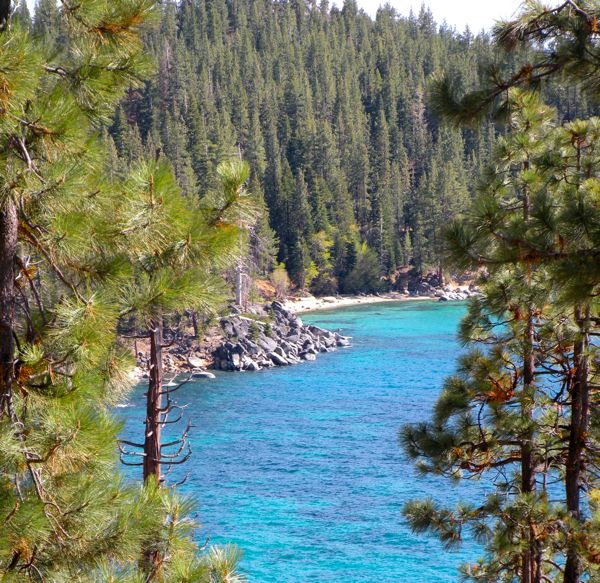
Fallen Leaf is working hard to keep aquatic invasive species out. Photos/Kathryn Reed

Fallen Leaf is working hard to keep aquatic invasive species out. Photo/Kathryn Reed

A real threat is a boat from Tahoe transporting an invasive specie to Fallen Leaf. The smaller lake has zero invasive species.

In a relatively short period of time the Fallen Leaf Lake Protection Association (FLLPA) was able to raise $15,000. This allows the Tahoe Resource Conservation District to provide 40 hours of boat inspection service and education to the public beyond what was already taking place.

The purpose of the nonprofit FLLPA is to work behind the scenes to achieve specific and targeted results. Besides talking aquatic species with homeowners at the May meeting, FLLPA leader John Kleppe mentioned keeping a careful eye on the snowmelt from Echo Peak because it can have a dramatic impact on the water level at Fallen Leaf Lake.

Another thing the FLLPA did was raise $15,000 for the log boom in front of the dam that was installed in June 2007. This group was also active when MTBE was polluting Tahoe waterways.

Kleppe has been attending aquatic invasive species working group meetings for the Lake Tahoe Basin. Part of the organization is a subgroup devoted non-motorized watercraft.

He told the Fallen Leaf Lake Community Services District board last month that a sticker program for this lake on the edge of Desolation Wilderness could be created in the future for people removing their boats from there but not going elsewhere.

The latest $15,000 will be spent mostly on targeting non-motorized watercraft and education. Aaron Fox will work Thursday-Monday; to be on-site during the busiest times.

“My job it patrolling, informing, inspecting and educating,” Fox said.

Lily Lake is part of his jurisdiction because it drains into Fallen Leaf via Glen Alpine Creek. He will also be monitoring Camp Concord, Stanford Sierra Camp and the other entry points for kayaks and canoes.

The U.S. Forest Service campground checks all rooftop boats that come into its jurisdiction.

“Clean, drain, dry” is the mantra of officials tasked with keeping aquatic invasives out of Tahoe and Fallen Leaf.

So far no invasive species have been found on a non-motorized watercraft. The same cannot be said of motorized. This is the third season boats entering Tahoe waterways have been inspected.

The reason for it is because species like quagga and zebra mussels can wipe out the usability of a lake, wreak havoc on water in-take infrastructure, do extreme damage to boats and severely impact a region’s economy. Neither of those mussels has been found in Tahoe.

However, Tahoe does have Asian clams that the Tahoe Regional Planning Agency and others are trying to eradicate this summer. The Eurasian milfoil plant is another bother in the big lake.

New Zealand mud snails. Photo/Provided

New Zealand mudsnails. Photo/Provided

A New Zealand mudsnail was found on a boat at the Meyers checkpoint in May on its way to a launch ramp.

“They cause a lot of destruction in river and creek systems. They take out the bottom food chain like quagga and zebras do,” said Nicole Cartwright, watercraft inspection program coordinator for the TRCD

Fishermen through felt-soled boots can even transport the mudsnails.

Earlier in the season a boat coming from the San Francisco Bay had to be quarantined because a mussel similar to the quagga and zebra, but a salt-water species, was found. That boat had to be quarantined – meaning it’s not going anywhere for seven to 30 days while either the California Department of Fish & Game or Nevada Division of Wildlife give it clearance to move on.

New this year is four inspection stations away from the marinas. They are at the gateways into the basin – Meyers, Spooner Summit, Northstar and Alpine Meadows.

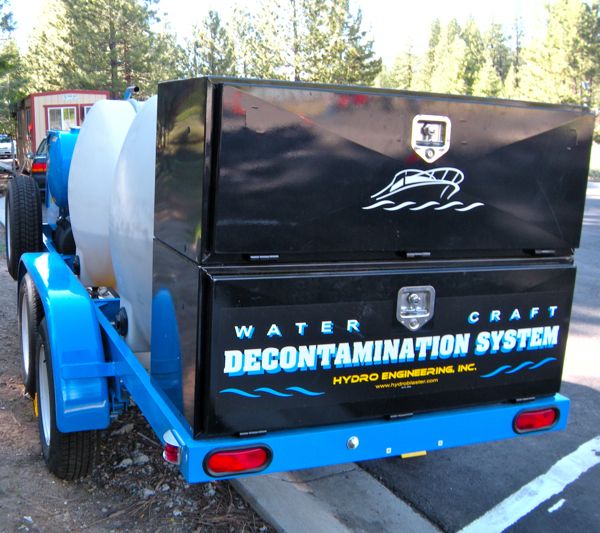
The decontamination rig at Spooner Summit. Photo/Kathryn Reed

The decontamination rig at Spooner Summit. Photo/Kathryn Reed

“As far as saving people time at the ramp, it’s a huge help in reducing that line,” Cartwright said. “The outlying stations are working great. We had a lot of traffic with the first big summer weekend last weekend. The idea is to capture every vessel before it’s in the basin.”

If a boat gets by, inspections are being done at the marinas. Decontamination is off-site.

For the most part people understand the need for the inspections. In the first year about half of the boaters had heard about the program before reaching their destination. That percentage grew to 75 last year.

Cartwright said her agency was able reach about 14,000 boaters in 2009. Mailers, advertising and working with marinas are ways the TRCD is spreading the word.

If a boat at one of the four stations needs to be decontaminated that can take place there for an engine or bilge flush. A full decon has to be scheduled.

What’s different at Fallen Leaf is all motorized boats are decontaminated at the marina.

A homeowner at Fallen Leaf has donated a skiff for TRCD’s Fox to use when he is working. This allows him to get from Point A to Point B faster.

Education material is at the store and other places around the lake. Fox has pamphlets on him that he hands out.

Cartwright anticipates boat inspections and decontamination stations are something boaters at Tahoe and Fallen Leaf will face for the indefinite future.

For more information about boat inspections, click here.


Quest to increase Tahoe’s clarity begins with TMDL

By Kathryn Reed

KINGS BEACH — With fine sediment being the major pollutant clouding the pristine waters of Lake Tahoe, that load of dirt is going to be scrutinized even more in the coming years.

Today the Lahontan Regional Water Control Board expects to release its plan to increase clarity, goals for how far a Secchi disk should be seen, and a credit program for those responsible for the pollution.

Increasing the clarity of Lake Tahoe is what theTMDL is all about. Photos/Kathryn Reed

Increasing the clarity of Lake Tahoe is what the TMDL is all about. Photos/Kathryn Reed

Called total maximum daily load, this is something agencies that oversee water bodies throughout the country must pay attention to under the Clean Water Act, which is regulated by the Environmental Protection Agency.

“A total maximum daily load, or TMDL, is a calculation of the maximum amount of a pollutant that a water body can receive and still safely meet water quality standards,” the EPA says.

Lahontan staff is proposing fine sediment particles be reduced by 32 percent in 15 years. This should allow the disk, which resembles a white dinner plate, to be seen 77 to 80 feet below the surface. (Right now it’s at 70 feet.) If the new level of clarity can be sustained for five years, scientists would consider the decline of Lake Tahoe’s clarity to be halted.

Robert Larsen, an environmental scientist with Lahontan, engaged the board in a nearly

Near shore clarity is not addressed in the TMDL.

Near shore clarity is not addressed in the TMDL.

three-hour workshop on June 9 at the North Tahoe Event Center in Kings Beach. It was October 2008 that the board last had a thorough TMDL presentation.

“This TMDL is about deep water transparency. We’ve lost 30 feet of clarity in the last 40 years,” Larsen said.

Although aquatic invasive species and near shore degradation are concerns of Lahontan’s, they are not part of the TMDL. Larsen said addressing fine sediments would impact nutrients, which in turn affects near shore water quality.

Fine sediment is defined as particles less than 16 micrometers. Seventy-two percent comes from the urban upland – basically all the developed area of the basin; 15 percent from atmospheric deposition (the air), 9 percent non-urban upland (U.S. Forest Service and other undeveloped areas), 4 percent stream channels, and less than 1 percent from shoreline erosion.

The urban areas on both sides of the state line are being asked to cut the amount of fine sediment reaching the lake by 24.5 percent so the overall goal can be achieved. Larsen estimates it costing $1.5 billion to achieve this goal.

Where the money is going to come from was not discussed. It is one of those unfunded government mandates. The credit program will be the penalty part for non-compliance.

The counties, city, and both state departments of transportation are the primary players that must meet the criteria being set forth.

Robert Erlich, stormwater coordinator for South Lake Tahoe, was the only member of public to speak Wednesday. He has concerns about the costs involved as well as the continuing operation and maintenance dollars required.

The public will have 90 days to comment on the TMDL document. Click here for more information. If the report is not there, it will be by June 14.

The board will have a public hearing in September, with adoption likely in November. From there Nevada officials must approve it, as well as the California Office of Administrative Law and state Water Board. It could be implemented in 2011.


Run-off for El Dorado sheriff; CA-NV races set for Nov.

Publisher’s note: Updated 9am June 9 with link to Alpine County.

By Kathryn Reed and Susan Wood

It will be John D’Agostini and Craig Therkildsen vying to be sheriff of El Dorado County in November.

Voters cast ballots at Lake Tahoe Airport on June 8. Photo/Kathryn Reed

Voters cast ballots at Lake Tahoe Airport on June 8. Photo/Kathryn Reed

With 100 percent of the precincts reporting, it was D’Agostini with 9,277 votes or 25.26 percent and Therkildsen with 8,479 votes or 23.09 percent.

To avoid a runoff one of the six candidates would have had to receive 50 percent, plus one vote in Tuesday’s primary.

With glitches at two of the Lake Tahoe precincts, votes had to be recounted. All the ballots were reported about 1am.

D’Agostini, a district attorney investigator in Amador County who lives in Mount Aukum, told Lake Tahoe News he believes what put him over the top is voters wanting to “get away from business as usual.”

However, the man he will face in five months is a captain in the sheriff’s department. This clearly indicates a large percentage of voters are comfortable with someone from within.

Therkildsen has spent his entire career in the county, with the first year at the South Lake Tahoe Police Department and 27 with the sheriff’s department, nearly five of those in South Lake.

“I think experience in the community and experience in the department (is the difference),” Therkildsen said.

Both candidates said the outpouring of support humbled them. The next closest opponent is Bob Luca with 7,111 votes, 19.36 percent.

In other contested races in El Dorado County, Karl Weiland beat Michael Gordon for assessor, 65.42 percent to 34.11 percent.

Keith Brooks will retain his judgeship. He surpassed challenger Robert Huckaby 75.74 percent to 23.85 percent.

Ron Briggs had an easy time retaining his supervisorial seat over the three challengers, collecting 55.47 percent of the vote.

In Placer County, incumbent Rocky Rockholm (42 percent) was unseated by challenger Jack Duran (58 percent).

Placer County Auditor-Controller Katherine Martinis will retain her job over Casey Tanner with a vote count of 62 percent to 38 percent.

Nevada had plenty of interesting races in its primary, too. The numbers represent 100 percent of the precincts reporting.

A recognizable name in the Incline Village General Improvement District race – Dennis Oliver – trailed all contestants. He is the spokesman for the Tahoe Regional Planning Agency.

A familiar face to Lake Tahoe won the Republican contest for Assembly District 39. Kelly Kite, a former Douglas County commissioner known for his no-nonsense style of governing, raked in 32.77 percent of the vote over his challenger with 2,922 votes. This seat includes an area that spans from the East Shore of Lake Tahoe to Topaz Lake, including Douglas, Carson and Washoe counties.

If elected, the Minden resident pledges to keep Tahoe in mind as he gets down to business and moves up to the next hierarchy of government.

“Both the North and South shores of Lake Tahoe are very important to the entire state,” Kite told Lake Tahoe News, while relaxing at home late Tuesday night after sending family members home.

The seat is open because James Settelmeyer is looking to be the state senator in the Capital District. He won the Republican primary with 83.73 percent.

Stateline resident Brian Krolicki had 72 percent of the vote in a quest to retain his seat as lieutenant governor. He will face Democrat Jessica Sferrazza, who collected 43.13 percent of the vote.

Rep. Dean Heller, with 83.7 percent of the vote, faces Nancy Price who squeaked by her Democratic opponent with 45.36 percent of the votes.

In the Nevada governor’s race, Republican Brian Sandoval stunned incumbent Gov. Jim Gibbons by doubling the percentage of votes the much-troubled leader of the Silver State secured – 55.53 percent, 27.2 percent.

On the Democratic side, Rory Reid pulled 70.07 percent of the vote heading into the November general election.

Keeping government in the family, Sen. Majority Leader Harry Reid captured an easy victory over his Democratic opponent with 75.32 percent of the vote.

Reid will head into the November midterms with a highly contested contest with Republican challenger Sharron Angle, who edged out challenger Sue Lowden in the primary election with 40.09 percent of the vote.

For more results for the following areas click below:

El Dorado County

Placer County

Alpine County

California

Douglas County

Carson City

Washoe County

Nevada


Student delves into the world of female impersonation

By Kathryn Reed

With each swipe of the tissue, a little bit more of the man behind the makeup emerged. “I am what I am” is all about going from a feminine woman to a masculine man – in appearance and mannerism.

“He did the finale, which is one of the hardest numbers to perform,” said Dan Gore, producer of “Carnival Cabaret” at the Horizon in Stateline.

Edward Murillo ready to take the stage in 'Carnival Cabaret' at Horizon. Photo/Provided

Edward Murillo ready to take the stage in 'Carnival Cabaret' at Horizon. Photo/Provided

Gore was speaking about Edward Murillo, a senior at South Tahoe High School.

Delving into the world of female impersonation is what Murillo chose as his senior project. On Wednesday he will go before a panel of judges from the school and public at large as the final part of the project. He already received an A for the performance on stage and a B for his paper.

“It was a big jump for me. I’ve been in shows at high school, but I’ve never been someone you looked at right there. I was always in the background,” Murillo said.

For two nights in May he performed the final act of the female impersonation show.

“The makeup was the hardest part. It was an hour’s worth of makeup,” Murillo said. “It’s easy to mess up. Depending on how big of a mess-up you might have to start all over again.”

He watched the other performers apply their makeup and from there combined their styles to create his. Murillo said he learned the most from Kevin Wiley – especially his eyes.

“He was able to tell me how to make me look normal for my tone of skin,” Murillo said.

This was the first time Gore had a high school student in one of his performances. He would do it again.

“He was eager to be part of this. He was here many days when he did not need to be,” Gore said of Murillo.

Gore explained to the 18-year-old, “This project is about the art form and not the lifestyle. The lifestyle is something else. (The show) is the art form.”

It’s an art form that is not as robust as it once was where productions with 30 or 40 performers were on both coasts, playing to sold-out houses.

Not all men who dress as women are gay. Murillo said his research found 50 percent of men who dress in drag are heterosexual.

“They find some reason they are more comfortable in women’s clothing,” Murillo said. “I find it annoying guys can wear only tuxes and girls can wear all different colors, sparkles and express how they feel.”

He doesn’t even think wearing heals is a big deal.

Murillo isn’t sure where this experience will take him. He plans to attend Lake Tahoe Community College in the fall. He said his dad sees job opportunities in the world of female impersonation. He said his mom hated the project and would not tell her friends about it.

“I said, ‘Why does it matter?’ It’s acting,” Murillo said.

When his classmates found out what his senior project was he said most were supportive, and the ones who already didn’t like him were the ones to talk smack.

Many were in the audience last month to watch his debut as a female impersonator. So was his teacher. Collectively he wowed them based on receiving an A for the performance.

Carnival Cabaret runs Wednesday-Saturday at 8pm at the Horizon. Tickets are discounted most nights in June, with Saturday being full price at $31.85.


Barbarians, peasants and fairies frolic at Camp Rich

By Austin Fay

CAMP RICHARDSON — Contrasting homogeneous suburban theme parks, Renaissance fairs bring back a time when life expectancy was stunted, disease was rampant, and reality TV was better known as King Henry VIII’s court.

The 18th Annual Valhalla Renaissance Faire at Camp Richardson is much more fun than that sounds, and you can bring the family. It’s a full immersion in jousting, archery tournaments, greasy smells, Elizabethan music, and surly artisans who have become caricature of the period.

Ottoman dancers will return Juen 12-13 to Camp Rich for another weekend of merriment. Photos/Austin Fay

Ottoman dancers will return June 12-13 to Camp Rich for another weekend of merriment. Photos/Austin Fay

Nearly 1,000 re-enactors participate in the Valhalla Renaissance Faire; their only reward is doing something they love. There is a Queen Elizabeth, a Romeo, a Juliet, a William Shakespeare as well as hundreds of rogues, wenches, lords and ladies roaming the grounds for two weekends.

“I love doing it for the look in the little girl’s eyes when she runs up to me when I’m wearing my big dress and asks, ‘Are you the queen?’” Faire Operations Manager Darelle Polleck said.

The event had about 6,500 visitors last year, even though it rained one of the weekends. Volunteers are expecting many more this year as the forecast of 70-degree Tahoe weather is expected next weekend, too.

The Knights of Mayhem, currently the reigning American jousting champions, clash forces with 12-foot lances and full armor at 12:45 and 3:45 daily.

The first weekend’s theme was Shakespearean, next weekend “Pirates and Barbarians” pillage the squire, so wear your best costumes for the scavenger hunt at noon and 3pm.

The learning, feasting, music, and shows will continue at Camp Richardson from 10am to 6pm June 12, and until 5pm June 13. Tickets are $17 for adults, $12 for seniors, military and ages 13-17, $7 for children 6-12, 5 and under are free. Parking is available if it’s early in the day, otherwise, shuttles run from South Tahoe High School ($3, goes toward the school’s sports programs), Pope Beach ($5), and twice an hour a shuttle runs from the Y.

For more information, click here.

ngg_shortcode_1_placeholder