Heavenly cleared to build lodge near top of gondola

By Kathryn Reed

Heavenly Mountain Resort will be able to begin construction on its mid-mountain lodge at the end of the month.

An appeal to the U.S. Forest Service’s “finding of no significant impact” has delayed the paperwork being signed off and therefore the project. Originally, Heavenly had hoped to start on June 15, with a Nov. 1 completion date. Now resort officials expect to open the lodge after the season begins.

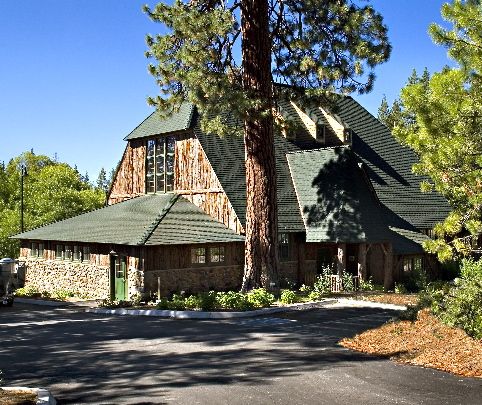
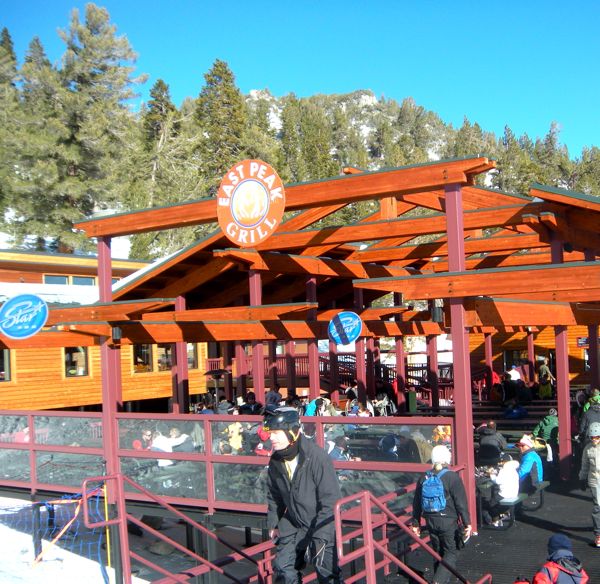
East Peak Lodge at Heavenly will get some competition this winter with the lodge at the top of the gondola opens. Photo/Kathryn Reed

East Peak Lodge at Heavenly will get some competition this winter when the lodge at the top of the gondola opens. Photo/Kathryn Reed

Robert Coronado wanted the Forest Service to prepare a complete environmental impact statement on the 14,965-square-foot lodge at the top of the gondola – elevation 9,100 feet.

No indoor facility exists at that location. It will seat nearly 500 people.

Coronado also contended the project would increase traffic, have impacts on wildlife and not meet Clean Air Act guidelines.

Forest Supervisor Terri Marceron spoke with Coronado on July 6 in an attempt to resolve the issue. She was unsuccessful.

“As per Forest Service administrative procedures, the appeal was then reviewed by an appeal reviewing officer. The appeal reviewing officer found that Terri adequately addressed all the issues, and the regional forester upheld his review and affirmed Terri’s decision,” Forest Service spokeswoman Cheva Heck told Lake Tahoe News.

That decision came July 8. Heavenly can begin work 15 business days from that date. The plan is to break ground on the year-round lodge as soon as the all-clear signal is given.

With water, gas and sewer lines already installed, it means construction does not have to go over two seasons. Construction crews will access the site via the dirt road from the Stagecoach Lodge in Nevada.


State Sen. Dave Cox loses battle with cancer

Publisher’s note: Dave Cox represented Lake Tahoe in the California Senate.

By Jim Sanders, Sacramento Bee

State senator and former Assembly Republican leader Dave Cox died today, ending more than two decades of public service by a fiscal conservative and political tough guy who savored a good joke and loved to laugh – even at himself.

His family said Cox died at home, surrounded by friends and family, after a 13-year battle with prostate cancer.

cox

Dave Cox

“A devoted family man, he always found time to serve his community and constituents,” said the statement from the family. “Dave took great pride in public service and making government work for the people it serves.”

Read the whole story


High maintenance takes on new meaning at Edgewood

By Susan Wood

STATELINE – Coming off a wet winter and massive upgrades, Edgewood Tahoe stands to show off more than stars when the American Century golf championship swings into action this week.

The Stateline golf course has spruced up its grounds with a $2 million overhaul on its 40-year-old irrigation system. Barely a few weeks into operation, the upgrade from grounds to pump house amounts to 20 and 30 miles of new pipes and wires, respectively.

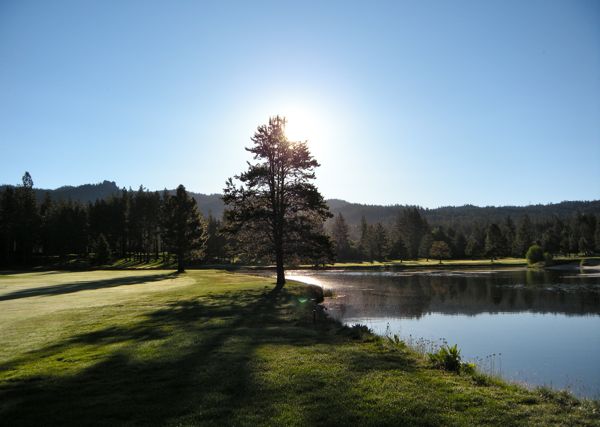
Edgewood Tahoe Golf Course is ready to host the annual celebrity golf tournament July 13-18. Photos/Kathryn Reed

Edgewood Tahoe Golf Course is ready to host the annual celebrity golf tournament July 13-18. Photos/Kathryn Reed

“It was time for a change. There was a desire from the company to improve the condition of the golf course,” Edgewood’s new Golf Course Superintendent Scott Schunter said in his office before touring the grounds. Golf shoes lie on the floor. A U.S. Open flag from the 1991 tournament’s sixth hole in Minnesota adorns his wall.

“From here, I have control of every single (sprinkler) head on the golf course,” he said.

As a groundskeeper, Schunter is a pro. He came on board last August from Breezy Point, Minn., so he knows what big winters are like, such as the one Lake Tahoe experienced this past season. Since arriving, Schunter’s vision was to bring Edgewood’s eco-conscious grounds to a level equivalent to its world-class views.

Tahoe’s roller-coaster winter prompted Schunter’s crew to take the snowblower out in early March. The seventh hole’s green had a 3.5 foot snowdrift on it that was settling into the ground with the melting and freezing of the bright sun and nighttime low temperatures.

“Water has to go somewhere. And that ice can be fatal to turf in as little as 75 days,” he said. “With Mother Nature, you deal with what she gives you. Once you try to control her, she’ll bite you in the butt.”

Winter conditions on the grounds so late this year compressed the maintenance season.

“With the shortness of season – especially this year – it’s imperative we come out and hit the ground running,” he said.

Schunter must consider more than regular maintenance duties for his 22 seasonal and six full-time workers. To be an excellent groundskeeper means knowing your grass and knowing the way the ball rolls. A mix of grass covers the greens, which are flanked by a strip of Kentucky Blue to slow down a fast roller. A rougher grass that is cut higher covers most of the 250-acre course. The height of the grass and the water content affects the speed of the rolling ball. Edgewood mows at 0.145 of an inch. In comparison, Pebble Beach scraped its grass to less than 0.1 of an inch for this year’s U.S. Open.

“This is something we look for,” Schunter said, while rolling a ball over the greens on the 14th hole. “It was bumping before we mowed. You can’t have that. Consistency is the key.”

Their equipment is based in a 12,000-square-foot facility tucked into the trees behind the course.

Ready for the celebs

The Edgewood crew has been working diligently to get the golf course up to par before its premier event – the American Century Championship, (http://www.tahoecelebritygolf.com/) a golf tournament that brings out a score of television celebrities and sports figures. They range from basketball great Michael Jordan to Ray Romano. One year soccer star Brandi Chastain started “extreme golfing” by running from hole to hole.

In its 21st year, the tournament — which runs today through July 18 — attracts thousands of spectators.

The event has such a reputation it’s brought every day golfers like Jerry Thompson to the grounds. He’s watched the tournament on television from his Atlanta home and decided it was time to try it out.

“I like this golf course. It has fast fairways,” Thompson said, while hitting balls at the driving range. He noticed the altitude drives the ball farther.

“I can’t wait to come back to try it for the first time in the morning. I’ll be here first thing,” he said last week. Tee times when the tournament isn’t going start at 6:45am. About an hour later, Schunter’s crew wraps up its maintenance rounds of mowing, fertilizing and watering.

Sprucing up the course

Improvement is the name of the game here.

By damming and pumping out its own, on-site water source, Edgewood has reduced its water and electrical usage by at least 30 percent. That savings to the system within the Stateline Stormwater Association system equates to about $15,000 a year.

With Schunter at the helm, Edgewood has also taken special measures to review the amount and type of fertilizer its uses under Tahoe Regional Planning Agency guidelines. The grounds are fertilized once a month – with the greens receiving the spray once every two weeks. None is used on more than 30 acres of the golf course.

The golf course crews have even gone to the effort of overseeing a goose roundup on the grounds in order for the Nevada Division of Wildlife to conduct tests for avian cholera and West Nile diseases. This is no light chore. Geese extract about 4 pounds of fecal matter a day, according to Schunter.

It’s a balancing act as the veteran groundskeeper weighs the environmental benefits of saving water and letting nature take its course, with the embedded desire to please golfers and spectators who live in a green grass world.

“As we’ve grown up, the only thing we’ve known are irrigated greens,” he said. “We’re obsessed with green. But it’s easier to kill grass by overwatering it.”

Despite the challenges, Schunter shows a genuine satisfaction of his job. Driving a golf cart on this lakefront golf course with his dog Nikki running alongside suits the man who has worked on Arnold Palmer and Jack Nicklaus signature resorts.

“If I’m happy, any golfer coming here will be happy,” he said.

To Steve Rennie, there must be something to that logic.

“It doesn’t get any better than this,” the Los Angeles golfer said on the putting green, while looking out at the lake on a picture-perfect day.

Rennie plays at Edgewood Tahoe Golf Course every year. He plans his trips before the celebrity golf tournament to get more playing time in.

Beyond the view and the challenge of the tricky wind, he enjoys the conditions of the grounds.

“The grass is always in great shape,” he said.

Rennie has noticed the strip of Kentucky Blue Grass surrounding the greens. He likes how the grass slows the ball down around the greens.

“But you can still putt off it,” he said, while demonstrating a short putt. He smiled as the ball kissed the hole.

ngg_shortcode_0_placeholder (Click on photo to enlarge.)


Ed center exposes public to importance of Tahoe wetlands

By Stephen Ward

TAHOE CITY – Each facet of the Eriksson Education Center seems meticulously designed to accompany a paramount theme of the project, which is the importance of wetlands in the Tahoe area. An example of this attention to detail is the ovate pathway that makes up the outdoor section of the exhibit, consisting of pavers resting on layers of rock and soil so the ground remains permeable and doesn’t act as a blockade for stormwater.

The pathway isn’t the only interesting aspect of the outdoor display. Six cedar wood-framed information tablets resting atop wrought iron legs highlight the emphasis of each section of the track, with facts and data about topics ranging from native plants and wildlife to how wetlands filter the water that eventually runs into Lake Tahoe.

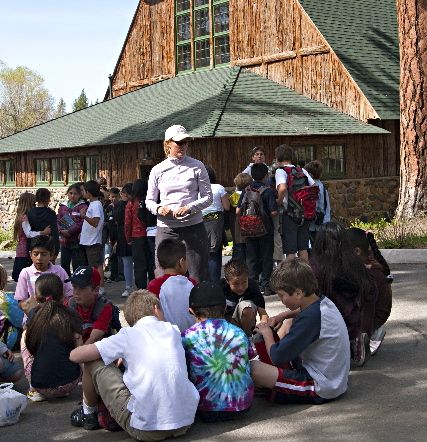
People are eager to learn at the Eriksson Education Center. Photo/Jim Markle

People are eager to learn at the Eriksson Education Center. Photo/Jim Markle

One of the information tablets explains the removal of the concrete weirs in the stream, a small section of Polaris Creek, and the use of the willow logs as check dams for grade control.

The UC Davis Tahoe City Field Station was filled Saturday with tables displaying information and soliciting activities meant to engage children in the more gripping sides of science, all the while showing minute traces of the lab work normally orchestrated in the facility, such as sediment traps pushed aside and closets containing scuba gear sharing a section of the space rife with traffic.

The most riveting spectacle of the day was the unveiling of the prestigious Eriksson Education Center. The UC Davis annual Children’s Environmental Science Day dovetailed into the occasion.

While giving an extensive tour of the center, Heather Segale, education and outreach coordinator for the UC Davis Tahoe Environmental Research Center, described the overall message of the exhibit.

“In the end, our choices affect the environment,” Segale said. “The wetlands are an important part of keeping Lake Tahoe blue.”

Ericksson Education Center Photo/Jim Markle

Ericksson Education Center Photo/Jim Markle

The perimeter of the outside exhibit is decorated with painted cardboard fish cutouts made from old political signs, a joint effort between Tahoe Lake and Kings Beach elementary schools.

The remainder of the center is indoors, with the lineage of the Eriksson Education Center being told through a dark blue wave-shaped timeline that circles the room. The timeline includes information about the history of the Tahoe City Fish Hatchery that once occupied the facility, along with the vast species of fish that have inhabited the wetlands near the building.

Visitors peruse the information booths at the Ericksson Center on July 10. Photo/Stephen Ward

Visitors peruse the information booths at the Ericksson Center on July 10. Photo/Stephen Ward

Opening day marked the celebration of a project that has been in the works for many years. The building has been in the process of renovation since 2008 and took nearly 14 years to be completely funded.

The Eriksson Education Center at the UC Davis Tahoe City Field Station is open Saturdays from 1-5pm during summer months or by appointment. For more information, click here.


Paddling on Lake Tahoe can take some patience

By Kathryn Reed

It’s not the Boundary Waters, but canoeing on Lake Tahoe can be fun – even if it means taking deep breaths while some guy on a Jet Ski spins in circles close to our canoe. Unfortunately, the choppy water and deafening noise made me briefly forget I was in one of the most magical outdoor playgrounds.

Only during this episode did I long to be on the lakes of Minnesota where motorized watercraft are not allowed. Maybe it’s time to plan a visit to see my sister and paddle a few days with her. Or maybe it’s time for law enforcement in Tahoe to crackdown on violators like this.

Sue Wood cruises along Lake Tahoe. Photos/Kathryn Reed

Sue Wood cruises along Lake Tahoe. Photos/Kathryn Reed

The speed limit on Lake Tahoe for all vessels is 5mph 600 feet or closer to the shore.

With Tahoe’s push to be welcoming to paddlers, encounters like the one Sue and I experienced would deter a lot of people from returning.

Gliding across Lake Tahoe one stroke at a time, it was part scenic tour, part architectural tour as our 17-foot canoe took us from Timber Cove Pier to Tahoe Shores to Edgewood Tahoe back to our starting point.

It was another tough Sunday living and playing in Lake Tahoe.

Meandering along it was the echoes of people having fun that resonates most – not that yahoo on his personal watercraft. Many are on shore, but more are out in the water. Several wave as they paddle by in kayaks. Some are too wobbly on paddleboards let go long enough to wave. One person is swimming, oblivious to those who are dry.

It was a bit disconcerting that no one stopped us at Timber Cove to ask what body of water our canoe was last in. (It was the Upper Truckee River in case anyone wants to know.) The concern is because of possibly transporting aquatic invasive species into Lake Tahoe. Signs are posted at other non-motorized launches about what paddlers should do – but not here.

Paddling toward Nevada, one gets an architectural tour to start with. Some lovely houses sit back not far from the shore.

Various lodging resorts dot the shore. With the snow-capped mountains all around, it’s a reminder this really is a year-round destination.

Photographers are busy snapping pictures of wedding parties at Edgewood and Timber Cove.

The farther we paddle, the quieter and less congested it gets. That won’t necessarily be the case this week as Edgewood Tahoe Golf Course hosts the annual celebrity golf tournament.

After turning around near Tahoe Shores, we paddled back the short distance to Edgewood. It was a fitting place to get a cocktail and appetizer before heading for Timber Cove Pier. We didn’t care we were the only ones dressed in lifejackets at Brooks Sports Bar.

Something to remember is California and Nevada have different rules for accessing private land. In the Golden State, the public has access to land that is below the high water mark – so that’s quite a bit right now. In the Silver State, landing on a private beach is equivalent to trespassing.

The Lake Tahoe Water Trail is a great resource for paddling at Tahoe.  The website has information about memberships and trail maps.

ngg_shortcode_1_placeholder (Click on photo to enlarge.)



Fire summit sizzles with info, fizzles with attendance

By Austin Fay

STATELINE — Every tax paying homeowner in the Lake Tahoe Basin was sent a postcard notifying him or her of Friday’s fire symposium. From the approximately 40,000 postcards that were sent, about 10 homeowners showed up at Harveys.

The symposium of fire chiefs, decision-makers, land managers, and homeowners was part of the larger inaugural weeklong Living With Fire program.

The U.S. Bureau of Land Management, Nevada Association of Counties, Nevada Division of Forestry, Nevada Insurance Council, Nevada Fire Safe Council, Sierra Front Wildfire Cooperators, the University of Nevada Cooperative Extension, and U.S. Forest Service all sponsored the program.

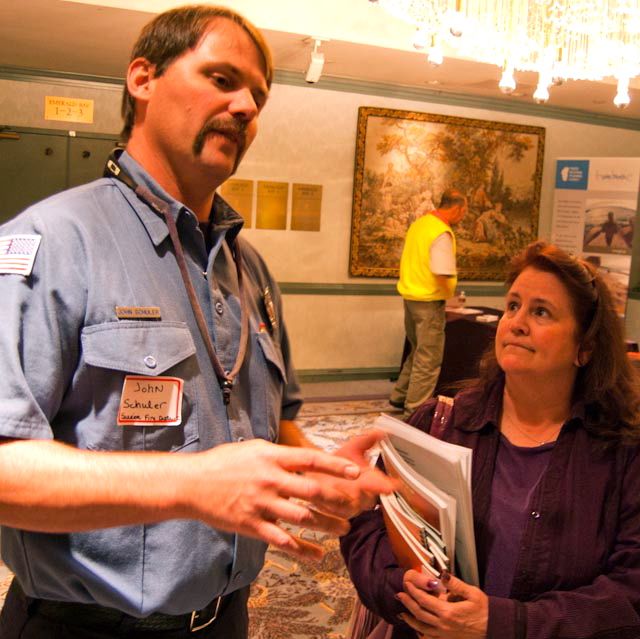
John Schuler, a defensible space inspector at the Sierra Fire Protection District in Washoe County, educates Petra Schuler, a South Shore homeowner. Photo/Austin Fay

John Schuler, a defensible space inspector at the Sierra Fire Protection District in Washoe County, educates Petra Schuler, a South Shore homeowner. Photo/Austin Fay

For a number of years Nevada has had a similar summit in May, but it has never been well attended by people in the basin. Having it this week in July was intended to draw second homeowners who may have been in town for the holiday week.

Speakers came from both sides of the state line. Kit Bailey, fire chief for the local Forest Service office, talked about wildland fires and how they affect homeowners in the Lake Tahoe Basin. Mike Vollmer of the Tahoe Regional Planning Agency gave an informative talk on what qualifies as defensible space as well as how to defend one’s home against fires.

A panel of homeowners — Paula Lambdin, Leona Allen, and Warren Berg — shared stories and told of the precautions they took during the 2007 Angora Fire, all of them emphasizing the effectiveness of having a defensible space. Lambdin and Allen lost their houses along with 252 other homeowners, but Berg’s was spared as he had protected his home by implementing defensible space recommendations.

There were also breakout sessions Friday where the few homeowners in attendance could meet with their division fire chief and learn details of the specific precautions their fire district has taken, as well as what homeowners can do to prepare in the event of a fire. Many fire districts hold smaller community events designed to educate the homeowners in their district, but this is the first time a basin-wide event has taken place.

Some of the measures included: creating a defensible space, replacing wooden roofs, joining a fire chapter, removing juniper bushes below windows, moving firewood stacks from structures, educating oneself and spreading knowledge throughout the community.

Things that homeowners could do were cited along with the reasons why homeowners don’t take steps to protect themselves. According to officials, the top six reasons why homeowners don’t implement defensible space are:

• Liking the trees and vegetation

• Cost

• Time

• Agency rules

• Loss of privacy

• Erosion concerns.

“We have a good fire department, but chances are any fire that comes through there, it will burn every lot,” Marilyn McDonald, a Fallen Leaf Lake resident, said.

The area where McDonald lives is currently being considered in the South Shore Fuel Reduction Project by the Forest Service. The review is expected to be published later this fall as to whether it is a priority for fuel reduction.

There is also a stewardship program for lots in the basin neighboring Forest Service land that allows for homeowners to remove brush, surface fuels and ladder fuels up to 100 feet from the house. The only precautionary measure not directly allowed is cutting trees. To a degree, and with a permit from the Forest Service, homeowners can maintain the tree growth around their homes.

Tahoe Regional Planning Agency changed its parameters for do-it-yourself defensible space preparation after the Angora Fire. Citizens can go in and do much of the defensible space preparation themselves. A tree 14 inches or less in diameter at breast height that is not in a stream area or has other restrictions can be cut by a resident without a permit.

South Lake Tahoe Fire Chief Lorenzo Gigliotti spoke about the Federal Emergency Management Agency grant the city is eligible for. Seven months ago, his department applied for a pre-hazard mitigation grant from FEMA to help pay for replacing the wooden roofs in South Lake Tahoe. After a screening of the nearly 9,500 single-family homes in South Lake Tahoe, 1,308 were found to have wooden roofs. The grant, if the district receives it, would pay for about 75 percent of the total replacement costs to go to a fire-resistant roof.

Tom Rosenberg, a full-time South Shore resident and homeowner, came because he was interested in fuel reduction initiatives.

“The turnout was disappointing to me,” Rosenberg said. “It’s up to us to do it ourselves. And at this point the regulations are very gentle.” Meaning there aren’t a lot of sticks, but there are a lot of carrots to create incentives for homeowners to educate and protect themselves against fire, he added.

Jessica Mencken of the Nevada Fire Safe Council had much to say about the low attendance.

“Getting people informed about events like this is the most frustrating part of my job,” Mencken said. “Nobody cares until, ‘oh no, it’s in my backyard’ and now, three years later, people don’t care. You get 10 people.”

But the publisher of Lake Tahoe News, a tax paying homeowner in the basin, never received one of the postcards that were supposedly sent. So the outreach is questionable.

Chief John Pang of Meeks Bay Fire Department said, “The first year you put on an event like this, you’re going to have a slow turnout, you’re asking people to come indoors for an entire day and for our second homeowners, it’s really difficult.”

In contrast, 1,100 people turned out for the Meeks Bay Fire Department’s 42nd pancake breakfast last weekend, where they had access to much of the information presented at the symposium.

“Unfortunately, if we had a fire last week, this place would be packed,” Pang said.


Talk of redevelopment suit percolates at STPUD, county

stpudBy Kathryn Reed

“We have filed a letter that reserves the right to file suit.”

That is Dennis Cocking, spokesman for South Tahoe Public Utility District, talking about his agency’s actions regarding South Lake Tahoe’s latest redevelopment area.

Neither the utility district nor El Dorado County is happy with the city’s decision to create a redevelopment area that encompasses most of the town – going from the airport, to the Y, to Herbert Street. It’s 3,100 acres.

For the state to recognize a redevelopment area the parcels must be deemed blighted. The county has taken issue with the massive swath of land the city says falls into blight.

A recent appellate court decision ruled in favor of Los Angeles County in its quest to stop a redevelopment project in Glendora. This county said sufficient physical blight did not exist. The court agreed.

El Dorado County referenced that case in a letter the Board of Supervisors sent Mayor Kathay Lovell and the rest of the council on July 8. The letter reiterates the concerns the county has regarding blight and that the city may leave the county no choice but to litigate.

It is not known when the county or district will decide how it plans to proceed.

STPUD and city staffs have been discussing concerns since the City Council approved the area in May. The city and county are not talking. If a lawsuit is to be filed by either disgruntled entity, it must be done by mid-August.

“It’s not like you can stop redevelopment forever. You invalidate the current redevelopment area,” Cocking said of what a lawsuit could achieve. “It would force the city to go back and either come up with a smaller area or put a cap on it.

“We would have liked to have been involved sooner, but that ship has sailed.”

City-STPUD work on other issues

Since the city and South Tahoe PUD have been talking, several issues have been resolved in the last six weeks; with some being offshoots of the larger redevelopment squabble.

City Manager Dave Jinkens in a June email to STPUD General Manager Richard Solbrig said in theory he agrees, “… the RDA [Redevelopment Agency] would be responsible for the cost of paving the street should the district decide to upgrade sewer and/or water mains in the street at the same time city RDA work is under way.”

Another key issue being discussed is Lukins Brothers Water District on the west side of town. The small water company that goes from the Y down Emerald Bay Road does not have water lines sufficient to satisfy fire suppression needs. It is a private entity governed by the California Public Utilities Commission, with a franchise agreement with South Lake Tahoe for its nearly 1,000 customers.

At issue is who would own the improvements made to the inferior water district that would be paid for with redevelopment dollars and what happens if STPUD one day buys Lukins.

South Tahoe PUD wrote to the city proposing, “For ownership of improvements made to the Lukins system with public funds, the city would support modifying the CPUC agreement to have the improvements pass to the district for ownership. If the agreement could not be modified, the city would agree to sell any improvements paid by redevelopment funds to the district at a nominal cost in the event the district were to purchase the Lukins system in whole or part.”

The city’s response was, “This proposal needs to be examined and explored further.”

The district would also like to enter into a dual service agreement with Lukins, using the city as the conduit to make it happen. The idea is Lukins could provide domestic water and STPUD could provide fire flow.

Sources told Lake Tahoe News one reason nothing is happening with the dilapidated buildings at the Y where Mikasa and Miller’s Outpost used to be is because no commercial enterprise can get insurance because fire flows are not sufficient. Property owners cannot negotiate a deal directly with STPUD for it to supply the necessary water in case of a fire. But the city could broker a deal between Lukins and STPUD to provide dual service.

A similar agreement exists between STPUD and Lakeside Water District, where the larger company would provide fire flow to the would-be convention center.

Other issues the city and South Tahoe PUD are discussing are irrigation issues at Linear Park, water supply to city entities and the cost involved, and encroachment fees for district construction projects in the city right-of way.


Washoe grinding rock tells stories about Tahoe’s past

By Kathryn Reed

Despite granite being the predominate rock in the Lake Tahoe Basin, it’s not the best hard surface to use for grinding nuts into food because it breaks down and erodes.

This is one reason the Washoe Indians are believed to have had more than their share of gallstones, Darrel Cruz said. Cruz is the tribal historic preservation officer for the Washoe Tribe of Nevada and California.

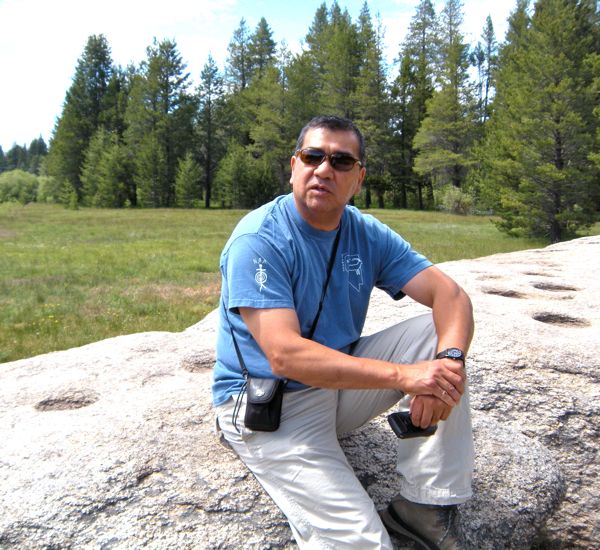
Walking behind Lake Tahoe Community College near Trout Creek is what locals call Indian Rock. It is an Indian grinding rock whose age is unknown. But it’s likely the Washoe were using it into the 1950s before white settlers drove them out.

Darrel Cruz of the Washoe Tribe at the grinding rock behind Lake Tahoe Community College. Photos/Kathryn Reed

Darrel Cruz of the Washoe Tribe at the grinding rock behind Lake Tahoe Community College. Photos/Kathryn Reed

The rock is called Lam.

“This is where the women grinded up seeds and food,” Cruz explained. The pounding tool that made the large divots – some 6 inches in diameter and a few inches deep – is a Goommum. The action and end result is what a modern mortar and pestle would produce.

The Bissec was another rock used by the Indians. This was more for grinding and produced the more shallow indentations on the rock. A push-pull action was used.

Women would sit or kneel as they did their work in what was their outdoor kitchen of sorts. Cruz said his grandmother preferred to sit while she worked hour after hour.

This area in the meadow the Washoe call the Mutushahoo Watah. It’s not an exact location, but the general area.

“There would have been a camp site there for a large part of the summer,” Cruz said. “(How long they would stay) all depends on the available resources.”

With this particular spot next to the creek, it would provide fresh water for cooking and a swimming hole for the children. Just like today, bear and coyote would meander through. Snowcapped mountains are in the distance and a forest of trees sets the perimeter.

What’s changed is the surrounding development and occasional horn reverberating from Highway 50.

Indentations in the granite are from the Washoe making food.

Indentations in the granite are from the Washoe making food.

This rock in the middle of the meadow is there for anyone to see – and walk on. The Washoe prefer it not be a jungle gym, but they also know that with so much of their past on land they don’t own, it’s impossible to protect all facets of their history.

“We have so many of these places scattered all over,” Cruz said of rocks like this one.

One day Cruz envisions working with the city and college to create signs explaining the history of the area and the rock in particular.

Until then, he hopes people will understand this slab of granite is more than just a rock to the Washoe people.

Students at LTCC and in Lake Tahoe Unified School District have been the beneficiaries of the rock being a teaching tool. To this the Washoe see no conflict or sense of disrespect.

“I think most of the Washoe people hold places like this as still important to them,” Cruz said.


Wright: Land trust would provide South Lake recreation

By Kathryn Reed

For 30 years, Les Wright has wanted to start the Lake Tahoe Land Trust.

He first proposed the idea to South Lake Tahoe officials three decades ago. At that time he thought increasing the hotel tax by 2 percent would accomplish the goal. The goal being to raise money so property could be bought and either turned into parks, bike trails or open space.

As he tells the story, city officials liked the idea, too. They raised the transient occupancy tax. But it all went to the general fund, not to a land trust, not even designated just for recreation.

Les Wright

Les Wright

Now Wright’s idea is to increase property taxes for everyone living in the boundaries of Lake Tahoe Unified School District so $1 million could be raised each year. How much this would cost the average homeowner or business has not been analyzed.

With this most likely being formed as a 501(c)3 nonprofit, it would not be possible to tax property owners. So how Wright will actually secure the funding remains a mystery.

He also doesn’t want the cash collected from taxpayers to be used for maintenance and operations – just land acquisition.

Wright also wants the tax to go on indefinitely. No type of sunset clause was brought forth by him. The concept was not considered until Lake Tahoe News questioned the legality of his idea. It could mean generations from now would be taxed without representation.

Any tax idea has to go before the voters, with two-thirds saying yes for it to pass.

Wright, who has been on the city’s Parks and Recreation Commission as long as he has had the land trust idea, talked about bringing his dream to fruition at last week’s Recreation Commission meeting.

“I wonder what South Lake Tahoe would look like today if we had that 2 percent (from the TOT),” Wright said.

Wright, who is best known for having created the Lake Tahoe Marathon, is seeking the commission’s endorsement for the idea. The commission may take a vote at its next meeting. The June 28 session was just a discussion. The vote would not be on the land trust itself, but whether commissioners support developing the idea further.

Neither the commission nor the Parks and Rec Department would ever be directly involved. The trust would be a private entity.

The dictionary describes a “land trust” as — a trust created to effectuate a real estate ownership arrangement in which the trustee holds legal and equitable title to the property subject to the provisions of a trust agreement setting out the rights of the beneficiaries whose interests in the trust are declared to be personal property.

The idea for the Tahoe trust, according to Wright, is to buy vacant land or rundown buildings, and then give the land over to entities that could turn them into a recreational facility. He envisions a 21-member board being the stewards and overseers of the whole process.

Peter Eicher, with the California Tahoe Conservancy, was at the meeting because he knows about buying land.

“It’s not easy to just acquire property and let it sit. You need to keep it fire safe and you’ll run into encroachment issues,” Eicher told the group.

Some people at the meeting brought up the idea of partnering with another trust instead of starting from scratch.

To that, Wright said, “I don’t want anything to do with another trust.”

But he also said when the Lake Tahoe Land Trust is a reality he plans to donate the first lot.


Tournament is about the pork, not golf for foodie Fieri

By Kathryn Reed

STATELINE — Before calling Tahoe home, some of us spent the night in cars or a $20/night hotel room because we only had enough money for a lift ticket.

Food Network star and restaurant owner Guy Fieri is no different – except that he is still contemplating calling the South Shore home. Living here half the year is his goal.

Guy Fieri

Guy Fieri

Growing up in Humboldt County’s Ferndale, this popular chef spent many winters trekking to Tahoe to ski at Squaw. He remembers one three-night stretch in his Datsun 280Z in a parking lot across from Heavenly.

“I love Tahoe. I have great memories as a kid skiing here,” Fieri told this reporter while he took a break from adding to the rowdiness of Hole 17 at last year’s American Century Celebrity Golf Tournament.

With Fieri’s trademark spiky bleach blond hair, armful of tattoos and his buddies’ tough-guy appearance, one would think these bad boys would be a little edgy. I’m sure it’s not the Jack and Coke they supplied this writer with that convinced her they are harmless and truly giving.

Dirty P. is Fieri’s left-hand guy, while Kletus is his right-hand dude – they are distinguishable by which arm their tattoos are on. They are part of the traveling Food Network gang, or as they say, the culinary ganstas.

Dirty P. said Fieri, who is married and has two kids, is all about giving back whenever he can. Even though the network was not filming last year, Fieri and his Kulinary Krew donated their time, gave away 500 sandwiches to the public and players; and let the Soroptimist sell hundreds more as a fundraiser.

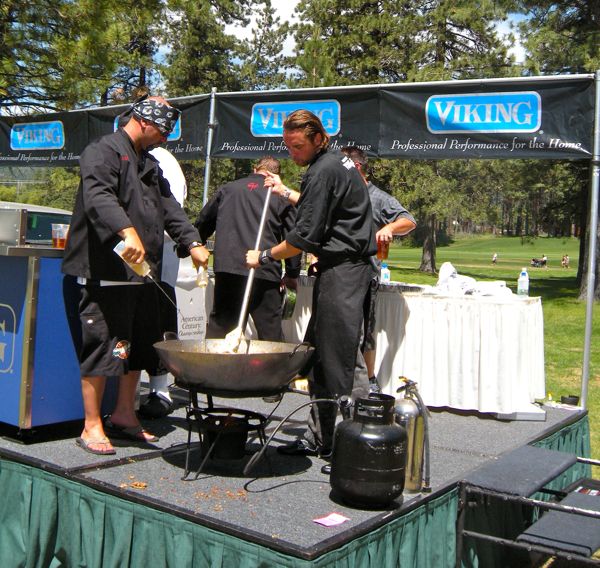
Cooking up batches of pork on the 17th hole at Edgewood Tahoe in 2009. Photos/Kathryn Reed

Cooking up batches of pork on the 17th hole at Edgewood Tahoe in 2009. Photos/Kathryn Reed

Squirt bottles with Fieri’s tattoos etched on them that once had tequila or water, and aprons were tossed out to the throng gathered around the stage that looked out onto the 17th fairway.

First they had to answer various questions Dirty P. and Kletus asked. The crowd needed to know Fieri owns Johnny Garlics in Santa Rosa, Windsor and Sacramento, as well as Tex Wasabi’s in Santa Rosa and Sacramento.

After winning The Next Food Network Star competition in 2006, Fieri has become the host of four shows – Guy off the Hook, Guy’s Big Bite, Ultimate Recipe Showdown, and Diners Drive-Ins and Dives.

None of the guys professes to be much of a threat on the links. Dirty P. said think Chuck Liddell, and that’s where the cooking crew would rank.

Put a kitchen tool in these guys’ hands and they will work magic, even with the distraction of motor boats, personal watercraft and partiers strewn along the sandy shore of Lake Tahoe just a few feet from them.

Below is the recipe for the pork sandwich Fieri was serving at last year’s golf tourney. Because he was cooking it over a large vat fueled by propane for the masses, you’ll need to figure out the quantities for your taste buds and number of people you’re serving.

This year marks the 21st annual celebrity golf tournament at Edgewood Tahoe – July 13-18. For info, go to www.tahoecelebritygolf.com. Fieri will be back, but not cooking. Instead, look for him to be prowling the grounds in his personal souped up golf cart.

Pork el Fuego

Pork

Bacon

White onion

Red pepper

Cherry peppers

Green onions

Cilantro

Garlic

Basil

Thyme

Oregano

Cayenne

Salt

Fresh ground pepper

White tequila

Worcestershire sauce

Havarti cheese

Ciabatta bread