South Lake Tahoe won’t come clean on nepotism questions
sltBy Kathryn Reed

Nepotism, according to the dictionary, is “patronage bestowed or favoritism shown on the basis of family relationship, as in business and politics.”

It’s alive and thriving among employees of South Lake Tahoe (full and part time), as well as extending to City Council members and city commissioners.

Since June 30, Lake Tahoe News has been emailing city officials in an attempt to have disclosure of all the relationships – spousal, in-laws, children – whatever the connection, be it blood or through marriage.

Even by invoking the Public Records Request Act more than once, the city has not provided the information requested.

Initially, Human Resource Director Janet Emmett deferred the request to City Attorney Patrick Enright. After multiple emails and phone calls to Enright, a response came from him via City Manager Dave Jinkens.

The July 22 email from Jinkens says, “The city attorney provided me with information relating to your recent request for the names of persons employed by the city who are married.

“The request for information relating to marital status and blood relations is exempt from disclosure under Government Code section 6254(c), which excludes from disclosure ‘personnel, medical or similar files, the disclosure of which would constitute an unwarranted invasion of personal privacy.’ This includes information like Social Security numbers, home telephone numbers, home addresses, marital status, health issues etc. A 2007 California Supreme Court case in 2007, I am told, affirmed the exemption from disclosure of personnel information. Additionally, police officers have a special section [Penal Code section 832.8] which prohibits the disclosure of personal data, including marital status, family members, educational and employment history, home addresses and similar information.”

But the truth is, providing relationship status really has nothing to do with personnel records. The city’s refusal to disclose relationships based on this code is bogus.

Lake Tahoe News responded to Jinkens the same day by emailing, “Thank you for your email. However, not only did I ask for spouse and blood relations, but also relations through marriage like son-in-laws, as well as parent-child relationships. I would like that for seasonal, part-time workers, as well as full time. Those types of relations don’t seem to be precluded from public disclosure based on the information you sent me.

“In addition to that information, I respectfully ask for the email with the names of the people it was sent to, which is a public document, that was sent by Janet Emmett the day of my initial request [nearly three weeks ago?] to all of the employees affected by my inquiry. If you need a formal Public Records Request Act, I will do so. If this can suffice, thank you.

“At the same time, I am now asking for a list of all city employees and their job titles. I think this would be pretty easy to get to me by 5pm today. If not, then I’d like an explanation.”

To this Jinkens reply was, “I will ask the city attorney to reply. I have given you the best answer I have on the matter.”

Enright did not respond as of this posting. None of the council members weighed-in on the subject either and they were copied on the email.

Connecting the dots

The city’s website lists some of the employees, but not all. It doesn’t list most of the police and fire department employees, though police employees are on a separate website. The fire department doesn’t list its employees on its website. A list of part time and seasonal workers has not been secured.

On the city’s website it has the Palazzos. They met on the job. Ellen is the assistant city clerk; Gene is the director of Housing-Redevelopment.

Lori Marino is the grants administrator and her husband, Jim, is an assistant city engineer.

Maryanne Brand is an accounting manager. Her husband, Phil, is a housing rehabilitation specialist.

Debi Schild is a senior permit technician in the Building Department. Her husband, Walt, is employed by Public Works.

LTN learned Krista Eissinger, airport secretary, is the sister of police Officer Andy Eissinger.

Tony Silva, airport maintenance supervisor, is married to a police officer who has a different last name.

Nick and Heather Carlquist, not a common last name, are police officers. One is active, the other reserve. Their relationship is not known. Brad and Brian Williams are brothers who are police sergeants. There is a J. Broadfoot (dispatcher) and a T. Broadfoot (officer) listed on the SLTPD website.

Three of the council members are related to people affiliated with the city. Mayor Kathay Lovell is the mother of police Officer Ryan Wagoner.

Councilman Bill Crawford is married to planning Commissioner Jonnie Crawford.

Councilman Bruce Grego is married to planning Commissioner Geraldine Grego.

The Planning Commission hears an issue before it is referred to the City Council.

Three couples with city ties are engaged. One is Nancy Kerry, manager of Housing-Redevelopment, and airport Commissioner Howie Nave.

These are just the relationships Lake Tahoe News knows about. It’s been a common practice through the years for the Parks and Recreation Department to hire the children of employees.

Problems with nepotism

Most cities have detailed nepotism policies. Most don’t have anywhere near the number of familial ties South Lake Tahoe has – especially in a city with about 220 full-time employees.

The nepotism issue was brought up in the June El Dorado County Grand Jury Report, saying their investigation could not track down a nepotism policy for the city.

No training has been provided by the Human Resources Department in how to deal with nepotism.

It’s common knowledge by workers that people who are related cannot supervise one another. This is standard in most workplaces.

But problems arise. For instance, Ellen Palazzo is a notary, but ethically she should not be notarizing a document her husband signed. It would not be illegal for her to do so. To keep it all clean, she has never notarized anything for him.

With two married couples having ties to the Finance Department, who is watching what’s spent by the departments their spouses work in?

Case law points to several incidents of third party discrimination. That would be when an employee working for one of the married or otherwise related individuals is not comfortable going to the spouse of their boss for fear of recrimination.

This creates a hostile, as well as dysfunctional work environment.

This story about Oakland’s hiring mess clearly illustrates what happens when nepotism, aka favoritism, runs rampant in a city.

Here is what a law website has to say about nepotism.

A fired spouse in another locale contended their constitutional right to marry was at stake and filed a lawsuit. Read this for more on the topic.

Here is another take on married couples in the workplace.

Issues with nepotism

How all relationships came about is not known. Did they get hired because they are a couple? Did they meet on the job? Was one hired and then got their relative on the inside track at the city?

The South Shore is small. There are a limited number of qualified people for certain positions. There are a limited number of potential significant others. But none of this means the city has to be in the business of hiring relatives.

Good hiring practices mean casting a wide net for potential hires, not asking the person in the neighboring cubicle if they know someone to hire. It means hiring based on performance, not just because someone is local or is related to someone.

The issue of nepotism goes beyond how city employees are affected.

With all the relations in South Lake Tahoe government, how is a member of the public to know when she files a complaint, that the person investigating it isn’t related to the person being accused?

Cities hide behind the shield of personnel records not being privy to public review. So how is the public to know hiring isn’t biased and that the relative is truly the best, most experienced candidate? That question then begs, why is a relative even being considered?

Without transparency in city government, the public – for who they work and who pays their salaries — is left in the dark.


Former Nev. Gov. Kenny Guinn dead at 73

By Steve Kanigher, Las Vegas Sun

Former Gov. Kenny Guinn, who served during Nevada’s most explosive growth, leading with a pragmatic streak and fierce determination to do what was right rather than what more partisan elements in his party thought, has died.

Guinn guided Nevada from January 1999 through the end of his second term in 2006. He died this morning in Las Vegas after a fall from a roof after suffering a possible heart attack. He was 73.

kenny

Kenny Guinn

Clark County Coroner Michael Murphy said Guinn was pronounced dead at 11:07 a.m. at University Medical Center. He said an examination is expected to be completed by the end of the day Friday. An official cause of death is pending and a final determination might not be known for several weeks, he said.

Read the whole story


Rich history of water skiing resurrected on West Shore

By Stephen Ward

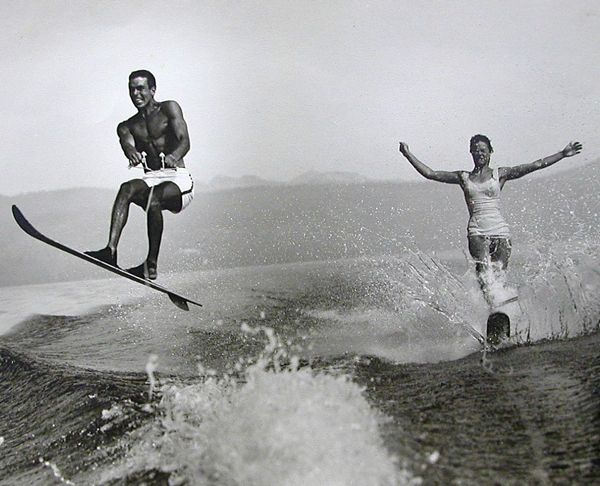
Scores of water sport enthusiasts speed across the West Shore of Lake Tahoe, soaring through the air and performing strategic tricks such as pyramids and operating delta wing kites while water skiing. The public gathers around the edge of the shore to witness the mesmerizing performance unfolding before them, quietly marveling at each graceful act.

The scene illustrated above is a glimpse of the Water Ski Carnival the Tahoe Yacht Club used to conduct at Chamber’s Landing and Homewood each summer from 1953 well into the 1990s, before the loss of key sponsors that had kept the festivity afloat. The water ski exhibitions at the time were initially two-day events that preceded the Tahoe Yacht Club’s boat races. Later the exhibition was granted its own separate time slot during the summer.

Water skiing has been popular on Lake Tahoe for more than half a century. Photo/Tahoe Maritime Museum

Water skiing has been popular on Lake Tahoe for more than half a century. Photo/Tahoe Maritime Museum

This weekend, however, the Tahoe Maritime Museum, with the assistance of Obexer’s Marina, hopes to restore what used to be a tradition on the West Shore of Lake Tahoe.

Starting tonight at 5, the Tahoe Maritime Museum will host a water ski roundtable discussion, featuring eminent historical and contemporary figures of Lake Tahoe’s water sports history. Scheduled speakers include acclaimed water skier Mary Jo Shepherd, High Sierra Water Ski School owner Lee Schmidt, and 1950s water school outfitters Ron Rupp and Les Bartlett.

On Friday, the topics discussed tonight will be brought to life. The Water Ski Exhibition at the south end of Obexer’s Marina Pier will feature local talent operating everything from water skis and wakeboards to aquaplanes and slalom skis. The event will commence at 8am and will last for about two hours. Spectators can view the exhibition from the shoreline or sign up at the roundtable discussion tonight to survey the function on a boat.

Saturday from 10am-5pm is the annual Living History Day at the Tahoe Maritime Museum, and is the one day each year where admission to the museum is free. The Living History Day will highlight the topics discussed at the roundtable discussion, as well as having displays of boats and trophies issued at the Water Ski Carnivals of the past.

The Tahoe Maritime Museum is open Thursday-Tuesday from now until Sept. 30, and is located in Homewood, next to Homewood Mountain Resort. Admission for the lecture series is $8 for adults and free for children younger than 12. For more information, click here or call (530) 525.9253.

ngg_shortcode_0_placeholder (Click on photos to enlarge.)

(Old photos: Provided by Tahoe Maritime Museum; New photos: Provided by Warren Fallat)


Land deal could reroute South Tahoe Greenway bike path

By Kathryn Reed

An opportunity to buy the largest remaining parcel of private property along the Upper Truckee River may cause planners to change gears when it comes to the Meyers to Stateline bike path.

The approximately 212 acres known at the Johnson Meadow (in the ranching world a parcel is named after the previous owner not the current one) could be acquired by the California Tahoe Conservancy. It wasn’t until just recently that the landowner indicated a willingness to sell.

“There’s no agreed upon price. We’ve just started talking,” Bruce Eisner, with the CTC, said. But he said it would be in the millions.

Bill Mosher talks about his family's land. Photo/Kathryn Reed

Bill Mosher talks about his family's land. Photo/Kathryn Reed

Bill Mosher, whose family owns the land by the river east of the Lake Tahoe Airport to about Grocery Outlet, has fond memories of his family running cattle on the land for decades.

Standing along the river by the airport, Mosher points to the undeveloped land on the other side. Those 125 acres known as the Lyons Ranch East were sold to the Conservancy in spring 2008 for $6.2 million. The Lyons owned it in the 1800s. The Barton-Ledbetter-Mosher clan had it for more than 100 years.

Now the Mosher family is in negotiations with the CTC to sell another stretch of land. Finding the money puts a big asterisk on the reality of an acquisition ever occurring. Still, if the deal is consummated, it may mean altering the Conservancy’s plans for the 9.6-mile South Tahoe Greenway bike trail.

The much talked about path that at one time had been slated to break ground this summer, originally called for going through the Mosher property that is now being negotiated. This route would bring the trail closer to Highway 50.

In 2006, though, the Moshers would not consider selling.

That sent CTC officials back to the drawing board to scope out a different route. That route has the trail close to Pioneer Trail. The administrative draft Environmental Impact Report for the project has the Pioneer linkage in it.

“The potential for public acquisition on this property brings forward a lot of questions for phase three,” Sue Rae Irelan, who has led the charge on the project, told the CTC board last week.

In order to move forward with the project, the Conservancy wants to build phases one and two while the land issue involving phase three gets worked out.

The first two phases are the eastern portion of the trail, with the latter being the Meyers section.

It will be a Class I trail, meaning the path is separated from vehicles and will accommodate various uses. In most places it will be 10-feet wide, with a grade no steeper than 5 percent. This allows access for wheelchairs and easy passing by cyclists or hikers of people pushing strollers.

Snow removal in the winter is not likely. The trail could be used by cross country skiers or snowshoers.

Irelan said the plan is to have environmental documents ready for public review in early 2011. Construction could begin in 2012. Each phase is likely to take more than one building season.


Tahoe slogs through fuel reduction jobs with little cash

By Kathryn Reed

Money, or the lack of it, could derail the Lake Tahoe Basin-wide effort to create defensible space throughout the region.

In the last five years, $10.4 million has come to the Nevada Fire Safe Council via the Southern Nevada Public Lands Management Act. That resource is drying up because the sale of land in Southern Nevada is not as robust as when developers were scurrying to build.

What a treated area looks like. Photo/Stew McMorrow

What a treated area looks like. Photo/Stew McMorrow

It wasn’t until 2008 that a change was made in the act to allow money to be spent on fuel reduction. That year a $4.4 million grant was awarded to the fire safe council.

“We currently have funding through next season. After that, then things become a little more uncertain,” said Mark Novak, fire marshal with the Tahoe-Douglas Fire Protection District.

He said his department has applied for a grant that would fund another season of fuel reduction work. His agency treats 200-250 acres a season.

Unique to Tahoe-Douglas is voters in 2008 agreed to tax themselves for these types of projects. That brings in about $600,000 a year, but is not enough to fund all the projects.

An advantage to having that known pool of money is when grants require matching funds, the Tahoe-Douglas crew can point to the voter supply of money.

“In our area, about 3,000 acres still need treatment. We need to keep moving forward,” Novak said.

Nevada Fire Safe Council

Andrew List, executive director of the Nevada Fire Safe Council, is researching funding options. One idea is looking at SNPLMA projects that were funded but the project didn’t go forward, therefore the money is unspent. If that money is back in one big pot, Tahoe could be in the running for it.

List wants to create an interest baring account so projects would use the interest, not the principle.

U.S. Forest Service grants have helped the fuels management cause. A FEMA grant is another possibility. A Nevada Division of Forestry grant was one of the early funding sources.

“We act as the fiscal sponsor. We are a nonprofit,” List explained. “We submit grants and work with the five fire districts in the basin. We help put the projects out to bid so we can get the best value and contractor for the job, handle oversight and pay the bills. Then we let the fire guys do what fire guys do.”

The fire safe council works on non-federal land, most of which is private. A rebate program helps residents pay for the treatments. Information about the rebate program is here.

Fire safe council chapters exist throughout the basin, with the first one being formed in Glenbrook in 2002. The idea is neighbors form an alliance to help one another with becoming a fire safe area. There are 56 chapters in the basin.

During the July 17 fire meeting hosted by Assemblyman Ted Gaines, R-Roseville, South Tahoe Fire Chief Lorenzo Gigliotti received interest from three people who would like to be leaders of fire safe chapters. The city currently has five chapters.

Through the council, 1,405 acres were treated in the Lake Tahoe Basin in 2009, 806 acres in 2008, with a goal of 1,500 acres this year.

The council focuses on the wildland urban interface – which is where communities abut the forest.

Defensible space inspections are provided for free by fire departments. This tells a homeowner which trees may need to be removed or other vegetation. Fire behavior, how a slope plays into fire risk, what vegetation burns hot, what is good to have close to a structure and other criteria are considered.

It’s often the smaller tree that are taken out to thin an area. Space between the canopy of the trees is critical so flames can’t jump from one tree to another. Ladder fuels, the low hanging branches, are another concern.

California law requires property owners maintain 30 feet of clean and green space immediately around their houses and 100 feet of defensible space clearing around the residence.

The 2009 operations report for the Tahoe Fire & Fuels Team goes into detail about the acreage that was treated last year, where the funding came from, the rebate program and more.

What others are doing

Fire officials seem to have one eye on their budget and the other on stands of trees that pose a serious fire risk.

South Lake Tahoe has the Homestead project under way, which is treating 230 acres near Lake Tahoe Community College and Bijou Community Park.

To date, the city has completed 1,620 defensible space inspections.

Placer County provides low-cost, curbside assistance for reducing brush from property. The program is coordinated through the Board of Supervisors, Resource Conservation District, Office of Emergency Services, Air Pollution Control District and sheriff’s office.

Money for the program is from a grant, but as of Aug. 2 residents will pay half of the $80 per hour fee. Since it began, the chipper program has created about 100,000 tons of chipped material.

Money was the overriding theme at a July 17 meeting in South Lake Tahoe regarding the bi-state Blue Ribbon Commission that was formed after the 2007 Angora Fire.

Lake Valley Fire Chief Jeff Michael has his fingers crossed, as do others, that Congress will soon reauthorize the Lake Tahoe Restoration Act. This is the bill then-President Bill Clinton helped create in 1997 after the inaugural environmental summit in 1997. Sen. Harry Reid, D-Nev., is expected to have the act and fuels reduction as central themes to this year’s summit that he is hosting Aug. 17.

“We are trying to be as proactive as we can with the funds that we have available,” Michael said. “All of it has been grant funding. None one dime is out of the annual operating budget.”

His budget comes from people in his service district who pay via their property tax bill. It’s possible in the future voters could be asked to pay more.

Lake Valley averages about 300 acres a year – half done by hand, half mechanical treatment.

“The way we look at fuels, our treatments today aren’t final. It’s infinite,” Michael said. “We will treat the same forest over the next several year. You have to go back and look at it again.”

Lewis Grove, the defensible space inspector for North Tahoe Fire Protection district in Carnelian Bay, says his department is looking to treat 400 acres this season. The idea is to select urban areas that complement what is being done in the forest. This way a fire is less likely to spread from a residence to the forest or vice versa.

He said permanent residents are overwhelmingly supportive of thinning because “they are vested in it.”

“Nature will do what it can to thin a forest – fire, beetle infestation or you can let us,” Grove said.

He said showing people treated areas where wildflowers and wildlife thrive helps convince them it’s the right thing to have a healthy forest.

“For the most part, I think it’s a matter of education,” Grove said of fuel reduction projects.

Resources for residents include:

Emergency Preparedness Guide

Living with Fire Guide

ngg_shortcode_1_placeholder (Click on photos to enlarge.)


Tahoe Derby Dames bring a feminism-punk style to oval

By Austin Fay

A blur of black and green whizzes by with clenched fists and bared lime-green mouth guard. She earns one point for each of the five members of the opposite team she laps during a two-minute period, or “jam” in roller derby lingo.

Trying to block Carey “Crazy” Jenkins, several of her opponents hook skates and tumble, arms outstretched they cross the rink and nearly land in the pine cones at trackside.

Roller derby is all the rage at Bijou Community Park. Photos/Austin Fay

Roller derby is all the rage at Bijou Community Park. Photos/Austin Fay

For the past two and a half years, the Tahoe Derby Dames have been colliding with other teams.

The team consists of about 20 Lake Tahoe Basin women who love road rash and full contact competition. In addition to making cash donations to local charities, they raised $10,000 to pay for a cement track in Bijou Community Park through ticket sales at home games.

Three nights a week the Tahoe Derby Dames sharpen their craft in anticipation of the next monthly bout.

At the last bout in Bijou Community Park, more than 400 people showed up to cheer their local derby girls on. At this month’s bout the team is expecting even more people.

Make no mistake about it, this kind of roller derby is real and on its way to becoming officially sanctioned by the Women’s Flat Track Derby Association.

Points are scored by a skater called the “jammer” who passes the opposing team’s skaters in the pack. It’s essentially two skaters racing against each other, dipping and diving through a cluster of women who don’t want them to pass.

That’s where it gets a little brutal as the players try to block one another. There are strict rules about where contact can take place, but roller derby is a physical sport.

Roller derby has been around for much of the past century. It became popular in the 1960s and ’70s as sports entertainment, with scripted matches and action punctuated by good guys and gals beating the evil team.

Drew Barrymore helped bring roller derby back in vogue with the movie “Whip It” in 2009.

Today’s players are an unusual blend of feminism and punk, raw strength and agility. It is a game of strategy, too, and many of the over-the-top track characters contrast the athletes’ meek or highly accomplished real lives.

The games became so popular that the Women’s Flat Track Derby Association was established in 2004 to promote the sport by “facilitating the development of athletic ability, sportswomanship and good will among member leagues.” Not all women’s roller derby teams belong to the league, but the league hopes to offer rookie groups like the Tahoe Derby Dames an opportunity to join.

Former coworkers, loose social connections and enthusiasts now make up a loyal team with a camaraderie not found in many places in the players’ lives. A recent dive taken on the “really, really, really hard track” by Hollie “Jinn Beam” Straubinger caused a gnarly imprint of her fishnet stockings on her hip which later led to a staph infection.

With names like Piratella, Valigator, Ghostface KillHer, Ganjzilla, and Poisoned Peach, derby names become alter egos.

“Typically in your everyday life, you’re a mom, you’re an employee, you’re a wife, that sort of thing. When they come on the track, they put that all aside,” said the hard-as-nails referee Kera “Lepra C” Amsterdam. Some players like Julie “Mad Maggie” Roulain come out three nights a week to relieve stress or to decompress from her daily life.

Christine Mendoza works is a physical therapy assistant at Barton Memorial Hospital by day, but three nights a week assumes a persona on the rink better known as “Fiona Fearless.”

Players maneuver jobs, stress, children and husbands the other four nights of the week. “It becomes a juggling act,” Mendoza said.

“It’s something I’ve wanted to do since I was a kid. I’ve just never lived in a town where there was a team,” said Allison Green, schoolteacher and three-week Tahoe resident clad in mismatched loaner kneepads and wrist guards. “I’m here to allow my inner badass to come out.”

Endurance is what it will boil down to in the upcoming match. The next bout is against the Silicon Valley Killabytes and will probably be one of the toughest teams the league has faced yet.

The Killabytes are a bigger, more advanced, sea-level dwelling team, so taking advantage of the low oxygen concentration in the air along with a strong home team turnout is essential for the team’s win. Last home game a player was suspended for throwing an elbow, which is illegal. There’s a chance she’ll be out for the season.

The team is always recruiting new girls, with newbie practices on Monday nights at 6. Helmet is required.

The Tahoe Derby Dames lock horns with the Silicon Valley Killabytes on July 24 at 6pm. Gate’s open at 5, and there’s a beer garden, a raffle. Bring a lawn chair to Bijou Park off Al Tahoe Boulevard. The cost is $10, with those 10 and younger free. Plus, it goes to a good cause. Relay for Life receives the first $200.

ngg_shortcode_2_placeholder (Click on photo to enlarge.)


Detour leads to tranquil falls near Markleeville

By Kathryn Reed

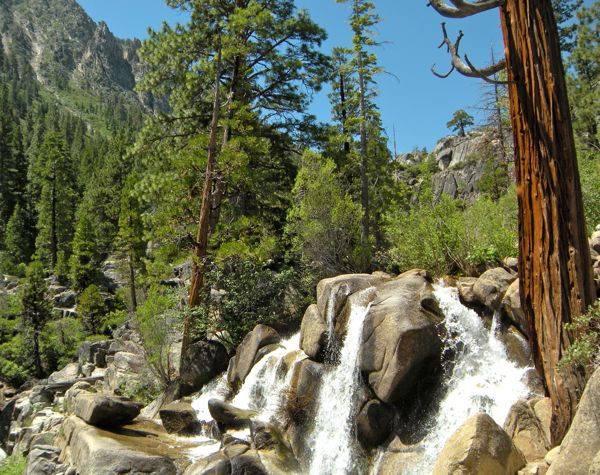
MARKLEEVILLE — Closing my eyes I’m taken some place more distant than the 1.5 miles I hiked. The rushing water makes hearing difficult unless one speaks in a loud voice. It’s one of those times when listening to Mother Nature seems like music that can never be replicated.

Nothing on my iPod sounds so wonderful.

Waterfalls in Grover Springs State Park. Photos/Kathryn Reed

Waterfalls in Grover Hot Springs State Park. Photos/Kathryn Reed

Opening my eyes it’s a sea of blue. The sky above seems to be tickled by some of the distant pine trees. Leaves dance in the, oh, so gentle breeze.

The crystal clear water makes me want to lap it up as though I were a canine.

Granite boulders of all sizes beckon to sit or lie upon. Completely vertical, I don’t want to move. I am so incredibly relaxed.

The few people in the opposite direction along this trail outside the campground at Grover Hot Springs State Park all had smiles. I now understand why.

Others are also dipping their toes into the icy cold and ironically named Hot Springs Creek and her pools that sit above the magical falls.

Our destination for the day came with a detour thanks to Linda, the extremely friendly State Parks employee. If it weren’t for her, we may have never gone to the falls. The $8 entrance fee was worth the trek to the falls, let alone the rest of the hike.

The state park is best known for the hot springs that are 4 miles from the heart of the town of Markleeville. As the county seat for California’s least populated county, Markleeville is a blip on the map. This outdoor mecca is a short drive from South Lake Tahoe via Highway 89 over Luther Pass, with a left on Highway 88. Then, just follow the signs.

Driving into the park, go to the end of the day use area. Start the hike by making a left at the gate. The falls are an easy 1.5 miles up mostly a wide path. Getting closer to the falls, the trail has several offshoots. Just listen to the roar of the water to find them.

It’s easily one of those places where you could spend a lazy afternoon. Unfortunately, that was not on our agenda. We were there to get in a more ambitious hike.

After what I considered a way-too short of a stay by a little wading pool above the falls, we made our descent only to begin our real climb.

Linda, the park employee, didn’t exaggerate when she said the hike to Charity Valley is steep.

Markleeville is at an elevation of 5,500 feet; Grover is at 5,800 feet; we went to 7,267.

The soft, single-track trail is not gradual. It’s vertical. Without the shade of the massive pines and cedars, it would have been unbearable on this Sunday in July.

Surprisingly, it wasn’t that far up for the evidence of the September 2008 Burnside Fire to show its blackened remains. Trees are forever scarred.

A smattering of wildflowers dot the landscape, bringing color to the forest floor – Indian paintbrush, lupine, tiger lilies and snow plants are in abundance. Ferns are at the lower part of the trail.

Butterflies flit about, seemingly oblivious to the only two people on the trial. Hawks soar overhead. A solitary deer stands still between the trees, making me wonder where her family is.

The trailhead had a warning about mountain lions. I didn’t think twice about it until seeing some unfamiliar scat on the trail.

Up, up and away the trail goes, until it’s above the tree line. Then views of the valley below and beyond open up. They make the sweat and heat bearable.

Finally, it’s decision time. Right for 2.5 miles to Burnside Lake, left into Charity Valley or a U-turn to complete an 8-mile day? The latter was the answer. The ridge we came to and the vistas along the way brought us views we are still talking about.

Going down it was a coin toss to know if a beer at the Wolf Creek Saloon in Markleeville or soaking at Grover Hot Springs sounded better.

We experienced both.

ngg_shortcode_3_placeholder (Click on photo to enlarge.)


Building fees cut emissions on Fallen Leaf via electric boats

By Kathryn Reed

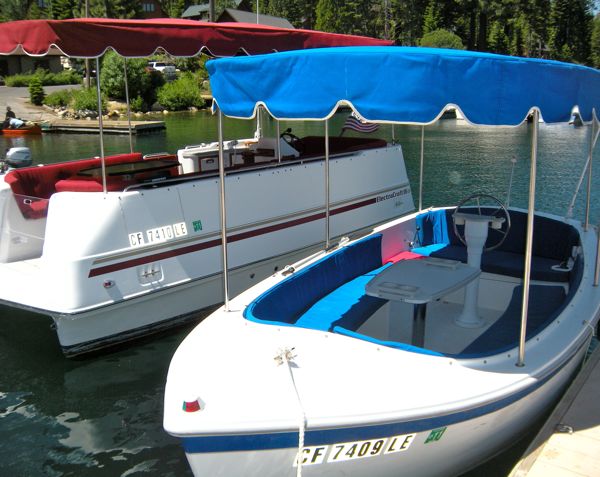
A distinct hum is usually associated with motor boating. Not anymore. Two boats cruising Fallen Leaf Lake are electric, creating a new boating experience for the user and others on or near the water.

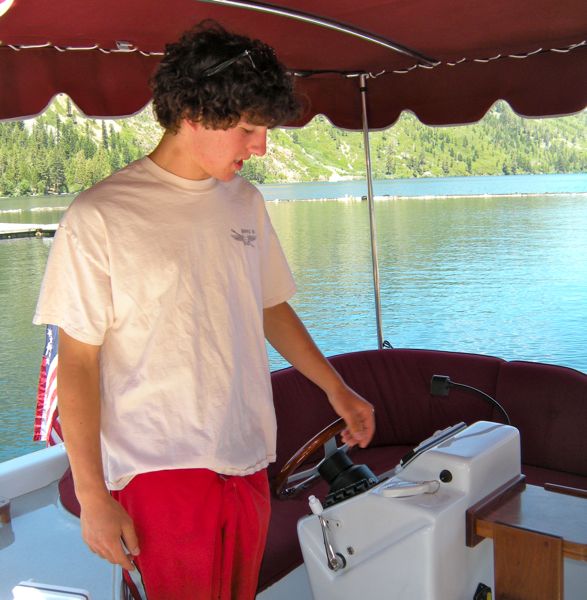
Self-described marina boy Joe Zanetell turns on the engine. Nothing seems to happen. No sound emerges from the engine. That’s one of the benefits of electric boats – no noise. But it also means the lake and air are not being polluted with fuel emissions.

Joe Zanetell fires up the electric boat at Fallen Leaf Lake. Photos/Kathryn Reed

Joe Zanetell fires up the electric boat at Fallen Leaf Lake. Photos/Kathryn Reed

This is the first season the South Shore lake has had electric boats. Rob and Sandy Wirth, who run the concessionaire, bought the boats for $35,000. After all, his background is in the electrical business.

The pontoon boat holds nine people, while the V-hull can take seven. Both go about 6mph and have a charge lasting about four hours.

Most people cruise out a ways and then drift, according to Zanetell.

On today’s agenda, the Fallen Leaf Lake Community Services District board will consider becoming owners of one of the boats by using mitigation funds passed to it from El Dorado County via the Tahoe Regional Planning Agency.

The board will discuss and possibly vote on accepting $20,000 from TRPA. (Funds must be given to a public entity, thus the reason the CSD is involved and the money is not going directly to the Wirths.) The district and Wirths would then likely enter a six-year lease agreement.

The agenda says the district has received confirmation from its insurance carrier that liability will be covered under the concessionaire’s policy.

“People are really digging them,” interim CSD General Manager Tom Barnes said of the boats. “They are very stable. It’s a good way to poke around the lake.”

Fallen Leaf Lake has two electric boats for rent.

Fallen Leaf Lake has two electric boats for rent.

Last spring talks about electric boats began between Barnes and TRPA officials. Then Steve Kooyman, a civil engineer with the county’s transportation department, got involved, along with Supervisor Norma Santiago.

“Given that the electric boats have no emissions as well as address other thresholds such as noise, this is a very logical project to support with these funds,” Santiago said. She is also on the TRPA Governing Board. That agency will vote this month or in August to allocate the mitigation funds.

What are mitigation funds?

All new construction projects in the Lake Tahoe Basin pay air and water quality mitigation fees to TRPA. That check must be written before the final permits are signed by the bi-state regulatory agency.

Whichever jurisdiction the construction is occurring in has the funds deposited in a pot for that city or county. The government agency then can request money from the TRPA board for projects that have to do with air and water quality improvements.

“This is a restricted fund by law. The money is invested back into the community,” explained Julie Regan, TRPA legislative affairs analyst. “It can’t go to operations, the building or salaries.”

With so many state and federal grants requiring matching funds, the mitigation account is a source for local governments to point to as money in hand.

Air quality mitigation fees for single-family residences are based on the projected number of trips that will be made. On average, the fee is $3,300. (Remodels don’t pay this fee.)

For water quality mitigation fees, it’s $1.86 per square foot of land coverage. So, 3,000 square feet of coverage will cost the builder $5,580 in fees.

“The fees are tiered on actual impacts,” Regan said. “It’s really designed to off-set the impacts on the ground.”

Commercial construction also pays mitigation fees, as well as other fees, which are calculated on a different scale.

For the five counties and one city in the basin (and only basin projects can use the money), there is $7 million in the account. From 2007 to the end of June 2010, $4.19 million in mitigation funds have been spent.

Spending the money

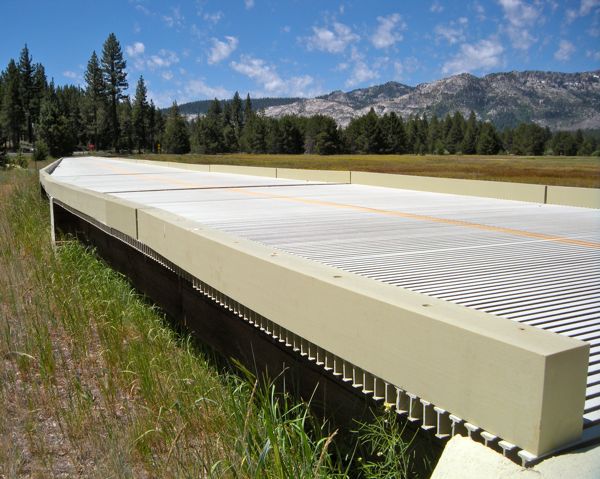
Mitigation funds helped pay for the Sawmill bike trail in El Dorado County.

Mitigation funds helped pay for the Sawmill bike trail in El Dorado County.

Local jurisdictions make requests to TRPA for the money. It’s up to the Governing Board to say yea or nay. The project must have some benefit to improving air or water quality to qualify.

About $200,000 in mitigation funds was used to help build the bike path in front of Lake Tahoe Golf Course in Meyers.

Several entities, including South Lake Tahoe, tapped the mitigation pot to purchase dustless street sweepers.

Placer County used these dollars to build bus shelters.

Regan said her agency is looking at whether mitigation funds could be used for a water taxi.

The electric boats are just one example of what mitigation fees can go toward. The idea is to see how well they work and what the public thinks of them so maybe they would be a staple at Lake Tahoe marinas.

“So much extensive research has been done to make sure these boats were eco-friendly, including the batteries that the boats use,” Santiago said. “This is a definite win-win for the community as it continues with its commitment to protecting Fallen Leaf Lake, while providing an eco-friendly boating experience to lake visitors.”


Upper Truckee Marsh to be off-limits to dogs in 2011

By Kathryn Reed

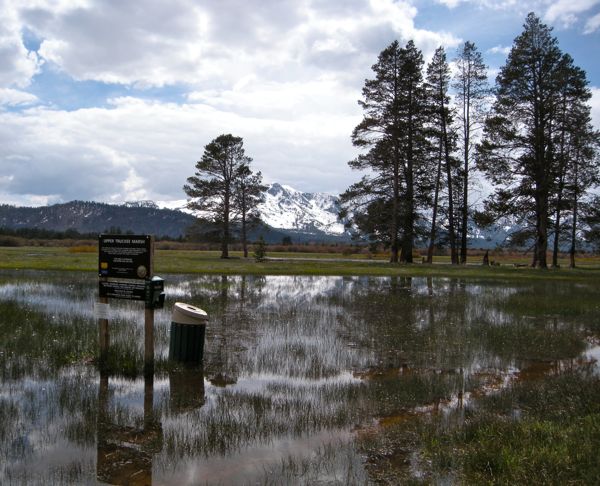
Unleashed dogs in the Upper Truckee Marsh are wreaking so much havoc on wildlife habitat that the California Tahoe Conservancy has decided that beginning in 2011 dogs will be banned from this swath of public land in South Lake Tahoe.

“The purpose is to preserve habitat value,” Ray Lacey, CTC deputy director, told Lake Tahoe News.

Canines will not be permitted in the area starting in May during the breeding season. The cut-off date has not been determined, but it could extend into the fall to encompass the migratory season for birds.

Beginning in 2011 dogs will be banned in the summer from the Upper Truckee Marsh. Photo/Kathryn Reed

Beginning in 2011 dogs will be banned in the summer from the Upper Truckee Marsh. Photo/Kathryn Reed

This is expected to be an annual closure.

The 300-plus acres were acquired for the purpose of preserving habitat, not for recreation. For about a decade the Conservancy has been trying to educate dog owners about what happens when their animals walk in sensitive marsh areas. It impacts the terrain as well as scares off wildlife.

“They are traipsing in the meadow. There is a lack of complete understanding by people who want to get to this isolated beach,” CTC board member Kathay Lovell said at Thursday’s meeting.

El Dorado County Animal Control and the South Lake Tahoe Police Department will help regulate the closure. People violating the law will be cited and fined.

The goal this year is to educate the public about why the closure will be implemented.

Tina Carlsen, who has a doctorate in ecology and is an environmental program manager with the CTC, was tasked with analyzing the impact dogs have on wildlife and habitat in the marsh that is on the east side of the Truckee River adjacent to the Al Tahoe neighborhood and leads to Lake Tahoe.

She said birds are leaving the area because of dogs. Dogs are also affecting feeding and nesting areas of several species of birds.

Sean Butler, urban land management supervisor, said he won’t be surprised if people are angry about the closure, but said this has been a long time in coming because people continually disregard the current rules.

He said he expects the closure to be easier to enforce because it is not subject to confusion – like can a dog be off-leash to swim in the lake.

The CTC pointed out that no changes are planned for Cove East, on the other side of the Truckee River. Al Tahoe residents have the option of the dog park at Regan Beach for lake access for dogs.


Celebrity Golf a massive money maker for LT Airport

By Kathryn Reed

One need never go to Edgewood Tahoe Golf Course to know the celebrity golf tournament is going on now. Just listen. Hear that plane traffic? It’s the golfers in their expensive planes flying in and out of Lake Tahoe Airport.

“I can tell you they have a large impact on the airport,” Sherry Miller, airport director, said of the celebrities who land in South Lake Tahoe.

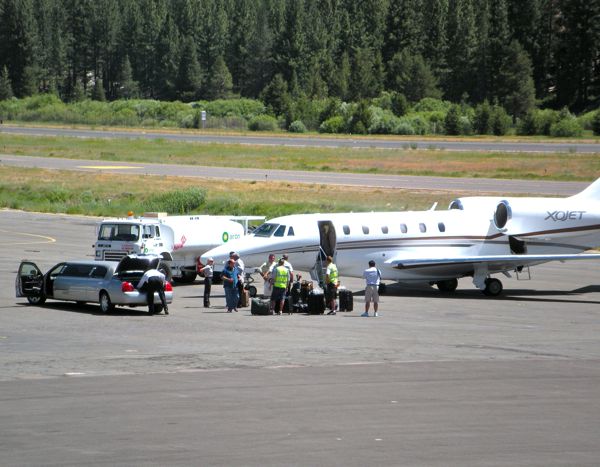
A limo is set to transport the group that arrived via this XQJet on July 13 at Lake Tahoe Airport. Photos/Kathryn Reed

A limo is set to transport the group that arrived via this XQJet on July 13 at Lake Tahoe Airport. Photos/Kathryn Reed

They started arriving July 8. Some of the players who are here for the tournament that runs through Sunday come early to get acclimated to the higher elevation, and to walk a few rounds without the media and fans hounding them.

Some fly in on their own jet, which might sit on the ramp for several days. Others come in via charter service. No matter who owns the plane, it’s a financial boon to the airport.

“It means a huge amount to the community,” Miller said of the tournament. “I would venture to say this is our busiest time of year.”

In July 2009, the city collected $12,559 in landing fees, according to Miller. For the entire 2008-09 fiscal year the airport collected $39,180.11 in landing fees.

Lake Tahoe Airport charges a landing fee for planes weighing more than 6,000 pounds. The cost is $3.40 per 1,000 pounds. The average fee is $45.

Falcons pay $60, Gulf Streams range from $70-$256, while King Airs (which the airport sees a lot of) pay about $47.

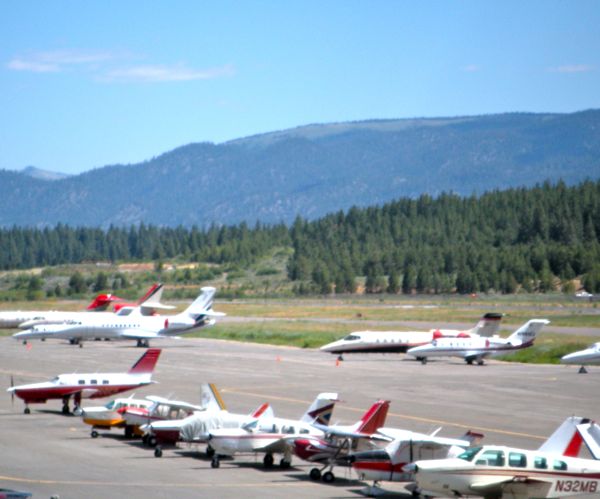
The celebrity golf tournament will fill the airport's ramp.

The celebrity golf tournament will fill the airport's ramp.

Michael Golden at Mountain West Aviation is responsible for collecting the fees. He charges an additional overnight fee.

His crew is also tasked with parking all of the aircraft. Some years it looks like every inch of asphalt is covered with a multi-million dollar plane.

This year, with 10 open hangars, it’s possible some pilots may opt to store the plane indoors.

“July is our busiest month, but it is around the lake,” Golden said. He wouldn’t divulge who flies what or any specifics about money he collects during the annual six-day tournament.

The city gets 11 cents of every gallon of fuel that Mountain West sells. In July 2009, that amount totaled $5,748 – just for the city’s coffers.

And not every pilot fuels up in Tahoe.

Nor does every player come via Lake Tahoe Airport. Minden and Reno are other airports most often used.

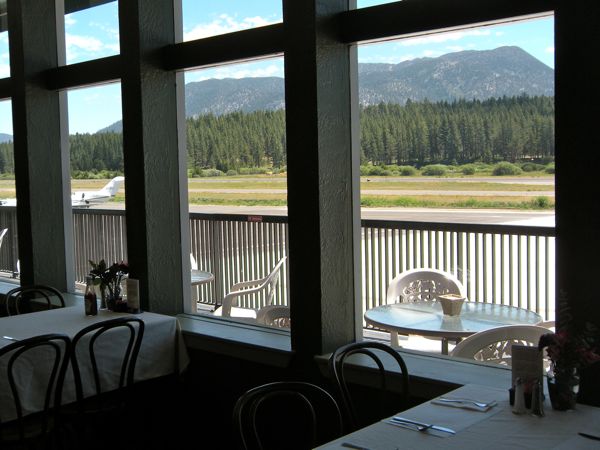
Flight Deck restaurant at Lake Tahoe Airport has indoor and outdoor seating with views of runways.

Flight Deck restaurant at Lake Tahoe Airport has indoor and outdoor seating with views of the runways.

Before jumping in a vehicle headed for Stateline, Diane and Tom Miller hope the golfers and their entourage are hungry. They opened the Flight Deck restaurant last month at the airport.

“We don’t have any particular plans for Celebrity Golf. I’m not sure how we will be affected by the planes landing and the limos picking people up,” Diane Miller said.

With the city getting a chunk of the gross from the restaurant, the owners and city officials have their fingers crossed people will be hungry on their way in or out of town.