Judge strikes down TRPA’s shorezone ordinance

By Kathryn Reed

How many piers and buoys should jut out and bob on Lake Tahoe has been the center of a 22-year fight. With Thursday’s federal court ruling, the fight rages on.

On Sept. 16, U.S. District Judge Lawrence Karlton issued his 65-page ruling in favor of the League to Save Lake Tahoe and the Sierra Club. On the losing end is the Tahoe Regional Planning Agency.

The fight over buoys in Lake Tahoe is not over.

The fight over buoys in Lake Tahoe is not over.

The League said it would not comment until Friday. Nothing was on Earthjustice’s or the Sierra Club’s websites Thursday about the ruling.

Earthjustice represented the environmental groups in court pro bono. TRPA officials say they spent at least six-figures worth of taxpayer dollars on in-house and outside legal counsel.

“It remains to be seen what we do next. We need time to regroup,” Julie Regan, external affairs director for TRPA, told Lake Tahoe News shortly after the ruling came out.

The shorezone issue has been contentious for 22 years and became even more so after the Governing Board of the TRPA adopted a shorezone plan in October 2008. That month the League and Sierra Club filed suit in U.S. District Court in Sacramento.

Today there are about 800 piers and 4,000 buoys on Lake Tahoe. TRPA’s plan would have allowed an additional 128 private piers and 1,822 buoys.

Regan said she thought the bi-state regulatory agency had found the middle ground between those who don’t want piers or buoys and those who think all private property owners should have them.

“We did our best to craft that compromise,” Regan said.

The League was part of the process, as were other stakeholders. But officials were never satisfied and believed suing to halt the installation of more piers and buoys was the answer.

Karlton’s decision says the TRPA did not prove the shorezone ordinance meets the thresholds the agency works under.

Regan said the judge had “technical concerns with the environmental analysis.”

Regan said it’s possible TRPA will file motions to allow some of the shorezone ordinance, like the Blue Boating Program, to stay intact while the more contentious buoy-pier issues are worked out.


Authors give women rescue workers of 9/11 a voice

By Kathryn Reed

STATELINE — Where are all the women?

Seeking the answer to that question completely changed the lives of the two women asking the question as well as the lives of the 30 women who answered it.

The media and politicians seemed to have not noticed the women in uniform on Sept. 11, 2001, and the days after who were part of the effort that saved 25,000 lives as New York City struggled to cope with the terrorist attacks. Then Mayor Rudolph Giuliani praised the men in several speeches. Then President George W. Bush put his arm around a public servant, thanking all the men for their selfless heroics.

Susan Hagen and Mary Carouba sign books after speaking Sept. 16 in Stateline. Photo/Kathryn Reed

Susan Hagen and Mary Carouba sign books after speaking Sept. 15 in Stateline. Photo/Kathryn Reed

Three thousand miles away Susan Hagen and Mary Carouba were yelling at the television, baffled at where the women were. Why, they wondered, was the coverage so gender specific?

Words do matter, the authors told the crowded room at Harveys casino Sept. 15, where they had been invited by Soroptimist International of South Lake Tahoe.

“To be left out of the national conversation … it’s huge,” Carouba said.

They were in their mid-40s, both with careers, both wondering what they could do. Hagen had been a reporter in the 1970s before becoming a firefighter in 1994. Carouba was an investigative social worker who also did some standup comedy.

“In that moment we realized we couldn’t let it go. That’s how the book was born. We could go to New York and find those women,” Hagen said.

They had no media credentials. They knew no one in New York. They had never been to New York. They had never written a book. They pooled the limits of their credit cards to come up with a budget. Within a couple weeks they were in New York.

Now, where are the women? They asked a cab driver to take them wherever female cops might be hanging out. To a dark bar they were delivered. After a bit of posturing by the women in blue, they came around. They had many stories to tell.

More than 6,000 of the 34,500 police officers in New York City are women. About one-third of the emergency medical technicians are women. Of the 12,500 firefighters, 25 are women. There might not be any female firefighters if it weren’t for a court ruling mandating they allow 25 in. They’ve never allowed any more than that number.

As word got out about Hagen and Carouba being in town, the women showed up at all hours of the day and night at the budding authors’ hotel room. Tears were shed. Words not before uttered were shared with these Californians.

NYPD’s requirements were two days of therapy that had to be taken within a year of the towers collapsing.

Carouba spoke to the families of the three women rescuers who died. Their stories are also in the book “Women at Ground Zero: Stories of Courage and Compassion.”

Hagen and Carouba, who still live in Sonoma County, are working on a second book that will be out next year for the 10-year anniversary of the attack on the World Trade Center. It will be a look at where the 30 women, who are still all alive, are today.book

In there poignant, yet comedic, tale of how their book came to fruition, the duo spoke of bringing the 30 women and five others to the Wine Country a little more than a year after the planes crashed into the towers. They wanted to pay for everything. The invitations went all. Everyone accepted. Then Hagen and Carouba realized they had no idea what they were doing, and had no money to put the gang up.

People with money, they realized, weren’t big spenders. It was a bag of $99 in coins from high school students in Sebastopol who were looking for a way to help a 9/11 cause that was the seed money.

This was also the first time the authors realized what exactly Soroptimist could do. They can raise money and organize events. Hagen and Carouba credit the women’s group in Sonoma County for being instrumental in helping raise $140,000 so the New Yorkers could have a weeklong respite.

“These women had to come all the way across the country to get the recognition they should have gotten in New York,” Carouba said.

For more information about the book and the authors, click here.


Charter air service bringing people to Lake Tahoe

By Kathryn Reed

Skip driving, skip Reno, skip Sacramento. The fastest way to get to Lake Tahoe is via Gary Air.

Trish and Dave Guerrieri are flying clients in their Cessna 182 into Lake Tahoe Airport. The Bay Area couple, who have a second home in South Lake Tahoe, received clearance last week from the FAA for their charter service.

Gary Air charter service is flying into Lake Tahoe Airport. Photo/Provided

Gary Air charter service is flying into Lake Tahoe Airport. Photo/Provided

The Cessna carries two to three passengers – plus gear – including skis and snowboards.

For years, the South Bay couple has been acting as an air taxi broker. For the last five years they’ve been booking flights to Tahoe for other pilots as the broker.

“If our plane is not the right plane for the mission, we can still act as a broker to find people another operator who suits them best,” Guerrieri said.

It’s not just South Lake where the couple will fly to – it’s any airport. Regionally, that could be Truckee, Minden or Reno.

In the months they’ve been waiting for the FAA clearance, inquiries have been coming in from second homeowners and skiers. The Guerrieris anticipate creating a ride-sharing program for people who want to go to the same place but don’t want to charter the entire plane for themselves.

One thing they have over commercial airlines is no need to book two weeks in advance for the best rate. Their rates start at $250 person. Someone flying back and forth the same day will likely get the best rate.

From the website people can get quotes about fares.

The plane is based at Reid-Hillview Airport in San Jose. Having the plane near the population base is more economical than keeping it at the most popular destination.

Dave Guerrieri, who is the pilot, expects to fly mostly during the day – when it is safest with the optimal flying conditions.

It’s not just people recreating in Tahoe who the Guerrieris anticipate using their service. Their plane, they say, is ideal for shuttling the businessperson between multiple cities in a day. It also gets the Tahoe resident out of the basin and back again.

“I don’t think we will have an office in South Lake Tahoe. With everything so easy on the Internet, we don’t need to man an office (there),” Guerrieri said.

They aren’t worried about the ongoing recession impacting their business, saying they’ve seen the charter industry beginning to rebound in the Bay Area.

The couple brought their plane to the air show at Lake Tahoe Airport in August. They were also a sponsor of the Tour de Tahoe bike ride Sunday.

Details:

Website

Email: info@GaryAir.us

Phone: (408) 729.4359

Prices: Start at $250/person from the South Bay to South Lake Tahoe


Mixed results for LTUSD in statewide test scores

By Kathryn Reed

Tahoe Valley Elementary School’s falling statewide test scores was in stark contrast to how most of the schools in Lake Tahoe Unified School District performed.

The Academic Performance Index is the measure the state uses to determine how students are doing from one year to the next. Results were released Monday. Overall, the state posted a gain of 13 points.

“While we cannot be satisfied until the achievement gap is eliminated and all students are well-prepared for college and careers, this significant progress should be celebrated,” state Superintendent of Education Jack O’Connell said in a statement.

Bijou elementary students exceeded expectation on state test scores.

Bijou elementary students exceeded expectation on state test scores.

The problem with President George W. Bush’s No Child Left Behind policy is that the scores do not compare apples to apples. For example, results for this year’s fourth-graders are compared to the previous year’s fourth-graders, not to how they did as third-graders. President Obama, with his Race to the Top, did not change the accountability factor to make it more relevant.

In LTUSD all but the magnet school is Meyers is considered a performance improvement school. The reason is the subgroups.

The testing treats everyone the same no matter their language ability, primary language or if they are special ed. That is a complaint educators have had with the system since the get-go — it’s not a level playing field.

“We do the same programs across the district,” LTUSD Superintendent Jim Tarwater said.

But the test scores would not indicate this. The environmental school, where Tarwater is also principal, had a score of 919 last year and improved 20 points to 939 with the latest testing.

“It’s not just the wealthy. We have problems like anyone else, though it is pretty homogenous,” Tarwater said of the demographics at the magnet school.

To be PI means year after year not meeting the goal the state sets. The state says 800 points is where all school should be and then sets goals to reach that number.

Tahoe Valley’s scores tumbled from 820 to 788.

“They have to zero-in and find out what the difference was, what happened between classes,” Tarwater said. “The interesting thing is they did exactly what they did last year. They did the monitoring and the intervention.”

LTUSD is not alone in having students in academically challenged schools. Between El Dorado, Placer, Yolo and Sacramento counties there are approximately 94,000 students in PI schools.

A bright spot for LTUSD is Bijou Community School. For the second consecutive year it surpassed the state’s target. It was supposed to improve upon last year’s total of 689 by six points and instead did so by 29 for a score of 718.

“We are excited because that staff for three years has been committed to breaking the 700 mark. So now they are aiming for 800,” Tarwater said.

This fall the district expects to hear from the state if Bijou will continue to be categorized as PI.

Tarwater told Lake Tahoe News the continued improvement at the school has to do with collaboration of teachers, drilling down with students, tracking academic performance on a individual basis to know what students need additional help with, and dedication of staff and administrators.

Sierra House also exceeded expectations. It shot up 14 points to 813 when the goal was a one-point increase.

“Their Latino population made some good growth,” Tarwater said. “One thing I’m excited about at all the school is the numbers in the white population is well in the upper 800s, including Bijou. What you are seeing is language is an issue.”

South Tahoe Middle School’s scores were flat, dropping a point to 792.

South Tahoe High School met its goal – gaining nine points for a score of 759.

Obama’s Race to the Top program, for which states must compete for dollars and California didn’t get any, is going to have the same standards for all students in the academic year 2013-14. Tarwater said the federal standards do not dilute what LTUSD and California are doing.

A complaint often heard from parents, students and educators is the lack of diversity in curriculum. With so much emphasis on language arts and math, other core subjects and a substantive number of electives have been scratched.

The Lake Tahoe Unified board is expected this school year to discuss ways to re-introduce electives, especially at the middle school. The idea is then students will be better prepared for the array of offerings at the high school.

In these economic times and continued state take-aways, LTUSD is unique in California to continue its class-size reduction, music, physical education and sports programs. But the goal is to do even more.


CTC celebrates 25 years of protecting Tahoe lands

By Joann Eisenbrandt

Environmental Emergency Room. That could just as easily be the name on the sign outside the California Tahoe Conservancy’s offices on Third Street, just a long block from Barton Memorial Hospital in South Lake Tahoe.

On Sept. 16, at Commons Beach in Tahoe City the Conservancy will celebrate a quarter-century of bandaging Lake Tahoe’s fragile and wounded environment. On California’s books since 1970, a 1982 voter-approved bond measure provided $80 million in funding for this independent agency within the state’s Natural Resources Agency. Funding for Lake Tahoe Basin projects began in spring 1985.
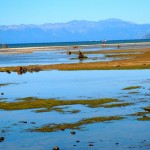
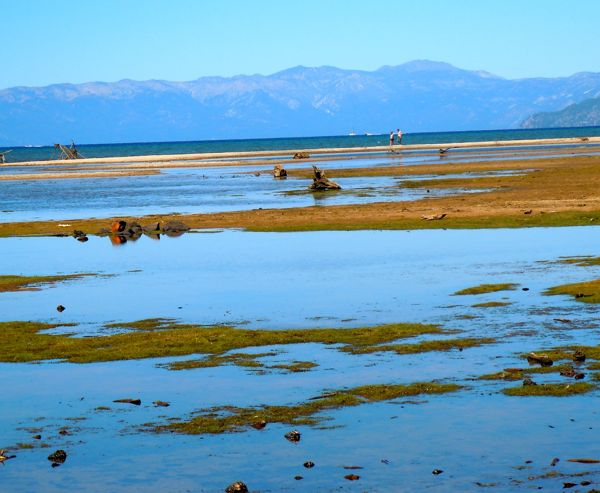
Cove East along the Upper Truckee River where it opens into Lake Tahoe is an ongoing project for CTC. Photos/Kathryn Reed

Cove East along the Upper Truckee River where it opens into Lake Tahoe is an ongoing project for CTC. Photos/Kathryn Reed

Conservancy Deputy Director Ray Lacey explains the rationale behind its formation, “The easiest parallel is with the Coastal Conservancy, another early California conservancy, which was formed out of fear that California’s coastline would become privatized because of intense real estate pressure. In Tahoe, there was state, national and international recognition that there were real problems. Water quality was declining and something had to be done quickly to turn it around. This was beyond the means of local governments and nonprofits without external assistance. The Conservancy became a conduit for those external financial resources.”

When the Washoe first summered along Tahoe’s pristine shores, they used the land but did not consume it. The track record of those who have followed has not been as stellar. Competing public and private interests, clear-cut logging, haphazard urbanization and overlapping regulatory layers have muddied the waters. Tahoe’s stable environmental balance was lost, and that began impacting the lake’s clarity.

“Tahoe was developed at the worst time in history,” Lacey explains. “Older developed areas were pedestrian-friendly. Tahoe was developed in the postwar (World War II) era, when it was all about the car. That’s difficult to retrofit.”

Unlike the Tahoe Regional Planning Agency, the Conservancy is not a regulatory body. Its mission — to protect the Lake’s legendary clarity, increase public access and recreational opportunities, and preserve Tahoe’s wildlife — is accomplished in two ways: “One,” Lacey explains, “as a conduit for both technical and financial resources to overwhelming local needs (grant projects); second, actual land acquisition and ongoing management of those lands (direct projects).”

The CTC’s initial funding was targeted primarily at the acquisition of parcels on the California side of the lake. To date, the Conservancy has acquired more than 5,400 parcels.

“Twenty-five years ago,” Lacey explains, “the basin was subdivided for a population of 400,000 people, even though that wasn’t sustainable. TRPA had begun deeming some parcels unbuildable. We provided the ‘out’ for property owners who were otherwise caught between a rock and a hard place.” All the Conservancy’s property acquisitions are from willing sellers.

Since that initial bond, there have been a variety of funding sources: appropriations from Environmental License Plate Fund; offshore oil revenues collected by the federal government and given to the state of origin to offset the effects of offshore drilling; as well as statewide voter-approved bond measures — propositions 12, 40, 50 and 84 — for “clean air, clean water, and parks.”

This money also funds CTC grants to local governments and private nonprofits to match local funds and enhance the scope of environmental projects. One highly-visible example is the Lakeview Commons project at Highway 50 and Lakeview Avenue, now in the first of three phases. The $6 million the Conservancy allocated will provide improved beach access, a better Highway 50 crossing, a non-motorized boathouse, picnic tables, terraced seating and new vegetation. As with other CTC grants, implementation of the project falls on the local partners. In this case the city of South Lake Tahoe and El Dorado County. Those entities commit to a definite completion timeline and the maintenance of the project for a set number of years. According to Lacey, the CTC has never had to seek legal recourse against a grant-funded project for failure to perform.

El Dorado County Supervisor Norma Santiago, who is on the CTC board, speaks highly of the Conservancy as a partner with local government.

“The Conservancy allows the county to work together on joint projects to meet our obligations as good stewards of the lake — for projects like the bike trail or erosion control — we formulate a real partnership in meeting our mutual mission of water quality, air quality, and sustainable communities,” Santiago said.

Other notable Conservancy direct and grant projects include:

• Commons Beach in Tahoe City: Site of the 25th anniversary celebration, the Conservancy provided $6 million to restore Tahoe City’s lakefront to its original condition. The land had been deeded “to the people of Tahoe City” by President Ulysses S Grant. “It’s a shining example of the Conservancy working with local entities,” Lacey explains.

• Upper Truckee River Restoration: The Upper Truckee River from Meyers to Lake Tahoe is now under public ownership (CTC, California State Parks, U.S. Forest Service, or the city of South Lake Tahoe), with the exception of one privately-held parcel. The Conservancy is working with its public partners to restore the entire river system because scientists say restoring a single piece isn’t effective in significantly decreasing the flow of sediment into the lake.

• Upper Truckee Marsh Restoration: The Draft Environmental Impact Statement is expected to be out for review this fall for the meadow and river area in the center of South Lake Tahoe.

• Sunset Stables River Restoration: A part of the Upper Truckee River project on Conservancy-owned land. The goal is to return the straightened streambed to its natural meandering course to slow down the flow and facilitate more frequent dumping of sediment and nutrients onto the surrounding marshland. The Conservancy expects implementation to begin in 2012.

• South Tahoe Greenway Shared Use Trail: The creation of a continuous 9-mile-long bike trail from near the junction of Pioneer Trail and Highway 50 in Meyers to Stateline, using the old Caltrans freeway right-of-way. Purchased by the Conservancy about 10 years ago, all the parcels have been inventoried and design parameters are being explored. An EIS will come out in late 2010. This project is seen as a major step in making South Lake Tahoe a bicycle-friendly town. “Every new segment we complete,” Lacey emphasizes, “will increase exponentially the value of the network as the segments are now starting to connect.”

• Van Sickle Bi-State Park: With land donated by the late Jack Van Sickle in Nevada and Conservancy-owned land in California, it will bridge two states, which the Conservancy believes is appropriate as the watershed that is impacted covers California and Nevada.

• Angora Fire Resource Damage Assessment and Restoration Plan: The 2007 Angora Fire affected 177 Conservancy lots. An assessment was done to evaluate levels of damage to soils, forest, vegetation and wildlife on these lots, and establish priorities for restoration and protection of water quality impacts on the Lake. The Conservancy is in the midst of a forest-thinning project on some of these lots. Regarding residents’ complaints about the process, Lacey responded, “Our lands are subject to the same rules as those homeowners face. We made no money on the timber cutting, as all the wood was of a low grade and sold to a firewood supplier to defray the costs of the project, which were from $3,000 to $6,000 per acre.”

Moving forward

During the last 25 years, the Conservancy’s focus and goals have changed. Land acquisition has largely been completed, with close to a thousand parcel acquisitions a year now down to a dozen that are mainly project-driven.

“Simply purchasing the land wasn’t the end,” the CTC deputy director explained. The focus now is on “realizing the potential of those 5,000 plus parcels.”

The CTC’s granting role also continues, but is now enhanced by a third, new role — as a grantee. Because of a proven 25-year track record the Conservancy has successfully secured grants from federal agencies such as the Bureau of Reclamation and the Army Corp of Engineers. Given the current economic climate in California, relying only on money from Sacramento is no longer possible.

Another offshoot of this realization is the Tahoe Fund, a nonprofit launched in August 2010 to raise private money to match public funding for projects already “on the ground” in the Lake Tahoe Basin. Largely the idea of CTC Executive Director Patrick Wright, the nonprofit believes it fills a void in the environmental funding landscape. Its goal is, as its website explains, “To leverage public and private investments.” Unlike other organizations that are either watchdog groups or focus on one specific program, the Tahoe Fund, “will fill this void by enlisting the local community, visitors, and opinion leaders to support or contribute to a broad range of environmental, recreational, and educational projects.”

The board consists of a mix of private and public figures, with the two public members, Wright and Jim Lawrence, administrator of the Nevada Division of State Lands, being non-voting members. Donors to the Tahoe Fund may specify which projects their donations will go to.

Also part of the new reality is the proliferation of gaming and the resulting dilution of Tahoe’s drawing power as a gaming-only destination.

Supervisor Santiago agrees, “There is obviously a changing dynamic in the basin. It is through environmental redevelopment we can create greater prosperity in the basin, make us more geo-touristic . . . The larger work is to attract the capital investments to make the large infrastructure changes that need to be made.”

In the late 1990s, the realization began emerging that the only sustainable future for Tahoe must be built around what makes Tahoe unique — its natural attractions. Years of credible scientific research had shown lake clarity was quickly approaching a point of no return. Recognition of this led to the 1997 Environmental Summit, bringing President Bill Clinton and Vice President Al Gore to the lake. The resulting financial commitment is what Lacey calls a “watershed” moment in terms of political influence, with economic and environmental interests lobbying together in Washington rather than separately.

Understanding the CTC

But how well does the public understand the Conservancy’s role and how it fits into Lake Tahoe’s acronym-riddled environmental matrix. Anyone who’s lived in Tahoe a while knows the term “Conservancy lots,” and recognizes the rough-hewn, low-slung timber fencing that often surrounds them. Some may have even dumped a dead refrigerator or moldy mattress on them in the dark of night. But often that’s as far as it goes.

“We’re not well-enough understood,” Lacey agrees. “Conservancies are meant to be locally-based. Our board is comprised of both local and state representatives intentionally. We need to be much more approachable.”

Bob Kingman, currently Mt. Lassen area manager for the Sierra Nevada Conservancy, agrees with the need for enhanced public education. The SNA is a sister agency to the California Tahoe Conservancy, which unlike it, “doesn’t have any one particular resource we are mandated to conserve or protect. We focus on the economic, social and environmental well being of Sierra Nevada communities in 22 counties, specifically excluding the Lake Tahoe Basin.”

Kingman worked for more than 20 years in various positions at the CTC, and while there developed a class at Lake Tahoe Community College aimed at introducing the local community to all of the organizations and government agencies in the basin, giving a primer on the mission of each, its jurisdiction and how these entities all fit together.

Public education about the environment is a priority for CTC Executive Director Wright as well. The CTC website is being reconfigured to be more interactive and user-friendly. The Conservancy would like to see visitor centers at every entrance to the lake. It helps with the seasonal centers in Meyers and owns land for one in Tahoe City. There is also a Conservancy-funded $1.8 million Explore Tahoe visitor center in Heavenly Village near Stateline, created in cooperation with South Lake Tahoe and others.

Like Kingman, who says his class at LTCC was “very well received,” Lacey believes the public is anxious to learn more about the environment and how to protect it.

“The environmental damage people do,” he says, “is not willful, but out of ignorance and lack of awareness. People are generally eager to learn. If you tell people, ‘You’re here at the gateway to Tahoe, tread lightly,’ they’ll listen. We have an important role to play so that when people do visit, they become good stewards of the landscape.”

The future role of the Conservancy is seen by the agency as a work in progress. Lacey terms it “adaptive management,” not holding on to a plan, but revisiting it as circumstances change. He acknowledges that the outcome is not in the Conservancy’s hands alone, as they have no regulatory power, yet he remains optimistic. “The single most momentous change is the coming together of the environmental and economic communities and recognizing we have a common goal.”

Party on Sept. 16

The Conservancy’s 25th anniversary celebration on Sept. 16th at Tahoe City’s Commons Beach is seen as an opportunity for all who love Lake Tahoe to come together. “Our constituency is the citizens of California and around the world. Everyone has an inherent right to enjoy these resources,” Lacey says.

The event will include food, music, speakers and commemorative gifts. The Conservancy’s redesigned Lake Tahoe environmental license plate will also be introduced. The celebration is free to the public and begins at noon.

ngg_shortcode_0_placeholder (Click on photos to enlarge.)



Bijou Park bubbles over with thousands of Tahoe-ites

By Kathryn Reed

“It’s a stroll in the park.”

That’s how Chris Hawken, No. 2 guy with South Lake Tahoe Park’s and Recreation Department, described Saturday’s annual Bijou Bash. And it’s exactly what it looked like.

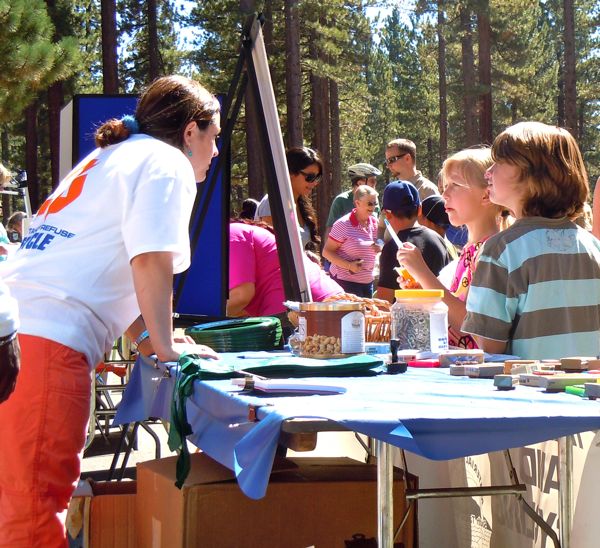
Kids learn about recycling at the South Tahoe Refuse table on Sept. 11. Photos/Kathryn Reed

Kids learn about recycling at the South Tahoe Refuse table on Sept. 11. Photos/Kathryn Reed

With nearly 3,000 people meandering through Bijou Community Park, which was closed off to vehicle traffic, it was one of those Tahoe Saturday’s to bask in the sun, mingle with friends, watch kids scamper about, munch on food from local restaurants, and visit a variety of informational booths.

Tahoe Mountain Milers started things off with a poker run with 30 participants.

Anthony Davis kept things rolling as he emceed the event and had people grooving to the music in between the various stage acts. Demonstrations from Miss Marcia’s dancers to karate to gymnastics brought out hundreds to watch.

At the other end of the park, near the entrance, kids scampered on the big equipment the city brought out. Lots of kids visited the firefighters based on the number of plastic red fire hats being worn all over.

Kristopher Fisher, 10 was all smiles as he climbed into the cab of the Kodiak snowblower with its 1,000 horsepower engine and 1,470 pounds of torque.

In between the areas gymnasts practiced in the stretch of lawn that was put in by park staff last year. Children played on the permanent equipment installed this year as well as on and in the bouncy house apparatuses brought in for the bash.

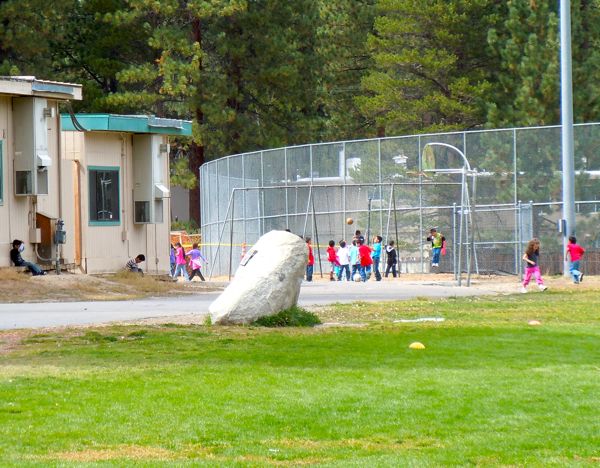
Exact attendance numbers are hard to calculate because not everyone walks in the main entrance. And with it being free, no tickets are sold. About 2,700 attended last year and it’s anticipated about 300 more came this year. It helped that there wasn’t a downpour this year.

People even showed up before the 11am start time, clearly redefining Tahoe time.

ngg_shortcode_1_placeholder (Click on photos to enlarge.)


Film raises disturbing questions about Sept. 11, 2001

Publisher’s note: The American Legion in South Lake Tahoe will have a ceremony for Patriots Day at 11am.

By Kathryn Reed

Filmmaker Dylan Avery calls his film “Loose Change” one based on facts, not one based on conspiracy theories.

movieIt was first released in 2005 and has had subsequent updates. The latest version came out in 2009. That is the one I recently viewed.

It’s all about Sept. 11, 2001. The documentary goes back in history to Hitler’s rise in Nazi Germany, includes events leading up to the day the Twin Towers were leveled, and delves into the aftermath in the years that followed.

I wasn’t in the country Sept 11. I wasn’t inundated with news stories. I didn’t fear for my life in ways others did in thinking the United States would be struck again by terrorists.

As a journalist and ardent supporter of the First Amendment, I was alarmed to read about the government cracking down on journalists who sought the truth and questioned the government. What was there to hide? Why were the powers that be scared?

Our government never deserves our unquestioned allegiance. Look at what we did to our citizens of Japanese descent after Pearl Harbor was bombed. Look at how we shuttled Native Americans off to reservations – a nightmarish issue that continues to have repercussions today. Look up Tuskegee syphilis experiment if you want to know what the government has done. Look in the produce aisle to see altered food products without substantive testing on them to know what they will do our bodies in years to come.

Could the government have brought down the Twin Towers in New York? Yes. Did it? I don’t know.

The film raises chilling questions.

What were those puffs of smoke that appear to be detonation charges from various floors of both towers? Why did it seem to implode like a planned destruction more than it resembled an explosion?

I didn’t realize the steel from the buildings was immediately hauled overseas. Why wasn’t it kept on U.S. soil for structural engineers to analyze the integrity of the steel, to learn from this collapse to know how to fortify future buildings?

When I flew back to the States from South America in December 2001 it was to New York (via Miami) to spend New Year’s Eve with Mom and my sister, Pam.

We were fortunate to visit Ground Zero the day it opened to the public. Rubble remained. But it was more like a crater.

Until this film, I had never seen footage of the plane hitting the first tower.

I had not realized until this film that no debris from the planes that hit the Pentagon and crashed in Pittsburgh was found. Like the filmmaker, I wonder how this is possible.

I wonder to this day how we took the great leap to assume Saddam Hussein and those still missing weapons of mass destruction had something to do with 9/11. I wonder why my nephew has served two tours in Iraq. I worry about his safety even more now that in July he graduated from Special Forces training and is a Green Beret. Yes, it’s his choice. He freely joined the Army.

As his aunt, I still worry – about him, and all the other men and women our government sends to fight its battles. I have yet to have someone explain to me how this is our war. Our being the people of the United States’ as opposed to the our the government wants us to believe in.

Seeing “Loose Change” further confuses me and infuriates me.

On this somber ninth anniversary of 9/11 all I can do is feel empty.


Guy from Tahoe does more than ski, put on bike events

By Mary Cook

Curtis Fong, best known for his television and radio personality The Guy from Tahoe, is not your typical guy from Tahoe. He seems to live two lives: that of a mountain goat and that of an on-the-go urbanite.

And he’s much more than the guy putting on Sunday’s 8th annual Tour de Tahoe – Bike Big Blue 72-mile ride around Lake Tahoe or the guy who writes the ski report for Lake Tahoe News and delivers it on KTHO FM-96.1.

Curtis Fong likes fast cars, bikes and skis. Photo/Provided

Curtis Fong likes fast cars, bikes and skis. Photo/Provided

Fong fell in love with Tahoe as a teenager. He learned to ski at 12. At 18, while peers were pulled into the Vietnam War, Fong “got lucky” because he received a high lottery number in the draft and went to college. After four years studying photography at Sacramento State, Fong rented a cabin in Tahoe and ran a successful photo concession at Kirkwood the year it opened in 1971. Within two winters, Fong advanced to advertising and public relations director at Kirkwood.

In 1983, Fong left Kirkwood to work for KTHO AM-590 radio in sales. He presided as station manager for its FM counterpart, K-Zephyr, until 1985. During this time, Fong took up cycling, loving it so much he and his buddies formed a club, known as the Alta Alpina Cycling Club.

The Death Ride was organized by Wayne Martin in 1980, and became the official ride in 1981. Fong functioned as the Death Ride manager for 11 years.

The Death Ride got Fong’s wheels spinning — it was his guinea pig event. He formed TGFT (The Guy from Tahoe) Productions, a sports marketing company, in 1989. Then, in 1990, he christened his company with the Comstock Silver Century, a 100-mile, 9,000-vertical-foot historical ride out of Carson City and Virginia City.

“It was meant to be a training ride for the Death Ride,” Fong stated.

As it turns out, this route was a training ride for three-time Tour de France winner Greg LeMond.

From there, Fong created America’s Most Beautiful Bike Ride in 1991. He also started OATBRAN, which stands for One Awesome Tour Bike Ride Across Nevada.

Now, in its 19th year, the tour follows 420 miles of Nevada’s loneliest highway, Highway 50.

Fong harbors a soft spot for untouched places, stretches of desert speckled with sagebrush, sliced by long, rolling highways. In addition to his homes in Gardnerville and Stateline, Fong owns a house with 3 acres “in the middle of nowhere,” also known as Gilman Springs, Nev. During a recent weekend at this property, he witnessed a meteor shower, spent time at the local hot springs, and trekked to nearby ghost towns with the help of his H1 Hummer.

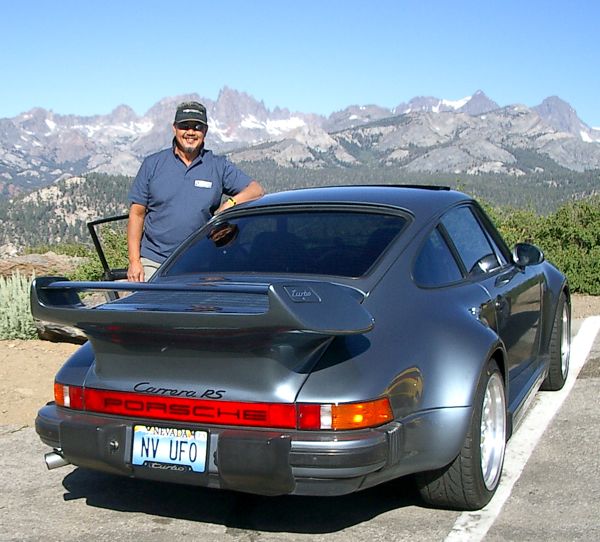
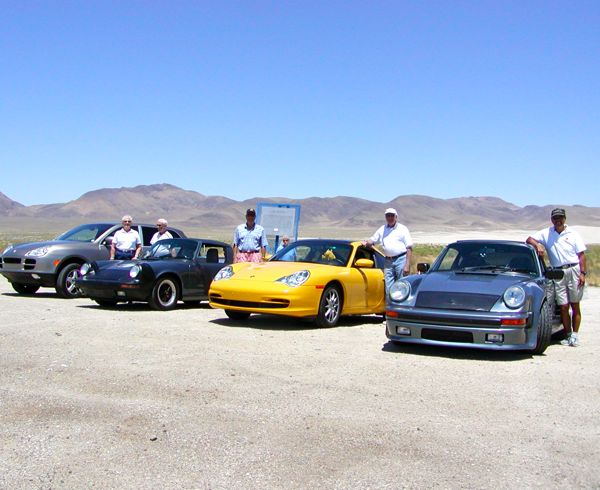
Fong’s desire for wide-open spaces and miles of lonely highway predisposed him to a love affair with high-performance vehicles. Inevitably, about 20 years ago, Fong sided with Porsches, believing them to be “works of art.” In the winter, he does road trips to Aspen, Sun Valley, and British Columbia in pursuit of his other passion — skiing.

Porsche drivers at Sand Mountain. Photo/Provided

Porsche drivers at Sand Mountain. Photo/Provided

(Fong also coordinates the Heavenly R.A.T.S. League Race Series and mogul freestyle events for Sierra-at-Tahoe.)

He doesn’t mind flying, but if he has the time, he loves the drive. “I like to see the country, discover new roads,” he says.

About 10 years ago, Fong became involved with the Porsche Club of America (PCA), and ever since he has been collecting Porsches. He owns everything from a 356 Speedster to a 911 Turbo, built for street and track. He attended driving school in Reno and obtained a test and tuner’s license, which allows him to buy track time at the Reno Fernley Raceway. Two years ago, Fong was the vice president of the Sierra Nevada PCA and in the same year he put on his first show-and-shine car show called Porsches in the Park.

Fong’s experience with the OATBRAN bike ride spawned the idea of a car tour across Nevada. Now, four summers in counting, Fong has led a group of Porsches across Nevada on Highway 50, culminating in a three-day, two-night tour. Last year, in August, he also took a group of Porsches around Lake Tahoe, with a lunch-stop at Northstar-at-Tahoe and dinner at Lakeside Beach Grill.

In the 1990s, Fong split time between radio and television. He started calling in to radio stations in the Bay Area to do Tahoe ski reports. One Monterey station disc jockey forgot Fong’s name during his introduction and arbitrarily dubbed him “The Guy from Tahoe.” Fong rolled with the mistake, cueing in with, “Hi, this is Curtis Fong, The Guy from Tahoe.” The nickname stuck and he still uses it to this day with his mountain resort reports on K-Tahoe, his “What’s Up Tahoe?” segments on Outside TV and with Lake Tahoe News.

After 39 years of living in Tahoe, the 60-year-old possesses top-notch credibility in the area’s media and recreation industries. While the lure of other places (Hawaii; Park City; Bend, and Sedona) beckoned, he stayed true to Tahoe.

“With all the friendly people, with all the recreation that is here, there is no reason for me to go anywhere else,” Fong says.

Every once in a while, his ambitious nature gets the best of him; he has to remind himself to pause and gawk at the flawless sapphire that is Lake Tahoe. He encourages all Tahoe residents to do the same: “We all need to stop and say, ‘Wow, this is why I’m here.’”

On Sunday, thousands of others will say something similar as they participate in his annual Bike Big Blue cycling event.


South Shore redevelopment — yesterday, today, tomorrow

By Kathryn Reed

STATELINE — The faces of redevelopment – past, present and yet to come – brought some clarity to an issue that tends to be as appealing as drinking vinegar.

All three speakers on Sept. 8 spoke of the virtues of redevelopment and how this tool has, is and will help the South Shore.

Redevelopment past

Jaye Von Klug, South Lake Tahoe’s former redevelopment manager, came up from Southern California to dispense a bit of history about the subject to Soroptimist International of South Lake Tahoe at Harveys. Nancy Kerry, who works in the department now, spoke of what is going on today. Patrick Rhamey, director of real estate development for Edgewood Companies, talked about his company’s desires to remake the Stateline area.

Von Klug said it’s normal for a project to take 10 years to go from an idea to the doors opening. At the rate Edgewood’s project is moving (plans first went to TRPA in June 2008), a decade-long ordeal might be playing out.

Von Klug spoke mostly of the Park Avenue project, aka Heavenly Village. She touched on the five developers working under one contract, how the gondola sufficed as the mitigating transportation component for the whole project.

She talked about how when she was in charge, parent companies of the developers were bonded so if something happened, no one could hide behind a limited liability corporation. Von Klug didn’t mention how just the opposite occurred with the bankrupt convention center. She left in 2002, before the papers for that project were signed.

Although Von Klug praised the City Councils at the time for their vision and willingness to go into debt $100 million for Heavenly Village, she failed to mention how the parking garage has never made a penny and drains more than $50,000 a year from city coffers, and that on her watch the Redevelopment Agency took $7.2 million from the general fund to pay for the Heavenly Village project. The general fund pays for roads, bike trails, infrastructure, those sorts of things the city is lacking.

Redevelopment – present

Nancy Kerry talks about redevelopment on Sept. 8. Photo/Kathryn Reed

Nancy Kerry talks about redevelopment on Sept. 8. Photo/Kathryn Reed

“Redevelopment can be controversial. We argue about facts based on feelings,” Kerry said.

She said redevelopment in a city is analogous to individuals remodeling their homes.

Kerry pointed out the public needs to be involved in the process to ensure its voice is heard.

“People forget the government is themselves,” Kerry said.

The Redevelopment Agency has been able to secure grants for programs like the ongoing lead paint removal from private residences and the small business coaching program – proving that it’s not just about building something.

But the state keeps taking money away from redevelopment agencies. South Lake Tahoe was stripped of $1.7 million this fiscal year and could lose another $400,000 if the state has its way.

Though it’s been written many times, Kerry reminded the group that even though the convention center project is stalled, the property is worth more now than when buildings were on it. This means the city is reaping more in property tax with concrete and rebar than when operating businesses were there a few years ago.

Redevelopment – future

Edgewood Companies owns 500 acres on the South Shore, with another 4,500 in the Carson Valley.

“The 500 acres here is 90 percent of what the company is about,” Rhamey said.

With Columbia Sussex securing an extension on the Horizon casino lease until March 2014, the focus of the Park family is on developing the 230-room Edgewood Lodge on the ninth hole of Edgewood Tahoe Golf Course.

Rhamey said what the Horizon is likely to become is a center focusing on recreation first and entertainment second. He said the outdoor concert series is working in the summer at Harveys, so maybe something indoors could be profitable if the Horizon were overhauled.

“It’s a real brain teaser what economically might work,” he said of the Horizon property. “I would love to tear the whole thing down.”

For now, the future Edgewood Lodge is slated to run as a hotel, though some time-shares may be thrown in the mix. The intentions are to not be able to close off rooms to make it into bigger or smaller units like what can be done with some of the Marriott rooms across the street.

“We will raise the bar for lodging on the South Shore and improve the golf course,” Rhamey said. “If you look at food and beverage, hotel occupancy on the South Shore, those numbers decreased by 40 percent in the past four to five years. Edgewood’s revenues are not down at all.”

What Rhamey calls “the world’s most scenic parking lot” will be moved from the shoreline. The project calls for part of the beach to be public.

A sticking point may be acquiring the necessary tourist accommodation units to make the hotel a reality. Edgewood doesn’t want to tap into the supply at the Horizon even though one wing is closed much of the time. Without a definitive plan for that property, Edgewood isn’t ready to part with those units.

TAUs, as they are called, are limited per the Tahoe Regional Planning Agency. This makes them a commodity that can be sold and traded. Edgewood wants South Lake Tahoe to give up TAUs dilapidated hotels are using. When Dave Jinkens was city manager he was opposed to such horse-trading. With Tony O’Rourke at the helm and three new council members coming on board in December, it could be whole new ballgame.

The city is in a position to bargain – maybe ask for a convention center to be built. Talks are going on now about the Edgewood-South Tahoe TAU situation.

Rhamey, too, said it’s important for the public to get involved – especially in the TRPA’s Regional Plan. He never mentioned the League to Save Lake Tahoe, but alluded to the group as being obstructionists to redevelopment and the Regional Plan.

“I think we need to look at things as a region, then everything will work out in the end,” Rhamey said.


Tahoe fire officials plead for cash from congressman

By Kathryn Reed

With charred trees all around him and having driven through much of the neighborhood that will forever be scarred by the Angora Fire, Rep. Tom McClintock took it all in.

“I’m in fact finding mode right now,” the Republican from Granite Bay said at the end of Tuesday’s tour.

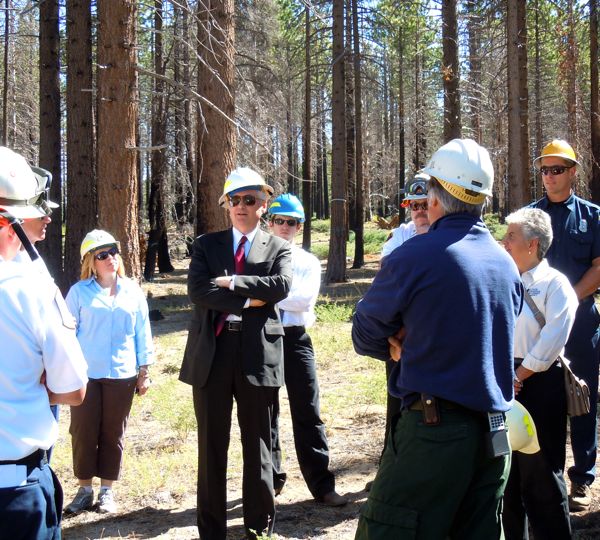
Rep. Tom McClintock, center, listens to Lake Tahoe Basin fire officials on Sept. 7. Photos/Kathryn Reed

Rep. Tom McClintock, center, listens to Lake Tahoe Basin fire officials Sept. 7. Photos/Kathryn Reed

He would make no statement how he might help bring more cash to the Lake Tahoe Basin to help create a healthier forest. But he does favor allowing timber to be harvested so the cash that comes from that work would pay for the harvest or thinning.

“This excess timber will come out one way or another. It will either be carried out or burned,” McClintock said.

The congressman started the day on the West Shore to see what lingers from the August 2007 Washoe Fire that was started when barbecue flames got out of hand. Five homes and nearly 20 acres were destroyed.

A contingent of fire officials from throughout the Lake Tahoe Basin escorted McClintock on the tour, pointing out how the West Shore was not treated and how parts of the Angora burn area had been.

Walking in near the end of Zuni Street in an outfit better suited for the halls of the Capitol than the forest of Tahoe, McClintock was surrounded by charred trees. Some have blue paint patches, signifying they will soon be felled.

This section of the June 2007 fire that reduced 254 houses to ash and burned nearly 3,100 acres is close to the ignition point of the illegal campfire.

Kit Bailey

Kit Bailey

“If the SEZ (stream environmental zone) had been treated it would have reduced the impact to the houses downwind and downstream,” Kit Bailey, fire chief for the U.S. Forest Service in Tahoe, said.

This means had there been funding for more thinning and had the agencies been playing nicer at the time to allow for such work, maybe some of the destroyed houses would still be standing.

The Sept. 7 field trip was all about lobbying the congressman for money. He is on the Natural Resources Committee. For that committee he is the lead Republican on the Subcommittee on Water and Power, and he is also a member of the National Parks, Forests and Public Lands Subcommittee.

The fire officials were able to the get the ear of Sens. Harry Reid, D-Nev., John Ensign, R-Nev., and Dianne Feinstein, D-Calif., when they were in the area last month for the annual environmental summit. (No one can remember the last time Sen. Barbara Boxer, D-Calif., set foot in Tahoe.)

With McClintock’s side of Congress being responsible for appropriations, his support will be key when reauthorization of the Lake Tahoe Restoration Act comes up for a vote. This piece of legislation would bring $415 million to the Lake Tahoe Basin over eight years. A chunk of it would go to fuel reduction projects.

The Forest Service gets a base amount of cash each year for these projects, but it fluctuates. It’s stimulus money and cash from Southern Nevada Public Lands Management Act that have helped the USFS and local fire agencies to thin as much as they have. But both of those supplies are running dry.

This year the Forest Service expects to treat 2,000-3,000 acres mechanically and another 1,000-1,500 acres by hand.

Lake Valley Fire Chief Jeff Michael told McClintock how his department has money to fund two year’s worth of projects. If more is not secured, he expects that 20-person team will be out of work.

“Eventually we are going to run out of state and federal funds and it will be up to the land owner,” Duane Whitelaw, North Tahoe Fire Department chief, told Lake Tahoe News. “Some of the challenges fire districts have is we don’t own the land we’re treating.”

It is California Tahoe Conservancy and state parks property he is talking about.

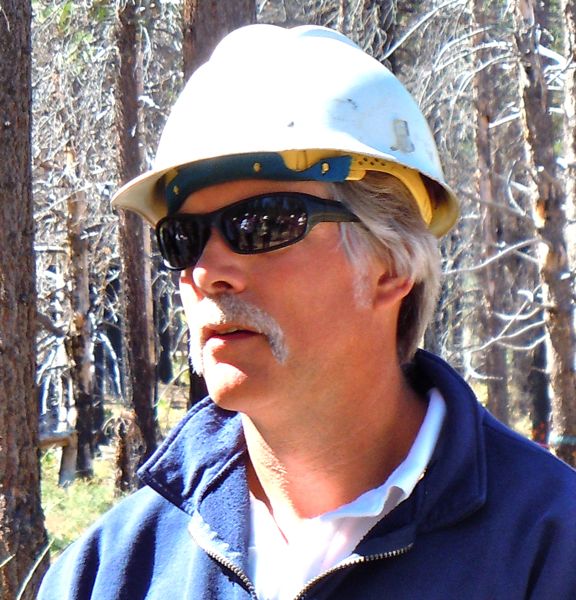
Bill Holmes

Bill Holmes

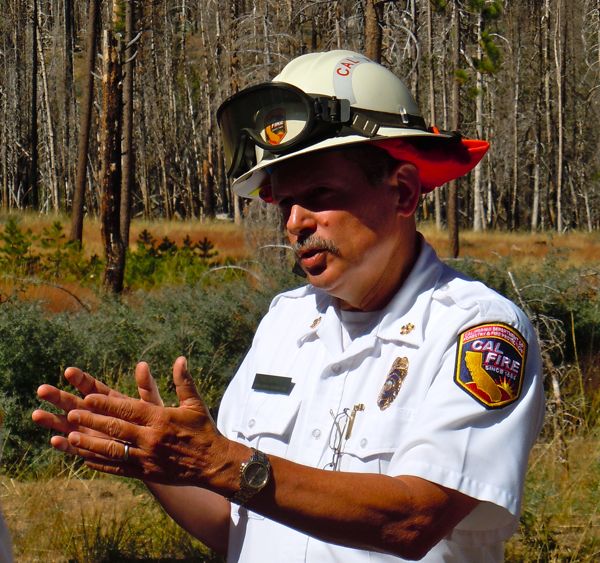
Bill Holmes, unit chief with CalFire, spoke a bit about how the building code regulations that went into affect Jan. 1, 2008, are a step in the right direction, but he wishes wood decks had been banned.

“Wood decks are the first thing to catch fire,” Holmes said to the group standing in the forest. “If that catches fire, the house catches fire.”

He said the decks are a greater threat than shake roofs because the number of shake roofs is minimal now.

Dennis Cocking with South Tahoe Public Utility District was on the tour giving a bit of history how his agency had put in about $18 million in infrastructure improvements to the area before the fire hit. That allowed water flow to be continuous.

On an average day the agency produces 12.5 million gallons of water. On June 24, 2007, the first day of the Angora Fire, 24 million gallons were produced.

“That’s why infrastructure improvements are so critical,” Cocking said.

South Tahoe PUD is hoping for cash from the LT Restoration Act, too.

For the fire districts, this is the third year of a 10-year abatement plan. The problem is, without more money, the plan won’t be finished. Whitelaw said the purpose of having McClintock walk in the forest was to see what wildfires can do, but also see what thinning projects can do.