Judge suspends prosecution of Phillip Garrido; sanity at issue

By Sam Stanton, Sacramento Bee

A judge in Placerville suspended the criminal prosecution of accused kidnapper Phillip Garrido after his public defender declared she doubted his mental competency to face trial.

The judge ordered a hearing for Oct. 8 on whether to appoint a mental expert to examine the 59-year-old alleged kidnapper of Jaycee Lee Dugard, who was abducted in 1991 at the age of 11.

Phillip and Nancy Garrido

Phillip and Nancy Garrido

The judge said he would allow the prosecution of Garrido’s wife, Nancy Garrido to proceed. But he said he had his own doubts about Phillip Garrido’s competency after public defender Susan Gellman said she, too, doubted his competency. The judge suspended the case.

The development could delay the prosecution of Phillip Garrido indefinitely.

His wife still faces a hearing Oct. 1.

Read the whole story


Tallac Association struggles to be financially solvent

By Kathryn Reed

CAMP RICHARDSON — Negative numbers fill the ledger of the Tahoe Tallac Association – putting the board in the awkward position this week of offering the executive director a contract extension with little or no money to pay her.

Staff (high season has three full time and four part time) has been cut, though it is a bit normal to make cuts as the season winds down; Executive Director Lori Cramer and Director Carl Wooland are essentially working as volunteers despite the fact they should be paid staff; rates on weddings have been cut in an attempt to lure brides and grooms; grants are be sought; and an advisory committee is in place to help right the unstable ship.

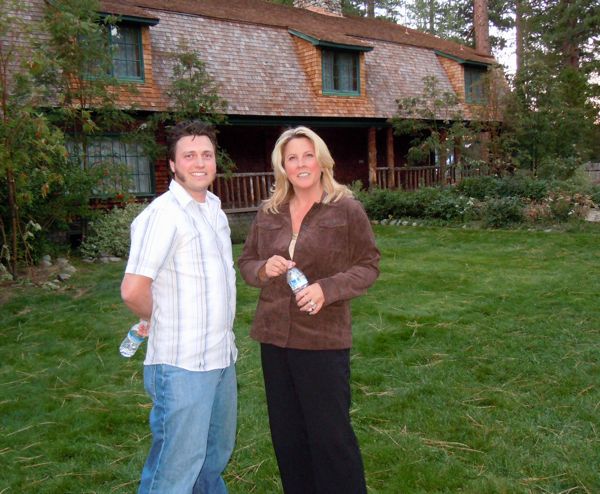
Carol Wooland and Lori Cramer are almost working for free for the Tahoe Tallac Assocation. Photo/Kathryn Reed

Carl Wooland and Lori Cramer are almost working for free for the Tahoe Tallac Association. Photo/Kathryn Reed

As of Sept. 20 the TTA had $2,617.19 in the bank.

“I’m having a hard time selling the site (for weddings) without the lawn,” Cramer told the board Monday.

In the past, the association has rented out the Grand Hall at Valhalla for weddings, with receptions often on the adjacent grassy area. But the U.S. Forest Service, which owns the property on the outside of the South Lake Tahoe city limits on Highway 89, recently nixed that practice.

The decision resulted in needing to refund $9,000 worth of deposits for the 2009 season.

Rental income, which is wedding and the holiday faire, raised $53,215 for the fiscal year ending Sept. 30. For 2008-09 that figure was $118,451. That’s a difference of 55.1 percent.

One of the problems is the Forest Service doesn’t usually manage buildings. That’s one reason why the agency was going to burn all the buildings down when it took ownership of the historic sites that were once home to wealthy San Franciscans.

Jonathan Cook-Fisher, special uses program manager for the Forest Service, has been in the position for less than a year. He isn’t familiar with the 30-plus year history of his agency’s contentious relationship with the Tahoe Tallac Association.

Cook-Fisher wants to work with the TTA so its annual Valhalla Arts and Music Festival thrives. The summer-fall festival season is the purpose of the TTA. It’s just that weddings came along and helped keep the nonprofit afloat.

The Forest Service has a financial interest in ensuring TTA is financially solvent. The Granger-Thye permit sends about 15 percent of gross profits to the USFS to be used solely for restoration at the site.

Cook-Fisher said he doesn’t know why the lawn was once allowed to be used for weddings and now isn’t.

The TTA board says other Forest Service staff has reinterpreted the environmental impact statement and special use permit that it works under.

The association claims it lost between $5,500 and $11,000 by not being able to stage outdoor culture events on the lawn. What irks the board even more is that it pays to maintain the lush green expanse to the tune of $7,000 year.

When the two sides do meet, another issue the TTA will bring up is the gate not being open and the parking spaces it believes are theirs that the USFS keeps for itself.

Again, these are issues Cook-Fisher said he is not well versed in.

The TTA is crafting a letter to send to Terri Marceron, forest supervisor, and hoping for a meeting before she heads to Alaska.

Cook-Fisher said he is ready to talk to TTA now.

“I would like to move from emails and informal discussions to a formalized proposal (from them) that this is what (they) want to do and why. We are not quite there, but I think we will get there,” Cook-Fisher said. “We like to see (from all permitees) some sophistication of how folks develop a business plan, what service they provide to the public and how it all works together.”

The Tallac Association has a plan, but believes the Forest Service changes the rules. TTA has done some number crunching, extrapolating what the loss of use at the site per current USFS rules means to the entire South Shore bottom line, not just TTA’s. It is in the millions of dollars when things like lodging for the people not able to use the site is added in, linen rentals not booked, photographers not used, restaurants not frequented and so on.

The TTA is not blaming its meager bottom line solely on the Forest Service. It knows it has to change some thing going forward regardless of what the landowner does.

This is Cramer’s first season at the helm after the board let the previous executive director go. Ticket prices did not necessarily reflect what it cost to bring in a performer. Grants have not been written for all the money that is out there.

A tentative schedule was presented to the board for the 2011 season that calls for recurring events like a local band performance the first Thursday of each month. The idea is people would get used to being at the site more consistently.

At the end of the evening the board met in closed session to discuss Cramer’s future. They offered her the executive director’s job and she wants it. It remains to be seen if a contract can be worked out along with a conflict of interest clause crafted. Executive directors have made in the mid-$40,000s in the past, with no benefits. The conflict issue is Cramer has a wedding business. This past season she was not permitted to schedule any weddings at Valhalla for her business.

TTA’s annual gala fundraiser is Dec. 4. The Tahoe Improv Players are having a benefit performance Sept. 27. TTA also sells memberships.


South Lake Tahoe council candidates delve into issues

By Kathryn Reed

STATELINE — Fiscal responsibility and transparency in government were overriding themes of the nine South Lake Tahoe City Council candidates who attended the first forum of the election season. One person chose not to attend.

Soroptimist International of South Lake Tahoe hosted the Sept. 22 event at Harrah’s Lake Tahoe. Based on the order they will appear on the ballot, candidates gave one-minute opening statements. Then they each answered four questions.

Soroptimist Ann Swallow asks the candidates questions Sept. 22. Photo/Kathryn Reed

Soroptimist Ann Swallow asks the candidates questions Sept. 22. Photo/Kathryn Reed

Some substance and true examples of what they want to do was provided. Plenty of rhetoric and cliché responses were part of the mix. Sometimes the question was never answered.

Doug Cichowicz is concerned about how tax dollars are spent and believes there is waste at all levels of government.

Joy Curry wants to move South Lake Tahoe forward by improving the community, making it safe, and creating transparency in government.

Steve Kubby believes it’s impossible to be a First World resort town with Third World roads and bikes.

Adrian Gooch says having worked for the city in redevelopment gives her the advantage of knowing the nuts and bolts of how the organization works. She wants to put pride back into the community.

Alice Jones would use her knowledge as a certified public accountant to help get the city on secure financial ground, work on long-range planning, and look into dealing with aging infrastructure.

Claire Fortier believes economic stability will come from geotourism, recreation and green business.

Angela Swanson opened with not asking for the group’s vote, but instead their support, explaining a new vision for South Tahoe will take the effort of everyone in that room and outside those four walls to bring change – that it can’t be done by just five councilmembers.

Georg May agrees there needs to be change and experience is important, but doesn’t believe that a person has to have lived here nearly a lifetime to contribute to the future good.

Tom Davis, who has been off the council for the last six years after serving for 12, said when things are bad is when great leadership is needed – and said he is the one with those leadership skills.

Question No. 1: Criticism has been leveled on some in this race for having a distinct agenda. But the truth is everyone has an agenda, some call it a platform or issues, for why they are running. Describe your agenda.

Davis: The economy is his agenda. But he said it would take a council that can work together to bring change.

Cichowicz: Fiscal responsibility. He doesn’t understand why Industrial Avenue was repaved instead of streets that have heavier use.

Curry: She wants her children and grandchildren to be able to live in South Lake Tahoe with successful jobs.

Kubby: He believes the city is treating businesses like ATM machines and that needs to end. He wants the council to get back to basics – roads and bike paths.

Gooch: She, too, wants to get back to basics, to have the council set sound policy, be approachable, honest and operate with transparency.

Jones: She has two small children for whom she wants to help build a stable community through teamwork and long-range planning, as well as looking at expenditures and why no money was in the budget for roads during fiscally sound years of just a few years ago.

Fortier: She’s seeking a vibrant community through economic stability via creating a first-class recreation destination.

Swanson: She said it’s not her agenda she will bring to the council, but what she hears from the people as she walks the streets. They are telling her they want the basics to be better.

May: He wants a more sustainable community. To pay for improvements he proposes taxing water bottles and getting everyone in government to be able to write grants.

Question No. 2: PERS, the Public Employee Retirement System, is a drain on the city’s budget. How would you change the city’s benefits package for employees?

Curry: She likes how the city has been working to make changes and believes it’s important to be responsible with city contracts. She supports furlough days as a way to reduce costs. She also believes city employees deserve health benefits and a retirement.

Kubby: He doesn’t understand how the Finance Department has nine employees, especially when the city has a $3 million deficit. He pointed to retirement packages being a statewide issue.

Gooch: She just started collecting PERS. She said there are other agencies in the basin with better benefits than the city. She supports the changes that have been made, but does not believe more needs to be done.

Jones: She wants to compare South Lake Tahoe benefits to other cities the same size. But she also recognizes that if salary and benefit packages are cut too much, it will be difficult to find qualified people to hire.

Fortier: She pointed out the two ways of balancing a budget – putting money in, or taking money out. She would like to review PERS and the entire budget.

Swanson: With the city having seven bargaining units and a projected $12 million deficit over the next three years, she believes being a good employer means looking at the long-term issues.

May: He doesn’t want double standards with some employees getting one thing and new hires another.

Davis: Of the approximately 200 city employees, about half are employed by the police or fire department. He wants the best workers possible, but also wants the city to live within its means.

Cichowicz: He doesn’t believe it makes sense to only cut at the bottom. He wants PERS to be changed.

Question No. 3: The City Council also acts as the directors for the Redevelopment Agency. Many years ago the meetings were distinct, the agendas were distinct. Now it’s all blurred with most of the public assuming the council is making the redevelopment decisions. There was even a time when the mayor was not in charge of the agency portion of the meeting. Would you leave the status quo, revert to the old ways or have some other way to handle business for the two entities? And why?

May: He talked in general about redevelopment without answering the question.

Davis: He didn’t really answer the question except loosely to say there needs to be better outreach to the community.

Cichowicz: He didn’t answer the question, and instead talked about the convention center project.

Curry: She just talked about how wonderful redevelopment is.

Kubby: He sees redevelopment as a disease.

Gooch: She was the first person to quasi answer the question. She explained the City Council and Redevelopment meetings were thrown into one meeting to capture everyone who came to a council meeting. She didn’t elaborate if she would keep the status quo or not.

Jones: She’s adamant the council should oversee redevelopment and questions some of the accounting practices in redevelopment.

Fortier: She grasped the question – it had to do with transparency. But she didn’t answer the question. She wants everyone to understand the ramifications of redevelopment.

Swanson: She wants transparency to come through having study sessions so the process is slowed down so the public understands the process and/or project.

Question No. 4: Will you be taking the city’s health benefits, which is one of the perks of being a councilmember? Why or why not?

Kubby: He thinks he may need them by the time the job is done.

Gooch: With no past employee being elected to the council, the issues with getting retiree medical benefits at the same time as council benefits has not been dealt with. She believes she’ll use council benefits as her supplemental source.

Jones: Undecided.

Fortier: Undecided.

Swanson: Maybe.

May: No.

Davis: Yes, as a supplemental to Medicare, which he goes on in January.

Cichowicz: Not likely.

Curry: No.

The South Lake Tahoe Lodging Association, South Tahoe Association of Realtors and Lake Tahoe News will be putting on a candidates’ forum Oct. 14. More details will be posted soon.

Lake Tahoe News sent questions to the council and Douglas County Commission candidates to garner their viewpoints on a range of topics. Responses will be printed starting Oct. 1.




Restoring Cold Creek’s meander in High Meadow

By Kathryn Reed

Freel Peak at 10,000-plus feet looms in one direction. Monument Pass in another. Behind the neighboring mountain is the Sky chairlift at Heavenly. Through the trees, though not visible until the descent, is Lake Tahoe.

Not a bad work environment.

This is High Meadow.

Excavator Billy Newman puts sod into the new channel of Cold Creek at High Meadow. Photos/Kathryn Reed

Excavator Billy Newman puts sod into the new channel of Cold Creek at High Meadow. Photos/Kathryn Reed

But High Meadow could be more aptly named Construction Meadow. This is because of the multi-year restoration project that started in August. By the time U.S. Forest Service crews complete the project in 2012, Cold Creek will meander like it did before cattle grazed in the meadow, willows will sprout from the bank, the dead beetle-infested lodgepoles will be hauled away, and wildlife will have returned to the area.

“The goal here is in five years we don’t want people to know we’ve been here,” said Stephanie Heller, hydrologist with the Forest Service and project lead.

Eighty of the 280 acres in the meadow are being restored.

This land was bought from a family trust in 2003, with a private cabin still on the property near the entrance to the area off High Meadow Trail, which is off Pioneer Trail on the South Shore.

The area was last grazed eight years ago. Cows like willows – that’s why there aren’t any. Crews are starting to plant them along the new channel.

Work will wrap up for the season on Oct. 15. Next year it’s all about letting the vegetation along the new stream channel take hold. Filling in the old channel will take place in 2012.

The $2 million meadow restoration is being paid for with money from the Southern Nevada Public Land Management Act.

What the public will notice most once the meadow project is done is that this flat, expansive land mass will be wet in the spring, more lush and possibly producing wildflowers like not seen by current generations.

“Now the stream doesn’t get out of the bank,” Heller said. “It will average 30 days each year out of the bank. It helps get the fine sediment on the flood plane. The meadow should be a lot greener. Now it browns up early.”

The 18 people working on the project are all Forest Service employees. Driving in (which is only allowed in a Forest Service vehicle) it looks more like a major construction site than a serene meadow. Boulders and smaller rock, along with piles of dirt are under the power lines. Felled trees are in a pile.

Everything being used in the meadow restoration is native. Those piles of rocks about a quarter mile away are being dumped on Tuesday into the freshly dug new channel to create a stream riffle. The dirt will be used to fill what will be the old channel of Cold Creek.

Excavator Billy Newman delicately places swatches of sod. His precision is incredible, making it look like the large yellow piece of equipment is being operated with velvet gloves.

Building the stack sod bank will help establish vegetation on the bank.

“I think the restoration is broader than sediment. This will be a major habitat restoration,” Heller explained.

She anticipates this project benefiting the area’s entire ecosystem – aiding the goshawks that nest nearby, creating amphibian habitat, having Cold Creek potentially be home to various fish species, macro invertebrates, butterflies, and warblers and other birds calling the high elevation meadow home.

At 7,700 feet, this is the highest meadow restoration project the Lake Tahoe Basin Management Unit has undertaken. Cookhouse Meadow, off Luther Pass, was at 7,300. Big Meadow, one day, will resemble its sister meadow.

The meadow restoration is one of four projects in the area. Aspen stand restoration, fuel reduction and trail maintenance are the other projects.

While Heller and her crew work on the meadow, Jacob Quinn, USFS trails coordinator, is working downstream on 2.2 miles of trail along Cold Creek.

“We tried to maintain the character of it,” Quinn said of the trail. The work to reconstruct the existing trail and reroute some areas will be done by the Oct. 15 grading deadline.

Next summer the plan is to rebuild the trail to Monument Pass. The road to Star Lake will be turned into a trail.

The aspen restoration is necessary because with years of fire suppression conifers have crowded out the smaller trees. As this higher elevation some of the shimmering leaves are already yellow.

Trees being taken out are ones encroaching on the aspens, the beetle-ravaged stands and the ones posing a fire threat.

For more information about the project, click here.

ngg_shortcode_0_placeholder (Click on photos to enlarge.)


Tahoe Improv Players’ raucous act returns for benefit

By Kathryn Reed

CAMP RICHARDSON — A night of laughter – that’s how the Tahoe Improv Players should promote their shows.

The August performance was supposed to be the last of the season; one of the reasons why I made sure it was my first time to ever see the comedic cast. A last-minute benefit show has been added for Sept. 27. The proceeds go toward maintenance of the Boat House Theatre where the show is staged.

Tahoe Improv Players: Pam Taylor, Frank Riley, Dave Hamilton, Jayme Foremaster, Gerry Orton, April Foiles

Tahoe Improv Players: Pam Taylor, Frank Riley, Dave Hamilton, Jayme Foremaster, Gerry Orton, April Foiles

The three of us couldn’t stop laughing. To be so quick-witted in such an unscripted environment is impressive. The direction they took story lines, the richness of the delivery, the way they worked together – it was so much better than many traditional stage presentations.

If you’ve seen the television show “Whose line is it anyway?”, then you have an idea of what this improvisational form of comedy is all about.

Many in the audience had seen this group perform before. What keeps it fresh is getting input from the audience.

With it being interactive and fast-paced, there is no time for boredom. The only issue with time is wishing it didn’t end.

“From the inside perspective, the most difficult part is not thinking. Everything occurs within the now. You are trying to really not edit and not get into trying to think what the audience will like, but more what comes to mind without editing,” Gerry Orton said.

Orton is the director of the handful of players. He got involved with the comedic art form after taking a class from Dave Hamilton at Lake Tahoe Community College.

Hamilton is one of the nearly 75 people who have been part of the Tahoe Improv Players, and was on stage this summer.

Orton and Frank Riley created ComedySportz in 1993 – which did spoofs on sports. This group was part of a loose national franchise.

Gerry Orton is much more than the director of the improv players. Photos/Kathryn Reed

Gerry Orton is much more than the director of the improv players. Photos/Kathryn Reed

From there, Orton and Riley started Tahoe Improv Players. With Orton residing mostly in Monterey now, the number of shows at the lake is limited. Most summers it is two shows at the Valhalla Festival of Arts and Music. This year it was three regular performances, with the benefit next week being the fourth.

A couple years ago the gang started to bring children onto the stage. This brings a whole new element to the drama because they are even more unpredictable than the adults they have gotten used to working with.

Even though the art form is improv, the five players plus Orton and pianist Dave Fabrizio do rehearse a bit. They work on scene building, character development, staying in the now, spontaneity exercises and listening skills.

“There are exercises and games that sharpen our wit a bit,” Orton explained. “I wish some of our workouts could be some of our shows.”

New to the cast this year is Pam Taylor, though she has done improv before and has been in several local theatrical productions.

Jayme Foremaster is the youngest player Orton has worked she. She started at age 14. Now she is studying at the American Academy of Dramatic Arts in Los Angeles.

This year’s cast also includes April Foiles.

Benefit performance details:

Date: Sept. 27

Time: 7pm

Cost: $10 or $5, depends on your age

Location: Boat House Theatre, Valhalla Estate on the South Shore, click here for directions.

Advanced tickets: Via the website.


S. Tahoe houses get makeover to remove lead paint

By Kathryn Reed

Despite red tape saying danger, and doors and windows all taped up, this house in the middle of South Lake Tahoe has not been condemned. The residents are still living in it.

It’s getting the ultimate exterior paint job. But it’s not the typical job for contractor Doug Bolton with Carpets Plus Color Tile. A whole lot more rules must be followed compared to most jobs.

This project off Al Tahoe Boulevard is the first of many the city will fund with the $1.5 million grant it received from the federal government to rid homes of lead.

One reason South Tahoe qualified for the grant is 85 percent of the homes were built before 1980, which means most are likely to have lead in either the exterior or interior paint.

For Julie Mullen, the lead is just on the outside and just on the siding. The eaves and trim don’t have lead, so they can’t be painted with grant dollars. The grant also allows for just one color. Mullen, at her expense, is having Bolton paint her eaves and trim a different color than the siding.

“It’s a little slow because of all the precautions,” Mullen said. “They want to make sure (the chips) don’t fly anywhere.”

Bolton has wrapped up the work on the house and is expecting the final clearance this week. He is going to bid on another job today and has three more of these painting contracts lined up.

He said he first heard about the lead paint rule in a trade publication even though the Environmental Protection Agency had it on the books since the 1990s. It’s the Obama administration that is enforcing the stringent requirements to ensure houses with lead paint are secure and don’t have the dust flying everywhere.

When he started investigating about becoming certified, Bolton came across South Tahoe’s program and that is how he got involved. He agrees with Mullen that it takes more time because of all the precautions.

Mullen said the process to qualify to have work done went quickly. It was making the months worth of copies of documents that took the most time.

Age of the house and financial status of the residents are the big questions. Having children pushes people to the top of the list. (Lead paint poisoning causes learning disabilities and behavioral problems. It’s hard to get out of a person’s system.)

It’s the resident of the house who qualifies, not the owner. In this case, Mullen is the owner. She and her two children have lived there for 1.5 years, though she was born and raised in South Lake.

All potential houses are tested for lead with a $20,000 piece of equipment the grant paid for.

When Nancy Kerry, No. 2 person in the city’s Housing and Redevelopment department, applied for the grant she saw it as a way to give struggling contractors some work. Most of the jobs will be in the $5,000 to $10,000 range, but with people such as Mullen wanting more done the paycheck is even greater.

Other than the testing apparatus and paying for some classes out of town, the grant dollars are going into the local economy.

Ninety-three contractors took the special class to be certified to do the work. Seven of them took the advanced class to be a supervisor. The Environmental Protection Agency requires a supervisor on each job.

The certificates earned by the people working on the Mullen house are posted on a board in her front yard. She doesn’t mind.

“I hope people start to realize maybe they have lead in their houses too,” Mullen said.

Kerry said the city’s goal is to have 20 houses done by the end of the year. She expects 100 will be completed by the time the money runs out. It all must be done by 2013 based on the grant guidelines.

South Tahoe received a commendation letter from the Department of Housing and Urban Development for all of its accomplishments in the first year. Many grant recipients aren’t close to having the first house worked on.

Kerry is going after an $800,000 Healthy Homes Grant that would eliminate mold, mildew and radon from South Tahoe homes.

For more information about the lead paint program, call Nancy Kerry at (530) 542.6043.


Judge: S. Tahoe’s Lakeview Commons contract not valid

By Kathryn Reed

Lakeview Commons was dealt another blow Friday when a judge ruled the current contract is invalid.

What this means to the multi-million dollar overhaul of El Dorado Beach and the walkway in the center of South Lake Tahoe remains to be seen. But it’s doubtful any work will resume until spring 2011 at the earliest.

Lakeview Commons' contract deemed invalid. Photo/Kathryn Reed

Lakeview Commons' contract deemed invalid. Photo/Kathryn Reed

“The bottom line is we lost this (building season) to get after this project,” City Manager Tony O’Rourke told Lake Tahoe News on Sept. 19.

In what has been a muddled contractual process since June between South Lake Tahoe and potential contractors is taking a court to unravel. On Sept. 17 El Dorado County Superior Court Judge Steve Bailey ruled the contract with Reeve Knight and the city is void and invalid.

Bailey scheduled a hearing for Oct. 1 at which time he is likely to rule on whether Clark & Sullivan, the Sparks firm that brought the case to court, should be awarded the bid or if the city should start the bid process all over.

“We are arguing only the City Council can award a bid and the court cannot order the city to award a contract to anyone,” City Attorney Patrick Enright said.

Clark & Sullivan challenged the awarding of the $4.5 million bid after trees had been felled and excavating had begun. Bailey issued an injunction Aug. 30, which brought work to a halt. Reeve Knight’s subcontractors shored up loose dirt that week, essentially winterizing the project.

The bid was awarded Aug. 3 on a 4-1 vote by the City Council. Councilman Jerry Birdwell voted no because he did not believe all the bid documents were done properly.

This item was originally on the consent agenda, but was pulled by one of the council members. The consent agenda is for items not requiring debate. Clearly, that wasn’t the case for this subject.

Mayor Kathay Lovell has been a cheerleader for the project from the get-go. Now that it is mired in a court battle she is not returning calls.

Former City Manager Dave Jinkens was also a big proponent of the project. That is one reason why the contract was on the agenda at the last meeting he presided over, and why the groundbreaking on the project was the following day. His last day on the job was Aug. 6.

Enright believes if the judge throws the matter back into the council’s hands, the current council should decide if Clark & Sullivan is immediately awarded the bid or if the process starts over. If it starts over, it’s likely the council seated after the Nov. 2 election would vote on the next contractor. (Three new councilmembers will be elected.)

But it’s also possible no matter what Bailey decides next month that Reeve Knight will appeal the decision, thus dragging out the dilemma even longer.

Reeve Knight has not been paid a dime for the work that has been done. With the contract being deemed illegal by the judge, Enright said California law states the company does not have to get paid. But he also said the contractor could make an “equitable argument that they should get paid.”

Enright said the California Tahoe Conservancy grant that is funding the project is the likely source of payment for this and not city coffers even though the work was done without a valid contract in place.

It remains to be seen if any of the contractors will go after the city for legal expenses.


Tahoe area authors share works with receptive audience

By Kathryn Reed

CAMP RICHARDSON — Words danced off the tongues of writers as if they were lyrics. Words lingered in the air heavy with emotion. Words fell flat.

Mostly, though, the listener was left wanting more.

Jeremy Evans of South Lake Tahoe reads to a full house Sept. 17. Photo/Kathryn Reed

Jeremy Evans of South Lake Tahoe reads to a full house Sept. 17. Photo/Kathryn Reed

More words can easily be found, but it won’t be the author reading aloud.

Twelve authors delivered a rousing portrayal of literary brilliance Sept. 17 during the second annual Celebration of Writers Around the Lake at the Valhalla Grand Hall. Each read a segment of their work – all of which was on display. Many of the nearly 70 in attendance were snatching up autographed copies of fiction, nonfiction and poetry.

Krista Benjamin took something so ordinary and turned it into a whimsical poem of sorts.

“One thing about being a writer is you can be a shameless eavesdropper,” she said.

She was at an anthropology conference her husband, Scott Lukas, (who also read Friday night) was attending and started writing down what she heard in the hallway. It made for a fun transcript of sorts.

As with most poetry, it always sounds so much better spoken than read in silence. And with the authors’ speaking the words, the inflection is precise and delivered as intended.

Karen Terrey brought some regional lore into her work with references to Donner Party cannibalism with lines like: “Would you have to be dying to eat me?”

Scott Lankford and Jeremy Evans saw their published works for the first time that night. Lankford’s is titled “Tahoe Beneath the Surface: The Hidden Stories of America’s Largest Mountain Lake.” It didn’t capture me, but Sue had high praise for the reading.

Evans’ book is “In Search of Powder: A Story of America’s Disappearing Ski Bum.” The segment he read about a Mammoth ski bum, turned family man made me wonder if Evans saw a bit of himself in this vignette. I’m looking forward to the copy of his book arriving in my post office box.

Gailmarie Pahmeier, a poet who was at last year’s event, captivates an audience not only with what is being said, but how it is said.

Sue’s response when Pahmeier was done was, “Wow! She’s brilliant.” I concur.

Ann Ronald read the most disturbing piece. Her fictional book called “Friendly Fallout 1953” borders on nonfiction. The people aren’t real, but most of the circumstances involving the atomic testing in Southern Nevada and the subsequent fallout are very real.

I want to know more. But at the same time I don’t.

The writers featured on Sept. 17 were:

• Jeremy Evans, nonfiction, “In Search of Powder: A Story of America’s Disappearing Ski Bum”

• Scott Lankford, nonfiction, “Tahoe Beneath the Surface”

• Ann Ronald, fiction, “Friendly Fallout 1953″

• Janet Smith, poet, “All of a Sudden Nothing Happened”

• Michael J. Makley, nonfiction, “Cave Rock: Climbers, Courts, and a Washoe Indian Sacred Place”

• Suzanne Roberts, poet, “Shameless, Nothing to You”

• Gailmarie Pahmeier, poet, “New Poets of the American West”

• Karen Terrey, “Tangled Roots Writing”

• Jeanine Stevens, poet, “Caught in the Clouds”

• June Saraceno, poet, “Altars of Ordinary Light”

• Krista Benjamin, poet, “New Poets of the American West”

• Scott Lukas, nonfiction, “Fear, Cultural Anxiety, and Transformation: Horror, Science Fiction, and Fantasy Films Remade”

The event is put on by Tahoe Writers Works.


Kirkwood solves short-term power issue, working on final

By Kathryn Reed

Electrical power at Kirkwood is a highly charged subject – and not an issue easily followed without an organizational chart.

This week PowerSecure, a company based in North Carolina that is the largest independent supplier of power in Northern California, was awarded the bid to supply power for the Kirkwood Valley on an interim basis. Their Cummins diesel generators should be working in October.

“They will bring in their own equipment and operators. We have gone to an outsourcing solution that will significantly improve reliability (of power),” David Likins, CEO of Mountainsprings Kirkwood, told Lake Tahoe News.

Construction of Kirkwood's powerhouse should be done by Nov. 1. Photo/Provided

Construction of Kirkwood's powerhouse should be done by Nov. 1. Photo/Provided

Kirkwood’s electrical issues have been a source of debate for people who live in the valley because the resort, other commercial entities and residential units are off the grid. Complaints of high prices, outages and poor environmental practices have been the mantra for years.

The problem was exacerbated when a New Year’s Day fire destroyed the electrical plant.

Caterpillar diesel engines were brought in to keep the lights on and lifts turning.

In the eight-plus months since the fire a series of events related to the power issue have taken place and more significant dates are on the calendar.

Kirkwood Meadows Public Utility District is having a special meeting Sept. 24 at 3pm in Kirkwood. The public hearing will address issues of connecting to the grid, and costs ratepayers may incur from that as well as the current construction of the replacement powerhouse.

Long term, Kirkwood would like to tie into the grid via going through National Forest and connecting with Pacific Gas & Electric lines. The draft environmental impact statement is under agency review. It should be out for public comment later this year. It’s possible the final EIS could be approved in spring 2011, with construction to tap into the grid beginning next summer.

“They have identified a route in an already disturbed area,” Likins said.

But the need for a powerhouse in Kirkwood remains even if the area that touches on El Dorado, Alpine and Amador counties taps into the grid.

The grid connection will be a single point instead of a loop, meaning when a line is down or something else happens to the power supply, Kirkwood will be in the dark. A backup will be needed to keep the lights on.

That is why plans are going forward to replace the powerhouse. That building is under construction now. The building and underground distribution system will be replaced this fall.

“We lost about 60 percent of our circuits in the fire. We could Band-Aid through those issues last winter. It was a very fragile system,” Likins said. “Instead of a bowl of spaghetti, we had a strand,” he said of the wiring.

During the winter and spring months all of the connections will be made and the exhaust system put into place. The goal is for it to be operational in spring or summer 2011.

The entire cost of this project is close to $10 million. The exact cost will depend on the final design of the interior. The structure is big enough to handle alternative energy, but may not need that if everything goes through with the grid connection.

Earlier this month Kirkwood Meadows PUD sold $5.5 million worth of bond anticipation notes to help fund the power plant.

Those general obligation bonds will be repaid through property taxes, water and wastewater fees. Electrical users won’t be hit until the sale of Mountain Utilities goes through. Mountainsprings Kirkwood is selling the utility to KMPUD.

The sale of the land between the two entities closed this month. The sale of the utility is expected to close in June 2011 after the California Public Utility Commission signs off on everything.

What skiers will notice this winter in regards to the powerhouse is parking near Red Cliffs has been eliminated. Even though 80 spaces were lost, more than three times that number have been created slopeside. This means less walking.

The theory is residents and visitors will have uninterrupted electrical service as the changes take place.

If Mother Nature cooperates, expect the lifts at Kirkwood to be spinning before Thanksgiving – via the Cummins engines.


STPUD board president sentenced for 3 misdemeanors

By Kathryn Reed

Dale Rise, president of South Tahoe Public Utility District’s board of directors, was sentenced today for three misdemeanor counts of resisting arrest.

Rise was arrested in September 2009 on felony charges after he got in a confrontation with officers at his South Lake Tahoe residence. Officers were called to the house by his daughter.

dale

Dale Rise

He pleaded guilty to the three misdemeanors on Sept. 2. Last spring he told Lake Tahoe News he wanted the case to go to trial. Why he pleaded guilty is not known since he didn’t return phone calls.

Rise was sentenced to a 52-week anger management course, three years probation, 500 hours of community service, $2,250 in fines, and peaceful contact with his wife and daughter. The latter means if an argument between them becomes unpeaceful, it will be a violation of his probation.

At the Sept. 17 sentencing before El Dorado County Superior Court Judge Suzanne Kingsbury the judge gave a little lecture to Rise about the importance of police officers being able to do their job and enter a home when need be. She used the analogy of how law enforcement didn’t thoroughly investigate what was going on where Jaycee Lee Dugard was held captive for 18 years and how if officers don’t investigate, then no one knows what crimes might be occurring behind the door.

“We thought it was a fair disposition,” said Pete O’Hara, El Dorado County deputy district attorney.

He called Kingsbury’s analogy “appropriate.”

When it comes to Rise’s position on the STPUD board, nothing will change unless his colleagues want it to. State law and utility district code only call for the removal of a director if convicted of a felony.