Reality of domestic violence brought home by prosecutor

By Kathryn Reed

Domestic violence. It’s not an isolated issue. It’s not a private issue. It’s a community issue.

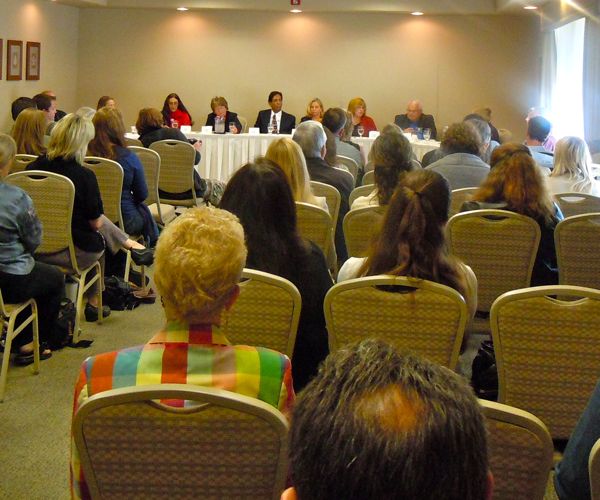
That was the message Lisa Serafini, El Dorado County deputy district attorney, drilled into the women gathered for the Thursday meeting of Soroptimist International Tahoe Sierra.

Serafini, who has prosecuted domestic violence cases, said the number of people on the South Shore dealing with alcohol or some other substance abuse problem, as well as mental health issues is high based on the population. Those factors often lead to domestic violence.

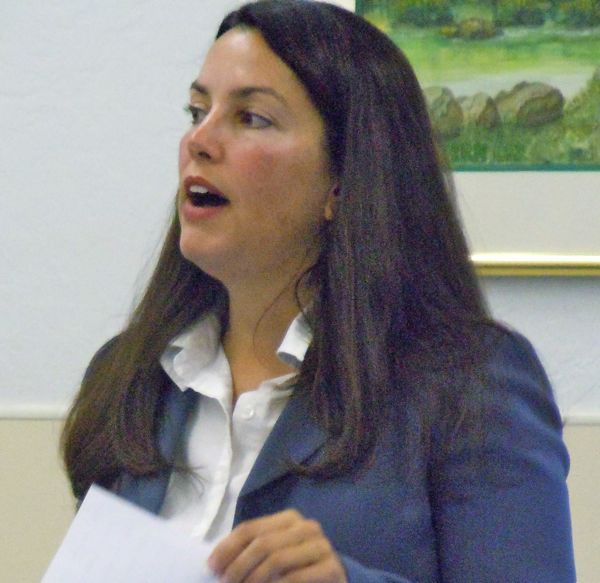
EDC Deputy DA Lisa Serafini talks Oct. 21 about domestic violence. Photo/Kathryn Reed

EDC Deputy DA Lisa Serafini talks Oct. 21 about domestic violence. Photo/Kathryn Reed

“We have a lot more (cases) than we should. You can’t blame the casinos for it. You have to blame the people who conduct themselves that way,” Serafini said.

The key criminal issues are the threat of physical abuse, actual physical abuse and sexual abuse. But emotional abuse, financial abuse, isolation – they all come under domestic violence.

Serafini said it’s a horrible myth to believe someone, usually a woman, chooses to stay in an abusive situation. Fear is often what keeps her in the relationship. Potentially losing custody of her children, even the love she once had for her abuser, and possible financial security are other reasons women stay.

It has been proven that leaving the abusive person can be the most life-threatening moment, Serafini said.

She pointed to two cases in the past few years – one in South Lake Tahoe, the other Stateline – where the woman left the man who was abusing her. The first case almost ended with the perpetrator fatally slashing the victim’s neck with a machete in front of her child. She lived. The woman in the second case died after she was beaten with a hammer at her casino job where her ex showed up.

Although these women did what authorities and social agencies advise – get out of the abusive relationship – they prove Serafini’s point that leaving can be dangerous.

It’s a community problem because the victim and abuser live here. They work here. They shop here. Their children go to school here.

Millions of children each year in the United States witness some forum of abuse in their home – verbal or physical – and may be one of the victims. Those children are then likely to repeat the abuse or seek out abusive relationships.

Behavioral issues with these students often crop up at school – potentially taking time away from classmates.

Domestic violence calls can take a lot of time for law enforcement. Serafini recommends people call the cops if they hear abuse going on, to document fights they hear neighbors having, give officers a statement, and show up in court so the victim is not alone in a potential he said, she said situation.

With October being Domestic Violence Awareness month, the Soroptimist are trying to bring awareness to the issue.

Leanne Wagoner, executive director of South Lake Tahoe Women’s Center, is a member of the club. Her agency is partnering with Heavenly Village today for Shop to Stop Domestic Violence. Ten percent or more of proceeds from the 16 participating stores/eateries will be donated to the women’s center.


South Tahoe attempting to fix parking nightmares

By Kathryn Reed

Parking in South Lake Tahoe is atrocious. No one disagreed. And all loosely agreed solving the problems will take creative thinking, and recognizing the various sections of town are not all the same when it comes to use and traffic patterns.

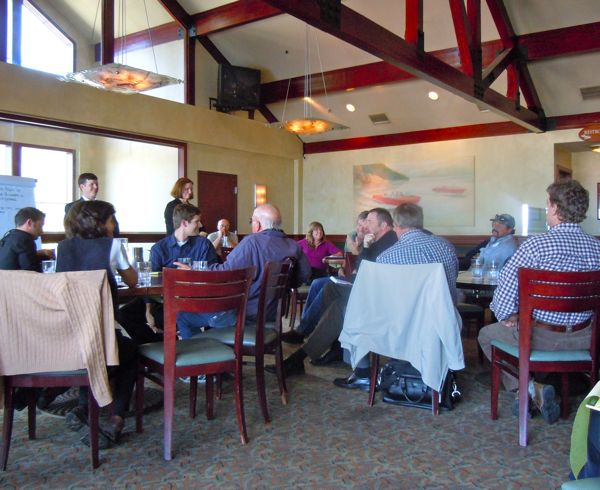
About 30 people, mostly property and business owners, gathered at Riva Grill for about two hours Thursday afternoon to talk about how better to serve their driving customers – which is the bulk of people.

Despite years of planners saying the future would see people using their cars less, that theory has never been realized.

“People are going to drive their cars to get where they want to go. That is not going to change,” John Cefalu said.

John Cefalu
John Cefalu

Cefalu has lived here for decades and has property in multiple locations along Highway 50.

One of his concerns is where people are going to park once Lakeview Commons is finished. He gave a bit of history how there was a time when people could park on the highway. Caltrans finally stopped that practice, which is how Harrison Avenue was created as a frontage road.

Property owners in the area have not been able to agree on a plan that the city wants to develop to alleviate congestion and making parking less nightmarish. Cefalu said an idea to create one-way streets had traction with owners, which could help with parking.

A meeting the evening of Oct. 21 was for the public to express what they would like to see. Only one member of the public showed up. (The National League Championship Series with the San Francisco Giants was at the same time.)

The areas of focus covered in the grant are Ski Run Boulevard and Harrison Avenue. But the consultants doing the work are also looking at the Stateline area.

A $30,000 grant from the state’s Community Development Block Grant program is paying for a team from Kimley-Horn and Associates, which has offices throughout the country including Reno, to create a plan to improve the situation.

The underlying focus is economic development. Without parking that works, people may not frequent a business. With the lousy reputation the Heavenly Village debt-ridden city-owned garage has year-round and the paid Ski Run Marina lot has during the summer, locals in particular stay away from those areas.

Those gathered want to work on changing public perception.

Business and property owners on Oct. 21 discuss parking in South Tahoe. Photos/Kathryn Reed

Janis Rhodes and Brett Wood of the consulting firm are tasked with gathering the information and coming up with solutions by early summer. How to pay for whatever changes might be proposed will be an issue tackled when the ideas come to light.

“They must deliver solutions to the parking problem that the city can deliver,” Nancy Kerry, the city’s housing-redevelopment manager, told Lake Tahoe News before the meeting. “We know parking is an issue.”

Metered street parking, parking garages, reconfiguring streets, changing public perception about paid parking, paying attention to public transit-walkers-cyclists, and approving future projects with adequate parking were all broached in the daytime meeting.

Most in the audience agreed more parking and paid parking are likely to be more prevalent in South Tahoe in the near future. And they agreed it would be the locals, who are used to free parking, who will probably be the hardest to convince this is what’s needed.

The consultants started work in July by speaking with nearly 300 people to gather their thoughts on parking in the city. They also have read the 10 or so parking studies the city has commissioned over the years.

In the in-person survey, which mostly tourists answered, about 70 percent said they would be willing to pay for parking.

Another survey is being conducted online through at least the end of the year.

This is another opportunity for locals and tourists to weigh-in on parking in town and help direct change.

“During summer we spend more time turning people away than parking them,” Riva Grill manager Scott Craig told the group.

He and others wouldn’t mind a multi-story parking garage to be built to accommodate people.

When the Ski Run Marina project was approved parking was inadequate. It’s worse now that businesses occupy the commercial area and Tahoe Queen has multiple cruises nearly daily, but always in the summer.

“At least 150 people, if not more, work in this area. That’s the same number of parking spots,” said Mansoor Alyeshmerni, owner of Ski Run Marina.

When the city and Tahoe Regional Planning Agency approved the marina development the powers that be touted an integrated bus system for the South Shore, but that reality is teetering in and out of bankruptcy court; and despite all the planning for bike trails, asphalt is the missing component to make that real.

Still, Lisa O’Daly with the California Tahoe Conservancy asked if business owners have noticed more people walking or cycling on trails that her agency has spent hundreds of thousands of dollars on – mostly in planning.

Brian Des Rochers, president of the Ski Run BID, said he does see people using the sidewalks on the boulevard.

Wood, the consultant, said in the online surveys that have been completed a number of people have commented on how this is not a walking town.

Cefalu brought up how his Fox gas station plows its sidewalks, but he can’t get neighboring businesses to do the same.

This all tied into a discussion about the tourists’ experience when they are in town – the ability to walk, contend with traffic and park.


Mt. Tallac students prove importance of alternative ed

By Kathryn Reed

A sense of pride fills the students as they give adults tours of the school. They talk about their campus with enthusiasm. They know the answers to every question asked.

Starting in the hallway at Mount Tallac High School is a wall of student photos. They are part of the three A’s. Every week the wall is updated to reflect those who have excelled in academics, attendance and attitude.

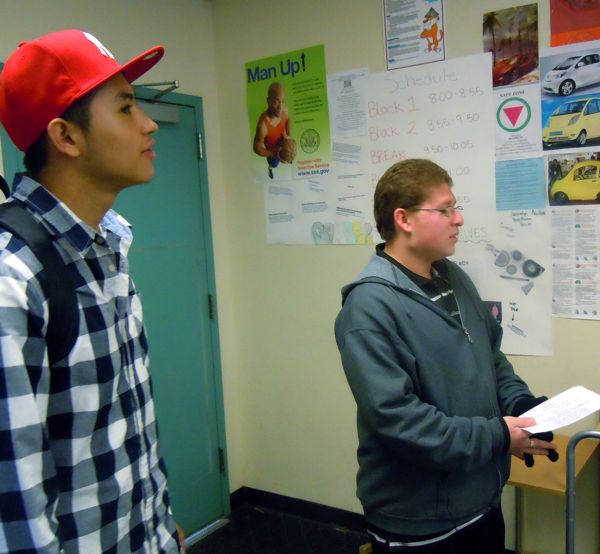
On Wednesday, seniors Arnulfo Jimenez and Carlos Lopez take Lake Tahoe News around to the various classrooms as part of the annual open house at the alternative school in South Lake Tahoe.

Mount Tallac students Arnulfo Jimenez, left, and Carols Lopez give a tour of the school. Photo/Kathryn Reed

Mount Tallac students Arnulfo Jimenez, left, and Carols Lopez give a tour of the school. Photo/Kathryn Reed

About 40 people came through the morning of Oct. 20 – including most of the school board and Superintendent Jim Tarwater. It was considered an honor to be picked as one of the guides.

Some of these students have lives many in the community could not relate to.

The student who gave Tarwater his tour is living with her 18-year-old sister who is pregnant. Their parents were deported. The Tallac student works 40 hours a week to help support her non-traditional household. Before going to college next year, her first stop will be to visit her parents.

Jimenez and Lopez didn’t talk about their plight, what brought them to the continuation high school. What they wanted to talk about was continuing their education and getting jobs after high school graduation.

They like the flexibility Tallac offers them and the education they are receiving.

Jimenez explains how Matt Kauffman has started Sphere of Influence as an offshoot of the regular art class he teaches.

“It keeps kids from tagging illegally,” Jimenez explains. “It helps the community and it keeps the kids out of danger.”

Sharing this teaching space is Jackie Tan, who joined the staff earlier this fall from Diamond Springs.

Tan is working with the students to master math so they will be able to pass the state high school exit exam.

Hardly a speck of wall space is visible in Steve Simmons class. Student work is everywhere. Simmons teaches history, life and physical science, and monitors physical education credits.

“The kids set their own pace. No one micromanages. It’s up to them,” Simmons said. “They need to see the value in education.”

Clearly, the girls who use the nursery next to Simmons’ classroom see the value of an education even though they are already parents.

“Most of the girls are parents by themselves,” Lopez says outside the nursery where the little ones are sleeping.

The campus is expanding a bit. While the main high school just up the road gets millions upon millions of dollars in new buildings and equipment, Mount Tallac got one of South Tahoe High’s old portables.

The plan is this fall after some work is completed it will be usable as a counseling site. Right now privacy at the school is an issue. Principal Susan Baker and counselor Amy Jackson share office space.

Tours of Mount Tallac may be scheduled any time – not just on open house day – by calling (530) 543.2245.


Senior meals, law-justice, library — on EDC hit list

By Kathryn Reed

If the $5.5 million in budget cuts El Dorado County plans to make before the new year are approved as presented Tuesday by CAO Gayle Erbe-Hamlin, say goodbye to the senior nutrition program throughout the county, look for library hours to be reduced, roads to not be repaired, and $1 million eliminated from the sheriff’s department budget.

edcThe Board of Supervisors on Oct. 19 was given the grim news. Erbe-Hamlin called it “ugly.”

It’s been well documented the county is facing an $11 million deficit for fiscal year 2011-12, which begins July 1.

Click on proposal to see what was presented Tuesday in Placerville.

If the $400,000 for the senior nutrition program were cut, that would wipeout the five centers the county operates. This includes the food program at the South Lake Tahoe Senior Center and meals-on-wheels. These programs can be the only meals seniors receive.

Daniel Nielson, who runs the Department of Social Services, was not available to talk about the food program late Tuesday.

At the South Lake Tahoe branch library, the half position that has not been filled is scheduled to be cut. Expect hours to be slashed, too. A Sept. 20 PowerPoint presentation to the board outlines ways to trim the library budget.

The goal of the supervisors is to tackle half the deficit in the coming weeks. A special board meeting is scheduled for Nov. 3 to solely talk about the budget. Next week county staff will be in South Lake Tahoe to brief basin residents about the financial woes.

If the board doesn’t resolve the issue the day after Election Day, it has regular meetings Dec. 7 and Dec. 14, but is dark the previous two weeks and last two weeks of December. Another special meeting could be called.

The remaining $5.5 million is likely to be dealt with right after the first of the year.

“We’ll have a more clear picture for the 2011-12 year once the first $5.5 million is addressed. Then we have to do it again. This is a difficult conversation now and in February it will be harder, I think,” said Jim Mitrisin, assistant to Chief Administrative Officer Erbe-Hamlin.

Mitrisin cautioned the proposed cuts are “very preliminary.”

Still, with the time line the supes want to follow combined with the cuts in services and staff that have been made in recent years, the low hanging fruit was plucked long ago.

Some say the financial abyss the county finds itself in is a result of the state trying to balance its budget on the back of local jurisdictions.

El Dorado County can also point to a significant drop in property valuations decreasing the amount of property tax it collects, along with sales tax dropping during the recession.

There was a time when construction was robust on the West Slope. Now it’s practically at a standstill.

Although supervisors have said law and justice were sacred, that’s not entirely so with Erbe-Hamlin’s proposal on Tuesday. Her idea is to find more than $1.6 million in savings by mandating a 2.7 percent cut each for sheriff, probation, district attorney, and public defender.

Sheriff Fred Kollar did not return a call Tuesday.

Perhaps the diminishing flow of cash is why the CAO has said the economic coordinator position can be scrapped. However, the nearly half million dollars in promotional funds – which is discretionary income from the hotel tax – is not slated to be touched.

Follow what the county is doing via the Board of Supervisors’ webpage.


South Shore public transit changes hands, not players

By Kathryn Reed

STATELINE — In the world of South Shore public transit, this could be one of the most monumental months on record.

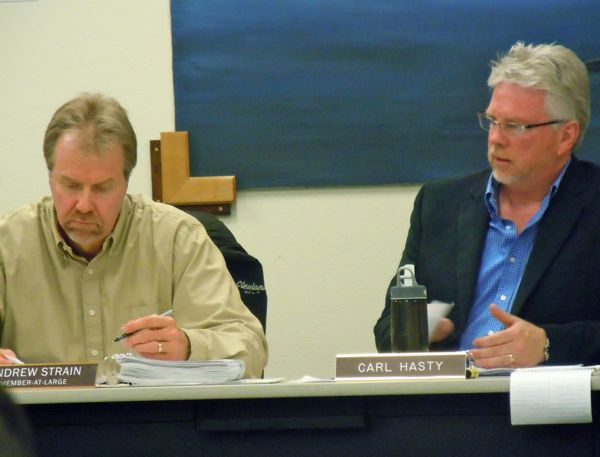
On Monday, the Tahoe Transportation District board agreed to take over operation of BlueGo, the public bus system, and withdraw from the South Tahoe Area Transit Authority, which had been the overseer of the system.

STATA filed for bankruptcy this fall. At today’s hearing in Reno, TTD attorney Paul Taggart expects to ask the bankruptcy judge to let his client take over the bus system and retain the rights to the handful of buses STATA owns.

Carl Hasty, left, runs the Oct. 18 Tahoe Transporation District meeting. Photo/Kathryn Reed

Carl Hasty, left, runs the Oct. 18 Tahoe Transporation District meeting. Photo/Kathryn Reed

TTD owns about three-quarters of the buses in the fleet. STATA members own the rest of the fleet. Those members are being asked to sign on to have TTD be the umbrella agency of public transit on the South Shore of Lake Tahoe.

“(Monday) was a big step … one of a few big steps that still need to happen,” Carl Hasty, TTD manager, said after the meeting.

The board voted on a slew of actions Oct. 18 related to the takeover. For the bulk of the votes Will Garner, Placer County’s rep on the TTD board, abstained.

The board’s action was not a surprise. Lake Tahoe News first reported the change in leadership Oct. 6 after the South Lake Tahoe City Council agreed to the changes.

Even though City Councilman Bill Crawford earlier this month as reported in that story was critical of STATA, he voted for the changes Monday.

(Bruce Grego is South Lake Tahoe’s rep on the TTD board. Minutes that were approved Monday indicate he was a no-show at the Aug. 31 meeting and arrived late for the Aug. 13 meeting. Normally the primary member to a board asks the alternate to attend, but Grego never did. In fact, it was City Attorney Patrick Enright who had to ask Bill Crawford to attend the Oct. 18 meeting.)

Russ Nygaard, with El Dorado County’s engineering department, was in the audience at the Monday meeting at the Tahoe Regional Planning Agency office. The county had pulled its membership from STATA and taken its two buses off the street. With TTD taking over, Nygaard after the meeting said the county backs this plan.

Nygaard expects the Board of Supervisors to take up the issue this month.

This week the TTD board approved the $4.2 million operating budget even though all the players involved have not agreed to be part of the new entity.

“I think the softest revenue source right now is Harrah’s and Harveys,” Hasty told his board. “We have a fair amount of work to do with them.”

For the fiscal year that began Oct. 1, their combined contribution is $240,000.

Crawford asked what the deadline is to get the public and private partners that were part of STATA to embrace TTD. Hasty said Nov. 1. He said today’s bankruptcy hearing will “have bearing on that.”

Although all parties seem to agree a coordinated public transit system is needed, it has not been made clear how changing the umbrella agency will make it run smoother or be profitable. At the Nov. 12 TTD meeting, the initial draft of a five-year transit plan for the South Shore is expected to be unveiled, which could answer those question.


ZCES, WHS standardized test score results a bit lackluster

By Kathryn Reed

ZEPHYR COVE — It was a mixed bag of news as principals from Zephyr Cove Elementary and Whittell High schools gave the board of education an update this month on test scores.

ZCES Principal Nancy Cauley didn’t have concrete reasons to give why her K-6 school went from being classified as “high achieving” to being on the “watch” list.

dcsdBoard member Cindy Trigg questioned whether the death of a student just before the December holidays could have had a lasting impact on students’ ability to learn or stay focused during the mandatory state and federal tests.

Cauley said counseling resumed for students, teachers and parents after the break.

“There was a cluster of students who could not move forward,” Cauley said at the Oct. 12 meeting. “It was probably last April for three children before they were no longer breaking down. It was a difficult time. I do think we are stronger for it. We sent a message to the kids that that choice is not acceptable.”

The death was a suicide.

To address the academic issue, flexible math groupings have been expanded from the primary grades to the whole school. Teachers will be receiving professional development in Math Investigations.

Districtwide fifth-graders are having difficulty mastering the curriculum, Cauley said, not just at her school.

She wants a more blended teaching strategy to take place so it’s not just 50 minutes of reading, 50 minutes of math, 50 minutes of science. Cauley told the board it would be better for students to have those components integrated throughout the curriculum, throughout the day.

Crespin Esquivel had the unenviable task of presenting stats to the board from tests when he was not an employee of the district. He took over as principal of Whittell this school year.

Although many of the test areas saw arrows reflecting a decrease in percentages from the prior year, Whittell High remains a high achieving school. With it being a 7-12 school, the would-be middle school grades came in at adequate.

Better addressing the needs of students whose first language is not English is being looked at.

Both principals pointed to the transient rate as contributing to problems for some students who come mid-year.

Esquivel also said he will be looking at the master schedule to see how best to meet the needs of his students.


CalStar provides link from accidents to specialized care

By Stephen Ward

In 1983, Dr. Donald Trunkey, an innovative physician with a dream to help injured patients regardless of their financial constraints, formed the California Shock/Trauma Air Rescue service.

Since then, CalStar has helped the Tahoe area provide quick transportation to nearby hospitals, with more than 3,000 transports since Tahoe’s CalStar-6 base opened in 2001.

Bryan Pond, a 47-year-old Meyers resident, has been with CalStar for more than 10 years. He works with a 5,500-pound, 28-foot long Eurocopter B0 105, capable of going 149mph, with a rotor span of more than 32 feet.

Landing on highways is normal for Calstar so patients are taken to hospitals faster. Photo/Kathryn Reed

Landing on highways is normal for Calstar so patients are taken to hospitals faster. Photo/Kathryn Reed

The nonprofit medical flight service’s purpose is to get people with traumatic injuries to the nearest hospital as soon as possible.

Pond said the numbers haven’t fluctuated much within the last few years, with this years 247-patient transports being considered average.

“The most common accident we deal with are car wrecks,” Pond said. “In the winters, we have skiers we need to help, and in the summer there are boating accidents. I’d say that car wrecks are the types of accidents we deal with most, though.”

Something that sets the organization apart is that it flies two critical air nurses rather than the normal regime of one nurse and one paramedic.

CalStar doesn’t just transport people to and from hospitals. The organization also helps agencies such as Lake Valley Fire Department with wildfires and during inclement weather, and is featured at Barton Health’s annual skills lab to help inform medics and nurses about the latest technology within their field.

Carson Tahoe Regional Medical Center partnered with CalStar in 2008 to install rescue vehicles with portable EKG devices. With the device, the EKG technology can determine the precise location of the abnormal blood flow to the heart by transmitting a 12-lead electrocardiogram image, which is instantly transmitted to the staff at CTRMC to prepare for the patient’s arrival. The technology has been incredibly helpful and the relationship between CTRMC and CalStar continues to be a strong one, according to CTRMC spokesman Jon Tyler.

Medical centers such as Barton Health uses CalStar not only to receive patients, but also to transport them to other hospitals if their conditions require extensive help.

Karla Peterson, the base hospital coordinator who has been working for Barton for more than 18 years, considers CalStar to be an integral part of the hospital.

“As a small hospital, we need to be able to take anyone in,” Peterson said. “However, we are aware of our limited resources and need to have a way to transport patients that need more help. If we didn’t have them, we’d be in trouble.”

Nicole Shearer, public relations business partner at Renown Medical Center in Reno, also considers the air ambulance service a commodity.

“Renown Health has a good partnership with CalStar,” Shearer said. “As the only Level II Trauma Center between Sacramento and Salt Lake City, services like those offered by CalStar help Renown’s rural patients get the care they need.”

Today, the company has more than eight full-time bases and has an abundance of helicopters and planes in its fleet, including four MD 902 Explorer helicopters and a Cessna 421.

CalStar is continuing to assist the Northern California region, with the South Lake Tahoe outfit striving to maintain close relations with the hospitals it partners with.

CalStar has a membership program that will cut the cost if their service is ever needed. Information is on CalStar’s website.


Upper Truckee River — a scenic mountain bike ride

By Kathryn Reed

Which way, now?

It’s a constant thought and verbalized question every time we set out to ride along the Upper Truckee River behind Lake Tahoe Airport. With so many trails in the area, I would bet we’ve never done the exact route twice.

One of the things I love about mountain biking on the South Shore is the abundance of trails. And the scenery, well, I’m not sure it gets any better than Lake Tahoe.

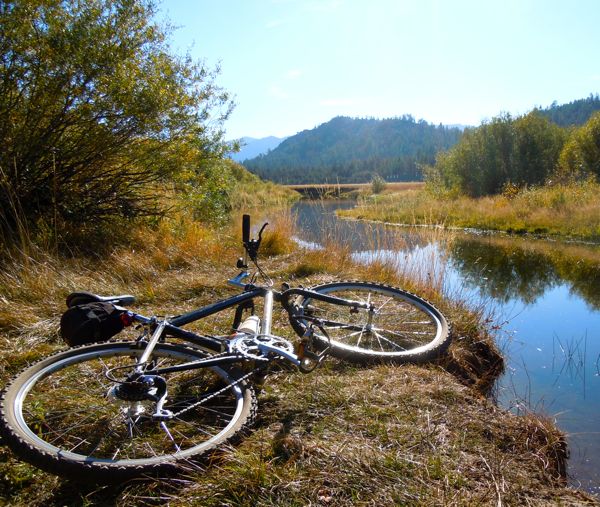
Cycling along the Upper Truckee River is breathtaking. Photos/Kathryn Reed

Cycling along the Upper Truckee River is breathtaking. Photos/Kathryn Reed

As the seasons change, I always like to revisit some of my favorite places to pedal. The terrain doesn’t look the same from one season to the next. The difficulty of the ride changes depending on whether the ground is wet or soft dirt, like now.

Entering off the end of Lodi Avenue near where Caltrans dumps snow in the winter, we meander through thick pines until it opens into a meadow. Forks in the road have us wondering which way to go. I follow the sound of airplanes.

Tires get squirrelly in what feels like sand beneath me. Even in a super low gear I don’t seem to be going very far, very fast.

Up ahead is civilization. For a brief, albeit uphill ride, we go up Jicarilla Drive. We take the bikes into the forest at the dead-end. We know there is a trail here. She just isn’t making herself readily known.

Left. There she is.

Oh, no. A more distinct trail goes left, but veering right is clearly the direction we want to go. Sue convinces me right is the correct way to head.

I’m not sure I’d recommend this trail to the person who isn’t familiar with the area. For those who know the lay of the land, just head to where you think the airport is. I can’t be more definitive on how to get there from this side because we zigged and zagged quite a bit.

Multiple meadows captivate us. At times the trail is wide and flat enough to ride side-by-side and have a conversation. Other times I seem to have a death grip on the handlebars, not knowing what’s around the bend. And at the far end of the river on this section is a single-track route that has more rivets and jarring bumps than Venice Drive.

Taking the low route we get as close to the Upper Truckee River as we can. The airport is across the way. The wind beacon is flat. It’s a warm September day when a slight breeze would be nice.

The water seems still, as though it’s not even moving. And, yet, it must be – that’s what rivers do.

A dad is teaching his son and daughter how to bait a hook and cast a fishing line. Tiny fish are in the water, but nothing one could call dinner. A crawdad, though, now that was catching the youngsters’ attention.

Up ahead on the trail a different father and son are on bikes headed in the direction we came from.

Splashes of yellow twinkle in the sunlight – fall is here.

Bouncing along the trail we are looking left, right, left, right – it’s all so beautiful.

Finally, we are at the end of the trail. We come out at the California Tahoe Conservancy land at Sawmill Road. Time to make it a road bike ride home.

ngg_shortcode_0_placeholder (Click on photos to enlarge.)


SLT council candidates ask each other questions

By Kathryn Reed

Losing a bit of the rhetoric and staid questions posed to the South Lake Tahoe City Council candidates this election season, at Thursday’s forum they were allowed to ask an opponent a question.

Doug Cichowicz asked Steve Kubby what he thinks the percentage of the people using marijuana collectives is abusing the system.

SLT council candidates address an audience Oct. 14 of more than four dozen. Photo/Kathryn Reed

SLT council candidates address an audience Oct. 14 of more than four dozen. Photo/Kathryn Reed

Kubby didn’t answer the question forthright, but instead said he doesn’t want Proposition 215, which he helped write, be abused or be a shield for criminals.

Kubby also said in reference to young people coming and going from the establishments, “I also like to say one reason everyone looks healthy is because it’s working.”

Alice Jones asked Tom Davis why in fiscal years 2003-04 and 2004-05 the city didn’t spend money on roads, yet the Public Works Department’s payroll was fully funded without cutbacks.

Davis said he couldn’t recall decisions from six years ago when he was on the council, but added snow removal is part of the roads and that was funded.

Adrian Gooch asked Davis how many hours a council member needs to spend doing the job.

He said between 30 and 50 hours a week.

Claire Fortier asked Liz Hallen how she expects to bring a younger element to town.

Hallen said it’s already happening. She spoke of small businesses like her Hot Gossip Coffee and others providing what locals need and want; and that she would be the voice for the young, small business person.

Kubby asked Jones what she thought of Davis’ answer to her question.

Jones said she doesn’t personally fault Davis for the roads, but pointed to the need to have someone like herself who is a certified public accountant to be on the council to better understand budgets and the city’s 79 separate funds.

Joy Curry asked Jones how she expects to put in the necessary time for the council when she is a mother with a full time job outside the home.

Jones said she has plans in place to make it work, including speaking to her employer, but said getting elected needs to happen before she reorganizes her life.

Angela Swanson wanted to know from Hallen how people could trust her to enforce the rules of the city when her campaign signs are placed illegally.

Hallen said she has not placed signs illegally and that it could be others who support her, including her husband, who may have gotten overzealous.

Davis asked Kubby if he supports Proposition 19, the Nov. 2 initiative to legalize marijuana in California, and how it will affect dispensaries in South Lake Tahoe.

Kubby supports the proposition, saying language in it protects the collectives and that the new law should not affect them.

Hallen asked Davis if the rule preventing the city from assessing Heavenly Mountain Resort a surcharge on gondola ticket sales could be reversed and how to prevent something like that from happening in the future.

Davis said he advocated for a $1 surcharge for the gondola for the city, but his colleagues on the council nixed that idea.

More than 50 people turned out for the Oct. 14 forum.

In 18 days voters will go to the polls to pick three candidates for the council. None of the incumbents is running. Nine of the 10 candidates spent about two hours at Inn by the Lake answering questions. Géorg May did not attend.

The four prepared questions the candidates were sent ahead of time were geared toward the interests of the sponsors – South Tahoe Association of Realtors and South Lake Tahoe Lodging Association. Lake Tahoe News was the other sponsor.

Question: The subject of vacation rentals within the city of South Lake Tahoe has been a prominent topic for the City Council in the past few years. What is your perception of the issues surrounding vacation rentals and what are your thoughts on them?

Hallen: Favors moratorium on number of vacation rentals. Wants to track them, enforce rules and recover taxes owed.

Davis: Believes in free enterprise, having started Tahoe Keys Vacation Rentals years ago. Thinks everyone should follow the rules, including those renting off the Internet.

Swanson: Need to have vacation rentals and hotels. Noise and garbage are issues. Sees an issue with people not using rental agencies as difficult to collect taxes from.

Curry: Sees rentals as valuable part of transient occupancy tax equation. Wants to control noise and trash.

Kubby: Doesn’t favor moratorium. Would like to see less government. Believes rules on the books are sufficient.

Fortier: In a perfect world, she would like all housing to be residents and all lodging for tourists. She questions if TOT is being collected, citing three homes in her neighborhood that are not paying. Wants bear boxes mandatory on vacation rentals. Wants to look into these rentals being part of the Tourism Improvement District.

Gooch: This was the most difficult question for her – to balance the $1.2 million in TOT vacation rentals bring in annually v. losing the sense of community in a neighborhood. She would consider a moratorium.

Jones: She points to working for the Tahoe Keys Property Owners Association, knowing occupancy is down for rentals. She said the way to increase property values is to increase occupancy, but to increase occupancy visitors need to have a good experience in South Lake Tahoe. Riding on pothole filled streets and contending with other aging infrastructure is not a good experience. She said the city has never reached out to the TKPOA to help with TOT enforcement. She thinks the city needs to work more collaboratively with partner agencies – like getting South Tahoe Refuse to be able to collect trash on Sundays when all the visitors from the rentals are leaving town and their trash behind.

Cichowicz: Trash is his biggest concern. Also sees need to have STR open seven days.

Question: There has been recent discussion of using city of South Lake Tahoe tourist accommodation unit (TAU) allocations for use outside of the city limits. What are your thoughts on city limit TAUs being sold outside of the city limits?

Kubby: He calls TAUs fraud and a fictitious metric. He wants the city to override the Tahoe Regional Planning Agency.

Fortier: Agrees TAUs are fraudulent. Wants city to pay attention as TRPA goes forward with Regional Plan and make sure TAU discussion benefits the city.

Gooch: While employed by the city she compiled the report the city uses for TAU policy. She called it a “somewhat stupid” issue. She wants to be able to trade TAUs for commercial floor area. Does not support banning TAUs from going outside the city.

Jones: Believes she needs more education on TAUs, but is concerned with the idea of the city selling an asset because of “potential pitfall of favoritism”.

Cichowicz: Needs more info about TAUs, and until then would hold off on selling them.

Curry: Wants TRPA to redefine TAU from it being a bedroom to it being a unit. If they are sold outside the city, she wants something tangible in return like work force housing or roads.

Swanson: Believes current definition of TAU is “arcane and insane”. Wants to be able to trade TAUs for CFA. Wants to look at big picture before selling TAUs to know where the city is headed.

Davis: Would like TAUs for CFA so the latter could be used as incentives to get businesses to make improvements like what happened at the old Crescent V Center.

Hallen: Not well versed in TAUs. Would support selling them if it financially benefits the city.

Question: The city of South Lake Tahoe is past years has supported the tourism community through funding of marketing and special events. How would you envision the city supporting tourism, marketing and special events in the future?

Gooch: Supports city’s decision years ago to stop writing blank check to tourism related entities in order to balance its own books. Believes city should support tourism when it can afford to do so and for things that are explained in detail.

Jones: Believes if city focuses on core services – transportation, roads, lighting – this will provide climate where tourists will want to come back instead of how it is now.

Cichowicz: Wants an event in town every weekend. Would support them financially if possible.

Hallen: Wants to be four-season town and lose the shoulder seasons; be more family friendly so the bowling alley isn’t the only place she recommends people go.

Davis: Wants city to provide in-kind support through things like police services. Would support special events if financially possible. Wants to make sure town is clean and bike paths are repaired.

Swanson: Pointed to history and the distrust it fostered with TOT collection-allocation. Wants city to be viable partner. She was “embarrassed” the city was not part of the inaugural Sample the Sierra in August.

Curry: Wants an amusement fee on the Tahoe Queen and would-be convention center of a dollar or two paid by the tourists that could be used to supplement the Lake Tahoe Visitor Authority’s $4 million budget.

Kubby: Agrees with Davis that bringing more ski events to Heavenly is a good idea. Wants events at Heavenly Village, but points to the vacancies there and parking garage that is expensive and loses money each year. Believes a good job is being done to get people to town, but wants to work on the experience they have once here.

Fortier: Also pointed to the past with council raising TOT but then taking it away from marketing. Wants to be partner in tourism, most likely with in-kind help. Wants infrastructure improvements to bring South Tahoe into world-class destination status.

Question: Citizens are concerned about enforcement and sense of standards for cleanliness and common sense trash containment around town. What do you propose as solutions to rid our city of blight – both commercial and residential?

Swanson: Need to work on large trash bins at businesses being out front. Wants to work on culture at city because she is running into residents who are afraid to talk to staff about making improvements to their home or business.

Davis: Wants STR to maintain dumpsters. Also would like youth to paint them at businesses like what has been on utility owned structures.

Hallen: She wants property owners to have reasonable lease agreements to small businesses and survive, which in turn will help bring the 17 percent unemployment rate down.

Cichowicz: Does not favor more regulations, but would rather see better communication with absentee homeowners to ensure their property is taken care of.

Jones: Believes the city needs to lead by example by taking care of its property and then individuals and businesses will follow suit. Pointed out it’s hard to want to improve a parking lot leading to dilapidated city infrastructure. Wants to work on franchise agreement with South Tahoe Refuse. Wants recycling bins everywhere.

Gooch: Pointed to grant city recently receive to obtain 15 dumpsters. Hesitant to support mandatory commercial trash service.

Fortier: Would like grant through STR to buy bear boxes for vacation rentals that those owners would pay back through time via their bills. Agrees with Jones that Sunday trash pick up for vacation rentals is logical. Suggests twice a year city has day to clean up trash that community could participate in like Coastal Cleanup Day.

Kubby: Wants world-class services so this isn’t an issue.

Curry: Wants vacation rentals and new construction to have bear boxes. Believes redevelopment and Tahoe Valley Community Plan will take care of blight.

The election is Nov. 2. Mail ballots have already arrived for those voters.


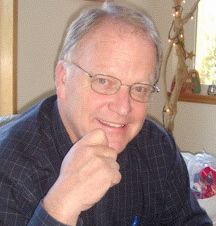
Steven Meyer Blocher 1951-2010

Husband, father, brother, pastor, missionary, counselor, teacher, fisherman and friend. Steve Blocher went home to be with the Lord on Oct. 13.

The eldest child of Robert and Mary Jean Blocher, Steve Blocher was called to follow Jesus Christ in his early 20s, working in the fields of Northern California. He met the Forgy family of Yuba City through First Methodist Church and eventually they allowed him to meet their daughter, Janelle. They were soon married and the two of them would spend the next 34 years together sharing Christ’s love with others, raising three children, four dogs, two cockatiels and going wherever in the world they were called to serve the Lord.

Steve Blocher

Steve Blocher

Steve’s ministry began in youth groups in Yuba City. But a calling in missions and outreach would lead him and Janelle from Alaska (First Presbyterian, Anchorage) down to his family’s base in California’s Central Valley (First Presbyterian, Bakersfield), on to positions in Cairo, Egypt (Heliopolis Community Church) and Mussoorie, India (Woodstock Christian International School) before bringing them to Lake Tahoe Community Presbyterian Church. A lifelong student, Steve studied at Cal Poly, San Luis Obispo, Selly Oak Colleges in the UK, the American University of Cairo and Fuller Seminary in Pasadena (M.Div. and D.Min.).

Steve loved the outdoors, he loved to travel and he loved to share the wonder of God’s creation with others. Whether hiking the Tahoe basin, horseback riding around the Great Pyramids in Giza or piling his family into an Ambassador taxi for a journey across India, Steve knew wonder was best shared with others. The Blocher family home was a regular stop on many travelers’ and missionaries’ journeys wherever it was in the world. The Blochers’ home was often filled with the smell of Steve’s chicken on the barbecue, the sound of his beautiful voice singing along to his amazing guitar playing and the love of Jesus that he would share with any who would listen.

Steve is survived by his wife, Janelle of South Lake Tahoe; daughter Kristin of Sacramento; sons Ryan and Eric of Qingdao, China; and Eric’s wife, Song. He is also survived by his sisters, Janice Stovall and her husband John, Patricia Orth and her husband Bob, Nancy Greenman and her husband Greg, Janelle’s sisters Huntyce Moore, Jeanine and her husband Walter White, Alisan and her husband Brent Hastey, many nieces and nephews and many brothers and sisters in Jesus. He is predeceased by his parents and many others glad this good and faithful servant is home with them today in Heaven.

— Provided by the Blocher family

Publisher’s note: Steve Blocher was minister of the South Lake Tahoe church since 1996. Services are slated for Sunday at 11:30am at the Presbyterian Church in South Lake Tahoe.