O’Rourke: Revamp how SLT operates, create a clear vision

Publisher’s note: This completes this three-part series on South Lake Tahoe’s budget. More stories will come in the future.

By Kathryn Reed

South Lake Tahoe’s budget is convoluted and difficult to understand. After probing by Lake Tahoe News started earlier this year more documents have been placed on the city’s website. This is a good first step.

Transparency, though, is still a bit elusive.

City Manager Tony O’Rourke plans to change how the next budget document looks. He wants a budget message at the front and a summary so the public can more easily discern what lies within.

Although warrants are paper clipped to the councilmembers’ agenda packets, they are not actually part of the packet. This means they are not part of that public record. Warrants are a list of checks that have been written.

Councilman Bill Crawford for years has been trying to get this practice changed, as well as to have copies available at the meetings for the public.
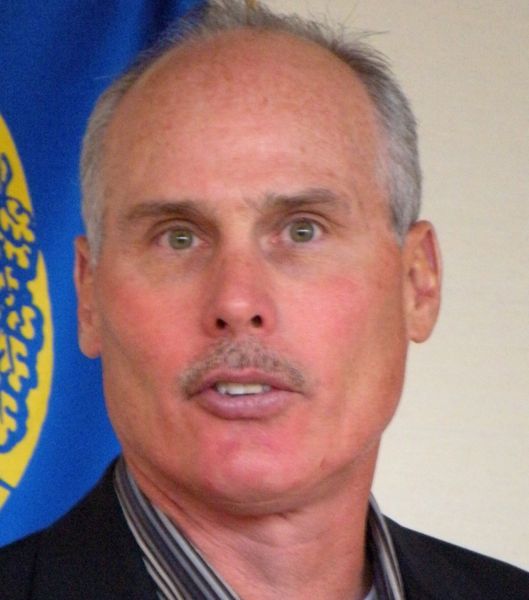
Tony O'Rourke

Tony O'Rourke

But these warrants in many ways are useless. This is because there is no record to whether the check written was for something that was budgeted. It doesn’t say what account the money came from. Nothing indicates what percentage or dollar amount of the account the money came from has been spent to date.

Without knowing if the various departments are within budget as the warrants are written, the information is as valuable as the paper it’s printed on.

O’Rourke since his arrival in early August has called for a monthly budget update to be in the council’s packet. That happened on Nov. 16, but it contained information for the month ending Sept. 30.

A case could easily be made that this is dated material, not current.

Councilmembers Kathay Lovell and Hal Cole represent the finance committee that is supposed to be working with staff. But neither has said anything about the budget at a council meeting since the 2010-11 budget was passed in August. This August approval of a budget that took effect Oct. 1 was unprecedented by a South Lake Tahoe City Council.

Ex-City Manager Dave Jinkens wanted it approved before he was out of office the first week of August.

“The budget process was highly centralized under David. It was him and the finance director,” O’Rourke said.

Not much vision

The city has seldom been forward thinking more than the end of the fiscal year. But the deficits are going to continue. Transient occupancy tax, sales tax and property tax are the three main sources of income. They are stagnant.

The Teeter Law that allows the county to keep the pass through of property tax dollars going from the convention center parcels to the city will expire in a little more than a year.

Even though hotel bookings are up going into winter, the cost of those rooms is not what they were three years ago. Full occupancy does not mean the same amount of TOT collected in years past because the price of a room night is not the same.

What does the budget look like for fiscal year 2015-16 – five years from now? No one knows because the city hasn’t planned for the future.

O’Rourke is shaking things up so that last paragraph can’t be written again. He has assembled 40 people to develop a five-year financial plan. Rank and file staff up to directors are part of the panel.

“We need fingerprints and DNA of staff on (the budget),” O’Rourke said. “The result is they will have greater ownership. The process should be transparent and inclusive.”

This process should eliminate department heads finding out about staff reductions days before the City Council votes for them – as was the case in August.

“The City Manager [Dave Jinkens] notified the Fire Chief via e-mail on July 28, almost one week prior to the August 3 City Council meeting,” Vuletich wrote Lake Tahoe News in reference to the freezing of a division chief’s job once the person who has the position retires in January.

Strategic planning

Without goals, the budget ends up taking a shotgun approach to city services instead of being streamlined.

O’Rourke wants to convene the council that will be seated next month – with 60 percent new faces – to create a strategic plan what will be “a shared vision for the community.”

He wants to focus on a handful of goals and achieve them. From his first interviews, O’Rourke said he is results-driven. To get there he believes the city needs to change its business model.

“We need to modify the business model to reflect the priorities,” O’Rourke said. “There is a thorough lack of infrastructure. We are so deficient in curbs and gutters it’s mindboggling.

“We need to look at where we can get the money. We need to look at the expense side of the ledger, too.”

He’s well aware the city cannot be all things to all people – thus the need to create priorities. And he doesn’t want them to change on an annual basis.

A goal of his is to create a survey for staff and a separate one for the public in the next month.

“I want data to drive the decision-making,” O’Rourke.

When told the public has filled out surveys in the past only to have their wishes ignored, O’Rourke said it’s still a necessity “to make sure we are on the same playing field.”

He wants to look at the services the city is providing to the public in addition to the facilities. His face contorts a bit while mentioning the locker room at the city pool and the condition it is in. “Hideous” was the word he used.




S. Tahoe paychecks don’t shrink; manager perks intact

Publisher’s note: This is the second in a three-part series on South Lake Tahoe’s budget.

By Kathryn Reed

For most municipalities, people are the biggest expense. South Lake Tahoe is no different.

In the 2010-11 fiscal year budget, the city has 205.75 full-time positions; 61 in the police department and 40 in the fire department.

city logoLake Tahoe News asked the city to provide the total annual amount of money spent on salaries and total allocated for benefits. Finance Director Christine Vuletich said, “… we don’t have the ability to respond that quickly to questions that require research or complex calculation.”

LTN‘s financial consultant in 15 minutes figured out the combination of salaries and benefits in the 2010-11 budget is $32,830,145.

The issue is they are not separate entities in the budget document. El Dorado County’s budget does separate out the benefits  — which include taxes, medical, retirement — that can be accessed online. What the city is doing is not a universally accepted practice.

Further analysis on Tuesday by LTN of the 2010-11 Budget Work Papers-A shows on average about 42 percent (or $13,788,660.90) of that nearly $33 million figure is solely for benefits.

Vuletich said it would take her a week to provide LTN the answer.

Furlough days v. salaries

The city claims to be saving money by instituting furlough days. But that really isn’t the case because employees have been getting approximately 5 percent annual raises in the last two budgets. It means their paychecks are the same as they were in 2008.

A reason to have a higher salary on the books is so when it comes to retirement those dollars are calculated on the higher rate of pay. Had the city decided to cut pay and keep employees at full-time status, it would have hurt them come retirement.

Instead, it is the 24,000 people who live in the city who are hurt by not having the same city services as they had two years ago because staff isn’t there to do the work. But residents are paying the same in taxes – just getting less.

What employees have is more time. They are working less and getting paid the same amount as two years ago.

There are a number of city employees working on their furlough day or beyond eight hours and not getting paid overtime. Those discrepancies are for the state Labor Department to resolve.

Most city employees were mandated to take two days off a month last fiscal year. That switched to three days a month this fiscal year. By closing city offices for two weeks in December and swapping furlough days like what happened last week to make for a four-day weekend with the Veterans Day holiday, the furlough days are an average of three a month, not literally three a month.

City Manager Tony O’Rourke is not a proponent of furlough days.

“We can’t be in a constant state of furloughs. That is postponing the inevitable,” O’Rourke said.

He believes, as do most economists, that it’s a new day when it comes to finances. It’s not about waiting to return to how it was, but learning to operate with less for the indefinite future.

O’Rourke wants to take a look at the structure of the city government to make sure the positions are needed and the appropriate people occupy them. He says most of the staff is competent and an asset, but is recognizing some people are dead weight.

Some positions are at-will employees, while other workers are covered by one of the seven bargaining units. What could hamstring O’Rourke as he tries to get the staff in place he desires is the seniority rule. Eliminating a position means the person who had it can stay employed by bumping the low person on the totem pole onto the unemployment line.

Regarding personnel, an item not identified in the budget is administration time. Beyond the allotted sick days and vacation time, all directors are given 80 hours of what’s call “admin time” and managers get 40 hours.

No one tracks these hours. It’s not accounted for on time cards.

With revelations about the tiny town of Bell making headlines, one would think all cities – especially in California – would not be having transactions occurring off the books and under the table.

An email from Lake Tahoe News to O’Rourke and Finance Director Christine Vuletich said, “Can one of you tell me how the admin time works? I don’t see it accounted for in the budget. I know all the directors get those 80 hours and managers get 40 a year. Can you tell me how many people this affects?”

“We will do our best to get this information to you today,” Vuletich wrote Tuesday morning. She didn’t come through.

Lake Tahoe News has been told by sources that admin time is essentially time-off that is given with a wink and nod. This means these people don’t have to use sick time or vacation time. This means those hours on the book are increasing. They can add up to big bucks the city would be responsible to pay when someone leaves the city.

They are costing the city dollars now with loss of work. Again, this equates to taxpayers ultimately having a reduction in services.

With California essentially making “comp time” a phrase to be banned in the workplace, dealing with salaried employees’ overtime had to be addressed. They don’t get overtime like hourly workers do. El Dorado County also has a form of admin time and was able to explain it in about two minutes.

This begs questions for the city: What are you hiding? Is admin time really comp time? Or is admin time just more time off for higher ups to take whenever?

Grants pay for salaries

The general fund, the money where basic services are covered and the bulk of discretionary dollars are found, also covers salaries. But the city budget (South Lake Tahoe is not alone in budgeting this way) does not actually have the funds to pay all city employees their wages and benefits.

Depending on the worker the money may come from grants or an outside agency.

“Because the employees in the Engineering Department work on all engineering projects, Environmental Improvement Program (EIP) projects funded by the CTC and storm water projects, their salaries are allocated between Engineering and Storm water Management based on hours worked on each project,” the city Finance Department told Lake Tahoe News.

One of those California Tahoe Conservancy projects is the stalled $6 million Lakeview Commons makeover. No staff is being laid off while that project is in limbo. Their salaries will be paid by city and CTC dollars.

The question, though, is what happens when the work resumes and goes into the 2011-12 fiscal year and the CTC dollars have been spent? Where does the money come from to keep paying people in the Engineering Department?

The city is co-mingling all of its income, which without careful oversight can lead to fiscal mismanagement.

Grant dollars are thrown into a department’s general pool of money instead of being tracked separately. For instance, the $1.5 million federal grant to deal with ridding city residences of lead paint was put into the Redevelopment and Housing budget. This makes that budget seem like it has spiked by 58 percent. There is no easy way for someone to know by looking at the budget why the increase occurred. It took the finance director to explain it.

“I have never been in any community that is so grant dependent,” O’Rourke said. “I would feel more secure if could just rely on what we control for revenue.”

Sales, hotel and property taxes are the three main revenue sources the city has outside of grants.


El Dorado County’s top official to retire in December

By Kathryn Reed

After a long day of budget battles, it was time for Gayle Erbe-Hamlin to strike one more name off the payroll – hers.

Erbe-Hamlin, chief administrative officer for El Dorado County, is resigning. Her last day will be Dec. 3.

“I’m 61. At some point you think about these things. When I originally accepted the CAO job, I said I would stay between two and three years,” Erbe-Hamlin told Lake Tahoe News.

Gayle Erbe-Hamlin

Gayle Erbe-Hamlin

That was in July 2008. She kept her promise.

The Board of Supervisors’ next meeting is Dec. 6. In closed session they will decide how to go forward – interim director, acting director, hire a search firm? Terri Daly, the assistant CAO, has worked for the county since the summer. However, she was the CAO of Amador County before coming to El Dorado.

Although Erbe-Hamlin has had a short tenure as leader of this government system, she has worked for El Dorado County since 1985. She was director of the Public Health Department before being interim CAO, and eventually hired on as CAO.

Despite the nasty budget quagmires she has negotiated the county through in the past few years, it’s keeping the county solvent that she is most proud of.

“There is never an end to what needs to be done. Part of me wishes I had the job when I was younger, but I’m not sure I would have had the maturity to manage it,” Erbe-Hamlin said.

She describes the job of CAO a bit like being a shepherd – herding everyone in the same direction.

She believes the decisions the Board of Supervisors made Monday will bode well for the county as it goes forward. Still, she knows the state’s $29 billion hole will impact the county.

Erbe-Hamlin doesn’t exactly get to retire. Yes, she’ll turn in her keys to office in Placerville, but her husband has plenty of work for her. They own a bed and breakfast in Coloma.

“I go home and spend the night with 10 strangers,” Erbe-Hamlin said. Soon she’ll get to spend the days getting to know her guests.


Convoluted accounting bogs down South Tahoe budget

Publisher’s note: This is the first in a three-part series about the South Lake Tahoe city budget.

By Kathryn Reed

Based on review of documents provided by South Lake Tahoe officials, including the current 2010-11 fiscal year budget, the city is deficit spending even though by state law it must have a balanced budget each year.

budgetDeficit spending is when a government spends more money than it generates in a particular period of time.

Even the 2010-11 budget doesn’t balance. Revenues are projected to be $101,013,904, while expenses are expected to be $101,838,705.

The deficit spending is occurring because the city for several years has been moving money around without actually operating within its means. Some of this money is being taken out of the multiple reserve accounts to make ends meet. But those reserves are a limited resource and one day could be drained if this practice were to continue.

It is a practice that will eventually backfire because it does not address the issue of expenses outpacing revenues – or living within one’s means.

“The city does have sound operating reserves. It’s in excess of 25 percent,” City Manager Tony O’Rourke said. “But at some point you can’t continue to utilize that cushion. That’s why the business model has to be overhauled.”

O’Rourke inherited the budget structure from his predecessor who was well known for his micromanaging. He also is stuck with the 2010-11 budget because former City Manager Dave Jinkens fast-tracked the budget through the council during his last week on the job in August.

An example of the robbing Peter to pay Paul practice is in the 2009-10 budget when $100,000 was taken out of the Redevelopment Agency budget and put into the budget for the City Attorney’s Office. This was done because when Patrick Enright was hired in June 2009 he was touted as a redevelopment specialist. The City Attorney’s Office’s budget for that fiscal year didn’t have the funds to cover doubling the number of city attorneys. The money had to come from somewhere – that somewhere being redevelopment’s pockets.

Reconciling 2009-10 budget

In the Nov. 16 council agenda packet is the monthly financial statement for September 2010, the last month of the 2009-10 fiscal year – so it has nothing to do with the current fiscal year. The current fiscal year started Oct. 1. The council is not publicly being provided current financials, just 6-week-old information for a fiscal period that is already closed.

Like a personal checkbook, city financial information should be readily accessible and easy to disseminate. Presumably, elected officials depend on this information to make timely, informed decisions. Information given to the council should be from the most current month, not weeks behind.

(They and anyone in the public has a right to this information and may request it – all are public documents.)

In the documents provided in the council packet (click on Consent 2) it shows the actual revenue in the general fund for fiscal year 2009-10 was $27,103, 362; expenses were $29,168,991. This means the general fund generated a deficit of $2,065,629.

The general fund is essentially the discretionary part of the budget.

Adding all the reported fund numbers together in the 2009-10 report the total deficit comes to $4,249,819, twice the amount for the general fund.

The staff report signed by O’Rourke and Finance Director Christine Vuletich says $2.1 million will come from “one-time un-assigned funds” to balance the budget. This is another way of saying reserves.

But in this paperwork it does not specifically say how the remaining gap will be filled. An annotation says the Capital Improvement Project fund revenues are expected to increase. Yes, after the close of the fiscal year.

O’Rourke told Lake Tahoe News he is trying to make changes to how the budget information is disseminated.

“We need to do more work on it,” he said of the monthly report. “We need to simplify it.”

CIP budget issues

However, to confuse matters more and not make it easy for the public to figure out what is going on, the last graphic on the report to the council is dated Nov. 2, 2010, saying about $2.4 million has been added to the CIP fund.

But it never says which fiscal year these dollars will be applied to.

The CIP fund never seems to be in balance based on looking at stacks of paperwork. It’s not reported concisely. It is hard to determine when and how the matching of expenses to income is occurring.

Interpreting the comments and answers received from the city it appears the accounting of CIP is done on a cash basis, while the other accounts are on an accrual basis. This distorts what is happening in the overall budget. Most businesses use one accounting method, not multiple, in order to make for clean accounting practices and a sense of transparency.

The CIP reported in the 2010-11 budget forecasts $34,524,280 in revenues and $30,805,295 in expenses. This would appear to mean there would be a surplus of more than $3.7 million in this account.

Not true, says the city.

Lake Tahoe News on Oct. 9 published responses by Vuletich to a series of questions LTN had asked.

Regarding the CIP, she wrote, “79% to 83% of all CIP projects that the City has authorized are grant funded which causes a discrepancy between budgeted amount of revenue and budgeted amount of expense. Grant funded projects require that the funds be expended first, and then reimbursement be requested by the City. Also, retention of 5% is held by the granting agencies as an assurance that the project will be completed. The City bills the granting agencies quarterly, so anytime during the busy building season [May to October] there can be a large difference between revenue and expense budget due to receivables due from the granting agencies.”

That answer points to using the cash basis accounting formula.

But this doesn’t make sense when the city’s three major revenue sources – transient occupancy tax, sales tax and property tax – don’t come in one lump sum either. In the budget, the dollar amounts are recognized before the money is in hand.

Proper accounting would have the city claiming the CIP dollars – whether they are from the feds, state or other grantor – in the ledger when it’s known the grant has been awarded, and as funds are disbursed for expenses in order to accurately match income and expenses. Instead, the current practice appears to recognize revenues when the check arrives.


Rotary brings relief to disaster locations worldwide

By Kathryn Reed

No home. No running water. Nowhere to sleep. Nothing to cook with. No clothes.

That’s often the end result for people in disasters. They are left with nothing. ShelterBox has been providing interim help around the world since 2000. It’s a stopgap program.

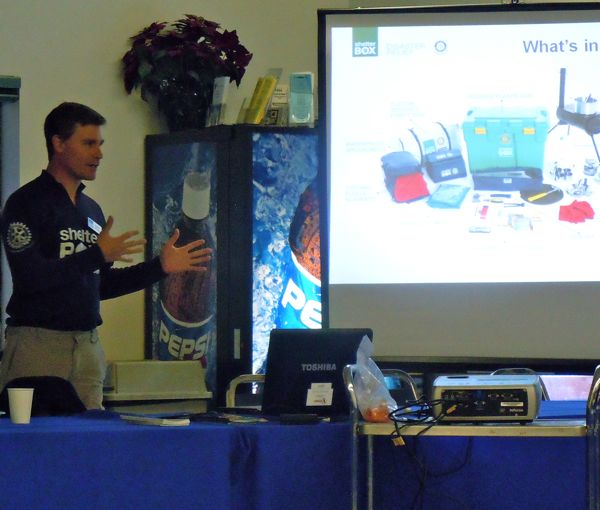
Ryder Evans talks about what is in a ShelterBox. Photo/Kathryn Reed

Ryder Evans talks about what is in a ShelterBox. Photo/Kathryn Reed

Boxes weighing about 100 pounds are flown into whatever area needs it. Today volunteers are in five countries, though only limited in Pakistan because of safety issues.

“Part of our mission statement is to bring dignity to people,” explained Ryder Evans. As a member of the Tahoe-Douglas Rotary, he has become a volunteer for ShelterBox.

ShelterBox was launched by Rotary in England and has since spread to its chapters around the world.

“ShelterBox is the only international aid organization that provides shelter and life-saving equipment for survival in an easily transportable box,” according to literature provided by Evans when he spoke to Soroptimist International Tahoe Sierra last week.

In August, Evans was deployed to Brazil to help with the flooding that displaced more than 100,000 people. Logistics of getting the aid to the people is often the most cumbersome part of the process. Customs can be an issue.

The mud and water in Brazil were in such abundance that tents would not have been able to be erected. This meant coordinating heavy equipment to bring in graders and then loads of gravel to provide a stable surface.

Evans explained that response teams have a tremendous amount of latitude to do what is necessary to bring help to the people on the ground. With resources being different in each country and the nature of each disaster unique to itself, flexibility is the key.

With much of the work being done in Third World countries, the tents can be an improvement over what the refugees had before the disaster.

The tents aren’t your ordinary family camping tents. They can sleep six to 10 people, are spacious, and allow people to standup and move around.

Most of the boxes contain the same basic items – the tent, blankets, ground sheets, stove, cooking utensils, tools, water purification equipment, ponchos, mosquito nets and children’s activity pack. Depending on the location, items can be substituted – for instance, some places may need more blankets, others might not be able to use propane to cook with.

Boxes cost about $1,000.

Although ShelterBox is a Rotary project, others may volunteer to be on a response team. Usually two to four people comprise a team.

More information is on the website or call (941) 907.6036.


Carson Valley couple joyful to be off doomed cruise ship

By Kathryn Reed

This may have been the first cruise where passengers lost weight instead of gained a few pounds.

That’s what happens while living off salads and odd sandwiches (think beet, cucumber and tomato – but just one of those with bread) for three meals a day.

Karen and Bob Smith who live in Gardnerville and work at Lake Tahoe were two of the 3,299 passengers aboard the Splendor – the Carnival cruise ship that was pulled to shore by two tug boats Thursday after a Nov. 8 engine fire crippled the vessel.

Bob and Karen Smith

Bob and Karen Smith

“We never want to eat another sandwich or salad for a long time,” Karen Smith told Lake Tahoe News from Disneyland.

The couple decided to salvage their vacation by staying in Southern California to enjoy a few days at the Magic Kingdom before returning home today and having to go back to work. Karen works at Heavenly and Bob at MontBleu.

Everything started well Nov. 7 as the 952-foot ship departed Long Beach for the Mexican Riviera. The couple had gone to one of the shows, which was highly entertaining.

Then came the announcement across the public address system at 6am Monday, “Alpha team to the engine room.”

Smith said, “They said they would never come over the PA in the room unless it was an emergency.”

The next announcement was for all passengers to report to the ninth floor, which is outside, because there was a fire below. Despite being told there was no reason to bring lifejackets from the room, some passengers did.

“We could see all this smoke as soon as we opened the door,” Smith said.

But before any announcement was made to the masses, the Smiths knew something was wrong.

Their outside cabin near the stern of the boat was on level one.

“It happened right underneath us. We had just woken up. We were sitting there and it almost felt like an earthquake with the rumbling and shaking,” Smith said. “I looked at my husband and said we better get dressed.”

For hours the passengers sat on the deck not knowing what was going on. Finally, that afternoon they were told the cruise was terminated. The “fun ship” cruise line was becoming just the opposite.

Carnival Splendor

Carnival Splendor

“It was a little scary at first. Out of the smokestack pitch black smoke was coming out all day. It was still coming out very lightly the day we got off the ship,” Smith said.

She praised the cruise director for his calm, reassuring voice. About 80 percent of the people went with the flow, while some thought it a good idea to yell at crewmembers for things beyond their control.

Smith said the 1,167 crewmembers were phenomenal. One criticism, though, was the delay in trying to salvage any sort of fun. Activities didn’t return until Tuesday afternoon. Passing out free beers helped ease tensions.

Without electricity and everything computerized, not much could happen. Camp Carnival for the kids was started Tuesday, plus games in one of the show rooms.

Having a window in their room allowed them the convenience of being able to be in their room during the day.

The Smiths through their son heard what was supposedly in the food packages airlifted in by the military.

“We didn’t see any Pop Tarts. That would have been nice. We didn’t see Spam either,” Smith said.

She said some people complained of smelling rotting food, but they never smelled it. Their big stink issue was the bathrooms. Their toilet wasn’t usable until Wednesday. It was cold showers every day.

As cruise veterans, this little adventure is not going to deter them from going back on the water. In fact, with their free voucher from Carnival they are planning a spring cruise to the Caribbean.

By the time they hit terra firma their credit card for the ill-fated cruise had been refunded as had all charges made on the ship until the power went out.


Consultant recommends water transit on Lake Tahoe

By Kathryn Reed

INCLINE VILLAGE — A case was made Friday to start a pilot waterborne transit project on the North and West shores as early as next summer.

“Essentially it would be public transit on the lake,” explained Gordon Shaw of LSC Consultants. “This is not going to be a big ferry.”

He was hired by the Tahoe Transportation District to study the feasibility of such a service. On Nov. 12 he made a presentation to the board that outlined how such a system could work, the potential passenger load and projected revenues.

The board is expected to take action on a potential course of action at the December meeting.

Gordon Shaw

Gordon Shaw

Shaw’s proposal anticipates the need of $1.3 million in start-up funds, which could come partially from federal grants.

The goal would be to start with one boat that could hold up to 20 people and add a second with similar capacity the following year. They would allow for wheelchairs and bicycles. Eighteen knots would be the maximum speed. Eight decibels the highest noise output so they could not be heard a quarter mile offshore.

Waterborne transit is not new to Lake Tahoe. Vessels plied the waters years ago to great fanfare in the first half of the last century. Attempts to resurrect this mode of transportation on a wide-scale basis has sputtered and petered out when anything did get launched.

Shaw said the key to being successful this time around is going slow and offering services that will be dependable. The boats would likely run Memorial Day to Labor Day, with weekend service after that.

Lew Madden, a retired Navy captain who lives in Carnelian Bay, spoke in favor of the boat shuttle, but raised a slew of questions that were not addressed in the consultant’s presentation.

(Madden has experience with getting boats on water, which he is in the process of doing in Alaska.)

He doubts Tahoe could implement this plan until summer 2013 based on getting federal funding. He cautioned going forward without contracts in hand from landing sites. He urged TTD to join the Passenger Vessel Association to receive help, guidance and insight.

“I think it will require more work than you can imagine,” Madden told the board.

Jim Markle, an Incline resident representing Sustainable Tahoe, would like the board to look at other watercraft than the five models presented. His interest lies in stability as well as the ability to land on a beach, which could open more areas to the shuttle service.

Stuart Yount, also of Incline, would like to see watercraft that could land at boat ramps and possibly a larger craft. He said with the Incline General Improvement District changing by 40 percent, to not rule out being able to dock in Incline in the future.

Ron Treabess, interim executive director with the North Lake Tahoe Resort Association, said his agency may have money to help with something like this.

The reason to start with Placer County destinations is the number of communities in a small area. Plus, a private operate has a shuttle service on the South Shore during the summer that hits Camp Richardson, Lakeside and Timber Cove marinas.

Kings Beach is not on the list of potential landing spots because the water level is too low.

Board member Ron McIntyre brought up the idea of a temporary floating pier in Kings Beach.

With the Tahoe Regional Planning Agency’s shorezone ordinance on the losing end of a recent court battle, the idea with the water transit to have nothing to do with building new piers.

Water transit is part of TRPA’s Regional Plan and is a component of all community plans that it would engulf; so permitting should not be more difficult than usual. The U.S. Coast Guard would also have to sign off on the plans.

Tahoe Vista Recreation Area is interested, as is Gar Woods in Carnelian Bay.

Possible sites on the North Shore also include Tahoe City Marina, Grove Street Pier and Sunnyside Resort.

Places in Homewood Shaw has spoken to include West Shore Café, Homewood High and Dry Marina, and Obexer’s Marina. Chambers Landing is out for the time being because of lack of parking.

It was noted the reduction in particulate matter from people driving less would be minimal.

“It’s close to being a wash on environmental impact,” Shaw said of the water shuttle.


Dental care on wheels keeps El Dorado youth healthy

By Jessie Marchesseau

The new pediatric dental office in El Dorado County is no ordinary dental office. The 42-foot-long van will have no permanent address. Instead, it will make its way to nine schools around the county each year.

This week it was parked outside the former Al Tahoe Elementary School in South Lake Tahoe.

Ana Salas, 24, learned of the program from her son’s Early Head Start teacher. She brought her 2-year-old son, Luis, to the van for his first dental exam.

Dr. Celeste Eckerman examines Heidy Carrillo's teeth. Photos/Jessie Marchesseau

Dr. Celeste Eckerman examines Heidy Carrillo's teeth. Photos/Jessie Marchesseau

“I think it’s good,” Salas said of the program. “It’s his first time and I wanted him to see what it was like.”

Though Luis only required a quick exam and fluoride application, not all the children who visit the van are so fortunate. Dr. Celeste Eckerman estimates about 80 percent of the children they have seen had cavities. She attributes this to South Lake Tahoe having no fluoride in the water and a lack of education among parents.

Kristie Miser, a registered dental assistant on the van who worked in a pediatric dental office for the past seven years, explained many parents are under the impression baby teeth are not important because they eventually fall out. However, healthy baby teeth are essential for smiling, eating, speech development and maintaining space for proper alignment of adult teeth.

While oral health for children is the main focus of the dental van, it also provides dental care for expectant mothers with Medi-Cal.

As Eckerman examined Heidy Carrillo, 16, who is nearly five months pregnant, she explained that cavities result in bacteria in the bloodstream. A mother-to-be with cavities is spreading bacteria to her baby.

Eckerman referred Carrillo to one of two local dentists who accept Medi-Cal. Before leaving the van, Carrillo said that she is going to have her cavities fixed.

“Having no cavities means a healthy baby,” she said.

The El Dorado Children’s Dental Van was unveiled in South Lake Tahoe on Oct. 25 after years of work and planning. The van will travel around El Dorado County, providing dental services to children 5 and younger with Medi-Cal insurance.

“We’re ready to help these kids that need it,” Miser said. “We’re excited.”

The van is a collaborative effort between First 5 El Dorado, Shingle Springs Tribal Health Program, El Dorado County Office of Education and the El Dorado County Health Services Department.

“We’re just really excited about this,” Steven Thaxton, executive director of First 5 El Dorado said. “Oral health under the age of 5 is an important need and this is a really positive program to meet that need.”

The van was custom built and features state-of-the-art dental equipment, including three dental exam areas, a panoramic X-ray unit and cordless digital X-ray system. It is a full-service dental office providing cleanings, fillings and other preventative services.

The three-person dental van team is comprised of a dentist, Eckerman, and two registered dental assistants, Miser and Char Thompson. As a dentist with a family practice in South Lake Tahoe, Eckerman said she saw a huge need for dental care for the kids in the area and is looking forward to her new role in the community.

“I became a dentist so I could help people who couldn’t afford dental care, so this is my perfect opportunity,” she said.

First 5 El Dorado expects the van to serve about 2,000 children annually. The team said the response so far has been great, adding the El Dorado County Office of Education has done a good job of getting the word out to parents.

The El Dorado Children’s Dental Van is scheduled to return to South Lake Tahoe in April when it will be at Bijou Community School.

For more information, go online or call 800.388.8690. Appointments are necessary. Paperwork is sent home with eligible children when the van is in area.

ngg_shortcode_0_placeholder (Click on photos to enlarge.)


Memorial honors S. Tahoe’s young who died in combat

By Kathryn Reed

With snow on the ground and a chill in the air, the sun peaked through to shine a ray of light on those gathered for the somber occasion – the dedication of the memorial honoring South Lake Tahoe’s children who have died in combat.

Pfc. Brandon Williams, 21, died in October 2006 and Sgt. Tim Smith, 25, in April 2008.

A memorial honoring South Tahoe's youth who died in combat. Photos/Kathryn Reed

A memorial honoring South Tahoe's youth who died in combat. Photos/Kathryn Reed

The memorial is on the same plot of land along Highway 50 where the children’s memorial is.

The plaque on the large granite boulder reads, “This memorial is dedicated to all from our community who gave their lives and have served our country from all branches of service. We thank you for your sacrifice and you can rest assured that we will support your families and friends. You have served as an example to all Americans by giving of yourself to the ideals of freedom which is the basis on which our country was founded. May you rest in peace and forever remain in our hearts and in our prayers.”

It was Patty Smith, the mother of Sgt. Smith, who in August suggested a special place in town be set aside for the children in the community who died in combat. Mayor Kathay Lovell promised to have it done by Veterans Day. The dedication came one day before that deadline.

Smith, who quietly sat with son Tommy in the front row, spoke briefly – admitting to having visited the memorial several times before the Nov. 10 dedication.

Brad Williams, the father of Pfc. Williams, was out of town. On his behalf his brother, Brian, spoke about the legacy these young men have left behind.

ngg_shortcode_1_placeholder (Click on photos to enlarge.)


Acceptance — the dominating theme at South Tahoe schools

By Kathryn Reed

“There is no alternative for being yourself.”

That is the message on the back of South Tahoe High School Ally T-shirts.

Ally isn’t an acronym. It means friend or supporter. It is, though, the name of the gay straight alliance at the high school.

Adam Northam presents Rachel's Challenge at STMS on Nov. 9. Photo/Kathryn Reed

Adam Northam presents Rachel's Challenge at STMS on Nov. 9. Photo/Kathryn Reed

Bridey Heidel has been the adviser for all six years it has been active at STHS. Tuesday night was the first time she and students spoke to the Lake Tahoe Unified School District board of education about the club.

“We are not a tolerance group. We are an acceptance group,” Heidel said.

It was a fitting presentation considering across the parking lot Adam Northam was giving a presentation to approximately 60 people, with a third of them youngsters, about Rachel’s Challenge. He had been at South Tahoe Middle School all-day; first for two student assemblies and then working with nearly 80 students on a leadership piece of the program.

Rachel Scott was the first person kill April 20, 1999, at Columbine High School in Colorado.

The message in her story is students have the power to generate a chain reaction of kindness, which will ideally silence bullying.

In some ways, that is exactly what Heidel has done with Ally. One way she knows she is getting the acceptance message out is no longer are the group’s bulletin boards torn down.

It’s not just gay teens in the group. It’s for anyone who believes in equality and standing up for the rights of all.

Last year Heidel took a group of students to a gay prom at UNR that was geared toward high school and college students.

“It was great to watch kids dance without looking over their shoulder,” Heidel said.

She hopes one day a club like Ally is not needed because the acceptance will be that universal.

It’s programs like Rachel’s Challenge that STMS Principal Beth Delacour says need to keep coming into the schools to deliver the message that bullying isn’t acceptable, small gestures like a smile can go a long way, and pre-judging isn’t the answer.

After the 9:30 assembly the morning of Nov. 9 many students were in tears. The message was powerful at times – certainly the images of Columbine are gripping. For many of these students it was likely the first time they had seen them. Some were not born when this tragedy happened.

The message to dare to dream, choose positive influences and utter kind words are all worthy.

Lost, though, in some of Rachel’s Challenge, is the message. This is because the delivery gets bogged down in some farfetched coincidences and stories that don’t ring true.

As a man devoted to God, Rachel’s father, Darrell, first started the nonprofit Columbine Redemption. From there, Rachel’s Challenge took off. It’s a mega-business.

At least for eighth-grader Samantha Buscher, it was a mega-message that she heard.

“It was really inspirational to me, just knowing this girl gave her life to help change the world,” Buscher said.