S. Tahoe City Council violates Brown Act at first meeting

By Kathryn Reed

On the first day on the job, Claire Fortier learned it takes more than desire to get what she wants as an elected official.

During council member comments Dec. 14, she proposed forming a citizens’ committee to look into what happened to the stalled Lakeview Commons project.

“I feel like we are not going to be transparent unless we look at what was done,” the South Lake Tahoe councilwoman told her peers. She wants to ensure awarding of future bids doesn’t wind up in court with the judge overturning the work of the city.

Work on Lakeview Commons stopped by court order. Photo/Kathryn Reed

Work on Lakeview Commons was stopped by court order. Photo/Kathryn Reed

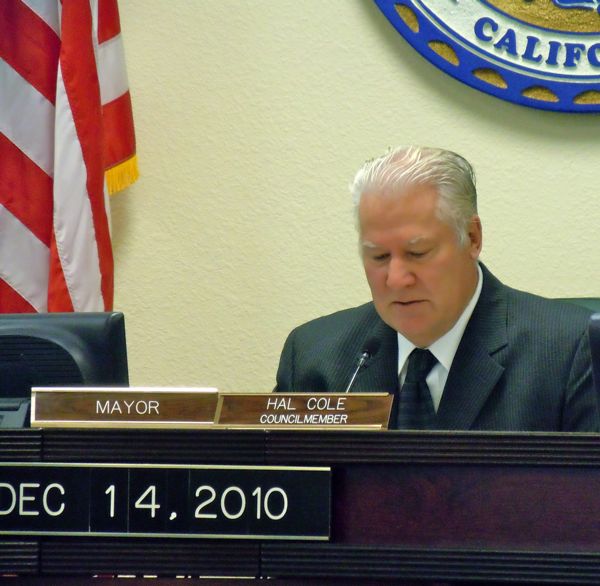
Before such a committee is formed, Mayor Hal Cole said he wants the matter to be discussed in closed session.

“I looked at the judge’s decision and didn’t see malfeasance,” Cole said. “Before there is a witch hunt or a group of citizens (is formed) I would like to see it in closed session.”

Councilman Tom Davis believes the report provided by City Attorney Patrick Enright before taking office was sufficient.

“I know what happened and I’m satisfied,” Davis said on his first day back on the council after a six-year hiatus.

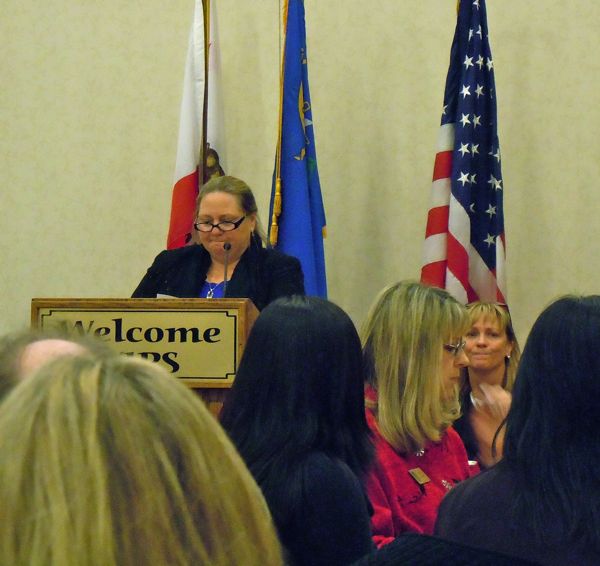
The odd thing about this exchange is the council is not supposed to discuss items not on the agenda. A simple show of hands is how things get on a future agenda. This was a clear violation of the Brown Act — the California open meeting law.

If council members are going to discuss things, then the public has a right to comment. The public was not allowed to comment Dec. 14 on Lakeview Commons. A change in the agenda must be done 24 hours before the meeting.

Their exchange was deliberation – which is completely illegal.

At no time did Enright try to put a stop to the discussion. He would be the one to do so. He is also one of the city employees who the judge was highly critical of and might have much to lose if the matter were looked into by an independent party.

According to the First Amendment Coalition’s website, “Either a citizen or the district attorney may sue to compel the local agency to comply with the Brown Act; obtain a ruling that a particular practice of the local agency violates the Brown Act; or obtain a ruling that the local agency is violating the free speech rights of one or more of its members in seeking to silence that member. Gov’t Code section 54960(a).”

Fortier said she is willing to hear what is said Jan. 11 when Lakeview Commons is slated to be on the agenda in closed and open session before pressing harder on her request. Closed session will be at 8am, with regular session commencing at 9am – both at Lake Tahoe Airport.

At this meeting the council will likely vote on whether to start the bid process over or award it to Clark & Sullivan, the firm that prevailed in court.

Fortier’s concern is with accountability.

No one in the city has publicly been reprimanded for what the judge ruled as a severe mishandling of the bid process on the $6 million project near El Dorado Beach.


S. Lake alters nepotism policy; snowy paths OK this winter

By Kathryn Reed

South Lake Tahoe is inching toward recognizing it needs to do something regarding nepotism. But the bigger policy issue regarding employees will not be brought to the council until February or March.

A revision to the basic nepotism policy was before the council Dec. 14. What was altered is the code of ethics that had been passed in 1992.

slt logo“The resolution prohibits City Council members from appointing any of their relatives to a City Commission or to the position of City Manager or City Attorney. The Resolution does not affect the employment, promotion, or retention of employees,” Deputy City Attorney Nira Feeley wrote in her staff report.

The council approved the revision 4-0, with Bruce Grego being absent for the entire meeting except for joining via teleconference to vote on the mayor and mayor pro tem.

Grego weighed-in on the subject via a letter he wrote that City Clerk Suzie Alessi read into the record. In part it said, “We should select individuals to participate in our local government based upon merit. Depriving certain individuals from participating in local government based upon their ‘relative’ status is no different than depriving such individual from participating based upon their race, national origin, religion, sexual preference, sex, age and the other bases of discrimination that we all reject.”

Grego’s wife, Geri, is on the Planning Commission. The adoption of this rule will prohibit her from being on it.

Councilwoman Claire Fortier and Mayor Hal Cole stated how perceptions of a pipeline of power or influence need to be avoided even if relatives believe they can act independently of the other.

Councilman Tom Davis relayed how his son wants to be on the Airport Commission, but will be denied that opportunity. The elder Davis is OK with that to adhere to the policy and the ideals of promoting more transparency within city hall.

Councilwoman Angela Swanson pointed out how there are plenty of other ways for relatives to be active in the community and have leadership roles other than by being on a city commission.

The issue of nepotism was brought up in the 2010 El Dorado County Grand Jury Report. It’s a topic the outgoing City Council and former city manager swept under the carpet.

Lake Tahoe News in July published an article about nepotism in the city. The effort to figure out who is related to whom has been difficult because the city will not turn that information over.

After LTN initially requested the information, Human Resources Director Janet Emmett sent an email to the related employees telling them about the request. That document is public information, but the city is not disclosing the full list of recipients.

When City Attorney Patrick Enright sent the email, he wrote, “Attached is a list of the bcc on the email that was provided to you. The ones redacted are mostly police officers who (sic) names were redacted under Penal Code section 832.8. There is one couple that has a ‘confidential marriage,’ which is specifically exempt as a Public Record.”

So, it is still unknown how many full-time, part-time or seasonal/temporary employees are related to one another. Just being related does not present a conflict. Current policy prohibits someone from supervising a relative. However, relatives in the workplace can present conflicts for other employees. That is the part that has yet to be addressed by the city and it supposed to be next year.

Although the seven bargaining units in the city don’t have to agree with what staff and eventually the council will vote on, they are being given the opportunity to review the policy before it becomes law. That is why it will be months before it sees the light of day.

“As to city employees, the city needs to meet and confer with the employee unions, which we are in the process of doing at this time. Staff is hopeful that in the next two months a comprehensive policy can be brought to the council,” Enright told Lake Tahoe News.

In other action Dec. 14:

• The council adopted the ordinance to mandate businesses clear their sidewalks of snow, but the start date was altered to Sept. 1, 2011, so outreach can be done to educate people. As originally written, the enforcement was to begin Jan. 1. The city ordinance puts some teeth into what already is state law.

• A fee increase per the 2007 franchise agreement with South Tahoe Refuse was approved 3-1, with Tom Davis voting no. Because it is a contractual item it really didn’t matter how the vote went. STR customers in the city limits will have rates go up 35 cents a month starting Jan. 1.

• Police Lt. Marty Hale was recognized for his years of service. He retires at the end of the month, though will continue on on a limited basis for the first six months of 2011. He was given a standing ovation.

• The three new councilmembers were sworn in, as were the city treasurer and city clerk.


Cole excited to be South Lake Tahoe’s new mayor

By Kathryn Reed

South Lake Tahoe has a new mayor of sorts – Hal Cole. He had the position during his first tenure on the council, so he knows what he is getting into. He was mayor in 1998, 2001 and 2006.

Claire Fortier, the top vote getter in the November election, was unanimously appointed by her colleagues to be mayor pro tem.

Hal Cole is ready to lead South Lake Tahoe into a new era. Photos/Kathryn Reed

Hal Cole is ready to lead South Lake Tahoe into a new era. Photos/Kathryn Reed

Councilman Bruce Grego was on teleconference for only this part of the meeting.

Fortier, Tom Davis and Angela Swanson were sworn in Nov. 14. Prior this happening, outgoing members Bill Crawford, Jerry Birdwell and Kathay Lovell each said a few words as they were about to resume their lives as non-elected persons. None of them chose to run for re-election.

Also sworn in on Tuesday were City Treasurer Dave Olivo and City Clerk Suzie Alessi.

The morning was filled with moments of levity – Crawford saying the reason he did not want a plaque is because he found his last one in the garage behind some canned goods.

The morning was filled with tears – Lovell tried to maintain her composure, but was overcome with emotion in her goodbyes. The packed room gave her a standing ovation.

The morning was filled with the continued acrimony between Crawford and Lovell – she not turning to shake his hand as he walked back to his seat after everyone else had.

The morning was filled with promises of things to change.

Cole, as mayor, expressed how this policy making body is a “we” and not an “I” – to which his colleagues later expressed their same desire to work as a team.

Cole acknowledged the hard financial times the state and country are in, and that South Lake Tahoe is right there with those bodies.

“We are at the point where we may have to look at how we deliver services,” Cole said in reference to having balanced recent budgets with reserves. But he also pointed out how the town is resilient as is the staff. “We have a rare opportunity to reinvent our organization.”

Part of the reinvention will be with establishing work sessions outside the council meetings for one or two issues to be hashed out prior to a vote needing to be taken. All of these will be open to the public. The schedule is being worked out.

ngg_shortcode_0_placeholder (Click on photos to enlarge.)


Tahoe-Reno struggling to find identity for sustainable future

By Jason Hildago, Reno Gazette-Journal

It’s the early 1930s.

At one West Coast university, an engineering professor laments about how many of his graduating students have to move East because of a lack of tech jobs in his area.

The area without enough tech jobs? Palo Alto.

Region trying to define what it is once visitors leave the Reno-Tahoe airport.

Region trying to define what it is once visitors leave the Reno-Tahoe airport.

The professor? Stanford University’s Frederick Terman.

“Terman had a real interest in what happened to the students produced here,” said Henry Lowood, curator of the History of Science and Technology Collections at Stanford University. “He was seeing students like David Packard taking his degree and going to the East Coast to work for General Electric because there weren’t enough jobs here in his field. So, the problem for him was figuring out how to seed something here so his own students don’t end up going somewhere else.”

Less than a decade later, Terman convinces Packard to return to the area to form Hewlett-Packard with another fellow student, William Hewlett. By 1951, Terman’s pet project Stanford Industrial Park opens, attracting tenants such as HP, Varian Associates, Eastman Kodak and Lockheed.

Today, the Palo Alto area is known as arguably the most storied place for tech in the world. Terman, meanwhile, is affectionately regarded as the “Father of Silicon Valley.”

As Northern Nevada works to wean itself from a heavy diet of gaming and tourism, Silicon Valley’s story shows how it’s possible to create a thriving, new sector with enough vision, effort and just the right amount of luck.

The area is wrestling with many of the same challenges Terman tackled decades ago, but Northern Nevada also is dealing with a key wild card: one of the worst economic downturns in its history.

The recession still casts a large shadow over the area, and the challenge for Northern Nevada is to stay the course on economic development without losing sight of the big picture, said Richard Bartholet, research director for the Bureau of Economic Research at the University of Nevada, Reno.

“It’s much more challenging to do growth and economic development while working out of a hole,” Bartholet said. “We’ve got in excess of 14 percent unemployment and significant fiscal challenges at the state and local level. But while it would be nice to have some short-term ideas under way, it’s also important for business, community and political leaders to not get so focused on short-term challenges — like filling this budget gap — that they lose sight of where we want to go and who we want to be in the long term.”

Read the whole story


Gliding along Baldwin Beach in a blissful state of mind

By Kathryn Reed

CAMP RICHARDSON — I’m confused. The snow under my skis clearly means it’s winter. But the temperature makes me wish I were in short-sleeves and has me reminiscing of summer days at the beach at Tahoe. The few feet of sand next to the lake have me thinking a towel and book would be a good thing to bring along next time.

It’s one of those December Sundays when it feels more like a warm spring day. The snow has softened enough by late morning to have a little give and make gliding pleasurable.

Taylor Creek's tranquility is mesmerizing. Photos/Kathryn Reed

Taylor Creek's tranquility is mesmerizing. Photos/Kathryn Reed

Lake Tahoe is like glass – beckoning anyone foolish enough to come play with her. But we know better. She is no friend this time of year — this icy bowl of water.

We park at the turnout for Baldwin Beach off Highway 89. The U.S. Forest Service does not plow the access road. It’s OK to park there, but pay attention to areas along this stretch of the South Shore because there are “no parking” signs in certain places.

Outdoor enthusiasts have laid several tracks. An etiquette reminder – if possible, don’t walk in the tracks of cross country skiers. Even more important, pick up after your dog – especially because dogs aren’t allowed at Baldwin.

Meandering down what feels like a forested tunnel of sorts because of the thick conifers on either side has altered my state of mind. I’m lost in this wonderland. Inhaling, exhaling. Oh, that mountain air.

Less than a mile in the terrain opens and Lake Tahoe’s deep blue waters are just a few glides away.

We head north along the beach. Mount Tallac is to our left all covered with snow. It looks like February. It seems too early – and technically it’s not winter – for this icon to be awash in white.

No one is in sight, yet the tracks prove plenty of people have beaten us to this little slice of Tahoe splendor. We go as far as we can. A creek prevents us from crossing. Although the water level is low, there is no way not to get our feet wet. No matter the outside temperature, wet feet are a recipe for frostbite.

At times this inlet can be crossed on the ice. But crossing any ice in Tahoe is tricky because of the freeze-thaw factor. When the area is a crossable, it becomes a bit of an architectural tour with all the shoreline homes.

This Sunday we turn around and head toward Taylor Creek. A large predator bird is circling in the distance – perhaps a hawk of some sort.

A couple is on the other side. They, too, have reached Mother Nature’s barrier.

Back we go. Taking it all in.

It’s one of those incredibly easy cross country ski outings because it’s all flat. No chance of getting lost with the lake on one side. But it is one of the most scenic places to visit – even more so in the winter than summer.

Getting there:

From South Lake Tahoe, take Highway 89 north. Pass Camp Richardson. Go about one mile. Park on the right where the sign says “Recreation Area Closed for the Season.” If you hit Cascade Properties, you went too far.

ngg_shortcode_1_placeholder (Click on photos to enlarge.)


8 young women from STHS rise to the top of their class

By Kathryn Reed

STATELINE — Parents. They are the common denominator of the eight South Tahoe High students selected to be Young Women of Distinction.

Soroptimist International of South Lake Tahoe each year singles out seniors who have risen to the top of their class beyond having exceptional grade point averages. Still, the averages are impressive – ranging from 4.08 to 4.57.

STHS Principal Ivone Larson talks about the eight women being honored Dec. 8. Photo/Kathryn Reed

STHS Principal Ivone Larson talks about the eight women being honored Dec. 8. Photo/Kathryn Reed

As Principal Ivone Larson described each young woman’s accomplishments, the tears started to flow. With parents in the audience for the Dec. 8 lunch at Harrah’s Lake Tahoe, it was obvious this event was a culmination of 17 or 18 years of hard work on everyone’s part.

All of the girls spoke of their parents’ influence on their lives. The majority wants to pursue an education in science or a career that will involve science. All have a wealth of community service on their resume. Some are dancers, some athletes, some artists – above all they are distinct in their own right.

Here is a bit of what Larson had to say about each girl.

Katie Burba: “With her multilingual talents in Spanish and French, Katie hopes to travel to Spain and Europe to teach English. While there, she hopes to pick up a few more languages, including Italian, as her family is Sicilian.” Burba’s passion is dance – spending five days a week on her toes. She may minor in dance. Her first choice college is UC Davis.

Elisa Escobar: When she arrived in the United States from the Philippines at age 7 she spoke no English. Now she is fluent in four languages, has a 4.27 gpa and wants to go to UC Santa Barbara to eventually become a marine biologist, oceanographer, or nurse practitioner. “It is fitting that Elisa credits her parents for teaching her who she is and giving her strong morals. She also acknowledges her teachers for being her inspiration. Elisa, you have already made a difference in the lives of so many and we can’t wait to hear about your future adventures.”

Annie Lineberry: The acting bug bit her when first auditioned for a high school performance. She has been on stage every since. She aspires to be a company member in the Oregon Shakespearian Festival in Ashland or possibly a high school drama teacher. “Annie says her Dad is a constant source of encouragement and pressure to do her absolute best in everything she does. She credits him with inspiring her acting dreams. Her Mom challenges her to think about real issues and to question the morality and intelligence of everything that occurs on a day-to-day basis. She says she challenges her to form her own opinions on issues based upon fact and truth even if they don’t line up with her Mother’s beliefs.”

Tiffany Racz: “She attended the National Youth Leadership Conference in Washington, D.C., last year and came home a changed person in the sense that her career goals are now global instead of national. Her goal is to be an epidemiologist somewhere remote studying and researching epidemics hoping to be part of a close team that will find solutions to serious global problems.” She has taken every science class the school offers.

Ariana Truszewski: She works 20 hours a week to support her riding habit. She owns a horse and has been in the saddle since age 7. “Therefore, it is no surprise to any of us that she hopes to become an equine veterinarian working in the thoroughbred-racing field. This past summer she did an internship at an equine sports medicine and rehabilitation center in Lexington, Ky. She worked side by side with veterinary students, working long hours through extreme heat and humidity, leaving exhausted and grimy at the end of the day, but loving every minute of it.”

Dana Tumbaga: With psychology and English being her favorite classes, she is considering a career path that may involve those disciplines as well as sociology. She is fluent in English and Ilocano. “Dana is not certain about her future endeavors, but as an artist, she can appreciate the potential of a blank canvas when provided with the right tools and inspiration.”

Hannah Wheelen: “She is passionate about the environment and hopes to someday return to Tahoe to work as a scientist protecting our precious natural resources.” Quiet and introspective are words to describe her, but so are busy and giving with a slew of extracurricular activities and volunteering outside the school.

Stephanie Zepeda: “She has applied to several universities, but hopes to be accepted to UC Berkeley in the fall and eventually become a bilingual criminal psychologist.” She has been on the cheerleading squad all four years. Last year she received the nomination for the National Youth Leadership conference in Washington, D.C. In her spare time, she studies and scrapbooks.


LTUSD dropout rate declines from previous year

By Kathryn Reed

Lake Tahoe Unified School District is bucking the state trend of rising dropout rates.

Data released this week for the 2008-09 school year show the South Shore district with a 5.3 percent dropout rate in grades 9-12. This compares to 2007-08 when the district 9-12 dropout rate was 6.5 percent.

The opening of the Career and Technical building is touted as a draw to keep kids enrolled at STHS. Photo/Kathryn Reed

The opening of the Career and Technical building is touted as a draw to keep kids enrolled at STHS. Photo/Kathryn Reed

This compares to the state rate of 5.7 percent in 2008-09 and 4.9 percent the previous school year.

“It’s going in the right direction,” LTUSD Superintendent Jim Tarwater said.

The current data reflects the third year of using the California Longitudinal Pupil Achievement Data System or CALPADS.

“We now have a data system that allows us to track students more accurately and have honest conversations about how to improve graduation rates and reduce dropouts among all subgroups of students,” Jack O’Connell, state Superintendent of Public Instruction, said in a prepared statement.

Most of the dropouts are seniors – 15 for the 08-09 school year at South Tahoe High School. One junior and one sophomore also dropped out.

At Mt. Tallac, the continuation high school, for that same reporting period it was 31 seniors, two juniors and one sophomore who dropped out.

At the transitional learning center, 10 seniors dropped out.

It’s normal for seniors to have the highest dropout rate, according to Tarwater. If they don’t have the units to graduate or have failed the state high school exit exam, they see no reason to keep going to school.

With better tracking of students in the transitional learning center, Tarwater is hoping those numbers will come down in the future to reflect a more accurate number. But some students leave the country and therefore cannot be tracked, but are considered a dropout for LTUSD.

The state’s 3-year-old data collecting system allows the district to send queries electronically to find out if a student has enrolled someplace else. Without knowing where students have gone, they are considered dropouts.

“Part of what we are trying to do with the netbooks is get kids engaged and hook them more,” Tarwater said. The plan is for all students in grades 3-12 to have one of the mini computers.

Assignments can be downloaded if a student is absent. The possibility of using Skype when they are out of town is being looked at.

The district is also banking on the new facilities at the high school that are bringing more programs and enriching the ones in place as factors to drive students to be in the classroom.

Enrollment remains a concern. The bottom has not been reached. The district started with 3,910 when the doors opened in August. Now enrollment is at 3,867.

It’s the high school that is losing students. Since the beginning of the year 12 ninth-graders have left, four 10th-graders, 10 11th-graders, and 11 12th-graders.

The middle school is staying even.

The elementary level is a mixed bag of gains, losses and status quo.

“Some of those kids are legitimate. There is probably a 10 percent mobility factor. Mainly it’s related to work which makes a ton of sense to me,” Tarwater said of why kids are leaving. If their parents got a job elsewhere, they had to go.

Every nine seconds, a student in the United States drops out of school, according to the National Center on Secondary Education and Transition. The National PTA is focusing on the dropout issue in the December 2010-January 2011 edition of its magazine Our Children, which will be available online later this month.


2 weeks of cycling events in Tahoe part of Amgen tour

By Jessie Marchesseau

STATELINE — The South Shore’s marketing plan for the upcoming 2011 Amgen Tour of California is off and rolling.

At the Dec. 9 Lake Tahoe Visitors Authority board of directors meeting, Executive Director Carol Chaplin provided an update on event promotion in the coming months.

The tour is the largest cycling event in the United States and will kick off seven days and 800 miles of road bike riding at the South Shore’s California-Nevada border on May 15. The first stage will consist of 1 1/2 laps around the lake, ending at Northstar-at-Tahoe. The second stage will start at Squaw Valley and take the riders to Sacramento then farther into California during the next five days.

Chaplin announced the new website is up and running, as is the organization’s Tahoe Tour of California Facebook page. The LTVA, along with the North Lake Tahoe Resort Association, has also revealed the new event logo featuring iconic Emerald Bay and the tagline “Start at the top.”

She also said the agencies are now working on the development of Tahoe’s 10-day Countdown to the event, which will start on May 5. The countdown will offer a variety of bike demos, expos, participation rides and other community events. While the LTVA and NLTRA will be hosting the tour-specific events, they are looking for partners to organize auxiliary events.

Amgen logoA new team member with experience working on the Amgen tour may also give their efforts a little boost. Joanne Shepherd, a business tourism management student from Southern Cross University in Australia, will be working on the Amgen event at LTVA for the next six months as an intern.

Shepherd worked on the tour four years ago in Long Beach and approached LTVA about doing her college internship with them so she could work on the event once again.

Though Shepherd has only been in Tahoe for less than a week, she says she is looking forward to the next six months. Chaplin says she likes the idea of having someone here who has worked on the tour before.

Chaplin, along with Sue Barton, deputy director, and Mike Frye, sales and events manager, attended an Amgen meeting in Los Angeles in November with representatives from the other 15 host cities. They discussed the rules, regulations and benefits that go along with hosting the event.

“One of the things we really want to do is promote that cycling is a part of our community, and it is,” Chaplin said.

amgen route

Stage 1, Sunday, May 15: South Lake Tahoe → North Lake Tahoe-Northstar (Tahoe Resort)
Stage 2, Monday, May 16: North Lake Tahoe (Squaw Valley) → Sacramento
Stage 3, Tuesday, May 17: Auburn → Modesto
Stage 4, Wednesday, May 18: Livermore → San Jose
Stage 5, Thursday, May 19: Seaside → Paso Robles
Stage 6, Friday, May 20: Solvang (Individual Time Trial)
Stage 7, Saturday, May 21: Claremont → Mt. Baldy (Mountaintop Finish)
Stage 8, Sunday, May 22: Santa Clarita → Thousand Oaks


South Tahoe ice rink losing money, lacks marketing plan

Publisher’s note: This is the second of a two-part series about the South Lake Tahoe Ice Arena.

By Kathryn Reed

In the 2010-11 South Lake Tahoe budget the “Recreation Summary” calls for projected revenues to be $996,200, expenditures $2,073,558. This equals a deficit of $1,077,358. The majority of expenses are for personnel services — $1,472,855.

Specific ice arena figures can be found in Working Papers B that were supplied to Lake Tahoe News. The revenue estimate is $618,000 from skating fees, class fees, renting equipment, rent of the ice, and sales of product. Expenditures for the rink include: personnel services, $430,662; other expenses at $134,669 which include laundry, communications, printing and binding, merchandise for resale, general supplies, program supplies, clothing-uniform, medical supplies, gas, electricity, fuel.

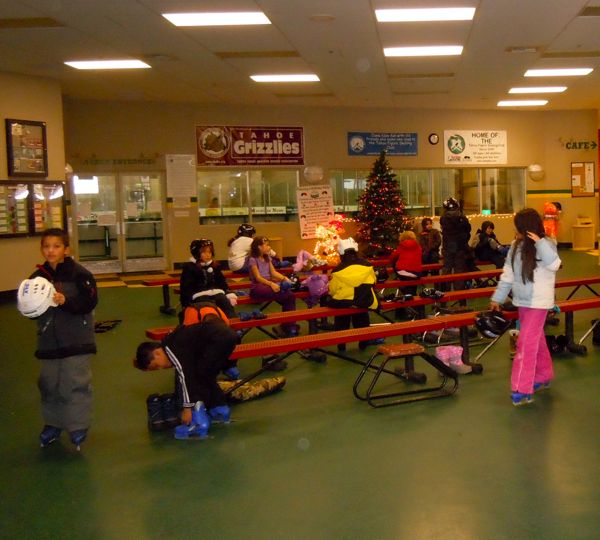
Skating is part of the Lake Tahoe Unified fourth-grade curriculum. Photos/Kathryn Reed

Skating is part of the Lake Tahoe Unified fourth-grade curriculum. Photos/Kathryn Reed

In 2009-10 the top three revenue generators were: public skate 26 percent of the budget, facility-ice rentals 25 percent, and skating programs 11 percent.

Rob Swain, supervisor of the South Lake Tahoe Ice Arena, said the projected deficit for this fiscal year is about $35,000 for the ice rink. The deficit for 2009-10 came in at $78,000.

“I’m not proud of it. It’s horrible in my opinion,” Swain of last year’s numbers.

He could not answer the questions: Why was the deficit so large last fiscal year? And why do you anticipate it being less than half of that this fiscal year?

One budget item that will be cut this year is utilities, which came to more than $60,000 last fiscal year. This is because of the cogeneration plant being installed.

Another expense that has been cut is staff. Swain said 1.7 full-time employees operate the arena. A slew of part time people are part of the staff, as well. Swain remarked that with the furlough days he and others are mandated to take – an average of three a month – he doesn’t consider himself a full-time employee.

The café is seldom open. Swain said there is not the volume of customers to do so. He also does not want to change the policy that allows outside food and drink. He said at one time he shopped at Costco to stock the cafe, but then ex-City Manager Dave Jinkens said no more shopping off the hill. He has met with local grocery stores to get a deal on food items he would resell, but said the stores were not open to that idea.

At one point the café was losing $900 a month, Swain said.

However, Nancy Kerry envisions a restaurant where people could watch the skaters. She was asked by City Manager Tony O’Rourke to do an assessment on the rink after parks and rec staff said they were too busy to do it themselves.

The cafe at the South Tahoe rink is seldom open.

The cafe at the South Tahoe rink is seldom open.

The retail store once had an outside operator, but no longer. Rink staff run it. It’s full of items for hockey players and figure skaters, as well as T-shirts and fleece vests the general public would wear.

A positive at the rink is the number of skate school participants has been on the upswing the past few years.

The peak was 684 in 2002 – the year the rink opened. And it opened in May. For the next five years participation numbers for skate school decreased; the low point of 150 was in 2007. Swain attributes the drop to when to two elementary schools in Lake Tahoe Unified School District closed and the economic downturn.

Since then the numbers have been increasing, with 349 participants this year as of the end of November.

Money v. customers

Swain sounds like a man more worried about the bottom line more than the quality of service customers are getting.

“If I can rent the facility, it is easy money,” he said. “It brings people to the community, where everyone benefits.” He means heads in beds, meals served, gas in tanks and other residual expenditures involved with people in town for hockey tournaments and camps. (Swain is a hockey player.)

He has rented the rink for winter clothing catalog shoots as well as to the government to test tires.

Swain said the two words that will put the ice rink on solid ground are cooperation and compromise.

But it’s customer service the city manager wants him to focus on.

“We are in the service business,” O’Rourke said. “We are here for our customers, not ourselves. We have to meet their expectations and their needs.”

Swain said after last week’s focus group meeting he immediately implemented three changes people wanted – all in the name of customer service. One was to post the calendar at the facility in a manner people preferred, another was to offer coffee. He couldn’t remember the third.

When it comes to the public using the rink, school schedules are a contributing factor – so are windy days on the slopes.

“We are very weather driven,” Swain said. A public session on a rainy day can bring in five times the amount of money the figure skaters generate, he said.

With the rink being built with Measure S bond money – a measure residents still see on property tax bills – Swain said the philosophy is to provide as much ice time to the public as possible.

Rink is secret to many

One problem with getting the public to use the rink is there is no marketing budget. Interim parks Director Chris Hawken said money for such endeavors is taken from other parts of the budget instead of being a separate line item.

Part of the recent discussions involve getting the word out to the public about the various skating programs – including curling, birthday parties, youth and adult hockey leagues, skills and drills, broomball, and figure skating.

Until meeting with Lake Tahoe News, no one in the media had been told about the free Dec. 18 holiday event that starts at 5:30pm.

Most of the information being distributed about rink activities is directed to current users.

When the weather is nasty, Swain said hotels in the area are sent faxes telling them to suggest to their guests to come to the ice rink.

But Kerry wants a more proactive approach to getting tourists to know about the rink.

Hawken said new this year is having a coupon inserted in card key holders for hotel guests to use.

Going after hockey tournaments and camps are other ways to get people to know about the rink.

The flip side is letting locals know so they could attend the various events on this NHL size sheet of ice.

But the rink is not all that inviting. It’s drab. The holiday tunes on the sound system are not peppy. The 300-seat stands are cold. Heaters above them have to be pointed out they even exist. It is incredibly cold – colder than other rinks. The party room is tucked into a corner in what looks like an after thought. There is no view of the ice from there.

Swain volunteers he likes the outdoor rink at Heavenly Village with its decorative snowflakes and the vibe it puts off. He thinks doing more things like that would be good for the indoor rink. But he quickly points out the continued reduction in staff has him and others wearing many hats which is stretching them thin and causing some things to fall by the wayside and never get done.

One thing that might free up time for Swain and Hawken is the city attorney will be handling the bulk of contracts. This is to ensure consistency and eliminate the multiple contracts for various user groups. It is also designed to create a more even playing field and bring oversight and accountability to what is being offered people.

When Stan Sherer comes on board in January as Parks and Rec director the ice rink will be at the top of his list in terms of making sure it is run correctly and customer satisfaction is in check. Some cities lease their rink to an outside vendor instead of having staff run it. This could be an option in South Lake Tahoe.




Ice time, cost pit customers against South Tahoe officials

Publisher’s note: This is the first of two stories about the South Lake Tahoe Ice Arena.

By Kathryn Reed

Some customers of the South Lake Tahoe Ice Arena are getting a colder reception than the temperature inside the rink. And it’s uncomfortably icy in there.

“First and foremost we need to recognize the problems before we can address them. We can’t be in denial. I’m not,” City Manager Tony O’Rourke said. “From the number of people I’ve talked to I believe there is validity. There is some consistency in the issues raised. Some call it complaints. I call it customer feedback.”

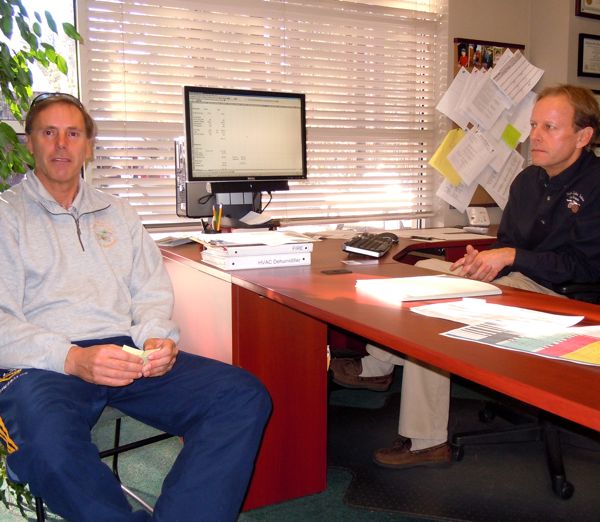
Chris Hawken and Rob Swain talk about the ice rink. Photos/Kathryn Reed

Chris Hawken and Rob Swain talk about the ice rink. Photos/Kathryn Reed

The issues have been raised for years, but nothing has changed. Until now. Change has started with a new city manager and recreation director. (Stan Sherer starts in January, but will be in town Thursday to meet with some ice rink users who are dissatisfied with the customer service.)

Disagreements about ice time among the user groups and favoritism are some of the reasons for the discontent.

As with most ice rinks, there are three main groups using the ice – the public, hockey players and figure skaters.

A meeting Nov. 29 among nearly 40 stakeholders and three city officials has created a thawing of emotions.

“There is change coming. We perceive a huge light at the end of the tunnel,” said Joanie Malarchuk, a figure skating coach. “With regards to figure skating ice time, we don’t have consistent ice time year after year, month after month, day to day.”

Looking at the six-week calendar posted on the arena’s website proves her point. The freestyle listing is for figure skaters.

Inconsistency makes it difficult for Malarchuk and other coaches to grow the figure skating program when they can’t tell clients what days/hours are available for training on a long-term basis.

Some users didn’t want to speak to Lake Tahoe News for fear it would cause a setback in the progress being made.

Rob Swain, who runs the rink that opened in May 2002, says flexibility is needed to accommodate everyone.

Figure skaters need the ice at 23 degrees, while hockey players have it at 19 degrees. The former can shatter the ice with their skate tips if the ice is too cold.

In between user groups the $80,000 Zamboni makes the sheet usable again.

The rink has about 73 hours of programs a week out of a possible 168 hours. To have the rink open it requires at least one person at the desk and possibly a skate guard depending on the users.

Chris Cefalu, who is credited with keeping the A league hockey program going, is content with what is going on.

“There is no unhappiness. I think the rink cooperated with me,” Cefalu said. He blames the economy for the dwindling number of hockey players and the desire to have fewer games.

Swain said with South Tahoe being the only rink in the region (Reno no longer has one) people travel more than an hour for this sheet of ice. This can present scheduling issues.

The ice rink costs $270/hour to rent. The December 2010 fee schedule says adult hockey leagues pay $260/hour. It costs a local resident $7.50 during public skate time. Figure skaters pay $12/hour.

“More transparency is causing some resentment because people want the same deal,” Swain said.

Swain said hockey players want to renegotiate what they are paying. Swain, who is a hockey player and has kids in the sport, said hockey players are subsidizing the ice rink.

However, it is not unusual for various user groups at other ice rinks to pay different rates. What’s unusual are the constant changes, and not sticking with a posted and department approved payment plan.

These types of rate fluctuations could be considered a gift of public funds – which is illegal.

Swain says it’s just part of doing business – trying to appease users by making deals regarding rates.

But Swain, during a four-hour interview with Lake Tahoe News this week, admitted he has bent to pressure from different user groups to offer payment plans that have not remained consistent over time.

Looking for resolution

rink

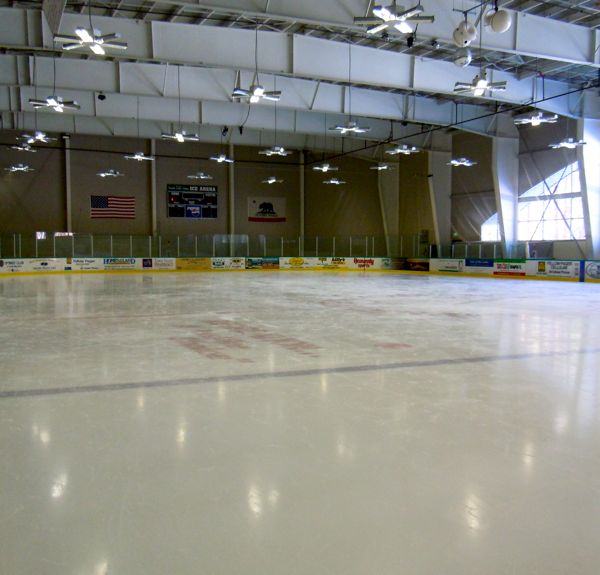
The South Tahoe ice rink is often not used, but still people argue about access.

Swain is defensive about what is going on at the rink. He is not thrilled someone outside the department was brought in to handle disgruntled customers. But customers said their complaints were met with silence – not even an answer to why something could not change.

Nancy Kerry is the city employee tasked with devising a plan for the ice rink. Although her job as No. 2 in the Redevelopment and Housing Department might seem like an odd choice, it’s her background as a former assistant city manager that gives her the skills for such a job.

“I needed a fresh approach. I was not satisfied with the institutional response,” O’Rourke said. “She has been a very good facilitator.”

Interim parks Director Chris Hawken, who did not get the top job, told Lake Tahoe News he is fine with having someone else take a look at what is going on at the rink.

“I see a downfall on our side is we need better communication,” Hawken said. “Afterward, people said ‘if we had known all that was going on, we wouldn’t have had to come to the meeting.’ We do listen to concerns.”

He is referencing the Nov. 29 meeting facilitated by Kerry, with himself and Swain in attendance.

Hawken said ideas in recreation tend to be cyclical. He thinks that is part of what is going on at the 8-year-old facility.

O’Rourke and Kerry disagree because the complaints have been going on for years without resolution. Swain acknowledged stacks of emails have been presented to higher ups.

Kerry said her goals include creating consistent policies, a coaches’ manual, and developing customer service directives for staff.