Elimination of LTCC position fuels distrust among staff

By Kathryn Reed

Unrest is brewing at Lake Tahoe Community College among staff, the board and the president.

One classified employee on Jan. 21 told Lake Tahoe News privately, “Morale has always been in the toilet, now it’s in the sewer.”

ltccCollege board member Kerry David isn’t surprised staff would be disgruntled based on continued cutbacks by California, increased workloads and years without raises.

“Morale in higher education is tanking across California when you look at the proposal the newly elected governor has put on the table,” David said.

The best-case scenario as proposed by Gov. Jerry Brown for LTCC is $650,000 in cuts. The worst case is more than $1.7 million cuts for the next school year. What compounds the problem is the outcome may not be known until June, weeks before the 2011-12 budget must be approved and takes effect July 1.

(The board is meeting with state Sen. Ted Gaines, R-Roseville, on Monday in Sacramento to discuss the budget.)

Although budget constraints and the uncertainty that looms plays a role in creating an atmosphere of gloom, interim President Steve Maradian is not helping the situation, according to some LTCC employees.

Upon his recommendation, the board at its last meeting unanimously did away with the position of the Title III project manager. This in turn means Craig Brinkman is without a job. He was putting the Datatel software system in place.

“First of all, it is a personnel matter. To me it was not a performance issue. It was a position not needed by the college to get the work done,” Maradian told Lake Tahoe News.

Maradian brought in three firms to assess how Datatel is working. Two were independent. According to Maradian, all said the college needed better technical support to make the grant funded software upgrade come to fruition. That is why he recommended doing away with the job held by Brinkman.

At the Academic Senate meeting Friday afternoon on the campus of the South Lake Tahoe two-year institution, Senate VP Steve Adams was adamant in his belief the dismissal of Brinkman was not handled correctly.

“When things happen this way, it affects all of us,” Adams said at the meeting.

He and fellow instructor Jon Kingsbury are upset College Council did not know about it beforehand. Shared governance is what they kept reiterating. Shared governance gives a voice to faculty and staff before the board takes action.

LTCC board policy 5.12 Subsection B states, “Except in unforeseeable emergency situation, the Board of trustees shall not take action on matters significantly affecting staff until it has provided staff an opportunity to participate in the formulation and development of those matters through appropriate structure an procedures.”

Although the Academic Senate did not vote on the matter related to this situation, Kingsbury and Adams briefed the more than two dozen people in attendance that their opinion is the board did not follow proper procedure. The Academic Senate is expected to address the board at the Jan. 25 meeting.

Maradian left the Academic Senate meeting before all of this was said. Reached by LTN by phone afterward, the president adamantly stood by this being a personnel matter, which would mean it would never go to College Council or Academic Senate.

As to whether the Jan. 11 agenda item was worded correctly, Maradian said, it was written per what attorneys advised. The item reads, “Public Employee Discipline/Dismissal/Release: Project Manager, Title III, and Interim Manager, Information Technologies.”

Some interpreted this as the firing of the person, not the elimination of the position, which is what the board voted on.

David said, “This is not something that happened overnight.”

People speaking at the Academic Senate meeting said it was a surprise when the agenda was posted.

Maradian said with all the meetings involved with people assessing the program he couldn’t see how anyone would be surprised by what transpired last week.

The college board meetings and College Council meetings are available on podcast on the college’s website.

The day after the board meeting, LTN received an email from an anonymous source that in part says, “(Maradian) has now LIED to the Board about following publicly available policies for the termination of a staff member — Craig Brinkman. It’s a mess and there is rampant talk of a vote of no confidence against the president and the Board. The staff is afraid to speak up for fear of being the next to see their name on a public agenda for dismissal.”

On top of the strife between Maradian and LTCC, he had problems just before leaving Los Angeles City College.

The Los Angeles City College paper in November 2010 talk about a sexual harassment lawsuit filed by a male student against Maradian while he was president of the college. It was settled out of court.


Vail businesses already see brighter economic times

Publisher’s note: This is the second of four days of stories about issues pertaining to Vail.

By Susan Wood

VAIL – Things are looking up for businesses from markets and restaurants to ski resorts and sporting goods shops in this snowsports tourism area, following a rough recession-based year for the United States.

Overall, November sales tax revenue in the town of Vail nudged upward to $660,141, an increase of 1.2 percent compared to the same month in 2009. Plus, this figure is estimated to go up another $33,000 because of late collections, improving collections to 6.3 percent from the previous year, according to a recent memo by Vail sales tax administrator Sally Lorton.

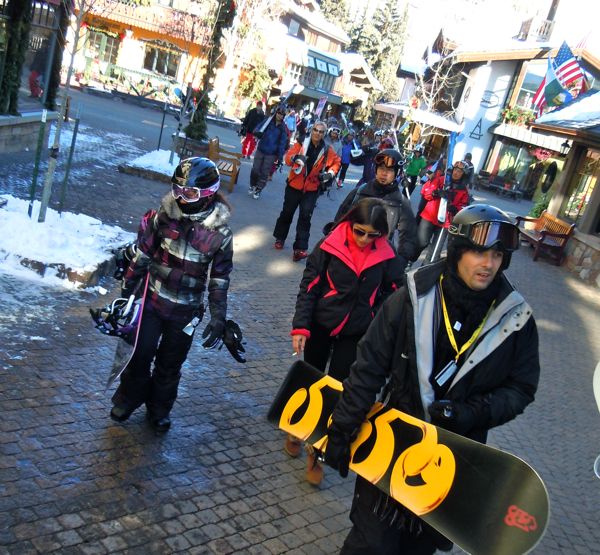
Vail businesses are in recovery mode from the recession. Photos/Kathryn Reed

Vail businesses are in recovery mode from the recession. Photos/Kathryn Reed

More than $14.6 million was collected for the town in sales tax revenue in 2010. In 2009, the figure was $14.3 million.

Food and beverage sales tax receipts came in with 8.8 percent more sold this past November, the town of Vail reported Jan. 7.

“It’s been a great last few months,” Stacey Gibson of Tavern on the Square said, while admitting that more Americans are saving money than they used to spend. “Everybody needs to get away and go on vacation. People save in different ways.”

Further, she acknowledged Vail the town appeals to an upscale visitor. The bar/restaurant located inside the Vail Resorts owned Arrabelle hotel is also fairly new to the Lionshead village. There’s a fine dining option called Centre V to offset the bar’s casual atmosphere – which is a short walk from the slopes for skiers and boarders.

While the lodging tax was down by 4.2 percent in November 2010, retail made up for the loss with a 4.8 percent increase in sales compared to a year ago. The villages of Vail, Lionshead and West Vail came on strong with double-digit increases in sales tax collections – anchoring Vail areas outside the villages that show a 19.2 percent dip in receipts.

“Business is bouncing back in Lionshead. We survived,” Bart & Yeti’s bartender Kevin Foley said, serving a crowd on a January weekday night. Foley was referring to the tough economy as well as his 36-year-old employer being located in the shadow of redevelopment that tore up the street for years.

“It was a war zone around here,” Foley said.

Although most everything is new around this locals’ retreat, the multi-level Arrabelle puts the outdoor area of Bart & Yetti’s in the shade.

Buoyed by La Nina conditions bringing an early winter to the West and a perceived pent-up holiday demand for fun among recession-weary consumers, sporting goods led the way in sales in November. Shops collected 36.2 percent more money than in 2009. The Vail Economic Advisory Council received the optimistic city reports on Jan. 11.

Vail Resorts, which owns Heavenly Mountain Resort on Lake Tahoe’s South Shore and Northstar-at-Tahoe in Truckee, has a high stake in these reports with more than half the town carrying the name of Vail or its lodging division RockResorts. Vail Resorts also runs the ski areas of Vail, Beaver Creek, Breckenridge and Keystone.

As of a few weeks ago, the ski resort corporation reported lift ticket revenue amounting to 7.4 percent more than the previous year.

Vail’s good economic news hasn’t necessarily surprised marketing officials from the Beaver Creek ski area to the RockResorts lodging division.

“People are still traveling. They may have dinner in their condos, but they’re still doing what they want to do,” Beaver Creek spokeswoman Jen Brown told Lake Tahoe News while steps from the slopes. Beaver Creek, which appropriately operates under the advertising tag line “not exactly roughing it,” has offered specials to get on the slopes as well as discounts once skiers and riders are there. The same goes for Vail, and customers are taking advantage of it.

Events are king with both resorts. These include “Holidaze” activities at Vail and Beaver Creek’s plans to host the World Cup Championships in 2015.

“Clients were skipping their ski vacations (prior to this year). We’re seeing the repeat guests dedicated to these resorts, and now we’re seeing the economy coming back. We’re quite fortunate,” said Marcella Bettis, RockResorts regional director of marketing.

Transient occupancy rates were down this past December by 0.3 percent to 57.1 percent compared to the previous year, but lodging establishments could be cautiously optimistic by making adjustments. The average daily rate went from $407 in December to $389 this month. The drop contributed to an increase of bookings to bring occupancy up to 57.4 percent.

Then, of course, not every place is Vail – where the highest real estate sale in 2010 was a 5,631-square-foot Solaris property penthouse that went for $14.8 million, according to the Vail Board of Realtors. The lowest sale was a 695-square-foot condominium at $249,900.

The upward swing in most tax reports for everyday purchases seems to mirror national trends in terms of spending over the holidays among bargain-hunting consumers.

“We’ve seen an increase (in business) this year at Christmas,” Pepi Sports buyer Shaun Filiault said of December’s receipts for his Vail Village store. Filiault added he’s noticed that when the hotels run deals, the people show up to rent skis and boards and buy accessories. But they may be more discriminating based on the state of the economy.

“I feel people buy what they need. We’re seeing more value-conscious consumers,” he said.

Either way, store results appear in-line with the national snowsports market reaching $1 billion in sales last year, an increase of 14 percent from 2009, according to a recent SnowSports Industries America report. The U.S.-based trade association also reported alpine equipment sales up 23 percent this season in comparison to last year’s.

At Kid Sport store in the Vail Village, workers have noticed a better ski season business than last year’s.

“Last year was the hardest year,” Dana Smith said, noting more locals are spending money on gear and clothes for their children. Anna Cutts mentioned the website sales are up.

The nearby market has seen a brisk business as well. Property manager Bob McNichols of Daedalus Real Estate attributes part of the success of his marketplace with the development of units to bring people into the area.

“Business is growing each year. Grocery sales are way up. I think more people are eating in, but they’re coming,” he said. “For us, these are the good old days.”

ngg_shortcode_0_placeholder (Click on photos to enlarge.)


Vail Renaissance allows area to compete on world stage

Publisher’s note: This is the first of four days of stories about issues pertaining to Vail. Lake Tahoe News reporters spent the first week of January in Vail – skiing, eating, walking, talking, and observing. Today through Jan. 23 we share some of those experiences and insights with readers of Lake Tahoe News. The point is not to say Lake Tahoe should be Vail, but to point out what another ski town is doing. And with Vail Resorts now owning two ski resorts in Lake Tahoe and at one time wanting to be a player in the would-be convention center project in South Lake Tahoe, what Vail is doing very much pertains to Lake Tahoe.

By Kathryn Reed

VAIL – Lots of money exchanges hands each year among people who like to travel and those with a place to stay the night. The vacation rental market is a $24 billion a year business in the United States.

The town of Vail, Vail Resorts and people in the Vail Valley want their share and then some of that chunk of change.

The mountain and the town of Vail blend together. Photos/Kathryn Reed

The mountain and the town of Vail blend together. Photos/Kathryn Reed

With travelers having more options these days because every town seemingly is able to capture a bit of the tourist dollar, the status quo doesn’t work. Vail looked around about a decade ago and realized it wasn’t top dog in the ski destination market. The Deer Valleys and Whistlers of the world were cutting into their profitability. (Lake Tahoe is not a threat – never has been, according to Vail officials.)

“We saw other resorts, specifically Beaver Creek and our competition in Aspen and other places that were doing new and interesting things. The traveling public is pretty sophisticated and they like new, shiny things and up-to-date accommodations. Things we had, but not enough quantity,” said Ludwig Kurz, who has been in Vail since 1966 and was on the town council from 1998-2003.

To get back in the game Vail underwent what it calls the Renaissance over the course of about 10 years. With the Four Seasons opening a month ago, and the Ritz-Carlton Residences coming online in 2010, the Renaissance is complete.

The meandering Arrabelle opened three years ago this month. It’s so monstrous it seems to take over the entire Lionshead area. The Solaris Residences in Vail proper is also hard to miss, though it is a mixed use complex. It had owners moving in last May.

The Renaissance amounted to about $250 billion in redevelopment, according to the town manager.

Kurz said intellectually people understood the need for change, but emotionally it was a harder sell to get rid of the old and build something new.

“We are lucky we didn’t have half completed buildings or holes in the ground,” Stan Zemler, Vail town manager, told Lake Tahoe News. “A lot of stuff here was controversial. One went to the public for a vote.”

Height and density concerns were some of the biggest hurdles.

The Vail Homeowners Association, a group of mostly second homeowners who united in the early 1990s to be proactive in how the surrounding neighborhoods would be impacted by development, had major reservations about the various aspects of the Renaissance.

“Most of it dealt with planning and zoning, master planning,” Jim Lamont, director of the homeowners group said of the numerous meetings. “Redevelopment was again a bitter pill for a lot of these people to swallow. But what we did was wed solving the community’s original sins with swallowing the bitter pill of more density.”

He added, “Vail was so crappily built in the first place.” (The ski resort came first, then the town.)

It took a couple years for the Lionshead master plan to come together.

“To me, master planning takes time. It’s painful, hard, (and involves) a lot of debate. But it sets the table for what you want. It creates a path for what you want and people go down that path,” Zemler said.

Lamont said his group was able to get heated streets, which he said is a must for an aging population. The VHA also was instrumental in how truck-loading docks functioned. Parking and transportation were issues they raised, too.

These urban renewal areas create tax increment that in turn pays for public improvements like streetscapes, lighting and transit.

“We raised enough issues about each new redevelopment project that things were pretty well vetted before they went under construction,” Lamont said. “The emphasis was put on rebuilding.”

Kurz believes the area was successful with the Renaissance because “we were somewhat tenacious and kept after it.” He also points to a sophisticated town staff who could handle the work involved in dealing with the public-private dealings.

“The risk comes in my mind when a developer who is an out of town person and wants to develop and doesn’t understand the community,” said Rod Slifer, with Slifer Smith & Frampton Real Estate. He’s seen it all. In 1962, the year Vail ski resort opened, Slifer was the town’s first and only real estate agent.

He is not a believer in hiring consultants to make recommendations about development or redevelopment projects.

“At least in Vail and most other ski areas I’m familiar with, the local real estate community and local government know what is needed and what would work,” Slifer said.

Sampling of properties

Vail Resorts has several subsidiaries, all with large bank accounts. This helps when it comes to remaking the town. RockResorts and Vail Resorts Management Company are two major players in the area. Much can be self-financed so bankruptcy isn’t likely.

The Arrabelle, the lodging property owned by RockResorts, is huge. It has walkways that lead from one area to the next. It’s hard to know where it ends or begins. Some people think it’s too tall because it casts a shadow on businesses that before were bathed in sunlight.

The Ritz Residences had its grand opening in November.

Kyle Denton, broker with Sotheby’s International, told Lake Tahoe News while on a tour of the property two weeks ago 18 of the 71 whole ownership units are under contract. They range in price from $1.75 million to nearly $9.2 million. The square footage is 1,500 feet to 4,500 feet.

Pre-sales were brisk in 2007 on the $111 million property, Denton said, with 2008 and 2009 being dead, and now things picking up.

Wendy Mallas, homeowner association manager for Vail Resorts Hospitality at the Ritz Residences, said more international buyers have been inquiring about the property – predominately South Americans and Mexicans. New Yorkers and Californians are the biggest domestic markets, along with Texans and people from Chicago. (These demographics parallel where skiers come from.)

The Ritz Destination Club has 45 units, with Marriott International handling the resale. (A Marriott is next door.) It is managed by RockResorts.

When the Four Seasons opened its third mountain locale at Vail in December (the others are Whistler and Jackson Hole), it was able to boast of having the largest suites in the Vail Valley. The 121 rooms are not ski-in, ski-out, but the heated ski area is next to the Vista Bahn lift for convenience.

In the first three weeks the 49-unit Ascent condo project was on the market 26 contracts had been written – this as of Jan. 7. The project is in the town of Avon at the entrance of Beaver Creek.

Prices range from $350,000 to $1.1 million. Even though they are moving, the original asking price in 2008 was more than 50 percent higher.

Inspirato is a company launched by Brent Handler, co-founder of Exclusive Resorts. Members have access to 40 luxury residence in ski destinations like Vail, Beaver Creek, Aspen, Snowmass and Dear Valley.

He has found a niche market for those who can pay a $9,500 initiation fee, $2,500 renewal fee and market prices each night. People want luxury accommodations, the amenities that go with them and flexibility in where and when they travel.

What’s next?

Ever Vail, a Vail Resorts proposed development, is wending its way through the regulatory process, with the possibility of being permitted this year. At $1 billion it is the single largest development ever proposed for Vail.

The multi-faceted project would cover about 12 acres – about the same size as the hole in South Lake Tahoe where the convention center project sits in foreclosure. This also compares to Lionshead and Vail Village that are each about 55 acres.

Literature from the company says, “Our fiscal analysis estimates Ever Vail will generate one time revenue of more than $30 million for the town of Vail, as well as $7.6 million at build-out in ongoing annual revenue that includes nearly $5 million from tax increment financing.”

Kristin Kenney Williams, spokeswoman with Vail Resorts Management Company, acknowledges the large amount of inventory in the Vail Valley that is not sold and how some believe the area is overdeveloped.

“We can’t rest on our laurels,” she said sitting in the members’-only bar at the Ritz Residences. She said the company is putting itself in a position to be ready for when the market fully turns around.

“We don’t want to cannibalize Vail Resorts or others that are here,” Williams said.

She says it will be like creating a new neighborhood.

She anticipates the soonest construction would start on buildings would be three years. Moving the frontage road that splits the property and cleaning up the toxics from the former gas station need to be handled first.

The plan is for a 102-room RockResorts hotel to be part of the mix. A gondola to service this area is also on the books. More than 400 residential units will also be part of it.

Williams estimates Ever Vail will bring about 2,000 new visitors a day to the area, with about half of them being skiers.

“That will in no way encroach on the mountain,” Williams said.

(One reason Vail does not have six-pack chairlifts is so fewer people at once are disembarking from a lift, so it keeps the flow on the mountain more manageable.)

How Ever Vail will impact travel on Interstate 70, the main artery to Denver, remains to be seen. Williams said it is a concern all parties are looking into.

Other things about Vail

Like South Lake Tahoe, about 70 percent of the homes in Vail are not occupied by the owners. They are second homeowners.

Eagle County unemployment was at 9.55 percent in October. Vail does not keep those stats. South Lake Tahoe’s unemployment topped 17 percent in November.

Vail’s population is about 5,000 people. South Lake Tahoe’s is close to 25,000.

The Vail Valley is about 35 miles long. The closer the property is to the slopes, the more expensive it is. People commute from the outer reaches, much like driving from the Carson Valley or Carson City to Tahoe.

Beaver Creek, a Vail Resorts ski mountain, expects to have the draft environmental impact statement of its improvement plan released in the first half of this year. The mountain needs beefing up before it hosts the World Championships in 2015.

The ski resort owned much of the land in Vail. Land for the hospital was donated by the resort, with a deed restriction so it remains a medical facility.

The focus of Vail Resorts is on the destination visitor, ideally who flies into the Eagle County airport and never needs a car. The Vail Homeowners Association is pushing for an international terminal at Vail Eagle airport.

Vail ski resort is in Eagle County, not the town of Vail. But all the development is in the town.

Parking is an issue in town. Since 1973, the town has spent $21 million on garages with 2,400 spaces. About 6,000 vehicles use the garages each day, according to Transportation Manager Mike Rose. The town is responsible for another 400 free spaces in the area.

Parking is free after 3pm, with other incentives.

One issue is people must use the garages at $25 day when there is vacancy or else face a $60 ticket for parking on the free frontage road.

Vail Resorts is responsible for about 90 percent of marketing in the winter. The town through a dedicated lodging tax has about $1 million to spend on summer special events. The town of Vail has a Special Events Commission to handle that. Events are geared toward locals and tourists.

ngg_shortcode_1_placeholder (Click on photos to enlarge.)



South Tahoe employees consider workplace average

By Kathryn Reed

A C-plus – that’s the grade South Lake City employees gave their employer and overall work environment.

City Manager Tony O’Rourke is not surprised by the results of the survey 92 percent of the 198 employees took in early December. Results are being disseminated to staff this week, with directors having received the report late last week.

city logoOf the 72 questions, the one receiving the lowest overall rating was: City management considers the interest of employees when changes are made in the city that affects my work. Sixty-seven percent disagreed, while 5 percent agreed with the statement.

“Anything that received less than 50 percent needs addressing,” O’Rourke said.

He wants change to be a collaborative effort between staff and management.

What role his management style played into the results would be hard to ascertain. When the survey was taken Dec. 6-7 he had been at the helm for four months – enough time to influence opinions, not enough to be responsible for engrained beliefs/attitudes.

The firm doing the analysis wrote, “Particularly in these economic times, adequate staffing levels is an enormous challenge and rarely do we find organizations where employees feel the staffing is adequate. Limited staff and high demand for services can also mean the leadership time and attention required for effective two-way communication and inclusive decision making and collaboration across departments can wane. This ultimately affects morale and productivity as evident in the results of the assessment and reflected in the written comments.”

In the 45-year history of the city, no employee survey has been taken before. O’Rourke wants to use this one prepared by Alta Mesa Group as a benchmark. His plan to conduct a survey each year, see if weaknesses have been addressed and what new issues may need to be resolved.

“We need to treat employees as well as we treat the customers,” O’Rourke said. His mantra since Day 1 has been all about providing quality service, treating customers (aka the public) with respect.

The areas city employees had the highest remarks for were:

• I feel a high degree of responsibility for the work I do;

• I work in an environment that is free from drugs and alcohol;

• I have the skills and knowledge necessary to perform my job;

• I know what is expected of me in my job;

• The people in my work group work hard to do quality work;

• I have a great sense of personal satisfaction when I perform my job;

• Employees are treated equally regardless of race, national origin, age, gender, sexual preference, marital status, physical handicap, medical condition, veteran status, or religious affiliation.

The areas people had the lowest remarks for were:

• My department is adequately staffed;

• Suggestions for improvement are taken seriously;

• City management considers the interest of employees when changes are made in the city that affect my work;

• City management promotes a team environment within and among departments;

• City management sets attainable goals;

• In general, this organization is better to work for now than it was a year ago;

• City management genuinely cares about employees’ welfare.

How the 57 supervisors-managers responded compared to the 126 line employees was about the same. Usually management has a higher regard for the institution.

The consultant wrote, “A focus on communication, leadership and citywide policy issues amongst city managers and supervisors may create a significant opportunity for improvement in the organization, and will likely be noticed by line employees.”

Underlining the issue with communication is the fact 75 percent of employees say they understand issues the city faces, but only 19 percent trust what the city tells them.

Only 12 percent believe management takes their suggestions seriously. Twenty-one percent feel comfortable saying what they think.

For the question: City policies and standards are applied consistently to all employees – 57 percent disagreed and 16 percent agreed.

The City Council on Jan. 25 will have this survey and the community survey at its disposal while discussing the strategic plan.

“The council will have to prioritize services,” O’Rourke said. “I want the process to be public and transparent. It needs to be tied to action plans and assessments.”


Healthy eating means smaller portions throughout the day

By Kathryn Reed

Bagels the size of hockey pucks and muffins the size of eggs. That’s what a single serving is.

Finding out bagels and muffins from coffee houses and restaurants count as several servings did not seem to sit well with some of the women as they ate breakfast.

Nutritionist Amber Wilson talks about smaller portions -- on plates and in glasses. Photo/Laurie Brazil

Nutritionist Amber Wilson talks about smaller portions -- on plates and in glasses. Photo/Laurie Brazil

When registered dietician Amber Wilson told the group of women last week that filling a smaller wine glass would be a good idea, it was met with chuckles like that suggestion isn’t about to happen.

“Most people have an emotional connection to food,” Wilson told members of Soroptimist International Tahoe Sierra.

She said it’s best to eat when hungry, which is likely to mean having several small meals throughout the day.

Wilson also said no watching TV, no emailing and no reading while eating. This will allow for enjoying the experience of eating.

To demonstrate how better to enjoy food she had each woman put an M&M in her mouth and close her eyes. The idea was to pay attention to the taste, smell, texture – to notice what it felt like swallowing and if while eating it evoked any feelings besides hunger.

“You need to focus on what food tastes like,” Wilson said. She added that by doing so it will result in making healthier food choices.

Eating fruits, vegetables and protein are critical, she said.

“A lot of diet related foods have fillers in them. A lot of times they take out the fats and put in other things to make it taste good. Those are usually sugars,” Wilson said.

She recommends keeping a food journal to be accountable for what one eats. People tend to avoid bad foods when they know they have to write it down.

Wilson was asked how to get people to eat better.

“You have to have a realistic conversation about their health and the risks. But if they don’t want to change, you won’t get them to,” Wilson said.

In addition to paying attention to what is being consumed, where it’s eaten and how much, Wilson is a big believer is being active for 30 to 60 minutes a day.

“The best kind of exercise is the exercise you like,” Wilson said.

Wilson may be contacted by emailing a.wilson@new-life-nutrition.com.


STMS students deal with more than routine pre-teen angst

By Kathryn Reed

“People in your life are a wing to lift you up or a weight to drag you down.”

Manny Scott said that message in several ways to South Tahoe Middle School students Jan. 14. Scott is one of the Freedom Writers – the gang members depicted in the 2007 movie by the same name.

In two sessions Friday morning he reached all the sixth-, seventh- and eighth-graders in a raw but compassionate way. He threw soft questions out to start with like who likes certain music groups. They were asked to stand if they liked that artist.

Manny Scott connects with South Tahoe Middle School students. Photo/Kathryn Reed

Manny Scott connects with South Tahoe Middle School students. Photo/Kathryn Reed

Then the questions got more personal, more to the core of what life is like for these young people.

Almost all have heard gunshots other than on television. About 80 percent have had their utilities cut off. About two-fifths have been asked to join a gang. Almost all have had someone close to them die. About half have seen their mother be hit or beaten by a man. About a quarter have been physically abused. About 25 percent of the students have a parent who was or is addicted to drugs

“You have a lot more in common than you have differences,” Scott told the group seated on the floor of the multipurpose room.

He wasn’t there to single people out. The exercise demonstrated how people have a lot of issues going on that most people don’t know about it. It’s about understanding they are not alone.

A startling revelation is the number of people students know who have died from violence. The last student standing knows 10 people who have died a violent death. Another knows eight.

This is South Lake Tahoe. These are middle school students.

“We save lives by showing people around you they are loved,” Scott said.

At that moment, with a heavy silence having fallen over the room, Scott has everyone get up and hug someone. Students hugged students, teachers hugged students, the principal hugged teachers and students.

Scott connects with the kids because he’s been there. His stepdad is back in prison. He grew up breaking up fights between him and his mom. They were drinkers. He was in a gang.

What helped turn Scott around was a teacher named Miss G. She started having these inner city kids write in journals. To this day Scott still does, having done so the morning of his talk in South Lake Tahoe.

Hours after Scott spoke to students at South Tahoe Middle School “Freedom Writers” was on MTV.

All of the students at STMS had the opportunity to see the movie before Scott came to campus last week.

“When I help these kids my life makes sense to me,” Hilary Swank as Miss G says in the movie.

STMS teacher Cindy Cowen says essentially the same thing. She has been the catalyst to get speakers like Scott to the school, along with the help of Principal Beth Delacour and a grant from the El Dorado Community Foundation.

“I want things like this more than once a year,” Cowen told Lake Tahoe News. “My desire is to change the culture of the school.”


Skiing through Olympic history on Tahoe’s West Shore

By Kathryn Reed

TAHOMA – People with guns on cross country skis. That certainly set the tone for a unique day in the woods.

Fortunately, they were shooting at electronic targets with laser rifles.

A sign saying “Olympic Heritage Event” made us wonder if we should turn around because we are nowhere near Olympic caliber cross country skiers. (Later I questioned going on the intermediate loop – that’s how unsure I am free heeling it.)

Nathan Hoffman learns how to shoot the rifle for biathlon competition. Photos/Kathryn Reed

Nathan Hoffman learns how to shoot the rifle for biathlon. Photos/Kathryn Reed

Unbeknownst to us until our arrival Saturday morning at Sugar Pine Point Campground the second annual Olympic Heritage Celebration Biathlon competition was going on. It was open to anyone – all ages, with the youngest being about 9 years old.

The first event a year ago at this course used for the 1960 Olympics was the same weekend of the Nordic Legends Dinner.

On Jan. 15 Bill Lindemann, who emceed the dinner in 2010, was on hand to make sure the nearly 20 participants were having a good time, and getting a bit of instruction as they raced against the clock and each other.

Competitors could do a 1K or 3K loop, shooting twice – once standing, once laying on their stomach. Miss your target and the penalty is to ski a short loop.

At the shooting range, Holly Beatie was dispensing a wealth of information. Nathan Hoffman looked at her quizzically when she said to place his thumb in a certain manner. This was his first time on a biathlon course, and to handle this type of gun that has the look and feel of a regular rifle.

But the state park, he said, is pretty much in his back yard so the terrain was familiar.

Beatie is well versed in the world of biathlon – which is the sport of cross country skiing and shooting. She moved to the North Shore in the 1970s, but no women’s biathlon teams existed so she competed with the men. It wasn’t until 1980 that the U.S. developed a women’s team.

In 1984, Beatie was on the inaugural U.S. biathlon team at the Women’s World Championships in Chamonix, which won the bronze.

We left the competitors behind to strike out on the myriad trails in this state park along Lake Tahoe’s West Shore. Steeped in history, interpretive signs along the way point out facts about the Olympics hosted by Squaw Valley 51 years ago this month.

We didn’t set any speed records. Instead, we glided through the groomed tracks at a fairly leisurely pace – all the better to stop for photos and admire the wonders of nature.

Fluorescent green lichen leaps off several trees.

A few charred trees along the way are a reminder of the August 2007 Washoe Fire that destroyed five houses and burned about 15 acres.

General Creek meanders between most of the trails, though it’s not visible most of the time. However, at a few junctures we crossed it via bridge. A couple who own a second home in the area regularly treks to this tranquil oasis. With sandwiches from the General Store in Tahoma and a waterproof blanket of sorts, they staked out a spot near the creek for lunch. We wished they had invited us to join them.

Instead, after we worked up an appetite doing the 2.1 mile beginner Blue Trail and 3.3 mile intermediate Red Trail, we headed north a short ways to Tahoma to grab a bite at the Old Tahoe Café. A pint of their pale ale is just $3.95, while the veggie sandwich with fries ($8.79) is big enough to split.

Getting there:

From South Lake Tahoe, go north on Highway 89, around Emerald Bay and past Meeks Bay.

Before hitting Tahoma, on the right will be a sign for the Ehrman Mansion.

In less than one mile make the left turn into the Sugar Pine Point Campground. We didn’t see a sign for the turn, so we ended up making a U-turn.

There’s plenty of free parking even though it’s a state park.

Dogs are not allowed.

ngg_shortcode_2_placeholder (Click on photos to enlarge.)


TripAdvisor sponsorships pit North v. South Tahoe

By Kathryn Reed

STATELINE — TripAdvisor isn’t solely driven by free content like customers might think it is. Chambers of commerce and visitors bureaus may buy regions, thus in turn dictating what content viewers see.

The divide is pitting the North Shore against the South Shore in Lake Tahoe.

tripadvisorIn July, the North Lake Tahoe Visitors Bureau locked in the use of Lake Tahoe, Calif., as a region. This means people clicking on that region will be fed information dominated by the North Shore entity.

Todd Skelton, sales manager with TripAdvisor, spoke to the South Lake Tahoe Lodging Association meeting Jan. 13. He talked briefly that morning about this new product his company has, but more in-depth with Lake Tahoe News the following day.

“We do that because user generated content is great for hotels, restaurants and attractions, but it may not be the best content for a region,” Skelton said of the sponsorships.

It’s also clearly a tool for TripAdvisor to rake in some cash. The one-year sponsorships range in price from $7,500 to $70,000. The entity that has the rights has first right of refusal when the contract expires.

Skelton said the price depends on how detailed the sponsor wants to be as well as unique visitors to that page.

According to Carol Chaplin, Lake Tahoe Visitors Authority executive director on the South Shore, TripAdvisor first offered Lake Tahoe, Calif., to the North Shore. Andy Chapman with NLTRA did not return a phone call.

Skelton said he doesn’t have the history of how NLTRA got those rights, but said it is possible for the two agencies to share the name.

“North and South could not play nice in the sandbox. They could not figure out how to split the content,” Skelton said.

Starting next week, LTVA will have sponsorship title of Lake Tahoe, Nev.; South Lake Tahoe; and Tahoe area.

“It’s an unbudgeted expense, but was required for us to maintain our ‘territory,’ if you will,” Chaplin emailed LTN.

What exactly the respective Lake Tahoe tourism bureaus are paying to TripAdvisor is not known at this time.

TripAdvisor allows nonprofits to buy the regions, not a business. The city of South Lake Tahoe would qualify as such an entity if it so desired.

It wasn’t until last year that South Lake Tahoe was listed as its own region. Skelton at the meeting said it has skyrocketed to the 10th most searched California destination – below Santa Barbara and above Napa.

He said even though Expedia bought the 10-year-old company about three years ago, the parent company does not influence placement. For example, a hotel that does not use Expedia will not be placed below ones that do on TripAdvisor, according to Skelton.

One thing that surprised the packed room a the LTVA office on Thursday is people writing reviews from their rooms in Tahoe are likely to not see their posts go live. This is because TripAdvisor’s fraud detection system assumes the use of a local IP address is someone in-house doing the review, not a guest in the hotel.

A concern brought up by a meeting attendee was what to do about the customer who complains about something, then threatens to write a negative review on TripAdvisor if their room or meal is not comped.

Skelton advises not giving into to threat. He added that businesses may make a “management response” on the site to counter any negative reviews. However, all the examples he used in doing so were to agree with the person – as in, yes, we are making changes to fix such and such.

Some members in the audience said their experience with TripAdvisor in trying to refute what they called a bogus complaint was unpleasant. It became a he said, he said situation, with the negative review staying.

TripAdvisor and other reviewing sites like Yelp are affecting how consumers choose where to sleep, eat and play. Skelton said TripAdvisor has 35 million reviews, with more than 42 million unique visitors a month.


Gaines ready to tackle budget, higher ed, building codes

By Kathryn Reed

Change the requirement mandating new residential construction come with sprinklers and create a setting so those who want to graduate in four years from the CSU system can.

Those are two pieces of legislation state Sen. Ted Gaines plans to introduce this session.

Gaines, who represented Lake Tahoe in the state Assembly for four years, was elected to the state Senate last week and sworn in Jan. 6. The Republican from Roseville was still settling into is Sacramento office when Lake Tahoe News caught with him by phone this week.

Ted Gaines

Ted Gaines

One of the major differences between the seats is the size of the district. The Assembly position covered four counties, the Senate 12. Gaines represents people on the Oregon border in Modoc County down to Mammoth Mountain in Mono County.

Despite the increase in territory, he plans to reach out to visit his constituents as much as he can. In the spring he expects to start setting up a series of meetings throughout his district, including Tahoe.

“As far as I’m concerned, I’m going to be just as active and accessible to everyone,” Gaines said in reference to any apprehension after last weekend’s deadly shooting in Arizona. “The state of California is reviewing their policies. They are briefing us legislators as far as proper procedures for having public forums. I will heed that advice, but it won’t prevent me from making sure I communicate with my constituents.”

Tahoe concerns

Gaines has a second home on the North Shore, so he is in a more unique situation than some elected officials to know firsthand what life in Tahoe is like – even if it’s part time knowledge.

He plans to keep an eye on the Tahoe Regional Planning Agency to ensure “they are operating in a transparent fashion so special interests are not influencing their decision-making.”

Having TRPA Governing Board meetings accessible on the web with audio and visual components is something Gaines is pushing for.

“I think what is becoming more and more clear is that economic development is good for Lake Tahoe. When you put new infrastructure in at the lake it improves the health of the lake if done right,” Gaines said. “We would want individuals serving on the TRPA to help the local economy while at the same time preserving the lake.”

Gaines is going to seek revisions to the state building codes that took effect Jan. 1 which call for sprinklers in all new residential construction. Until this month the need for sprinklers was triggered based on square footage.

Research is being done to determine if he’ll seek to repeal the legislation, create different standards for construction at sea level v. elevations like Tahoe, or delay implementation.

In 2009 a woman in Truckee died when the sprinklers in her home were triggered by smoke from cooking. The glycerin in the sprinklers mixed with the flames from the stove and caused the fatal explosion.

Statewide issues

Even though a Democrat is in the governor’s office, the Republican state Senator is optimistic change is coming.

“I’ve had three meetings with him in the last 30 days,” Gaines said of Gov. Jerry Brown. “I credit him for being engaged and wanting to help solve California’s problems.”

However, he disagrees with the governor’s idea to extend tax increases that went into affect two years ago. Voters may decide this in June.

“It’s an extension of taxes that didn’t exist two years ago,” Gaines said, explaining why he calls the governor’s proposal a tax hike.

Gaines in his years in the Assembly voted against all the budgets “because none was balanced.”

Gaines understands people don’t trust government. He is sure citizens don’t understand what they are getting in a budget that was $58 billion in 1997 and nearly doubled a decade later.

He looks at items in the budget that didn’t exist eight or 10 years ago and questions why. The senator points to in-home support services as a line item that keeps growing.

“I’m not sure what the state obligation is to care for families. That is a family obligation,” Gaines said.

He wants to pursue public-private partnerships wherever possible.

“We need to eliminate programs that are not essential,” Gaines said. “The programs that are essential need to run in a more efficient manner.”

He wants to create a better business climate, to do away with agencies that bicker with one another.

Gaines points to British Columbia, Canada, which eliminated 160,000 regulations over two years and has not suffered a recession. He thinks California could learn a thing or two from its neighbors to the north to make for a better climate for businesses.

Looking at investment tax credits for businesses wanting to invest in the state would also help create a better climate, he said. This in turn would help to spur job growth. (The state unemployment rate for November was 12.4 percent, while it topped 17 percent in South Lake Tahoe.)

When it comes to higher education Gaines is fed up students are not able to graduate in four years because the classes are not offered. He wants to revamp the number of electives needed to graduate to help students move through the system.

Gaines wants to create more water storage for California, citing how the population has more than doubled since the reservoir system was established. He wants to find a solution for the problems with the Delta. One thing he adamantly opposes is the $11 billion water bond that is supposed to be on a ballot in 2012.

Committee assignments for lawmakers will likely come out next week, so what specialty areas Gaines will be working on remains to be seen.

Filling Assembly seat

Candidates will compete in a March 8 primary to fill Gaines’ former Assembly seat. If no one gets more than 50 percent, the top two vote-getters – regardless of party – will be in a May 3 runoff.

People have until Jan. 24 to declare their candidacy.

Running so far on the Republican side are Gaines’ wife, Beth; Michael Babich of Auburn; and Mike O’Connor of Lincoln.

Dennis Campanale of Placer County is the lone Democrat in the race.


Ruth Baumann — 1936-2011

Ruth Baumann, matriarch of the Swiss family, died Jan. 12. She was 74.

Mrs. Baumann met her husband, Kurt Baumann, when she applied to be a waitress at the restaurant he owned in the middle of South Lake Tahoe. That was 1959, just after she moved to the area from Switzerland. They had been married for 44 years. He died Jan. 10, 2004.

restaurantKurt Baumann with his brother in 1957 started what is still a family restaurant when they bought Schmidt’s Bakery.

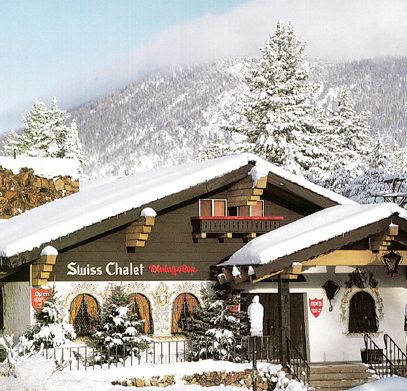
Mrs. Baumann was the face of the Swiss Chalet restaurant for years. Eventually the couple bought the entire center on Highway 50. The Swiss Chalet is the oldest restaurant in South Lake Tahoe.

They raised their sons, Peter, Ralph and Mark in South Lake Tahoe. The three trade off on who runs the restaurant. A recording at the restaurant on Jan. 13 said the eatery was closed for the day out of respect for Mrs. Baumann, but would resume normal business on Jan. 14.

Mrs. Baumann was a member of Soroptimist International South Lake Tahoe, particularly in the International Goodwill and Understanding committee. The group supported an orphan from Austria who Mrs. Baumann then brought to the United States to meet his benefactors for a short stay.

Services are pending.