Sierra-at-Tahoe content as lone resort in owner’s portfolio

By Kathryn Reed

Schussing down the slopes of Sierra-at-Tahoe it’s hard to tell anything is different this season. And that’s exactly what resort officials want.

Less than a month before the South Shore resort opened Nov. 23 for the 2010-11 season, its sister resort, Northstar-at-Tahoe, was acquired by Vail Resorts. (CNL Lifestyle Properties still owns the land and lifts; it’s the management rights that the Colorado company bought.)

Sierra has noticed some of its guests are different this season. This is because the acquisition allowed this year’s Heavenly Mountain Resort (also a Vail property) season passholders to ski at Sierra.

John Rice

John Rice

“We certainly appreciate the extra business. I think we have made some people happy who didn’t know what we are all about,” John Rice, Sierra’s general manager, told Lake Tahoe News.

A couple from the Sacramento area on Feb. 6 said they knew about the sale, but thought Vail had bought Sierra, too. They were relieved to learn Sierra is being left alone.

Sierra’s day care has seen an influx of patrons, mainly parents with Heavenly passes. Retail sales patterns have changed with the newcomers, too.

“They ran a special for Heavenly passholders. We sold a ton of helmets that were sitting around,” Rice said.

Food sales are the same with the newbies, but beverage consumption is up.

“They like our pricing in the bar. The bartenders like it because they tip well,” Rice said.

Despite the influx of skiers and boarders, the parking lot and slopes have not been inundated – which was a concern of Sierra’s. On Super Bowl Sunday it wasn’t crazy. It was a different story on Martin Luther King Jr. Day, but that Monday is traditionally a busy day – especially when it’s warm enough for short-sleeves at the Tiki Bar.

“We are doing better than last year and last year was a great year,” Rice said. “We’ve always been a good little cash cow. In a good year our margins are phenomenal; in a bad year we break even.”

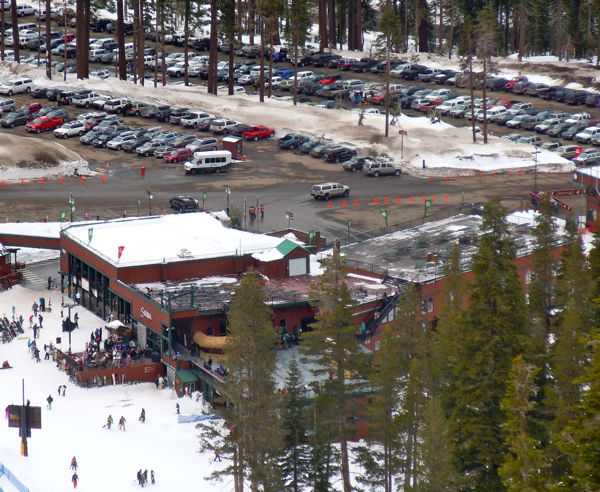
At one time, Booth Creek owned 11 ski resorts. It’s down to one – Sierra.
sierra

Sierra-at-Tahoe is the last resort its parent company owns. Photos/Kathryn Reed

In 1946, Vern Sprock opened what was then called Sierra Ski Ranch. The resort moved to its present location in 1968. In 1993, the Fibreboard Corporation bought it. Three years later Booth Creek acquired it and changed the name to Sierra-at-Tahoe.

Rice is not worried Booth Creek will unload Sierra. He said there’s always speculation and rumor, but nothing is on the horizon that he has been made aware of.

He knew about the Vail-Northstar transaction before it was signed.

“I got a call from the owner before the deal was completed. He said, ‘I have full confidence in you. (Sierra) has been a strong performer. We’re looking forward to another great year’,” Rice said.

Rice acknowledges a few bumps occurred early in the season – mostly surrounding what days passes were valid and where people could pick them up. Signs had to be changed that mentioned the Double Whammy pass (a Sierra-Northstar pass that went away with the sale).

Season passes picked up in December still have both resorts on it even though it’s not good at both.

It’s in the offices at the resort near Echo Summit where change has been most noticeable. Four full time (PR, sales, accounting) and one part time position (human resources) have been added. This is because some of those jobs were shared with Northstar.
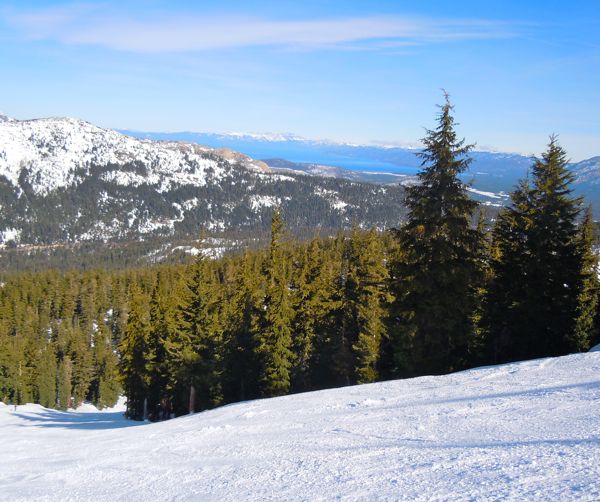
Views of Lake Tahoe from a rare groomed Castle run on Feb. 6.

Views of Lake Tahoe from a rare groomed Castle run on Feb. 6.

Vertical Plus, the program that allows riders to use a special line for an extra fee, will be looked at in the off-season because it was tied together with Northstar. The loyalty program will also likely be revamped to reflect a Sierra-only culture starting next season.

Rice isn’t ruling out any possibilities for what might be in store for Sierra.

“We’ll continue to talk to Vail and see if they want to do something going forward (with season passes) and we’ll consider what else is out there,” Rice said. But he stressed, right now, “No negotiating is taking place.”

What will Sierra-at-Tahoe in 2011-12 be like? That answer is an unknown, but Rice and company are working on it.



LTUSD cuts 10 jobs for 2011-12; more possible

By Kathryn Reed

A counselor and two teachers at South Tahoe Middle School, two teachers at South Tahoe High School, two custodians, a teacher at the Independent Learning Academy, the human resources director, the English learner coordinator. Those are all the positions slashed Tuesday night from the Lake Tahoe Unified School District’s payroll for 2011-12.

LTUSD_logoThe cuts will save the district $840,000.

Lake Tahoe Unified, like all districts in California, is grappling with state take-aways that are making it difficult to continue providing the services parents, the community and educators want and expect.

The district’s approach has been to keep as many programs and people as possible. Class-size reduction is a luxury in most districts. LTUSD has stuck with the program, believing children learn better when the student to teacher ratio is reduced.

If LTUSD were to completely eliminate class-size reduction, it would mean 18 teachers without jobs.

“Our mission is to keep as many people as possible,” Jim Watson, HR director, told Lake Tahoe News after the Feb. 8 meeting. “Employment is not only good for the community, it’s good for the kids because it returns programs (to the schools) we believe make a difference.”

But on the chopping block that night was his job. He admits to having mixed emotions about retiring after spending 37 years in California’s education system.

As dreary as the news was, in many ways the emotional part is just beginning. Now it’s time for district officials to look at who has turned in their paperwork to retire, balance that information against the cuts the board made Tuesday and fill in names for the positions that were eliminated.

At the March 1 special board meeting the names of the people increasing South Lake Tahoe’s 17 percent unemployment rate are likely to be known. State law mandates certificated employees be notified by March 15 if they will be receiving a pink slip.

Between now and then the principals at the middle and high schools will be looking at master schedules to see what classes are cut along with the positions.

Before the board voted unanimously for the cuts, STMS counselor JoAnn Hernandez expressed what life for her and colleague Roy Benavidez is like.

She questioned how the school of 860 students would cope with one counselor. She wonders what happens to the 100 special education students. She spoke of the 150 students each trimester who receive extra counseling because they have received a D or an F.

Nevada resident Kathy Percival told the board the expense of paying for her son to attend South Tahoe High is worth it, but stressed the need to keep the focus on quality teachers and programs. She told the board shortening the school year should not be an option.

But it is.

However, because it is something that must be negotiated with the unions, the board cannot automatically vote on it. The same goes for implementing furlough days. State law allows the district to go from 180 to 175 days.

LTUSD can save $100,000 for each day classes are not in session and teachers are not on campus.

Two things were stressed Tuesday night. One, is the 2012-13 cuts will be more painful if voters do not approve extending the taxes that will likely be on the June ballot. LTUSD faces another 10.5 positions being cut in a worst-case scenario.

The other fact that kept being reiterated is how districts cannot spend money however they want. Although the state in recent years has offered more flexibility with categorical funds, plenty of strings remain.

The district cannot take money from the voter approved Measure G or any of the matching state grant dollars to use them for items other than building facilities. Likewise, developers’ fees have criteria for how they are spent. That is why the high school can get lights and a refurbished football field for next season – the district’s share is from developers’ fees.

CFO Deb Yates said in her 28 years in the profession she has never seen the financial picture so bleak.

“I’ve absolutely never seen anything close to the level of reductions we are looking at and that we’ve sustained,” Yates said.

The problems for school districts stem from the state reducing what it pays per student as well other cutbacks. The state is giving LTUSD almost 20 percent less than what it is owed. This equates to $4.625 million for the 2011-12 school year, $4.2 million this school year, and nearly $4.5 million for 2009-10.

“Think what we could do with that kind of money,” Yates said.


Lakeview Commons back on track for 2011 completion

By Kathryn Reed

B.J. Sullivan, president of Clark & Sullivan Builders, assured the South Lake Tahoe City Council his company would have Lakeview Commons done by October.

Last fall his firm successfully sued to have work on the multimillion dollar project at El Dorado Beach stopped, citing a flawed bid process.

Clark & Sullivan won again, so to speak, on Tuesday when the council unanimously decided to award the contract to the Sparks company. Their bid is $400,000 higher than Reeve-Knight’s, the original contractor selected for the project, for a total of $4,897,837.

Lakeview Commons -- what it should look like in eight months.

Lakeview Commons -- what it should look like in eight months.

However, the bid comes in below the $6 million allocated by California Tahoe Conservancy to pay for the upgrades to the site, which include putting in a boathouse for non-motorized watercraft, restrooms, terraced landscaping, an invasive aquatic species decontamination station, improved walkways, and an improved picnic area all along the lakefront across from Campground by the Lake.

“I’m not sure if we rebid it, if we would get a lower bid,” city engineer Jim Marino told the council Feb. 8.

That was the council’s other option – to start all over. But that option was not discussed by the council.

Also part of Tuesday’s decision was signing off on the settlement agreement with Reeve-Knight, the firm that did the initial work on the project. They will be paid $142,500 for that work. This comes out of the CTC grant.

According to City Attorney Patrick Enright, the company wanted about $50,000 more than that.

Councilmember Angela Swanson asked if the public would have access to the area as work is completed. Sullivan said that has not been looked at, but will be considered as work begins in May.


Mount Tallac High coping with physical disrepair

By Kathryn Reed

Reusing portables isn’t possible.

That’s the message the state Department of Education has delivered to Lake Tahoe Unified School District officials. This is because the overcrowded relief grant money is designed to rid campuses of portables, not move them around to be used in a different manner.

South Tahoe High and South Tahoe Middle schools each received these types of grants, that with matching money from the voter approved Measure G bond brings new buildings to the schools. For STHS it’s the completed Stadium View Building. Construction at STMS will begin this summer.

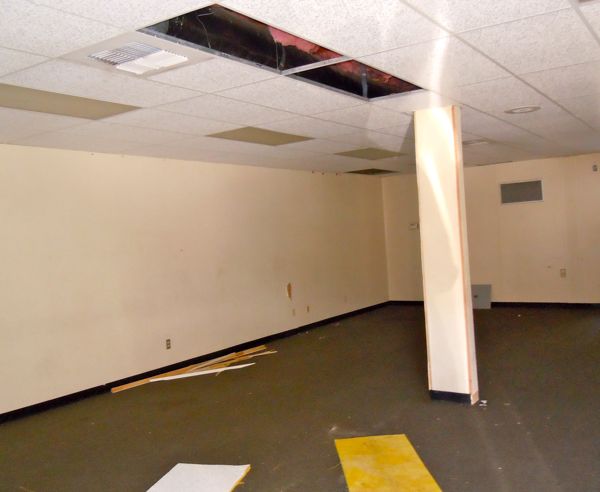
Neglected portable sitting in Mount Tallac's parking lot must be removed. Photos/Kathryn Reed

Neglected portable sitting in Mount Tallac's parking lot must be removed. Photos/Kathryn Reed

The news, that has yet to be widely disseminated among school officials, will come as a blow to Mount Tallac High staff and students.

Just last Thursday the belief was the portable sitting in the parking lot of the continuation school still might become an extension of the school for outside agencies like Tahoe Youth & Family Services, probation and others to meet with students.

Susan Baker, who runs Mount Tallac, told Lake Tahoe News on Feb. 3, “It definitely feels like we’re being neglected when we’re told time and time again these things are going to be taken care of and they aren’t. For me, we could do so much for kids if these things were in place.”

“These things” being the dilapidated portable that has been sitting in the parking lot since August. She said Principal Ivone Larson, school facilities Director Steve Morales and Superintendent Jim Tarwater told her that portable would be converted into a usable facility.

Instead, it has sat all winter becoming a moldy, smelly mess. A leaky roof was repaired long after the problem was reported. Stepping in the dank building one does not want to linger.

It’s possible even if the state didn’t tell the district it can’t keep these portables on campus (Tallac and STHS are considered one campus), the portable in the parking lot would no longer pass muster because of mold issues.

Morales said converting that particular portable into a usable facility was talked about, but was never guaranteed. “They weren’t interested in hearing that it might not happen,” Morales told Lake Tahoe News on Feb. 7.

He said the district is going to look into whether portables from other campuses that did not receive the overcrowding grant could be moved to Mount Tallac in the future, which could be as early as this summer. But it would still have to go through the permitting process.

What will happen to these portables remains an unknown. A couple have been given to Lake Valley Fire Department in exchange for defensible space work.

While STHS reaps the bulk of the benefits of the $65 million bond that with matches from state grants is closer to $100 million, Mount Tallac will not receive a dime. That’s how the bond measure was written.

Instead, teachers this year have listened to the ping of water dripping inside a classroom before the roof was finally repaired.

The boys' bathroom at Mount Tallac.

The boys' bathroom at Mount Tallac.

Students must use bathrooms that make some port-a-potties look more appealing.

Larson and Morales said they have not seen the bathrooms in question.

The irony is board meeting after board meeting the elected officials and administrators tout the importance of facilities, how creating a learning environment that is vibrant allows students to learn better.

“I think a lot of times there is a misnomer out there these kids don’t care about education as much a AP students,” Baker said.

She said all she wants is a clean, safe environment.

“Everything is triage and Band-Aids,” Baker said.

Harry Segal, a volunteer at Mount Tallac, questioned whether the neglect that is happening at Mount Tallac would be allowed to happen at the district office or the environmental school.


Hope Valley’s vast trail system goes on for miles

By Kathryn Reed

HOPE VALLEY — Two things about steadily climbing up are often true – a great view is usually the first reward, and then the trip down is often a breeze.

We found both to be true of our snowshoe in Hope Valley. This is one of those areas just outside the Lake Tahoe Basin that is worth visiting year-round. On this particular Sunday we park at the yurt where Joyce Coker operates Hope Valley Outdoor Center.

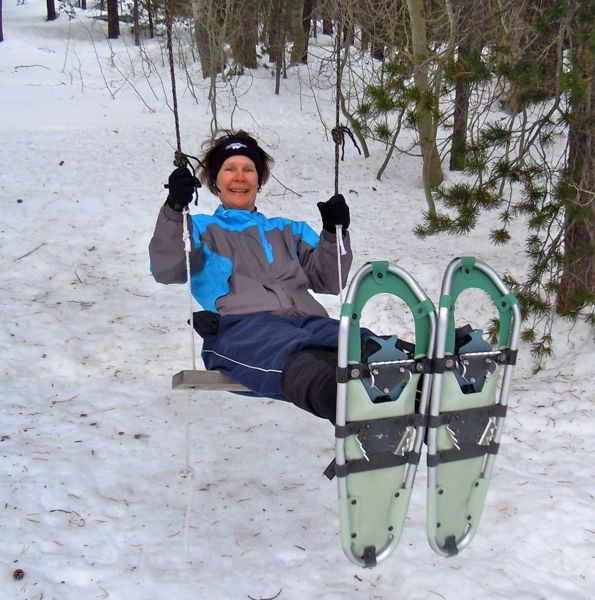
Kae Reed discovers a swing along the snowshoe trail. Photo/Susan Wood

Kae Reed discovers a swing along the snowshoe trail. Photo/Susan Wood

With more than 60 miles of marked trails, it has a variety of terrain to satisfy all levels of snowshoers and cross country skiers. Added bonuses include free parking and no trail fee. But Coker gladly takes donations. After all, it takes a tremendous amount of work to keep up this outdoor playground on the Humboldt-Toiyabe National Forest.

As we climb, the forest seems to surround us, to take us in, almost hug us. We forget there is a highway close by.

Although Burnside Road is drivable for a bit in the summer, in the winter no tires are going across the snow. We seem to have this oasis to ourselves. It’s not until we head back that we finally come across other people out playing.

This being my first time here in winter, it all looks unfamiliar. And that’s part of the fun. Despite Sue’s reluctance to head downhill, I convince her to follow the signs toward Secret Meadow. I just like the sound of it. I don’t care that it will mean a bit more work to hoof it uphill.

Meandering around in a loop, openings peak out to Hope Valley below us. Seeing the field of snow it makes me wonder what this meadow must look like in the spring and summer. Are there wildflowers? Is it grassy? Would it make for a great lunch spot? Is it as peaceful during hiking season as it is in snowshoeing season?

Continuing on a bit a smile crosses my face. I see a swing in the distance. I love to swing. That gentle rocking back and forth. With snowshoes on, it makes for an interesting dismount.

We continue on, circling back to the main road. We keep going up. A sign points to a vista. We go have a look-see.

I hope I never stop being awed by the majestic snow covered Sierra. The Carson Range seems to go on forever. Stevens Peak looms tallest from this vantage point. Maps and research are not consistent with its elevation – some say close to 10,000 feet, others have it topping that mark. The peak is named after J.M. Stevens who was a supervisor in Alpine County and ran a stagecoach in Hope Valley in the 1860s.

Sitting on the granite boulder having a bite to eat I take in the scenery. It’s sad to see the blackened trees still looking freshly charred, thought they are in their third winter since the 2008 Burnside Fire.

Clouds are moving in and the temperature is dropping. It’s time to start moving. We decide this is a good time to turn around.

Signs along the various trails are abundant, but not obnoxiously so. Maps are available in the yurt just in case that makes you feel more comfortable. Lessons, tours and equipment rentals are also available. More information is online.

Getting there:

From South Lake Tahoe, take Highway 50 west. Turn left onto Highway 89 in Meyers. Go over Luther Pass. At Picketts Junction (the four-way stop), go straight toward the yurt. Park. And don’t forget to leave a donation.

ngg_shortcode_0_placeholder (Click on photos to enlarge.)


Reno-Tahoe Olympics’ economic boon touted

By Stephen Ward

INCLINE VILLAGE – It might be gold medals athletes would be after, but it’s green in the form of cash that organizers of the Reno Tahoe Winter Games Coalition are after.

“This is something that could benefit everyone in the region,” Joe Killoran, CEO of the Reno Tahoe Winter Games Coalition, said. “We have an opportunity to market ourselves to the world in a short period of time.”

Killoran stressed that the impact the Olympic games would have on the region would be enormous.

Joe Killoran talks Feb. 5 about bring the Olymics to Reno-Tahoe. Photo/Stephen Ward

Joe Killoran talks Feb. 4 about bringing the Olymics to Reno-Tahoe. Photo/Stephen Ward

Killoran conducted a presentation Friday meant to inform residents about his organization’s aim to have the 2022 Winter Olympics in Lake Tahoe.

The majority of the PowerPoint slideshow at the Tahoe Environmental Research Center at Sierra Nevada College referred to the ways in which Salt Lake City prospered from hosting the 2002 Winter Olympics. Killoran cited the city’s $100 million operational profit and the 35,000 jobs created. The city’s infrastructure, business community and tourism numbers have also improved significantly in past decade.

“(Tourists) want to be on slopes where Olympians are,” he said.

That wealth, according to Killoran, could come to Lake Tahoe – again.

In fact, the region’s rich Olympic legacy was a centerpiece in Killoran’s vision for obtaining a competitive bid for the region. The 1960 Winter Olympics in Squaw Valley were the first time they were conducted in the Western United States, were the first to use artificially refrigerated ice surfaces, and the first to use fully automated timing.

It will take an estimated $1 million annually now through 2013 to fund research studies about the economic and environmental impacts the Winter Olympics would have on the Lake Tahoe Basin.

The money would also help bring competitions and events to the region in order to stir economic activity and prove the area would be a credible Olympic host.

Although the Nevada Legislature has assisted the planning organization in the past, Killoran said the group didn’t ask for assistance in the previous session.

“If we can’t raise the money from private investments, we’re all wasting our time in this room right now,” he said.

Despite a few logistical questions, the roughly 50 people in attendance showed little sign of skepticism about the venture.

“I came in here a real skeptic, not about what happens between now and 2022, but what would happen after that,” Michael Durand, a 60-year-old Incline Village resident, said. “The buildings built could go to housing seasonal workers in South Lake Tahoe and dormitories at (Sierra Nevada College). I feel much better after hearing the presentation.”

Other attendees said they were convinced, so long as the environment remains a top priority.

“The key is better public transportation,” Al Bulf, a 67-year-old retired railway businessman, said.

For more information about the Reno-Tahoe Winter Games bid, go to the website.


LTCC president talks about dollars, future of college

By Kathryn Reed

Money. It was the overriding concern of people asking questions of Lake Tahoe Community College’s president.

Steve Maradian, interim president of the South Lake Tahoe school, delivered a one-hour talk Friday about the state of the college to about 40 people – students, administrators, trustees, faculty, and staff.

Steve Maradian gives the state of college address at LTCC on Feb. 4. Photo/Kathryn Reed

Steve Maradian gives the state of college address at LTCC on Feb. 4. Photo/Kathryn Reed

Overall, his message was the college is doing well despite the chaos and uncertainly in Sacramento. But those unknowns about what lawmakers will do when it comes to funding higher education is what those in attendance wanted to hear more about.

Gov. Jerry Brown is proposing $400 million in cuts to the community college system. The best-case scenario is a $640,000 hit to LTCC; worst case is $1.7 million. The discrepancy is largely based on a possible June ballot measure Brown wants to bring to voters.

Maradian said because the board has made prudent fiscal decisions in the past, LTCC is able to pay its bills, unlike some colleges which are running a deficit.

LTCC has 7 percent in mandatory reserves or $960,000. Last year a rainy day fund was created which contains $750,000. Another reserve account has about $400,000.

“We’ll identify all the funds we can capture without hurting instruction,” Maradian said in regards to preparing the annual budget for 2011-12.

Maradian said the things the college can count on are tuition costs going up, health care being more expensive, and the state providing less assistance.

Flexibility is another word he used. It’s going to be needed as the state deals with its 11-figure deficit.

In his mostly optimistic speech from a podium on the stage at Duke Theater, Maradian asked the assembled group, “Do we dream big or do we not dream at all?”

“Dream big” was the answer.

But from there Maradian delved into the challenges the college is likely to face.

Providing non-credit fee based instruction is one area Maradian believes LTCC should explore.

He cautioned the governor might one day require a local parcel tax to fund community colleges. Maradian said he looked into property values of the college district and found the total to be $52 billion. If people were taxed $1 on every $100,000 of value for their property, the college could bring in $5 million.

Baccalaureate programs are the trend for community colleges, though not in California.

Maradian said more education opportunities are needed, especially as the population grows. The demand for higher education is outpacing the state’s ability to provide it. Cuts mean fewer classes, which means students aren’t able to get the education they want.

He posed the rhetorical question: What happens if one or two generations slip through because there are not enough seats?

There are 2.7 million students in California’s community colleges, with just 74,000 graduating each year, which includes those receiving certificates.

Maradian touched on the Title 3 project, saying a Datatel consultant was on campus two days this week to assess the situation. When the staff member who was in charge of the project had his job eliminated last month by the board it caused quite a commotion.

When pressed to elaborate more by a member of the audience, Maradian said the start date to use the software is now 2012, with some students and staff piloting the program before it starts.

“Buying time didn’t cost us money. It will make it more manageable to implement,” Maradian said. “It’s a more realistic approach.”

He added that the consultant would provide the college with planning documents to go through the process.


S. Tahoe roads a jarring ride with no cash to fix them

By Kathryn Reed

Sitting water is asphalt’s nemesis. Water erodes the road surface, potholes develop, and then the edges start chipping away to make an even bigger hole. It’s a cycle that is repeated each winter in Lake Tahoe.

With an unseasonably warm January and no white stuff in sight for the next week, snow is in a constant state of thaw in the basin.

South Lake Tahoe road crews drive around with bags of all-weather mix to fill in potholes they see or ones that have been reported to them. But this is just a temporary solution.

Venice Drive in South Lake Tahoe practically requires a mountain bike or four-wheel drive. Photo/Kathryn Reed

Venice Drive in South Lake Tahoe practically requires a mountain bike or four-wheel drive. Photo/Kathryn Reed

Summer, when the temperatures allow for it, is when a more permanent fix to the problem can be applied.

John Greenhut, South Lake Tahoe Public Works director, said each winter some of the same areas develop potholes because water accumulates and has nowhere to go.

“We don’t have proper drainage,” Greenhut said of the city’s streets.

The city has a master drainage plan and a master erosion control plan, some of which overlaps, but funding is a constant barrier to make all corrective measures. Plus, snow precludes work from being done on a year-round basis.

City council after city council has heard presentation after presentation regarding the state of disrepair of South Lake Tahoe’s roads. The current council was told last month it would cost about $312 million for the city to have a complete streets infrastructure.

“Complete streets” is a term meaning a street will have drainage, curbs and gutters, bike trails, sidewalks, lights – and a street without potholes or the need for four-wheel drive on dry surfaces.

“Most pavement on city streets, it’s a layer of pavement, maybe an overlay on native soil. Old oils that were used shrink up and you get cracks,” explained Stan Hill, chief engineer with the city. “As we move through projects, we would like to rebuild to a higher standard. Assuming we have the money, they would be better engineered, have a thicker substance and would last longer.”

South Tahoe, like most cities, has three classifications for roads – arterial, collector and local. Examples of arterials are Pioneer Trail, Al Tahoe and Tahoe Keys; collectors are Venice, Lakeview and Blackwood; locals are Kubel, Armstrong and Alameda.

Even though the city knows what needs to be done, the dollars aren’t sufficient to correct the problem.

In the report presented to the council last month the same funding analysis from March 2010 was brought forward.

Primary sources include: grants in aid, increasing the transient occupancy tax, increasing the sales tax, creating an assessment district, and creating a parcel tax. Supplemental sources of money include: inspection and license fees, storm water discharge fees, redevelopment tax increment, gross vehicle weight fees, street cut fees, parking fees, TRPA mitigation funds, and development fees.

Jim Marino, engineer with the city, told the council his department applied for federal stimulus dollars but was denied because the government was looking to fund larger projects.

“There is not much federal or state money to rebuild streets,” Marino said.

Marino recognizes as the city attempts to create complete streets “sidewalks are only as good as when they are dry. Many out there now are not usable.”

He wants the city to get creative with creating a funding source for roads. He mentioned how South Tahoe Refuse does not pay a fee to drive its trucks on the city streets that were not designed to handle that weight. He pointed to Truckee, which has a percentage of sales tax dollars and parking fees going toward its streets.

With grants the city goes after, most come with strings – at least in terms of requiring matching dollars the city may not have.

“We need to hold developers accountable for improvements around their projects,” Marino added.

In 2009, the estimate, according to Marino, was it would take $5.2 million a year for 25 to 30 years to get the streets up to par.

“We need to get a funding source in place,” Marino said.

City Manager Tony O’Rourke has floated the idea of a general obligation bond to repair roads.

At the City Council’s strategic planning session improving infrastructure was one of the goals. In the coming weeks it’s expected the council will begin to set specific goals. The next council meeting is Feb. 8 at 9am at Lake Tahoe Airport.


Kindertown day care wins round 1 in court; stays open

By Kathryn Reed

Kindertown day care in South Lake Tahoe will remain open for at least 120 days based on a judge’s ruling Thursday afternoon.

El Dorado County Superior Court Judge James Dawson had little to say before issuing his decision to grant the stay. He asked Brenda Ray, deputy attorney general representing the Department of Social Services, if any child at Kindertown had been put in harms way since August when a child left the center on his own and was found wandering on Highway 50, a couple blocks from the day care. Ray did not know of any incidents.

It is the August incident that led the state to initiate proceedings to close the three-decade-old facility. This is the second time in 16 months the state has tried to close the center.

Ray said the state is appealing last fall’s decision that allowed Kindertown to keep its doors open.

Attorney Mike McLaughlin and Kindertown owner Maria Barrows-Crist outside the courthouse on Feb. 3. Photo/Kathryn Reed

Attorney Mike McLaughlin and Kindertown owner Maria Barrows-Crist outside the courthouse on Feb. 3. Photo/Kathryn Reed

Kindertown owner Maria Barrows-Crist prevailed the first time with the help of attorney Mike McLaughlin of Feldman-Shaw-McLaughlin LLP.

When asked outside the courthouse Feb. 3 if he believed there would be a different outcome at the end of all of this, McLaughlin told Lake Tahoe News, “no.”

“It’s a continuing pattern of abuse by the state,” McLaughlin said.

He said much of the same during the brief court hearing, which was attended by about 30 supporters of Kindertown.

The state had asked Judge Steve Bailey to be removed from the case, which was granted. Bailey is the one who ruled in Kindertown’s favor last year.

Further hearings regarding Kindertown will be before Judge Warren Stracener in Placerville.

Although officials with the state Department of Education were at Kindertown this week letting parents know where else they could enroll their children, Barrows-Crist said no child has left the center because of the latest turmoil.


Barrel tasting provides sneak peak at next wine vintage

By Kathryn Reed

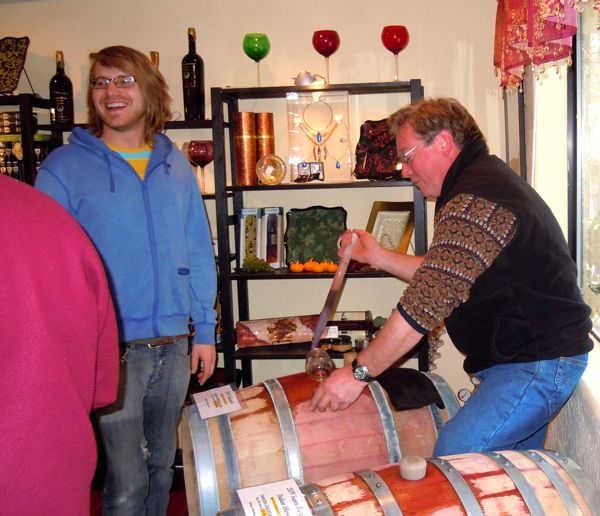
SOMERSET – It was one of those only in El Dorado County days. Schussing through fresh powder in the morning at Sierra-at-Tahoe, drinking from the barrel in the afternoon at foothill wineries.

With 26 wineries to choose from for the annual Bring out the Barrel wine tasting event, we knew we couldn’t hit them all in a day – or even two. But the three we managed to visit Sunday we’d go back to without an event to lure us there.

Richard Stading explains what's in the barrel at Auriga. Photos/Kathryn Reed

Richard Stading explains what's in the barrel at Auriga. Photos/Kathryn Reed

What makes this weekend special is being able to taste from the barrel to know what is on the horizon. Some of the wineries sell futures. This means paying for the bottles now at usually a reduced rate compared to what it will be once it is released. It can be a gamble, or it can be a great investment.

At Cantiga Wineworks, it was all about education on this last weekend of January. No futures were even available.

“The education component is key in our wine style,” owner Richard Rorden said. “We are using this to show wine as it ages.”

Plenty of people hovered around the barrels containing samples of the 2008 and 2010 Zinfandel. To some, a full glass or a bottle would have been fine to have right then.

But that’s not what Rorden and his wife, Christine, are about. Their philosophy is to embrace the European-style of winemaking, where the fruit remains in the barrel longer. It takes about five years before they are satisfied and will put their wines in a bottle.

“Wine needs acidity. Without it, it is hard to pair with food,” Rorden said.

Creating wine that goes well with food is more important to Cantiga than having people open a bottle and just drink. Food is such an integral part of their wine that even on non-event occasions there is food out for people to sample with the wine.

On this special barrel tasting weekend, most wineries had something to share with guests besides wine.

At Auriga Wine Cellars, which has moved its tasting facility to Pleasant Valley Road, a pasta dish is being paired with the Tuscan blend that is dominated by Sangiovese.

The Tuscan will be bottled in April and tastes ready now.

“I don’t see it changing much,” owner Richard Stading said of the Tuscan. “A lot of times in the barrel it’s really yummy and then in the bottle (people say) this isn’t what I bought. A couple months from now this will not change.”

The barrel tasting was an opportunity for Richard and Diane Stading to show off the larger tasting area. This summer they expect to have special events on the grassy lawn out back.

They picked up more than a dozen new club members during the two-day event, so that made it profitable beyond the sound of the cash register ringing.

This is the fourth year of Bring out the Barrel, which is put on by the El Dorado Winery Association. And it’s the first year it has sold out. Last year 1,200 tickets were sold, this year 2,000.

Elliot Graham at Busby Cellars said it was wall-to-wall people at the tasting room Saturday afternoon. He and his wife, Sherrie, and their workers were doing a brisk business Sunday, too.

Overall, he said things have been steady despite the economy, with sales increasing last year. He attributes this partly to people never stop drinking wine, and smaller wineries like Busby that produce 2,000 cases a year don’t have the distribution costs others have.

The next big event in the El Dorado County wine region is Passport Weekend, the last weekend of March and first weekend of April. This, too, can sell out.

ngg_shortcode_1_placeholder (Click on photos to enlarge.)