Lawyer: Garridos confess to Jaycee Dugard kidnapping

Updated: Feb. 28 8:35pm.

By Sam Stanton, Sacramento Bee

Phillip and Nancy Garrido have made a “full confession” to the 1991 kidnapping of 11-year-old Jaycee Lee Dugard in hopes of convincing prosecutors to allow Nancy Garrido to some day be released from prison, a defense attorney in the case revealed today.

Nancy Garrido’s court-appointed lawyer, Stephen Tapson, said this afternoon in Placerville that the Garridos had met separately with El Dorado County sheriff’s detectives in the last month and spelled out exactly how they abducted Dugard and held her captive for 18 years.

Phillip and Nancy Garrido

Phillip and Nancy Garrido

Nancy Garrido’s confession took place with Dugard in the room, watching from across a table as the woman who snatched her off the street tearfully described what she had done, Tapson said.

The extraordinary revelation came after a brief and seemingly routine hearing in the 18-month-old case. Tapson emerged from the El Dorado County courthouse and told reporters gathered around him that Phillip Garrido had made the statement in a bid to win leniency for his wife. He said prosecutors have offered her a plea deal if she agrees to a sentence of 241 years, eight months to life, while Phillip Garrido has been offered a sentence of 440 years to life.

“So, she’s obviously guilty of kidnapping and a bunch of other charges, but I think at least based on what happened after all the stuff started to become the bizarre family that she should at least be able to walk on the beach, probably with a walker at some point before she dies,” Tapson said.

Read the whole story


Alpine Meadows understands what true skiers want

By Susan Wood

TAHOE CITY – I felt a kinship skiing the slopes of Alpine Meadows. We’re about the same age. We’re both no frills. We’re both a little rugged.

In its 50th year, Alpine’s philosophy of “it’s just the mountain” appeals to me in this day and age of carnivals, villages, casinos and caviar in relation to ski resorts.

The employees know this philosophy. So do the skiers and boarders. Both celebrated at a party Alpine threw on Jan. 8. It sounded like an understated gathering. More is in the works throughout the year, spokeswoman Rachael Woods hinted.

alpine-1

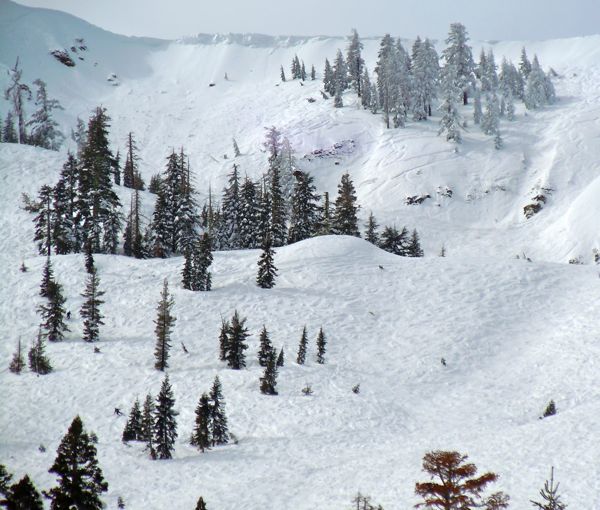
Alpine is full of bowls and steeps. Photos/Kathryn Reed

When I got on the mountain on Presidents Day, I soon came to believe a mountain of this magnitude deserved more than one party.

The terrain is full of knobby, jagged peaks circling the base. It reminded me of Alta in Utah – which in effect also shows a different personality from its nearby, more glamorous neighbor Snowbird. Up the road, Alpine has the glitzier Squaw Valley – home of the 1960 Winter Olympics.

A quick ride up on Roundhouse Express chairlift at Alpine Meadows, down the Rock Garden run to the Scott lift over to the Lakeview chair gave way to some of the most stunning scenery available in the Lake Tahoe Basin. Several people gathered at the plateau on top to take pictures of the lake we call home.

A simple snow skate over the knoll below Ward Peak at 8,637 feet brought me to another mind-blowing view of wide-open faces and runs on the backside the Sherwood Express lift services. The snow was soft and even during a holiday weekend the crowds were sparse on this side.

There’s room for everyone here. And from the looks of the tracks cutting into cliffs, hillsides and runs between trees, everyone had thought of a variety of ways to schuss down the multi-angled mountain.

No boredom here at Alpine. This was downright fun, and I wondered what took me so long to get here after living at Tahoe for 10-plus years.

On the Scott chairlift, a New York tourist admitted to having impeccable luck to choosing his ski vacation week months ago. He flashed a smile as if all were right with the world.

Maybe timing is everything. The skiers and boarders seemed giddy with excitement after the series of recent storms a week ago had delivered 106 inches to the mountain with 400 acres of groomed intermediate and expert off-trail terrain and serviced by 13 chairlifts. February’s windfall became the icing on the cake, after Alpine received its biggest opening day ever on Dec. 10. Mother Nature summoned many feet of snow in November and December to provide a hefty base.

The Outer Limits run off the Lakeview chairlift provides an incredible view before dropping into the backside. At the top of the Sherwood Express chair, a humbling double-black run called Our Father gave credence to prayers and ability for those who grace its slopes. Some of these runs drop so steep, you’d think you’re free falling.

From there, the wide-open expanse came into sight. The entire Sherwood Face was covered with fluffy white stuff. I traversed over to it from the groomed Robin Hood. Get the theme? Little bounces on the baby moguls, and I was in heaven. It was tame, but challenging at the same time. You have to love the Zen of a great ski day.

The front side is another experience in itself. The Summit Express whizzes riders from the 6,835 base to the 8,000-plus foot ridge where Idiot’s Delight marked double-black land off to the right. We ventured to the left where the Alpine Bowl allowed us to select our own fall line.

Alpine Meadows is generous with its space – especially when that space involves snow cold enough to stay soft.

While peering over the edge, I was reminded of a T-shirt I saw at Vail Village – “If it’s too steep, you’re too old.” I grinned, as all ages found the glee that day of powder in the steeps – whether it was chopped up or not by mid-afternoon.

For a ski area that prides itself on maintaining its primary “just the mountain” focus, it is making efforts to attract a younger demographic with its advertising campaign “Mountain Head,” and all that it implies. The Concept Farm of New York boasts a client list of TRW, American Heart Association, TNT, MSNBC, ESPN and Greenpeace.

“We think it’s an awesome campaign and one that will really connect with skiers across the West,” Alpine Meadows General Manager Kent Hoopingarner said in a statement. His tone said it all. You’re as young as you feel at Alpine Meadows.

If you go:

Alpine Meadows is tucked in the landscape off Alpine Meadows Road, which is south of the Squaw Valley turnoff off Highway 89 on the North Shore.

From South Lake Tahoe, it can be a long ride if Highway 89 is closed at Emerald Bay – but scenic, and worth a day of skiing.

The direct route from the South Shore calls for going north on Highway 89. Go to Tahoe City. Turn left at the Y in Tahoe City. Alpine Meadows will be on the left a few miles up.

ngg_shortcode_0_placeholder  (Click on photos to enlarge.)


Disabled veterans prove their abilities on Sierra’s slopes

By Jessie Marchesseau

TWIN BRIDGES — On the hill they looked just like any other snowboarders. But underneath the helmets, goggles and bulky snowboard gear, the riders at this weekend’s Pipeline Learn to Ride and Race camp are truly unique.

Amy Purdy, a tall, slender young woman with long auburn hair explains that she is a double-leg amputee. She lost both legs to meningitis more than 10 years ago. Today, she is development director and co-founder of Adaptive Action Sports, the organization putting on the camp.

In the Aspen Café at Sierra-at-Tahoe’s base lodge, Purdy explains the uniqueness of each member of the group. Jasmine, with the perky ponytail of dreadlocks, is an amputee, as is Tanner in the white jacket. Chris has limited movement and feeling in his left arm. Gary suffers from a traumatic brain injury that left him blind in one eye and with no feeling in his left leg. And Beth, at 27, has several fused vertebrae in her lower back, nerve damage and is a two-time breast cancer survivor.

Former Army Ranger Gary Nolte doesn't let the lack of feeling in one leg stop him from taming Sierra's slopes. Photos/Jessie Marchesseau

Former Army Ranger Gary Nolte doesn't let the lack of feeling in one leg stop him from taming Sierra's slopes. Photos/Jessie Marchesseau

They hail from all over the U.S., and all are disabled veterans.

Beth Wolf had always wanted to join the military, but waited until after college to do so. She joined as a combat medic, but was diagnosed with stage 1 breast cancer while still in training. She was 22. Wolf received surgery and radiation therapy, and continued on with her military career. Just a few years later, while serving in Iraq, she was carrying a wounded soldier on her back when an RPG hit a nearby building. The force collapsed the discs in her back and left her in a wheelchair for six months.

Doctors were able to fuse the vertebrae so she could walk again, but her range of motion is limited, and she has little feeling left in her right leg, except for the constant pain.

“It’s not too bad though,” she laughs. “I can walk. There’s these folks out here missing their limbs, and they’re rockin’ it. So I’m really lucky.”

Wolf, who finished five and half months of chemotherapy in January to get rid of a second round of breast cancer, said coming to the three-day camp at Sierra has really helped to change her perspective.

“To be able to do something where you’re going fast without feeling pain, or as much pain, and feeling the wind in your face …,” she said. “I can’t run down a basketball court anymore or go for a jog, but I can get that wind going and feel the mountain air. It’s wicked cool. I’m addicted to it; I want to do it every day.”

She is not the only participant who has experienced the change that this and programs like it can make.

“I can honestly say programs like this saved my life,” Gary Nolte said.

Nolte, 29, a former U.S. Army ranger, sustained a brain injury while serving in Iraq when a mortar struck the building he was in.

“We go from being the toughest and the best-of-the-best to being hurt and being what we consider in our minds nothing,” he said, “and this kind of stuff shows us we’re still alive. This kind of stuff shows us that no matter what, we can do whatever we want to do, we just have to try, that’s it.”

He feels so strongly about the benefits of programs like this that he now works for a company offering whitewater boating as a means of therapy for disabled veterans.

An avid skier before his injury, this was Nolte’s first time on a snowboard. And having no feeling in his left leg or vision in his left eye did not make it any easier. However, by the end of the camp he was turning both ways with a smile on his face. He said he is hooked and hopes to make snowboarding a regular pastime.

This is just the outcome Purdy and partner Daniel Gale are hoping for. They want participants in their camps to fully embrace the sport and make it a part of their lives, not just a one-time experience. With the possibility of snowboarding becoming an event at the 2014 Paralympics, they want adaptive riders to look at the possibilities of competitive snowboarding as well.

Purdy, who snowboarded competitively before her illness, is currently the top-ranked female adaptive rider in the world, having won two back-to-back World Cups. It is this passion for competition that prompted AAS to schedule the camp to coincide with the United States of American Snowboard Association (USASA) regional race at Sierra on Saturday. Purdy competed in the race and encouraged the other riders to do the same, hoping to inspire at least some of them to join the world of competitive snowboarding.

Since it was his first week on a board, Nolte opted not to enter the race this time around, but admitted he is a competitive type of guy, and he considered it.

“You got to constantly remember that you’re enabled, not disabled,” Nolte said. “It’s not what you can’t do, it’s what you can do .… It’s about just getting out there and doing it and having fun with what I can do.”

This is the second year AAS has had an adaptive snowboard camp at Sierra, something the organization plans to make an annual event.

ngg_shortcode_1_placeholder (Click on photos to enlarge.)


Educators grapple with necessity of mandated testing

By Kathryn Reed

Testing was going on this past week in many classrooms within Lake Tahoe Unified School District.

Nothing out of the ordinary about that.

And that is the problem for some educators. Testing seems to be more common than teaching.

Has it become No Child Left Untested?

Is education in the United States best defined as No Child Left Untested?

Politics is a large part of the problem. It’s people in Washington, D.C., and Sacramento telling local school districts what to do. These people may not have been in a classroom since they were a student.

Superintendent Jim Tarwater says the powers that be ask districts what they want or need, districts respond, and the politicians do something else.

If he were in charge of the state or federal Education Department for a day, Tarwater said his first priority would be to measure schools on growth and not against one another.

“I would set up a plan so every child would have one-on-one computing from third grade up. Assessment would only be for growth and how to support kids, and I would not compare them to other kids,” Tarwater said.

He would also eliminate the high school exit exam.

“They don’t do that in college – take one test to see if you get a degree,” Tarwater said.

Part of the problem is the federal No Child Left Behind, which is still in place even though President Obama has introduced Race to the Top to supersede his predecessor’s education policy. NCLB mandates all students – including special ed and English learners – be at a proficient level by 2014.

“There is definitely a level of frustration in having to move to that performance level,” said Sue O’Connor, English learner program coordinator for LTUSD. “We hear the federal government is moving to a growth model. We just haven’t seen it.”

LTUSD board President Wendy David would like the state and feds to give school districts more flexibility.

“I would like the pendulum to swing back so there is some choice for teachers and students,” David said. “Maybe the financial crisis will do that. Testing takes away from valuable learning time.”

Board discussions

Some teachers call it No Test Left Behind.

At the Dec. 14 school board meeting, Bijou Community School second-grade teacher Loreen Norberg read a holiday themed testimony about testing into the record. With her, she had a stack of material related to the myriad tests she gives – and this is to 7-year-olds.

“I don’t have time to teach children before the next assessment,” she told the board. “In my mind, what we are doing is backward. This testing is ridiculous.”

That night, David said, “Learning should be our most important focus.”

At the Feb. 2 board meeting, a discussion item was the movie “Race to Nowhere” that had been shown on the South Shore in January. The movie’s website describes it this way, “Featuring the heartbreaking stories of young people across the country who have been pushed to the brink, educators who are burned out and worried that students aren’t developing the skills they need, and parents who are trying to do what’s best for their kids, Race to Nowhere points to the silent epidemic in our schools: cheating has become commonplace, students have become disengaged, stress-related illness, depression and burnout are rampant, and young people arrive at college and the workplace unprepared and uninspired.”

One issue in the movie is the amount of homework students are required to do each night. LTUSD’s homework guidelines call for 10 minutes per grade level. This means a second-grader has 20 minutes and a senior two hours.

That’s the suggested minimum.

“I agree it sounds good, but there is no maximum,” board member Larry Green said. “So many times they are coming home with so much more.”

David relayed the story of a young man she worked with through CASA who had been accepted to the Naval Academy. He never made it to Annapolis. He shot himself. He left a note saying something to the effect of, “I can’t do this anymore.”

“In honor of him, I think we always need to be cognizant of that – and the need for counselors,” David said.

South Tahoe High School Principal Ivone Larson said homework is a unique concept to the United States. International students at her school are used to studying from a book.

She said the percentage of homework fluctuates from teacher to teacher.

Jodi Dayberry, second-grade teacher at Tahoe Valley Elementary School, told the board, “As you discuss homework changes, please include teachers. We are the ones responsible for assigning it. The second piece is assessment.”

She wants the district to look at what is mandated v. what the district has implemented when it comes to testing.

Kathy Haven, a former teacher and now ardent parent supporter at Bijou, said, “We need to create learners, critical thinkers and problem solvers. We need to teach parents more about what to do at home.”

She also stressed the need for teaching more through hands-on learning and less through worksheets.

“If something should be changed, I think it should be teacher driven,” board member Sue Novasel said.

Novasel said she had to intervene in her children’s education at South Tahoe High because they were getting burned out with all the advanced placement courses they were taking. Those classes require a specific test from the private AP company. So many colleges require those classes for a student to be accepted.

Inside the classroom

This past week it was the Blueprint testing that was going on. It’s a test to gauge how the students will do on the state mandated two-weeks worth of tests in May. The district has been doing this for five years.

“It’s required by the state as monitoring of student learning; to see what they need extra work on,” Tarwater said.

But this means students are being tested on something they may not have learned for a test that is three months from now.

Because LTUSD is labeled a program improvement school under No Child Left Behind, this is another round of testing the feds require.

Five out of six LTUSD schools are Title 1 – meaning at least 35 percent of the school population qualifies for a free or reduced lunch. Title 1 status means more federal dollars. But LTUSD isn’t even allowed to say no to these dollars and therefore try to get out of NCLB.

Bijou first-grade teacher Susan Earnest calls Race to the Top “No Child Left Behind Lite” – adding, “It again is punitive rather than based on success. I do think testing is helpful. I just don’t think it is being used correctly. It’s labeling staff and schools as failures.”

For Dayberry at TVES, she is frustrated that one test can have so much impact on a child’s life, the fate of a district, the money that comes with a test score.

“We are putting labels on kids,” Dayberry said.

Earnest believes the quick fix mentality in Washington is not allowing for systemic changes to occur that will bring the United States’ level of education up to that of other countries.

Gene Matteucci, fourth grade teacher at Tahoe Valley, said, “It’s frustrating to be told (what to do) by legislators who have never been in the classroom. They know very little how a classroom operates and what kids need. They don’t ask me what works.”

He has 32 students, no classroom aide. He doesn’t have time to give individualized attention when there about 320 minutes in the day.

Much of the testing requires Scantrons – those cards with bubbles to fill in.

Tarwater believes Scantrons are on their way out and testing on computers will be the norm. The district is moving toward having most students have a netbook. He believes testing using tools students are used to will engage them more. It also could provide for more accurate answers and no bubble designs. At the younger grades they don’t have the manual dexterity for Scantrons, but still must use them.

Melissa Bornstein has to administer a test to her second-graders at Bijou that requires them to circle about 150 bubbles. And this is a test to gauge how well they read.

“If they read to me, I know if they can read,” she said.

Bornstein knows testing is good to decipher how students are doing, “but I feel like we test too much. I would like to be teaching a little bit more.”

After teaching for 28 years, Bornstein believes she has a strong grasp on identifying students who are getting the material and those who are not.

Matteucci feels the same way.

“We don’t need the frequency of tests. When you are in the class you know what they know and don’t know,” Matteucci said.

Bornstein said, “If a child doesn’t get it, my options are limited. I have been told my goal is to get to the end of the pacing guide. But, personally, I want to teach them.”

Pacing guides are used to make sure students and teachers are where they should be along a time line set by people who don’t work at the school site.

All of this rigidity has also taken a lot of the personality out of the classroom so it’s difficult for the teacher to bring his or her twist to teaching that makes that room unique. It’s all about jumping when the district, state and feds say jump. Asking, “Why should I jump?” does not appear to be an option for teachers.

Dayberry, at TVES, said the problem is teachers are always feeling like they are playing catch-up.

It’s test, assess, reteach, retest and so on. But the learning part – the real learning, not the learning to take a test part, is what seems to be missing.

The four-times a year diagnostic testing the district requires is helpful to Earnest. It requires her to sit individually with each student for 30 to 60 minutes.

“It does take up a lot of instructional time, but the payoff is you can target instruction much more accurately so you don’t waste time teaching what they know. This way you are not shooting at the middle,” Earnest said.

But she admits if no aide is available to help during this time, she has had the rest of the class watch an instructional video.

“Nationally and statewide we need to look at how much time we are taking to administer tests,” Dayberry said.

Matteucci is also an advocate of diagnostic testing as well as a proponent for taking a holistic approach to each student.

“We give them language arts and math and if they don’t get it, we give them more language arts and math,” Matteucci said. He wants arts, music, science and history to be as important and not threatened to be eliminated because of budget cuts.

“Test scores are going up, but are kids really smarter?” Matteucci asks. “I want to instill a lifelong love of learning and that is more than filling in bubbles.”

Furthering the discussion

Sierra Nevada College in Incline Village this academic year has been putting on a series called Discussions in Education. The third presentation will be March 3 from 7-9pm in rooms 139/141 of the Tahoe Center for Environmental Sciences at SNC.

Learning in the 21st Century is the topic next week. Educators and researchers will share insights into the necessary changes needed in the United States’ education system. A video from Sir Ken Robinson and Daniel Pink will also be shown.



Homewood ski area proposals divide W. Shore community

By Kathryn Reed

KINGS BEACH — Art Chapman is a man who knows what he wants. What he wants is to turn Homewood Mountain Resort into a profitable year-round destination.

What locals want is a mixed bag. Thirty-three people spoke at a public hearing Feb. 23 before the Tahoe Regional Planning Agency. It was split between those who want the West Shore community to stay as it is and those who want it revitalized; with a few in the middle.

The 2,000-page draft environmental impact statement and environmental impact report for the resort are out for public comment. At Wednesday’s meeting it was revealed this period has been extended to a total of 90 days, with the cutoff being April 21.

Six alternatives are proposed. One is to close the ski resort if the figures don’t pencil out to make a profit.

Chapman is president and chairman of JMA Ventures, the San Francisco company that bought Homewood in summer 2006. At that time the 1,400-acre resort with 1,260 skiable acres was losing money under the ownership of pistachio farmer Jeff Yurosek. Chapman  said he planned to turn the ledger black.

JMA President Art Chapman wants to turn Homewood into a viable ski resort. Photo/Kathryn Reed

JMA President Art Chapman wants to turn Homewood into a viable ski resort. Photo/Kathryn Reed

He hasn’t.

Homewood, Chapman told the Governing Board, has lost nearly $5 million from 2006 to 2009. An auditor has not verified the negative 2010 figures so he is not releasing those.

To make a profit, the resort needs to attract an average of 700 skiers a day during the week. That would be an increase of 400 a day, Chapman said.

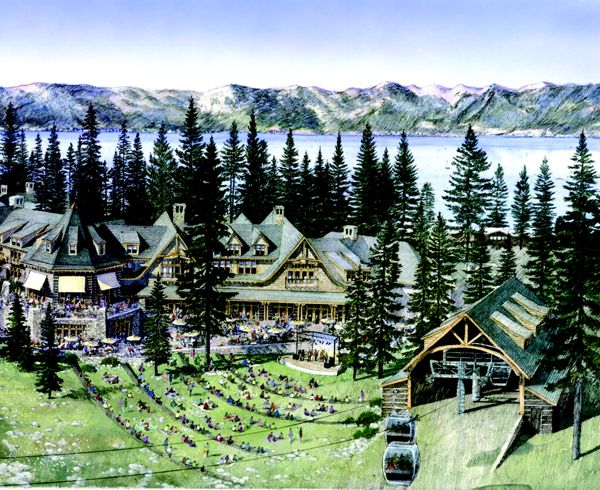
JMA wants to build 99 residential units, a 75-room hotel, have underground parking for lodging and a parking structure for day use, replace two lifts – one with a gondola, and build a mid-mountain day lodge.

Talking one-on-one with Lake Tahoe News, Chapman said the project could start in 2013, would be completed in two phases over five years, would require one season of limited skiing, and would provide 180 year-round jobs.

He anticipates full-time residents occupying the housing units.

The 15,000-square-feet of retail would include a deli, ice cream parlor and hardware store. Chapman said that is what residents requested. The day lodge will come with a pool for the community. Opening the mountain to hiking and improving the bike trail in the area are also on the table.

What concerns many who spoke in opposition to the development is the size of the project and how it may change the look and feel of this area on Highway 89 that is nearly right on Lake Tahoe. Many also don’t believe the stats provided about air quality and how vehicle miles traveled will be reduced. Concern about the height of the structures was also brought up. Creating light pollution in an area that provides unobstructed views to the Milky Way was another concern.

After the public had its say, the Governing Board echoed some of those concerns and asked for answers. (Board member Claire Fortier, who represents South Lake Tahoe, left before hearing public comment because of a commitment she said she had before being appointed to the TRPA board.)

Developers want the proposed amphitheater to be the permanent home to the Lake Tahoe Music Festival.

Developers want the proposed amphitheater to be the permanent home to the Lake Tahoe Music Festival.

Board member Casey Beyer was perplexed by how the TRPA measures height.

Executive Director Joanne Marchetta replied, “The way we measure height we compare apples to televisions. There is great room for misunderstanding.”

The controversy is when a structure is built on a slope. Instead of measuring from the foundation to the roof at each spot, height is essentially calculated by the lowest point to the highest point.

Board member Byron Sher carried forward the public’s concern about the amendments and code changes that would be required. His contention is codes need to be changed and then the project brought to the board.

Colleague Nancy McDermid told him that isn’t possible. She learned this in her four years on the Douglas County Planning Commission. She said it’s impossible to know what building codes will be in 10 years, so the rules need to continue to be tweaked to keep up with the times.

Marchetta explained this property straddles three plan area statements that are “old and disjointed.”

“A lot of the amendments are to address inconsistencies made 2½ decades ago when we didn’t know what this ski area would be,” Marchetta said.

Friends of the West Shore is a group opposed to the development. The organization is conducting a survey to see what people have to say about the developer’s plan.

The League to Save Lake Tahoe sent a press release Feb. 18 stating its opposition as well as having a representative speak Wednesday.

Amanda Royal, spokeswoman for the League, told Lake Tahoe News after the meeting that ended at 4:35pm, it’s possible some project at Homewood would work, but not this one. She said the League’s focus is on making sure the thresholds TRPA is mandated to uphold are not violated.

Even though economics was a common theme throughout the day, Royal said that is not a threshold and therefore is not a concern of the League’s.

The League’s release said, “In the past several years, the TRPA has changed course dramatically to a piecemeal approach to planning at Tahoe. Projects are negotiated on a case-by-case basis. The process is clearly flawed as it has produced several projects that have received stunning exceptions to Tahoe’s rules. Each irresponsible project sets the stage for more irresponsible projects down the road, creating an unpredictable system that overall endangers Tahoe’s unique ecological values.”

Board member Shelly Aldean seemed to pick up on this sentiment when she asked whether staff had looked at other projects in the works or was this an isolated analysis.

The answer by TRPA staff was they look at funded and unfunded projects.

“I would think then the improvement at Fanny Bridge should have been included,” Aldean said.

The bridge in Tahoe City is a choke point for traffic. However, seismic and other concerns require it to be replaced, which will also come with realignment. None of this is in the environmental documents.

A copy of the draft EIS/EIR is available on the TRPA’s website.


Ax falls in S. Tahoe; positions gone, retirements imminent

By Kathryn Reed

“Thank you for your email. Eugene Palazzo is no longer employeed (sic) with the City of South Lake Tahoe. Please contact Tracy Franklin at 530-542-6093 or tfranklin@cityofslt.us. Have a great day. Gene”

That is the auto-reply Gene Palazzo left on his email Feb. 23, the day he found out he no longer had a job with South Lake Tahoe. He had been the director of Redevelopment and Housing.

sltHis is one 11 positions being eliminated. Another 10 employees are taking early retirements.

Some departments are being re-organized, while some people are taking on new responsibilities in positions that are being created.

“This will allow us to streamline operations,” City Manager Tony O’Rourke told Lake Tahoe News late Wednesday. “The reorganization is more of a rebalancing. It allows us to introduce new concepts to the city.”

The anticipated re-org is expected to save the city $10.2 million across five years.

The city has been in the red millions of dollars a year for the past few years, with the anticipation of much the same in the future because of declining revenues from hotel, sales and property taxes.

Spending is the main area the city can control. That is what the reorg is all about. Past practices have been to take from reserves to cover the deficit. O’Rourke and the current council want the city to live within its means.

“We have to control our own destiny,” O’Rourke said. Seventy-eight percent of the General Fund goes toward employee salaries and benefits.

The City Council will discuss the reorganization and five-year budget during the work session March 1 after the regular council meeting.

Positions eliminated on Wednesday also include assistant city manager (Rick Angelocci) and assistant Parks and Recreation Director (Chris Hawken).

The employees represented by unions – those who are not at-will employees – have been told what is in store. However, it is the council that must vote on those jobs. That will happen March 15. The workers have 30 days after that to vacate their jobs.

With bumping rights in the city, the exact people leaving all positions is not known. It’s the positions the city desires to eliminate that are outlined here.

O’Rourke said he wants to work with the unions to abolish the bumping rule because it can mean a person who is less qualified or not a good employee keeps his job based on seniority and nothing else — and bumps a newer hire into the unemployment lines when that person in fact is the one who management would have preferred stayed on the payroll.

Severance packages are still being worked out for everyone.

The positions likely to be eliminated are:

• Accounting technician –  (was filled by a temporary employee)

• Assistant engineer –  (position was vacant)

Funding will dictate if another engineering position is cut in October.

• Associate planner

• Fire division chief (was vacant)

This leaves one division chief per shift. Fire Chief Lorenzo Gigliotti is keeping his job for now, but will have to step it up a notch, which includes taking a shift in the firehouse and filling in when a division chief is out.

• Housing rehabilitation specialist

• Senior accounting technician

• Senior airport assistant

• Administrative assistant in public works –  (was temporary worker).

Those being offered early retirement will leave at different times. They include:

• Fire captain

• Fire engineer

• Human resource analyst

• Information technology manager

• Public Works director (John Greenhut will leave in May.)

• Police captain (Martin Hewlett will leave next February.)

• Police sergeant

• Police officer

• Recreation supervisor (John Collins is leaving; Rob Swain is moving from the ice rink to the senior center.)

One other position is likely to be gone with early retirement; that was expected to be finalized Thursday.

In O’Rourke’s staff report, he says, “The vacant positions resulting from these early retirements will be filled, with the exception of the Public Works Director, Human Resource Analyst and Recreation Supervisor. The Police Captain position will be reclassified to a Community Service Officer and the Police Sergeant reclassified to a Community Service Officer.”

O’Rourke met with everyone Feb. 23 who would no longer be receiving a paycheck from the city, except for Hawken, who no one could locate.

South Tahoe downsized in 2009 in what was called a cost containment plan. On April 21, 2009, the council approved six early retirements in various departments, seven people lost their jobs, and a few positions were left vacant.

Seven months later, on Nov. 17, the council laid off one person, approved nine early retirements and froze more positions.

This is also when furlough days started.

Consolidation, which means departments are being reclassified, is also part of the plan that will be before the council in March.

Hilary Hodges, the current planning manager, will head the Development Service Department at least for the interim. This department will include redevelopment, housing, economic development, sustainability, planning, building and the engineering section of public works.

Stan Sherer, who took over the Parks and Recreation Department last month, will run the Community Services Department. The new department will also include streets, fleet management and facilities maintenance – everything that was in public works except for engineering.

The airport and parking will come under finance; still led by Christine Vuletich.

“Those are enterprise operations that should break even at best or make money. We really need a financial focus on those operations,” O’Rourke said.

Four other positions are being reclassified, with current staff filling the jobs.

The city’s special events coordinator will be Lauren Thomaselli. She has been running Explore Tahoe. Someone within the city will fill her shoes at the visitor center.

“The city is going to be much more engaged in producing new events and assisting other people’s events. This is tied to economic development,” O’Rourke said.

Engineer Jim Marino will be the capital improvement coordinator.

Tracy Franklin, who worked in Redevelopment and Housing, will be the volunteer coordinator. One of the things in the citizens’ survey that was recently released was the desire by locals to volunteer more. The city could reap millions of dollars worth of free service from residents.

Nancy Kerry, manager of Redevelopment and Housing, is moving into the role of communications/public affairs manager. She will work directly for O’Rourke. The job will also include marketing of city services, like Parks and Recreation.

“This is a major step forward, but not the only or final step,” O’Rourke said of all the changes. “We will have to monitor and modify as we go forward.”


S. Tahoe grad near epicenter of New Zealand temblor

Updated Feb. 25, 2011, 11:30am.

Publisher’s note: Hillary Santana, the 2008 salutatorian at South Tahoe High School who works for the Lake Tahoe Basin Forest Service office in the summer, is an exchange student in New Zealand from her university in Pennsylvania. The following is from her dad. Hillary is the daughter of David and Bernadette Santana, who work at STHS.

By David Santana

When South Tahoe High School graduate Hillary Santana elected to pursue her Environmental Studies concentration abroad, she had no idea how immediate and impactful her education would soon be. The Swarthmore College junior arrived in Christchurch, New Zealand, to attend classes at the University of Canterbury just more than a week ago.

Before then, her only brush with adversity had been a half-day’s wait on a delayed arrival of luggage from the North Island’s Auckland airport. After spending a week acclimating to her new environs and enrolling in classes, Hillary witnessed what could only be described as a life-changing experience as she sat in a lecture hall on the Canterbury campus.

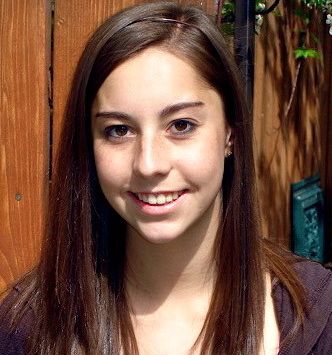
Hillary Santana

Hillary Santana

Shortly before 1pm on Feb. 22, as the class listened to a speaker, the building began to shudder and roll, and students and staff scrambled for the shelter of desks and doorways as a reported 6.3 magnitude earthquake struck just more than 2 miles below the New Zealand city.

In an emergency phone conversation with home shortly afterward on a dedicated line, Hillary described the experience: “Dad, it was crazy — I’ve never been so scared in my life. As soon as the shaking stopped, we got the heck outta there, and out onto the lawn!”

The University of Canterbury campus, located only 3 miles from the quake’s epicenter, was quickly evacuated as many of the older buildings had to be secured and inspected. No major damage was immediately found there, but downtown Christchurch, only 3 miles away, was not so fortunate.

To date, there have been 65 confirmed deaths, and hundreds of people missing as rescue crews scour several devastated buildings for survivors. Water and power have been shut down in much of the area, as damage to drinking water, sewage, and gas and electric systems have been reported. The night following the disaster has been a long and wet one for many of the evacuees, as rain began falling on hundreds of individuals preferring to spend the night outdoors as aftershocks riddled the area

“They finally let us back into our dorms this evening, but my flat’s on the fourth floor, and I’m not too sleepy, if you know what I mean.”

Describing her flatmates as “pretty freaked out”, Hillary has been trying to keep updated on the chaos downtown.

“It’s not good, Dad. Several of us are looking to volunteer at the shelters they’re setting up outside of the areas of devastation for the evacuees,” she said. Classes at Canterbury have been canceled for the week, pending any further developments.

“It looks like we’ll have lots of time on our hands to help out,” she said.

Although Internet and phone service have been limited in the hours following the earthquake, people wishing to help out and stay informed may contact the New Zealand Red Cross.

Here is an update, day two:

“Dad, there’s no water, and we’re still feeling aftershocks every half hour or so. I still can’t believe how bad things are in downtown. It’s only a 15-minute bus ride away.”

Hillary has been able to communicate with family by phone, but Internet service is still down at her location near the University of Canterbury campus. As to the moment the quake struck, she states: “I had been packing my things to leave class, and the room started shaking violently. It felt pretty unreal, and I literally asked myself if it was really an earthquake. It felt as if the building was no longer attached to the ground. Most of us ducked under desks, and covered our heads. When it stopped, we were told to move outside and away from any buildings — no problem there! A large aftershock occurred soon after, and it was very strange to see concrete shake.”

Back at her apartment dorms an hour later, emergency personnel were still limiting access until inspections were completed.

“The building next to mine suffered a crack, so the people living there had to stay in another flat. At that point, we still had no power or water, and phone service was still spotty. I was still nervous and confused, but I really had no idea then how bad things were a couple of miles away.

“Little information has been passed along yet as to how locals can volunteer, and emergency efforts have restricted travel. I will continue to keep everyone updated as best I can, and I hope everyone out there is thinking hopeful thoughts for the city and its people, as I am. I’m fortunate to be in a relatively safe place, and this city has been very welcoming to me since I arrived here only 10 days ago. I hope things will turn up, and that people who are still missing will be found and returned to their loved ones.”

Day 3

“So, the aftershocks are becoming almost commonplace by now … it’s not easy to sleep, but you just kinda look around and ride them out.

“Water at the apartments is still out, and we’re being asked not to flush toilets, as the sewage system is badly damaged down the line — not too pleasant ….” Hillary is entering Day 3 after the devastating Christchurch quake, and reality is settling in as clean-up and rescue efforts go into overdrive downtown, a few miles away. The official death count has risen to 75, and numbers are expected to rise sharply as downtown buildings are excavated, and hundreds are still trapped. The Christchurch Airport has re-opened for domestic flights, and is limited international flights for transport and rescue craft. Some airlines are offering reduced fares for tourists and international students who wish to leave the area.

“Some of my international classmates have left for Auckland (North Island) or Australia, but once we got our power back, I saw some of the video from downtown … I mean, the devastation is only a few miles away from the campus, and it’s awful … I decided I couldn’t go.”

Hillary will be joining approximately 300 other University of Canterbury students who call themselves the Student Volunteer Army. They will be busing into adjoining neighborhoods to help with clean-up efforts. “Downtown’s pretty much cordoned off and limited to army, rescue and police personnel, but surrounding neighborhoods are in need of help,” she said. ”We’ll be leaving in a little bit, so I’ve gotta go — I’ll let you know where we are when we get there — I love you.”

New Zealand Prime Minister John Key has declared Christchurch a national disaster, the country’s deadliest in more than 80 years. Besides the destruction of several downtown high-rises, water and sewage systems have been badly damaged by the liquefaction of the ground beneath the city in several places, and hundreds, possibly thousands, have been displaced. International rescue teams continue to arrive in Christchurch, and President Obama has pledged American support for the beleagured city.

“I was taking pictures of the Christchurch Cathedral just last Friday, and cruising the downtown square with my classmates — the news clips are just surreal, Dad.” Hillary will be staying on in Christchurch to help with cleanup efforts, and urges her classmates and South Lake Tahoe residents to do the same.

Although Internet and phone service has been limited in the hours following the earthquake, people wishing to help out and stay informed can contact the New Zealand Red Cross.

Day 4

“Up early today to join with other University of Canterbury students (Student Volunteer Army) in clean-up efforts.

“Downtown is heavily cordoned off as search and rescue in the demolished buildings continues. Death toll has risen to 113, and still hundreds unaccounted for. We headed to the coastal communities out by New Brighton Beach in buses. The earth movement has shifted the substrata, pushing up lots and lots of sand and muck into neighborhoods, and clogging drainages. We were assigned to a residence of elderly folks in their 70s and 80s, where we spent the day digging and wheel-barrowing their yards, garages, and nearby gutters. Their neighbors’ house had a large crack running down the center of their floor. We grabbed our shovels and dug in. It was hard work, but the people were exceedingly grateful and fed us what lunch they were able to put together. Being down by the coast, all I could think of was tsunami activity, as the aftershocks have only now begun to subside. I thought about my sister, Victoria, who was in the Navy aboard the USS Duluth during tsunami relief efforts after the disasters in Thailand and Sri Lanka in 2004. It was their job to provide fresh water for the locals, as their ship had water desalination systems on board. Back at the dorm, we’ve still had to boil our water before using it to drink and cook, but in many areas here people are still getting their water from tanker trucks. When we got back to our apartments, we were tired and sore, but happy to find out that we were finally allowed to take short showers. After today’s work, we would’ve been pretty nasty without them. What’s more, we were allowed to flush the toilets – Happy Day!

“Later in the evening, our internet service came on, and as I contacted my folks and friends back home, I realized just how much we take for granted not only basic services like water, sewage and power, but the niceties of the tech age. Just a week ago, I remember complaining to my dad that we had to pay additionally for Internet access at the dorms, while back at Swarthmore we enjoyed campuswide Wi-Fi for free. What a reality check …

“Classes are still suspended at University of Canterbury, and it appears they will be for another week, at least, while things are put back in order, and buildings checked. I was counting on the three-week break between terms to do some traveling around New Zealand and possibly Australia, but adjustments to the schedule might impact that. For now, we’re all following the progress downtown, limiting our water use, and helping when we can.

“I strongly urge people to help, if they can, as the situation only a few miles away has become truly heartbreaking.www.redcross.org.nz/donations.”


Upgrades to Nevada Beach make it ADA compliant

By Kathryn Reed

STATELINE — Making Nevada Beach accessible to people with disabilities and improving water quality are the goals of the $1.2 million project under way at the popular beach-day use-campground just east of the Stateline casinos.

With work having begun last summer, crews expect to wrap things up before Fourth of July. This holiday is the time when the beach reaches maximum capacity because the views of the fireworks shot off over the lake are some of the best.

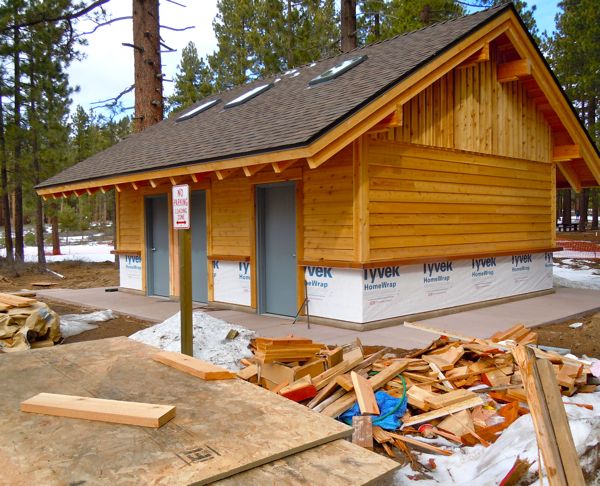
Restrooms at Nevada Beach are being built to ADA specs. Photos/Kathryn Reed

Restrooms at Nevada Beach are being built to ADA specs. Photos/Kathryn Reed

This winter workers are finishing the two restrooms, with landscaping work to begin once the snow melts and the grading season opens.

The two old restrooms date to the 1940s or ’50s, according to U.S. Forest Service officials. They will be demolished. One of the facilities that was built in the 1970s will remain in use, however it is not compliant with the Americans with Disabilities Act.

The Forest Service, which has owned the land since 1942, is using money from its general budget as well as funds from the Southern Nevada Public Lands Management Act for the upgrades.

Besides replacing the structures that have outlived their usefulness, water and electrical lines are being replaced to meet health and safety codes.

“The other thing related to accessibility is an accessible path around the entire parking lot,” USFS spokeswoman Cheva Heck said. “As we get money, we go to our facilities and address accessibility because we want and need to bring them up to that level.”

She said it’s all part of the Forest Service’s goal “to serve all of the public.”

A boardwalk leading to the lake has been laid. This allows people in wheelchairs to use picnic areas close to the shore.

Part of the water quality portion of the project involved moving one campsite to ground that is not sensitive. Burke Creek runs through Rabe Meadow, which leads to Lake Tahoe, so lots of marshy areas exist much of the year in the area. None of the improvements are designed affect the creek.

In the day use area, catch basins are being installed to trap water to have it filtered before it reaches Lake Tahoe.

ngg_shortcode_2_placeholder (Click on photos to enlarge.)


Quest to name peak after South Tahoe’s Ryan Shreve

By Kathryn Reed

Peak 9441 is listed on maps just like that, with no other name.

Mike Shreve is on a mission to name the Desolation Wilderness peak Mount Ryan after his son who died in 2003.

In 1992, when the South Lake Tahoe father and son were on a Boy Scout backpacking trip, Ryan asked what the name of the peak was. 9441, its elevation, is what U.S. Geological Survey maps call it.

Mike Shreve, holding an SIS brochure, at the top of what he would like to be Mount Ryan. Photos/Provided

Mike Shreve, holding an SIS brochure, at the top of what he would like to be Mount Ryan. Photos/Provided

Eleven years later, the day before Ryan’s memorial, Shreve and his son’s best friend Mitch Underhill hiked to Echo Peak.

“It was snowing lightly. Mitch looks to the west. He said, ‘What is the name of the peak to the right with no clouds and in the sun?’”

It was Peak 9441.

“Let’s call it Mount Ryan,” Underhill said.

It’s an arduous process to get peaks named something other than what they are labeled, especially with the 1999 Wilderness Act as a deterrent. But that is not slowing Shreve. He has the endorsement of the El Dorado County Board of Supervisors. In July he will take his cause to the USGS meeting.

In the mean time, Shreve is collecting signatures on petitions from people who support his idea. He will be asking all those who participate and watch the annual Ryan Shreve Memorial Firefighters Race at Sierra-at-Tahoe on March 15 to endorse his idea.

Education about SIS

Most of Shreve’s focus since his 24-year-old son died after a wakeboarding accident on Folsom Lake has been to educate whoever will listen about Second Impact Syndrome.

“That second impact the brain expands again and has nowhere to expand in the cranial cavity,” Shreve explained. “There is only one option and it goes south into the lower portion, the brain stem region.”

This often leads to strokes because the blood flow into the brain has been limited.

The Ryan Shreve Head Injury Awareness Foundation was created in the 1997 South Tahoe High School graduate’s name in hopes of limiting the number of deaths like his. The biggest fundraiser is the ski event at Sierra.

Money goes mostly to the printing costs of the SIS brochure. Last August the California Interscholastic Federation requested brochures for the 1,650 high schools in the state.

The brochures were first created in 2004. It was a collaborative effort with El Dorado Hills Fire Department, where Ryan Shreve was a firefighter and paramedic, the county’s Emergency Medical Services, and Dr. Terry Murphy who at the time was president of the EMS Medical Directors of California Association.

At last year’s ski race, enough money was raised to print 20,000 brochures.

Shreve says the awareness of SIS has grown substantially since Ryan’s death. He said it was a one on a scale of 1 to 10 in 2002 and is at a 10 today. He attributes this in part to high profile deaths like Sonny Bono and Natasha Richardson, as well as the numerous concussions Steve Young sustained during his career with the San Francisco 49ers.

Ryan Shreve

Ryan Shreve

The SIS brochure says about 50 percent of reported SIS cases end in death. The Center for Disease Control and Prevention estimates there are a minimum of 300,000 sports related concussions annually.

The ski event

The fundraiser is at Sierra because this is where Ryan grew up skiing. He was on the Buddy Werner team in the mid-1980s and skied at Sierra while on the STHS ski team all four years.

The categories include skiing, snowboarding and the 3-inch hose relay. It’s open to firefighters, paramedics and their families. And the racers must be wearing their firefighter turnouts.

“Those things are bulky. That is what makes it all the more fun,” Shreve said.

Competitors come from as far away as Santa Cruz.

For the relay, teams of three race against another team carrying a fire hose.

“When you get two good teams coming down the course, it looks like Chinese serpents coming down,” Shreve said.

The race is March 15 at 10:30am next to the halfpipe at Sierra.

For more information about naming Peak 9441 to Mount Ryan, email mshreve@edhfire.com.


Trek to top of Angora Ridge provides stunning views

By Kathryn Reed

What a difference a week makes. Last Sunday the trek to Angora Ridge was all about the claws on our snowshoes. Today it would likely be about making first tracks or hoping a snowmobiler got there first.

It’s a climb, no doubt about that. But the views – oh, they are worth it.

The 1.8 miles feel a bit longer than that, but I’m blaming it on the ridge being a thousand feet higher than lake level.

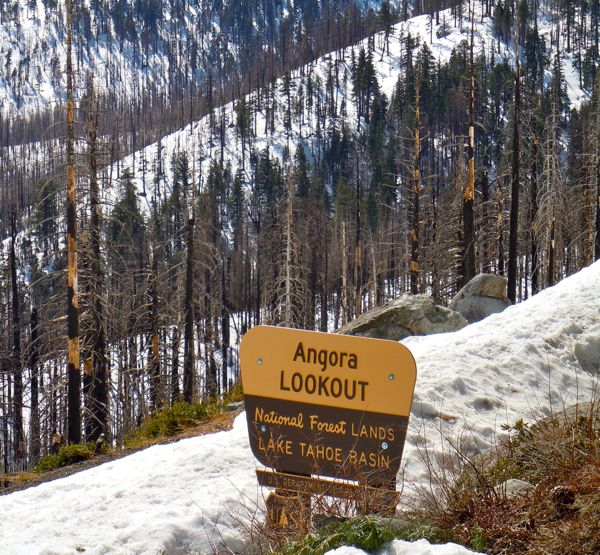
The Angora burn area from the ridge. Photos/Kathryn Reed

The Angora burn area from the ridge. Photos/Kathryn Reed

It’s five of us and a dog on this particular day going to the lookout at an elevation of 7,256 feet.

The start is deceiving because of how flat it is – meadow-like, really. With this being a road, it’s wide enough to walk side-by-side.

My mom indulges me as I take pictures. It’s been a few years since I’ve been up here in winter. I wonder why because the views are spectacular, not to mention it being a good workout.

The others are in front of us chattering away. Their loss because mom and I are sure it’s an eagle that is flying overhead with its distinctive wingspan and white markings. Bald eagles are common in this part of Tahoe.

Up we go in almost a straight path. No switchbacks to contend with.

Gradually some charred trees come into sight to our left – remnants of the 2007 Angora Fire that burned about 3,100 acres – mostly U.S. Forest Service land. And it’s this federal property that we are on.

Mount Tallac is visible to our right through the looming conifers.

Onward.

Finally, we are on Angora Ridge. The old fire lookout remains. A Forest Service forester built it in 1924. It was converted into a residence for Civilian Conservation Corps members who in 1935 built a larger lookout nearby. No longer is this an active fire lookout. However, the buildings are eligible for inclusion on the National Register of Historic Places.

From the ridge, the Angora burn area is unmistakable. New houses prove the resilience of the 254 homeowners who lost their houses in the 2007 fire. But many of the matchstick-like trees remain. Now that environmentalists have sued the Forest Service, they may be there for years.

Looking in the opposite direction is Fallen Leaf Lake, with the base of Mount Tallac seeming to touch the far shore. A small part of Lake Tahoe is also visible from here.

Up another mile is the parking lot for the resort and its two lakes. During the summer the eight cabins are available for rent. Dogs must be leashed and are not allowed in the lakes. Angora Lakes Resort, which opened in the 1920s, is so popular that it’s booked for the 2011 season.

Getting there:

From South Lake Tahoe, go through the Y on Lake Tahoe Boulevard. Turn right on Tahoe Mountain Road. Go to the top turn right and follow the signs toward Angora.

Parking is horrendous. If you get there early enough, the gate in front of the trail is your best bet to avoid being towed.

ngg_shortcode_3_placeholder (Click on photos to enlarge.)