STPUD board leaning toward sewer rate hike this summer

By Kathryn Reed

Although a decision is not likely until mid-May, the South Tahoe Public Utility District board this month expressed a willingness to increase sewer rates by 3 percent starting July 1, with no change to water rates except for those on meters.

Board member Mary Lou Mosbacher missed last week’s budget and meter rate workshops.

A decision had to be made by the board last week regarding any potential rate increase so customers could be notified per state law. Any increase the board may institute cannot be higher than what is sent out on the notification. Public hearings will be conducted so people have ample opportunity to voice their opinions.

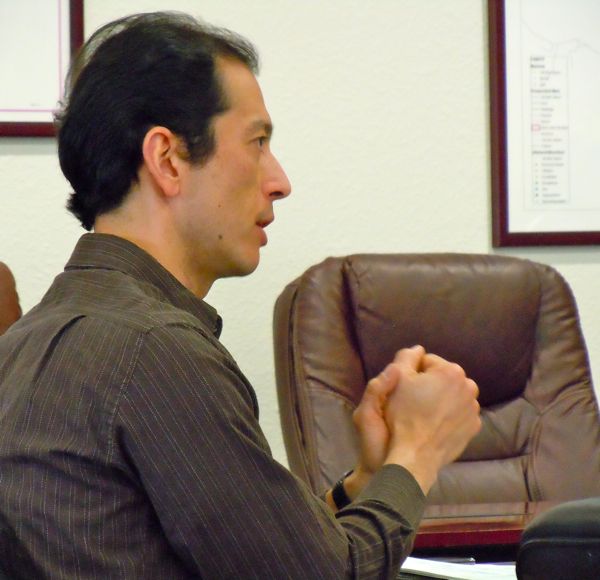
Paul Sciuto, assistant general manager at STPUD, talks about the proposed budget. Photo/Kathryn Reed

Paul Sciuto, assistant general manager at STPUD, talks about the proposed budget. Photo/Kathryn Reed

During the two-hour budget workshop last week, the staff report presented by Chief Financial Officer Paul Hughes and Assistant General Manager Paul Sciuto did not contain a rate hike. Hughes pointed out this did not necessarily reflect staff’s recommendation.

A concern he brought up that was later echoed by the majority of the board is without increasing sewer rates, the district would have to borrow money and therefore incur debt that in the long run could cost ratepayers more.

In the handouts were quarterly sewer and water rate comparisons to others in the Lake Tahoe Basin. They include:

2011-12 quarterly sewer rates —

• STPUD — $87.24

• Incline Village — $105.09

• North Tahoe — $133.68

• Kingsbury — $161.25

• Tahoe City — $163.89.

2011-12 quarterly water rates –

• Incline Village — $102.87

• STPUD — $119.89

• Tahoe City — $183.23

• Kingsbury — $195

• North Tahoe –$195.81

• Cave Rock — $607.38.

If STPUD raises sewer rates by 3 percent, it would increase the average residential customers’ bill by less than $1 a month.

The board members squabbled among themselves about whether it’s better to go with an increase now and pay as they go for things, or wait to hit ratepayers later, incur debt and perhaps let the infrastructure be taxed longer without repair.

Per their regular stances, board President Dale Rise is not a strong proponent of rate increases, while board member Jim Jones never believes what is agreed to is enough.

Jones was adamant he would not vote for a budget that does not include a rate increase.

“There is never a good year to raise rates,” Jones said. But he added he wouldn’t stand by and let the system disintegrate.

Sciuto told the board, “We are doing a good job of managing our assets, but there is risk. I like redundancy and we don’t have that.”

This was in regards to the Al Tahoe main as well as the lines services the North Upper Truckee area. If something happens to either one, he is worried it will cause problems throughout much of the system.

Board member Chris Cefalu, who will be one of the water meter customers to have uncertain future bills, said he is adamant about not raising water rates while the billing is in a state of flux.

The nearly 5,000 STPUD customers with meters represent about 34 percent of the ratepayers. The district per state law this year has to start charging them based on consumption. The goal is the rate structure will have the average consumer paying what flat rate customers pay.

However, those not using much water are likely to see rates decrease and those with lots of landscaping or families doing multiple loads of laundry a week could see the rates increase.

The budget contains no increases for salaries or benefits. However, the district’s CalPERS rate is increasing 2.43 percent. It will be shared equally between the district and employees.

Besides working on the next fiscal budget that begins July 1, the district is always working on a 10-year budget. The decline in assessed property valued for this fiscal year means a $7 million hit on the 10-year forecast for property taxes.

In the next fiscal year it is anticipated the district will use the remainder of the nearly $2.3 million in the MTBE account.

South Tahoe Public Utility District won a $69 million judgment (though about half of that went to attorneys and other expenses) when it successfully sued oil companies when it proved methyl tertiary butyl ether, a fuel additive, contaminated groundwater and posed problems for bodies of water like Lake Tahoe.

The money has been used to treat the 14 wells on the South Shore contaminated with MTBE.


LTCC’s personnel struggles causing unrest on campus

By Kathryn Reed

Leadership, or the lack of it, is creating a fissure at Lake Tahoe Community College that some say is bringing harm to the two-year institution.

The turnover in presidents, other administrators and personnel leaving by choice by having found a new job or retiring are taking a toll on what had been a stable institution.

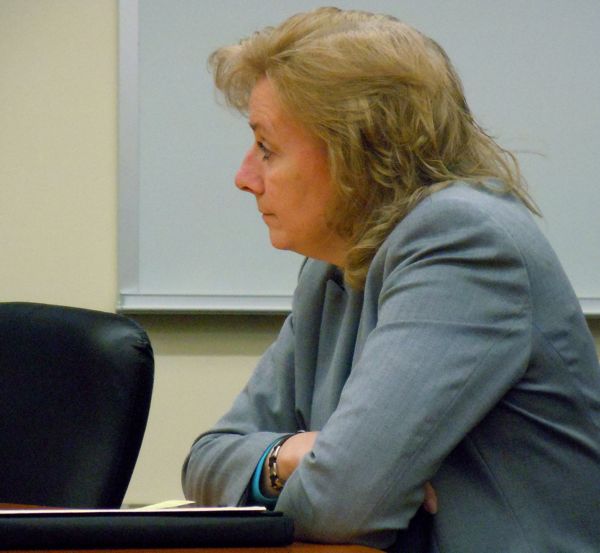
Sue Niehoff at the March 15 Lake Tahoe Community College board meeting. Photo/Kathryn Reed

Sue Niehoff at the March 15 Lake Tahoe Community College board meeting. Photo/Kathryn Reed

The 30-plus-year-old college is on its fourth president – this one interim. Two of the five board members have been seated since the beginning.

“I don’t think you realize how important good leadership is until you don’t have it,” board member and college founder Roberta Mason said. When asked to elaborate, she said, “I was thinking of Guy (Lease). I think we relied an awful lot on Guy. Maybe we didn’t do the research on our own that we should be expected to do.”

Lease was president of LTCC from 1990-2008. Prior to that he was dean of Business Services.

After him came Paul Killpatrick, who never was embraced by the college community. Now Steve Maradian is at the helm; hired to be interim president for this academic year.

Special board meeting

On March 15 the boardroom was full for a special 8:15am meeting. This in itself is an indication of the friction because seldom is anyone in attendance at the regular meetings.

The board, with member Molly Blann absent, started in closed session at 7:45am Tuesday. On the consent agenda for regular session was the notification of dismissal/discipline/release of the interim president and vice president of Business Services. This item was approved 4-0; with the only discussion in whispers among board members whether it should be open to public comment. It never formally was.

This was the second week in a row Sue Niehoff, the VP of Business Services, found out she was on the agenda when the paperwork came out instead of being afforded the courtesy from Maradian to be told before the masses found out.

Last week it was her annual review, for which she made about a two-minute appearance in closed session before being sent home by the board because she was ill. According to board member Karen Borges, Niehoff’s evaluation will be discussed further at the March 22 meeting. On March 15 it was notification Niehoff may be out of a job when her contract expires June 30 that came as a surprise to her when she saw it on the agenda.

Maradian told Lake Tahoe News after the meeting it is state law that non-faculty members under contract must be given reduction in force notices by March 15 if there is a chance their contract will not be renewed.

“It is a notice that provides the board maximum flexibility,” Maradian said.

However, the college has not operated this way in the past.

Maradian said without this notification, both of their contracts would be automatically renewed for a year beginning July 1.

Now the board must tell Maradian and Niehoff by May 15 if they will still be getting a paycheck from LTCC after June 30.

As much as the board members who spoke to LTN mentioned the state budget being a factor in all of this, the truth is California’s budget won’t be passed by May 15. Nor would the three who spoke express whether this is solely about Niehoff or more about reorganizing the administrative team. The college has employed Niehoff since January 2010.

Maradian’s contract was always supposed to be for one year. The college is in the process of looking for a president. The selection committee plans to meet March 24 to narrow the applicants to 10 to be interviewed in April, with the board interviewing three to five finalists in May.

One of the issues regarding Niehoff’s evaluation, which has not been provided to Lake Tahoe News because it is a personnel issue, is the scope of it.

Per Board Policy, Chapter IV, Policy 4.25, “All new academic administrators will undergo comprehensive evaluation two consecutive years after appointment.”

Maradian denied that is the policy.

“Board policy on evaluations is that every three years you have a comprehensive review and other reviews are annual reviews,” Maradian said.

The policy clearly states he is wrong.

If Niehoff had been given a comprehensive review, it would have meant being evaluated not just by Maradian, but also several faculty, classified, adjunct and other administrators.

In effect, she has been denied her due process outlined in board policy. On top of that, Maradian did the annual evaluation even though he has only worked with her for six months.

What the board has to say

Board members Fritz Wenck, Mason and Borges spoke with Lake Tahoe News after the meeting. All believe Maradian is doing a good job and support the direction he is taking the South Lake Tahoe institution. Board member Kerry David did not return calls and Blann is out of town.

“I think Dr. Maradian has done an excellent job in the areas we asked him to work on,” Wenck, the board president, said.

Those areas Wenck said are:

• Evaluating and implementing the Datatel system; (There is a relaunch of that program Thursday at 9am in the board room. The person running the program was let go in January per Maradian’s recommendation.)

• Self-study for accreditation; (This must be done by June; with the site visit in October.)

• Possible reorganization of the administrative team.

“I know there is a lot of uncertainty on campus and that always creates not a good morale climate,” Mason said. “We hope to bring in a new person as president … that will be one of their jobs, to help bring the campus together.”

None of the board members could or would pinpoint what has brought the college to the point of having employees send emails to Lake Tahoe News that say, “I believe Sue is clearly a target for retribution after having been a ‘whistle-blower’ against Steve. I wish I wasn’t such a chicken s—, but I can’t risk being similarly targeted in this job market. Sue is the best VP of Business we’ve had in over a decade. She deserves better.”

Borges and Mason did not hesitate to acknowledge morale is less than spectacular.

“I would say there is a lack of harmony. And we are trying to understand people’s points-of-view. We are trying to look into it and see what we can do,” Borges said.

She would not share what people on campus are saying to her.

“There is a climate on campus and people are afraid to speak in front of each other,” Mason said.

At the board meeting Tuesday only one person spoke – Denise Russell. But she has nothing to fear because her last day of managing the LTCC bookstore was March 10. She told the board there is a feeling of helplessness and hopelessness on campus.

“I don’t know if this is what you want – employees living in fear,” Russell told the board. “There are concerns about leadership.”

What Niehoff has to say

Though holiday lights may seem like an innocuous subject, it escalated into a heated exchange between the two college administrators that resulted in Niehoff writing a detailed memo to the board Nov. 29, 2010.

Mason and Borges remember the package of paperwork Niehoff provided them, while Wenck has no recollection. In the stack of papers are emails between the interim president and vice president of Business Services, a summary of lawsuits filed against Maradian while employed elsewhere, and the three Los Angeles Superior Court decisions that mostly involve sexual harassment judgments against Maradian.

When asked why they hired someone with such a checkered past, Wenck said, “I don’t know anything about it.” Then he added, “There were some allegations, but the board did not feel they rose to such a point that it would deter him from doing the job.”

Niehoff in her letter to the board four months ago, which they have never talked to her about according to her, says, “Dr. Maradian’s pattern of abusive and hostile behavior shows up in several publically available court documents which date back to at least 1996. He is now continuing this pattern of behavior at LTCC. Several other employees can corroborate the hostile work environment he is creating for this college.”

In a conversation with Lake Tahoe News after the March 15 meeting, Niehoff said, “When you look at him and listen he sounds articulate and engaged, but he clearly doesn’t like to be challenged, to be questioned. The board doesn’t see it because he has one personality for them and another on campus.”

When asked to describe his relationship with Niehoff, Maradian said, “I don’t describe personnel matters.”

Niehoff said their relationship soured after she questioned the expense of holiday lights and the religious nature of them.

Apparently an exchange of emails went back and forth between the two last fall. Authority over the whole college versus responsibility for all fiscal matters is a large part of the dialogue. The escalation and tone of the emails is what led Niehoff to write her letter to the board.

The board on Tuesday granted Niehoff permission to speak to them at the March 22 meeting in closed session. She wants it to be just her and the board, though Borges will be out of town.

Niehoff is considering her options. To begin with she still has a job and may be offered a contract to carry on her services. For now, she said she will do the job she was hired to do, but on July 1 she doesn’t know where she will be.



Defendants in South Shore transit case gain ground

By Kathryn Reed

RENO – A federal judge on Monday dismissed the majority of the 16 complaints filed by MV Transportation against STATA, its board members and the organizations the individuals represent.

The Fairfield-based transit agency that once ran BlueGo, the bus system on the South Shore, sued the nonprofit South Tahoe Area Transit Authority last year on a number of issues. STATA then filed for bankruptcy and has since disbanded.

BlueGo buses keep rolling despite a federal lawsuit involving a former operator. Photo/Kathryn Reed

BlueGo buses keep rolling despite a federal lawsuit involving a former operator. Photo/Kathryn Reed

The proceedings March 14 were in U.S. Bankruptcy Court in Reno because STATA was a Nevada entity.

Judge Gregg Zive throughout the nearly 3½-hour proceeding told the two attorneys representing MV that they had much to still prove and that he wasn’t convinced of most of their allegations.

“To me this looks like straight action with only one defendant – STATA. It’s a contract action and you want to liquidate the claim,” Zive said.

MV contends it is owed $2 million from STATA. There is nearly $700,000 sitting in an account being overseen by the Douglas County Sheriff’s Office because MV was able to get a different judge to freeze the account. Zive ordered it put in the registry of the court so DCSO would no longer be part of the proceedings.

“The cause of action against STATA primarily remains. That was our argument all along. This is between MV and STATA,” South Lake Tahoe City Attorney Patrick Enright told Lake Tahoe News outside of court. “I would call it significant progress for the city. It significantly narrows the scope of the issues. I think MV will struggle to put together a complaint to meet the federal standards.”

The judge dismissed the breach of contract issue as it relates to the public entities, but is allowing MV to argue the point again in regards to the private companies.

All of the entities involved in the case were part of the hearing except for Douglas County, which was supposed to have its own court appearance in April. However, the judge decided to wrap the county into future proceedings.

Douglas County’s attorney after the session was adjourned told Jessica Woelfel and Dale Campbell, MV’s attorneys, his client never signed the operating agreement that other STATA members agreed to years ago so there would no basis to continue with their charges against Douglas County.

Several of the complaints by MV relate to the operating agreement.

Woelfel said an official quote was not possible without first speaking to her client.

About a dozen attorneys were in court representing the various defendants. Not all parties are named in each complaint. El Dorado County settled after mediation hearings in the fall.

The defendants are:

• STATA

• Tahoe Regional Planning Agency

• Douglas County

• South Lake Tahoe

• Heavenly Mountain Resort

• Tropicana Entertainment

• Harrah’s Operating Company

• Harvey’s Tahoe Management Company

• Lakeside Inn

• Michelle Bertgstrom

• Jerald Higgenson

• Nancy McDermid

• Troy McGregor

• Glenn Koehler

• Stacy Dingman

• Rick Angelocci

• Kathay Lovell

• Dan Garrison

• Casey Blann

• Andrew Strain

• Matt Krystofiak

• Norma Santiago

• Bruce Grego

• Horizon Casino

• Lake Tahoe Casino Realty

• Columbia Properties Tahoe

• Anna Hastie

• Ridge Tahoe Property Owners Association

• Tahoe Transportation District.

In the 11 motions South Lake Tahoe was named in, seven were dismissed without leave – meaning they no longer exist. The remaining issues were dismissed with leave – meaning MV can try again to convince the judge.

To whatever MV files next, Enright said the defendants will “have to file an answer to the complaint or another motion to dismiss.”

Enright estimates $20,000 has been paid to Louis Bubala to have him represent South Lake Tahoe in this case.

MV attorneys have until April 22 to file their amendments. The defendants have until May 23 to respond.


Vail Resorts spending millions to upgrade its ski resorts

By Kathryn Reed

Vail Resorts plans to spend $83 million to $90 million in the upcoming building season on its six ski resorts in California and Colorado. Exactly how much of that will come to Heavenly or Northstar is not being disclosed per company policy.

However, during a March 12 media tour of both resorts, the men in charge of the respective resorts divulged some nuggets.

Although prices will not be disclosed until today, Heavenly Mountain Resort General Manager Pete Sonntag said two passes for 2011-12 would allow skiers to ride at Heavenly and Northstar-at-Tahoe – the Epic Local and the Tahoe Value.

Dylan exchanges his snowboard for a tub at Heavenly. Photos/Kathryn Reed

Dylan exchanges his snowboard for a tub at Heavenly. Photos/Kathryn Reed

This season people who bought a Heavenly pass could ski at Northstar and Sierra-at-Tahoe per an agreement of the sale of Northstar from Booth Creek (which still owns Sierra) to Vail Resorts. Sierra will not be part of the pass equation for the 2011-12 season.

Sonntag, whose background is ski school, plans to elevate the experience for people taking lessons.

“We’re going to get rid of the yurts. We are going to build a new ski school facility,” Sonntag said. “That starts to complete the picture up here.”

He was referencing all the changes near the top of the gondola, including the Tamarack Lodge that opened this season.

Russ Pecoraro, spokesman for Heavenly, said the lodge near the lift with the same name was just what the resort needed and is doing a brisk business. This was Heavenly’s first new lodge in 30 years.

A smoker using black walnut and cherry wood has been installed. A lunch for less special, like other Vail properties, has been instituted. The interior, especially where food is purchased, has the feel of Two Elk at Vail and Spruce Saddle at Beaver Creek.

Bob Offerle, general manager of Tamarack Lodge, knows how to take care of vegetarians because he is one. The veggie melt with its roasted green chilis and sautéed mushrooms is one of the big sellers. Most days a vegetarian chili is also available.

Something different at this lodge compared to others in the industry is a free refill on coffee, hot cocoa and soda.

“It’s not just a great building, you have to have great product,” Sonntag said.

The lodge will be open year-round, but closed in May and October. This coincides with when the gondola is taken offline for maintenance.

Other improvements at Heavenly for next season include installing more snowmaking and lift maintenance. Two trails off the Galaxy lift will be created.

Although replacing the Galaxy chair is in the master plan, Sonntag would not give a date when the two-seater would be upgraded.

Nor would he speculate when the California Lodge would be revamped. What will make that dramatically different is lodging will be a component of it.

Heavenly is not waiting for a recreation bill in Congress to be passed for it to move forward with creating more summer experiences for guests. Although the winter tubing hill will be open while folks from the Tour of California cycling event are in town in mid-May, a summer tubing hill will be created. Essentially, plastic matting is used instead of snow.

It costs $30 an hour to tube, plus the $32 gondola ride. Newbies to the sport, if one can call tubing a sport, seemed to be converts after experiencing the thrill of whirling down the slick white stuff Saturday.

For Vail Resorts’ California resorts, Northstar will be experiencing the most upgrades – a lift, lodge and runs. Lake Tahoe News will bring readers specifics about those improvements in a future story.

ngg_shortcode_0_placeholder (Click on photos to enlarge.)


Returning to skis after 16 years on a snowboard

By Kathryn Reed

TWIN BRIDGES — Yahoo was incorporated that year. Bill Clinton was president of the United States. A gallon of gas cost $1.09.

1995 was also the last time Pam Valentine was on skis.

At 51, she decided to trade in her snowboard for a day for two planks. It’s not like this was her first time on skis. She had skied from about age 15 to 35.

Pam Valentine returns to skiing after a 16-year hiatus. Photos/Kathryn Reed

Pam Valentine returns to skiing after a 16-year hiatus. Photos/Kathryn Reed

“I couldn’t remember what to do with the poles,” Valentine said. “They were more of a nuisance.”

This was a bit obvious with her upper body swivel.

But as her younger sister, I limited my advice. It had been suggested she take a lesson to figure out what do again. No, she said. She preferred if there were to be any embarrassing moments, I would be the only one to see them.

What amazed me is the ease at which she took to the sport. Of course it helps to be fit and athletic. But, still, skiing and snowboarding are two distinct sports even though plenty of people do both.

I’m not one of those people. I tried snowboarding years ago and failed miserably. Skin changed colors that I didn’t know it could change. But I digress.

As much as skiing takes balance, my sister said skis were easier than her board because of not having to be on the front or rear edge.

Plus, this was her first time on the wide skis.

“It was easier to turn,” Valentine said of the new type of equipment. “With them being shorter, it didn’t feel like I was crossing the tips like I used to.”

In fact, she tried to snowplow but found that more difficult than paralleling.

She stopped skiing years ago when she lived in Sacramento and her friends were getting into boarding. They often made the trek up to Sierra-at-Tahoe for the day. Now when she comes to Tahoe from Redding we still end up at Sierra.

The guys in the rental shop were friendly. Mike reminded her her toes should not wriggle too much. Tyler explained why she might want a certain length of ski over another. And Bryan the pole dude said, “I think the blue ones will be the key to your happiness.”

Basic rentals at Sierra are $41 for the day or $35 for a half day.

Although we started on Easy Rider, we only lasted one run. My sis was ready for West Bowl. Then we headed up Grand View. Other than the fast skier nearly taking her out on Lower Main, she ended the day with a smile and ready to start demoing skis to possibly buy some in the near future.

ngg_shortcode_1_placeholder (Click on photos to enlarge.)


BlueGo deficit demands route and fare adjustments

By Kathryn Reed

STATELINE — To stop a projected annual deficit of $449,500, overseers of the South Shore public bus system on Friday agreed to proceed with route changes and fare increases.

Although ridership numbers are 8 percent higher than projected, the people on the BlueGo buses are not paying full price because they are seniors, disabled or youths. This is making income from the fare box less than expected.

“Eighty-five percent of the ridership is discounted,” consultant Gordon Shaw told the Tahoe Transportation District board March 11. “Thirty percent of that is ADA. The others really need the service especially with how hard it is to get around on foot in this community in the winter.”

Heavenly is the largest contributor to the BlueGo bus system. Photo/Kathryn Reed

Heavenly is the largest contributor to the BlueGo bus system. Photo/Kathryn Reed

Those facts coupled with the private funding partners that had been part of the bankrupt-lawsuit riddled South Tahoe Area Transit Authority not agreeing to put their money with Tahoe Transportation District has created the red ink on the ledger.

TTD Executive Director Carl Hasty told his board he is meeting with MontBleu casino officials next week in an attempt to get them back on board. Harrah’s and Harveys remain on the sideline when it comes to putting in money for public transit.

“If we get back to the level of private sector participation, which I think we will, then we wouldn’t be having this discussion,” Hasty said.

Shaw outlined a plan to stem the cash flow problem, which would bring BlueGo within about $95,000 of having a balanced budget. The board agreed to the changes, which staff will iron out. The intent is this spring the route changes and fare increases will be implemented.

No longer do these types of changes have to be approved by the South Lake Tahoe City Council. That stipulation had been part of the operating agreement the city had with STATA. However, as a formality, Hasty said he wants to bring the plan to the council and Douglas County commissioners so the electeds know what is going on. Both those entities pay into the operation of BlueGo.

One of the first things that will be put in place is what’s called the Triangle Plan. It will replace routes 20X and 21X with a circulating route between the South Shore, Carson City and Minden/Gardnerville.

Shaw pointed out how the Nevada Department of Transportation is the largest public funder of BlueGo at $470,000 year. NDOT bases its allocation on the percent of miles driven by buses in Nevada. This is one reason the consultant urged not to pare down availability of buses in the Silver State.

With Heavenly Mountain Resort’s $850,000 contribution, it is the largest contributor of any entity – not just the private sector.

Cutting the oncall hours 10 hours a day to 26 hours will also save money. No longer will it be available on weekends from 12:30-5:30am.

“We can’t afford to be a taxi cab service,” Shaw said.

Shaw said Ridge Tahoe guests, Lake Tahoe Community College students and BlueGo employees may use the oncall service for free. To which he added this is not standard operating procedure in other bus companies and recommended doing away with this practice.

“This is probably the most complicated fare system I have seen,” Shaw said of the various fees.

He wants to eliminate tokens. To this idea a bus driver in the back of the room said to someone else in the audience this is a good idea because a number of fake tokens, many from arcades, pass through the BlueGo fare box.

Most of the rate increases affect the oncall service.

Shaw is not recommending the base one-way fare be increased.

Board member and South Lake Tahoe City Councilman Bruce Grego asked what happens if gas prices reach $5 a gallon.

Although this would substantially increase the fuel budget, Shaw said it would bring more passengers to BlueGo, which would create a positive cash flow.

To fill the remaining budget gap, Hasty said $100,000 in savings from the California Transit Insurance Pool is possible. He is also looking at reducing workers’ comp expenses.

However, Jason Van Havel, NDOT’s rep on the TTD board, said he is not convinced enough contingencies are in place to prohibit more cost-cutting measures in the future.

In other action:

• TTD is looking for a transit manager who would report directly to Hasty. Grego was adamant in not wanting the Tahoe Regional Planning Agency’s Human Resources Department to be part of the background checks, implying it did a poor job in hiring the former transit administrator.

• Ten bus shelters for BlueGo riders are expected to be erected this summer – five in California, five in Nevada.

• Martin Jimenez, BlueGo operations manager, said bus shelters are not cleared right after storms because his crews have to use personal vehicles to get to the stops to shovel out the areas that sometimes have been bermed by plow drivers. He added BlueGo has no snowblowers to do the work.


STHS grad: Redefine what success means in Peace Corps

Publisher’s note: The Peace Corps turns 50 this month. Two 2005 South Tahoe High School grads are in the Peace Corps having different experiences. Michelle Aguilar today weighs in with her thoughts from Panama. On March 4, Jessica Wackenhut shared her opinions from Paraguay.

By Michelle Aguilar

BOCAS DEL TORO, Panama — I was the first and only person waiting that morning when the gate opened. I didn’t realize that a place like this had hours of operation. The guard let me in, handed me a map, and pointed me toward my desired destination. I cautiously checked my watch. I had hours until my very first Peace Corps meeting in Washington, D.C. This was my first visit to the East Coast; I was bound for Panama the next day. But first I wanted to visit the person who was responsible for me being there in the first place.

As I stood at President John F. Kennedy’s burial place in Arlington Cemetery and read some of his words that are engraved in the surrounding rock, I couldn’t help but feel motivated. I thought about some of the words he spoke in 1961, when he first introduced the idea of Peace Corps to our country.

“Our peace corps, I want to emphasize, is not designed as a weapon of propaganda, it is not designed as a tool during the cold war. It is a genuine effort, by the people of the United States, particularly those who are young, to play their part in working for peace and improving the lives of all mankind. They will learn as much as they will teach.”

Michelle Aguilar, middle, is on a two-year Peace Corps mission in Panama. Photos/Provided

Michelle Aguilar, middle, is on a two-year Peace Corps mission in Panama. Photos/Provided

Today, as Peace Corps celebrates its 50th anniversary, I think once again about those words Kennedy spoke, and wonder whether today’s Peace Corps still has the same vision.

Peace Corps is currently in 77 countries worldwide. There are more than 8,500 volunteers and we are a government run organization. What happens in Washington directly affects us in the field. Even though the Peace Corps logo can be seen and recognized globally, I think when we talk about efficiency and effectiveness of the Peace Corp organization, it is only fair to speak on a country-to-country basis. The truth is that no two Peace Corps countries are alike, and the success or failure of a volunteers project is dependent upon the support and resources the volunteer receives from their country director, program director, language instructors, and medical staff. Through personal experience, I can with confidence say that Peace Corps Panama is doing it right.

I am living in a community of less than 300 indigenous people. I was brought here to do community economic development with an artisan and tourism group. But, after living here for a year, I realize the needs were more critical than the lack of economic income. My people live off of their land. They are not going hungry due to lack of cash flow. What they needed was clean water, latrines and clean stoves. They also need health education and basic community organization. They need the basics met before they can start worrying about bringing in tourists and stimulating cash flow. I felt like I had freedom and numerous resources from the Peace Corps Panama staff when my community and I decided to work on a water project. Yes, it was technically not part of my program sector, but it is what my community needed, and most important, it is what my community wanted.

Peace Corps has three main goals for their volunteers. One relates to providing a community with trained men and women, but the other two goals revolve around cultural exchange. There is a good reason for this. In communities like mine, the first goal, the one relating to development, could never be achieved if the other two goals didn’t happen. If I didn’t live with my community, work with them shoulder to shoulder, ask them questions, answer their questions, learn their traditions, customs and language then I would never be able to provide true aid. I believe there is a very fine line between helping and hurting a community like mine. I have seen too many non-government organizations and nonprofit organizations implement volunteer projects that cross that line. The saddest part is that they think they are doing good. You can’t truly know what the community needs, and what the best and most sustainable way to provide aid is, until you are one of these people. Our current Peace Corps director, Aaron S. Williams, reminds us “we are not just witnesses to a countries development, we are participants.”

Peace Corps has been forced to make some cuts lately. My program was recently cut. When I leave my community in October, no volunteer will take my place. I think often the in country leadership of Peace Corps struggles in trying to prove to Washington and the taxpayers that the work we are doing is truly making a difference abroad and on our home soil. But what is the best way to measure the outcomes of our projects and experiences?

Sure, building infrastructure and/or facilities could be a type of development, and easy to measure, but what about building capacity? Capacity building refers to assisting a community to adapt a new skill or competence to become sustainable. This is a more common outcome of Peace Corps projects, and very hard to measure. Do we need to start giving our communities and host country counterparts standardized tests to prove that capacity building is happening? For example, we just installed rainwater systems in my community. That is infrastructure development and something concrete that we can count and put onto paper to show Washington. But really, the most important part of this rainwater project is the education and capacity building. My people need to learn why their babies were getting sick, how and when to use the rainwater, how to maintain and clean the tank. If we just installed the tank and left, that tank would eventually yield water that is more dangerous and harmful to their health than what they were drinking before. Capacity building is the only way a project like this is going to be sustainable. And work like that does take time, hence the two-year commitment to Peace Corps.

A common argument I hear against Peace Corps is in reference to the time commitment and how two years is a lot to “sacrifice.” Sure, two years is a significant amount of time, and it really does take this amount of time to do true development work. However, I do not see the Peace Corps experience a sacrifice at all. I see it as the opposite actually. I see this experience as an investment in myself, an investment in my future and an investment in my country.

Another common argument I hear is: “Why would you go volunteer in another country when there are plenty of people to help here in ours?” I would like to remind these people that it was the same President Kennedy who declared, “Ask not what your country can do for you. Ask what you can do for your country.” Do you find it a bit contradictory that he would say something so profound and patriotic, and then establish an organization that uses taxpayer money to send our “trained men an women” overseas to help other countries? Remember Kennedy also said, “There can be no greater service to our country and no source of pride more real than to be a member of the Peace Corps of the United States.”

Peace Corps volunteers help our country is two major ways. First, after 27 months abroad the volunteer usually returns to the United States. There are returned Peace Corps volunteers in every facet of the American workforce. They are in medicine, education, government and politics. They take what they have learned abroad and use these skills in their home communities. And second, these foreign countries that we are working in already have an American Embassy and American ambassadors to promote American policy. Some would say the Peace Corps volunteers are ambassadors as well, but we are not promoting American policy in our communities, we are promoting America. What could be more patriotic than that?

Nineteen months have passed since that day I stood in Arlington cemetery. I paid my respects to President Kennedy and walked away, having absolutely no idea what would lie ahead. Today, I celebrate Peace Corps 50th anniversary. I am grateful for the opportunities and experiences that this organization has given me and has allowed me to give to others. For the seven months that remain in my service, I will continue to make a “genuine effort” just as Kennedy had hope for 50 years ago.

—————

Sometimes the hardest part about doing a development project in our communities is finding the necessary funding. Peace Corps does not give us any monetary resources to realize our project ideas. If you would like to donate to any Peace Corp project, go to this website.

Choose your favorite country, read the current project descriptions and make a confident donation because you can be certain that the volunteer receiving these funds is using them in the most efficient, effective and sustainable way.

Also, if you would like to follow my adventure, check out my blog.

ngg_shortcode_2_placeholder (Click on photos to enlarge.)


Focus of lake clarity doesn’t sit well with SLT council

By Kathryn Reed

A letter expressing South Lake Tahoe’s displeasure with fixating on how far a scientific white plate can be seen in the middle of Lake Tahoe instead of dealing with the muck growing near the shore is being finalized today.

City Councilwomen Claire Fortier and Angela Swanson were tasked with working with staff to formulate the words for the letter to be sent to the state Water Board by the March 18 comment deadline. The letter will be on the council’s March 15 agenda for approval.

The state board plans to conduct a public hearing April 18 in Sacramento regarding the total maximum daily load allocations approved by Lahontan Regional Water Quality Control Board in November. Officials from the regional office have been briefing state board members this week about TMDL in Lake Tahoe.

Street sweepers like this one in South Lake Tahoe on March 9 are supposed to reduce sediment. Photo/Kathryn Reed

A street sweeper in South Lake Tahoe on March 9 is designed to reduce sediment. Photo/Kathryn Reed

“We need to wave the flag that says before you pass this more consideration needs to be focused on the costs and science,” Fortier told Lake Tahoe News. “I personally feel as if we are being railroaded with a standard that is impossible to meet.”

At a September meeting about TMDLs Bob Larsen, environmental scientist with Lahontan, estimated it will cost $100 million a year for 15 years to accomplish his agency’s clarity goal. He also said that estimate is “very rough.”

Today the Secchi disc can be seen to a depth of 70 feet. The goal is add seven to 10 feet to that number.

To reach that goal the city, five counties and two state transportation departments in the Lake Tahoe Basin have mandates put on them by Lahontan to reduce the fine sediment from their jurisdictions that reach Lake Tahoe.

At the council meeting last week, Swanson called it an unfunded mandate.

Lauri Kemper, assistant executive officer with Lahontan, told Lake Tahoe News the municipal stormwater permits the agency is working on that should be before her board in October will focus on maintenance of what is in place – which in turn will allow the local governments to meet the state’s initial goals.

“We think with the first five-year targets some will have met them. We are comparing it to the 2004 baseline year,” Kemper explained. “They will get credit for anything they have done in that time.”

This includes using high-end street sweepers and putting in stormwater facilities, sometimes known as an erosion control project.

Fortier at the meeting and afterward questioned why the near shore – the depth people wade into – isn’t being addressed.

“Milfoil is a problem, but it’s more of a habitat problem than water quality,” Doug Smith with Lahontan told the council.

He admitted there are a lot of unknowns regarding the near shore.

Kemper said Lahontan is working with other entities that are addressing invasive species issues. Another thing her agency is looking at is allowing aquatic pesticides to be used for the first time in Lake Tahoe. A hearing on the subject will be conducted this spring, with possible adoption in the fall.

“The good news is everything we are doing is for lake clarity,” Kemper said.

She also pointed out how the city has a number of drainages that contribute to the near shore being less than pristine. Some of those will be cleaned up as Lakeview Commons comes on board and Caltrans does its Highway 50 projects starting this year.

In regards to the TMDL time line, after the state board has its hearing next month, which could be pushed back to one of its May meetings depending on the number of comments received, the Office of Administrative Law has 60 days to make a decision. Then it goes to the Environmental Protection Agency for approval. The Nevada Division of Environment Protection also has to approve the plan.

If all the agencies approve the TMDL for Lake Tahoe, it would become the law of the land once the EPA signs off on it.

For more information about the Tahoe TMDL or how to comment, go to the state website.


State take-aways force S. Tahoe to shift fund balances

By Kathryn Reed

When the 2010-11 budget was passed, the South Lake Tahoe Redevelopment Agency was expected to end the year with a deficit of more than $600,000. It’s even more now that the state is demanding a check for $426,210 by May 10.

The state came up with that figure based on the city’s 2006-07 gross tax increment.

sltLast fiscal year Sacramento took $2.07 million from South Tahoe’s Redevelopment Agency to balance its books.

Compounding the local problem is tax increment revenues are coming in $1.2 million below what was budgeted.

The value of the timeshares at the Marriott and Diamond Resort are dropping rapidly, especially with many being foreclosed on. This all means less revenue for the city in terms of property taxes. The county assessor decreased their value by 15.7 percent.

“Timeshares nationally have lost value. That is a discretionary expense, usually a vacation home,” City Manager Tony O’Rourke told Lake Tahoe News.

He said things will change, but he estimates it will take a number of years.

O’Rourke said taking money from one city fund to fill another is not an indication the Redevelopment Agency is not solvent.

“We would not file bankruptcy. The Redevelopment Agency is in sound shape,” O’Rourke said.

The money the agency collects primarily goes to paying debt – on bonds and another $500,000 to the general fund each year to repay the $7.2 million that was surreptitiously taken to pay for construction at Heavenly Village.

South Lake Tahoe city councilmembers, who also act as the Redevelopment Agency board members, at their meeting last week approved the transfer of $1,034,000 to take care of most of the shortfall.

The Housing Authority is loaning the RDA $426,210, which will be paid back without interest over five years. Another $365,000 is being taken from the tax increment generated from the bankrupt convention center project. Another $201,000 will be saved from not having to pay other entities based on Assembly Bill 1290. The remainder comes out of reserves.

Taking money from the housing fund will not affect the first time homebuyer program because that is funded by state grants. Nor will it affect the Aspens, the affordable housing project on Pioneer Trail, because that has already been budgeted.

As for the money from the convention center, earlier this year city staff had wanted to spend that chunk of change on a pedestrian walkway.

“We are re-examining that whole situation. We are meeting with Caltrans and looking at less expensive alternatives,” O’Rourke said after the council meeting.

The original RDA budget called for $12,859,758 in revenues and $13,477,636 in expenses for a deficit of $617,878. The housing budget was $4,111,334, and was balanced.

Finance Director Christine Vuletich provided Lake Tahoe News revised numbers for the Redevelopment Agency. They are:

Revenues:
Property Tax Increment

5,812,178

TOT

4,100,000

CDBG Block Grant

66,443

RDA Prog. Income Housing Loans

55,000

Operating Transfers In

1,499,210

Other

47,000

Total

11,579,831

Expenses:
Debt Service Fund

10,710,253

RDA Special Revenue Fund

892,178

Low/Moderate Income Housing Fund

1,065,665

RDA Prog. Income Housing Loan Fund

55,000

RDA Capital Improvement Program

597,803

Total

13,320,899

*Net Revenue/(Expense)

(1,741,068)

* Represents one-time funding from fund balance

The money transfer issue was originally on the council’s consent agenda, which means it’s up for a vote with a series of other items. However, Councilwoman Claire Fortier pulled it for discussion.

The council on a 4-0 vote (Tom Davis had left the room prior to the vote) approved the transfer of money. When Councilman Bruce Grego made the motion he said, “I plan to pay it, but under protest and with further review.”

Vuletich explained to the council, “You could claim hardship, but then you have to take the money from the general fund.”

Three redevelopment agencies sued the state over last year’s take-away. City Attorney Patrick Enright said he would update the council on the status of that litigation at the March 15 meeting.


Friendship dominates competition for Tahoe riders

By Jessie Marchesseau

KIRKWOOD — Of the 41 competitors hailing from Lake Tahoe resorts at last weekend’s The North Face Masters of Snowboarding competition, 14 claim Kirkwood as their home turf.

“Kirkwood’s an incredible mountain, and as you can see, we have some of the world’s best riders in Tahoe and Kirkwood, right here,” said Rosemarie Daiek, one of the weekend’s competitors.

Daiek’s brother-in-law, Josh, won the North American Freeskiing Championships at Kirkwood the previous weekend.

Rosemarie Daiek, from left, Callan Chythlook-Sifsof, Iris Lazzareschi and Maria DeBari enjoy a moment of celebration on the winner's podium.

Rosemarie Daiek, from left, Callan Chythlook-Sifsof, Iris Lazzareschi and Maria DeBari enjoy a moment of celebration on the winner's podium.

Skiers and snowboarders alike, the Kirkwood riders form a fairly tight-knit group. Many of them ride together regularly, they frequently see each other on the slopes, and in a competition like this one, they are all there to cheer each other on.

As Kirkwood rider Adam DeVargas slid past the finish line after his final run on Day 2 of the competition, he was practically mobbed by riders wanting to give him hugs, high-fives and well-deserved pats on the back.

Daiek was one of the first ones waiting to congratulate DeVargas after his run. At more than 6-feet tall, DeVargas is one of the bigger riders at the competition, something he tries to use to his advantage by throwing extra power into his turns. He dwarfed Daiek as she went in for a bear hug.

Daiek, who is 5-feet tall “on a good day,” may not look like she could dominate the forbidden, rocky terrain of the Cirque the way DeVargas can, but looks can be deceiving. A three-time winner of the Kirkwood Extremes, she won this competition in 2009 and was the only Kirkwood rider to stand on the podium this year, taking home fourth place.

Daiek and DeVargas started competing in big mountain snowboarding in 1996, making them some of the more experienced riders on the tour. In fact, they have been entering competitions since before fellow competitor and Kirkwood rider Casey Lucas ever picked up a snowboard.

Lucas, 25, has been riding for 12 years and competing off and on for the last six. She said snowboarding with the older, more seasoned riders has taught her to keep her chin up, even if she has a bad day.

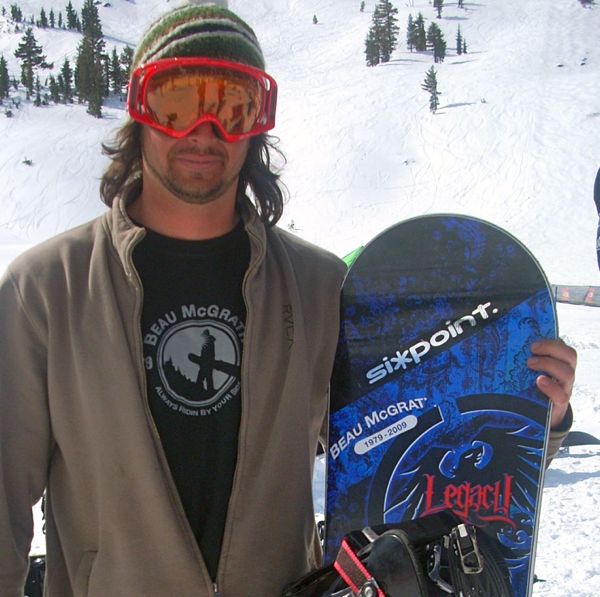
Adam Trout rides for his friend as reflected on his shirt and board. Photos/Jessie Marchesseau

Adam Trout rides for his friend as reflected on his shirt and board. Photos/Jessie Marchesseau

“They know that every event is a new learning experience for the next contest. So that’s what I learn, is to be humble and appreciate the fact that we’re all out here to have a good time and push each other and progress the sport,” Lucas said. “It’s really great to have people who’ve been doing it for years and years to motivate us youngsters that are coming in and trying to learn from them.”

The experienced riders are equally as pleased with the company of the younger competitors, especially the skill and charisma they bring to the competitions and to the sport in general.

“The talent’s increased immensely,” DeVargas said of today’s up-and-coming riders. “It’s nice to see when you come out here that everyone’s stomping their landings. You have to really be on your game. And to see the talent that’s coming out now inspires me to go bigger and faster and better.”

Daiek agrees that the caliber of riding has increased tremendously over the last 15 years, as has the number of competitors. When she started, she said there would be four or five women entering any given competition. This weekend, there were more than 30.

“Before, you could milk some turns and now you really gotta go for it if you want something,” Daiek said. “You can’t just take Sally-alley anymore. You’re riding with the world’s best, so it’s awesome.”

One of those Kirkwood up-and-comers is Dave Trout. At 32, Trout has been snowboarding for more than 20 years, but he is relatively new to the freeride competition scene. This is his second year on the tour.

Lake Tahoe riders support each other.

Lake Tahoe riders support each other.

Trout, a New Jersey native, moved to Tahoe four years ago with his friend Beau McGrath. The pair talked about entering competitions together, but McGrath was killed in a plane crash in April 2009.

“We always talked about doing it, so I just wanted to show him that I could do it,” Trout said.

He joined the tour the following winter. Trout’s snowboard and T-shirt still bear the name of his fallen friend with the words “Always ridin by your side.”

Trout pulled off the best finish for the Kirkwood men at this year’s event, taking home ninth.

“You can’t stress out, it’s snowboarding,” he said of competing. “There’s nothing to ever be stressed out about. Just go and ride your snowboard and have fun.”

That philosophy seems to run true for all of the Kirkwood riders.

“This is what I live for,” Lucas said of the fun she is having riding on this year’s competition tour.

Lucas finished third at Crystal Mountain in February, her best finish to date, and plans to continue the tour for years to come.

DeVargas, who has been doing it for 15 years said competing has provided him the opportunity to snowboard new terrain and meet new, talented riders who inspire him to do bigger and better things.

“And that’s what life’s all about, right?” Daiek said. “Going bigger and better.”

Though this was the last stop on the 2011 The North Face Masters of Snowboarding tour, Daiek, DeVargas and Lucas are all looking forward to attending the King of the Hill competition in Alaska next month.