LTCC mapping out a way to offer community education

By Kathryn Reed

Lake Tahoe Community College hopes to return to its roots a bit this fall by offering community education.

While the state mandates the dollars it doles out to two-year institutions be largely spent on courses geared toward students who will transfer to four-year colleges and for remedial purposes, it hasn’t always been that way.

Tom Greene

Tom Greene

When LTCC opened in 1975 it had a true community education component. This was in large part funded by a 5-cent assessment place on properties statewide. A local 72-cent property tax was in place to fund LTCC.

At that time community colleges also set their own fees.

When voters passed Proposition 13 in 1978 it changed how property taxes to this day are collected in California as well as the funding structure for education and other entities.

One reason LTCC is reintroducing community education is because of how the state reimburses the school for classes. In recent years more elective type courses are not being reimbursed. Many of these, like physical education, are popular in South Lake Tahoe. But the college is losing money without the state reimbursement.

Tom Greene, vice president of Academic Affairs and Student Services, spoke to the LTCC board March 22 about the need to hire a part-time community education coordinator.

After the meeting he told Lake Tahoe News he expects in the next month or so to have more structure to the program. Bringing back community education was a component of the February strategic planning session.

“It will give us a great deal of flexibility,” Greene told the board. “It will be an alternative revenue stream and it meets the unmet needs of the community.”

Although the program per state law is not supposed to make money, instead break even, it’s possible to incorporate into the fee structure the wear and tear of the facility and utility costs. This is where the college may reap a savings of sorts.

“I imagine if it’s not self-supporting, it will not be long lived,” Greene said.

Specific courses that might be offered are far from being finalized. But there was discussion about bringing back Kids College, offering culinary classes, having a mini version of the Spanish institute, or weekend seminars.

Part of the flexibility Greene spoke of was timing of classes – this could be for a day, hours or a weekend. Plus, the requirements for instructors are not the same as regular LTCC classes.

Cynthea Preston, dean of Instruction, said, “We have a lot of vocational classes that would be better in community education.”


Upper Truckee Marsh to temporarily ban dogs

By Kathryn Reed

“No dogs allowed” signs will soon be erected at the entrances of the Upper Truckee Marsh.

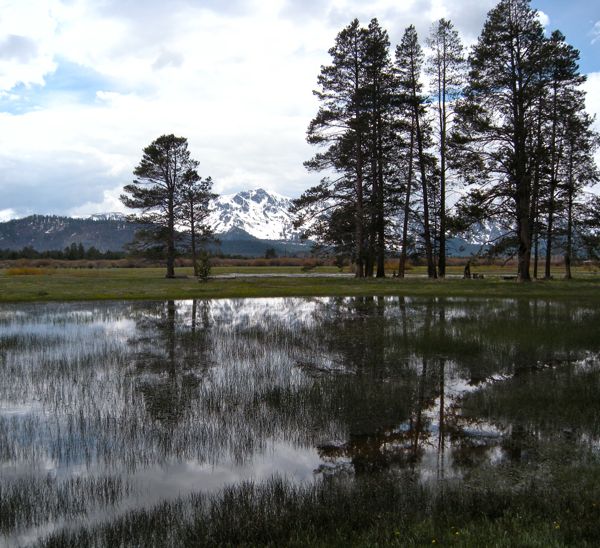
With 10 years of data recorded since the California Tahoe Conservancy bought the South Shore property for $10 million, the conclusion is wildlife and their habitat are not being protected.

This is because dogs are running off-leash. Only about 70 percent of people walking in the area leash their dogs, according to Dana Dapolito, CTC associate environmental planner.

The Upper Truckee Marsh will be dog-free for three months starting May 1. Photo/LTN May 2010

Upper Truckee Marsh will be dog-free for three months starting May 1. Photo/LTN May 2010

Because this site was acquired to enhance habitat, degrading it does not meet the standards for which it was purchased.

The closure of the 311-acre marsh/meadow to dogs will be from May 1 to July 31. This map details the area. People will still be able to access the area.

“This is not routine. It’s a reflection of the extraordinary value of this habitat,” CTC Deputy Director Ray Lacey told Lake Tahoe News. “We saw birds chased downed and eaten. It’s a little dangerous when you are in the business of resource protection and you let it go too far.”

The decision to ban dogs was first reported by Lake Tahoe News in July 2010 after the board made the decision.

Letters will be mailed next week to residents bordering the marsh in South Lake Tahoe to let them know about the closure and the reasoning behind it. CTC staff knows the three-month dog ban will not be popular. But they also said it may not be permanent.

Dapolito said, “If after the closure we see a significant increase in the leashes, we could bring to the board a recommendation during breeding season to allow dogs on leash.”

The time period of the ban is because this is when the birds are breeding. Dogs roaming free — which is never legally allowed — are not only attacking birds, but are also disturbing nesting areas. On top of that, some of the migratory birds going from one end of the earth to the other may not make it to their final destination if their energies are used up in Tahoe flying away from canines, CTC officials said.

This is not just any marsh. It is home to animals and plants not found elsewhere in Tahoe.

“It is the singular and most unique habitat in the Lake Tahoe Basin. That is why we singled this out of our 5,000 other properties,” Lacey explained.

The willow flycatcher – a songbird — was put on the federal endangered species list in 1997.

“Habitat destruction and degradation plus overgrazing by livestock are the major causes of population decline,” according to the Audubon Society.

This area of Tahoe was once grazed. It is a meadow once the water leaves via Trout Creek into Lake Tahoe.

The yellow warbler and yellow-headed blackbird are on the state list of endangered species.

Asked what would happen if dogs were left to do as they please, CTC wildlife biologist Adam Lewandowski said, “Some species would adjust, but this is unique habitat. (Others) are rare or threatened because they are not adaptive and have specific habitat area. So this is one of the only areas where they can survive.”

Although the Conservancy is more worried about protecting the animals and their habitat, two plants in this area are also of concern. This acreage has the largest growth of Tahoe yellow cress and is home to the rare American mannagrass.

The Conservancy has enlisted the help of El Dorado County Animal Control and Sheriff’s Office to police the area. They will be enforcing South Lake Tahoe city ordinance 18A-11J.

The first offense will be a warning and removal of the animal from the property. The second and subsequent offenses will involve money, though the CTC staff didn’t know how much.

An alternative for people wanting to walk their dogs in a natural environment during the ban is across the meadow at Cove East – another CTC property.


High water creates additional ‘tributary’ into Lake Tahoe

By Kathryn Reed

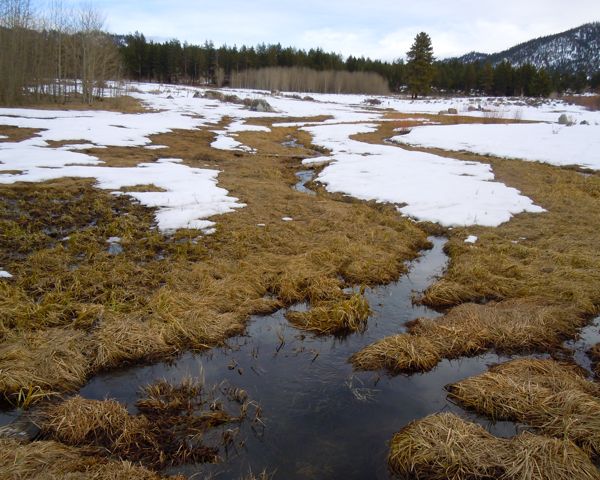
Water races from what appears to be another tributary of Lake Tahoe.

This wouldn’t be unusual right now based on the amount of snow, rain on snow and snowmelt the Lake Tahoe Basin continues experience. But this area in South Lake Tahoe isn’t a normal outflow.

A barrier beach about 45 feet by 45 feet and nearly 3 feet high was breached last week, sending a torrent of water into Lake Tahoe. Because this is all coarse sand, gobs of fine sediment are not likely to have entered the lake.

South Tahoe stormwater coordinator Robert Erlich talks about the Pope Marsh breach. Photos/Kathryn Reed

South Tahoe stormwater coordinator Robert Erlich talks about the Pope Marsh breach. Photos/Kathryn Reed

Still, on March 23 a small light brown patch could be seen not far from shore. Robert Erlich, stormwater coordinator for South Lake Tahoe, said the discoloring is a result of the sand being pushed into the lake.

Pope Marsh, which is owned by the U.S. Forest Service, sits between Pope Beach and the Tahoe Keys on the South Shore. From the private gated Lighthouse Shores it would be hard to tell this flow is not normal. But it is normal and natural in high water years.

“This was a pretty big one this year,” Greg Trischler, water supervisor for the Tahoe Keys Water Department, said of the breach.

A wall of sand about 3-feet high in some sections forms a nearly 50-foot-wide exit route for the water.

Because this area is one of the biggest waterfowl nesting habitats on the South Shore, the breach is a good thing, according to the Forest Service.

“It will improve the nesting habitat for waterfowl,” explained Sarah Muskopf, USFS aquatic biologist.

She said more plants will grow there, which in turn will hold more sediment in the marsh, meaning less will end up in the lake.

For South Lake Tahoe, this is giving officials concerned with urban runoff a chance to gauge where the water is coming from.

On March 19 when Erlich saw the breach he called in a local consultant the city uses to monitor turbidity – the official word for cloudy water. Rath Townsend recorded the turbidity at the marsh outlet at 4.72 ntu. NTU is nephelometric turbidity units.

At the Venice/Pope marsh inlet before the confluence it was 8.16 ntu and 9.64 ntu after the confluence in the Venice/Pope marsh.

This compares to 62.3 ntu at the Y along Lake Tahoe Boulevard, across from Raley’s.

What is ideal is for the numbers to decrease as they hit stormwater basins. The lowest turbidity level should be as the water enters Lake Tahoe.

This in large part is what the total maximum daily load is all about – cutting back how much gunk reaches the lake.

Monitoring will go on throughout the spring, during different conditions, to see which stormwater control measures that are in place are working and what might need improving. The goal is no brown stuff would reach the lake.

“We’re getting to know a little bit about our watershed,” Erlich said. “We have an interest in trying to find out if the urban runoff is coming into the Pope Marsh. We want to look at the connectivity flows into Pope Marsh.”

He said two-thirds of the bad stuff reaching the lake is from urban runoff.

Erlich added that this section of South Lake Tahoe accounts for nearly one-quarter of the city’s drainage issues. Water is running from Lake Tahoe Boulevard from about South Tahoe High to the Y. Water descends from Gardner Mountain.

Some of it ends up in the private Tallac Lagoon near 15th Street and Venice Drive. That lagoon acts as a filtration system, but also has an overflow system. Eventually water from the lagoon winds up in Pope Marsh.

Because some of that water is coming off South Tahoe streets – and carrying sediment – the city is charged with monitoring it even though it may reach the lake via Forest Service land.

Another concern of the city’s and the Tahoe Keys Water District is the rising level of the lagoon can threaten to flood houses in the area.

“We usually monitor the height of the water in Tallac (Lagoon),” Trischler said. Manually breaking the beach barrier was an option to get water in the lagoon to recede.

He said the Dillingham Corp. built the lagoon and dam by the bridge on Venice Drive when the Keys was developed in the 1960s.

“They also planted the tule grass and the trees in Pope Marsh. It was supposed to pull some of the nitrogen and phosphorus out. It was designed to filter itself out so it would be 99.9 percent pure,” Trischler said.

Dillingham also installed the concrete weir at Pope Marsh near Lighthouse shores.

“If this wasn’t here, erosion could move back into Pope Marsh,” Erlich said of that weir.

That barrier beach will form again. It does each year. The waves from the lake bring in sand and it naturally piles up. But it will take another high water year like this one for that temporary tributary into Lake Tahoe to be created.

ngg_shortcode_0_placeholder (Click on photos to enlarge.)


Pro athletes express climate change concerns to students

By Stephen Ward

RENO — Carbon emissions and global warming are not concepts easily conveyed to teenagers. Telling them what it might mean to their ability to ski in Tahoe in the future made it real.

“It wasn’t a boring way of learning,” student Tyler Groves said.

Alliance for Climate Education takes it show to Reno and Truckee. Photo/Provided

Alliance for Climate Education takes it show to Reno and Truckee. Photo/Provided

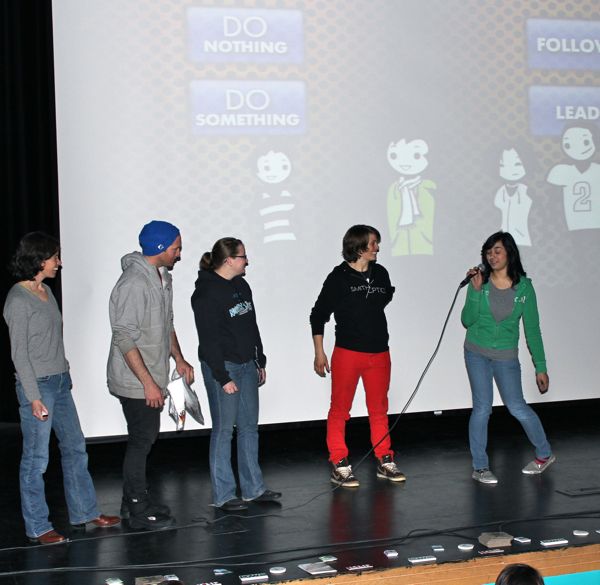
The nonprofit Alliance for Climate Education is on a road trip in the Reno and Truckee era; bringing extreme athletes to high schools to give testimonials blended with fast-paced cartoons to get the message out.

That’s what ACE’s presentation consisted of Tuesday morning at North Valley High School in Reno. The group recruited acclaimed snowboarders Iris Lazzareschi and Moss Halladay to speak with students about the ways climate change has affected their sport.

“It’s something we got to take care of,” Halladay said to the crowd of about 400 fervent students.

Lazzareschi was quick to add her voice, explaining how she and Halladay had to cancel a trip to Alaska this year because of a lack of snowfall.

“We can’t shoot when there’s no snow,” Lazzareschi said of needing to interrupt the film schedule.

ACE spokeswoman Rebecca Anderson did most of the talking; telling students they need to reduce their carbon footprint and staying informed about the environment.

Anderson’s roughly 30-minute presentation ran consecutively with a fast-paced animation meant to illustrate all her main points. Trees reducing greenhouse gases were shown eating away at the gases as if they were malnourished animals.

The video also offered an array of statistics like the average young person needs 21 football fields worth of waste to accommodate for their consumption of energy.

“You don’t have to live large to live well,” Anderson said.

A cartoon depicting a teenager running quickly across an endless stretch of connected football fields brought the students into an uproar.

“That’s tight!” a student in the front of the auditorium shouted.

Shortly before ending the presentation, the discussion’s mood became somber. Halladay, who is from Tahoe City, explained how many of his friends cannot find work in the Tahoe area because of low snowfall, which ultimately creates a vicious cycle of unemployment and turmoil for the region.

“It doesn’t care, like, what you think about it,” Halladay said. “It affects you.”

When shown an idyllic video where world carbon emissions are restrained and clean energy is the standard, students broke into commotion and raised their hands in unison when asked whether they would like to make that vision a reality.

“I think (the talk) was informative,” senior Jaffar Richardson said.

As the event came to a close, many students rushed the stage to snag autographs before heading back to class.

In the end, Anderson said her motive is more than just scaring kids about the future environmental outlook.

“As the next generation, they have the opportunity to change (the situation),” Anderson said. “It’s not going to be easy, but it needs to happen. After all, they’re going to be the ones most affected by it.”

More information is on the ACE website.

Other dates:

• March 24 9:30am: Nine-time Big Mountain Snowboarder of the Year and POW Founder Jeremy Jones visits his hometown of Truckee at Truckee High School

• March 24 10am: Pro snowboarder Ralph Backstrom at McQueen High School in Reno

• March 24 11am: Pro snowboarder Nick Visconti at Truckee High School

• March 28 12:05pm: Visconti at Damonte Ranch High School in Reno.


Nevada lawmakers seek to sever ties with TRPA

By Jeff Delong, Reno Gazette-Journal

Characterizing the Tahoe Regional Planning Agency as a heavy-handed bureaucracy treading on property rights and overly influenced by California, Nevada lawmakers are seeking to pull the state from the organization.

tahoeLegislators from Southern Nevada, Washoe County and Douglas County are backing legislation to withdraw Nevada from the Tahoe Regional Planning Compact, ratified by Congress in 1969 as a needed step to protect an endangered Lake Tahoe.

Supporters insist a pullout is needed to allow long-stifled property improvements on Tahoe’s Nevada side. Detractors say the bill stands to endanger a carefully engineered approach to regulating land use while protecting the environment.

SB 271 — the seventh attempt to distance Nevada from TRPA — is needed to rescue Tahoe’s Nevada side from a stifling regulatory environment largely controlled by California interests, said the bill’s primary sponsor, Sen. John Lee, D-North Las Vegas.

“The pendulum has swung so far it won’t swing back,” Lee said. “We no longer want to be told by California what we can and cannot do. The thrust of this is Nevada just wants to control Nevada.”

The Legislation would create a new Nevada-based planning body, with members appointed by the governor, lieutenant governor, state forester, administrator of state lands, and Washoe, Douglas and Carson City counties.

Another member would represent the public.

The panel, Lee said, would likely work in coordination with a similar California-appointed commission but would give Nevada greater control over its own land use.

In its current structure, Lee said, TRPA is “stopping growth, stopping business, stopping everything.”

Read the whole story


Michael David Cocores — 1966-2011

Michael David Cocores passed away suddenly at his home in Gardnerville, Nev., on March 17, 2011.

He was 45.

Mike was born Jan. 24, 1966. He was raised in South Lake Tahoe. He attended Tahoe Valley Elementary, South Tahoe Middle School, and graduated from South Tahoe High in 1984. Mike took all honors classes, but was best known for his music ability. He was awarded Best Musician his freshman, sophomore, junior and senior years.

Mike Cocores

Mike Cocores

Mike also loved basketball, and played until his junior year when a knee problem forced him to quit.

Mike was instrumental in getting his childhood friend his first guitar and taught him how to play bass. That person is Chuck Garric — the current bass player for Alice Cooper.

Upon graduating high school Mike spent a year at the Musicians Institute of Technology, where he met and tutored a student who later became Michael Jackson’s bass player. During his time in Los Angeles, his rock group was named the No. 1 “underground rock band.”

After a few years, Mike returned to South Lake Tahoe and went to work with his Dad, Pete, and became the third generation to join the business. He worked for more than 20 years at Ted’s Electric.

He continued to play his music with many bands in the Lake Tahoe Basin, and was written up several times regarding his outstanding ability. Mike’s love of music never left him, but did take backstage with the birth of his son, Taylor Michael Cocores.

Mike eventually moved to Gardnerville, and commuted to the lake each day for work. He spent all his leisure time watching Taylor learn to motocross, and taking him to various competitions in Nevada. Taylor loves his dirt bike, but also took after his Dad’s love of music and plays guitar. Mike was so proud of Taylor’s accomplishments and many times the phone would ring and all you could hear was the sound of dirt bikes and Mike yelling into the phone reporting how Taylor was doing in the race.

Mike is survived by his 14-year-old son Taylor Michael Cocores of Gardnerville; parents Pete and Peggy Cocores of South Lake Tahoe; brother John Cocores (Cheryl) and his sons Christopher and Ryan of South Lake Tahoe; sister Heather Cocores-Thomas and her children Sierra, Aaron, and Rachel Thomas of South Lake Tahoe; and his faithful dogs Coda and Stitches.

The family plans a celebration of life in the next couple weeks and will announce the date as soon as possible. Any questions may be directed to Mike’s sister Heather at (505) 944.5729, or Mike’s brother John at (530) 544.2918.

We will always miss you Mike.

Your Loving Family.


Prosperity Center designed to create economic paradise

By Kathryn Reed

“Oh, think twice. It’s just another day for you and me in paradise. Just think about it.”

prosperity logoIs the Lake Tahoe Basin really paradise?

• Latest unemployment figure for South Lake Tahoe is 17.4 percent

• 7,000 jobs in gaming have been lost since 1990

• The basin lost 15 percent of its population from 2000 to 2008

• 80 percent of the basin’s Latino population lives at the poverty level

• Hotel room occupancy was at 23 percent in 2008-09

• 17.7 percent of the residents in South Lake Tahoe lived below the poverty line in 2008

• In 12 years the South Shore K-12 enrollment declined 35 percent

• 26.4 percent of children under 18 live below the poverty line.

On the flip side, based on 2007 statistics, the Lake Tahoe Basin generated $4.7 billion in revenues.

Lake Tahoe’s built environment does not match its natural beauty. Infrastructure is decaying or non-existent. Jobs are dwindling. The middle class barely has a heartbeat.

To combat the issues identified above and to bring a sense of place to the basin, the Prosperity Center is scheduled to open May 1. Offices will be on the North and South shores, with the idea the space will be donated for the greater good.

The Lake Tahoe Basin Prosperity Plan has been in the works for a couple years, with the government bodies around the lake, chambers of commerce, education, health care providers, tourism interests and others forming the plan that is designed to be an economic blueprint for the entire basin, including Truckee.

Michael Ward, project manager for the LTBPP, has been working for free as facilitator. He’s been making presentations around the lake, with the latest before the South Tahoe Public Utility District board last week.

He showed a video, mostly in black and white, which was a bit chilling. As the song “Another Day in Paradise” played, images of despair throughout the basin were shown – boarded up businesses, for rent signs, people living in squalor, slides with sobering statistics.

Then the last image was in color – a panoramic view of Lake Tahoe. It was taken from a distance, as though to obscure the reality when one looks closer, beyond the lake and the trees.

“I think we can help broker opportunities,” Ward told Lake Tahoe News after the meeting. The goal is to have a homegrown economy based on what is working and not importing industry that doesn’t exist.

During the research phase it was discovered that two-thirds of the basin’s economy is from three areas – tourism and visitor services, environmental innovation, and health and wellness. Those sectors will be the focus of the Prosperity Center.

A reason to take a regional approach is grant dollars are more readily doled out to larger groups working on a common goal than to individual entities doing so. Plus, this should mean entities in the basin would not be competing against each other for the same dollars.

Ironically, the South Tahoe PUD knows all about a regional approach when it comes to federal dollars. The district joined forces with other water districts in the basin a few years ago, which has paid dividends.

Other reasons for the regional approach are the problems are similar as are the interests.

To date the five counties and one city that make up the Lake Tahoe Basin have put in a total of $125,000 into the project. This money is for matching funds for Economic Development Administration grants, some of which have already been secured.

The Prosperity Center, though expected to open in six weeks, cannot do so until its nonprofit status is secure. In the interim, the Parasol Foundation in Incline Village is acting as conduit for grants in the center’s name.

A board of directors, though not named yet, is likely to be large and made up of representatives from many of the entities that worked on the plan. It could be comprised of a couple dozen people.

Ward said the idea to have it be a comprehensive board.

From there, advisory committees will be formed to get down to the nitty gritty.

“We have five or six initiatives we think will be game changers,” Ward said.

Bringing broadband to the basin is one goal. The idea is current residents and businesses will benefit from it, but it will also attract others to the area. Creating a regional sports commission is another immediate goal.

Ward did not want to elaborate too much until the center is a reality so as not to get into a legal quagmire.

More information about the Lake Tahoe Basin Prosperity Plan is on the group’s website.


Washoe Indians knew how to pick idyllic locations

By Kathryn Reed

STATELINE — History and natural beauty come together in a magical way along the easy Lam Watah trail.

“This beautiful piece of land has many fascinating connections to the past. For centuries, the Washoe used it as a summer encampment. It has been logged, and grazed by cattle,” reads the interpretive sign. “Pony Express riders came through here, and it was home of Tahoe’s first airport. Most recently, two full-scale casinos were almost built here.”

Rabe Meadow in Stateline is worth visiting year-round. Photos/Kathryn Reed

Rabe Meadow in Stateline is worth visiting year-round. Photos/Kathryn Reed

Oddly, the trail today would not resemble what it looked like when I was last on it the first week of February. Then it was muddy. With the recent white stuff, snowshoes or cross country skis are going to work better.

Improvements to the area in the last few years by the U.S. Forest Service have made it an even more pleasurable trek. Mini walkways have been installed over the low areas. Signs explain a bit about what is in this meadow.

The Forest Service has owned this plot of land on the South Shore since the 1980s.

More work is going on now to make facilities compliant with the American with Disabilities Act.

Rabe Meadow is a place to visit in every season. Like so much of Lake Tahoe, it has something special to share every month. The landscape seems to change as snow arrives and melts; the aspens regain their leaves and turn color; birds migrate – singing their arrival; other critters come and go.

Burke Creek meanders along the western edge, bringing lushness to some areas.

The main trail is completely flat, creating a meandering jaunt that ends at Nevada Beach, with a short jog through the campground.

The splendor of the beach competes against the meadow for which is most spectacular.

This particular Saturday a few others are strolling on the beach. It’s just cool enough to want to keep moving and not pause long at the snowcapped mountains ringing the lake.

Seldom do I venture here in the summer. Perhaps knowing the tranquility of the other seasons has me jaded about wanting to be among the masses. Just once, though, I want to get a campsite for Fourth of July. Rumor has it this beach is the best for watching the fireworks shot off from the barge sitting in Lake Tahoe.

This is one of those outings where it’s about the walk, the beauty, the solitude, as well as the company of the one you’re with. It’s not about endurance or speed or working up a sweat.

Getting there:

From South Lake Tahoe, head east on Highway 50. Go past the casinos. Turn left on Kahle Drive. The parking area is immediately on the right.

ngg_shortcode_1_placeholder (Click on photos to enlarge.)


Woman denied access to affordable senior apartment

By Kathryn Reed

Carol Stiles wants out of her hotel room and into Kelly Ridge.

American Baptist Homes of the West, which runs the affordable senior housing complex in South Lake Tahoe, isn’t letting her in even though she had a signed agreement.

Now both parties are in court.

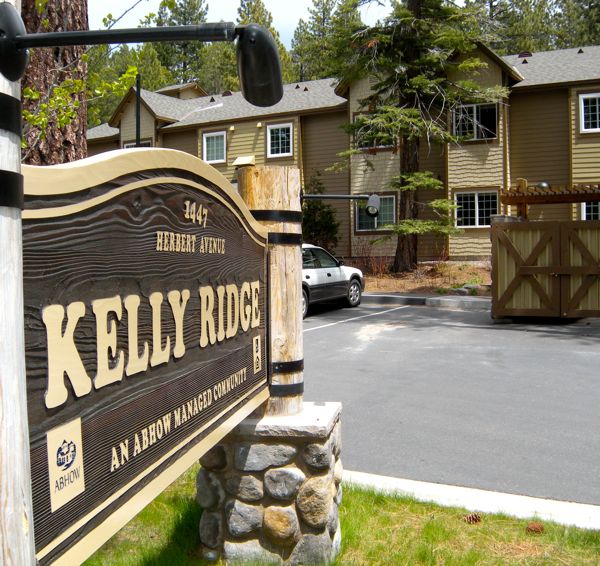
kelly ridgeEl Dorado County Superior Court Judge Steve Bailey on Wednesday granted a restraining order that in effect says the vacant unit – not the one she was to originally live in — must not be rented to someone else until the next court hearing on April 15.

With occupancy of the 30 one-bedroom and two two-bedroom apartments usually at capacity, getting into Kelly Ridge is difficult under normal circumstances.

Stiles left Jackson, Miss., in mid-January after she found out a unit was available. She had been on a waiting list since summer 2009.

During the drive to California with a family member, Stiles was notified by ABHOW she needed to provide more paperwork. She provided it. And kept providing what was requested.

“Despite the overwhelming evidence and their prior approval, on February 1, 2011, Respondent denied Ms. Stiles application on the grounds that her ‘Income exceeds the income limits established by the program.’ Ms. Stiles was given a handwritten sheet that was purportedly the basis for Respondent’s new calculations,” court documents read. “This sheet contained numerous errors including consideration as income a category which Respondent called ‘earnings/income.’ They derived this title from a category on Ms. Stiles’ financial statement which included both appreciation, and dividends. However, the denial letter indicated that Ms. Stiles could appeal, and she timely filed an appeal on February 2, 2011. It appeared to Ms. Stiles that Respondent made several errors in calculating her income level. Had they done the calculations correctly and as the law requires, she would have been eligible. Since February 2, 2011, Ms. Stiles has been forced to live in hotels pending resolution of these issues.”

She is still in that hotel for at least another month.

Ancel Romero, senior vice president for ABHOW’s affordable housing department, did not return a call.

Jacqueline Mittelstadt, who is representing Stiles, said, “They have not given the legal authority to justify why she is not qualified.”

Mittelstadt said ABHOW approved all of the paperwork, which entails disclosure of all financial records to ensure all residents qualify.

“The reason she was denied is the amount she took out of her retirement account was over the limit,” Mittelstadt said. “But the amount she took out shouldn’t be looked at because regulations don’t consider lump sum withdrawals.”

According to Mittelstadt, ABHOW wants to regulate how residents withdraw their money. This is after the applicant’s financial holdings have been scrutinized and verified to be accurate.

At the April 15 court hearing the judge is likely to determine if a restraining order should be in place until the financial issue is resolved and in doing so would determine if Stiles is likely to prevail.

The more than $9 million Kelly Ridge senior complex opened in August 2009. The bulk of the funding came from:

• California Housing Finance Agency — $4.73 million in tax-exempt bonds.

• South Lake Tahoe through the California HOME Program — $3.4 million loan.

• South Tahoe Redevelopment Agency — $906,000 loan.


S. Tahoe students make case intervention works for them

By Kathryn Reed

Positive adult intervention can put young people on a course of success. Four students who are part of the A Team – a group of South Tahoe and Mt. Tallac high school students — delivered that message.

“Many of us grow up too fast,” Alexandra Salinas told Soroptimist International Tahoe Sierra at the group’s March 17 meeting. “It’s hard because we’re asked to take on a lot of responsibility.”

Alexandra Salinas on March 17 tells SIST about the A Team. Photo/Kathryn Reed

Alexandra Salinas on March 17 tells SITS about the A Team. Photo/Kathryn Reed

The A Team has created to form a bond between students who otherwise may have dissed one another, who could be in rival gangs, who may never have spoken to each other. It sprouted from the gang issues that were going on in the South Shore a few years ago.

It gives them a family in the sense of being there emotionally for one another that many of them have never experienced. It has given them hope for a future filled with optimism.

Salinas presented the PowerPoint that had been prepared by fellow student Alberto Caballero. Joining them were students Luis Enrique Perez and Ricky Molina, and adult coordinators Amy Jackson and Jean Beemer.

The A Team got its name from the three original collaborators who started it – Jackson, Aaron Barnett and Adrian Escobedo. Their names start with A.

About 14 students are part of the group.

“Not one girl is pregnant, not one girlfriend is pregnant, not one is in jail,” Beemer said. “Every one of them is a productive member of Tahoe. Each is a strong, loving kid.”

Salinas has earned her dental certificate at the high school and now wants to become a dentist. She credits the A Team for giving her that drive and bringing out her ambition.

Molina said being introduced to sports through the A Team channeled his energy into something positive. He’s hoping to go to college.

Perez used to show up for school about 1pm. The A Team helped him realize an education is important. He’s not sure what he wants to do in the future. Last year is participated in Generation Green with the U.S. Forest Service and this week he interviewed with UPS.

Caballero is considering joining a branch of the military.

Beemer admitted it’s hard for some young adults to leave Lake Tahoe because their families need the income they bring in from whatever job they have now.

One of the outcomes of the A Team is instead of students resolving issues through fights, they are seeking resolution through trusted adults. They are being proactive instead of reactive.

If funding weren’t an issue, about 100 students could be in this program.

“With losing so much staff, I’m not sure how we continue. It’s one of those things we might lose,” Jackson said in reference to the A Team.

The group she and Beemer are working with now is the second generation of A Teamers, with the third generation having meetings once a month and wanting more time together.

But the budget for Lake Tahoe Unified School District doesn’t have the extras for programs like this – for the adults, for a room to meet, for a little bit of food to entice participation.

“I’m so glad for this program, but so sad it’s about money and not people,” Wendy David said. She is a member of the Soroptimist and on the LTUSD board.

Jackson admits with this being a preventive program it’s hard to have concrete measurements in regards to it success. Though, the comments made Thursday by four students seemed to convince the women listening that the A Team is working.