Fire retardant use brings environmental worries

By Matt Weiser, Water Deeply

Chemical fire retardants are considered a vital wildland firefighting tool, helping to slow the spread of flames while ground crews move into position. But as their use increases, the harmful side effects of these chemicals are coming under increasing scrutiny.

The chemicals, usually dropped from low-flying aircraft, largely consist of ammonia compounds, which are known toxins to fish and other aquatic life. Studies have shown retardants can kill fish, alter soil chemistry, feed harmful algae blooms and even encourage the spread of invasive plants. Yet there is little regulation of their use, and no safer alternatives on the market.

In California, state firefighting crews have applied 15.3 million gallons of chemical fire retardants so far this year, according to data provided by CalFire, the state’s wildland firefighting agency. That’s a new record, and double the amount used just three years ago.

Read the whole story


Squaw Valley creating on-mountain dining experience to match its legendary terrain

Dining with a view is what the Terrace at the top of the Squaw’s tram is all about. Photo Copyright 2017 Carolyn E. Wright

By Kathryn Reed

OLYMPIC VALLEY – November skiing is always something to be thankful for in the Sierra because Mother Nature seems to be so fickle in the fall.

Out of the last five years, this is the most terrain Squaw Valley has had open this time of year. It’s obvious there has been a ton of natural snow coming down based on what is in the trees and the rocky chutes. Snowmaking guns are keeping the more popular routes open so they don’t get skied off in between storms, and until there is a solid base.

All the runs off Shirley Lake are open. Photo Copyright 2017 Carolyn E. Wright

Over the weekend it was a bit like spring skiing with the conditions being slick in the morning and softening up as the day progressed.

While the mountain isn’t open top-to-bottom just yet, there is a mix of terrain available to satisfy all ability levels. Eleven lifts give access to 39 trails and 16 groomed runs. Tracks could be seen where skiers went off-piste. A small terrain park is open, too.

Squaw Valley’s rugged terrain is complemented by picturesque views of Lake Tahoe. Photo Copyright 2017 Carolyn E. Wright

High Camp, at the top of the tram, is going through a $1.8 million renovation that is expected to be finished by Christmas week. The last time any of the facilities here were updated was in 1991 – and it was showing in wear and dated offerings.

The Marketplace is open. This is where people can get grab-and-go food items – some healthy, some not as much. Courtney, the pastry chef, makes sweets fresh on a daily basis. Organic items are available, as well as edibles for vegetarians and those with wheat allergies. Gloves and goggles – items people may have left in the car or condo – may be purchased there as well.

This area used to be a larger retail area.

The Marketplace at High Camp offers prepackaged food, espresso and some retail. Photo Copyright 2017 Carolyn E. Wright

One level below is a space that had been underutilized, with few people knowing there was retail there. On Saturday it was packed with people eating food they had bought upstairs or had brought from home. Traditional tables are mixed in with more relaxing sofas. There’s also a small alcove for little kids to play in.

Behind this area is the Terrace Buffet and Bar with its expansive views down to the village and out to Lake Tahoe. The multitude of windows beckons photo opportunities. The 180-degree seating – which is still in pieces – is the most scenic dining spot on the mountain.

Comfortable seating has been added as a place to chill or eat without being in a restaurant. Photo Copyright 2017 Carolyn E. Wright

Gone are the half booths. In their place will be round tables near the windows, with seating for four and two at rectangular tables. The old green carpet it gone. The flooring is now shades of brown.

The wood has been refinished to the point it looks new. A couple of the old brass railings have been made to look antique-ish.

Lance Crafts is in charge of the entire High Camp lodge. Photo Copyright 2017 Carolyn E. Wright

The bar is the focal point. With it dropping down, the bartenders and their bottles don’t impede the view. Lance Crafts, manager of High Camp, said the smoked old fashioned is something to experience.

The portable buffet stations will offer a variety of food choices – some hot, some cold.

Chef Andrew Gregory, who is in his second year at Squaw, oversees the various kitchens. He said the renovation of the entire High Camp operation is energizing him as well as his team.

Chef Andrew Gregory wants to do more than provide skiers and snowboarders with delicious food. Photo Copyright 2017 Carolyn E. Wright

“We are going to elevate the food and the service,” Gregory told Lake Tahoe News.

While burgers remain one of the most popular entrees, don’t expect only traditional ski resort grub. Gregory was raving about a pappardelle pasta dish as well as the Sierra cassoulet and the authentic po’ boy sandwich.

The granite bar at the Granite Bistro looks out onto the pool area. Photo Copyright 2017 Carolyn E. Wright

Nearby is the Granite Bistro, which replaces the poolside restaurant. The footprint is the same – as is the location – but the interior will make it look like it’s been built from scratch. This dining/drinking spot will be the last to come on board. It’s been gutted pretty much to its foundation and supporting beams.

The old wood bar has been replaced with granite. A stack of granite tabletops is one corner. This gray motif matches perfectly to what’s out the windows – Squaw’s rugged mountains and the Granite Chief Wilderness Area.

The food here will be served more family style, and the space allows for people to bring in their own food. The smoked pheasant soup is returning and is recommended. This is where the burgers are, as well a salmon, steak, charcuterie and cheese boards.

The Granite Bistro should be open by Christmas. Photo Copyright 2017 Carolyn E. Wright

Two chairlifts will be installed to bring ambiance and a unique place for people sit and eat.

However, cooking just for skiers or those sightseeing via the tram isn’t enough for everyone.

“The chef and I are pushing for nighttime dinners. It’s such a magical, unique place,” Crafts told Lake Tahoe News.

Having on-mountain evening dinners would elevate Squaw’s dining experiences to a level that is rare for Tahoe area ski resorts. Most close the doors when the lifts stop running. CEO Andy Wirth hinted their dream might be realized.


Running a ski resort without electricity

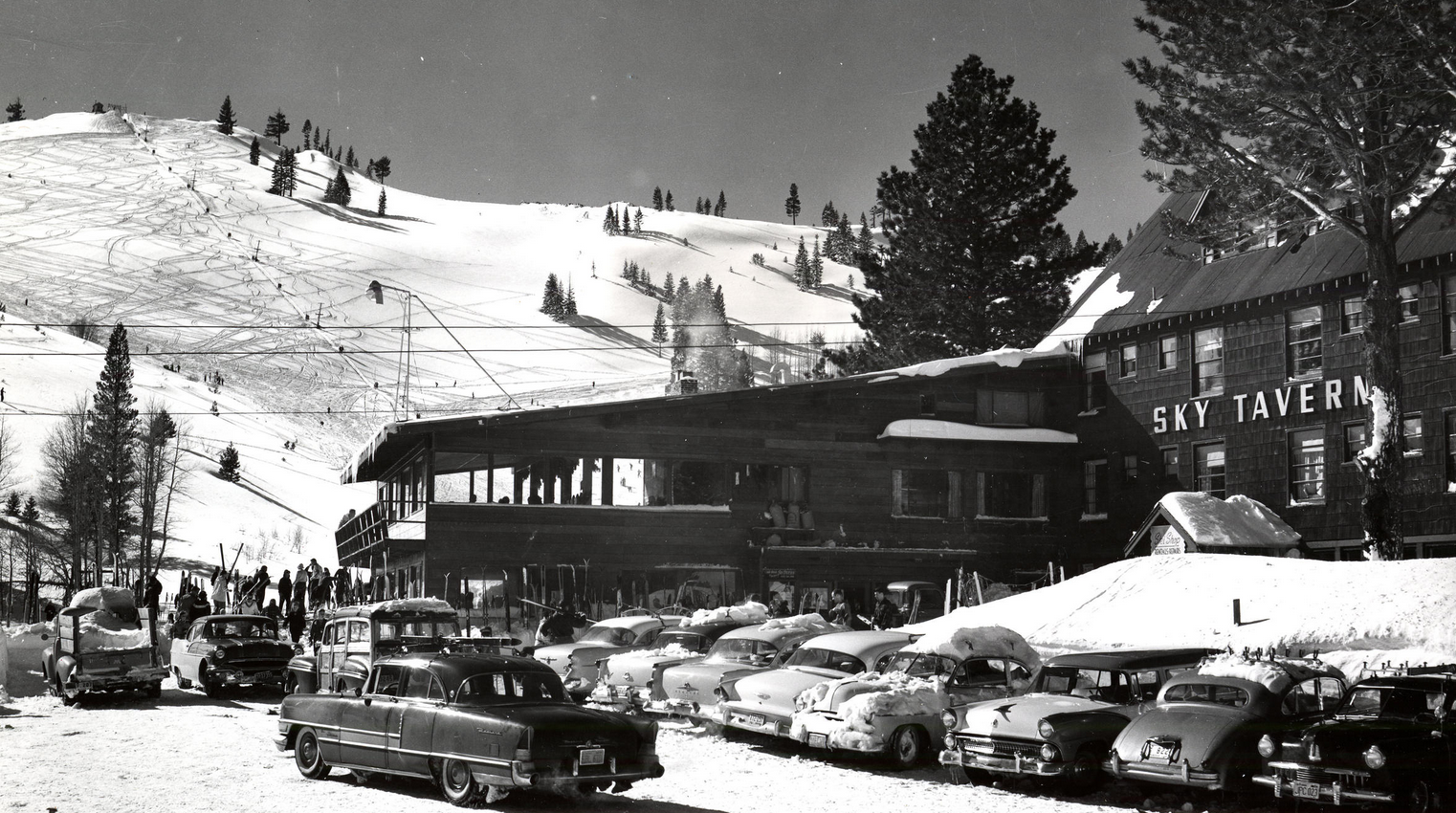
An early publicity photo of Sky Tavern distributed by the Reno Chamber of Commerce. Photo/Jimmie Smith/Special Collections Department, UNR Libraries

By Alicia Barber, KUNR
 
Today’s ski resorts generally run like clockwork, every day whisking thousands of skiers high up the mountain in electric-powered chair lifts and sending them down slopes that are flattened and smoothed every night by massive grooming machines.

It’s no small task. But for sheer human effort, today’s preparations are nothing compared to what resort operators had to go through 70 or 80 years ago when the industry was just getting started.

Keston Ramsey opened the Sky Tavern Ski Area, just off the Mt. Rose Highway that runs between Reno and Lake Tahoe, in December of 1945. At the time, the resort had a couple of rope tows and a T-bar lift, where you wrapped one leg around an upside down metal T attached to a moving cable and let it pull you up the slope.

Read the whole story


Christmas trees fresher, but fewer this year

By Debbie Arrington, Sacramento Bee

This year’s Christmas trees really appreciated last year’s wet winter.

Visitors to Northern California tree farms can see the difference. Their favorite firs look fresher, the leaves plumper, the branches fuller. What a difference water makes.

Five years of drought stunted many trees – and prevented farmers from planting more. That’s caused a shortage of bigger trees at farms in Apple Hill and other popular areas.

Read the whole story


Squaw-Alpine gondola could be transformative

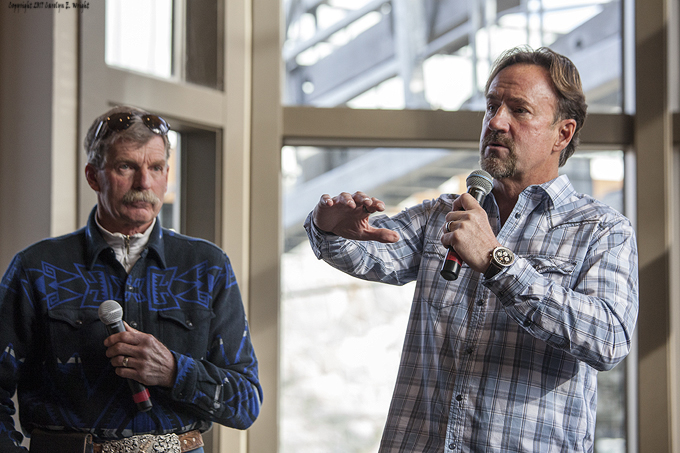
Troy Caldwell, left, listens to Squaw Valley CEO Andy Wirth talk about the proposed California Express gondola. Photo Copyright 2017 Carolyn E. Wright

By Kathryn Reed

OLYMPIC VALLEY – Eighty years after Wayne Paulson envisioned linking Squaw Valley and Alpine Meadows ski resorts, his dream may become a reality.

The founder of Squaw thought he could realize it in his lifetime. Not so. But those falling in his footsteps are now the closest to bringing this to fruition.

The U.S. Forest Service and Placer County are in the throes of the environmental review process. All of the scientists have done their field work. The draft environmental impact statement and draft environmental impact report are being written. They should be released for a 30-day comment period in the first quarter of 2018.

Various routes are being studied, though the exact number has not been released.

The earliest the gondola could be in the ground would be for the 2019-20 season. It will take about 10 months to build.

For years Troy Caldwell has been one of the hurdles that could never be jumped. Now he is on board. He owns the swath of land between the resorts where stanchions for the gondola would have to be placed. He also owns the land KT-22 is on.

Why the change of heart?

He told Lake Tahoe News the ownership changes in the resorts with both now being under the KSL umbrella gave him the confidence it would work in all respects.

“I make a rent check on the gondola going through,” Caldwell added.

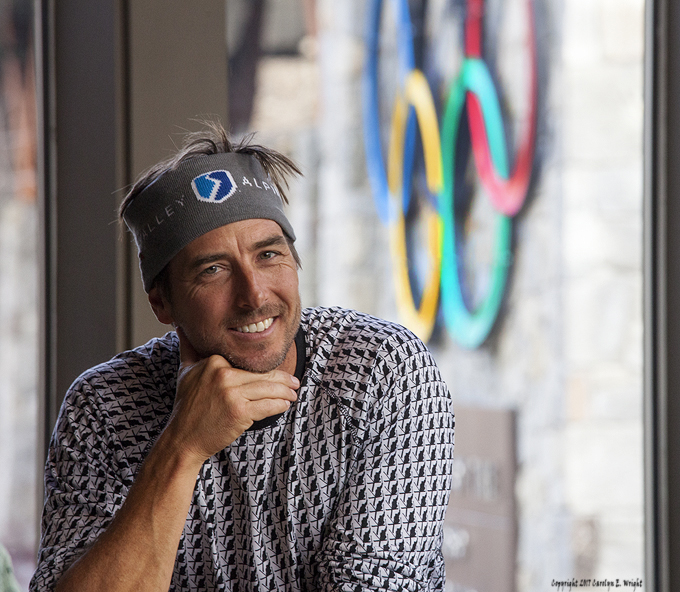
Olympian Jonny Moseley, an ambassador for Squaw Valley, on Nov. 25 talked about how the gondola will be a good thing for both resorts. Photo Copyright 2017 Carolyn E. Wright

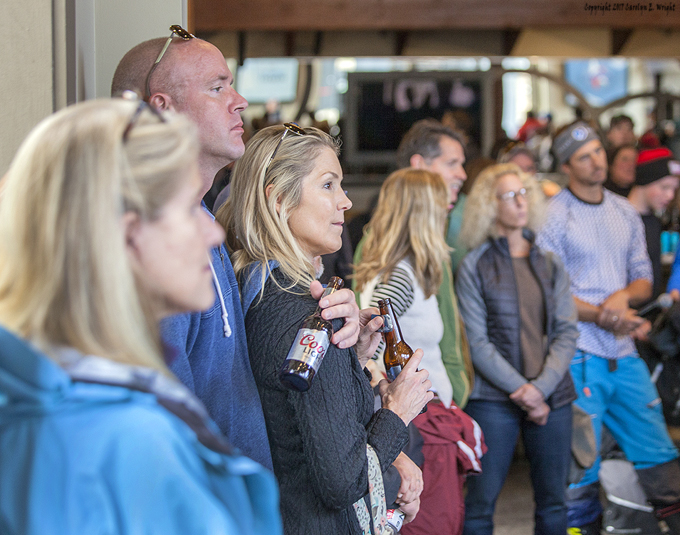
Caldwell, along with Squaw Valley Alpine Meadows CEO Andy Wirth, spoke Nov. 25 to a group of about 50 people at Squaw. Based on the questions most seemed to support the concept.

Some were concerned about bringing more people to both mountains. Increased skier visits is not the goal of the $25 million gondola.

“It’s to stay competitive,” Wirth said. This type of infrastructure is becoming the norm in other parts of North America.

The gondola would be similar to what has been done in Utah linking Park City to the Canyons area, as well as at Whistler-Blackcomb in British Columbia.

That is also why a peak-to-peak gondola is not being talked about. That would not solve congestion on the highway or get people to where they really want to go.

A significant number of skiers ride Squaw and Alpine in a single day. To do so requires driving or being bused between them. The gondola would make it so car keys are not part of the equation.

“About 20 percent on a Saturday ski both,” Wirth said, explaining that number is in large part ski team members/parents going back and forth. Getting them and others off the road would remove 18 tons of carbon a year, he said.

The gondola would take 1,400 riders per hour. This compares to a high-speed chairlift that maxes out at about 2,300 riders, and the funitel at Squaw that loads 4,000 people an hour.

“It’s probably one of the single most iconic lifts in California’s history,” Wirth said. That’s why the eight-seat gondola (maybe 10) is going to be called the California Express. It will take people from the base of one resort to the other in about 13 minutes.

Dozens of people get an update Nov. 25 on the Squaw-Alpine gondola proposal. Photo Copyright 2017 Carolyn E. Wright

One of the biggest concerns people have had since the gondola resurfaced as a viable entity is how it might impact Granite Chief Wilderness Area. Wilderness areas by federal law cannot have any mechanized contraptions (not even a bicycle) in them.

Wirth said everyone involved is cognizant of not wanting to impact the area, and are aware the Sierra Nevada yellow-legged frog has habitat in the region. The gondola cannot and will not be in the wilderness area.

This land is most often used by the public in the summer. That is one reason resort officials and Caldwell are essentially putting it in indelible ink that the gondola will only operate when the resorts are open for skiing – never in the summer.

Creating more skiable terrain is also not an incentive to build the gondola. However, depending on the route that is selected it may be possible to let people out mid-mountain to ski at one or both resorts. This slowing of a gondola would be similar to what Heavenly Mountain Resort has where people can get off at the mid-station to sightsee before going up to the actual mountain.

Another significant issue is wind. Monitors have been placed at varying locations to clock speeds. This will play into what eventually is decided as the preferred alternative.

Admittedly the base of Squaw is already congested. One of the options being talked about would remove Red Dog and put the new gondola there. Wirth said the Squaw terminus will be at or between Red Dog and Cushing Meadow. Wirth said to expect Red Dog to be replaced in the next two years.

At Alpine, the gondola is likely to go between Hot Wheels and Summit chairlifts.

An issue at Alpine is that there is a 22-foot incline to most of the lifts. The goal is to have the gondola on grade so it’s not cumbersome to get to.

Improvements beyond the gondola are slated for Alpine, too. This includes replacing Hot Wheels next summer, most likely with a six-speed lift with a possible angled station that would go to the top of Sherwood.

The EIR/EIS will give the public the opportunity to weigh-in on the gondola – positively or negatively, or just raise questions. It will ultimately be up to the feds and county to approve the project.


Brown: Reduce public employees’ pension benefits

By Adam Ashton, Sacramento Bee

Gov. Jerry Brown got most of what he wanted when he carried a proposal to shore up the state’s underfunded public employee pension plans by trimming benefits for new workers.

Five years later, he’s in court making an expansive case that government agencies should be able to adjust pension benefits for current workers, too.

A new brief his office filed in a union-backed challenge to Brown’s 2012 pension reform law argues that faith in government hinges in part on responsible management of retirement plans for public workers.

“At stake was the public’s trust in the government’s prudent use of limited taxpayer funds,” the brief reads, referring to the period when he advocated for pension changes during the recession.

Read the whole story


Nevada is a hot springs hotbed

By Benjamin Spillman, Reno Gazette-Journal

I’ve stayed in the luxurious Jacuzzi Suite on the 25th floor of Reno’s Atlantis hotel where from the hot tub you can gaze at the Sierra Nevada through floor-to-ceiling windows.

I’ve also soaked in hot spring-fed stock tanks in remote Nevada valleys where instead of expecting room service people can expect to skim leaves and algae from the surface of the water before sliding in.

While I can’t say which Nevada experience is better for everyone, I can say I’ve only stayed at Atlantis once and I keep heading out to find more stock tanks.

It’s probably because it’s tough to think of an experience more closely connected with the land than soaking alone or with a friend in a remote spring, despite the rustic, um, charms that distinguish a real Nevada hot spring from a fancy hotel room hot tub.

Read the whole story


Center focuses on attaining abilities post-injury

A variety of athletic activities are available at the National Ability Center. Photo/Kathryn Reed

By Kathryn Reed

PARK CITY, Utah – The name of a business can be incredibly powerful; the words that are chosen and the ones left behind.

Such is the case with the National Ability Center in Utah. Disability is hardly in the staff’s vocabulary. They work with people who have orthopedic, spinal cord, neuromuscular, visual and hearing impairments, and cognitive and developmental challenges. It’s all about finding ways to cope under new circumstances.

Founded in 1985, the mission of NAC “is to inspire individual achievement and create a global impact for people of all abilities.”

Brenna Huckaby credits NAC for helping her make the 2018 U.S. Paralympic team. Photo/Kathryn Reed

“I wouldn’t be where I am without NAC. I started there,” Brenna Huckaby told Lake Tahoe News. “They taught me how to snowboard.”

This world champion snowboarder hopes to compete in the 2018 Paralympics in South Korea.

She was a gymnast before osteosarcoma required her right leg be amputated. Huckaby, who hails from Louisiana, had not snowboarded until being invited to NAC for an event for cancer survivors who had lost a limb.

At the Sochi Games in 2014, NAC had 18 athletes representing nine countries.

The Utah nonprofit has 26 acres in Park City. They also have access to Park City Ski Resort. Earlier this year NAC and the ski resort signed a 50-year lease that will allow the center to build a 10,000-square-foot facility and get out of the double-wide trailer they’ve been in for years.

“We’re fortunate to host a facility and team that provides such outstanding services to kids, veterans and families with different abilities and we’re proud to partner with the NAC to make these life changing programs available. This land lease marks the start of an exciting project that will further elevate the offerings to Park City Mountain guests and supports individuals and families not only locally but also from across the country,” Jessica Miller with Park City Ski Resort, told Lake Tahoe News.

Elite athletes are a tiny component of NAC’s clientele.

In the last five years NAC has seen a 96 percent growth rate. On a tour of the facility, CEO Gail Barille explained this is in part because people are living longer with more challenging abilities, the on-going military conflicts, and the increase in awareness of the ability movement.

Equestrian therapy can help build self-esteem and combat PTSD. Photo/Kathryn Reed

The largest population served are active duty, injured military and veterans, as well as children and adults with varying degrees of autism.

Ages 4 to 99 have been helped by NAC, with the center now seeing about 5,500 people a year.

Program fees cover about one third of the expenses, with donations providing the remainder.

Staff starts with working on individual goals. It might be that the person wants to achieve independence. Or maybe they want to be able to ski with a child or grandchild.

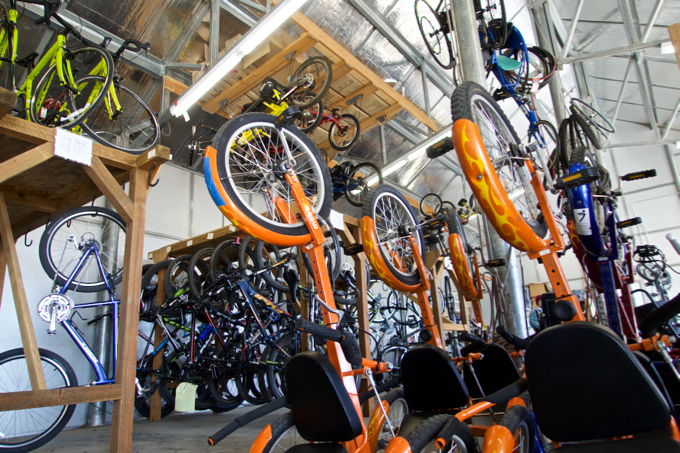
Bicycles come in all shapes and sizes for adaptive needs. Photo/Kathryn Reed

A new injury often means redefining their life. That’s why it’s so important to talk to others who understand.

While NAC is known for athletics, that’s not all it offers.

“Part of what we try to do here is give people a place to connect,” Barille told Lake Tahoe News. “We have a support network. They meet others in the program.”

Families, groups and individuals are welcome. Sleeping accommodations are available on site for 52 people. The plan is to build a combination of 12 cabins, yurts or tent platform facilities.

“We use recreation to build cohesion and self-esteem,” Barille said.

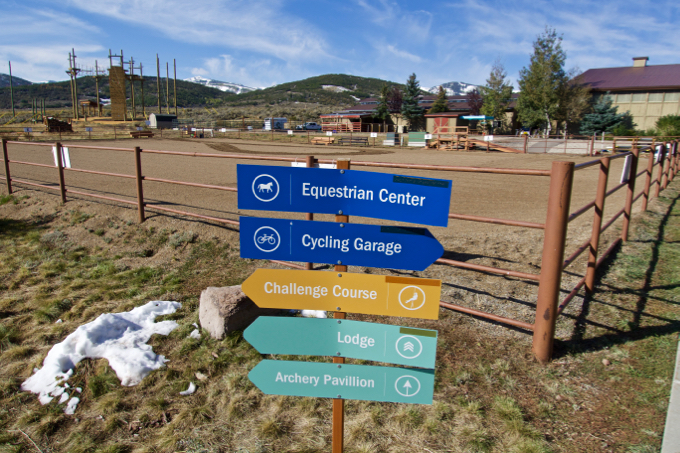
At the main campus, which was built before the 2002 Salt Lake City Winter Olympics, a variety of activities are available.

A large garage houses an array of bikes. Adaptive bikes range from about $2,500 to $10,000. NAC is able to fit a bike to a person and maintain it as well.

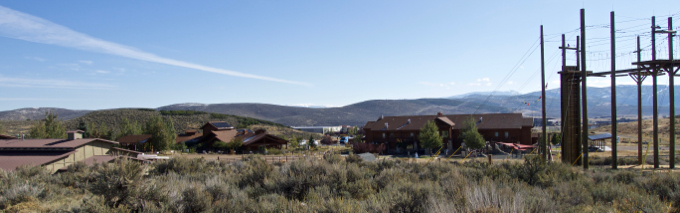
A challenge course, right, is part of the “back yard” at the NAC. Photo/Kathryn Reed

Duct tape and padding are common components. Some cyclists have used bungee cords to bind their knees for support. Adaptive, it’s the key word.

NAC has 250 partner programs who use the equipment, such as veterans and muscular dystrophy organizations.

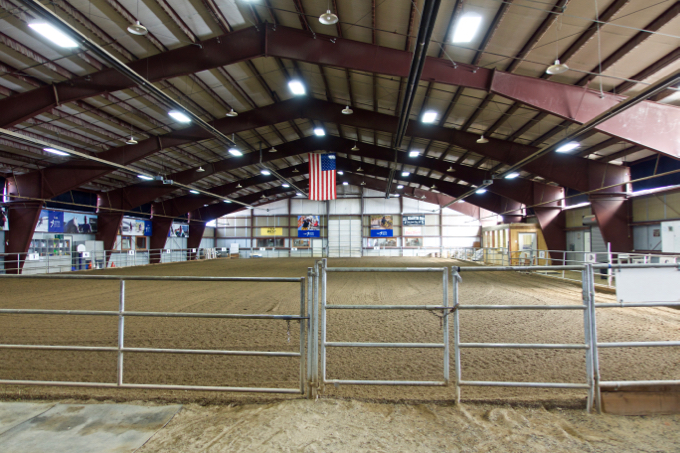
The equestrian facility includes an indoor arena. People with post-traumatic stress are known to benefit from working with horses. The outdoor arena will soon be moving behind the bike barn to provide a more isolated environment for people.

A gym, challenge course, indoor rock climbing wall, archery and hiking trails are all right there. The center also works with individuals who are interested in swimming, sled hockey, water skiing, wakeboarding, kayaking, canoeing and paddle boarding — and of course all the snow sports.


Calif. lawmakers operate under separate set of rules

By Laurel Rosenhall, CalMatters

With a declaration that “public servants best serve the citizenry when they can be candid and honest without reservation in conducting the people’s business,” lawmakers passed the California Whistleblower Protection Act in 1999.

The idea was to protect workers who report misconduct, so that they can blow the whistle on bad actors without losing their jobs. The bill at that time covered workers at state agencies and California’s two public university systems. Lawmakers expanded it in 2010 to cover employees of the state’s courts.

But one group of California government workers has never had whistleblower protection under the law: those who work for the lawmakers themselves. It’s an example of how the Legislature sometimes imposes laws on other people that it doesn’t adhere to itself.

“Lawmakers make laws that affect all of us, including them, and they are softening the blow of regulations for themselves,” said Jessica Levinson, a professor at Loyola Law School who chairs the Los Angeles Ethics Commission.

“It feels like double talk.”

The Legislature’s exemption from the Whistleblower Protection Act has garnered attention in recent weeks, as a groundswell of women complaining of pervasive sexual harassment in the state Capitol publicly call for such protections for legislative employees.

But the whistleblower act isn’t the only area of the law in which the Legislature has demonstrated a “do as I say, not as I do” mentality:

Public records

Want to know whom government officials are meeting with, talking to or emailing? Or how officials were disciplined after an investigation found them culpable of wrongdoing?

State agencies and local governments must release such information—calendars, emails and disciplinary records—under the California Public Records Act, which the Legislature created in 1968. But the same information is nearly impossible to get from state lawmakers because the Public Records Act does not apply to the Legislature.

Instead, lawmakers are covered by the Legislative Open Records Act, which they passed in 1975 in the wake of the Watergate scandal. The act that applies to them is riddled with exceptions, effectively keeping secret many documents that other branches of government must disclose.

“The Legislature has created in many areas a black box where the public can’t see records it would be entitled to see if the public officials at issue weren’t in the Legislature,” said David Snyder, executive director of the First Amendment Coalition, a nonprofit organization advocating government transparency.

The Legislature’s open-records law allows it to withhold investigations of wrongdoing, even when they led to disciplinary action. It also keeps secret correspondence by lawmakers and their staff, as well as officials’ calendars. The Legislature even refused to give reporters the calendars of two senators undergoing federal prosecution on corruption charges, until media companies sued and won a court order compelling their release.

Another difference: As more government agencies began storing information electronically, the Legislature updated the Public Records Act in 2000 to compel disclosure of digital records. Now state agencies and local governments must provide public records in any format in which they exist. That gives the public access to electronic records, such as databases, in their original digital format.

But the Legislature has never made the same update to its own open-records act. “It was a non-starter,” former Assemblyman Kevin Shelley told the Sacramento Bee in 2015.

Open meetings

The idea that government meetings should be open to the public, and designed to welcome public input, has been enshrined in California law for more than 60 years. In 1953 the Legislature passed the open-meeting law that applies to local governments, and in 1967 it passed a similar one for state agencies.

Yet the 1973 law it passed requiring open meetings of the Legislature does not follow the same rules. One major difference: It allows legislators to gather secretly in partisan caucuses.

When contentious issues hit the floor of the Assembly or the Senate, it’s common for one political party or the other to pause proceedings and call for a caucus. Legislators file out of the chamber and into two private meeting rooms where Democrats and Republicans separately gather for conversations that exclude the public and the press. They can hash out disagreements or craft strategy behind closed doors, then return to the chamber to publicly cast their votes.

Local governments, such as city councils, cannot do this. With a few limited exceptions, state law forbids a majority of a local board from gathering privately precisely because it shuts the public out of the decision-making process.

“I always remember county supervisors being rankled,” said Peter Detwiler, a retired long-time staffer to the state Senate’s local government committee. “‘You guys put these rules on us and you don’t ever put rules like that on yourself.’”

The same laws also slow down decision-making by local governments and state agencies so that the public can weigh in. Local governments must give at least three days’ notice before taking action, while state agencies have to post agendas 10 days in advance.

Legislators, until this year, did not have the same constraints. Though most bills go through a months-long process of public deliberations, a handful of bills each session were written just hours before lawmakers cast votes on them, leaving the public no time to offer their input. Democrats who control the Legislature said the last-minute lawmaking allowed them to put together sensitive compromises that could have blown up with more public scrutiny.

But voters grew frustrated with the secrecy. A Republican donor worked with non-partisan good-government groups to put Proposition 54 on last year’s ballot, requiring that bills be written and posted online for at least three days before lawmakers can vote on them. The result: voters put a rule on legislators that the politicians wouldn’t put on themselves.

Out of state travel

With culture wars raging nationally over transgender rights, California’s liberal Legislature last year passed a law banning state-funded travel to states with laws that discriminate against gay or transgender people. Eight states are now on California’s no-go list. Some have laws that could forbid LGBT people from adopting children or exclude gay students from some school clubs; others have banned anti-discrimination policies that would allow transgender people to use the bathroom that matches their identity.

Yet while legislators have banned state-sponsored travel to Alabama, Kansas, Kentucky, Mississippi, North Carolina, South Dakota, Tennessee and Texas, they haven’t stopped traveling to those places themselves. In June, Democratic Sen. Ricardo Lara traveled to Texas for a conference of Latino government officials. Soon after, Democratic Sen. Bob Hertzberg went to Kentucky to study the state’s bail system.

Hertzberg was working on legislation to overhaul bail in California, and “felt it critical to observe first-hand the impact of bail reform in (Kentucky), which has a very well-established system of pretrial release,” his chief of staff Diane Griffiths wrote in an email.

The travel-ban bill does not exempt lawmakers—a late amendment actually specifies that it also applies to the Legislature—so how are these trips taking place? Lawmakers are getting around the law by using campaign funds (not tax-dollars) to pay for them.

The Legislature’s leaders declined to defend the exemptions, but in the past lawmakers have contended that they are justified because of the unique role of a law-making body and the need to protect legislators’ security. As far as critics are concerned, legislators get away with making exceptions for themselves because their hypocrisy doesn’t attract enough notice to generate mass outrage.

Right now there’s plenty of attention on the Legislature over its policies for dealing with sexual harassment—and some debate about whether extending the whistleblower act would help remedy the problem.

As is, the Legislature has internal personnel policies that forbid retaliation, and legislative employees are also covered by a different state law that prohibits retaliation for complaining about discrimination or harassment. But the whistleblower act goes even further, laying out a process for workers to confidentially file complaints to the independent state auditor.

Lawmakers will yet again consider a bill giving whistleblower protection to legislative staff when they return to Sacramento next year. GOP Assemblywoman Melissa Melendez of Lake Elsinore plans to re-introduce a measure that has stalled in the past. And—in a nod to some who have say that her bill wouldn’t apply to employees reporting sexual harassment—she said she’ll add language explicitly stating that it does.


Utility fire safety rules took 10 years

By David R. Baker, San Francisco Chronicle

For 10 days in October 2007, wildfires riding hot Santa Ana winds swept across Southern California, forcing nearly 1 million people to flee and killing 10. When the ashes cooled, investigators found that many of the blazes had been caused by electrical lines swaying or falling in the wind.

So state regulators resolved to tighten fire safety rules for electric utilities. They quickly passed new regulations for Southern California and began developing rules for the rest of the state.

It would take 10 years.

On Nov. 8 of this year, exactly a month after the most destructive wildfire event in California history began sweeping across the Wine Country, the California Public Utilities Commission finally released its proposal.

Read the whole story