STPUD booster station plans upset Tahoe Paradise residents

By Kathryn Reed

An industrial facility in a neighborhood on the outskirts of South Lake Tahoe has brought cries of concern from people that are being heard by utility district officials.

A last-minute meeting was convened Wednesday night and another one is set for Saturday at 10am at the project site. Residents in the Grizzly Mountain area off North Upper Truckee Road will be able to meet with South Tahoe Public Utility District board members and staff about the booster pump station that is planned for the area.
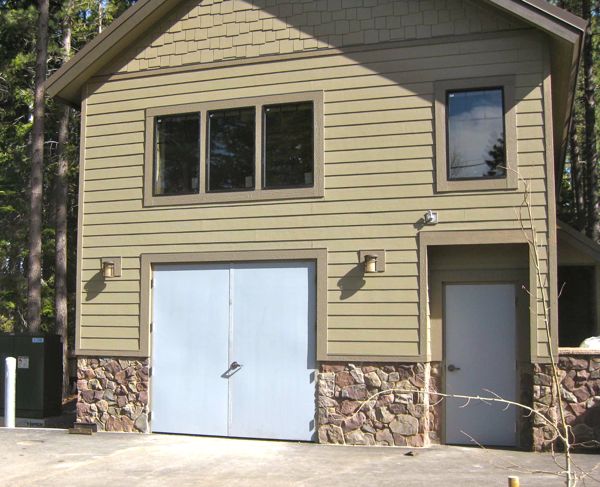
The proposed booster station on Grizzly Mountain Road may look like this one on Apache Drive. Photo/Provided

The proposed booster station on Grizzly Mountain Road may look like this one on Apache Drive. Photo/Provided

At the April 21 public hearing on the issue, one neighbor spoke out against it, while others sat in the audience.

Concerns for many of the residents who have spoken with Lake Tahoe News are how the process works, why this location was selected and what the structure will look like.

What irks people is the district was looking at the property last fall, and closed escrow in January after the board approved the $146,000 purchase at the Jan. 6 meeting. What neighbors want to know is why they weren’t informed about STPUD’s plans before the land was bought. Many have said it seems meaningless to ask for input now.

John Thiel, principal engineer, acknowledged at Thursday’s board meeting he could have done a better job getting the message out – and will next time.

Lynne Paulson, who lives about 400 feet from the proposed site, didn’t get noticed about the 30-day comment period because STPUD only sent letters to residents within 300 feet.

(The comment period was supposed to end today, but has been extended to April 25. Comments are being taken on the project – even though the land has been purchased for this use without public input.)

Paulson read the following into the record, “ … the purchase of the land prior to project review and approval combined with the planned contracting for the pipeline to this location has resulted in the impression that the booster station project is being steam rolled over us. This doesn’t provide the transparency and accountability needed for open government processes.”

She intends to submit a more detailed letter in the next three days.

For Russell Paul, who lives directly across from the project site, his voice is filled with frustration.

This is the view from Russell Paul's residence. Photo/Kathryn Reed

This is the view from Russell Paul's residence -- the lot where the booster station would go. Photo/Kathryn Reed

“I just feel they operate under this cloud of the good for all and move forward with projects. You can question their moves, but you can’t be part of the process. There is no process,” Paul told Lake Tahoe News.

He questions whether the lot below him is part stream environmental zone, which would preclude it from being built on.

Thiel, at the meeting, said only a small portion in the back is designated SEZ. He said this view lot has 3,584 feet of allowable coverage, so something much grander could have been built there.

Concessions have been made since the neighbors started making calls to STPUD in the last week or two. Thiel said the building will be smaller. The design will look more like a residence than what was originally planned. Initially, the district wanted it to look much like the booster station on Apache Drive in Meyers.

While residents initially could not understand why the station was being put in when it didn’t affect their neighborhood directly, the district has explained the need to have better water flow when the next wildfire strikes the South Shore.

Elevation is one criterion for where it goes. Tying into certain service areas is another.

The staff report explains, “The project consists of the construction of a new booster pump station to improve the primary water service to approximately 3,000 existing homes in the Flagpole and Twin Peaks water zones. The project increases water reliability to the Flagpole and Twin Peaks water zones by providing a second source of water to the area currently served by only one pipeline form the Arrowhead water zone (located in Meyers).”

Thiel explained to the board the redundancy is needed in case the first booster station is taken out in a fire.

The board is expected to vote on the matter in May.

At the end of the hearing on Thursday, STPUD board President Dale Rise said, “We will try to get through this. We will satisfy the public, but the public as a whole – the 10,000 water customers. We will try to mitigate this and make you happy.”

Click on information to read more about the project. Funding for the more than $1 million project comes from matching funds for a Fire Protection Partnership Funding/USFS Forest Health Fund grant.


Ensign stepping down May 3; Heller seen as replacement

By Karoun Demirjian, Las Vegas Sun

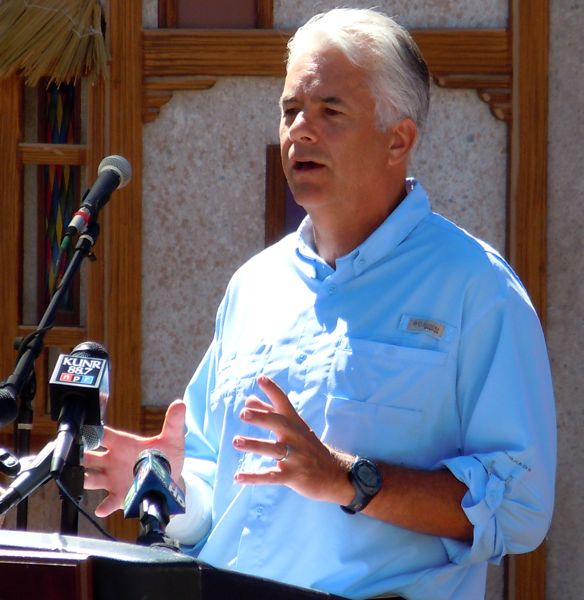
WASHINGTON — Embattled Sen. John Ensign announced this afternoon he will resign from office, effective May 3. The move opens the door for Republican Gov. Brian Sandoval to appoint Rep. Dean Heller to finish out the term.

“It is with tremendous sadness that I officially hand over the Senate seat that I have held for eleven years,” Ensign said in a statement. “The turbulence of these last few years is greatly surpassed by the incredible privilege that I feel to have been entrusted to serve the people of Nevada. I can honestly say that being a United States Senator has been the honor of my life.”

John Ensign

John Ensign

Sun columnist Jon Ralston first reported earlier in the afternoon that Ensign would step down.

If Heller is appointed, it would give him a strategic leg up as an incumbent against his presumed opponent in the 2012 Senate race, Democrat Rep. Shelley Berkley. Berkley is still expected to run.

Nevada State Democratic Party spokesman Zach Hudson released a statement Thursday afternoon criticizing Heller.

Read the whole story


Quake expert shakes things up with talk of Tahoe faults

By Kathryn Reed

STATELINE — “My fear is we don’t even remotely have a clue how to deal with something like this.”

Those are the words of Graham Kent, director of the Nevada Seismological Laboratory and professor of the Department of Geological Sciences and Engineering at UNR. He is speaking about when the next big quake hits Lake Tahoe and a tsunami wipes-out much of what’s on shore.

Graham Kent talks April 20 about Tahoe earthquake faults. Photo/Kathryn Reed

Graham Kent talks April 20 about Tahoe earthquake faults. Photo/Kathryn Reed

The West Tahoe Fault hasn’t had major action in 4,500 years. Scientists say it’s due because history shows it erupts every 4,000 to 5,000 years.

“This is a big, big fault,” Kent said as he spoke to Soroptimist International South Lake Tahoe on April 20 at Harrah’s Lake Tahoe.

Besides being a leader in his field, Kent is a 1980 South Tahoe High School graduate. So, this isn’t just work for him – it’s a bit about educating his hometown about the dangers that lie beneath Angora, Cascade, and Fallen Leaf lakes, as well as the Incline Village and Stateline faults. Then there’s the Genoa fault in the Carson Valley.

What Kent sees as a danger is the lack of monitoring that is going on in Tahoe. No equipment exists on the East Shore. He is hoping to change that.

He believes officials are not planning for what an earthquake and subsequent tsunami would do to the region.

Kent showed computer-generated videos of what the water surge would look like – making some comparisons to the March tsunami in Japan.

“We need to do a much better job of putting signage on beaches. There are 17,000 people (on Tahoe) beaches in the summer. They wouldn’t get out,” Kent said.

He doesn’t want to be an alarmist, but he does want to be a realist. He sees what other countries are doing when it comes to earthquake research compared to the United States and he’s dismayed. He sees what the Northwest does to warn people about tsunamis and evacuation routes and can’t believe the dialog isn’t even happening in the Lake Tahoe Basin.

Kent is hoping his agency will be able to change that – in terms of education and obtaining better data about what is going on when is comes to seismic activity in the Lake Tahoe Basin.

This audience was the first to see lidar (light detection and ranging) images of the Tahoe faults. This technology helps to better define the faults for the naked eye.

These images are available online, then search for Tahoe.

He said as much as the basin keeps putting money toward fine sediment reduction, it would take one earthquake a matter of seconds or minutes to undo all that work.

“Tahoe is strewn full of catastrophic events,” Kent said.

Kent’s crews will be doing work on the Stateline fault this summer. He hopes to get onto Cascade Lake next month to do research. And when the snow melts, he will be walking the West Tahoe Fault at Angora to find out more about the area where he spent many a summer jumping off the cliffs into the lake.


Private parking company axed, S. Tahoe to take over

Updated: April 20 11:47am.

By Kathryn Reed

The term “parking Nazis” for the people charged with patrolling the lot at the Village Center near Stateline will have to be retired now that South Lake Tahoe is severing its agreement with High Sierra Patrol.

Since the reorganization at the city, staff has been delving into why the parking garage at Heavenly Village is losing money and what various contracts say.

A kinder, gentler approach to parking at the Village Center near Stateline is coming. Photo/LTN

A kinder, gentler approach to parking at the Village Center near Stateline is coming. Photo/LTN

Truth is the garage is not losing money, city officials revealed April 19. It’s breaking even. It’s the enforcement across the street at the private Village Center that is taking a toll on keeping expenses in line. City officials are going to separate the two entities – as they admit should have been done at the time contracts were signed in 2002.

As with many contracts signed in that era, the one that says the city must provide enforcement at what was called Crescent V Center near Stateline essentially goes on for perpetuity. High Sierra also had contracts with the city starting before 2000 to patrol various locations in the city.

The odd thing about High Sierra Patrol being able to cite people is the 2000-01 El Dorado County Grand Jury report criticized the city for using the private company. At the time, the city said it would go back to using employees for parking enforcement. That policy did not last long.

Terry Hackett, who owns the Village Center, got the city to pay for the enforcement after convincing the powers that be that people using the Heavenly gondola and those shopping or eating at Heavenly Village would clutter his lot in an attempt to avoid paying to park across the street.

Hackett told Lake Tahoe News on April 20 that when he is in town next month he plans to discuss various aspects of the parking issue with city officials, including how long people can park, communication between enforcers and the public, and the implementation of things.

The nastiness between patrons and parking enforcers has gone on for nine years, with residents riled up at parking hearings, locals and visitors writing scathing letters to the media, and the city earning another black eye.

Much of the consternation had to deal with High Sierra telling people they could not cross the street if they were parked at the Village Center. Arguments erupted. People were upset. It was a public relations nightmare for the city.

With High Sierra out as of the end of May, it means the city will use mostly community resource officers to patrol the area. They will chalk tires, then issue citations if the person parks for more than two hours. People will not be harassed if they are seen walking across the street. It’s all about how long the car is parked, not where the people are.

The city’s 2010-11 contract with High Sierra had the company receiving $85,604 for parking patrol and $37,730 for snow removal enforcement.

The city will save that money by doing things in-house, which could mean the parking authority breaks even.

“The goal is not to issue more citations,” Nancy Kerry, spokeswoman for the city, told Lake Tahoe News after the City Council meeting. The city just wants to enforce the rules.

The tickets High Sierra writes cannot be tracked by location even though the contract for each area is unique. This is why the city cannot say how much money was brought in from a particular area.

A third party, JDS, collects the revenue.

“The city can discern based on revenue about two to three tickets a day are written at the Village Center,” Kerry said.

From each $50 parking ticket the city takes in about $42. The city doesn’t see a dime until the appeals process is complete.

One way the city hopes to generate income is by putting in parking meters. The first will go in this summer near Heavenly Village on Bellamy Court. The plan is it will be less expensive to park in those 20 spaces than in the garage.

More paid parking will be added near city beaches in the coming years.

Other items of note:

• The council is expected to decide June 7 on the bids it receives from potential ice rink operators. There was a walk through April 18 with perspective bidders. One was from within the city, two were groups from the community, and one person from Virginia.

• The two workshops were postponed because the meeting did not end until 5:30pm. The General Plan will be on the regular May 3 agenda, with City Manager Tony O’Rourke giving updates individually to councilmembers before then. If the capital improvement plan does not fit into the May 3 workshop, a special meeting will be called on May 10.

• In order to play fair, the appointments to the city’s fiscal sustainability committee won’t be made until May 3. This is because two applicants missed the deadline. This means the process is open until April 27.

• The state City Clerk Conference will be hosted by South Lake Tahoe at Embassy Suites April 26-29.


S. Tahoe council supports Nevada leaving TRPA

By Kathryn Reed

South Lake Tahoe’s City Council took a baby step toward wanting to be done with the Tahoe Regional Planning Agency. On the same day, the council agreed the board and members of the League to Save Lake Tahoe should get a clue about what is really going on in the basin and then find a new executive director.

sltIn what was a marathon council meeting April 19, one topic was whether the council would support a bill in the Nevada Legislature that would have it withdraw from the bi-state Compact with California that formed the TRPA 42 years ago. Another item centered on a letter to the League.

In what appeared more like a sparring match between Councilmembers Bruce Grego and Claire Fortier that had to be refereed by Mayor Hal Cole, it was eventually agreed the council would send a letter in support of the Nevada Senate bill. The vote was 4-1, with Fortier the lone dissenter.

But the motion was much more than that. It also included sending a letter to South Tahoe’s representatives in the California Legislature stating all the reasons why it doesn’t like TRPA, the proposition of forming a new bi-state agency, and the threat of South Tahoe withdrawing from TRPA if its demands are not met.

South Tahoe wants more control. It wants an elected Governing Board, not political appointees. It wants logic in decision-making by the TRPA, not having it involved with the paint color of houses or whether a drive-though business should be allowed.

Fortier supports petitioning California lawmakers for change, but does not believe the city should be involved in Nevada politics.

To complicate matters, during councilmember comments at the end of the meeting, Councilwoman Angela Swanson said although it was not legal at that point to switch her vote to no, that is how she intended to vote.

The motion as it was made was convoluted and probably should have been separate motions to adhere to protocols the city operates by. Nonetheless, the motion would have passed if she had voted no.

A no vote by Swanson would have been in line with her arguments. She, too, has issues with a California city telling Nevada what to do. She also said a letter to California lawmakers needs teeth and that a meeting with Tahoe’s reps should be called for so they could introduce legislation.

No one at the meeting, including the city attorney, could say what happens if Nevada votes to pull out of TRPA because Congress formed the bi-state regulatory agency.

The NTRPA and CTRPA existed before the TRPA was formed.

“NTRPA still exists. It’s essentially the Nevada delegation of our board. They have a special meeting once or twice a year to discuss gaming issues and to elect the ‘at large’ Nevada board member,” Julie Regan, TRPA spokeswoman told Lake Tahoe News. “CTRPA dissolved in the early ’80s after the Compact was amended to gain more statewide representation on the Governing Board.”

Special interest groups got a bad rap Tuesday, with Fortier calling the League a special interest, and Cole saying Gov. Jerry Brown and the Attorney General’s Office are special interests. Brown is labeled as such partly because of his most recent appointment to the Governing Board – attorney Clem Shute, a longtime League supporter.

“He has been a problem ever since he was attorney general,” Cole said of Brown. “If I were in Nevada, I would support this whole-heartedly.”

It was Davis who brought forth the idea to write a letter to the League, in which the original draft said the environmental nonprofit used “underhanded tactics.” His colleagues voted to have that scraped.

At one point Davis said he wanted to cooperate with the League and in the next breath called them obsolete. But he could never answer Swanson’s question of what the purpose of the letter would be.

Grego added that the letter should also ask for a meeting between the council and League’s board.

Although Davis kept saying this is a new day, his tactics are the same as they were when he was first on the council from 1992-2004 – write a letter to complain. He had no other ideas to effect change.


Water levels require work at toxic Alpine County mine

Publisher’s note: This update on the Leviathan Mine in Alpine County will be in the Lahontan Water Board’s May 2011 executive officer’s report.

By Chuck Curtis

The Lahontan Water Board’s emergency contractor has been successfully treating polluted water at the Leviathan Mine Superfund Site this spring to prevent ponds at the site from overflowing. The water board manages the site, a former sulfur mine, for the state of California, which owns the property.

The site is located north of Monitor Pass at an elevation of approximately 7,000 feet, between Markleeville and Topaz Lake.

Mining operations exposed sulfur in the rocks and mine wastes to air and water, and that caused the creation of sulfuric acid. The acid dissolves minerals, including arsenic, aluminum, nickel, and others, in the rock and waste materials. This metal-rich acidic wastewater is termed acid mine drainage, or AMD.

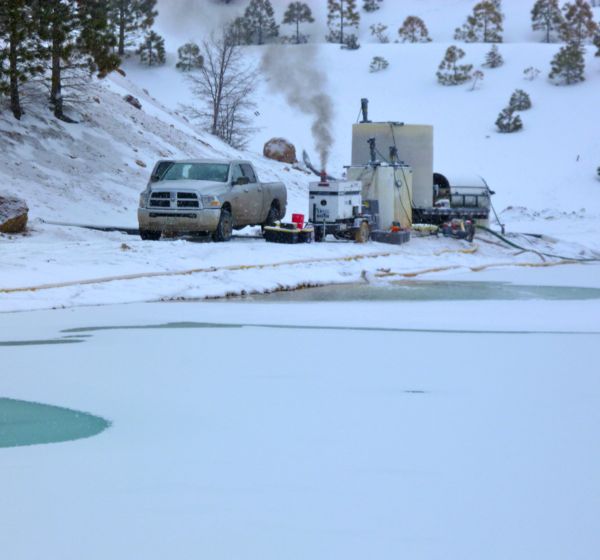
The treatment system at one of the ponds at the Leviathon Mine. Photos/Provided

The treatment system at one of the ponds at the Leviathan Mine. Photos/Provided

The state purchased the site in the early 1980s to build a pollution abatement project, as the owner at the time had no means to reduce the flow of AMD from discharging to Leviathan Creek. Without capture or treatment, the AMD created toxic conditions in the creek, effectively killing aquatic life as far as about ten miles below the mine, where the creek joins the East Fork Carson River.

The state’s pollution abatement project included construction of a series of evaporation ponds to collect two sources of the AMD discharge at the site. Starting in 1999, the water board’s contractors have treated AMD in the ponds each summer to reduce pond overflows that happened in the spring following wet winters. Since 2000, there have been essentially no polluted water discharges from the ponds managed by the State.

Due to heavy precipitation at the site this winter (160 percent of normal as of April 14, 2011), water board staff determined that the ponds would overflow this spring without emergency treatment actions. Water board staff arranged an emergency contract to treat the AMD in the ponds to prevent an uncontrolled pond discharge.

On April 1, the contractor cleared the 10-mile-long road to the site of snow, and, on April 5, treatment operations at the site began. Those operations, in which lime is mixed with the water in the smallest of the ponds, have continued every day since. The lime neutralizes the acid, and the toxic metals in the AMD settle to the pond bottom.

Successful treatment and discharge of the first batch of pond water occurred on April 9, and the second batch was discharged on April 14. Approximately 800,000 gallons of AMD was treated and discharged to the creek in those two batches. Treatment operations will continue until the threat of pond overflow has passed. A significant precipitation event this spring could still overwhelm the ponds and our emergency treatment operations, but that possibility decreases with each day of treatment.

The overflow structure at the upper ponds has about 3 inches to go before overflow.

The overflow structure at the upper ponds has about 3 inches to go before overflow.

Doug Carey, engineering geologist with the water board’s Leviathan Mine Unit, led a tour of the site for the U.S. Environmental Protection Agency’s Superfund project manager and U.S. Forest Service staff on April 13. The USEPA was pleased with the actions that the water board has taken under difficult conditions to prevent pond overflow and its harmful effects on the creek and its aquatic life. Those difficult conditions have included snowstorms and single digit nighttime temperatures.

The Forest Service acknowledged that snow removal was completed in compliance with its specifications, and no damage to the road base occurred as a result of snow removal activities; the Forest Service owns the Leviathan Mine Road that provides access to the site.

In addition to observing the water board’s emergency treatment operations, the tour included viewing areas at and downstream of the site that are affected by the former mining operations. In addition to the water board, Atlantic Richfield Company is conducting pollution abatement activities at the Leviathan Mine site, and it has been required by the USEPA to conduct a Remedial Investigation and Feasibility Study to evaluate the nature and extent of contamination and to develop a final cleanup remedy for the site. The USEPA named Atlantic Richfield as a potentially responsible party for the pollution at Leviathan Mine due to its purchase of Anaconda Mining Company, which conducted mining at the site in the 1950s and 1960s.

Chuck Curtis is division manager of the Cleanup and Enforcement Division of the California Regional Water Quality Control Board, Lahontan Region.


Forest Service to spruce up Meeks Bay property

By Susan Wood

With all the new, proposed development activity happening on the West Shore of Lake Tahoe, the Meeks Bay Resort is in line for a face lift starting this spring and going through fall.

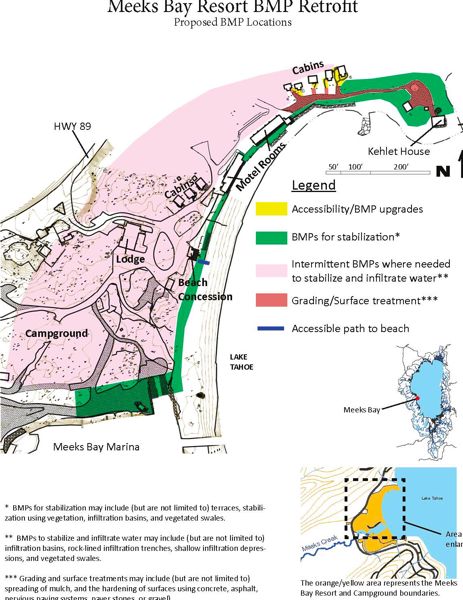
The U.S. Forest Service has planned a number of improvements at Meeks Bay Resort as shown in this photo provided.

The U.S. Forest Service is planning a number of improvements at Meeks Bay Resort. Graphic/Provided

The Lake Tahoe Basin Management Unit is proposing a project to remove power lines, retrofit utility equipment, stabilize the slope with vegetation and make irrigation improvements – among them, the creation of water basins used to collect runoff. Massive stormwater runoff makes indentations where it channels into the lake. These best management practices — essentially known as erosion control methods – will use $250,000 under the Southern Nevada Public Lands Management Act.

The U.S. Forest Service owns the lands and the buildings at the resort, while the Washoe Tribe of California and Nevada operates the seasonal venue under a permit with the federal government.

Even with the Forest Service managing 75 percent of the land around Lake Tahoe, the federal agency still recognizes the desire among user groups to have access to the lake.

“Lakefront access is a big role of the Forest Service,” said LTBMU Landscape Architect Ashley Sommer, who’s spearheaded the project.

The project also calls for installing about 200 feet of paved road to make the lake more accessible to users. The cabins Meeks Bay Resort rents out will become more accessible with walkways that resemble the work the agency has done at the Nevada Beach Campground.

“In the total picture, the contribution to our facilities is important as we’re able to go in and upgrade,” LTBMU spokeswoman Cheva Heck said.

This prime property comes with a history, too. The Kehlet House – which is rented out mostly in the summer – is eligible for the National Registry of Historic Places. The two-story home with seven bedrooms was the living quarters of the Kehlet family, who originally owned and ran Meeks Bay Resort.

There is a concern improvements come at a price.

Ed Porras, the general manager hired by the tribe to run the resort, expressed a little concern the work would flow into their peak summer season and be disruptive.

“Our initial feeling is (the planning) is a little last-minute. But through a series of meetings, we’ve made it quite clear — repeatedly — that this is not a light situation because we’re concerned about the financial impact,” Porras said.

A more acceptable time line for the tribe and the resort management was finalized that involved spring and fall, and Porras hopes that time line is honored.

The work is intended to be completed by 2012.

“When it’s over it will be a plus. The improvements should be nice, and we look forward to the Forest Service work,” he said.

Porras characterized the resort’s business as “resilient,” adding last year’s sales and bookings were the best since 2003 — even in this tough economy.

“With the economy, I think people are finding value for their vacation dollar. Instead of spending $25,000 to go to Europe. They can come to Tahoe for $3,000,” he said.


Fallen Leaf Lake to allow alcohol, but has no seller

By Kathryn Reed

Alcohol will be sold at Fallen Leaf Lake this summer. That is assuming a concessionaire is ever hired and then that person acquires the necessary permits.

After a 3½-hour meeting Saturday that was dominated by issues related to the operation of the store and marina at the South Shore lake, the board voted 4-0 for the store to sell alcohol to be consumed on the premise (stopping at 6pm) when food is bought, as well as allowing unopened containers to sold for consumption off-site.

Fallen Leaf Lake still does not have a concessionaire. Photo/LTN

Fallen Leaf Lake still does not have a concessionaire. Photo/LTN

Last season alcohol was not sold at the store/café when Rob and Sandy Wirth ran the operation because they never secured the necessary permits from Alcoholic Beverage Control.

Prior to that, when John and Ruth Rich had the concessionaire, they operated under a No. 20 permit that allows sales without onsite consumption. However, for decades people had open containers without being told to leave.

A No. 41 permit allows sales at an establishment selling food.

Issues for the next concessionaire are the lack of No. 20 permits available from the ABC. However, people at the April 16 meeting at Lake Tahoe Airport said the Richs have such a permit that expires next month. Although No. 41 permits are available for a few hundred dollars, protests have been filed with the ABC by Fallen Leaf Lake residents that could make the acquisition of one a time consuming endeavor, if not impossible.

Three people sent the board paperwork indicating an interest in operating the seasonal marina and store at the edge of Desolation Wilderness. One has withdrawn from the process and another does not want a background check done.

Darin Carolus, who works for Sierra Outdoor, is the concessionaire at Tahoe Keys Resort in South Lake Tahoe. He was at the Saturday meeting as the other concessionaire applicant.

Board members Wanda Kownacki (who was participating via telephone) and Dave Stumbos were tasked with finding a concessionaire to recommend to the board. They hope to be able to do so by the May 7 meeting. Operations usually begin Memorial Day weekend, so the new operator would have less than a month to get up to speed.

Throwing a unique twist into things was John Rich contacted Steve Malley that morning. Rich, through Malley, stated he would be interested in operating the facility again if the board contacted him and did a few other things.

Then Malley, a resident of Fallen Leaf Lake, was called during the meeting by Rob Wirth, who also said he’d run the operation, but would hire a manager for the day-to-day operation.

(People could listen via telephone to the meeting and comment at any time.)

Malley said John Rich offered to replace the dock and do all the maintenance if granted a 20-year contract.

To this, Carolus said, “I was at the marina (Saturday) morning for a site visit. You have new docks there; put in in 2009. So, you probably wouldn’t need to replace them for 20 years, so I could add that, too.”

The Richs were dismissed in February 2010 after operating the store/marina for 14 years.

The Wirths backed out after one year.

The issue has divided the community, with resentment and bitterness lingering and carrying over into the most recent meeting. Board President Tom Bacchetti had little tolerance for belittling of people, trying to keep the discussion on the issues and not people.

In the end, the board said there is time for others to apply, but they won’t seek anyone out and no special favors will be granted to past operators. And the proposals must be in writing, not delivered verbally by someone else.

In other action:

• The board voted to accept applications to fill the vacancy left by the abrupt resignation of Jennifer Thornton, who had been on the board for about a year. A vote on the appointment is likely at the May 28 meeting. (Thornton did not respond to earlier emails from Lake Tahoe News for comment.)

• Fire Chief Gary Gerren’s contract was extended through May 31, with the anticipation a longer contract will be entered into at the May 28 meeting.

• Wanda Kownacki was elected vice president of the board.

• Non-motorized watercraft will not have to pay a launch or boat cleaning fee. The thinking is this will get people to clean their kayaks or canoes to prevent bringing in aquatic invasive species instead of skirting the fee and launching elsewhere on the lake without the cleaning.

• Mooring and launch rates for motorized boats will remain the same.


Lahontan decides how to spend Northstar’s fine

By Kathryn Reed

What was the largest penalty issued by the Lahontan Regional Water Quality Control Board — $2.75 million – was cut by about $1 million when East West Partners emerged from bankruptcy.

This week the water board decided in part how to spend the remaining funds now that the company is solvent and the bankruptcy of 2010 is in the past.

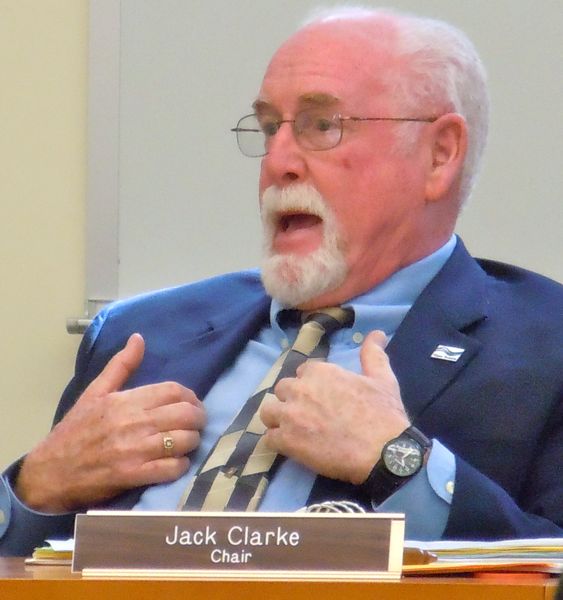
Jack Clarke of the Lahontan board makes a point April 14. Photo/Kathryn Reed

Jack Clarke of the Lahontan board makes a point April 14. Photo/Kathryn Reed

East West is the parent company of Northstar Mountain Properties’, the entity that faced the stormwater violation fines. The fines were for 11 projects that encompassed 325 acres, including work at the Village at Northstar, employee housing and trailside townhomes. Work at the Ritz-Carlton was also part of the fine, though some documents call it Highlands Resort Hotel.

The settlement agreement was entered into in February 2009. A year later East West filed for bankruptcy and all payments ceased. The settlement was brought into the court proceedings, emerging with $901,769.77 owed to Lahontan.

With some of the money having been paid prior to bankruptcy, the board on April 14 was presented with three ways to spend the $1,040,259.57.

After much discussion and comments from a few people, the board decided essentially to fund the projects that were approved in the supplemental environmental project. The SEP calls for fuel reduction projects for forest and riparian health, a watershed handbook, and a forestry handbook.

It was a yes or no vote at the time to approve the SEP, with no revisions possible, according to board Chairman Jack Clarke.

Even though Waddle Ranch watershed improvements are included in the option that was approved, staff recommends waiting to see what type of water quality projects would be beneficial to that area on the east side of Highway 267 before throwing money at it. Waddle Ranch is the 1,462-acre former cattle ranch that is now open to the public.

One option that was rejected was to turn the money over to the state water board to have it go into the cleanup and abatement account. Although it’s possible the regional board could have benefitted from this, there was not guarantee.

Comments from board members indicated they preferred keeping the money local and going toward the site where the fines originated.

“This is very tough for me. I did not like the SEP process when we first adopted it,” board member Amy Horne said. “I would like the money to be spent to provide high quality water to people in California, which may be a conflict to keep the money local. But I’m sympathetic to keep it local.”

The third option was to start all over. This would have required the most amount of staff time as well as the potential for work to be done years from now instead of this summer.

However, starting from scratch is exactly what Lisa Wallace, executive director of the Truckee River Watershed Council, lobbied for.

“Why is the fine going to benefit Northstar Mountain Properties?” she asked the board. “Allow the remaining SEP money to go to more meaningful projects.”

In the end her plea was dismissed.


Officials pump up benefits of cycling event, Hwy. 50 closure

By Kathryn Reed

STATELINE — It was part informational session and part cheerleading rally as more than 60 people gathered to hear about what could be the convergence of the start of North America’s largest road bike race and the main artery to the South Shore being closed.

amgenA Caltrans rep and consultant from its hired public relations firm started the Thursday night meeting at Horizon hotel-casino with a brief overview of the plans to soon close Echo Summit in order to replace the dilapidated rock wall.

That was followed by an enthusiastic talk from Alison Green, marketing coordinator with Lake Tahoe Visitors Authority, about the Amgen Tour de California.

With predictions of 35,000 people being on the South Shore for the 10:30am May 15 start of the multi-day cycling event, it could be a scenic inconvenience if spectators have to come to the area some other way than Highway 50.

Deanna Shoopman, Caltrans Tahoe basin outreach coordinator, was adamant and repetitive in saying no date has been set for when the highway will be closed. When it is, though, it will be off-limits for two weeks solid, 24 hours a day. After that, it will be subject to delays for up to six weeks.

B Gorman, executive director of Lake Tahoe South Shore Chamber of Commerce, spoke of her experience of traveling between Tahoe and the Bay Area every weekend before moving to South Lake Tahoe. She said she always found it faster during heavy traffic – like what the Highway 50 one-way traffic will be like – to go via Highway 88 by Kirkwood. Plus, she added, it’s a great route on a motorcycle.

One glimmer of hope for workers who commute between the South Shore and locales on the other side of the closure is Shoopman will know by Monday afternoon if those people will be granted a permit to get through the construction area.

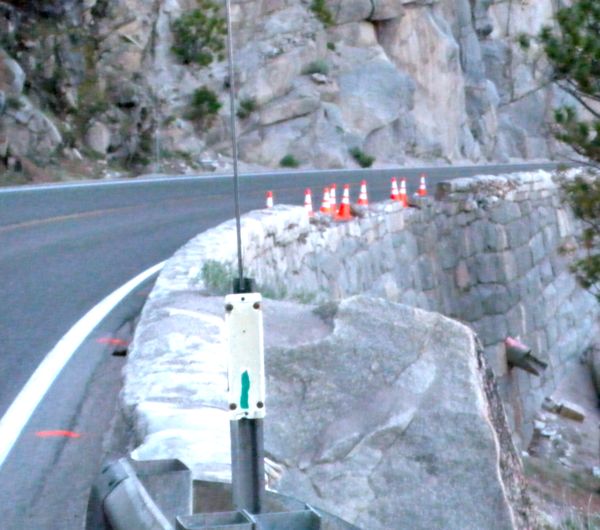
The rock wall at Echo Summit that will be replaced. Photos/LTN

The rock wall at Echo Summit that will be replaced. Photos/LTN

“We know it will not start until (at least) the first week of May,” Shoopman said of the initial two-week, 24-hour a day closure.

The good news is Heavenly Mountain Resort and Sierra-at-Tahoe will be able to stay open through Easter weekend knowing skiers and employees can get to the mountains.

Shoopman was also emphatic in stating the decision to close will be based on having a 10-day window of clear weather.

Cyclists will also be banned for the first two weeks while work is being done.

When it comes to the Tour de California, some firsts are being set with it starting in Tahoe. This is the highest elevation start, riders make two passes through the start area, and it’s the first time Nevada is part of the event. The other first is having 19 professional teams compete – the largest number in the event’s six-year history.

The eight-day race ends in Thousands Oaks, headquarters of Amgen, the tour sponsor.

The Tahoe portion starts in Stateline with riders leaving near the entrance of MontBleu casino May 15. They are expected to average about 28 mph, finishing the 72-mile loop about 1pm, and then ending the first stage at Northstar-at-Tahoe. The next day the riders take off from Squaw Valley as they head south through California.

One audience member asked what happens if it snows May 15. Gorman said the race coordinators have a contingency plan they have not shared with her.

Alison Green talks April 14 about the Tour de California.

Alison Green talks April 14 about the Tour de California.

It’s expected to be one big party along Highway 50 from Stateline to the Y. The LTVA’s Green said there is talk of having deejays on opposite sides of the street competing to get the crowds excited and keep them entertained while they wait for the cyclists to ride through.

“The best thing to do that day is park somewhere and then get out on your feet,” Green said.

The roads involved with the race will have rolling closures as the cyclists come through, which could cause delays of 30 minutes. This also means BlueGo buses will not be running their usual routes.

It will be up to private property owners – which is what the bulk of Highway 50 is except for Linear Park and the eventual Lakeview Commons site – do when it comes to allowing parking for non-customers and activities on their property.

Lauren Thomaselli, events coordinator for the city, said a map is being prepared of all the events along the cycling route on the South Shore.

A slew of events are being planned for 10 days before the pros take to the road.

The April 14 informational meeting replaced the annual tourism conference the South Shore chamber and LTVA have been putting on.

One of the things that kept being talked about was businesses should tap into the spectator demographic – ages 25-45 – because they travel with full wallets.

More information about the road closure is on this website.

Information about the cycling event is here.