AmeriCorps members gaining real life experience in Tahoe

By Jessie Marchesseau

Each year more than a dozen AmeriCorps members help educate residents and preserve the environment in the Lake Tahoe Basin. They come from all over the country and work for little pay in exchange for valuable work experience.

“I’ve gotten an incredible amount of experience, more than I ever expected to,” said Reyna Yagi, who is serving her second year as an AmeriCorps member. “I’ve probably learned more things than I could ever learn in an entry level position with some other agency.”

Yagi, 24, is a Sierra sustainable communities assistant for the Sierra Nevada Alliance in South Lake Tahoe. She has spent both years of her AmeriCorps service working on the Truckee River Friendly Landscaping Program helping homeowners deal with stormwater and erosion control on their properties. A 2009 graduate of UC Davis, Yagi applied to be an AmeriCorps member after realizing how well some of the available positions tied in with her degree in environmental policy analysis and planning.

SNAP Regional Coordinator Allison Peeler, from left, and AmeriCorps members Reyna Yagi and Kelly Miller. Photos/Jessie Marchesseau

SNAP Regional Coordinator Allison Peeler, from left, and AmeriCorps members Reyna Yagi and Kelly Miller. Photos/Jessie Marchesseau

“I’ve seen it as such a substantial and huge move for me to make after college,” she said, “and I probably couldn’t have made a better decision, to be honest.”

Working alongside Yagi at the Sierra Nevada Alliance is Kelly Miller. Miller, who is originally from South Carolina, began her first year of AmeriCorps service in January. She holds a bachelor’s degree in landscape architecture from Clemson University. However, after working in the industry for a while, Miller realized she was not interested in doing conventional residential landscape design.

Excited about now working for a nonprofit, she says her work with AmeriCorps has given her the opportunity to explore the possibilities of using her degree for projects that are not traditional forms of landscape architecture.

Yagi and Miller are just two of 27 AmeriCorps members who take part in the Sierra Nevada Alliance’s Sierra Nevada AmeriCorps Partnership (SNAP) each year. SNAP places these members with myriad conservation agencies and organizations in the Sierra from Redding to Kernville.

“Without their work, much needed restoration and environmental education wouldn’t be taking place in the basin,” Allison Peeler, SNAP regional coordinator said.

However, SNAP is not the only organization assigning AmeriCorps members to service positions in Lake Tahoe. The Great Basin Institute also sends members to the area, mostly to fill resource management positions.

But the AmeriCorps members here are only a few of the more than 70,000 people who serve in AmeriCorps each year. Much like a state-side version of the Peace Corps, AmeriCorps was formally launched in 1993 as a means of meeting the country’s needs in education, public safety, health and environment. Since then, more than half a million Americans have participated.

Members receive a modest living stipend in place of traditional wages or salaries along with an educational award at the end of their service. While it is a welcome reward, most members choose to participate more for the experience than the compensation.

AmeriCorps member Megan Dee says she believes the best part of AmeriCorps and the Great Basin Institute is they give people like her who are unsure about their future career paths the opportunity to explore a variety of options and find their true passion.

Dee works in the Interpretive Services Department at the Lake Tahoe Basin Management Unit and has recently discovered an affinity for conservation education. As a Lake Tahoe native, she says the conservation the region’s natural environment has always been close to her heart.

But one does not need to be raised here to appreciate the beauty and environmental concerns of the Lake Tahoe Basin. Taylor Currier, 24, hails from San Antonio, Texas. Currier is a second year AmeriCorps member and the first one to work in California Trout’s South Lake Tahoe office.

Taylor Currier, 24, is the first AmeriCorps member to work at CalTrout's South Lake Tahoe office.

Taylor Currier, 24, is the first AmeriCorps member to work at CalTrout's South Lake office.

“One thing that I love about AmeriCorps is that it’s given me the opportunity to just travel to a place that I’ve always wanted to go and live there for a year,” said Currier, who spent his first year of AmeriCorps working in Bellingham, Wash., and chose Tahoe for his second year of service. “These are destinations that I dreamed about in the flat lands of Texas.”

Currier credits AmeriCorps for providing him a type of professional experience that a person cannot get in school.

“Every day of the job brings something new that I have to tackle,” he said.

While AmeriCorps has experienced budget cuts like so many other federal programs, it has not lost funding entirely.

AmeriCorps Week is coming up — May 14-21 — and Currier and the other Lake Tahoe members will be joining AmeriCorps workers nationwide in an effort to bring more recognition to the program and its benefits to communities.
South Lake Tahoe fire chief submits resignation

By Kathryn Reed

South Lake Tahoe Fire Chief Lorenzo Gigliotti tendered his resignation Thursday. His last day on the job will be Sept. 1.

In a sweeping interview in his office May 6, Gigliotti looked like a man ready to take on new challenges – possibly in the Lake Tahoe Basin – but also as one who is wistful about his six years at the helm of SLTFD and what the future might bring.

The 46-year-old said he likes to be an innovator. He calls himself an “architect of significant change.” With economic constraints placed on the city, the department has fiscal limitations that don’t lend themselves toward the changes he likes to make.

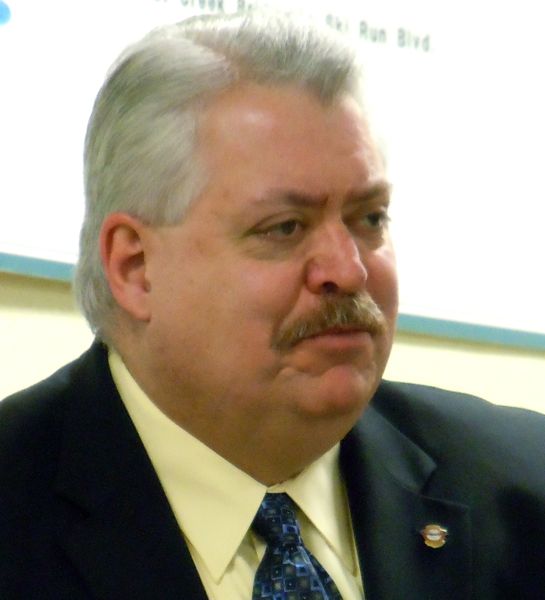
Lorenzo Gigliotti

Lorenzo Gigliotti

While he survived the round of layoffs and incentivized early retirements in the city’s reorganization plan earlier this year, Gigliotti knows his departure will be a financial savings to the city. He also survived a vote of no confidence from the firefighters union.

In his letter of resignation, Gigliotti wrote, “My hope is that any realized savings or economies from my leaving can be used to preserve the integrity of the response system the community presently enjoys.”

To Lake Tahoe News he said his decision to leave had nothing to do with all the changes City Manager Tony O’Rourke has made since coming on board in August.

“We have a real strategic plan after all these years. It’s all good stuff,” Gigliotti said. “But they need a fresh set of eyes.”

O’Rourke does not know how the hierarchy in the department will shake out.

“The good news is we have sufficient time to proceed in an orderly fashion to arrange for an effective transition,” O’Rourke said.

Besides the traditional routes of considering internal or external fire chief candidates, O’Rourke said he would look at the entire public safety structure to see if one person in charge of police and fire would be viable. The city has done this before.

“We also need to know how it’s going to go with collective bargaining because if we don’t get some of the concessions that are built into the five-year plan, that will have some weight on what direction we go,” O’Rourke said.

Time in Tahoe

Since his arrival in January 2005, Gigliotti has been part of the 2007 Angora Fire, the recent signing of another five-year ambulance agreement with Lake Valley Fire and El Dorado County, managing 43 employees two years ago to 39 today, changes in council members, and a change in who his boss is.

The dated alder wood and green paint that were in his office when he arrived are still there. Same with the well worn brown chairs.

The 2,000-magazines and other debris were hauled out. Now manuals and binders fill the space in his office on the second floor of the station near the Y.

After the 2005-06 flooding on the South Shore that required about $1.5 million in cleanup costs, Gigliotti’s responsibilities increased to be the city’s emergency response manager.

This is his third year he will manage the mutual aid between the nine California and nine Nevada fire agencies that include the basin and reach up to Reno.

It’s those interagency agreements that account for mutual aid support on a routine basis as well as during catastrophes like the 2007 Angora Fire.

In the last four years the city has bought three wildland firefighting engines. Pre-Angora it had a couple pickups that could go off-pavement.

When he talks about how the assault on the fire was executed it is with a certain calm, but also with a bit of authority.

All that Gigliotti would have changed is the weather. That Sunday nearly four years ago was so incredibly windy. When the winds shifted, it sent flames racing toward the 254 houses that were eventually reduced to ash.

When it comes to medical care, South Lake Tahoe and Lake Valley fire departments were awarded the ambulance contract by El Dorado County earlier this year after having first secured the contract 10 years ago.

One thing Gigliotti will be working on before he leaves is what to do with station No. 2. He said an internal study shows the station on Highway 50 across from South Tahoe Middle School is functioning fine.

O’Rourke wants an independent evaluation, which will be done May 18-20 when a consultant from Texas comes to town to assess the level of service and response from that station and at the two other main ones in town. A fourth station is unmanned at the airport.

In the last 10 years, the department has averaged about 2,900 calls a year.

What’s next?

Gigliotti, who with his wife has six children ranging in age from twin 9-year-olds to a 29-year-old, wants to stay in the basin. As he wraps up things in the department, he will contemplate where he goes next.

He’s been in the fire service business for 29 years, having started as a paramedic in San Diego.

Gigliotti is entrenched in Rotary and has been instrumental in getting the Cub Scouts being viable at Bijou.

When he’s not in uniform, Gigliotti can be found touring on his motorcycle.


Recreation measure language massaged to appeal to voters

By Kathryn Reed

R is for recreation. At least that’s the thinking of the three-member panel that is moving closer to putting a measure on the November ballot that would redefine how Measure S money might be spent.

Measure S, approved in 2000, taxes property owners in El Dorado County who live in the Lake Tahoe Basin $18 a year.

Two years ago people not satisfied with how far the money was going for ball fields failed in their attempt with Measure B.

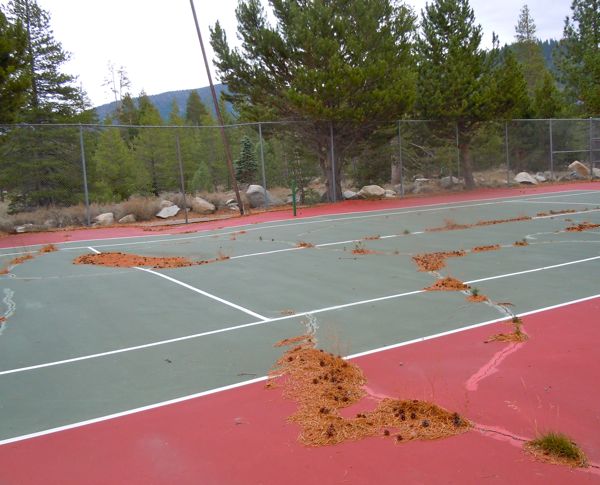
No one talks about the sorry shape Tahoe Paradise Park is in -- and Measure S is supposed to help it. Photo/Kathryn Reed

No one talks about the sorry shape Tahoe Paradise Park is in -- and Measure S is supposed to help it. Photo/Kathryn Reed

What has people thinking voters will be more amenable to altering the measure now is that the cycling community is being considered. With Measure B, the money allocated for bike trails would have been spent on ball fields.

Measure R, as the 2011 rewrite is being called, would allow bike trails installed pre-Measure S to be fixed with these funds that will continue to be collected until 2030.

The tax won’t change; just how it can be spent will be.

It’s at the June 30 meeting of South Lake Tahoe Recreation Facilities Joint Powers Authority that the final vote is expected as to whether to definitively go forward. All the language for the ballot must be approved by July 29. Those wanting to write a rebuttal to be included in the Nov. 8 election material would have until Aug. 2 to do so.

The three-member JPA made up of El Dorado County Supervisor Norma Santiago, South Lake Tahoe City Councilman Hal Cole and Tahoe Paradise Park board member Deborah Henderson met May 5 to talk about Measure R, which they dubbed it at the meeting.

They agreed to lose the Little League specific language and change it to youth baseball and softball fields. And instead of targeting improvements for the fields at Rufus Allen Boulevard and Lyons Avenue, money could go to fields within the boundaries of the special district.

Henderson relayed the message that her board would not support Measure R if there were any known opposition to it because of not seeing the money to do so as being a worthy expenditure.

It cost $18,000 (money that is collected through Measure S) to bring Measure B to the ballot. It’s not the people advocating for these changes that must incur the expense to do so, it’s the taxpayers via Measure S. This in turn means less money going toward recreation. It could cost that much or double that amount to bring Measure R to voters in November. It’s dependant on sharing the costs with other entities that have elections in November.

Santiago said the legalities of this are spelled out in the election code.

Gender equality

Part of the reason for making the language encompass girls and boys is Senate Bill 2404 enforces the civil rights of girls in community athletics as an institution in local jurisdictions and special districts.

The whole Title IX issue of equity in athletics at the K-12 level may play a roll as well as the lines of ownership of the fields becomes more convoluted, along with maintenance and accessibility.

Marilyn Breisacher voiced her concerns Thursday about the disparity among fields used for softball and baseball. The latter are in much better shape, including basics like covered dugouts.

To counter Little League coach Carl Buchholz’s statement that every organization should be doing its part to keep fields playable, Breisacher said that would be easier if the softball teams didn’t also have to pay to use the field at STHS.

Breisacher is also concerned girls will be losing a field in a proposal circulating amongst the city and Lake Tahoe Unified School District staff that would alter the use at South Tahoe High School. That whole issue – which would include a $250,000 commitment from the city – is scheduled to be before the City Council May 17.

“Boys’ baseball teams currently have a decent field and concession building at South Tahoe Middle School. In order to bring about equity, LTUSD will construct a comparable concession building at the girls’ softball field, which will be available to ASA and other teams. Restrooms for their facility will be constructed as part of the new Joint Use Student Union Building. The city of South Lake Tahoe through CACC (Community Athletic Coordinating Council) funds will improve the fields and assist in the material costs for the girls’ dugout,” LTUSD Superintendent Jim Tarwater wrote in an April 28 letter to the South Lake Tahoe City Council.

Another item in Title IX is that improvements to a playing area must be equal for the genders. While the football field at STHS gets lights this summer for its games to be played Friday nights, the theory is this opens the field up for girls soccer on weekends when normally football had access to the field.

Not everyone is in agreement that this meets the spirit of gender equality in K-12 sports because the improvements are in fact being made for football – a sport played by boys. The improvements to the STHS fields are the result of a lawsuit. Time will tell if the football field lights will prompt another Title IX lawsuit.

Some history

Originally Measure S was to pay for an ice rink ($4.3 million facility opened in 2002), four ball fields ($1.3 million spent near Lake Tahoe Community College on one field that opened in 2005), improve Tahoe Paradise Park (no evidence exists that has been done), and maintain 25 miles of new bike trails (about 10 miles have been built).

Most of the $625,000 that is collected annually is spent on bond principal and debt — $400,000. Tahoe Paradise Resort Improvement District receives $50,000 a year, as does ball field maintenance. Bike maintenance is $5,000 per new mile of new trail, with up to $125,000 set aside/spent per year.

Another $4,000 a year (or $40/hour) goes to John Upton, the loan paid staff member. He was not at Thursday’s meeting.


Funding withering away for Tahoe environmental projects

By Kathryn Reed

The money train known as SNPLMA (or Southern Nevada Public Lands Management Act) is making its final run to the Lake Tahoe Basin.

What this means is the millions of dollars that have floated to the region in the last decade will cease to exist after the round 12 dollars are allocated this summer and then distributed early next year.

More than $300 million has been spent in Lake Tahoe from the sale of federal land in Southern Nevada. The Lake Tahoe Federal Advisory Committee is taking comments until May 9 on proposed projects for the last round of money.

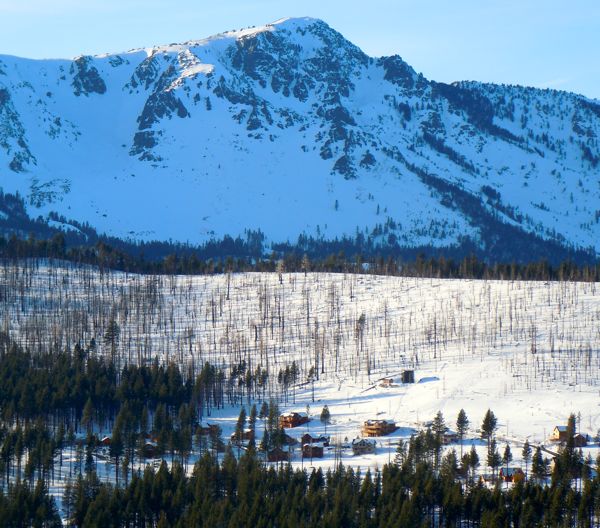
Fuels reduction projects are part of SNPLMA money -- with idea of not having another Angora burn area. Photo/Kathryn Reed

Fuels reduction projects are part of SNPLMA money -- with the idea of not having another Angora burn area. Photo/Kathryn Reed

These millions of dollars have gone toward the environmental improvement program that was started in 1997 after then President Bill Clinton’s visit to Lake Tahoe. That also launched the annual summer environmental summit.

Many of the 25 proposals received for round 12 funding are the same or similar in nature to previous requests. The themes are: forest health, watershed, water quality and habitat restoration, air quality and integrating science.

Here is some information about investments from 1997-2010.

The concern going forward is how the various agencies in the basin and local governments will come up with the necessary dollars to do the work required of them in the EIP.

“We’ll get pretty creative as partners,” said Jeff Marsolais, deputy forest supervisor for Lake Tahoe Basin Management Unit.

Although Marsolais has been in the basin for less than a year, he is finding people willing to work together for the common good and not being territorial. Part of this change to be more collaborative and cooperative was the result of the devastating 2007 Angora Fire that leveled 254 houses.

Fuels reduction projects are a huge component of SNPLMA funding – especially in recent years. The preliminary recommendation is to spend $3 million of the $34.1 million total in round 12 on the Carnelian Hazardous Fuels Reduction & Healthy Forest Restoration project. These types of projects around the lake could be funded in round 12.

“I don’t think we enjoyed that support or focus pre-Angora because of some of the political winds blowing at the time,” Guy LeFever, fire chief of Tahoe-Douglas Fire Protection District, said of fuels reduction projects. “Things totally changed 180 since then.”

Marsolais uses the example of the basin fire chiefs who were unable to get SNPLMA money for a white pine project being able to work with the Forest Service to get money to demonstrate creativity.

He and others are saying partnerships like that is what will keep money coming to Tahoe.

With reauthorization of the Lake Tahoe Restoration Act languishing in Congress and odds the California water bond on the November ballot will fail, the money well is dry.

Marsolais said it’s time to stop looking at one entity as the provider of money.

But specifics about where the millions of dollars are going to come from to keep up with state and federal mandates cannot be provided by anyone because the money isn’t there.

Marsolais also pointed to everyone needing to tie projects together in order to leverage dollars.

However, that isn’t exactly happening on the South Shore. The much talked about South Shore Hazardous Fuels Reduction & Healthy Forest Restoration project was stalled a bit under the previous LTBMU regime. Environmental documents on the project should be released by the end of this summer.

It calls for 10,000 acres to be treated in 10 years.

While the $1 million requested for the South Shore project in SNPLMA round 12 was not recommended by the Federal Advisory Committee in April to be funded, the Forest Service has socked away $16 million for the project for whenever it starts.

Had the wheels of government spun slightly faster, though, this project could have been done while South Lake Tahoe worked on its projects in the center of town – including the Lake Christopher project.


South Tahoe on course to make capital improvements

By Kathryn Reed

A plan of action with clear priorities is being developed for South Lake Tahoe’s infrastructure, facilities and equipment.

Jim Marino, who is in charge of the city’s Capital Improvement Program, on Tuesday methodically laid out for the five council members the importance of creating a five-year plan, how getting money for projects today requires being shovel ready, and that each department in the city needs to have a master plan.

“The purpose of the CIP plan is to allow the City Council to accurately prioritize, fund, and implement projects that align with the strategic goals and objectives of the city, while effectively maintain and extend lifespan of existing assets,” Marino wrote in the staff report.

1999 was the last time a five-year plan was developed. But for the most part, work done in the last decade was based on where grant dollars came from – and little or no other reasoning was used.

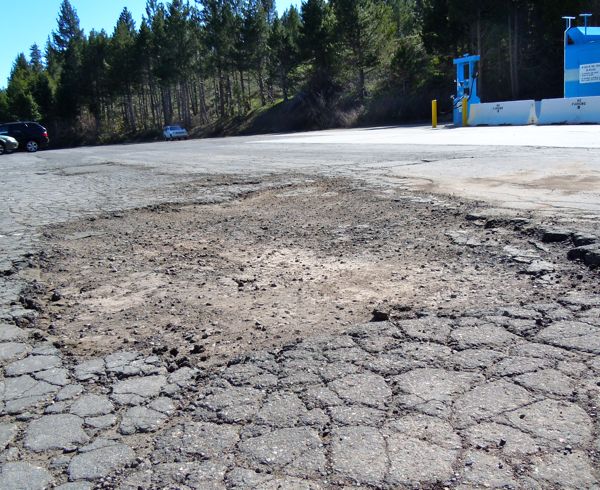
Pot holes are just a system of the lack of attention South Tahoe has shown for capital improvement in the city. Photo/LTN

Pot holes are evidence of the lack of attention South Tahoe has shown for capital improvement in the city. Photo/LTN

Water quality projects always got the priority because of regulations from the Tahoe Regional Planning Agency and Lahontan Regional Water Quality Control Board. Those two entities govern much of what the city and five counties in the Lake Tahoe Basin can do regardless of what local governments deem a priority. It’s about lake clarity and reducing sediment – all other projects are secondary, according to these two regulatory bodies.

But to the city’s discredit, until now it has not been proactive in devising plans that meld projects within the city or adjoining jurisdictions. Not having master plans for each department is part of the problem.

Items that would qualify as capital improvement projects in the three categories include:

Infrastructure:

• Highway 50 streetscape improvements

• Sierra Boulevard streetscape

• Harrison Avenue streetscape

• Tahoe Keys Boulevard right turn lane

• Linear Park bike trails

Facilities:

• Bijou Golf Course driving range

• Regan Beach restroom/concession facilities

• Reconstruct general aviation apron

• Recreation center fitness center reconstruction

• Replace roof at fire station No. 2

Equipment:

• Fleet replacement

• Replace SWAT rifles

• Video conferencing system

• GIS system

• Replace police department body armor.

Another point that was brought up May 3 is the city does not allocate money for regular fleet replacement or maintenance costs of projects.

Marino used the example of the three-year Highway 50 Trout Creek to Ski Run Boulevard project that starts this month. While Caltrans makes millions of dollars in improvements, it will be the city picking up the quarter of a million annual maintenance costs for landscaping, lighting and snow removal.

The council agreed maintenance and operation expenses need to be considered as projects come before them for approval. It’s also an ongoing expense that must be budgeted.

It was stated that the Finance Department is going to have to figure out a different way of how it accounts for certain expenditures to make the budget work.

“Redistributing fees where they belong (is the first step),” Marino said. “Asset management software can collate costs over years. Excel spreadsheets can only go so far.”

Another thing Marino and City Councilwoman Angela Swanson addressed is having true capital improvements part of this plan. Currently, items like guns for the police department and computer software are listed under CIP. This is not standard operating procedure for most cities or businesses.

Marino this week plans to start meeting with department heads to find out their list of priorities.

Health and safety concerns, along with regulatory compliance will be key reasons for a project to be at the top of the list. How to fund them will be another component.

Before the council is asked to put its blessing on priorities, the city’s new Fiscal Sustainability Committee and the Planning Commission will review staff’s list of priorities. Marino plans to have the list before the council this summer so priorities are in place as the 2011-12 budget is adopted.

In other action the council:

• Appointed the following people to the newly formed Fiscal Sustainability Committee – Jerry Bindel, Jill Stanton-Bricker, Dick Derby, Brenda Knox, Jon Kingsbury and Dan McHale.

• Without comment, approved the original $10,000 fee for the consultant working on specs for a snowblower at Lake Tahoe Airport. Cost to the city is $500. The rest is from an FAA grant. This is half the cost that was on the last council agenda.

• Approved wording on letters that will be sent to the Nevada Legislature supporting SB271 in the sense the Tahoe Regional Planning Agency needs to improve itself; and a letter to the board overseeing the League to Save Lake Tahoe. The final version of the latter is then intended to be sent to media outlets as an opinion piece.


Mining unexpectedly infuses millions into Nev. budget

By Anne Knowles

CARSON CITY – Nevada’s next biennium budget just got $217 million bigger thanks to mining, the Ruby Pipeline project in Northern Nevada and a stabilizing economy.

The Economic Forum, a panel of five businesspeople appointed by the governor and Legislature, met Monday to review its forecast of state revenue for the current fiscal year and the next biennium. By law, the state is required to use the forum’s forecast to build its budget.

After hearing presentations from the state’s taxation department, budget office and the Legislative Counsel Bureau’s fiscal analysis division, as well as from an economist from Moody’s Analytics, the forum voted to increase the forecast for fiscal year 2011 by about $97 million, fiscal year 2012 by approximately $59 million and fiscal year 2013 by almost $61 million.

nevadaFiscal year 2011 ends in June, but the additional revenue forecasted for it can be used in 2012, said Russell Guindon, principal deputy fiscal analyst with LCB’s fiscal analysis division, bumping the 2012 budget by a total of about $156 million.

“People have asked of it matters since 2011 is almost over, but it does matter in that those revenues will go into a fund balance and can go forward into 2012,” Guindon said.

The bulk of the additional money is expected to come from the state’s sales tax, which is benefiting from sales of mining equipment and taxes paid by workers on the Ruby Pipeline, a gas pipeline being laid across all of Northern Nevada in Elko, Humboldt and Washoe counties.

Also, visitor numbers were higher than expected, pushing up revenue from the live entertainment tax paid on tickets to events like Celine Dion concerts and other shows, as well as adding to retail sales tax coffers. The forecast on revenue from the room tax paid on lodging was also increased, from an earlier estimate of $104.1 million to $108.5 million in fiscal year 2011. The tax is set to expire – or “sunset” – at the end of this fiscal year, not generating any more income for the next biennium unless it is extended by the Legislature.

Visitors, however, aren’t gambling like they once did. Percentage fees on gaming wins were actually forecasted downward by the forum, from an earlier forecast of $658.6 million to $647.9 million in fiscal year 2011, from $679.5 million to $665.4 million in fiscal year 2012 and $702.2 million to $683.4 million in fiscal year 2013.

And although the state’s modified business tax is being lowered, and bringing in lower revenue than before, the forecast for it was upped by more than $30 million over the next three fiscal years.

There was also some positive news on the jobs front for Nevada, which still has the nation’s highest unemployment rate. In March, the state recorded positive job growth and the unemployment rate dropped to 13.2 percent, the lowest rate since late-2009, according to Bill Anderson, chief economist with the Nevada Department of Employment, Training and Rehabilitation.

Most of the job growth, said Anderson and others, has come from the leisure/hospitality industry, which added 5,400 jobs in the last 12 months, and healthcare and professional services. The labor pool is also shrinking, either because people are leaving the state to find a job or because they’re still here but have given up looking for work, said Anderson.

“For a decade we were the fastest growing state in the nation and now we’re doing a 180 off that,” Anderson said May 2.

All the economists warned, however, that any number of factors could adversely affect the state’s stabilizing but fragile economy, especially the price of gas, which, if it continues to rise, could deter visitors and sap discretionary income.


Caltrans sticking with May 11 to close Echo Summit

By Kathryn Reed

Caltrans is not backing away from its May 11 start date to close Highway 50 over Echo Summit.

A conference call the afternoon of May 2 between state highway officials, state Sen. Ted Gaines, reps from the two South Shore chambers of commerce, Lake Tahoe Visitors Authority’s Carol Chaplin, Steve Teshara of South Shore Transportation Management Association, South Lake Tahoe staff, a California Tourism and Travel Commission official and Andrew Strain from Heavenly ended with Caltrans not backing down from its schedule.

This was the second conference call of the day.

Highway 50 over Echo Summit will be closed May 11 for 10 solid days. Photos/Kathryn Reed

Highway 50 over Echo Summit will be closed May 11 for 10 solid days. Photos/Kathryn Reed

Caltrans promised the highway would be open by noon on the Friday of Memorial Day weekend. Of course, as has been the caveat all along, everything is weather dependent.

The closure for 10 days is so the rock barrier that is crumbling can be replaced for safety reasons.

What had South Shore officials in distress is that it means people coming to the May 15 Amgen Tour de California bike race will need to do a bit of touring themselves to reach the area.

“When all of the factors as we understand them today were weighed, the May 11th start date was considered by all to be the wisest course of action. This, despite the fact that all recognized that a detour during Amgen is undesirable and that we must all work to ensure that visitors know that South Lake Tahoe is open for business and a great place to watch the race,” B Gorman, CEO of Lake Tahoe South Shore Chamber of Commerce, told Lake Tahoe News.

A series of letters between Caltrans and South Shore officials dating to last fall indicate officials should not have been surprised by the start date.

Plus, a series of meetings between the city, Caltrans and chambers took place two years ago. The South Tahoe Chamber of Commerce was making presentations to the City Council as early as August 2009. Caltrans made a presentation to the council the month before.

What does have some surprised is why the tourism agency that represents the South Shore would ever go after the country’s most prestigious professional bike ride for 2011 knowing the main artery to get to the South Shore could be off-limits. Chaplin did not return phone calls.

The summit should be closed for 10 straight days and then opened to controlled traffic for about six weeks.

According to Gorman, Caltrans is updating the reader boards with the actual dates. What the ones at the base of Echo Summit heading west and the one at Johnson Pass Road heading east said the morning of May 2 was “Closed Early May.”

This has some people confused since it is early May.

Although Johnson Pass Road is clear, heavy machinery prevents people from using it right now.

Orange signs saying “road closed” are up – with the words covered until the work begins.

More information on the schedule and alternative routes to the area are in this story.

ngg_shortcode_0_placeholder (Click on photos to enlarge.)


USFS supe brings experience, forward-thinking to basin

Publisher’s note: Lake Tahoe News sent Nancy Gibson, who came on board in April as supervisor of Lake Tahoe Basin Management Unit, a series of questions. She obliged us with the following responses in between countless meetings and unpacking boxes.

Name?: Nancy Gibson

Nancy Gibson

Nancy Gibson

Age?: Umm. How about, I have 33 years of Forest Service experience in three regions (Region 1, Montana; Region 6 Oregon; and Region 5, California) working with multiple administrative and natural resources staffs in both National Forests and a Regional Office. I’ve lived primarily in rural communities in Missoula and Stevensville, Montana; Dufur, Oregon; Yreka, Eureka and, now, South Lake Tahoe, California. I was born and raised in Tucson, Arizona.

Why did you apply for the supervisor position of Lake Tahoe Basin Management Unit?: Being a line officer somewhere in the Western United States has been a long-held career goal of mine. When I took a 120-day temporary assignment to the Lake Tahoe Basin in the winter of 2007, this place went to the top of my list for a unique place to live and work. My tenure on the Six Rivers National Forest was a particularly valuable springboard because of the concerted restoration activities and key emphasis on hydrologic systems in the coastal range. I believe my administrative schooling and natural resources-based experiences mesh very well for the leadership tasks of this position.

What do you anticipate will be the most significant differences between being a deputy supervisor and now being supervisor?: Any differences will be subtle given my emphasis on teamwork between these two positions. Typically, there isn’t a legal distinction in delegated authorities between the deputy forest supervisor and forest supervisor. I will provide leadership direction in determining program priorities while working closely with the deputy to ensure we are speaking with one voice. From an organizational standpoint, the deputy will tend to focus on operational functions and the supervisor will focus on external relationships. Again, these functions will, at times, be interchangeable. This is a successful model I’ve witnessed in my past two assignments and will likely adopt here.

In the Six Rivers National Forest where you last worked the archaeological dig programs at the Chinese mining camps were popular for the public to participate in. Do you think doing something like that in cooperation with the Washoe Tribe might be instituted in the Lake Tahoe Basin? Why or why not?: The Passport in Time program is a valuable avenue for engaging the public in understanding past experiences for better cultural awareness. Whether or not we would look at local participation depends on a number of factors, including the desire of local partners, such as the Washoe Tribe, current staffing availability, and funding via appropriated dollars or partnership contributions. I’m somewhat familiar with the very successful Conservation Education program of the basin and will delve deeper into these and other opportunities as I progress in my tenure.

The U.S. Forest Service was responsible for safety on rivers like the Smith in your former jurisdiction. Might the USFS look into doing something like that on the Upper Truckee River? Why or why not?: Public safety is a shared responsibility of a variety of public entities. Again, I will become more familiar with such local cooperative agreements in the months ahead. Generally speaking, the Forest Service takes a lead role in natural resources management and protection within its boundaries while other agencies take the lead, and we assist, with regard to public safety. Oftentimes, due to our remote administrative sites, Forest Service personnel are “first responders.” However, this doesn’t preempt the responsibilities of other public resources such as city/county fire departments, search and rescue, and the like for whom we play a supporting role.

Fire lookouts generated cash at your last job as overnight venues for backpackers. Could you see implementing some sort of backcountry hut system in Desolation Wilderness or in cooperation with an entity like the Tahoe Rim Trail Association? Why or why not?: My familiarity with the Lookout Rental Program stems from experiences on the Bitterroot and Mt. Hood National Forests (Montana and Oregon, respectively) with respect to existing decommissioned administrative sites (lookouts). Again, the management of such sites presents a future commitment of staffing and funds and, if penciled out, could very well be self-sustaining and worth looking into. With respect to the Desolation Wilderness, much depends on what infrastructure already exists and whether or not any proposals are in keeping with the spirit of the Wilderness Act. Of course, pursuing these opportunities is best done with an eye toward partnerships, which, through local commitment, is one of the best ways to ensure a good idea sticks.

What are your thoughts about engaging the public in being volunteers on National Forest lands? Most of the Desolation Wilderness volunteers are from outside the basin and some inside the basin who have tried to participate have had negative experiences.: The Volunteers in the National Forests Act of 1972 was designed especially for the purpose of engaging local volunteers in the recreational and conservation education activities of the National Forest. I’m a true believer in the benefits of this act and have used this authority many, many times. I’m curious to hear any specifics regarding the negative experiences because I believe volunteer programs of the Forest Service are of real benefit to both the Forest Service and our rural communities in terms of gaining experience and understanding of our public service role.

Money is always an issue. The federal government – of which your agency is part of – almost shutdown this spring. Funding for projects in the basin is evaporating as cash from the Southern Nevada Public Lands Management Act dry up, plus the Lake Tahoe Restoration Act reauthorization is languishing in Congress. How do you cope with a stagnant or declining cash flow?: In general, we operate on annual appropriations and it is always a challenge if the pendulum of federal funding swings too quickly in either direction. The best we can do is spend a bit of concerted effort in workforce planning to forecast anticipated resources needs and obligations while developing a skilled workforce to match those needs. Target accomplishment is not only specific to meeting the current needs as designed through these appropriated or other funds (such as SNPLMA) but also to insure we are well positioned for resources challenges five- to 10-years out.

Each person who occupies the White House seems to change the rules about roads on Forest Service property. What is your philosophy on roads?: A common adage for roads is nobody likes them, but everybody uses them. My philosophy is best depicted as the wise management of roads that can be maintained, both environmentally and financially, over time. That being said, what we can’t necessarily afford today may also be the best level of access needed in a fire suppression activity, as well as a resources restoration and monitoring activities, today and into the future. Like many things driven by the uncertain nature of the natural world, it is sometimes best to take heed on a case-by-case basis without unnecessarily jeopardizing future opportunities.

The Tahoe National Forest has two people who work on avalanche forecasting. LTBMU has zero. Any thoughts about increasing the basin’s number?: We’re fortunate that the Sierra Avalanche Center, a partnership with the Tahoe National Forest, actually forecasts for the entire Central Sierra, including the Lake Tahoe Basin. The Lake Tahoe Basin Management Unit features a link to the center’s advisories on our main webpage, to assist those planning backcountry excursions.

Fuels reduction has been a hot topic in the basin following the destruction of 254 houses in the June 2007 Angora Fire. Most of the 3,000-plus acres that burned on the South Shore belong to the USFS. What is your philosophy when it comes to preventing a catastrophic fire?: Prevention, on the part of public and private landowners, is key and I will continue with the basin’s focus on an aggressive hazardous fuels reduction program. Prevention carries with it a dual responsibility. I am very familiar with the idea of defensible space, but, for my own benefit as a prior landowner, prefer the term “survivable” space. I would hate to see a firefighter or any emergency responder die or become seriously injured in the course of protecting property that has, by the nature of its location, created an extreme vulnerability. For my own property, I did brush work that didn’t require anyone to “defend” it. Rather, I created fire protection zones that, should a fire come through, the structure would likely survive or, if it didn’t, I would know I did what I could and no lives would be lost. We can only operate within the scope of public lands (and public land interface) within the funding established for this purpose. Other property owners must heed the risks they’re willing to take in managing what fuels exist in their immediate vicinity along with the building and landscaping materials they use in their structures.

What type of outdoor recreation activities do you like to partake in?: I do, and have done, many things on a seasonal basis. Typically, I take day hikes, camp, and generally like to explore the surrounding areas, both indoors (museums, lighthouses, historical sights) and outdoors (mountain peaks, lakes, rivers and streams). I also mountain bike, though am an admitted novice. In Montana, I regularly ice fished and cross country skied throughout the winter months and backpacked during the summer. Now, on many of my free weekends, my husband and I like to arrange visits with our children; son, Brady, in Klamath Falls, Ore., and daughter, Brenna, in San Francisco.


Osama bin Laden dead; crowds celebrating in U.S.

By Peter Baker and Helene Cooper, New York Times

WASHINGTON — Osama bin Laden, the mastermind of the most devastating attack on American soil in modern times and the most hunted man in the world, was killed in a firefight with United States forces in Pakistan on Sunday, President Obama announced.

In a dramatic late-night appearance in the East Room of the White House, Mr. Obama declared that “justice has been done” as he disclosed that American military and C.I.A. operatives had finally cornered the Al Qaeda leader who had eluded them for nearly a decade and shot him to death at a compound in Pakistan.

“For over two decades, Bin Laden has been Al Qaeda’s leader and symbol,” the president said in a statement carried on television around the world. “The death of bin Laden marks the most significant achievement to date in our nation’s effort to defeat Al Qaeda. But his death does not mark the end of our effort.” He added: “We must and we will remain vigilant at home and abroad.”

The death of Mr. Bin Laden is a defining moment in the American-led war on terrorism. What remains to be seen is whether the death of the leader of Al Qaeda galvanizes his followers by turning him into a martyr, or whether it serves as a turning of the page in the war in Afghanistan and gives further impetus to the Obama administration to bring American troops home.

The death of Mr. bin Laden came nearly 10 years after Al Qaeda terrorists hijacked four American passenger jets and crashed them into the World Trade Center in New York, the Pentagon outside Washington and the countryside of Pennsylvania. Late Sunday night, as the president was speaking, cheering crowds gathered outside the gates of the White House shortly before midnight as word of his death began trickling out, waving United States flags, shouting in happiness and chanting “USA! USA!”

Read the whole story


Kirkwood making strides to tie into PG&E electric lines

By Kathryn Reed

KIRKWOOD – While utility rates are not likely to go down for decades at Kirkwood, the reliability of the lights staying on will increase by tapping into PG&E’s lines.

About a dozen people showed up Saturday to voice their concerns and opinions about the four proposals being studied by the U.S. Forest Service. (One option is to do nothing.)

Rick Hopson and Sue Rodman of the Forest Service listen to questions April 30 about the Kirkwood-PG&E project. Photos/Kathryn Reed

Rick Hopson and Sue Rodman of the Forest Service listen to questions April 30 about the Kirkwood-PG&E project. Photos/Kathryn Reed

Kirkwood Meadows Public Utility District wants to build and operate a 34.5-kilovolt power line. Twenty-eight miles away is where the power would come from – PG&E’s hydroelectric plant at Salt Springs Reservoir in Amador County. That is alternative 2 – the Forest Service’s preferred route.

However, it will be up to Forest Supervisor Ramiro Villalvazo to make the final decision.

Most of the transmission lines would be underground. But lines would be above ground from the reservoir to Lower Bear River Reservoir. Near the subdivision is where a substation is proposed.

Clint Selby, who is on the board of directors for the Bear River Summer Homeowners Association, said his group voted unanimously for alternative 4 because the substation would be farther from cabins than other proposals.

Bear River residents were initially concerned it would interfere with the forest experience because it comes with a 12-foot fence.

The group is not in favor of no action “because we want Kirkwood to have power.”

The power supplier is going to change this summer when the purchase agreement between KMPUD and Mountain Utilities, an investor-owned utility regulated by the California Public Utilities Commission, go through. The deal was signed in April 2010 for Mountain Utilities to be the electric service provider for the residents of Kirkwood and the ski resort.

An environmental impact study was required because 85 percent of the area is on the Eldorado National Forest.

“We would need to give them a special use permit,” Rick Hopson, USFS district ranger, told Lake Tahoe News during a break.

The other concern of the Forest Service is that with about two-thirds of Kirkwood Mountain Resort being on federal land, the agency wants to ensure riders have lifts that keep running.

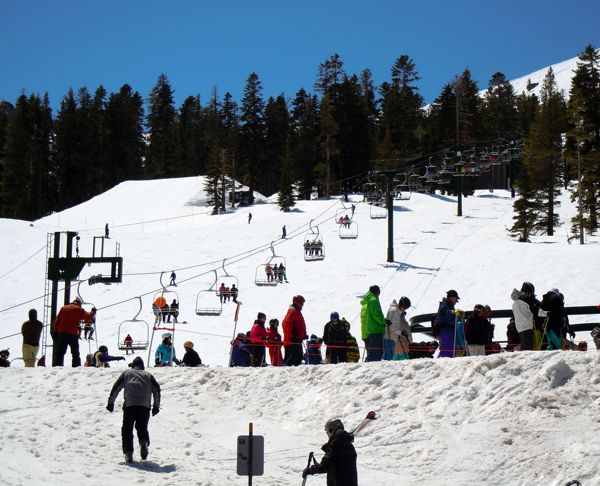
Plenty of power for the chairlifts at Kirkwood on April 30.

Plenty of power for chairlifts at Kirkwood on April 30.

That hasn’t always been the case at this resort that straddles El Dorado, Amador and Alpine counties off Highway 88. One of the worst situations was in January 2010 when the powerhouse burned to the ground and skiers were stuck on inoperable lifts.

(The powerhouse should be rebuilt by the start of next ski season and would act as a backup once PG&E is on board. Since January 2010 diesel generators on flatbeds have been keeping the lights on and lifts turning.)

Michael Sharp, Kirkwood Meadows PUD assistant manager, said during the April 30 meeting that not having to rely on the diesel generators would help the entire area in terms of reliability and costs.

“We want a more stable rate in the future,” Sharp said.

With a bond needed to pay for the multi-million dollar project, that won’t be paid off for 20 to 30 years. While that is outstanding, ratepayers won’t see a drop in rates.

Right now Kirkwood’s rates range from 35 cents to 60 cents per kilowatt-hour. The peak was 97 cents in July 2009.

“These rates are four to 10 times greater on average per kilowatt-hour than charged by Pacific Gas & Electric,” according to the draft EIS.

The plan is for Kirkwood to secure enough electricity to power the valley at full build-out. When that will happen depends on whose real estate-economic crystal ball one looks at.

But resort officials know what it will look like. Currently there are about 700 electric customers – it will max out at 1,400. Maximum peak overnight guests is 3,000 and could double in the future. The mountain can handle 6,932 skiers a day, which is projected to grow to 10,300. Current use is 7,000-megawatt hours; which is projected to more than triple.

It’s possible the line could be put in starting summer 2012.

To review the draft environment impact statement, go online. Comments may be sent to comments-pacificsouthwest-elderado@fs.fed.us.

Another meeting will be May 3 from 7-9pm at the Amado County Board of Supervisors office, 810 Court St., Jackson.

Susan Wood contributed to this story.