LTUSD, LTCC able to cope with guv’s budget proposal

By Kathryn Reed

South Lake Tahoe education officials are cautiously optimistic Gov. Jerry Brown’s budget will stay intact as presented earlier this month – at least when it comes to dollars for schools.

The Friday before Brown released his proposal on May 16 all the predictions were dire.

schoolsLake Tahoe Unified School District CFO Deb Yates said a sigh of relief reverberated throughout the state with the announcement Proposition 98 would be fully funded.

This 1988 voter approved initiative guarantees a certain level of funding for K-14 education. However, in recent years the folks in Sacramento have not honored that agreement.

For LTUSD this means restoring more than $1.2 million to the budget. But it does not mean being able to hire back teachers or staff who were laid off or restoring programs.

“We are still deficit spending $1.2 million a year. It’s a systemic problem,” Yates told Lake Tahoe News before the May 24 board meeting. She gave the board an update that evening.

Adding to LTUSD’s woes is enrollment continues to decline, though it looks like the district will have lost less than 100 students from the start of the school year.

What the state budget will do for LTUSD is not make the proposed cuts for the 2012-13 school year be as drastic. But until a budget is signed, anything can happen in Sacramento.

Built into Brown’s budget is a five-year extension on taxes that are supposed to expire this year.

However, state Sen. Ted Gaines, R-Roseville, when he was in South Tahoe on Tuesday said having the taxes go away will not adversely impact education per the current budget proposed by the governor. Gaines is adamantly opposed to keeping the taxes going because it means the average family of four pays out $1,000/year.

Part of what is allowing the governor to create a rosier budget is revenues are projected to be close to $7 billion more than originally anticipated. But the state still must close a gap of nearly $10 billion.

The state budget is supposed to take effect July 1, but that hasn’t happened for years. LTUSD and Lake Tahoe Community College start their fiscal years July 1 as well. The LTUSD and LTCC boards expect to approve their respective budgets next month.

The governor is proposing to reduce preschool funding by 15 percent. This will not affect preppie-K in LTUSD. But it could have an indirect impact on the district as childcare centers in town close.

The Al Tahoe Child Development Center is closing at the end of June because of cuts. Kindertown Day Care/Preschool has lost its state funding. All of these changes have low-income parents scrambling to find a place for their children.

Another unknown impact to LTUSD is the probable shift of mental health services to education.

Yates said she doesn’t know yet what the impact to the district will be. Two students in the district are in a non-public school setting. Each child could cost the district upward of $200,000 a year.

“I have never seen adequate funding follow special education in all of my 30 years,” Yates said.

At the college board meeting that same night it was brought up that LTCC might need to seek a TRAN (Tax and Revenue Anticipation Note) to make payroll if the state does not have a balanced budget. The college projects a $1.2 million cash flow problem in September if the state holds back money. The state stops writing checks when the current budget expires June 30.

Marc Sabella, who is running the finance department because the college no longer has a vice president of Business Services, told the board the county office of education is hesitant to loan the college money because it has started the process the last two years and then backed away when it wasn’t needed. This is why the college is looking at a TRAN.

Board member Kerry David said Vicki Barber, superintendent of El Dorado County Office of Education, should be reminded it’s the people in the county who elect her and that perhaps she should be less worried about the charter schools in Southern California she wants to give money to.

The college board has until June 14 to decide about a TRAN. The negative about the TRAN is the college may only need the money for 30 days and it could cost $50,000 to $70,000 to secure the funding.

“We are optimistic while the budget is definitely tight next year, we hopefully won’t have to borrow money,” interim President Steve Maradian said.

He is estimating the college will take an $800,000 hit with what Brown has in the May revise budget.

Maradian said, “We’ve had to scrub the budget carefully” but it will be balanced when it’s presented to the board in June.

Pulled from the May 24 agenda was an item to discuss proceeding with hiring a VP of Business Services. The board is going to wait until the new president is on board to go forward with that idea.

In the mean time, the board bumped Sabella’s salary by $2,500/month on a month-to-month basis.

On a bright note, the college’s Child Development Center is breaking even, which hasn’t happened in years. Raising fees helped. And with the closure of childcare facilities in town this may bring youngsters to the college’s center.



Gaines gives Tahoe residents earful on TRPA, state budget

By Kathryn Reed

Money, TRPA, redevelopment agencies, water meters, ADA lawsuits, and California’s lousy business climate were some of the topics brought up Tuesday during an open forum with state Sen. Ted Gaines.

This was Gaines’ first visit to South Lake Tahoe since being elected to the state Senate in January. The Republican from Roseville is keeping up his tradition of visiting various parts of his district to connect on a more intimate basis with constituents.

In a one-on-one with Lake Tahoe News before the event started May 24 at Riva Grill, Gaines touched on how forest management practices continues to be a priority with him.

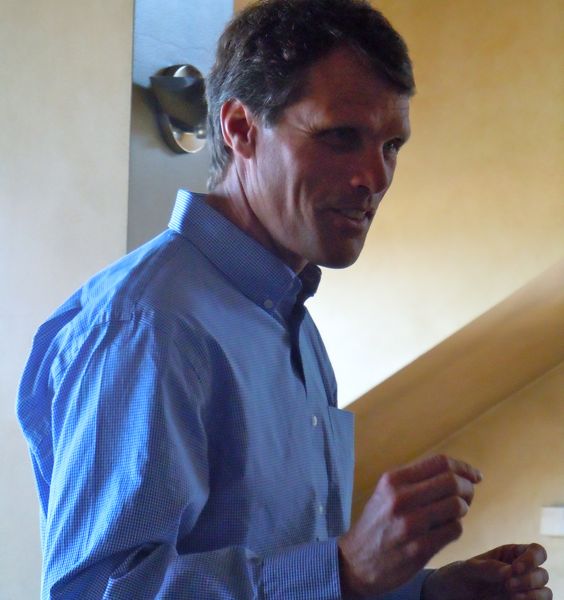
Ted Gaines speaks to constituents May 24 in South Lake Tahoe. Photo/Kathryn Reed

Ted Gaines speaks to constituents May 24 in South Lake. Photo/Kathryn Reed

He wants to create more public-private partnerships to make sure fuel thinning projects continue as the more traditional sources of funding dry up.

“If we can negotiate the right deal, it shouldn’t cost the taxpayer money,” Gaines said. “You need to look at what satisfies (the logging company) and what satisfies our goal.”

Gaines spoke a bit about his bill that would require Tahoe Regional Planning Agency’s Governing Board to file the 700 financial disclosure form. He had to do this when he was on the Placer County Planning Commission – a non-elected position.

“When you are making a financial decision for an agency, the public has a right to know any financial issues that should be disclosed,” Gaines said. “It’s part of living in a fish bowl. They are making huge decisions about the local economy at the lake.”

To the whole group he said he hopes SB271 in Nevada will bring what he calls much needed change to TRPA.

“While I agree (TRPA) has been overzealous with its authority, (the board) needs local control. My concern is you get people who are appointed who have special agendas,” Gaines said.

He believes a fully functioning TRPA will bring economic vitality to the Lake Tahoe Basin, along with the desired environmental improvements.

But Gaines is also not in the camp with the League to Save Lake Tahoe supporters.

“I’m tired of the League to Save Lake Tahoe litigating every project,” Gaines said.

Lew Feldman asked the senator what his take is on Gov. Jerry Brown’s desire to do away with redevelopment agencies.

Gaines said in a conversation he had Monday with the governor’s staff he does not believe that idea is going to go forward even though it was in Brown’s May revised budget.

“I’m not convinced there is enough support on either side to get is approved,” Gaines said.

Deb Howard brought up how redevelopment is the key to getting affordable housing built in South Lake Tahoe.

Gaines said even if redevelopment agencies are abolished there would still be a mechanism for getting that type of housing built as well as dealing with blighted areas.

When it comes to the state budget Gaines is adamantly opposed to continuing with the tax hikes that are supposed to expire this year. Brown wants them on the books for another five years and has tied his budget to them continuing.

Gaines recognizes the economy is still fragile, but sees glimmers of improvement in the technology, tourism and trade sectors.

Gaines also wants a better business climate for the state and will keep trying to get useless and conflicting legislation off the books.

“The governor’s message to us is he is not beholden to anyone. But I don’t see him acting to reform government. I would like to see him deal with pension reform and regulation reform,” Gaines said.

The senator praised Democrat Lt. Gov. Gavin Newsom for going with Republicans to Texas to find out how that state has improved the business climate and to see how it might translate to California. He also pointed out that with Newsom’s business holdings in Squaw Valley that he has his pulse on the Lake Tahoe economy.

Tom Davis wants the senator to do something about the lawyers who have hit up the South Shore and other areas of the state with lawsuits over the Americans with Disabilities Act.

Gaines said he is working with both parties to implement a piece of legislation that passed last year that would address this concern. He said the Trial Attorneys Association is the roadblock.

Andrew Strain bestowed praise on Gaines for interjecting himself into the Highway 50 Echo Summit issue when it looked like the road might be closed while ski season was still going on.

Gaines said he has lots of issues with Caltrans.

“We need to continue to work with Caltrans on their lack of communication and their skills,” Gaines said.

He mentioned how at last weekend’s press conference announcing the summit was open he arrived at the designated time but Caltrans didn’t start the event until two hours later.

“This nonchalant attitude of theirs needs working on,” Gaines said.


Standing water to make for a doozie of a mosquito season

By Stephen Ward

With summer approaching, residents and vacationers are beginning to flock to the lake and its resorts, basking in the sun and enjoying the season.

Unfortunately, they’re not the only ones who love the warm weather; mosquitoes are starting to pervade the Lake Tahoe region, and counties are stepping up their defense to ensure this mosquito season isn’t a nasty one.

Tahoe's other season -- mosquito season is about to arrive.

Tahoe's other season -- mosquito season is about to arrive.

Ada Barros, public information officer for Placer County’s Vector Control District, said Tahoe’s wet winter might result in this mosquito season being worse than in previous years.

“When the water pools earlier, that gives (mosquitoes) more habitat to develop,” Barros said.

Barros’ district covers the Truckee, Kings Beach and Tahoe City, as well as the northwest region of the lake.

Karen Bender, supervising environmental health specialist for El Dorado County Environmental Management, agreed with Barros, saying this summer is susceptible to an influx of mosquitoes.

“(El Dorado County) is expecting this season to be heavy with mosquitoes due to the large amount of moisture in the basin over the winter and into spring,” Bender said.

County officials aren’t the only ones predicting an escalated mosquito season. Gary Barbato, hydrologist for the National Weather Service, said this past winter created a lot of stagnant water in the area through snowmelt.

“Whenever there’s a lot of snowmelt, you’re going to have more ponding, and more mosquito activity,” Barbato said. “From what I know about water, that’s primary mosquito breeding ground.”

Barbato, in fact, does know quite a bit about water. He received a master’s degree in water resources from the University of Wyoming and has worked for the NWS for 30 years. He said the high water mark for runoff, an indicator of when the mosquito season will be at its apex, is estimated to be about June 6.

In order to prevent large mosquito infestations in the region, El Dorado County technicians check breeding sources and treated areas where mosquito larvae are found, Bender said. Some areas, such as Trout Creek, are not accessible for monitoring since logging activities are taking place, Bender said.

Barros said her group sprays two types of insecticides across Placer County, larvicide and adulticide. Larvicide is sprayed primarily in water and is used to kill premature mosquitoes, while adulticide is used to prevent mosquitoes capable of flight. Barros said her group has never needed to spray adulticide in the Tahoe region.

As well as spraying, Barros’ group tests dead birds for West Nile virus and has a sentinel chicken coop that it takes blood samples from regularly.

No cases of the West Nile Virus were discovered in humans last year in the Tahoe area, however three cases were found in the foothills of Placer County.

“A lot of folks don’t realize there are different types of mosquitoes,” Barros said. “Although there are some right now in the foothills, they’re not necessarily the ones that carry disease.”

Brooks Martin, a physician who specializes in family practice at Barton Family Medicine, said West Nile Virus symptoms are difficult to pinpoint, but no cases of the virus were discovered in his office last year.

“Unless people come in with meningitis-like symptoms, we generally don’t believe West Nile virus is the cause,” Martin, who has been practicing medicine in the area for more than 20 years, said.

Bender said no cases of West Nile virus occurred last year in her group’s area of the Tahoe basin, but warned that dogs and other pets can be exposed to West Nile in the same way humans can. Animals are resistant to the virus and rarely become ill, she said.

As for what people can do to prevent mosquito bites, Bender suggested eliminating all sources of standing water that can support mosquito breeding, including old tires and kids’ play toys. Another tip Bender said is to use insect repellent containing DEET.

Barros’ group advises people to exercise the three “D’s” — drain standing water, defend with repellent and long-sleeved clothing, and to call her district with any questions.


Bill to remove Nevada from TRPA moves to full Senate

By Anne Knowles

CARSON CITY — With two weeks left in the legislative session, a bill that would remove Nevada from the Tahoe Regional Planning Agency is finally making its way through the Legislature.

Senate Bill 271 is expected to move to the Senate soon for a full vote after several amendments to the legislation were approved by the Senate Government Affairs committee this morning. If passed by the Senate, the bill will move to the Assembly where it will be heard by the corresponding committee there.

Nevada is making progress in pulling out of the TRPA. Photo/LTN file

Nevada is making progress in pulling out of the TRPA. Photo/LTN file

The bill withdraws Nevada from the TRPA unless changes to the Compact outlined in the legislation are approved by Nevada and California lawmakers, and ratified by Congress. The withdrawal would take effect Oct. 1, 2013, unless extended by proclamation of the governor to Oct. 1, 2015.

The bill now calls for a report on the impact of exiting from the TRPA to be conducted by the Legislative Committee for the Review and Oversight of the Tahoe Regional Planning Agency and the Marlette Lake Water System. That report would be available to legislators next session, before any final decisions were made to leave the agency.

“There are plenty of places to stop (the process) if it proves to be problematic,” said state Sen. James Settelmeyer, R-Gardnerville, a sponsor of the bill and a member of the Senate Government Affairs committee, after the meeting.

Settelmeyer said he would not predict the bill’s chances of passage. Similar legislation has failed in the past.

The amendments proposed by the Senate Finance committee and approved by Senate Government Affairs include the oversight report looking into possible outcomes if Nevada leaves the current two-state agency. Other amendments that would alter the TRPA and need to be endorsed by California and Congress include removing the supermajority requirement for members voting on matters before the TRPA; a provision providing that anyone who challenges the regional plan has a burden of proof that it violate the Compact, and a requirement that the TRPA consider changing economic conditions so the plan does not adversely affect Lake Tahoe’s economy.

“If the economy improves, we can increase the environmental restrictions,” Settelmeyer said. “It can work to the environment’s benefit.”

If Nevada does leave the TRPA, an amendment to the bill provides that all projects previously approved by the TRPA would continue, or be grandfathered in.

The bill outlines the creation of the Nevada Regional Planning Agency should the state drop out of the existing agency now comprised of members from California and Nevada.


Skier visits drop 12% — too much snow to get to resorts

By Hugo Martín, Los Angeles Times

California ski operators often complain that they don’t have enough snow. This year, they’re complaining that they had too much.

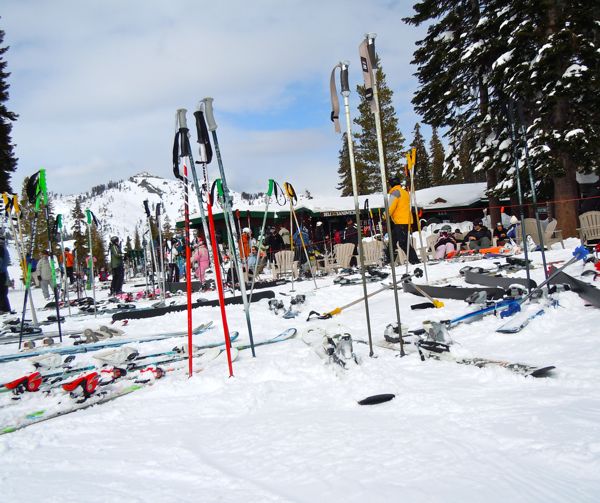
Mountain resorts saw a 12 percent decline in skiers and snowboarders this season compared with the previous one, with attendance falling to about 7.1 million, according to California Ski Industry Assn., the nonprofit trade group for the state’s major winter sports areas.

Snowstorms kept people from visiting ski areas in the 2010-11 season. Photo/LTN file

Snowstorms kept people from visiting ski areas in the 2010-11 season. Photo/LTN file

The trouble was that near-record snow too often closed roads or discouraged driving to the slopes under harsh conditions — particularly during crucial weekend periods.

“Had the snow fallen in the right times, it would have been a sensational season,” said Bob Roberts, director the trade group. “It was a challenging year.”

The bad timing began around the Christmas holidays and happened again in March, when fierce storms dropped so much snow on weekends that it prevented eager skiers and snowboarders from getting to the resorts.

Instead of colossal attendance numbers to match the massive snowfall this season, the state’s ski resorts have reported an overall drop in visitor numbers compared with last season, when there was less snow but easier access to the slopes.

In California, where all outdoor activities generate about $44 billion in spending annually, weather can affect ski resort revenue, the length of the white-water rafting season and even attendance at county fairs.

Read the whole story


Embracing China’s historical and modern marvels

By Kathryn Reed

BEIJING – “Don’t yell protest.”

That was my niece’s sage advice as we walked along Tiananmen Square.

As the largest public square in the world, this mass of concrete in itself is not so impressive. Its history, of course, is what makes it seem like something more than it is.

Police officers mill about. But they have no weapons visible. Military units march in. Also weaponless. But cameras adorn many of the light standards. In a corner across the street inside the Forbidden City are riot helmets and shields lined against a wall.

Each Terracotta Warrior is unique. Photos/Kathryn Reed

Each Terracotta Warrior is unique. Photos/Kathryn Reed

China, as the oldest continuous world civilization with records dating back 3,500 years, is a complex country.

On the one hand Beijing can boast of having one of the seven seven-star hotels in the world – the Morgan Plaza that opened just before the 2008 Summer Olympics. On the other hand, people are using construction tools that look like they came from the 1800s.

On one corner are high-end shops like Versace and Gucci. Across the street is a traditional market where with the right person in your group silk scarves can be negotiated down to $4.

In hotels the card key is inserted inside the room to turn on the lights. Taking the card when leaving means no wasted electricity while out of the room. Then there are many public bathrooms that require hovering and bringing your own toilet paper.

China is the world’s largest energy consumer and the world’s third-largest net importer of crude oil, after the United States and Japan. I would never want to drive there. Veronica says getting around on a bike is easy. Congestion is so rampant that fast-food places deliver via bicycle instead of automobile.

While hotels have wireless access, Facebook and Twitter are off-limits.

I had the opportunity to spend two weeks in China this spring. My sister, Pam, and I went to visit our niece who lives in Beijing. It was her college graduation present – which was her idea. In the process of planning our adventure we invited our mom along. Having someone speak near-fluent Mandarin and plan all of our travel inside the country made for one of the most relaxing trips I’ve been on.

Veronica made sure we didn’t get ripped off and Pam provided the frequent flier miles for all of us. Like most vacations, you can spend lots or little. For the most part, though, China is not expensive – except for Apple products.

Land of pandas

After an initial night in Beijing we flew to Chengdu. Chengdu is in the Sichuan Province – home of incredibly, fabulous spicy food.

Veronica said watch out for that tiny numbing pepper. It was in my mouth already. Naively I asked how it got its name. She said because it will make my tongue numb. It was soon making my throat numb.

This area is one of China’s agricultural regions. As the world’s most populous country (1.3 billion people), not having to import all of ones food is important. However, only 13.5 percent of the land is suitable for agricultural, though 40 percent of the labor force works in agriculture.

Peppers of all shapes, sizes and heat are available. They seem to be mixed in with everything. One of my favorites was the spicy peanuts. And the mushrooms. I never got tired of the variety of mushrooms I ate throughout the country; cooked differently each time.

Hot pot is a specialty of Sichuan. It’s similar to fondue in that veggies, meat and fish are cooked in a broth and everyone is sharing from the same pot.

We came to this area so I could see the pandas. Holding the little guy was definitely one of the highlights for me.

Having never been to China, everything was new and magical. And so much of what is built is to such a large scale.

The Leshan Buddha is the largest stone Buddha in the world at 233-feet tall and 92-feet across. Construction on it started in 713 AD.

Walking down the narrow stairs is worth it as you stare up at this piece of history that sits at the confluence of the Minjiang, Dadu and Qingyi rivers.

Taking a side trip, we stop off at a tea plantation. Rows of terraced plants that look like hedges grow in a bowl shaped area. Leaves are picked one by one.

Terracotta Warriors

Xi’an is the only city in China that still has a wall surrounding it. Like most cities in China, the history extends thousands of years. But what it is most famous for now is the 1974 discovery of the Terracotta Warriors.

Nearly 2,000 warriors have been unearthed. Each is life size and no two are alike. Experts believe more are buried, but new pits are not being searched for until scientists are able to find a technique to preserve the original color of the warriors.

Not having the technology of the 21st century, these soldiers have such precision and detail it’s hard to believe they were created in less than two years.

Emperor Qin had them built to protect him in the afterlife. They were in the ground for 2,000 years until a farmer discovered the artifacts.

In 1979, a museum opened at the site. The structure is built around the main excavation site.

PBS had a special about the warriors that aired earlier this month.

China’s capital

Beijing is huge, with more to see and do than a week allows. But, still, we felt like Veronica’s itinerary allowed us to hit the highlights, with some non-traditional stops as well.

The Great Wall is aptly named. At 5,500 miles, we barely touched it. To think this was built more than 2,000 years ago is mind-boggling. Though it’s not one of the original Seven Wonders of the World, modern lists would include it.

The Forbidden City is fascinating with its lore. There are 9,999 rooms in more than 200 buildings.

The Summer Palace is definitely worth seeing.

Walking around the Olympic Park was such a contrast to having visited so many historical sites. The modern architecture of the Cube and Birds Nest are so much more impressive in person than on television.

Spending an afternoon and evening in a cooking class just for the four of us was fabulous. It’s definitely not something that could be done in the U.S. because it was in the home (non-commercial) kitchen of three siblings. My stomach feels full thinking about it and I’m still wary of ever picking up a clever again.

Veronica found us a tea seminar through the Chinese version of Groupon. There’s a lot more to tea than boiling water and putting in a bag. And fact, I don’t know if tea bags exist in China. It’s all loose leaves.

Street food is excellent, though I’m glad I had someone ordering for me instead of just pointing to things.

All of the food in China was wonderful — nothing like what you get in the States.

ngg_shortcode_0_placeholder (Click on photos to enlarge.)


Foothills provide mountain biking, spectacular scenery

By Kathryn Reed

COLOMA – Hiking, biking and waterfalls – all in one day.

Blood, scratches and poison oak – all in one day.

Happy, irritated and in pain – all in one day.

The idea was to drop in elevation without going too far. Done. Then to mountain bike in a pretty area. Done. And to walk to waterfalls more than 100-feet high. Done.

Sue Wood on a bike trail May 7 outside Coloma. Photos/Kathryn Reed

Sue Wood on a bike trail May 7 outside Coloma. Photos/Kathryn Reed

If only I hadn’t fallen off my bike, landing smack in the middle of my back on a log about 7 inches in diameter.

The National Outdoor Leadership School says 50 percent of outdoor injuries come from falls. I think 100 percent of mine come from falling – or tripping. My back, left arm, right leg and both ankles have recovered from my tumble earlier this month.

Once I caught my breath, we kept pedaling along this rocky, single-track trail off Highway 49 near Coloma. Magnolia Ranch is part of the 362 acres that were acquired in 1996 by the American River Conservancy and Bureau of Land Management.

Green grasses more than a foot high and sprawling oaks are a welcome change from the muddy-snowy trails of Tahoe and all the pine trees.

Several trails for cyclists, walkers and equestrians leave from here. We head to the river trail. Rafters are making their way down the South Fork of the American River. Although they are in wet suits and helmets, the water looks appealing. It’s hot in this part of El Dorado County on May 7.

Wildflowers are out – mostly lupine, a few poppies and some yellow bush with buttercup-like flowers.

Sweat beads on our foreheads as we pedal. It’s more the sun than the exertion at this point.

Neither Sue nor I are gnarly mountain bikers and usually we start the season with something tamer than the trail we are on to get our legs, balance and arms all in sync. The rocks on the trail are testing us. I obviously failed one of the tests in a big way.

Still, even after landing with my head pointed toward the water, I got back on the bike. I’ll admit we had to walk our bikes at times. Finally, the trail disappeared because the river is running so high.

This section ends at Folsom Lake.

A change of scenery often provides me with a much needed attitude adjustment this time of year. The fall required another attitude adjustment because it sent me into unpleasant whiney world.

Up the road a bit we arrived (by Jeep) at Marshall Gold Discovery State Historic Park. The walk to the falls was just what I needed – loosening up the muscles that were stiffening and doing something other than cycling.

We met a group of guys coming off the trail who said don’t go beyond the waterfalls because they encountered a lot of snakes. Great. Give me a bear or coyote any day, snakes are not the kind of critter I ever like to see.

Meandering along the trail, we finally hear water. Not knowing how far the falls are, we are skeptical about going farther. Snake fear has taken hold of me.

A couple comes by and encourages us to keep going.

Wow.

Dutch Creek Falls are really two falls that plunge more than 100 feet each into the creek that then feeds into the American River.

Laying on the rock, listening to the water tumble from above, wispy clouds float by, as half dozen hawks scan the area for lunch. If only it didn’t hurt to be on my back, I would be in heaven.

Getting there:

From South Lake Tahoe, take Highway 50 west to Placerville. Turn right (north) onto Highway 49. Travel about 12 miles. Magnolia Ranch trailhead is on the left.

From there, head toward Placerville. Go back a short ways to Marshall Gold Discovery State Historic Park. Pay the $8 to park near the museum. Cross the street and walk on Mt. Murphy Road, cross the Coloma Bridge (built in 1915), turn right on Bayne Road. The trail entrance is on the left across the street from a brown house. This is about 1.25 miles from the museum.

The waterfalls are another mile up on an old goat trail that is not maintained.

Both venues are in El Dorado County.

ngg_shortcode_1_placeholder (Click on photos to enlarge.)


Tahoe’s population may change power in Placerville

By Kathryn Reed

For the last 10 years the South Shore of El Dorado County has had one voice in Placerville on the Board of Supervisors.

The previous decade it had two reps, with one living in the Lake Tahoe Basin.

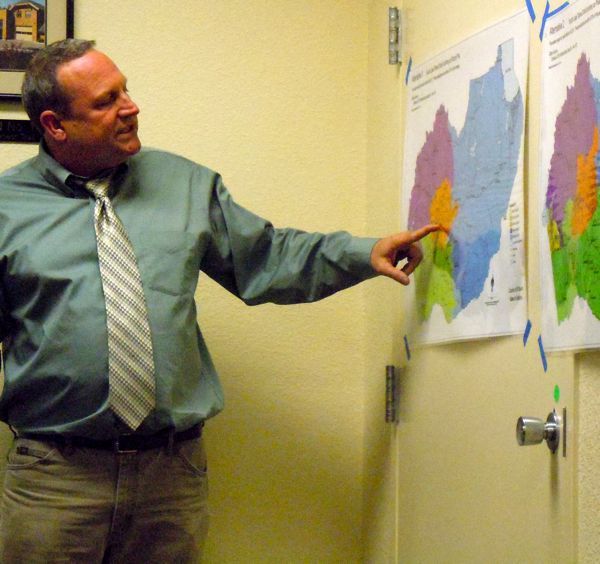
What the next decade will look like is being discussed. At a meeting in South Lake Tahoe on May 19, county officials went over the five proposals they have come up with. Ultimately it will be up to the Board of Supervisors to decide how the district lines are drawn.

County Surveyor Rich Briner discusses redistricting options. Photo/Kathryn Reed

County Surveyor Rich Briner discusses redistricting options. Photo/Kathryn Reed

Les Lovell pointed out that perhaps this board should not be the one to make the decision because it’s possible they would not actually have a district to represent based on how the lines might be drawn.

While the law allows a supervisor to finish his or her term, he or she might have to move to be in a district they really want to represent come the next election.

This could be the scenario for Supervisor Norma Santiago who lives in South Lake Tahoe, but represents the entire basin. Some of the proposals have the South Shore being split. Santiago wants to keep the basin its own district.

Though it’s true the five electeds represent the entire county, they are voted into office by the people in their respective districts – thus the assumption certain people represent certain areas.

While politics is not supposed to be a criterion for how district boundaries are drawn, that has not historically been the case here or other places in the country. All one has to do is look at how the lines were drawn with a little population bubble on the West Slope that benefitted then-Supervisor Helen Baumann. At that time she had the Meyers portion of the South Shore in District 4.

Even Bruce Grego, the lone South Lake Tahoe councilmember to attend the meeting, wanted politics to be part of the process. He said voter registration should be a criterion.

He was told that’s not legal.

Grego also believes Tahoe would be better off with two voices in Placerville.

What the U.S. Constitution says is population equality is of utmost importance when it comes to parceling out districts. This would have each of El Dorado’s five districts having 36,212 residents.

Based on 2010 Census data, this is how the current districts stand:

District 1 pop 38,670 (2,458 over target)

District 2 pop 44,434 (8,222 over target)

District 3 pop 32,010 (4,202 under target)

District 4 pop 35,198 (1,014 under target)

District 5 pop 30,746 (5,466 under target).

(District 5 is Lake Tahoe.)

Depending on how the lines are drawn and who is elected in the future, Tahoe could have one or two reps on the board and neither would have to live in the basin.

Only 20 people showed for a meeting that ultimately will have political consequences for everyone living in El Dorado County.

While the back of the council chambers were covered with maps outlining five proposals, county officials were quick to say they don’t believe one of them will be the final one. They expect public input and comments from the supervisors to help massage the final map.

Rich Briner, county surveyor, said alternatives 4 and 5 are more like what the county had in the 1990s. He described No. 3 as one people hate or love.

“I would be surprised if any one of them is accepted by the board. I believe all will be tweaked,” Briner said.

Another unknown is if El Dorado Hills will be incorporated in the future. In 2006 the attempt to do so failed. But momentum is growing to bring it back for another vote. This would make it the third incorporated city in the county and the largest population-wise, thus significantly shifting the power base.

It’s almost a given El Dorado Hills will be split in representation to divvy up its population.

More information about the proposals, including maps, and a form to make comments are on the county’s website.  Comments will be accepted through the first week of June.

Supervisors are expected to tackle the issue in late June, with a final decision made later in the summer.

On a larger scale, California is the first state to have a citizens committee draw the lines for federal offices. To learn more about that, go online.


Bountiful crop of morels hiding in the Lake Tahoe Basin

By Kathryn Reed

Bring a knife and a canvas bag. Meet in the Mikasa parking lot.

If a friend hadn’t emailed this message, I might have been alarmed.

Friday the 13th turned out to be my lucky day. My first day to forage for morel mushrooms. Kim had been telling me about her escapades in Lake Tahoe and Alaska, but I had never been party to any of the expeditions until last week.

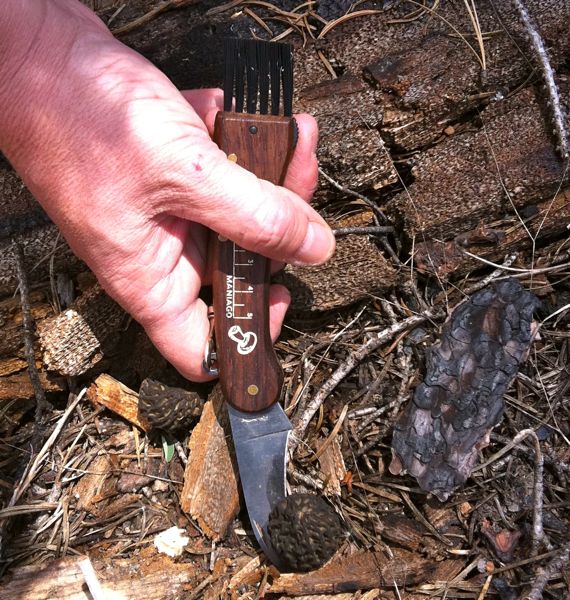
Harvesting a morel on the South Shore. Photos/Kathryn Reed

Harvesting a morel on the South Shore. Photos/Kathryn Reed

I wasn’t even sure I knew what a morel looked like. I just know they are expensive. Some years they cost $100 a pound. At the Ferry Building in San Francisco on Sunday they were selling for $36 a pound.

Morels fetch such a high price because they cannot be grown like a crop. They are in the wild, usually found in burn areas and in land that has been disturbed by logging or for some other reason. And the growing season is rather short.

In Lake Tahoe these shrooms with their honeycomb caps are most prevalent in May. But they are like chameleons in how they hide under logs, blend with the shades of brown dirt and don’t seem to like direct sunlight.

U.S. Forest Service employees and firefighters are said to know when morels are in season because they are in the woods and have been to burn sites – controlled or otherwise. (I’m not allowed to reveal exactly where we began our forage.)

Any type of wild mushroom hunting can be dangerous because there are so many lethal ones. In fact, false morels are poisonous. And real morels should never be eaten raw. I don’t recommend picking any kind of mushroom without someone experienced by your side.

Kim swears by the book “All that the Rain Promises and More” by David Arora. Her pocket guide to Western mushrooms is well used.

She first started foraging for mushrooms while living in Alaska.

“There are so many edible mushrooms there you can’t not notice them,” Kim said. She and friends would cook them in just about anything.

There is much lore that surrounds the morel. Some say only the chosen are able to find them. Gatherers often don’t speak to one another while in the woods. In some ways, this mushroom foraging cult is a bit underground.

Our first morel sighting is about 25 feet from our vehicle. We keep walking. Kim drops to her knees. And suddenly it’s like a veil has been lifted from the ground as several morels reveal themselves.

With our Swiss army knives, we cut off the stems and put the mushrooms into our canvas bag. Kim has a special morel knife that on one end is a brush to get rid of the dirt. It also allows you to measure the mushroom.

Kim with her special morel knife. Photo/Provided

Kim with her special morel knife. Photo/Provided

We have a good bounty – about a pound in less than an hour.

Back at my house we take the stems of, wash the mushrooms in cold water, dry them with paper towel and get out the butter and wine. The butter is for cooking, the wine for drinking.

It only takes a few minutes for the morels to get a little crispy. What a dinner.

They are a bit nutty in flavor. Definitely fattening with the butter. But so rich, delicious and addicting.

With the bigger morels, Kim suggests filling them with Gruyere cheese, coating them with olive oil and grilling.

When she has more than she can use, she dries them, stores them in a Mason jar and uses them until the next season in pastas, risotto and omelets.

Morels like warm days and cold nights. Time will tell if the recent snow will hurt the harvest.

In late summer Kim is out hunting for porcini mushrooms. These delectables show up when the Sierra has had plenty of thunderstorms.

Mesick, Mich., claims to be the mushroom capital of the United States. For 51 years it has had a festival devoted to the fungi.

A county in Kansas is calling 2011 an exceptional year for morels.

I’m hoping to say the same for Lake Tahoe. I’m ready for my next expedition.

ngg_shortcode_2_placeholder (Click on photos to enlarge.)


South Tahoe on course to change how it does business

By Kathryn Reed

South Lake Tahoe is taking a different course of action than ever before. It plans to implement its approved strategic plan.

“If you don’t develop an action plan and then fund it, the plan sits on the shelf. And that’s why so many strategic plans fail,” Nancy Kerry, the city’s spokeswoman, explained after the May 17 council meeting.

sltDuring the City Council’s afternoon work session, City Manager Tony O’Rourke went over the business plan. This is the final document for the council to approve in order to get the city on track and functioning better. It’s expected to be adopted at the June 7 meeting.

The strategic plan and five-year financial plan were approved earlier this year. They are components of this bigger plan.

“The business plan is the culmination of a comprehensive process undertaken by the city staff at the beginning of 2011 to evaluate community needs and interests and identify the key strategic priorities to move the community and city organization forward,” O’Rourke wrote in the introduction to the council.

In the next 18 months the city intends to achieve measurable goals. That is one of the unique aspects to this. Employees – from department head to the bottom rung – will be held accountable.

“What is different with this plan is we identified what we are doing, what our core services are,” Kerry told Lake Tahoe News. “This links performance measures to every initiative.”

It’s not that the city intends to implement a ton of new things. Part of the process in developing the business plan included assessing what works, what doesn’t, what can be improved upon, what to eliminate and what to initiate.

To create a better business climate the city intends to create a business resource center. O’Rourke called it “one-stop shopping” to get things done “much more expeditiously.”

Quarterly reports will be presented to the council starting in October. Each fall the city will present a state of the city report to the community. Progress reports on the strategic and business plans will be included.

When the city’s revamped website is up this summer it will include an electronic newsletter to let the public know what is going on – especially in terms of achieving goals in the strategic plan.

One goal of O’Rourke’s is to create more events to generate income via hotel room and sales taxes. He mentioned bringing a juried art show to Ski Run Marina in August and working with Heavenly Mountain Resort to host an adventure race Labor Day weekend.

However, Councilman Tom Davis took issue with the city being so proactive, instead wanting to defer to Lake Tahoe Visitors Authority to handle the bulk of the events. Davis is the city’s rep to the LTVA board.

But Carol Chaplin, executive director of LTVA, has repeatedly said publicly and to this reporter that her group is about helping with events, not being the lead organization.

“We have more resources,” O’Rourke said in response to Davis’ contention that LTVA should be in charge of events. “They don’t have the staff to do events.”

O’Rourke called the LTVA a marketing group.

When it comes to fiscal sustainability, O’Rourke said, “We will develop a financial trend monitoring system. We want more early warning information about our finances.”

This is practically revolutionary for a city that has for decades been reactive to the economy instead of in-line or proactive.

Another component of the business plan that is being finalized is an asset inventory. This includes land in stream environmental zones owned by the city, tourist accommodation units and commercial floor area.

“We have tangible assets we can sell. We want to make sure we inventory it and treat it as a bank account,” O’Rourke said.

In other action the council:

• Agreed to transfer eight parcels under purview of the Redevelopment Agency to the city to ward off a land grab from the state. The transfer does not include the parking garage, transit center near Stateline, or common areas at Heavenly Village.

• Unanimously passed the medical marijuana ordinance. Enforcement begins at the end of the year. Next up is to devise an ordinance allowing dispensaries to grow the crop.

• Approved the General Plan update and related environmental document.

• Learned four bids have been submitted to operate the South Lake Tahoe Ice Arena. The council is expected to choose one of the four (Robert Perkol, South Lake Tahoe park supervisor; I.C.E. of Alameda; Tahoe Sport and Entertainment; Rink Management Services Corporation) at the June 7 meeting.

• Will consider at its next meeting who will be the representative to the California-based chamber of commerce because Davis is stepping down after having a run-in JoAnn Conner.