Luxury market allows some to dream, others to snag a deal

By Linda Fine Conaboy

Just when you thought the economy was soon to be irretrievably annihilated, along comes Chase International Realty with some eye-popping homes, definitely worth a look-see.

“The luxury home market is now showing fantastic opportunity for buyers,” said Shari Chase, as she greeted people at one of the Glenbrook properties her company has for sale. “Values are the most compelling that we’ve seen in more than 10 years.”

The company has corralled a herd of high-end beauties, which it trotted out for all to see Wednesday during its annual Lakefront and Luxury Estates Tour.
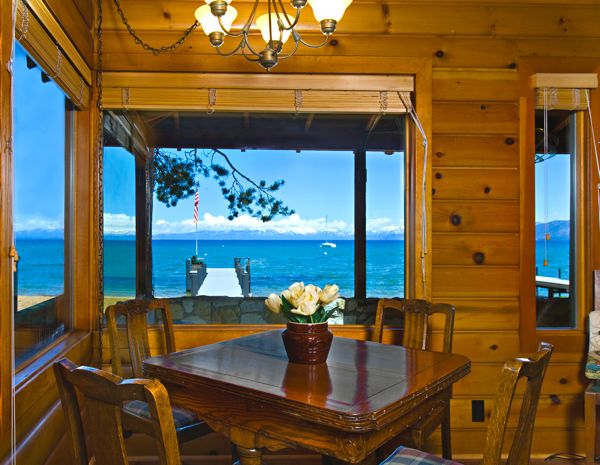
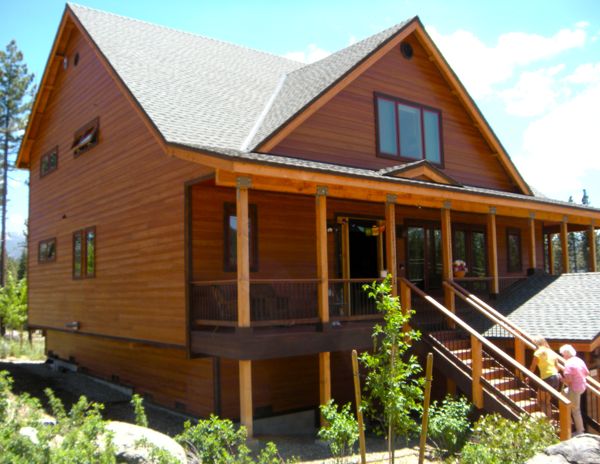
This beachfront house on the South Shore is selling for $2.1 million. Photos/Provided

This beachfront house on the South Shore is selling for $2.1 million. Photos/Provided

Sounding an equally optimistic note, Sue Lowe, Chase vice-president/corporate broker, is cautiously happy about what she sees as a re-emerging market.

“We’re starting to see a change, not dramatic, but it is picking up,” she told Lake Tahoe News. “We’ve had, so far this year on the Eastern Shore alone, five lakeside properties close, ranging in price from $2.2 million to $9.4 million. Last year at this time, we only had two properties close in the same price range.

“We’re seeing a slow, steady, increase in interest,” she said. “The luxury buyer is slowly re-entering the market place, taking advantage of some very good pricing and indicating some stabilization in this market.”

Lowe said she’s not expecting a huge rebound in the future, but a slow and steady climb. “Although some of the properties have been deeply discounted, especially the short sales — they’re distressed, definitely.”

While there are not as many distressed properties in the luxury market now, Lowe did say one of Chase’s recent listings was on the market only three weeks, but another lingered for three years.

What several million dollars can buy

Although time did not allow Lake Tahoe News to preview all 32 homes for sale, we had the opportunity to tour four of them, starting with a home on the West Shore, about 10 minutes south of Tahoe City, listed for $24.9 million.

As we walked up the circular, heated driveway, we passed a four-car garage and entered the grand portico through oversized, etched doors, where our eyes were immediately drawn beyond the huge curved windows to 175 feet of Lake Tahoe shoreline, the pier, three slips, a 12,000 pound lift and a buoy.

This home is designed by Nick Kromydas and was constructed by Loverde Builders in 2001. The windows were built in Nevada City, taking more than a year to finish. The ceilings are 25 feet high.

Here, five bedrooms are divided into three suites in the main house and two in the attached guest apartment, separated with a hallway and a private entrance. Without the four-car garage, the home contains 12,250 square feet.

The living room, office, master suite, second-floor nine-seat theater and two additional bedroom suites are carpeted, while the rest of the home is covered with quartzite flooring.

There’s a wine cellar and tasting room as well as a kitchen fully populated with commercial-grade Viking appliances. The kitchen leads to the family room with a large wet-bar and not far away is the cherry-paneled office featuring a gas fireplace and more lovely lake views. In fact, you will be hard pressed to find a room in this house without a view of either the lake or the exquisite grounds surrounding the more than 3-acre lot.

South Shore luxury

Across the lake, this West Shore beauty has a little brother on the South Shore, offered at $2.1 million. While not a grand residence, the juxtaposition between the two is striking. This home, built in 1950, is situated on Jameson Beach, not far from the Beacon Restaurant.

It sits on more than one-third acre with 50 feet of lakefront in close proximity to its front door. Its 70-foot pier extends deeply into the lake with two buoys beyond. You might call it an old-style residence, full of knotty pine paneling, steep stairs leading to the second story, big picture window with full lake views and a beach to make sun worshipers sing songs of praise. The fully-gated lot is landscaped with lots of tall pines to ensure its privacy.

What’s unique about this property is the fact that this gorgeous old home could be demolished to make way for up to a 4,000-square-foot home. There’s enough land to accommodate a large residence, although it would be sad to rid the lake of one of its early beauties.

In Glenbrook, Chase offers two homes full of history, dating back to 1863. These reminders of Glenbrook’s lumbering era have been fully-restored and are actually a part of the original Glenbrook Inn.

The first home, on the banks of Glenbrook Creek, played host to the likes of Ulysses S. Grant, Mark Twain and maybe even Clark Gable. According to Chase, Glenbrook was a great spot for a six-week Nevada quickie divorce in the “olden” days.

The first home is listed at $3.75 million. It sits, like its neighbor, also for sale, directly across the road from the Glenbrook homeowners’ pier. There’s a covered patio and porch, hot tub, family room with a wet bar, an open living room, a spacious master suite upstairs as well as two baths and a bonus room on the third floor.

The second property, next door, dates back to 1906. It’s a Cape Cod-style residence, recently remodeled, including four stories, five bedrooms, three-plus baths and lots of decking.

This home is selling for $3.8 million.

Using what nature provides

On to the North Shore, Dan Schwartz is listing a casual, but still elegant home at 30 Crystal Drive in Incline Village, where huge boulders seem to have found a convenient resting place inside.

According to Schwartz, Crystal Bay/Incline Village is known for its large rocks. Instead of removing them from the property, the builder incorporated them into the home’s décor, upstairs and downstairs, making a definite and absolutely unique Tahoe statement of elegance.

This two-story manse sits just above the lake, where paths lead to its swimming deck and boat dock. There’s 80 feet of shoreline incorporated into this parcel, which is nearly a half-acre in size.

In addition to the boulders, the designer integrated large, exposed lodge pole pines into the homes structural design, stating loudly and clearly “this is a Tahoe house.” It features five bedrooms, more than five baths in more than 6,000 square feet of living area. There’s a workout room, three-car tandem garage and a boat hoist. The home is listed at $7.2 million.

As Lowe said, “There’s only one Lake Tahoe. We have very limited growth here, but there’s now opportunity to be able to afford to play and live in Lake Tahoe.”

ngg_shortcode_0_placeholder (Click on photos to enlarge.)



Lakefront golf course lodging in works for Edgewood Tahoe

Publisher’s note: This is the last of three stories about Edgewood Companies.

By Kathryn Reed

STATELINE – Brooks Park, the mastermind behind so much of what Edgewood Companies developed at Lake Tahoe under the business’ former name of Park Cattle, envisioned lodging on the golf course.

Eleven years after his death, the environmental document for Edgewood Lodge is expected to be released this fall in draft form. It’s possible construction on the $150 million-plus project that is slated to have 126 standard rooms, 24 regular suites, four deluxe suites and 40 interval ownership units could break ground in 2013.

It’s all about providing the complete Edgewood experience, is how company officials tout the high-end hotel.

edgewood-3

Patrick Rhamey of Edgewood Companies talks water quality. Photos/Kathryn Reed

Besides adding lodging to the Stateline golf course that sits on the edge of Lake Tahoe and is home to the annual celebrity golf tournament each July, the company expects to put a rough estimate of about $2.5 million into water quality projects that go beyond what is necessary to complete the lodge.

Patrick Rhamey, vice president of real estate for Edgewood Companies, said in part the extra effort is to prevent the League to Save Lake Tahoe from filing a lawsuit. While the League has been invited to take the same tour of the site Lake Tahoe News went on this month, Rhamey said no one at the League has taken him up on his offer.

Calling the various improvements “threshold projects” is good verbiage to show the League it’s paying attention to what’s in the Tahoe Regional Planning Agency’s Regional Plan.

What the public will notice

Holes 7, 8 and 9 will be altered to accommodate the lodge, with No. 9 having the most substantial changes.

With the last three holes of the 18-hole course being known for their scenic qualities, 9 will share that distinction in the future.

Edgewood Creek will be restored.

Edgewood Creek will be restored.

Brandon Hill, project manager, said, “They’ll finish 9 on the beach. It will be a dramatic, compelling improvement.”

It has to change because the lodge is expected to go where the current fairway for No. 9 is.

Hole 13 will be raised a bit so it’s not so swampy like it has been this year with all the moisuture the basin has received.

Construction schedules will not interfere with the celebrity golf tournament, officials said.

Non-golfers will have access to a stretch of beach that is currently private.

The road leading into the area will be rerouted a bit so it heads more to the left, ending at the lodge. Parking will be in a structure at the lodge.

The current lot will be removed. The beach will be brought up farther from the lake.

The current restaurant/clubhouse will be extended toward what is now the parking lot so larger banquets and weddings may be accommodated.

A path along the entry road will be designed for cyclists, pedestrians and golf carts. It will tie into the Stateline-to-Stateline bike path, which passed its last hurdle last week with the U.S. Forest Service signing off on the South Shore demonstration project.

Protecting Lake Tahoe

While Edgewood Companies owns about 500 acres on the South Shore, the 4,000-acre Edgewood Creek watershed almost entirely ends at the golf course. This is water that is not being treated at today’s standards before reaching the lake.

Highway 50 and Kingsbury Grade carry the nastiest pollutants through the golf course’s network of pond filtration systems. Ultimately it comes out in a culvert off the 18th hole.

How all of that works will change – including reconfiguring Edgewood Creek through the course so it looks and acts like a stream instead of resembling a man-made concoction.

The company has expanded its original water quality improvement vision to include Friday’s Station on the other side of Highway 50. This is where the big white house sits.

On the east side of that property is a large pond, with the water being held back by an earthen dam that is at least 60 years old. An ancient wheel controls water flow, with the outflow being at the bottom – thus sending more sediment downstream.

The pond at Friday's Station will be drained and revamped.

The pond at Friday's Station will be drained and revamped.

This land was once pasture for the cattle that were here June to October. The pond was used for irrigation and fishing.

Making sure the dam is stable is another component.

The sediment from the pond will be excavated to allow for more storage, to reconstruct the dam, change the outflow and reroute the overflow area.

Water from the Stateline Stormwater Association, which encompasses the casinos, first hits pond No. 6 on the golf course. (Pond numbers correspond to the hole its on.) Dredging this and other ponds is part of the plan.

Pond 14 will be removed to make for a more natural flow of Edgewood Creek. Fish will be reintroduced to the creek.

Other ponds will be improved as well. Vegetation will be planted to better stabilize the soil and provide habitat for animals. The idea is the wetlands will be restored, too, as well as doubled in size.

“We are going to increase the amount of time water is in contact with vegetation,” explained Jason Drew with Nichols Consulting Engineers.

Revamping the courses fertilizer management plan is part of the bigger project. Rhamey said the course does not use much fertilizer now.

The lodge

To build the lodge, Edgewood Companies had to procure tourist accommodation units from South Lake Tahoe. That was achieved earlier this month.

The original plan was to take ones from the Horizon hotel, which it owns. But the thinking now is for that site to be viable after Columbia Sussex’s lease expires July 31, 2014, the TAUs need to be in place.

Edgewood Companies wants to build lodging on the golf course.

Edgewood Companies wants to build high-end lodging on the golf course.

Rhamey does not foresee extending the lease again, but instead having Edgewood Companies take control of the property.

“We are looking at a full range of options,” he said without being specific about the Horizon. “It’s future we think a lot about, but we don’t know yet.”

In its various iterations, the project now calls for 194 TAUs – down from 230; 274,000 square feet, a reduction of 172,000 square feet from the original plan; and three stories instead of four.

“The changes in the design program come from being responsive as we’ve been listening to public sentiment over the past two years,” Hill said. “We’ve been specifically monitoring other projects in the region and have seen that time and time again, the public has requested that projects reduce in size, scale and massing in order to better fit in with the Lake Tahoe environment.”

The lodging will be built in stages, with the main hotel in the first. The casitas, which will be detached and sold in yet to be determined intervals, will have four to six units in each structure.

Edgewood is weighing options when it comes to bringing in a flagship hotelier to run the operation or doing it in house.

LEED certification will be sought, but the level has not been decided. A living roof is part of the design.

A bistro-style restaurant will offer meals three times a day. A high-end spa will be open to guests and the public.

Turning the golf course into a destination for cross country skiers and snowshoers is being discussed.

More information about the project is online.

This is an Edgewood Lodge rendering, the lodge site plan and the full site plan.


Parks turn Tahoe cattle land into casino, golf course

Publisher’s note: This is the second of three stories about the Park family and Edgewood Companies’ evolution at Lake Tahoe.

By Linda Fine Conaboy

The Park family began to rent what Brooks Park called “parking lot land” to the likes of Harvey Gross and Bill Harrah in the 1950s. His parents still lived at Friday’s Station then, where his dad handled these transactions.

He recalls Gross as a down-to-earth man with a good sense of humor and Harrah as a man of his word. “I admired him for his ability and for his integrity.”

The 1960s

“When we built the golf course in 1965, we stopped herding, but we didn’t stop completely. Up until a couple of years ago (prior to 1992), we still took cows there for sentimental reasons,” Brooks said.

Brooks was proud of the golf course, but interestingly enough, it may not have been built without gentle prodding from a man who knew about such things.

“Del Webb was a friend and he said what we need is a golf course. We built it in 1966 and it opened in 1968. We spend lots of money on that golf course; we like it,” Brooks said.

As an aside, Brooks said he and Webb decided if they ever wanted to build something else, the golf course could always be torn up. He added, “Now we wouldn’t change it; we wouldn’t want to change it.”

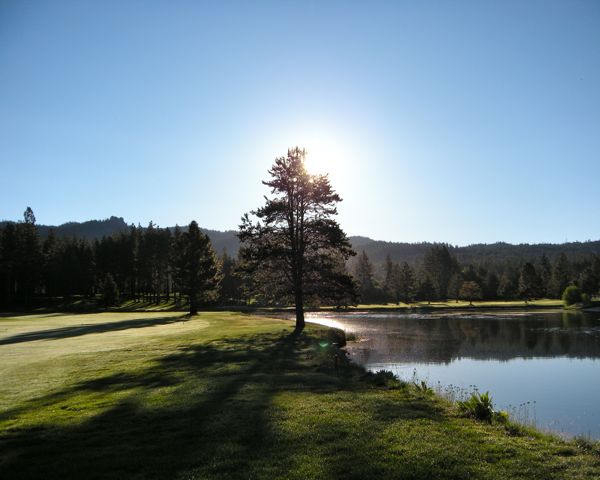
Edgewood Tahoe Golf Course hosts the popular celebrity tournament. Photo/LTN file

Edgewood Tahoe Golf Course has created an international following. Photo/LTN file

In 1965, Brooks said no permits were required, but “the area was brushy and unclean. We thought the least we could do was clean it up!”

In the late 1960s when the George Fazio-designed golf course opened it was among the top 100 courses in the world, according to Golf Digest. Today, it still ranks as one of America’s top courses.

Moving forward

In the 1970s, the Brooks Park family was again on the move, this time with the opening of the trouble-fraught Park Tahoe Hotel Casino, now MontBleu Resort Casino & Spa.

“We thought the higher and better use of the land would be a casino and restaurant. It took a long time to be built because of the injunctions by the League to Save Lake Tahoe,” Brooks said.

That delay turned out to be three or four years, Brooks said.

“The steel was sitting there, it was very costly. If we didn’t have the perseverance, it wouldn’t be there now,” he added.

A check of the records shows the Park Tahoe was dogged by complaints and charges and didn’t open its doors until 1978. Flash forward to 1992, when it appears that it was becoming even more difficult to jump through the various hoops required to get a construction project off the ground.

Park Tahoe Hotel was run by the family. Now Tropicana runs what is called MontBleu.

Park Tahoe Hotel was run by the family. Now Tropicana runs what is called MontBleu.

“We’ve applied for permits to build a new development on the lake shore,” Brooks said. “We’re still interested in improving and developing the property south of Edgewood. We’re not interested in destroying property. It’s hard to get approval. I like to get things done, but you have to have a lot of patience up here today (1992).

“I don’t know how many different people I have to ask to get something done. In the ’50s and ’60s, Gross and Harrah said yes or no.”

When I asked Brooks in 1992 what he does now, his answer was as simple as his home in Gardnerville. “I take care of business,” he said, referring to Park Cattle Company holdings, now Edgewood Companies.

Back then he handled Edgewood Water Company, which did and still does supply water to the casinos at Stateline and Edgewood Golf Course.

He also managed the acreage upon which the Stateline casinos sit, land still owned by Edgewood Companies. Besides that there were cows to be tended at Topaz in California and in the Carson Valley, although it’s a safe bet Brooks had some hired help to assist him with these chores.

Today, much of the land Brooks purchased at Topaz Lake is in the hands of his son, Bruce, and grandson, David. Land holdings have grown and total at least 10,000 acres, according to David and Bruce.

Edgewood Companies owns the land MontBleu and Horizon casinos sit on as well as the structures, but they don’t operate them. The company owns the land Harvey’s parking garage is on as well as Edgewood Water Company.

Additionally, land holdings include 500 acres in the Tahoe basin (Nevada and California) and more than 4,000 acres in the Carson Valley.

Brooks’ grandson, David, said the business model has definitely changed. Now, the family is no longer involved in day-to-day operations, but three family members including David, sit on the board of Edgewood Companies.

In a recent telephone interview, David said times are changing and the economy is suffering.

“Hopefully, the TRPA and other environmental groups will loosen up a bit and give us a break. Look at the downtown core; it’s pathetic,” he said. “Not just for us, but for everybody. We all have to turn over a new leaf. I don’t speak for the company; I speak for myself.

“My grandfather was a mastermind to put all that together at Lake Tahoe. If he were still here, it would probably still be a family-run business,” David Park said.


Park family — 115 years of history at Lake Tahoe

By Linda Fine Conaboy

Lake Tahoe News resurrected an interview conducted with Brooks Park in 1992 when he was 79. He quietly filled the role of family patriarch and owned Park Cattle Company, now known as Edgewood Companies. Brooks died in 2000. At the request of family members, this interview was not published until now. Members of the family were recently called, with most declining an interview.

Some may be familiar with Edgewood Tahoe Golf Course and others may be aware Edgewood Companies has plans to begin construction a five-star hotel, Edgewood Lodge, near the clubhouse at the golf course.

Now, with what will be a major move by the family and Edgewood Companies, we believe the time is right to present a three-part series on the Park family and the role they play and have played at Lake Tahoe. Our series takes a look at the past, the present and what the future holds in store for not only the family, but also Edgewood Companies.

A little history — as told to Linda Fine Conaboy in 1992 by Brooks Park

In 1992, when Brooks Park was 79, he lived life pretty much as he always had —up at 6am, on the range by 8 and home close to dark. His home in 1992 was across the road (Highway 395, south of Gardnerville) from the house in which he was raised. But he was technically a native Californian.

“All the ladies went to San Francisco and had their babies and then brought them home,” he said, eschewing the thought he was not a native of Nevada.

Brooks Park, right, with his golfing buddies at Edgewood Tahoe. Photo/Edgewood Companies

Brooks Park, right, with his golfing buddies at Edgewood Tahoe. Photo/Edgewood Companies

An offspring of a pioneering Nevada family (David Brooks Park and Unity McCue Park were his grandparents), Brooks attended Douglas County High School, St. Ignatius High School in San Francisco and graduated in 1935 from UNR where he was a member of ATO fraternity. His son was an ATO at UNR, as was his grandson. The tradition continues today.

He married Jeanne Cardinal, a Gardnerville native and a descendant of the Dangberg family, in 1936; together they had three children — Bruce, Kay and Jeanne.

Although he said his grandfather, David, died before he was born, David evidently had the entrepreneurial spirit reflected in his descendents. With the purchase of 571 acres of pastureland at Lake Tahoe in 1896, the Parks became Tahoe property owners.

“My grandfather wanted to graze cattle,” Brooks said simply. Except for a small parcel sold to Harrah’s and a few acres described by Brooks as “a little piece of beach frontage sticking out there” given to the 4-H Club, the land remains intact today.

After David’s death, Brooks’ father, Wallace Brooks Park, continued the ranching and cattle business.

“As for me, I haven’t ventured too far from home,” he said, launching into stories of Tahoe, Friday’s Station and Edgewood.

He said the property in the old days was always called Friday’s Station, but he was unable to recall when and why it was changed to Edgewood. He clearly remembered the early days and his time at Friday’s Station when he was a boy.

Friday's Station -- family members use it on occasion. Photo/Kathryn Reed

Friday's Station -- family members use it on occasion. Photo/Kathryn Reed

“My grandfather and grandmother operated Friday’s as a kind of a way station and they kept a butcher shop for wagon travelers (1918-20). They operated it in the summer and closed it in the winter,” Brooks said.

He said the house, sitting today where it’s always been, in the shade of huge pines on a grassy knoll on the corner of Highway 50 and Lake Parkway at Stateline, across the street from Edgewood Tahoe Golf Course was constructed sometime prior to 1864.

“Just prior to the Pony Express era,” he said.

His first recollection of Friday’s was when he was 6-years-old.

“I remember a large house with a big kitchen, milk rooms and a great big iron stove. There was a wood shed and on the side of the house were water troughs. There were lots of vines and big cottonwoods; everything was big,” he said.

An ice house was located where Harvey’s Casino garage is now and most of the land now home to the Stateline casinos was pastureland.

“My grandfather didn’t see what it could become. He ran a butcher shop and peddled the meat out of a wagon, but primarily, the land he bought in 1896 was for pasture,” Brooks said.

Even though his mother loved Tahoe, his dad hated it. “I can recall dad complaining that he had to work on the ranch all year long to pay the taxes at Friday’s.”

Although it looks like a grand plantation home, according to Brooks, it’s a log house with log rafters. He said the family refurbished the home in the early 1980s and he predicted it would last for years.

The original blacksmith shop is still on the Stateline property. Photo/Kathryn Reed

The original blacksmith shop is still on the Stateline property. Photo/Kathryn Reed

As history tells us, Friday’s Station, which is comprised of the main house as well as outbuildings including the old blacksmith shop, on nearly 23 acres, played an important part in the short-lived Pony Express, a mail service crossing the Great Plains, the Rocky Mountains and the High Sierra from St. Joseph, Mo., to Sacramento from April 1860 to October 1861.

Maybe Friday’s role in Nevada history was significant and duly noted, but history was lost on young Brooks.

“When I was 12- to 14-years-old, I stayed up there and irrigated for my dad — we had cattle up there. I didn’t like it. There were no paved roads and no kids to play with. Life was hell. Lake Tahoe was so cold,” he recalled.

“The cattle grazed where the golf course is; about 200 head. We raised our own feed in Carson Valley. We herded the cows over Kingsbury Grade.”

In 1925, there was a box, Brooks remembered, where people and animals had to wade through to disinfect their feet for fear of hoof and mouth disease.


Eagle Falls spew forth like they belong in Yosemite

By Kathryn Reed

DESOLATION WILDERNESS – Water. It’s going to be the common denominator for all hikes in and around the Lake Tahoe area for a while.

And that’s a good thing when waterfalls are involved.

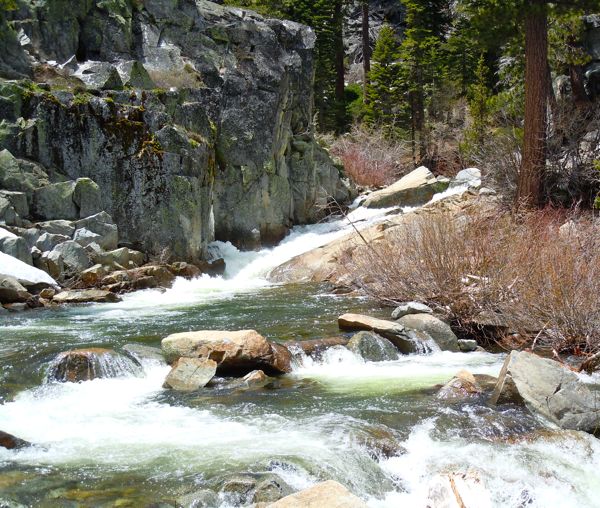
Rumbling water is a constant sound on the trek from the Eagle Falls parking lot to Eagle Lake. Sometimes it’s roaring, sometimes a bit more faint – but always there.

Eagle Creek is running fast. Photos/Kathryn Reed

Eagle Creek is running fast. Photos/Kathryn Reed

With June 11 being National Get Outdoors Day, the $5 parking fee has been waived by the U.S. Forest Service.

This area was revamped in 2005 with a walkway from Highway 89 to the trailhead which means no longer having to contend with vehicles to get to the path. Restrooms were put in at the same time.

We start our Saturday by checking out the lower falls from the other side of the highway. What a perfect lunch spot for one trio as they sit near the flowing water, gazing out at Emerald Bay.

Our destination is upper falls and then Eagle Lake. The Forest Service website says it’s a 20-minute walk to the lake. With all the Kodak moments along the way, we took at least twice that long. For those wanting a longer hike, a sign clearely states when to turn left to reach the three Velmas, Dicks, and Fontanillis lakes.

Starting off we take the loop to the right – which is longer than going directly to the upper falls. We don’t care. Today is about enjoying the scenery and practically pinching ourselves that we live here.

It’s just one of those magical places that even the most jaded person would have to pause to appreciate Mother Nature’s handiwork.

Interpretive signs are on this section. I learn something new – Emerald Bay is 3 miles long and 1 mile wide.

Water is on the trail, making it a good idea to wear hiking boots.

Spanning Upper Eagle Falls is a bridge. Water rushes beneath me. It’s hard to hear my own thoughts because of the thundering falls. Doing a 360, I marvel at the granite above me, the amount of water running on either side, the rocks being pounded by this snowmelt.

To do the loop, the bridge is where you’d turn around. But we aren’t done.

Across the bridge we hit snow. Mostly it’s dirt the rest of the way – but that white stuff is unavoidable at times.

So much snow this winter is causing waterfalls to spill from the sides of the mountain as though pores have opened. A sheet of granite looks like a streak of tears.

Granite is more dominate in this section of Desolation Wilderness than conifers. Spires of jagged rock line one wall of what feels like a canyon at times.

We stop for lunch before reaching the lake. Slabs of smooth granite beckon us to recline – until an aggressive critter smells our food. He reminds me of the “friendly” critters atop Mount Tallac.

Emerald Bay and Lake Tahoe are in the distance. If only there weren’t a controlled burn at Zephyr Cove that day, the view would have been perfect. A touring helicopter flies by. Is it the required 2,000 feet above Desolation? Hard to tell. What point does the FAA start measuring?

Onward we go to the lake. It looks so beautiful, but so uninviting. I won’t even dip my toe in her frigid waters. On a hot summer day people swim and paddle out to the little island. No one is doing that this day. This day we’re still trying to have traction on slick snow.

Getting there:

From South Lake Tahoe, go north on Highway 89. The Eagle Falls parking area is on the left at the end of Emerald Bay before reaching the parking area for Vikingsholm. It costs $5 to park. If going to Eagle Lake, be sure to fill out the permit for Desolation Wilderness.

ngg_shortcode_1_placeholder (Click on photos to enlarge.)


Memories of Angora Fire fuel anxieties at Wildfire Summit

By Stephen Ward

TAHOE CITY-The frustration was palpable among the roughly 85 firefighters and homeowners who gathered for the Wildfire Summit at the Granlibakken Resort in Tahoe City on Friday. The crowd, who came to learn more about preventing wildfires, expressed their grievances about residents they considered inconsiderate and/or clueless about fire safety within their communities.

Representatives from Incline Village to South Lake Tahoe cited a lack of communication between local agencies and homeowner apprehension as reasons for why the region has had trouble getting residents to develop defensible space around the area.

In fact, the barrage of excuses homeowners deploy to evade reconditioning their property was the centerpiece of one speaker’s presentation. Ed Smith, a natural resources specialist for the University of Nevada Cooperative Extension, listed 15 reasons people don’t prepare for wildfires, many echoing the sentiments said above, with a PowerPoint slide accompanying each point he made.

“Lack of action is a lack of means, motive and opportunity,” Smith said while introducing his points.

But Smith’s lecture wasn’t spent ridiculing locals – he offered several tips on how to prepare for the worst. Smith advised residents to remove dead trees, create more separation among those that are living and to detach the lower branches of trees so fire can’t climb to the top.

After Smith’s talk, attendees dispersed into groups based on their residence. In the South Lake Tahoe and Fallen Leaf Lake group, eight members of the community spent their time more as a think tank than a preventative measure session. Most members of the group worked with a fire prevention agency in the area.

Jess Mahnken, project coordinator for Nevada Fire Safe Council, addressed the difficulty of explaining defensible space to lake residents.

“Just like every property is different, every homeowner is different,” she said. “You need to hold every hand in a different way.”

Memories of the Angora fire fueled many of the anxieties overheard at the summit, with several attendees referring to the disaster during the breakout sessions. Jeff Michael, chief of Lake Valley’s Fire Protection District, touched on the lessons his group learned from the fire earlier in the day, including how to respond more quickly and effectively to wildfires.

Another point Mahnken highlighted at the summit was the incentives for residents to develop defensible space. For instance, the Fire Safe Council offers a 50 percent rebate, up to $1,000, for homeowners who renovate their property. Some communities even have grant programs that allow the $1,000 cap to be lifted.

The Fire Safe Council hosted the event in partnership with the University of California Cooperative Extension and University of Nevada Cooperative Extension, with funding from the Tahoe Regional Planning Agency and vendors at the conference.

Although the summit had a considerably large crowd, few attendees were actual homeowners; most of the people there were clothed in fire marshal outfits or were involved with an agency.

However, one of the few homeowners who did attend left feeling better about her knowledge of wildfire prevention.

“I thought the talks were exceptionally good,” Patricia Owens, who has been an Incline Village resident for 22 years, said. “I wish there were a way to contact more members of the community. People need to relate to the fact that fire is always an ongoing threat to the area.”

Despite the lack of community members, Susie Kocher, chair of the event’s planning committee, was pleased with the summit’s turnout.

“The point we’re trying to make is that this is a really broad, complicated problem,” she said, referring to ambivalence to wildfire prevention. “It’s going to take action from all of us. Everyone has to work together to reduce risk.”


Angora today: Watching a neighborhood come to life

Publisher’s note: This is the second of two stories about the Angora Fire.

By Renee Gorevin

Fortunately for her, my daughter still had her bags packed, just recently returned from a study abroad program in Paris. Investigating the source of the smoke, my son and his friend had ventured out behind our house, creating a little angst inside my chest when I’d heard. My husband and I were at our good friends’ house on Golden Bear assisting them in a home project. Our closest neighbors, John and Susan, were out of town camping.

It was about three o’clock in the afternoon when my daughter called, insisting I should head home. Why, I inquired calmly, responding to her fearful tone. “Mom, go outside!” she urged. As I stepped out onto Golden Bear to view the horizon in the distance, my neck immediately flexed, carrying my gaze up, up, up, following the gray smoke column to its summit, directly overhead! That visual was worth a thousands gasps. I hung up and immediately said, “Mark, we need to get home!”

The Gorevins neighborhood days after the June 24, 2007, fire leveled their friends' homes. Photos/Renee Gorevin

The Gorevins' neighborhood days after the June 24, 2007, fire leveled their friends' homes. Photos/Renee Gorevin

My car, as I later found out, was the last one allowed past the sheriff’s post at Sawmill Pond. Driving up Tahoe Mountain Road my eyes bounced from flare up to flare up on either side of the road, our inadequate asphalt fire line. I was mesmerized, stunned, looking in disbelief, gasping for breath.

Turning onto this cul-de-sac 12 years ago to look at a house that had just come on the market, I gasped then too; but out of joy and expectation — this is just what I had envisioned, trees, lots of them, space, lots of it and just enough neighbors to make it a home. Twelve years ago we purchased one of 12 houses on this street, certain it would be for good as the location, house and neighborhood had everything we had hoped for moving from the Bay Area. Susan and John welcomed us as we moved in, happily discovering Susan and I were both teachers and John and Mark were both in the construction trades.

Now, smoke and amazing, frantic wind blowing in every direction and speed along with the weight of uncertainty pressing on me, I drive to our house. Driving past all our neighbors, running with arms full, placing yet another precious load in their car, I lock eyes with one of Susan and John’s daughters’ as we drive past each other, communicating many emotions with that gaze. Both of their daughters along with friends were transferring their family keepsakes into their cars. A sprinkler was left on next to the house in hopes of rescue. Later I was amazed and touched with Susan’s recount, “I told my daughters to just come up and join us camping, what could we do there anyway?” Susan’s positive acceptance of the fire, a seeming “hiccup” in her life (I take liberty here as I truly don’t know the extent of heartache she experienced), impressed me again and again over the next two and a half years as they sifted, leveled and rebuilt on their lot across the street. I recall a “heart in my throat” smile as I heard Susan found a ring of her mother’s in the ashes.

Both my son and daughter had packed their car with belongings and the pets by the time I arrived. We took our computers with our scanned family photos in them and I grabbed the important paperwork. They insisted it was time to go, yet I stood in the middle of our great room, looking around, what should I take? With a quiet acceptance I walked through the door and we caravanned down our street. Mark was running toward us on foot. He was not allowed by the sheriff to drive his car, instead ran the half-mile to our house, but wouldn’t get in the car. He needed to go back and get his camera.

Why did our house not burn? There is no reason in this human made earthly hell that it should not have. Valiant firefighters removed flammable material from under our deck, obviously helping to save our house. Ten out of the 12 houses on our street burned completely to the ground. To this day I still shake my head and have no answer. How do you respond to the families whose homes did burn? What must they be feeling? I can’t imagine. I smile and give Susan a big hug when I finally see her; she is smiling. Mark and John discuss what’s left of the snowplow truck we all reaped the benefits of and look at what little is left of his snowmobiles. The four of us have a guilty chuckle over the charred trailer carcass, all that is left of the cigarette boat parked at the vacation home next to Susan and John’s. Yes, we will rebuild and we’ll be back she says with utter confidence and her ever present smile. We love this neighborhood, she says. I am quietly thrilled!

Mark and I were one of four households living in our greater neighborhood area of 40-plus homes, pre-fire, that first winter, the lucky ones who had a home to stay in. We even had pine trees left on our lot! We braved the loneliness, the wicked wind with no trees to hold it back and the hope for our neighborhood to return. Ruth finished her house first, then Susan and John, then Christine and Colin. The full timers on our street were all back home. We were ecstatic to have our neighbors return!

I recall many times turning on our street during the two plus years of rebuilding with a heavy heart, sadden by the loss of trees. Those trees gave our neighborhood a grounded, safe, comfy feeling. Toward the end of that rebuilding time, as I turned down our street once again, I suddenly gasped as I looked out over our neighborhood with a big smile, tears forming in my eyes. I realized at that moment that it had not been just the trees I had been missing; it was the homes and the neighbors as well! I looked around and saw all the houses that had been built for our neighbors and, that grounded, safe, comfy feeling that I so treasured, had returned.

ngg_shortcode_2_placeholder (Click on photos to enlarge.)


Angora Fire: ‘Being away during the fire was a blessing’

Publisher’s note: This is the first of two stories about people who lived through the June 24, 2007, Angora Fire.

By Susan Baker

The North Coast is one of the most beautiful places in California, probably the reason we vacation there every year right after school is out. June 2007 was no different. We packed our car with all our camping gear, camping clothes and our dog and set out for a week of abalone diving and rest. Many times the weather on the coast can be wet and miserable, but when we arrived at McKerricher State Park the sun was shining, the weather was warm and I was happy.

Two o’clock Sunday everything changed. I was sitting around the campsite reading, John was in the ocean abalone diving with our friends, and Lola (our dog) was napping in the quiet sun. My cell phone rang and I answered it. That phone call started a chain of phone calls that would end the day with our home one of the casualities of the Angora Fire. John and I have discussed many times since that day that being away during the fire was a blessing.

Susan Baker

Susan Baker

When we returned to Tahoe a week later and began the process of rebuilding our lives and emotions, not experiencing the fire firsthand was kind of like reading about war compared to living it. We had none of the sensory triggers like the smell of smoke or the sound of the sirens, which I feel for many handcuffed them emotionally to the experience for years.

When John got out of the ocean, with his limit of abalone, and returned to the campsite I informed him I thought our house had been lost in a fire at home. It took him a minute or so to understand what I was saying. As I think back to that conversation, I see the ocean in the background, I hear the seagulls talking, and I smell the salty ocean air and the conversation is surreal. To process and wrap your head around losing everything material you own is difficult when the loss is right in front of you. I have decided it is impossible when it is not right in front of you. John’s first reaction was how did I know and was I sure. At that point I was pretty positive our home was gone, but had not heard definitively, like from the authorities. So, John in his calm manner said let’s not do anything rash (not sure what that meant) until we were sure.

We continued fielding calls from our kids and friends that afternoon, until the final call from our daughter told us our home was gone. Sara had talked to a friend who is a firefighter who happened to be the one assigned to our street. It was confirmed only two homes remained on our street and ours wasn’t one. John and I sat, looked at each other, hugged and continued with our camping trip. Were we in denial? I don’t know, possibly, it was very easy to ignore the reality being 400 miles away. I don’t remember being sad or mad, I just remember thinking what now? The only decision we made was when we got home we would live with Sara and Brian, our daughter and her husband.

The next day we spoke to our kids and got a glimpse of the horror the town was going through. They had not slept much, watching the fire, worrying about their homes and their friends, listening to the media and trying to make sense of the whole disaster. We had decided to stay put and not come home and finally convinced them to come to the coast. In retrospect, that was the best family decision we could have made. The rest of the week we had time to try to make sense of what had happened and plan for the immediate future. The only thing I knew was that I needed to be with family. We had lost everything, but still had each other and I needed to cling onto that, so that was the plan.

The rest of our vacation was perfect; beautiful weather, friends, lots of abalone, walks on the beach and time.

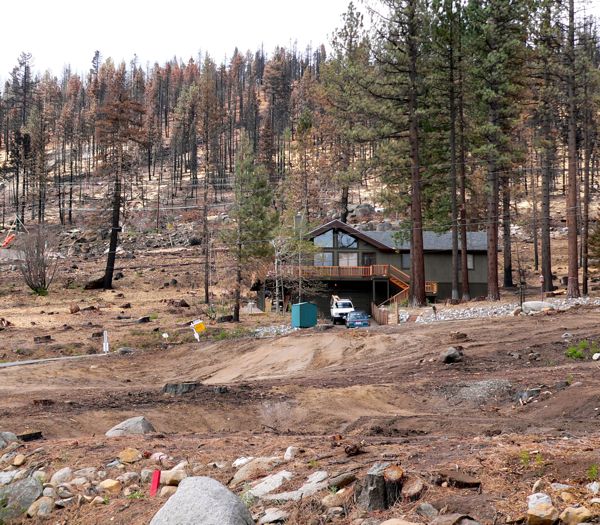
The Bakers' rebuilt house was on the 2010 home tour. Photos/LTN

The Bakers' rebuilt house was on the 2010 home tour. Photos/LTN

The ride home after the week was over we were anxious, not really sure what we were coming home to or how we would feel. It was good to have a tentative plan, but the fear of the unknown was real. We drove directly to our street and took in the devastation from North Upper Truckee to Tahoe Mountain. We pulled up to where our house had been and just sat in the car and looked. I was trying to remember where things had been, our deck, my strawberry garden, the big tree in the middle of the yard, the front door, my favorite spot to sit in the sun and read. Nothing was familiar. We got out of the car and walked around the lot, sifted through a few piles of ash, talked about what was supposed to be where, began to mentally label what was gone.

A while later our kids showed up and they were more interested in sifting through the ash and actually found a few things … a few broken ceramic crèche figures, a ruby ring John had given me one Mother’s Day, and a few coins. We all left and went to Sara and Brian’s.

Life has an interesting way of making amends. After one day at our daughter’s house we realized it wasn’t going to work. Our friends that we were camping with had offered their vacation home to us right after the fire, but we had said no because I was sure I needed to cling closely to my children. We decided to accept their gracious offer and eight days after the fire moved to our new home on Lake Tahoe for the next year and a half. As we enjoyed our year and a half living on the lake, I am convinced that helped wash away so much debris in our minds from the fire. We are now in our new home which we rebuilt on our lot and back in our neighborhood. Life is good.


4-wheelers tear up USFS land in Tahoe City, South Lake

By Kathryn Reed

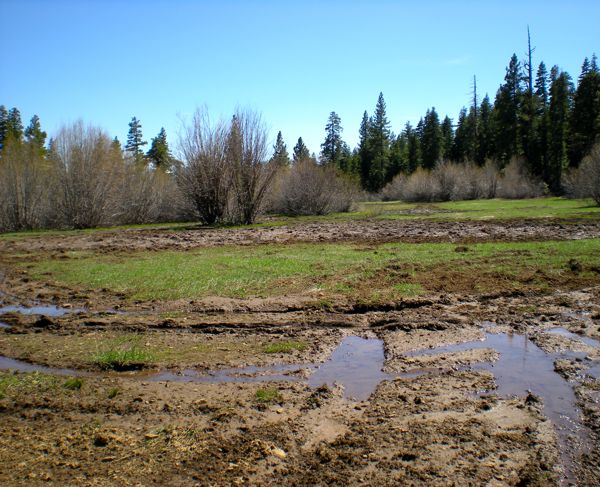
Ruts from illegal 4-wheel drive activity are marring U.S. Forest Service land throughout the Lake Tahoe Basin. In Tahoe City, what was a meadow with strands of green grass covering it now looks like a crime scene. And it is.

A price tag has not been put on the damage. The most serious incident this month occurred in Tahoe City, with the other in South Lake Tahoe.

A Tahoe City meadow has been ruined by illegal 4-wheel activity. Photos/USFS

A Tahoe City meadow has been ruined by illegal 4-wheel activity. Photos/USFS

Law enforcement is looking for the suspects in the North Shore case, while the three male 17-year-olds from Stateline who were caught on the South Shore were given a lecture. If they are caught doing it again, such leniency is not likely to be granted.

None of the violators was in a place that allows 4 wheeling even when it’s dry.

“Cross country is not allowed at all. They were in places that vehicles are never allowed,” USFS spokeswoman Cheva Heck said of the violators.

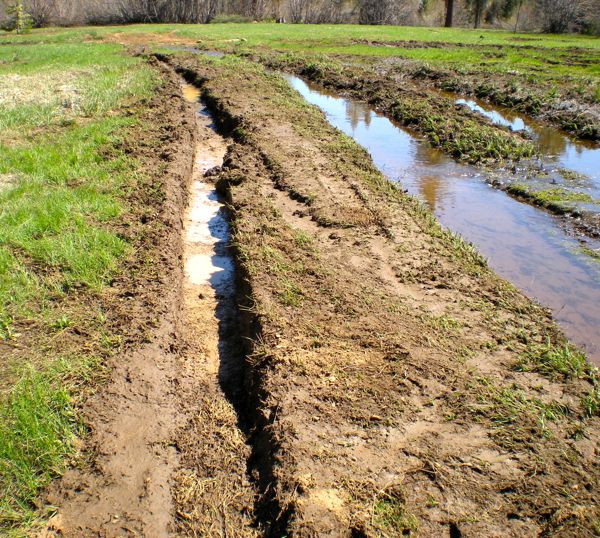
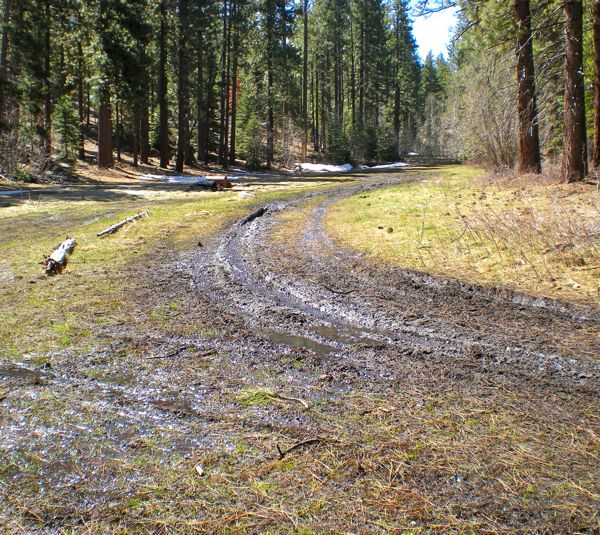
The meadow in Tahoe City has ruts at least 6 inches deep and several inches wide from some big tires. Tire marks show the violators were spinning doughnuts.

With the designated off-road trails super wet this year, some won’t open for a while. The Forest Service’s website lists projected opening dates for the trails. But with the National Weather Service issuing a flood advisory through 9pm June 24 for creeks, streams and rivers near South Lake Tahoe, Tahoe City, Squaw Valley and Alpine Meadows, the dirt roads in the basin are going to be wet for quite a while.

Tire ruts will become hard and "permanent" as the water recedes.

Tire ruts will become hard and "permanent" as the water recedes.

“We are concerned for people’s safety and protection of resources of soil and plant habitat,” Heck told Lake Tahoe News.

Massive ruts, especially like the ones left in Tahoe City, stay that way until crews restore the land. This degradation leads to erosion problems.

The culprits on the North Shore accessed the area from road No. 73 off Fairway Avenue. Witnesses told authorities they saw a newer, blue pickup out there.

Penalties could be a maximum of six months in jail and/or a $5,000 fine. If caught and found guilty, the suspects would likely have to pay the Forest Service to restore the meadow to the pre-damage condition. This is never an inexpensive task. If they aren’t found, it’s taxpayer dollars that will restore the meadow.

On top of the damage to the meadow, the suspects left a smoldering campfire behind. The fire was reported June 13 and was most likely started the weekend of June 11-12, Heck said.

Anyone with information is asked to call (775) 831.0911. Anonymity will be granted and a reward may be offered.

The Forest Service was alerted to the South Lake Tahoe incident when someone reported the 4-wheeling to police, who then called the USFS.

Damage just outside of Van Sickle Bi-State Park in South Tahoe.

Damage just outside Van Sickle Bi-State Park in South Lake Tahoe.

This area behind the now demolished Colony Inn Hotel is loosely called Chonokis Meadow. It requires crossing California Tahoe Conservancy land to get to the USFS owned meadow. CTC doesn’t allow motorized vehicles on its land – and the Forest Service doesn’t allow driving through meadows.

“(There was) no gate or signage there that says ‘road closed’ or anything of that sort. Since the damage, the USFS has put in Carsonite posts indicating that vehicles are prohibited,” Heck said.

The boys who were caught in the act had a Jeep and 4-wheel truck.

“They were very cooperative when officers spoke with them. Their impression was (the boys) didn’t realize what they were doing. They were really compliant and concerned,” Heck said.

The soil there was spongy and the damage is nowhere near as horrendous as how the culprits violated the meadow on the North Shore.


Cadre of volunteers keeps Lake Tahoe history alive

By Kathryn Reed

STATELINE – Museums are more relevant today in this high-tech world because they offer people something tangible, concrete and tactile.

At least that’s how curators and volunteers think.

“Nothing has changed, and yet everything has,” is how Diane Johnson, who runs the Lake Tahoe Historical Society, describes life at the lake.

Lake Tahoe Museum is open Wednesday-Monday from 11am-3pm. Photos/Kathryn Reed

Lake Tahoe Museum is open Wednesday-Monday from 11am-3pm. Photos/Kathryn Reed

It seems a bit prophetic Johnson would one day run the 43-year-old historical society. After all, when she first moved to the South Shore she and her husband lived into one of the oldest brick buildings in town.

Their 550-square-foot cottage in the Al Tahoe area was part of the Globin compound.

Johnson learned about the history of their house at the time (they are in a larger place now) from Betty Mitchell at the Lake Tahoe Museum. Mitchell, who is the woman to call for all things historical as they relate to South Lake Tahoe, introduced Johnson as the keynote speaker at last week’s Soroptimist International of South Lake Tahoe meeting at Harrah’s Lake Tahoe.

Johnson read a letter from Snowshoe Thompson dated March 7, 1872, to his wife – which he addressed “Dear Wife.”

“The first time I realized who wrote it, it brought chills to me,” Johnson said.

It’s those kinds of artifacts that are housed in the South Tahoe museum – letters like this from a man who for years delivered the mail on skis between Placerville and Tahoe and barely received payment for it.

The Thompsons are buried in Genoa. Many towns in the region share in the Snowshoe Thompson lore.

Outside the Lake Tahoe Museum is the oldest structure left standing in the basin – the 150-plus-year-old Osgood’s Toll House. Yes, Tahoe used to have toll roads.

Osgood's Toll House

Osgood's Toll House

A log cabin from the 1930s is also on the museum site.

“We hope the cabin plays more of a role in school visits,” Johnson said of groups of local third-graders who visit the museum as part of their lesson on California history.

The inside of the museum was completely overhauled two years ago, with much of the credit going to members of the local carpenters union. Volunteers is what keeps the museum and historical society running.

While what the historical society deals with is all things old, the work is never done. Two volunteers recently spent hours photographing every article of clothing the museum has so there is a record of it.

“What we do today and how we do it will preserve these artifacts,” Johnson said.

Old photographs are for sale and what isn’t out on display may be special ordered.

A long-term goal is to have the archives available to the public.

Something the society plans to continue is the Chautauqua-style performances at the Camp Richardson Lodge.

The museum and society are funded by donations, store sales and grants. The annual summer garden tour is the main fundraiser.

Things to know:

• Lake Tahoe Museum is at 3058 Lake Tahoe Blvd., South Lake Tahoe.

• Phone number: (530) 541.5458.

• The 2011 Garden Tour is July 31 from 10am-4pm. Tickets are $20 and may be purchased after July 1 at the museum, Aspen Hollow, Nel’s Garden Center, Sun Basin and Tahoe Outdoor Living.