Caddying for Super Bowl QB nothing new for Tahoe local

By Kathryn Reed

Aaron Rodgers has played the American Century Celebrity Golf Tournament in relative obscurity for the past six years. That’s not likely to be the case this year for the quarterback who spearheaded the Green Bay Packers Super Bowl win.

Rodgers is not letting his fame influence who carries his clubs during the July 12-17 tournament. It will again be Todd Echan. The 2000 Whittell High School grad is back in Zephyr Cove after getting his MBA last month from the University of Hawaii.

Echan grew up playing the links at Edgewood Tahoe. He knows the lay of the land, the water features, the greens, the fairways, the hazards.

Todd Echan watches Aaron Rodgers make a putt at Edgewood Tahoe. Photos/Provided

Todd Echan watches Aaron Rodgers make a putt at Edgewood Tahoe. Photos/Provided

“The number of people following us on the course will be a huge difference,” Echan predicted. Other than that, he doesn’t expect much to be different.

“It’s amazing how grounded and real of a person he is,” Echan said of Rodgers. “He doesn’t take anything for granted. He is real thankful for everything that comes his way.”

Chico, the town where Rodgers grew up, wanted to put on a parade for him after the Super Bowl. He didn’t want the city to go to that expense or have that kind of attention thrust upon him. Instead, Rodgers bought a full-page ad in the local paper to thank the community for its support.

Echan calls it a fluke that he was paired with Rodgers a handful of years ago. Since then the two have become friends. And Echan is now a Packers fan.

Most of the players travel with a caddy – who is likely to be a friend. Others take a recommendation from a pro at Edgewood and wind up with a local like Echan.

When it comes to offering advice, Echan said each celebrity is different. Some just want the caddy to carry the clubs, others want pointers, some need to be calmed down after a bad shot.

“I remember one time Aaron hit his golf ball into a hazard. The ball was in a Safeway shopping bag. He had to play it,” Echan told Lake Tahoe News. “He hit the ball out of the shopping bag and licorice went flying everywhere.”

What was amazing it the ball landed pretty close to the hole.

Caddies see it all on the course. Bad behavior by players gets back to tournament officials.

Echan witnessed a celebrity push over a little kid, others who blatantly ignored people wanting autographs, and some who have thrown clubs at caddies.

Todd Echan follows Jerry Rice and Aaron Rodgers at the 2010 tournament.

Todd Echan follows Jerry Rice and Aaron Rodgers at the 2010 tournament.

“The No. 1 thing is it’s always the caddy’s fault. We won’t say anything and it’s the caddy’s fault,” Echan said.

While there is serious money to be made by the top echelon at this tournament, it’s not the PGA. This isn’t the players’ career after all.

When the likes of Charles Barkley and Michael Jordan are puffing away on cigars on the course, it’s clearly not about setting a healthy lifestyle image. Barkley is still “threatening” to play left-handed this year. And sometimes the headlines are more about the girlfriends’ of the players – like the year Tony Romo and Jessica Simpson were an item.

For many fans it’s all about seeing their sports, political, TV, movie or comedic hero in person. Maybe it’s saying a few words, getting that person’s signature or even a photo together.

And when it comes to partying, the 17th hole at Edgewood Tahoe is always the place to be. Beach, boats, half naked bodies and that white ball on that pristine green lawn, um, fairway.

“The football players are throwing footballs and people on the boats are diving and trying to catch it,” Echan said.

Look for Rodgers to be hamming it up again with the throngs of spectators.

Aaron Rodgers looks for a receiver on the beach on the 17th hole of Edgewood.

Aaron Rodgers looks for a receiver on the beach on the 17th hole of Edgewood.

“Aaron is on a personal level with everyone. He remembers names. A lot of celebrities, a week later, they will forget,” Echan said. “You can see with the Brett Favre situation he handled that like a dream. He makes good decisions and treats everyone well.”

As for Echan, he plans to do some networking while he’s on the course this year in hopes of putting that MBA to use. After all, this five-day caddying gig doesn’t pay a dime.
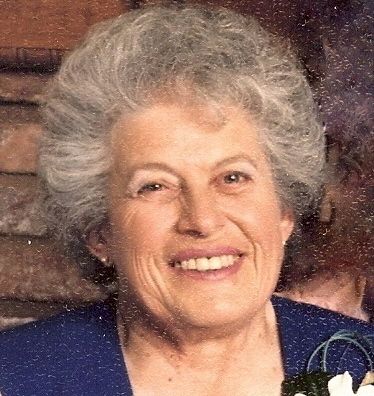




Angie McFarlane — 1925-2011

Angelina Marie McFarlane passed away peacefully at her home in Hanford, Calif., on her birthday, July 6, 2011.

Angie was born in Springfield, Ill., on July 6, 1925, to Giovanni and Virginia Bovaresco. She moved to Santa Barbara in 1938 with her parents and brothers Victor and Geno. They were met at the train station by her sister Gina, who had arrived there ahead of the rest of the family.

Angie graduated from Santa Barbara High School, and afterward went to work checking groceries for Safeway. Later she met her husband, Carl, when he was stationed in Santa Barbara during World War II. Carl had just returned from the South Pacific and his new assignment in Santa Barbara was guarding Italian prisoners of the war.

Angie McFarlane

Angie McFarlane

Angie and Carl were married on March 4, 1945, and had 65 years of marriage together.

Angie and Carl and their seven children moved to South Lake Tahoe in 1961. In 1963, the eighth child was born there; completing their family. Together she and Carl served the community for 38 years as owners and operators of McFarlane Mortuary.

Ten years ago, after their retiring, Angie and Carl moved to Hanford to get out of the snow and be near their youngest son, Tom. Before and during retirement she enjoyed traveling in her motor home with her husband. Angie loved to fish, whether she caught anything or not. She was also a great cook — preparing large Italian meals for her eight children. Angie also loved hummingbirds and was known for hanging many bird feeders in her yard. Animals were also a big part of Angie’s life, and she especially loved Peanut, Keno, Rosa and Dixie. Angie was a founding life member of Soroptimist International South Lake Tahoe, and had also been active in the South Lake Tahoe Yacht Club.

Angie was gentle and loving person who loved people and never said an unkind word about anyone. She had a personality that put others at ease around her. Angie will be greatly missed by all her family and friends.

Angie is survived by her eight children, Michael McFarlane (Rhonda), South Lake Tahoe, Bernadette Vilicich (Ed), Marshall, Calif., Daniel McFarlane (Janice), Monterey, Katie Jackson (Jeff), Gardnerville, Carla McFarlane, Carson City, Mary Ann Sokoloski (Keith), Carson City, Patrick McFarlane, San Jose, and Thomas McFarlane (Janette), Reedley, Calif.; 10 grandchildren, Marla, Brian, Andrew, Andrea, J.P., Lindsay, Michael, Matthew, Sean Paul, and Noah Alan; three step-grandchildren, Shannon, Tamara, and Danielle; five great-grandchildren, A.J., Elise, Parker, Joyie and Anna Marie; four step-great-grandchildren, Tessa, Luke, Matthew and Tammy; and niece, Barbara Cadam.

Angie was predeceased by husband Carl in June 2010.

Angie’s family is having a visitation at McFarlane Mortuary on July 12 from 4-6pm, followed by a rosary at St. Theresa’s Catholic Church at 7pm. On July 13, a Mass will be celebrated at St. Theresa’s at 10am, followed by the burial at Happy Homestead Cemetery. Anyone interested in attending is welcome.


South Lake Tahoe launches user-friendly website

By Kathryn Reed

Information about South Lake Tahoe is finally easily accessible.

The city replaced its outdated website this month with one that can actually be navigated without needing a doctorate in information technology. Visually, it’s also inviting.

It has all the info readers will want, but it is presented in a format with the user in mind instead of the government employee.

city website

South Lake Tahoe's website has been overhauled.

Instead of listing departments – which might not be intuitive to most people – a tab called “City Services” has the general categories people would seek. Most people with a planning question would not instinctively know this falls under the Development Services Department. That is why “Planning, Land Use & Zoning” is a category under “City Services”.

One of the constant complaints the city receives through surveys and other means is people don’t know what is going on. Calendars on the website are aimed at making that issue go away.

While the website is still a work in progress, that is actually a good thing, according to city officials. A goal of the city’s is to be more responsive to citizens – residents and tourists. This includes having a website that provides people with what they want. So, if something is missing, it can be added.

The last website was difficult for staff to update because of the old-style platform and technology that were used. (The old site was up for at least a decade without any real upgrades.)

Twenty-two employees are trained to work on the website, with two being the gatekeepers to what sees the light of day. That number is likely to change as time goes by. The reviewers are checking to make sure the message and format is consistent, and to weed out duplicate information.

Another issue this site is addressing is better communication with the public.

“It is easy to track our responsiveness,” city spokeswoman Nancy Kerry told Lake Tahoe News.

This is because the feature “Let’s Talk” that is accessed via the home page allows people to ask specific questions. It goes to the appropriate person, and usually to multiple people. The person asking the question can then track the response. The exchange, while visible on the city’s website to the person posing the question, is not sitting there for the whole world to see.

Until this week people wanting to ask the fire department a question had to do so in writing and deliver it to the station. Not so with the online questionnaire.

One thing still being worked out is if police reports will one day be available by asking for it through the city’s website.

A category not often found on government websites is the “Communication Center” – another tool to interact with people. People can be sent emails about a slew of things by going under “City News,” then to the right is a button saying “Notify Me”. Social media is another venue to stay in touch with the city.

“We want two-way communication,” Kerry said.

Updates on city projects are also provided.

For people who want to read the content in another language, every page allows the words to be translated.

The website cost $36,000 to build – which according to Kerry – is cheap for a government site, and one that functions like the city’s does. It has 300 pages, with more that can be added as needed.


Brown leaving Douglas County manager job for Ore.

By Anne Knowles

MINDEN — Michael Brown, Douglas County manager since 2008, has turned  in his resignation letter. He is going to become city manager of Hillsboro, Ore., a city of 94,000 near Portland. His last day with the county is July 8.

The Douglas County Commission will discuss at its July 7 meeting whether to conduct a search to fill the job or offer the current assistant county manager the position under a two-year contract. Steve Mokrohisky has been the assistant county manager since 2009.

“My thinking is the board will come to some decision on Thursday since Michael’s last day is the next day,” said Nancy McDermid, vice chair of the commission.

Michael Brown

Michael Brown

Brown is cashing out his vacation time, so he’s technically on the payroll into August.

Brown worked for Douglas County for 14 years, starting in 1997 as an administrative analyst. He grew up in Oregon, where he earned a bachelor’s degree in business administration from the University of Oregon. He later obtained a master’s degree in public administration from the University of Kansas.

“It’s a progressive move career-wise,” Brown told Lake Tahoe News. “Like here, we have a very strong collaboration with business. And I’ve had a long-standing goal of working for a city. On the personal side, my best friends and family are there. And it’s a beautiful area … 25 minutes from Portland and one hour, 15 minutes to the coast.”

Hillsboro is well-known for its many high-tech companies, including Intel Corp.’s largest site and the biotech firm Genentech, as well as customer service center for Yahoo and Netflix.

Brown said the staff in Hillsobro is twice the size of the staff in Douglas County. Hillsboro’s adopted 2010-11 budget is about $312 million; Douglas County’s tentative 2011-12 budget is $120 million.

Brown said his salary here is just less than $136,000 and will be $146,000 in Hillsboro. In its adopted biennium budget, Douglas County has allocated $351,444 for county manager, which includes county manager, assistant county manager and staff.

Brown said the highlights of his 14 years with the county include being instrumental in the regional water line, expansions of the jail and library, technology upgrades at the sheriff’s and comptroller’s offices, and a move to private management of the airport as well helping to shepherd a voter-approved change in the airport ordinance that enables the airport now to seek Federal Aviation Administration funds.

“I made strategic staffing decisions, restructuring to create a leaner, more responsive staff,” Brown said.

Brown has nothing but praise for his possible successor.

“I’m very impressed with Steve. He has high integrity, and is very talented, very smart and committed to public service in Douglas County,” Brown said.

Before coming to Douglas County, Mokrohisky worked for Milwaukee for 11 years.

The commissioners’ meeting is 1pm July 7 in the Douglas County Historic Courthouse in Minden.


STHS grad: Peace Corps a constant learning experience

Publisher’s note: Brooke Wilkinson is one of three 2005 South Tahoe High School graduates who joined the Peace Corps upon college graduation. As it gets close to their return date, each will share with Lake Tahoe News readers their thoughts about the last two years.

By Brooke Wilkinson

I arrived in Ecuador in June 2009, just two days after my graduation from UC Davis. I was excited, anxious, and overwhelmed, to say the least. Along with 44 other hopeful volunteers, I attended a pre-service training for two months in the Andes Mountains. In this time, I learned about the Ecuadorian culture and worked on my Spanish language skills.

I was sworn in as a Peace Corps Volunteer on Aug. 19, 2009, and the following day I moved to my site on the southern coast of Ecuador. I lived in the community of Libertador Bolivar for eight months, a town of 1,500 people. Then I moved to a community 15 miles north — Ayangue, which has 1,200 habitants. I have been here for a little more than a year.

Brooke Wilkinson holds Jacqueline, one of the babies she witnessed be born. The mom asked Wilkinson to name her child. She did after her mom. Photos/Provided

Brooke Wilkinson holds Jacqueline, one of the babies she witnessed be born. The mom asked Wilkinson to name her child. She did so after her mom. Photos/Provided

I will be officially ending my service in Ecuador on July 21, and will be back in California that evening. I am highly anticipating seeing my friends and family at the airport. I have many photographs and memories to share, and I cannot wait to hear about the changes that have taken place in their lives since I’ve been gone.

Was my Peace Corps experience everything I thought it would be?

Not even close. It was more than I could have ever anticipated. My time as a volunteer included by far the most amazing experiences that I’ve had up until this point in my life. And it also included some of the loneliest and desperate times I ever hope to know.

A Peace Corps saying is that a volunteer’s time in site is “the toughest job you’ll ever love.” I can absolutely attest to the tough part. I had some incredibly difficult times throughout my experience as a volunteer. There were times when no one would attend workshops that I had spent hours organizing, and other times when I went door-to-door to homes in my community in an attempt to find something, anything to keep me occupied. The frustration that came with a lack of involvement from community members, in addition to missing my friends and family back in the States, was more than enough to make me crack. There were times when the only thing I wanted to do was pack my bags and get on the next flight back to California.

Now, as I look back on these tough times, I am so thankful that I managed to pull through. Ultimately, I have become a more patient, persistent, and dedicated individual, and to feel that I have gained these characteristics at the young age of 23 really humbles me. After spending a significant time away from my friends and family, I appreciate them and their presence in my life even more than I did before I left.

Of course, there were high points to balance out the harder times. The “resume-worthy” description of these experiences would include:

• Working with a local midwife, training pregnant women on the importance of nutrition and proper breast-feeding methods, as well as witnessing the birth of several precious babies (even twins!);

• Writing and receiving a grant for a $6,000 ecotourism project to provide activities that would increase visitors to the community, therefore increasing income levels of the locals;

• Providing one-on-one HIV test counseling to women, men, and adolescents.

Brooke Wilkinson with a group of adolescents from the community she provided HIV/AIDS education training to.

Brooke Wilkinson with adolescents from the community she provided HIV/AIDS education to.

But if I’m being entirely honest, I have to say that the most rewarding times throughout my service include sharing meals with my neighbors, walking to the local corner store and picking out fresh fruits and vegetables, playing with the many, many children that always stopped by to see what the “gringa” was doing that afternoon. The relationships I developed with the people in Ecuador are ones that I will always cherish, and I am certain that when I will return to visit my Ecuadorian friends and family in the years to come, I will be welcomed with open arms.

With my return to the United States comes the dreaded job search. When I left two years ago, I did so with the mindset the economy would be better by the time I returned in 2011, and that as a returned Peace Corps volunteer I would have several job opportunities just waiting for me. Needless to say, this is not the case. I will join the thousands of Americans currently reading through job listings, sending out as many resumes as I can. In the meantime, I plan on taking science prerequisites at a community college so I can apply to nursing school within the next year or two. I’m also looking into training to become a doula.


Crowds flock to Lake Tahoe beaches to watch fireworks

A pitch-black sky was the ideal backdrop as fireworks lit up the sky on Fourth of July.

Beaches were crowded with thousands of revelers throughout the South Shore enjoying a rather warm night – with temps in the 50s. Lots of families were out; with a good mix of tourists and locals. Those out and about Monday night say the crowds seemed larger than last year.

The 23-minute pyrotechnic display was one minute longer than a year ago. With the Lake Tahoe Visitors Authority paying $6,000 per minute (negotiated down from $10,000 per minute), it’s an expensive show to put on.

Thousands enjoy Fourth of July fireworks on the South Shore. Photos/Howie Nave

Thousands enjoy Fourth of July fireworks on the South Shore. Photos/Howie Nave

Many small towns across the United States nixed their shows because they could not afford it.

But the fireworks displays throughout Lake Tahoe are often the reason people flock to the basin this time of year.

The South Shore also has a big display the Sunday of Labor Day weekend.

Even though personal fireworks are illegal throughout the Lake Tahoe Basin, that did not stop some people from lighting up the sky just off Regan Beach after the professionals finished their job. South Lake Tahoe police officers are investigating that incident.

— Kathryn Reed

ngg_shortcode_0_placeholder (Click on photos to enlarge)


Opinion: One day Declaration of Independence will ring true

By Kathryn Reed

I was reminded a week ago how after 235 years, the intent of our forefathers through their words in the Declaration of Independence have yet to be fully realized.

Today, as we mark the birth of the United States of America, take a moment to appreciate what we have as a nation and acknowledge how far we have to go.

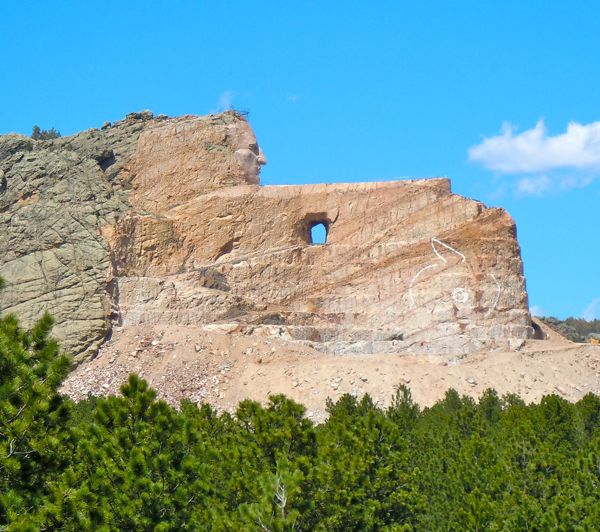
I was at Crazy Horse on June 25 – which happens to be the anniversary of the 1876 Battle of the Little Bighorn. Gen. George Armstrong Custer went down in defeat to the Sioux and Cheyenne Indians. Crazy Horse is the Lakota Sioux who led that battle for the victors.

Crazy Horse is destined to be the world's largest mountain carving. Photos/Kathryn Reed

Crazy Horse is destined to be the world's largest mountain carving. Photos/Kathryn Reed

A massive stone carving honoring him has been in the works since 1948. It’s being paid for through

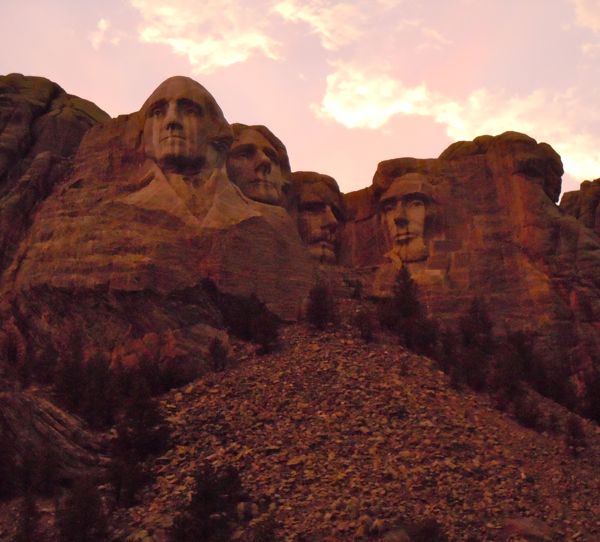
Mount Rushmore

Mount Rushmore

donations. It’s obviously a slow process. Funding is such that major blasts only occur twice a year.

Down the road is Mount Rushmore – the granite carving memorializing Presidents George Washington, Thomas Jefferson, Teddy Roosevelt and Abraham Lincoln. Construction began in 1927. The National Park Service, which runs the site today, took over ownership in 1933 before the faces were completed.

Our history books say “we” lost the Battle of the Little Bighorn.

That begs the questions: Who are “we” today? And whose land is it?

Crazy Horse is quoted as saying, “My lands are where my dead lie buried.”

Based on that criteria, I get to claim part of his Black Hills of South Dakota as well because we buried my dad’s ashes there a week ago today.

There is no denying the Indians were scattered throughout the United States well before Europeans took over. Winning the “war” at that time meant securing ownership of the land. Eventually we put the Indians on reservations – in isolation, in a prison of sorts.flag

Perhaps now as they erect casino after casino (and not just in California) they are reaping a sort of revenge on the white man. Look at how we, I say we because I am of European ancestry, destroyed their land, their culture, their way of life.

Look at Lake Tahoe and Reno. Haven’t those Indian casinos helped destroy our economy, our way of life, and therefore our built landscape?

It is cliché to say what goes around, comes around. But it seems so appropriate here.

The Battle of Little Bighorn came 100 years after the Declaration of Independence was signed. Clearly, in that instance all men were not created equal. They could not all pursue life, liberty and happiness.

We are a young nation compared to most. We seem to keep trying to define ourselves by who we see in the mirror instead of who we are as a nation. Until we take off the blinders to realize “we are all created equal” does not mean “we all look the same,” we will continue to be stagnated by petty squabbles with one another that extend from sea to shining sea.

We have created wounds that have yet to heal. Maybe the first step would be to make Crazy Horse a national park. Perhaps then this monument to one of the first Americans would be finished in my lifetime. Maybe we could treat him and his people as equals like the Declaration of Independence says we all are.


Uneducated boaters dominate workload for officers on Tahoe

By Kathryn Reed

Speeding watercraft, life vests, distressed boaters and trapped raccoons – all things the men and women who patrol Lake Tahoe must contend with throughout the boating season.

With the lingering winter weather, summer on the lake is really starting this weekend. The empty moorings bobbing in the water and vacant slips indicate either a slow start to the season or people don’t have the money for this sport.

This isn’t a leisure ride for the officers as they motor around in their boats. While multiple jurisdictions are on the water, there are no real lines delineating boundaries. They help each other help those on the water.

An urgent call comes across the radio about 5:30pm Friday. A 30-foot boat is taking on water near Cave Rock.

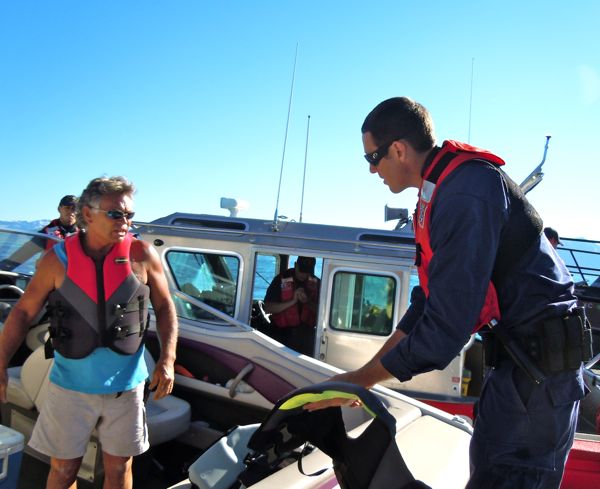
Coast Guard Petty Officer Kyle Rahn, right, inspects Kelly Rogers boat.

Coast Guard Petty Officer Kyle Rahn, right, inspects Kelly Rogers' boat. Photos/Kathryn Reed

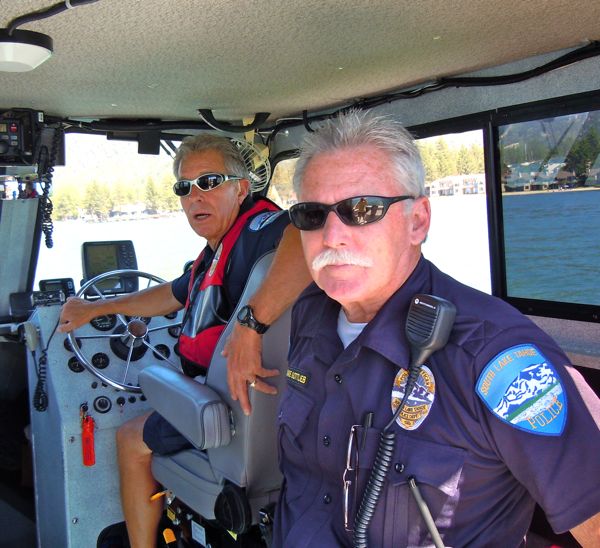
South Lake Tahoe police boat patrolmen Steve O’Brien and Dave Gottlieb are closer to Emerald Bay than to Cave Rock. Still, when an “urgent marine information bulletin” is put out, it means everyone responds.

With the throttle down, they arrive first. Close behind are the Coast Guard and Placer County boats.

Kelly Rogers of Reno seems relaxed for a man whose boat is supposed to be sinking. It turns out the bilge is able to pump out the water that keeps coming in, but he doesn’t want to start the motor for fear of doing some serious damage to it.

He’s told no one there can tow him per Coast Guard regulations because he is not in imminent danger. He’s told to call Vessel Assist. It’s like the AAA of the water. He balks at the fee.

O’Brien and Gottlieb let the Coasties take over – they are the senior guys on Lake Tahoe. An inspection of Rogers’ boat turns up the required life jackets, but he doesn’t have a fire extinguisher.

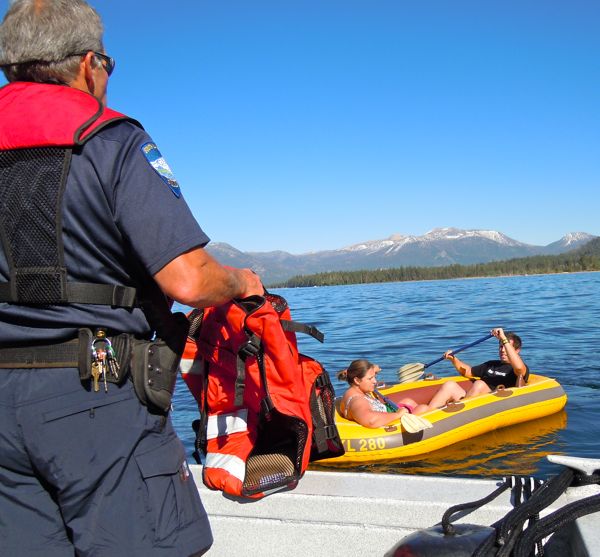
Before arriving at the scene, the South Tahoe guys had been dealing with a couple celebrating their 17th anniversary lounging in an inflatable boat near Ski Beach. Their tranquility was disturbed when the two were told they must have a lifejacket on board.

Officer Steve O'Brien gives a couple life vests before they paddle to shore.

Officer Steve O'Brien gives a couple life vests before they paddle to shore.

That’s the rule. All boats must have life jackets for the people in the vessel if more than 200 feet from shore. Anyone 12 and younger must be wearing the vest at all times.

The couple from the Sacramento area handed vests and told to paddle to shore. The vests are then returned to the officers.

Earlier on the Nevada side the two check out the buoys where the barge will be tied up for the Fourth of July fireworks that are shot off on the South Shore. That barge used to be the original Dixie paddle-wheeler.

It’s the boat patrolmen’s job to keep a 1,000-foot perimeter around that barge and the three tied to it so no boats get near where the pyrotechnic display originates. Between 500 and 700 boats are on the lake each July 4.

O’Brien and Gottlieb say it can get a little crazy with people not used to boating at night and many having been drinking for hours.

While in the area on Friday they meet up with Jim Hill and Jim Warne on the Douglas County sheriff’s boat.

“We saw two boats with obsolete two stroke engines. We were on other calls and couldn’t get to them,” Hill said of the serious polluting machines. “So the people doing the boat inspections are not checking engines.”

A week ago the Douglas County boatmen made a felony arrest. A guy at Secret Harbor was threatening people with a blow gun.

It’s not just people that are problems.

Officers Steve O'Brien and Dave Gottlieb

Officers Steve O'Brien and Dave Gottlieb

Puttering around the homeowners’ area of the Tahoe Keys a guy on a boat waves down the officers, asking what to do about the raccoon that is trapped on his boat in a compartment. He is told to call Lake Tahoe Wildlife Care.

The El Dorado County sheriff’s boat comes by. They are headed back to the lake after towing in retired Superior Court Judge Jerry Lasarow. Deputy Mike Sakau and Sgt. Bruce Rosa are going to investigate a report of a log near Rubicon Bay.

South Tahoe has two boats on the lake this particular day and will do the same through the Fourth. Hours and days vary for the various departments.

Most boat programs in California are funded through a grant from the state Department of Boating and Waterways. SLTPD’s boat patrol has existed since the 1970s. It’s reserves or retired officers on the water.

The three main functions are enforcing the law, education, and search and rescue. Last year there were three deaths on Lake Tahoe – one at Camp Richardson, one at Sunnyside, and another on the North Shore.

This aluminum craft has a hose on it that allows water to be pumped from the lake in case the crew needs to fight a fire. Flipping a switch allows the hose to extract water from a sinking boat.

Much of this particular day is talking to people about slowing down to at least 5 mph in no-wake zones and ensuring people have Coast Guard approved life vests. Everyone on a personal watercraft must wear a vest.

These two say the lake appears 5 feet higher than it was a year ago. Water is under docks and piers – a sight that hasn’t been seen for years. Kiva Beach doesn’t have much sand. Beaches appear more full than they really are because there is so much less space than years past.

O’Brien is emphatic in wishing there were some sort of license for people to be allowed to operate a boat. Anyone 16 and older can do so. People 13, 14 or 15 can drive a boat if someone 18 or older is on board.

It’s not just boaters the patrol units keep an out on. At Timber Cove Pier a couple boys are playing on the steps and in the water. O’Brien asks them what the sign says. They read it. “No swimming or diving.” They get out.

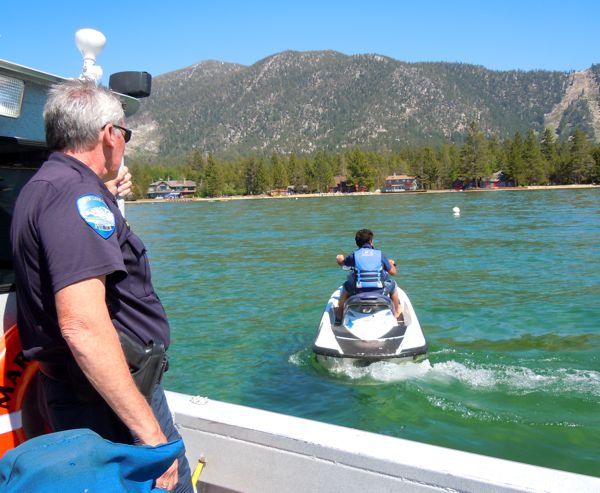
Despite a lecture from Officer Dave Gottlieb and saying he understood, the teen keeps going too fast for where he's at.

Despite a lecture from Officer Dave Gottlieb and saying he understood, the teen keeps going too fast for where he's at.

Lake Tahoe is 60 degrees now. It doesn’t take long for hypothermia to set in.

Bob Hassett, who operates the concession at Timber Cove and most of the South Shore marinas, chats with the officers.

“Our biggest challenge is the cold water. We educate people how serious it can be,” Hassett said.

The officers work in tandem with marina owners and their employees. At Ski Run an 18-year-old on a personal watercraft is going faster than he should be. He’s not listening to O’Brien and Gottlieb. The two tell a marina employee the teenager needs to have the keys taken away. She says she’s on it.

The officers move on to the next incident. There is always something to do when patrolling Lake Tahoe.


Airline owner wants to put Lake Tahoe back on flight map

By Kathryn Reed

In less than a year, commercial air service is planned for Lake Tahoe Airport.

Mike Zeid, who runs Tahoe Air Express, resumed business operations at the South Lake Tahoe airport Friday with the first charter flight arriving about 9am. He is in the process of filling out the paperwork for the FAA and National Transportation Safety Board to be certified to carry more than the current limit of nine passengers. The airport also must work with the feds to make this a reality.

Zeid wants 30-seat planes to fly to the South Shore.

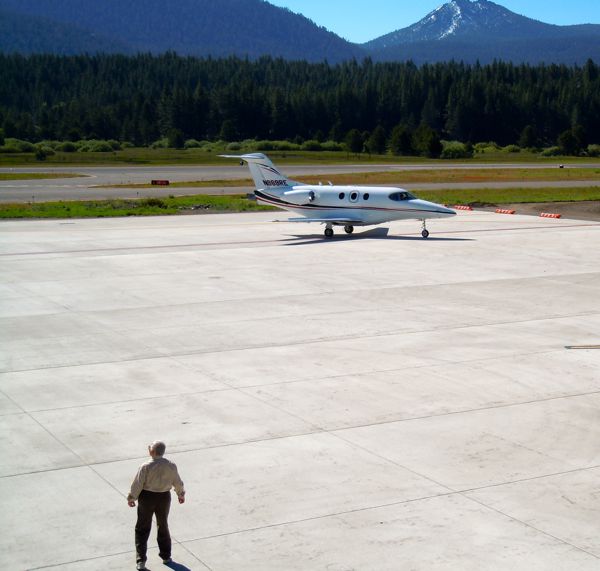
Mike Zeid directs his pilot July 1 where to rest on the tarmac at Lake Tahoe Airport. Photos/Kathryn Reed

Mike Zeid directs his pilot July 1 where to stop on the tarmac at Lake Tahoe Airport. Photos/Kathryn Reed

This airport once had commercial service and Zeid was involved then. In the 1970s he operated Ram Airlines, which had flights in and out of South Lake Tahoe.

His business is based in Henderson, where many of the flights are scenic tours to the Grand Canyon out of McCarran International Airport in Las Vegas.

City Manager Tony O’Rourke wants to see how Zeid’s service works, saying, if they can’t fill a plane with nine seats, a larger plane has little chance for success.

The Beechcraft Premier that landed July 1 on the inaugural flight is sleek and quiet. The six-seater has plenty of legroom. Cargo space is ample for skis and golf clubs.

The glass cockpit is mostly digital, with few gauges that most people would be accustomed to seeing.

New, this plane would cost about $6 million.

In the fleet are two prop jets that seat nine people, with two more coming. Zeid said, “We’ll add as we go.”

What needs to be done

“Once they get the certificate upgraded and we bring in 30 passengers, they will redo the terminal building and have space for us,” Zeid told Lake Tahoe News.

At that time the planes will access the main terminal, which today is mostly used as a pseudo city hall. For now, the charter customers will use the fixed base operations that everyone else uses.

“Before we seriously discuss commercial flights we need improvements (at the airport),” O’Rourke said.

Reinstalling the baggage carousel and ticket counter space are two things on the to-do list.

“If they wanted their passengers to connect to another flight, then we would start looking at other screening and TSA,” airport Director Sherry Miller said.

Zeid is talking about having packages for Europeans who would fly into Las Vegas or San Francisco and then be flown to Tahoe via his airline.

Economic factors

O’Rourke has been talking to Stateline gaming interests, who have lost a large share of travelers who can’t fly here directly, to gauge their desire in having the city bring in air service. He said they are completely behind this endeavor.

The city is already making money off Tahoe Air Express. The plane had to pay a landing fee and then the fuel truck came over.

Once people are here, they inevitably have to spend money. Airplanes also gets people off the roads — which on a weekend like this when the South Shore population is likely to swell to 100,000, is a good thing not only for the environmental, but people’s mental health.

For now, Zeid will fly essentially anywhere as a charter. Price is dependent on how many people are on the plane.

Once scheduled flights are in place, he expects to fly between Tahoe and John Wayne Airport in Newport Beach, Hollywood/Burbank, and one or more of the three main Bay Area airports.

Having lived here before, Zeid knows how economically depressed the area is. He believes providing an easier way for people to get here is one way of generating income for the town. He plans to provide a discount to locals who want to get out of town for a bit.

Gary Air has been providing charter service since last fall via a smaller aircraft. Trish and Dave Guerrieri had their plane on the tarmac as well Friday. Trish Guerrieri said they have a good working relationship with Zeid and that they are not in direct competition.

Airport Director Miller said about 90 percent of the calls she receives are people in the San Jose area looking for a way to fly to South Lake Tahoe.

Michael Golden, who runs the fixed based operation Mountain West Aviation, said he gets calls weekly if not daily from people in Southern California wanting to fly to South Tahoe.

“I know they will be successful,” Golden said of Tahoe Air Express.

ngg_shortcode_1_placeholder (Click on photos to enlarge.)


Rec board delays decision to ask voters to revise Measure S

By Kathryn Reed

At the end of a 2½-hour meeting Thursday, the main thing decided by the recreation board overseeing Measure S was to have another meeting.

With it being nearly the eleventh-hour in terms of figuring out whether to put an initiative on the Nov. 8 ballot, the three-member panel has set July 13 as decision day.

The recreation JPA board of Norma Santiago, Hal Cole and Deborah Henderson listen June 30 to comments. Photo/Kathryn Reed

The recreation JPA board of Norma Santiago, Hal Cole and Deborah Henderson listen June 30 to comments. Photo/Kathryn Reed

El Dorado County Supervisor Norma Santiago, South Lake Tahoe City Councilman Hal Cole and Tahoe Paradise Park board member Deborah Henderson are being asked whether a ballot measure is the correct course of action, what the wording of the measure would be, and what the ballot language would be.

Aug. 1 is the deadline to come up with the ballot language. That’s the same deadline for people who would want to submit a rebuttal to what is being dubbed Measure R.

The board could also wait until 2012 when there are three elections – February, June and November – to ask voters to revise the initiative.

The JPA board on June 30 decided to allocate $35,000 for the November 2011 election if the board goes in that direction. This is the taxpayers’ money via Measure S. Nearly $17,000 was spent on the failed Measure B rewrite two years ago.

The actual cost of the election is not known until all special districts having elections are accounted for.

At issue is whether the 2000 voter approved Measure S bond measure should be rewritten as Measure R so the $18 a year collected from homeowners could be spent in different ways than originally intended.

Nineteen people spoke (some twice) at the June 30 meeting of the joint powers recreation authority. About 40 people attended the meeting at the county library in South Lake Tahoe.

The ball field proponents brought in enough youth baseball players to field a team, though none of them spoke. Cycling advocates were the first to point out it would be a good idea for adequate trails to be in the ground so those players could get to their games.

While it is Little League advocates like John Cefalu, Carl Buchholz and Steve Noll who spoke in support of Measure R, no one was at the meeting talking about softball fields.

While baseball and softball may seem like the same sport in many ways, the dimensions of the fields are not. It is softball fields that are in most demand on the South Shore – on both sides of the state line, though Measure S/R only encompasses the boundaries of Lake Tahoe Unified School District. Mostly it is adult leagues using the softball fields.

The softball fields are in worse shape than the Little League diamonds.

The language of R in its latest form does not specify baseball over softball, but the backroom maneuvering and plans are for the Little League fields to get the money.

All of the fields are on LTUSD property except for the one built with Measure S money at Lake Tahoe Community College. No one from the district is on the JPA, nor does anyone from LTUSD ever speak at these meetings. All facilities built on school district property are supposed to meet state education construction standards.

The other discussion not being had in the open is talking about a comprehensive recreation plan for the city, county or entire South Shore. Without that big picture approach, it’s hard to analyze where best taxpayer money should go.

The Tahoe Regional Planning Agency has a master bike-pedestrian plan, but no entity has a plan for other sports (except at individual ski resorts) or a vision for recreation in Tahoe.

The room Thursday was split fairly evenly between those who support how Measure R is written and those who don’t.

As proposed, Measure R would give a maximum of $500,000 to ball fields for various improvements starting in 2013 and continuing until the full amount has been received. That date is estimated to be August 2016.

The language used regarding ball fields says, “… 50% of JPA funding available in July 2012 will be directed to this project.”

When the board was asked whether bikes or ball fields would get funding first, the board said that had not been decided. But clearly that is a lie because the language gives a time line.

In regards to bike paths, it says 50 percent of JPA funds available in July 2012 will go toward maintenance of trails built prior to the passage of Measure S. Then, after the ball fields receive their full half million dollars, “the JPA is authorized to direct up to 100 percent of available JPA funding to pre-September 19, 2000 separated bicycle trails rehabilitation.” It goes on to say, “To the extent funding is available, El Dorado County will have the flexibility to use funds received from this source to maintain and/or rehabilitate both pre and post September 19, 2000 Class 1 and Class 2 bicycle trails.”

Paying attention to the words is more important than the intent because that is how lawyers will argue it if people don’t get what they thought they were getting. Words like “will” are definitive actions.

The July 13 meeting will be at 1pm in the Creekside Room (by the cafeteria) at Lake Tahoe Community College in South Lake Tahoe. Meetings are also planned for July 29 and Aug. 10, with times and locations to be determined.