Tahoe-Douglas fire chief calling it quits after 33 years

By Kathryn Reed

“Dramatic changes” is how Guy LeFever describes what he has experienced in the 33 years he has worked for the Tahoe-Douglas Fire Protection District.

The fire chief’s last day is Sept. 2.

His career started in 1975 on a hand crew for Los Angeles County – a crew much like the ones his department uses today for fuel reduction projects.
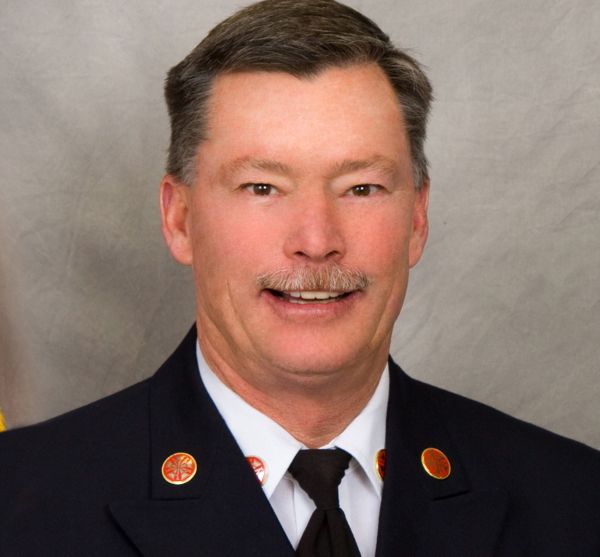
Guy LeFever

Guy LeFever

In 1979 he moved to Lake Tahoe, starting at Tahoe-Douglas as a firefighter. Shortly thereafter Nevada mandated ambulances be staffed with paramedics, so he and five others became certified. He worked as a paramedic for a few years before starting up the promotional ladder.

“Working on the ambulance, I think that was probably the most satisfying time in my career … helping people. Every day was new, every call was different,” LeFever said. “At the time I was pretty young, an impressionable young man.”

Now, at 55, he is the third chief in a six-week span to leave the Lake Tahoe Basin – a basin with seven chiefs. The others who left are Jeff Michael at Lake Valley and Lorenzo Gigliotti at South Lake Tahoe.

LeFever said it’s probably unheard of for three chiefs to depart at the same time. He and Michael are retiring. LeFever didn’t even want to broach the issue of South Lake Tahoe’s departmental struggles and issues.

One thing that has impressed LeFever are the changes regarding fuel reduction in the past handful of years.

“We’ve been fortunate we’ve been able to get defensible space. To get these halos around the community so we don’t get a second Angora,” LeFever told Lake Tahoe News. “The amount of work being done in fuel reduction really is going to have long-term impacts I believe on reducing the fire hazard in the basin.”

But he can see the awareness and priority level drop as Angora fades from people’s memories.

His constituents after the devastating 2007 Angora Fire voted in a tax just for defensible space/fuel reduction work by his department. Despite the fire being across the state line and no homes in Tahoe-Douglas threatened that June, residents know about fire.

LeFever was a battalion chief when the 2002 Gondola Fire erupted in his jurisdiction. He credits Mother Nature for changing wind direction on the second day so it was blowing down Edgewood Canyon. Otherwise, he’s not sure how many houses in the Kingsbury Grade area might have been lost.

About two weeks before Angora his guys were back in Edgewood Canyon because of an electrical fire.

“It just started getting into the trees about 11am,” LeFever said. “If you put that same fire at 2, 3 in the afternoon, Angora probably doesn’t happen because everyone would have been on their toes because we would have lost Edgewood Canyon.”

During Angora, he was chief of the department. But he was out of town – receiving updates every couple hours.

“We sent our entire department over there — five engines, a water tender. We emptied our entire department over there,” LeFever said.

The evolution of mutual aid between agencies in the basin and those in the Carson Valley is something LeFever is proud he’s  been part of.

With Tahoe-Douglas being responsible for the Stateline casino corridor, it has proven to be interesting at times.

In 1980 during the bombing at Harveys, LeFever was a firefighter and emergency medical technician on an ambulance.

“It was an eye-opener to see military here and operating with the FBI. And our bomb squad was an integral part of that,” he said.

As he rose through the ranks, his responsibilities have changed.

LeFever is credited with being good with numbers, saving jobs whenever possible, being frugal, but keeping the level of service people want and need.

“Probably his real strength is he has a talent when it comes to finances,” Mark Novak, Tahoe-Douglas fire marshal, said. “He’s more proactive than reactive.”

In his time as chief, LeFever was instrumental in helping create the fire academy at Lake Tahoe Community College.

“He is a true gentleman. He’s always been there when we needed him. I couldn’t ask for a better community partner,” Virginia Boyar, who helps runs the program at the college, said of LeFever.

LeFever only has good things to say about the academy and the collaborative effort to make it work – including having several of his guys be instructors.

Another accomplishment of LeFever’s is creating the business inspection program at the lake. It gives firefighters an opportunity to see inside a structure before they might be fighting a fire there, and it thwarted Douglas County’s attempts to tax businesses at the lake.

LeFever said it’s time to go – to let those behind him take over.

“I’m comfortable where the management team is and where the organization is going is positive. If I didn’t think so, I would probably stick around longer,” LeFever said.

Who will take over for LeFever remains to be determined by the fire district’s board. That decision is likely to be announced in October.

Not all Shore Shore rec measure officials kept in loop

By Kathryn Reed

The treasurer of the board that oversees recreation Measure S on the South Shore just recently found out about the half dozen meetings the board has had this year geared primarily to rewriting the voter approved initiative.

It took a call by an El Dorado County resident to county Auditor Joe Harn in the last few weeks to alert him to what is going on. Harn is also the joint powers authority’s treasurer.

“Protocol would be I’d be informed about the meeting. It is unusual that an officer of the JPA would not be informed of the meeting,” Harn said.

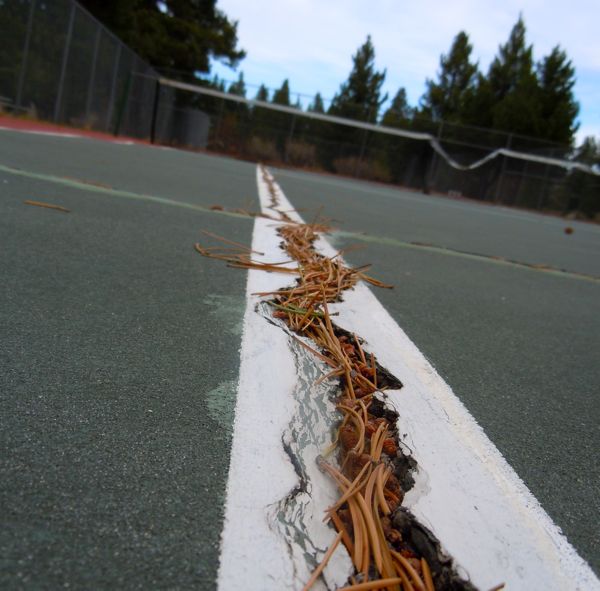
Pine needles fill in the lines at Tahoe Paradise tennis courts in November 2010.

Pine needles fill in the lines at Tahoe Paradise tennis courts in November 2010.

Meetings to discuss changing Measure S to Measure R so the money allocation could be altered have been going on since early spring.

On Aug. 8 Harn was told by county Supervisor Norma Santiago about today’s meeting. Santiago is chairwoman of the recreation JPA. Other board members are South Lake Tahoe City Councilman Hal Cole and Tahoe Paradise Park board member Deborah Henderson.

At the last meeting on July 29, John Upton said in writing and verbally that an audit of the JPA’s books is not necessary. South Tahoe resident Tom Wendell asked the lone paid staff member of the JPA: Why?

Upton said with the JPA writing about eight checks a year that Harn’s “strong position is it’s not necessary.”

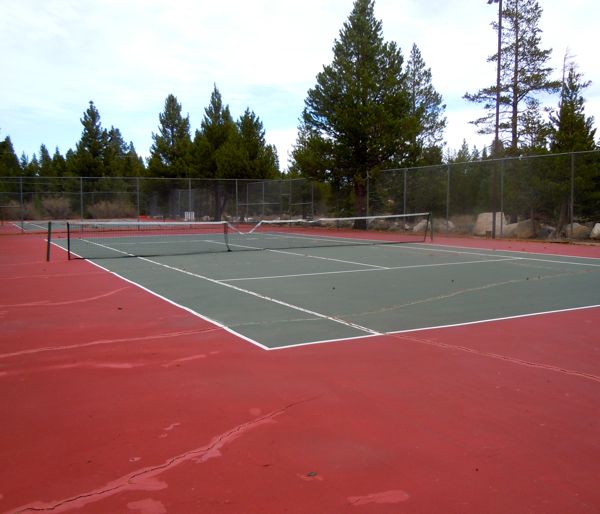
Courts at Tahoe Paradise have not been safely played on in years.

Courts at Tahoe Paradise have not been safely played on in years.

Harn on Aug. 9 told Lake Tahoe News, “I’m not saying one is necessary, but I have not spoken to John Upton about JPA business in a couple years.”

An audit in 2006 by Harn uncovered serious accounting deficiencies. He suggested several changes at that time regarding how the 2000 voter approved measure be handled.

This week he agreed the JPA has little money to spend after it pays bond debt, Upton, and disseminates the money per the measure’s requirements. He said that is all straight forward. What Harn said would be the true reflection of how Measure S money is spent is for the three entities receiving the money to have their auditors do an independent schedule showing what happens with the JPA money.

At the annual meeting two weeks ago where finances are talked about, the JPA board did not mention this more detailed analysis being a possibility or consideration.

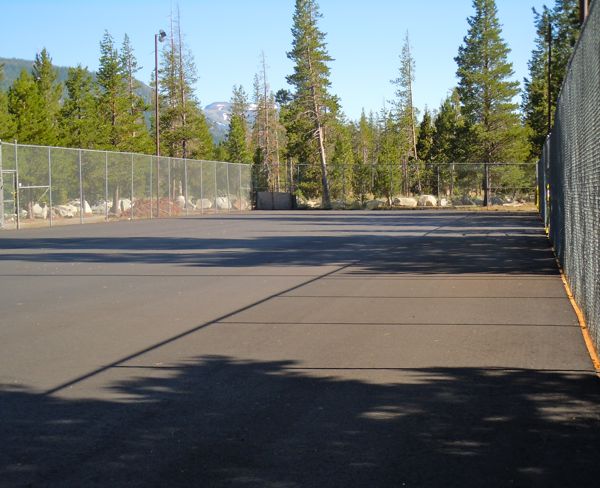
When the courts at Tahoe Paradise will be open remains an unknown. Photos/Kathryn Reed

When Tahoe Paradise courts will open is unknown. Photos/Kathryn Reed

Harn doesn’t even know what Measure R is designed to do.

“If there is not a lot of transparency, normally the voters don’t trust you. I found out (about Measure R) from a member of the public, but it sounds like they are about to go to the voters,” Harn said.

And he’s right. Today is decision day. The board meets at 9am at Lake Tahoe Airport for its last chance to stop the process of putting Measure R on the Nov. 8 ballot. The potential cost of the election is the main sticking point for the board, otherwise the three have agreed to the resolution and reasons to alter the measure.

R would allow bike trails built pre-2000 to receive maintenance money and funds to be directed to improving existing ball fields.

As it stands now, there is no more money for ball fields and only post-2000 bike trails receive cash for upkeep.

Tahoe Paradise is allocated $50,000 a year. This summer two of the three tennis courts at the park were supposed to be resurfaced. In Upton’s July 29 staff report he said they would be open this month.

Lake Tahoe News spoke with groundskeeper Steve Dunn at the unfinished courts on Tuesday. They won’t be ready for play this month. Dunn wouldn’t even give a date because he doesn’t know when they will be painted and it will be two weeks after they are painted before people can use them.

It used to cost $5 an hour to play on those courts. The groundskeeper said the Tahoe Paradise board has not set a fee, but he said he has heard it could be $10.


Burke Creek, Rabe Meadow plans moving forward

By Anne Knowles

MINDEN – Plans to reroute Burke Creek under Highway 50 are getting under way in the first phase of a long-term project to restore Rabe Meadow.

Douglas County Commissioners last week requested $100,000 from the Tahoe Regional Planning Agency’s Stream Environment Zone Fund to design the Burke Creek portion of the project. The request came after the TRPA board approved the money at its July 27 meeting.

The Nevada Tahoe Conservation District, which is overseeing the project, has sent a letter to half a dozen Lake Tahoe Basin environmental consulting firms asking for statements of qualifications, according to Mahmood Azad, principal engineer and fisheries biologist with the conservation district and previously the Douglas County engineer.

Burke Creek in Stateline is carry tons of sediment into Lake Tahoe. Photos/Kathryn Reed

Burke Creek in Stateline carries tons of sediment into Lake Tahoe. Photos/Kathryn Reed

The district will choose a firm from among those contacted and try to negotiate a contract in time to seek approval from its board of directors on Aug. 18, said Azad. The district hopes to have the project design completed by year-end and start work in 2012.

“It could go a long, long way to filtering water that comes off (Highway) 50 and go a long way to improve lake clarity,” Azad said.

Currently, Burke Creek, which was relocated when an airport was built in Rabe Meadow in the 1940s, runs over Highway 50, collecting road sediment that ends up in Lake Tahoe.

Azad said the Burke Creek portion of the project is on a fast track, while the overall restoration of Rabe Meadow is on a slow track and could take up to a decade to complete. That will include removing nonnative grasses that were introduced to the meadow when it was used for grazing cattle as well as restoring the many springs that once flowed into the meadow.

“Sagebrush and pine trees are starting to encroach,” Azad said. “Rabe Meadow is a filtration system and it is not functioning correctly.”

The conservation district is now working with the U.S. Forest Service, which owns Rabe Meadow, to secure a $300,000 grant for the restoration project, Azad said. Nevada Department of Transportation is also providing $200,000 in funding. The $600,000 in funding from the TRPA, NDOT and the USFS will cover the initial design of the project, Azad said. The total cost of the project will not be known until the master plan is completed as part of the design.

Rabe Meadow is part of the long-term restoration plans.

Rabe Meadow is part of the long-term restoration plans.

The project could reduce the Burke Creek area’s sediment flow into the lake by as much as 85 percent to 95 percent, according to Azad. He added the exact amount is unknown because the project covers what he calls a subwatershed of a larger watershed.

“Wetlands, by their nature, if functioning properly, will take almost all sediment out,” Azad said.

The area’s restoration will also attract more wetlands avian and the raptors who prey on them as well as becoming a suitable breeding ground for the Lahontan cutthroat trout that are being continually released into the area’s waters.

“The biggest positive impacts will be on the fisheries,” said Azad.

The Stateline restoration project has been in the works for years, with the TRPA as the lead agency on the project starting in 2007. In 2009, TRPA published a report on Burke Creek restoration, funded with $500,000 in Southern Nevada Public Land Management Act money. In the last year, Douglas County took over the role of lead agency.

The 4-mile creek runs through several private properties, including Sierra Colina, the single- and multi-residential project, which has been involved in the restoration work from the start. The League to Save Lake Tahoe has stalled the project by filing a lawsuit.

In 2006, the developers undertook their own study, done by Northwest Hydraulic Consultants, to evaluate their parcel but also to give the TRPA, USFS and Douglas County engineering ideas, said Steve Kenninger who, with Gail Jaquish, owns the 18-acre Sierra Colina site.

Kenninger said he’s not aware of the details of the conservation district’s plans, but that he was fully supportive of the plans laid out in the design drawn up by Winzler & Kelly in the original TRPA study.

“Therefore, we are unaware of the nature or proposed design of the ‘new’ Burke Creek Restoration Project and are unable to specifically comment on that design, or whether any anticipated changes could conflict with the Sierra Colina project,” Kenninger said in an email to Lake Tahoe News. “However, we reiterate Sierra Colina’s support for a Burke Creek Restoration project being implemented, and Sierra Colina’s continued desire to cooperate with the county.”

Sierra Colina donated 10.7 acres of its parcel to Douglas County for public recreation and open space, and 2.4 acres of that is the area needed to conduct creek restoration on the property.

The creek also runs through Tahoe Beach Club, a 20-acre site for estate homes and condominiums at the end of Kahle Drive that is still a mobile home park.

“We’re doing 2 acres of stream zone restoration ourselves, hopefully in cooperation with the agencies,” said Tom Castaneda, vice president of Tahoe Beach Club. “We’ve spoken to the Forest Service, although we haven’t talked to anyone in six or seven months. But we’re very willing to be cooperative.”

The restoration work was part of its environmental impact statement filed to gain approval from the TRPA for the development.

Approved three years ago, the Tahoe Beach Club is working to raise financing for the $200 million project from private equity interests who are more prepared to invest in it than are the banks, Castaneda told Lake Tahoe News.

Burke Creek also runs through the property where the Nugget Building is located, but owner Chuck Bluth said he was unaware of the project and had not been contacted by anyone about it.


Mayo Clinic doctor to lead sports medicine on South Shore

By Kathryn Reed

Understanding your patients’ lifestyle can be critical to getting them to being in top shape after an injury.

As someone who has competed in cross country skiing and mountain biking, Jon Finnoff knows what an active lifestyle is about. It’s one of the reasons he moved to South Lake Tahoe.

Even though he does not start at Tahoe Orthopedics and Sports Medicine until next week, he has been on his bike, closed on a house and has his 2011-12 pass for Heavenly Mountain Resort.

Jon Finnoff

Jon Finnoff

Now it’s a matter of him, his wife and their 4-year-old daughter getting settled and learning where to play outdoors.

His position is new for Barton Health. Finnoff will be medical director of sports medicine, working with the physician team of Keith Swanson, Terry Orr, Steve Bannar, Robert Rupp, Dan Robertson, Kyle Swanson and William Cottrell.

Like Orr, Bannar and Kyle Swanson, Finnoff is also a doctor with the U.S. Ski Team.

“Sports medicine is not just orthopedics. I’d like to create a multi-disciplinary team for sports medicine,” Finnoff told Lake Tahoe News. “I want to find out what we have, what we have that needs to be improved and what we don’t have.”

While he comes from the esteemed Mayo Clinic in Minnesota, it’s growing up in Boulder and living in Bend, Ore., that fueled him with the desire to return to the mountains.

Finnoff met Orr at a conference a few years ago, which led to building a relationship and his eventual move to head the center.

He has been an associate professor at the Mayo Clinic, is still on the faculty at the University of Utah, and often gives lectures internationally. He has also contributed to more than 60 publications.

This month he will be traveling to Chile and China to give presentations.

Finnoff is aware of the missed opportunity by Barton to have Richard Steadman pursue his dream of an orthopedic clinic. He eventually did so in Vail, leaving South Lake Tahoe decades behind the curve. Finnoff shrugs that off.

On the South Shore he intends to create a sports concussion program like he did at the Mayo Clinic. He will create a multi-disciplinary team that incorporate the schools and ski resorts.

“For the concussion program, the baseline tests people who are at risk. If you don’t know how the person functions prior to injury, you don’t know how they are functioning after the injury,” Finnoff said.

In other words, cognitive skills differ in everyone. If they weren’t a rocket scientist to begin with, then there should not be the expectation that recovery will make them one.

“If you are participating in a sport at high risk for concussion, that includes snowboarding and skiing, you should get a baseline (concussion test),” Finnoff said.

He says concussion are “somewhat of a hidden injury” because blood and broken bones are not usually part of the trauma. Finnoff is well aware of second-impact syndrome and the need for better education about it.

Finnoff wants to turn this area into a hub for sports medicine – not just in terms of treating patients.

Education, research, and tracking clinical outcomes are key goals of his.

He also said, “It’s important to create a strategic alliance with other medical centers to create a high level of care here.”

Finnoff is also tasked with continuing Barton’s goal of becoming a destination health care facility. This is also part of the basin’s prosperity plan.

After he gets acquainted with the community and facilities in the area and region, Finnoff intends to create a one-, five- and 10-year action plan.

And when Finnoff isn’t in scrubs or a lab coat, expect to see him dressed to hike, bike, climb or ski.


Heaven is a hotel rooftop overlooking the Pacific Ocean

By Paula Peterson

AVILA BEACH – To sum it up: heavenly. I found a place to unwind, relax, disappear into my own world, and yet, my daughter can have fun and enjoy it as well. And, I don’t have to leave the hotel.

When traveling with your kids there aren’t many places that can give everyone in the family the same vacation value. But the Inn at Avila Beach, Avila Beach and the central coast certainly fit that bill.

Cabanas on the roof at the Inn at Avila Beach mean not needing to the leave the hotel. Photos/Paula Peterson

Cabanas on the roof at the Inn at Avila Beach mean not needing to the leave the hotel. Photos/Paula Peterson

I usually take a vacation to enjoy a region, but after finding the Inn at Avila Beach in 2009, I have found that I can enjoy a hotel as my vacation destination. Don’t get me wrong, the whole central coast is full of great things to do, and I enjoy them when I’m there. But my rooftop heaven is always waiting for me.

I attended Cal Poly in San Luis Obispo during the late ’70s and frequently visited Avila Beach. This big pink building on the hill housed apartments and I never paid much attention to it. But with remodeling and its reincarnation as a hotel, I definitely pay attention now. Terra cotta tiles on the floors, colorful hand-painted tiles around the property and a homey atmosphere greet you as you check in (but yes, it still sports a pink exterior). Oceanfront rooms with nice patios allow the visitor to hear the waves pounding on shore all day and night. They have interior courtyard view rooms, but I wasn’t very impressed with the rooms without an ocean view where one can enjoy the view and the sounds of the waves.

So now, for the best part … the rooftop. They have created a paradise on the roof, complete with cabanas, barbecues, tables, hammocks, counters, sinks, blenders, sofas, televisions and comfy chairs and couches. You can sit and relax in a cushioned wicker chair and read your favorite book while listening to the beach action. You can bring up that bottle of wine you bought during your day of wine tasting, uncork it with some cheese and crackers and enjoy the sunset. You can stay away from restaurants and barbecue your dinner, from steaks to the fresh fish you just bought on the pier. Or, when the sun goes down, bring up the bag of complementary popcorn you just popped and watch a movie under the stars.

Everyone in the hotel shares the space, but there has always been plenty of room for everyone each time I’ve been there. I was impressed the maids made regular rounds and straightened up the blankets and cushions so all was fresh for the next person to enjoy the space.

Avila Beach is small and quaint.

It’s changed a lot since my college days. In the late 1990s Unocal started to clean up decades-old oil seepage from their pipes under the town and where a massive oil spill was found. A half-mile stretch of town was leveled in order to clean up the mess and a $30 million lawsuit helped rebuild the town. The small beach shops were old and homey before, but what replaced them are stylish and pleasing shops, deli, store, beach front restaurants, coffee shop, a wine shop and bar. You can walk from your hotel room and have a coffee at Joe Mamma’s (where the sign reminds you that each cup of coffee is personally crafted and that they aren’t at Starbucks). You can sit in the beach chairs outside or stroll on the beach or pier with your java.

The newly redesigned Avila Market & Deli is quite charming and offers a great menu. You can eat upstairs, take it outside, or downstairs where they’ll pour you a glass of wine to go with your meal. As with each beach town, there are souvenir shops my daughter can’t stay out. During late spring, summer and early fall there is a fun farmers’ market where you can sample seafood from the local restaurants, buy fruit and veggies or stop by the outside bar and enjoy a cocktail. Then you just walk home to the Inn at Avila Beach a block away.

I’m happy on the rooftop, but there are so many nearby choices on where to go touring and exploring. Rent a local bike and go out the Bob Jones Trail from the beach by the golf course out to the Avila Valley Barn and enjoy a treat, drive in to See Canyon for apples or wine, venture south to Pismo Beach or the other direction to San Luis Obispo. One can go wine tasting in the ever expanding Paso Robles region, exploring and shopping in Morro Bay, Cambria and Cayucos or go on Hearst Castle tours and the list goes on.

Something I never miss on my trips to the central coast is the fabulous year-round Thursday night farmers’ markets in San Luis Obispo (SLO) … a must see and do. City streets close every Thursday for three hours from 5 to 8pm and you can eat from a multitude of restaurants, fruit and veggie stands, and buy clothing and just about anything you’re looking for. Bands are also playing on several of the side streets and the energy in the area is easy to catch.

Another stop we never miss is to Splash Café. Their bread bowl clam chowder is out of this world. Their main restaurant is in Pismo Beach near the pier. Don’t let the long line wrapping around the funky building scare you. It moves quickly. They just added a location in SLO, too.

But there is always my rooftop at the Inn at Avila Beach. Late spring is my favorite time to be in Avila, but there really is no wrong time. Parking gets a little crazy on busy summer days, but if you’re parked in the lot at the hotel you’re good, though there aren’t enough places for every room.

More hotel and town information are online.

ngg_shortcode_0_placeholder (Click on photos to enlarge.)


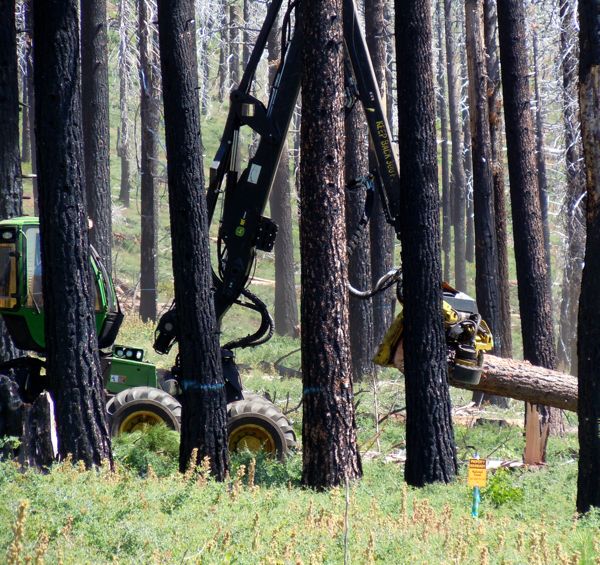
Charred trees being extracted from Angora burn area

By Kathryn Reed

Alien-like machines seem to be able to perform superhuman tasks in the middle of the forest.

Cut, extract, de-limb, slice. Repeat, repeat, repeat.

The sound of trees crashing echoes through the otherwise tranquil Angora burn area. A few birds chirp, but no people are venturing in to see what the noise is all about.

Trees are being removed from the Angora burn area. Photos/Kathryn Reed

Trees are being removed from the Angora burn area. Photos/Kathryn Reed

What’s going on is the U.S. Forest Service is getting rid of a significant number of trees charred and killed in the June 2007 wildland fire that destroyed 254 houses and blackened more than 3,000 acres.

The project was delayed because of the lawsuit brought by Earth Island Institute’s John Muir Project and the Center for Biological Diversity. The conservation groups believed woodpeckers’ habitat was threatened. The court said we don’t think so.

One-by-one the burned standing lumber left behind by the Angora Fire is being removed. About 750 acres are being treated with mechanical equipment, while hand crews are tending to an additional 450 acres.

This project on the South Shore will be the first test case involving another lawsuit.

On June 30, El Dorado County Superior Court Judge Steve Bailey sided with conservation groups Sierra Club and Sierra Forest Legacy by saying the permitting process for this and other projects is out of whack.

Post-Angora the bi-state fire commission put together by the governors of California and Nevada at the time said permits for fuels reduction projects should be streamlined. Local agencies complied by having the Tahoe Regional Planning Agency take on the responsibility.

But the June court decision brings the Lahontan Regional Water Quality Board back into the picture.

Harold Singer, executive director of Lahontan, spoke to leaders of the Lake Tahoe Basin fire community on Aug. 4 telling them what the ruling means.

“They said go back and evaluate all of the projects in the 10-year strategy,” Singer said of the court ruling.

This means the Angora project needs a timber waiver. The deadline to secure it is Aug. 13 – same goes for all operations currently under way. Any projects starting after that date require a timber waiver, too. The application for Angora was submitted Thursday while Singer was meeting in Meyers with the basin fire chiefs and others.

“We are committed to expediting the applications, especially if something is going on. We don’t want to stop work,” Singer said.

Singer said no fee would be associated with the permit. Several tiers are associated with the permitting process. Hand crew jobs will fly through, while something like the Angora work that entails machines and the creation of new trails is at the strictest review process.

While Singer admitted the rest of this work season could be hectic for those needing permits from Lahontan, he said he wants to come up with a more permanent plan for the future. However, he has not contacted the Tahoe Regional Planning Agency to work on what that might look like. Considering TRPA has been the lead permitting agency for such projects in the last few years, it will need to be consulted.

In many ways, the court ruling puts basin fuel reduction permitting rules back to pre-Angora standards.

With the work in the Angora area being a multi-year project, the permit to proceed is crucial.

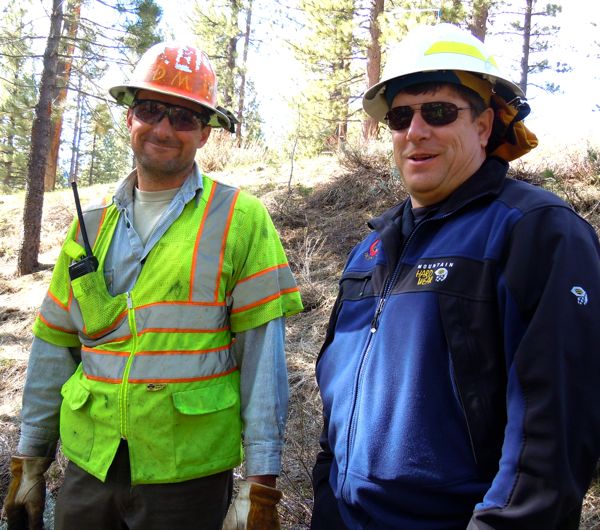
Crews are currently accessing the area off Forest Mountain Road; working about 400 feet from houses. The plan eventually is to make this a trail that will connect to Seneca Pond, Miwok and the gun mount at the base of Echo Summit.

Less than a half-mile in is the landing area where the chipper will be brought in to shred the trees being felled.

“The goal is to leave less than 10 to 15 tons per acre on the ground,” Duncan Leao, U.S. Forest Service forester said while taking Lake Tahoe News on a tour of the area this week. “We could remove 40 to 60 tons per acre to get to the desired level. This part of the prescription is retaining larger snags and larger downed logs. It’s a balance with fuel loading targets and habitat benefits.”

A minimum of four snags and seven downed logs are being left in each acre.

This wood has no value to a mill. Some might be able to be turned into firewood, but most will be chipped and hauled out of the basin. Where it goes is still up in the air.

CTL Forest Management is doing the work.

Trees in this area that are up to 24-inches in diameter will be felled.

“Not every tree, but we will look at all of them,” Leao said.

Each section of the burn area has a particular prescription. There are 16 units, with subunits in some of those. Criteria for how each section is handled include, but is not limited to, the health, size, crown and relation to other trees, species, slope of hill, intensity of burn area, and location. The entire ecosystem was looked out before a plan was devised.

Leao has noticed more deer in the area since the fire. Before not much habitat existed for them to forage. Not so now. Lots of green exists at ground level.

More mountain elderberry is sprouting as well.

In most cases a white fir would be removed over a Jeffery pine or incense cedar.

The prescription for the area also includes where to plant seedlings and where to increase aspen stands.

Several young pines that were planted in the last three years are sprouting in the forest. Their tender green branches protrude beyond the ever-present white thorn and Manzanita.

Part of the healthy forest plan is to get rid of invasive weeds. This is done before the mechanical crews come in and will be performed in areas not having timber removed. It’s all hand work. Bull thistle and cheat grass are two of the species being removed.

The burn piles dotting the landscape could be burned this fall if conditions allow for it.

As the project progresses, assuming the timber waiver is secured, that area of the forest being worked on will be off-limits to the public for safety reasons. The whole project could take six years – which includes building trails. The goal is to thin 700 acres by Oct. 15.

ngg_shortcode_1_placeholder (Click on photos to enlarge.)


Fuels project may land South Lake Tahoe in court; forces changes in fire department

By Kathryn Reed

MEYERS – South Lake Tahoe has someone new heading up fuels reduction projects – and it wasn’t by choice.

Marty Scheuerman is now the division chief in charge of that aspect of the fire department, with Division Chief Ray Zachau being relieved of that responsibility.

The billing quagmire surrounding the Lake Christopher fuels reduction project that could be settled in court led to the change.

Dave Mercer and Ray Zachau at the Lake Christopher project in April. Photo/LTN file

Dave Mercer and Ray Zachau at the Lake Christopher project in April. Photo/LTN file

“It’s not necessarily a decision made exclusively by South Lake Tahoe,” Police-Fire Chief Brian Uhler told Lake Tahoe News.

He added, “The change in assignment was necessary to move things forward.”

Uhler and Scheuerman were attending their first MAC — Multi-Agency Coordinating Committee – on Thursday. The half-day session at Lake Valley Fire Department was about all things fire.

This group of mostly fire chiefs from the basin as well as state and federal land owners came together shortly before the 2007 Angora Fire, but solidified their roles after that destructive wildfire.

Working collectively is a key component of what MAC is about. That is why others influenced what transpired within South Lake Tahoe Fire Department.

(Zachau did not return a phone call.)

Andrew List, executive director of Nevada Fire Safe Council, told the more than two-dozen people at the meeting that contracts are between NFSC and the contractor. Jurisdictions have no authority to authorize expenditures.

“We think he may have a legal issue with the city of South Lake Tahoe,” List said of contractor Dave Mercer.

Mercer cleared the area via helicopter in the spring when everything was so wet. The timber was soaked, weighing more than anticipated. It was so heavy the contractor had to get a larger helicopter to do the work.

All of this led to additional costs to the tune of $170,000 in order to complete the fuels reduction project.

“The problem with this is its 75 percent over and the bid was already 15 percent higher than the low bidder,” List said. It was also a do-not-exceed contract.

Instead of Mercer going back to the nonprofit Fire Safe Council to explain the situation and ask for a change order, he received a verbal OK from Zachau to go forward.

List told the fire management contingency in the room that this should “serve as a warning” to them to follow procedures.

Because potential litigation is involved with Mercer wanting to be paid Uhler would not comment further.

Zachau, though, in a July 21 Lake Tahoe News story expressed concerned the NFSC is moving beyond what he sees as its charter to act as a financial agent for the fire districts into more of a technical role managing the projects.

“They’ve hijacked the process,” Zachau told Lake Tahoe News for that story.


Tahoans asked to help shape policy throughout basin

By Kathryn Reed

What policies would you change to make Lake Tahoe function better?

Define what local contribution means, promote stewardship, overhaul infrastructure, improve transit, who is responsible for operation and maintenance costs, encouraging public-private partnerships, mandatory mediation before litigation, alignment within and between organizations, and balance environmental and economic goals.

Those were some of the overriding themes at the South Shore meetings on Wednesday. While all are not policy statements per se, when they reach Sen. Dianne Feinstein’s hands next week they will be written as such.

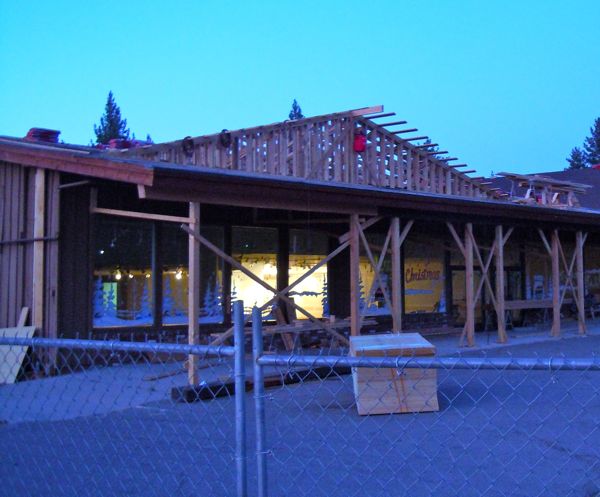
Renovating the old Mikasa building is an example of the private sector improving Lake Tahoe. Photo/LTN

Renovating the old Mikasa building is an example of the private sector improving South Lake Tahoe. Photo/LTN

Steve Teshara, with Sustainable Community Advocates, is tasked with culling together a manageable document to present to lawmakers.

Four workshops are being conducted in the basin at the request of Feinstein, D-Calif. Public sentiment, unlike years past, will be a central them to this year’s environment summit. Feinstein is hosting the public event at Homewood Mountain Resort on Aug. 16 from 9-11:30am.

Two public vetting sessions were Aug. 3 in South Lake Tahoe, with two more today. The first is from 10am-noon at Granlibakken Resort in Tahoe City and then from 3-5pm at the North Tahoe Events Center in Kings Beach.

Five suggested topics were presented to the approximately 30 people (combined for the South Shore meetings), which included:

• Water clarity

• Infrastructure turnover

• Complete streets and transit

• Sustainable prosperity and stewardship

• Opportunities to expand regional match investment for the environmental improvement program.

Forest fuels was not broached until the Wednesday evening session when Lake Tahoe News brought up the issue. An unfunded mandate, like Lahontan Regional Water Quality Control Board’s total maximum daily load, was another issue LTN triggered discussion about.

While Doug Smith with Lahontan tried to convince the room the TMDL is not an unfunded mandate, it fell on deaf ears. Same with his contention the regional board does not answer to the state water board.

Consensus was met on the need for greater public-private partnerships as well as looking at the region as a whole and not just project-by-project. Some of the thinking is to better leverage dollars and resources, as well as to possibly have combined projects meet TRPA thresholds.

Several people brought up how agencies don’t have the same philosophy throughout the organization. While this is not something the politicos can change, it is something they can advocate for. After all, 85 percent of the land in the Lake Tahoe Basin is owned by public agencies.

It’s getting the left hand to know what the right hand is doing.

The same goes for having each agency be on the same page.

“We need consistency,” El Dorado County Supervisor Norma Santiago said.

With the basin being such a litigious environment, it was suggested mediation be required before a lawsuit could be filed. While some suggested the Tahoe Regional Planning Agency rewrite the Compact to make that happen, it was noted resolutions are on the books that could bring some changes without the need for an act of Congress.

Ty Polastri with the Lake Tahoe Bicycle Coalition said money is out there, but people are hesitant in the current “I’ll sue you if you do that” atmosphere to write a check.

All heads appeared to nod in agreement.

Gary Midkiff, who once worked for TRPA and now has a private consulting firm, said it costs too much money and takes too long to bring a project forward in Lake Tahoe.

While the public has been asked before to weigh-in on such matters with no obvious outcome, this is new to have a U.S. senator go to the residents of Lake Tahoe.

Teshara said he believes Tahoe is at a tipping point – on the edge to right the ship that has been listing for so long.

Anyone wanting to submit policy suggestions may do so until Aug. 8 by emailing them to steveteshara@gmail.com.


League, TRPA spar in court over Stateline project

By Kathryn Reed

A federal judge on Monday seemed a bit bewildered why the League to Save Lake Tahoe brought forward the case against the Tahoe Regional Planning Agency to stop the Sierra Colina development in Stateline from going forward.

Sierra Colina is the name of the project Steve Kenninger and Gail Jaquish are trying to develop on the 18-acre bare parcel between the Lake Village housing area and the old Nugget building on the south side of Highway 50.

TRPA approved the development on the second anniversary of the Angora Fire – June 24, 2009. This is a bit significant because the League in its arguments Aug. 1 said adding an ingress and egress to the 325-unit Lake Village complex was irrelevant. Fire officials have said otherwise.

Sierra Colina's future is in a judge's hands.

Sierra Colina's future is in judge's hands.

Right now there is only one way into that development. Sierra Colina would provide another way in and out in the case of an emergency.

What the League is suing over is the transfer of land coverage.

Douglas County agreed it would provide the land coverage for the linear public facilities in exchange for public rights-of-way. The League contends there is not enough public benefit of the trail system, that it only benefits those who will in Sierra Colina, to warrant the coverage transfer.

The League did not challenge the project permit, subdivision permit, intersection permits or environmental documents.

However, at the various hearings two years ago, League representatives spoke in opposition to developing a barren piece of land. But that is not what is being argued in court.

Rochelle Nason, executive director with the League, did not respond to an inquiry from Lake Tahoe News for comment. She was in court, but missed nearly the first half of the 90-minute session.

Project proponents reached out to the League before TRPA issued the permits two years ago.

In the nearly two years since the lawsuit was filed, more than 11,000 pages of documents have been given to the court.

Sierra Colina would be giving 10 acres of the project to Douglas County as open space. The project would connect paved bike trails in the Lower Kingsbury Grade area to Round Hill on the north side. That is where the coverage becomes a sticking point.

Douglas County’s master plan includes this trail as a public asset. Creating trails also plays into TRPA’s recreation goals and desire to have people use alternative forms of transportation.

U.S. District Court Judge Robert Jones at the end of the day Aug. 1 gave the League 10 days to prove his court has jurisdiction over the matter. The TRPA Compact says the venue could be state court, but does not address jurisdiction. However, it’s federal court where TRPA lawsuits are usually resolved.

Jones will then decide if his court is the one to rule on the TRPA-League lawsuit.

“The court was very well prepared, had a very clear grasp of issues and the facts and concurred with the environmental analysis demonstrated,” Lew Feldman told Lake Tahoe News. Feldman was hired by TRPA as outside counsel to represent the bi-state regulatory agency in court.

However, he would not comment further.

Kenninger would only say, “Sierra Colina looks forward to receiving the decision of Judge Jones.”

If Jones rules with history and decides federal court does have jurisdiction, it could be anywhere from a couple weeks to 90 days for him to decide to rule for the defendant or plaintiff.

If TRPA wins, and in effect Sierra Colina, the project could break ground next summer. The housing market would play a huge role in when the developers would proceed. Financing would be another issue – just like it is for the stalled Tahoe Beach Club at the end of Kahle Drive.

Sierra Colina would create 41 market rate dwellings and nine moderate-income deed restricted places. Forty-two units would be in 21 townhouse-style duplexes, with eight being single-family homes.

Another large aspect of the project is environmental improvements. Part of this is reducing 28 to 70 percent of the current volume of sediment from reaching Lake Tahoe. The lake is walking distance from the project. Helping improve Burke Creek is also part of the project.

Environmental improvements have started despite the lawsuit. In fact, Douglas County commissioners will be discussing Burke Creek at their Thursday meeting.

What was pointed out at the hearings two years ago is the area is zoned for a single-family residence and no environmental improvements would have to be made.


Failures in Garrido case blasted in new report

Phillip Garrido

By Sam Stanton, Sacramento Bee

In a blistering assessment of how badly officials bungled their oversight of rapist-kidnapper Phillip Garrido, El Dorado County prosecutors have compiled a list of dozens of instances for which his parole should have been revoked, many of them that would have saved Jaycee Lee Dugard from being abducted.

The 162-page report from El Dorado County District Attorney Vern Pierson’s office includes numerous federal and state documents that have previously surfaced since Dugard was rescued from 18 years of captivity in August 2009.

But it includes striking new details of Garrido’s parole violations that should have – but did not – return him to prison, including:

• Efforts he made while working at a nursing home to get co-workers to help him buy drugs.

• Positive tests for drugs such as methamphetamine.

• Submitting watered down urine samples during drug testing.

• And wearing a fake penis and using warm Mountain Dew to fool one drug counselor during testing.

Read the whole story