TRPA switches leadership on Regional Plan update — again

By Anne Knowles

STATELINE — The Tahoe Regional Planning Agency has someone new shepherding its long overdue Regional Plan update.

Harmon Zuckerman, the former Douglas County principal planner hired by the agency two years ago to oversee the RPU, resigned on Monday, a few days shy of the end of his contract. Arlo Stockham, a planning consultant who previously worked for the city of Reno and the Truckee Meadows Planning Agency, has replaced him as the TRPA’s RPU coordinator.

“I was surprised to hear that Harmon is leaving the agency, that’s unfortunate,” said Shelly Aldean, Carson City supervisor, TRPA Governing Board member and member of a newly formed TRPA committee to expedite the RPU. “But I am sure his successor will be equally capable.”
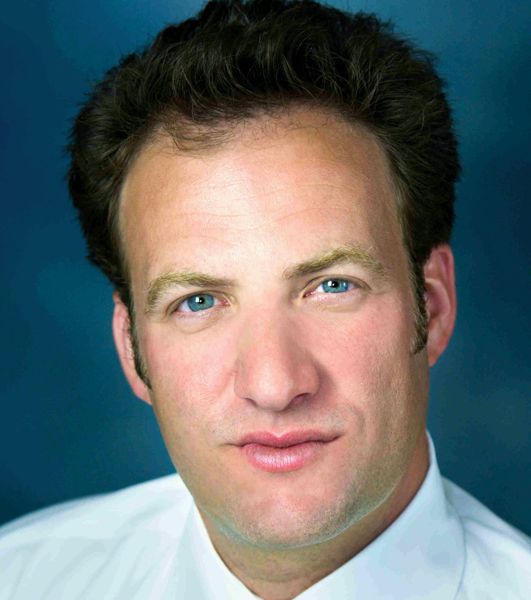
Harmon Zuckerman was brought in to the save the Regional Plan, but his contract was not renewed.

Harmon Zuckerman was brought in to the save the Regional Plan, but his contract was not renewed.

“Harmon brought the plan up-to-date and created a set of documents for the next phase,” Jeff Cowen, TRPA spokesman, said. “We’re in a new phase and need new leadership.”

But that is also what the agency said when they brought Zuckerman in.

Stockham was involved in the contentious 2002 Truckee Meadows Regional Plan, which ended up in court, as well as the overhaul of Reno’s zoning codes to promote smart growth.

“Reno and Washoe County had different ideas and in the end it was litigated,” Stockham said of the 2002 regional plan. “But we worked through the issues and were able to reach good consensus. I’ve gained a reputation of being pretty good at consensus building around important and controversial issues. I work hard to minimize points of disagreement.”

Stockham said he previously worked with John Hester, TRPA planning manager, who contacted him about the position.

“I’ve worked with John in the past and this seemed like a good fit,” Stockham said.

Calls for comment to Joanne Marchetta, TRPA executive director, and Hester as well as an email to Zuckerman were not returned.

Stockham said he was getting up to speed on the RPU and wasn’t ready to speak to the details of the plan.

“It’s premature to discuss content,” he told Lake Tahoe News this week. “This is all quite new. I had an initial meeting with some of the key planning people (Tuesday).”

Stockman said he also couldn’t comment on exactly how he will coordinate with the new TRPA committee formed last month to ensure adoption of the stalled update.

That six-member committee is chaired by Clem Shute, a California lawyer and a member of the TRPA Governing Board appointed by the governor of California. The other committee members, all Governing Board members, are Robin Reedy, vice chair of the committee and a governor of Nevada appointee; Aldean; Mara Bresnick, a California Assembly Speaker appointee; Steve Robinson, representing the Nevada Department of Conservation and Natural Resources; and Larry Sevison, appointed by the Placer County Board of Supervisors.

Reedy thinks the committee will focus more attention on the RPU than the Governing Board has been able to in the past. The RPU was supposed to be done in 2007, with latest release date set for late 2012.

“We’re a smaller group of people with passionate ideas,” Reedy said. “A lot of us are new to the board.”

Aldean agreed. Aldean said she was involved in an earlier committee to redefine tourist accommodation units, the size of a one-bedroom unit for development and redevelopment purposes, which never reached a consensus.

“At the end of the day we agreed to disagree,” Aldean said. “But we have new players. Clem Shute was not on the board. We have new people with new outlooks.”

The TAU definition is one of several issues confronting the committee. Another is the transfer of land coverage between hydrologic basins.

The TRPA would also like to change land coverage policy. Land coverage – the square footage allowed to be built on a parcel determined by environmental impacts – is required to build in the Lake Tahoe Basin and can be banked and sold, but cannot be moved between water sheds. The TRPA would like to allow land coverage available in one watershed to be used in another.

The inability to relocate land coverage, says Cowen, has hampered redevelopment of outdated sites like the recently approved Boulder Bay project at the Tahoe Biltmore in Crystal Bay.

Many in the conservation community oppose both ideas as allowing excessive and destructive growth in the basin. The League to Save Lake Tahoe, arguably the TRPA’s biggest critic, though, is in flux right now after Rochelle Nason, its executive director of nearly 20 years, resigned last week.

“It remains to be seen whether their overall approach will change,” Cowen said of the League.

The RPU is at the center of complaints about the TRPA, especially from Nevada, which passed a bill during its recent legislative session to withdraw from the bi-state Compact if certain reforms were not made to the agency. During discussion of the bill, the agency’s inability to adopt an RPU, which updates a plan that expired nearly five years ago, was repeatedly cited as an example of the TRPA’s failures.

Nevada Secretary of State Ross Miller, a member of the Governing Board, for example, called out the RPU as the prime reason for changing the board’s voting structure.

The new RPU committee is scheduled to meet monthly until it is expected to deliver a feasible plan to the entire Governing Board for a vote by the end of 2012.



TRPA defends using same auditor city of Bell employed

By Kathryn Reed

The Tahoe Regional Planning Agency is using the same auditing firm the financially ruined Southern California city of Bell used.

While the bi-state regulatory agency entered the agreement in May 2010 – six weeks before the mayor of Bell resigned – the agency chose to stick with the controversial firm when the news about that city spread like wildfire.

trpaThe auditor contract says TRPA could terminate the agreement with 30-days notice.

The three-year $173,350 contract also covers audits for Tahoe Transportation District and the now bankrupt South Tahoe Area Transit Authority.

And while Kristi Boosman and Jeff Cowen – spokespeople for TRPA – vehemently maintained the one audit Mayer Hoffman McCann has done to date was thorough, they also said that it wasn’t the same group of auditors working on the TRPA that did the Bell audit.

However, on Page 7 of the 24-page document it shows that TRPA was working with the Irvine office of Mayer Hoffman McCann – the same office Bell used. This doesn’t mean it’s the same people doing the audit, but the firm does have offices in Northern California.

Several cities stopped using the international accounting firm after California’s controller issued a scathing indictment of the firm.

State Controller John Chiang on Dec. 21, 2010, said in a press release, “MHM appears to have been a rubberstamp rather than a responsible auditor committed to providing the public with the transparency and accountability that could have prevented the mismanagement of the City’s finances by Bell officials. Had MHM fully complied with the 17 applicable fieldwork standards, it would have led them to identify some – if not all – of the problems my office has uncovered since August.”

MHM President Bill Hancock that same day in a press release said, “Clearly the events in Bell are tragic and outrageous. Mayer Hoffman adheres to the highest standards, and we have forged a reputation for integrity and quality throughout our 50-year track record of service. But in those 50 years we have never seen anything like the pervasive collusion of so many individuals acting in concert to deceive auditors, as happened at Bell.”

Why does this matter?

There are several reasons an audit is important, with one of the main ones being it is a document for elected officials – appointed in the case of the TRPA Governing Board – to know if their staff is running a financially sound operation.

The auditor should work directly for the City Council, Board of Supervisors or Governing Board.

This was not the case with the firm hired by the TRPA. The decision to hire Mayer Hoffman McCann was done through a request for proposal, but the Governing Board never voted on it, according to Cowen. This is because, according to Cowen, the board only needs to vote on items not in the budget or that are more than $100,000 a year.

Governing Board Chairman and El Dorado County Supervisor Norma Santiago did not know MHM was the same firm Bell used until Lake Tahoe News called her. She said the administrative team at TRPA handles the audit, with the operations committee having a say.

John Breternitz, who is chair of the operations committee and on the Governing Board as Washoe County’s representative, said, “We picked the same firm we used last time.”

It’s true this year’s audit will be done by the same firm because of the three-year contract, but this is the first time MHM has had a contract with TPRA.

When Breternitz was asked if he knew about MHM’s work in Bell, he said, “I think that was mentioned.” When pressed further, he said, “I guess I don’t know all the details about the Southern California city.”

Boosman, the TRPA flack, wanted the former CFO instead of someone on staff to speak for the agency in terms of what happened once it came to light about the firm and Bell.

Executive Director Joanne Marchetta had a phone interview set up with this reporter for Sept. 20 that she canceled that morning and her assistant has not responded to an email to reschedule it.

Other things

C.G. Uhlenberg LLP was the firm TRPA used prior to MHM.

“I found TRPA’s prior auditors to be unorganized and they did not communicate well with one another. That led to them wasting public resources (my staff’s time). They also were not on top of the professional standards the way I thought they should be,” Rhonda McFarlane, TRPA’s former chief financial officer, told Lake Tahoe News. “As a CFO, I have always used the auditors as my professional resource for questions and information I may need on generally accepted accounting principles or best business practices. Unfortunately, I was more knowledgeable than the prior auditors, and thus they were unable to provide me the support I needed to be effective in my job.”

In a Nov. 1, 2010, LTN story, El Dorado County Auditor-Controller Joe Harn said of the much overdue STATA audit, “This is the worst (audit) I’ve ever seen for an organization this size. The weaknesses in internal control are the worst I’ve ever seen.” But that had to do with the information STATA gave to the auditor, not about the auditor.

McFarlane says through the RFP process and her experience with MHM at a prior organization she was confident in their abilities.

She told Jim Brockett, her boss at the time who also is no longer at the agency, about MHM’s connection to Bell.

There is no evidence, though, the Governing Board was ever told.

Hallye Jordan, deputy controller with the state, said her agency couldn’t recommend a private company be used or not used. Nor could the state office say if the situation with MHM in Bell might be an anomaly.

“We can’t say whether that means there are problems like that elsewhere,” Jordan told LTN in analyzing the situation in Bell.

The officials who took over for the disgraced Bell leaders called in the Controllers Office to do an audit. The audit the office is doing on the city of Montebello that was announced Thursday was triggered by consistently late reports regarding gas tax money and its redevelopment agency, Jordan said.

How a city, county or special district uses state and federal money could also trigger an audit by the state controller, Jordan said.


Ice rink operators want Tahoe facility to be a destination

By Kathryn Reed

Saturday marks one full month since South Lake Tahoe turned the ice rink keys over to private operators.

The most noticeable difference walking in is the retail shop on the right is not there. Instead, those goods are being moved to the left of the front doors, with office space being taken out. More of the core offices are by the front counter.

“We want the whole building to flow better and for there to be more things to do while people are here,” explained Van Oleson, who with Chris Cefalu are the owners of the privately held Tahoe Sports Entertainment, the operators of the rink.

Operators of the South Lake Tahoe ice rink are making changes. Photo/LTN

Operators of the South Lake Tahoe ice rink are making changes. Photo/LTN

They have a range of plans for the sheet of ice – but want to implement them in a strategic manner. While ultimately making money is the goal, providing the right mix of programs with superb customer service top the to-do list.

However, cleaning and organizing things have taken up more time than anticipated.

“This place was just absolutely cluttered,” Oleson said while sitting in his office at the rink.

Working on the feasibility of plans and developing a time line to implement the changes are in the works. More concrete plans should be forthcoming later this year. TSE is still working on its website.

What used to be the retail shop is being turned into a café. The rinks’ operators have made the center an Internet hot spot so people needing to get some work done or just wanting to be online can do so.

Cameras that will be installed in the arena will allow those in the café to see what is going on. Those televisions will also broadcast NHL and other sports programs. Once the license is secure, beer and wine will be sold at the café.

“We hope the effect is a coffee house atmosphere,” Oleson said. He admits, though, that after the men’s leagues, the noise level in the café is bound to escalate.

But the whole goal is with the café upfront it will attract more people.

Vending machines in the back where the “old” café is are likely to be eliminated.

That whole area could be opened up – possibly turning it into an exercise room with free weights, machines or even a Pilates studio.

While changing the look and adding things to the facility are happening, the management team is keenly aware of the need to focus on the ice.

Cefalu said things have been streamlined, with the cost of some leagues being lowered to be more affordable. The goal is to build up the number of people using the arena.

“We want to do more so kids come in. It’s very underused by kids,” Cefalu said.

While the city had a partnership with Lake Tahoe Unified School District for third-graders to learn to skate, Cefalu and Oleson want more than just that age group.

Part of their approach is getting the word out the city has a rink, put a Tahoe identity behind the rink and ultimately make it a destination for people beyond the basin.

Oleson said that while Lake Tahoe is known for winter sports athletes, they are on the slopes, not the ice. He wants to change that.

“We just hosted the founder of the largest international hockey camp to discuss a lot of possibilities with the rink,” Oleson said. “We are working with a former NHL player to create a destination event. We are working with figure skating for events.”

Already the rink has secured the Pee Wee tournament for February. This could fill a couple hundred room nights on the South Shore.

If the Tahoe-Reno area is awarded the 2022 Winter Olympics, as some hope will happen, the ice rink owners want their ice to be used as a training or practice facility.

Cefalu also said discussions have begun with Lake Tahoe Community College to integrate the two entities.

To go forward completely with their plans, Oleson and Cefalu need the recreation JPA board to amend the bond structure of Measure S because private entities cannot make money from tax-exempt bonds. No meeting is on the books to make this happen.

The city chose to seek a private operator of the rink because it had been losing about $100,000 a year for a few years on the 9-year-old facility. Tahoe Sports and Entertainment is paying the city $2,000 a month in rent for the first year; $3,000 month after that. Beginning Oct. 1, 2012, 3 percent of gross revenue above $600,000 will be the city’s; 4 percent the next year; with it capping at 5 percent starting Oct. 1, 2014.


Mixed bag for LTUSD on mandated standardized tests

By Kathryn Reed

Students in Bijou Community School’s Two-Way Immersion Program scored substantially better on standardized tests than their peers. And they were taking it in Spanish.

In grades 2 and 3 the immersion program has 90 percent of the curriculum delivered in Spanish. Half of the 20 students in each class speak Spanish as their primary language, the other half speak English as their primary language. Kids are chosen by lottery, as opposed to hand picked.

Bijou's TWI students test higher than the rest of the school. Photo/LTN file

Bijou's TWI students test higher than their peers. Photo/LTN file

When it comes to the Academic Performance Index, or API, scores show the TWI kids scoring at a 48 proficiency level in English language arts compared to the other second- and third-grade classes at 19 percent. In math, the scores are 73 and 44 percent, respectively. This chart illustrates those results.

With Bijou having a predominately Hispanic student population, the number of English learners is more pronounced here compared to the other elementary schools. However, even South Tahoe High School has just more than a quarter of its students considered English learners – aka, those who have learned English as a second language.

The statistic that is unknown is how the non-TWI students who speak Spanish as their first language would do on the tests if they were given in Spanish. That might better test comprehension of the subject; while current results may only be showing they lack an understanding of the language.

But state tests don’t dig that deep. Instead, all of this testing – still part of President George W. Bush’s legacy of No Child Left Behind and President Obama’s Race to the Top – calls for all students to be at the proficient or higher level by 2013-14.

It’s a goal most educators say was never nor will ever be attainable. The magic number to hit is 800.

“I like assessments to tell me how a kid learns so I can reinforce and re-teach so they are engaged and excited about learning,” Lake Tahoe Unified School District Superintendent Jim Tarwater said. “This is their one ticket. If they lose this ticket, it is tough finding a job.”

LTUSD, still considered a program improvement district, has implemented policies to follow students so individualized growth or lack of growth is monitored. This contradicts the state and feds which compare one third grade class to the next and so on – making test scores about the grade level and not the particular class or student.

“Some schools, if students do well, they will change your grade. To me that means this test controls everything. I think you should learn more than a test,” Tarwater said.

The latest results compared to the previous year:

• Bijou: 2010 — 718; 2011 – 701 = decrease of 17

• Environmental Magnet: 2010 — 939; 2011 – 935 = decrease of 4

• Tahoe Valley: 2010 – 788; 2011 — 808 = increase of 20

• Sierra House: 2010 – 813; 2011 – 826 = increase of 13

• South Tahoe Middle: 2010 — 792; 2011 – 778 = decrease of 14

• South Tahoe High: 2010 – 758; 2011 – 755 = decrease of 3.

“We want growth, but not everyone is going to be in top 5 percent,” Tarwater said. “Overall, we are teaching the standards and hopefully teaching more than that.”

A report is expected to be made to the school board at the Oct. 11 6pm meeting.


Tahoe chefs ready to dazzle Restaurant Week diners

By Kathryn Reed

Twenty-seven restaurants and only eight days. It’s going to make the decision about where to eat difficult.

The second annual Lake Tahoe Restaurant Week, which includes Truckee, is Oct. 2-9.

To give locals an added incentive to eat out and visitors a reason to come to the basin, the event was moved from early September to early October. September is often a busy month, while October it slows down in the basin.

“Lake Tahoe Restaurant Week is a celebration of the scrumptious and culinary talent that has made the Lake Tahoe region the best mountain dining destination in the country. It’s also designed to generate overnight visitors and increase the number of diners during a slower time of year,” organizer Pettit Gilwee told Lake Tahoe News. “I started Restaurant Week because I’m a lover of all things food and wine and I wanted to showcase what Lake Tahoe has to offer. My goal is have the event pay for itself by year five.”

It’s a money saver for those eating and money generator for those fixing the food.

restaurantThree-course lunch and dinner options are offered at $20, $30 and $40 – with each restaurant able to choose what amount to charge and what the menu is.

“It’s tough to track where people are from, but after polling restaurants that participated last year, they reported an average 23 percent increase in the number of guests and a 20 percent increase in revenue, compared to the same time period last year, Labor Day week of 2009,” Gilwee said.

With most of the people in 2010 being new customers, this added to Edgewood restaurant’s desire to be part of the event again.

Soule Domain in Kings Beach did more business in 2010 during Labor Day week than this year – which is when Restaurant Week was last year.

Organizers said it’s near impossible for them to track where people are from, so it’s up to the restaurants if they want to.

Beyond the economics of the whole event, the food is the focus.

“It’s nice to give our chef an opportunity to create something different,” said Bryan Davis of Edgewood restaurant in Stateline. (The difference this year is the restaurant is closed Mondays and Tuesdays in October, so Restaurant Week diners won’t be able to go to Edgewood those days.)

Chef-owner Charlie Soule of Soule Domain in Kings Beach likes being able to do something different in the kitchen during this week.

“It’s not just an increase in traffic, but it also exposes them to special menus,” Soule said. “We get to offer stuff that is a little over and beyond what we normally do.”

He plans to focus on what will be in season for fall, using more earthy flavors like shitake mushrooms and figs, while incorporating the last hints of summer produce such as tomatoes and basil.

For those dining out, there are no tickets to buy or coupons to redeem. It’s just a matter of making a reservation – or reservations. Most of the menus for the event have been posted online so you know what you’ll be served. That’s also the place to see which restaurants are participating.


Source of Taylor Creek spill unknown; samples taken

By Kathryn Reed

What exactly was dumped into Taylor Creek should be known late Tuesday afternoon when results from water samples taken Monday are delivered to South Shore officials.

While the substance appears to be petroleum, that still needs to be confirmed.

The U.S. Forest Service is recanting its earlier statement when officials said it was definitively astro turf soaked in petroleum that was the root of the problem.

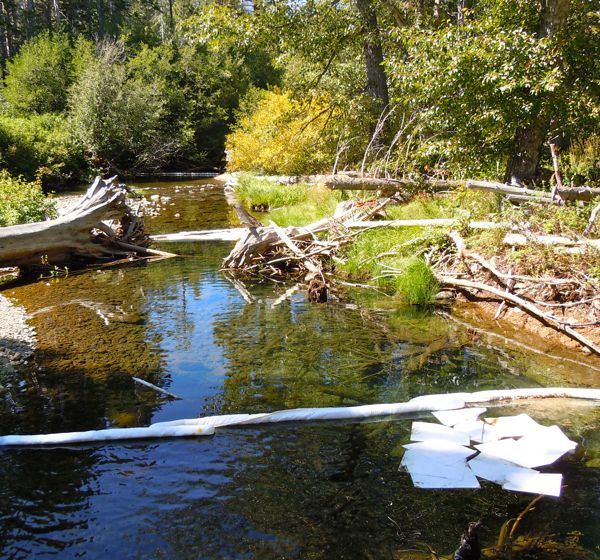
A sheen of what appears to be oil floats on Taylor Creek Sept. 18. Photo/Kathryn Reed

A sheen of what appears to be oil floats on Taylor Creek Sept. 18. Photo/Kathryn Reed

“They have not identified the cause,” Cheva Heck, USFS spokeswoman, told Lake Tahoe News on Monday.

She said the estimate is 1 to 2 gallons was put into the creek that goes directly to Lake Tahoe. However, if petroleum is only one component of what was dumped, that amount could grow.

The spill was first discovered Sept. 17 by a Forest Service employee when he arrived at work at the Taylor Creek Visitors Center.

But Heck emphasized as of now everyone is calling this a tiny spill.

At this time biologists have not seen any evidence of harm to the waterway or animals. With the first school of about 20 kokanee salmon arriving Sept. 19, the health of the creek is critical. This is one of their prime spawning areas each fall in the Lake Tahoe Basin.

“We were checking to see if this material is just staying on the surface of the water, which appears to be the case,” said Scott Ferguson, senior water resources control engineer with Lahontan Regional Water Quality Control Board. “We moved some sediment and some rocks under the water to see if anything had gone down to the creek bed.”

With the substance staying on the surface, this will be better for the ecosystem.

“It looks like what I call a dump and run,” Ferguson told Lake Tahoe News. “It looks like we are down to an isolated area where we have some material trapped on the vegetation. That’s why when you disturb it you see the sheen.”

All indications are someone dumped the unknown substance into the creek. Where the contaminate is coming from is a vegetated area, that when rustled oozes more of the material so it flows downstream. If not disturbed, nothing more flows into the creek.

Because of how dense the vegetation is and not knowing what the product is, it won’t be removed until more is known. Authorities don’t want to drag out vegetation without knowing what is on it.

Booms and absorbent sheets will also remain in the creek until officials know what they are dealing with.

Forest Service officials say this will not impede the salmons’ quest to swim upstream even though the booms cross the creek in multiple locations.

Jim Harris, Forest Service spill coordinator, reported late Monday the substance was found 30 feet upstream from the foot bridge along the Rainbow Trail, that it was not expanding and nothing new was appearing.

Lahontan ordered the water samples; it’s El Dorado County Department of Environmental Services that is overseeing the cleanup; and the Forest Service that is investigating the spill.

A cleanup plan beyond the booms will be determined once officials know what they are dealing with.


USFS: Astro turf soaked in oil tossed into Taylor Creek

Updated Sept. 19 at 8:10am.

By Kathryn Reed

CAMP RICHARDSON – Water samples are expected to be taken today from Taylor Creek after an oil slick was discovered by a U.S. Forest Service employee during the weekend.

“After a thorough investigation it appears that a passing motorist threw a piece of petroleum-soaked astro turf into Taylor Creek off the bridge,” according to John Washington with the U.S. Forest Service.

A sheen of oil is stopped Sept. 18 by a boom in Taylor Creek. Photos/Kathryn Reed

A sheen of oil is stopped Sept. 18 by a boom in Taylor Creek. Photos/Kathryn Reed

Four white oil absorbing booms are draped across the South Shore creek that feeds into Lake Tahoe. Sheets designed to pick up hydrocarbons and not water are strewn about the edges of the creek, looking more like garbage than something to help the environment.

Booms and absorbant sheets pick up the oil in Taylor Creek.

Booms and absorbant sheets pick up the oil in Taylor Creek.

A major concern is what the pollutant will do to the kokanee salmon run this fall. This tributary is a major spawning area for the fish – with events conducted just to witness their migration, making it also an economic concern on top of an environmental issue.

The fish have not started to spawn.

Forest Service officials who could answer questions about the environmental affects of the spill were not available this weekend, nor were California Department of Fish & Game, Lahontan Water Quality Control Board and El Dorado County Department of Environmental Health workers. The latter agency is now responsible for the site.

While a posse of officials descended on the site Sept. 17, no one was patrolling the water Sunday.

Signs, though, on the Rainbow Bridge have been posted saying, “Warning: Fire hazard No smoking on or near Taylor Creek.”

While the booms say, “Oil only sponge” – it would take getting up close to them to know that. The booms were put out by Lake Valley firefighters, with Fallen Leaf Lake firefighters arriving later Saturday.

A sheen about 2-square-feet in area could be seen Sunday near one of the booms. It was not possible to see how much the apparatuses had absorbed.

“The original reported sheen was 10 feet by 20 feet. Our spill coordinator observed that it appeared to be limited to between the street bridge and the walking bridge at Taylor Creek,” USFS spokeswoman Cheva Heck told Lake Tahoe News.

An original possible source of the contaminant was thought to be from a boat at Fallen Leaf, with the water coming over the dam into Taylor Creek. Billy Reif with the Forest Service on Sunday told Lake Tahoe News he does not believe the source is upstream because there is no evidence of the oil there.

He discovered the oil when he arrived at work at the Taylor Creek Visitors Center on Saturday about 7am.

Looking at the creek from the bridge at Highway 89 there is no evidence of oil or of the booms farther down the waterway.

This is the second incident this summer involving oil potentially affecting Lake Tahoe, though neither has done so. The other was at Zephyr Cove Resorts.


Lake Tahoe writers share their craft with enthusiastic crowd

By Kathryn Reed

CAMP RICHARDSON – If there were any doubt about the written (and spoken) word not thriving in Lake Tahoe, those concerns were laid to rest Friday night.

Seven authors read from their work during the third annual Celebration of Writers Around the Lake at Valhalla. The event each year features authors from the basin or people who have written about Tahoe.

Readers and writers mix Sept. 16 at Celebration of Writers Around the Lake. Photo/LTN

Readers and writers mix Sept. 16 at Celebration of Writers Around the Lake. Photo/LTN

Besides being an opportunity to mingle with the writers while sipping wine from Après Wine Company, it was a time to hear their words. Each read a passage from the books they were also selling and signing.

The writers and their work:

• Suzanne Roberts, “Three Hours to Burn a Body”

• Andrew Homan, “Life in the Slipstream: The Legend of Bobby Walthour Sr.”

• Janet Smith, “All of a Sudden, Nothing Happened”; and “Pretty Enough” from “Permanent Vacation”

• Terry Easley, “The Kismet Blade”

• Janet Kaidantzis, “Fallen Leaf Lake: A Lake and its People, 1850-1950”

• Gailmarie Pahmeier, “Shake It and it Snows”

• Ben Arnold, “Synaptic Traffic: Intersections of Prose & Poetry”.

While the poets seemed to better capture the attention of the nearly 40-people attending the event, to the credit of the others – it’s hard to adequately capture history or other genres in a short time span.

To all of their credit, it made the listener want more – either to have the night continue or add a book to the nightstand.

Arnold and Pahmeier displayed the most emotion. As Bona Fide Books Publisher Kim Wyatt said, “They throw themselves into the performances of their work.”

Roberts, who is also an instructor at Lake Tahoe Community College, relayed to the audience that after her mother read “Shameless” she said, “Please tell me you didn’t do this.”

While no mother would want their daughter to be the subject of that poem, many women might like the opportunity.

The celebration started as a way to showcase the talent around the basin – and increase their readership, Wyatt said. The celebration is put on by Tahoe Writers Works, a group dedicated to the written word. The South Shore-based organization puts out a collection of stories and images each year called “EDGE” – with the next volume due this fall.

“We have been told we need to charge more, but we keep the price low so people can afford to buy books,” Wyatt, a member of Tahoe Writers Works, said after the event. (The $10 fee also included wine.)

Having fewer writers (there were 12 in 2010) is a trend organizers want to continue. Now the criteria to be invited is an author has to have a book published in the last year.

Wyatt said the only downside Friday was another literary event that night in Incline kept those from the North Shore from attending. Creating a master calendar of all things literary in the region is being talked about.


2 South Shore bike projects gain significant momentum

By Kathryn Reed

While implementation of new bike trails at Lake Tahoe seems to move at a glacial pace, on the same day boards on both sides of the South Shore unanimously approved aspects of different projects that will eventually link together.

First came the approval Thursday by the California Tahoe Conservancy board (with Larry Sevison absent) to spend $50,000 that will fund appraisals, preliminary title reports, easement descriptions, maps, surveys and application fees. Also approved was the mitigated negative declaration and mitigation monitoring report for the South Tahoe Greenway.

Rabe Meadow is where the first section of the Stateline-to-Stateline bike trail will be built -- starting June 2012. Photo/Kathryn Reed

Rabe Meadow is where the first section of the Stateline-to-Stateline bike trail will be built -- starting June 2012. Photo/Kathryn Reed

The original 9-plus mile trail from Meyers to Stateline has been condensed to 3.86 miles starting in Sierra Tract and ending at Van Sickle Bi-State Park.

“The highest priority is to connect Bijou Park and the community college,” project manager Sue Rae Irelan told the board Sept. 15.

CTC is scheduled to go before the Tahoe Regional Planning Agency board in October for a project permit, which if approved, would be good for three years.

Irelan told Lake Tahoe News the earliest construction could begin is 2013. Funding will be the next biggest hurdle.

Deputy Director Ray Lacey reminded those at the meeting at Riva Grill that when the Conservancy was first founded 30 years ago one of the main goals was to acquire the old Caltrans right-of-way.

Three decades later, that is being done, with the Greenway following much of the route that at one time would have been a highway.

While part of the land is still going to be paved for the bike trail, it won’t be as wide, nor will it have the other environmental impacts a road would require. However, board member and South Lake Tahoe Councilwoman Angela Swanson said the city would like permission for its motorcycle cops to access the trail when necessary. Silence followed her comment.

That afternoon in Stateline, Douglas County commissioners unanimously approved four items related to the State-to-Stateline Bikeway.

The 30-mile route is broken up into three main sections – the South Demo project, central area, and North Demo project. It goes from Stateline to Crystal Bay.

It is the 3.2-mile South Demo project in Douglas County that will be built first. The final design is expected in February, bids sought in April, and dirt being moved in June.

This will be built in three phases, ideally in three consecutive building seasons, according to Alfred Knotts. He is project manager with Tahoe Transportation District – the lead agency.

A joint environmental assessment has been signed off by the TRPA and U.S. Forest Service.

The three South Shore segments are broken up as follows:

• Casino area to Kahle Drive

• Kahle Drive to Elks Point Road

• Elks Point Road to Round Hill Pines.

The middle section will be built first because it is all on Forest Service land through Rabe Meadow.

“It’s a heavily used trail in the existing form,” Knotts told the commissioners.

The latter section will finally provide non-motorized access to the beach at Round Hill Pines – also a Forest Service property.

Planning has begun on the north end, with a site visit last week. More difficult terrain issues exist there. A meeting about that section is scheduled for Oct. 5 at 6pm at the Chateau in Incline Village.


First Reno Air Races crash to involve spectators; 3 dead

By Reno Gazette-Journal

10:06pm update: A spectacular air race that drew tens of thousands of spectators Friday transformed into a horrific war scene after a veteran pilot crashed his vintage plane on the tarmac just feet away from VIP box seats, forcing officials to cancel the remaining two days of the event.

Early estimates were that three people, including pilot Jimmy Leeward, 74, of Ocala Fla., died in the crash at the National Championship Air Races. But that number was likely to increase, based on witnesses who described the scene as “carnage.” At least 54 were injured, 12 in critical condition.

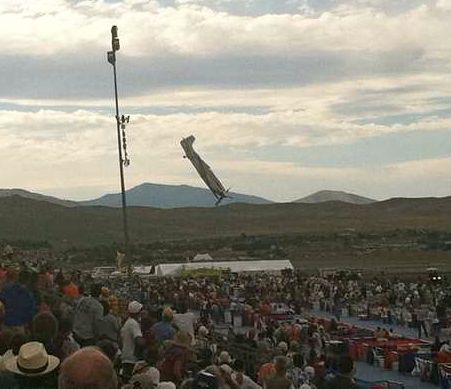
The plane as it crashed in Reno on Sept. 16. Photo/Ward Hughes courtesy of Reno Gazette-Journal

The plane as it crashed in Reno on Sept. 16. Photo/Ward Hughes courtesy of Reno Gazette-Journal

The National Transportation Safety Board took over the investigation Friday evening. A three-person team was already at the Reno Stead Airport, where the air races take place, in case of a crash. This was the first fatal crash at the Air Races since 2007, when three pilots during the event. This was the first crash in the event’s history to involve spectators.

Witnesses said the pilot appeared to lose control of his P-51 Mustang called the Galloping Ghost due to a mechanical malfunction, and he put it into the ground instead of keeping it on the path into the stands, potentially saving hundreds of lives.

“He was a very experienced, talented and qualified pilot,” said Mike Houghton, executive director of the Air Races, which have been in Reno since 1964.

Leeward had been flying since he was 14 and had competed in the air races since 1975. His medical records were up to date and his flying history was clean, Houghton said.

The plane disintegrated on impact, sending shrapnel into the crowd and tearing limbs off bodies, while the blast from the explosion ripped clothes off some spectators, witnesses said.

Read the whole story