Wiping out hodgepodge bike trail system on North Shore

By Katherine E. Hill

TAHOE CITY – Winter is approaching as the days grow cooler, but crews are continuing to work to complete a section of the region’s growing network of bike trails before weather puts a halt to their work.

Tahoe City Public Utility District’s network of bike trails that extend from Tahoe City to Dollar Hill, Olympic Valley and down the West Shore have long been a patchwork of trail systems that go for miles in some areas, with only small sections completed through Tahoe City. Work on the last lakeside sections that will connect the west and east ends of Tahoe City have been under way this fall, with the section from the Tahoe City State Recreation Area extending west in front of the Lighthouse Center to be finished before snow falls.

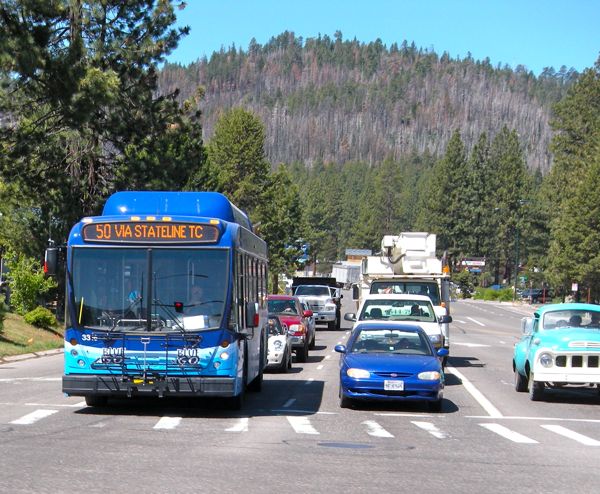
North Shore bike trails will soon be better connected. Photo/Katherine E. Hill

North Shore bike trails will soon be better connected. Photo/Katherine E. Hill

On the west end of town, the bike trail that meanders along Commons Beach ends abruptly at a pump station at the base of Grove Street, which forces pedestrians and cyclists to climb the steep hill at Grove to reconnect to a roadside path along Highway 28. The new section will extend east on the lakeside around the pump station, along the Tahoe City Marina property and the Boatworks Mall before connecting to the section at the Lighthouse Center. Work will continue on this section until winter and will continue in the spring. Work will be postponed again during the busy, summer months with the heavy use at the marina and then restart in fall 2012 when it will be completed, according to Kelli Twomey, TCPUD director of resource development and community relations.

The two sections being built now and a third recently completed section come at a cost of $3.3 million that was funded entirely by grants, Twomey said.

The missing sections will be welcomed by pedestrians and cyclists who find it dangerous to ride along Highway 28 in Tahoe City in order to connect to the bike trail system.

“Folks are anxious, especially with kids,” said Peter Underwood, owner of Olympic Bike Shop. “Riding through town has long been dangerous.”

Underwood said Tahoe City has long needed a dedicated bike trail, especially for families who often use trailers with small children. He also said that’s he lost rental customers when families discover they must ride along the busy Highway 28.

“This is a going to help our community in a lot of ways,” Underwood said. “It’s not just going to help our business, but to help people coming through town.”

Olympic Bike Shop opened in 1973 and rents 100 to 200 bikes a day from July to early September. Underwood said that he often directs people to ride down Grove Street to pick up the bike trail along Commons Beach or to take Fairway Drive that runs behind the Tahoe City Golf Course and then cross Highway 89 to connect to the Truckee River bike trail.

Missing link in Homewood

Twomey also said that the last one-mile section to connect the bike trail through Homewood will be “shovel ready” by next spring, but that construction will likely be delayed until 2013 when Caltrans will be doing erosion control work in the same area.

Right now, the bike trail extends for 5.7 miles from Tahoe City to Cherry Street in Homewood, where pedestrians and cyclists must then continue on Highway 89, where there are no bike paths or shoulders, before picking up the paved trail again at Fawn Street. It then continues another 3.7 miles before ending in Tahoma just past Sugar Pine Point State Park.

Underwood said the missing section in Homewood was dangerous and that he often directs families not to ride down the West Shore for this reason.

The final route of the bike trail has not yet been determined, but Twomey said that the proposed route calls for continuing from Cherry Street along Highway 89 south to Trout Street. From Trout, the trail would follow Sans Souchi Terrace, connect to Silver Street and run through the interior of the parking area at Homewood Mountain Resort before connecting to the existing trail at Fawn. When completed, the TCPUD network will include 20 miles of trails.

More trails on the horizon

The TCPUD network ends near the top of Dollar Hill along Highway 28, but plans are in the works for a 2.5-mile section through California Tahoe Conservancy and North Tahoe Public Utility district lands that would extend behind the Highlands and Old County neighborhoods. The Dollar Creek section, being developed by Placer County, would pave hiking and mountain bike trails that are already being used by local residents. The proposed trail should start near Dollar Drive on Highway 28, skirt past the eastern edge of the Tahoe Cross Country Ski Area, go by Dollar Reservoir and come out at Fulton Crescent Road in Carnelian Bay.

Public comments are now being accepted through the Placer County Department of Public Works with construction eyed for 2013, contingent on available funding, according to county officials.

Public comments on the Dollar Creek trail are being accepted at pkraatz@placer.ca.gov or in writing at Placer County Department of Public Works, Attn: Peter Kraatz, P.O. Box 336, Kings Beach, CA 96143.

ngg_shortcode_0_placeholder (Click on rendering to enlarge.)



Heavenly tuning up its ski school, upgrades trails

By Kathryn Reed

While it’s fall at lake level, the top of Heavenly Mountain Resort is covered with white stuff. Snowmaking usually begins Nov. 1, but with the overnight temps well below freezing last week, the guns were fired up Tuesday night.

All that snow will bode well for the anticipated opening day of Nov. 18.

Visibly, the newest addition to the mountain is the permanent ski school building that is to the right of Tamarack Lodge. Considering the general manager of the resort rose through the ranks via ski school, it seems logical Pete Sonntag would want something more than a yurt to represent his roots.

It’s a short walk (or snow skate) from the top of the gondola. It looks much like a mini version of the year-old lodge. (SMC Contracting built both structures.)

About 100 kids can have lunch at any given time. Instructors will be able to show video of their charges to assist with learning.

Food used to be brought to the two yurts from an outside vendor. Now lunch will be made by Heavenly’s staff, which allows more control – with the goal of serving something a bit more nutritious.

“We make sure there is a heavy focus on fun.”  Mike Allen, director of snow surfaces

Heavenly’s ski school started with the legendary Stein Erikson. This year’s crop of heavenly-2instructors includes three members of the Professional Ski Instructors of America’s National Demonstration Team and six who belong to the Western Demonstration Team.

Mike Allen, director of skier services, has seen plenty of changes to the ski school in the 20 years he has worked for Heavenly.

“We are seeing a little trend to parents being more open to kids starting snowboarding at a younger age,” Allen told Lake Tahoe News.

He said Heavenly’s instructors are trained to teach kids – not just teach a sport.

“We make sure there is a heavy focus on fun,” Allen said. After all, a parent’s first question is often, “Did you have fun?”

Teaching comes in many forms. When playing in the snow kids are learning why it’s important to keep their gloves on – frostbite, that sort of thing.

A new learning component this season for kids’ ski school is Black Bear Hollow. But it’s open to everyone and might be something big kids would have fun visiting, too.

“It’s a low-angle, low-risk boardercross trail for kids,” explained Josh Spoelstra, who designs the ski school curriculum. “It creates a lot more adventure for kids.”

Ski school isn't always just about time on the slopes, according the Heavenly's philosophy. Photos/Kathryn Reed

Ski school isn't always just about time on the slopes, according the Heavenly's philosophy. Photos/Kathryn Reed

Groomed rollers through the trees are what this trail is all about.

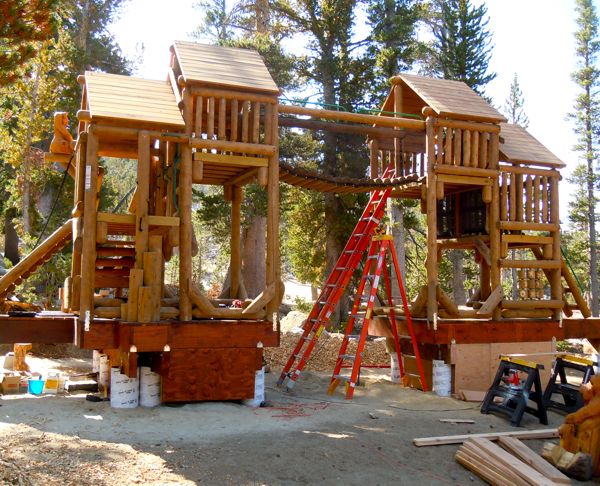
Carved wooden animals dot the landscape, with information about them so kids are learning a bit about the environment. Plus, there is a play structure that can be used even with ski boots on.

Safety, fun, learning – that’s the mantra of ski school.

“If it’s safe and fun, you are probably learning,” Spoelstra said.

Other upgrades

Heavenly has made improvements for older, non-rookies, too.

While the painfully slow two-seater Galaxy lift will still be churning this season (it’s in the master plan to eventually upgrade it), there will be new trails in that area. Called the Galaxy Pod, the intermediate trails on the Nevada side add 20 acres of skiable terrain.

This will be a bonus on windy days with more access to lower elevation terrain via Stagecoach and Galaxy chairlifts.

Five trails on the California side have been widened – Ridge (at the top by the wind fence), Ellie’s (making it more uniform), Liz’s, High Five and High Roller Park.

The Umbrella Bar will now be found at Snow Beach.

“I think people will be psyched. It will have a beer garden atmosphere and good food,” Russ Pecoraro, spokesman for Heavenly, said of the revamped Snow Beach.

Even more Adirondack chairs will be scattered about for those soaking up the rays.

Heavenly keeps upgrading its snowmaking to be more efficient, while also putting in guns to cover more of the mountain. Seventy-three percent of Heavenly’s trails can be covered with the fake stuff. In an hour, 1 acre can be covered with a depth of 3½ feet.

New to Heavenly and Northstar (also owned by Vail Resorts) is Epic Photo – a component of EpicMix. Action and still shots will be available for free via a rider’s EpicMix account (which is free). They can be shared immediately on Facebook or Twitter, or high-resolution shoots may be purchased for $19.99.

While individual lift ticket prices are not set until the opening, Heavenly has long been big on touting its season pass. With the change of ownerships at various Tahoe-area resorts, pass deals are abundant – but Vail Resorts says it has the best value, either through Epic or Tahoe Super passes.

ngg_shortcode_1_placeholder (Click on photos to enlarge.)


Barton on target to make profit after $1 mil. loss in 2010

By Kathryn Reed

Salaries and people unable to pay their bills are adding to the expense column for Barton Health, which is compounded by the number of patients being on the decline.

For 2010, Barton Health recorded a loss of nearly $1 million.

“The 2010 loss reflects a write down of value in real estate owned by the hospital as required by generally accepted accounting principle,” Barton CFO Dick Derby said. He added that the transaction did not impact cash flow.

Barton tries to balance needs, with moder offerings like the improvements to the birthing center where Peggy Wright works. Photo/LTN file

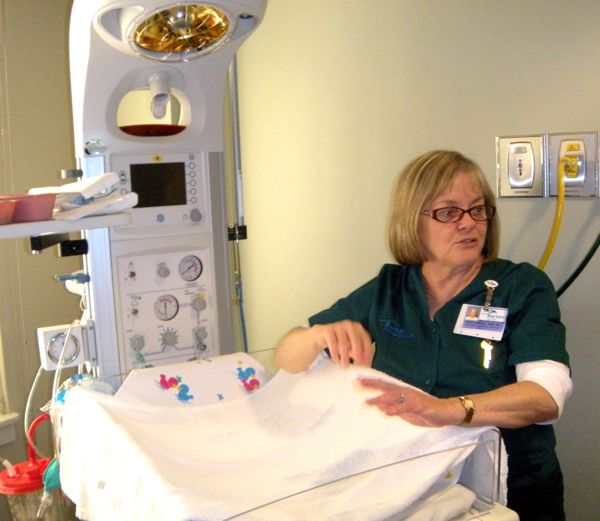
Barton tries to balance needs, with modern offerings like the improvements to the birthing center where Peggy Wright works. Photo/LTN file

The other time the hospital reported a loss was in 2008 — $513,841.

As a nonprofit health care facility, the South Shore entity must file financial documents with the Internal Revenue Service that are in large part public documents.

Barton’s fiscal year is the same as the calendar year. The 2011 operating revenue was budgeted for $132,563,941, with operating expenses of $128,828,096. This leaves an anticipated gain of $3,735,845.

Employee costs (salaries, health, retirement, other taxes) represent about 47 percent of the annual budget. Barton employed 1,013 people in 2010.

Board of directors also receive compensation, mostly in the form of the same health benefits as employees. This is about $11,000 a year.

Even though Barton has laid off employees in the past few years, it remains South Lake Tahoe’s largest private year-round employer. No raises were given in 2010, matching retirement contributions were reduced, employee health insurance contributions were raised, health insurance deductibles were increased, and other benefits were suspended.

“The salary freeze was lifted at the end of 2010 and in 2011 employees have received salary increases. Starting in 2012, Barton will change to a merit salary policy where salary increases will be based on performance,” LeAnne Kankel, vice president of Human Resources, said.

Each year Barton compares its salaries to like-sized health care systems in Northern California and makes adjustments to “remain competitive”, Derby said.

Salaries from the 2010 IRS report for the top 10 highest paid Barton employees:

• John Williams, CEO, $410,622

• Clint Purvance, chief medical officer, $348,864

• Dick Derby, CFO, $281,579

• Kathy Cocking, VP hospital operations, $223,959

• Mary Bittner, VP nursing, $196,640

• LeAnne Kankel, VP human resources, $183,486

• Barry Keil, pharmacist, $162,815

• Robert Quadri, director information systems, $147,932

• Terriann Cherry, pharmacist, $147,462

• Richard Belli, project management, $144,937.

Those who can’t pay

Barton writes off some of the care it gives because either people can’t pay the full amount or they refuse to.

“In terms of accounting, bad debt consists of services for which hospitals anticipated but did not receive payment. Charity Care, in contrast, consists of services for which hospitals neither received, nor expected to receive, payment because they had determined the patient’s inability to pay,” Kelly Neiger, CPA and financial analyst for Barton Health, said.

Information about Barton’s Charity Care and discount programs are online.

The following are the costs Barton has had to absorb over the last five years:

2010: Charity Care – $4,192,426; Bad debt – $7,950,035

2009: Charity Care – $4,773,459; Bad debt – $8,335,322

2008: Charity Care – $3,427,349; Bad debt – $8,407,000

2007: Charity Care – $4,105,269; Bad debt – $7,875,451

2006: Charity Care – $3,096,213; Bad debt – $7,303,827.

The dismal state of the South Shore economy is also evident by the number of people using Barton’s Community Clinic. In 2006, 14,634 people received care at the clinic. By 2010 that number had swelled to 18,840.

“This is partially due El Dorado County sharply decreasing their medical services in recent years. During 2010, the Community Clinic operated a net loss of approximately $700,000,” Derby said.

Unemployment in South Lake Tahoe is at 16.7 percent, which is a percentage point less than the high. No hard statistics exist of how many people in the area don’t have health insurance. An indicator, though, is the fact 59.4 percent of the students in Lake Tahoe Unified in 2010-11 (stats for this year are not calculated yet) qualified for a free or reduced lunch. People who need help feeding their children often don’t have jobs that come with health benefits.

Barton has stats for all of it patients, which includes locals and out-of-towners, for how they paid in 2010:

Private coverage: 38 percent

Self pay: 5 percent

Workers’ compensation: 3 percent

Other government: 2 percent

County indigent programs: 7 percent

Medi-Cal: 14 percent

Medicare: 31 percent.

Community Clinic patients are mostly women and children – 60 percent. Teens and men make up the other 40 percent. Nearly half (43 percent) don’t speak English as their first language.

“Patients are often undocumented migrant workers not eligible for Medi-Cal or are insured low-income patients with very high deductibles,” Derby said.

Patient stats for Barton:

2010 – Inpatient admissions: 2,832

2010 – Outpatient registrations (including clinics): 159,198

2009 – Inpatient admissions: 3,116

2009 – Outpatient registrations (including clinics): 164,477

2008 – Inpatient admissions: 3,519

2008 – Outpatient registrations (including clinics): 151,309

2007 – Inpatient admissions: 3,909

2007 – Outpatient registrations (including clinics): 152,823

2006 – Inpatient admissions: 3,903

2006 – Outpatient registrations (including clinics): 141,200.

As people leave the basin, it means fewer people in need of health care. Good snow years can also hurt Barton’s bottom line because of fewer ski injuries in all that soft powder.

Barton is trying to increase revenue without raising rates.

With Barton’s emphasis on orthopedics, it is hoping to attract people to its facilities for the specialized treatment — call them the destination patient.


North Shore ski resorts putting Tahoe on the map

By Kathryn Reed

KINGS BEACH – “It is finally Lake Tahoe’s time.”

Those are the words of Squaw Valley CEO Andy Wirth. His peers Bill Rock, COO of Northstar, and Art Chapman, president and chairman of JMA Ventures, concur.

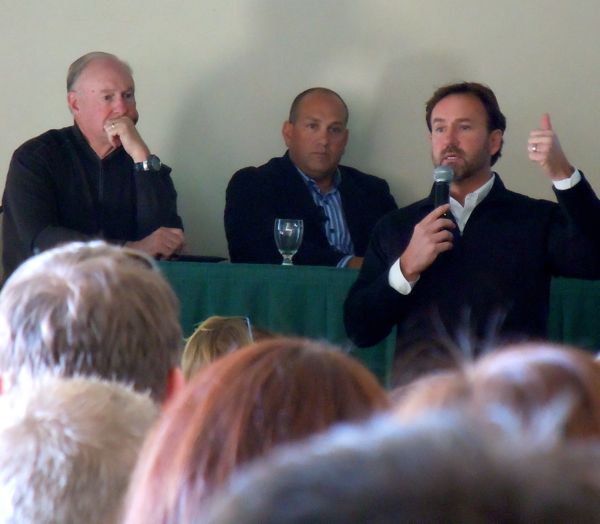
The three shared the stage Thursday during the 59th annual membership lunch for the North Lake Tahoe Resort Association. More than 100 people listened to the three executives talk about Squaw-Alpine, Northstar, and Homewood, respectively, and what it means in terms of Lake Tahoe competing with destinations in Utah and Colorado.

Andy Wirth of Squaw speaks Oct. 27 as Art Chapman of JMA and Bill Rock of Northstar listen. Photo/Kathryn Reed

Andy Wirth of Squaw speaks Oct. 27 as Art Chapman of JMA and Bill Rock of Northstar listen. Photo/Kathryn Reed

“What a great time to be in North Lake Tahoe,” Rock said. He said this is the most interesting place to be in all of North America when it comes to the ski industry.

Vail Resorts bought Northstar last year and this summer infused $30 million into the resort. When KSL Capital Partners bought Squaw last year it pledged $50 million in upgrades in five years.

Homewood Mountain Resort, which turns 50 next year, is ready to spend millions as well. JMA is awaiting the Tahoe Regional Planning Agency’s potential approval of its overhaul of the resort at the Dec. 14 meeting before it can go forward.

While the three consider each a friend and competitor, they recognize upgrades to one resort enhance the overall experience for visitors. They also know with the multitude of resorts in the greater Lake Tahoe area that skiers seldom stick to one property during a weeklong vacation. Even locals like to ski more than one place, as evidenced by the popularity of combo passes.

With Vail Resorts owning Northstar and Heavenly, it has the Tahoe Value Pass.

Wirth said sales of the Tahoe Super Pass – which gives riders access to Squaw and Alpine – are three times greater than what was anticipated.

Homewood and Kirkwood Mountain Resort also have a combo pass.

KSL’s partnership with JMA, which had been the sole owner of Alpine Meadows, is expected to be finalized within two weeks so the new firm called Squaw Valley Ski Holdings Inc. will run Squaw and Alpine. The last hurdles are for the California Tahoe Conservancy to approve a lease agreement today and the U.S. Forest Service to do the same in a matter of days.

Wirth pre-empted a likely question about what happens with White Wolf, the property owned by Troy Caldwell that separates (links?) Squaw and Alpine. Caldwell was at the lunch, but didn’t speak.

“We are working on ways to accomplish great things on a long-term basis,” Wirth said. He added that the resort has a good relationship with Caldwell. After all, Caldwell owns KT-22.

Wirth brushed by the fact Squaw is in talks with the U.S. Forest Service that might lead to access changes.

“There may be an announcement in the next three weeks,” Wirth said without elaborating.

Wirth and Rock praised those who operated Northstar and Squaw until last year, recognizing they laid the foundation that allows the new owners to elevate the level of skiing beyond what it has been in Tahoe.


Nothing common about S. Tahoe’s lakeview project

By Kathryn Reed

While the hum of men and their machines permeate the air, so does the anticipation of what Lakeview Commons will be when the work is completed in a month.

The $6 million project in South Lake Tahoe on the waterfront at El Dorado Beach is winding down. A TRPA extension is allowing dirt to be moved through Friday, though that may need to be extended into next week. (Usually dirt in the basin can’t be moved past Oct. 15.)

The eyesore is gone and the dream of a team of community activists is nearly a reality.

Work on Lakeview Commons in South Lake Tahoe should be done in November. Photos/Kathryn Reed

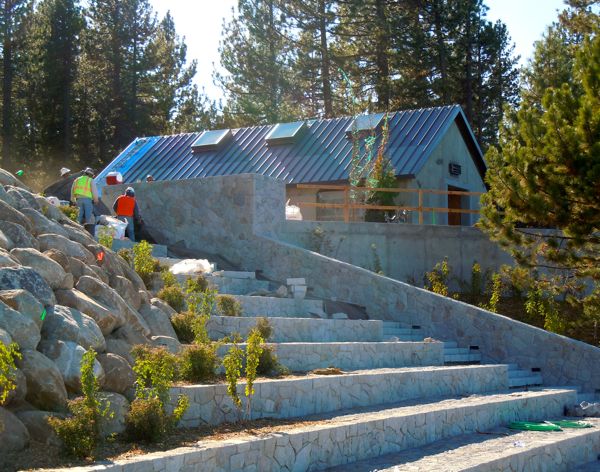
Work on Lakeview Commons in South Lake Tahoe should be done in November. Photos/Kathryn Reed

Hand-cut rock quarried from the Carson City-Mound House area is still being placed. But most of the terraced area closest to Lake Tahoe is done. What was once a steep hill of unattractive dirt is now seating for those who want to stare into the emerald water.

While the beach was always popular with tourists, especially with Campground by the Lake being on the other side of Highway 50, it’s likely locals will frequent this area in the future.

Even in its raw form, the beauty is evident. From the highway the transformation is not obvious. The dirt that can be seen at street level will be covered with paving stones.

The 27 picnic tables and 20 barbecues still need to be installed. A double built-in barbecue with cooktop is near the boathouse. This will be open to the public.

In that area will be a stone gas fire pit with seating area. The city or its concessionaire will power up the pit.

While it has not been decided if the construction fence will come down for the winter (fine tuning needs to be done in the spring), it is from the water that the renewal of this area is most dramatic.

This has become a one-of-a-kind place on the South Shore.

“It takes a team,” Steve Jessop with Clark and Sullivan construction firm told Lake Tahoe News during a private tour Wednesday. “It’s been a fast-paced project.”

While the project is a year late because of legal issues, the city has been pleased with the company’s professionalism and speed (especially with winter lasting into June) to accomplish what it has to date.

Jim Marino, who is overseeing the project for the city, is a bit like a kid showing off a new toy. And he’s a bit like a proud father showing off his adopted baby. After all, he has not been part of the project since Day 1.

Walking through the site Marino talks about how he envisions events being staged at Lakeview Commons – concerts, kids programs – he sees no limit to the possibilities.

Not in the original design was power at the beach. This was added so if events were to be staged there, electricity is in place.

While the Tahoe Regional Planning Agency allowed overhead lights at Sand Harbor and Tahoe City Commons, the bi-state regulatory agency nixed that from Lakeview Commons. So, instead, the lights are built into walls.

Other lights will be installed in the railing at the east end of the project. A stainless steel railing that is part of the structural wall still needs its cedar cap. Under that cap will be LED lights.

Native plants, under the direction of landscape architect Brett Long, are still being put into the ground. Part of the landscaping is designed to help stabilize the slope.

As with any project, surprises and changes were part of the process. Concrete footing were buried – and had to be removed. Marino said they could have been there since the 1940s or ’50s.

The boathouse

Finishing touches are being put on the bi-level building that will provide food up top and house non-motorized boats below. Cooking apparatuses will not be installed so the concessionaire does not compete against local businesses, Marino said.

It’s expected the city this winter will put out a request for proposal seeking a concessionaire to run the whole operation. There is still some question as to what the original deed that gave the property to El Dorado County says is an allowable use in terms of for-profit entities. Recreation and open space are what the original group of property owners from the 1920s wanted the land to always be used for.

In the beginning when Lakeview Commons was just a concept the idea was for the boathouse to store boats for the public. It may be that boats could also be rented from there – canoes, kayaks, paddleboards – nothing with a motor.

It has been built to LEED gold standards. Solar panels should help generate enough electricity that it will be self-sustaining.

Bathrooms are part of the facility.

Across Lakeview Avenue the existing restrooms will be demolished next year and new ones built with a Department of Boating and Waterways grant.

What’s next?

The steel railing is the end point of phase one. Phase two goes to Rufus Allen Boulevard and will include a cantilever bridge. While TRPA is OK with that, it will be Caltrans that needs to be convinced an encroachment permit should be granted and that the bridge is a good idea.

A grant from the California Tahoe Conservancy supplied the funding for phase one. But the $2.4 million to $2.7 million needed for phase two remains elusive.

Nor is there money to complete the improvement on the campground side of the highway. All of this at one time was called the 56-acre project – because it is 56 acres. El Dorado County owns 40 of those acres, which is leased by South Lake Tahoe. The city owns the remainder.

Peter Eichar with the Conservancy said the ball is the city and county’s court in terms of how things proceed. With the state agency without dollars, it is not in a position to help at this point.

A dilapidated pier is swimming distance from shore. One day the city wants to replace it. While safety and aesthetic reasons call for its removal, TRPA rules are such that if a pier is removed, the owner has two years to replace it or they lose the right to do so. The city doesn’t want to take that chance.

It’s possible as the city plots out its list of capital improvement projects each year, that phase two of Lakeview Commons will become a priority. Some of the council members will be touring the site today.

ngg_shortcode_2_placeholder (Click on photos to enlarge.)


TRPA inching toward a workable Regional Plan

By Kathryn Reed

KINGS BEACH – More time was spent discussing who should be on the Regional Plan Update Committee than where the plan is.

Considering the Tahoe Regional Planning Agency’s document dictates what the five counties and one city, along with other landowners can do in the Lake Tahoe Basin and the fact the document was due in 2007, the sense of priorities seemed skewed at Wednesday’s meeting.

What was resolved after everyone seemed to have his or her turn to talk (Governing Board member Nancy McDermid was absent) is the committee would grow by one. South Lake Tahoe’s rep Claire Fortier is now on the Regional Plan Update Committee.

Arlo Stockham on Oct. 26 gives the TRPA Governing Board an update on the Regional Plan. Photo/Kathryn Reed

Arlo Stockham on Oct. 26 gives the TRPA Governing Board an update on the Regional Plan. Photo/Kathryn Reed

While the staff report listed when the twice monthly committee meetings will be, committee Chairman Clem Shute made it clear they are likely to change so to not put them down in ink. The meetings will be on TRPA’s website and they are open to the public.  The next one is Nov. 2 when the committee will likely take action on what staff brought to the board Wednesday – which was for discussion purposes only.

Arlo Stockham, who was brought in last month to breath life into the Regional Plan Update that everyone says will be ready for a vote in December 2012, went over the basics of where things are.

“We need to get out of detailed design issues. We need to spend our limited resources on environmental gain,” Stockham said.

Board member Byron Sher called the removal of all reference to transect zoning “a bombshell”. His colleague Tim Cashman was a bit miffed as well, saying, “I’m a fan of transect.”

To this Stockham said, “It’s a term no one understands. We don’t plan to mandate transect.”

Jennifer Merchant, who works in Placer County’s Tahoe office, voiced her frustration with transect going away because she said her staff has jumped through hoops to accommodate TRPA for years, with about $700,000 spent on developing a plan and transect is the path they were told to pursue.

Shute is concerned about the county going through the process without a Regional Plan Update. Stockham said it would not be a problem.

It turned out to be a big problem for South Lake Tahoe. The League to Save Lake Tahoe is suing the city because its General Plan does not conform to the current TRPA Regional Plan.

Although the word transect is out, it isn’t gone in theory. The plan is to promote smart growth, mixed use vibrant centers. Essentially it’s transect without calling it that. It also allows for more flexibility.

Flexible – that’s the word TRPA is trying to embrace and be associated with.

The talk is local jurisdictions will have a greater say in what is built or rebuilt in their communities. Of course, it still must fit into whatever big picture the Governing Board approves so it won’t ever be a free for all.

Local plans would be adopted to conform to the TPRA Regional Plan.

While the goals are to remove redundancy, increase delegation to local government and create one-stop shops, the details are far from in place. Enforcement is an issue that needs to be addressed.

Already on the books are more than 175 descriptions of land use for each plan area. Ideally, much of that will go away.

Land use classifications will go from five to seven, with wilderness and backcountry being added. Commercial/public service will be called mixed-use. The other existing categories are conservation, recreation, residential and tourist.

While everyone seems to have a hand in the Regional Plan Update, simultaneously the environmental documents are being prepared. The goal is the draft EIS will be out in March.

Executive Director Joanne Marchetta said it is possible to study the five alternatives while the update is under way because it’s been set up to look at the “broadest range of possibilities so we analyze the full range of impacts.”

Also on Wednesday was a workshop with the Governing Board and Advisory Planning Commission to go over the Code of Ordinances. It will be before the Governing Board for adoption in November.

The goal is to make it less cumbersome – so someone might understand it without hiring an attorney. With people understanding what to do, it might mean the consulting business in the basin will be less robust.

But it is not designed to eliminate the need for each property to have a $1,000 site analysis done to document coverage and other TRPA-isms. It’s the requirement of those types of regulations that make deck extensions so expensive and why there are so many illegal ones.

Then there are board members like Sher, who has never lived in the basin, who wants to force homeowners to do their BMPs before they can sell their property. That is a possibility in one of the alternatives being studied.

In other action:

• The board accepted the $35,000 settlement agreement with Tamara Fritz who extended her West Shore pier without a permit and installed a boat lift on the property. She will also have to clean up the vacant lot next door.

• The board resumes its meeting Thursday at 9:30am at Stateline, with the South Tahoe Greenway bike trail on the agenda along with tourist accommodation units at the Nugget.


STATA’s bumblings seeping out in court documents

By Kathryn Reed

Who owns the name BlueGo?

The trustee appointed to oversee the lawsuit involving MV Transportation and the bankrupt STATA is asking that and many other questions.

Based on David J. Thompson’s 15-page report submitted this month to the bankruptcy court in Reno, the tide is turning in MV’s favor.

It's not known who owns the BlueGo brand. Photo/LTN file

It's not known who owns the BlueGo brand. Photo/LTN file

South Tahoe Area Transit Authority’s board voted to file for bankruptcy in August 2010. MV filed a lawsuit a couple months before that after the STATA board severed the transit operator’s agreement for it to run the South Shore bus system known as BlueGo.

“I have reconciled MV’s claimed damages for unpaid invoices of $1,979,227.52 to STATA’s records. I preliminarily find it to be accurate,” Thompson wrote in the report.

Also in the report, Thompson says, “For the two years ended June 30, 2010, STATA received approximately $2 million in operating grants. In spite of this, operating expenses consistently exceeded revenues including these grants.”

Thompson admits he still has a number of documents to review. There are 20 boxes of accounting records. What he isn’t able to discern is how STATA ended up with all the liability and Tahoe Transportation District with all the assets. TTD is now the umbrella entity – the STATA so to speak – to coordinate transit on the South Shore.

Jessica Woelfel, who represents Fairfield-based MV, would not comment on pending litigation.

South Lake Tahoe Assistant City Attorney Nira Feeley refused multiple requests for comment.

South Lake Tahoe was part of STATA, so it is part of all of the hearings. El Dorado County settled its portion of the case months ago. STATA was made up of public and private entities – from local governments to the casinos to Heavenly Mountain Resort to Ridge Tahoe.

While the lawsuit naming board members of STATA has been dropped, they are not without blame for running the agency into the ground, according to court records.

“According to the Participation Agreement, a certain level of funding based on an operating budget was to be paid quarterly in advance by the participants. It also provided that in the event of any operating shortfalls the participants would make additional contributions or suffer reduced services. The board of directors, who were also the representatives of the participants/customers, was obligated by the agreement to execute on this provision. It appears that they neither cut the services nor secured additional contributions for the shortfall,” Thompson wrote.

The report outlines how the STATA board ignored warnings of financial weaknesses in the system, as well as not having an adequate amount of staff.

At the hearing this month the adversary part of the lawsuit was stayed, with motions needing to be filed in November. Ultimately what needs to be decided is if MV’s case against STATA will remain part of the bankruptcy hearing or if it will be decided separately.

And a twist not before made public is that it’s not clear who owns the rights to BlueGo.

“Not listed on the petition is the BlueGo brand name which has some worth if it can be determined who owns it,” Thompson wrote.


Tahoe City crews moving out of 50-year-old fire station

By Katherine E. Hill

TAHOE CITY – Chief Duane Whitelaw’s eyes light up as he talks about the new, modern fire station being built on a hill above Tahoe City. The 22,000-square-foot facility spread over three levels is in stark contrast to the antiquated fire station that was built in 1961 for an all-volunteer fire department.

“Most facilities during that era were designed for people to drive in to the station” to respond to calls, says Whitelaw, who heads the North Tahoe Fire Protection District. “With growth and development in the district, we needed to take a more permanent approach to providing emergency services.”

North Tahoe Fire Chief Duane Whitelaw will move his crew into the new station by the end of the year. Photos/Katherine E. Hill

North Tahoe Fire Chief Duane Whitelaw will move his crew into the new station by the end of the year. Photos/Katherine E. Hill

The new Station 51, being called a public safety center rather than a fire station due to its multi-use design, has been designed to meet the growing demands of the district, which stretches from Tahoe City to Alpine Meadows, Homewood and Kings Beach.

The center will not only house the fire department, it also will serve as the region’s emergency command center in case of disasters.

One of the most important things about the new facility is its location – on Fairway Drive off Highway 89. The current station was built in the heart of Tahoe City. In the 50 years since it was built, Tahoe City has become a popular tourist destination, drawing a steady stream of pedestrian and automobile traffic through the small town year-round. In the summer, traffic is often at a crawl through Tahoe City, making for potentially dangerous conditions for firefighters to leave the station to respond to calls.

“We’ve outgrown the current building and it’s a real safety problem,” Whitelaw says.

Work has been progressing quickly on the station since construction began in May 2010, and it will be completed by the end of the year. The NTFPD financed the $10 million cost for the project, which includes $6 million for construction. The station has been designed to be a silver LEED building, which is an international system for green building. The station is being built using a mix of cement fiber board, metal, wood and plaster, and will use solar panels for hot water and to offset its energy use.

The new station features five bays, including room for a $1.4 million aerial ladder truck that will be needed to respond to calls at taller structures in the works in the district including the proposed village at Homewood Mountain Resort, the affordable housing project under construction in Kings Beach, as well as the Kings Beach Town Center. There also are expanded administrative offices, conference rooms that will be open for use by the public, and sleeping quarters, a fitness area, living room, dining room and kitchen for the fire crews that will be living at the station during their shifts. The new station also will be ADA accessible; the current station is not.

Station 51 crews average four to seven people per shift and respond to fire and medical emergencies, with 80 percent of their work devoted to medical calls, Whitelaw says. Firefighters, however, are cross trained to respond to fires, water rescues, forest fuel reductions such as the chipping program, and hazardous materials, as well.

Future of the old fire station

While work continues to complete the new facility by the end of the year, local officials are trying to decide what to do with the site of the current fire station. The station is part of the West Commons Beach area, which sits on a

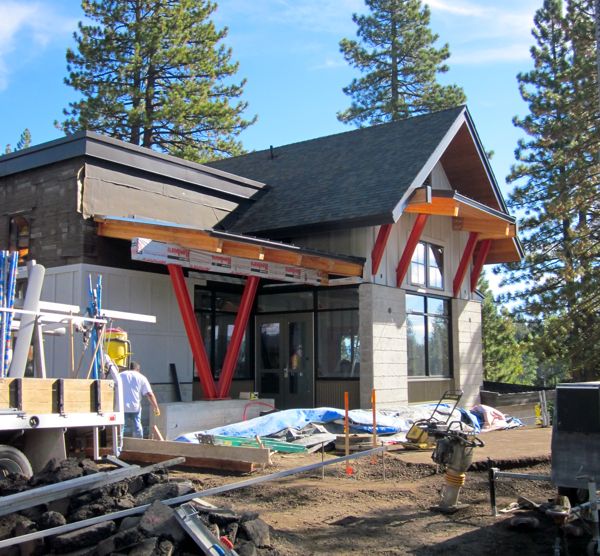
The entrance to the new station.

The entrance to the new station.

bluff overlooking Commons Beach. The site includes the visitors’ center and the Tahoe City Community Center, which is home to the North Tahoe Arts Center. Last week, officials unveiled four proposed alternatives for public use of the site that ranged from using the fire station’s footprint for a park to razing all of the structures to build an interpretive center that would become a regional attraction.

“Our concerns were using the building for community uses,” TCPUD General Manager Cindy Gustafson said. “There are a wide range of opportunities that are nowhere near reality.”

The proposals presented raised concerns from many in the community who attended the meeting. People raised questions about the lack of on-site parking and concerns over the removal of the Community Center, which houses the only public art center in the North Tahoe-Truckee region.

Bill Briner, who has served in countless public offices through his decades residing in the region and was on the Placer County Board of Supervisors when the fire station was built, was most vocal in his opposition to any plan other than razing the fire station.

“We committed to tearing down the firehouse when they were done, and I don’t want to spoil it by building multi-story buildings,” Briner said. “That’s the whole idea of tearing the fire station down … opening up the view.”

More than a dozen people in the audience applauded Briner’s call to open the view to Lake Tahoe. Since the fire station was built in 1961, however, landscaping with tall trees and brush on Commons Beach obscure a clear view of Lake Tahoe from the fire station site.

Briner also said he was opposed to any plans that would conflict with existing businesses in Tahoe City, citing three of the proposals that call for food and rental concessions.

The site on which the three structures were built was given to the “people of Tahoe City” by President Ulysses S Grant in 1872 and eventually became the responsibility of the Tahoe City Public Utility District. The Community Center was built in 1938 and the fire station in 1961.

When the new station was built, the fire district committed to tearing down the station once it no longer needed the building, which spurred the need for local officials to address the future of the site. As well, neither the station nor the Community Center is ADA accessible. The Community Center also operates at a $50,000 deficit each year and is in need of more than $100,000 in repairs to the roof, siding and heating system.

A steering committee has been tasked to work with consultants to come up with proposals for the site and the project is being spearheaded by the TCPUD and the North Lake Tahoe Resort Association. The committee is made up of representatives from local government agencies, the fire district, the North Lake Tahoe Historical Society, U.S. Forest Service, California Tahoe Conservancy, California State Park and others.

The consultants presented four proposals for the site. All of the proposals call for razing the fire station and adding an elevator for ADA accessibility. None of the proposals calls for adding any additional parking to the site, but rather call for shuttle drop-off locations.

Plaza least costly

The first, and least costly, would be to demolish the station and visitors’ center and to build a plaza on the fire station site, dubbed the Lake Welcome Plaza. The Community Center would be renovated and a new two-story addition built to house the visitors’ center and expand exhibit space for the Arts Center. There also would be an ADA accessible path leading down to Commons Beach. It would cost between $4 million and $6 million.

Theater would serve community

A Community Center Plus option at $7 million to $8 million calls for renovating and expanding the Community Center into a multi-use facility that could house exhibit space and an interpretive center, as well as food and kayak and paddleboard concessions to offset operation costs. A basement level would be added to provide space for the concessions. The fire station and visitors’ center would be torn down and a 165-seat theater would be build to be used for performances, conferences and other uses.

The last two proposals take a different approach to the site, with options that would develop a destination attraction in Tahoe City to draw in tourists.

Tahoe Experience at pavilions

The third proposal calls for four enclosed pavilions connected by a center corridor to be built on the site dubbed as Tahoe Experience Pavilions at a cost of $11 million to $13 million. All of the existing buildings would be torn down and the Community Center could be relocated to another, unspecified location. The pavilions are inspired by the Tahoe City waterfront in 1900 and would provide space over three levels for exhibits, administrative offices, a store, multi-use facility, and food and rental concessions, with outdoor courtyards between each pavilion. The bottom floor would be situated at lakeside with Commons Beach.

Hydrarium most radical proposal

The fourth proposal, The Hydrarium, is the most costly and the calls for the most radical change for the site. At a price tag of $23 million to $25 million The Hydrarium concept calls for a four-story interpretive, state-of-the-art center that could attract hundreds of thousands of visitors each year to Tahoe City and be a revenue source, said Barry Howard, one of the project’s consultants. The Hydrarium stands one story taller than the current structures on the site; the bottom level would be below street level at lakeside.

The modern, circular design of the build would provide exhibit space with interactive exhibits and a multi-use theater with Lake Tahoe as the central theme of the facility. There also would be space for food and rental concessions, and could provide jobs in the community.

The steering committee passed out a community survey at the meeting, which also is available online, to get public feedback on the proposed alternatives before moving forward. The committee will likely meet within the next month to evaluate public input before deciding how to proceed, said Kelli Twomey, TCPUD spokesperson. The committee will also have to evaluate construction costs and potential funding sources before making any decisions, she said.

A video of the meeting, along with the community survey, will be available online this week, or call (530) 583.3796 for more information.


Hunters prowling the woods for late King Bolete harvest

By Kathryn Reed

A secret handshake isn’t part of the initiation process, but being sworn to secrecy and the threat of bodily harm if the secret is betrayed were all part of the indoctrination process.

Welcome to the world of King Bolete.

As with all edibles this year, the harvest is late – even for these mushrooms. Better known as porcini, especially in their dried form, these shrooms are still being plucked from the forest floor in the Lake Tahoe Basin.

A basket of King Bolete found in Tahoe in October. Photos/Kathryn Reed

A basket of King Bolete found in Tahoe in October. Photos/Kathryn Reed

So secretive is this foraging business, I’m neither allowed to say who I was with nor where we went. I can say she is a teacher in Lake Tahoe Unified and that we were near a body of water on the South Shore that wasn’t Lake Tahoe.

Different theories abound regarding where they grow and the best time to find them. My teacher likes going out at the break of day before school. I don’t do mornings well so we went after school.

These mushrooms, which look nothing like the morels I was introduced to in May,  are much larger, found in different areas and are not cooked the same.

King Bolete tend to grow near water, in the woods. Some say they will be near where snow plants have been. Some say the best hunting is near a full moon. I’m a believer in that scenario having gone out this month during the week of the full moon.

Most everyone, though, says moisture is key. It had just snowed, so the ground was still wet as we traipsed in the woods near a creek. When Tahoe gets thunderstorms in the summer the King Bolete are apt to show themselves shortly afterward.

They often hide. The tops blend into the terrain. Sometimes they are hidden in tufts of pine needles.

Once one is found, start walking in a line from there in all directions because they grow in a line – sometimes several feet apart.

Smaller, younger King Bolete are best to saute.

Smaller, younger King Bolete are best to saute.

I’ve been told not to take ones that are near a rusted can or a poisonous mushroom.

A single Bolete can weigh several pounds. Dried, they can cost about $8 for a couple ounces in a store. It can take 10 pounds of fresh mushrooms to get a half-pound of dried, according to Gary Ottoboni.

Ottoboni, his brother and parents are part-time neighbors of my friend who is introducing me to the King Bolete. They are the ones who taught her to be a shroom hunter and how to “put them up”.

June Ottoboni uses a combination of boiled vinegar, cloves, peppers, cinnamon, and garlic to give them a pickled flavor.

Many people sauté them. Others grill them with olive oil and a little pepper.

Drying is the most common form so they can be used throughout the winter in soups, risottos and various Italian dishes.

Just before I called, Gary Ottoboni had sautéed some King Bolete to add to pesto.

“You have to sauté the young ones. The big ones you can only dry,” Ottoboni instructed this rookie. “You sauté them in olive oil and very little butter so the pan doesn’t get too hot. Add garlic and parsley. The secret is you squeeze a little lemon.”

There were other secrets to cooking the King this way, something about when to put the lid on, but I’m afraid of telling too many secrets.

The word “cult” comes to mind after talking to long-time shroomers.

Because mushrooms don’t have seeds – they have spores – they can’t be a row crop. Instead, they grow in the wild. This is why they are so expensive.


S. Tahoe woman tearing it up at XTERRA competitions

By Jessie Marchesseau

Spending three hours dragging yourself and your bicycle over rocks, streams and mountains, swimming through cold and choppy waters, and scrambling down trails of dirt, sand and mud may not sound like your typical Sunday stroll.

Unless, that is, you are XTERRA athlete Heather Lyman.

Lyman, a South Lake Tahoe resident, will be competing in the XTERRA World Championship race in Maui today.

Heathery Lyman of South Lake Tahoe is competing today in Maui. Photo/Kevin Joell

Heather Lyman of South Lake Tahoe is competing today in Maui. Photo/Kevin Joell

XTERRA races are essentially off-road triathlons. They involve open water swimming, mountain biking and trail running. A sort of competition of outdoor enthusiasts. And Lyman is good at it.

“You’ve got to realize, this is her first year, and look at where she is,” Eufay Wood, personal trainer and co-owner of Sierra Athletic Club, said. “She has a lot of natural skill.”

Not only did the 30-year-old qualify for the World Championship race, but Lyman also took home the top spot in the women’s 30-34 age group at the XTERRA USA Championship race in Ogden, Utah, in September.

She started the season with a third-place finish in the women’s amateur division of the EXTERRA Real in Granite Bay in March. Her time of 2 hours, 24 minutes, 27 seconds earned her second place in her age group. She followed that performance with a fifth-place finish in the amateur division and third in her age group at the XTERRA Pacific in Santa Cruz.

The Tahoe City race in June brought Lyman back to her home turf where she earned her first win of the season, taking the top spot in the 30-34 age group, second among the amateur women. She had hoped to continue the season with a strong finish at the August race in Incline Village, but a torn MCL forced her out of competition for nearly two months.

Though she says her knee still bothers her a little, it did not keep her from winning yet again at the Championship race in Utah. At just more than 3 hours, 5 minutes, Lyman was first in her age group and second in the amateur division.

Finishing in the top five of every race and overcoming a midseason injury would be a feat for any athlete. The fact that Lyman managed it without adhering to a formal training regime speaks loudly to the natural skill Wood mentioned.

Lyman generally does some sort of workout seven days a week, often more than one sport, but she is not shy about taking a day off if her body is tired. She trains with Wood twice a week in the gym, however prefers to do the majority of her training outdoors. She even admits to watching YouTube videos for tips on swim technique.

What Lyman may lack in strict workout regimes, she makes up for in sheer determination.

“Her work ethic is beyond comparison,” Reve Ramos said. “She prepares better than anyone I know currently.”

Ramos met Lyman a little more than a year ago at one of the spin classes he instructs at Sierra Athletic Club. Ramos has been teaching and coaching sports nearly all his life and has seen some great athletes, but says Lyman is truly unique. She has already inspired other women in spin class to follow in her footsteps.

“One thing that really drives me is that I’m super competitive,” Lyman said, and added with a laugh, “It’s kind of annoying.”

But she did not set out to win. Not in the beginning, anyway. She entered a race last summer just for fun and because it was a good way to get into shape. She finished third in her age group, and was hooked.

“I always feel like I accomplish something by the time I cross the finish line. All that hard work that goes into it feels good when you actually come across the line and know, first of all, that it’s over and that you can do it,” Lyman said.

Looking to the future, she hopes to compete at the professional level eventually, and a good finish at the World Championships in Maui could go a long way in helping her achieve that goal. The race, which consists of a one mile rough-water swim, an 18.3 mile mountain bike ride and a 6.1 mile trail run, attracts more than 600 athletes from 28 countries. A top finish in the amateur division could earn her serious bragging rights.

Ramos, who has watched his own daughter become a professional athlete, says he believes this is just the beginning for Lyman: “Above all, she has the sweetest, gentlest heart, but it roars like a lion.”