Report blasts CalPERS’ environmental, social ‘activism’

By Adam Ashton, Sacramento Bee

The nation’s largest public pension fund is leaving money on the table by favoring environmental and social causes in its portfolio, a business-backed nonprofit argues in a study it’s releasing Tuesday on the California Public Employees Retirement System.

The report by the American Council for Capital Formation criticizes CalPERS’ sustainable investing strategies, which include engaging with companies to encourage them to address climate change, pressuring companies to diversify their boards of directors and investing in certain funds that nurture companies with those priorities.

The report argues those strategies have not paid off and that CalPERS would do better to focus solely on making money to protect the pensions of 1.8 million California public workers and retirees.

Read the whole story


Troubling maintenance yard in SLT to be relocated

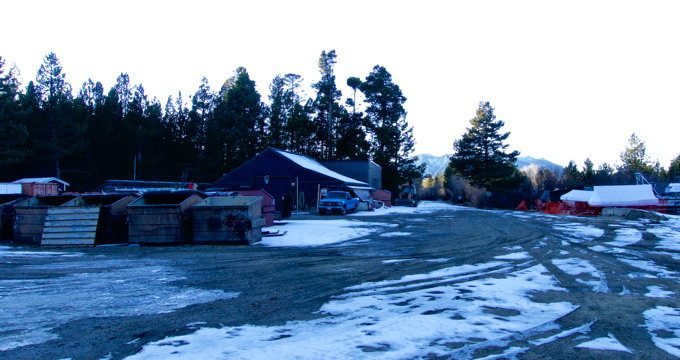
The Tahoe Keys’ corporation yard will be relocated by May 2023. Photo/LTN

By Kathryn Reed

Five acres of land bordering the Upper Truckee River near the mouth of Lake Tahoe are a reminder of how the environment wasn’t always a priority. A maintenance yard next to a river. That wouldn’t happen today.

Daily, trucks drive into the yard – which isn’t paved. Old dumpsters are rusting. Debris clutters the landscape.

This is the Tahoe Keys Property Owners Association’s corporation yard.

After more than 20 years of wrangling, TKPOA and California Tahoe Conservancy have reached an agreement to relocate the yard, which means this swath of land in South Lake Tahoe will eventually be restored.

The Conservancy owns the land, but was essentially stuck with TKPOA as the tenant because of a 99-year deal it had with the previous owner – Dillingham Development Corp. – the builder of the subdivision. That agreement wasn’t going to expire until 2075.

CTC acquired the land through several lawsuits involving Dillingham, which had wanted to build 26 units on the marsh. The Tahoe Regional Planning Agency, Sierra Club and state of California were all involved. This was in the 1980s and 1990s.

The new deal will allow the yard to stay as is until April 30, 2023. The new yard will be built on 1 acre of land on the side of Venice Drive away from the river that the Conservancy owns. Boats used to be stored there, but now it’s vacant. TKPOA will take title to that land.

The TKPOA board in October voted to approve the new agreement, with the homeowners weighing in last month. Of the 1,529 property owners, 633 voted. Of those, 519 said yes.

“We’re designing a new site,” Kirk Wooldridge, TKPOA general manager, told the CTC board on Dec. 7. He said the organization has been setting aside money for this.

Aimee Rutledge with CTC explained to the board that the disturbed land will be absorbed into the 600-acre Upper Truckee Marsh restoration project. The goal is to restore it to wetlands – what it was a half century ago.

“There is a lot of potentially hazardous use that is inconsistent with the marsh,” Rutledge said of the corporation yard.

One of the contingencies in the deal is that TKPOA will grant access to the site via Colorado Circle for the CTC use the land as a staging area for the marsh restoration. Currently, this is a highly popular route to get to the river for people who live in the neighborhood. The well-worn trail is used by walkers, dogs and those who enjoy the rope swing in warmer weather. But all of that was going to change anyway with the restoration project.

The restoration project is slated to begin in 2019.


‘Open question’ on U.S. Olympic participation

Members of the women’s U.S. hockey team practice in Park City. Photo/Kathryn Reed

By Jason Blevins, Denver Post

COPPER MOUNTAIN, Colo. — As the best snowboarders and skiers in the world kicked off their quest to reach the South Korea Olympics next year, America’s ambassador to the United Nations, Nikki Haley, suggested that the United States’ participation in the Winter Olympics is “an open question.”

In an interview with Fox News on Wednesday, Haley suggested it was not certain that the U.S. would send athletes to South Korea in February. She cited escalating tensions in the region with North Korea testing increasingly powerful missiles. She rekindled simmering concerns about safety for the athletes in South Korea’s PyeongChang, which is 50 miles from the North Korean border.

On Thursday afternoon, however, White House press secretary Sarah Huckabee Sanders said during a briefing that no official decision had been made and then sent an update on Twitter, saying the U.S. “looks forward to participating” in the Winter Olympics.

Read the whole story


U.S. homeless count rises, pushed by West Coast crisis

By Christopher Weber and Geoff Mulvihill, AP

The nation’s homeless population increased this year for the first time since 2010, driven by a surge in the number of people living on the streets in West Coast cities.

The U.S. Department of Housing and Urban Development released its annual Point in Time count Wednesday, a report that showed nearly 554,000 homeless people across the country during local tallies conducted in January. That figure is up nearly 1 percent from 2016.

Of that total, 193,000 people had no access to nightly shelter and instead were staying in vehicles, tents, the streets and other places considered uninhabitable. The unsheltered figure is up by more than 9 percent compared to two years ago.

Read the whole story


For Barton docs Orr-thopedics is in their DNA

Jeff and Terry Orr share athletic and professional interests. Photo/Provided

By Susan Wood

One could argue Orr stands for orthopedics at Lake Tahoe.

With Barton bringing on Jeffrey Orr, 37, to its Tahoe Orthopedics group in September, the healthcare organization carries on a legacy built around one of the most renowned and accomplished orthopedic surgeons in this region. His father is Terry Orr.

Between names like Orr, Swanson and Bannar, the half-kidding joke around the lake is if you’re going to bust up your knee, elbow or other critical joint – do it near Tahoe. The difference between being average or returning to the level of athlete you were depends on a doctor with years of experience and care with precision. 

Even though the Orr family had the popular board game “Operation” around the house, the elder Orr said he and his wife never pressured their children to go into medicine. (Note: There’s also Dr. Lance Orr in the emergency room – albeit no relation.)

It just came natural. That’s the gist of the discussion in the younger Orr coming home after a whirlwind tour of hard work, focused studies and a strong dedication in his fellowship and residency on the East Coast. In between, Jeff received his medical doctorate from Georgetown University.

While his father stayed in Tahoe over the decades to care for professional, competitive and wannabe athletes, Orr left his childhood home in South Lake Tahoe to study aerospace engineering at UC San Diego for a year because he liked math. It wasn’t meant to be though as it only offered “limited interaction with people,” Orr told Lake Tahoe News in an after-hours fireside chat with his father in the clinic’s waiting room area.
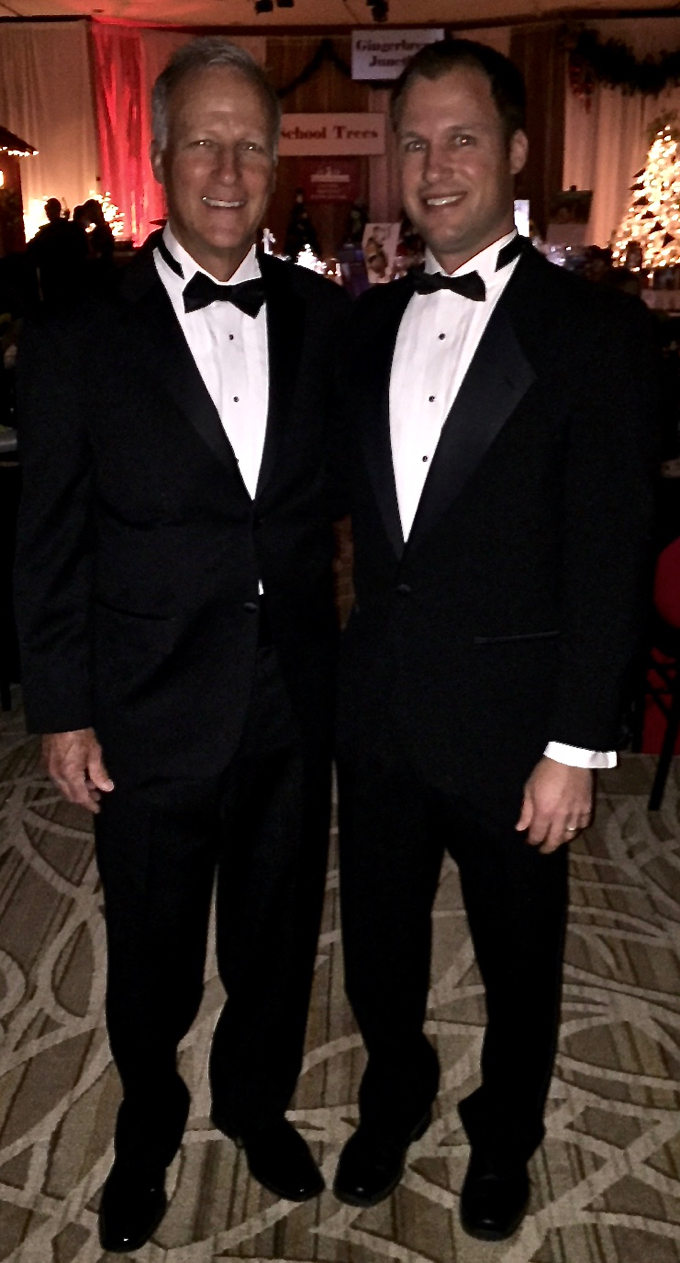
Father and son — Terry and Jeff Orr — at this month’s Barton gala. Photo/Provided

As it turns out, Orr is too much of a people person and passed on fixing and designing machines.

Instead, he found a home in medicine — and more specifically orthopedics like his father, forging a path that provided the reward of helping patients transcend from an injury to the restoration of their lives.

Both admit that’s not easy.

Orr senior describes a day and age when a patient’s recovery was all up to the doctor telling the patient what to do. Now, in what’s called the “shared experience,” patients share in the experience of recovery and dictate goals for their desired outcome.

 “The field of medicine has changed a lot,” Terry Orr said.

With the constant evolution of new things to know, the learning never stops – even if you’re considered the finest in the field. The elder Orr still takes continuing education units.

When asked if he thought his son would end up being better than he is, the modest Orr didn’t hesitate, answering: “Absolutely.”

And part of that “shared experience” is between the father-and-son surgeons, as the elder can pass on what he’s learned over the years. The younger hasn’t hesitated at gaining guidance from his father – even if it just means moral support.

The field comes with long hours and a constant expectation at being nurturing and brilliant at the same time. All this with a drive to keep up with trends and turning those trends into creative, new ways to help the increasing number of weekend warriors and competitive athletes live long and prosper.

“If you look at orthopedics, so much changes with the medical knowledge in just a decade, you have to wonder where things are going to be 20 years from now,” the elder Orr said.

Hands down, the longtime surgeon is proud of his son.

In turn, his son exudes a sharp-as-a-tack level of intelligence. He also has inherited the senior Orr’s well known calm and collected nature – which can be a blessing to anyone suffering nagging or debilitating injuries. The two men understand all too well what it’s like to overcome a setback with the joints. And not everyone is patient about it (as this reporter attests to when she relied on Orr senior).

Jeff Orr has not only assisted with the patients’ recoveries; he’s lived the experiences. He didn’t wince when listing his surgeries – two ankles, a knee and a shoulder. After all, he downhill skis, rides a mountain bike and plays hockey (with his dad). 

Orr senior said he’s been luckier — listing the annoying the plantar fasciitis on his foot and a broken hand.

To hear the two men speak of the gnarliest injuries they’ve seen is to hear them speak in code. It’s a language they’ll always share.

Beyond Orr junior taking rotations at the hospital and moving into the Center for Orthopedics and Wellness facility next year, he will join his father for yet another Olympic-oriented assignment. For years, Orr senior served as the U.S. Men’s Ski Team doctor. Now it’s his son’s turn. Through an affiliate of the American Academy of Orthopedic Surgeons, Jeff Orr just returned from La Parva, Chile.

In about two months, the two surgeons will use their expertise in Germany to essentially check the athletes with the Olympic team heading to South Korea in February.

Months later, the men will gear up to move into the new state-of-the-art facility designed to cover every aspect of athletic health from a specific body part to the science of holistic medicine.

In some respects, orthopedics is a medical discipline more about a restoration of excellence rather than a return to normalcy.

“Orthopedics isn’t just about getting people through their day, it’s about getting them back to enjoying their lifestyle,” Jeff Orr said.


Mother Nature turns off rain/snow spigot

By Dale Kasler, Sacramento Bee

What happened to the rain?

Less than a year after the drought was declared over, precipitation has been relatively scarce in the Sacramento area and Northern California so far this season. This week’s cold snap is accompanied by a round of dry weather that’s expected to last at least another 10 days.

It’s too soon to panic about a prolonged dry spell, however.

The National Weather Service said precipitation this season is actually running slightly ahead of schedule in the northern Sierra Nevada, thanks to a wetter-than-average November. But the weather gauges are emptier the further south you go, and rainfall truly has been in comparatively short supply in practically every California city.

Read the whole story


International visitors’ habits explored at Nev. summit

By Thomas Moore, Las Vegas Sun

French tourists to Nevada seek the outdoors and cultural opportunities, while Chinese tourists are switching from group arrangements to independent travel.

Travel tendencies of international tourists were among the discussion topics on the second day of the Governor’s Summit on Tourism at the Flamingo Las Vegas.

Gov. Brian Sandoval underlined tourism’s importance to the state during his luncheon speech at the summit, hosted by the Nevada Department of Tourism. He noted that one-third of the state’s tax revenue comes directly from the tourism industry.

Read the whole story


Viability of Squaw Creek, aquifer being studied

By Kathryn Reed

Those tasked with managing water in Olympic Valley, in particular Squaw Creek and the surrounding aquifer, are taking a more methodical approach to studying trends and potential impacts.

The Lahontan Regional Water Quality Control Board is one of the regulators of this body of water between Tahoe City and Truckee and had requested a workshop on the item; which occurred at the last meeting.

“The state board years ago when they approved our water quality restoration plan for Squaw Creek, which focused on reducing sediment coming from primarily the ski resort, and also the county roads and development in the valley, asked us to also look at the effects of groundwater pumping in the valley,” Lauri Kemper with Lahontan told Lake Tahoe News. “Residents had complained that the creek goes dry every fall and fish kills occur due to overpumping for drinking water supply in the valley. Because of the concern and the proposed increased development in the valley, the local water district conducted a study looking at ground and surface water interactions. Pumping does affect creek flows in late summer and wells could be relocated away from the creek closer to the mountain (canyon walls) and reduce chances of lowering creek flows.”

Mike Geary with Squaw Valley Public Services District went over the aquifer/stream flow interaction study at the November meeting.

In addition to SVPSD, the main groundwater pumpers in that basin are Squaw Valley Mutual Water Company, Resort at Squaw Creek and Squaw Valley Ski Resort. The ski resort has four wells on the valley floor for snowmaking, while Resort at Squaw Creek has an irrigation well for the golf course. SVPSD has four active wells.

Squaw Creek and the surrounding aquifer are how the Olympic Valley gets its drinking and irrigation water. Photo/LTN file

There is plenty of snowmelt to recharge the aquifer each year. It takes eight hours to fill the SVPSD tanks, which uses about 4 percent of the water in the creek, according to Geary. Storage capacity, or the lack of it, is one of the main issues.

“We can’t store enough in the water tanks to be useful,” Geary said. “We struggle to capture some of the water that leaves the valley in the dry months. That is challenging.”

He doesn’t foresee a dam/reservoir being a viable storage alternative.

One thing being talked about is reconfiguring the creek to more of its natural route with the hope less groundwater is lost to the creek. Right now there is a trapezoidal channel that was built by the Army Corps of Engineers before the 1960 Olympics. It drains water from the shallow aquifer into Squaw Creek.

By modifying the trapezoidal channel it would reduce drainage from the shallow aquifer into the channel in spring and early summer.

Also being proposed is moving pumping as far west as possible and reducing or eliminating pumping on the east side of the valley. Developing a formal pumping management strategy has been proposed to map municipal water needs and minimize impacts on the creek.

SVPSD looks at what water usage may be 25 years from now. The big change would be the proposed development in the Squaw Valley Village that would create lodging, retail and recreational entities in what is now the parking lot. Two new wells will be paid for by the ski resort for that project.

Officials have an eye on climate change as well, especially with all the predictions that there will be less snow falling in the Sierra in the coming years. This would mean Squaw Creek would dry out sooner. On the flip side, more rain would mean the aquifer would recharge with those storms.

One thing SVPSD doesn’t have that is a norm in the water business is interties with neighboring districts. It makes these water users a bit isolated and potentially cut off in an emergency.

This is why tying into the Martis Valley has been broached. That proposed $25 million project would inevitably invite a political/environmental firestorm. Still, it’s a battle the district is contemplating.

The Olympic Valley aquifer has a maximum depth of 150 feet and is one-half square mile. The Martis Valley aquifer has a depth of about 800 feet and is 15 square miles.

It is not possible to tap into Lake Tahoe because federal agreements prohibit entities downstream of the lake to use the water.


Study: Arctic ice loss could spell more drought for Calif.

By Kurtis Alexander, San Francisco Chronicle

Californians may have another reason to keep an eye on melting sea ice in the Arctic — at least if they’re concerned about the state’s propensity for plunging into damaging droughts.

Alongside the obvious perils for polar bears and other wildlife, as well as the problem of rising ocean levels, the massive ice thaw thousands of miles away is triggering changes in the atmosphere that are likely to shrink rainfall close to home, according to research by scientists at Lawrence Livermore National Laboratory.

Their study outlines a chain of meteorological events that leads to formation of storm-blocking air masses in the North Pacific. The masses are similar to the so-called Ridiculously Resilient Ridge that kept rain from making landfall during California’s five-year drought, forcing widespread water rationing in homes, prompting farmers to fallow fields and causing the Central Valley to sink due to heavy pumping of groundwater.

Read the whole story


Russia banned from 2018 Winter Olympics

By Rebecca R. Ruiz and Tariq Panja, New York Times

LAUSANNE, Switzerland — Russia’s Olympic team has been barred from the 2018 Winter Games in PyeongChang, South Korea. The country’s government officials are forbidden to attend, its flag will not be displayed at the opening ceremony and its anthem will not sound. Any athletes from Russia who receive special dispensation to compete will do so as individuals wearing a neutral uniform, and the official record books will forever show that Russia won zero medals.

That was the punishment issued Tuesday to the proud sports juggernaut that has long used the Olympics as a show of global force but was exposed for systematic doping in previously unfathomable ways.

The International Olympic Committee, after completing its own prolonged investigations that reiterated what had been known for more than a year, handed Russia penalties for doping so severe they were without precedent in Olympics history.

Read the whole story