Linear Park upgrades expected to begin in summer

By Kathryn Reed

While the word “park” is in its name, this is not the four-letter word most would use for the stretch of land from Lake Tahoe Vacation Resort to Holiday Inn Express. “Ugly” is what it is.

Linear Park is going to get a complete makeover, with completion likely in 2013. It’s possible a final design plan will be in place in March.

Right now dirt, dead plants and non-working lights line the sides of the bike-pedestrian path that parallels Highway 50 and the gated Tahoe Meadows area.
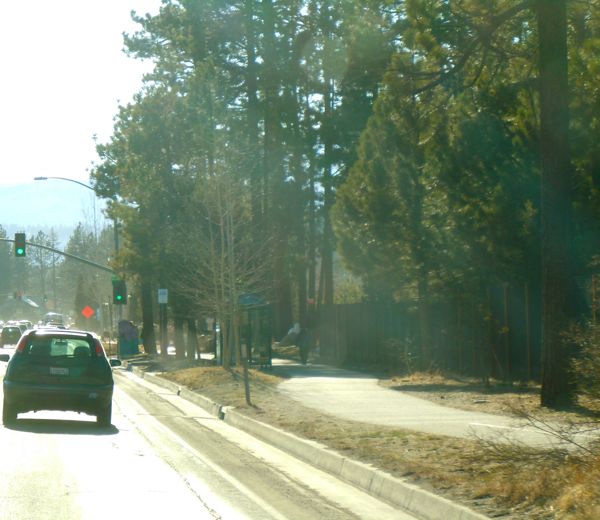
The dirt and trail along Highway 50 known as Linear Park is about to be upgraded. Photo/LTN

It is the residents of Tahoe Meadows who gave the city the land to create this park. The homeowners owned the land into the first travel lane of Highway 50.

But it was the Washoe who first called this area home – long before white people put gates around it to regulate who could access this lakefront property.

Tahoe Meadows was once a frequent fishing area for the Washoe, who spent their summers at Lake Tahoe. There was a pond nearby that was used to store the fish until the tribe needed them for food.

It is because of this history that it was decided by the now defunct city arts council to erect a statue in that location to honor the Washoe Tribe. The statue on the west end of the park was created by Arnold Aragon. It portrays a typical Washoe woman. Though Aragon, who lives in Schurz, Nev., is Crow and Laguna, he is married to a Washoe woman.

After it was erected in 2000, the original pedestal on which the statue sits began to crumble. In stepped the now-defunct Core 24 Charities, of which this reporter was a member. In 2005, a more durable quartzite pedestal was built. Tahoe Sand and Gravel donated materials.

The arts council had intended to place plaques in a semicircle that would have told the story of the Washoe. Money prevented that from happening.

However, after the revamped pedestal was put in, the city paid for a single plaque to be installed.

Core 24 when it disbanded gave the city more than $20,000 to be used exclusively on upgrades to linear park. After all, the group had worked with the city and South Tahoe Public Utility District to establish a 2-inch water hookup near the old Shell station to supply needed irrigation. The group also planted 1,000 daffodil bulbs around the pedestal that to this day bloom each year.

It won’t be until a March City Council meeting that the $20,000 gets placed in the appropriate fund.

At the Feb. 21 City Council meeting the five approved an agreement with Brett Long Landscape Architecture for planning, design and construction support services.

The staff report says, “The preliminary project scope includes improving the existing landscaping, upgrading irrigation and supply, providing bus shelter pads and enclosures, class 1 bicycle trail repair and installing pedestrian lighting.”

Councilman Tom Davis wants better lighting than what is on Ski Run Boulevard so pedestrians don’t go from dark to light to dark. But it is those types of overhead lights that are proposed.

For one, they meet Tahoe Regional Planning Agency guidelines. They are also more compatible when houses are nearby because of spreading less light.

Nancy Kerry, who was acting city manager for the week while Tony O’Rourke was out of town, said the Tahoe Meadows Homeowners Association is willing to discuss the lighting issue.

The entire cost of the project is estimated between $250,000 and $370,000. The higher cost is if the bike path is revamped.

Long hopes the landscaping could be in place this summer. While native plants will be used, it’s likely grass will go in some areas, along with adaptive accent plants.

When the park was first developed in the 1990s the irrigation system was not adequate and the plants died. People have continuously kicked in the low-level light standards. Now it is just rundown.

Long believes improvements can be ongoing after the initial upgrades are made – like signs and benches.


Snow missing for annual memorial snowshoe race

By Kathryn Reed

Snowshoe events in February at Lake Tahoe are a no-brainer. Except for this year.

Fresh Tracks – the Eric Nageotte Memorial 5K Snowshoe Race could actually be a running event. That would seem appropriate considering the Tahoe Mountain Milers puts on the annual fundraiser. Instead, the race part of today’s event has been canceled because Camp Richardson has no snow to groom trails.

“A few years ago we had a similar situation and went ahead and snowshoed through mud. It was horrible and I didn’t want to do it again,” Carol Nageotte said. “People can go out and play and do their own course, in their own groups … run around wherever snow is.”

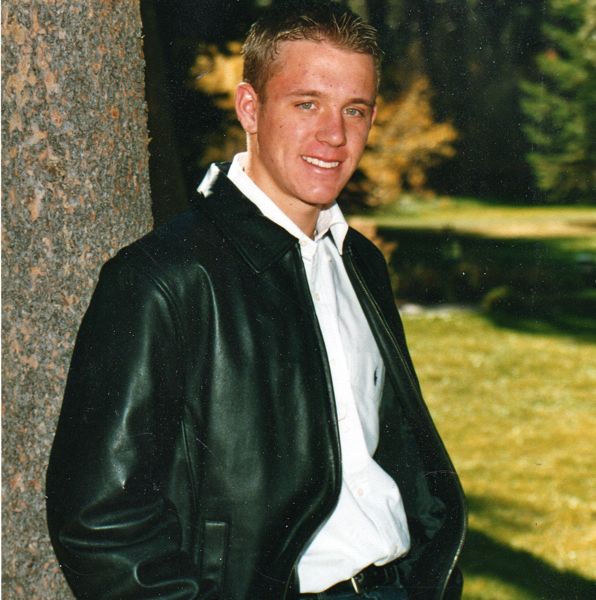
Eric Nageotte graduated from South Tahoe High School in 2004. Photos/Provided

This event is in its 13th year. When Eric Nageotte died in September 2004 the event was renamed to honor him and raise money for a scholarhip fund for members of the Heavenly Ski Foundation freestyle team.

Nageotte was an aspiring freestyle skier with dreams of making the U.S. Ski Team. His two buddies have – Sho Kashima and Jay Panther.

“I feel like we’re living vicariously through Jay and Sho. It makes us proud,” Nageotte said. “It’s not hard to watch them. It gives us joy to see them do so well.”

(Kashima, though, is sidelined having had knee surgery last week on the knee he didn’t hurt a year ago. And Panther is out recovering from a concussion.)

Eric Nageotte was training in New Zealand when the fatal ski accident occurred. The trip was his present after graduating the previous June from South Tahoe High School.

At his memorial his four parents – Ron and Carol Nageotte, and Toni and John Lowe – started the memorial scholarship fund as a way for people to make donations instead of buying flowers for the funeral service.

The snowshoe race is now the main fundraiser for the scholarship that helps up and coming skiers train. (Carol and Ron Nageotte are longtime members of the running club.) Eric participated in a few of the Tahoe Mountain Miler events, but it was bouncing through a field of moguls where he felt most at home.

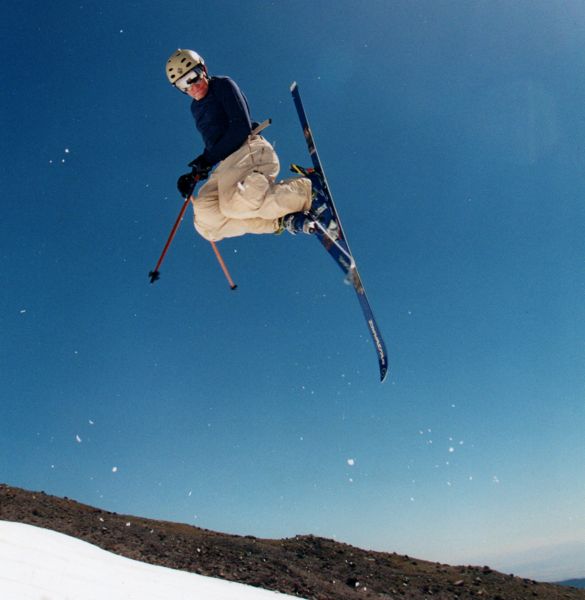
Eric Nageotte had dreams of being on the U.S. Ski Team.

Much of the money raised goes for the young skiers’ gymnastics training.

“It’s pretty expensive to have a kid on the team,” Ron Nageotte said.

Carol Nageotte added, “We’re supporting the kids whether they knew Eric or not. It’s a sport Eric loved. It’s one way to give back to the community.”

As for the event today, Camp Rich has donated the food. Mountain Miler volunteers will be barbecuing sausages and hot dogs, plus there will be vegetarian chili, starting about noon. That’s all free for anyone who shows up to play. Sweat shirts are for sale. Donations to the scholarship fund are welcome.

For more information, go online.


Record highs melting as cold front moves into Lake Tahoe

By Kathryn Reed

Put away the shorts and bring out the long pants. All the flesh that has been visible in the Lake Tahoe Basin has to do with record highs being set. But winter temps are returning.

South Lake Tahoe was 61 degrees on Feb. 24. This broke the previous record of 59 set in 1995.

Apparently 1995 was a warm February as well because the high on Feb. 23 of 56 degrees tied the record of 17 years ago.

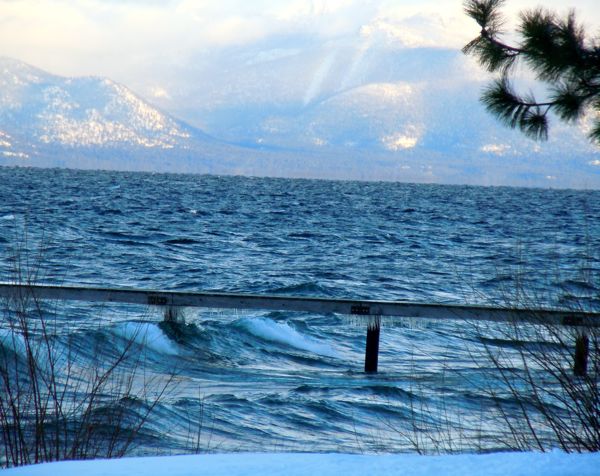
Waves like these near Tahoe City on Feb. 15 will be the norm today on Lake Tahoe. Photo/Kathryn Reed

Reno by contrast has not been much warmer than Tahoe. The high on Friday was 64 degrees.

But things have already changed with a cold front having started to blow in last night. Today’s high in South Lake Tahoe is expected to be 45, then 37 on Sunday and 28 on Monday.

A wind advisory is in effect until 10 this morning for Tahoe, Truckee, Carson City and the Reno areas. This means gusts of 50 mph, with ridgetops being whipped twice as hard.

A couple inches of snow may fall in the basin Sunday night into Monday.

“It’s not looking good for any big winter storms coming up,” Alex Hoon, meteorologist with the National Weather Service in Reno, told Lake Tahoe News.

February has been super dry throughout California and Nevada. It’s so bad that water officials have scaled back allocations to farmers and others who rely on reservoir storage from the North State.

Exactly how bad things are will be calculated Feb. 28 at the next snow survey.

Most yards in Tahoe are showing more grass or dirt than snow. People with bikes are coming into town, when normally it’s only skiers and snowboarders who are here.

While the Weather Service only has precipitation records for South Lake Tahoe that date to 2000, in that time the average has been 1.93 inches for February. So far this February 0.38 inches have been tallied.

In Tahoe City, where records date to the early 1900s, the normal February is 5.27 inches of precip. To date there have been 0.31 inches.

Hoon said it is wishful thinking to believe a dry February will bring a wet March. That’s not to say March will be dry, but he said don’t bank on March being a miracle.

A storm is sitting off the coast that is expected to arrive Wednesday that could bring a foot of snow to ski resorts. This would be welcome as most ski areas still don’t have 100 percent of their terrain open.


Efforts under way to forever save Lahontan cutthroat trout

By Kathryn Reed

Catching five species of trout in a day is an incredible experience for an angler. Just ask Victor Babbitt.

Babbitt, who owns Tahoe Fly Fishing Outfitters in South Lake Tahoe, was at the Feb. 21 open house where people could learn about the proposal to turn 32 miles of the Upper Truckee River and its tributaries into a federally recognized wild and scenic area.

“I don’t think there is a negative side,” Babbitt told Lake Tahoe News. “When my kids are my age I want them to have a place to go to for sure.”

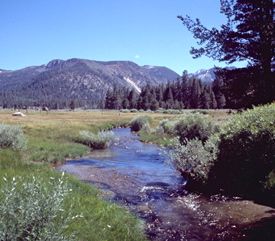
Organizations want this area of the Lake Tahoe Basin classifed as wild and scenic.

Trout Unlimited and California Trout hosted two open houses this week to inform the public about their desire to seek Wild and Scenic River Designation for the Upper Truckee River through Meiss Meadows. The Lake Tahoe Basin Management Unit and Pacific Southwest Region of the U.S. Forest Service recommended this in a 1990 management plan and subsequent 1999 report.

But it takes an act of Congress to get the designation. That is what the groups are seeking.

It’s the Lahontan cutthroat trout that makes this area so special. They are listed as threatened under the federal Endangered Species Act. And this area of the Lake Tahoe Basin in one of the few places to find them.

Catch and release is the rule with a single-fly barbless lure. And then fishing is only allowed in the summer months.

Trout Unlimited and CalTrout at a minimum want 7.3 miles of the Upper Truckee River to receive the federal designation. But they believe expanding that to 32 miles to include the area around Round, Dardanelles, Showers, and Meiss lakes, and other creeks in the watershed would be better for the fish and ecosystem.

The designation usually means a quarter mile area on either side of the waterway is protected as well.

Jenny Hatch with CalTrout said, “It’s really about keeping it the way it is.”

Hatch said the desire for the larger area is because the fish population is growing and this will ensure what her group considers proper management of the natural resources.

While the Forest Service basically manages the area today as though the designation is in place, without it, the federal agency can change its protocol.

Dave Lass with Trout Unlimited said the cost to create a management plan if the designation goes through was estimated to be less than $50,000 in 1999 when the last Forest Service report came out.

He believes groups like his and others could work with the Forest Service to create a public-private partnership so dollars are not diverted from local resources.

Lass foresees meadow restoration, removing conifer encroachment, improving mountain bike trails, and putting in signage as projects that could occur.

“It’s not building roads or more trails. You will still have to sweat to get in there,” Lass told Lake Tahoe News.

At the Wild and Scenic Film Festival on March 9 in Stateline a short film about the subject will be aired.

It’s definitely possible this area, which is most easily accessed off Luther Pass, could see more visitors. Right now the number of visitors is not limited in terms of day hikers, fishermen or backpackers.

The Merced River has a wild and scenic designation that is impacting the number of visitors to Yosemite National Park and might have a ripple affect to all national parks.

The designation could also open commercial guide service to the area. This is something Babbitt did in this location about a dozen years ago, but has been unable to get a permit from the Forest Service since then.

No one from the Forest Service filtered into the Feb. 21 open house while Lake Tahoe News was there. The second meeting was Feb. 22 in Markleeville.

While support from supervisors in Alpine and El Dorado counties is not necessary to go forward, officials with the conservation groups recognize it would help their cause to have it. No date has been set when those boards will discuss the issue again. October was the last time the county officials discussed the designation at a public meeting.

Hatch said she would like the issue to be part of the annual environmental summit in August, including tours of the area.

The goal of the trout groups is to have the designation in two years.

For more information or to make a comment, email dlass@tu.org.


S. Tahoe residents express dislike for parking meters

By Kathryn Reed

Metered street parking, parking garages, reconfiguring streets, changing public perception about paid parking, paying attention to public transit-walkers-cyclists, and approving future projects with adequate parking were all broached in the daytime meeting.

Most in the audience agreed more parking and paid parking are likely to be more prevalent in South Tahoe in the near future. And they agreed it would be the locals, who are used to free parking, who will probably be the hardest to convince this is what’s needed.

How prophetic those two paragraphs from an Oct. 22, 2010, Lake Tahoe News article are.

On Feb. 22 – 16 months later – nearly 40 people filled a room at the South Lake Tahoe Rec Center to voice their opinions about the city’s proposal to install parking meters in various locations in town and initiate a residential permit system for the section of the Al Tahoe neighborhood closest to Regan Beach.

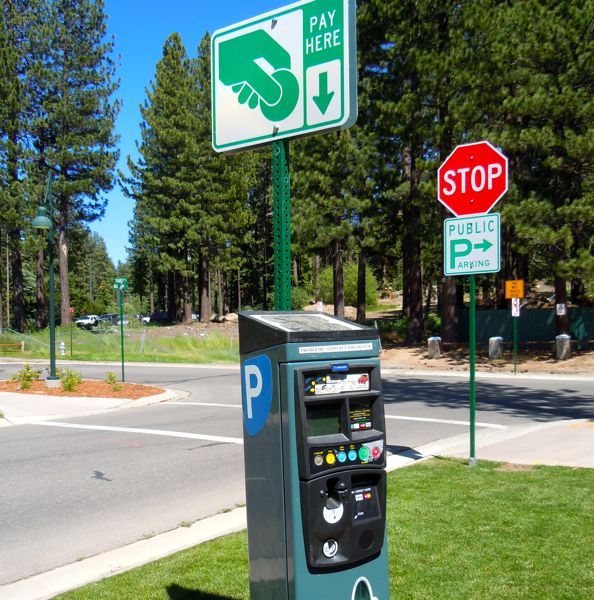
Parking meters near Stateline generated an average of $4,000 a month for South Lake Tahoe between July-December 2011. Photo/LTN

Many were loud and boisterous, interrupting Community Service Officer Bob Albertazzi as he tried to answer each question during the 90-minute session. People said they just learned of the meter situation. They said they plan to give the City Council an earful when the issue is back on the agenda March 6.

Meters were on the Feb. 7 council agenda, but were tabled a month to allow time to gather more input from the community. None of the three people who objected to the meters at the council meeting spoke Wednesday night, even though two were in the audience.

The city is banking on generating $300,000 from the meters. That’s revenue that is in the 2011-12 budget. The areas proposed to get kiosks are Regan Beach, Stateline Beach, Venice Drive between Tahoe Keys Boulevard and Tahoe Keys Marina, and Saddle Road between Ski Run Boulevard and Wildwood Avenue.

While Albertazzi said it is not a done deal to put in meters, meters are part of the strategic and business plans, and the five-year budget the council approved in spring 2011. If the council votes not to put in the meters, it must either find other revenue or cut services or staff.

Issues people have with the idea ran the gamut.

One man spoke of how he left the Bay Area because of things like this. He doesn’t want Tahoe to change. He said meters would change the complexion of the community.

JoAnn Conner, president of the South Tahoe Chamber of Commerce, said things have changed since Frank Globin owned all of the land that makes up the Al Tahoe neighborhood.

“It’s not like it was when he was here,” Conner said. “What would you like the city to do?”

He said it’s not his job to find solutions.

Judy Cefalu expressed concerns about people being able to find a place to park on Fourth of July to watch the fireworks.

One person balked at having to get extra passes from the city for guests if he were to have a party.

Some believe if paid parking goes in at Regan Beach, all of Al Tahoe should be permitted so the neighborhood doesn’t fill up with beach-goers looking for a free spot.

John Cefalu is worried beach-goers will park on Harrison Avenue or neighboring streets, which would take away parking for business customers.

People want Heavenly Mountain Resort to provide parking for its employees and not have the city allow for this to happen for free.

People are worried with two part-time employees handling parking issues that enforcement in the neighborhoods will be lacking.

Others are concerned the details have not been worked out – like specifics of permits, how long an illegally parked car will stay before its towed, and the number of permits each household will receive.

Many said the amount of revenue is not worth the consternation the meters will create. While some wonder if South Lake will be the most expensive place in the basin when it comes to lake access.

Albertazzi wrapped things up by saying, “The issue is revenue. Things have changed in South Lake Tahoe. No one has alternatives, so therefore we are trying things. We can’t sit back and do nothing and continue to have services deteriorate.”

——————-

Council meeting:

March 6 at 9am at Lake Tahoe Airport. Agenda will be posted online 72 hours before the meeting.


Vail Resorts buys Kirkwood Mountain for $18 million

By Kathryn Reed

Vail Resorts has added a third Lake Tahoe area ski resort to its portfolio – Kirkwood Mountain Resort.

The $18 million acquisition was announced today.

Pending approval of the U.S. Forest Service, which owns the bulk of the land that is mostly in Amador and Alpine counties – with a slice in El Dorado County, the deal will go through. The Colorado-based ski company will take over the resort, retail operations at the base and rights to develop an area near Timber Creek at the base of chairs 7 and 9.

Kirkwood is Vail Resort's third Tahoe area ski resort. Photo/LTN file

The immediate change for skiers is anyone with a Heavenly or Northstar pass may ski at Kirkwood and anyone with a Kirkwood pass may ski at Heavenly or Northstar.

“Kirkwood skiers have a lot of passion because it is a really special place. One of the biggest things in our mind is to respect what Kirkwood is – the vibe, the small community feel. We really want to make sure we support that,” Blaise Carrig, co-president of Vail Resort’s Mountain Division, told Lake Tahoe News.

Kirkwood is much more of a big-mountain resort with its steeps compared to Heavenly (which Vail acquired in 2001) and Northstar (which Vail purchased in 2010).

The Wood, as locals call it, also attracts a different type of skier than Heavenly or Northstar. It’s more of a rugged individual who makes the nearly hour drive from South Lake Tahoe to Kirkwood over two mountain passes. After all, it’s a skull and cross bones that represent The Wall.

Plus, the snow at Kirkwood is usually deeper – nearly 800 inches last season – lighter and more constant than in Tahoe because of where the resort is located.

Kirkwood, though, needs some help to get to the next level in terms of infrastructure and improving the guest experience. It has two high-speed quad chairlifts, with one accessing beginner terrain.

“With every asset we look at what needs there are to improve the experience for the guests. We don’t have any specific plans at the moment,” Carrig said.

He said the sudden and dramatic improvements Vail Resorts did for this season at Northstar with the addition of a mid-mountain lodge and high-speed quad chairlift will not likely come as quickly to Kirkwood.

No dining facility at Kirkwood is memorable in a good way. The retail is basic.

Kirkwood’s master plan calls for substantial on-mountain improvements as well as real estate development.

Carrig said he is aware of the master plan, but it will take time to prioritize what to do first.

He and Casey Blann, who heads mountain operations at Heavenly, will lead the management team at Kirkwood for the time being.

David Likins, who has been CEO of Kirkwood, will take on the same title at Kirkwood Mountain Development. That is the company that retains the rights to most of the real estate holdings at Kirkwood.

“This is a great day,” Likins told Lake Tahoe News. “Vail will get us to the next level of user and guest experience. They operate fantastic resorts throughout the West.”

Likins also said Vail’s desire to retain the uniqueness of Kirkwood was important before he would agree to the sale.

Vail is not worried about the price or reliability of power that has plagued Kirkwood in the past. State-of-the-art diesel generators are expected to be online in two weeks. These replace the plant that burned to the ground in January 2010.

Kirkwood Mountain Public Utility District is its own entity since July. Mountain Utilities was an arm of Mountain Springs Kirkwood, the umbrella firm that had owned the ski resort as well.


Hwy. 50 speed limit changes anger South Shore residents

By Kathryn Reed

“Fifty on 50” has long been the joke about the speed locals drive on the main thoroughfare through the South Shore. Only it’s not a joke anymore. And the actual speed limit from Meyers to Stateline is 55 mph where it’s one lane in each direction and 65 mph where it’s two lanes in each direction.

This is because Caltrans conducted traffic and engineering studies that found people are already safely driving faster than the posted limit. Until the new limit signs are in place, the current speed limit signs are not enforceable per state law. Instead, the law becomes what is normal for state highways based on the number of lanes – thus the 55 and 65 mile per hour limits.

When the signs go in – which is expected within two months – the speed limit on this nearly 10-mile stretch of highway will be 5 mph higher than what it is now posted. So, it will be 45 mph in Meyers, 55 from Country Club Drive to just past Lake Tahoe Airport where it will switch to 45 at Kyburz Road, then a quarter mile farther east it will switch to 40 mph and will remain that limit through South Lake Tahoe.

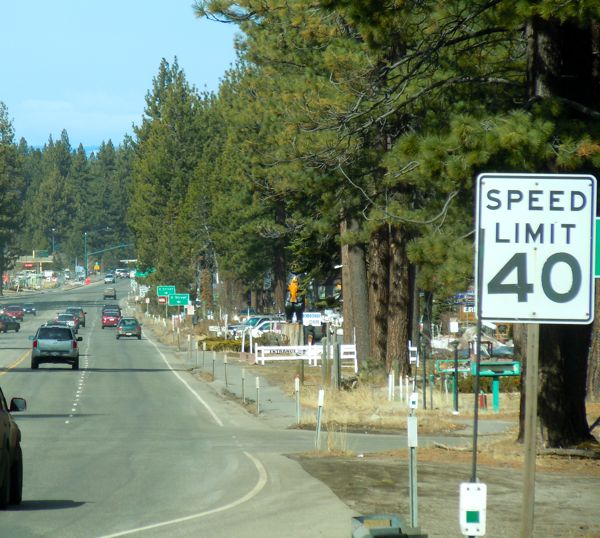
Speed limit signs don't mean a thing right now on the California side of the South Shore. Photo/LTN

Anyone who has gotten a ticket since December for speeding should be able to successfully win in court.

CHP officers have not been enforcing the posted limit signs since December when they were notified by Caltrans officials of the survey results.

“We haven’t noticed any changes yet,” California Highway Patrol Officer Jeff Gartner told Lake Tahoe News in regard to drivers altering their speed through the South Shore. This means they are going the posted limit.

State transportation officials were in town Feb. 21 for two meetings to discuss the issue with officials and residents. The first session was before the South Lake Tahoe City Council; the evening session was at Lake Valley fire station in Meyers.

Pat Kelley, an engineer with Caltrans, told those at both meetings, “There must be a legal reason not to raise the speed limit.”

But she could never cite a legal reason despite being asked to do so at both meetings. People at both meetings were clearly frustrated in wondering what the point of the gatherings were when Caltrans was going to raise the speed limit despite all of the objections from those in attendance.

People in Meyers questioned whether the Tahoe Regional Planning Agency could launch a legal fight by saying the increase in speed increases emissions and increases sediment reaching the lake.

Later in the meeting, TRPA spokeswoman Kristi Boosman said, “The major focus of the Regional Plan update is livable, walkable town centers. This flies in the face of that.”

She also mentioned air quality concerns.

Of the seven people who spoke at the council meeting, all were against raising the speed limit. Of the more than 50 people at the Meyers meeting, no one spoke in favor of upping the limit.

When El Dorado County Supervisor Norma Santiago said she thought the speed through Meyers should be reduced to 35 mph, it was met with applause.

What the council wants to do is change the state Vehicle Code that uses a one-size-fits-all approach to setting speed limits on California highways. Mayor Claire Fortier will write a letter to Caltrans as well as to state lawmakers to work on changing the law.

State law was changed in 2009 to parallel federal law that in the end stripped Caltrans of its ability to lower speed limits based on criteria that would consider specific needs of a community.

Today the law does not take into consideration that the state highway goes through a town, the number of stoplights, the number of driveways, that people are walking in the highway (especially in winter) because this area is so deficient on sidewalks, or the fluctuations in traffic based on Tahoe being a tourist community.

Santiago at the night meeting also expressed how the law doesn’t consider the character of a community, the fact that schoolchildren are crossing a state highway with no marked crosswalk, and that cyclists share the road in so many areas where no path is available – just the lane of traffic.

For locals, Highway 50 is more like a city street and not a state highway. After all, much of it is called Lake Tahoe Boulevard or Emerald Bay Road. But for Caltrans, it only sees the highway designation.

Kelley said the surveys were taken in dry conditions, in the middle of the week, and during the off-season (for the city).

The council wants Caltrans to count cars and their speed midweek during peak summer season.

As Councilman Hal Cole put it, he believes the statistics are skewed in favor of raising the speed limit, and that a compromise of the varying conditions needs to be considered.

Pete Fink, an avid cyclist, said, “We are trying to increase the recreation aspect of this town. Increasing the speed limit is diametrically opposite of that.”

Many said how the South Shore is trying to be more pedestrian and bicycle friendly, and that making it a more scary endeavor to walk or bike through town because of vehicles racing by even faster will thwart any progress that has been achieved and unhinge future improvements.

In the end, Kelley said she would take the council’s concerns back to her legal department to see if the current limits could remain. She also said Caltrans could conduct another survey one day this summer.

The Meyers area also wants another survey because people don’t believe the three April 2009 dates and July 2 that year reflect a true representation of traffic. They want more locals and fewer tourists to be counted. Caltrans did not agree to do this.

What Caltrans studies are prevailing speeds, accident data and conditions not readily apparent to a driver. The minimum number of vehicles counted is 100 at each location. These studies are supposed to be done every seven years. But it’s been 10 years since the South Shore was last studied. Why the delay? Kelley deferred the question to a spokeswoman for the agency who could not answer the question.

In South Tahoe, 13.3 million vehicles traveled through town in a three-year period. Four collisions involving eight vehicles occurred in that time, according to Caltrans.

In Meyers, 8.3 million vehicles went through the area in three years, with 37 accidents involving 74 vehicles. Twenty-seven of those accidents occurred between Friday and Sunday, according to Caltrans.

Highway officials say the accident rate on the South Shore is extremely low for the number of vehicles using the state highway.

Stats, according to Caltrans, show the accident rate does not rise as the speed limit increases.

Another trigger for Caltrans to reconsider speed limits is if changes have been made to the area that would affect how people drive. For South Lake Tahoe, the curb-gutter-sidewalk project that should be completed this summer should necessitate another traffic study in spring 2013.

For Meyers, nothing is on the books today that would necessitate another study.

While some time was spent on how best to cross the highway in Meyers, residents scoffed when told a striped crosswalk is more dangerous than not having one. Caltrans said it gives people a false sense of security. Residents are looking for security and believe no designated area to cross is more dangerous.

A roundabout was talked about, but the discussion was lost among the speed limit dialog.

For today, the speed limits from Meyers to Stateline on Highway 50 are either 55 or 65 mph.

Because of that, South Lake Tahoe Police Chief Brian Uhler wants the new limit signs – even though they increase the current posted limits – put up ASAP so the speed laws are more reasonable. He said those signs could always revert back to the lower speeds if Caltrans can be convinced raising the speed limit is not logical.


FBI not talking; SLT officer on leave without knowing why

By Kathryn Reed

It’s been more than three months since South Lake Tahoe police Officer Johnny Poland was stripped of his badge and gun. He still doesn’t know why.

“There has been no reportable movement,” Police Chief Brian Uhler told Lake Tahoe News.

That means whatever is going on with the federal investigation is not being made public because later in the conversation Uhler said, “We are kept apprised as there are developments.”

Johnny Poland

Gina Swankie with the FBI office in Sacramento said, “I have nothing to offer you.” It’s normal for the FBI not to comment on any investigation until it is complete.

Poland told Lake Tahoe News no one has asked him a single question regarding the investigation in the entire time he has been on paid administrative leave.

“Officially they haven’t told me I’m under federal investigation,” Poland said. “They never said I was under investigation. They said it was a pending IA (internal affairs) investigation. I haven’t gotten an IA.”

For now, taxpayers in the city of South Lake Tahoe are paying for Poland to stay home, raise his kids, take them to school – do all those things a stay at home dad doesn’t usually get paid to do. His benefits have been fully funded as well since he was put on leave in mid-November.

“He is under federal criminal investigation. It would be inappropriate for him to continue to serve in a day-to-day capacity,” City Manager Tony O’Rourke told Lake Tahoe News in November. “It doesn’t reflect any guilt. It reflects the process that needs to run its course so we can determine if there were any serious violations of the law.”

But it is still not public information what this peace officer is accused of.

The police department classifies this case as “conduct unbecoming”. This list gives a glimpse of the SLTPD investigations from 2009 until Poland was put on leave.

The city explains “internally” as any city employee may have complained about a police officer, not necessarily an officer against another police officer. “Externally” means any member of the public submitted a complaint about a police officer.

It’s also not known how much longer the investigation will go on.

The last time Poland had a run-in with superiors – not the feds – he was out of work for nearly three years. He had been fired in 2007, then won the wrongful termination case in 2009. The trouble began in November 2006 when Poland was accused of mishandling a lockdown situation at South Tahoe High School.

With Poland’s absence and the city’s desire to protect residents and visitors, it means the police department is spending beyond what is in the budget. Overtime is necessary at times to keep cops on the road.

Uhler said to keep paying Poland and have officers on the street, it might mean less is spent on equipment or other purchases.

If Poland is found guilty of whatever charges the investigation centers on, he would not have to pay back the money he collected in the time he is out. But by the same token, if no charges are brought against him or he is found not guilty, his reputation and the potential of him being trusted by the public and his colleagues has been diminished just by the secretive investigation — possibly to the point of him not being able to return to work or being able to find work with another law enforcement agency.

Quitting would benefit the city. It would mean having Poland off the payroll. But it would not make the investigation go away. To date, the city has not tried to negotiate with Poland to get him to move on – no matter what happens with the federal investigation.


Opinion: When will the United States elect a president who is worth celebrating?

Today we celebrate 44 men. It’s Presidents’ Day.

Not that long ago Abraham Lincoln and George Washington were honored separately on their February birthdays. Instead of squabbling over which, if any, presidents were worthy of having a federal holiday dedicated in their honor, one day – the third Monday of February – is set aside to recognize all of the presidents of the United States.

This being a presidential election year Lake Tahoe News believes it is more important than other years to pause and reflect about these men who some say are the most important leader in the world.

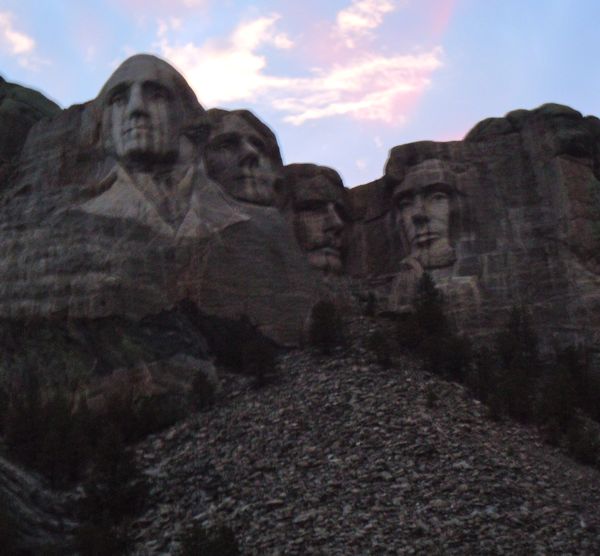
Mount Rushmore immortalizes four presidents. Are any others worthy of such recognition? Photo/LTN

What are the qualities we like in a leader?

Put aside party affiliation. Put aside gender. Put aside race. Put aside religion. Now answer that question.

It’s time for a frank discussion about what leadership means. It’s time to set priorities for this country. How are we supposed to pick a person to lead us if collectively we don’t know where we want to be led?

Is picking the lesser of two evils really the choice we should be left with? In a country of millions are the people vying for the Republican nomination and the current president really the best either party can come up with?

How can we have hope when the powers that be rely on individuals and the “wisdom” of those who have led us into this oblivion? How can we believe in candidates who can’t figure out what they stand for, equate homosexuality to bestiality or think cheating on a dying wife can be explained away?

Simply put, being president is a job. We, the people, are the bosses of the president. But instead it feels more like they are the boss of us – telling us what we need and want. Until the people take control, tell the president, Congress and other people in power what we want, we will be taken on a ride we may not want to be on.

We are the bosses of all politicians. One way to evaluate them is how we vote. But why wait every two, four or six years for that to happen. Performance evaluations are the norm in most lines of work. They should be told what is working and what isn’t. But we have to tell them, not them telling us.

We all have choices. We can sit back and complain. We can point fingers. We can say one person alone cannot make a difference.

Or, we can make our opinions known, we can take responsibility, and we can be a voice for the change we want in our communities, our states, and our country.

While it will always make sense to have one day to collectively celebrate the presidents of the United States, Lake Tahoe News would like to think all who have held and will hold that office would be worthy of having their individual day to be recognized. Maybe in 2017 after the 2016 election we can start on that path.


Grooming goes high-tech with a beastly fleet at Heavenly

By Susan Wood

She may be cold sometimes, but she’ll warm up fast – then take you for a real ride.

If you push her buttons just right, she’ll raise her big blade – then cover her tracks behind her.

She’ll light up your night man. And to the one who knows her best, she is an animal that often lives up to her name – The Beast.

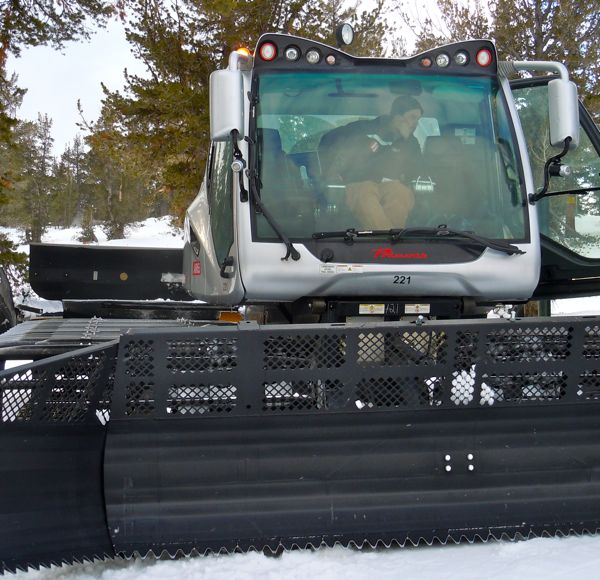
The Beast is able cover more terrain than smaller snowcats and do high-angle grooming. Photo/Kathryn Reed

Heavenly Mountain Resort’s latest fleet of four grooming snowcats is aptly named for being the best at moving snow, carving corduroy and covering ground.

With a 500 horsepower engine, she can put her mark on 9.5 acres per hour. Her predecessor the Bison is a smaller version in the 13-machine fleet that grooms 6.5 acres an hour with 350hp under the hood.

“The whole reason we bought The Beast is it can do more acres per hour. It has its place. It can push (snow) uphill. It’s aggressive. We need to cover as much ground as we can in the time we have,” Casey Blann, chief of Heavenly’s mountain operations, told Lake Tahoe News. “In their second year, we think it’s the way to go.”

This year, covering enough ground and spreading the snow can be more of a challenge with the lack of it – especially compared to what Lake Tahoe Basin experienced last season.

“Usually we have Mother Nature covering holes and rocks. Now it’s all us,” said swing shift groomer Daniel Huizar, who waited patiently for clearance to drive his rig up the mountain from the Tamarack Lodge at the end of the day. It’s Huizar’s fourth season as a groomer – a big step up in his eyes from sitting inside auditing tills at Mount Hood Meadows. Now he usually works at Heavenly from 4pm to midnight.

Heavenly employs 35 groomers who collectively have logged at least 230 years of experience.

Huizar’s first glance at a grooming machine was love at first sight.

“I want to be in one of those,” he recalled with the glee of a teenage boy. The 28-year-old is spending his fourth season at Heavenly. He sought change, and change is what he got with the opportunity to drive The Beast.

This beauty’s tiller in back and blade up front measure 23 feet across at full wing span. That’s a good 4 feet more than the Bison. Both are made by Prinoth, an Italian corporation that took over the former Bombardier company.

Parent company Vail Resorts spared no expense with purchasing the first Beast at Northstar then adding four more at Heavenly at about $500,000 each – substantially more than what the Bison models cost. With the buttons, joystick, levers and stereo with an iPod hookup, she’s a little bit of a cross between an airplane and video game inside. There’s even a knob for defrosting a very large windshield that runs coolant through the blades. (Tahoe residents would likely line up for that feature on their trucks and cars in the winter.)

Outside, she resembles a bulldozer on snow. She can push snow up the mountain like no other machine – even at a 16-degree angle most cats would have to use a winch for what’s called “high-angle grooming.” It can be nerve-wracking to drive it at first because unlike smaller cats she can easily clip a fence with her size. If you were to equate different models with paintbrushes, The Beast would cover the wall. The Bison would touch the corners.

Although Huizar appreciates the workhorse nature of The Beast, he waxes poetic when talking about her ability and where she takes him on the hill.

There’s a certain rhythm to watching The Beast’s giant blade push snow. It reminds Huizar of an ocean wave forming over the shoreline.

It was hard to imagine the run off the Tamarack chairlift was so tracked up when The Beast went for a spin last weekend. She placed perfect corduroy behind her. This is why some riders and skiers hang behind the machines – to “poach” the tracks, as Huizar put it.

Apparently, they’re not the only ones. Huizar often sees coyotes. One ran off with a whole bottle of Gatorade near the Beach Hut at Patsy’s chairlift. Most sniff the tracks to see if food has been churned up.

“Some places are thin, so you don’t want to do too much,” he said of this year’s slim natural snow. The groomer pointed to the top of the ridge that takes skiers and riders to the Nevada side of the resort and indicated how the area can be more challenging to groom with rocks just underneath the surface. Though conditions have improved substantially in the week Lake Tahoe News took a ride in The Beast.

“You tend to feel rocks more on these machines than skis,” Huziar said a week ago.

(Note to my skiself: These guys have saved the ski season.) But a modest Huizar turned the credit over to the snowmakers who manage the gun operations.

Suddenly, a beautiful rosy sunset lay over Mount Tallac to the west.

“Oh, I love this,” he said, stopping the machine on the Tamarack ridge and pulling out his camera. This is where Huizar takes lucky, ride-along buddies at the end of the ski day. They’re picked by ski patrol from the lodge. Many are so appreciative, they try to tip him, but to no avail.

To the east, overlooking the Carson Valley, the groomers have even coined a name for the view from where the Big Dipper meets Orion – “Operation Elevation.”

A fleet may follow each other’s fall line from the ridge like a pack of dogs. The camaraderie is enhanced by the chatter on the radio. For that reason alone, Huizar doesn’t get lonely – even on occasions when he works the graveyard shift. He recalled how interesting the nights were at Mount Hood when groomers at Meadows would flash their lights at the Timberline resort drivers and vice versa.

Night operations is a world all its own.

“I don’t think people realize how a lot goes on at a ski resort at night,” Huizar said.

Sometimes he sees the groomers at Homewood across Lake Tahoe.

“The views up here are awesome,” he said as the sun was setting in the real High Sierra.

ngg_shortcode_0_placeholder