Congressional impact on Nevada tourism laid out

By Kathryn Reed

INCLINE VILLAGE – Roadwork on Nevada highways in the Lake Tahoe Basin began before the normal May 1 start date because the weather has cooperated and Congress is likely to pass a transportation bill that will keep funding in place through Sept. 30.

The current funding expires June 30, though the House on Wednesday passed a bill to extend the program for another three months.

Ryan McGinness, principal of District Strategies, gave a rundown April 19 about how what is happening in Washington directly impacts the Silver State. McGinness led one of the workshops at the Hyatt in Incline during the annual three-day Nevada Commission on Tourism Rural Roundup conference. (It ends today.)
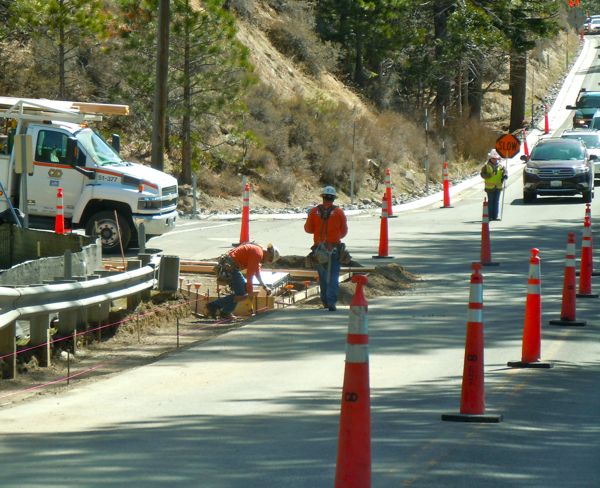
Roadwork, like this on Higway 28 on April 19, is tied to federal funding. Photo/Kathryn Reed

While the emphasis of the gathering is to bring the six sectors of rural Nevada together to talk about tourism, McGinness pointed out how what goes on 3,000 miles from Lake Tahoe has a direct impact on tourism throughout Nevada.

“Transportation is key for tourism. It gets them to our destinations and it gets them around our destinations,” McGinness told the group.

With a limited season to work on roads, Tahoe can’t have an interruption in funding and still get the work done in a timely manner. State highways also don’t get fixed without those federal dollars.

Continued transportation dollars will be critical for the basin if the Tahoe-Reno area is awarded the 2022 Winter Olympics. (Attendees learned more about the Olympic plans on April 18.) If selected, the region will move to the top of the list for federal transportation dollars.

McGinness started the talk about the uncertainty of what will go on in the nation’s capital this political season. He said there is speculation the minimum will get done until the election, after which it remains to be seen who is in the White House and Congress, and whether the remaining electeds will try to accomplish anything for the five weeks between the election and the winter holiday break.

Tax issues related to renewable energy production need to be addressed before the end of the year. What happens to the solar industry would impact Nevada more than wind.

The Secure Rural Schools legislation affects districts throughout Nevada. Funding is up for reauthorization.

When it comes to specific tourism issues and how Washington plays a role, McGinness touched on the $823,000 bill the Government Services Administration racked up at a conference in Las Vegas.

“No one can say that was responsible spending, but we don’t want it to hurt Nevada or Las Vegas,” McGinness said. “We need to define it as a behavioral issue, not a Las Vegas issue.”

When the 2008 AIG scandal made the news it had a chilling effect on conventions in Southern Nevada. That was when the company spent about $200,000 on employees to party in Vegas after receiving a federal bailout.

Conventions are big business for Vegas. They bring in about 5 million visitors a year, add $6 billion to the area’s economy and support 58,000 jobs.

While Congress has hearings on the overspending in Vegas, it is also working on substantive ways to bring more foreign travelers to the entire country.

Bringing international travelers to the United States could get easier as Congress works on the visa waiver process. Currently, people in 36 countries don’t have to get a visa for the U.S. China, Brazil and India are the three countries being talked about being added to that list.

At an afternoon discussion where leaders of the seven tourism sectors spoke, all talked about how international travelers are growing in numbers.

Sue Barton, No. 2 at Lake Tahoe Visitors Authority and the head of the Tahoe-Reno Territory for NCOT, said it’s the number of French travelers coming into the South Shore visitors centers who have most surprised her. She believes their sense of independence leads them to the centers because they have not wanted to pre-book all of their travel.

Teri Laursen with the Las Vegas Territory said 18 of 20 group bookings come from China. However, Canada, United Kingdom and Mexico account for the top three countries in terms of travelers arriving at McCarran International Airport.

While Nevada is experiencing a surge in international travelers, the country is losing market share, according to McGinness. He said in the last decade the number of international travelers coming to the U.S. dropped by 37 percent, while during those same 10 years the number of global travelers increased by 60 million.

This is also the post-9/11 era, so how the terrorist attacks and subsequent burdensome safety measures that were put in place impacted people’s decisions to come to the U.S. is not known.

But McGinness pointed out until now the United States has never had a brand, never reached out to other countries to sell itself, while other countries do it all the time.

Ads will launch in the next few weeks. Visa application fees fund the program. Private companies like Marriott, Disney and Best Western have also committed substantial sums of money to the overall pot of cash.

Another bill floating in Congress would expedite the visa process for athletes coming to the U.S. to compete in the Olympics or World Cup.


Lake Tahoe tourism officials strive to be relevant

By Kathryn Reed

OLYMPIC VILLAGE – Is Lake Tahoe relevant? Relevant to those planning a vacation, that is.

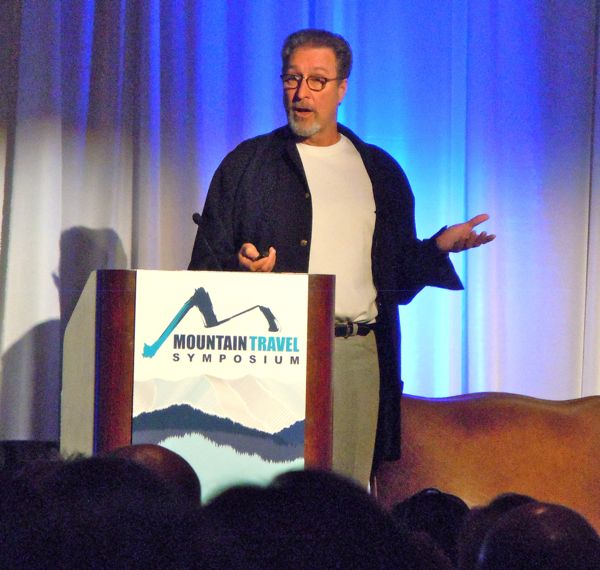
This is a question those in the tourism business must ask themselves – especially after attending the 37th annual Mountain Travel Symposium at the Resort at Squaw Creek.

“Now every community between here and the Bay Area has an event and a website. Back in the day Tahoe had minimal competition,” Carl Ribaudo said. The president of South Lake Tahoe-based Strategic Marketing Group spoke with Lake Tahoe News in between workshops April 18. “We have to change the look, not just for tourists, but for locals.”

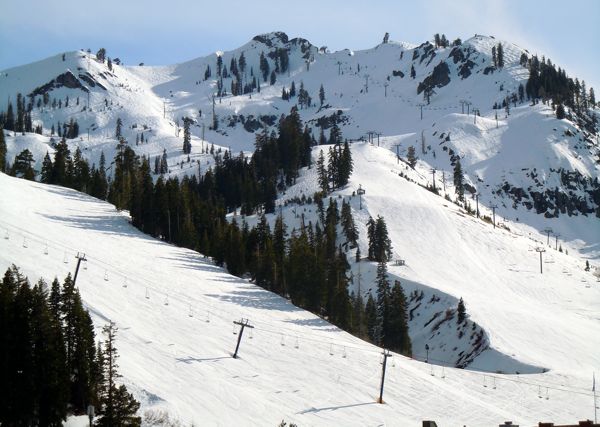
Lake Tahoe wants to be relevant to people eager to travel. Photo/Kathryn Reed

He wants the South Shore to become more relevant for locals and tourists. Two ways to do that, he believes, are by improving the infrastructure and adding special events to the calendar.

It was reiterated at the various workshops that competition is getting greater among destinations. Nearly every town touts its attributes to would-be travelers.

Tahoe has a beautiful lake, but other locations have bigger ski mountains, more robust mountain biking, extravagant casinos, five-star lodging, shopping, reliable public transit and other amenities travelers are looking for.

The difference, though, is Tahoe – all shores combined – has the whole package. While marketing gurus work together on occasion, notably last year’s Tour de California bike race, usually it’s North v. South.

As Dan McHale, general manager of Inn by the Lake in South Lake Tahoe, said, he was glad to come to Squaw so he could drive around the lake, see what is going on, because it’s easy to feel isolated.

Those involved with Tahoe’s tourism have also become complacent in some ways. Some business owners believe Tahoe sells itself. Not so. Look at the vacancy signs — even on holiday weekends. People aren’t coming to Tahoe like they used to. Part of the reason is because they have other choices, part of the reason is because the area is stale.

Carol Chaplin, executive director of Lake Tahoe Visitors Authority, believes those speaking at the multi-day conference reaffirmed her agency’s beliefs.

“Those who have the passion for recreational activities-sports are those who will continue to spend on those experiences,” Chaplin said.

She added that the conference, which is touted as the largest gathering of mountain travel professionals in North America, “Confirmed also that our products-services need to be relevant. That would mean a hard look at those – including infrastructure – to understand if we have what it takes.”

While the conference is about mountain destinations, with a focus on winter activities – skiing and snowboarding in particular, it didn’t stop Tony Lyle, marketing chief of Aramark on the South Shore, from attending. His company runs Zephyr Cove Resorts, which includes snowmobiling, the lodge, stables, and the paddle-wheelers that launch from there and Ski Run Marina.

“Tahoe is unique. It has all these different opportunities,” Lyle said. “You can get on the lake, that is my pitch.”

It’s a mantra other ski towns cannot boast about.

He has been successful in telling that story to visitors this season. The boats have been full when the lift lines were non-existent.

Tourism is Lake Tahoe’s economy. It’s also big business throughout the world. That is why this area of California and Nevada is striving to keep a hold of the market it has and then increase it.

The World Travel & Tourism Council says the global tourism industry is twice the size of the automotive manufacturing sector and about one-third larger than chemicals manufacturing.

The council says U.S. travelers contribute $2 trillion to the world economy.

Andy Chapman, marketing guru for North Lake Tahoe Resort Association, smiles when talking about having more than 1,000 tourism professionals in his back yard for nearly a week.

“The best way to sell it is for them to witness it,” Chapman said moments before he participated in a panel discussion on social media.

With Squaw Valley as a backdrop, snow glistening and finally covering all the runs, it is hard not to see Tahoe as an Olympic-caliber destination.

But driving the roads, looking at dilapidated infrastructure and knowing the Ritz-Carlton at Northstar is the only five-star lodging property in the area, proves Lake Tahoe doesn’t have it all.

As Chaplin said, the conference, “Confirmed also that our products-services need to be relevant. (It) confirmed that LTVA is getting there, but is not there.”


Mountain travel experts hash out ways to lure consumers

By Kathryn Reed

OLYMPIC VALLEY – With skier visits down this season, lodging occupancy at 40 percent and consumers having more choices where to spend their travel-leisure dollars, what are mountain communities supposed to do to stay competitive and solvent?

Embracing that skiing is more than a sport – it’s a lifestyle – is one suggestion. Tap into the fact that people say “I am a skier” and not just “I ski” is what Ian Arthur, chief marketing officer with Intrawest, told a group of industry officials Wednesday morning.

Arthur, with Kirsten Lynch, chief marketing officer of Vail Resorts, and J. William Seccombe, chief marketing officer of Visit Florida, bantered back and forth as they delved into the business of destination mountain travel.

Ralf Garrison, director of MTRiP, speaks April 18 at the Mountain Travel Symposium. Photo/Kathryn Reed

The three were part of one of the sessions during the 37th annual Mountain Travel Symposium that is being hosted by the Resort at Squaw Creek. With several hundred in attendance for a multi-day conference, this is billed as the largest gathering of mountain travel professionals in North America.

Ralf Garrison, director of MTRiP (Mountain Travel Research Program), said, “Pure destination guests, led by international visitors held up the best while the local and regional skiers and boarders were more fickle and made fewer trips to the slopes. As a result, destinations catering to multi-night visitors who book well in advance fared better than the resorts that are more dependent on regional and short-stay guests and the disparity among the various resorts is more pronounced this year.”

Dan McHale, general manager of Inn by the Lake in South Lake Tahoe, echoed that sentiment. He told Lake Tahoe News that it was the international travelers, primarily Europeans, who were filling his rooms this winter, while the Bay Area skiers stayed away.

The MTRiP data Garrison released April 18 shows below normal snowfall and warm weather had skiers doing other things this winter. While the previous handful of years showed skier visits above the 60 million mark, when the final tally comes in at the end of April it’s likely that number won’t hit 50 million for 2011-12, he said.

Perception is everything. The drive-up market for resorts on both sides of the country stayed away as the snow was sporadic, this, despite the abundance of snowmaking in so many places.

Weather is always a factor. A year ago, the snowfall set records in Tahoe for the abundance, this year is was all about the scarcity of white stuff.

If NOAA’s Climate Prediction Center is correct with this week’s posting of warmer water in the Pacific likely to generate an El Nino weather pattern for fall 2012, it could translate into a wetter winter for California next year. However, with where Lake Tahoe is located, these El Nino and La Nina predictions for the rest of the state don’t always hold true for the Sierra.

It was the destination traveler who saved this season.

As Garrison pointed out early in his presentation, for places that consider themselves destination resorts, the season could be salvaged, but for those claiming to be just a ski area, the season was one to write off.

Occupancy during the ski season at Western mountain areas was down 3.9 percent during March compared to the same month last year, Garrison said. Throughout the winter months the occupancy is down 2.3 percent.

The bright spot for hoteliers and those receiving hotel tax, though not for the consumer, is the average daily rate was up in March by 1.7 percent compared to 2011, and is up 4.8 percent for the November-April ski season compared to last season.

To move forward, Garrison said, “You are going to need to generate your own demand.” This is because while consumer confidence is up slightly, it is basically flat.

Arthur pointed out how 25 years ago there was 40 percent more ski resorts in the country and that with the supply going down this should be good for the areas still remaining.

One way to get people into the sport is to show more people having fun. It was pointed out how Ski magazine shows shots of serious skiers. Photographs aren’t of people laughing, having a good time, socializing, or conveying emotion.

Lynch said with Gen Y being full of risk takers and wanting freedom it’s a tough balance between traditional skiing and turning a resort into a sports theme park.

Seccombe pointed out how with all the television channels there are that poker and fishing have more outlets than skiing. With the X Games and Olympics being the only times skiing, boarding or other snowsports are on TV, this gives the mountains little exposure to potentially new customers.

“With billions of dollars  spent to lure the same people, mountain travel needs to broaden its approach or it will see a drop off,” Seccombe said.

Some of the constraints the industry has are price, how long it takes to learn the sport, and accessibility to the mountains.

“We need to start telling our story to a broader consumer base,” Arthur said.

Lynch said the whole summer experience needs to be part of the discussion when it comes to traveling to the mountains.

“There are a lot of choices out there and we need to stay relevant,” Lynch said.

Thinking beyond the traditional skier was brought up. Not everyone in a family or group skis. Promote the spa, shopping and other activities.

McHale said he noticed with his guests that many come to the South Shore not to ski, but to be in the mountains. He partners with Heavenly Mountain Resort so they can go tubing.

Give people more than just a day on the slopes. Seccombe singled out NASCAR and how cameras are put in vehicles so spectators can keep watching those left turns made by their favorite driver.

Arthur said the best way to deliver more to the consumer is to know more about them.

Lynch summed it by saying the way to be successful is to concentrate on delivering service and experiences to the guests – making it all about them – and touting the destination less.


S. Lake Tahoe operating in the black despite TOT shortfall

By Kathryn Reed

Even though hotel taxes are down considerably because people stayed away from the barren ski slopes, South Lake Tahoe’s midyear budget report was positive.

“We are living within our means,” City Manager Tony O’Rourke told the council April 17. “We no longer have financial icebergs looming.”

A year ago the council created a five-year budget, plus business and strategic plans designed to put the city on stable ground, improve infrastructure and move the city into the 21st century. Those measures appear to have righted the listing mother ship to put its 23,000 residents on a voyage filled with fewer rough seas.

While the city is not financially out of the woods because it is dependent on tourism and many properties are bank owned, O’Rourke believes the bottom has been reached and things are on the upswing.

“We need to continue to make an investment in the community,” O’Rourke said.

That is why $ 3 million is being put into a capital improvement program reserve. This is coming from the city’s undesignated reserve fund. That pot of money per city ordinance is to be at 25 percent of the general fund and has grown to about 36 percent – thus the reason money can be reallocated.

South Tahoe’s three main sources of income are property tax (22 percent of the budget), TOT (16 percent), and sales tax (11 percent).

MaryAnne Brand, interim director of finance, said projections in property taxes are for growth to be 1.5 to 2 percent each of the next five years.

But she told Lake Tahoe News after the Tuesday meeting, “It’s a moving target, it’s so volatile, but no major changes are expected.”

A chunk, though, of property taxes that could go away in two years is what’s being collected from the would-be convention center site. Through the Teeter law the city for five years is entitled to its $350,000 worth of property taxes from the county even though the owners are not paying their bill. Technically, now the successor agency to the Redevelopment Agency receives that cash. It goes to pay debts associated with redevelopment.

The drop-in visitors to the area during the winter have reduced the projected hotel tax by $298,000. The dissolution of the Redevelopment Agency compounds the lack of projected TOT to date to $573,000.

Councilman Tom Davis, who is part owner of Tahoe Keys Resort, said bookings for the three summer months are higher than a year ago. This could swing the TOT pendulum in the other direction.

With the dissolution of the Redevelopment Agency per state order, the city received a little more than $1 million from the housing segment to be used in the general fund. This money is offsetting the losses in the 2011-12 budget so there is a temporary surplus of $145,029.

This “extra” cash also compensates for the loss of $278,000 in projected income from beach parking. That plan was derailed earlier this year.

Changes in expenses that were approved Tuesday include taking the savings from eliminating the fire marshal position and unfreezing two firefighter positions; reclassifying the community outreach-volunteer coordinator to marketing and outreach coordinator; making the PIO the assistant to the city manager; and bumping the deputy city attorney up a rung.

O’Rourke said the reclassifications are to reflect what the people in those positions are actually doing.

Another unforeseen expense was the $30,000 to repair the compressors at the ice rink. While a private company operates the arena, the current lease has the city being responsible for certain maintenance issues. The contract with TSE is slated to be back before the council on May 1.

In other city news:

• City Manager Tony O’Rourke, while having interviewed for a job in southern Oregon, told Lake Tahoe News it is probably not the best fit. He plans to do the job in South Tahoe for the foreseeable future.

• The old 56-acre steering committee will be reconvened in May, with topics to include El Dorado County’s desire to rename Lakeview Commons and what to do with the campground side of the project.

• The city Planning Commission approved a design change for the driveway for the Raley’s gas station because the landlord of the larger center wanted $10,000 a month for use of their property.


’11 vintage has winemakers apprehensive; ’10 looks OK

By Kathryn Reed

SOMERSET – Take a bottle of Zinfandel from any two years and they won’t taste the same. In large part that is because the weather wasn’t the same those two years.

While winemakers can work some magic with fermentation and blending, Mother Nature plays a huge role in what comes out of the bottle. But there is usually a consistency in flavors from an individual winery. The exception plays out with extreme weather. The 2011 vintage may just be that exception. The answer will be known down the road.

With the last two years being wetter and cooler than normal, many wineries in El Dorado County are certain the flavors will be less fruit-forward than years past. And the number of bottles will likely be less for 2011 because some of the grapes could not be harvested.

Wineries are hoping the 2012 harvest is better than a year ago. Photos/Kathryn Reed

The area received 60 to 70 inches of rain the previous two winters. About 26 inches have fallen this winter. Pam Miller with Single Leaf Winery said 30 inches is what the vines like to have.

“We lost an enormous amount of crop last year,” Miller told Lake Tahoe News.

Zinfandel, which by the ton is the No. 2 grape in El Dorado County behind Cabernet, has a thin skin. Bunch rot can set in quickly. Then the season is over.

“I’m very reluctant to speak of 2011. Some is OK, some will take a lot more cellar work,” Single Leaf winemaker Scott Miller said.

Scott Miller, right, of Single Leaf talks about his wines with Pam Valentine and Tom Ward.

However, both Millers are excited with how the 2010s are coming out. Some started to be bottled a couple weeks ago. The Zins won’t be released for three years, but the Barbera will be out late summer.

“Our ’10s are just spectacular,” Pam Miller said.

Elliot Graham at Busby Cellars told Lake Tahoe News the 2010 and 2011 vintages are not going to have big fruity flavors.

“2010 and ’11 are different than any (before) because it never got warm,” Graham said. “So, it will be a different style.”

He is starting to bottle some of the 2010 vintage.

At Skinner winery the 2010 Mourvedre was being poured during the first weekend of Passport – the annual two-weekend wine tasting put on by El Dorado Winery Association. Only 800 acres of this varietal are planted in California, with 3 acres belonging to Skinner.

Elliot Graham of Busby is cautiously optimistic about 2010 and 2011.

“We are excited by the ’10 whites,” Chris Pittenger, Skinner winemaker, said. “They are pretty elegant wines.”

He’s in the process of doing blending trials with the reds.

Pittenger isn’t sure how the 2011 vintage will fare, but said with the similarity of weather to 2010, it might be better than people anticipate.

John Latcham, winemaker at Latcham Winery, is optimistic what ends ups in the bottle from 2011 will be good, but he shakes his head thinking about what it took to make it through the harvest.

“Last year was a devastating year to the wine industry. We were picking between raindrops,” Latcham said. “We literally handpicked every bunch.”

That takes time and is an expensive process.

His crew was out there regularly putting down a mildew spray. But the rains came and just washed it away. It became a daily application.

The most upbeat winemaker was Rich Rorden at Cantiga.

“I’ve never witnessed a bad year, just differences,” Rorden said. “If all the wines tasted the same, we would be Gallo. The weather always plays a role, but the grapes always ripen.”

Facts from El Dorado County’s 2010 harvest (the most current year available):

• $4.9 million, the total value of grapes based on average open market prices

• 2,200 acres of wine grapes (this is twice the acreage of 12 years ago)

• $1,279, average price per ton of wine grapes. This was a slight increase compared to 2009.

• 4,700 tons, amount of wine grapes grown.

——-

Info:

Tickets are still available for Passport by going online. They are $70, which includes the whole weekend – April 21-22. Thirty-two wineries are participating. The event is 11am-5pm each day.


Garbage bills going up for South Shore customers

By Kathryn Reed

Garbage rates are expected to go up throughout the South Shore starting May 1.

The joint powers authority that oversees waste matters agreed to recommend the rate increase earlier this month. Now the three jurisdictions – South Lake Tahoe, El Dorado County, and Douglas County – need to approve the hike.

Fees are slated to go up 4.48 percent in El Dorado County, and 4.97 percent in South Lake Tahoe and Douglas County. For residential customers this equates to a monthly increase of $1.20 in El Dorado County, $1.15 in South Lake Tahoe and 77 cents in Douglas County. This means monthly rates become $27.97 in El Dorado County, $24.33 in South Lake Tahoe, and $16.33 in Douglas.

South Tahoe and El Dorado have unlimited service and Douglas has one 32-gallon can for those monthly rates.

The city and El Dorado County elected officials are expected to vote on the matter May 1, with the increase taking effect immediately. Douglas County officials did not respond to a request to find out when the vote would be taken nor is any information on the website.

Recyclables don't have much of a return in terms of cash, but they do keep garbage out of landfills. Photo/LTN

Through South Tahoe Refuse company’s franchise agreements with the three jurisdictions it is allowed to ask for a rate increase every three years. Normally it comes on Jan. 1. But last year the company with the JPA, which has an official from each of the jurisdictions, worked out a process to streamline the process.

“What we tried to do was standardize the rate application so all three jurisdictions are on the same level,” explained Gerri Silva, director of Environmental Management for El Dorado County. “We tried to go through and define what is a good index. Some of us used COLAs, some used CPI.”

With this and future rate increase proposals the Garbage and Trash Index will be used to help determine rates.

The idea is this method will eliminate spikes.

Jeff Tillman, president of the South Lake Tahoe-based refuse company, said all of his costs are going up – landfill charges, fuel, insurance, everything – so the increase is needed.

STR employees have gone without a raise for four years, the pension has been cut, and less equipment is being used.

“We are trying to make it work,” Tillman said, acknowledging no one likes any bill to go up.

While STR is recycling 66 percent of the garbage it collects – exceeding the state mandate – there is little money to recover from those products. What does come in is not profit; it goes into the base rate calculations.

Things beyond STR’s control have diminished its income. The homeowners who did not rebuild after the Angora Fire no longer pay a garbage bill.

Foreclosed properties also don’t have an STR bill.

“When the properties were demolished at Stateline that was a huge chunk,” Tillman told Lake Tahoe News.

When something gets built at “the hole” then STR will have several more clients to bill.

Commercial service is based mostly on how many times the dumpster is emptied. With so few people in town this winter, not much garbage was produced, so bills were light for those property owners – which in turn means revenue is down for STR.


Genoa — a town with modern amenities, steeped in history

By Kathryn Reed

GENOA – No need to drive after checking in. Delicious food. Fun bar. Relaxing balcony and hot tub. History everywhere. Scenery spectacular.

Where did we find this walkable, bikeable community? Just over the hill in Genoa.

The Wild Rose Inn was our launching pad last weekend to celebrate Sue’s birthday. It was like we were in another world, even though we were so close to home.

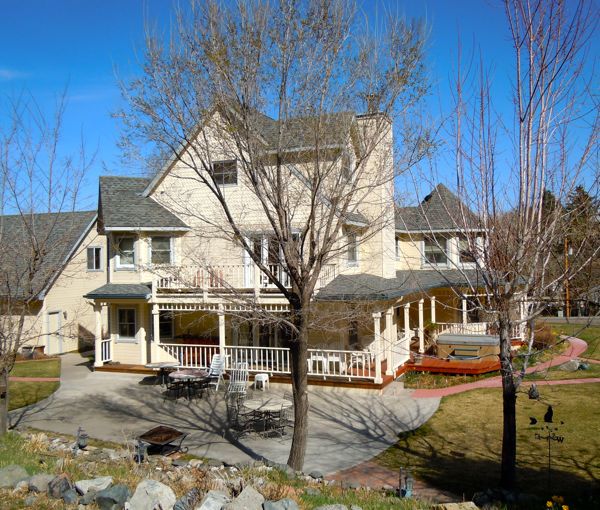
The Wild Rose Inn in Genoa caters to those who want relaxation, good food and fun right out the door. Photos/Kathryn Reed

Having breakfast made for us each morning was a definite change. Sue Knight has been running the Wild Rose since 1998, though it has been open since 1989. I hope who ever buys it from her keeps it just the way it is with all the antiques, comfortable rooms, incredible guest service and yummy food.

Our first breakfast we share the table with a couple from the Santa Cruz area.

Each morning a bowl of fruit starts the meal. Coffee has been brewed earlier to get people moving. If it weren’t for the aromas wafting to our room, it would have been difficult to leave the tranquility.

My favorite was the eggs Benedict – vegetarian style. Ham is served on the side to Sue’s liking.

Plenty of food is served that lunch is not needed.

From our balcony off the Sierra View room we look up to the Sierra. Immediately below us is the expansive yard where a variety of trees are beginning to bud and a fenced area for Knight to grow veggies is off to the side.

With Genoa being the oldest town in Nevada, history is everywhere. It’s even on the grounds of Wild Rose. Elzy Knott’s headstone from 1859 is there. His father refused to have his son be buried in the Mormon cemetery. This used to be the Knott’s homestead.

While Genoa boasts of being the Silver State’s first settlement, Dayton begs to differ. In Genoa’s Mormon Station State Historic Park are eight panels about the history of the area. One delves into the dispute about which town is the oldest.

A large sculpture of Snowshoe Thompson is at the entrance of the park. He is the legendary Norwegian who traversed across the Sierra carrying the mail as he glided on the snow on long skis.

Even the bar in town is historical. The Genoa Bar is the state’s oldest watering hole. Willy Webb has owned it for the past 12 years.

The stories he tells.

A few years back the power went out on New Year’s Eve, snow was trucked down from Kingsbury Grade to ice the beer, the old oil lamp chandeliers illuminated the joint along with candles, and the town came together. Every Dec. 31 since then they’ve re-created the scene to turn back the clock a bit to the pre-electric era.

A buffalo chip from Harvey Gross’ place finally wound up in the trash after critters keep crawling from it and covering the liquor bottles.

Raquel Welch’s dust covered bra hangs in front of her picture. Bras used to hang everywhere. Now they are in a safe. The rule is if you take a look inside, you have to leave something behind. Because I didn’t know the rule until after Webb told me to look inside he let me slide this one time.

The only signed photograph of the original Nevada Supreme Court justices is on a wall in this bar.

Plenty of famous people have had a drink in this saloon – Presidents Ulysses S Grant and Teddy Roosevelt, Carol Lombard, Clark Gable, Lauren Bacall, Red Skelton, Willie Nelson, John Denver, and Johnny Cash to name a few.

Our first dinner is also in a house of history.

We drove there, though we didn’t need to. It’s hard to believe with La Ferme being around since 1998 neither of us had been there before. The restaurant run by Gilles LaGourge is in the 98-year-old guesthouse of the original Pink House that was built in 1884.

Though the structure is old, the food is much more contemporary. Sue keeps talking about the seven-hour pork shoulder that was so tender no knife was needed. My ravioli was delicious, with a light broth-like sauce instead of a traditional marinara or white sauce.

Another night we ate at the Genoa Station Bar and Grille, which opened last summer. Sue dives into the shepherd’s pie, while I enjoy the grilled salad.

The late morning activity on Saturday and Sunday is cycling. The first day we go about 13 miles toward Jack’s Valley. Cows and deer seem to be everywhere. A jackrabbit hops in the brush.

Having a lane to ride in is refreshing. Vehicles pull out so they never seem to be a threat. This part of the road is rough, though.

The next day we head toward Foothill Road for a 20-mile ride as we gradually get our cycling legs working after the winter hiatus. Ah, a smooth road with no cracks. More cows. More mountains to gaze up at.

Genoa might just be my new favorite place when I need to get out of Tahoe for a weekend.

—–

Information:

• Wild Rose Inn: website, (775) 782.5697

• La Ferme: website, (775) 783.1004

• Genoa Bar: website

• Genoa Station Bar and Grille: (775) 783.1599.

ngg_shortcode_0_placeholder (Click on photos to enlarge.)


Ski industry veteran takes the helm of Kirkwood Mountain

By Kathryn Reed

With the sale of Kirkwood Mountain Resort to Vail Resorts being finalized Thursday, Casey Blann can officially call himself vice president and general manager of the ski area.

Blann, at 53, is a veteran of the ski industry – especially in Tahoe. Out of college it was Bill Killebrew who hired him to be a lift supervisor at Heavenly Mountain Resort in 1981. He worked there for a dozen years before going to Sierra-at-Tahoe for nine years.

For the past 10 years Blann has been back at Heavenly, with his most recent title being director of operations.

Casey Blann

“I’ve been able to live in the same house since 1989. I just turn a different direction as I leave the driveway,” Blann told Lake Tahoe News.

The ski industry is in Blann’s blood. He grew up in Bend, Ore., where his dad was general manager of Mount Bachelor. At age 2 he was skiing.

Now he has a resort to call his own.

“Casey is a real mountain man and skier at heart, and really appreciates what Kirkwood is. I think it’s a great fit for him,” Blaise Carrig, co-president of Vail Resort’s mountain division, told Lake Tahoe News.

Carrig added that beyond Blann’s expertise with mountain operations, his leadership, attentiveness to safety as well service were reasons he got the job.

(Internal and external candidates have applied for Blann’s old job at Heavenly, but a decision has not been made as to who will replace him.)

The enthusiasm as Blann talks about Kirkwood fills his voice. It also doesn’t hurt that his office allows him to watch the snow fall, even though visibility was just 100 feet. Friday was another powder day at the ’Wood.

“This resort is incredible. Every time I come out here I find something new and unique,” Blann said.

When he describes Kirkwood he calls it the Jackson Hole of California.

While his commute is now longer, he doesn’t mind.

“I’m really excited to join the team out here at Kirkwood and take it to a different level,” Blann said.

A Vail Resorts trademark of high quality guest services is one element he will be working on. But he is quick to praise the employees. Other than his arrival, no immediate staffing changes are taking place.

One of the reasons to buy the resort midseason was to be able to see how things really run and to strategize on changes for the upcoming season.

Blann said changes skiers are likely to notice at the start of the 2012-13 season are improvements to the food and beverage facilities. Specifics are still a ways off of what that might mean.

Epic Mix, a corporate-wide program that allows riders to track their vertical feet, get pins, share info with friends and other things, will be instituted at Kirkwood next season. Epic Photo will probably not be part of the initial launch.

Overall operations are being looked at, Blann said, with changes likely from the get-go. What will change still needs to be worked out.

He equated the changes about to take place at Kirkwood being similar to when he was at Sierra in 1993 and the Sprock family sold it  to Fibreboard Corp.

Having more money makes a world of difference for any business.

Blann knows he can tap into the skills and resources of Vail Resorts to put Kirkwood on a bigger map.

The current master plan for Kirkwood calls for tons of improvements. Blann and others with Vail are going over that plan to see what they like, how they would prioritize what’s in it, and are evaluating whether the U.S. Forest Service as land owner will need to be consulted about revising the plan.

“We will assess and prioritize operations as well as future capital investments,” Blann said.

What Vail officials keep saying is they don’t want to change the funkiness of the Kirkwood, just the functionality.

Kirkwood is known for its steeps and unique personality. An infusion of cash could mean making the terrain more accessible via new lifts as well as upgrading the ones in place. Kirkwood only has two high-speed quads and one of those accesses beginner terrain.

Summer operations are a growing component of what Kirkwood has to offer. An independent operator runs the zipline, there’s a mountain bike park and disc golf. Plus, at different times the lifts will run for hikers to access endless miles of trails.

Blann met with the mountain bike team Thursday, but added, “It’s premature to comment too much about summer.”

For those who don’t want to be limited to one resort, a pass for Heavenly-Northstar-Kirkwood is available. But the die-hard Kirkwood-only riders still have a pass just for the ’Wood.


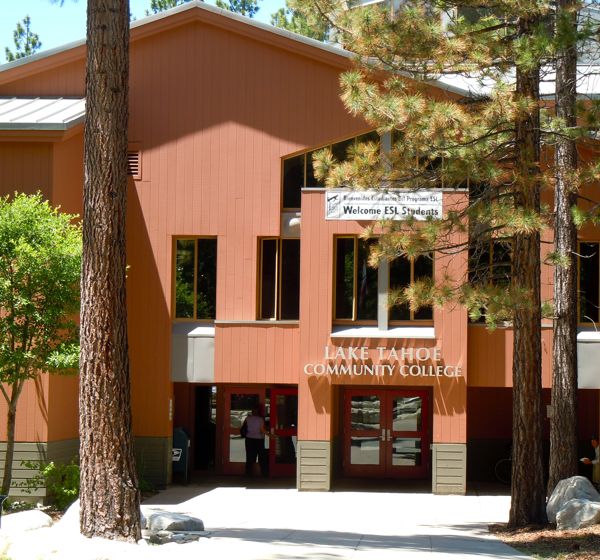
LTCC dealing with unstable financial forecast from state

By Kathryn Reed

Voters will decide if Lake Tahoe Community College must deal with “the good” or “the ugly” budget scenario.

“The model we are using now is the bad,” LTCC President Kindred Murillo told the board. It’s between “the good” which requires cutting costs by $800,000 and “the ugly” which requires cuts of $1.3 million.

“We want to be able to move either way,” she added.

If the education bill passes in November, it gives K-14 districts money that is owed them – not anything more. If it fails, it means another mid-year budget cut. LTCC took a $400,000 hit at the start of this calendar year.

If the voters say no, it will mean a workload reduction of 5.56 percent. The state pays community colleges based on the number of fulltime equivalent students. The 5.56 percent equals 105 FTES or $500,000. LTCC is now funded at 1,890 students. Just eliminating classes does not solve the problem. However, cutting some courses and putting more students into another class would help.

If that student number increases, the college gets no reimbursement from the state. In the 2009-10 school year, LTCC had 182.49 unfunded FTES. That is why administrators made a concerted effort to watch that figure and have kept it in line for two years.

The biggest problem is with the cut coming midyear; after the budget is adopted and after the school year has begun.

No matter the outcome of the November ballot measure put forth by Gov. Jerry Brown, the South Lake Tahoe college is looking at a structural deficit of $800,000. Half of that is because of increased costs of automatic salary increases via the step process and benefits.

In the last two years, LTCC has experienced a 15 percent increase in health and welfare costs. It’s expected to go up another 2 percent in fiscal year 2012-13. The college board, while well aware of the financial constraints, was presented with the grim picture in black and white during a budget workshop April 10. But the numbers presented are in a more readable format than the past 30-plus years.

Instead of a series of code numbers which most people have no idea what they mean, the line items are easier to read. For the first time restricted and unrestricted funds are separated on paper; they always had been in practice.

“We need to rethink how we serve our students and our community.” — Kindred Murillo, LTCC president

Unrestricted funds account for about 90 percent of the budget.

“That’s what funds classes for students,” Murillo explained to Lake Tahoe News.

The board was shown the new format using the current budget.

The 2012-13 budget will be the first one Murillo has prepared. Those numbers are being crunched, with the board likely to start reviewing the budget for the next school year in May.

Murillo, after Tuesday’s meeting, said she spent that morning scrubbing the budget to find anything that could bring down the deficit. She said she found several little things – like someone being budgeted twice, issues with a grant, things that can be eliminated – that adds up to close to $400,000.

While every dollar is being scrutinized, it is not possible to curtail all costs. And with revenues flat or decreasing and costs going up, the gap widens.

In the past four years, the community college system has sustained a 23 percent reduction from the state.

“We will continue to do more with less,” Murillo told the board. But she added, “We need to rethink how we serve our students and our community.”


USFS multimillion dollar South Shore fuels reduction project to start this summer

By Kathryn Reed

Needing to reduce the threat of another wildfire was a point easily agreed to. How to accomplish that goal – well – that was finally resolved at 10:20pm April 11. It took eight years to reach that decision.

On Wednesday the Lahontan Water Quality Control Board voted 5-0 to approve the permit that will allow the U.S. Forest Service to begin the South Shore Fuel Reduction and Healthy Forest Restoration plan. (Board member Jack Clarke was absent.)

The South Shore project is designed to treat 10,200 acres in 10 years at a total cost of $42 million. That dollar amount covers planning, implementation and monitoring.

About $30 million is in hand; coming from the Southern Nevada Public Lands Management Act. About one-third of that has been spent on planning.

                                           Photos/Kathryn Reed

“The longer the process goes, the less we have,” Scott Parsons, forester with the USFS, told Lake Tahoe News during a break in the meeting.

“With the absence of fire, you get sites like this.”        — Duncan Leao, USFS

Where the remaining $12 million needed to complete the project will come from is still a mystery. But the amount in the bank should cover the first five years, according to Forest Service officials.

Plenty of finger pointing went on during the more than two-hour discussion at Lahontan’s new South Lake Tahoe offices on Silver Dollar Avenue. Plenty of talk of moving forward was part of the dialogue, too, with the emphasis being on collaboration.

“The project is a necessity to accomplish the Forest Service’s goals and the community needs, while protecting water quality,” George Cella, engineer geologist with Lahontan, said.

One of the problems with the state water board and the federal agency working together is they overlap jurisdictions with different mandates. Lahontan’s primary concern is water quality. The Forest Service, while concerned with water quality, deals with habitat, forest health, recreation and other mandates. Lahontan only has jurisdiction in California; the Forest Service works on both sides of the state line.

“Fuels projects on the Nevada side move through the approval process much more quickly. We have completed planning, analysis, project implementation and monitoring for fuel reduction treatments on 5,000 acres in Nevada in the time it has taken us to complete planning for South Shore. Planning for another 4,000 acres near Incline Village is nearly complete,” Forest Supervisor Nancy Gibson told the Lahontan board.

Lahontan, until now, had a strict rule of not allowing mechanical equipment to be used in stream environmental zones. The thinking was the soil disturbance that would send sediment into the waterway was more of a concern than dense growth of vegetation that could spark a fire.

Looking back to the June 2007 Angora Fire that destroyed 254 houses, the burn pattern shows some of the hot spots that propelled the fire were the untreated stream areas, especially near Angora Creek.

“While SEZ treatment using mechanical equipment are new for Lahontan, the Forest Service has successfully implemented them in the Round Hill and Spooner projects on the Nevada side, and at the Heavenly Valley SEZ demonstration project on the California side,” Gibson said.

The Tahoe Regional Planning Agency permitted those Nevada projects.

A problem with moving projects forward in the Lake Tahoe Basin is the number of agencies involved. After the Angora Fire a bistate commission was formed to develop protocols. One of the mandates from the May 2008 documents was to create a streamlined approach to permitting. The purpose was to speed things along – in particular the treatment of hazardous fuels.

That has not happened.

While Lahontan and TRPA created a memorandum of understanding that called for TRPA to issue permits, that was challenged in court. Thus, the reason Lahontan is part of the process.

Fire management in Tahoe

One of the problems with fires in the Lake Tahoe Basin is that only 25 percent of them are weather related. This means the bulk are from causes like errant campfires (Angora Fire), cigarettes being discarded (Gondola Fire) or some other unpredictable cause.

Gibson, who this week is marking her one-year anniversary of being in charge of the Lake Tahoe Basin Management Unit, said the forest she came from on the North Coast had the opposite ratio. Lightning was a huge ignition source, which meant by monitoring the weather, fire suppression resources could be allocated early.

Tahoe is also unique with so much development being in the middle of a forest. With the basin’s forest abutting the urban areas, it makes fuel reduction projects all that more important.

Gibson sat down with Lake Tahoe News in an exclusive interview before the Lahontan board meeting to talk about fire, permitting and the future.

“Look at the expense, time and anxiety in dragging this project out,” Gibson said. “In 2008, we had clear direction from the bistate fire commission to act quickly. It’s the luck of the cards nothing has happened.”

She worries forests will continue to become drier as the snowpack lessens and does not stick around as long because of climate change.

“The only way we are going to get ahead of it is with fuels reduction,” Gibson said.

With all agencies facing financial constraints, wasting time – which equates to dollars – is no longer sustainable.

Gibson said Lahontan could have easily rolled the state environmental process into the federal.

She also said it is time to put aside past philosophical differences and look at the best course of action to decrease wildfires and ensure the forest’s health.

What will be treated

Even though Lahontan extended an invitation to hundreds to see sections of the South Shore project, only 20 people were on the tour Wednesday afternoon before the meeting. And that group consisted of various agency reps and the media – no members from the general public.

Three of the six Lahontan board members were on the tour – Amy Horne, Eric Sandel and Don Jardine.

First stop was an aspen project near Taylor Creek that was treated in January. Winter thinning occurred because no snow was on the ground. Other aspen restoration projects are contained in the South Shore plans.

The tour demonstrated sites that use mechanical equipment – which includes whole tree skidding and cut to length – and hand crews.

Parsons, with the Forest Service, said a prescription for each segment is designed, which in turn says how the site should look when the project is done. Prescriptions weigh several factors, including fuels, habitat, riparian needs, types of vegetation, and slope.

Using machines speeds up the work, which in turn cuts down the expense because less time is needed. Hand crews are the ones who create the burn piles. Mechanical treatment either hauls the fuels away, or redistributes some of the matter on site. The latter to mostly deal with erosion to cover bare soil.

Martin Goldberg with Lake Valley Fire Protection District said hand crews are definitely expensive.

Stop No. 2 on the tour was behind South Tahoe High School’s shop building. Walking down the forest road to the left is an area that was not touched by the Angora Fire, but will be thinned in the South Shore project. To the right is a section that for the first couple hundred feet was treated mechanically and farther up had trees felled by hand as evidenced by the teepee-shaped burn piles.

At the end of Nez Perce Street in the North Upper Truckee neighborhood is an example of the wildland urban interface being treated nearly a decade ago. But beyond the thinned area is a creek and dense vegetation that need tending to. The road will need to be worked on and the creek crossing upgraded before rigs can be brought in to do the heavy lifting.

Goldberg said the No. 1 question he gets from homeowners is asking why they have to do defensible space when they know a few hundred feet from their structure is a fire hazard in the forest. It’s the law for homeowners to have defensible space. (Goldberg used to work for Lahontan.)

“Had Angora started off Highway 50, this would have all been lost,” Goldberg said of the homes in that particular area.

The last area on the field trip was off Highway 50 near the Truckee River where there is a turn out on the right side of the road heading west just before North Upper Truckee Road.

Duncan Leao with the Forest Service said, “With the absence of fire, you get sites like this.”

Wood was everywhere.

Ideally, he said, an acre should have less than 10 tons of fuel. Sitting there, Leao estimated, was more than 60 tons of fuel.

To thin the area by hand would cost close to $9,000 an acre, while mechanically it would be about $3,500, officials said.

“Hand treating is out of the question. I’m not sure why we are discussing it,” Goldberg said has he looked over the area.

This isn’t the only area in the basin, let alone the South Shore project, with this amount of buildup.

“You see this a lot near Saxon and Trout creeks. A lot of heavy fuels,” Leao said.

While the need to thin was reiterated, so was the fact that once the South Shore project is done it really isn’t. That’s because trees and other vegetation keep growing, so the need for fuel reduction projects will never go away.

The South Shore project will begin this summer.

ngg_shortcode_1_placeholder  (Click on photos to enlarge.)