Douglas County’s Kite bounced from Assembly

Three-time Douglas County commissioner and current assemblyman for the area Kelly Kite lost his seat Tuesday night.

Jim Wheeler won the Republican primary for Assembly District 39 with 2,397 votes (41.54 percent). Kite had 2,012 votes (34.87 percent), and Gary Schmidt 1,361 votes (23.59 percent). Wheeler will face Independent American candidate David Schumann in November.

In the Douglas County Commission race, Barry Penzel came in with 46.21 percent of the votes (2,515), Michael Olson 38.37 percent (2,088), and Dianne Humble 839 (15.42 percent).

The Las Vegas Sun reports, “The establishment GOP candidates for state Senate made a clean sweep Tuesday over the more conservative candidates, giving Republican leaders the races they wanted in their effort to take over the state’s upper house. Senate Republicans need to win four out of five competitive seats in November to take back control of the state’s upper house for the first time since 2007.”

Nevada News Bureau says, “The big surprise of the night in the primary may have been the overwhelming defeat of state Sen. John Lee, D-North Las Vegas, in the Democratic primary against newcomer Patricia Spearman. Spearman had 63 percent of the vote to 37 percent for Lee.”

 — Lake Tahoe News staff report


Fallen Leaf Lake moving on despite lingering voter issue

By Kathryn Reed

FALLEN LEAF LAKE – Who can vote at Fallen Leaf Lake continues to be a murky issue, but clarity was brought to the boat inspection process.

The board of this community services district met Saturday at this lake that sits on the edge of Desolation Wilderness.

What was learned just this month is that the board missed the deadline to be able to appoint two members to fill out the five-member board. Now it is up to El Dorado County to either appoint two people or call for an election. If the latter were to occur, the vote could be on the November ballot.

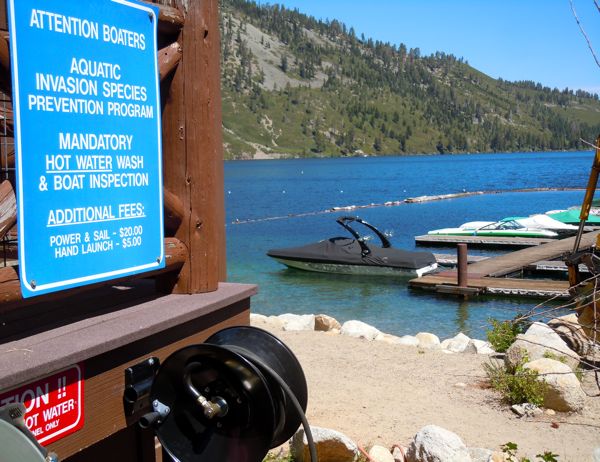
Full decontamination of boats is not offered at Fallen Leaf Lake. Photo/Kathryn Reed

Two people applied for the board – Joan Cathcart and Larry Calof. The board has recommended to the county that these two be appointed.

Mike Cathcart, who is an attorney but was not offering legal advice to anyone at the meeting or to the board, said the main issue with who can vote in the district centers on a local U.S. Forest Service interpretation. Whoever is named as the primary permitee of a USFS parcel is not allowed to vote.

Cathcart said that issue still needs to be resolved, adding that he has calls into Forest Service officials outside the basin.

“We need to make everyone who wants to vote to feel comfortable to do so without the threat of losing their permit,” Cathcart said.

As for the definition of domicile, Cathcart said the district attorney “recognizes that second homes can be domiciles.”

The voting issue has caused much consternation among those who have homes at Fallen Leaf Lake. The differing sides came together last year trying to get Assemblywoman Beth Gaines, R-Roseville, to carry legislation that would determine who had the right to vote. It never came to a vote. And Gaines, after the November election, because of redistricting won’t be the rep in the Assembly for this area even if she wins.

Who can vote also determines who can be on the board. A board members needs to be a registered voter in the Fallen Leaf Lake Community Services District.

While there has been talk of dismantling the CSD and creating a homeowners association, this is easier said than done. Legal settlements from 20 to 30 years ago play a role in what can take place.

But the board is moving forward with the job at hand — to oversee the marina, store and fire department.

Aquatic invasive species

Fallen Leaf Lake will continue to use its apparatus near the boat launch to clean the exterior of all boats. Being able to pump 1 gallon of 140-degree water a minute is sufficient to wash away any potential invasives that are on the watercraft.

However, being able to pump 5 gallons of 140-degree water in a minute is what’s needed to cleanse a motor of any quagga mussels that may have become attached to the vessel.

Because the marina does not have that capability any boat that cannot prove it was last launched at Fallen Leaf or Lake Tahoe will have to be inspected in Meyers – the nearest decontamination station. About 10 boats last season had to make the trip back to Meyers.

Fallen Leaf Lake has zero aquatic invasive species, unlike Lake Tahoe that has Asian clams, milfoil and other undesirables.

In other action:

• Jeanne Lear with South Tahoe Refuse explained how residents can use the blue bag recycling program.

• The preliminary budget for 2012-13 was talked about. Fire Chief Gary Gerren talked about how this fire season is likely to be bad, with conditions much like 2007, so he has requested more funds for more staffing and training. The final budget will need funding for the election if one were to occur.

• The swim platform should be in the water in the next two to three weeks.

• The concessionaire has brought in more than $50,000, with the marina and store open for less than a month. That is $50,000 more than this time last year.


Public participation lacking in mapping future of Tahoe park

By Jessie Marchesseau

The turnout for the trails workshop in Incline Village hosted by the Nevada Division of State Parks was underwhelming at best. Eight people showed up to voice their opinions.

“It’s kind of everybody’s backyard; I thought there would be more people there,” said Mark Kimbrough, recreation and trails consultant helping with the development of the new general management plan for Lake Tahoe Nevada State Park.

Hosts nearly outnumbered the attendees, with representatives from the Tahoe Rim Trail Association, Nevada State Parks, Incline Village General Improvement District and the Incline Village trails committee in attendance.

Nevada parks officials are trying to figure out the future of Spooner Lake and other Lake Tahoe entities. Photo/LTN file

NDSP organized the June 7 workshop in an effort to solicit feedback and encourage public input on the new trails map for Sand Harbor, Van Sickle Bi-State Park, and the Marlette Hobart and Spooner backcountry areas.

Initially, the workshop was going to include discussions on the possibility of opening some of the trails currently restricted to foot traffic up to mountain bikes. This has been a contentious topic among trail users and could have resulted in a crowd. But Kimbrough said that plan was recently dropped, something to which he attributes the low turnout.

Park planners were also hoping for some ideas on what people would like to see happen concerning the winter season operation of Spooner Lake. The concessionaire who has been running the cross country ski operation there for the last 27 years has decided not to renew his contract, leaving recreation for future winters at Spooner up in the air.

Jay Howard, park supervisor for Lake Tahoe Nevada State Park said the snow accumulation at Spooner is unpredictable, making a cross country ski area hard to maintain. He was hoping the workshop would spawn some ideas of what to do with the area in the future, however only three of the attendees had even visited the ski area and no one had any new ideas of what to do with it.

For now, it is likely the building will remain in place, but empty, leaving the option for a ski area or something to return in the future.

The new general plan is set to be in place before the end of the year, replacing the current plan developed more than 20 years ago. This was the second of three public workshops for residents to offer their input on the future of Lake Tahoe Nevada State Park.

The third and final workshop will be within a next few months to present the chosen plan alternatives to the public.

Anyone who has ideas or comments concerning changes, additions, facilities or anything else related to the new general management plan is encouraged to send their input to ltnsp.gmpcomments@ascentenvironmental.com.


Insurance companies make the difference in recovery process for Angora residents

By Linda Fine Conaboy

Not only did the people living within the boundaries of the huge swath of the Angora Fire suffer titanic losses to the rampaging fire, they also, when the dust settled, had to begin the process of working with their insurance companies. They found, when it comes to fire insurance, not all outcomes are painted with the same brush.
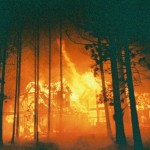
Angora Fire -- 5 years later

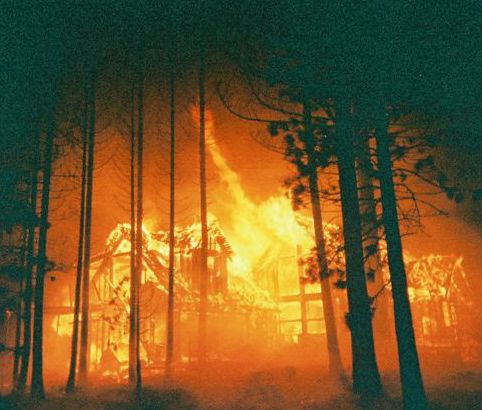
Imagine the overwhelming intensity of this situation: More than $145 million in damage; 254 homes destroyed; 26 homes damaged; 3,000 evacuations.

Estimates are the Angora Fire was among the top half-dozen most costly fires in the United States with the price tag to fight the fire topping $20 million, while losses to the local economy estimated to be even more.

According to a report from KCRA.com, the California Department of Insurance received more than 60 consumer complaints about insurance companies in the aftermath of the 2007 fire.

Tony Colombo and his wife, Tara Brennan, lost their home to this fire.

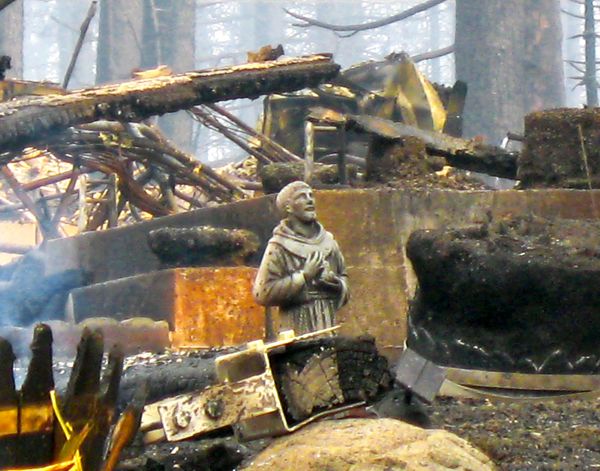
“It disintegrated,” Colombo said. “All the way down to the foundation. We had about 90 pine trees and shrubs, deciduous trees, a fenced yard and a beautiful, soft lawn that we played croquet on.”

Unfortunately, Colombo told Lake Tahoe News, we were underinsured. “We had changed agents, so consequently, we were underinsured by about $400,000. [The fire] was a financial catastrophe, but the physical and emotional damage was the worst.”

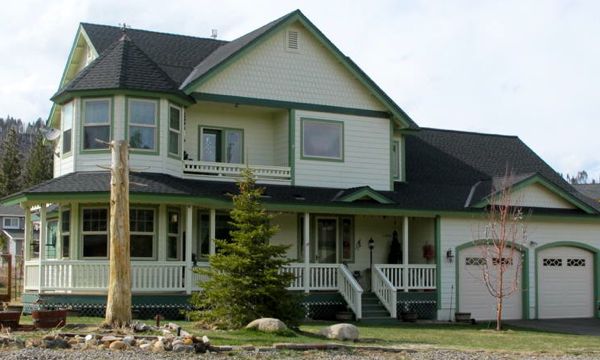
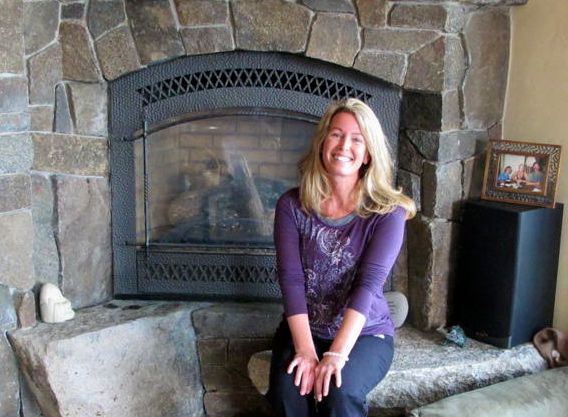
Tony Colombo and Tara Brennan rebuilt on Mount Olympia Circle. Photo/Linda Fine Conaboy

Colombo, who previously owned Colombo’s Burgers a Go-Go on Emerald Bay Road, sold it and found what he called his dream job with plans to retire in 2010. After the fire and the downturn in the economy, Brennan sold her business, Pandora’s Trunk, also on Emerald Bay Road.

Now, however, the part-time dream job is no longer reality. For the time being, life is somewhat of a challenge and retirement is not looming in the near future. Colombo is a driver for BlueGo, South Shore’s public transit service, a job he says he loves, while Brennan is the floor manager at High Chaparral Western Wear.

All is not lost for them, however. The couple decided to sue their insurance company — State Farm Insurance — and finally settled out of court a week before the trial was to commence.

“It was immensely worthwhile,” Colombo said. “Otherwise, we would have gone bankrupt and had to leave the area.

“But here’s what’s ironic. I’m still with them. We just don’t want to look for another company. There are four of us out here with them, but I’m the only one who went to litigation.”

An agent’s perspective

Dick Horn has been with State Farm Insurance for 29 years and worked at the South Lake Tahoe office for 19 of those years. He said he handles about 2,400 fire policies in South Lake Tahoe, Carson City and Gardnerville.

“During the fire I had the same number of policies. There were 52 homes damaged with State Farm Insurance and I had about half of them,” he said.

“I knew we were in serious trouble [when the fire started] because of the high winds. It got into the tree tops and there was no stopping it until the wind died.”

So many items lost in the fire did not have a true price tag because sentimental value is priceless. Photo/USFS

Horn said the first thing he and other agents did was man their office and hold on tight to see what they could do to help. “We knew we had access to shelter, from Harvey’s to rental homes, for our clients. I have authority out of my office to write some pretty healthy checks for food, clothing, shelter, etc. I wrote quite a few of those checks.”

The fire started on a Sunday, Horn recalled, and by noon he and others had moved a big motor home into their parking lot to serve as a disaster shelter. “We also rented a building to serve as a disaster claims office. For nine months it was staffed with claims adjusters, estimators, logistics staff and secretaries.

“At first you can’t believe it, then realization sets in,” he said of the fire victims. “It takes time to get their lifestyle back. There’s some counseling to be done as an agent. I found myself in a role of assisting clients with claims people, contractors, adjusters, city officials and had to go to fire meetings, too. I helped people get new driver’s licenses. You lose all of your personal papers.”

Horn had high praise for Guy Lease, president of Lake Tahoe Community College at the time. “He really came through. He threw open the doors for as long as necessary for people who needed a place to meet; a place to contact FEMA or the state or whoever.”

Since the fire, Horn’s company is much more sensitive to wildfire now. “Now we have locations, not just South Lake Tahoe, but throughout California that are designated as wildfire areas. This means these places have a higher propensity or risk for fire, so they require, for me, extra underwriting (exposure to risk).”

Here’s a list of some of the new considerations for fire insurance underwriting, put into place since the Angora Fire:

• how far away are trees and brush from a home

• roofing; no wood shingles, must be Class A or metal roofing

• windows; no plastic/vinyl window casings

• siding must be fire resistant

• decks must be enclosed around their perimeter.

In order to be more proactive, Horn said he now inspects and photographs every home he insures. “We’re trying to be fire wise,” he said.

In Horn’s estimation, 99 percent of his clients were pleased with the service they received. “It was a well-choreographed claims situation. Other governmental agencies have come to Tahoe to see what we did.”

AAA was one of the insurance company’s that received a tremendous amount of praise after the fire because of the way claims people handled the situation – including writing checks before any paperwork was officially filed.

But it’s five years later and the company has gone – at least physically – from the basin. The South Lake Tahoe and Kings Beach offices have closed in that time. And now Matt Skryja with AAA won’t even give Lake Tahoe News an interview.

Proving your worth

Joe and Lisa McAvoy lost their home in the fire and have since rebuilt, although on a different parcel. The McAvoys said ultimately they were pleased with their claims coverage and the way it was handled, even though it took a year to go through the process.

“We had to haggle for a long time,” Joe McAvoy said. Besides fighting fires for a living, Joe is also a cabinetmaker, and with Lisa, did most of the planning and construction of both of their homes — pre-fire and post-fire.

“We showed them that the home couldn’t be rebuilt for what they wanted to pay.

We showed them photos of the craftsmanship involved in our house. We finally showed them what it would cost to rebuild, although it was really tough to get them to see the true costs.”

Although, in Joe McAvoy’s words, the adjuster was a “good guy” and a “straight shooter,” it took a year of haggling, topped off by six months dealing with El Dorado County and another nearly two years to rebuild.
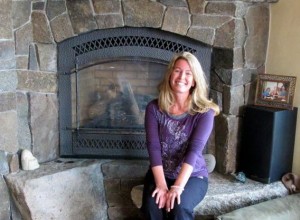
Lisa MacAvoy in her rebuilt home. Photo/Linda Fine Conaboy

“The adjuster said we probably wouldn’t like him when this is all done, but at least after all the stress of it, it turned out good in the end. They finally paid the policy that I was paying for. The adjuster kept saying it’s going to take time. You have to inventory every single thing in your house from the forks and spoons, when you bought them and for how much.

“But there were groups of people who came up from San Diego who had been in a fire and they had drawn up inventory sheets. So instead of starting from scratch, we had a road map. At least the blender and replacement costs were on the list,” he laughed.

He said eventually his insurance company came through and they’re still insured with the same company. “You end up doing what they say. My company ended up doing what was right, but the process was arduous. I think there should be a better way. But if we didn’t have insurance, we’d be starting over from scratch.”

Damage claims hard to process

Suzanne Kingsbury isn’t entirely pleased with her insurance company either. The Kingsbury home didn’t burn down, but it did suffer extensive smoke and heat damage that necessitated they vacate for six months.

“Everything we owned went to smoke rehab,” the El Dorado County Superior Court judge told Lake Tahoe News. “What an ordeal. I had no clothes and no belongings.”

Kingsbury said her experience with the insurance company was interesting to say the least. “The adjuster came out and made an assessment; all the restoration people were there too. As time moved on, the insurance company balked and the restoration folks disappeared.

“All of our neighbors were insured by the same company, but they had different adjusters. When we all compared notes, we found we were not being treated equitably. Interestingly, we all were accused of conspiring. We had a meeting with the insurance company and the end result was a different adjuster — service improved immediately.”

For Kingsbury and her husband, the fire and their return from it became a multi-year project including painting, repainting and new siding. “It seemed like everything that was done had to be re-done multiple times, but our insurance company finally hung with us. I know people who had fabulous experiences and then there were those who did nothing but fight with their companies.”

When you’re in a trauma situation it makes it impossible to properly deal with insurance companies and fight with them, Kingsbury said. “Some people threw their hands up and couldn’t deal with it.”

Fortunately, Kingsbury’s husband is retired and handled much of the legwork.

Rebuilding was important

Delicia Spees is seemingly is a poster child for all people involved in the Angora Fire. The Spees’ family home burned to the ground; in fact, there was only one neighbor in her vicinity who didn’t lose a home.

“We never considered not rebuilding,” she said. “I have mixed emotions about our insurance company. We were underinsured by a whole lot; I didn’t have a mortgage then and I do now.”

She said it took a while to work with her insurance company because it didn’t have a local presence. “We had our home for 34 years and had done extensive remodeling, but our agent never talked to us about upgrading to cover the additions. Up to that time, most of us lived in la-la land and didn’t talk about insurance.

“We’ve learned to be quite pro-active now and have definitely changed companies. You’d think the insurance company would contact you about upgrades.”

Spees continued: “My jewelry, my mom’s jewelry, my kids’ things are all gone. That’s what kills you. Insurance didn’t cover that. What I learned though, are monetary things come back. We lost no lives in the fire. I love this town — so generous. I lost my children’s things, but in reality, I now have a beautiful home and a job.

“Losing a human is tragic; losing a home is losing monetary things — just stuff that you were going to clear out anyway. Life isn’t fair, but it doesn’t pick on you; you go forward and you’re lucky to have anything.”

Things to consider

To help navigate the insurance recovery process, the Insurance Information Network of California offers the following advice to those whose property has been damaged or destroyed:

• Call your insurance agent or insurance company and report the damage. Most homeowner policies cover additional living expenses and will advance money if there is a need for temporary shelter, food or clothing.

• If your home or business has been damaged but not destroyed, make temporary repairs where possible to prevent any further damage. Save receipts for supplies and materials purchases as the insurance company will reimburse for any reasonable expense for those temporary repairs.

• Prepare for the adjuster’s inspection. Take the time to inspect the property in advance and note anything that you would like the adjuster to see. Provide the adjuster with a list of the damaged items, photographs, receipts, bills and other relevant paperwork. Doing so will help the adjuster correctly determine the value of destroyed property information or how to create an inventory. Free inventory software is also available at the IINC website.

It is important for those filing an insurance claim to maintain a calendar of benchmark dates for decisions on rebuilding and completing the recovery process.

To view a copy of the brochure, Settling Insurance Claims after a Disaster, visit the IINC website.



A book all about Tahoe that goes beyond the ordinary

By Kathryn Reed

Say “Lake Tahoe” and people will have a story to tell. It’s just that captivating. But it’s not always the lake that is the story.

A sampling of what the lake means to people came to life Friday night during the launch of “Tahoe Blues” – a collection of 60 short essays about this spot on a map that divides California and Nevada. But what rang out from the nine authors who read June 8 is that the lake is a unifier.

With essay titles like “Powder Day”, “A Hike to Scott’s Lake”, and “Chain Monkey”, these stories will resonate with the people who call Lake Tahoe home or come here to sample what others devour year-round.

But it’s not all about the outdoors. It’s about life. The good, the bad, the sad, the real – sometimes all of the above.

Bona Fide Books Publisher Kim Wyatt on June 8 launches the company's latest book -- "Tahoe Blues" -- at Lake Tahoe Community College. Photo/Kathryn Reed

“So Close to Home” by Sherry Sellars encompasses so many emotions. It’s about a woman working with babies all day who is having a hard time conceiving her own child and how she is unconsciously transformed from despair to joy just by looking around at the place she calls home.

“Tahoe Blues” is the third book published by Bona Fide Books in Meyers. Kim Wyatt, owner of the publishing house, received more than 200 submissions for this “short lit on life at the lake” and picked 60 to print.

“I expected skiing and bears, but I did not expect such depth. But if we are talking in metaphors, the lake is deep,” Wyatt told Lake Tahoe News before the June 8 event at Lake Tahoe Community College.

The writers chosen to read Friday night had a connection to Lake Tahoe Community College – either by being a student (current or past) or an instructor. The event was the final one of the school year for the Writers Series that is run by Suzanne Roberts.

Most of the writers who complete the collection live in the greater Lake Tahoe area or have some connection to the region.

Wyatt came up with the idea of “Tahoe Blues” from a colleague in Alaska who published a book of flash fiction, micro essays.

“I thought, Tahoe needs one,” Wyatt said.

The range of writers and stories comes through in the selection that was read on this opening night. What also came through so clearly is the quality of writers Tahoe has.

The subject of Krista Lukas’ essay perhaps captured it best – “You Don’t Seem Like You’re From Tahoe”. She delves into how people can’t believe she was born and raised here. She knows it’s a backhanded compliment.

“Reading and writing may be what turned me into someone who surprises people by being from Tahoe,” she writes.

Wyatt  liked the idea of providing the opportunity to expose readers to a slew of writers instead of just one, as is the case with most books.

“The biggest challenge to this book was the organization, creating a table of contents,” Wyatt said. “The obvious way to organize it was by shades of blue.” That is reflected in the nine title chapters – all shades of blue.

The only thing that disappoints Wyatt is not receiving one submission about mountain biking. But maybe that will be for the second edition.

“I would love to do another collection. I have to see if people like this one,” Wyatt said.

——

Notes:

“Tahoe Blues” may be purchased online, or at Gaia-Licious in South Lake Tahoe, Angora Lakes Resort, and Bespoke in Truckee. Books are $15.

Future readings:

• June 20, 6:30pm: Sundance Books, Reno

• July 2, 3pm: Explore Tahoe, South Lake Tahoe

• July 28, 7pm: EDAC ArtSpace, Placerville

• Sept. 7, 7pm: Sierra Nevada College Literary Lollapalooza, Incline Village

• Sept. 14, 7pm: Celebration of Writers, Valhalla, South Shore.


Splendor of the mountains fills trek along Squaw Creek

By Kathryn Reed

OLYMPIC VALLEY – Tumbling water splashing down from the mountains above; at times rippling across smooth rocks, other times in freefall.

Despite the lack of snowfall this winter, rivers and creeks in the greater Lake Tahoe area are still providing a scenic thrill for hikers.

As we scampered up from the parking area, we could hear the sound of rushing water fill the air. To our right is Squaw Creek. It doesn’t take long and mini waterfalls are before us.

Hiking next to Squaw Creek provides for one photo op after another. Photos/Kathryn Reed

While the entire hike is not ideal for all ages, some of the most scenic areas are at the start of the trail. Young families have found this a good place to recreate.

Expansive “beaches” of granite call out as a potential sunbathing or lunch spot. We move on. It’s too early for a break.

The towering granite spires make us feel little. And we thought the pines were tall. The mountains on the North Shore seem bigger, certainly more jagged.

A soft dirt trail takes us up. A few spots are muddy on this particular Sunday, but it’s still early season.

Our goal is Shirley Canyon – a hike Squaw CEO Andy Wirth says is one of his favorites and one that he has done about 20 times.

We didn’t make our goal.

Sometimes taking a wrong turn can be a good thing.

This was the case Memorial Day weekend. We ended up in another canyon.

What was so spectacular is we were all alone – embraced by Mother Nature. The trail is less defined here. We meander along and through the Manzanita as we head into a canyon.

We cross under the Silverado chairlift that sits idle. The terrain is way too rugged to merely follow the lift up. Instead, we head farther into the canyon, with the top of the tram to our right and in front of us. We’d like to get there, though it’s not running yet for the summer.

We inch up along a snowfield, not wanting to walk in the middle of it for fear of breaking through into a creek.

Truly, it was breathtaking – and not just because of the elevation. I felt so small. But I had this weird smile on my face – being someplace new, where there was only the two of us, and where most hikers probably never venture.

Having skied here, I knew we were in for some dicey conditions if we pressed onward.

As we scampered out, in the distance we could here loud talking. It turned out to be a smaller group of the 31 who were hiking together. I had forgotten how unpleasant it could be to hike on a holiday weekend until I came across this group.

Maybe I’m a snob. But to me, one of the points of hiking is the tranquility. All the jibber-jabber makes it impossible to hear the sounds of the woods – the water flowing, the birds singing, the wind whispering.

What we should have done to get to Shirley was cross the creek. On a cursory glance it looked deep so I picked the “wrong” trail. Going back we saw it wasn’t that big of a deal to cross. And just on the other side is wonderful waterfall, skinny compared the ones early on the trail. By this time, though, we were ready to find a different kind of watering hole.

—–

Notes:

• The tram opens June 15. It’s free for all 2012-13 passholders; $29 for adults and $10 for kids (with discounts every Tuesday in July and August for Bluesdays).

• The tram is free for hikers going down, at least according to the sign posted at the start of the trailhead.

• The High Camp Pool and Hot Tub, and Umbrella Bar open June 15 and there is an additional cost to use the pool.

• The village is at 6,200 feet and High Camp is 8,200 feet.

Directions:

From South Lake Tahoe, go north on Highway 89. At the Y in Tahoe City, go left. Turn left into the entrance at Squaw. (There’s an Olympic flame and rings to let you know you are in the right place.) Follow this up to the ski area. Drive all the way up Squaw Valley Road, take a right at the tram, follow road all the way around. Park. Then follow the creek all the way up to Shirley Lake and follow the trail to High Camp. Or do what we did and don’t go all the way to the top.

ngg_shortcode_0_placeholder (Click on photos to enlarge.)


S. Tahoe finance director a rookie in public sector

By Kathryn Reed

Experience with financial forecasting is one of the driving reasons why Michael Nakama has been hired to be South Lake Tahoe’s finance director.

Nakama begins the job that comes with a $130,000 paycheck on June 11.

The vacancy was created when Christine Vuletich left in February to work for Douglas County. She was making $140,000 when she departed.

Michael Nakama

Nakama was most recently working for Southern California Edison before being downsized earlier this year. When South Tahoe picked him up, Nakama was still unemployed.

City Manager Tony O’Rourke said on paper Nakama was one of the top three candidates. There was a large applicant pool, with a few candidates from the South Shore. However, no locals made it to the final round.

“Staff liked him the most. He is very analytical,” O’Rourke said of Nakama.

Assistant City Manager Nancy Kerry was also involved in the hiring because she will be his boss when O’Rourke leaves at the end of the month for a job in Washington. The City Council had also been kept in the loop during the hiring process because of the unique situation of a key department head being brought on by someone who will not be around for long.

“His forte is financial analysis and budgeting. He will be a huge asset for the city,” O’Rourke said.

While Nakama does not have experience in the public sector, O’Rourke sees this as a good thing. His experience with larger companies like UNIFI Companies and American Golf and Airport Corporation are seen as assets.

Like Vuletich, Nakama will also be in charge of overseeing the IT department and the airport. He has experience in both.

Another plus is Nakama has been involved with financial system conversions, according to O’Rourke.

The city is looking to overhaul its financial software because what is used now is like having an abacus. Nakama will be a key player is reviewing the request for proposals and picking what system the city goes with.

Between a software system that allows standard financial reports to be run and a finance guy who knows how to crunch numbers both in terms of understanding the meaning of the numbers and being able to produce answers based on what’s in the budget and what could be coming down the pike, O’Rourke is confident Nakama is the piece to the management team the city had been missing.

Even though Nakama is used to the flat land and warmth – being from Hawaii, getting an MBA from Stanford and living in the Los Angeles area — he likes the outdoors.

When he interviewed he spent an extra day in the area, on his own dime. He swam at the rec center, drove around the lake and went for a run.

“He is a triathlon type,” O’Rourke said in describing Nakama.

Nakama did not return phone calls.


El Dorado, Placer voters pass tax measures; not all supervisorial incumbents win

By Kathryn Reed

Voters in South Lake Tahoe agreed June 5 to revamp the business tax fee, while voters throughout El Dorado County voted out one incumbent supervisor and voted in another. The countywide Measure C also passed.

In Placer County, Measure F passed.

All results from Tuesday’s California are preliminary until certified, but these are the results from 100 percent of the precincts reporting from both counties.

South Lake Tahoe City Manager Tony O’Rourke told Lake Tahoe News the passage of Measure B is a, “A small, but important step toward credibility.”

He also sees this as a test case for summer 2014 when it’s likely voters will be asked to increase the hotel tax and institute an amusement tax.

Measure B will up the maximum some businesses pay – from just more than $3,000 to $20,000 a year – while lowering the license fee for the majority of South Tahoe businesses. The change occurs July 1.

It passed with 55.23 percent of the votes. The vote was 924 to 749.

Measure C, which allows El Dorado County department heads to approve expenditures of $10,000 or less, was approved by 51.11 percent of the voters.

Both measures needed 50 percent plus one vote.

Incumbent El Dorado County Superior Court Judge Warren “Curt” Stracener was the top vote getter with 42.32 percent. He faces Joe Hoffman in a November runoff.

In El Dorado County, three supervisorial positions were up. Jack Sweeney was termed out. Brian Keith Veerkamp was the top vote getter for District 3 with 2,910 votes, or 32.91 percent. Incumbent Ray Nutting came in with 67.93 percent or 5,830 votes. Challenger Ron “Mik” Mikulaco unseated John Knight with 46.56 percent or 502 more votes.

In Placer County, Jennifer Montgomery, who represents Tahoe on the Board of Supervisors, handily won with 53.75 percent. Her nearest challenger, Jerry Johnson, had 16.16 percent.

Kirk Uhler with 60.20 percent was tops for District 4, while Jim Holmes took District 3 with 65.23 percent.

Measure F, which keeps the transient occupancy tax in place for all things Tahoe, passed in Placer County by 84.08 percent. This was not an increase to the TOT, but instead kept the status quo.

Despite the dismal turnout expected in an election where the Republican delegates have selected their presumptive nominee and President Obama stands uncontested, El Dorado County’s turnout is not expected to have the worst turnout.

“Mainly, people in our county vote. We’re always better than three-quarters of the state,” El Dorado County Registrar of Voters Bill Schultz told Lake Tahoe News late Tuesday night.

The Golden State is conducting its first open primary with a mix of various parties on the same ballot.

“It causes a little more confusion among the voters,” Schultz said.

Ted Gaines, who represents El Dorado and Placer counties in the state Senate, declared victory early. The Roseville Republican will face Democrat Julie Griffith-Flatter in November. Four people were vying for the seat.

Gaines, who has a second home on the North Shore, has long been an advocate for Lake Tahoe.

He told Lake Tahoe News on Election Night, “We need to make sure we are looking out for our natural resources and use those natural resources in a responsible manner.”

Reforming government, working to help the small business owner and not increasing taxes are his mantras. Gaines is also a proponent of “good forest management”.

With redistricting, the South Shore will be in the 5th Assembly District, in which Republicans Rico Oller and Frank Bigelow are the top vote getters. Oller represented Tahoe in the Assembly from 1996-2000 when it was the 4th Assembly District.

Beth Gaines, R-Roseville who currently represents Tahoe in the Assembly, is now running in the 6th District, which will encompass parts of El Dorado and Placer counties. She is the top vote getter with 36.9 percent. She will face Regy Bonner in November. Bonner came in with 531 votes more than Andy Pugno.

Statewide, the votes were still coming in early Wednesday on Proposition 29 – the tobacco tax – so it was unable to be called at 1:20am.

Proposition 28, which revises term limits, passed.

Susan Wood contributed to this story.


Barton Community Clinic’s $1.5 mil. remodel under way

By Kathryn Reed

While the medical care is the same as any Barton facility, the environment has the feeling of being second class.

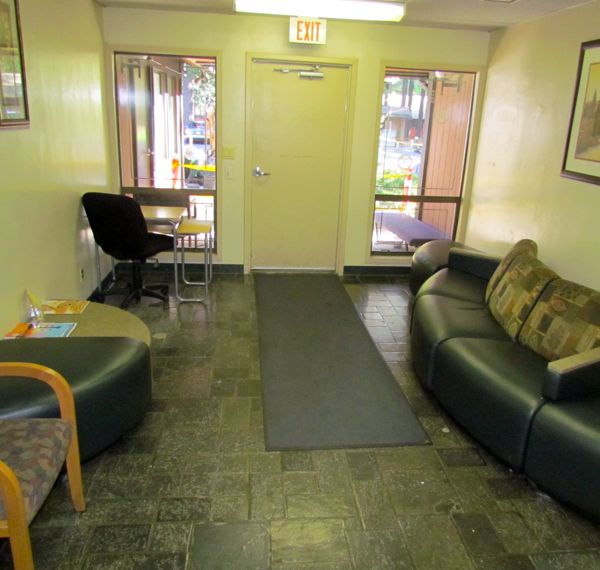
Walking into the Barton Community Clinic it seems a bit dingy – not dirty – just old and tired. Next summer that statement won’t be able to be made.

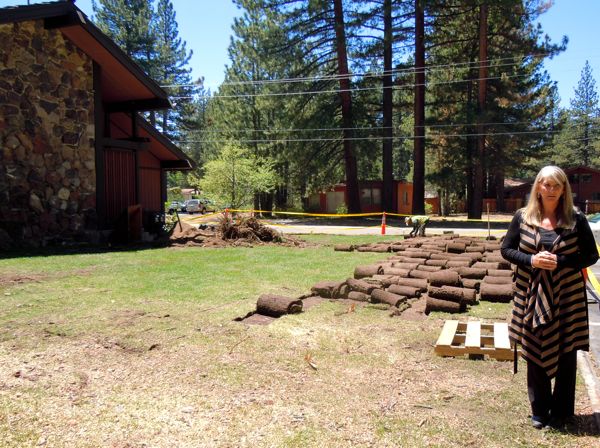
Orange construction fencing is in place, the entrance is on the reverse side, trees are down, sod is gone, parking will be a bit chaotic. On June 4 dignitaries from Barton Health had a groundbreaking ceremony for the facility even though the preliminary work had begun in May. In a year the facility will practically be new.

Sharon Bishop is overseeing the renovation of the Barton Community Clinic. Photo/Kathryn Reed

When the renovation is finished, 3,000 square feet will have been added to the existing 4,400-square-foot building that sits across from Barton Memorial Hospital on the corner of South and Third streets. Here is a before and after rendering of the facility.

“The facility is old and not well designed,” Brooks Martin, who runs the clinic, told Lake Tahoe News.

He is looking forward to the space being used in a more efficient manner.

Offices with doors instead of curtains being drawn will give the medical professionals privacy as they do dictation and paperwork.

The nurses’ station will no longer be in the middle of the hall.

Four exam rooms will be added to the existing 12. Gone from one room will be the IT equipment that hums in a corner and can make for an incredibly hot and uncomfortable setting for patient and practitioner.

Nurses must work in the hallway of the clinic. Photo/Rebecca Wass

An expanded waiting room means in the cold of winter people on crutches won’t be waiting outdoors on a busy day.

As the economy remains stagnant in South Lake Tahoe, where the unemployment rate is at 15 percent, more people are going to the community clinic. On average, about 1,500 patients are treated each month, peaking at about 1,700.

Sharon Bishop, clinic manager, doesn’t envision patient counts to go down even when the local economy rebounds. This is because health insurance is not likely to return to what it was – with 90 percent coverage and low deductibles.

More than 60 percent of the clinic’s patients are women and children. Nearly 60 percent of all patients use English as their primary language.

Patients are often undocumented migrant workers not eligible for Medi-Cal or are insured low-income patients with very high deductibles, according to Barton officials. Patients are charged on a sliding scale. The clinic is operating at a loss of more than $800,000 a year.

The waiting room will be part of the $1.5 million overhaul. Photo/Rebecca Wass

“The cost of the expansion and renovation of Barton’s Community Clinic’s architectural design, interior design, permitting fees, construction, special inspection, equipment, furnishings, way-finding, moving and relocation of departments during phasing, the cost of the clinic will cost nearly $1.5 million,” Rich Belli, Barton’s director of facilities administration, told Lake Tahoe News.

Barton Memorial Hospital’s Auxiliary came up with the bulk of the money for improvements – mostly through operating The Attic thrift shop. Other funding sources are the Barton Foundation – in large part through the Festival of Trees and Lights, and Barton Health.

It was in 1989 that doctors Paul Rork, Greg Bergner and Martin started the clinic. Barton took over in 1995.  Martin is the only one still directly involved with the clinic.

During construction Bishop said there should be no interruption in care – just some changes to parking. The entrance is already on the reverse side from where it had been.


Armed scuffle places S. Lake Tahoe man behind bars on attempted murder charges

By Susan Wood

In the second nightclub incident in a few weeks, South Lake Tahoe police were trying Monday to piece together reasons why a 48-year-old local man pulled a gun on another resident at Whiskey Dick’s Saloon in a sudden fight this weekend that resulted in his arrest on charges of attempted murder.

Scott Enerson, who was booked into the El Dorado County Jail with no bail, allegedly pulled the handgun from his waistband and placed it to the head of Harlee Suida-Tuttle early Sunday morning shortly before the bar was to close. But the gun did not discharge, according to police. In its malfunction, the shot was fired into the air and hit the ceiling of Lake Tahoe Boulevard bar.

Suida-Tuttle apparently restrained Enerson as city officers arrived with assistance from the El Dorado County Sheriff’s Department and California Highway Patrol. The call came in at 1:45am June 3.

No one was shot. The two men suffered from minor injuries.

It is unknown whether Enerson had a permit from the “uncommon” handgun, police Chief Brian Uhler told Lake Tahoe News Monday night. It’s also unclear what the relationship is between the alleged shooter and victim. Detectives are conducting an investigation.

Alcohol or drugs could be contributing factors.

“They’re in a bar, and it seems likely they’re drinking,” Uhler said.

The chief watched a surveillance video captured in the bar and surmised the action escalated to a level of intent that went way beyond mayhem. Charges rose to attempted murder because Uhler said police detectives were able to determine that Enerson may have tried to shoot the gun against the victim’s head and the gun malfunctioned.

“It actually happened quite quickly. The victim was lucky it didn’t discharge,” Uhler said.

No one from Whiskey Dick’s would talk to Lake Tahoe News on Monday night.

Uhler plans to meet with officers to discuss possibly beefing up weekend scheduling after a disproportionate number of serious calls at local bars have come in.

“This could be a case of lightning striking, but we want to enforce what’s going to be responsible bar activity with the seriousness of these incidents,” Uhler added.

Officer Aaron Crawford, who responded to the incident, said Enerson had to be placed in restraints and believes alcohol or drug use could be a factor if not both.

The case comes on the heels of a tragic beating at Mo’s Place just two weeks prior to this incident. The two bars are a few miles apart from the other.

“Obviously, this is alarming to us, but bars are always an issue in every city,” Crawford said. “It could be a sign of the times.”

As of Monday night, no arrests had been made in connection with the Mo’s Place beating.

“We will work with the DA’s Office on presenting evidence and they will assess to determine if there are to be any prosecutions. An arrest or arrests is a possibility, but it is not something I can publicly speculate about,” Uhler told Lake Tahoe News.

Derek “Zippy” Penaranda remains at Renown Medical Center in Reno.