Lakeview Commons — a place for people of South Lake

By Kathryn Reed

“A facility like this brings people together.”

Standing at the top of Lakeview Commons, looking down on the stage where moments before the site had been officially dedicated, Ray Lacey was a bit melancholy. As a lifelong resident of South Lake Tahoe, the deputy director of the California Tahoe Conservancy is prideful of what his employer and his town have accomplished.

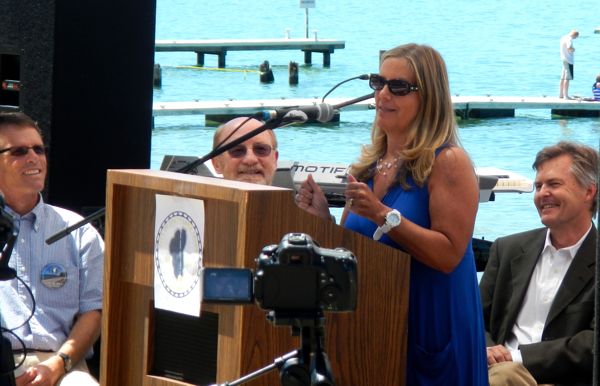
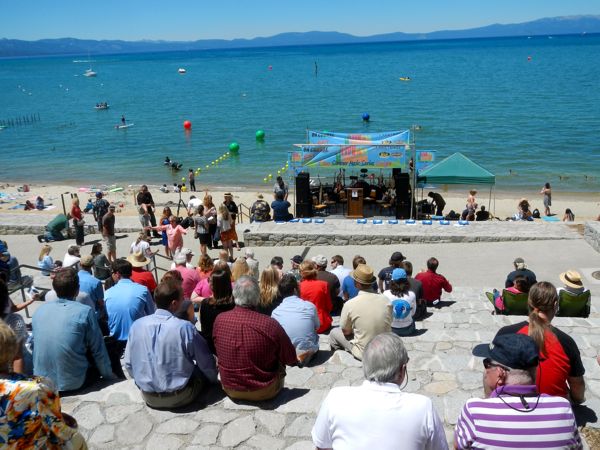
More than 150 people are on hand for the June 20 dedication of Lakeview Commons. Photos/Kathryn Reed

“It’s so personally rewarding to see the South Shore fulfilling its potential,” Lacey told Lake Tahoe News.

On June 20, the $6 million project was introduced to the public in an unveiling of sorts with speeches by political figures and a party afterward.

It was the CTC that paid for the project.

Already it is a gathering place as can be seen by the number of people using it on a daily basis. Even Soroptimist International South Lake Tahoe had its meeting at Lakeview earlier that day.

Many of those who were at the August 2010 groundbreaking returned to see their dream go from idea to a sketch to a functioning park on the edge of Lake Tahoe.

One of those people was Manuela King. As vice president of RHAA – the landscape architects for the project – she was all smiles as she listened to accolades bestowed upon her.

After the ceremony she told Lake Tahoe News she is thrilled with the end result. (So happy is she to work in Tahoe, the Bay Area firm just opened an office in Meyers.)

Her only regret is phase two has not been built.

Non-motorized boats are for rent.

Jim Marino, who has shepherded this project through for the city as capital improvement manager, echoed King’s sentiments.

“I want to do phase 2. The plans are done. We just need to seek funding,” Marino said. The cost is $3 million.

That phase would pick up on the north end of the El Dorado Beach site and continue to the Alta Mira Building. A cantilevered walkway is planned to extend over the water.

Marino reflected on the shaky start the project had with Clark and Sullivan challenging the bid and then ultimately being awarded the project.

In the end, it was only praise for project manager Doris Kelly.

“She was phenomenal on the job,” Marino said.

Hundreds of people were associated with the project – many of them were recognized at Wednesday’s celebration.

Former Mayor Kathay Lovell tells the history of the project while state Sen. Ted Gaines, state Natural Resources Secretary John Laird and CTC Executive Director Patrick Wright listen.

After all the speeches, the city welcomed all to lunch at Lakeview Café – the name of the eatery at Lakeview Commons. Music and paddleboarding filled out the afternoon and evening.

——


Former South Lake Tahoe Mayor Kathay Lovell speaks June 20 at the dedication of Lakeview Commons:


S. Tahoe council disagrees on eminent domain for loop road

By Kathryn Reed

Just as the South Lake Tahoe City Council appeared to be on the same page regarding how to approach the divisive loop road project, bickering and stubbornness took hold.

All five agree a letter needs to be written to the Tahoe Transportation District with strong language encouraging that bi-state agency to investigate more than one proposal for the loop road.

It is highly unusual for an environmental impact report or environmental impact study (both are being done) to delve into just one idea. While a preferred alternative is common, usually the document looks into more than one plan.

Not so when it comes to the loop road.

The project would reroute Highway 50 in South Lake Tahoe to go through standing businesses and residences in South Lake Tahoe, then behind Harrah’s and MontBleu in Stateline.

Highway 50 from about where it intersects with Pioneer Trail on the north side of town would become a city street through the casino corridor.

Perhaps because the discussion started negatively June 19 with Mayor Claire Fortier wondering why the item was even on the agenda it should not have come as a surprise that Councilman Tom Davis would not budge on his motion.

The motion called for more alternatives to be studied, acknowledgement the current council would not use eminent domain, and the request that an independent economic study be conducted.

The vote was 3-2 with Fortier and Councilwoman Angela Swanson in the minority. These two don’t want to lock the city into saying no to eminent domain when it’s possible an alternative for the loop road the council likes could require that taking of property.

Fortier and Swanson went so far as to say they will not sign the letter.

The juvenile banter returned at that point after what had been a fairly professional discussion. Davis said he might want to withdraw his name from letters he didn’t agree with. Fortier said the issue will become a political point of contention in the November council race. (Bruce Grego and Hal Cole’s seats are up.) Grego said maybe the voters should be asked to make the decision on the loop road. (He has clients with property in the area who could be affected if the current proposal goes through, but has yet to recuse himself from any of the discussions.)

Fourteen members of the public spoke at Tuesday’s meeting before the bickering council members deliberated. Another 16 letters were part of the day’s record, too.

The loop road will be on the July 3 agenda for the council to talk about commenting on the draft relocation plan. Comments will be due a week later.

City staff told the council that the document lacks specifics, especially when it comes to businesses, and really just meets the basic requirements of federal law. Still, the relocation of people and businesses are the main sticking points with locals, and is what’s at the heart of the eminent domain discussion.

In the end, it really doesn’t matter what the city says or thinks, the TTD board — of which Swanson is a member — can do what it wants. That board is expected at its July 20 meeting to discuss looking at more alternatives. Swanson will be absent and her alternate, Grego, will be city’s rep. However, TTD does not have eminent domain authority; the city and Caltrans do.


No contest plea by retired El Dorado County sergeant

By Max Ehrenfreund, Sacramento Bee

Don Atkinson, the former president of the El Dorado County Deputy Sheriff’s Association and a retired sergeant, pleaded no contest on felony counts of embezzlement, fraud and perjury, according to Lynda Gledhill, a spokeswoman for the California Office of the Attorney General.

Prosecutors allege Atkinson stole money from the Deputy Sheriff’s Association, filed perjured campaign finance reports and stole $100,000 from an elderly woman by securing a loan from her under false pretenses.

Don Atkinson

As part of a plea agreement, Atkinson will be sentenced to five years in state prison. He will pay $338,348.14 in restitution to the Deputy Sheriff’s Association, and he will repay the $100,000 he is accused of stealing from the woman, Gledhill said. In addition, she said, he will direct the California Public Employees’ Retirement System to pay $1,000 per month from his retirement account to the victims while he is in prison and on parole.

Atkinson was arrested in March after an investigation by the California Attorney General’s Office and the El Dorado District Attorney’s Office. He will receive his sentence July 30, Gledhill said.

Atkinson spent a number of years patrolling streets in the Lake Tahoe Basin.

He is the detective who in 2006 handled teacher Karsten Gronwald’s child pornography case on the South Shore. In 2007, he was widely quoted admonishing then Sheriff Jeff Neves for shuffling assignments that put search and rescue responsibilities in the hands of Placerville deputies. Atkinson was vocal with the Board of Supervisors when it came to budget cuts.

— Lake Tahoe News contributed to this story.


Farm is more than a market — it’s a lifestyle, a destination

By Kathryn Reed

BECKWOURTH – Even iceberg lettuce doesn’t like 22-degree weather.

Two days after losing 80 percent of his lettuce, Gary Romano shrugs it off. That’s what a farmer has to do as he accepts Mother Nature as his boss.

“In 15 years, I never got hit like that. So, I’m not much ahead of last year,” Romano tells Lake Tahoe News.

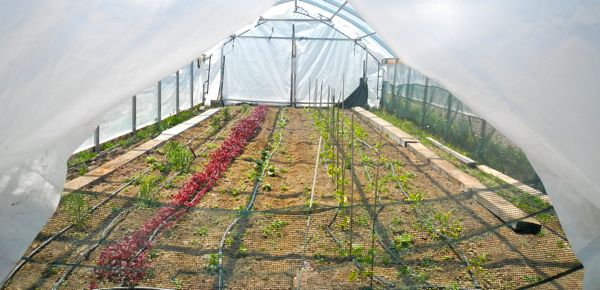
Greenhouses at Sierra Valley Farms help protect produce from the elements. Photos/Kathryn Reed

Last year it took forever for the fields to dry out after the winter that would never end. Last Wednesday it was a freak cold system that turned his greens black.

Even so, Romano was wandering around his farmers’ market on June 15 looking and sounding like a man confident in what the season will bring going forward.

This is his 17th year farming in Plumas County. His family has had the land since 1938. Sierra Valley Farms is the only certified farmers’ market in California that is actually on a farm.

“It’s become like a destination farmers’ market,” Romano says.

He only allows one vendor of each type of product so they can all make money.

“I select the closest farmer with the most diversity,” Romano explains.

It’s like a community between the vendors.

Cody Poole of Longboards Bar and Grill in Graeagle is selling scrumptious, soft melt-in-your-mouth peanut butter cookies. A delicious, you won’t want to share cherry croissant has fruit from K&J Orchards from Winters, which is a couple stalls away.

Kalayada Ammatya boasts of having the best apricots in the world. They must be because until that day this reporter didn’t like apricots and more than one was consumed on the premise.

“I select the closest farmer with the most diversity.”                     — Gary Romano

Out of the 14 markets where K&J sells its fruit, Sierra Valley Farms is No. 3 on that list when it comes to the amount of produce it moves. And one of the markets they go to is the Ferry Building in San Francisco.

Meat, fish, beer and wine are also usually available so patrons can leave with enough food for several meals – maybe a week’s worth until they need to return.

A bonus is lunch can be had for free if one shows up at the correct time. This is because each Friday there is a cooking demonstration. Adam Williams with Smile Dog Catering said the beef he was cooking came from a cow that was slaughtered earlier in the day. That’s how fresh this food is.

The greens and warm potato salad he assembled were stellar – if only he would have brought recipes to share.

Tables are scattered about so people can watch the demo and then sample the finished fare.

With it taking some effort to get to Sierra Valley Farms, it’s definitely a place to linger.

It’s a great place for friends to meet. Cathy Churchill and Becky Hardy are neighbors in Clio, but neither knew the other would be at Friday’s market. Besides picking up a bottle of Grant Eddie wine (after sampling a few varietals), they moved onto Alfred Cominotto who imports his cheese from the Netherlands.

“I try to get here as often as I can. I like fresh food and organic food,” Churchill says.

Despite Romano’s bad luck with the weather last week, what is still in the ground on this 65-acre farm makes it look like it would be fun to sit in the dirt and have a feast of greens in the field.

Other edibles are in green houses.

“My specialty is growing winter vegetables in summer,” Romano says.

While he has pounds of lettuce for sale, along with carrots, cucumbers and herbs throughout the season, Romano is not one to sell just the original product.

He turns wasabi into paste, horseradish into mustard and fruits into cocktail mixes.

Romano has several stories to tell about the trials and tribulations of farming. He wants to share his experiences with others. Bona Fide Books of Meyers will be publishing his book in spring 2013.

Until then, the public is welcome to his farmers’ market each Friday as well as to the barn dinners that feature a vegan starter course, then fish, meat and dessert courses. The dinners are served in the old barn, whose slats are just wide enough for owls to come and go.

—–

Notes:

Sierra Valley Farms is online.

• Farmers’ markets are Fridays through Sept. 21 from 10am-2:30pm.

• Dinners in the Barn are July 14, July 15, Aug. 25, Aug. 26, Sept. 22, Sept. 23. Reservations necessary — (530) 587.8688.

Getting there:

From South Lake Tahoe, get to Truckee going around either side of the lake. Take Highway 89 north toward Sierraville.

In Sierraville, at the Y, go left onto Highway 49.

Turn right on county road A23.

Pass Calpine Road on left.

Continue on until you see the sign for Sierra Valley Farms on the right.

If you hit Highway 70, turn around.

ngg_shortcode_0_placeholder  (Click on photos to enlarge.)


STPUD changing how water is distributed in Alpine County

By Kathryn Reed

WOODFORDS – Mark Twain was ahead of his time in so many ways, but as it relates to today, his quote, “Whiskey is for drinking; water is for fighting” may be the most important.

To avoid future fights over the clear liquid, the South Tahoe Public Utility District is being innovative in its approach to trying to stay ahead of the curve, while following the state and federal regulations it must comply with.

The Porter Cologne Act of the 1960s mandates all treated sewage and wastewater be exported out of the Lake Tahoe Basin no matter how clean it is. Some say this water from the South Tahoe PUD is better than what comes out of spigots in San Diego that people are drinking every day.
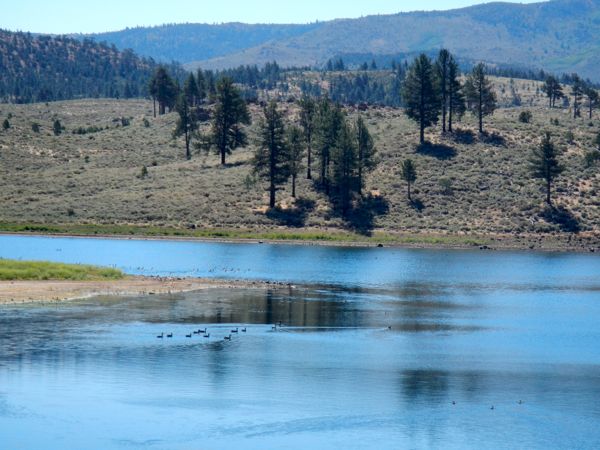
Harvey Place Reservoir in Alpine County is where treated wastewater from South Tahoe Public Utility District is stored. Photos/Kathryn Reed

And while district officials thought one day treated wastewater would be able to be used for irrigation in the basin, that day has not come nor is it likely to happen in the foreseeable future.

Considering recyclable water in Palm Springs sells for $3,000 an acre-foot, this stuff is valuable.

And the district wants to tap into it. For years it has been giving away 2,000 acre-feet of treated water to farmers in Alpine County. It’s been a mutually beneficial arrangement with farmers getting water for free and the district able to unload water for free.

But things are likely going to change when the current five-year agreement expires in 2015. That irrigation water for farmers in the Diamond and Ward valleys may go from free to fee.

(Current law prohibits treated California water from being used in Nevada, but the district is working to change those rules because Silver State farmers are interested in using this water.)

The future for STPUD

This summer begins the first of three phases of a project that will ultimately allow South Tahoe PUD the ability to generate power to run the irrigation system on the land it owns in the Diamond Valley as well as eventually sell power back onto the grid.

“Water is more and more valuable,” South Tahoe Public Utility District spokesman Dennis Cocking said last week while giving Lake Tahoe News a tour of its ranch in the Diamond Valley as well as the farms that benefit from the South Shore’s treated wastewater. “Water is no longer cheap and plentiful.”

The utility district bought the old Heise Ranch seven years ago after seeing the writing on the wall that farmers were starting to divvy up their land and therefore there may not be a place for this treated water. Laws require the treated water be sprayed on 100-acre parcels or larger.

Hal Bird with the district is in large part responsible for having the vision for the district to purchase the land and get on the road of being less dependent on others. The goal is self-sufficiency. He is also behind the improvements to make this land function at its highest level.

The original farmhouse is being restored and will one day be his office.

Most of the roads on the farm are dirt or gravel. It looks much like a working ranch. There is no evidence this land belongs to a water-sewer district and not to a bona fide farmer.

Besides giving water to farmers, for Alpine County to say OK to the STPUD-farmers’ agreement, the district had to make other concessions – like creating a fresh water fishery at Indian Creek Reservoir, stocking it every year with 15,000 pounds of trout and other commitments.

Had it not been for the federal mandate to pump the water away from Lake Tahoe, STPUD ratepayers would not be funding these improvements to Alpine County. Plus, 38.9 percent of each STPUD sewer bill goes to meet the demands of the Porter Cologne Act.

Alpine County residents weren’t thrilled at first with the idea of taking Tahoe’s wastewater. “We don’t want Tahoe’s crap” were common bumper stickers.

Now, though, the relationship between the county and STPUD is amicable.

Before the hydropower project truly gets under way the Army Corps of Engineers must sign off on the old Heise property not being a wetlands. That is expected in the next year. The land is drying out now – proof it is not a natural wetlands.

The pipes are being put in this summer. Inside them will be turbines that generate power. The in-conduit line generates the hydropower, Cocking explains.

“It’s a great way to get our feet wet in hydropower,” he said.

California keeps mandating power companies acquire more and more power from renewable sources. What South Tahoe PUD generates could help Liberty Energy fulfill this mandate.

Power from this project may be generated in 2014.

(In large part the 5 percent sewer rate the board approved in May that will take effect July 1 is paying for this project by being the money needed to pay back a low interest loan the district has secured from the state.)

Along the lines being installed will be three pivot irrigation systems that will allow for some of the acreage to be irrigated. The alfalfa could be sold or used as pasture land for cattle. Even now some of the district’s land is filled with cows munching away on the grasses or just lounging in this fertile valley – looking like they are sunbathing in this idyllic spot of the Sierra.

Transporting wastewater

The export line leading from the plant in the middle of South Lake Tahoe goes into Meyers, then along Highway 89 over Luther Pass, down to Diamond Valley where it comes out into a creek before going into the Harvey Place Reservoir. This effluent travels 26 miles.

The late Hubert Brons – a farmer, Alpine County supervisor, and Lahontan Water Quality Control board member – came up with the idea of the reservoir as a holding pen of sorts for water for farmers.

Devices were created so the treated water from STPUD did and still does not flow back into the Carson River – a main source of water for farmers.

As Cocking said, one would think with 5 million gallons a day of water coming out of the pipes, it would be a turbulent affair. Instead it looks like a good flowing mountain stream. And it looks like any other stream – like fresh water that one could use to fill her water bottle with.

The export line started working April 1, 1968. A lot of leaks sprung in the 1980s, necessitating most of the portions within the basin to be replaced in the 1990s. No longer does it go through Grass Lake, but instead skirts this area near the top of Luther Pass.

Grass Lake is one of a handful of identified peatlands areas in the Sierra, with another being the Sagehen Valley near Truckee.

Getting the wastewater pipeline out of this marshy area was of environmental significance.

In the 1990s, Tim Leslie, who at time represented the Tahoe area in the California state Senate, helped STPUD secure a variance to the Porter Cologne Act that allowed for six fire hydrants to be put in along Grass Lake Road that could be tapped in the event of a catastrophic fire. Lake Valley and U.S. Forest Service fire crews have access to those hydrants.

At the end of that road is the Luther Pass Pump Station where two huge tanks sit empty – and ideally always would. But just in case power and all back up power fails the 400,000 gallons intended for the other side of the hill would flow back into the tanks. This is designed to prevent a spill that would contaminate the Upper Truckee River as well as nearby land.

Inside the pump house is the equipment needed to get the effluent over the pass. This water is going up 1,200 vertical feet in six miles.

From Harvey Place Reservoir the water goes out the Diamond Ditch, which if one looks closely enough can be seen along the hillside. It then flows into the Diamond and Ward valleys for farmers to divert as needed.

ngg_shortcode_1_placeholder (Click on photos to enlarge.)


STPUD tested as it keeps water flowing during fire

By Dennis Cocking

The South Tahoe Public Utility District was formed in 1950 to provide wastewater collection and treatment for the then very small community of South Lake Tahoe. Drinking water in South Tahoe’s early years was supplied by private domestic wells or from small privately owned water companies. Well more than two dozen private companies existed on the South Shore in the 1960s and three of them still exist today.

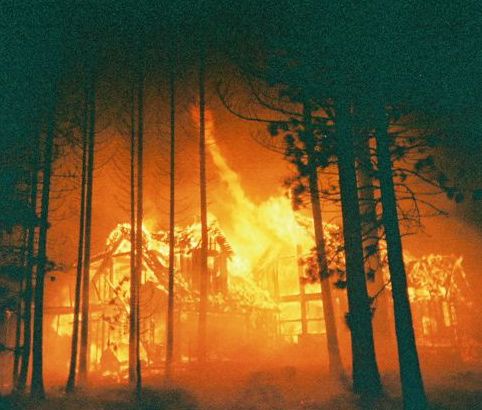
Angora Fire -- 5 years later

With the passage of the Safe Drinking Water Act of 1974, many of these privately owned systems realized the cost and difficulty meeting the act’s requirements and sought to sell their companies to the district. Since joint water and wastewater agencies are commonplace in California, the district was the likely entity to purchase these smaller systems. Slowly these small systems were cobbled together into the system the district operates today.

Unfortunately, little thought was given to adequate water flows for firefighting since many of the systems were built with surplus 2-inch galvanized steel pipe available in large quantities after World War II. The flows provided by these systems were adequate for domestic use, but woefully inadequate for structure or wildland fires.

Fast forward to Oct. 19, 1991, in the Oakland Hills. An incompletely extinguished grass fire explodes in a three-day fire storm that ultimately consumed 1,520 acres, 3,354 single family dwellings, 437 condos or apartments, injured 150, and killed 25 individuals. Economic damages were estimated in excess of $1.5 billion. Water agencies across the state and beyond had a wake-up call and realized they could be in a similar situation with regards to fire flows.

While fire flows are not mandated by law, in early 1992 the district’s board of directors proposed an aggressive water infrastructure replacement program to increase the firefighting capability of the systems that it had inherited as a matter of sound public policy. Public meetings were held, public support obtained, and the district embarked on a system-wide replacement of undersized waterlines, installation of fire hydrants, construction of new larger water storage tanks, construction of booster pump stations, and auxiliary power generation capability projects that continues to this day. While the district’s Engineering Department estimates at least an additional decade to complete this undertaking, the district is light years from where it was in the early 1990s.

South Tahoe PUD crews on June 25, 2007, check on the Boulder Mountain water storage tank. Photos/STPUD

The experience the district gained during the Angora Fire has shaped future water supply projects, operational procedures, and long-range planning as it pertains to water supply. The district, like the vast majority of South Tahoe residents, had never experienced a wildfire of this magnitude and maintaining fire flows became priority No. 1. The Angora Fire, generally regarded as the worst fire experienced within the Lake Tahoe Basin in well over a century, tested the water distribution system as well as the dedicated employees who maintain and operate it. District employees literally were in the middle of the firefight trying to make sure water tanks and fire pumps continued to work and supply water to the fire crews. By the luck of the draw, in the decade prior to the fire, more than $18 million of district customer funds were spent on water supply infrastructure improvements in the Angora area including, most significantly, the auxiliary fire pump station located at Lake Tahoe Boulevard and Boulder Mountain Road. This critical pump station, which has emergency power generating capability, continued to operate despite the almost immediate loss of power due to the fire. Had this significant investment in upgraded infrastructure not been made, it is likely the fire could have been far worse than it was.

During the 24-hour period from the start of the fire on June 24, 2007, until June 25, the district produced 17.6 million gallons of water. Average water production at that time of the year is about 10 MGD. From June 24 through June 30 the district produced a record 89.91 million gallons of water. Even with that volume of production on June 24 the pumps continued to run at full capacity just to maintain demand levels. Early on the morning of June 25, district crews, following firefighters’ observations, discovered the reason that the pumps could not keep up with demand was that each home that was destroyed was an active three-quarter inch (the most common residential connection size) water leak. Multiply that by 254 and it becomes very significant. District crews immediately began to shut off water services that could be quickly located and crimp off those that could not be readily located.

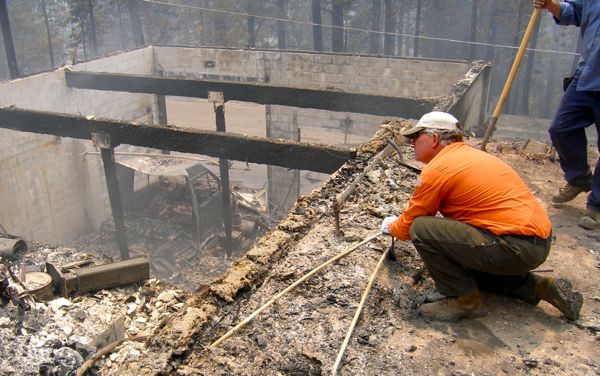
The fire nearly consumed the STPUD pump and control building at Boulder Mountain.

Within hours, water storage tank levels and water pressures began to rise to more normal parameters. USFS Angora Fire Incident Commander Rich Hawkins stated at a fire status briefing that it was highly unusual, at a fire of this size, to not completely run out of water at some point. He noted that the district was able to keep firefighters in water, albeit some low pressures at times, for the duration of the fire. When the fire threatened to move behind Gardner Mountain and jump Highway 89, it was a challenge to access our facilities as residents attempted to evacuate their homes. Nevertheless, once the fire was fully contained, demands on the water distribution system returned to normal.

In the wake of the Angora Fire, California Gov. Arnold Schwarzenegger and Nevada Gov. Jim Gibbons commissioned the Blue Ribbon Fire Commission. One of the commission’s recommendations was greater funding support by federal and state agencies for improved water infrastructure for firefighting in the Lake Tahoe Basin. In 2009, the district acted as lead agency to form the Lake Tahoe Community Fire Protection Partnership. The partnership is comprised of the public water agencies in the Lake Tahoe Basin, both in California and Nevada. The mission of the partnership is to seek federal funding to replace undersized and inadequate water supply infrastructure in the Tahoe basin. Since 2009, the partnership, in concert with the U.S. Forest Service, has secured $12 million in federal funding. Matched 50-50 with local funding, nearly $24 million in critical water supply projects all with a nexus to fire protection, have been completed. Lake Tahoe is a safer place as a result of the success of this local-federal partnership.

District crews crimp water supply lines in the burn area.

Operational-planning lessons learned:

• Waterline replacement projects took on a higher priority in overall Capital Improvement Plan

• Increased emphasis on water distribution and redundancy of the water system

• Increased water production capacity became a higher priority

• Order of projects were changed in the CIP

• Viewed distribution vulnerability more critically

• Added water storage projects and increased sizing of water storage projects

• Moved to install fire hydrants at 500 foot intervals on all lines 6 inches or larger

• Re-evaluated and reprioritized waterline replacement projects

• Determined in future emergencies to insert district staff into incident command structure earlier

While no water agency wants to have their emergency management plan challenged in the real world, the district has taken the opportunity to learn from the events of the Angora Fire and made planning and operational changes that reflect the lessons learned.

Dennis Cocking is the public information officer for South Tahoe Public Utility District.


Cold Creek reroute in High Meadow turns back the clock

By Kathryn Reed

Disturbances are still visible, but High Meadow no longer looks like the construction site it has for the past two summers.

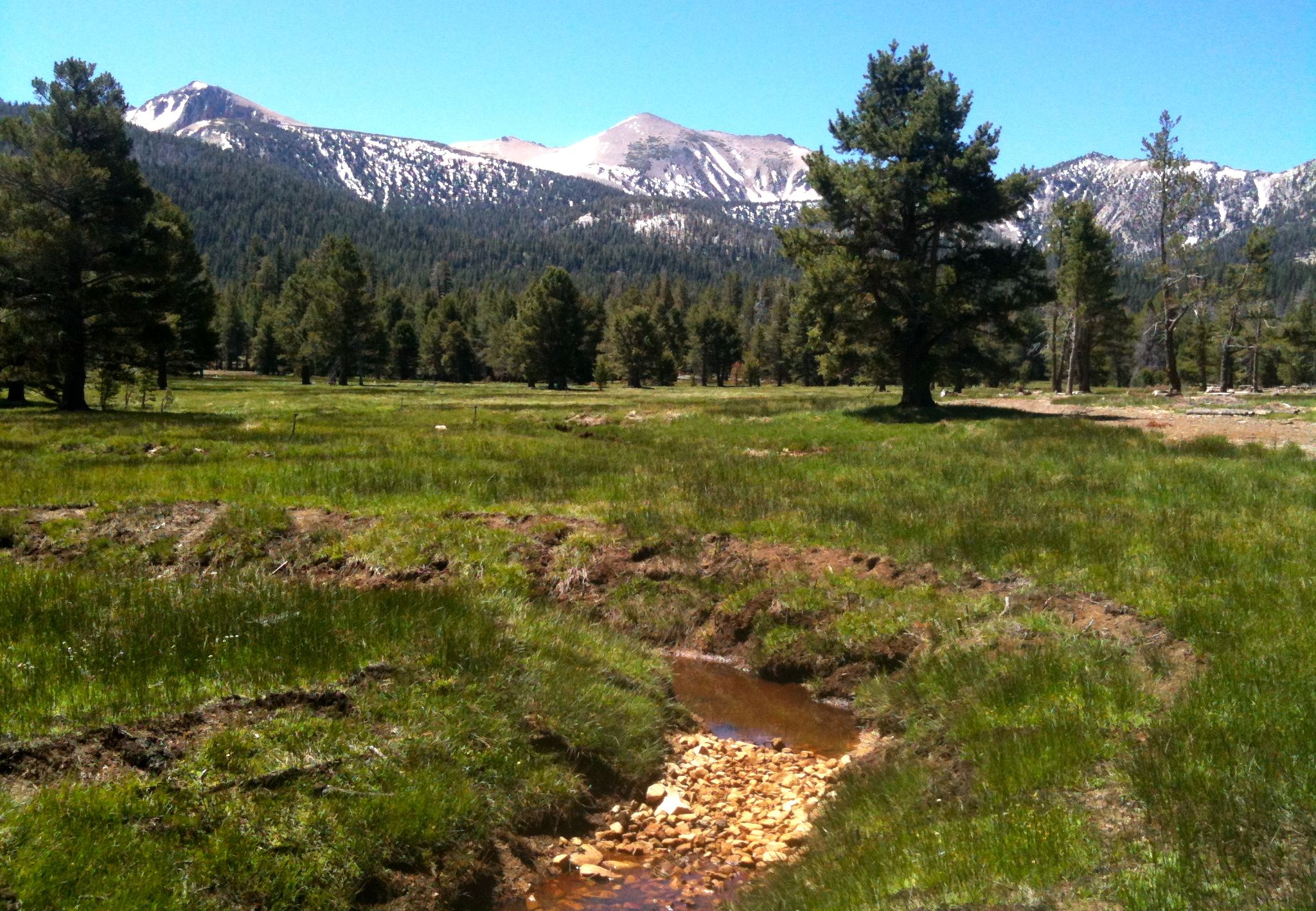
Instead, the meadow is a verdant green that if on this particular Sunday weren’t so chilly, would be inviting to lounge in. It looks ideal for Frisbee. On a hot summer day the creek would beckon to soak ones feet in after the arduous climb. The meadow is at 7,843 feet – a 1,500-foot elevation gain from lake level.

Looming to the left is Monument Peak at 10, 067 feet. This is the mountain on the boundary of Heavenly Mountain Resort.

Cold Creek reroute through High Meadow will be done in October. Photo/Kathryn Reed

Looking toward the route for Star Lake are the well-known South Shore icons Jobs, Jobs Sister and Freel peaks. Pockets of snow dot the mountains almost like icing.

At the edge of the meadow is a creek – the realigned portion of Cold Creek. Barely a trickle of water is flowing.

Part of the reason why the meadow is such a lush green in June is because it’s getting a little help beyond what Mother Nature has done.

“The sprinklers we set up to irrigate the constructed channel to help the vegetation along since we’ve had such a dry spring,” explained Stephanie Heller, hydrologist with the Forest Service. “We’ll be introducing flow into the constructed channel in mid-July, after that the irrigation will no longer be needed because we expect groundwater levels to come up very quickly.”

Two years ago the U.S. Forest Service began a major project to reroute Cold Creek to its natural meander. By Oct. 15 it’s expected to be completed.

“We still need to construct the channel and a grade control weir at the downstream end of the project, construct connections of the constructed channels to the existing streams, fill the existing Mainstem channel, and construct in-channel log structures on the East Fork tributary of Cold Creek,” Heller told Lake Tahoe News.

The final touches will include decommissioning all temporary roads and staging areas associated with the project. Water is still flowing through the old channel.

A towering mound of dirt and piles of logs that look big enough to build a cabin make the entrance to the meadow seem less than idyllic. That’s all part of the restoration project. The dirt came from the first year of the project. It will be used to fill in the old channel, according to Heller.

“The logs will be used for a variety of different purposes when we complete construction. For example, logs will be incorporated into the grade control weir at the bottom of the project, logs will be placed in the backfill of the existing Mainstem and in floodplain areas to break up flow paths and created habitat complexity, and logs will be used to construct in-stream debris jam structures in the East Fork Tributary,” Heller said.

Eighty of the 280 acres of this Sierra meadow have been restored.

The $2 million restoration is being paid for with money from the Southern Nevada Public Land Management Act.

The goal of the project is to have Cold Creek meander like it did before cattle grazed in the meadow, willows will sprout from the bank, the dead beetle-infested lodgepoles will be hauled away, and wildlife will return to the area.


Fair highlights what makes El Dorado County special

By Kathryn Reed

PLACERVILLE – “Look at me as if I’m the judge.”

“You have to look like you want to win.”

“A big point will be how hot it will be. We need to bring squirt bottles.”

All of these words of wisdom are from Marcia Deane, swine project leader.

Do they know what's next after they are judged at the El Dorado County Fair? Photos/Kathryn Reed

Before the El Dorado County Fair opened she and her charges were practicing Wednesday for today’s judging. It’s all about the 4-H kids today, whereas on Thursday the pigs were being judged for their meat.

Deane was trying to instill confidence in these youngsters who range in age from 9 to 19. For most, this fair is the first time they’ve been in an arena with one of their animals under the scrutiny of professional judges.

The swine weigh between 215 and 280 pounds. One of the girls leading around a pig looked like she weighed about 70 pounds.

A sneak preview Wednesday night of this annual event in Placerville showed a different side of the fair than what people will see for the next three days. (The fair is June 14-17.)

Vendors are putting up their displays in the exhibit halls. Boxes full of stuffed animals are being unloaded as rewards in the games of chance. Lights from the midway are twinkling, but the carnival sounds are not on.

But what can’t be turned off is the baying of goats, the oinks of pigs and moos of cows.

It wouldn’t be a county fair without the farm animals. While Tahoe doesn’t have much in the way of farming anymore, cattle rustling and cowboys are a strong part of the basin’s history.

On the other side of the county farm life is thriving. What’s going on is not a throwback to a different era, but instead is a way of life for people on the West Slope.

Shanley Bruscino, 12, is feeding alfalfa to her myriad goats. This makes their milk taste better than if they were to eat grass.

Her mom, Tammy, explains how they raise a variety of goats on their 10 acres in Shingle Springs.

“The goats are not grazers, they are browsers. They don’t like grasses,” Tammy Bruscino said.

All have registered papers, and are tattooed or microchipped to comply with judging regulations.

“It’s just like a dog show. It’s very intense,” Bruscino said.

These year’s theme is The Grapest Show on Earth. A number of wine events are part of the festivities.

“The theme is always to share something special about El Dorado County,” county Supervisor Norma Santiago says while she sits with Lake Tahoe News on preview night. This year it’s the county’s 53 wineries that are being highlighted.

Tom Davis, South Lake Tahoe city councilman and fair board director, is also at the table. He brings a trailer down each year and sleeps nearby the carnies for the four-day event.

One of Davis’ favorite events is the wheelbarrow race. (June 17, 5pm) This is the 68th year for the John M. Studebaker Wheelbarrow Race. After all, Studebaker started in Placerville manufacturing wheelbarrows.

All ages can compete, but it takes some strength to put the wheelbarrow over logs, with what could be 50 pounds of sand, then through neck-high water, in mud – oh, and it’s supposed to be 94 degrees in Placerville on Sunday.

It’s also a spectator sport, so to speak.

“It’s brutal,” Davis said of the course.

—-

Notes:

• El Dorado Transit is offering free shuttle service for the El Dorado County Fair from 11:30am to midnight today, 9:30am to midnight Saturday and 11:30am to 10:30pm Sunday. For detailed information, go online or call (530) 642.5383.

• More information is on the fair’s website.

ngg_shortcode_2_placeholder (Click on photos to enlarge.)



Fly fishing is all about the bugs and an accurate cast

By Kathryn Reed

The morning of my lesson there is a Tweet from Tahoe Fly Fishing: “Rainbow, Brown, Brook or Cutthroat.” At least I know these are all kinds of trout. The problem is I think one fish looks like the next. Will it matter?

The day after my lesson the Tweet is: “Dry fly time on the West Carson and the Truckee.”

Are they testing me? Should I respond? Can I explain what that sentence means to someone who doesn’t fly fish?

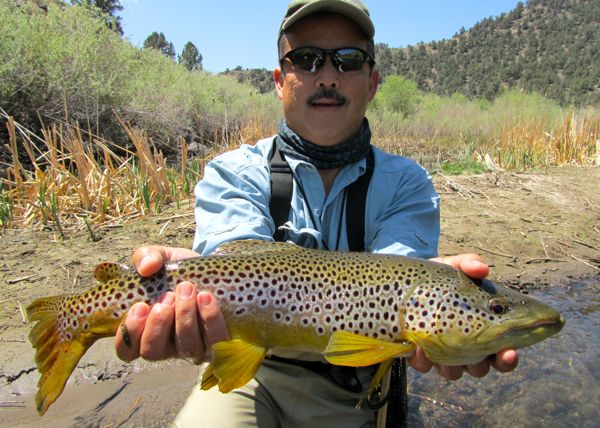
Martin Iyoyo shows off the brown trout before releasing it into the East Walker River near Bridgeport. It was hooked on a size 18 green caddis pupa. Photo/Brendan Burnside

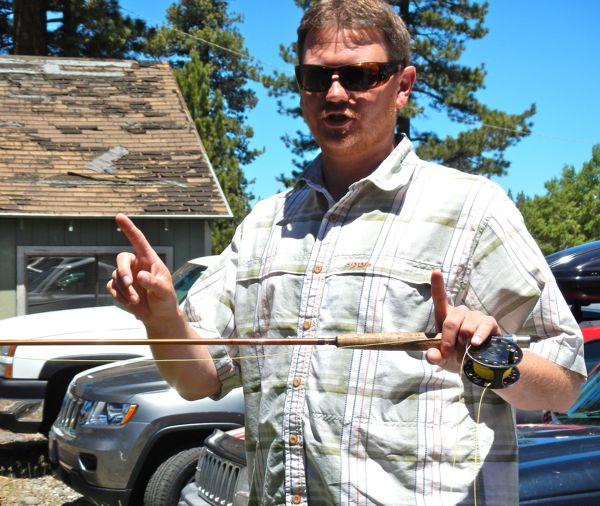
Better get Brendan Burnside to do the talking. The guide for Tahoe Fly Fishing put me through the South Lake Tahoe outfitter’s introductory course this week.

I don’t fish, but I have fished – just never with a fly. Going with dad meant putting the worm on the hook, waiting for hours and wondering why people did this hour after hour.

Something about the beauty of fly fishing has captivated me for years; always wanting to know more about this sport. Watching people cast can be mesmerizing – it looks like art, a dance of sorts. That arc of the line. Fish jumping through the air. The idyllic scenery.

Or maybe it’s like Burnside said, the movie “A River Runs Through It” is still getting people interested in fly fishing. Or maybe Brad Pitt has something to do with the allure. I’m not sure how long I’ve wanted to cast a line – maybe 20 years.

It’s been 20 years since that Robert Redford film came out. And just this week I cast my first line.

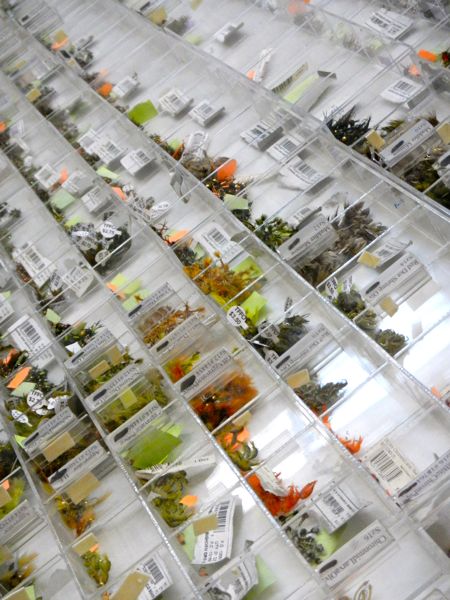
Plenty of bugs to choose from at Tahoe Fly Fishing. Photo/Kathryn Reed

Cast No. 1, was, um, not so great. My natural instinct was to want to stand sideways to the target as though I were throwing a ball or even serving a tennis ball.

Burnside squared me toward the target. Very awkward feeling. But he’s the boss, and considering this 36-year-old has been at this since he was a teenager, I decided I should listen.

He tells me guys tend to want to muscle the line to the fish, while women learn the finesse of the sport fairly quickly. Just a little pressure with that statement. In some ways it’s like golf where technique is more critical than the bicep bulge. It’s also about patience in order to be precise.

A loose grip is needed on the pole. I grab it like it’s a Western grip on a tennis racket.

Soon the end of the line is where the fish would be if there were fish.

See, in this introductory course it’s about getting the rookie to see if she likes the whole idea of the sport before going out to one of the multitude of watering holes in the area.

Then there’s the whole education part – from equipment to attire to flies.

Guide Brendan Burnside explains how to cast. Photo/Kathryn Reed

The latter is what can make or break a fly fishing experience.

“These fish are incredibly fast and smart,” Burnside explains. “If they know it’s not a real bug, they spit it out fast.”

Bugs – that’s what the pros call them. That’s because they look like the bugs the fish would eat in the wild. The size, color and shape are critical in that they mimic as close to possible real bugs.

“They all imitate something that lives in the Sierra. The bugs follow the color of the seasons,” Burnside says as he points to the oodles of “bugs” for fishermen to buy. “We are using green now because it’s still spring.”

Stonefly, caddis, mayfly and midges are the four basic groups.

Burnside brings out a tray that has fermenting bugs to show how the fake bugs resemble what nature creates.

The entomology of fly fishing is what needs to be learned. It won’t matter how good someone casts if what’s on at the other end isn’t something the fish would eat.

“It’s part of the challenge and game we play with trout,” Burnside said.

Dry flies are the adult stage of the bug. They are mayfly, caddis, attractor, hoppers and stonefly. All are used on the surface.

Like most sporting goods stores, Tahoe Fly Fishing has something for all ability levels. Photo/Kathryn Reed

Hoppers – that’s short for grasshopper. They are a huge food source for trout.

“On the East Carson we see blue hoppers,” Burnside said.

The reason the fly needs to get so close to the fish is that trout are known for being lazy. They tread water, so to speak, waiting for the current to bring them food. They see something they like and they go for it. They know what bugs they want – that’s why what’s on the end of the line needs to look like a bug the fish are used to eating and what they want that day or hour.

All trips through Tahoe Fly Fishing are catch and release. Barbs are crimped at the end.

Burnside calls the fish his “business partners” – decimating the fishing holes would put guide service companies out of business.

But one thing that isn’t being done that could be, according to Tahoe Fly Fishing owner Victor Babbitt, is promoting the variety of fishing in Lake Tahoe – not just fly.

“Sixty million Americans fish. It’s the No. 1 recreation activity in the nation,” Babbitt told Lake Tahoe News. “You can hardly find it on the LTVA website.”

Until he started blogging on the visitors’ authority’s website, it was hard to find fly fishing, Babbitt said.

“We have a big, huge lake with fish. Why aren’t we targeting fishermen? It flabbergasts me,” Babbitt said.

While the tourism gurus may not recognize the value of fishing in Tahoe and area lakes and rivers, Babbitt is getting the word out. With a mild winter and spring, his business is doing well. When the water subsides in August, it could be a different story.

But as Burnside told this rookie angler, he would always pick September and October as the best times to fish in the Sierra because the water temp is the most consistent.

It’s back to learning.

Knowing how fish react to water temperatures, light, food sources – it’s what’s needed before the first line is cast for the day.


Students help environment, learn about yesteryear Tahoe

By Kathryn Reed

CAMP RICHARDSON – Ridding the swales between Tallac and Taylor creeks of invasive species could help reverse the decline of native fish species so in future years third- and fourth-graders might be able to see what the Washoe were accustomed to harvesting from Lake Tahoe.

Back in the day when Washoe summered at the lake and wintered in the Carson Valley, there was a two-week period when they could wade knee-deep into the lake and come out with a basket full of fish.

“There was a seasonal abundance that Lake Tahoe would provide,” Joy Barney, conservation education coordinator with the U.S. Forest Service, explained.

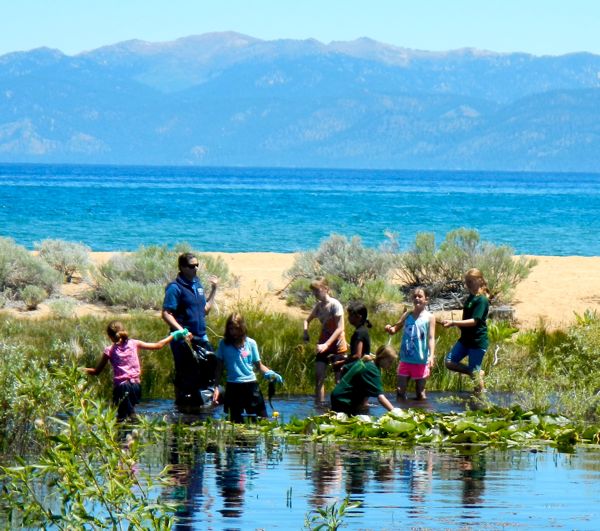
Fifth-graders from the magnet school on June 12 pull milfoil from the swale at Baldwin Beach. Photos/Kathryn Reed

Part of what fourth-graders were learning Tuesday is the historic food web and then comparing it to today.

Speckled dace, tui chub, Lahontan, redsides, Tahoe sucker – while all these fish still exist in Lake Tahoe, their numbers are dwindling because of invasive species.

Meandering through the various old estates that are now owned by the Forest Service, the children are broken into groups to be taught Trees are Terrific, Ways of the Washoe (which has been approved by the tribe) and Founding Families.

For many of the youngsters, this is their first trip to this part of the South Shore. The same could be said for some of the parent chaperones.

Valhalla to Baldwin Beach became an outdoor classroom on June 12 for third-, fourth- and fifth-graders from the environmental magnet school. Third- and fourth-graders in Lake Tahoe Unified and Incline have been spending time at the Tallac Historic Site learning outside the classroom — but using curriculum that meets state requirements.

“The overall theme of the day for the Children’s Forest program is that people and the environment are and always have been intricately connected,” Barney told Lake Tahoe News.

At Baldwin on this particular day are the fifth-graders from the Meyers school. Looking at this small body of water that sits at the edge of the parking lot it seems like a swamp that rational people would not willingly venture into. The beach separates this unattractive wet area from Lake Tahoe.

While the swale is natural in its formation, what isn’t native is what’s living in it – Eurasian milfoil and bullfrogs.

Students are pulling the milfoil out by hand.

“It feels slimy (in the water), but when it comes out, it feels like a leaf plant,” student Summer Furrer says.

She pulled out about 10 handfuls that went into one of the seven garbage bags her class collected.

Part of the class helped put a large black mat that is something like permeable landscaping cloth at the bottom, center part of the swale. This will essentially smother the milfoil, while allowing for oxygen to get to the macro invertebrates that might be under the covering.

What stopping the photosynthesis process does is one of the educational components of the day.

Forrest McCann is articulate beyond his years – clearly demonstrating some adults are not smarter than a fifth-grader.

Part of Barney’s time in the classroom that preceded the field trip was to talk about interpretive signs – what they are good for, how to write one and how to illustrate one.

McCann’s “Save the Swale” sign is so good that it may become the actual sign the Forest Service posts to educate people who come to the area.

This is one of four swales in the area.

Some students are in waders and booties, some are in shorts. All are getting wet to some degree. The deepest part of this particular swale is 3½ feet. Measuring the swale was part of the job for the day – and one way it became a math lesson.

While the students this day are not dealing with the estimated 500,000 bullfrogs that call this area between Tallac and Taylor creek waterways home, they know it would be better if they literally croaked.

“The bullfrogs are bad because they eat native species and make the water dirty,” McCann said.

Sarah Muskopf, aquatics biologist with the Forest Service, is the mastermind behind this particular project. In her waders, she is in the water with the students to help and educate at the same time.

She explains the three treatments going on – hand pulling, the fabric liner and then the jute, which is a rope-like mat that will not have to be removed.

The learning process will continue in the fall when other students will remove the fabric barrier to see if it worked to get rid of the milfoil.

“Even when the whole swale is treated, it will need to be maintained,” Muskopf explained. “It’s like weeds in a yard, it’s never a done deal.”

ngg_shortcode_3_placeholder (Click on photos to enlarge.)