Biomass an option to Calif.’s epic tree die-off
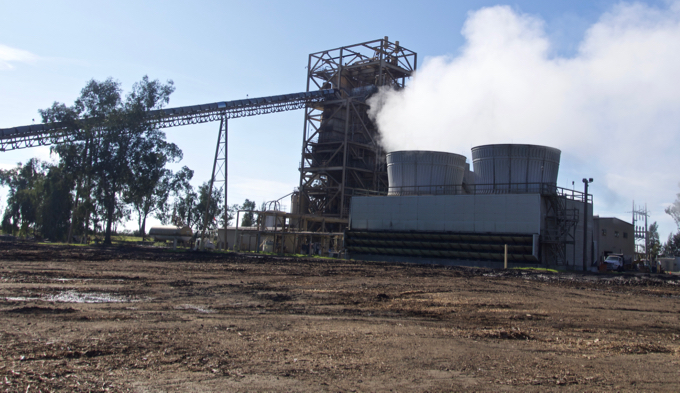
Biomass plants emit steam, with most byproducts able to be repurposed. Photo/Kathryn Reed

Publisher’s note: This is the first of two stories about California’s tree mortality and how biomass is one solution to the problem.

By Susan Wood

As California experiences what may be its worst wildfire year on record, a multi-agency working group has sparked new ways for the state to see the forest through the trees in fire hazard regions.

Since 2010 a record 129 million dead and dying trees on 8.9 million acres have been recorded. The crisis spurred by the cycle of drought stresses the trees – the majority in the Sierra Nevada – making them susceptible to bark beetle infestation.

When agencies like the U.S. Forest Service – which manages about 80 percent of the forest around the Lake Tahoe Basin – have them cut down when they can, the trees are often thrown in slash piles ready for burning. Otherwise, they become a fire risk.

The process of open burning to deal with the huge issue lacks expediency, economic benefits and ecological sense in terms of air pollution. Moreover, the sheer volume of tree mortality is overwhelming.

“Tree mortality at this magnitude takes ongoing cooperation between public, nonprofit and private entities,” said Ken Pimlott, CalFire director and state forester.

California, where declarations of disaster from wildfires have become about as common as our holidays, needs other solutions.

Gov. Jerry Brown two years ago declared a state of emergency as the state faced “the worst epidemic of tree mortality in its modern history.”

The following year, Brown signed Senate Bill 859 into law and in part designated a working group to bring suggestions to the California Resources Agency that would define measures of how to handle the massive tree die-off posing an increasingly greater fire risk and emitting greenhouse gases into the air.

And if there’s a new and improved industry as a result, the better the state of business here, according to advocates. The climate change bill allocating $900 million to reduce carbon emissions goes as far as to direct electricity retailers to enter into contracts with biomass facilities generating energy from wood harvested in these fire hazard areas. Biomass is defined as organic matter used as a fuel source.

The move won applause from the California Biomass Energy Alliance’s Executive Director Julee Malinowski-Ball, who commended Brown for having the vision to see the industry as part of “the state’s renewable energy portfolio standard.”

“How do we treat the forest so it doesn’t become a source of carbon emissions?” said Claire Jahns, assistant secretary of the California Natural Resources Agency – the lead organization in the nine-member working group. “The creation of biomass is a necessary outcome of doing active forest management.”

The Lake Tahoe Basin Management Unit agrees.

“Biomass is one tool that can be utilized to aid in hazardous fuels reduction,” LTBMU Fuels Management Officer Kyle Jacobson said.

Jacobson cited the ability of reducing smoke from burning the piles onsite as one significant reason to opt for the alternative method. Turning that tree debris into energy production is another.  

The plan sounds like a win-win for the economy and environment, but it has limitations requiring “mechanical access” to the tree debris location, Jacobson pointed out.

It also commands a word of caution from the Sierra Club of California. The concern is that creating an industry built on tree cutting could lead to an overzealous nature of taking out alive-and-well-timber from the forest.

“At first glance, we assume there’s an endless supply of trees to build an infrastructure from. One thing to be cautious about is not every dying tree needs to be taken out,” Director Kathryn Phillips told Lake Tahoe News. “Snags left at the end of a forest fire have an ecological purpose and should be left alone.”

The Sierra Club worries the hazard zones may be drawn too large to accommodate this blossoming industry that could go on the offensive in seeking materials.

“All said, there are dead trees that have to be taken out. We just want sensible forest management,” Phillips said.

Bob Kingman, assistant executive officer for the Sierra Nevada Conservancy, understands the concern of making business the priority. He is also a member of the state working group. Kingman realizes his Lake Tahoe Basin homeland is inundated with clusters of trees ripe for out-of-control burning as well as other hazards. Kingman worked for years at the California Tahoe Conservancy.

“Yes, it could encourage tree cutting. But right now, our forest does need more tree cutting,” he said. Kingman referenced the Wine Country wildfires of October as a situation that “adds a whole new complexity” to the hazard.

It’s believed that no more than 15 percent of the dead and dying trees is removed as needed.
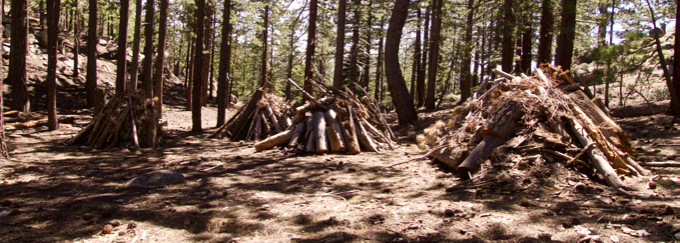
The least expensive way to dispose of wood is often to burn it on site. Photo/Kathryn Reed

A trio of goals in the report 

The working group’s report released this fall was created with three aims in mind: Utilize the woody material pulled from high hazard zones identified by the state’s Tree Mortality Task Force; promote forest health and reduce carbon emissions from burning; and spawn rural economic development.

State Sen. Ted Gaines, R-El Dorado, is all over the latter idea, but if anything, would like to see more than $25 million dedicated to the effort and wants a wider area covered.

“I support the idea of a focused effort to better manage our forests and incorporating biomass as a way of doing that,” Gaines told Lake Tahoe News.

But in not necessarily supporting the cumbersome SB859 climate bill, he’s disappointed the allocated funds were directed to more concentrated high hazard zones instead of covering larger areas.

“This is our largest opportunity for management of the most acres,” said the senator who represents Tahoe.

Gaines reflected on the human tragedy by singling out fallen firefighter Michael Hallenbeck, who died two years ago when a tree struck him as he was fighting the Sierra blaze south of Echo Summit.

Turning tragedy into tree removal programs

The state study identifies four pilot programs to turn the tree debris into wood products or biomass.

First, retrofit old mill sites into biomass plants or wood manufacturing facilities.

Second, schedule a mass timber building competition that showcases how to slap together composite panel structures and use fabricated wood products.

Third, initiate a California Conservation Corps workforce training program to manage the transition from mass timber debris to viable wood product.

Fourth, convene a wood products summit featuring state and federal entities, entrepreneurs, community groups and industry partners.   

“There is a critical need to bolster our biomass processing capacity and expand uses for wood products not only to handle dead trees in the short term but also to assist with ongoing forest management and restoration,” California Natural Resources Secretary John Laird said.

Even as convincing as the biomass idea is, the potentially burgeoning industry doesn’t come without challenges that go beyond the caution of turning a depleting resource into a state-sanctioned form of commerce.

For starters, the plants at this point are few and far between, as Caltrans program manager Lisa Worthington admits. The state agency must remove hazard trees along its highway system. Arranging for the trees to be taken through contractors to biomass facilities miles away can pose a big expense in transportation costs.

The hope is more plants get on board. Worthington counted 107,608 trees removed since just March 2016, so the need is great. As it stands today, there are about three times as many dormant biomass sites in the state as operational ones.

“The need is enormous,” Worthington said.
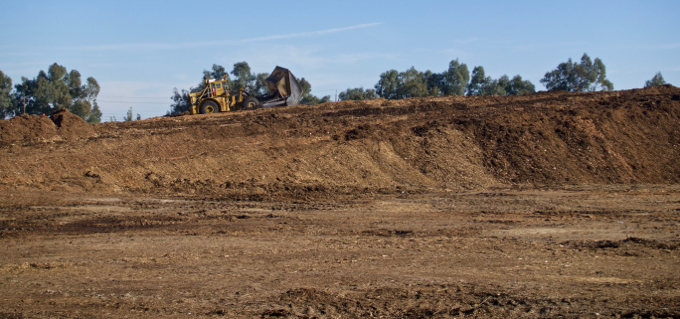
This material is refined wood product that the biomass plant will turn into electricity. Photo/Kathryn Reed

Specifics are on the way

The state resources report set into motion a breakdown of specific committees tasked with handling the goals and pilot programs associated with solutions like retrofitting more biomass plants. One such group will be tasked with removing barriers that hinder a convenient path to redevelop sites – as in the convoluted permitting process.

From there, an information clearinghouse would be formed to provide resources for developers of the wood products manufacturing industry.

Applied research like Humboldt State University’s “Waste to Wisdom” Biomass Research and Development Initiative studying converting forest residue into renewable fuel would be supported by the state.

Plus, the California Wood Innovations Small Grants Program would be created to reward funds to those with enlightening ideas.

Local jurisdictions could seize state grant money to fund a mass timber building competition similar to Oregon’s, where $200,000 was awarded to a developer using cross-laminated timber.

Big timber projects featuring buildings six stories or taller made with pre-engineered wood products have been erected all over. One proposal, called the Splinter, features a building 100 stories high in London. In Chicago, an 80-story structure has been designed. Those following the trends have coined the term “plyscrapers.” In some cases, hybrid buildings made from pre-engineered wood, concrete and steel are thought to be more rigid, according to architects working with the mixed use.

Governments at the state and federal level have been forced to look inward in coming up with solutions to getting rid of its wood debris.

Case in point, the wood on federal lands is prohibited from being exported overseas from the Western United States. 

Through a little-known federal rule, U.S. Code 620, the export of federal timber west of the 100th meridian has been banned since 1973. Timber affected by the Forest Resources Conservation and Shortage Relief Act must be deemed a surplus species through a regulatory process involving the U.S. Department of Agriculture to waive the ban. The Forest Service has specifically declined to comment on the matter.

“The USFS does not comment on legislative activity or potential outcomes,” Washington spokeswoman Veronica Hinke told Lake Tahoe News.

U.S. House Republican Tom McClintock of Elk Grove is attempting to circumvent obstacles. The congressman introduced legislation – the Emergency Forest Restoration Act – with the intent of using the state governor’s emergency declaration to expedite the removal of dead and dying trees.

HR865 piggybacks off the Resilient Federal Forests Act, which simplifies environmental regulations and hastens the removal of trees associated with fire-killed timber.

“After 45 years of experience with these laws (under the National Environmental Policy Act), I think we’re entitled to ask: ‘How are the forests doing?’ The answer is damning,” McClintock said in remarks in support of HR2936.

With more than 58 million acres of national forest at high or very high risk of severe wildfires, the crisis demands an all hands on deck approach.

The Tree Mortality Task Force said 860,000 dead trees have been removed – over half by the Forest Service, the agency revealed this week.

To help with the woody-biomass solution, the USFS recently announced $9 million to be awarded to competitive wood products and energy distribution projects. Applications are due by Jan. 22.



Sierra had a growth spurt during drought

By Associated Press

Loss of water from rocks during drought caused California’s Sierra Nevada to rise nearly an inch in height from October 2011 to October 2015, according to a new NASA study made public Wednesday.

The study also found that in the following two years of increased snow and rain, the rocks in the range regained about half as much water as was lost during the drought and the return of the weight caused the height of the mountains to fall about half an inch.

“This suggests that the solid Earth has a greater capacity to store water than previously thought,” study leader Donald Argus of NASA’s Jet Propulsion Laboratory in Pasadena, said in a statement Wednesday.

Read the whole story


Proper fire funding continues to elude Congress

By Rebecca Worby, High Country News

On Sept. 14, Secretary of Agriculture Sonny Perdue officially declared that the 2017 fire season was the Forest Service’s most expensive ever, with costs topping $2 billion. Perdue noted that fire suppression, which accounted for just 16 percent of the agency’s budget in 1995, now takes up over 55 percent.

“We end up having to hoard all of the money that is intended for fire prevention,” he wrote in a press release, “because we’re afraid we’re going to need it to actually fight fires.”

The Forest Service’s fire funding is subject to a budget cap based on the average cost of wildfire suppression over the last 10 years. But even as that average increases, the agency’s overall budget remains relatively flat.

So when costs go higher, the agency, in a practice known as “fire borrowing,” must pull from funds intended for other programs — including those that help reduce fire danger, like prescribed burns, thinning and insect control. This vicious cycle has continued for years.

Read the whole story


Davis has eye on backcountry post-Olympics

Truckee’s Danny Davis is soaring toward the Olympics. Photo/Tom Zikas

By David Bunker, Tahoe Quarterly

For someone who has lived his life in the snowboarding spotlight, Danny Davis seems utterly comfortable sipping coffee in a tucked away corner of downtown Truckee’s Dark Horse Coffee Roasters.

It’s a crisp October day, a world away from screaming X Games fans and the international stage of the Winter Olympics. The leaves have fallen from most of the cottonwoods along the Truckee River and the feel of winter is in the air. But for now, Truckee is stalled between summer and winter—that glorious transition where everything slows before the onslaught of snow.

Davis is in transition himself. A Truckee resident for the last decade, the Michigan native has become one of the most accomplished and recognizable halfpipe snowboarders in the world. He’s stood on X Games podiums, won the Dew Tour and Grand Prix events, and competed in the 2014 Sochi Olympics.

Today, he seems totally content to be home for a rare break, healthy and looking ahead to what could be one of his last halfpipe seasons. It could include a final Olympics appearance if he competes well against a stacked class of younger halfpipe competitors.

Read the whole story


Tech giant revives deal for Sinatra’s old Tahoe casino

By Dale Kasler, Sacramento Bee

When it comes to splashy real estate deals, Silicon Valley icon Larry Ellison usually gets what he wants. Frank Sinatra’s old Lake Tahoe casino, the Cal Neva, is no exception.

After threatening to back out because of delays, Ellison is ready to move forward with his $35.8 million purchase of the bankrupt Cal Neva Resort & Casino on Tahoe’s north shore. Lawyers for Ellison and others connected to the Cal Neva bankruptcy filed court papers Tuesday revealing that Ellison is ready to buy the faded resort as long as he can wrap up the deal by Jan. 10.

The Cal Neva has been closed since 2013.

Read the whole story


EDC supes approve Meyers Area Plan

By Susan Wood

The recreational hamlet west of South Lake Tahoe took another step toward flexing its individual muscle and identity Tuesday, when the El Dorado County Board of Supervisors approved the recreation-oriented concept of the new Meyers Area Plan.

It was approved 4-0, with Tahoe Supervisor Sue Novasel recusing herself. She later told Lake Tahoe News she was pleased with the stepping-stone outcome.

The proposed plan will head over to the Tahoe Regional Planning Agency as one of four more meetings before it returns to the county board for final adoption early next year.  

Following a marathon of community meetings, environmental improvement reports and agency hearings, county planner Brendan Ferry took his show on the road to Placerville to tout the concept that initially began with turmoil years ago and continues with massive nods of approval.

The EIR comment period ended in early October, resulting in only five comments. The plan, which was debated at length, once packed meeting rooms with a multitude of expressed opinions ranging from the types of businesses zoned to the height of structures.  

Dec. 12 was no exception with respect to recent heightened agreement. The only commenter was Lake Tahoe South Shore Chamber of Commerce Executive Director Steve Teshara, who commended the revamp proposal of the village as “enhancing the definition” of Meyers.

“I think balance has been achieved,” Teshara said, adding chamber members in the community support the plan.

Meyers Area Plan had not been updated since 1993. Photo/LTN

As it stands, the proposal consolidates three existing commercial and community services zoning districts along Highway 50. It loosely covers a 669-acre area between Pioneer Trail and Highway 89.

Ferry explained to the supervisors the plan retained “the values” of Meyers, including recreation being its “key priority.” This means many bike and pedestrian trails are due to go in, with landscaping, benches and planter boxes enhancing the aesthetics. Another value focuses on Meyers as a historic gateway to the Lake Tahoe Basin. Its roots are deeply planted in keeping it a walkable community with a north-to-south, east-to-west view of “world class amenities.”

Of course, there are bugs to work out such as relocating the U.S. Agricultural Station. There are also considerations to be made like beefing up broadband in the area, which can be spotty at best.

Another key priority is elevating the level of safety for pedestrians. That’s why the community is up for a complete street format designed to slow down traffic so walkers may safely cross busy Highway 50.

Take Apache Avenue. “We’d like to improve that intersection,” Ferry said.

Also keeping Meyers’ unique profile, the county planner told the board the proposal calls for a building-height threshold of 42 feet, even though TRPA would allow 56 feet. Currently, no structure stands over 36 feet. When coming up with this number, the planners offered a rendering of a 45-foot building that didn’t impede visibility.

“I feel we’ve landed in a middle ground as we met with the stakeholders a number of times,” Ferry said.

A middle ground can be an ideal place to be – especially in an area debating the finer and not-so-fine points of vacation home rentals. Supervisor John Hidahl asked Ferry if the home-sharing phenomenon was considered in the concept. Currently, Meyers has no hotel, with other aspects up in the air such as Tahoe Paradise Golf Course being for sale.

Ferry replied in no uncertain terms that all life in Meyers was covered.

So with that, the county formally adopted the Meyers Area Plan, approved the California Environmental Quality Act and TRPA environmental documentation, amended the General Plan, revised county zoning and directed staff to analyze costs.


Clock ticking to find shelter for Tahoe’s homeless

By Kathryn Reed

The overnight low in South Lake Tahoe last night was supposed to be 15 degrees. There were residents who were outside, in a vehicle or in other substandard housing.

That is going to keep happening until the warm room is able to open. Now in its third year, the facility could open New Year’s Day with about 25 cots.

The delay is the lack of a facility.

The South Lake Tahoe City Council took steps Dec. 12 to do something about this situation. The city owns a vacant building on Rufus Allen Boulevard that used to be rented by Unity at the Lake. A few improvements would need to be made to the structure first.

To help with warm room costs, checks may be made payable to Tahoe Coalition for the Homeless and mailed to PO Box 13514, South Lake Tahoe, CA 96151 or go online. To get a list of what the warm needs in terms of donations, contact tahoewarmroom@gmail.com or 775.573.0822.

But the main obstacle is appeasing neighbors who think these men and women are a threat to them and their children. A task force was put together to quickly mitigate concerns. Lake Tahoe Unified School District and Lake Tahoe Boys and Girls Club will be part of the team to find solutions because they have facilities within walking distance.

People are concerned about the proximity to a school bus stop, the recreation center, senior center, library, school and Boys and Girls Club. They don’t want these people loitering or committing crimes.

The naysayers tried to paint a picture of these people being scary criminals. Statistics from the past two years show no evidence of that being a true characterization.

It was repeatedly pointed out that homeless people as a group are not law breakers, they are financially challenged. Some have mental health issues, some substance problems.

The warm room has an in-take form that asks if they are sex offenders. They self-report – just like they are supposed to do with law enforcement. If they say, yes, they are turned away. Guests must abide by rules at the warm room – like not drinking or using other drugs. If they do, they are shown the door.

Leigh Wayne Miller, a doctor in town, was one of the overnight workers at the warm room last year. This meant staying with the 25 guests overnight – alone. She’d do it again.

This week she saw three women who were admitted to the hospital, all talking about suicide. Miller said they all felt hopeless, were cold and didn’t think they could handle another night in the elements.

“There is an empty building. We need to get people inside sooner rather than later,” Miller said.

Assuming a compromise is found, the council gave direction to staff to devise a contract. It would have the Tahoe Homeless Coalition pay about $5,000 in rent for the four-month period, of which the city would then use those funds for its hard costs related to the operation. This would include utilities, possibly security and maybe a porta-potty.

The Catholic and Presbyterian churches in town have offered their facilities on an interim, short-term basis. But that requires some special permitting by the city, so it’s not an immediate answer.

“We are going to host the homeless on Christmas Eve. It’s an issue of humanity,” the Rev. Bob Kelly with Lake Tahoe Community Presbyterian Church said.

The homeless coalition is out of options. Barton Health has said it can’t help.

“Prior to the warm room initially opening, Barton Health was approached about providing space. Unfortunately, we did not have space to meet their requirements,” CEO Clint Purvance told Lake Tahoe News.

Lake Tahoe Community College will be asked about space. The college did not respond to an inquiry by LTN.

Of the 22 people who spoke at Tuesday’s meeting, the majority were in favor of the warm room at this location.

Bruce Cox, a 1976 graduate of South Tahoe High School, volunteered at the warm room last year. He spoke about how shocked he was to discover a classmate was among the more than 100 people who stayed at the shelter last winter.

Life has a way of turning bleak in the blink of an eye – an illness, job loss, addiction, mental condition – they all can lead a person to not being able to pay his or her bills.

In a town where housing is in short supply – even the shabby hotels fill up on busy weekends. People can be hard pressed to find four walls and a roof. More than a quarter of the people who slept at the warm room last winter had jobs. They just couldn’t afford a place to live.

Cheyanne Lane with Tahoe Youth & Family Services said six of her clients are in need of the warm room.

“These are young people working two and three jobs. They are sleeping in their car. One client is pregnant,” Lane told the council.


With climate change, tree die-offs may spread

By Jim Robbins, New York Times

Ponderosa pine and pinyon forests in the American West will die at an increasing rate as the world grows warmer, becoming less and less resilient when they are weakened by higher temperatures, according to new projections.

Although these forests now withstand short droughts, warming temperatures increasingly stress the forests, which means they will no longer survive the shorter droughts they once endured.

And future droughts will be hotter as the planet warms.

Read the whole story


Second La Niña winter could mean drought

By Matt Weiser, Water Deeply

Winter is off to a dry start across the West, raising the specter of ongoing drought in many locations. The culprit could be La Niña – a periodic cooling of Pacific Ocean waters near the equator that often brings drought. And not just any La Niña, but a “double whammy” effect, which latest research concludes may cause even worse water shortages.

La Niña is popularly known as the opposite of El Niño, a warming of equatorial Pacific waters that can result in wet winters. But that is a misconception, according to Yuko Okumura, a research associate at the University of Texas Institute for Geophysics.

In reality, La Niña is unpredictable. As we found out last winter in California, for example, it can also produce wetter than average conditions.

Read the whole story


USFS-Barton promote wellness via nature

By Lake Tahoe News

The next prescription you get might not be able to be filled at a pharmacy or come in the form of a pill. Instead, it might require athletic apparel.

Nature as medicine is what it’s being called. While people who regularly recreate outdoors know the benefits, those who are recovering from an injury or illness have often been treated indoors. That tradition is no longer always the protocol.

Barton Health and Lake Tahoe Basin Management Unit this fall signed an agreement to provide wellness outings for patients. They’ve been doing so since last year, but it wasn’t until last month that the formal agreement was inked.

“These agreements allow the two entities to contribute staff time toward a mutual goal, which is to facilitate therapeutic experiences on the National Forest for at-risk populations in the community of South Lake Tahoe,” Lisa Herron with the U.S. Forest Service told Lake Tahoe News. “No funds, public or otherwise, are flowing from USFS to Barton Health as part of this agreement. Instead, both entities have agreed to contribute staff time toward reaching a mutual goal.”

The outings will be free for the patients who are “prescribed” this therapy.

“Wellness outings will be scheduled for community members by Barton Health providers as part of their care. Guided walks and winter snowshoe outings with Barton Healthcare providers and Lake Tahoe Basin Management Unit personnel are tailored to the patient’s needs and ability level,” Jenna Palacio with Barton told Lake Tahoe News. “Wellness Outings are intended to deliver the healing properties of nature with U.S. Forest Service land education in South Lake Tahoe.”

The comprehensive program includes options for people with chronic or terminal illness, patients recovering from surgery, and at-risk youth.

According to Barton, time in nature lowers blood pressure, heart rate, and cortisol levels, while it increases concentration, memory, and attention spans.

Steve Bannar, who has been a doctor with Barton for years, in a statement said, “A prescription for nature can enable accessibility for at-risk groups as well as preventive medicine for other members of the community. We need to change our mindset from treating disease to promoting wellness.”

To date, Barton and the Forest Service have led six community wellness outings for dozens of people. They include:  

  • Wellness walk for the chronically ill at the Taylor Creek Visitor Center (fall 2016);
  • Moonlight snowshoe for orthopedic patients on the shore of Lake Tahoe (spring 2017);
  • Wellness Walk for youth with emotional and behavioral challenges along the Upper Truckee River restoration (summer 2017);
  • Interpretive walk for Spanish speaking youth in South Lake Tahoe (summer 2017);
  • Wellness walk and facilitated mindfulness for the chronically ill at the Tallac Historic Site (summer 2017);
  • Wellness walk at Valhalla historic property for full-time nursing patients (fall 2017).

USFS staff time for each of these wellness outings is estimated at two to three hours.

For the Forest Service, the partnership helps bring another segment of the community to its lands. Barton is also providing preventative medical training to Forest Service personnel who work in injury prone positions. Barton has hosted three wellness workshops, including a foot care for wildland firefighters, emergency medicine for backcountry rangers, and a wellness training at a USFS all-employee meeting.