LTUSD students keep pace on test scores with peers in state

By Kathryn Reed

Lake Tahoe Unified School District is mirroring the state when it comes to having an achievement gap among Latino, English learner, and low-income students compared to the rest of the student body.

But the good news from Friday’s announcement of the 2012 Standardized Testing and Reporting (STAR) test results is this is the ninth consecutive year California students improved in language arts and math.

Statewide, 57 percent of students in grades 2-11 were proficient or advanced in English language arts, while 57.5 percent of LTUSD students were at those levels.

While the state superintendent of education in a press release boasted how wonderful it is students are increasingly testing better, the reality is a huge segment of California’s students are not doing grade-level work.

One thing that continues to bother LTUSD Superintendent Jim Tarwater about all the tests associated with No Child Left Behind is test score comparisons don’t reflect the actual improvement or decline as students go from one grade level to the next. Instead, today’s third-graders are compared to last year’s third-graders instead of to their test scores as second-graders.

In LTUSD, officials take the data provided by the state and then calculate how students do as they get older.

“I’m proud. We’re continually making gains,” Tarwater told Lake Tahoe News.

Bijou Community School remains the trouble spot in the district. This school also has a population of 84 percent low income, 75 percent Latino and 66 percent English learners.

The state and feds, while they separate the numbers into subcategories, the finger pointing or accolades are based on cumulative scores. Extenuating factors such as 62.5 percent LTUSD students receiving a free or reduced lunch are not considerations. This, despite the fact that study after study proves low income students often don’t have the academic help at home that their more affluent peers do and many may only be getting a hot meal at school.

Comparing Bijou to the magnet school proves this point. The magnet school has 20 percent low income, 8.2 percent Latino and 2 percent English learners.

(These are the percentages of students who are at proficient or advanced on the STAR test.)

                                               2011-12 Bijou          2011-12 Magnet

Second Grade LA                22                                    94

Second Grade Math            41                                    93

Third Grade LA                   22                                   77

Third Grade Math               50                                   94

Fourth Grade LA                 47                                  95

Fourth Grade Math             45                                  95

Fifth Grade LA                    29                                   91

Fifth Grade Math                51                                   84

Fifth Grade Science              9                                   85

(Complete results of the 2012 STAR tests are on the state Department of Education’s website.)

While all teachers are using the same pacing guide and curriculum in LTUSD, not all students learn the same.

Tarwater is a strong proponent of technology helping students learn, adding that improvement is evident in the schools and classrooms where teachers consistently have kids working on their netbooks.

In grades 3-12, each student has a netbook, in all the second-grade classrooms there is a full set, and in first grade there is one computer for every two kids.

Instead of students tuning out, they are engaged. They have work to do when the teacher is helping others. They download and upload data to their teachers. Books are downloaded like adults use Kindles and iPads.

Tarwater likes to embrace the quote by John Dewey: “If we teach today’s students as we taught yesterday’s, we rob them of tomorrow.”

At the end of the month the Academic Performance Index scores will be released. This is how the schools and districts are judged on a federal level. These results also indicate if a school or district is listed as “performance improvement”. All but the magnet school is PI.

With Bijou dropping by 17 points a year ago, all eyes will be on this year’s results to see which direction the school is going. Tarwater would not comment on whether a change in leadership at the school is necessary.

With Tahoe Valley and Sierra House elementary schools making substantial gains a year ago, another year of being over 800 (1,000 is the maximum) could take them out of the PI category.


Squaw Valley’s proposed development upsets residents

By Kathryn Reed

TAHOE CITY – If the owners of Squaw Valley have their way, the last two buildings from the 1960 Winter Olympics will be demolished and in their place will be infrastructure to make the resort one of the top 10 ski destinations in the world.

This is how Chevis Hosea, vice president of development for Squaw Valley, described the mega-undertaking to the Placer County Planning Commission on Aug. 30 at the Granlibakken conference center.

“We’re not proposing to go up the mountain. We are just asking to develop the base. We will tuck parking under the buildings,” Hosea said. “What is void in this valley is the bed base to support this mountain.”

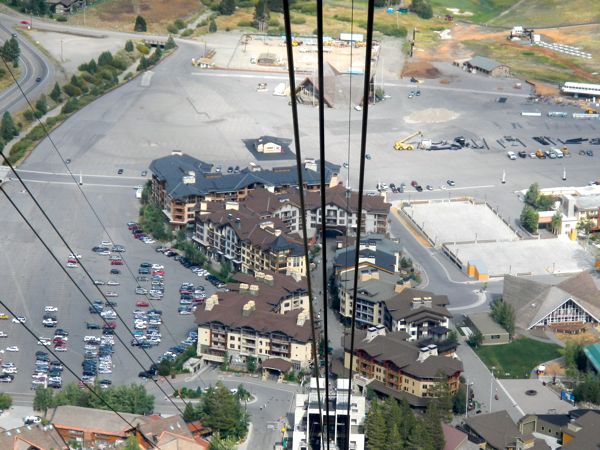
Resort owners want to completely transform Squaw Valley's village area. Photo/Kathryn Reed

Hosea said the hotel-condos and fractional ownerships are estimated to bring in $8 million to $10 million a year to county coffers.

However, build-out, assuming the project is permitted, is years away. The first phase is expected to take five years to complete.

While developers know they want the first phase to include several buildings that would encompass 1.3 million-square-feet on 26 acres, a 150,000-square-foot mountain adventure aquatic center, 84,758-square-feet of ski services and 34,187-square-feet for retail and restaurants, the scrutiny has just begun.

The Squaw Valley General Plan and Land Use Ordinance would need to be amended, a program environmental impact report would be done that includes all proposed phases, with project EIRs for each phase that would provide deeper analysis.

During the scoping and environmental analysis phases the public will be asked to comment. The first phase of project review is estimated to take between 18 and 24 months.

About 40 people attended Thursday’s meeting, with 15 people speaking. Most of those who made comments live in the Squaw Valley and are not happy with what the new owners want to do.

KSL Capital Partners bought the resort in November 2010 from Nancy Cushing, who took over sole operation of the resort after her husband died in 2006. Squaw Valley Ski Holdings Inc. was formed last September to operate Squaw and Alpine Meadows.

Much of what is being proposed would surround the existing village that was built by Intrawest nearly 10 years ago.

Carolyn Chambers, who is a homeowner in the valley, said people are forgetting this is a residential neighborhood.

“Let’s stop calling it a village,” she said. “What is proposed here is a commercial development.” She went on to describe a village as something more than shops for tourists and more like what can be found in Europe.

Traffic, parking, potable water and 10- to 12-story buildings are concerns of those who spoke.

The potential maximum height being proposed for buildings in phase one is 163 feet and 189 feet in phase four. As a comparison, the tallest casino in Stateline is 197 feet. And the current Squaw village is four stories on top of a two-level parking garage.

Hosea said there are no height restrictions at Squaw, but his employer would like to put some on the books.

(The Tahoe Regional Planning Agency does not have a say in this project because it is outside the Lake Tahoe Basin.)

Paul Archer in his 50-plus years as a resident at Squaw has seen the “environmental degradation” and worries more is on the horizon.

Mark Simpson said people come to Squaw to ski no matter how hard people try to make it a year-round destination. He doesn’t want Squaw to turn into another Northstar.

“One of the big failures of Northstar is you can’t get to the resort. Then when you get to the village there is not enough capacity to get up on the mountain,” Simpson said of the horrendous parking at Northstar and the ancient gondola.

Hosea told the group an extensive scientific study of the water system will be done which could cost $1 million. He said rebuilding the supply system could cost between $5 million and $10 million.

“There is no value to provide a faux water supply,” Hosea said. He added that is would not be a good business decision to have people staying in one of the two high-end hotels and have a dry spigot.

Parking for the day skiers will be partly on one level of the lodging establishments as well as at a proposed lot that would be built down the road and serviced by a shuttle.

“There is a real opportunity to reposition this asset globally,” Hosea said. That, and making a place to travel to every season is what the owners want to do.

Alex Fisch with the Planning Services Division of Placer County is the lead public official on the project. He may be contacted at Afisch@placer.ca.gov.


History, nature lessons of Squaw unfold on free hikes

By Kathryn Reed

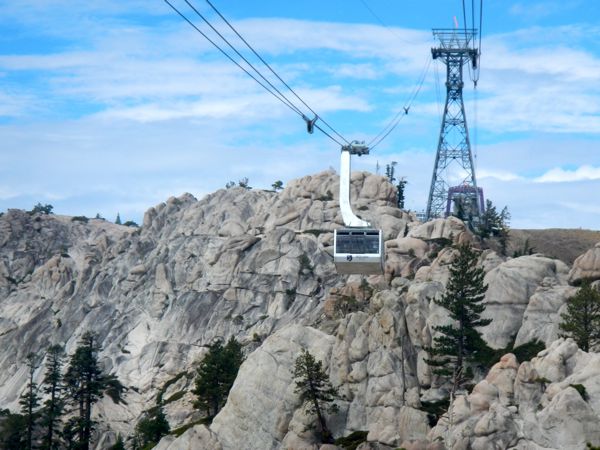
OLYMPIC VALLEY – Three golden eagles soar overhead. But from this vantage point of more than 8,200 feet, it’s already a bit like having a bird’s-eye view.

Dave, our guide on this free hike out of Squaw Valley’s High Camp, has us looking up at the peaks, down at the flowers and out at the vast expanse of granite.

Like many who came for a winter to ski, Dave has been here 23 winters. While his main job is working in mountain operations, including a trip this month to Peru to find employees for the season, on this particular August Saturday he is taking a group on an hour hike.

A trip to the top of Squaw opens up miles of hiking trails. Photos/Kathryn Reed

It’s part history lesson as we learn about the humble beginnings of the ski resort that opened Thanksgiving Day 1949 to becoming the unexpected host of the 1960 Winter Olympics to today’s changes as evidenced by lifts being removed and others being installed.

Those Games were the first to be televised.

“It was like a 12-day commercial for Squaw,” Dave tells us.

As Dave put it, this was back in the day when California was thought of as the land of oranges and surfing. It was not a skiing destination. It wasn’t home to multiple winter Olympians.

It was the late Sandy Poulsen who helped name the legendary KT-22. It took her 22 kick turns to get down the mountain.

White pines and mountain hemlock are the predominate trees at this elevation.

With last winter not producing much white stuff, the wildflowers have been less than vibrant. Still, even this month some were dotting the landscape – yarrow, Indian paintbrush, mule’s ear, pennyroyal, and fireweed.

Dave takes off some mountain sage leaves so we can find out it smells just like the spice.

Plenty of hiking opportunities abound. The later guided hike often entails going to Emigrant Peak (8,700 feet), but time does not allow for that on the first excursion. It’s another 30 minutes from our turning around point, which is at the Gold Coast chairlift.

Dave says from Emigrant Peak – if it’s a super clear day – the Bay Area peaks of Mt. Diablo and Mt. Tamalpais are visible.

Plus, the Pacific Crest Trail goes through the area. The Granite Chief Wilderness has numerous trails. Hikers can even reach High Camp from the village area, which would mean an elevation gain of 2,000 feet.

While we didn’t work up much of a sweat on this cool summer day, we still wanted to catch some rays by the pool and listen to the band. A bar at the pool supplies drinks, but just outside the gate is food at the café.

The pool is an ideal setting to relax. For those who want to keep playing, the High Camp area offers roller skating (ice in the winter) and paintball.

Things to know:

• Guided hikes leave from the grassy area just outside the High Camp building. Hikes are at 12:30pm and 2:30pm on weekends through Sept. 23, and on Fridays through Sept. 9.

• Cost for adults to ride the tram is $29, to use the pool-hot tub is $15, and to do both is $41.

• Tram is free for downloading if you’ve hiked up there.

• High Camp Run (5K or 10K) and Pool Party is Sept. 15 beginning at 11:30am at High Camp. Cost is $30 in advance or, $35 that day.

More info is on Squaw’s website.

ngg_shortcode_0_placeholder (Click on photos to enlarge.)


Bankruptcy trustee questions STATA’s financial dealings

By Kathryn Reed

Another deadline looms next week in the multi-million dollar South Shore transportation lawsuit, with a decision possible in November to dismiss or have the case litigated.

Fairfield-based MV Transportation, which once ran the BlueGo bus system, sued the nonprofit South Tahoe Area Transit Authority in 2010 for a number of reasons; most having to do with not being paid the nearly $3 million it claims it was owed. STATA then filed for bankruptcy and has since disbanded and essentially merged with Tahoe Transportation District.

MV Transportation has until Sept. 7 to revise its complaint, with the defendants then being able to respond before the judge acts in mid-November.

Transit on the South Shore continues along a bumpy legal road. Photo/LTN

David Thompson, who was appointed by U.S. Bankruptcy Court Judge Gregg Zive to review all the documents (12 drawers of paper files and more than 16,000 emails) pertaining to the case, does not understand how the STATA board continued operations when the expense to do so was more than the revenue being generated.

In the participation agreement paragraph 5.11 states: “… that if revenues fall short, the directors shall reduce the levels of service unless the parties (participating members) mutually agree to make additional contributions.”

Service was not cut and additional contributions were not made.

Thompson, who was appointed in August 2011, has prepared three reports for the court, with the latest coming out this summer.

In part he writes, “From the start, the operating revenues generated from cash fares, members contributions and operating grants were insufficient to cover operating costs. This resulted in STATA being constantly short of cash and having to issue a note payable to MV Transportation for $825,000 covering the initial start up months of operation. Operating shortfalls continued for several years reaching over $2 million. MV was terminated on June 20, 2010. … None of the participating members paid the operating shortfall as required in the bylaws. TTD confiscated the assets, grants and contracts of STATA, gutting the organization and leaving no means to pay the creditors.”

South Lake Tahoe City Attorney Patrick Enright disagrees with Thompson’s assessment. He said the city only had to contribute what it received from the state and federal government for transportation, nothing more.

It has cost South Lake Tahoe more than $75,000 to pay attorney Lou Bubala of Reno to represent the city at the Reno bankruptcy hearings. That amount does not take into account Enright’s time. The city’s portion of the nearly $3 million is about $600,000.

Each defendant is represented by separate legal counsel, so the cost of the case continues to escalate at a greater rate than if they had the same attorney. If they lose, the parties are also likely to incur MV’s legal costs, the fees of the trustee, as well as penalties beyond the $3 million MV is claiming it is owed.

The defendants in the case are:

• STATA

• Tahoe Regional Planning Agency

• Douglas County

• South Lake Tahoe

• Heavenly Mountain Resort

• Tropicana Entertainment

• Harrah’s Operating Company

• Harvey’s Tahoe Management Company

• Lakeside Inn

• Horizon Casino

• Lake Tahoe Casino Realty

• Columbia Properties Tahoe

• Ridge Tahoe Property Owners Association

• Tahoe Transportation District.

Early on El Dorado County worked out a deal with MV.

“In October 2010, El Dorado County settled with MV Transportation for $160,000 because MV has a rock solid case against STATA’s member agencies. As the bankruptcy trustee points out, member agencies have a clear obligation of make additional contributions to STATA if STATA operates at a deficit,” county Auditor Joe Harn told Lake Tahoe News. “Because the TRPA staff gave the STATA board horrible advice, STATA operated at a huge deficit. The TRPA staff also wasted a lot of El Dorado County staff time. On at least three occasions, the TRPA staff recommended unlawful allocation instructions to the TRPA board. We spent a lot of time on conference calls explaining the fundamentals of the California Transportation Development Act to the TRPA staff.”

The Tahoe Regional Planning Agency is an integral part of this because the Tahoe Transportation District was created by TRPA. Beyond that, TRPA first hired John Andoh to handle the transit system. And while the STATA bylaws require an executive director to run the operation, it never had one. Andoh was a transit administrator.

STATA was the name given to the group in 2008. Originally it was called Tahoe Coordinated Area Transit when it was formed in 1998 as a coordinated transit system on the South Shore.

Mike Bradford, president of Lakeside Inn Casino in Stateline, acknowledged it was a tough sell at the time to get the casinos to give up their individual bus routes, but the thinking was that to be a destination resort, the South Shore needed to be able to move people around.

It has never worked the way people envisioned. Part of it has to do with inconsistent and constantly changing routes and fares, the inability to balance the needs of locals and visitors, and that marketing for the bus system has failed miserably. After all, bus signs don’t even have a bus symbol and most are not sheltered.

Bradford is frustrated MV has alleged the STATA members conspired against the transit agency.

“They are so off the mark,” Bradford told Lake Tahoe News. “MV knew service levels exceeded the entities’ ability to pay. When all the accumulated fees came to light, the STATA board said we can’t pay now. We said we would pay over time.”

Lakeside Inn officials said they tried to settle with MV using the same formula El Dorado County used, but said MV denied that request.

Jessica Woelfel, attorney for MV, said she had no comment at this time.


Ehrman Mansion tells the story of Tahoe of yesteryear

By Kathryn Reed

TAHOMA – As the first president of Wells Fargo Bank, Isaias Hellman was well versed in how to make money. He also understood real estate.

In 1897, the German-born financier bought 1,000 acres of waterfront property on the West Shore of Lake Tahoe that included two miles of beach. Then he bought another 1,000 acres on what is now the west side of Highway 89.

This was where he and his family, along with multitudes of friends, would pass away the summers. While Hellman had to spend most of his time taking care of business in San Francisco, others enjoyed the estate he had created.

The Ehrman Mansion is a trip back in time before Lake Tahoe was truly settled. Photos/Kathryn Reed

In summer 1903, Pine Lodge was ready for guests. It took only two years for the beachfront house – which is more like a mansion – to be constructed. It cost $22,000 to build.

While much of the material came from the surrounding area, all the supplies and workers reached the property via boat. Granite came from Meeks Bay and the lumber from Hobart Mills, north of Truckee.

Walter Danforth Bliss designed the house.

A spiral staircase, with windows looking west to the back yard and away from Lake Tahoe, goes to the second floor. This is where the family and their friends slept – in the eight bedrooms. It was unusual at that time for bedrooms to have their own bathrooms, but seven of these did.

On the third floor, which is not open to tourists except during rare occasions, were the four bedrooms for staff.

As children started to come to the estate, a separate building was built for them so they were not with the adults in the main house.

Even though roads were not yet built, the home had indoor plumbing with hot and cold water, as well as electricity. A steam generator provided the modern conveniences.

It also took 200 cords of wood – which was the primary heat source.

With a caretaker on-site year-round, he would dam General Creek so ice could be cut into blocks and stored in a shed all summer. They were for refrigeration.

It was Hellman’s daughter – Florence Hellman Ehrman – who spent the most time in Tahoe. She inherited the property from her father. Thus the reason is it most-often called the Ehrman Mansion.

By 1927, the mansion was on the power grid. A year later the state had paved roads on this side of the lake. In 1930, telephone service arrived in Tahoma. In 1945, a propane stove replaced the wood cooking apparatus.

Today it is a state park and museum of sorts. California State Parks in 1965 paid $7.2 million for the mansion and 2,000 acres. It sat vacant for 20 years. At first officials thought about tearing down Pine Lodge, as the house was called by the original owners, and turning the area into a campground. Instead, what became a campground is the acreage on the other side of the state highway.

The public was welcome in the 1980s. It is well worth taking a tour of this slice of Tahoe history, with its dining room that has woven redwood walls and ceilings one-twentieth of an inch thick. This room looks like it would have in the 1930s.

A mirror is low on the wall – all for the women to check to make sure their petticoats were not showing, let alone their ankles.

A rather modern kitchen produced about 150 meals a day; each guest was served three meals a day.

And if a trip back in time is not to your liking, the grounds are pleasant to stroll and the beach worth catching some rays on. The icehouse is open without a fee, as is the boathouse where the classic wooden Cherokee is stored.

Getting there:

From South Lake Tahoe, go north on Highway 89. Go for about 19 miles. Sign for the state park will be on the right. (The entrance is 10 miles from Tahoe City.)

Things to know:

• Daily tours end Sept. 30 before resuming Memorial Day weekend.

• Call for times: (530) 525.7232.

• Cost: $10 to park, $8 for adult tours, $5 for ages 6-17, free if younger.

• Sierra State Parks Foundation and California State Parks is putting on “behind the scenes” at Ehrman Mansion on Aug. 31 from 5-8pm. Tickets are $50/person, with proceeds designated for maintenance and repairs of the mansion.

ngg_shortcode_1_placeholder (Click on photos to enlarge.)


Remodel, additions create sophisticated STMS campus

By Kathryn Reed

Summer is over – at least for students in Lake Tahoe Unified School District. Today is the first day of the 2012-13 school year.

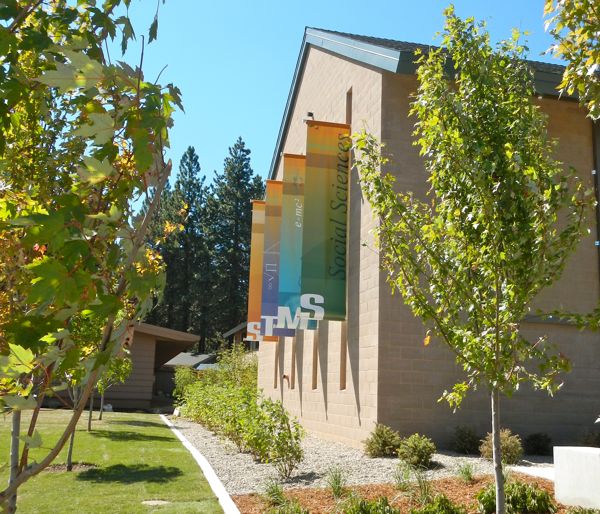
Three days ago, the principal, teachers and students were giddy. They were ready for classes to begin. A buzz permeated South Tahoe Middle School. It had everything to do with the remodel of the campus and the new two-story Mountain Vista building being complete.

Well, it wasn’t really completed. Workers were still caulking, painting and planting. All was to be ready for today’s first bell.

Changes at South Tahoe Middle School are dramatic. Photos/Kathryn Reed

But the views, well, they weren’t there before. Freel Peak, Jobs, Jobs Sister – are visible from the second floor. Looking down is what is now called Timberwolf Plaza. This is where students may eat on the grass or one of the several tables.

“It feels like a campus finally,” Principal Beth Delacour said as she proudly walked the halls and out to what she calls the “back yard”.

She knew students by name, and those who were incoming were introduced by their siblings or parents. Kids were smiling as they perused the new facility in search of their classrooms and teachers.

J.J. Clause and Linda Kurek, the two music instructors, were all smiles. They can’t believe how the band room has been transformed.

“We won’t get slivers off the storage cabinets. There is room for all the kids’ and school’s instruments. We have windows that open and are not painted black,” Clause said.

Clause and Kurek had been talking about what they wanted the band room to be like for the last dozen years. They had even drawn up the plans – most of which became a reality.

Not only does it feel like a campus, but a high school campus.

Technological upgrades in classrooms mean circuit breakers should no longer be tripped when teachers try to plug more than two things in at once. Some of the classrooms were so old they only had two electrical outlets.

The revamping of STMS, which included the removal of 10 portables that became classrooms in the two-story building, was paid for by the voter-approved $64.5 million Measure G facilities bond. Matching grants brought the total the district will spend to $98 million.

New flooring, paint and some new windows are touches throughout the school.

Also new this school year is the student union at South Tahoe High School. It finally allows the kids to eat indoors in one place. This is a joint use facility with South Lake Tahoe, so it is really a community building.

Officials envision being able to rent out that center to organizations, especially during the summer when school is not in session.

Plenty of dust is flying at the high school, as workers build the sports medicine complex. Also under way are the improvements to Bijou Community School.

Next year the magnet school in Meyers will receive some upgrades. When those are done, all the money will have been spent.

ngg_shortcode_2_placeholder  (Click on photos to enlarge.)


Tahoe celebration ends with 5 people dying in plane crash

By Kathryn Reed

Five people from Fresno who were in South Lake Tahoe for a birthday celebration died Saturday when their plane sputtered and then nosedived into a field just after taking off at 9:45pm.

Francisco de la Mora, who owned the Piper Cherokee, was piloting the single-engine fixed wing craft. Shannon D. Fleck is the other person the plane is registered to.

With de la Mora were his wife, their 5-year-old daughter, and Harold and Kin Cardwell. The plane could seat seven. De la Mora owned JDM Transport, a trucking company, in Fresno. Harold Cardwell was an insurance agent. Information about the victims is still not complete.

Harold and Kin Cardwell

“I’m sure he was flying right-hand on this plane,” Stephen Buxton told Lake Tahoe News of Harold Cardwell. “He was an incredible pilot. I’ve flown many times with him. He is the one who taught me to fly.”

Buxton had known the 60-year-old Cardwell for more than 30 years. They met in church. While Buxton is now a pastor in the San Diego area, he never ministered to Cardwell. But Cardwell, who owned an Allstate Insurance franchise in the Fresno area, was Buxton’s agent for several decades.

According to Buxton, two adult daughters from a previous marriage survive Cardwell.

“He was a great guy. He was easy to love,” Buxton said. “I’m going to miss him and I know his kids are going to miss him.”

Officials from Mountain West Aviation, which runs the plane operations at the local airport, told investigators the Piper landed Aug. 25 at the South Lake Tahoe airport for a few hours and that the occupants requested a taxi. No gas or other services were requested.

A 1-acre circular area burned after a plane crashed Aug. 25 after taking off from Lake Tahoe Airport. Photo/Claire Fortier

The cause of the crash is not likely to be known for some time as federal investigators do their job. The fuselage is all that remained of the plane after it disintegrated upon impact.

Federal Aviation Administration and National Transportation Safety Board officials have been scouring the site.

Witnesses told authorities they heard the plane sputter before it crashed. It also appeared to bank right, which could have been an attempt to get back to the airport or to avoid the heavily populated area at the end of the meadow.

The plane, according to authorities, needed most of the runway to take off – which is not usual and should have been an indication something was wrong before the plane left the ground.

According to the National Weather Service in Reno, the wind at Lake Tahoe Airport at 9:45pm Aug. 25 was out of the south at 4 to 8mph, so that was not a factor. Plus, it was a clear night.

The pilot was unable to gain altitude after take-off. Photo/Claire Fortier

“They will be out there all night. They will probably remove the bodies sometime tonight,” El Dorado County sheriff’s Lt. Pete Van Arnum told Lake Tahoe News of investigators. “From what I saw, we’ll probably have to go to X-rays and dental charts (for definite identification of the victims).” He added that could take a couple days.

A fire immediately started after the plane crashed Aug. 25. About 1 acre of brush burned a circular area.

This same plane was involved in an accident on March 5, 2005, in Destin, Fla., according to the National Transportation Safety Board. In that accident the two people aboard were not injured. At the time it was registered to other people.

NTSB records said the cause of that accident was, “The pilot’s inadequate compensation for wind during a crosswind takeoff resulting in a loss of directional control and subsequent collision with terrain.”

The last plane crash at Lake Tahoe Airport was Aug. 5, 2007, which killed the Bay Area pilot on impact when he took off on a summer morning heading south. On Aug. 19, 2002, a single engine plane went down near Meiss Meadows after taking off from Lake Tahoe Airport. The Bay Area couple on board died. That crash ignited what became known at the 294-acre Showers Fire.


Fresno couple, daughter and 2 others die in fiery South Lake Tahoe plane crash

Updated Aug. 26 3:17pm:

Javier de la Mora has told KOLO-TV in Reno that his brother Francisco de la Mora was piloting the plane that crashed in South Lake Tahoe on Saturday night. The pilot is one of the registered owners of the plane.

The four others on board are believed to be de la Mora’s wife, daughter and two other people.

Updated Aug. 26 3:10pm:

Federal officials are waiting for family members of the deceased to be notified before releasing the names of the people who died in the Aug. 25 plane crash in South Lake Tahoe.

The fire that was ignited by the downed plane was about 1 acre in size.

Updated Aug. 26, 2012, 2:05pm:

Francisco J. De La Mora of Fresno and Shannon D. Fleck, hometown unknown, are the registered owners of the plane that crashed into a field off the runway of Lake Tahoe Airport on Saturday night, according to the FAA Registry.

The Piper that disintegrated on impact, killing all on board, was a fixed wing single-engine.

Federal officials are on scene at the site of the Aug. 25 plane crash in South Lake Tahoe. Photo/Claire Fortier

This same plane was involved in an accident on March 5, 2005, in Destin, Fla., according to the National Transportation Safety Board. In that accident the two people aboard were not injured.

NTSB records said the cause of that accident was, “The pilot’s inadequate compensation for wind during a crosswind takeoff resulting in a loss of directional control and subsequent collision with terrain.”

The plane did not get far off the runway before crashing Aug. 25. Photo/Claire Fortier

FAA and NTSB officials are in South Lake Tahoe investigating the Aug. 25 accident that is believed to have killed five people who had been in Tahoe for only a few hours. The plane seats seven.

——-

Updated Aug. 26, 2012, 9:10am:

By Kathryn Reed

FAA officials believe five people could have been on board the plane that crashed Saturday night on take-off from Lake Tahoe Airport.

The Piper Cherokee could seat six people.

The Federal Aviation Administration in Southern California would not give details about the victims, nor where they are from or what makes them believe there were five people on board.

In looking at the wreckage from Saturday night’s plane crash in South Lake Tahoe, officials the morning of Aug. 26 were not able to recover any identifiable markings.

“It’s just a charcoal circle,” City Manager Nancy Kerry told Lake Tahoe News.

Nor have there been any calls from the airport the plane originated from.

Mountain West Aviation officials, which runs the operations, told investigators that the plane landed Aug. 25 at the South Lake Tahoe airport for a few hours and that the occupants requested a taxi. The taxi took them to a local restaurant and returned them to the airfield.

The plane crashed about 9:45pm into a field on the north end of the runway.

FAA officials from Reno are to be at the site this morning.

National Transportation Safety Board officials will be coming from Idaho today or Monday.

Because the plane landed on El Dorado County property, the sheriff’s office is taking control locally. However, neither the local lieutenant nor the lieutenant in charge of media relations was available Sunday morning.

—–

By Kathryn Reed

A plane crashed after taking off from Lake Tahoe Airport on Saturday night. No one on board survived.

Because the plane was completely engulfed in flames and only the fuselage remained intact, rescue personnel do not know what type of plane was involved. And because no flight plan was filed, it is not known how many people were on board.

The South Lake Tahoe airport does not have a tower, so information about planes taking off and landing is not as complete as it is at other airports. There is a recording the pilot made, but it has limited information.

A fire started immediately after the plane crashed Aug. 25. Photo/Dan Wilvers

What officials could determine from what the pilot said is that the plane was not involved in the air show that took place at the airport earlier in the day. The plane also is not registered at Lake Tahoe Airport.

Because no part of the tail could be seen where the plane landed, it is not possible to match what is on the recording to what is on the ground.

South Lake Tahoe Police-Fire Chief Brian Uhler is the one who got closest to the plane, and as someone who owns a small plane, would know what to look for. It is hoped daylight will reveal a piece of the tail section.

Officials are saying it’s possible the plane was a four- or six-seater Lancer. The plane was registered to more than one person living outside the Lake Tahoe Basin. No fuel or other services were purchased locally.

“Witnesses report sputtering, that the engines didn’t sound good,” City Manager Nancy Kerry told Lake Tahoe News.

She said people saw the plane try to bank to the right. It’s not known if this was to try to return to the airport or avoid structures.

The aircraft crashed nose first into the dry brush north of the runway by Winnemucca Drive. No buildings were hit. On impact a brush fire of a few acres broke out that took firefighters about an hour to fully extinguish.

According to the National Weather Service in Reno, the wind at Lake Tahoe Airport at 9:45pm Aug. 25 was out of the south at 4 to 8mph.

Flying in and out of the mountains always poses risks, and more so in the summer because of the density of the air. A heavy plane can prevent a pilot from being able to gain enough altitude.

National Transportation Safety Board and Federal Aviation Administration personnel have been notified. It’s possible they will be on scene Sunday.

Overnight, local public safety personnel will secure the perimeter so no one can tamper with evidence. The body or bodies are likely to be recovered Sunday, with autopsies to follow.

Officials hope a flight plan was filed where the plane originated from so when it is overdue, that airport’s staff will call Lake Tahoe as another mechanism to confirm who was on the plane.

The last plane crash at Lake Tahoe Airport was Aug. 5, 2007, that killed the Bay Area pilot on impact when he took off on a summer morning heading south.

The crash is not expected to interfere with any airport operations on Sunday, including the Young Eagles flights that will be taking place. Capt. Chesley “Sully” Sullenberger, who landed an Airbus in the Hudson River, will be at the airport for the Young Eagles event.


Hudson River’s heroic pilot relives landing for Tahoe

By Kathryn Reed

“I’m not sure we can make any runway.”

“We’re gonna be in the Hudson.”

“Say again captain.”

That is some of dialogue between airline Capt. Chesley “Sully” Sullenberger and the control tower moments before he landed US Airways Flight 1549 into the Hudson River in New York on Jan. 15, 2009.

The black box recovered from the cockpit is privileged information and contains everything Sullenberger and first officer Jeff Skiles said in the 208 seconds after Canada geese took out their two engines on the Airbus and the 155 aboard the plane landed in the 36-degree water. (The air temperature was 21 degrees that day.)

Capt. Chesley “Sully” Sullenberger, left, on Aug. 24 talks to stunt pilots who will be in the air today at Lake Tahoe Airport. Photo/Kathryn Reed

Everything happened so fast the only announcement Sullenberger made to the passengers was to brace for impact. Even the flight crew didn’t know there was about to be an emergency water landing.

Sullenberger relayed this and other aspects of the harrowing experience to a crowd of about 175 people Aug. 24 at Embassy Suites in South Lake Tahoe.

“You would have thought that we had been working together for years,” Sullenberger said of himself and Skiles. They had met three days earlier. Now they are like brothers.

It was their years of experience that allowed them to be calm, act on instinct, and ensure not a single person died as they descended at a rate of two stories per second.

Pilots don’t get to practice these types of scenarios. There is no simulator that allows them to practice a water landing.

“The only way to train is theoretical discussions in a classroom,” Sullenberger said.

While the two pilots were not high-fiving or slapping each other’s back after the successful landing, Sullenberger said they did turn to each other and simultaneously said, “That wasn’t as bad as I thought.”

The plane was damaged so much it could not be flown again. It has since been restored a bit and is on display for the public in North Carolina.

In the time since Sullenberger reached hero status he has spent his time working on air safety, giving talks and getting kids interested in aviation. Plus, he has written two books – “Making a Difference Stories of Vision and Courage from America’s Leaders” which came out in May and “Highest Duty: My Search for What Really Matters” which was published in May 2010.

He and Skiles are the honorary co-chairs of the EAA Young Eagles program that gets young people interested in aviation. He will be at Lake Tahoe Airport on Aug. 26 for the Young Eagles flights.

His wife, Lorrie, and daughters Kate and Kelly joined him on this trip to Tahoe. The Bay Area residents are regular visitors to Lake Tahoe, having owned a place at Incline Village in the past.

They are avid skiers, with most of their time spent at Northstar. Biking the Flume Trail and hiking parts of the Tahoe Rim Trail are other athletic pursuits they enjoy, Lorrie Sullenberger told Lake Tahoe News.

The couple has a romantic tie to Tahoe, too. In the late 1980s they were passengers in a friend’s four-seater plane when Sullenberger proposed while flying over Lake Tahoe.

—–

Note: Lake in the Sky Air Show is today at Lake Tahoe Airport. Opening ceremonies are at 10am, though the pancake breakfast starts at 8am. Closing ceremonies are at 3:30pm.


Private property owner threatens completion of Sawmill bike path

By Kathryn Reed

Sawmill bike path may never be completed.

“They make some offers and some threats, but I’m not interested in them,” Cass Amacker told Lake Tahoe News. “They don’t want to pay me nothing for buildable property.”

Amacker for years has owned a 20-acre parcel off Sawmill Road.

Sawmill bike path goes for seven-tenths of a mile before needing to get on the road. Photos/Kathryn Reed

Part of his property is being sought by El Dorado County so the remaining nearly 1.3 miles of trail can be constructed. Earlier this summer about seven-tenths of a mile was put in which had nothing to do with the Amacker property.

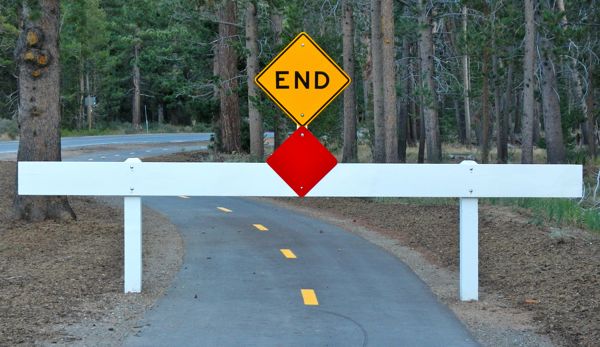
It’s a curvy trail that meanders just off Sawmill, almost into a wooded area. It meets all the current bike requirements of being 10-feet wide, with 2-foot shoulders. But it abruptly stops with a big white fence and yellow sign that says “End”.

County officials don’t want it to end there. The whole idea of the Sawmill path is to have it link up with the bridge on Highway 50 that crosses the Upper Truckee River before the path takes cyclists and walkers to Meyers.

Brendan Ferry, senior planner with El Dorado County, remains optimistic a resolution with Amacker and the other private property owner along that stretch of roadway will be found so that section of bike trail can be finished next summer.

But those agreements will need to be in hand by the end of the year in order to request the Congestion Mitigation and Air Management funds from Caltrans, and have the Board of Supervisors approve a bid package and then award the contract to a company. Plus, with the next portion being longer, it will require more time to build it so everything needs to be in place that much sooner.

Regarding the negotiations with the Amackers, Ferry told Lake Tahoe News, “I can’t speak too much about it because there is a lot of legal stuff. The right-of-way process is very defined and confined, and involves a lot of legalese, money and contracts.”

Amacker said the county wants 3 acres.

Where the trail goes on Amacker land the whole width of the path is on their property. Whereas the adjacent private property next to the California Tahoe Conservancy parcel, which is at the corner of Sawmill and Highway 50, comes with a dedicated right-of-way from Incline Road to the Highway, so less of their land is needed.

“I don’t see any problems (with the other property),” Ferry said in terms of securing right-of-way agreements.

A small drainage easement is being sought on both properties because of an existing pipe.

Plans for the remainder of the Sawmill Trail are 80 percent designed.

Amacker contends the county and agencies, which he did not name, have cost him too much money and land in the past, so he is not willing to give his land away now. And he added that even if a price were settled on, that doesn’t mean he’ll ever sell.

Amacker told Lake Tahoe News his land is zoned for a 40-unit apartment complex, so he wants to be compensated for the land’s potential, not for bare soil and trees.

However, Carl Weiland, El Dorado County assessor, said the Amacker ranch is zoned TR1. That would make it capable of having a single-family residence.

“I don’t see anything saying he can have apartments,” Weiland told Lake Tahoe News.

The ranch falls under Plan Area Statement 119 of the Tahoe Regional Planning Agency. The allowable uses are residential (not multi-family, which is what apartments fall under), recreation, resource management, and public service.

While the county and Amacker keep talking, the county is also working on plans to develop bike paths along Lake Tahoe Boulevard that would connect to the existing Sawmill path.

Ferry would like to do both sections of that route in 2014, though funding could force it to be built in phases. All of that land is publicly owned and deals are in place for it to become a reality.

The trail will require cyclists to come off the Sawmill Path and cross Lake Tahoe Boulevard. Going right, toward South Lake Tahoe, the path will be built on the dirt U.S. Forest Service trail that already exists. To the left, it will be adjacent to the roadway. It will tie into the class 2 bike trail that ends at Clear View Drive.

ngg_shortcode_3_placeholder (Click on photos to enlarge.)