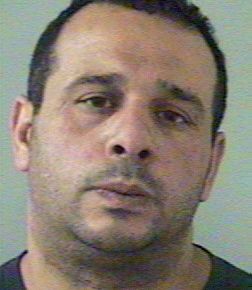
Grego: Expand recreation, reduce unemployment, make TRPA accountable

Publisher’s note: This is one of five Q&A profiles of a South Lake Tahoe City Council candidate running in the Nov. 6 election.

Name: Bruce Grego

Age: 59

How long have you lived in South Lake Tahoe?: 45 years

Bruce Grego

Work/volunteer experience: Work History: I grew-up helping operate my parents’ motel for 30 years between 1967 to 1997; practicing attorney in this community since 1980.

Volunteer experience: In the 1970s, active with groups opposed to TRPA; about 1974, participated in a committee to support a local initiative to require an elected city clerk and city treasurer; in the late ’70s participated in a city of South Lake Tahoe planning committee known as the 20-20 Committee (a citizens’ planning committee addressing issues for the next 20 years); for about eight years in the 1980s I was a member of the city of South Lake Tahoe Planning Commission; was appointed by the City Council in 1989 to complete a term of a vacant City Council position; 2008, I was elected as a member of the city of South Lake Tahoe City Council and I am currently a member of said body. During my time on the council I have been appointed to a number of governmental bodies, such as the Tahoe Transportation Commission and LAFCO, and I have attended City Council meetings on a regular basis.

Why are you running for City Council?: To continue with the work I began four years ago and to address the many challenges that face us in the coming years. Also see my comments throughout this response.

What is your vision for South Lake Tahoe, the South Shore and the entire Lake Tahoe Basin?: Better roads and sidewalks, more recreational opportunities for our citizens, local control of land use, and expansion of our economic base.

What are the three best things about South Lake Tahoe?: Our people, our community and our environment.

What three things would you like to change in South Lake Tahoe and how will you go about changing them?: 1. Land use continues to be a key factor in determining our future. TRPA continues to dominate our land use policies in our community and in this basin even though no one is elected to the board. In March 2011, I alone began to engage the Nevada Legislature about the future of TRPA. On March 15, 2011, I attended a subcommittee of the Nevada Legislature and called for TRPA to be locally elected as opposed to appointments; I told the Nevada sub-committee that TRPA has caused our community to be stagnate and left with a 1969 design infrastructure unable to compete with other recreational areas; that we have been denied our civil rights; and I proposed, that without changes, that Nevada deny any funding of the TRPA. From that speech I was invited by state senators and assemblymembers to become involved in the passage of Nevada Bill SB271. I eventually was able to obtain the endorsement of the South Lake Tahoe City Council; and I contacted both our Congressman Tom McClintock and then Assemblyman Ted Gaines to endorse this bill, which they subsequently did. I wish to continue this effort for another four years. SB271 calls for Nevada’s withdrawal from TRPA if TRPA fails to reform. I intend to see that substantial changes occur. Without flexibility in land use, positive changes in our community cannot easily occur.

2. Reduce unemployment. We are tied to the national economy, however, further promotion of special events, broadening our economic base, and maintaining city services should continue to be our focus. Also, as stated above, sensible land use policies can promote the development of new businesses in our community.

3. Expand recreational activities for our youth. The renovation of the recreation center should be a priority for the city in the next four years.

What would you do to balance the budget?: I have voted for a balanced budget for the city of South Lake Tahoe for the last four years. The city of South Lake Tahoe continues to have a balanced budget. We must spend within our means.

What would you like to see in a recreation master plan?: More recreation opportunities for our youth, more parks, and another dog park. Find funding to renovate our Recreation Center on Rufus Allen.

Promoting recreation was touted two years as a means to stimulate the local economy. Nothing has been done in that time. What will you do so that same sentence can’t be said two years from now?: This is a leading question, it assumes nothing has been done. I disagree with your conclusion. Since I took office, Lakeview Commons at El Dorado Beach and Bonanza Park have been established. There is no doubt that Lakeview Commons has been successful and a model for other such development. The ice rink has been leased to private parties with the objective of making it a world-class facility.

What types of recreation do you enjoy in Lake Tahoe?: Probably not enough … with operating my own business and attending to council duties. I like helping people. I enjoy solving problems, and making sure justice is done. I like what I do. On a more personal level, I like attending special events, attending the Shakespeare Festival and Treat Street, shopping at our local flea market and collecting Tahoe memorabilia. I also enjoy fishing with the grandchildren.

How will South Lake Tahoe be different in four years after the end of your term?: I cannot promise to remake the entire town in four years; only the promise that I will continue to keep our city in the right direction. Always looking for opportunities to better our community. I will continue to work for reasonable land use policies controlled by the people affected by those policies; continue with road improvement that we started this year; continue to push back against the agencies; continue to seek solutions to complete Project 3, the Hole.

Being on the council requires working with four others. Give readers an example of how you work well others in difficult situations with differing opinions: The last two years have clearly demonstrated that I have worked well with the other councilmembers. We have voted together often, and we have disagreed without being disagreeable. Example: see the two or more televised council meetings each month that I participated in that involved every issue that faces our community. I work well with my colleagues in the other governmental agencies that I have been appointed to by the City Council, such as the Tahoe Transportation Commission and LAFCO.

An example of a difficult situation. Even though I have opposed the operation of marijuana dispensaries in our city, when this issue first was addressed, the council created a subcommittee of two councilmembers to work with citizens for and against this issue for the purpose of proposing an ordinance regulating the dispensaries. Bill Crawford and I made up this subcommittee, and for many months we, with other appointed members, had public and open discussions with marijuana supporters during the process of making recommendations for a proposed ordinance to the council. I fulfilled the charge by the council, even though I fundamentally opposed the continuation of the dispensaries. And even though Bill Crawford and I had disagreements on the council, we worked together on this subcommittee.

What are your opinions about the following issues and/or entities?:

• Loop road – First of all, in responding to this issue, I am including in this response issues relating to the Project 3, the Hole at Stateline, and the South Shore Vision Plan. What is the most fundamental concern that affects these three issues, and this election? It is electing persons to the council that are independent and whose sole allegiance is to the people of South Lake Tahoe. Why? In the past large developments have occurred at the expense of small business and our community (small business employ many local people). The South Shore Vision Plan and the current Loop Road proposal seeks to remove additional businesses in our community as well as many residential properties, and redirect traffic. Consider the past: a) Randy Lane was able to destroy blocks of small businesses and financially impact the city’s tax revenue based upon a development proposal not adequately funded. Until I was elected in December 2008, no one at the city was aware that Randy Lane had not purchased the properties within the Project 3 (the Hole) free of debt, and acquired said properties with mortgages; this among other things, prevented a consolidation of the properties that was a prerequisite for development. b) PADMA, the common interest maintenance entity for Heavenly Village mandates approximately $130,000 annual contribution from the city of South Lake Tahoe in perpetuity because the city owns the sidewalks and the restroom and signed an agreement to such effect; c) Heavenly Valley has an agreement with the city that their ski tickets sold at Heavenly Village would not be taxed for about 20 years. Why are these sweetheart deals being made? Not because these corporations are bad (there are good people that work for them), but because the persons you have been electing have not been independent and/or have not been able to resist the continued advocacy and lobbying effects by such corporations. In spring 2009, Randy Lane sought from the council support to sell public bonds for the purpose of funding Randy Lane’s project in the sum of $25 million. I opposed this request because it made no financial sense, and it would have impaired the city’s future credit standing. Ultimately, the entire council rejected his proposal for a $25 million “loan”. I demonstrated the independence required to have a seat on the council. I have opposed efforts by special interest groups for projects that are not in the interest of our community. One of the current issues facing our city is the Loop Road. I do not support this proposal for the following reasons: the use of eminent domain/condemnation to achieve the ownership of the loop road corridor, the destruction of small businesses and residence in our community, and the redirection of traffic away from our city’s business centers. I believe we need to revitalize the Stateline area though a vision type plan, but no plan will be approved by me unless the benefits are fairly distributed, and the city’s interest are protected. Another issue: Presently, some of the major investors are seeking to acquire other holdings in Project 3, the Hole at Stateline. The council has sought to encourage development at the Hole, and has spoken to developers and property owners alike. We have to make sure that any permits issued for the project address all concerns, including, and most important, that the new developer/owner has sufficient resources to proceed. Independence, reviewing projects on their merits, and looking out for you is a summary of my history and voting record on the City Council in the last four years, and will continue to be my objective, if you grant me another term.

• Hole at Stateline – see above.

• Tahoe Valley Plan – No question … I support the Tahoe Valley Plan that calls for consolidation and concentration of commercial land uses. The revitalization of the Y is equally important to the Stateline.

• Giving money to any chamber or tourism bureau – I support the current practice, that with the exception of some special events, the city does not provide funding for these bureaus. They provide an important service to our community, but this is not the role of our council. But it is equally important to note: that we have increased contributions by city employees; we have reduced the number of employees by 30 percent; we continue to keep a balanced budget; we continue to maintain city services to the public, and the general duties of this city is much greater than most (i.e. addressing land use issues with TRPA and other agencies in the basin). My point is that making any additional contribution to the chamber and tourism bureau will take money from essential city services, and I cannot support that.

• Benefits, including pensions, for city staff – See above. Based upon the pattern set by prior councils, our contracts with the labor units for city employees are not annual contracts. Nevertheless, the council has obtain concessions on those contracts, making employees more responsible for health care and pension costs, and I am determined to bring such contracts in line with what we can afford.

• Tahoe Regional Planning Agency – see above.

• Lahontan Regional Water Quality Control Board – At the first strategic conference of the council in 2009, each member of the council proposed goals and objectives. My proposed objective was that the City Council have a “foreign policy” — not to deal with other nations — but to interact with our neighbor governments and to reach out to Sacramento and Carson City. We have not only been able to impact TRPA, but for the first time in memory, Placer County, El Dorado County and the city of South Lake Tahoe have joined together to oppose Lahontan’s water quality proposals (BMPs).

• South Shore Vision Plan – see above.

• Lake Tahoe Airport – I believe we should support commercial operation at the airport.

Why should voters vote for you over someone else?: Proven record of accomplishments. Independent, not tied to special interests. A decision-maker. Not afraid to take a position not supported by the rest of the council. I do look “outside the box”.

Four years ago you said you would change how the TRPA Governing Board is elected. You haven’t done so. Any comment?: I still support an elected board by the people in the basin. I believe that land use, water quality issues, transportation, and other environmental issues should be decided by elected local governments, and not bureaucratic, appointed boards of special interest groups controlled by staff with no understanding of economics or the needs of our community. Our community’s 1969 stagnate design is a “tribute” to the misdirection of TRPA and other land use agencies in the basin. We have been locked in to old infrastructures and obsolescent. Four years ago, many commentators and many citizens questioned whether I could fulfill the promise of trying to establish an elected TRPA board or, for that matter, impact the direction of the TRPA in any manner whatsoever. I hope that you recall that in 2009, I, standing alone, proposed a resolution demanding an elected board, and no one else on the council would second my motion. Or when I, on March 15, 2011, standing alone at the Nevada Legislature took the initiative to attack TRPA’s land use policies, and demanded a cut off of all funding to the TRPA. Look at the situation today. As a direct result of the passage of SB271, where TRPA’s very existence has been threatened, TRPA has finally engaged local government, and the proposed regional plan update addresses some of the important concerns of local government. We are even going to have a test case for drive up windows for pharmacies. Look at the situation today, not only was I able to have the City Council (the only California elected body to support SB271), but we are, the City Council, actively engaged in addressing TRPA regulations and addressing other environmental regulation. There is no doubt that TRPA finally began the process of a long past due Regional Plan update, if not for SB271. There was no concerted effort by the City Council to “push back” against the agencies prior to my election to the council. We have a very different perspective on the council today on land use issues than four years ago, and I believe that I caused this difference to occur. The accomplishments to date are just a beginning. We must do much more to bring sensible land use policies in the basin and keep the pressure on TRPA.

Is there a person or business you would not take a campaign contribution from?: Yes.

Tell readers something about yourself that they may not already know: I have a mole on my left knee. My point is, citizens have observed me over the last four years, and have contacted me to discuss concerns and to show support of my decisions on council. I have been transparent. You have seen how I have made decisions, and you have seen my concerns for you. It is important in this election that you examine the history of the new candidates for office. Can they make decisions, have they worked for industries that have or will seek “sweetheart” deals from the city, can they be independent, and how long have they participated in public affairs? I ask for your support in November.




Trains take the stress out of traveling in England

By Susan Wood

LONDON – If securing Wimbledon or Olympic tickets were as easy to negotiate as getting around England by rail, the All England Club and London Games officials would have to dramatically expand their venues.

United States take note.

Great Britain is one of those places where you can forget getting behind the wheel and successfully touch down in 2,500 places in England via BritRail. Prior to the Games, Lake Tahoe News spanned one end of England to another – London to the Lake District (Windermere station) to Bath and back to the host city without any glitches.

The system with its 18,700 trains and varied connections to the London Underground as well as bus routes and air makes “Am”trak look like “am”ateur hour in terms of being on time, number of routes, convenience, train comfort and helpful staff. (Granted, Britain is only about two-thirds the size of California.)

The train system in England makes it so a tourist does not need a car. Photos/Kathryn Reed

It’s difficult to believe California in 2012 is still debating installing a high-speed rail train linking the north with the south.

What’s more, “Fast Food Nation” author Eric Schlosser must have been onto something when he lamented in his best-selling book how U.S. motorists’ love affair with the car and its isolationist view of the world may be attributable to the downfall of our transportation system and high carbon footprint leading to climate change. At the time, strip malls were going in – encouraging vehicle miles, and train tracks were dug up.

This is not so in England. The British people and their visitors embrace the romantic, relaxing form of travel. The system is run by 26 train operators, with Network Rail handling the infrastructure of the system. The company intends to spend more than 10 billion pounds this decade on improving it.

The Intercity 125 provides the majority of long-distance services. For example, at King’s Cross, the line covers 393 miles from London to Edinburgh in four hours flat. Virgin Trains, a subsidiary of the highly successful, customer service-oriented airlines of Virgin America and Virgin Atlantic, operates 334 high-speed trains. First-class customers may use at-seat catering if they don’t feel like walking 10 feet to the snack bar. The lounge features soft drinks, some cocktails, sandwiches and snacks. There are also power ports for audio entertainment, laptops and cell phones.

The Great Western first-class cabins provide roomy seating and the London Times on the table in the morning from Bath to Reading. Most train cars with seating at the tables have large picture windows to accommodate daydreaming and a glimpse of what’s in store for a visitor. The rides are smooth and quiet.

The trip from London to Windermere is an adventure in green with villages that almost invite a rider to get off before the planned destination. Only one stop – Oxenholme – sat in between the route. Once in Windermere, the bus to the bucolic Ambleside, along with a row of taxis sat ample and ready because the service is on time, and there is a coordinated system that alerts other means of transportation and their passengers of the arrival times. (Take note South Lake Tahoe. BlueGo would appear to be a joke to a British traveler, assuming they figured out what a BlueGo is.)

The BritRail timetables posted at stations are easy to follow. And once on the train, a bulletin scrolls the names of the stations before and during the stops. There’s plenty of space for baggage. And unlike some tourism destinations, the staff is courteous, friendly and helpful. Upon the trip from Windermere to Bath – a conductor printed out a more convenient schedule with Birmingham and Bristol as connections, as if it were no trouble at all.

BritRail, which can be reached through the British Tourist Authority at 800-GO2-BRIT or online www.BritRail.com, sells a variety of passes. Aside from a standard unlimited pass, the FlexiPass offers train travel for four, eight and 15 days within a two-month period. On the consecutive pass, a rider can pick any sequence of days. Sleeper cars start at 38 pounds per berth in standard class and six pounds more for first class. Tickets may be previously arranged.

A BritRail pass is not to be confused with the London Underground pass, which whizzes passengers through the busy city in a matter of minutes. A trip from the West End to East London around the host city’s Olympic Grand Central can take about an hour.

The Underground, or tube as locals call it, represents a superior metro rail network to get around London. Billed as the largest underground network in the world, the system evolved through the efforts of F.J. Sprague. The engineer saw that the trains needed to advance from steam power to electric cars. Each electric motor cranked out enough electricity to power 30 homes. In its first year, 5 million people came on board.

Today, 12 lines serve central London through routes running from east to west, north to south and most providing several different ways to connect the diversified neighborhoods that make up this cosmopolitan city.

“You just don’t need a car in this city,” said Alison Hull, a public relations executive who undoubtedly needs to get around. Hull added she and her husband own a car, but pull it out to use about once a month.

For visitors, purchasing the London Pass for access to more than 50 attractions in a designated number of days runs hand in hand with the Travel Card. The auxiliary pass allows a traveler to board the tube as many times as desired in that time frame. The London “attraction” Pass gives a tourist the opportunity to board the unique double-decker sightseeing buses or city cruise lines on the River Thames, another option of negotiating the city.

ngg_shortcode_0_placeholder (Click on photos to enlarge.)


LTCC making ends meet by dipping into reserves

By Kathryn Reed

While the proposed 2012-13 budget for Lake Tahoe Community College is about $800,000 less than the previous year’s budget, the institution continues to rely on reserves to balance the budget.

The $13.7 million budget, which is expected to be adopted at the Sept. 11 board meeting, includes about $732,000 from reserves. The board has advised staff to stick with the 10 percent contingency reserve, which for the next fiscal year would be about $1.376 million.

However, that pot is not one that can continually be tapped because at some point nothing will be left in it if the college keeps using it for everyday expenses.

Lake Tahoe Community College is expected to approve the 2012-13 budget on Sept. 11. Photo/LTN file

LTCC is putting forward a budget that assumes Proposition 30, the governor’s tax initiative on the Nov. 6 ballot, will fail. If it does, it means a $632,000 loss to the college. If it passes, it means less money has to come out of reserves.

(The board on Aug. 28 had the first reading of a resolution supporting Proposition 30.)

Supplies and services have been cut to cope with the shortfall. Adjunct faculty hours have been reduced, which will mean changes in course selections for students. And the library will close at 7pm instead of 8pm.

Another issue the college is wrestling with is meeting the state education code rule that says at least 50 percent of the budget must go directly toward the classroom. LTCC has historically been on the cusp, but with the 12-13 budget may not meet that requirement.

“We are digging deep into those numbers. If we are going to be less than 50 percent, we have to file an exclusion with the board by Sept. 15,” Jeff DeFranco, vice president of administrative services, told Lake Tahoe News.

The faculty has been notified the 50 percent mandate is likely not going to be met. The issue is expected to be discussed at Tuesday’s meeting. If the board approves a budget not meeting the 50 percent rule, the state chancellor’s office must be notified by Dec. 1. DeFranco said the college will need to show the state it has a plan to get back into compliance.

He said part of the plan includes realizing in fiscal year 2013-14 the full benefit of the 11 early retirements. With only one of the positions being a faculty member (Steve Adams), this did nothing to help attain the compliance with the 50 percent rule. The other retirements include one administrator and nine classified employees.

Eighty percent of the budget is allocated for employee salaries and benefits. In the 2011-12 budget $11,702,727 was budgeted for salaries-benefits, with the actual closer to $11,013,091. For fiscal year 2012-13, wages-benies come in a $10,954,505.

Net personnel savings come by not filling a dean position, but adding support staff. In 2013-14, the retirements will save the two-year college $430,000.

DeFranco, who has been at LTCC a matter of months, is working through the numbers to make them easier to discern, and looking long-term instead year-to-year.

A detailed report on how Connect Ed, the college’s community education program that was launched a year ago, is expected at the Sept. 11 meeting.

But the college has some pressing capital expenses to think about, too. The phone system is failing. A facilities master plan is expected to be discussed at the Sept. 25 board meeting.

—-

Note: Public hearing on the proposed 2012-13 final budget will be Sept. 11, 6:20pm, at Lake Tahoe Community College board room.


El Dorado County wants to restructure library tax

By Kathryn Reed

El Dorado County voters on Nov. 6 will be asked if they want a countywide assessment that would tax people equally.

The library system is divided into five zones, with all but one having passed a tax. That area is in the middle of the county, which includes Placerville, Pollock Pines and Cameron Park.

The taxes that are currently collected stay in the zone where the money comes from, with the general fund filling in a substantial part of the library budget. The countywide tax is estimated to bring in an additional $180,000 to the library system. That is a small amount based on what the overall library budget is.

How the additional money would be distributed would be up to the Board of Supervisors. However, library Director Jeanne Amos will come up with recommendations for the board.

The goal isn’t so much to raise more money, but instead make funding of libraries fair and equitable, as well as have a more solid base.

“The library funding is literally all over the map. It makes it difficult to run an effective library system because the funding is uncertain,” Mike Applegarth, principal analyst in the county’s Chief Administrative Office, told Lake Tahoe News.

The proposed tax rate would be the same as what single-family residences in the Tahoe basin pay today — $17.58 a year, with a potential increase of 3 percent based on the Consumer Price Index. County supervisors picked the lowest fee that was being collected and opted to put that amount on the ballot. So, for some areas their library fee would be decreased if this passes in two months.

If two-thirds of the voters agree to the tax, it would replace any library tax currently in place. It would be good for 15 years.

If it does not pass, the South Shore and Georgetown taxes are set to expire in 2015. However, it is likely voters would be asked to renew those initiatives down the road.

Total library operations are $3,334,010 for the 2012-13 fiscal year. Most of that money is from library taxes, with about 45 percent – or nearly $1.5 million – coming from the general fund.

Branches also have “friends of the library” groups that help put on all the programs that are outside of a book being loaned.

Library usage in El Dorado County has increased through the years. In 2007-08, there were 85,000 library cards – 91,000 in 2011-12; there were 745,000 checkouts in 07-08 and 880,000 in 11-12; and in 07-08 there were 697 children’s programs and 1,027 in 11-12.

The county operates six libraries – in South Lake Tahoe, El Dorado Hills, Cameron Park, Placerville, Georgetown and Pollock Pines – and a bookmobile.


Donation to education group tainted by link to South Lake Tahoe bribery, drug case

Updated: Sept. 6, 2012, 9:30pm.

By Kathryn Reed

The Lake Tahoe Educational Foundation appears to be helping South Lake Tahoe City Councilwoman Angela Swanson cover up a donation from Gino DiMatteo.

Nancy Rollston, president of the nonprofit foundation, Swanson and DiMatteo met this summer at least once to discuss a donation by DiMatteo to the group.

At that time DiMatteo operated the medical marijuana collective called City of Angels II. It was also known that the U.S. Attorney General’s Office was cracking down on collectives in California. Medical marijuana dispensaries at various times have been a closed session item on City Council agendas, so Swanson has privileged information and more knowledge than the average citizen in South Lake Tahoe about that segment of the community.

It was well-known that the dispensaries were all under the radar of law enforcement for potential illegal drug activity. Why an education group that helps students in Lake Tahoe Unified School District, that has an FBI agent on its board, would accept his money is not known because their president is withholding information from the media.

And according to Chris Campion, the FBI agent who is on the board and is past president of the foundation, Rollston is the spokesperson for the group.

“The bottom line right now is we are not going to be talking about it. If that changes in the next few days, we will get back in contact with you,” Campion told Lake Tahoe News.

DiMatteo is now behind bars in Placerville on charges of bribing a public official (Swanson), possession of marijuana for sale, possession of a controlled substance and possession of ammunition.

A bail hearing the afternoon of Sept. 7 could determine if he will be released as his case goes through the court system.

Swanson has not been charged with any crime, but her name has been used in documents by the El Dorado County District Attorney’s Office, the lead agency in the case, stating she is the one who DiMatteo allegedly bribed.

Lake Tahoe News has been told by sources that Swanson had secured one or two $5,000 donations from DiMatteo for the Ed Foundation. Swanson is on the Ed Foundation’s board.

KRNV-TV in Reno reports having a letter from Ed Foundation President Rollston thanking DiMatteo for his donation of $1,128, with a handwritten addendum saying, “Your donation was extremely generous and is greatly appreciated.”

Other officers on the Ed Foundation board are Pradip Patel-vice president, Jerry Bindel-treasurer (he could not be reached at his office after 5pm Sept. 6), Debra McHugh-secretary, and Campion-past president.

The other board members are Tyler Cannon, Greg Bergner, Paige Cefalu, Jana DiGrande, Bill Kingman, Jen David, Lee Anne Stigers-Genasci, Christina Proctor, Joe Marzocco, Brain Hogan, Coleen Shade, Diane Rosner, Julie Lucksinger, Cookie Rork, and Tom Davis.

Campion said he would not comment on whether the donation from DiMatteo raised red flags because who made the donation or how it was handled.

City Councilman Davis said, “I have not been active in the Ed Foundation for some time. I have no knowledge of [any] donation whatsoever. Period.”

Rollston said, “I have no response or comment to any of your questions.”

There is question whether information about the foundation’s donors are public record.

Swanson said at this time she is not commenting further about anything related to the case.

Even if all of the money DiMatteo gave the Ed Foundation ended up in the appropriate bank account, Swanson had a duty to report the transaction to the California Fair Political Practices Commission. She also had an obligation to report it to the City Council to disclose an entity she was involved with was benefiting from someone who the city was doing business with. Neither of these things occurred.

It is not known if she consulted City Attorney Patrick Enright.

Lake Tahoe News asked Enright if he gave Swanson any advice about anything involving the case. He said, “I can’t comment at this time while the investigation is going on.”

However, Lake Tahoe News has learned Enright is the one who recommended Swanson hire the attorney she has retained out of Sacramento.


Truckee biomass unit would curtail the number of U.S. Forest Service control burns

By Kathryn Reed

TAHOE CITY – If the biomass facility that is proposed to be built between Truckee and Tahoe City comes to fruition, it will mean the U.S. Forest Service would be burning less material that is left over from fuel reduction projects.

It also means energy will be created and put into the state’s grid.

What makes this system different than most biomass facilities is that it would be a gasification unit.

This is what the proposed biomass facility would look like. Rendering/Wood Rodgers

“It heats the wood without burning it. You don’t have the smoke,” Gerry Haas with the Placer County planning division told planning commissioners last week. He said the plant would create a thermo-chemical reaction.

The two people who spoke at the public hearing at Granlibakken conference center had mixed things to say about the Cabin Creek Biomass Facility project. The public has until Sept. 10 at 5pm to submit comments on the draft environmental impact report.

One person who spoke would like the plant to make biodiesel and do more than what is proposed. A spokeswoman for the Sierra Business Council said her group is worried federal air quality standards will not be met and would like a baseline established before the facility is built.

Placer County supervisors in 2007 adopted a plan to deal with excess wood materials.

Originally, Kings Beach had been targeted as the site for the biomass facility. However, vocal opposition nixed that idea. That is when the Eastern Regional Landfill and Materials Recovery Facility entered the discussion. It is two miles south of Truckee off Highway 89.

What is being proposed is an 11,000-square-foot, two-story structure to convert the wood waste into energy. It would be a 2-megawatt facility.

The infrastructure is in place to carry the energy that would be generated. It would go along a transmission line crossing the Truckee River to the main line.

“The U.S. Forest Service Lake Tahoe Basin Management Unit supports the development of a biomass facility close to Lake Tahoe. We’ve worked closely with Placer County to find ways to increase biomass utilization,” USFS spokeswoman Cheva Heck told Lake Tahoe News. “Over the next 10 years, we will be implementing an aggressive hazardous forest fuels reduction program on national forest system lands around the lake, and a biomass facility located nearby increases our options for eliminating these fuels, while helping to address energy needs.”

If the Cabin Creek facility is built, it would be considered a pilot project, according to Haas. He said it’s possible another one could be built at Forest Hill.

The draft EIR is online.


DiMatteo pleads not guilty to drug, bribing elected official charges; wife released

By Kathryn Reed

PLACERVILLE – Gino DiMatteo pleaded not guilty Sept. 4 to the drug and bribery charges levied against him, while the charges against his wife, Irene, were dropped.

He was formally charged with bribery, possession of marijuana for sale, possession of a controlled substance and possession of ammunition. The latter charge has to do with his third-degree felony possession of a handgun conviction from August 1999 in New Jersey that prohibits him from owning or possessing a firearm.

The first count says DiMatteo “did unlawfully give and offer a bribe to a member of the South Lake Tahoe City Council, with intent to corruptly influence said member in his/her action on a matter and subject pending before and which was afterward to be considered by said body of which he/she was a member.”

Gino DiMatteo -- who also goes by Sergio Franco Ottomanelli -- was booked into El Dorado County Jail in Placerville on Aug. 31. Photo/Provided

The alleged bribery of Councilwoman Angela Swanson, according to the complaint that was released Tuesday, took place on or between June 5-13.

June 5 is the date DiMatteo was before the council to seek approval to move his medical marijuana collective, City of Angels II, from Third Street to Lake Tahoe Boulevard. The resolution before the council was to deny that request, but the council wanted to do the opposite. It was thought at the time the 4-1 vote (Councilman Bruce Grego voted no) was to allow DiMatteo to move, while in fact what was approved was to have staff craft a resolution to allow him to move.

That resolution came before the board July 3 and was then voted down 3-2, with Swanson and Mayor Claire Fortier in the minority. The preceding night the local drug task force came out with a report alleging DiMatteo was connected to illegal drug activities, though at that time no charges had been brought against him. This led the majority of the council to deny his move, which in effect put him out of the medical marijuana business.

Swanson has consistently been in support of medical marijuana collectives, so her votes on these two occasions are not inconsistent with prior votes.

Although Swanson is the councilmember named in the bribery, she has not been charged with any crime. No one from the El Dorado County District Attorney’s Office, the lead agency on the case, is disclosing if they intend to press charges against Swanson or if she may be a victim in all of this.

Swanson has told Lake Tahoe News she has done nothing wrong and is cooperating fully with the DA’s office.

However, to complicate matters, James Clinchard, the deputy district attorney prosecuting the DiMatteo case, wrote a letter dated Aug. 12, 2012, to DiMatteo that essentially granted him immunity in the bribery case.

That letter in part says, “The El Dorado County District Attorney’s Office, pursuant to Penal Code 1324, agrees that any future statements or testimony given pursuant to this agreement, and any evidence discovered based solely upon those statements and/or testimony, related solely to the bribery of Angela Swanson in or about June and July 2012, shall not be admissible in any subsequent prosecution of said Gino DiMatteo.”

Nineteen days after that letter was signed DiMatteo was arrested on bribery charges. It is not known why a deal was cut with DiMatteo and then apparently rescinded. Nor is it known if Swanson was unknowingly being used to get to DiMatteo and that is why she has not been charged.

Lake Tahoe News read the entire letter to Swanson on Sept. 4. She said this was the first time she knew about the letter and had no immediate comment.

Clinchard was in court in Placerville on Sept. 4 representing the state. After the hearing he had no comment for Lake Tahoe News.

Dressed in the standard issue orange jumpsuit and hands cuffed with a chain around his waist, DiMatteo let public defender David Cramer do the talking. Cramer asked El Dorado County Superior Court Judge Robert Baysinger to overrule Judge Suzanne Kingsbury’s order from last week that would keep DiMatteo in jail based on suspicion the money he would use to bail himself out would have been obtained illegally.

Clinchard told the judge he wanted a bail study because he does not believe DiMatteo qualifies for a public defender based on the amount of income he has claimed from his pot club.

Cramer voiced his objections to that decision.

A bail hearing is set for Sept. 7 at 1pm.

Ted Long, a South Lake Tahoe attorney and former councilman, said he represented Irene DiMatteo and was able to get the charges against her dropped. He said he plans to file a claim of false arrest and false imprisonment.

Long believes Gino DiMatteo is being set up. He also does not believe Swanson took a bribe.

“I think there is a lot of pettiness going on,” Long said.

Long was at Push Fitness, the athletic club DiMatteo bought after giving up the medical marijuana business, when DiMatteo was arrested Aug. 31. Long said he has been a business consultant to DiMatteo and helped facilitate the purchase of the health club.

“I was physically restrained from talking to my client. They threatened me with arrest,” Long told Lake Tahoe News. Long said how friends in the DA’s office are treating him makes him “suspicious” about the charges against DiMatteo.


S. Tahoe councilwoman implicated in bribery case

By Kathryn Reed

South Lake Tahoe City Councilwoman Angela Swanson is the public official Gino DiMatteo is accused of bribing.

“I have been advised by the El Dorado County District Attorney’s Office that I am involved in an investigation into the activities of Gino DiMatteo. I have cooperated with the district attorney’s investigation and I will continue to do everything I can to assist the investigation until the matter is concluded,” Swanson told Lake Tahoe News.

Angela Swanson

Swanson said the revelation that she could be part of this came as a “shock and affront” to her.

DiMatteo was arrested Aug. 31 at Bank of America in South Lake Tahoe on charges of felony possession of a controlled substance, possession of marijuana for sale, and bribing a public official.

The DA’s complaint has not been released, but could be on Sept. 4. Key to the charges is the word “attempted” is not used in relation to the bribery charge.

However, as of Sept. 3, Swanson has not been charged with any crime. She has retained an attorney.

Police officers and DA investigators were at the Swanson residence on Friday night, the same day they served search warrants at DiMatteo’s banking institution, his house and current business – Push Fitness.

Also arrested Friday was DiMatteo’s wife, Irene. She faces felony charges of possession of marijuana for sale, possession of concentrate cannabis, and conspiracy to commit a crime.

Both DiMatteos are still in jail.

District attorney’s officials and South Lake Tahoe officials remain mum about the case.

Swanson said she does not intend to step down from the City Council because she has done nothing wrong. She told Lake Tahoe News she would step aside from certain duties if she would be a controversial figure. Swanson also said she will not be involved in open or closed session discussions involving DiMatteo, medical marijuana or the current case she is party to. The council on Tuesday morning will be discussing DiMatteo’s claim against the city.

Swanson’s colleagues on the City Council are for the most part taking a backseat until more details come forward. Mayor Claire Fortier and Councilman Tom Davis had no comment.

Councilman Hal Cole told Lake Tahoe News, “This is probably the worst thing any official could be accused of. I just hope for the best.”

Councilman Bruce Grego said, “I don’t know whether she is a witness or what her position is in this. I have not talked to her.”

Former South Lake Tahoe City Manager Tony O’Rourke told Lake Tahoe News he last spoke with DiMatteo after the council decided to not allow him to move his medicinal marijuana shop. While he was not surprised by the arrest based on all the allegations swirling around the pot shops, he was surprised Swanson would be a target of an investigation.


Bread & Broth cooks meet weekly need to feed 100+

By Kathryn Reed

Looking at what little is left on plates and the fact many want seconds indicates two things – the food is good and the people are hungry.

Each Monday a cadre of volunteers puts together a nutritious, well-balanced meal for more than a 100 people. It’s free – free to eat – not free to produce. Bread & Broth has no requirements when it comes to who dines. It’s called a community meal.

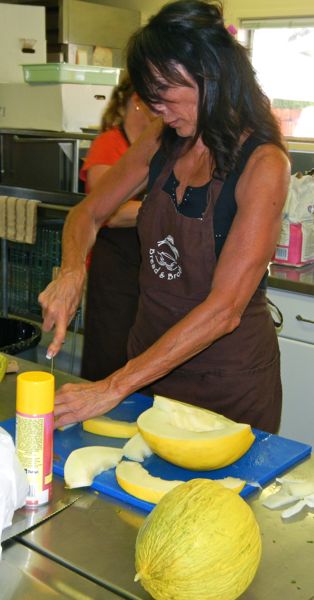
Wendy David chops up melons for the Bread & Broth meal. Photos/Kathryn Reed

Wendy David has been one of the cooks since the program started in 1989. The disadvantage she and other cooks have compared to restaurants is not being able to order what they want. Unlike restaurant chefs, they have to scramble and be creative with whatever is in the pantry and refrigerator or freezer.

It’s a bit like “Chopped” on the Food Network where you don’t know what is in the box, but you have a limited amount of time to create something edible from the mystery ingredients.

The judges in this case are the diners. Their thank yous and smiles are the reward for all the volunteers associated with Bread & Broth.

“We are always able to put something together. It may not be A-plus, but it’s always B-plus,” David said of the quality of meals. “My theory is if I didn’t want to eat it at home, why would I serve it to someone else?”

Linda Malzone has been volunteering at B&B for six years.

The head cooks for each Monday come in the Friday before to see what fresh food has been donated. Then they look in the freezer to see what should be pulled out to thaw.

For David’s August meal a ton of summer squash was in the fridge so she came up with a pasta primavera. It meant cutting squash from 12:30-2:30pm that day.

Recipes aren’t possible because all the ingredients aren’t likely to be on hand. David, like most of the cooks, doesn’t have a culinary background. Her experience comes from raising four children and having a love for being in the kitchen.

Usually four cooks are assigned to each Monday, with other volunteers helping with setup, serving, cleanup, drinks, assembling take-home bags and whatever else is asked of them.

Claire Neville works alongside David in the kitchen. She believes it’s important not to have stress in the kitchen, and to embrace the team approach.

“If we feed everyone and no one leaves hungry, we have accomplished our task,” Neville said.

John Mauriello started as a sub for Bread & Broth and now works the first and fifth Mondays. He will do whatever is asked of him, but cooking is what he likes best.

Linda Malzone is cutting fresh melons on this particular Monday. She’s been volunteering at Bread & Broth for the last six years. She told her husband, Earl Scilingo, how rewarding and fun it is. He’s been working there for the last two years.

Nora Jones is happy to do anything but cook.

The cooks arrive at 12:30pm, the rest of the volunteers at 3pm, and diners at 4pm. Food is served until 5:30pm at Grace Hall at St. Theresa Church (1401 Lyons Ave., South Lake Tahoe). Cleanup is done by 6pm.

Usually it’s Nora Jones, coordinator for the first Monday, who stays until every pot and pan is put in its place.

“Some of the patrons I’ve seen for 17 years. I just love them,” Jones said. “There are a lot of dedicated people,” she says of the volunteers.

In the past 23 years, the need for Bread & Broth has remained strong. The number of people coming this summer parallels that of 2011.

It is through donations that Bread & Broth is able to keep serving the weekly meals. Donations come in the form of money and food.

For $250 people or companies may sponsor an Adopt-a-Day for $250. This feeds more than 100 people. Then the company can bring up to five people to volunteer on that particular day. Tonight, Lake Tahoe News is sponsoring the Adopt-a-Day.

For more information about getting involved with Bread & Broth or to donate, contact Carol Gerard at (530) 542.2876 or carolsgerard@aol.com.


Angora Lakes — a destination no matter what season it is

By Kathryn Reed

Hiking to Angora Lakes is one of those mixed blessings this time of year. It’s the same feeling one can have on Fallen Leaf Lake Road.

The route to get to either lake is crowded with vehicles on what is really a one-lane road, but the end result is a majestic alpine wonder.

Last Sunday four people and two dogs made the 6-mile roundtrip trek to Angora Lakes. It’s one of those climbs I never get tired of no matter the season.

Lower Angora Lake is much quieter than the upper lake. Photos/Kathryn Reed

Plus, Angora Road is multipurpose – good for walking, biking, snowshoeing and cross country skiing. And in the fall, the aspens at the start of the route are stunning. And in winter it feels so much more like being in the wilderness, even somewhat desolate.

It got its name from the angora goats that used to graze in the area.

While we called it a hike, it’s hard to do so when the bulk of the walk is on pavement. It had been some time since any of us had been there. And for all I know, it was AJ’s first trek there.

It’s not the best excursion for dogs because they are not allowed to swim in the upper lake where all the people are – which is the easiest point to reach the water. However, there were no signs at the lower lake saying dogs were not permitted. So, AJ and Buddy were able to get a little swim in and some water there.

But there is no other water along this trail for dogs to cool off in.

Still, what makes this a good people destination are the views and the ability to walk side-by-side. The latter is good for catching up with friends.

After a fairly steady ascent, the road flattens out on Angora Ridge. To the left is the Angora burn area. Tons of underbrush gives the hillside a look of rejuvenation, though the blackened and even ash white remnants of the dead trees from the 2007 fire dominate the landscape.

To the right, though, is the more serene Fallen Leaf Lake, where those who are willing to brave the chilly waters are skiing. And beyond it is Lake Tahoe.

From the resort’s parking lot the trail really is a dirt trail for about one-half mile. This allows the experience to be called a hike.

Food may be purchased in the little store, and paddleboards and kayaks may be rented.

For those who want to spend more than a day or afternoon at Angora Lakes, there are nine cabins that are for rent on a weekly basis. The Hildinger family has been operating the seasonal resort on U.S. Forest Service land since 1917.

Getting there:

From South Lake Tahoe, at the Y go on Lake Tahoe Boulevard toward South Tahoe High School or the burn area. Turn right on Tahoe Mountain Road. Go right at the T intersection. Go left at the next T. The road curves a bit. Go slow. Now until early October the U.S. Forest Service gate on the left is open. Park nearby to get the full “hike”. Drive up the road for a half-mile hike from the parking lot to the resort.

Notes:

• In the winter, don’t park on that road during snow removal.

• It costs $7 to park during the season at the resort.

• Definitely stop long enough for lemonade.

• While people cliff dive, note that submerged rocks are not marked and people have lost their life.

ngg_shortcode_1_placeholder (Click on photos to enlarge.)