Access to trails, parking lots dominate Fallen Leaf talks

By Kathryn Reed

While no decisions have been made as to what the trail system at Fallen Leaf Lake will look like in the future, four additional alternatives have been added to the mix to reflect what the public desires.

Nearly 40 people attended a workshop Wednesday night at the U.S. Forest Service office in South Lake Tahoe to learn about the changes that have been made since the discussions started earlier this year as well as to offer more input. The original preferred alternative – No. 2 – remains on the table. Alternatives 3-6 incorporate the more than 150 responses the feds received. Alternative 1 would be to keep the status quo.

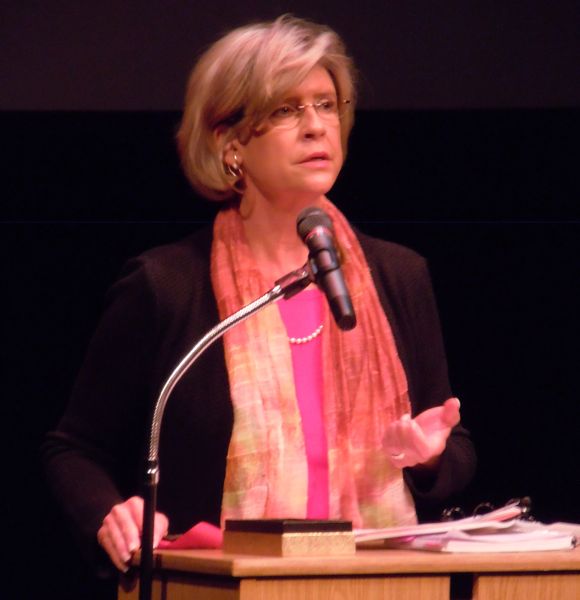
Jacob Quinn of the U.S. Forest Service talks about alternatives to the Fallen Leaf Lake plan. Photo/Kathryn Reed

When the final document comes out in the first quarter of 2013 it’s possible a combo of the alternatives could be selected instead of one as it is written in draft form.

The goal is to address this section of the South Shore that is on the north side of Camp Richardson and captures the entire Fallen Leaf Lake area trail system. Trails, parking and public access are all part of what is being studied.

One person at the Sept. 19 meeting asked if all the improvements would mean more people re-creating in this area.

Jacob Quinn, who led the bulk of the meeting for the Forest Service, said with the increase in use in this area in the last 10 years it has meant overuse of some trails and that people tend to create their own trails when the ones they’ve been on become overcrowded. The idea is even if more people come, the trail system will be better to disperse the various users.

The goal is to decommission most of the user-created trails, while improving others. At the same, trails in the backcountry will remain designed for less use, while trails closer to population bases will be able to handle more people.

Parking is an issue, as was expressed regarding the Glen-Alpine area at the far end of Fallen Leaf Lake. But Quinn pointed out it’s a fine balance between providing enough parking spaces and not wanting to draw the masses to an area than can’t sustain that many people if they were to all arrive.

All of the new alternatives have the bridge at the dam at Fallen Leaf Lake being 4- to 6-feet wide. Originally the Forest Service wanted to widen it up to 14 feet.

Another thing the new alternative has in common is retaining the trail along the west side of Taylor Creek that runs north and south. The Clark and Church trails would also stay.

The polo field parking lot near the entrance to Valhalla has been scrapped and instead will be incorporated into the Tallac Site plans. Improvements to the Pope Baldwin Bike Path, better known as the Camp Richardson paved trail, are out of this study and instead will be part of the Camp Rich plans.

Accessing public lands during the winter and at other times was discussed at the Sept. 19 meeting. Liana Zambresky asked why parking lots need gates.

Garrett Villanueva, trails guru with the Forest Service, said part of the reason is because concessionaires run some Forest Service land and when they are not on site there is no one to monitor activity going on. He said his agency doesn’t have the staff to manage sites in the off-season.

However, he said solutions are being worked on to provide more access. But snow removal and year-round access are not being considered.

Bill Connolly brought up the issue of the gate at the entrance to Valhalla/Tahoe Tallac Site being closed so often which creates an access issue for the handicapped because this is one of the easiest places for the disabled to access Lake Tahoe.

Brenda Knox with the Tallac Association told the group it’s a tricky balance between accommodating the public and needing the spaces for events – whether it’s a show or a wedding. But she added that the gate issue is something her colleagues are working on.

More information about the project is online. The Forest Service will accept comments through Oct. 12.


2 South Lake Tahoe houses gutted by fire; 1 man injured

Update: City officials are saying it will be after midnight when people will be able to return home.

By Kathryn Reed and Susan Wood

A South Lake Tahoe man was taken to Barton Memorial Hospital after being burned while trying to put out a structure fire Tuesday night and two houses were completely destroyed.

The fire on April Drive in South Lake Tahoe started a little before 6pm Sept. 18.

It did not take long for Peter Darvas' house to be fully engulfed in flames. Photo/Damian Frisby

Peter Darvas, who owns the larger of the two houses, is the person who was injured. He was being treated at Barton for burns to his face and shoulders. Officials told Lake Tahoe News he was trying to put the fire out and in the process was injured.

Fire officials said it is too early to know the cause of the fire and estimated damage.

Flames spewed from windows and the shake roof was disintegrating as firefighters attacked the flames from the ground and the ladder truck.

People in the area of Pioneer Trail were being evacuated.

“I heard explosion after explosion and I saw the (corner) house on fire and it caught the house next to it (on fire) in three seconds,” Karen Holmes, who lives on the street over, told Lake Tahoe News. “It’s the most incredible thing I’ve ever seen.”

Holmes, who grew up in South Tahoe, looked across the street and saw Hal Cole’s horses running around a bit frantic. Cole, who was not home at that the time of the fire, lives on the other side of Pioneer Trail from the fire.

While Darvas does have animals, it is not known if they are OK. No one was home at the residence next door on April.

Holmes echoed Fire Chief Brian Uhler’s sentiments that the town was lucky there was no wind. Uhler and area firefighters were at first concerned the fire would spread uphill into the forested area.

It is not known what the explosions were, however Darvas is a well-known artist so it could have been some of those supplies.

Darvas also is known for having a lot of debris in his spacious yard. The city has hauled some of his stuff away and the two sides have been dealing with abatement issues.

At the time of the call South Tahoe crews were gathered at the airport. More than 60 people and 15 pieces of fire equipment were on the scene. They included South Tahoe, Lake Valley, Tahoe Douglas, Fallen Leaf Lake, and U.S. Forest Service. El Dorado County sheriff’s deputies and California Highway Patrol also assisted.

Traffic was still being rerouted around the area and likely will be well into Tuesday night as fire crews keep attacking the flames. Liberty Utilities crews are also on scene because of downed utility lines.

ngg_shortcode_0_placeholder (Click on photos to enlarge. Photos/Kathryn Reed)


Study: Too many rooms, prices too low on South Shore

By Kathryn Reed

STATELINE – The $35,000 economic study involving the South Shore Vision Plan has been completed, but is not being released to the public.

Carl Ribaudo with Strategic Marketing Group gave a presentation to the Lake Tahoe Visitors Authority board last week, but because he neither provided members nor staff with a written or electronic version of his PowerPoint, it is not a public record, according to the Douglas County District Attorney’s Office.

Nancy McDermid, Douglas County’s rep on the LTVA board, and Tom Davis, South Lake Tahoe’s rep, were surprised after the Sept. 14 meeting to learn it was not public. They are the only two public officials on the board. The rest represent private entities.

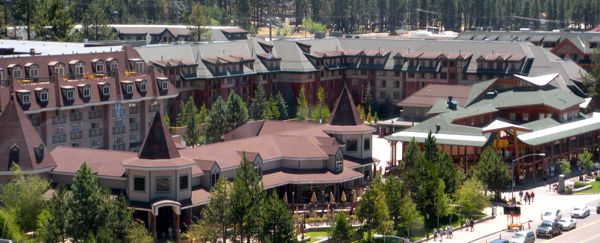
Embassy Suites has the highest occupancy on the South Shore and the Marriott properties are among a handful built from the ground up in the last 15 years. Photo/LTN file

However, when Ribaudo makes his presentation to the South Lake Tahoe City Council in October, it will have to be public – whether he hands anything out or not, per California opening meeting laws, according to city officials.

Ribaudo told Lake Tahoe News he did not want to physically release the data to his clients – and by default the public – until all had heard his presentation. This is why Lake Tahoe News does not have a full report on the economic study. Douglas County commissioners are expected to hear from Ribaudo in November.

Douglas, South Lake Tahoe and LTVA each contributed $10,000 to the study, while South Tahoe Association of Resorts put in $5,000.

Ribaudo told the LTVA board with every town seeming to tout a tourist attraction, Lake Tahoe has more competition than ever before.

Besides tribal gaming taking a hit on casinos throughout Northern Nevada, the introduction about 15 years ago of cheap air service from the Bay Area to Las Vegas has whisked people away.

John Koster, general manager for Harrah’s Lake Tahoe and LTVA board member, acknowledged the deals being offered are significant – including what his parent company is putting out there.

Ribaudo noted that the value of the lake itself is missing when it comes to the rate of a hotel room. Lakefront lodging is not doing substantially better than the rest of the South Shore. Embassy Suites is doing best in terms of occupancy and average daily rate.

Non-casino lodging on the South Shore represents 34 percent of the inventory, but where only 20 percent of the visitors are spending the night. This highlights the fact that many of the hotel rooms in South Lake Tahoe are not where tourists want to stay. Many have become weekly and monthly rentals.

It also points to the problem that the number of hotel rooms far exceeds any anticipated demand. Those rooms also drive down the price of rooms throughout the region.

Part of the problem is anyone who might want to buy the rundown motels are handcuffed by the regulatory process. McDermid, who also sits on the Tahoe Regional Planning Agency board, said the Regional Plan update should give more flexibility to people wanting to repurpose those properties.

Her LTVA colleagues were more skeptical in what might emerge in the Regional Plan that is supposed to be adopted in December. Davis would like to turn tourist accommodation units into commercial floor area. Both are commodities based on how the TRPA does business.

But, as attorney Lew Feldman pointed out, “We also have too much commercial that is unsustainable.”

Ribaudo did note the campgrounds in the area are faring quite well.

He shared data from Smith Travel that said South Lake Tahoe has an occupancy rate of 43 percent, with an average daily room rate of $102. This, Ribaudo said, is well below the regions South Shore is competing with – like Napa and Monterey.

In 2001, at the peak of gaming, hotel occupancy in the area was 50 percent. Ribaudo said the lodging was built to sustain the once $400 million gaming industry. Now gaming is a $190 million industry in Stateline.

It was also noted that the South Shore has had few lodging properties built from scratch in the last 15 years and that most hotel chains are getting rid of exterior room entrances. But when hotels are remodeled on the South Shore that isn’t the case.

Ribaudo said based on his research it’s not a matter of if things should change, but what should the changes be.

Economic study history

SMG was one of three firms to send in bids to do the report. The others were from Las Vegas and Denver.

Mike Bradford, with Lakeside Inn and Casino, has been leading the South Shore Vision Project for Douglas County, which initiated the idea. Bradford said it was through the county’s Economic Vitality Department that a request for proposal was put out to find someone to do the economic study.

Bradford and Mitchell Mize, director of real estate for Edgewood Tahoe, are the two who reviewed the three bids. They picked Ribaudo. (Lynda Ribaudo, Carl’s wife, is CFO for Edgewood Companies.)

Ribaudo’s study also has specific applications for LTVA – called the Destination Decision Model – that will allow the tourism bureau to use “what if?” scenarios for economic forecasting. The goal is LTVA will be able to track its marketing dollars better and see if there is a return on investment.


Sass: Better leadership, grow the economy, improve the built environment

Publisher’s note: This is the second of five Q&A profiles of a South Lake Tahoe City Council candidate running in the Nov. 6 election.

Name: Austin Sass

Age: 59

How long have you lived in South Lake Tahoe?: I moved to South Lake Tahoe in 1975. In 1983, I leased out my house and left town until 2002 when I returned to resume residency in the same house.

Austin Sass

Work/volunteer experience: Volunteer experience

• City of South Lake Tahoe Planning Commission

• Lake Tahoe Unified School District School Bond Oversight Committee

• Geotourism Committee, Lake Tahoe South Shore Chamber of Commerce

• St. Theresa’s Food Pantry volunteer

• Lake Tahoe Visitors Authority Sales Committee

• Leadership Lake Tahoe graduate

• Little League coach, South Lake Tahoe.

Work experience

• November 2008-February 2011: Aramark Lake Tahoe, director of sales and marketing. Under license to the U.S. Forest Service, Aramark Lake Tahoe operates Zephyr Cove Resort, a full service destination resort featuring an historic lodge, cabins, restaurant, RV center, beach, marina, special events center and snowmobile operation. In addition, owns and operates Mississippi-style paddle-wheel boats conducting scenic cruises and charters on Lake Tahoe. As a member of the executive team, responsibilities included sales, marketing, promotions, public relations, reservations, ticket sales, scheduling, pricing, and special event/group services for all products. Oversight of staff of 15 and revenue budget in excess of $11 million.

• October 2002-November 2008: Vail Resorts Inc., Heavenly Mountain Resort, director of resort sales. Owned by Vail Resorts, Heavenly Mountain Resort is world-class destination ski resort with the second largest skiable acres in the United States. In 2004, awarded special Chairman’s Award after being identified as one of Vail Resort’s finest examples of leaders. Reporting to the vice president of marketing, responsibilities included sales and services for the following channels of business: group, international, corporate, lodging, REI, online ticket sellers and wholesale. Directed central reservation department and coordinated all outbound season pass renewal efforts. Oversight of staff of 20.

• July 2000-Feburary 2002, FurnitureFan Inc., Sudbury, Mass., senior vice president. FurnitureFan was a venture capital funded Internet startup company that provided online marketing services, and designed, built and hosted websites for furniture manufacturers and retailers. The organization had 26 employees with annual sales rate of $1 million.

• 1997-2000, Maptech, Greenland, N.H., vice president of sales and marketing. Maptech is a digital mapping and navigation software company providing software and data for a variety of recreational and professional uses. Distribution channels included retail, resellers, and online direct. Owned by Land’s End, the company had 60 employees with sales over $12 million.

• 1992-1997, Spacelabs Medical, Redmond, Wash., general manager. Spacelabs Medical is a leading provider of diagnostic and critical care medical equipment. The division I headed up had over 300 employees and contributed to annual revenues of $270 million. I was a member of the executive team that developed, managed and was responsible for the budget.

• 1991-1992, Meredith Corporation, Custom Marketing Group, Los Angeles, senior sales and marketing manager.

• 1987-1991 Hearst Corporation, Popular Mechanics, Santa Monica, Western sales manager.

• 1984-1986 Yale University, Athletic Department, New Haven, Conn., manager of sales and marketing.

Why are you running for City Council?: I am running for City Council because I am passionate about South Lake Tahoe and rather than sit around for the next 10 years and complain about how our city has and is being run, I have decided to try and do something about it. And I believe I have the background to do it well.

Professionally, I have over 25 years working in and running large organizations. I understand how they function, how to create, manage and oversee budgets and create a sense of team and purpose.

I believe the city is a business. The City Council is the senior management team. The citizenry are the stockholders. If I were hiring for this senior management team, I would want the most qualified, energetic, and passionate individuals I could find.

Locally, I have over 15 years working in the tourism industry including lodging, ski resorts, attractions, events, weddings and gaming. I live the Tahoe lifestyle all-year round — be it skiing, snowshoeing, hiking, mountain biking, or golfing. I have put two children through our school system and have volunteered my time in everything from the Planning Commission to the Lake Tahoe School Bond Oversight Committee to the food pantry at St. Theresa Church to coaching Little League.

I have the character this city needs. I am honest. Plain and simple, I don’t lie.

I own no businesses, I serve on no one’s board, I have no local clients. There will be no cronyism.

I am energetic and passionate. I believe in transparency. We, the voters and citizens, have a right to know how our government operates when it’s legally and ethically appropriate.

What is your vision for South Lake Tahoe, the South Shore and the entire Lake Tahoe Basin?: My vision for South Lake Tahoe, the South Shore and the entire Lake Tahoe Basin is at the highest level similar. I envision a community where we are using best management practices to protect and improve our environment; both natural and built. A community that has a diverse and healthy economy anchored by all types of tourism, recreation, entrepreneurship and high altitude scientific, environmental and athletic research facilities. A community where we have a sense of pride in ourselves, where we live, and how we conduct ourselves both as professionals, public servants, volunteers and residents. A community that has environmental and business entities working together rather than fighting in the courts.

What are the three best things about South Lake Tahoe?:

1) I love the fact that I can fill a glass of water from the tap and it is cold, fresh and clean and I can breathe air that is clean, crisp and invisible. I love the contrast between the bluest sky in the world, the green of our trees, the grey of our granite, the blue of our lake and the white snow on our mountains.

2) I love the fact that I can walk out my front door and be able to ski, hike and bike in a matter of minutes with friends who have the same outdoor mindset.

3) I love living in a small community and that we are connected in so many ways. That being a dad here meant that my children were involved in a community that cared about everything from athletic field maintenance, to helping nurture orphaned bear cubs and injured eagles, to building trails, to dog parades and mutt struts, to coastal cleanup, to helping each other in times such as the Angora Fire.

What three things would you like to change in South Lake Tahoe and how will you go about changing them?: 1. Leadership — I would like to see leadership from our City Council that would foster collaboration and partnerships as a way to get things done.

The city of South Lake Tahoe is part of the South Shore of Lake Tahoe. The futures of El Dorado County, Douglas County, and South Lake Tahoe are intertwined. One cannot succeed without mutual respect, planning and cooperation with each other. To do any less does not serve the best interests of our citizens. Additionally, our experience has taught us that our future must include the consultation of all stakeholders including the environmental community, the business community, the public, governmental entities and the nonprofits.

I would like to see a South Shore Council be encouraged with leadership from the two counties and the city with the immediate goal of identifying issues, desirable outcomes and their prioritization. Next, include leadership from the environmental and business community and determine next steps to achieve these goals within the framework of the Regional Plan and the city’s General Plan. By working together we can be more fiscally efficient, timely, and move forward in a positive manner.

2. Economic growth — We need a break from the current course that our city is taking. We need a fundamental change in how economic growth is achieved and how our city can support these endeavors. When I look at our City Council two of the most important things that are needed is strong business acumen and progressive versus regressive thinking.

I would like to frame the question of the future of South Lake Tahoe – where do we go from here and what can we do to make this a better place to live and work? I would like to see us support the Tahoe Prosperity Center, which includes local businesses, local government, environmental and recreational entities to attract investment and new businesses. Why not pursue a high altitude athletic research and training facility? Why not use some of the land near the airport or in the industrial area to attract high altitude research facilities? My hope would be that the Tahoe Prosperity Center could determine best strategies to do this.

Our economy is currently tourism and we need to improve the tourism experience to attract more people, events and to better serve our locals. Opportunities for improvement in this area are:

• Approving the Regional Plan update so we better deal with improving our environment

• Improving and enhancing recreational experiences through more and better facilities

• More events and promotion

• Connectivity in our walking and bike paths and public transportation.

3. Built environment — Anyone driving into town recognizes that our town looks tired and dated. The built environment does not match the beauty of our surroundings.

We have lodging properties that are being used as monthly and annual rentals. People are living in over 2,000 units that were designed for short-term overnight stays. Most of these units look run down, don’t produce transit occupancy tax, do not have safe electrical wiring for the number of appliances being used inside of them and do not have adequate storage for trash containers and bicycles. We need to start enforcing our codes and clean them up. We need to replace these low income TAUs, with low-income housing available through grants and private investment.

We have a sign ordinance that was passed last year. It was written to improve the visual quality of Highway 50 and our main roadways. It’s been changed three times. In my opinion, for the worse. Let’s have the courage to stick to our convictions and not be taken off course to satisfy a select few.

Many of our shopping centers are half-full and dated. We need to develop a plan to consolidate and beautify them, create green space with the ones that retire and work to ensure the financial success of the redeveloped ones. Let’s not forget that many tourism destinations consider shopping as recreation. This will improve our economy, environment and the recreational experience.

What would you do to balance the budget?: In 2008 the city used $1.8 million from its General Fund Operating Reserve to balance the budget, in 2009 it used $200,000, in 2010 it used $1.8 million, and in 2011 it used $1.3 million. In 2010, $500,000 was taken to the bottom line from an over accrual of the workers’ comp fund and in 2011 another $800,000 was taken to the bottom line to make the budget balance better. It’s obvious to me that the City Council, which approved these budgets, needs help forecasting revenues and managing expenses. We need experienced large-scale business acumen in the budget process from our city council.

I would immediately propose that we start looking at the budget differently. Department heads have to be held accountable to both their revenue and expense line items. As a city, we need to look at both of these on a month-over-month and year-over-year manner. The city manager, finance director and someone from the City Council needs to have all variances explained monthly and the budget readjusted on a monthly basis.

Our city manager, finance director and a councilperson need to be reviewing the lodging community’s occupancy and revenue forecasts to better predict sales tax and TOT (transient occupancy tax) derived from tourists. They need to better understand property taxes as well.

Most important, we should be passing only balanced budgets. We can’t keep spending money from our piggy bank; it’s getting rather empty relative to 2007’s high point.

On the revenue side, we need to improve our product. We need more tourism spend. More tourism dollars means more money for our safety and services, it means more job security for our public and private employees, it means better transportation options which in turn will attract further investment in our community.

Finally, we need to really get a grip on vacation rental home TOT collections. I have heard everything from $50,000 to $500,000 as being the amount of money we are not collecting. Perhaps if the fines went from $250 to $2,500 people would take this seriously.

What would you like to see in a recreation master plan?: There is a lot of talk about attracting the sports business to this community. Our challenge with attracting significant tournaments/competitions and use of our city as a training center is the lack of contiguous fields, the lack of a complex and the lack of support facilities (bathrooms, locker rooms, bleachers, etc.) at our existing facilities. Further, a sports commission is needed; creating a revenue stream that helps support maintenance of the fields, bike paths, beaches and common areas.

Connectivity is a large part of a recreation master plan. If you live at the Y, how would you get to Van Sickle Park to hike and bike? Our bike and walking paths must be connected. We need lighted, safe parking near trailheads. Our transportation system should connect our parks, swimming pool, recreation center, tracks, fields, ice skating rink and beaches.

Promoting recreation was touted two years as a means to stimulate the local economy. Nothing has been done in that time. What will you do so that same sentence can’t be said two years from now?: I think some progress was made recently with Lakeview Commons and Van Sickle Park. People are hiking closer in town. At the Commons there is plenty of kayaking and standup paddling thanks to the Proctor family and others.

More still needs to be done. First, I would want to create a sports and recreation commission to develop a plan that would drive revenues for the sole purpose of improving and maintaining our recreational venues. Second, paint a better picture of our options even when they are not in the city. The Rim Trail and our hiking is under promoted, our mountain bike trails have limited accessibility and visibility. We need to work closer with TAMBA, the bike coalition, the LTVA, our fishing charter entrepreneurs, our watercraft rental companies, the USFS, the lodging community and others to make it perfectly clear that we are one of America’s All Year Playgrounds.

We need to put our collective experience, market insight and combined expertise to better promote and market our products.

What types of recreation do you enjoy in Lake Tahoe?: I hike almost weekly from May through September with a group of friends. In the past year, I have hiked the entire Rim Trail, Mt. Whitney and every peak looking into the basin on South Shore.

I try to mountain bike twice a week in the spring, summer and fall. Most often on Power Line Trail and climbing Roundabout here in town.

I ski in the winter predominantly at Heavenly. Last year I got 66 days in and fully understand that if elected to City Council, that number will probably drop in half.

Additionally, I love to snowshoe on winter weekends with my wife and try to golf with friends once or twice a month in the summer.

How will South Lake Tahoe be different in four years after the end of your term?: Assuming we achieve the collaborative attitude amongst the council, we will have better leadership by all being part of a visionary and progressive team. We will have a better understanding of how and why things are voted on, the budget will be balanced, the town will look better, we will be working on rather than just dreaming of connectivity, our sports and recreation commission will be in place and there will be a plan for the future.

Being on the council requires working with four others. Give readers an example of how you work well others in difficult situations with differing opinions: Being part of a large corporation requires effective negotiating within your own organization both with people you work with, work for, and oversee.

An example of this is with the launch of a new product. I was general manager at a company in Seattle. We had an idea for a new product. Sales wanted it to look sleek and new, manufacturing wanted to use current assembly line processes, engineering wanted to integrate new and expensive technology, service wanted diagnostic capability via the web, retailers wanted a smaller footprint and my CEO wanted to make 24 percent annually.

Everyone had their own priorities. As the head of the division I needed to understand everyone’s concerns. I needed to make everyone a hero. I needed everyone to compromise to achieve the greater goal. Everyone could not get everything they wanted but with patience, good listening skills and passion for the end product, I was able to achieve positive results. In the end, the concept of team and working for the greater good sealed the deal. Sometimes it’s about leaving your ego at the front door, working with integrity and in an ethical manner, and just doing what’s best for your company. In our case, the city of South Lake Tahoe.

What are your opinions about the following issues and/or entities?

• Loop road – If someone came to you and said they wanted to buy your house or business and had no money or financing prospects, how much time would you spend with them? For most of us, the answer would be none. That’s how I currently think about the loop road. There is no money and there are no funding sources to build now. We can all dream, but it’s time to focus on what’s real.

There is no doubt that the TTD (Tahoe Transportation District) threw a bomb into our community without thinking about how people’s emotions would flare up and how they would answer everyone’s questions. Plain and simple, they messed up. On the other hand, there are a small number of people in our community who are politicizing the issue for their own political and future financial gain. They are just as much at fault in polarizing our community as the TTD was. We also need to remember that this project has been part of the plans in our community for many years and the city knew it was in the works.

I am open to any ideas that would revitalize any part of the South Shore. I hope investment comes soon because that should improve the economy, the environment, and our transportation, which is key to achieving connectivity.

• Hole at Stateline – I think the city needs to do whatever it can to get the project back on track. After all, it was the City Council’s fault that they issued a project permit without a performance guarantee and then issued a building permit without mandating that the parcels be consolidated. We need to get something done to start our recovery.

Currently, Owens Financial is floating an idea to develop retail on the Highway 50 part of the failed convention center. The idea is that they would consolidate some of the parcels and develop the front part. I’m unsure of how much parking there would be, what happens to the concrete on the rest of the project area, etc. We’ll have to see what their plans are and if they can get this done before the TRPA permit expires.

If this plan is unacceptable to the city or does not go through, I would suggest we bring in a mediator so that the owners of the parcels can make some progress in how to best develop or sell it.

• Tahoe Valley Plan – I reviewed this in a Planning Commission public forum meeting and I like it. We need to ensure that marketing expertise is brought to bear so that the retail component succeeds when we find the private investment to start the revitalization of the Y.

• Giving money to any chamber or tourism bureau – To my knowledge, neither the chamber nor the LTVA is asking for money at this writing. The TID supports the marketing of the destination. The LTVA receives very good support from the city’s law enforcement and event planning personnel. In turn, the LTVA still has a City Council seat on the board so that the city can continue to be informed and contribute to the discussion on how they market.

Rather than fund the LTVA and if the budget allows, the city might consider setting up a fund to underwrite arts, culture and events. Local organizations could request grants with the purpose of improving the tourism experience and supporting our local’s talents.

• Benefits, including pensions, for city staff – The current path is unsustainable. I like what the governor of California proposed as a start. Increasing retirement ages of new employees, capping the payout upon retirement, and require workers to contribute more to their retirement and health care.

• Tahoe Regional Planning Agency – Like everyone else I would not give the TRPA passing grades for their performance over the past 25 years. However, I’ve seen some real change at TRPA over the last five years and I believe the agency is headed in the right direction. Like many long-time locals, I care about Lake Tahoe and want to protect it so that the next generation can enjoy it. But we also have a community that lives here and Tahoe isn’t a national park. That means we need a reasonable balance between environmental regulations and the needs of our economy and private property uses. I support the kind of reforms TRPA is putting out there – moving more permitting to local governments such as the city, focusing on bike trails and transportation, and being aggressive on invasive species so we don’t ruin the lake altogether. Lake Tahoe is our bread and butter as far as the economy is concerned, so from a business perspective, we have to take care of it. I’m completely in favor of fixing what in years past was a broken permitting system. As a councilman for the city of South Lake Tahoe I would continue pushing for reasonable reforms and a productive working relationship between the city and TRPA.

• Lahontan Regional Water Quality Control Board – I am not a big fan of Lahontan. Perhaps they are well intentioned, but certainly they are naïve in thinking we can fulfill their demands. From what I have seen, they write a rule and then tell the rest of us to go figure it out. They seem little concerned about how we get it done or pay for it. They act as if they have met their obligation and then tell us good luck working it out.

On the upside, they have a new leader and I am hopeful that she will revisit the TMDLs and forest fuels reduction issues and bring in a new era of cooperation as well as helping us find funding and to navigate the halls of Sacramento.

• South Shore Vision Plan – I support the intent of the vision plan. We need more connectivity; we need to bring the bed base closer to the recreational opportunities. Most importantly, we need a plan to bring us forward and improve our economy.

All that being said, we need funding and we need capital investment by the major stakeholders in the Stateline area, which will not happen without a plan for the South Shore. Edgewood, which is proposing a new lodge, making their beach accessible to the public while improving the quality of water running into the lake, is a good example of a company looking forward. While they have boldly taken a financial risk to plan for the future other individuals and companies that are looking to invest here need predictability.

• Lake Tahoe Airport – The city has the opportunity to envision a new future for the airport. What’s needed is a comprehensive, transparent community process to come up with a master plan for the airport. We must all decide what we want to do going forward. With the expiration of the legal settlement agreement this year, the city should have made this a higher priority. Councilman [Tom] Davis and the city manager recently met with the TRPA and I would like to help jumpstart the master planning process since the airport is one of the largest assets we have as a community. I’ve spoken to TRPA about the airport and they’ve said they’re ready to work with the city on a solution but the city must also engage formally with the League to Save Tahoe and the California Attorney General’s Office who sued over the airport.

Why should voters vote for you over someone else?: When I look at the current City Council the one thing that is missing is business acumen. We need an experienced business leader. A business leader who has helped run companies with revenues and expenses that range from hundreds of millions of dollars to companies as small as several hundred thousands of dollars.

The second thing missing is someone who is experienced in and understands all of the most important components of our economy, tourism.

Third, since we are moving from being gaming centric to recreation centric, wouldn’t it be nice to have someone who actually recreated on a regular basis. If you are going to vote to fund it, it helps to understand and experience it.

Four years ago you said you wanted to improve the visual look of the area. The council that was elected has not done much to make that happen. If you are elected, what will you propose to do to make it a reality?: As discussed earlier I would support code enforcement, work to consolidate shopping centers, support the Tahoe Valley Plan, go back to the initial intent of the sign ordinance and use best efforts to resolve the failed construction site known as “the hole”. Most important, and in the near term, develop a plan to drive tourism revenues so all of our retailers can afford to start reinvesting back into their businesses.

Is there a person or business you would not take a campaign contribution from?: I would take legally obtained funding up to $1 million with the understanding that I would donate 100 percent of the amount above $5,000 to local youth, arts and sports organizations. I would never take funding from any company or individual who put a stipulation on the donation and as such, am open to being widely supported.

Tell readers something about yourself that they may not already know: The most important person in my life is my wife, Bev, who I cannot imagine living without and without whose support, I would never dream of running for City Council.


Members of defunct transit system accused of fraud by bankruptcy court trustee

By Kathryn Reed

Former members of South Tahoe Area Transit Authority, Tahoe Regional Planning Agency, and the law firm of Feldman, Shaw & McLaughlin received more bad news this month from the U.S. Bankruptcy Court in Reno.

David Thompson, the federal bankruptcy trustee, filed a complaint against STATA’s member agencies in which he states that STATA’s members “sought to hinder, delay, and defraud” MV Transportation’s collection of funds that STATA owed MV by depositing more than $1 million of STATA’s funds in a Feldman Client Trust Account.

STATA failed to list the cash in the Feldman Client Trust Account in its bankruptcy filing. Mike McLaughlin was the attorney for STATA.

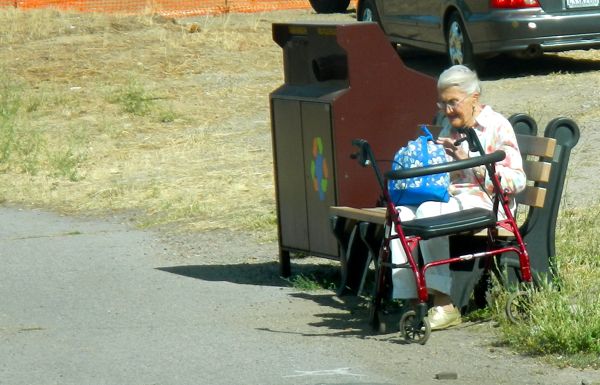
While transit officials on the South Shore fight over millions of dollars, older bus riders in South Lake Tahoe sit in the sun or snow, depending on the season, without a shelter at BlueGo bus stops. Photo/LTN

The trustee report dated Sept. 7 says that trust account was used to pay TRC, the operator of the BlueGo bus system that replaced MV.

The complaint also states that STATA’s board of directors participated in a scheme to wrongfully transfer STATA’s assets to the Tahoe Transportation District in order to avoid paying MV the money the Fairfield-based company was owed. It also says the records are so poorly kept that it is hard to know what money was transferred when. Depending on when the transfers were made, “they are fraudulent,” Thompson writes.

TRPA’s staff recommended STATA hire MV Transportation to provide transit services – primarily the BlueGo buses. The STATA board did so in November 2008.

According to the trustee, STATA immediately asked MV to provide a higher level of service than STATA could afford. Almost immediately STATA had trouble paying MV for the services it provided.

According to the federal bankruptcy trustee, STATA owed MV approximately $3 million by June 2010. That is the month STATA terminated its contract with MV Transportation. Unwilling to pay MV the money it was owed, STATA filed for bankruptcy in September 2010, disbanded by the end of that year and essentially merged with Tahoe Transportation District.

In the complaint, the trustee states that the participation agreement requires member agencies to contribute additional funds in the event of any budget shortfalls.

The trustee’s complaint asks the court to approve specific judgments against member agencies and others as follows: Feldman, Shaw & McLaughlin, $1,035,197; Tahoe Transportation District, $142,000; South Lake Tahoe, $193,779; Heavenly Mountain Resort, $558,336; Harveys, $26,085; MontBleu, $6,133; Horizon, $3,800; Douglas County, $20,000; and Transit Resource Center of Nevada, $692,669.

In reviewing the court documents, it appears the trustee also asked the court to approve a judgment against all of STATA’s members including the El Dorado County and the TRPA in the amount of $2.29 million, plus interest for which all members would be jointly responsible.

El Dorado County had settled its case with MV, but the trustee is dragging that public body back into the mix by questioning whether that settlement agreement was legal.

No mention of the trustee report was made during the open session of TTD’s Sept. 14 meeting, though it was listed as a closed session item.

Ironically, at that meeting John Busskohl with Keolis Transit America gave a report about how things have been going with BlueGo since taking over the operations July 8, 2011.

Busskohl said when his firm took over 60 percent of the fleet was out of service, but that has since been rectified. Three terminals instead of one are being used. An automatic vehicle location system has been installed. This summer’s East Shore Express was deemed a success.

Financials, according to TTD Executive Carl Hasty, are positive. The financials for the past year will be revealed and discussed at the October TTD board meeting.

As for the STATA case, the defendants now have an opportunity to respond to the charges leveled by the court trustee. U.S. Bankruptcy Court Judge Gregg Zive in November could make a decision to dismiss the case or send it to trial.


TTD board, staff ready to take fresh approach with loop road

By Kathryn Reed

STATELINE – Wiping the slate clean. That was one of the overriding messages the Tahoe Transportation District staff and board wanted people on all sides of the loop road to hear and embrace.

That doesn’t mean the proposed reroute of Highway 50 through the South Shore that has caused so much consternation has gone away. What is means is more ideas will be studied in addition to what was originally on the table.

While a loop road has been talked about since the 1980s, this is one of the few times it has gotten this far in the planning process.

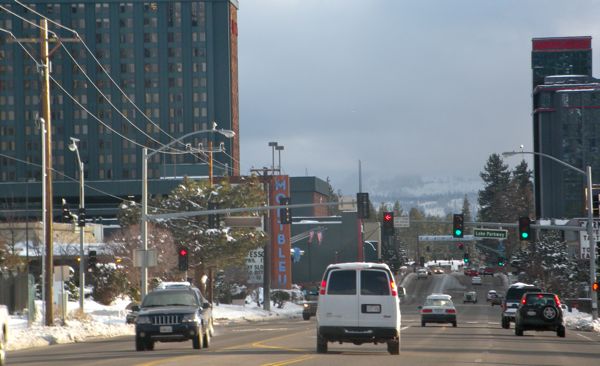
A goal of a loop road -- wherever it goes -- is to make the route through the Stateline casinos a city street so the area would be more pedestrian friendly. Photo/LTN file

Better communication with the public is also a main objective as plans go forward. So many people believed decisions were being made without public input – especially the property owners who would be relocated.

To help move things forward the TTD board on Sept. 14 approved $810,828 for public planning process facilitation, preliminary engineering and design, environmental studies, and economic analysis. This brings the contract with Wood Rodgers to $2,810,828.

TTD Executive Director Carl Hasty said the additional money is available through grants. And he said, “The dollar amount reflects a worst case.” In other words, it could cost less to do the work.

Board member Norma Santiago, who represents El Dorado County, asked how the economic analysis is different from what has been done with the South Shore Vision Plan.

Hasty explained the vision plan economic study covers a larger geographic area and the study TTD has done just involved road analysis. The new study will look at the impact – good and/or bad – on businesses if the loop road were to be put in.

LSA Associates will be responsible for the environmental studies. Economic Planning System Inc. will do the economic study. Wood Rodgers will do the public outreach, preliminary engineering and technical studies.

Hasty noted the South Lake Tahoe City Council wants part of the outreach to include a public workshop that the city would televise.

TTD is the lead agency, but all the residents, housing and businesses that would need to be relocated or go by the wayside are in South Lake Tahoe. Previous city councils have agreed not to use eminent domain again. It would take a four-fifths vote to change that policy. But if all the property owners agree to sell and Caltrans signs off on the project, the city would not have much, if any, power to stop to project from going forward.

On the Sept. 18 City Council meeting is an item about the loop road.

Councilwoman Angela Swanson, who is the city’s rep on the TTD board, said with the council on Tuesday discussing the loop road, Tahoe Regional Planning Agency Regional Plan update, and whether to pursue the Tahoe Valley or Stateline plan, that clarity should emerge as to what the city envisions for the future. Swanson said it is her belief the council will pick the Stateline plan to pursue first, but acknowledged it still requires a vote.

Councilmen Bruce Grego, who is the city’s alternate on the TTD board, and Hal Cole were in the audience. It is unusual for councilmembers to attend meetings like this where one of their colleagues is on the board.

Grego was one of the six members of the public who spoke Friday morning. He is concerned public perception will be that the slate isn’t really wiped clean because the contentious route is still on the table.

It’s on the table so it can be thoroughly vetted – as in beyond the public emotion meter.

Hasty made it clear no additional alternatives have been worked on to date – but they will be going forward. Getting the board to approve the allocation of money and having an outreach plan were the priorities of the past few months.


Clarity emerging in future of STHS softball field

By Kathryn Reed

“When I took this job three years ago, I was told it was called the Field of Dreams. I think it’s a Field of Nightmares.”

That is what Steve Kolesnik, South Tahoe High School softball coach, told the Lake Tahoe Unified School District board of education Sept. 11.

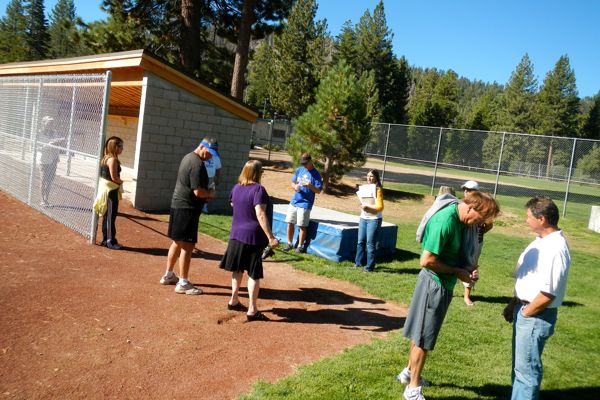
Consensus was found Sept. 13 about the STHS softball field by a diverse group. Photos/Kathryn Reed

While it may never evolve into what Kolesnik wants, movement came Thursday during a meeting where a diverse group assembled to find consensus. After two hours it was agreed by all in the room that the high school’s physical education program and athletic teams are what matters most when it comes to who uses that field and how it is used.

Also agreed to was erecting a 6- to 8-foot portable fence 200 feet into the outfield and that the staff restroom being built in the concession stand can be used by the public.

LTUSD Facilities Director Steve Morales, at the direction of the group, has been tasked with finding out what the cost of a second restroom, which could contain more than one toilet, would cost. He is also going to evaluate whether putting it next to the concession stand or inside by the restroom under construction or by the portables would be more feasible.

Softball, baseball and tennis have access to the restrooms in the newly built Student Union because they can be locked off from the main building. But there are those who believe walking 140 yards is too far during a game.

It was decided that incorporated into the rental of the field will be the price to erect and dismantle the fence. Mostly likely it will remain up for the high school team from the time snow melts to the third week of June. This will also allow for ASA to finish the spring season.

At the Sept. 13 meeting that was facilitated by STHS Principal Ivone Larson were Morales, Kolesnik, Don Borges (former athletic director at STHS and current PE instructor), Joann Allister (PE, former softball coach), Doug Russell (AD), Julie Cain (PE), Kevin Hennessee (PE), and Marilyn Breisacher (JPA fields committee, ASA softball).

They all signed the paper Larson was writing the agreement on so no one could say later that they disapproved.

Ball field improvements, who uses them and who pays for them has been the subject of much discussion since the South Shore (California side only) Measure R was approved a year ago that changed how Measure S funds could be distributed. Compromise, until Thursday, has been lacking.

Several factors have created the critical mass situation:

• Improvements to the high school softball field – including dugouts, backstop, concession stand, scorekeeper’s booth – were built without the athletic director or softball coach being asked to give input.

• The state Office of Civil Rights involvement because of Title IX equity issues. Those are legally supposed to be resolved this fall – at least a plan for equity is supposed to be completed.

• The Fields Advisory Committee of the South Lake Tahoe Recreation Facilities Joint Powers Authority plays a role because it will recommend to the JPA board how to spend $500,000 in taxpayer money. (This is the Measure R money.) The committee is meeting Monday to discuss funding, but the school district won’t have its request in by then.

• The LTUSD board at the Sept. 11 meeting tabled the item that originally called for $52,300 from Measure R dollars to pay for installation of a PA system, portable outfield fencing, concrete asphalt walkways, and walkway to Student Union. The board told those who spoke about the softball field to get together and come up with another recommendation in time for a special board meeting Sept. 25. (That is how the Sept. 13 meeting came about.)

More issues about the high school field remain outstanding – definitively where batting cages and bullpen go.

And there is no guarantee the fields committee will recommend to fund improvements at STHS or that the board that ultimately makes that decision will do so. The JPA board is slated to meet in January to distribute a portion of the money.

The Office of Civil Rights needs to sign off on plans as well.

——–

Things to know:

• The fields committee next meets Sept. 17 from 4-6pm at Lake Tahoe Airport.

• LTUSD board next meets Sept. 25 at 4pm at the district office.

ngg_shortcode_1_placeholder (Click on photos to enlarge.)


S. Lake Tahoe budget includes layoffs, using reserves

By Kathryn Reed

Deficit spending is continuing in South Lake Tahoe for another year and may be what happens in 2013-14, too.

The budget the City Council is expected to approve Sept. 18 includes $700,000 from unassigned excess reserves. And while the budget, which goes into effect Oct. 1, is balanced per state law, the city is not living within its means because it has to take from reserves. It would be like the average person dipping into savings to pay routine monthly bills.

“We are solving the budget for today, but we are on notice for tomorrow because we still have problems,” City Manager Nancy Kerry told Lake Tahoe News.

As of today, it is estimated the 2013-14 budget shortfall will be $1.5 million.

To help balance the budget for the coming fiscal year Kerry has reorganized city staff to the savings of $450,000. This includes more layoffs.

Jobs being eliminated as of the end of the calendar year are the risk manager, buyer and street superintendent. The law clerk position will not be funded past May 31, 2013. The director for engineering position goes away as soon as the person who has it goes on maternity leave, which is expected later this fall.

Sarah Hussong-Johnson, who is the director of engineering, is expected to return in 2013 from leave to be a part-time city engineer as well as deputy public works director.

Positions that will remain on the books, but will not be funded for now are an IT technician, assistant to city manager and community services director.

“Every position is critical, but which can we do in a different way?” is how Kerry said she approached the cuts. She also reiterated what she has said in public – that with staff being cut by 30 percent in the last few years, not everything that got done in the past will get done or at least not as quickly.

“Quality core services” is now the mantra of the city.

In the reorganization, though, some new positions are being created. Part of this has to do with separating public works from community services.

New positions include a public works director who is expected to be hired by Jan. 15. An external search will be conducted for that job.

Kerry met with public works employees who for the most part came up with the plan. They will be broken into streets, engineering, fleet, capital improvement, facilities, and stormwater.

“Not a single one asked for something for themselves. Everyone said they are concerned about the public,” Kerry said.

Better coordination between the entities encompassing public works will be worked on. Cross training in jobs and creating the opportunity for career advancement should be the end result of some of the changes.

Hussong-Johnson’s job is new. It falls under public works.

A community service manager to oversee parks and recreation will be hired the latter part of January. It’s possible that person could come from within the city ranks.

Funding for a paralegal is being allocated for January as well. That person has administrative qualities that a law clerk doesn’t usually have.

The transient occupancy tax auditor will be part time, no benefits. The position is expected to pay for itself based on finding vacation rentals that are not paying their taxes.

In the budget is funding for a deputy public safety director who would be hired mid-year at a cost of about $200,000 a year – which includes salary and benefits. This person would be second in command to Police-Fire Chief Brian Uhler, but is expected to spend 80 percent of the time at the firehouse.

(Uhler’s title is changing to public safety director.)

A year ago, the three battalion chief positions were eliminated. Also in 2011, the fire chief was forced out. That left the rank of captain to oversee fire and medical calls. It’s not working.

That is why more command structure is needed and the closing of a fire station is being discussed. The results of the multiday closure of Station 2 have not been released and it’s not known if this will happen again or become a permanent situation.

It’s possible the deputy public safety director position would not be needed if the city and Lake Valley Fire Protection District settle on a merger or consolidation of the two departments. That decision may not come for another four months as the two agencies negotiate.

Kerry has asked the city fire crew to think even bigger by defining what world-class fire protection looks like on the South Shore. They are supposed to get back to her with an answer.

Money ($25,000) is also in the budget for additional part-time seasonal employees who will mostly work at Lakeview Commons and remove snow on sidewalks.

An ongoing savings to the city will be that as of Oct. 1 every city employee will be paying his or her full share of the PERS contribution. That is a savings of about $1 million this year for South Lake Tahoe.

While the city does have a systemic budget shortfall, sales tax and hotel tax numbers are beginning to show some life. Sales tax is up 8 percent since 2010, while TOT is 6 percent higher than two years ago. The city is projecting a 2½ percent increase in TOT in the 2012-13 budget.

Property tax is flat and remains a concern.

Kerry praised the council of 2003-04 for creating a 25 percent reserve. At that time it was zero. It grew to $14 million by 2007 and will be at $9.1 million if the 2012-13 budget is approved. And that figure would be more than 25 percent by $2.1 million. That is why the $700,000 being used to balance the budget is called unassigned excess reserves.

Kerry has studied South Tahoe’s budgets for the last 30 years. The common theme is spending during good times – especially on staff, then slashing during bad times.

“What we need to do when things get better is continue the reserve. We need to not spend money on staff, but on the community,” Kerry said. She wants to put things in the ground, create programs – use taxpayer money on taxpayers. But she also thinks adding to the reserves in really good times is smart business so when it cycles around to the lean times the cuts are more balanced and less painful for staff and residents.

—–

Note: All of these changes are dependent on the council approving them Tuesday. The Sept. 18 meeting is at 9am at Lake Tahoe Airport.


U.S. Forest Service approach to river restoration as diverse as the bodies of water

By Kathryn Reed

While the goals are the same – to restore the river channel to what it was before man first messed with it, improve habitat and enhance the entire ecosystem – the approach the U.S. Forest Service is taking on two projects in the Lake Tahoe Basin is drastically different.

Cold Creek runs through High Meadow on the South Shore. The terrain allowed for the channel to be rerouted. Grasses are already growing. The water table is rising, despite this being a summer following a minimal snow year. It is peaceful – even with crews still on site.

On the West Shore, Blackwood Creek runs through the canyon of the same name. It’s rocky, rugged and looks like a torrential downpour could wipe out everything that stands in its way. There is no way to reroute the channel so other modifications are necessary.

Craig Oehrli with the U.S. Forest Service stands next to a bank in Blackwood Creek that shows the damage that will be repaired. Photos/Kathryn Reed

“The site conditions are dramatically different so the approach has to be different,” Sue Norman, who is overseeing the teams doing the work, told Lake Tahoe News.

It also means the time it takes to achieve the goals are different, too. In three years, High Meadow may look like construction crews were never there. It may take 10 to 15 years for Blackwood not to look like a “raw, exposed construction site,” Norman said.

While both projects have something to do with water quality, that is not the overriding reason millions of dollars are being spent. If Lake Tahoe and its famously clear water didn’t exist, the work would still happen – assuming there was funding.

“The cumulative affects of land use in here is the driver (to do the work),” Craig Oehrli, who is managing the Blackwood site, says as he walks through the project area.

Ecological restoration is what drives the decision-makers within the Forest Service to go forward with projects of this magnitude.

High Meadows restoration started in 2010. The South Nevada Public Lands Management Act is financing the $2.5 million project. Blackwood Canyon has been undergoing some form of restoration for more than 25 years. The fourth and final phase began in 2010. The entire $10 million project is also funded by SNPLMA.

The bulk of the work on both sites will wrap up this fall, though monitoring will be ongoing to ensure the goals are met. Some minor work may need to be done in the spring.

Restoring the sections of the Upper Truckee River and Angora Creek that the USFS owns are the next projects; they will begin in 2013. The Upper Truckee project is a definite water quality improvement, as it delivers the most amount of sediment to Lake Tahoe. Blackwood is the second highest producer of sediment reaching the lake. However, Blackwood produces more sediment per square foot than the Upper Truckee watershed.

High Meadow

As the landscape changes, so does the animal life. Amphibian creatures are returning to this meadow at 7,843 feet. As the willows take hold, the riparian habitat will change, too.

Birds have begun to forage, deer prints are abundant, six-point bucks have come by and coyotes are everywhere, according to the crew on site.

The channel looks more like it would have had grazing never occurred and the creek not been rerouted to accommodate the needs of the private property owners.

Now the creek will be able to flood the meadow. That hasn’t happened since the late 1800s. Sediment will be deposited into the meadow instead of going downstream, the meadow will get needed moisture and the stream channel will not erode now that it has a meander to it.

Some pools are maybe 8-feet wide, but most of the channel is no wider than 4 feet. In mid-July water started running through the 3,600 feet of new channel.

“I hope this becomes a big wildflower meadow. It hasn’t had the right water for it for a long time,” Stephanie Heller, project manager, said as she surveyed the landscape. “Where we removed the dead trees the meadow has come back.”

In the staging area logs are stacked and a mound of dirt is piled high. The wood will be used either as slash or chipped when the site is decommissioned. The dirt is from the 2010 excavation. Much of it is going to fill in the north fork.

Eighty of the 280 acres on this parcel have been restored.

The Forest Service acquired the land in 2001. It is estimated the grazing started in the 1880s and diversion of Cold Creek was in the 1890s. This watershed was also logged during the Comstock.

While the Forest Service is able to do the work it wants, there are 700 acres of private land touching this project area – including part of the road that leads to the meadow.

Blackwood

While heavy equipment is needed to move large boulders into what will be a wild river when the water table rises, and rain and snow descend, the workers are more like surgeons than contractors. They are applying the prescription needed to heal this swath of land that was damaged by previous generations.

Rock was mined from the river to build roads for the 1960 Winter Olympics at Squaw Valley. Trees were logged with machinery in the 1950s and 1960s.

Photos dating to the 1930s help the Forest Service understand how the land and water functioned before the harvest of rock and wood began.

“There is no proof they ran a bulldozer upstream, but it an unnaturally straight channel,” Oehrli says he scampers through the rock terrain. He is almost giddy as he explains the work being done and how it will create not only a healthier river, but also an ecosystem that will thrive.

By the time the job is completed 20 acres of floodplain in this canyon between Homewood and Tahoe City will have been restored.

The crew is raising the floodplain. The floor of the river is 8 to 9 feet below the bank’s edge. It should be 3 to 4 feet.

The water is about 10 feet underground. It’s normal for Blackwood to go dry in August. It did so in July this year and still had water in September 2011.

“This is as dynamic of an area as we have in Lake Tahoe for a river process,” Oehrli said.

To keep that dynamic nature, large wood structures are being erected to resemble what would have naturally occurred. Oehrli had to point out the work because it looks so natural.

Farther up he stands next to an eroded bank that is taller than he is. Before the season is out it will have a human-made logjam against it to prevent erosion.

In 2008 and 2009 the Forest Service erected 13 rock-log flow deflection structures and 28 log-based floodplain roughness structures.

An erosion analysis was done that determined a 500-foot area was contributing 20 percent of the sediment problem. In all, 3,500 feet of the river has been rebuilt.

Oehrli takes a rock and without much effort it dissolves. This volcanic material is throughout the streambed.

“With a little water and weathering it melts in place,” Oehrli explains. More sediment.

So much is going on this watershed that it doubles as a classroom. College instructors have brought their students to the area to learn about this ecosystem.

Changing the slope will slow down the energy and dissipate the water. It will mean reducing the sediment flowing into Lake Tahoe, especially after the California Tahoe Conservancy finishes its project that links the river to the lake.

Near where the log structure is in place it looks like a riverbed. A year ago the water was 5-feet deep where people were standing last week. Cottonwoods are beginning to sprout. And while the river has exposed herself here, she meanders in a gentle flow.

These are the changes the Forest Service was seeking when in it first went to work on Blackwood Creek.

ngg_shortcode_2_placeholder (Click on photos to enlarge.)


LTCC on path to become 4-year destination college

By Kathryn Reed

A bachelor’s degree with Lake Tahoe Community College’s seal. That could be a reality for students graduating in 2016 if college President Kindred Murillo gets her way.

She would also like to turn the two-year institution into a destination college – as in people would move to South Lake Tahoe to go to college here.

LTCC President Kindred Murillo has big plans for the South Lake Tahoe college. Photo/LTN file

A few select programs would be expanded or introduced for students to complete all four years of study at LTCC. She foresees turning the fire science program into four years, possibly environmental sciences, as well as sports medicine.

With LTCC having the highest transfer rate to the UC and CSU systems of the eight small community colleges, this proves local students are seeking a four-year degree.

The idea is for the four-year programs to complement other things the area has to offer – which translates into being able to work in the region upon graduation, as well as not competing with the UC and CSU systems.

Plenty of potential roadblocks could thwart Murillo’s plans of LTCC starting as a four-year college in fall 2014, but she is not shy about confronting the challenges head-on.

“It requires building community support, support through the community college system and the Legislature,” Murillo told Lake Tahoe News.

It’s possible the state will launch a pilot program that LTCC could be part of. If that doesn’t come to fruition, Murillo is prepared to work with officials in Sacramento to have LTCC be a test case for a community college to expand its offerings.

Murillo said with higher education in California going through major changes, now is the time to try new things – like having a community college offer a four-year degree.

The board of education at its retreat earlier this summer voiced support for staff to pursue this goal.

Even if LTCC does not evolve into a four-year institution, Murillo and the board are committed to attracting students from out of the area. This will require building student housing on campus. She said parents don’t want their offspring to be living in apartments or hotel rooms right out of high school.

“Becoming a 24/7 campus is the linchpin to being a destination college,” Murillo said while sitting in her office, with plenty of developable land outside her window.

Besides recruiting students from California and Nevada, Murillo wants a true push to lure international students here. She expects to work on this more in the 2013-14 school year. Why she believes it will be more successful than what the college tried a few years ago is that she would employ people who do this for a living.

“We need to globalize this college,” she said. “It could be a great economic development tool for this community.”

But to entice some of those students who might not be thinking of Lake Tahoe as a college destination, Murillo also knows the campus needs upgrading.

“We don’t want to let the college deteriorate. Instructors and students deserve modern facilities,” Murillo said. Plus, using technology that is found in the workplace is critical to being able to land a job.

While the college once had classrooms in a motel, it moved to its current location off Al Tahoe Boulevard in 1988. It has grown since then, with the newest building – the library – opening six years ago this month.

But the science classrooms and labs are 24-years-old. Technology has changed, how classes are taught has evolved. At a minimum, a remodel is needed; though a whole new science complex could be possible.

The college has submitted an initial capital outlay plan to the state chancellor’s office. This meant looking at how every inch of space is used – even closets. The goal is to obtain an efficiency remodel grant.

Any grant will require the college to come up with matching funds, but that dollar figure is unknown. It would depend on what the state allocates and what all the college wants to do.

Besides the science upgrades, most of the technology on campus needs to be brought into the 21st century. New servers are part of those upgrades. The art department is also in drastic need of being revamped. A less visible improvement that is needed is fixing the roof.

The finishing touches of the initial facilities master plan are being workout out. The first reading of it is expected to be before the board Sept. 25. It’s expected to be a fluid document that talks about the college’s needs for the next 15 to 20 years.

To pay for the upgrades or have a match for state dollars the college is talking about going to voters in 2014 at the earliest to ask them to approve a general obligation bond. The amount would depend on the needs of the college.