Study: Fathers also want to ‘have it all’

By Gayle Kaufman, The Conversation

Have you seen the T-shirt slogan: Dads don’t babysit (it’s called “parenting”)?

This slogan calls out the gendered language we often still use to talk about fathers. Babysitters are temporary caregivers who step in to help out the parents. But the fact is that fathers are spending more time with their children than ever before. In fact, American fathers today spend 65 percent more time with their children during the workday than they did 30 years ago.

According to the 2016 National Study of the Changing Workforce, almost half of fathers in heterosexual relationships say they share caregiving responsibilities equally or take on a greater share of caregiving than their partner.

Last week we witnessed the release of the first State of America’s Fathers, a report that draws on numerous social science research studies as well as new analysis of the 2016 National Study of the Changing Workforce.

As a sociologist who studies fatherhood worldwide, I think the most important message of this report is a simple one: Fathers are parents, too.

But dads’ desire to “have it all,” as we once talked about in relation to working mothers, means that they are also having difficulties successfully combining work and family. The report, among other things, suggests that we need to pass paid, non-transferable, job-protected leave. I agree.

Work-life balance is important to men, too

The State of America’s Fathers report highlights that a majority of fathers experience work-life conflict, and that this has increased over time. For example, 60 percent of fathers in dual-earner families say they have problems balancing work and family, compared to 35 percent of such fathers in 1977.

This is likely due to the fact that a majority of fathers feel they don’t spend enough time with their children. This situation may be due to the continued pressures on men to earn a good income. According to the 2016 National Study of the Changing Workforce, 64 percent of Americans feel that fathers should contribute financially even if taking care of the home and children. Millennials are just as likely to agree with this statement as baby boomers.

In my own research published in my book “Superdads,” fathers continually expressed frustration at not being able to balance work and family. It’s no longer a question of whether fathers want to be more active in their children’s lives, but how they will do so when workplace and government policies do not offer the support necessary.

Men need work-life policies as much as women

A big part of the problem is that the workplace has not really adjusted to working women and caregiving men.

Instead the idea of the ideal worker, someone (usually a man) who can focus entirely on work while a partner (usually a woman) takes care of everything else, still holds power among employers. But the State of America’s Fathers report reveals that most workers have some family responsibilities, and only a minority of families fit the “traditional” breadwinner father, homemaker mother model. Only 20 percent of couples live off of one income. This means that most fathers have partners, female or male, who also work, and more single fathers have shared or primary custody of their children. These men do not have the choice to push off caregiving onto someone else.

Like working mothers, working fathers face stigma when they seek greater flexibility in the workplace. A very similar number of fathers (43 percent) and mothers (41 percent) think asking for flexibility could have a negative impact on their careers.

In addition, there is evidence that leave-taking negatively impacts chances of promotion, frequency of raises, and performance evaluations, and these penalties are stronger for men than women. Men who seek flexibility are even seen as less masculine.

The benefits of father involvement

Why should we be so concerned about men’s ability to balance work and family?

The simple answer is that fathers who take leave and spend more time with their children are really good for their families. Their children benefit from better cognitive, behavioral, psychological and social outcomes.

According to the State of America’s Fathers report, these fathers also pave a path toward greater gender equality as their sons are more accepting of gender equality while their daughters feel more empowered. Their partners benefit because they are more likely to be satisfied with their relationships and less likely to experience postpartum depression. They are also more able to focus on their own careers, which has the potential to benefit the larger economy as well, with one estimate showing an increase of 5 percent in GDP if women’s labor force participation rate equaled men’s rate. Fathers themselves benefit by engaging in healthier behaviors and creating more ties to family and community.

And in the end, men are just as capable of caring for children as women. It is the act of providing direct care for a child that increases one’s capacity for caregiving. Men’s body chemistry reacts the same way as women’s to close physical contact with infants. In other words, fathers show similar hormonal changes, and this means they can experience similar levels of bonding with their children.

Paid parental leave could help

In an analysis of policies in 185 countries, the International Labour Organization finds that the U.S. is only one of two countries that does not guarantee paid parental leave. In fact, the U.S. ranks dead last among 38 OECD nations in government-supported time off for new parents.

Our only national policy, the Family and Medical Leave Act (FMLA) of 1993, offers up to 12 weeks of leave, but in addition to being unpaid, it only covers about three-fifths of workers due to a number of restrictions. The act only applies to employers with 50 or more employees and only covers employees who have worked for that employer for at least one year. Additionally, 20 percent of employers that are required to comply with the FMLA offer fewer than 12 weeks of leave to employees who are spouses/partners of new mothers (mainly fathers), in direct violation of the law. Amazingly, only 12 percent of U.S. workers in the private sector have access to paid family leave, and this applies to a paltry 5 percent for low-income workers.

Worldwide paternity leave is becoming more prevalent, with 71 countries now offering it. Fathers are most likely to take leave when it is specifically designated for them. About 90 percent of fathers in Nordic countries take leave.

These programs may seem out of reach, but we have seen successful paid leave in the U.S. Funded by a very small payroll tax of 0.9 percent, California’s groundbreaking Paid Family Leave program helped new parents spend more time caring for their children. At the same time most employers have seen no cost increases or abuse and in fact witness less turnover as employees are able to care for their new children and return to work.

We are also starting to see more models of paid leave among companies such as Ernst & Young, Facebook and Twitter, but I would argue we need something more far-reaching. The FAMILY Act, for example, proposed by Sen. Kirsten Gillibrand of New York to provide up to 12 weeks of paid leave, is a start.

This will help fathers to have it all, and be the parents they want to be.

Gayle Kaufman is a professor of sociology, Davidson College.


Conquering ‘brown pow’ in Tahoe’s backcountry

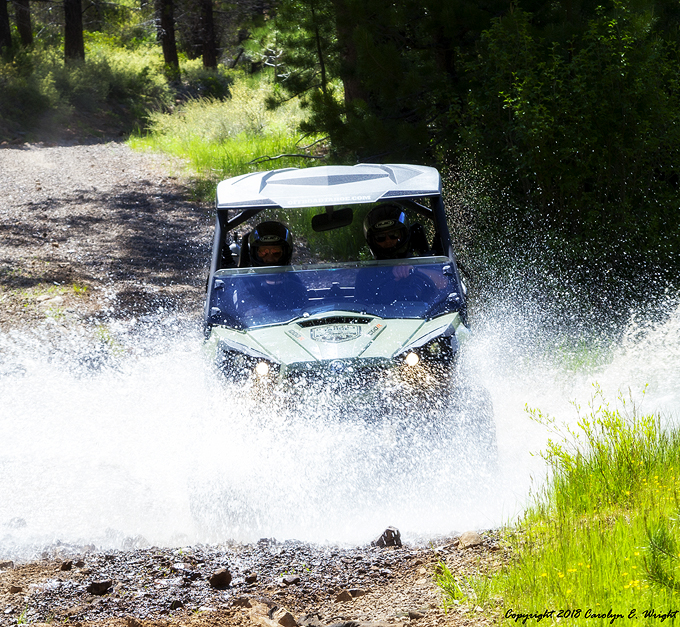
Getting wet and dirty are all part of the fun. Photo Copyright 2018 Carolyn E. Wright

By Kathryn Reed

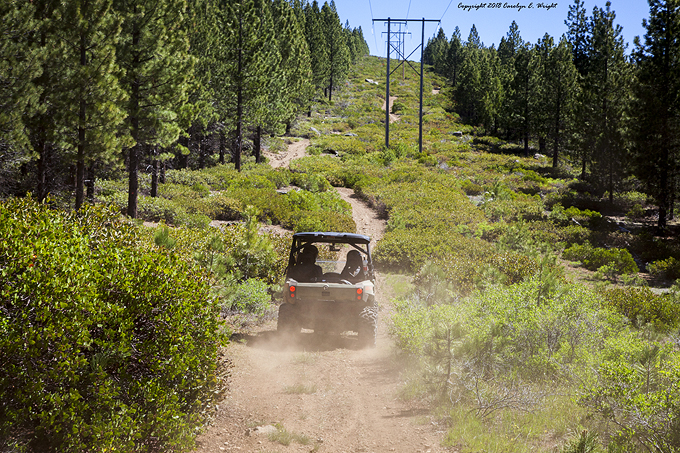
TRUCKEE – Four-wheeling is often a mix of going faster for the adrenaline rush and slowing down to take in the scenery. This excursion was no different.

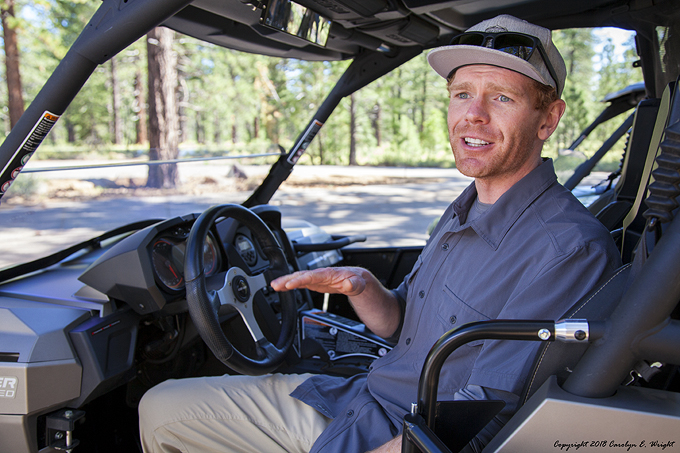
One of the best parts is that guide Sean Field knows this terrain better than most because he grew up in Tahoe City exploring the mountains in every season, in practically every possible manner. Now the three-time X Games skier is slaying “brown pow” as he shares this part of the world with anyone who wants to spend about three hours in the backcountry in a UTV – utility terrain vehicle.

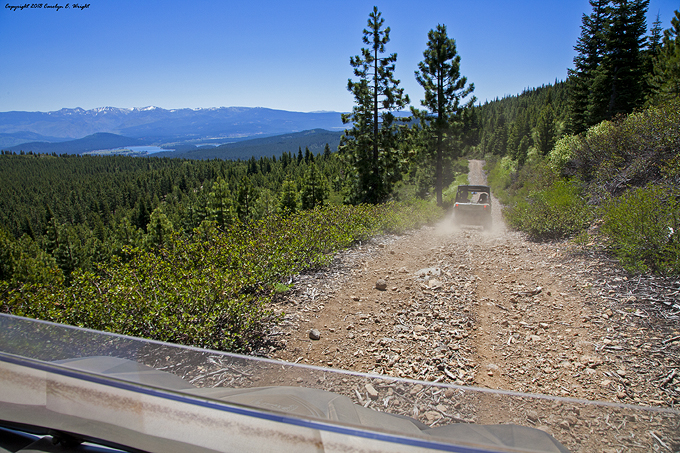
Prosser and Stampede reservoirs from the trail. Photo Copyright 2018 Carolyn E. Wright

So much dust kicks up it’s necessary to lag behind a bit as his taillights disappear around a corner. For someone with off road experience (none is required to rent a UTV) I was pretty pokey until my passenger essentially said there would be no photos at the pace I was going.

What makes these Can-Am Commander 1000cc machines different than an all-terrain vehicle (ATV) is that driver and passenger sit side-by-side and it’s a normal wheel instead of like a bike. The suspension is outstanding – better than a 2002 Wrangler on similar terrain.

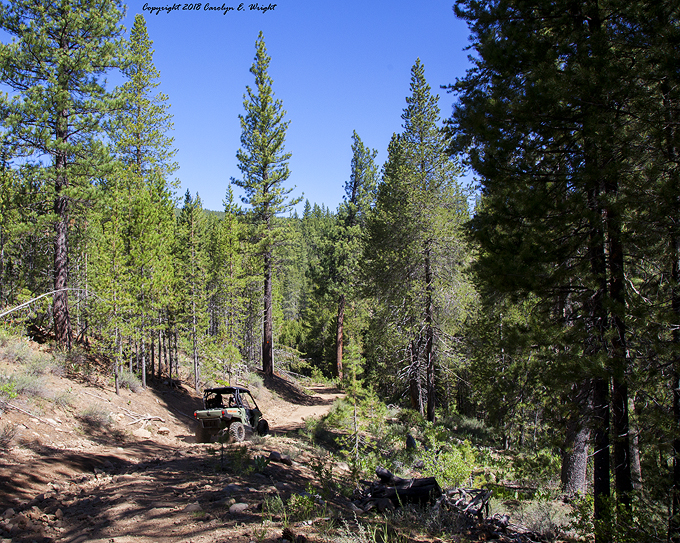
Most of the route is through the tall pines in the Tahoe National Forest. Photo Copyright 2018 Carolyn E. Wright

The company’s motto is: “We guide, you drive.” It’s perfect. It would be easy to get lost as one dirt road starts to look like the next. Using a tree as a marker isn’t likely to get you back to the trailhead when you’re in a forest.

Cass Walker is Field’s passenger; she adds to the experience by making sure guests are staying hydrated and have snacks at select stops. The wipes to clear the accumulated dust from exposed skin and sunglasses were welcome along the way and at the end of the expedition. Sunscreen, bug spray and Advil are in the glove compartment.

Sean Field is sharing his love of the outdoors with people who might not otherwise be able to see these locations. Photo Copyright 2018 Carolyn E. Wright

Field knows when to slow down, when to stop – where that Kodak moment is. And there are plenty. But that doesn’t mean there is a lot of stopping.

This adventure is about driving the bumpy U.S. Forest Service roads, going through some water, getting super dusty and grinning with glee.

At one outlook Stampede and Prosser reservoirs are visible, with Boca barely noticeable. Beyond that is the Carson Range and the backside of Mount Rose.

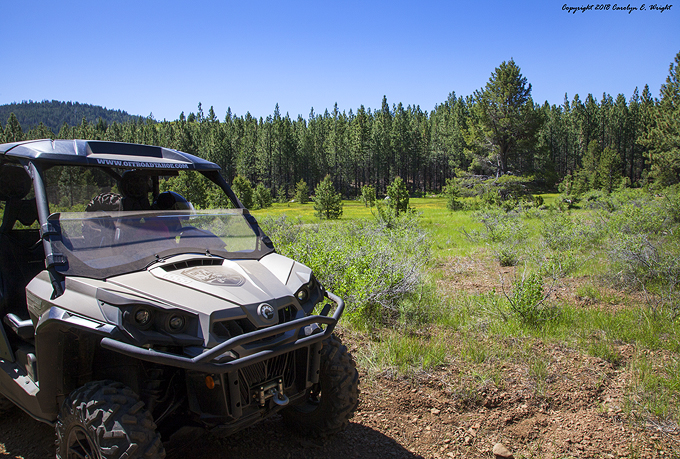
Wildflowers are just starting to pop in the Truckee area. Photo Copyright 2018 Carolyn E. Wright

“Skiing definitely taught me a lot about these mountains,” Field says as he imparts tidbits about the area. His exploration started in the winter and now continues with summer pursuits.

A pristine meadow which is the headwaters for Prosser Creek comes into view. This is the perfect spot to take in all the scenery, including the Pacific Crest, before turning around. Few signs of civilization are visible, making one feel so removed from everything; and feeling so small in this lush, vast terrain that almost looks like a painting.

Incredible vistas are the reward of having a guide lead the way. Photo Copyright 2018 Carolyn E. Wright

Field had done almost every sport the Sierra is known for before getting into rock crawling.

“I consider it a tool to access the backcountry,” he told Lake Tahoe News on a recent trek out of the Prosser OHV area near Truckee. “I almost got bored going by myself. It’s more fun with people.”

That is how Tahoe Off Road came into being. After securing a permit with the Tahoe National Forest he started offering tours in May.

The ride is about a 1,500 foot elevation gain. Photo Copyright 2018 Carolyn E. Wright

—–

Notes:

·      More details are on Off Road Tahoe’s website.

·      Season – May-October

·      20-mile round trip

·      Add-ons like lunch are available

·      2 2-person vehicles, 1 4-person vehicle

·      Open 7 days a week

·      2 tours a day


Calif. considers sharing control of power grid

By David R. Baker, San Francisco Chronicle

A web of power lines stretching from the Rocky Mountains to the Pacific weaves all the western states and Canadian provinces into one vast electric grid.

But control of that grid is anything but unified.

Thirty-eight separate organizations, known as balancing authorities, run their own portions, some as big as states, others as small as counties. The California Independent System Operator, a nonprofit corporation, controls the grid throughout most of the Golden State, its experts monitoring the flow of electricity from a darkened room in Folsom lit by a wall of data screens.

A bill facing debate Tuesday in a California Senate committee — AB 813 — would make a revolutionary change to that decades-old system.

Read the whole story


More wildlife now work the night shift

By Kaitlyn Gaynor, The Conversation

For their first 100 million years on planet Earth, our mammal ancestors relied on the cover of darkness to escape their dinosaur predators and competitors. Only after the meteor-induced mass extinction of dinosaurs 66 million years ago could these nocturnal mammals explore the many wondrous opportunities available in the light of day.

Fast forward to the present, and the honeymoon in the sun may be over for mammals. They’re increasingly returning to the protection of night to avoid the Earth’s current terrifying super-predator: Homo sapiens.

My colleagues and I have made the first effort to measure the global effects of human disturbance on the daily activity patterns of wildlife. In our new study in the journal Science, we documented a powerful and widespread process by which mammals alter their behavior alongside people: Human disturbance is creating a more nocturnal natural world.

Many catastrophic effects of humans on wildlife communities have been well-documented: We are responsible for habitat destruction and overexploitation that have imperiled animal populations around the world. However, just our presence alone can have important behavioral impacts on wildlife, even if these effects aren’t immediately apparent or easy to quantify. Many animals fear humans: We can be large, noisy, novel and dangerous. Animals often go out of their way to avoid encountering us. But it’s becoming more and more challenging for wildlife to seek out human-free spaces, as the human population grows and our footprint expands across the planet.

Global increase in nocturnality

My collaborators and I noticed a striking pattern in some of our own data from research in Tanzania, Nepal and Canada: animals from impala to tigers to grizzly bears seemed to be more active at night when they were around people. Once the idea was on our radar, we began to see it throughout the published scientific literature.

It appeared to be a common global phenomenon; we set out to see just how widespread this effect was. Might animals all over the world be adjusting their daily activity patterns to avoid humans in time, given that it is becoming harder to avoid us in space?

To explore this question, we conducted a meta-analysis, or a study of studies. We systematically scoured the published literature for peer-reviewed journal articles, reports and theses that documented the 24-hour activity patterns of large mammals. We focused on mammals because their need for plenty of space often brings them into contact with humans, and they possess traits that allow for some flexibility in their activity.

We needed to find examples that provided data for areas or seasons of low human disturbance – that is, more natural conditions – and high human disturbance. For example, studies compared deer activity in and out of the hunting season, grizzly bear activity in areas with and without hiking, and elephant activity inside protected areas and outside among rural settlement.

Based on reported data from remote camera traps, radio collars or observations, we determined each species’ nocturnality, which we defined as the percentage of the animal’s total activity that occurred between sunset and sunrise. We then quantified the difference in nocturnality between low and high disturbance to understand how animals changed their activity patterns in response to people. 

Overall, for the 62 species in our study, mammals were 1.36 times as nocturnal in response to human disturbance. An animal that naturally split its activity evenly between the day and night, for example, would increase its nighttime activity to 68 percent around people.

While we expected to find a trend toward increased wildlife nocturnality around people, we were surprised by the consistency of the results around the world. Eighty-three percent of the case studies we examined showed some increase in nocturnal activity in response to disturbance. Our finding was consistent across species, continents and habitat types. Antelope on the savanna of Zimbabwe, tapir in the Ecuadorian rainforests, bobcats in the American southwest deserts – all seemed to be doing what they could to shift their activity to the cover of darkness.

Perhaps most surprisingly, the pattern also held across different types of human disturbance, including activities such as hunting, hiking, mountain biking, and infrastructure such as roads, residential settlement and agriculture. Animals responded strongly to all activities, regardless of whether people actually posed a direct threat. It seems human presence alone is enough to disrupt their natural patterns of behavior. People may think our outdoor recreation leaves no trace, but our mere presence can have lasting consequences.

Future of human-wildlife coexistence

We don’t yet understand the consequences of this dramatic behavioral shift for individual animals or populations. Over millions of years, many of the animals included in our study have evolved adaptations to living in the daylight.

 Sun bears, for example, are typically diurnal and sun-loving creatures; in undisturbed areas less than 20 percent of their activity occurred at the night. But they increased their nocturnality to 90 percent in areas of the Sumatran forest where intensive forest research activity created a disturbance.

Such diurnally adapted animals may not be as successful at finding food, avoiding predators or communicating in the darkness, which could even reduce their survival or reproduction.

However, because our mammalian ancestors evolved under the cover of darkness in the time of the dinosaurs, most mammal species possess traits that allow for some flexibility in their activity patterns. As long as animals are able to meet their needs during the night, they may actually thrive in human-dominated landscapes by avoiding daytime direct encounters with people that could potentially be dangerous for both parties. In Nepal, for example, tigers and people share the exact same trails in the forest at different times of day, reducing direct conflict between humans and these large carnivores. Dividing up the day, through what researchers call temporal partitioning, may be a mechanism by which people and wildlife can coexist on an ever more crowded planet.

An increase in nocturnality among certain species may also have far-reaching consequences for ecosystems, reshaping species interactions and cascading through food webs. In California’s Santa Cruz Mountains, coyotes are becoming more nocturnal in areas with human recreation. By analyzing coyote scat, scientists have linked this behavioral change to dietary shifts from diurnal to nocturnal prey, with implications for small mammal communities and for competition with other predators.

Working on this study reminded me that people aren’t alone on the planet. Even if we don’t see large mammals while we’re out and about during the day, they may still be living alongside us, asleep while we are awake and vice versa. In areas where threatened species live, managers may consider restricting human activity to certain times of the day, leaving some daylight just for wildlife.

And it is likely that we need to preserve wilderness areas entirely free of human disturbance to conserve the most vulnerable and sensitive mammal species. Not all animals are willing or able to just switch to a nocturnal lifestyle around people. Those that try to avoid human disturbance entirely may be most vulnerable to the consequences of the expanding human footprint.

Kaitlyn Gaynor is a doctoral candidate in environmental science, policy and management, UC Berkeley.


South Tahoe gives athletes a place of honor

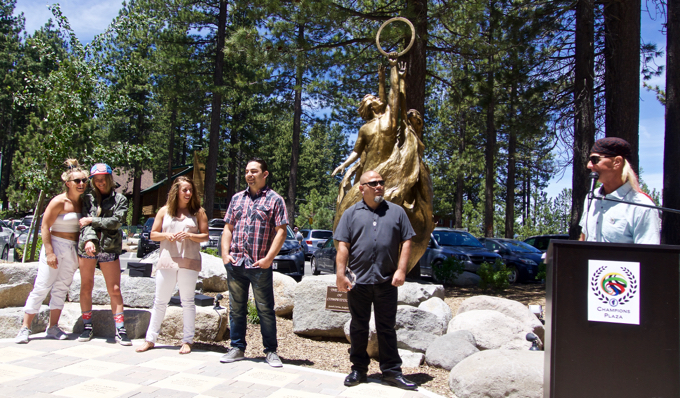
Glen Plake, right, talks as fellow athletes, from left, Jamie Anderson, Hannah Teter, Maddie Bowman, Travis Cabral and Juan Torres listen. Photo/Kathryn Reed

By Kathryn Reed

In some ways the athletes inducted into South Lake Tahoe’s Champions Plaza look ordinary. But wait. Listen to their accomplishments or watch them in person or on TV or look at photographs and the truth is crystallized. These are no ordinary human beings.

These 11 athletes, five could not attend the June 15 ceremony, have redefined their respective sports. Some were pioneers – doing things no one else was at time, while others reached the pinnacle of their sport in a more traditional path.

All, though, put in countless hours of training. They gave up normal childhoods and teen years. Their families paid in many ways. They reached heights that most people don’t even fantasize about.

After the 2014 Olympics, when the area had three medalists, South Lake Tahoe officials decided it was time to honor the area athletes in a permanent, public way. This is how Champions Plaza at Lakeview Commons came into being. But it’s not just about Olympians – all athletes are eligible if they meet the rigorous criteria.

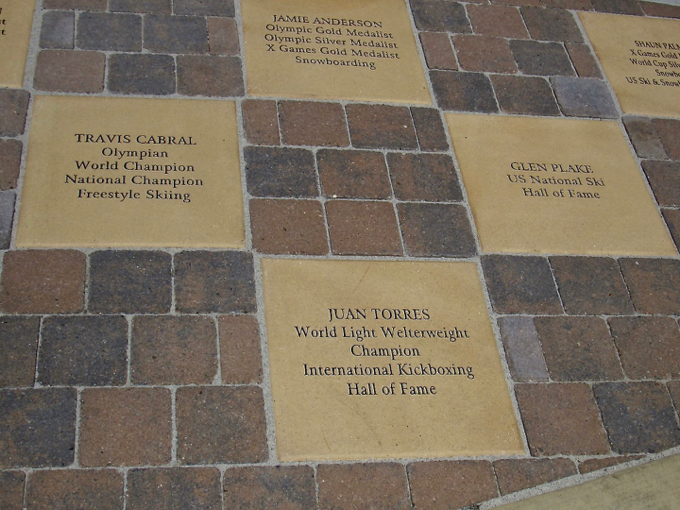
A bronze statue was commissioned two years ago. On Friday the unveiling of the names of the inaugural 11 inductees was commemorated. The name of each person and a brief list of accomplishments is etched into a square paver that is embedded into the walkway right in front of the statue.

Large squares highlight the athletes’ accomplishments. Photo/Denise Haerr

In attendance were:

·      Jamie Anderson – Olympic gold medalist, Olympic silver medalist, X Games gold medalist – snowboarding.

·      Glen Plake – Three-time World Hot Dog champion, in U.S. National Ski Hall of Fame, pioneer of extreme skiing.

·      Maddie Bowman – Olympic and X Games gold medalist – skiing.

·      Juan Torres – World light welterweight champion, International Kickboxing Hall of Fame.

·      Hannah Teter – Olympic gold and silver medalist, X Games gold medalist, World Championships bronze – snowboarding.

·      Travis Cabral – Olympian, World Cup champion, U.S. Nationals champion – skiing.

Not in attendance:

·      Jonna Mendes – Olympian in 1998 and 2002, World Championships bronze medalist – skiing.

·      Kyle Smaine – World Championships gold medalist – skiing.

·      Elena Hight – Olympian in 20016 and 2010, X Games gold medalist – snowboarding.

·      Travis Ramos – U.S. Nationals champion – skiing.

·      Shawn Palmer – X Game gold medalist.


West Coast a haven for unsheltered homeless

By Margot Kushel, The Conversation

One-quarter of homeless people in the U.S. live in California, despite Californians making up only 12 percent of the population.

Not only is homelessness more common on the West Coast, but it is also more visible because a higher proportion of homeless people are unsheltered. In the U.S., 24 percent of homeless people sleep outside, in vehicles or somewhere else not meant for human habitation. But that varies greatly from place to place: In California, 68 percent of homeless people are unsheltered, compared to just 5 percent in New York.

Visitors to the West Coast may be shocked to find the tents that line cities from San Diego to Seattle. Like a modern-day “Grapes of Wrath,” the tents are a stark reminder of the suffering of the thousands living outside, homeless.

What’s to blame for such high numbers of unsheltered homeless on the West Coast? The reason isn’t drug use, mental health problems or weather. Rather, it is due to the extreme shortage of affordable housing.

Life unsheltered

As a physician and researcher who provides medical care for people experiencing homelessness, I have seen firsthand how devastating homelessness is to health.

Being unsheltered is terrifying, humiliating and isolating. People living without shelter lack access to toileting facilities, sinks and showers. They have no way to store or prepare food and no protection from the elements. Hunger is common.

Sleeping in makeshift beds or on the ground, they get little sleep. They must contend with having their possessions stolen. They face frequent forced moves, which disrupt relationships and make it difficult for family, friends or service providers to find them.

People who are unsheltered are at high risk of physical and sexual abuse. If they struggle with substance use disorders, their use of drugs and alcohol occurs in public, leaving them open to arrest. There are no places to refrigerate or store medicines, no place to receive mailed appointment reminders or a visit from a visiting nurse, no place to dress a wound or plug in medical equipment like oxygen. Without access to hygiene facilities, they are at high risk for communicable diseases like hepatitis A.

Unaffordable housing

Some assume that homelessness is so common on the West Coast because people move here when they become homeless, but data do not support this. Most people experience homelessness close to where they lost their housing. My team’s research in Oakland found that 81 percent of older adults who are homeless became homeless in the Bay Area. Only 10 percent had lost their housing outside of California.

Instead, the high rate of homelessness can be attributed to the lack of affordable housing in these regions. The West Coast suffers from rising costs of rental housing, stagnant incomes for low-wage workers and a decline in federal support for affordable housing. For example, California has gained 900,000 renter households since 2005, but lost $1.7 billion in state and federal funding for affordable housing.

Extremely low-income households – defined as those with income less than 30 percent of the area median income – are at the highest risk of homelessness. Nationally, there are only 35 units available for every 100 extremely low-income households.

In the West, these shortages are more severe: Nevada has 15 units available for every 100 extremely low-income households; California has 21.

In 2017, for the first time in 13 years, Los Angeles opened its wait list for housing choice vouchers. These vouchers allow households to pay 30 percent of their income in rent, with the rest paid by the government. There were 600,000 applicants for just 20,000 spots on the list, highlighting the enormous unmet need.

Who pays for homeless services

Why are people on the West Coast so much more likely to be unsheltered than homeless people in other parts of the country? It reflects differing government priorities .

New York City, where there is a legal right to shelter, spends approximately $17,000 per homeless person per year on homeless services. Massachusetts spends approximately $14,000 per year. Los Angeles, by contrast, spends approximately $5,000.

With enormous numbers of people living outside, West Coast cities are scrambling for solutions. Some cities, like Seattle, have created sanctioned homeless encampments, bringing hygiene facilities and other services. However, the U.S. Interagency Council on Homeless cautions that this approach is costly and doesn’t provide a solution to homelessness.

Other cities are following San Francisco’s example and creating navigation centers, homeless shelters with added services. Unlike typical shelters, these centers allow people to come in groups, bring pets and belongings and stay all day.

Many areas have passed tax increases to fund new housing and services. These efforts show modest success but continue to struggle against the unfavorable housing conditions that lead people to become homeless in the first place.

So where can we go from here? There are solutions to homelessness, but, in my view, these will not succeed without solving the affordable housing crisis that is the underlying cause of homelessness.

For people who are chronically homeless and have disabling conditions, permanent supportive housing is highly effective. This type of subsidized housing offers supportive services, without the requirement that people be sober or engaged in medical care. Studies show that expanding permanent supportive housing has reduced the number of people experiencing homelessness in many parts of the country.

The success of permanent supportive housing has been overshadowed by increases in people becoming newly homeless due to the lack of affordable housing. In my view, preventing and ending homelessness will require a commitment to creating housing that is affordable to all.

Margot Kushel is professor of medicine, UC San Francisco.


Rethinking ‘leave no trace’ for outdoor social media

By Sierra Davis, Powder

The Leave No Trace Center for Outdoor Ethics, a national organization that protects the outdoors by teaching and inspiring people to enjoy it responsibly, recently released new guidelines for social media as it relates to documenting our time spent in the outdoors. We like their suggestions a lot. (We may consider revising our course syllabus for Instagram For Skiers, 101.)

The organization, which aims to offer “a framework for making good decisions about enjoying the outdoors responsibly, regardless of how one chooses to do so,” says it hopes to encourage social media posts from outdoor spaces to include a message of stewardship as part of enjoying the outdoors responsibly.

Read the whole story


100+ pounds trash plucked from SLT bike trails

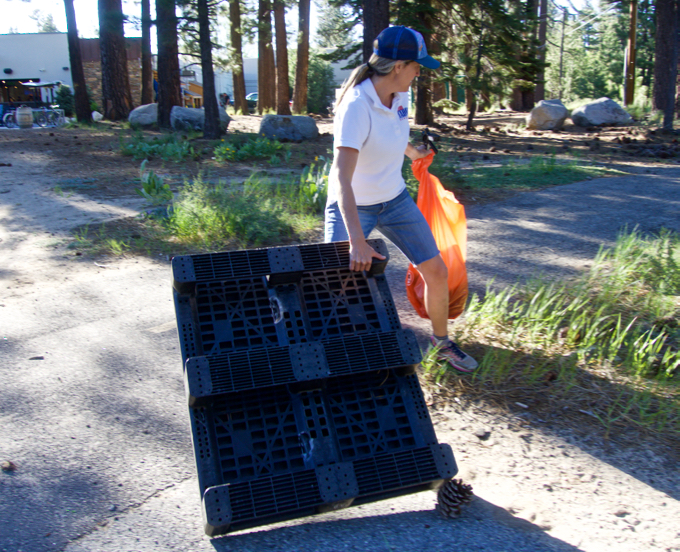
Catherine Cecchi with Clean Tahoe moves a heavy pallet out of the way for her crew to retrieve. Photo/Kathryn Reed

By Kathryn Reed

How long has it been since there was a Burger King in South Lake Tahoe or even on the South Shore?

The answer is years. The question is relevant because a wrapper from that fast food restaurant was picked up this week along a bike trail here. It’s either been there a long time or someone brought it in from outside of the area and instead of tossing it in a garbage bin, discarded outside as litter.

About 50 people volunteered an hour or so of their time on June 12 to help clean up sections of the bike paths, all under the guidance of Clean Tahoe and League to Save Lake Tahoe leaders, with support from Tahoe Regional Planning Agency and the Bike Coalition.

A pile of household trash just off the bike trail near the Y in South Lake Tahoe. Photo/Kathryn Reed
Items collected June 12:
• Band-Aids – 2
• Grocery bags – 22
• Other bags – 47
• Balloons – 2
• Batteries – 2
• Bottles – 32
• Bottle caps – 171
• Cans – 34
• Car parts – 15
• Cigarette butts – 1,117
• Cigarette lighters – 3
• Clothing – 19
• Construction material – 26
• Cups – 41
• Dog poop bags – 19
• Dog poop without bags – 5
• Fishing line/net – 5
• Food waste – 20
• Food wrappers – 120
• Glass bottles – 20
• Glass oil lamp – 1
• Glass pieces – 187
• Gum – 31
• Historic metal – 2
• Lids – 71
• Metal pieces – 55
• Paper pieces – 346
• Plastic pieces – 420
• Plates – 22
• Pull tabs – 12
• Q-Tip – 3
• Receipts – 35
• Reflectors – 3
• Rope – 20
• Rubber bands/hair ties – 6
• Six-pack holder – 4
• Straws/stirrers – 76
• Syringes – 1
• Styrofoam cups – 22
• Styrofoam pieces – 130
• Styrofoam plates – 3
• Styrofoam take-out containers – 5
• Take-out containers – 6
• Tampons – 2
• Tobacco packing – 22
• Toys – 4
• Utensils – 28
• Zip ties – 10

In the short amount of time the crew collected 101.5 pounds or 73 gallons of debris.

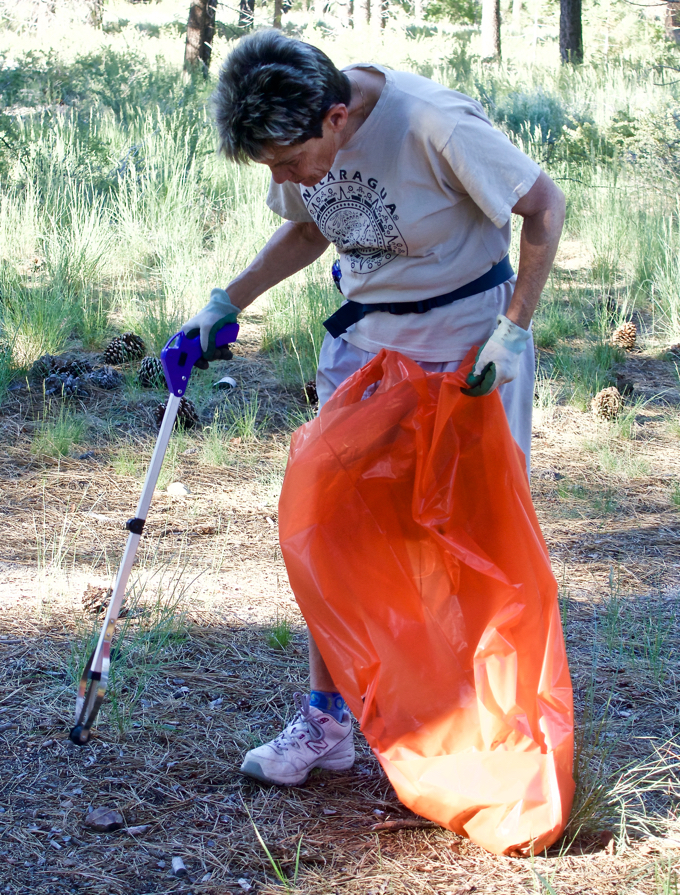
Fortunately gloves were handed out to those who did not bring them, and grabbers were provided to those who didn’t want to get that close. When you are picking up people’s hygiene products and sex prevention devices, it’s best to have your own protection.

There were three starting locations: 1. Clean Tahoe office near the Tahoe Valley Pharmacy, with people then going to the trail from Helen Avenue to behind the Crossing center; 2. behind Motel 6; and 3. Highway 50-Los Angeles Avenue. The latter two met up in the Rubicon area.

Volunteer Rosemary Manning picks debris. Photo/Kathryn Reed

This cleanup has been going on for several years, with most being on a Saturday. The was the first to be on a Tuesday night. The hope was to get a different group.

Catherine Cecchi, who runs Clean Tahoe, told Lake Tahoe News the trash found along the bike trails and in neighborhoods is different than what is found on beach cleanup days.

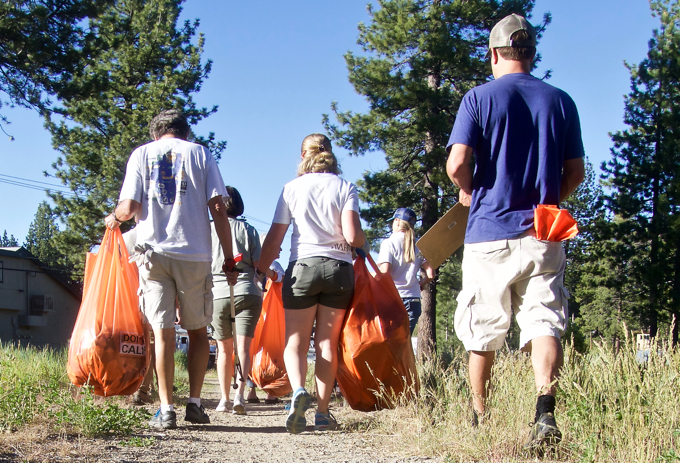
“There are a lot more food wrappers and a lot more to-go cups,” she said of the bike path as she filled her large orange bag that had “Don’t Trash California” written on it. “At the beach there is more recreation stuff; alcohol and cigarette butts.”

Still, there were plenty of cigarette butts picked between the three groups – 1,117. So many were found embedded in dry pine needles.

Volunteers with their full bags. Photo/Kathryn Reed

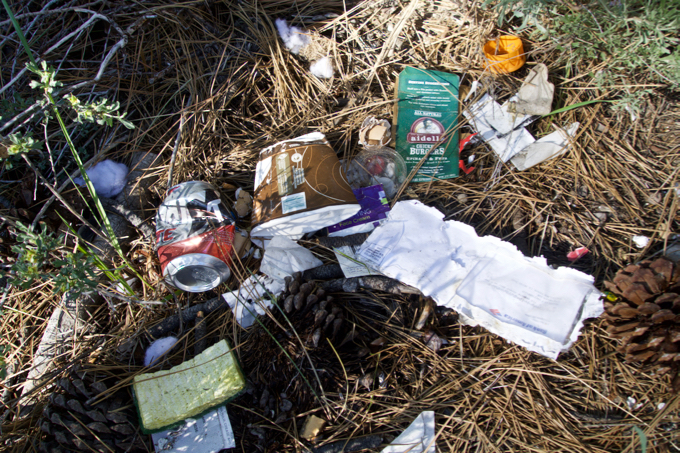
A pile of household trash was found across the path not far from a residence. A guess is that it was brought there by a critter. An envelope was still part of the mess; something Cecchi took a photo of with the hope of tracking down the owner of the contents. Leaving trash out for animals – intentional or otherwise – can come with a fine.

Someone’s unexpired permanent residence card was salvaged. A plastic pallet was left to be picked up by the Clean Tahoe crew later in the week. Christmas decorations had seen better days.

It was the itty-bitty pieces of Styrofoam that were so annoying to pick up. Some looked like they may have once been bigger pieces of packing material.

One thing veteran volunteers have noticed is the decline of plastic bags. An assumption could be the bag ban in the city limits means there aren’t as many out there.


How local businesses compete in the age of convenience

By Alexandra Spychalsky, Moonshine Ink

It is clear that we are no longer living in the heyday of the mom-and-pop shop, and rather are deep in the digital age. Why go away from home to shop when you can have groceries delivered to your door? It may sound cynical, but it’s the battle waged daily by the Tahoe businesses that provide the everyday items locals need, like home goods or produce. Here local business owners explain how they compete for your dollars, and why convenience and lowest cost don’t always equal the best buy.

For many local business owners, it’s all about that personal connection that is unique to a mom-and-pop shop. That’s what they say sets a local business apart from the big chains, and is a large reason why customers keep coming back.

Gary Romano, owner of Sierra Valley Farms in Beckwourth — just north of Sierraville — faces an uphill battle each day. The Sierra is not a very hospitable growing area, he says; the 5,000-foot elevation brings cool and rapidly changing temperatures and a soil that can only nurture certain crops. But he can pick a batch of carrots in the morning and get them to a Truckee restaurant by noon, he says, which is about as local as it gets, and he has a loyal following among the produce buyers across North Lake Tahoe.

Read the whole story


Calif. works to implement Groundwater Management Act

By Sean Hood, Water Deeply

California’s Sustainable Groundwater Management Act (SGMA) requires each local Groundwater Sustainability Agency to develop and implement a Groundwater Sustainability Plan for its basin and the first plans for critically overdrafted basins are due to be completed by January 31, 2020. Each plan must be designed to achieve safe yield within 20 years.

This new regime of groundwater management is a monumental change in California water law. Overlying land owners have long enjoyed the right to extract groundwater for beneficial use on their land, and the agricultural, municipal, mining and industrial sectors rely heavily on groundwater resources to meet their water needs. It is difficult to fathom the collective investment that California businesses have made in reliance on the right to make beneficial use of groundwater.

In response to SGMA’s passage, public and private stakeholders have scurried to identify new water sources to augment existing supplies. However, the Department of Water Resources’ recently issued Water Available for Replenishment report seems to confirm longstanding conventional wisdom: There is no water supply panacea for solving California’s groundwater management crisis.

Read the whole story