No uniform necessary to be affected by military service

By Kathryn Reed

It was 1942 and Irene Morris was going to junior college in Southern California. With books in hand, a woman about her mom’s age told her she should be helping her country. The woman talked to Morris about the plant where parachutes were being made. As someone who had been sewing since she was 10, Morris knew she would be qualified.

Her first day on the job was that next day.

Morris made $1 an hour to look for errors in the stitching of those parachutes. By the time the war was over three years later, she was making $1.25 and had $800 in a savings account.

Scout Pack 592 members Zane Smith, from left, Noah Lyle and Jayden Degregory present the colors Nov. 8 at the start of the Soroptimist meeting. Photo/Kathryn Reed

From grandparents born in the United States who were sent to internment camps to a father-in-law being put on the front line ahead of his Caucasian comrades because of his Mexican heritage to having a husband who jumped out of planes in Afghanistan to render aid to injured soldiers, the women of South Lake Tahoe are well aware of the meaning of Veterans Day.

The Nov. 8 Soroptimist International Tahoe Sierra meeting was all about veterans.

Morris and Sue Jackson were the guest speakers. Jackson spoke of how she got interested in the military when she joined the Civil Air Patrol in high school in Woodland. Sitting on the tallest building – all two stories – they used binoculars to look for planes and logged all they saw by hand in a notebook.

While in nursing school at CSU Chico, she joined the Navy because the military would help with tuition. She was enlisted from 1958-62, spending two years in San Diego, but no time abroad.

Then everyone in the room decided to tell their stories about how they have a connection to the military – most are through a male relative. Reflections brought forth tears, quivering voices and a sense of camaraderie in this impromptu morning of sharing.

Laurie Brazil’s brother wanted to be a conscientious objector to the Vietnam War. It requires going before a tribunal of sorts. Their father had been an officer in the military. He had to speak at the hearing – saying he didn’t believe in what his son was doing, but believed is was the correct thing for his son.

“It was heart-wrenching for everyone,” Brazil said.

One woman’s husband was on an aircraft carrier during the Korean War. He was supposed to catch the planes as they landed. It was tough when the planes that took-off never returned.

A half-brother was in the Marines during World War II. No word for months. Then suddenly he showed up at the front door for a two-week stay before returning to places unknown.

Growing up in Elko, going to Vietnam was the norm. One woman dated a boy who went to war.

“I don’t know what happened to him. I never heard from him again,” she said with sorrow in her voice.

Trudy Mills was a Navy pilot’s wife.

“I remember the Navy chaplain’s car would come in. Everyone would hold their breath to see where it would go,” she recalled.


Meyers residents map out future for their community

By Kathryn Reed

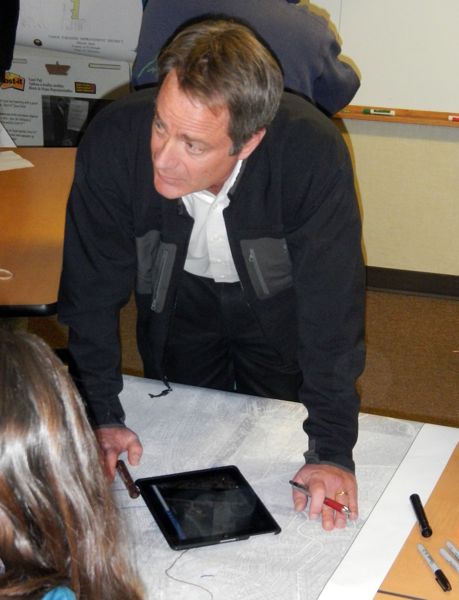
MEYERS – With markers in hand, a room full of people started drawing and writing descriptions on maps about what Meyers should evolve into. And much like the discussions being had around the basin, recreation, connectivity and a sense of place evolved as dominant themes.

Moving the boat inspection from where it is on Highway 89 to someplace where it’s easier for motorists was an idea. But a bigger idea was to incorporate a visitors center into the boat wash area since this is a captive audience. Plus, the Meyers station is the busiest one in the Lake Tahoe Basin.

Having distinct cross country ski routes through Lake Valley Recreation Area and Washoe Meadow State Park, as well as putting in bridges across the Upper Truckee River and Angora Creek that have nothing to do with golfing were some of the ideas.

Steve Bannar talks about trails he would like developed in Meyers. Photo/Kathryn Reed

Changing land use designations to accommodate the possible relocation of Lake Tahoe Wildlife Care is on the table.

These ideas and more were discussed at a three-hour meeting Nov. 7 at the Lake Valley firehouse in Meyers. The goal is to come up with an updated plan for Meyers – the last one is 20 years old – and have it ready to be presented to the Tahoe Regional Planning Agency early next year.

John Hitchcock with TRPA ran the Wednesday workshop.

When someone brought up how Winter Park, Colo., has a commercial area about as long as Meyers’ on a state highway and functions better, Hitchcock said, “The problem is the Department of Transportation in Colorado is more progressive than Caltrans.”

The highway is so wide in this section of the South Shore because it was going to be a freeway at one time.

El Dorado County Supervisor Norma Santiago would like to see the county take over the right-of-way from Caltrans. This would likely allow businesses to be able to do more with their properties and could take some snow removal responsibilities out of the state’s hands.

She also suggested flopping the lanes for the bug station so locals go right through without veering to the right, and those needing to be inspected are off to the side of the road.

Santiago wants a new building that is not an “eye-sore” and meets legal requirements.

Transportation was one of the main topics of the night. Creating park and ride areas to access recreation, plus having plowed winter recreation parking were brought up.

The fact Meyers does not have bus service other than on-demand was noted.

Being able to have connections to places that don’t involve being on or alongside a highway were mentioned, though so was creating a bike path along Highway 89.

Linking Tahoe Paradise Park and the state park was broached.

The Western Juniper Tree is on the cover of the 1993 Meyers plan because this is the only enclave in the basin where this species is found. People advocated for highlighting this fact in a more public manner.

Yanks Station in the prior plan was touted as where retail would go. It doesn’t exist anymore. In its place is the California Conservation Corps building. So that aspect of the old plan will definitely be revised.

The old plan also called for median landscaping on the highway with five distinct districts, with retail being two of them at opposite ends.

“What is missing from the old plan is mixing uses,” Hitchcock said. This would require not having as many districts.

He also suggested the possibility of having all of Meyers designated an area where special events can take place so it is less limiting than current policy.


South Lake Tahoe set to spend $1 mil. for ladder fire truck

By Kathryn Reed

South Lake Tahoe’s ladder truck is so old that some of the firefighters working for the department were born after it first hit the streets.

Fire Chief Brian Uhler told the City Council on Nov. 6 that the normal life of the vehicle is 15 years. The one the city has title to is 30 years old. In the vehicle world it’s an antique, and if it were a person, it would be in a convalescent home on life support.

A ladder truck, like the one Tahoe Douglas brought to the Pioneer Trail fire this fall, allows crews to get above power lines. Photo/LTN

The ladder truck is in such lousy shape that it was pulled from service this year because of safety concerns and high maintenance costs.

In the last five years, the current ladder truck has needed almost $100,000 in repairs.

“The vehicle emits a large amount of smoke because a major engine overhaul is overdue and the ladder’s electrical components are known to be unreliable,” Uhler wrote in his staff report.

Rob Hembree, one of the station commanders, pointed out how when the convention center project was approved, it was with the caveat the city had a ladder truck that could fight a fire at that structure.

The tallest building in the city limits is nine stories.

But it’s not just tall structures that benefit from a ladder truck. The house fire on April Avenue and Pioneer Trail in September was extinguished with the help of Tahoe Douglas’ ladder truck.

This type of unit is ideal for fires at commercial properties. It allows a trench to be cut on a roof without getting on the roof. That can save lives. Having a ladder truck in the city limits could help keep fire insurance costs down, too.

With a room full of firefighters, the council heard from official spokesmen from the department as well as impassioned pleas from those working the various rigs.

In the end, the council approved the purchase of a ladder truck for $1,045,501. It will arrive next year. Another $75,000 will be spent on renovating Station No. 2 so the vehicle can be parked indoors.

The city has negotiated a loan with Republic First National for 10 years at 3.26 percent interest. The loan payments will come from Proposition 172 dollars. Until this week, the approximately $600,000 from this 1992 state initiative went into the city’s general fund for fire and police to split.

Now the fire share will be allocated for capital expenditures. This includes vehicles and other equipment the women and men need.

The first payment won’t be due until fiscal year 2013-14, so no revisions to the current budget are needed.

It hasn’t been decided what the old ladder truck will be used for. It might have a new life as a training apparatus at the fire academy, possibly it will be the truck decorated for the holidays. But it’s so old that parts are hard if not impossible to obtain, and the likelihood of another department wanting it are nil, according to officials.

In other action:

• Harrison Avenue improvements are going forward, with 82.46 percent of the property owners agreeing to form an assessment district. The council then unanimously approved its creation. This means work on the streetscape will begin next building season.

• The city and El Dorado County are joining efforts to release a request for proposal to find someone to conduct a comprehensive parks, trails and recreation master plan. Proposals are due Dec. 14, with the council expected to review them in late January and the county in early February.

• The empty lot at the southwest corner of Highway 50 and Ski Run Boulevard has been sold to an undisclosed buyer for $750,000. The buyer sought the confidentiality clause. The city is holding to it until all the paperwork is signed. The city had to sell this parcel because it was part of the now defunct Redevelopment Agency.

• Stan Sherer, the Community Development director who was let go earlier this year, filed a $1 million claim against the city. It was reported out from closed session that the council rejected that claim.


El Dorado County DA messing with lives without showing evidence

By Kathryn Reed

People with knowledge of the lingering investigation into potential criminal activity by South Lake Tahoe officials in connection with Gino DiMatteo have told Lake Tahoe News there are ulterior motives involved.

No longer is the El Dorado County District Attorney’s Office using the word “bribery” or naming names in its investigation.

The district attorney, Vern Pierson, refuses to address the media in any way other than press releases. Only his secretary, Nancy Anderson, is allowed to speak for him.

El Dorado County District Attorney Vern Pierson

Anderson this week emphatically told Lake Tahoe News her agency did not use the word bribery to describe what DA investigators are currently probing. Nor would she say what the focus is or who the focus is on.

A Nov. 2 press release from Pierson’s office says, “… the investigation into certain South Lake Tahoe City officials as to their dealings with DiMatteo is ongoing.”

Former South Lake Tahoe City Manager Tony O’Rourke told Lake Tahoe News, “No one has ever contacted me in any way shape or form. So any investigation is not thorough or comprehensive. I don’t think there was anything there. I think [Pierson] has hung [City Councilwoman Angela Swanson] out to dry. He needs to buy time to look like he did something.”

Swanson had previously been named by the DA’s office as the city official DiMatteo is accused of bribing. But no evidence has been presented to the public, to Swanson or to DiMatteo’s attorneys to substantiate the allegation.

O’Rourke was at many of the meetings where the city’s pot ordinances were being written. Those meetings also included DiMatteo, who at the time owned the medical marijuana dispensary City of Angels II.

O’Rourke thought it would be fine for DiMatteo to move his business last summer to accommodate his landlord wanting him out. But the council changed its mind after O’Rourke left the city and information was presented about some questionable activities pertaining to DiMatteo’s business.

(Swanson is no longer talking to the media. She continues to fulfill her duties on the council.)

At one time she had aspirations of running for El Dorado County supervisor. Keeping her name tied to a criminal investigation would thwart the likelihood of her being elected.

Swanson has been outspoken in her support for medical marijuana, so bribing her would not likely alter a vote. Those close to the case say if DiMatteo were to have bribed anyone, it would likely have been one of the men on the council because of their views about the pot clubs.

It is not known how much taxpayer money has been spent to-date on the various investigations involving DiMatteo.

Criminal complaint

DiMatteo at his first appearance in U.S. District Court in Sacramento on Nov. 6 was released on a $500,000 bond and GPS monitoring. It was on Nov. 2 that the county dropped the state charges and federal charges were levied against DiMatteo. However, this does not mean state charges will not be reinstated. That is what happened in the Karsten Gronwold child molestation case that rocked the South Shore a few years ago.

The five-page complaint does not say a word about bribery.

DiMatteo faces two counts – possession with intent to distribute marijuana and manufacturing at least 100 plants.

Here is the full complaint.


LTCC, LTUSD officials relieved Prop. 30 passes

By Kathryn Reed

California lawmakers have a handful of years to figure out a more sustainable way to fund K-14 education. That is because the tax measure approved Nov. 6 by voters will expire.

“I’ve been dealing with finances in community colleges for the last 12, 13 year and it’s been unstable the whole time,” Kindred Murillo, Lake Tahoe Community College president, told Lake Tahoe News.

Jim Tarwater, superintendent of Lake Tahoe Unified School District, said it is long overdue for Sacramento to get its act together.

“What they have got to have is stability. There is not an organization or company around that doesn’t know how much money it has to function,” Tarwater said. He doesn’t understand how lawmakers ever rationalized taking money away from K-12 midyear when those dollars had been allocated.

Gov. Jerry Brown’s efforts paid off on election night. Photo/Los Angeles Times

LTCC and LTUSD, respectively, would have faced $632,000 and $1.6 million in cuts this fiscal year had Proposition 30 failed. With contracts in place, cutting people midyear is not a possibility.

For now though, both institutions can breath a sigh of relief. And both can put a few dollars back into reserves that were designated to cover the potential state take-away.

The anticipated revenue to be gained via Proposition 30 is estimate at $6 billion annually for education, with 89 percent for K-12 and 11 percent for community colleges. This will come from starting this tax year by increasing taxes on those who make more than $250,000, as well as upping the sales tax one-quarter cent to 7½ percent beginning Jan. 1. The income tax is for seven years and the sales tax for four.

While the money will go for several things, the bulk is allocated toward education.

People in all capacities of education are hailing the approval of Proposition 30 as a victory for schoolchildren. The measure passed with 53.9 percent of the voters saying yes.

“This is a great win for our schools and public safety. Our local schools will not face more cuts this school year and in the near future. The voters of California have stood up to support our schools and we are all grateful,” Mike Patterson, a past president of the local teachers’ union and member of the state union, told Lake Tahoe News.

For LTUSD, it means programs will not have to be cut. Nor will the school year be shortened by 12 days.

When it comes to people, in the last four years about two dozen teachers have been let go, mostly through attrition; that many classified employees have received pink slips; and the administration has cut nine jobs.

“For California community colleges it will finally allow us to begin adding back some of the thousands of classes we have been forced to cut since we began this nightmare of educational rationing in 2008,” Brice Harris, California Community Colleges chancellor, said in a statement. “With this vote of support from California’s citizens, community colleges will receive $210 million in additional funding this year. This should allow us to serve an additional 20,000 students statewide and to begin erasing the financial deferrals that have plagued our budgets in recent years.”

Since 2008, the 112-college system has endured $809 million in cuts. It has meant cutting nearly a quarter of the classes that were once offered and losing about 500,000 students.

But according to Murillo, the next few years will be tough for community colleges because of how the state reimburses institutions. Core classes and sticking to the mission of providing transfer-remedial-career/tech courses will alter what is in the class schedule.

LTCC is reviewing all of its classes with the goal of by early next year to have a firm grasp of what people will be able to repeat, what the state will pay for, what must stay in a certificated program and everything in between.

Plus, in two years the college will have to deal with the priority registration mandate coming down from Sacramento.

Here is how all the California propositions on the Nov. 6 ballot did:

Proposition Title

Yes
Votes

%

No
Votes

%

Yes 30 Temporary Taxes to Fund Education 4,959,206 53.9% 4,241,246 46.1%
No 31 State Budget, State and Local Government 3,369,175 39.2% 5,220,193 60.8%
No 32 Political Contributions by Payroll Deduction 3,973,720 43.9% 5,086,590 56.1%
No 33 Auto Insurance Prices Based on Driver History 4,046,275 45.4% 4,872,423 54.6%
No 34 Death Penalty 4,269,535 47.2% 4,776,815 52.8%
Yes 35 Human Trafficking 7,309,737 81.1% 1,698,939 18.9%
Yes 36 Three Strikes Law 6,181,771 68.6% 2,826,624 31.4%
No 37 Genetically Engineered Foods Labeling 4,277,985 46.9% 4,835,045 53.1%
No 38 Tax for Education. Early Childhood Programs 2,489,028 27.7% 6,495,745 72.3%
Yes 39 Business Tax for Energy Funding 5,295,968 60.1% 3,522,579 39.9%
Yes 40 Redistricting State Senate 6,068,518 71.4% 2,427,514 28.6%

Source: California Secretary of State


Cole returns, Conner joins South Tahoe City Council

By Susan Wood

In line with the early absentee counts, South Lake Tahoe voters tapped community jack-of-all-trades JoAnn Conner and incumbent Hal Cole to lead the town over the next four years. With all precincts reporting by 12:40am, Cole received 26 percent of the vote with 1980 ballots cast. Conner seized the second seat with 1928 votes at 25.3 percent.

The other three candidates: marketer Austin Sass, incumbent Bruce Grego and businessman Clinton Schue followed behind with 20.2 percent, 18.7 percent and 8.9 percent of the vote, respectively.

A high vote-by-mail turnout characterized the evening for El Dorado County. Results are unofficial and as always are expected to be finalized in the next few weeks.

For South Lake Tahoe, 52.9 percent of the city’s 9,248 registered voters cast their ballots for their favorites of the five candidates.

Hal Cole

JoAnn Conner

The race showed a little bit of everything — from the standard debate circuit to a last-minute, anti-candidate campaign with signs reading “No Sass,” a measure of no confidence to Sass’s support of the Loop Road project, one of several proposals the candidates will need to wrestle with in the near future. With new ideas coming from a creative, resourceful city manager in a post redevelopment agency era, the entire council will have its hands full in terms of responsibility. Projects and plans remain pending from Stateline to the Y in a city with much of its focus on tourism.

Cole, who runs a construction company, would be going on his fifth term with a city struggling to still define itself in the last decade. Even as a newcomer, Conner has a long history with the city working in fields ranging from social work to education.

Cole and Conner share several things in common, with one being a desire to put recreation as a focus of the city.

“I think this recreation master plan doesn’t sound like much to some people, but it’s a big deal. We’ve been skirting around this issue for a long time,” Cole said.

He wants the city to re-embrace the phrase being the all-year playground.

Conner knows developing recreation assets and then promoting them is critical to developing a better economy.

Another big issue with her is to immediately work on talking to businesses that would be good to relocate here that would bring jobs for people who already live in the area.

Cole served three four-year terms, took two years off and is now starting the second term of this stint. He tells Lake Tahoe News this will be his last run. After all, he turns 64 next month. But there is more work to do, he says.

“I’ve had a great career. I’m really excited with [City Manager] Nancy [Kerry]. She has more energy than I’ve seen in anybody,” Cole said.

He said he has great hopes with Kerry and Conner.

Conner is ready to get to work, but is realistic in her approach.

“I think the first thing I need to do is learn more, study the budget, meet with people who already offered to share their insights so I can learn more,” Conner told Lake Tahoe News early Wednesday morning.

The councilmembers-elect will join Angela Swanson, Tom Davis and Claire Fortier. The latter may soon be vacating her seat due to family obligations, leaving another possible seat up for grabs. It would likely be filled by appointment.


Obama wins second term

President Obama

President Obama is going to be calling the White House home for another four years.

The president has won the electoral college vote, though he is trailing Mitt Romney in the popular vote.

Ohio put Obama over the top.

— Lake Tahoe News staff report


LTWC in talks with investors to grow rehab facility

By Kathryn Reed

The sound of hope fills Tom Millham’s voice when he talks about the possibility of investors coming forward who could transform Lake Tahoe Wildlife Care into a sustainable enterprise for generations to come.

For more than 30 years Tom and Cheryl Millham have been rehabbing wild animals in their spacious backyard. Long ago they outgrew the facility that is in El Dorado County, on the edge of South Lake Tahoe. And all those years they have been looking to move to a more suitable location that would also allow them to create an education component to the center.

Reason after reason the center has stayed put.

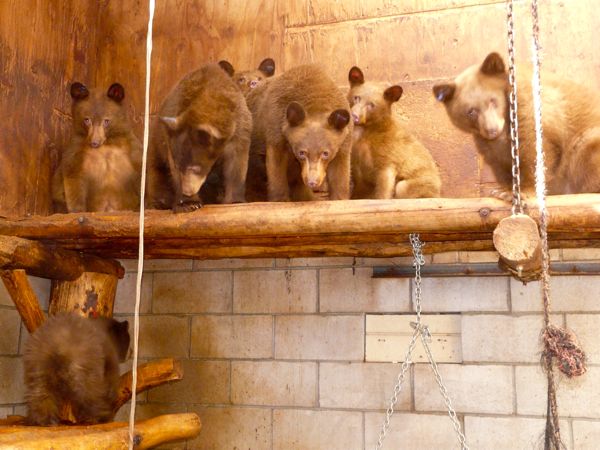
Lake Tahoe Wildlife Care is caring for a record number of bears. Photo/LTWC

At tonight’s LTWC board meeting, the volunteers of this nonprofit will be updated on the two people who have expressed interest in putting up what could be millions of dollars to buy a 3,700-square-foot house on 16-plus acres that back up to U.S. Forest Service property at the bottom of Old Meyers Grade, as well to pay for the work needed to make LTWC more than it is today.

“We haven’t heard that part yet,” Tom Millham said of what the investors might want in return for their cash. “None of that has been discussed yet. We are still in the initial stages of discussions, but at least we have someone now we can focus on.”

Millham would not discuss who the potential investors are so as not to jeopardize negotiations. He said one is from the region, while the other is out of the area.

He told Lake Tahoe News if things progress smoothly and quickly, the rehab part of the operation could move to the Echo Creek Estate location by the end of next summer. This is assuming a decision by the backers is made by the end of the year.

“We know we can rebuild these nine cages in a fairly short amount of time,” Millham said.

Ben Fagan has been sketching some designs for possible cages.

The next phase would be the education center.

“It would have an amphitheater for shows and things like that; a store for retail; café; upstairs will be the board room, offices and living quarters for the person living on site; and custodial,” Millham explained.

The amphitheater may seat up to 200 people. It would be used to show educational films about wildlife, the facility, be a place for lectures, and also be a venue for community gatherings.

The idea is one person or a family would live onsite. It will not be the Millhams – they’ve had enough of that experience.

Mike Dill with Aspen Environmental Services has been working with the Tahoe Regional Planning Agency. The original permit on the property was to have expired last month, but a two-year extension has been granted.

Millham relayed that TRPA and El Dorado County have been working cooperatively to make the wildlife center a reality at the Meyers location.

The need for this type of facility keeps increasing based on the numbers of animals LTWC rehabilitates each year. This season, which is usually wrapped up by now except for getting bears to hibernate, has been busy. The eight bears and six bobcats were each a record number.

The bears alone cost $3,000 a month to feed. That will taper off soon as they transition to hibernation.

“It’s not stopping. We got a red tail hawk on Saturday,” Millham said. Two golden eagles still remain, with the likelihood of one starting to exercise next week for release. The other is not likely to make it back to the wild so it will need to find another home.

One of the bobcats will also not return to the wild. It had become too comfortable around people. It’s next home could be Six Flags Marine World in Vallejo. Folks from that facility were in town Monday to take a look at the little guy.

While Lake Tahoe Wildlife Care has interested investors, the Millhams know it could fall through. That is why they are continuing to seek out others who may be interested in helping LTWC evolve. Then, there’s always the need for donations to keep the animals fed.

More info about LTWC is online – including webcams of the bears.


South Lake Tahoe taking its message to the people

By Kathryn Reed

South Lake Tahoe is embracing that government is supposed to be of the people, by the people and for the people.

“We are increasing the information we get out to the public,” explained Tracy Franklin, public information officer for South Lake Tahoe.

Ultimately this should mean a more informed community.

The effort started in 2011 with the redesign of the city’s website. The one before was not user-friendly and it was near impossible to find anything.

Now people can signup online to receive a variety of notifications. (This feature eliminates anyone from ever being able to say they didn’t know about a city-sponsored meeting.)

Facebook and Twitter are other ways South Tahoe is getting out its message.

But it’s not just the typical, predictable government press releases that are being sent electronically. South Lake Tahoe is beginning to tell its story, what is going on within its borders – and a bit beyond, instead of just relying on others to be the messenger.

In April, the inaugural monthly newsletter was released. For the first three months a print version was distributed, though now it’s only available electronically. One day it may come out twice a month.

With people getting information in various ways, the city is doing a mix of email blasts, buying ads and sending traditional press releases. The latter is in hopes media will pick up the information as a story – so then there is no cost to the city.

“We do want to do more videos and not just as a commercial, but when we have events,” Franklin said. “The idea behind the video is it reminds folks of the different activities they can participate in on the South Shore.”

The city has partnered with Lake Tahoe TV, which is part of Outside TV, to create some of the videos. Various spots are being developed that then get picked up in the Bay Area, where much of the basin’s drive-up market resides. Lake Tahoe TV will take footage from three cameras that will be set up (one at the airport, another at Lakeview Commons and a yet-to-be determined spot) to be able to feed to its viewers.

This is one of Lake Tahoe TV’s videos:

Residents are also getting more involved – which in turn makes them more informed. The Citizens Academy started this year, and will resume in the spring. Neighborhood meetings are ongoing. A volunteer corps has been created. Information about these functions of government have been provided in the past by Lake Tahoe News, but are also items people would be aware of if they signed up for alerts directly from the city.

Staffing limits what the city can do in terms of events, but partnerships could make more of them a reality. The air show and lifestyle festival are examples of partnership events.

These and other events are popular with locals, but also give tourists something to do. Franklin would like to see an event every weekend on the South Shore.

With an eye on boosting the city’s coffers via room taxes, one reason Live at Lakeview was on Thursdays was to try to lure out-of-towners to Tahoe for a long weekend.

“At the city, our public information officer’s efforts are to promote community events that promote our community pride, character and the unique place we are lucky enough to call home,” City Manager Nancy Kerry told Lake Tahoe News. “As we work to achieve those goals, the community will in turn be the best promoters of the community because a more informed community, a closer-connected community, and more caring community, demonstrates a welcoming spirit to tourists who travel here to visit where we live and leave with a longing to return.”


Scientist: Sutter Mill meteorite a significant event

By Kathryn Reed

INCLINE VILLAGE – While it may seem like meteorites fall out of the sky all the time, what with two descending on Northern California this year, the reality is these occurrences are rare.

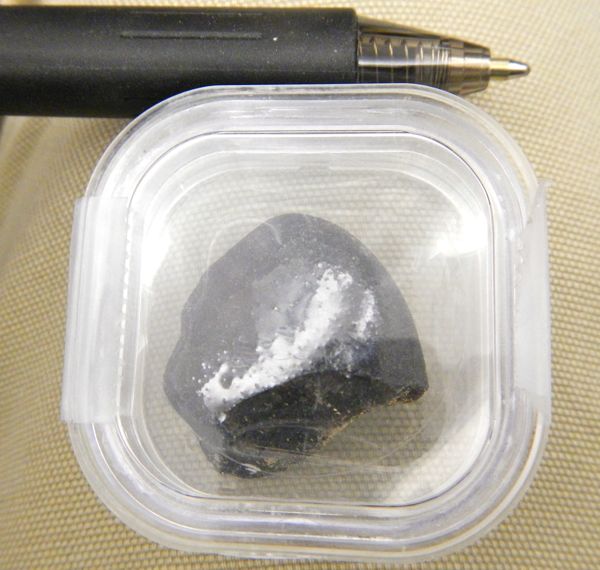
Looking like an ordinary rock, a sample of what dropped at Sutter’s Mill on April 22 was passed around Thursday night to a crowd of more than 50 at Sierra Nevada College. No one was able to touch it because it was in an enclosed case.

A piece of the meteorite, next to a pen for size perspective, that was found in the Sutter Mill area in April. Photo/LTN

And no one has every touched it with bare hands because it would essentially contaminate this extraterrestrial organism.

While the rock that was on exhibit was not large, the meteorite was the size of a minivan before it broke up over the Sierra. That Sunday morning a loud boom was heard throughout Lake Tahoe, with first reports that it could have been part of the Lyrid meteor showers.

Quing-Zhu Yin, a geology professor at UC Davis, spoke Nov. 1 about the importance of this particular particle. But his talk was scheduled before the Oct. 17 meteorite landing in Novato, so he had two astronomy events to talk about.

He said the two occurrences were very different. The one in the Bay Area came in at a very low speed and had larger pieces than the Sutter Mill meteorite. The Novato one had one piece weighing 100 grams.

NASA video cameras were able to track the trajectory of each rock landing on Earth so scientists then knew where to look for the pieces.

Yin described the Sutter Mill meteorite as “special” because it is the most centric of meteorites known to humans, with its origin likely to be Jupiter.

It was one of the rarest types of meteorites to fall to Earth — a carbonaceous chondrite, the earliest solid material to form in this solar system more than 4½ billion years ago, before the planets, including the Earth, formed.

This meteor had the highest entry speed ever recorded of a meteor, according to Yin, at 29 kilometers per second. This compares to a bullet that travels at 0.07 kilometers per second.

Yin said the Sutter Mill event is the most significant collection of space rocks since the 1960s when Apollo 11 astronauts brought back lunar rocks and meteorites fell in Mexico and Australia. He said scientists are still learning from those events.

What those particles taught scientists include:

• The age of the solar system

• Condensation consequences of chemical elements and minerals

• Discovery of presolar grains

• Supernova triggers

• Discovery of left-handed amino acids and right-handed sugars.

What this latest outer space matter will teach scientists remains to be seen.