S. Lake Tahoe to begin searching for city attorney

By Kathryn Reed

On a morning that started out with Mayor Claire Fortier giving the State of the City address – looking back and forward – the big news of the day didn’t come until staff comments.

South Lake Tahoe will have a new city attorney by summer, if not sooner.

Patrick Enright during his comments at Tuesday’s City Council meeting said he would not ask his bosses to renew his contract that expires May 31. He had presented them with a letter regarding his intentions prior to his public announcement.

The council in October had a closed session item on the agenda to give Enright a performance review. That never came about. But the council also did not offer him a contract extension.

Patrick Enright

“It had to be up to Patrick what he wanted to do. He made the decision not to get his contract renewed,” Fortier told Lake Tahoe News after the Nov. 20 meeting. “I think Patrick had a lot of huge issues to face as city attorney. What a grueling job.”

Enright was not available for comment after the meeting.

He was hired in 2009 to be the city attorney who would focus on redevelopment, while Jacqueline Mittelstadt was hired to do much of everything else. Mittelstadt resigned in March 2010 after a contentious few months.

The idea when they were hired was that they would provide a one-two punch. That never materialized.

Enright, while never accused of wrongdoing per se, has made some questionable legal decisions that have hurt the city financially or given it a bit of a black eye.

There was the first contract with Lakeview Commons that ended up in a lawsuit and the project needing to be rebid; questions about privatizing the ice rink and how the bonds worked; a dust-up over the concessionaire agreements at city beaches; questionable advice given regarding the ongoing South Tahoe Area Transit Authority lawsuit; and ongoing issues with the successor agency involved with dissolving redevelopment.

It’s expected the council will decide soon whether it wants to hire an outside firm to recruit the future city attorney of South Lake Tahoe or if staff will do it.

“I’ll figure out the costs and make some recommendations. We are capable of conducting a recruitment,” City Manager Nancy Kerry told Lake Tahoe News.

The letter Enright gave the council says he could leave sooner than May 31; it will depend on where he goes next.

Fortier in her address to a packed room let it be known she would like to see some changes to the council. She wants electeds to be paid a livable wage so it would provide for a more diverse council.

In other action:

• On a 3-2 vote, with Councilmen Tom Davis and Bruce Grego in the minority, the parking permit idea for certain areas was scrapped, but meters will go up in select areas of town.

• Community Services Officer Bob Albertazzi, who has overseen the parking program, is retiring at the end of the month.

• Per a unanimous vote, the council has decided not to change the fire department’s structure. That means beyond the fire marshal services and longstanding mutual aid response agreements, Lake Valley and city fire departments will remain separate.


Black Friday shopping extravaganza loses uniqueness with early store openings

By Kathryn Reed

Retailers are no longer content with Black Friday; instead they are starting the holiday shopping frenzy earlier.

“Last year we lost out on this weekend. Kmarts lost out to all stores that opened early,” explained Melodie Johnson, manager of the South Lake Tahoe store.

In the past Kmart would open at 5am on the Friday after Thanksgiving. Not so anymore.

This year the general merchandise store will be open Thanksgiving Day from 6am to 4pm, then reopen that night at 8 and stay open until 3am Friday. It will be closed for two hours, before reopening at 5am.

While opening day was a big deal this month for TJ Maxx in South Lake Tahoe, Black Friday will be rather ho-hum. Photo/Tracy Franklin

While Kmart is closed employees will be restocking and changing signs. The different hours will have different specials. For instance, the first set of specials on Thanksgiving Day includes two-for-one shoe sales. The evening specials will be on clothing, jewelry and Craftsman products. Door busters start Friday at 5am.

Johnson told Lake Tahoe News the goal is to keep people in Tahoe instead of having them go off the hill for specials like they did last year.

TJ Maxx, which opened in South Lake Tahoe on Nov. 11, won’t be any competition for Kmart because it will be closed Thanksgiving Day.

A salesperson told Lake Tahoe News, “We have no specials on Black Friday because our items are discounted all the time.”

But just in case Black Friday shoppers want to start early, the store will be open at 7am and won’t close until 10pm.

Apricot Lane in the Heavenly Village “isn’t doing anything crazy for Black Friday,” a saleswoman said, but to capture holiday shoppers a three-day sale begins Wednesday. And the store is open Thanksgiving Day.

Targets and Wal-Marts everywhere, including the Carson Valley, are opening earlier on Thanksgiving than last year – 9pm for the former, 8pm for the latter.

The National Retail Federation predicts consumers to spend $749.51 on gifts and other holiday items this season. A year ago, $740.57 was spent per person. This would mean holiday sales for 2012 would total $586.1 billion – an increase of 4 percent for 2011.

This does not include online purchases. Forrester Research believes online sales will be up 15 percent over 2011 levels to total $68.4 billion. Cyber Monday – the Monday after Thanksgiving – is usually the big day for online retailers.


Officials using public input to prioritize how to improve Lake Tahoe Nevada State Park

By Anne Knowles

CARSON CITY – Officials are considering a whole menu of changes in Lake Tahoe Nevada State Park and will prioritize them based, in part, on public input.

The Nevada Division of State Parks received input on Sand Harbor, Cave Rock and Spooner Lake backcountry at its second public meeting on the Lake Tahoe Nevada State Park general management plan update.

About a dozen people showed up here last week to discuss ideas for improving the park, including redesigning the boat launch at Cave Rock, creating additional access for kayakers at Sand Harbor and the future of recreation at Spooner Lake now that the concession for cross-country skiing and mountain bikes has closed.

At Cave Rock, for example, the department is looking at reducing congestion at the boat ramp by possibly adding slips to expedite launching; building a ramada for picnic tables and barbecues; redrawing the parking lot to lengthen spaces; and adding acceleration and deceleration lanes for vehicles at the entrance.

It’s possible that slips would be added at Cave Rock. Photo/LTN file

At Sand Harbor, the parks division’s suggestions include making the south beach area more accessible for kayakers; relieving congestion at the boat ramp; adding picnic seating for groups; and making the whole area easier to navigate for visitors with disabilities.

“That place is loved to death,” said Steve Noll, principal at Design Workshop, discussing the challenges at Sand Harbor. His firm is working with Ascent Environmental, the main engineering consultant on the park’s general management plan.

A visitor center may be built at Spooner Summit, Noll said. The division is considering three locations: off Highway 50 where 50 meets Highway 28; and two spots on Highway 28, one at the junction of 50 and 28, on the opposite side of 28, and another farther down 28, on the lake side of the highway. Each location has its pros and cons, said Noll.

Jay Howard, parks supervisor, said the division is working on getting another concession in Spooner. But for now, he said, the division plans to plow the parking lot and may use skimobiles to clear some trails for skiers. Previously, Max Jones cleared the trails as part of his work as the concession operator.

“We’ll do our darnedest to keep it open,” Howard said.

Jones said, “I’ve had the concession for 27 years, but it’s hard to rely on it in the winter. I’m tired of stepping up to the winter roulette table.”

Jones said the concession was long a struggle because of unpredictable snowfall, but he finally decided to give up the business when the parks division said it was raising his fees.

“Last year we were open 30 days in the winter,” Jones said. “I can’t make a go of it.”

Jones now operates the Tunnel Creek Café in Incline Village and plans to open a 1,000-square-foot mountain bike shop on a parcel behind the restaurant. He said he’d continue to run a shuttle busing runners, bikers and hikers between Incline and Spooner, and to work with the parks division, on a volunteer basis, to develop bike trails.

“I’m here about the continued winter use of Spooner,” said Jennifer Roman, a Minden resident attending the meeting, who said she skis at Spooner and kayaks out of Sand Harbor. “And the boat launch area (at Sand Harbor) gets pretty packed sometimes.”

Dave Morrow, administrator for the state parks division, said he and Howard sit on a committee overseeing the plan to improve the Highway 28 corridor from Crystal Bay to Spooner Lake, and are working to coordinate the park’s plan with the highway proposal.

The Highway 28 plan involves a dozen state and federal agencies with the goal of making the recreational areas along the East Shore of the lake safer and more accessible for visitors.

Funding is an issue, though, and both plans are long-term roadmaps, not immediate checklists of changes, Morrow said.

“We want people to know that we will use this as guidance,” Morrow said. “Trouble is people make comments and think something is going to be done right away. Where we go with this in the future depends on funding.”

The division is accepting public comment on the update until Nov. 30. Maps and details are available at the division’s website, and comments can be emailed to Dana Dapolito, conservation staff specialist, at ddapolito@parks.nv.gov.

At its first meeting in March, the division said it planned to produce a draft plan by year-end. But a draft is now likely in March or April next year, with time for further public comment then.


Historic Claremont Hotel a modern-day marvel

By Susan Wood

BERKELEY – Many would say the Claremont Hotel Club and Spa ages like a fine wine.

It breathes comfort, brings on total relaxation, embraces the good life and evolves through a rich history that permeates every inch of the 279-room, 22-acre estate that turns 100 in 2015.

Just driving into the parking lot of the grand estate can instantly transport a guest into a world where the big desire is to park the car until one is sadly leaving. Hoteliers take note: this is the difference between crash-pad lodging and an experience.

When not relaxing in the room taking in that spectacular view complete with the Bay and Golden Gate bridges, a guest can easily lounge, dine, play tennis (or even ping-pong), swim laps and enjoy any one of the multitude of treatments available in the 20,000-square-foot spa.
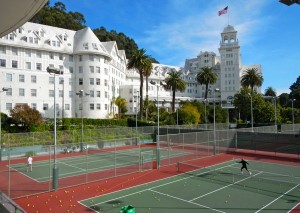
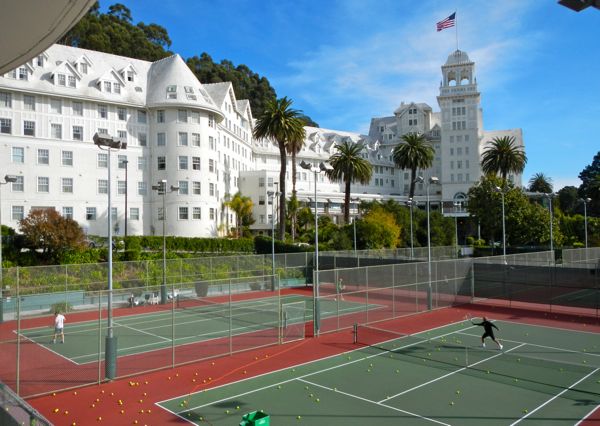
The Claremont Hotel successfully blends comfort, activities and excellent cuisine. Photos/Kathryn Reed

Many hotels bank much of their annual revenue in the summer. But the Claremont is entering the fall during the Cal football season and with much anticipation of a successful holiday season. For the former, any given fall weekend may bring out other university colors along with those from UC Berkeley – situated about a mile away. For the latter, winter holiday events marking the hotel’s grand guest experience and local community outreach peaks at Thanksgiving and continues through Christmas. For this, it takes a company crew to string lights and decorate the sprawling place.

Of course, the Claremont isn’t just any hotel. Legendary architect Frank Lloyd Wright called the resort “one of the few hotels in the world with warmth, character and charm.” A guest gets that from the initial walk into the lobby marked by high ceilings and a grand piano and ongoing strolls down the hallways lined with historic photos.

It holds a coveted AAA 4-Diamond rating.

And, there’s the history – with a day-to-day countdown to its 100th anniversary posted on its website.

“I’m sure they’ll do something big,” Cathy of the concierge department said, adding the milestone should also be “interesting.”

How the hotel marks its centennial celebration will be up to the sales department and the ownership group Paulson & Co., who placed the iconic hotel on the market for $80 million through Winthrop Realty Trust. The investors bought the hotel in 2011 after former owner, Morgan Stanley, filed for bankruptcy.

The change in ownership is something the staffers have gotten used to about every decade, concierge Sandy said. They all work to put out a great product, regardless of who owns the place.

Big and interesting changes are customary characterizations for the Claremont from its early beginnings.

Rush for gold ignites golden history

A Kansas farmer named Bill Thornburg struck it rich during the Gold Rush days in California and brought his wife and daughter west with the promise of building an English castle with horse stables on the 13,000 acres he bought in the East Bay. After his wife died and his daughter moved to England, Thornburg sold the castle to the Ballard family. But on a dry, windy day in July 1901, the castle burned to the ground. (That wasn’t the first time the property would see a devastating fire. But when the destructive Oakland Hills Fire raged through the neighborhood in 1991, the hotel majestically stood tall and untouched. And according to longtime employee Sue, a Meritage bartender, the hotel got donations “from all over” to help out the victims – many of who evacuated to the hotel.)

In the early 1900s, a realty syndicate led by San Francisco lawyer Frank C. Havens, Francis M. “Borax” Smith of the Twenty Mule Team fame, and local developer John H. Spring bought the property from the Ballards and used its railroad experience with the idea of erecting a hotel resort with a train running through the property. (The rail ran through today’s tennis courts.)

One night, a checker game with high stakes between the owners put the hotel into Haven’s hands. He modeled a new Elizabethan chateau after another he owned in downtown Oakland called the Key Route Inn. It was demolished in 1913.

After the repeal of prohibition, a state law banned the Claremont from selling alcohol because it was assumed the hotel sat within one mile from the Cal campus. But in 1936, an enterprising student with the help of her friends actually measured the distance and found that the Claremont was located more than a mile away – by only a few feet. The Claremont celebrated by opening the Terrace bar, which is now part of the Paragon restaurant and bar, and awarded the student free drinks for life.

In the 1930s, guests started flocking to the hotel bought by staffer Claude Gillum for $250,000 to partake in the resort’s offerings such as the swimming pool patio complex and live music from the likes of some of the greats of the Big Band era – Tommy Dorsey, Louie Armstrong and Count Basie.

Heritage lives on

To this day, guests and visitors can take in live music with a full food menu at the Paragon Bar.

Guests may also venture off the property to celebrate another landmark milestone. Yoshi’s jazz club marks 40 years in Oakland this year with a long list of great acts from saxophonist David Sanborn to acoustical guitarist Earl Klugh. It’s easiest to just grab a taxi to travel the five miles to the Embarcadero West. (Note: Pass on the Coit Limousine service as at least one of their drivers had never heard of Yoshi’s and insisted on getting assistance from us on how to get there.)

If you don’t want to venture out, the Paragon may be just the ticket for late-night activity. On one recent Saturday night, a band with a big steel drum sound rocked a full house. Earlier that day, the bar’s terrace was filled with many enjoying the sunshine with a libation and one of the best views in the Bay Area. (Hats off go to the Cal student who circumvented the alcohol ban because the warm November afternoon screamed for a glass of white wine with appetizers.)

Eat, drink and take in the view

One of the great things about the Claremont is you never have to leave the property if you are hungry.

Paragon and Meritage are very different experiences, but what they have in common is gorgeous views of San Francisco. With that iconic skyline, it would be hard to find someone who ever gets tired of looking at it. Plus, there’s the Golden Gate Bridge and boats of all sizes – from those with sails to mammoth salties – plying the waters of the bay.

Paragon offers outside seating, while Meritage has a bank of tables along the window with booths behind those that also offer stunning views.

Not wanting to ruin our appetite for dinner, we chose three starters at Paragon to be our lunch. And it’s such a nice change to find at least three vegetarian items instead of the customary single (if that) option Tahoe restaurants provide.

The mushroom cigars ($12) look a bit like a cigar, so they are aptly named. But the flavor is nothing like a cigar – which was a good thing. They are served with a spicy truffle aioli. The garlic fries ($7) are tasty, but the problem was with how they were served. The cone container ensured all the garlic was at the bottom instead of distributed evenly on the fries. While they are called Gilroy garlic fries, if you are expecting what is served at AT&T Park, you will be a bit disappointed. The butternut squash ragout ($7) was a great surprise and something neither of us had had before, but would like to again.

On the other side of the hotel is the more formal restaurant, Meritage. But this does not mean one has to have dressy clothes – it is still California, after all, where casual is customary for dinner.

Instead of filling up on a basket of bread, the server brings you a choice of wheat, olive or baguette. More can be had if one piece is not enough, but not having it all on the table meant not testing our willpower and not having any go to waste.

Main courses come in appetizer and entrée sizes. We each opted for the appetizer size just in case we would want dessert. That decision paid off.

The meat eater had the pan-seared Scottish salmon ($13) and barely put her fork down in between bites it was so good.

The vegetarian had the forest mushroom ravioli ($12). It was good, but nothing to rave about.

We were both impressed with the different salads we had to start with – the Champagne poached pear salad ($13) and the special baby greens ($13). It was the dressing that made the dish of greens so good.

Our waiter, Cesar, made a good call in having us try two desserts. Baked fall was the special of the night. It was a bit like a baked Alaska except sweet potato is used instead of ice cream. But what we like the most was the pumpkin curry cheesecake. This is what we would have again – say, at sunset with an aperitif.

Recreational options help burn those calories

Still without getting in a car, guests and club members have ways of working off the desire to lounge, eat and drink.

The pool patio within the Claremont Club entry – where the hit movie “Mrs. Doubtfire” was filmed — comes with three swimming pools and a hot tub. In two pools, much of the emphasis is placed on lap swimming. Afterward, more than 100 padded chaise lounges surround the pools so one can make a day of it. Kids even have their own shallow pool that comes with a unique beach-like sloped entry.

A massive gym with six elliptical machines and five treadmills in one room facing the pool area keep your mind off being inside as the patio calls sun worshipers. The Bay View Cafe is open with a pool patio menu of burgers and sides. In the summer, a bar is set up on the patio.

For those itching to get out and stretch, urban walks and a hike up the steep Claremont Canyon start on the club side of the property leading down the street near a Peet’s coffeeshop along Claremont Avenue.

Berkeley is a town full of its own rich history and now thriving neighborhood microcosms down well-known streets – Shattuck, College, Telegraph and University. Walking, window shopping, eating and drinking is embraced on the weekend. (Note: a stop at the university student hangout, Kips, is suggested for a pint of microbrew and nachos made with homemade tortilla chips and topped with homemade salsa.)

Back at the Claremont Club, tennis enthusiasts may immerse themselves in the club’s court clinics, then book a massage to work through the workout.

Pain is part of the pleasure

“Edgrrrrrrrrr!”

At random times Kae would make this outburst – mostly walking uphill on our urban walk. But she smiled at the same time.

Edgar was the name of the tennis instructor from the day before. A day later, the glutes were being reminded of how he ran her all over the court.

Dripping sweat and with a beet-red face, she was smiling with a wild-eyed look walking off the court. It had been more than a decade since receiving any sort of private tennis instruction. Kae said the hour clinic was worth every penny. ($90)

She seemed to drool looking at the many courts – some lighted – from our room. If only tennis were a year-round sport in Tahoe.

Two days after Edgar inflicted pain upon Kae’s muscles, it was time for Ron to do something about it. With 17 years of experience massaging guests at the Claremont, Ron is the atypical resort therapist. He actually listened to Kae’s request to have her keyboarding-tennis dominant arm be tended to. (So often resort massage therapists treat guests like they are on an assembly line instead of the unique body that is on their table.)

As good as Ron was – especially being able to stop Kae from her Edgrrrrrrrrr! rant – the $145 for 50 minutes (not even a full hour) was a bit spendy. (So the recommendation is to spend a bit of time enjoying the spa and steam room.) One doesn’t have to be a hotel guest to enjoy Edgar’s workout.

Many Berkeley residents use the Claremont Club. And one nearby couple who are club members said they even stayed at the hotel when they got their house painted. They bring their small dog, as the Claremont is pet friendly. (Recommended: inquire about crating rules with the hotel.) The hotel takes in many local residents as guests for special occasions ranging from weddings and anniversaries to birthdays and holiday gatherings. (Guests who married at the Claremont decades ago and saved their bill are invited to commemorate their wedding anniversary with room rates comparable to those paid 50 years ago.)

For now, best available rates for bay view rooms (highly recommended) start at $263 per night over the weekend in December. There are discounts amounting to 15 percent off in the fall and “home for the holidays” packages. If money is not an issue, rent the “bell tower” suite for $2,500 a night.

Kathryn Reed contributed to this article.

ngg_shortcode_0_placeholder (Click on photos to enlarge.)


Skiers enthusiastic about Kirkwood opening day

By Kathryn Reed

KIRKWOOD – It wasn’t exactly a powder day, but there was powder to be found and more of it falling – especially as the morning turned to afternoon.

Considering the calendar said Nov. 16 – it was a great opening day at Kirkwood Mountain Resort. The resort didn’t open daily last season until December.

If bartender Patrick relayed the forecast correctly, by Tuesday the ’Wood could have 5 more feet of snow. And if even half that amount falls from the sky, more terrain will keep opening – which is true at all the Tahoe area resorts.

What’s going on at lake level is never a good indication of what is happening at Kirkwood. While it rained in South Lake Tahoe, it was all snow in Kirkwood on Friday. This spot on Highway 88 where the counties of El Dorado, Amador and Alpine come together is a magnet for the white stuff.

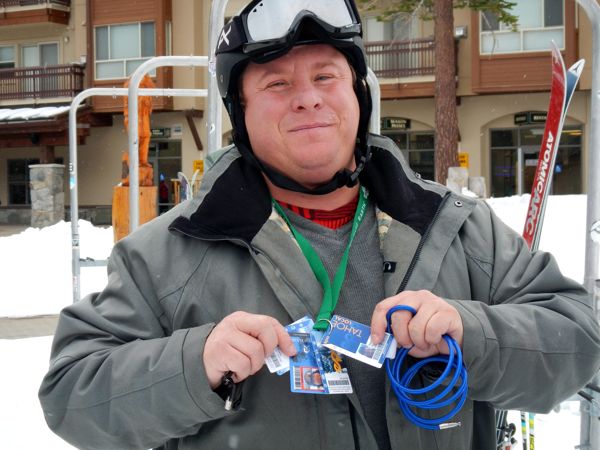
The number of passes proves Ben Russo likes skiing Kirkwood. Photos/Kathryn Reed

Ben Russo was proud to show off his slew of passes from Kirkwood from years past. He and buddy Greg Hutton thought it worth the drive from Orangevale to take in early season runs.

An addition they like is the safety bars that have been installed on all the lifts. It helps those with height issues.

About six people were waiting for Solitude to start spinning at 9am Friday. More people quickly filled the few runs that are open off that chair.

Justin Oltesvig of Oakland and Daniel Valenzuela of San Leandro aren’t sure if they’ll buy a pass that would include the other Vail Resort properties in the Tahoe area – Heavenly and Northstar. They were satisfied to skip work and pay the daily rate just to experience opening day.

Troy Mayers of Santa Cruz was thrilled to be on his tellies for the first time this season. He’s been a longtime Kirkwood season passholder and wasn’t about to give up the opportunity to ski no matter who owns the resort.

Snow fell for most of the day Nov. 16 — which didn’t seem to bother anyone.

Colorado-based Vail Resorts bought Kirkwood earlier this year, with this being the first full season under the new ownership. For the time being, it’s mostly the status quo. Food prices are a bit more, but two bloody Marys at Monte Wolfe’s were $12.50 – about what one is at Tamarack Lodge at Heavenly. New to the eatery’s menu is the Epic Burger, which the parent company is known for.

What was strikingly noticeable was the attitude of every employee. The friendliness was refreshing – and seemed sincere. And when someone didn’t know the answer, they went to get it.


2 TRPA board members refuse to listen to public

By Kathryn Reed

STATELINE – The two Tahoe Regional Planning Agency board members who have the most issues with the Regional Plan update chose not to listen to the 2½ hours of public testimony on Thursday.

Claire Fortier, who represents South Lake Tahoe on the Governing Board, called out Mara Bresnick and Byron Sher for not taking the time to hear what the locals had to say. It’s their job to listen — even if they don’t like what is being said. (Bresnick is the California Assembly speaker appointee and Sher is the California Senate Rules Committee appointee.) Bresnick attended the morning session Nov. 15.

“It should speak volumes to the community and the state that the two members who are most vocal are not here to hear the locals,” Fortier said at the end of public comment. “We need to stop catering to those who do not live here. Science has proven we can fix the environment. It is entirely doable. Let us do it.”

She told Lake Tahoe News afterward it was not a planned speech – she didn’t even have notes to read from. The room was eerily silent as she spoke.

And then Fortier’s impassioned tongue lashing of her colleagues was met with applause.

When it comes time to vote on the Regional Plan next month, it will take a minimum of four yes votes from each state for it to pass.

Before public comment was taken Thursday at Harveys, the Governing Board went over issues the Regional Plan Update Committee discussed the previous day. Bresnick and Sher, who are not on the committee, had seven points to make. They each mentioned how they were bringing forth concerns of the Tahoe Area Sierra Club.

While the League to Save Lake Tahoe has in the past been in lockstep with the Sierra Club, that is not the case with the Regional Plan update. No one from the League spoke either day this week. The League has been at the table as the conservation industry’s voice. A TRPA employee said Darcie Goodman-Collins, executive director of the League, has made positive contributions throughout the process.

The board, with Sher and Nancy McDermid not present for the vote, agreed to the committee’s recommendation to the Regional Plan update that parcel level best management practices will be required for any redevelopment or new construction until the area-wide BMP project is completed.

The committee was split as to whether a few words should be changed to bring clarity. The board voted to make the changes, with Fortier the lone dissenting vote.

Imperfect. That word was often used by people to describe the Regional Plan update. It’s because no one entity or person has gotten everything they want.

What is different from this plan compared to the one approved in 1987 that the basin is still governed by is that the next one will be updated as needed, not overhauled in 20 years.

Those who for the past two days advocated for the Governing Board to approve the document next month said it is time to adopt the plan and move forward – that the status quo would be worse. Those who have issues with the plan contend it does not protect lake clarity, it would increase development and would create high-rises – that more work is needed before it’s adopted.

Jennifer Quashnick with the Tahoe Area Sierra Club on Nov. 14 spoke about how there is no air quality monitoring going on. Regarding this, TRPA Executive Director Joanne Marchetta was visibly perturbed. She said her agency monitors the air at six sites in the basin at an annual cost of $165,000.

Earlier in the day fire officials spoke about the threat to prescribed fire operations if the Bresnick-Sher proposal were added to the Regional Plan update.

The committee voted not to adopt the Sher-Bresnick proposal.

Twenty-eight people spoke at the Nov. 14 meeting in Incline Village, while 50 people gave input a day later in Stateline.

While all the comments are recorded, no further study of any of them will be done. All the hours of talk were about swaying the Governing Board — at least those who chose to attend. No more meetings of the board or any committee involving the Regional Plan update are scheduled between now and the Dec. 12 vote of the Governing Board. (That meeting will be at Harveys in Stateline, though the time has not been set.)

People, including the economy, vs. the environment are in large part what continue to divide those who have not found consensus. Those for the plan believe the environment, economy and people are tied together. Those who are against or are wary of the plan believe the environment trumps everything else.


Young voices express the spirit of holiday season

By Kathryn Reed

Holiday music spills into the hallway, beckoning visitors to find the classroom the sounds are emanating from.

Swiveling to the song, two rows of young women are lined up between the desks and chairs. Some know the words by heart, while others read them on the screen.

“Guys, it’s the twist. You really need to get into it,” Paul Kushner instructs them.

This is the weekly rehearsal of the Blue Ribbon Choir – an all girls choir open to high school-age students. They are gearing up for the 18th annual Holiday Extravaganza in December. These 18 are part of an ensemble of nearly 300 students who will share the stage at MontBleu casino in Stateline for this two-day event.

The range of voices makes one think this is a professional, and definitely older, group. In just two hours the improvement is noticeable. If they sound this good in mid-November, what will the harmony be like in another month?

Sitting in the front of the room the harmonies – some four-part – are distinctive, rich and captivating. And to think they only practice as a group for two hours a week shows the natural ability as well as the work being put in outside of the four walls of South Tahoe High School. Each singer has a CD of the music and binder with the lyrics.

Blue Ribbon Choir members practice Nov. 13 for the December Holiday Extravaganza. Photo/Kathryn Reed

When one of the singers wants to go over a part Kushner is able take out the accompaniment on the computer and just play their part. There is no money to pay someone to accompany them, so the music is all computerized.

It helps that Kushner has a master’s degree in computer education. He has been teaching in Lake Tahoe Unified School District for decades and is the founder of the district’s choral program.

“More T’s and D’s” is a common refrain from Kushner. It is all about annunciation. It is knowing how to breathe when singing the word “Christmas” – not holding the vowel sound.

The Blue Ribbon Choir is the elite group – the one younger kids aspire to be in. Many of the girls in the room remember when they were little and knowing that it was this choir that they are now part that would mean they had accomplished something special.

A teacher recommendation or having been in an advanced choir are the ways to gain entry into this choir.

During a break they explain the reason they like being part of the choir is that it is challenging, allows them to express themselves, they meet new people, learn new music, they become a family.

Four of them want to carry their interest in music beyond high school. Sara Ortega wants to compose music, while Kaylee Chandler wants to teach it as well as perform professionally.

Yari Torres isn’t sure what she wants to do with music, but knows it is something she could fall back on. She has been singing since third-grade – the age where LTUSD starts its students in choir. (However, Zaira Monette started in second grade because no one knew how old she was so they didn’t kick her out.)

Sammi Bender wants to go to a top music school and see where it leads her. In December she will sing the national anthem at a Kings basketball game. She sang the “Star Spangled Banner” all summer at the standup paddleboard races in South Tahoe.

Bender, who is home schooled, says she got her voice from her grandfather, not her parents. She likes being in the Stadium View Building – one of the new facilities at STHS in the last few years – because the acoustics are much better. She’s taking acting classes at Lake Tahoe Community College and hopes to try out for the winter production. Not being a student at STHS prevents her from being in plays at that school.

The choir comes under the auspices of the South Lake Tahoe Children’s Choral Society. All the adult leaders volunteer their time and expertise.

“Because it’s not school affiliated, we can do some very sacred music,” Kushner explains. Christian and Jewish tunes are part of the repertoire, so is a rap song.

The Holiday Extravaganza includes all the choirs in the district, which started practicing their tunes a month ago. In all, 31 songs will be sung. And for the finale, everyone will participate.

——

Notes:

• 18th annual Holiday Extravaganza

• Dec. 19 and Dec. 20, 7pm, MontBleu showroom in Stateline

• $10 adults, $5 students and seniors, younger than 5 free. Tickets available at the door.


Lake Tahoe orthopedic surgeon recalls the days before medicine became mired in bureaucracy

By Kathryn Reed

Working 10-, 12-hour days, sometimes seven days a week. Unable to leave until every patient was treated because there was no on-call doctor to call. But all the while forming a bond with patients that doesn’t happen today.

Oh, and then there were the cattle drives along Highway 50.

Things have changed tremendously in South Lake Tahoe and in the field of medicine since Paul Fry first began practicing here in the 1960s.

Fry will be the recipient of the Spirit of Philanthropy award Dec. 1 at the Barton Foundation’s 21st annual Gala, which is part of the four-day Festival of Trees and Lights.

Paul Fry will be honored Dec. 1 at the Barton Foundation Gala. Photo/Provided

When Fry opened Tahoe Fracture Clinic in 1964 the office was in the complex where Tahoe Pharmacy is. Looking out his window he could see the twice-yearly cattle drives. Ranchers took their herds either over Echo Summit to Placerville or over Kingsbury Grade to the Carson Valley for the winter, then brought them back to graze in the basin in the summer.

Fry remembers one year a rancher with a knee issue refused to get out of the saddle for surgery because straggler cows needed to be rounded up so they wouldn’t be lost to the cold and snow. Work came first, no matter the pain.

In those days, private medical insurance was a rarity. Ranchers walked around with wads of cash.

“It was all done in cash and a handshake,” Fry recalls.

Fry took out the rancher’s knee cartilage and the rancher took out a stack of bills to pay the doctor.

“I think the most satisfying part of the profession is dealing with people – trying to help them regardless if you get paid or not,” Fry told Lake Tahoe News.

When the town was cut off from the rest of the world for days at a time because of snow, people would gather at the few places that were open year-round. Everyone knew each other. Most of the town shut down between October and May. Heavenly and the casinos were the big draws in the winter.

“I compare what Tahoe was say 25 years ago to what it is now. We were one of the first and foremost vacation areas, at least on the West Coast. We’ve lost our charm,” Fry said. “I look at it now like we are not the head of the dog, we are the tail of the dog. Aesthetically, we need to clean up Highway 50.”

He recalls after the 1960 Olympics at Squaw Valley, the South Shore was hopping well into the 1970s.

Treating ski injuries

Fry with Bob Oden of Aspen were the two doctors who created formal medical care for the U.S. Ski Team. It’s a tradition Barton doctors have had a role in to this day with Richard Steadman taking over for Fry, and current Barton docs Steve Bannar and Terry Orr being part of the Olympic medical team more recently.

When Fry and Oden were involved, it was a volunteer position – flying all over the world, providing medical care to racers. Fry said he got burned out and turned it over to Steadman, who had joined his practice five years after it opened.

Locally, it was Heavenly Valley Ski Resort and Sierra Ski Ranch where skiers made turns. It wasn’t until 1972 that Kirkwood opened, and early on snowboarding wasn’t a sport.

Fry remembers one Washington birthday weekend when in a 48-hour period he treated 30 broken legs. He attributes the number of injures to bindings not releasing. Plus, helicopter service did not exist so Fry handled all the orthopedic injuries.

“Every doctor, all 11 of us, were expected to take emergency room calls. There were no paramedics, no anesthesiologists, no emergency room physicians,” the 81-year-old said.

He was one of the few specialists around. Even so, he still had to do a bit of everything – including delivering a few babies over the course of his career.

When Fry first started treating patients at Barton Memorial Hospital if someone broke their femur, there was no device to put in a rod or plate. Instead, the patients came back in the spring for six to eight weeks of traction. He said there could be between 10 and 15 people in traction any given March.

On sunny days the patients would be wheeled out to the patio to get some sun. And that is when the contraband marijuana would come out.

“Nurses would report it to administration. Administration called the police. The police would give them a lecture. They couldn’t arrest them because they were in the hospital,” Fry recalls with a chuckle. “After a while we gave up.”

Today, a broken femur would be operated on immediately or the next day, with the patient able to go home in less than a week.

Changes in medicine

While Fry praises technology, especially diagnostics, he emphatically liked practicing medicine earlier in his career than he does today.

“The biggest problem I see is the bureaucracy that has crept into the medical profession,” Fry said.

He also longs for the days when doctors had a better connection and better communication with their patients – something like the old country doctor. He attributes all the specialization to creating a disconnect between patient and doctor.

Today, the orthopedic surgeon assists his son, Mike Fry, with surgeries once a week; provides pro bono services to the Barton Community Clinic; and sits on the board of directors for Barton Health and Carson Valley Medical Center.

As for the award that will be bestowed upon him next month, Fry said, “The honor doesn’t really belong to me as much as it does to the people who have supported me along the way to be in the position to get the honorarium.”

—-

4th annual Barton Foundation Festival of Trees & Lights – Nov. 29-Dec. 2

• Nov. 29: Senior Stroll and entertainment: 10-11am (Free for seniors 55-plus)

Designer tree public viewing and entertainment: 10am-2pm

• Nov. 30: Designer tree public viewing entertainment: 10am-2pm

Family Night: 5-9pm

• Dec. 1: Teddy Bear Breakfast: 8:30-9:30am

Designer tree public viewing entertainment: 10am-2pm

The Gala: 5:30pm-midnight

• Dec. 2: Designer tree public viewing and entertainment: 10am-2pm

Family movie showing, “The Polar Express”: 3pm

Public viewing ($5 for adults; $3 for senior citizens (55-plus); $3 for children (ages 3-12); children 2 and under are free) and Family Night tickets ($35 for a family of six). Available at South Lake Tahoe Raley’s.

Event is at MontBleu casino in Stateline.

All proceeds benefit Barton Memorial Hospital’s emergency department Level III trauma center designation.


Northstar creates growth plan for the next decade

By Kathryn Reed

What would Northstar be like if skiers were whisked to the village via a gondola from the lower parking lot, if 300 acres of terrain were added, and those runs were accessed by an additional seven lifts?

Skiers and snowboarders will get to know the answers firsthand in the next decade or so if Vail Resorts has its way.

The Northstar Mountain Master Plan is on the street for people to comment on, and Placer County officials to review before the environmental documents are created. It is all about the mountain and does not include a real estate component.

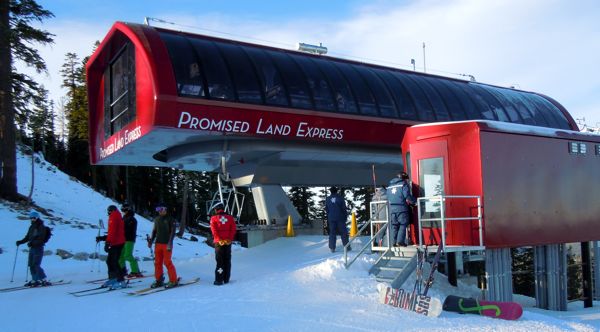
Vail Resorts has spent more than $30 million to upgrade Northstar, including the Promised Land lift that opened last season. More money is on its way. Photo/LTN file

Even though Northstar is on private property and the resort would not normally have to go to the level of detail that it is, the Martis Valley settlement required a bit more depth to planning.

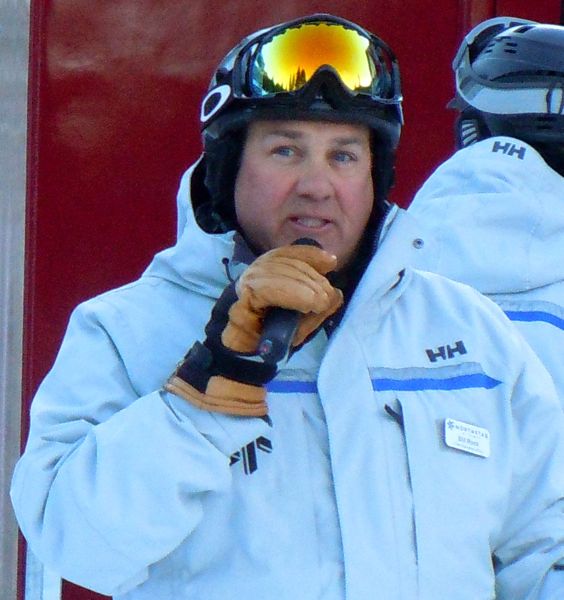
“This plan is based on the overall Habitat Management Plan,” Northstar COO Bill Rock told Lake Tahoe News. That plan was developed in conjunction with Sierra Watch and other conservation groups. Those entities, according to Rock, have also been privy to the details of the master plan as Northstar was formulating the document.

“This plan really is designed to be a real benefit to the people who are already here. No additional parking is proposed in this plan. That is what limits access to resort,” Rock said.

Parking has long been one of the biggest complaints about the ski resort. Lodging wiped out where people used to be able to park within walking distance to the village and slopes. Now people are bused from close to the entrance off Highway 267.

Rock says the gondola that is proposed to take people to the village from the parking area will get buses off the road and “provided a better experience for guests.”

Other lifts are designed with the idea of getting people dispersed throughout the mountain faster and more efficiently. A lift would start in the village to take riders to the top of Lookout Mountain.

“This outlines our vision for the next 15 years – what we might do at the resort.” — Bill Rock, Northstar COO

“We have a great plan to go out onto Sawtooth Ridge. It will absolutely enhance the skier experience,” Rock said.

To help Mother Nature, more snowmaking apparatuses would be put in the ground. Snowmaking helped save last season at so many Tahoe-area resorts.

“Well-engineered, thoughtful snowmaking is a critical piece of any resort no matter where it’s located,” Rock said.

He said Northstar has enough access to water on the mountain so its reservoir storage will not need to be expanded. Rock added that snowmaking is good because it replenishes the groundwater supply.

Things that are included in the master plan that are likely to get built right away include expanding the Summit Deck and Grill (which is near the top of Comstock and Backside lifts), possibly putting in a warming hut on the backside of it, adding other bathrooms and warming huts on the mountain, and minor food and beverage options.

In this PDF of Northstar’s plans, it shows skier service areas in yellow as well as where other changes could occur. For now, those are areas where resort officials believe they want to do something, but don’t have the specifics of what could go there.

“This outlines our vision for the next 15 years – what we might do at the resort,” Rock said.

Besides needing Placer County’s stamp of approval, the Vail Resorts board of directors must weigh in as to when the checks would be written for the expansion and what gets done first.

What build-out of the components in the proposed master plan would cost are not being discussed because a time line to build them has not been established. Plus, this document is mostly about the big picture, and not specific details of individual projects.

While this is a winter master plan, Rock said Northstar would like to enhance its summer offerings at some point, too. A separate plan would be submitted to the county for those ideas. Things being talked about include a mountain coaster that is a toboggan-like device that would go through the forest on rails, family-friendly bike trails, and a zipline and canopy tours.

Notes:

• More information may be found online.

• Written comments will be accepted until Dec. 5 at 5pm. Send them to Maywan Krach, Environmental Coordination Services, Community Development Resource Agency, 3091 County Center Drive, Ste. 190, Auburn, CA 95603 or cdraecs@placer.ca.gov.

• A meeting to receive comments on the scope of the environmental impact report will be Nov. 28 at 10am at the Lakeview Suite, North Tahoe Event Center, 8318 North Lake Blvd., Kings Beach.


2-day TRPA meeting before Regional Plan vote

By Kathryn Reed

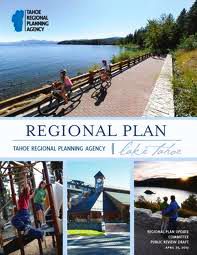
One month from today the Tahoe Regional Planning Agency Governing Board is expected to vote on the much-anticipated, much-overdue Regional Plan update.

This voluminous document is the planning bible for the Lake Tahoe Basin. It was last updated in 1987. However, it was supposed to be updated in 2007, but got bogged down because of a multitude of reasons.

More than 5,000 people have weighed-in on the plan in the last five years, with others and many of the same who show up each meeting expected to talk some more on Wednesday and Thursday.

Lake Tahoe’s environmental and economic future are tied to the TRPA Regional Plan update. Photo/LTN file

This week two sessions of the Governing Board will be all about the update. But everything is not a done deal.

Board members Mara Bresnick and Byron Sher at the October meeting raised some questions. Concerns that some people believe could have been brought up months ago so they could have been carefully vetted instead of having the potential to derail the process. Plus, Bresnick was asked to be on the Regional Plan Update Committee, but said she was too busy.

“I’m hesitant to assign a motive (for Bresnick and Sher’s late comments),” Kristi Boosman, TRPA spokeswoman, told Lake Tahoe News. “I think everyone on the Governing Board is committed to the well-being of Lake Tahoe and there are some differences on how to achieve that end.”

Here are Bresnick and Sher comments from the October meeting. Bresnick is the California Assembly speaker appointee and Sher is the California Senate Rules Committee appointee.

“If the state of California would like to monitor everything that comes out of our decisions here, then I suggest that the economy be a measurement because the economy is absolutely critical for what we are suggesting,” Claire Fortier, South Lake Tahoe’s rep to the Governing Board, said at the Oct. 25 meeting. “We recently completed the Tahoe [environmental] forum where both governors supported a public-private partnership to increase the environmental gain as well as the economic sustainability of this community. There is no measurement of that.”

Local and state reps from California and Nevada who are appointed govern the bi-state board.

The two states have been bickering for almost the entire 40-plus years TRPA has existed. It came to a head in the last couple years with Nevada threatening to pull out of the federally created agency if changes were not made.

Since then, top officials in each state have been meeting to help foster a better, more cohesive relationship.

John Laird (California Natural Resources secretary) and Leo Drozdoff (Nevada Department of Conservation and Natural Resources director) wrote a letter to the TRPA board that in part said, “The states of California and Nevada take seriously our unique and shared roles at Lake Tahoe. Through our personal engagement we believe we have fostered a bi-state relationship that is healthier now than in recent memory and has engendered stronger trust among the stakeholders and represents a new start.”

Clearly, not all the board members share that view.

—–

Notes:

• Nov. 14, public comments will be taken at 10:30am at the Chateau in Incline Village.

• Nov. 14, in the afternoon the Regional Plan Update Committee will convene to discuss issues recently raised by Bresnick and Sher.

• Nov. 15, public comments will be taken at 1pm at Harveys in Stateline. In the morning, it’s likely the board will discuss what the update committee talked about the day before.

• Dec. 12, Governing Board meeting starts at 9:30am at Harveys in Stateline.

• For $15 TRPA staff will have USB thumb drives available for purchase at this week’s meetings that contain the final draft Regional Plan update and associated documents.

• Here is the agenda for the meetings this week.