DiMatteo enters guilty plea to federal pot charges

Updated: Jan. 9 10:55am

Gino DiMatteo, 43, of South Lake Tahoe pleaded guilty today to possession with the intent to distribute marijuana.

A bail review hearing is scheduled for this afternoon at 2. Sentencing is set for April 17 before U.S. District Judge Kimberly J. Mueller. While the maximum penalty is 30 years in federal prison, a plea agreement calls for five years.

“As part of his plea agreement, DiMatteo specifically admitted that he possessed the marijuana seized from his residence on Aug. 31, 2012, with intent to distribute it to others,” the U.S. Attorney’s Office said Jan. 9 in a press release.

DiMatteo was arrested in August on state charges that were eventually dropped when federal charges were levied against him. While he had owned the medical marijuana dispensary City of Angels II in South Lake Tahoe, it’s the marijuana found at his residence that led to the arrest.

Detectives said they found a hidden door that led to several rooms under the structure. Court documents reveal that the rooms were used to grow marijuana. Five pounds of processed marijuana and 15 pounds of marijuana residue used for cooking edibles were confiscated. Finished marijuana products like ice cream, granola bars and pizzas were found in a freezer in DiMatteo’s detached garage, according to authorities.

The press release further states, “Within a desk inside the kitchen area, as well as inside a desk in the living room area of DiMatteo’s residence, detectives found pay/owe sheets. In particular, DiMatteo had notes setting the price of the marijuana sold at a South Lake Tahoe marijuana dispensary known as City of Angels II. On a separate set of documents, DiMatteo listed the various amounts paid. DiMatteo lists himself receiving $7,000 biweekly.”

—–

By Kathryn Reed

Gino DiMatteo is going to prison.

“He is going to plead guilty tomorrow morning,” his attorney Don Heller told Lake Tahoe News on Tuesday.

The former owner of City of Angels II medical marijuana dispensary in South Lake Tahoe will be in court Jan. 9 in Sacramento where he is expected to admit to marijuana trafficking.

The South Lake Tahoe resident had been indicted in November on three federal charges – conspiracy to manufacture and possess with intent to distribute marijuana; possession with intent to distribute marijuana; and manufacture marijuana. Had the case gone to trial and DiMatteo were convicted on all three charges, he could have faced 60 years to life in prison and fines of more than $30 million.

Gino DiMatteo

Instead, in a plea agreement with the U.S. Attorney’s Office, DiMatteo will be in federal prison for five years.

The judge on Wednesday will set a sentencing date. At sentencing is when the other charges would be dropped.

Heller would not talk more about his client or the case. This means it is not known what happens to DiMatteo’s business – Push Fitness in South Lake Tahoe – or his house.

The U.S. Attorney’s Office earlier told Lake Tahoe News if DiMatteo were convicted of at least one of the offenses, he would have to give up all his property deemed to have been associated with or bought by money from drug transactions.

DiMatteo was arrested in August by El Dorado County investigators. Those charges were all dropped simultaneously as the federal charges were leveled against him. However, not everyone caught in law enforcement’s web has been exonerated.

In August, DiMatteo was accused of bribing a public official. El Dorado County District Attorney Vern Pierson fingered South Lake Tahoe City Councilwoman Angela Swanson as that official. However, no charges have been filed against her. LTN again tried to reach Pierson; again with no call back.

A Nov. 2 press release from Pierson’s office says, “… the investigation into certain South Lake Tahoe City officials as to their dealings with DiMatteo is ongoing.”

Swanson told Lake Tahoe News neither she nor her attorney has had contact with Pierson since August. She added that Pierson doesn’t return her attorney’s calls either.


Ski resort clinics keep people out of hospital ER

By Kathryn Reed

TWIN BRIDGES – An X-ray of a wrist is on the light board. The patient is being seen in one of the three exam rooms. Out front all of his vitals are inserted into a computer.

But this is no ordinary emergency room. This is where injured skiers and snowboarders come to be treated at Sierra-at-Tahoe.

It is one of three clinics Barton Health medical personnel operate. The others are at Heavenly and Kirkwood mountain resorts. They are staffed with an emergency room doctor, registered nurse, technician and radiologic technician.

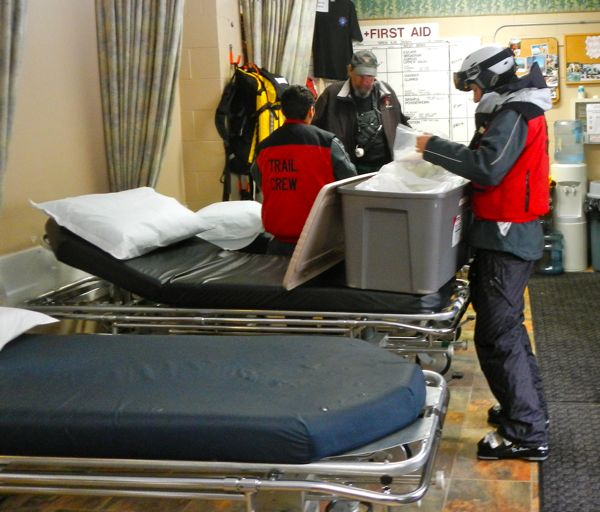
Dr. Steve Leman considers Sierra the model ski clinic based on how it is set up and operates. Barton’s team works closely with Sierra’s ski patrol. Patrollers assist people with less serious injuries in the front area. They do more first aid work as trained emergency medical technicians.

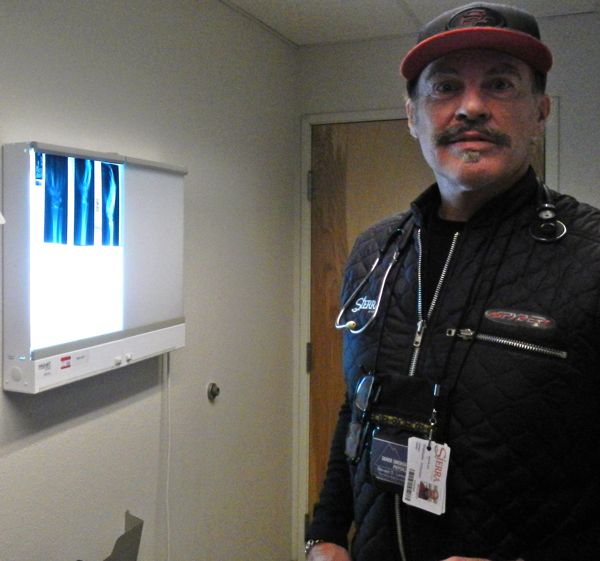
Steve Leman is the doctor on duty Jan. 6 at Sierra-at-Tahoe’s medical clinic. Photos/Kathryn Reed

The three exam rooms Barton uses once were the ski patrol locker rooms. Dispatch is still there so everybody is hearing the same calls.

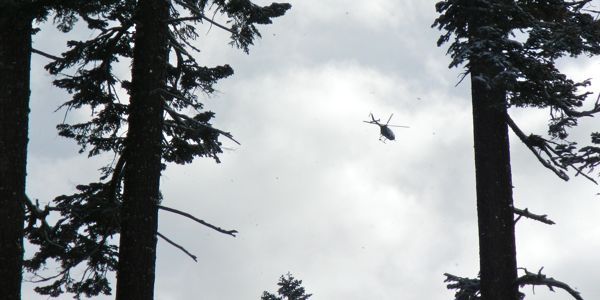
However, it is a patroller who decides when CalStar is called in to airlift someone off the mountain. Pilots have three locations they may land at Sierra. On Sunday a chopper is called to take someone out who has a head injury.

But Leman and his crew also treat head injuries.

“If we can stabilize them, they can go by private car to the hospital for a CAT scan,” Leman explained during a tour of the clinic Jan. 6.

He said there used to be so many head injuries with all of them taken by ambulance to Barton Memorial Hospital. This would present a problem for the rest of the community because the ambulances were tied up going to ski resorts – sometimes stuck in long holiday or weekend traffic – and unable to respond to other calls.

Leman said the medical clinics at the ski resorts mean fewer people going to the hospital’s emergency room.

With the 10 to 20 patients each clinic sees a day on peak weekends and Barton’s ER full at those times, “we would be in disaster mode,” Leman told Lake Tahoe News, if the skiers ended up at the hospital. That is why it’s imperative to have the clinics at the resorts, he added.

Barton staff was at Sierra all through the holiday period, while normally they are at the clinic just on weekends.

Sierra ski patrol operate the first aid clinic adjacent to Barton’s operation.

Even though skier visits are up 900 percent compared to a year ago at this time for Sierra, the number of injuries has not increased anywhere near that percentage. The soft snow is the big contributing factor to keeping people out of the clinic.

But their info is easily accessible. All of their data is entered into a computer that is part of Barton’s system, so it’s all centralized.

Plus, people can leave with their X-rays to take to their physician.

Leman, who used to be on the ski patrol at Sierra in the 1970s, said there was a time when someone would come up via bus, hurt themselves, be hospitalized and then need their parents or someone to drive to Tahoe to get them. With the clinic, pain meds are available to make the ride back tolerable, docs can stabilize many injuries, and they have the X-rays to know if someone needs more immediate care. This can mean the person travels back with their buddies instead of needing someone to come get them.

“They like me. I’m the lady with narcotics,” Sandy Wirth, registered nurse, says. She shakes her head though; wishing snowboarders would wear wrist guards.

CalStar flies into Sierra on Jan. 6.

Wrists and shoulders are what snowboarders injure most, while it’s knees for skiers. And the harder the snow, the more injuries there are. However, fresh, deep powder can increase knee injuries.

It’s cheaper if people go to one of the clinics at a ski resort because the charges are nowhere near the hospital’s ER costs. Plus, it’s faster.

“We are able to serve most patients at the resort and in most cases deliver definitive care, which saves them a long, painful drive to the hospital,” Warren Wither, medical director of emergency service at Barton Memorial Hospital, said. “The cost is lower for patients than at the hospital.”

It’s not just skier injuries the Barton crew treats.

“They help us with seeing employees with colds or flu,” John Rice, Sierra’s general manager tells Lake Tahoe News. “A lot of kids are away from home. They can come in and get a script.”

Wirth says she’s seen skiers who have had an allergic reaction, needed sutures and have let their sugar levels get too low if they are diabetic. While it’s considered a clinic for skiers and snowboarders, it is a medical clinic for anyone who needs it.


Barton Memorial Hospital’s 50-year evolution a testament to tenacity of South Shore residents

By Susan Wood

The day after President John F. Kennedy was shot and killed in Dallas, South Lake Tahoe made a major move to heal its community, decrease fatalities and provide well-rounded care to its local citizenry and visitors.

Barton Memorial Hospital opened about a half century ago on Nov. 23, 1963, with 38 licensed beds, 18 physicians, five dentists and about 20 employees on a 6-acre plot valued at $200,000 that dairy farmers Alva Barton and Fay Ledbetter donated. The landmark opening came after a long-fought effort to raise more than $400,000 in funds because lives were at risk and a tight-knit group of pioneering families that reads like a “who’s who” list of South Shore history demanded more and cared much about their community’s health care.

The hospital commemorates the last 50 years in 2013 with a historical book available to those who have donated their time to Barton. Others may access an online version starting Jan. 17.

The case for a local hospital goes far and deep for those who lived alongside the health care community in the 1950s and early 1960s. Deep snow, substandard transportation, many life-threatening injuries and illnesses as well as a baby boom and limited number of independent doctors made a local health care facility a necessity.

Alva Barton and Fay Ledbetter helped bring the South Lake Tahoe community together in the 1960s to build a hospital. Barton Memorial Hospital is named after their parents, Bill and Ouida Barton. Photo/Provided

According to patient records from 1959, 1,500 emergency room visits to Carson Hospital were from South Lake Tahoe residents – nearly one-third of the hospital’s emergency room usage. In one year, the Carson-area hospital’s admissions from here totaled 467 in May 1959.

Barton and Ledbetter’s parents, Bill and Ouida Barton, even had their share of medical emergencies when both fell off a horse. Despite the danger and no local access to care for serious injuries, the late Alva Barton at age 96 told this reporter years ago that she “wouldn’t live anywhere else but Tahoe.”

In 1958, one call marked a watershed moment for building South Lake’s own hospital when a man shot himself and didn’t make it to Carson City in time to save his life, local stakeholders recounted.

Estimates showed the proposed “Lake Tahoe Community Hospital” would cost about $1 million. Federal and state grants totaled $598,010, but the community would need to reach $422,011 in donations by Feb. 8, 1962, or the funding would not be available for another decade.

Taking the bull by the horns

A citizens group was formed and spawned the Barton Memorial Hospital Association. If a business, organization or individual donated $200 or more, either would get a vote on who would serve on the hospital board of directors. Heavenly Valley Ski Resort, Safeway, Soroptimist International, South Lake Tahoe Kiwanis, St. Theresa Parish and many more stepped up to the plate.

“It’s been a labor of love in the community for a lot of people,” said Patty Olson, whose husband Walter Neal Olson served as the initial special gifts division chairman. Years later, a children’s playroom was dedicated in his honor. All of their children had to be born at St. Mary’s Hospital in Reno because Barton Hospital did not exist at the time.

“The vast majority went to Nevada (to give birth),” said Del Laine, who ended up serving as a Barton Foundation trustee. She recalled how her daughter, Brooke, was one of the first babies born at Barton in 1964. The subject is near and dear to the Laine family.

Before the hospital was built, it was the medical emergencies that got the stark attention when the fund-raising teams were spawned. Campaign slogans declared: “The life you save may be your own” and “In an emergency, will death wait?”

The necessity was loud and clear.

Leading the way to better medical care

“If someone was really hurt, we’d have to take the Old Grade (over Spooner Summit) to Reno – without four-wheel-drive,” Karen Pavlakis told Lake Tahoe News.

She reflected on the challenges that faced her father, Jim Whitely, when it came to caring for the local community. The physician responded to accidents with his own vehicle loaded with emergency supplies. Public safety units provided escorts. When people were injured in Desolation Wilderness, he was flown in to the injured party via helicopter.

Whitely, along with Dr. Peter Irving – Barton’s first general surgeon – and Dr. Ken Smith, represented the primary physicians in town handling a multitude of calls during snowstorms and limited support services.

Some involved celebrities who starred at the Stateline casinos. While Irving cared for “some Judy” – as his wife Shirley Irving described a call from the late singer Judy Garland for Barton’s 40th anniversary, Whitely had his hands full with the likes of the Andrew Sisters, Pavlakis and her sister Jane Callahan recalled.

This was nothing new. The two women said their father had developed a reputation for being a doctor of entertainers, and that legacy stuck. Rock legend Elvis Presley donated money to Barton in 1973 for an intensive care unit that opened two years later. It was named after his mother, Gladys, whom orthopedist Dr. Paul Fry cared for. Presley needed care when he contracted the flu and was forced to cancel his remaining concerts at the Sahara Tahoe (now the Horizon) after one sold-out show.

When superstar singer, actress Bette Midler filmed “Jinxed” in 1981, she donated $10,000 to the Barton Hospital Auxiliary – which in turn funded a new birthing suite. Ed Asner, Duke Ellington – the list goes on and on of celebrity connections.

“When we were young, we’d go down to Harrah’s (to see a show) for our birthdays, and he’d always get called,” Callahan said of her father. The beeper would go off and Whitely would need to spring into action, the sisters remembered of their late father during their childhoods. Callahan’s eyes welled up when she reminisced about her kind-hearted, hard-working father, who died in 1989 of brain cancer.

Callahan said she’s been dreaming about her father lately.

“I’d look at my husband and tell him I can smell dad’s medical bag,” she said.

Unbeknownst to Callahan, her sister brought the iconic symbol of their father’s work to the interview. The duo took out tools and reflected on times when the bag came out – sometimes to their detriment if it meant they were getting a shot.

“I remember the noise it made when it opened. All us girls would run out and try to carry it,” Pavlakis said, while demonstrating the fold-out design. She pulled out an otoscope. “God knows how old this is.”

More than the noise, Callahan said she remembers the smell – a “septic, pilly” scent of the bag. Whitely shared stories of his day around the dinner table and “always made us laugh,” the sisters recounted of doctor visits from Whitely’s office. It was located where the Lake Tahoe Art League building now sits next to the Lake Tahoe Museum.

Back in the early 1960s, some people bartered for medical care. The sisters recalled their father bringing home dresses and allowing a contractor to fix their roof.

“Sometimes he didn’t charge people,” Pavlakis said.

When it was time for their own family medical care, the girls hid under the Jeep to no avail.

Children may have shied away from seeking care, but the two sisters recalled how smokers would go to Whitely because, if anything, he was not judgmental because he smoked.

“He’d say to them: ‘Just cut back’,” Pavlakis said.

However, the attitude changed when a boy on a motorcycle tried to pick up Callahan on a date. He let the boy borrow the family car, and that was the last date with him.

“He never allowed us to ride a motorcycle,” Pavlakis said. “He saw too many accidents. He’d say: ‘The motorcycle never wins.’”

Still, the sisters reflected on quality time with their father and believe his time lives on in the legacy left in helping the hospital get off the ground.

“Mom used to say: ‘Jim could diagnose anything’,” Callahan said.

Just after he retired a year before he died, Pavlakis asked her father what medical discipline the family practitioner would have gone into.

“He said: ‘I’d be a cardiologist because matters of the heart are so interesting’,” she said.

The comment proved prophetic.

Callahan developed a blood clot recently.

“I was scared. But my dad’s hospital saved my life,” she said.

And, it added another to the local community. Callahan’s granddaughter, Cienna Marie Griffin, was born there within this last year.

From accidents and babies to the birth of advanced medical technology and orthopedics

Barton Memorial Hospital has come a long way since the hospital represented a glimmer in the eye of the community.

One could even argue it’s not even the same hospital as the one that opened its doors a half century ago. Now it has a larger footprint, rooms are cozier, equipment is more computerized and specialties are more pronounced. There is even evidence of decades of personality in its skilled nursing facility.

Within one year of its opening, the 23,000-square-foot hospital built in the shape of a snowflake operated in the black – a notable feat.

In the mid-1960s, the South Lake Tahoe community grew to 7,500 year-round residents – up from the 400 of 15 years earlier when unrelenting snowstorms buried the South Shore in the winter of 1951-52.

In the 1970s, new hospital wings were added and the ICU opened.

Another decade later, the ambulatory wing came on the scene and was joined by a pharmacy and birthing room. The radiology department was expanded.

In the 1990s, Barton, as a health care enterprise, built the Carson Valley Medical Center to extend its reach. Other practices such as Stateline Medical Center came on board. Mammography, laser technology, nuclear medicine, X-ray and CAT-scanning divisions were upgraded.

In addition, another 60,000 square feet expanded the hospital space that opened up the emergency and surgical departments. A nearby community clinic would add a new, much-needed realm of health care for the neediest of the community.

For our aging population in need of extra help, the Barton Skilled Nursing Facility opened with 48 beds – where a “healing garden” at the entrance marks the contributions of the Ledbetter family led by sister and brother Jessica and Kirk. They are descendants of Fay Ledbetter.

In 1991, the Barton Foundation was formed with 21 volunteer board of trustees.

After the century turned, medical imaging dominated health care. Seismic upgrades were made. Physician partnerships spread across the land. Employees topped 1,000. Medical ski clinics at Heavenly, Sierra and Kirkwood were built to stabilize those participating in Tahoe’s primary choice of recreation.

Orthopedists associated with Barton have made a name for themselves – from the early beginnings with Fry to U.S. Ski Team Dr. Terry Orr. Plus, a comprehensive physical therapy division and occupational health department round out the offerings for skiers and boarders trying to keep their limbs and joints intact and healthy.

“In recent years, the focus on improving quality and state-of-the-art technology has benefitted patients and allowed our small town hospital to offer services on par with larger cities,” foundation board Chairwoman Julie Regan said. Regan is convinced that with aging baby boomers from the Bay Area continuing to visit Tahoe, the orthopedics program will become increasingly more important.

The wave of the future for Barton leading into the next 50 years and beyond also includes private patient suites, electronic ICU technology and retail health care kiosks.

“What (has) really impressed me most about the history of Barton was the way the community rallied together to fund raise for the creation of the hospital and to help it expand. It wasn’t by happenstance that the hospital was formed. It took a lot of collaboration, vision and a ton of hard work by everyone in our community,” Barton spokeswoman Monica Sciuto said. “I have great pride in what we have been able to accomplish over the last 50 years. It is amazing to think that we started with just a small 38-bed hospital and have grown to what we are today.”

ngg_shortcode_0_placeholder (Click on photos to enlarge.)


Cross country skiing — no need to pay, travel far

By Kathryn Reed

MEYERS – If you don’t like to break trail, wait a day or two after a snowstorm and it’s possible snowmobilers will have laid down a path that is better than what fellow human-powered recreationists have done.

Those sled tracks are wide enough to find your own groove, whereas someone else’s skis may be too wide or narrow to adequately follow.

Last weekend we found great snowmobile tracks to follow in Meyers just off Highway 50.

I’ve never been one who likes hills on cross country skis, so this flat area was ideal. Plus, the snow was the perfect consistency – whether in powder or the sled trail.

With three snowmobilers still out playing when we arrived, we were the first to benefit from their maneuvers. And we thanked them for that.

It doesn’t take long to think we’re in some remote location. The din of the highway has disappeared and pristine snow shimmers around us. Pines with their boughs full of clumps of snow loom tall.

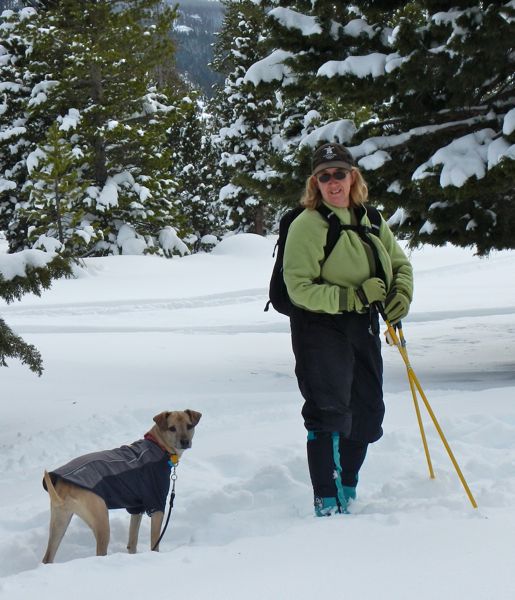
Sue and AJ on a trek through the snow in Meyers. Photos/Kathryn Reed

Smiles cross our faces as we glide along in what becomes our private playground.

Then we stumble upon modern-day equipment. This is where the U.S. Forest Service in summer 2011 installed a fire weather station.

Forward we go and head a bit to our right. There we see houses. People along Modoc and other streets have this area practically in their back yard.

Not much farther and we hit the road that leads to Tahoe Paradise Park. Had we crossed it, we would have come to Lake Tahoe Golf Course. Instead, we choose to ski along the tennis courts at the park.

Across Lake Baron we see a group of snowshoers exploring that section of the forest.

Oddly, we see signs saying no dogs or trespassing at the lake, but no sign saying there is a lake there. It looks like a drowning waiting to happen. It’s not obvious it’s a lake with the snow on it.

We shake our heads and meander farther. As we head back toward the highway we veer out to the right to make this as wide of a loop excursion as possible.

While this trek didn’t get the heart rate up, it was a great way to get a little exercise outdoors without seeing many people on a busy weekend.

—-

Getting there:

From South Lake Tahoe, go west on Highway 50. Go beyond the bug station. The Caltrans chain RV was out when we went. We parked well before that. This is before the climb up Echo Summit. Climb the snowbank and start having fun.

ngg_shortcode_1_placeholder (Click on photos to enlarge.)


South Tahoe’s New Year baby takes her time

By Kathryn Reed

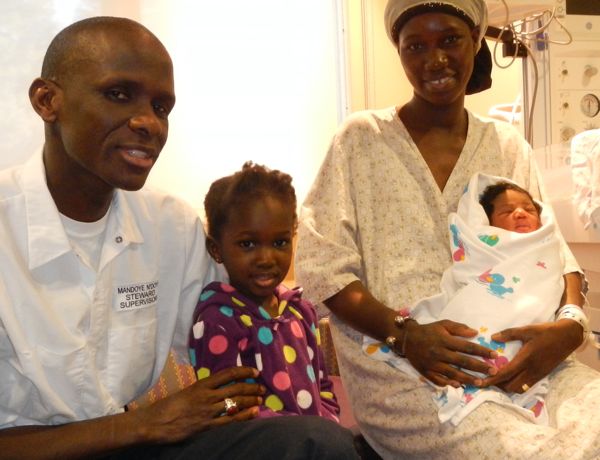
For now, 2-year-old Oumy N’Doye must call her baby sister just that – baby sister.

This is because in her parents’ native country of Senegal the naming of a newborn occurs one week after the birth and with a big family celebration. With modern technology, the ceremony will be via Skype.

This infant seems to know her hometown well already by embracing “Tahoe time”. As the first baby born in 2013 at Barton Memorial Hospital, she didn’t arrive until Jan. 4 at 1:25am.

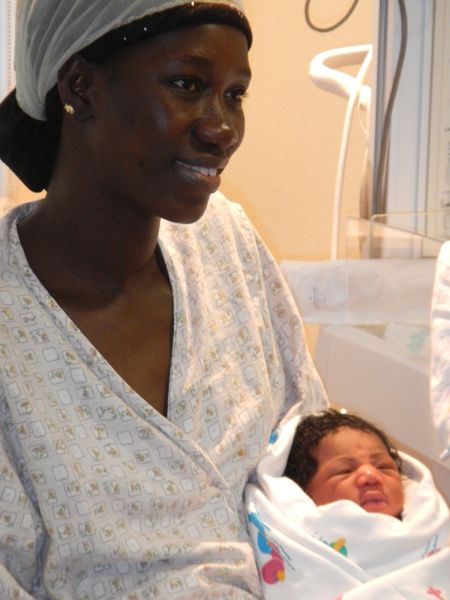
Alima Gueye with her newborn daughter. Photos/Kathryn Reed

With practically a full head of wavy jet-black hair, the little girl weighed 6 pounds, 10 ounces and measured nearly 21 inches.

Not making a peep, she slept quietly next to her mom in a crib of sorts. Even when Alima Gueye went to pick her up and her sister bounced around the hospital room, the newborn’s eyes stayed shut.

Mandoye N’Doye’s boss at Harrah’s Tahoe said he couldn’t come to work on Friday – to instead be at the hospital with his wife. He is a steward supervisor at the hotel-casino.

Mandoye N’Doye holds daughter Oumy as Alima Gueye holds their newborn.

Even though N’Doye has gone through this three times before, he wanted to get his wife to the hospital Thursday afternoon when she started feeling contractions. She told him it wasn’t any big deal and to relax. At 7pm he had enough and the Stateline couple drove to the South Lake Tahoe hospital.

Their older children, ages 4 and 8, live in Senegal because they were born there. But with passports having been secured for them, they will join their parents and sisters in Tahoe this summer to live.

As for the naming celebration, N’Doye said, “They do some praying. We make a lot of food.”

They also got to participate in a U.S. tradition by receiving a wagon full of gifts totaling nearly $2,000 that was donated by various businesses and community members.


Body of missing Petaluma woman found

http://youtu.be/y5Fe7_-iR8I

Updated Jan. 4 2pm:

El Dorado County sheriff’s Lt. Pete Van Arnum said while there appears to be no foul play in the death of Petaluma resident Alyssa Byrne, the investigation is ongoing to determine how she ended up off the side of Pioneer Trail.

“There is conflicting information about this case. We aren’t exactly sure what happened,” Van Arnum said at a Jan. 4 press conference.

He said it’s easy to become disoriented when hypothermia sets in, so that could be why she was in a location that would have been going away from the casino where she was staying. This is assuming she walked up Al Tahoe Boulevard from the SnowGlobe event at Lake Tahoe Community College.

Kim Miller-Byrne, mother of the deceased 19-year-old, had earlier told Lake Tahoe News that her daughter was not familiar with the South Shore. This could also have contributed to why she ended up between Al Tahoe Boulevard and Black Bart.

Van Arnum said it’s also possible she left the college and trudged through the snow to get to Pioneer Trail. Her body was found about one-half mile from LTCC.

Search and rescue teams were expected today to comb the area where her body was found. It was an employee with South Tahoe Public Utility District in a truck who spotted the body and called authorities.

Van Arnum told Lake Tahoe News that it was frustrating to know that so many people drove by that spot since she was reported missing three days ago. No one could see her because of the snowbank.

A forensic autopsy will be conducted in Sacramento this weekend. Toxicology reports take about a month to be released.

—–

By Kathryn Reed

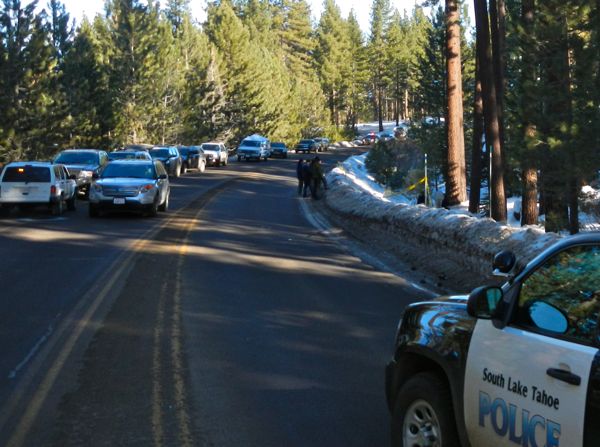
The body of missing Petaluma teen Alyssa Byrne was found Friday morning just off Pioneer Trail.

Authorities say a utility worker discovered the body about 8:30am down a short embankment on the south side of the road.

A law enforcement official told Lake Tahoe News it appears the body had been there a couple days and that foul play was not involved. The body was fully clothed.

An autopsy will determine exact cause of death.

Law enforcement examine the area Jan. 4 where the body of Alyssa Byrne was found just off Pioneer Trail in El Dorado County. Photo/LTN

Byrne, 19, had been at the SnowGlobe music festival in South Lake Tahoe on New Year’s Eve. She left before her friends did. They were all staying at the Horizon hotel-casino in Stateline.

A friend had reported seeing her in the casino just past midnight on New Year’s. However, officers began doubting whether it was actually Byrne who the friend encountered that night.

Law enforcement expect to have Pioneer trail blocked for the better part of the morning on the west end at Al Tahoe Boulevard and the south at Cold Creek/Black Bart.

The location is an easy walk from the music venue site at Lake Tahoe Community College, but would be the opposite direction of the casino had she walked up Al Tahoe Boulevard. Temperatures in the area have been below zero and hypothermia would set in fast.

Her father, Kevin Byrne, has been in town this week assisting with the search that has included more than 100 people, K-9 units and a helicopter. He was not answering his cell phone. The person answering the Byrne residence in Petaluma Friday morning said, “We are not taking any calls now.”


Recycling gives Christmas trees a second life

By Kathryn Reed

With the holidays officially over, it’s time to restore the house to pre-holiday décor. This means out goes the tree.

South Tahoe Refuse has been recycling Christmas trees since 1992. In 2007, it hit the 100,000 mark for the number of trees that had been repurposed.

Even though people have cut back on spending in many areas of their lives, based on the constant number of trees STR recycles each year, the recession has not affected the Christmas tree industry – at least on the South Shore.

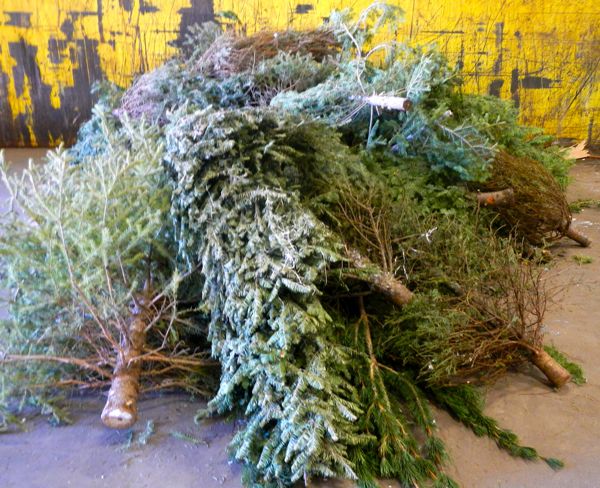
Christmas trees at South Tahoe Refuse are ready to be turned into mulch. Photo/LTN

It used to be that garbage crews would collect the trees and take them to a South Lake Tahoe facility for them to be chipped. The city would then use the material at various locations.

Now the refuse company sends them to Full Circle Compost and Bentley Agrowdynamics in the Carson Valley.

With the opening of STR’s Resource Recovery Center in April 2010, the trees can be sent through a chipper on site. A little bit of the matter is kept at STR in case a construction project might need the material for erosion control purposes.

STR has increased its green waste recycling by 73 percent since the recovery center opened. John Marchini, who runs the garbage company, said this far exceeds expectations.

Trees are starting to trickle into the South Lake Tahoe facility from homes throughout the South Shore. STR folks believe the abundance of snow has kept people from discarding their tree immediately after Christmas. STR will send a special truck on regular routes for the first two weeks in January to pick up trees. They need to be 6-feet or shorter, or cut into pieces – and absolutely no decorations on it.

A small pile of trees sits in a corner. Marchini reaches down to pick off a piece of tinsel.

“The No. 1 problem in composts is plastic,” Marchini tells Lake Tahoe News.

That shiny silver decoration is made from plastic.

People can also drop the trees off for free at the recovery center. This includes commercial businesses that might have a tree that is larger than the average tree found in a home.

While these trees are clearly a seasonal occurrence, the recycling of them helps STR meet the state mandate of keeping at least 50 percent of garbage out of landfills. South Tahoe Refuse has a 66 percent diversion rate. But that state regulation in 2020 changes to 75 percent.

“Food waste will come into play to meet that mandate,” Marchini said.

Right now STR is not licensed to recycle food waste. The program it has with a few restaurants on the South Shore requires a truck to pick up the food waste and take it directly to Full Circle Compost.

“Craig (Whitt who runs Full Circle) has indicated to us he can take everything we have,” Marchini said.

But some issues still need to be worked out before food waste would be the norm here. For one, there is limited space in Tahoe to put bins to collect the product. The other is to ensure people understand what food products can be recycled. If it gets contaminated, the entity doing the contaminating is charged.

And right now, recycling food and turning it into compost is two to three times more expensive than dumping it in the landfill. That is one of the deterrents for people with food waste – the cost involved can be prohibitive.

—-

Other tree recycling programs:

• Tahoe Truckee Sierra Disposal has curbside tree recycling Jan. 14-18. Clean, undecorated trees cut in 3-foot segments should be placed by trash.

• Tahoe Truckee Sierra Disposal customers may drop off trees anytime through Jan. 18 at Glenshire Clubhouse, Tahoe Donner Clubhouse, Truckee Rodeo Grounds and the high school soccer fields. Trees must be undecorated. Place them in the bins provided.

• Incline Village-Crystal Bay residents may place clean trees curbside on their standard service day between Jan. 7- 11 for recycling collection conducted by Waste Management. Trees may be whole up to 6 feet.

• Incline Village General Improvement District’s Waste Not Program has partnered with the North Lake Tahoe Fire Protection District to offer free Christmas tree chipping Jan. 7-11.


CA snowpack water content 33% above average

By Kathryn Reed

PHILLIPS STATION – While the state is faring well when it comes to water content from the snowpack, the measurement closest to South Lake Tahoe is just average this time of year.

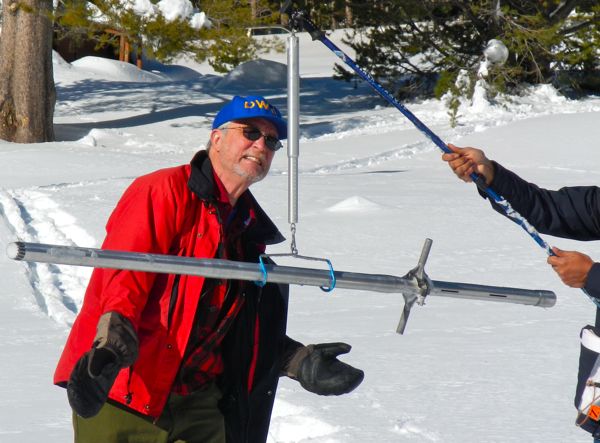
In the field paralleling the road to Sierra-at-Tahoe, Frank Gehrke with the state Department of Water Resources on Jan. 2 took a series of samples to determine there is 12.1 inches of water content in the 48.6 inches of snowpack. This is 101 percent of average.

Statewide, though, the water content is 133 percent of average.

Frank Gehrke on Jan. 2 measures the water content of the snowpack at Phillips Station. Photo/Kathryn Reed

A year ago on the first survey of the season, Gehrke almost didn’t bring his equipment out of the truck. There was one patch of snow to measure. This year snowshoes were required to break trail along the route.

“It’s a good, encouraging start, but it’s just average,” Gehrke said.

While ski resorts rejoice in the immediacy of snowfall and at this point could fare OK if there were an extended break between storms because of what is on the ground, water managers downstream don’t celebrate this time of year. It’s too early.

It’s the April reading that counts most to them because after that the snowfall is negligible. The snowpack fills reservoirs throughout Northern California, which allows water to be sent to points south for drinking and to irrigate farmlands.

According to the Department of Water Resources, the white stuff accounts for about one-third of the water for California households, farms and industry users.

The theory is the snowpack will keep growing between now and the last reading in April. Had this been the April reading, the state average would be at 49 percent.

While the storms in early December brought rain to the Lake Tahoe Basin, they were also filling up reservoirs. This in some ways is a bonus for the water system.

Lake Oroville in Butte County, the State Water Project’s principal reservoir, is at 71percent of capacity, 113 percent of average for the date; while Shasta Lake near Redding, the federal Central Valley Project’s principal storage reservoir, is at 73 percent of capacity, 115 percent of normal for the date.

Right now there is a lull between storms, which isn’t uncommon in January in Tahoe.

Gehrke said it’s hard to find any definitive trends with snowpack and water content totals in this area because there can be dramatic swings from year-to-year. And he wasn’t about to make predictions for what the water content will be like as the winter progresses.


SnowGlobe a success — music to officials’ ears

By Kathryn Reed

“It’s up to the council and community, but my recommendation will be to encourage this to become an annual event.”

That is what South Lake Tahoe City Manager Nancy Kerry told Lake Tahoe News less than 24 hours after the three-day music festival SnowGlobe came to a close.

“I think this event is a great example of what a group of community and city leaders can do when they put their efforts toward a common goal. Our common goal was not to bring the event back, but instead was to determine whether or not we could find acceptable solutions to the organizers, the community, those most upset or impacted by the event,” Kerry said. “That goal remained the focus this past year. A huge thanks goes to the community members who decided to more than say they didn’t like something, those who got involved said they would invest of their own time to work with the city and organizers to determine if an acceptable solution could be found. They got involved and focused not on what they didn’t agree with or didn’t like but instead invested their energies in helping to find solutions.”

Chromeo rings in the New Year at SnowGlobe in S. Tahoe. Photos/Bron Fong

A year ago the complaints were practically nonstop during the event because the bass from the techno acts had residents unable to enjoy their own homes – walls shook, turning up the TV didn’t solve the problem and angst stayed with those most affected for the last year.

While the music could be heard on occasion outside the event boundaries during the Dec. 29-31 event, it was not constant.

The city set up a phone line just for SnowGlobe related issues. It barely rang.

“I have had a lot of good feedback, no complaints and just a few minor issues have arisen. In the scheme of things it has been pretty successful,” LTCC President Kindred Murillo told Lake Tahoe News.

Like last year, the event was on the community ball fields next to Lake Tahoe Community College.

This year the college strived to capitalize on the thousands of music fans on campus – hoping to show them that while South Lake Tahoe can be fun, it also can be a place to get a higher education.

The college set up a Facebook page specifically for SnowGlobe, handed out postcards with info, and had booths inside and outside the venue.

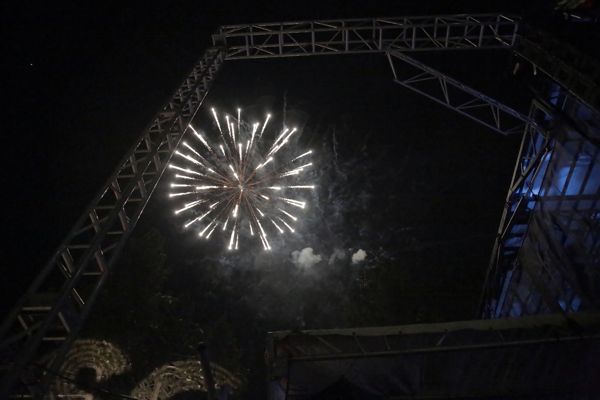
Fireworks light up the dark, icy night New Year’s Eve.

Murillo spent her New Year’s Eve with the more than 12,000 attendees.

Chad Donnelly, who put on SnowGlobe, did not return a call so the exact number of tickets sold is not known.

The city says about 9,000 attended Saturday night, Sunday was a sell-out crowd of 13,000 and as of 8pm New Year’s Eve, 12,000 had gone through the gates.

When people entered they were frisked and offered the chance to dump any contraband in the amnesty bins. Police Chief Brian Uhler said less was collected this year compared to last year, but as of Tuesday night officers had not gone through it.

There was one arrest Saturday and one Monday – one for alleged theft, the other for allegedly possessing a controlled substance. (South Tahoe police arrested three people on charges of being drunk in public at the Stateline area on New Year’s Eve; where city officials said the crowd was much smaller than years past.)

While uniformed officers were at SnowGlobe, including a K9 unit, undercover officers, event security and undercover Alcohol Beverage Control inspectors were walking the area.

SnowGlobe security kicked a few people out, but why and how many has not been released.

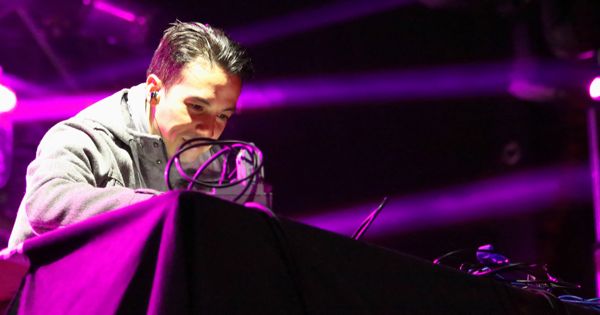
Laidback Luke entertains thousands Dec. 31 at SnowGlobe.

Transportation was the biggest complaint – especially the first day. Event organizers contracted with a private bus company to bring people to the campus and deliver them back to the casino area. BlueGo was paid by SnowGlobe to run more buses, too.

“The long-term impacts of having 15,000 or so attendees come and experience South Lake Tahoe at a festival and doing so annually will likely result in tremendous marketing of the community and encouraging many of these attendees to either move here to go to college, move here later, or return to visit here year after year,” Kerry said.

By Monday, or sooner, the goal is to have LTCC not look like such a mega-event ever took place. That’s when winter quarter starts.

The main stage started to be broken down New Year’s morning after the fireworks put an exclamation point to the end of the three-day event.

In the coming days and weeks Kerry will speak with city employees, college officials and organizers for a bit of a debriefing. Meeting with those involved took place throughout the event to make sure everyone was on the same page.

While a $50,000 deposit had been secured by the city from organizers, it’s too soon to know if it will be fully refunded.

“This time, we all kept a focus on the big idea of bringing events to the community that will generate revenue for local businesses, promote the natural environment and encourage long-term connections to South Lake Tahoe,” Kerry said.


Editorial: Stop the name calling or the comment section on Lake Tahoe News will go away

The world seems to be in a sad, angry and distrustful state of mind.

We live in a time when in 2012 more active U.S. troops took their lives than died fighting in Afghanistan, according to the Military Suicide Report.

In 2012, 70 journalists died. The record was 74 in 2009. That might not sound like much, but there was a time when journalists’ notebooks were like a white flag of neutrality. Not so anymore. These unarmed chroniclers of truth are seen as having an even more dangerous weapon than a gun – that of a pen, a computer, a microphone, a cell phone.

While journalists have long been held in low-esteem right along with attorneys, the fourth estate has also had a special status of being a non-combatant. Not so much anymore.

We are hurting each other with weapons and words.

People say they hate all the negative news. We say there is no such thing as negative or positive news – there is just news.

However, Lake Tahoe News knows we are bringing a good deal of negativity to you via the comments.

Without counting the positive, negative and neutral comments on Lake Tahoe News, we know the negative run rampant and overshadow and the other comments. The negativity isn’t what is so grating and unnerving, it’s the anger and venom that are spewed that are both disheartening and alarming.

No one is going to agree with everyone all of the time. But that doesn’t make the other person’s opinion less valid. Nor does it make that person an idiot or some other name for having that opinion.

Sure, it’s easy to tell someone to not read the comments if they don’t like what is being said. But isn’t that in some way punishing the people who want to contribute in a meaningful way and rewarding the nasty commenters?

Lake Tahoe News, and any site for that matter, does not have to allow comments. We’ve done a lot of thinking about whether comments are good or bad for the news site. For now, the good outweighs the bad. We like when conversations are elevated, new information is brought forward and divergent opinions are presented in a thoughtful manner.

But as we go forward with a redesign of the news site, we are giving serious thought to not allowing comments in the future. It will be up to the commenters – basically how you behave between now and when we pull the trigger on the redesign – as to whether comments will be a component in the next incarnation.

The turning of a calendar for many is all about resolutions. For Lake Tahoe News we would like to not be able to write the first sentence of this editorial a year from now. We’ll do our part to make that possible, if you will do yours.

Is it that hard to do unto others as you would want done to you? Is it that hard to voice your opinion about a topic without being critical of someone else? Why can’t you just write: I disagree with Lake Tahoe News because … and then leave it at that.

Happy New Year from everyone at Lake Tahoe News!