Report: Outdoor recreation big business for California

By Jennifer Booton, Fox Business

Outdoor recreation generates more than $85 billion in consumer spending and creates about 732,000 jobs each year in California, according to a report by the Outdoor Industry Association.

Contributing more nationally to consumer spending than both the household utilities and gasoline sectors combined, the industry that includes hiking, bicycling, fishing and skiing is bigger than most people realize, the group argues.

“Outdoor recreation is a significant economic driver,” it said in the report.

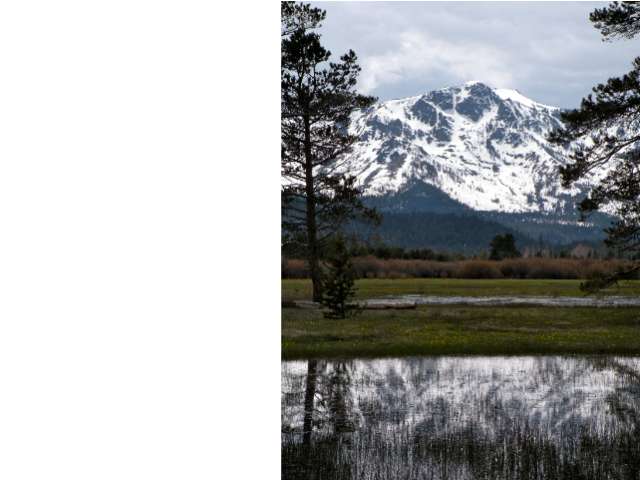
Lake Tahoe residents know all about playing outdoors. Photo/LTN file

Offering a number of open, public spaces, including Yosemite National Park, Redwood national and state parks and Big Sur, a sparsely populated region of California’s Central Coast that spans dozens of miles, California is by far the nation’s largest contributor to outdoor recreation.

Money spent on gear, vehicles, trips and travel-related expenses there generate $270 billion in California wages and salaries and $6.7 billion in state and local tax revenue each year. The group estimates that at least 59 percent of California residents participate in outdoor recreation each year.

“This creates jobs, supports communities, generates tax revenue and helps drive the economy,” the Outdoor Industry Association said.

The report comes as California struggles to improve its economy in the wake of the 2008 financial crisis. The state pays public workers more than any of the other 12 most populous states, according to Bloomberg, and has struggled to overcome deep debt obligations.

On a national level, outdoor recreation generates $646 billion in consumer spending while contributing nearly $40 billion in federal and state and local tax revenue.

The market contributes more to consumer spending than household utilities and gasoline combined, and also trumps pharmaceuticals and motor vehicles, according to the report.

The next largest contributor to outdoor activity behind California is Florida, generating about $38.3 billion in consumer spending a year, followed by New York with $33.8 billion and Texas with $28.7 billion.

The industry, which creates more than 6.1 million direct American jobs nationally, also generates more employment than construction, oil and gas, education and transportation, the industry group says.


Exchange student embraces life at STHS

By Rebekka Kuehnapfe

Before I came to America I thought: “Tahoe looks amazing” and now I can say: “It really does.”

Tahoe is the perfect place to spend a year as an exchange student. I love to go skiing or watching the sunset at the beach. It almost gives me a feeling of being home. Especially my wonderful host family makes me feel even more welcome. We go out for dinner, on trips or watch movies together. So I can tell, honestly, I have found a second mum, dad and sister.

Rebekka Kuehnapfe is adapting to her home away from home. Photo/Provided

What I like the most about America are school sports. In Germany school and sports are two different things. To do a sport we have to join a club outside of school. So I was fascinated by the school spirit and now I am proud to be a Viking too!

I was on the tennis and the basketball teams. Next season I will do swimming. In basketball I had the most fun. I met a lot of nice people, who love to play sports as much as me. Right now I am thinking about continuing to play in Germany.

Also I have really enjoyed South Tahoe High School, taking fun electives and learning about U.S. history.

It seems like my reasons to come to America: speaking better English, seeing a different culture, making new friends or just growing up, are all becoming true. But it was not always easy. I changed host families after a few months and hope to continue making lasting friendships.

All these experiences are making me stronger. This is a year to look back on and be proud of.

Rebekka Kuehnapfel 15, is a sophomore exchange student at South Tahoe High School. She is from Germany.

Note:

International Student Exchange is looking for families to host students who will attend South Tahoe, Whittell, Douglas Carson and Dayton high schools. Local education coordinator is Deborah Malone, (775) 443.6874.


Ritz-Carlton selling multimillion dollar homes in Truckee

By Kathryn Reed

TRUCKEE – Clearly there is a demand for high-end properties in the greater Lake Tahoe area because within days of full ownership residences at the Ritz-Carlton at Northstar coming on the market some are already in escrow.

The public was able to stroll through the multimillion dollar penthouse floor parcels last weekend. Seventeen homes are available on the sixth floor and another six on the third floor.

For Nora Lacey of Newcastle it was the level of service, quality of food and the people at the Ritz that convinced her buying was the correct decision. She and her family will have a second home on the third floor.

Twenty-three full ownership residences at the Ritz-Carlton, Lake Tahoe were released this month. Photos/Kathryn Reed

“We had been considering a cabin on the lake,” Lacey said as she and her two adult daughters perused the sixth floor during the open house Feb. 17. “With a vacation home, you don’t want to worry about it.”

Frozen pipes, shoveling, driving – those are things they won’t have to worry about once they arrive. And for the family members who ski, a concierge will lay their skis in snow so they can schuss to various lifts at midmountain.

The Bay Area is the primary market for the residences, with those in their mid-30s and mid-40s making the most inquiries, according to Jenn Wade, who is handling publicity for the residences.

The two-, three- and four-bedroom penthouses range from 1,554- to 3,407-square-feet at a price between $1.25 million and $4.5 million.

Wade told Lake Tahoe News the change in ownership at the Ritz and the uptick in the housing market are why the residences finally went on sale – more than three years after the property opened midmountain at the Northstar ski resort.

Kennedy Wilson and its partners acquired the Ritz-Carlton, Lake Tahoe and Ritz-Carlton Residences, Lake Tahoe in December 2012.

The $300 million hotel opened in December 2009 as the recession was taking hold. Developer East West Partners was not able to pay its debts, defaulting on a $165 million loan in 2011. Placer County records reveal the Kennedy Wilson group paid $73.6 million for the whole site.

Four models are open – two by San Francisco designer Jay Jeffers and two by Truckee’s Debbie Costa. Jeffers will do a third that will be done in mid-March.

The designers started with almost a blank canvas. The wood floor and mostly Wolf appliances were already installed. Large windows throughout capture either views of the ski slopes or the Martis Valley.

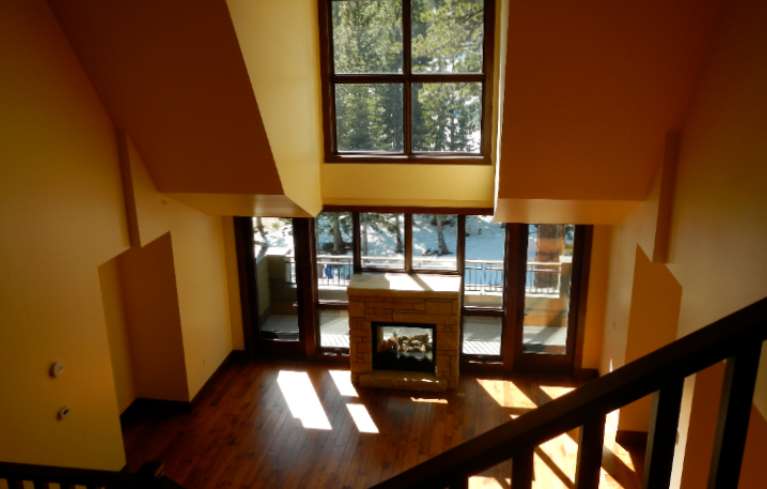
Some places have a double-sided fireplace – the second side being on the balcony. All have high ceilings. Recessed lighting is throughout, but so is plenty of natural lighting. And unusual angles are throughout most of the rooms, which adds character and uniqueness to each home.

“Modern mountain” is how Jeffers described his approach.

“The wood beams and fireplaces and stone create a nice palette,” Jeffers told Lake Tahoe News.

He used a cloud fixture above the dining room table in one residence “because we are in the clouds here. When you are under it, it is like a cumulus cloud.”

Costa had two weeks and a tight budget to come up with her offerings. She tried to use as many local vendors as possible. While her décor is more understated than what Jeffers came up with, they seem more livable.

For those who choose to go with an approved Ritz-Carlton interior, they can put their residence in the hotel rental pool. Otherwise, if renting is what they want to do with a non-approved design, they can do so on their own or through a separate firm.

For more info about the Ritz Residences, go online.

ngg_shortcode_0_placeholder Click on photos to enlarge.


Tech industry zeroing in on gambling

By David Streitfeld, New York Times

SAN FRANCISCO — Look out Las Vegas, here comes FarmVille.

Silicon Valley is betting that online gambling is its next billion-dollar business, with developers across the industry turning casual games into occasions for adults to wager.

At the moment these games are aimed overseas, where attitudes toward gambling are more relaxed and online betting is generally legal, and extremely lucrative. But game companies, from small teams to Facebook and Zynga, have their eye on the ultimate prize: the rich American market, where most types of real-money online wagers have been cleared by the Justice Department.

Two states, Nevada and Delaware, are already laying the groundwork for virtual gambling. Within months they will most likely be joined by New Jersey.

Bills have also been introduced in Mississippi, Iowa, California and other states, driven by the realization that online gambling could bring in streams of tax revenue. In Iowa alone, online gambling proponents estimated that 150,000 residents were playing poker illegally.

Legislative progress, though, is slow. Opponents include an influential casino industry wary of competition and the traditional antigambling factions, who oppose it on moral grounds.

Silicon Valley is hardly discouraged. Companies here believe that online gambling will soon become as simple as buying an e-book or streaming a movie, and that the convenience of being able to bet from your couch, surrounded by virtual friends, will offset the lack of glittering ambience found in a real-world casino. Think you can get a field of corn in FarmVille, the popular Facebook game, to grow faster than your brother-in-law’s? Five bucks says you cannot.

“Gambling in the U.S. is controlled by a few land-based casinos and some powerful Indian casinos,” said Chris Griffin, chief executive of Betable, a London gambling start-up that handles the gaming licenses and betting mechanics of the business for developers. “What potentially becomes an interesting counterweight is all of a sudden thousands of developers in Silicon Valley making money overseas and wanting to turn their efforts inward and make money in the U.S.”

Betable has set up shop in San Francisco, where 15 studios are now using its back-end platform. “This is the next evolution in games, and kind of ground zero for the developer community,” Griffin said.

Overseas, online betting is generating an estimated $32 billion in annual revenue — nearly the size of the United States casino market. Juniper Research estimates that betting on mobile devices alone will be a $100 billion worldwide industry by 2017.

“Everyone is really anticipating this becoming a huge business,” said Chris DeWolfe, a co-founder of the pioneering social site Myspace, who is throwing his energies into a gaming studio with a gambling component backed by, among others, the personal investment funds of Jeff Bezos, Amazon’s founder, and Eric E. Schmidt, Google’s executive chairman.

As companies eagerly wait for the American market to open up, they are introducing betting games in Britain, where Apple has tweaked the iPhone software to accommodate them. Facebook began allowing online gambling for British users last summer with Jackpotjoy, a bingo site; deals with other developers followed in December and this month.

Zynga, the company that developed FarmVille, Mafia Wars, Words With Friends and many other popular casual games, is advertising the imminent release of its first betting games in Britain. “All your favorite Zynga game characters will be there, except this time they’ll have real money prizes to offer you,” an ad says. “Play online casino games for pennies and live the dream!”

DeWolfe’s studio, SGN, is also on the verge of starting its first real-money games in Britain. “Those companies that have a critical mass of users that are interested in playing real-money games are going to be incredibly valuable,” he said.

Mark Pincus, the chief executive of Zynga, said the company was just following the market. “There is no question there is great interest from all kinds of people in games of chance, whether it is for real money or virtual rewards,” he said. Zynga, which has missed revenue expectations in the last year, is making gambling a centerpiece of its new strategy. It has just applied to Nevada for a gambling license.

Casual gaming first blossomed on Facebook’s Web site, where players could readily corral friends into their games. It is now being rethought for mobile devices, so people can play in brief snippets as they wait for a bus or a sandwich.

Some games mimic the slots and poker found in casinos; others emphasize considerably more creativity. The vast majority of casual game players play at no charge. A small number buy virtual objects in the game to speed their play or increase their status.

Tech executives expect an equally small number to play for real money but believe they will bet heavily, making them much more valuable to the gaming companies. By Betable’s estimate, the lifetime value of a casual player is $2 versus $1,800 for a real-money player.

Big Fish Studios, a Seattle developer, introduced Big Fish Casino, an iPhone app, in Britain last fall. “We started with a one-pence slot machine,” little more than a penny, said Paul Thelen, Big Fish’s founder and chief executive. “Now it is up to a maximum of about $50 a bet.” Average revenue per player is exceeding $20 a day, whereas in virtual currency it was 30 or 40 cents.

“Like in Vegas, some people get lucky and some don’t,” he added.

The powerful Las Vegas and Indian casinos have mixed attitudes toward online gambling. Caesars Entertainment in 2011 acquired the Israeli start-up Playtika, developer of the popular Facebook game Slotomania, for about $180 million, offering it a springboard into the digital world. But Sheldon Adelson, the Las Vegas magnate and major Republican Party donor, is opposed to online betting because he thinks children will end up gambling.

In New Jersey, Gov. Chris Christie has had different qualms. He has vetoed two online gambling bills, the second earlier this month. One concern: the state’s take, a proposed 10 percent tax, was not large enough.

The measure, which is likely to be refined and successfully resubmitted in the next few months, followed the state Constitution, which mandates that Atlantic City is the only spot in the state where gambling can take place. And so only the casinos were allowed to offer online games, although they could partner with tech companies; the actual computers allowing the gambling would have to be housed in the casinos. And of course players had to be over 21 and physically located in New Jersey.

Meeting those last two requirements seems a tall order to Doug Creutz, an analyst at Cowen & Company who follows online gambling closely. “The Internet isn’t bound geographically,” he said. “There are other problems too, like preventing money laundering. Online gambling is going to be a complex issue that will take a while to sort out.”

In the meantime, though, he notes that games themselves are sometimes changing to incorporate elements akin to gambling. Diablo III, the latest version of the popular role-playing series from Blizzard, was released last year with an in-game auction house where players could buy and sell loot that they had found. If they chose, they could literally take the profits out of the game.

Since the loot was randomly generated, like the numbers on a slot machine, Blizzard had to remove the auction house game from the South Korean version of the game to satisfy the country’s strict antigambling provisions.

Cesar and Edgar Miranda are two young developers who have won hackathons, where the goal is to build a game in a weekend. The brothers, who rent rooms from their parents in San Jose, have spent the last few weeks refining their game, Claw Crane.

It is a simple variation of the grabbing game found in amusement arcades for decades: successfully secure a toy from a pile and you win. If Apple approves, the game, offering cash prizes, will be available in Britain later this month. A virtual money version will be available in the United States.

“We saw the opportunity here,” said Cesar Miranda, 24. “Anyone can jump in and try and grab a piece of this market while it is still fresh. There’s a low entry to failure.”

Neither he nor his brother, born in Mexico and raised in California, have even been near Britain. “I think the closest I’ve gotten is Las Vegas,” Cesar Miranda said.



Median home price in Tahoe going up

By Dan Spano

We have had a strong start to 2013 in Lake Tahoe real estate. Homes continue to sell at a strong pace and now the median price is starting to rise.

Even with the reducing inventory of homes on the market and the interest rates still at an all-time low, I believe we’ll continue to see strong sales. As of Feb. 20, on the Nevada side of the South Shore, there was just one foreclosure and one short sale on the market. The rest of Nevada is still seeing enough foreclosures to keep them as the No. 2 state in the U.S. in the number of foreclosed homes, but that isn’t the case in Lake Tahoe. The California side has seven foreclosures and four short sale homes for sale, a large drop from the last two years.

People want a piece of Tahoe real estate.

There has been more activity on the higher-end market of homes for sale. One home just sold in Cave Rock for almost $25 million and another in Skyland for $12 million. There is much more trust in the economy and it shows in these large purchases. Buyers are willing to pay for the kind of home they desire.

South Shore, Nevada market summary

On the Nevada side of South Lake Tahoe there were nine closed sales in January, and very interestingly, the exact same number as January 2012. With 30 homes currently in escrow, I expect to see a larger number when February’s figures are in. There were 167 homes sold on the Nevada side in the last 12 months, from Feb. 1, 2012, to Jn. 31, 2013. During the previous 12-month period there were 127 homes sold. There are currently 68 condos and 84 houses on the market, with almost 40 percent (60 properties) priced above $1 million.

Low inventory of homes for sale

The No. 1 conversation among Realtors nationwide is the low inventory of homes for sale, and it is no exception in Lake Tahoe. Larry Sabo, of Paradise Real Estate, says, “In the last six months, the median price of homes for sale in South Lake Tahoe has shown improvement every month, closed sales have been increasing since early in 2009 with a fast increase recently, and the time it takes to sell a home is at its lowest since March of 2007, long before the recession started. We are also seeing the percent of list price received has gone above a six-year high. The month’s supply of homes for sale, otherwise known as the inventory, is at a level lower than it’s been in more than six years. The number of homes for sale is also at a six-year low, with buyers out there frantically looking because they just can’t find the home they’re looking for. ”

With very low inventory left we really don’t know how sales figures will look in the next 12 months in Lake Tahoe.

I had been expecting a slow growth of recovery in Lake Tahoe but we’ve taken an accelerated pace, faster than ever expected. I’ll be keeping an eye on the situation and keep my readers updated.

Dan Spano is with Paradise Real Estate.


Tahoe Sierra Club chapter wants wilderness protected

By Kathryn Reed

Peace, beauty, quiet, serenity, creatures, no machines, watershed.

Those are some of the reasons people at the Feb. 20 Tahoe Area Sierra Club meeting said they walk in the forest. And it is for those sentiments and others that this group wants to protect the wilderness.

Wilderness has a loose definition of being out in the woods, whereas wilderness area is a distinct region. In those regions – like Desolation Wilderness, Mount Rose, Granite Chief and Mokelumne – mountain bikes and snowmobiles are not allowed.

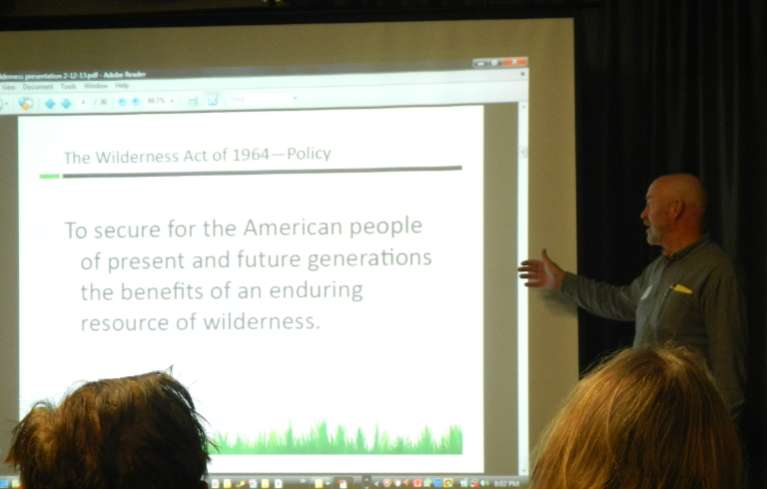
Bob Anderson with the Tahoe Area Sierra Club talks Feb. 20 about wilderness areas. Photo/Kathryn Reed

The Wednesday night meeting in South Lake Tahoe was supposed to feature Steve Evans, conservation director of the Friends of the River. He came down ill and in his place Fred Roberts and Bob Anderson, both members of the local Sierra Club chapter, spoke.

Roberts, who used to teach biology at Lake Tahoe Community College, said fewer people are experiencing their natural environment.

“We are losing every day to asphalt and social media and whatever forces there are that disconnect us from nature,” he said.

He also said how nature is disappearing and changing in various locations because of the bark beetle infestation, as well as because of climate change.

Roberts said it’s time to have a national conversation about the environment, adding, “We went through a presidential election and there was no mention of the environment.”

Locally, he advocated for the starting point of the Upper Truckee River getting a scenic designation.

“If we come together, we can leverage our power,” Roberts said.

Anderson, who is the group’s president and a member of the Tahoe Institute for Natural Sciences, picked up where Roberts left off. His talk focused on how the Lake Tahoe Basin Management Unit of the U.S. Forest Service is in the midst of reviewing comments to the Forest Plan update.

The Sierra Club actively lobbied for and still touts the desire that the Meiss Meadow area to become a wilderness area. This is the headwater of the Upper Truckee River.

“The U.S. Forest Service failed to identify and include in the alternatives an analysis of all of the wilderness-eligible land in the basin,” Anderson said. “There should also be a backcountry zone for mountain bikers.”

Alternative D in the Forest Plan would create 29,000 acres in the Meiss-Dardanelles area as a wilderness area. While the Sierra Club supported that idea, members also thought that alternative did not go far enough.

(The plan by the Forest Service should be released soon.)

The other designation the Sierra Club would like is to make the Upper Truckee River a wild and scenic river. This would take an act of Congress.


Predicting who the Oscar will go to

By Howie Nave

At last! The Super Bowl of movies has finally arrived and is taking place this Sunday on ABC. It’s the 85th annual Academy Awards show (which ironically is also the average age of those who are members of the Academy). Maybe that’s why for the first time the Academy of Motion Picture Arts and Sciences has decided to rebrand their product calling it just “The Oscars” because co-producer of the show, Neil Meron, said “85th Academy Awards” sounded too “musty.”

I wonder if rebranding the Oscars (which is what most of us referred to it as anyway) will help their ratings? We’ll see.

I’ve already rolled out the red carpet for the dogs as Nancy and I prepare the popcorn waiting with baited breath as to who will bring home the coveted statue? It’s going to be interesting to see how first time host Seth McFarlane does. His past exposure hosting shows at the national level has been those roasts on Comedy Central, and if you’ve seen any of those it’s a sound editor’s nightmare. I imagine the Academy will try to temper Seth, but c’mon, this is the same guy who gave us “Ted” last year, which isn’t exactly a picture for the faint of heart. (I laughed my butt off though watching that flick). Will Seth McFarlane be a Ricky Gervais reincarnated? Who knows, but that’s always the fun part: unplanned improvisational humor (and hiccups) that keep the censors on edge.

To be fair, though, McFarlane has a song nominated in the Best Original Song category (“Everybody Needs a Best Friend” from the aforementioned, “Ted”) so yeah, he has some Oscar creds going for him. However, it’s safe to say that the creator of “Family Guy” will definitely be topical, which might lead to a few embarrassing moments and gaffs. Let’s just hope he doesn’t upset too many Hollywood insiders attending the event. OK, I’m hoping he does.

Let’s get right to it though as we have a lot of ground to cover starting with Best Picture category. The nominees are: “Amour,” “Argo,” “Beasts of the Southern Wild,” “Django Unchained,” “Les Miserables,” “Life of Pi,” “Lincoln,” “Silver Linings Playbook” and “Zero Dark Thirty.” Who will win?

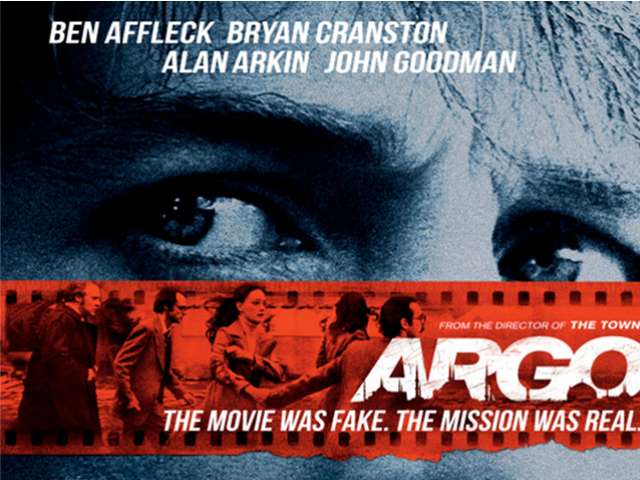
I’m going with “Argo” in part because its director, Ben Affleck, was snubbed in the directing category (why does Oscar do that?) which seems odd because he’s won that category at just about every other award show leading up to this one. Oh sure, Steven Spielberg’s “Lincoln” has 12 nominations going for it and Oscar will give Spielberg the statue in that category because they’re feeling guilty now that Affleck was snubbed and will reward him here giving it to “Argo.” The surprise might be “Zero Dark Thirty”, but going I’m with “Argo” for Best Picture.

For Best Director the nominees include Michael Haneke for “Amour,” Benh Zeitlin for “Beasts of the Southern Wild,” Ang Lee for “Life of Pi,” Steven Spielberg for “Lincoln” and David O. Russell for “Silver Linings Playbook.” Who will win?

Steven Spielberg hands down. Oscar loves epic pictures and has a history of rewarding those at the helm of such epics like Warren Beatty for “Reds” (1981), Sydney Pollack for “Out of Africa” (1985), Kevin Costner for “Dances With Wolves” (1990), James Cameron for “Titanic” (1997) and even Mel Gibson for “Braveheart” (1995) before he started publicly hating Jews. Spielberg won in 1998 for what I believe to be one of the definitive movies about WWII, “Saving Private Ryan.” So, proving that history does indeed repeat itself in the epic department, I’m going with Steven Spielberg to win for Best Director.

In the Best Actor category the nominees are Bradley Cooper for “Silver Linings Playbook,” “Daniel Day-Lewis for “Lincoln,” Hugh Jackman for “Les Miserables,” Joaquin Phoenix for “The Master” and Denzel Washington for “Flight.” When you carry the name of the movie as the character odds are you’re a shoe-in especially when the movie was spectacularly good. I mean, I’ve seen really good actors carry so-so movies (such as what Joaquin Phoenix and Philip Seymour Hoffman did for “The Master”) but when the acting is superb as well as the movie then you have to go with Day-Lewis here. Wolverine, I mean Hugh Jackman pulls out a few emotional stops in “Les Mis” and Cooper as a dramatic actor was impressive and Denzel makes any movie worth watching but this time around going with Daniel Day-Lewis in the Best Actor category.

In the Best Actress category the nominees are Jessica Chastain for “Zero Dark Thirty,” Jennifer Lawrence for “Silver Linings Playbook,” Emmanuelle Riva for “Amour,” Quvenzhane Wallis for “Beasts of the Southern Wild” and Naomi Watts for “The Impossible.” Man, this is a tough one. Probably one of the more tougher and least predicable categories in some time. The buzz seemed to be going to Sacramento’s Jessica Chastain and deservedly so as she was complete heat in that docudrama of a movie (that matched her sizzling red hair) and she literally lights up the screen. I wouldn’t count out 9-year-old Houma native Quvenzhane Wallis as a long shot which would make her the youngest winner ever to snag the statue in this category. But Jennifer Lawrence (who won both an Oscar and Golden Globe nomination back in 2010 for “Winter’s Bone”) is a tough candidate to beat. Her star has been rising faster than that asteroid that came close to hitting our planet a week or so ago. Then again Chastain was also nominated last year in the category of Best Performance by an Actress in a Supporting Role for “The Help” so it’s between her and Lawrence, both who turned in excellent performances. I’m a little biased though and going with Jessica Chastain for Best Actress.

In the Best Supporting Actor category the nominees are Alan Arkin for “Argo,” Robert de Niro for “Silver Linings Playbook,” Philip Seymour Hoffman for “The Master,” Tommy Lee Jones for “Lincoln” and Christoph Waltz for “Django Unchained.” As I mentioned earlier, Hoffman carried “The Master” and sure, Oscar might take that into consideration (playing a character as a cult leader loosely based on the teachings of Scientology) but taking the whole movie into account I had narrowed my picks down to the legendary Robert de Niro and Tommy Lee Jones, both who’ve taken home the statue before. Jones is the favored, but when you have a movie as serious as “Silver Linings Playbook” that got pretty heavy at times who was it that brought levity and humor just at the right moments when needed? Robert de Niro that’s who so I’m going with for Best Supporting Actor.

In the Best Supporting Actress category the nominees are Amy Adams for “The Master,” Sally Field for “Lincoln,” Anne Hathaway for “Les Miserables,” Helen Hunt for “The Sessions” and Jacki Weaver for “Silver Linings Playbook.” Kudos to Amy Adams and Anne Hathaway for expanding their range coming from usually sweet roles and taking on something with a little more meat to it being more dramatic. I’m going to just jump to the front of the line here and say that Anne Hathaway will win in this category because in addition to her fine acting, Oscar loves to award those that literally re-boot and transform themselves to play a character that is so outside their realm. Hathaway changed her voice pattern (and sings like an angel), cut her hair and without giving anything away (in case you haven’t seen “Les Mis”) will cause you to cry a little when you see what happens to her character. OK, you’ll cry a lot, so I’m going with Anne Hathaway for Best Supporting Actress.

In the Best Animated Feature category we have “Brave,” “Frankenweenie,” “ParaNorman,” “The Pirates! Band of Misfits” and “Wreck-It Ralph.” You know for a while there this was an easy category because it seemed like anything that had Pixar attached to it was the clear choice as to who would win. This year it’s kind of up in the air. It’s interesting to note that Disney (parent company to Pixar) has both “Frankenweenie” and “Wreck-It Ralph” in the running. I am a huge fan of director Tim Burton who, back in 1984 did a short version of “Frankenweenie” for Disney that was way ahead of its time and freaked the studio out (I think) a little Disney basically being too weird by their corporate standards. Of course years later when Burton became a huge hit as a director (almost singlehandedly becoming Johnny Depp’s go-to director) Disney dusted off their “prize” and offered it up in limited release. Fast-forward to last year where the green light was given for Burton to re-boot his short and turn it into a feature length movie with his brand of animation making a movie that was actually quite moving. As much as I want my “Frankenweenie” to win I think Oscar is going to go give it to “Wreck-It-Ralph” for Best Animated Feature so I’m going with that one. And yes, it was also a very good piece of filmmaking too.

At this part in the game things start to get interesting as we enter the category that nobody ever seems to make the time to check out. Granted here in Tahoe we don’t get too many of these films so you have to sometimes travel off the mountain and seek them out for yourself. I’m referring to the Best Foreign-Language Film category whose nominees include “Amour,” “Kon-Tiki,” “No,” “A Royal Affair” and “War Witch.” I’m guessing that this category belongs exclusively to “Amour” because that movie is also nominated in the Best Picture, Best Director and Best Actress categories (yes!) so I’m going to with “Amour” to cinch the Best Foreign-Language Film category because the only other foreign-language film I caught was “Kon-Tiki” making “Amour” an easy choice to win.

In the category for Best Original Song the nominees are “Before My Time” from the movie “Chasing Ice,” “Everybody Needs a Best Friend” from the movie “Ted” (which was co-written by Oscar’s host this year, Seth McFarlane), “Pi’s Lullaby” from “Life of Pi,” “Suddenly” from “Les Miserables” and “Skyfall” from the movie of the same name. OK, since I’m a huge James Bond fan (plus I understand there will be a tribute honoring the 50th anniversary of that franchise at Oscar) what better way to acknowledge the Bond franchise than having Adele herself singing “Skyfall” huh? It’s a no-brainer here folks: “Skyfall” wins for Best Original Song.

With regards to the rest of the categories my picks to win will be “Lincoln” for Best Original Score and Adapted Screenplay, “Les Miserables” for Best Makeup & Hair Styling and for Best Sound Mixing as well. Best Film Editing will go to “Argo” and “Zero Dark Thirty” will get the Best Sound Editing award.

Howie Nave is host/emcee/manager of The Improv at Harveys. You can hear him Monday-Friday 6 to 10am on KRLT FM-93.9.


LTWC returns cubs to the wild

By Lawrence Dechant, KGO-TV

When Cheryl and Tom Millham went to an AM/PM convenience store last summer, they ended up rescuing a couple of bear cubs.

The Millhams responded to a call to rescue the two baby bears from a man who was allegedly trying to poach them for money outside the store. They took the two black bears, which weighed 15 pounds each, to the Lake Tahoe Wildlife Care animal rehabilitation facility, where she’s the executive director and he’s secretary-treasurer.

“The man claimed the mother bear came and started taking his groceries, so he shot her,” Cheryl Millham said. “He said he was going to save their lives by selling the cubs so since we are the only agency in California, we were called to come and rescue the bears before they were illegally sold.”

The two baby bears (a male and a female) were rescued more than seven months ago, and are now 90 and 55 pounds respectively. They have just been released back into the wild with a clean bill of health.

She said that the animals, if left to fend for themselves, could not thrive in the forest alone.

“If you were a baby black bear and you were alone, something definitely happened to your mom,” Cheryl Millham said. “Either she died of old age or was hunted, and as a baby bear orphan you were killed or put in a zoo.”

The Millhams have owned Lake Tahoe Wildlife Care for 35 years and rehabilitate more than just bears. This past year, the Millhams have saved 10 bears, six bobcats, hawks, owls, falcons, bats, and river otters, just to name a few.

“It took us four to five years for them to allow us to raise and rehab bears, and we knew it could be done because it was done across the U.S.,” Cheryl Millham said. “In 2000, we finally received a permit for bears, and now we take the baby bears until they reach 50 pounds. ”

She said they usually get the bears during the summer and begin the rehabilitation phase immediately.

During the rehab phase, the bears are placed in fenced areas and are taught to find appropriate foods.

“The local fisherman are good to us and bring us fish all summer long. The fish are given to bears in water; they learn that if they want to fish they have to get their feet wet,” Cheryl Millham said. “We give them acorns as well if they go south, because that is what they’re exposed to in the south. A lot of it depends on where they came from and where they’re going to be released.”

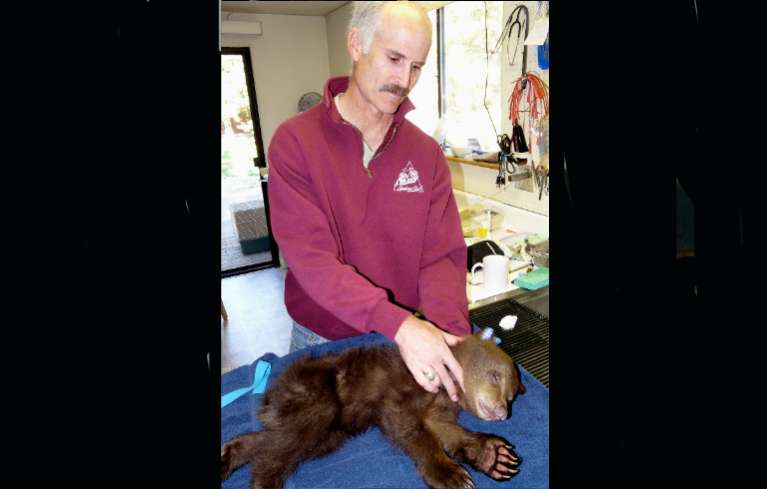
Vet Kevin Willitts in 2012 examines a LTWC bear before it is released. Photo/LTN file

The cages are sectioned into three parts and have a camera in each section so they can monitor the bears. The bears never see humans, because the goal is to get them used to their natural habitat in a safe way.

The cages are cleaned daily. There is an open ceiling, so the bears get used to rain, sunshine and snow.

Cheryl Millham said they also prepare the bears for hibernation during the winter months.

The Lake Tahoe Wildlife Care facility partners with California Department of Fish and Wildlife to release the animals back into the wild. Fish and Wildlife makes the final determination, and will usually release the bears within 50 miles of where they were first found.

“They’re ear tagged and numbered by who they are,” Cheryl Millham said. “They will anesthetize them, draw blood and check their bodies for any illness, and if everything is perfect, they’re given another dose and put in a snow den just like they were sleeping, transported to their location and placed in a make shift den. It is sealed up and they sleep for the rest of the winter. When spring comes, they wake up and don’t seem to have any memory about being around people or being rehabbed. It’s like they have another life, another year.”

The man who is accused of illegally killing the cub’s mother and trying to poach the young bears is facing four misdemeanor charges.

“These animals are not supposed to be in a zoo, they should be able to move freely, frolic freely,” Cheryl Millham said. “Since 2000, we have released all 53 bears we’ve had successfully.”


Conservancy spending millions to improve Lake Tahoe Basin

By Kathryn Reed

STATELINE – Even with millions of dollars being spent in the Lake Tahoe Basin each year, it’s not always easy to identify a California Tahoe Conservancy backed project.

This state agency based in South Lake Tahoe is the major force behind Lakeview Commons, a major contributor to Explore Tahoe, and a constant funder of bike trails on the North and West shores.

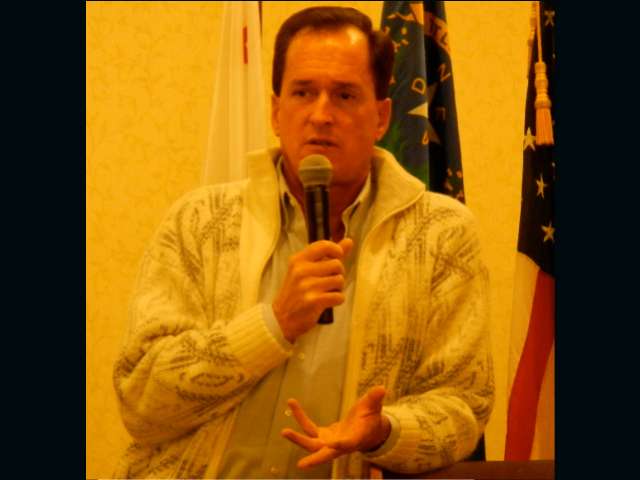
Ray Lacey talks Feb. 20 about the California Tahoe Conservancy. Photos/LTN

But it also contributed nearly $20 million to the Heavenly Village project that went to environmental improvements.

It is a regular contributor to erosion control projects that reduce the sediment reaching Lake Tahoe.

Brokerage of coverage rights is another component of the agency.

In the nearly 30 years since the Conservancy was established, it has acquired almost 5,000 parcels in the basin. Many are sensitive lands that will never be developed. Some are in neighborhoods. If they could ever be sold depends on the money used to buy them. Ones bought with state bond dollars are forever the state’s property.

Ray Lacey, deputy director of the CTC, enlightened Soroptimist International South Lake Tahoe on Wednesday at Harrah’s Lake Tahoe about what his agency has been up to.

He was an integral player in making Lakeview Commons become a reality. It was $6 million from the Conservancy that paid for the overhaul of El Dorado Beach.

Now he wants to turn the attention to the other side of Highway 50 so the full 56-acre project is completed.

There is also phase 2 of the Lakeview Commons project to be done, too. That includes revamping the area to the Alta Mira Building. CTC has secured an option to buy that building.

The 60-day comment period for the Upper Truckee Marsh project is open. The draft environmental documents are on the CTC’s website. People have until April 8 to comment. There will be two workshops on Feb. 27 – 1:30pm and 6pm – at Inn by the Lake in South Lake Tahoe, along with another March 28 at 6pm in the Aspen Room at Lake Tahoe Community College. The Advisory Planning Commission of the Tahoe Regional Planning Agency is scheduled to discuss the project on March 13, with the Governing Board taking it up March 27.

The biggest project in the near future is the Upper Truckee Marsh. This swath of 600 acres in the middle of South Lake Tahoe crosses both sides of the Upper Truckee River at its mouth and then extends to Highway 50. It’s bordered by the Tahoe Keys and Al Tahoe neighborhoods.

The long-talked-about South Tahoe Greenway Bike Trail is still on the books. This is the 9.2 miles of former Caltrans right-of-way that one day will become a multi-use path from Meyers to Stateline.

Connectivity is still the goal with bike trails. The North Shore has a better developed system in large part because Placer County has a dedicated allotment of hotel tax dollars going to projects like bike trails.

These days it’s more attractive to help fund a project than be the sole financial provider.

“Their bike trail usage is up 15 percent every year,” Lacey said, adding that the number of tourists is staying steady and full-time residents is on the decline.

He said feedback from riders is that they are riding bikes for errands that otherwise would have required a car. It’s not all about leisure and recreation, but in part for transit reasons people are pedaling.

Today, funding is the major obstacle, Lacey said, for why projects are not going forward. What is in the Conservancy’s bank account only covers a fraction of the projects on the table.

In the heyday, the CTC may have acquired 200 properties in a month. Now acquisitions are down to a handful a year.


Lawmakers want Nevada to be sovereign state

By Matt Woolbright, AP

CARSON CITY — Two state senators and a dozen other Nevadans urged a Senate committee Tuesday to tell the federal government that “enough is enough” and declare Nevada a sovereign state, recognizing federal jurisdiction only in areas specified in the U.S. Constitution.

Sen. James Settelmeyer, R-Minden, presented the resolution to claim sovereignty under the Tenth Amendment, which says powers in the Constitution that are not specifically reserved for the federal government are reserved for the states.

“This resolution seeks to protect the citizens of the Silver State from an overreaching federal government,” Settelmeyer told members of the Senate Committee on Legislative Operations and Elections.

Nevada state Sen. James Settelmeyer

Senate Joint Resolution 3 proposes Nevada claim sovereignty as a state and order a cease-and-desist for all federal mandates deemed beyond those enumerated in the Constitution.

Settelmeyer provided examples of the federal government deeming 2,500 acres in Douglas County a flood plain, even though there is no record of flooding in the area, and changing arsenic regulations for water. Those changes put an economic strain on the affected locals, Settelmeyer said.

“I feel our federal government has overstepped and is trampling over our state rights — ours and every other state’s,” said Carol Howell of the Carson City Republican Central Committee.

Any future attempts by the federal government that are outside its enumerated powers would be prohibited, as would threatening civil or criminal action for failing to enact one of the non-enumerated mandates. It’s a practice that one Nevadan said has become too common.

“We need to tell the federal government we’re not accepting blackmail,” Richard Brengman said at the meeting. “Nevada needs to be represented by Nevadans, not the federal government.”

Sen. Mark Manendo, D-Las Vegas, told the Associated Press later in the day that there is an argument that states should be independent from the federal government. But he quickly added some forget the good parts of an involved federal government.

“States do receive a lot of assistance from the federal government,” Manendo said. “Whether you agree or disagree, we do get highway money, we do get federal money for different things.”

He added he is undecided on the resolution, but said it does have merit.

“There are pros and cons to it because states do have some benefit from the federal government,” Manendo said. “I certainly wish Nevada owned more of its own territory here.”

Others sought to ensure that the resolution also rejects the United Nations’ Agenda 21, a 300-page proposal suggesting a roadmap for the world in the 21st Century. Opponents fear, if implemented, Agenda 21 will remove individual freedoms and usher in a one-world government.

Jim Sallee urged the committee to serve as a line of defense against any sort of encroachment on personal freedoms by the federal government.

“We are looking for you to stand between them and us, and defend the Constitution of the United States,” Sallee told committee members via a video feed from Las Vegas.

If passed, the resolution would be sent to the president, vice president, leaders of both houses of Congress and members of the Nevada delegation to be entered into Congressional Record.

“I think we need to remind them,” Settelmeyer said of the federal government and states’ rights. “I feel they’ve forgotten the meaning of the Tenth Amendment.”