Loop road financial study focuses on one route

Updated Feb. 28 10:50am

By Kathryn Reed

If Highway 50 were to go behind Harrah’s Lake Tahoe and MontBleu casinos, would this be a good financial decision?

Yes, according to the study done by Economic & Planning Systems Inc., a Sacramento-based land economics-consulting firm hired by the Tahoe Transportation District.

The report says retail sales could increase by $16 million to $25 million per year if the loop road were built. What year that would happen is not known.

“A complete street has much slower traffic and is easier to cross, so when people shop they want to cross back and forth. It slows the rate of traffic,” David Zehnder, managing principal of the consulting firm, told Lake Tahoe News. “And with a more friendly streetscape you provide a new dynamic that is more favorable in attracting spending.”

A delivery truck needs all five lanes of Highway 50 to get to Embassy Suites South Lake Tahoe. Photo/Kathryn Reed

A delivery truck needs all five lanes of Highway 50 to get to Embassy Suites South Lake Tahoe. Photo/Kathryn Reed

The loop road project spearheaded by the Tahoe Transportation District, a sister agency of the Tahoe Regional Planning Agency, proposes turning Highway 50 from about the eastern end of Pioneer Trail in South Lake Tahoe into a city street until Lake Parkway in Stateline. The highway would go around the casinos on the mountain side.

Would another realignment of the highway provide greater financial reward for the area? Would sprucing up the area without a highway realignment bring added revenues?

Those answers are unknown.

The consultants, who were paid $39,963, only studied one version. (The taxpayer dollars came from the Federal Highway Administration and Southern Nevada Public Lands Management Act.)

Also unknown is what happens to businesses along the current highway that have delivery trucks that don’t have another way to access the property if the road were narrowed.

“We are looking at various options for deliveries, however, have not made any decisions as of today,” Bill Cottrill with Embassy Suites told Lake Tahoe News.

The financial study was done despite the fact that no preferred alternative has been picked, though the forces driving the proposal want the mountain-only alternative; and that the environmental study has not begun; and that the city of South Lake Tahoe has yet to host its workshop. (That is set for March 12, 6pm, Lake Tahoe Airport.)

Even though the full report has not been released, the executive summary of the financial analysis is out. It says, “It should be noted that this economic analysis has not been scoped to address the potential relocation of any specific businesses that may be required to accommodate the right-of-way for the roadway realignment. It should also be noted that, although other potential alignments have been evaluated as part of current and past planning efforts, this analysis is predicated on a ‘mountain-side’ alternative under which the roadway realignment generally occurs along the southern portion of the existing commercial district behind the existing Village Shopping Center along Montreal Avenue/Lake Parkway.”

Officials say the full document could be released any day. But it’s not known if it will be out by Friday when the business coalition put together to analyze the study meets for the first time. (The meeting is March 1, 11:30am. Here is the finance meeting agenda, which includes the executive summary. Future meetings of this group are tentatively set for March 6 and March 20.)

South Lake Tahoe City Manager Nancy Kerry would not comment until she has read the full report.

Douglas County Manager Steve Mokrohisky told Lake Tahoe News, “A revitalized downtown in the South Shore is critical to creating a vibrant and accessible community for local residents and visitors, as well as reversing the environmental and economic decline in the Tahoe basin. The study is an important step in identifying the need for and quantifying the impact of revitalizing our downtown area through use of the complete streets model, including $16 million-$25 million in increased retail sales annually. The challenge in front of all of us that care about the future of the community, environment and economy in the South Shore is to pursue reasonable solutions that move us forward.”

Zehnder claims people will stop at the Heavenly Village and Village Center more often because a reduced speed limit will get them to notice the area and signage in the back will let those going by know what’s in the buildings.

What isn’t known, because the study isn’t out, is if it addresses the financial impact to the properties that aren’t developed and how the casinos may be impacted. It’s possible the vacant lots zoned commercial would become more valuable if the highway were to go in front of those locations.

Caesars Entertainment, parent company of Harrah’s and Harveys, owns the parcel behind Harrah’s up to Lake Parkway. A lot listed as undevelopable is owned by the casino giant on the south side of Lake Parkway in Stateline.

Edgewood Companies owns a large swath of vacant land that abuts Van Sickle Bi-State Park, goes behind MontBleu and links up with Lake Parkway at Highway 50.

Randy Lane, who created the hole on the north side of Highway 50 on the California side of the state line, owns a parcel on Montreal Road before it becomes Lake Parkway, between Fern Road and Heavenly Village Way. He owns another plot adjacent to that one just going up the mountain. He also owns vacant commercial land adjacent to Van Sickle Bi-State Park at the end of Heavenly Village Way. (This would be to the right of the park if facing the entrance.)

A company called Tahoe I Nv Lic, with a post office box in Carson City, bought commercial acreage from Falcon Capital, the company run by Lane, which is on Lake Parkway in California at the state line.



California bill would require ski resorts to report injuries, deaths

By Joel Grover, NBC-4

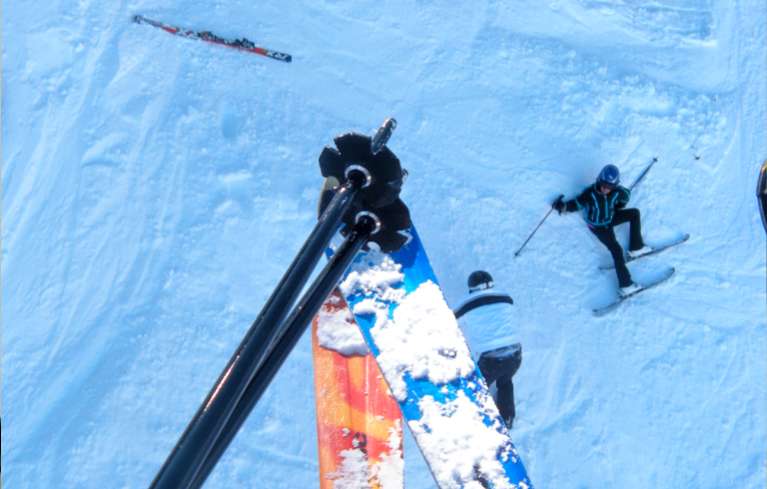
A bill that would for the first time require California ski areas to report all deaths and injuries to the state has been introduced in the state Senate.

California’s 24 ski areas are largely unregulated, making the Golden State the only major ski state with no ski safety law. Previous attempts to enact legislation have failed, but in the wake of an NBC4 I-Team investigation exposing multiple dangers across the state, one lawmaker is trying again.

ski injuries“When there are injuries or deaths, that should be a matter of public record,” said state Sen. Bill Monning, of Carmel, who sponsored the Ski Safety Bill.

In early February, the NBC4 I-Team revealed that there are numerous injuries and deaths at California ski areas that are not required to be reported to the state or made public, including an accident involving 9-year-old Keely Proctor of Redlands.

Two years ago, Proctor fell 32 feet from a chairlift at Snow Valley that didn’t have safety bars. Keely had six surgeries in five days that saved her life.

“We could’ve lost her,” Keely’s mother Terri Proctor told NBC4.

The California Ski and Snowboard Safety Organization, a group advocating ski area safety, said there are hundreds of unreported accidents a year on the state’s ski slopes.

Monning’s bill would also require ski areas to prepare an annual safety plan to prevent accidents and lessen hazards on the slopes. Resorts would have to post that safety plan on their websites.

“It’s really a question of transparency and the public’s right to know. People are spending a lot of money to enjoy the resorts,” Monning said.

The Ski Safety Bill will be heard in committee within 30 days. If it passes both houses of the legislature, it will land on Gov. Jerry Brown’s desk in September. But that doesn’t assure its success.

Similar ski safety bills have passed the legislature twice in the past four years, but then were vetoed by governors, first by Arnold Schwarzenegger then by Jerry Brown.


El Dorado County mid-year budget beats forecast

El Dorado County’s financial situation is looking the best it has in years.

In a presentation Feb. 25 by Chief Budget Officer Laura Schwartz to the Board of Supervisors it was revealed the current projections are that the general fund revenues will exceed budget by 1 percent for a total of $223,322,518.

edcGeneral fund expenses are projected at $212,526,135, or 96 percent of what was budgeted.

The mid-year budget projection also maintains a $9 million reserve for economic uncertainties.

“We are looking pretty good in the current fiscal year,” Schwartz told the board at the special budget workshop. “But we still need to continue spending conservatively and investing wisely in order to manage out-year shortfalls.”

Despite the good news, it’s not all good. The county is still looking at a shortfall of up to $5.3 million for the fiscal year beginning July 1. But at this time top officials are not calling for cuts.

“Our track record suggests that the amount of savings departments achieve at the end of the year is greater than what we are able to forecast at mid-year,” Schwartz said.

— Lake Tahoe News staff report


Shore of Emerald Bay via snowshoes

By Kathryn Reed

EMERALD BAY STATE PARK – While it would have been nice to be able to start a fire at the campsite to warm up a bit, it was even better having the entire campground to ourselves.

As we descended to the shore of Emerald Bay, we were walking through a blizzard. Not everyone realized the bay was to our left as we snowshoed down. The visibility was that poor on Saturday.

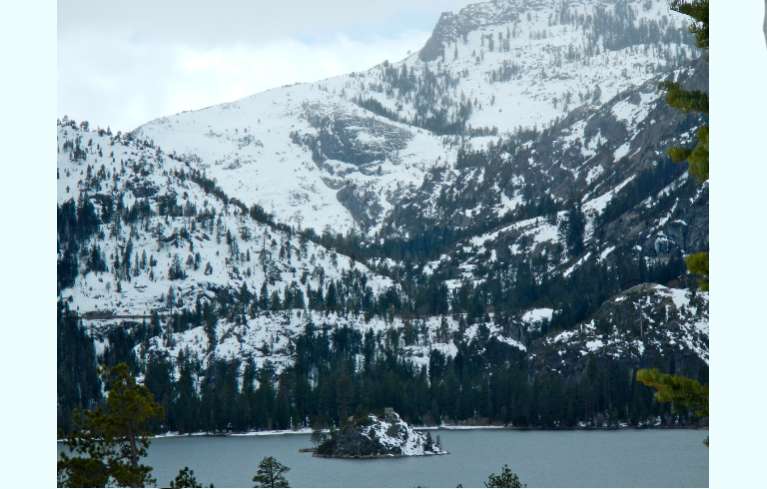
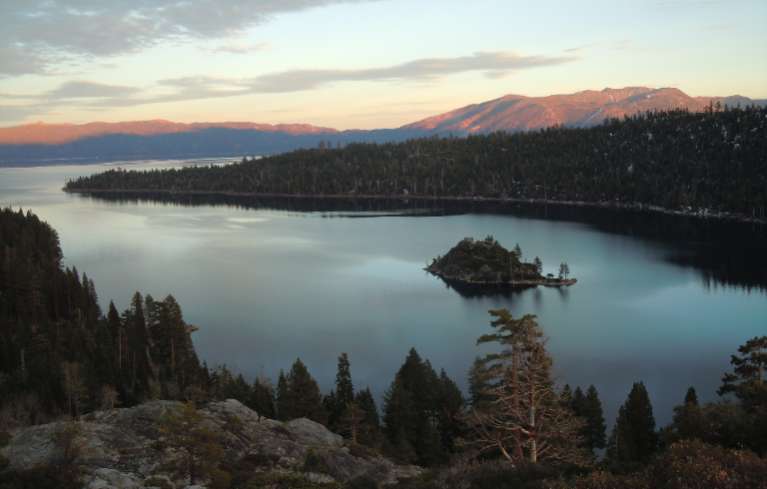
Emerald Bay from Eagle Point Campground. Photos/Kathryn Reed

Emerald Bay on Feb. 23 from Eagle Point Campground. Photos/Kathryn Reed

Freshies were gradually accumulating on the already snow-laden picnic tables in Eagle Point Campground.

(When we got back to South Lake Tahoe that afternoon there was no evidence it had snowed there.)

Trekking through this 100-spot campground on snowshoes is ideal. Seldom is anyone else there. The solitude and tranquility are abundant. But it’s the scenery that will give you pause and reason to take a camera.

Pines and cedar loom tall. Only the crunching of snowshoes can be heard.

Early on there is an opportunity to hook up with the Rubicon Trail. We go to the right, the opposite direction. Mostly we follow the snow-covered road. At one point we meander off to get a view of the water below.

And then when we do reach the bottommost campsite, we break trail to reach the bay.

There, the water laps against the rocks. Icicles have formed on some of the vegetation. On the far side of Lake Tahoe blue sky is peaking out. A couple boats ply the water.

Looking around, it is easy to understand why in 1969 Emerald Bay was designated a National Natural Landmark. This campground is part of the larger Emerald Bay State Park, which includes the whole bay and Vikingsholm. The state acquired the land in 1953 from Placerville lumberman Harvey West for half the amount of what it was appraised at. (The campground was closed last season for upgrades.)

The only thing that could have made the excursion better was if an eagle had soared overhead.

—-

Getting there:

From South Lake Tahoe, take Highway 89 north. Once you go through all the hairpin turns and are about to get on the stretch where Cascade Lake is on the left and Emerald Bay is on the right, the campground is on the right. Without snow, there is ample parking off the road.

ngg_shortcode_0_placeholder (Click on photos to enlarge.)


California prosecutors launch criminal inquiry into parks ‘hidden funds’

By Kevin Yamamura, Sacramento Bee

The state attorney general’s office has launched a criminal investigation of California parks officials after the “hidden funds” case seemingly reached a dead end when state and local prosecutors did not pursue charges last month.

Peter Southworth, a supervising deputy at the attorney general’s office, disclosed to a joint legislative committee Wednesday the matter is “still under criminal review in my office.” He did not specify how long the inquiry would take.

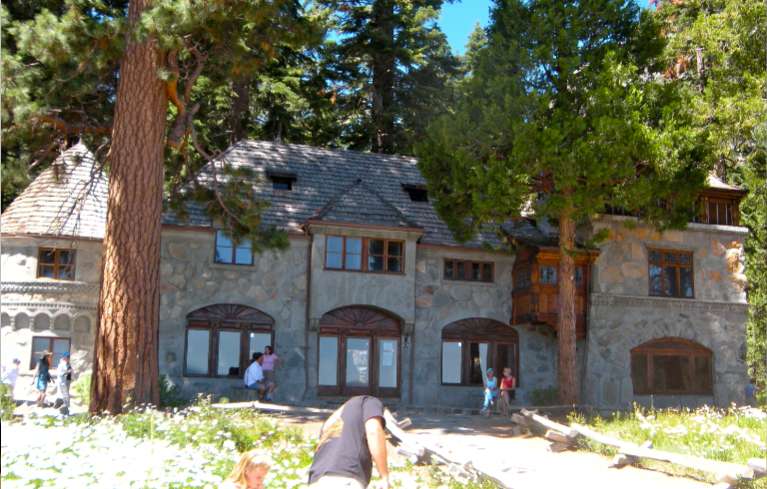
Vikingsholm at Emerald Bay State Park at Lake Tahoe. Photo/LTN file

Vikingsholm at Emerald Bay State Park at Lake Tahoe. Photo/LTN file

Three state agencies have found that California Department of Parks and Recreation officials hid funds for at least 13 years from state lawmakers and the Department of Finance. The Bee reported last year the parks department had cloaked a surplus beyond $20 million while Gov. Jerry Brown and lawmakers threatened to close 70 parks.

The revelations resulted in the resignation of state parks director Ruth Coleman and other disciplinary actions in the department last year.

Attorney General Kamala Harris’ office conducted a review that found “conscious and deliberate” acts to hide state parks fee revenue. It then transferred the file to Sacramento County District Attorney Jan Scully for review.

But the state office did not send the most damaging interview transcripts because it questioned employees using administrative, rather than criminal, procedures. The state office also did not identify who was to blame nor which laws were potentially broken.

Scully last month questioned why Harris had sent the case to her, saying that the attorney general’s office has “historic authority in the prosecution … of such cases.” The criminal pursuit was believed to be over at that point.

But Lynda Gledhill, spokeswoman for Harris, said her office decided to open a criminal investigation shortly after Scully declined to pursue charges, unbeknown to most until Southworth’s legislative testimony.

One curiosity in the state parks controversy is why department officials hid millions of dollars when they needed the Legislature’s approval to spend the funds.

State Auditor Elaine Howle in hearings this week referred to the hidden surplus as a “useless reserve” because parks officials in theory couldn’t spend the money without telling lawmakers of its existence. But that left some lawmakers unsatisfied.

“I can’t get my head around the nature of this,” said Assemblyman Bob Blumenfield, D-Woodland Hills, chairman of the Assembly Budget Committee, asking later Wednesday whether “sheer stupidity” was to blame. If officials couldn’t spend the money, Blumenfield wondered, what was their motive for willfully hiding the funds?

Howle acknowledged that after writing her 60-page audit last week, she and her colleagues were also scratching their heads.

But Howle later offered a credible, albeit complicated, hypothesis: The Legislature authorizes the parks department to spend a certain amount of self-generated fee revenue each year.

If the parks department had a down year for fee collection – say, receiving $15 million instead of $20 million that the Legislature projected – it’s possible the department could have tapped $5 million out of the hidden funds. The Legislature would have already given its approval for $20 million, so the department could spend the hidden $5 million rather than face cuts.

Howle said her office plans to further explore this possibility in the coming months.


Lack of approved software prevents Nevada from offering online poker

By Cy Ryan, Las Vegas Sun

CARSON CITY — Even though the Legislature rushed through a bill on Internet poker Thursday, the state has yet to approve the software to allow the game to be offered to the public.

The Assembly and the Senate gave unanimous approval to the emergency measure, and Gov. Brian Sandoval held a quick signing ceremony.

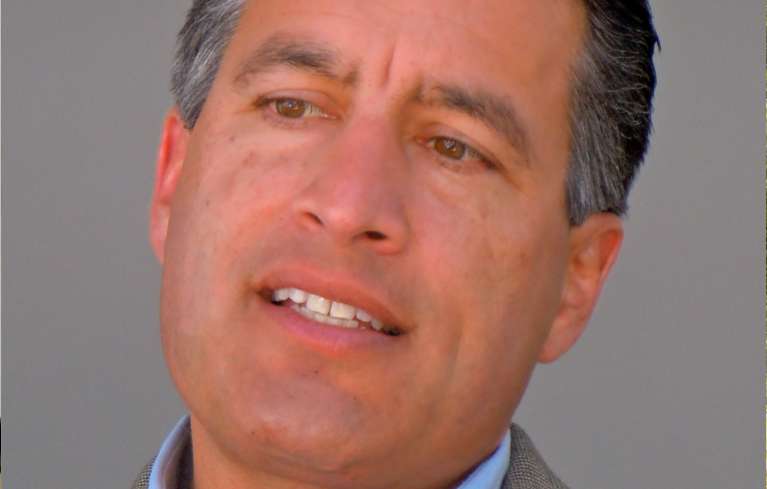
Gov. Brian Sandoval signed Internet poker legislation last week. Photo/LTN file

Gov. Brian Sandoval signed Internet poker legislation last week. Photo/LTN file

But A.G. Burnett, chairman of the Nevada Gaming Control Board, said Friday the computer systems to put the game online are still being tested.

“We have to certify that the software meets state standards,” Burnett said. “The technicians are moving full steam ahead.”

He had no estimate when the first system would be approved.

The state Gaming Commission has issued licenses to nine operators to enter the online poker market. The 2011 Legislature opened the door for companies to offer Internet poker within Nevada.

The bill approved Thursday allows Nevada to sign agreements with other states to offer Internet poker.

Sandoval asked the Legislature to approve the bill within 30 days of the start of the session so Nevada could be the first to enter the field. New Jersey is considering a similar bill.

Sandoval said the bill would “usher in the next frontier of gaming in Nevada. This bill is critical to our state’s economy and ensures that we will continue to be the gold standard of gaming regulation.”

A bill in Congress to permit Internet gambling on a national level has been bottled up.


Land trust assists Tahoe residents with affordable housing

By Kathryn Reed

A desire to do something for his community.

That is how the now 10-year-old St. Joseph Community Land Trust came into being. Lyn Barnett learned about land trusts at a planning convention in 2001. He was convinced during a lecture that a land trust is what Tahoe needed.

“A lot of long-term renters were asking for help because people were turning rentals into vacation rentals,” Barnett said.

trust photoAt the time Barnett was working for the Tahoe Regional Planning Agency. Patrick Conway was the housing coordinator for South Lake Tahoe. Together they researched land trusts to figure out how best to form the local one. At the time there were about 100 in the United States, mostly on the East Coast. Now there are close to three times that number.

Creating a land trust to serve both sides of the state line made it the first bistate trust. It is also faith based, which is not unusual for trusts. Barnett has long been affiliated with the Catholic Church. One benefit for the group is the free office space at St. Theresa Church.

But when it comes to who is on the board, who is helped or who may donate, religion is not part of the equation.

“Our mission is primarily housing, but also housing education, and education that helps people with basic skills in financing to help their overall knowledge to better themselves,” Barnett told Lake Tahoe News. “Our primary goal is to help low and moderate income people, but also the general public through education training.”

(See note below about financial workshop.)

The land trust is the majority owner of Sierra Garden Apartments in South Lake Tahoe. The 76-unit complex is all affordable housing. No one has to pay more than 30 percent of his or her income.

Barnett said there is a four-year waiting list for the one-bedroom apartments, and a two- to three-year wait for the two-bedroom units.

Residents are able to serve on the six-member board of the trust.

Barnett’s measure of success for the land trust will be when a majority of the board members are residents. Now one of the six is a resident. He wants the people to have more of say in what goes on with their living quarters.

St. Joseph Land Trust also built a house on Tallac Street about four blocks from Lake Tahoe. The group was the first to do so under TRPA’s moderate housing guidelines.

It was then sold to someone who fit the economic guidelines. The trust owns the land it’s built on. The house must always be sold to someone who meets the moderate-income qualifications.

“The general perception is that the housing market is affordable. But it’s not to locals. And we also have depressed wages,” Barnett said. “Incline is high on our target list. They really see need up there.”

But he said it’s hard to convince businesses that it is good for them to have workers live locally. So they don’t give to the land trust, which could help provide affordable housing.

“In the future I would like to see more partnerships. If the economy is truly indeed improving, people need to know we exist and we can potentially help with their housing needs,” Barnett said.

Working with the local chapter of Habitat for Humanity is a possibility. They could do the rehab work on a fixer up that the trust would buy and then sell to a qualified moderate-income buyer.

A summer workshop geared toward seniors to teach them how not to be a victim of fraud has been talked about.

More information about St. Joseph Land Trust may be found online.

Note:

The free financial education workshop at Lake Tahoe Community College is Feb. 25 from 6-8pm. The focus will be on financial goal setting, budgeting, money savings tips, and basic bank accounts. The speaker is from Wells Fargo Bank.

RSVP to (530) 541.4660, ext. 741 or email Alee@ltcc.edu. Space is limited. The event is in Room G4. St. Joseph Community Land Trust and LTCC’s Student Support Services are sponsoring the event.


Brown wants local control for school districts

By Sharon Noguchi, San Jose Mercury News

Jerry Brown is pushing an appealing idea: Local control for local schools.

Bucking a national trend, the governor wants to back the state away from making schools account for their spending and for punishing them if their students lag in achievement.

But, perhaps surprisingly, school officials aren’t jumping up and down about the proposal.

Gov. Jerry Brown wants to revamp education in California. Photo/LTN file

Elsewhere, education is becoming more results-driven, with everyone from Uncle Sam down to the smallest startup charter school demanding more and more evidence, usually through test scores, that they’re getting enough bang for their buck.

The governor wants none of that — but it’s unlikely he will get his way and free schools entirely from state oversight. Brown is proposing that school districts tie their plans for student achievement to their budgets. The 58 county offices of education would have the responsibility of approving those plans.

“A central authority should only perform those tasks which cannot be performed at a more immediate or local level,” Brown said in his State of the State address.

“We are moving more authority, accountability and responsibility down to the local level,” said H.D. Palmer, spokesman for the state Department of Finance.

The governor would free schools from line-item reviews in Sacramento over how they spent specific pots of money, and wants the state not to punish schools whose students are failing. Instead, Brown puts his faith in the power of the people — to turn local school board members out of office if their schools don’t perform.

Many school officials like the possibility of reducing accounting and paperwork.

“I really appreciate that,” said Scott Laurence, superintendent of the San Mateo Union High School District. He’d like more leeway in using funds in ways the district determines best serves students.

But he worries that without specific state demands, schools won’t always pay as much attention as they should to various student needs.

In fact, Brown’s proposal sounds like it would take schools back 70 years, when local districts answered only to themselves and their voters. What prompted the state legislators to create 60-odd educational programs — focusing on migrant children, gifted and talented students, English-language learners, arts, counseling and more — was that schools weren’t meeting perceived needs.

“They have forced school districts to pay attention to groups of students that haven’t been a major emphasis for school districts,” Laurence said.

What’s more, the state Supreme Court has ruled that the state has a constitutional obligation to ensure that all students have basic equality of opportunity in education. “That’s a non-delegable role,” said John Affeldt, managing attorney of Public Advocates, a public-interest law firm that has sued the state on various school-equity issues.

That said, Affeldt too thinks the state is overly focused on specific kinds of achievement. “I think the pendulum probably has swung too far to narrow the whole focus of our educational venture around performance.”

And while he advocates pushing the pendulum back, he said, “we can’t swing it all the way back to the 1950s.”

Brown may not want to tell districts how to spend money, but state legislators could have other ideas. “The Legislature has never shown any evidence they believe in local control,” said Ron Bennett, president of School Services Inc., which advises most of the 1,000 school districts in the state on state education finance and law.

But whatever Sacramento decides, it will retain the role of enforcer of the federal No Child Left Behind Act, which demands that schools receiving federal aid attain minimal levels of proficiency. The state jumps in with advisers and money — up to $100,000 per school — when districts have large numbers of failing students. Nearly half of California’s 1,000 school districts fall into that category, called “program improvement” by the federal government.

Even as school officials concede that it is cumbersome to answer to higher authorities, they point out that student achievement has steadily grown in the decade since the state beefed up its academic oversight. In addition, a laissez-faire accountability system could make comparisons among school districts tricky.

If each district chooses how it wants to look at accountability, said Mike Nebesnick, director of educational accountability for San Jose Unified, “I don’t think they’re going to be lined up.”

Brown stands behind the principle of “subsidiarity,” which he said is violated “when distant authorities prescribe in minute detail what is taught, how it is taught and how it is to be measured.”

But as much as educators may like flexibility, they worry mostly about funding. Californians have to demand an increase in per-pupil funding, said Wesley Smith, superintendent of the Morgan Hill Unified School District. “We are still 48 out of 50 in per-pupil funding. California students deserve more.”


California making provisions if Nevada leaves TRPA Compact

By Kathryn Reed

Two California state senators introduced a bill on Friday that would bring changes to the Tahoe Regional Planning Agency.

SB630 amends a series of sections of government code relating to the California Tahoe Regional Planning Agency. The bill is authored by state Sens. Fran Pavley, D-Agoura Hills, and Darrell Steinberg, D-Sacramento.

California is working on protecting its assets at Lake Tahoe. Photo/LTN file

California is working on protecting its assets at Lake Tahoe. Photo/LTN file

It asks that the TRPA Regional Plan adopted in December be recognized.

The bill talks about California needing a contingency plan if Nevada goes forward with the provisions in its Senate Bill 271 which calls for the Silver State to withdraw from the bistate Compact in 2015. SB271 was passed two years ago when it looked like the Regional Plan might not get adopted and was at a time when the states were not playing nice.

Since then, officials from both state governments helped create a bridge to compromise that led to the near unanimous adoption of the Regional Plan more than two months ago.

There has been talk among Nevada legislators to repeal that bill in the current session. But the Sierra Club and Friends of the West Shore lawsuit to prevent the Regional Plan from taking effect could play a role in what Nevada does.

The California law introduced Feb. 22 says, “For California to have due time to protect its many interests in the Tahoe basin, the state will need to have a contingency plan in place prior to the dissolution of the bistate Compact, as contemplated by Senate Bill 271.”

It goes on to say, “The bill would revise the membership of the governing body of the agency to eliminate the existing five members of the governing body, and prescribe requirements for the appointment of a new nine-member governing board. The bill would also revise the composition of a technical advisory committee required to be appointed by the agency, and would request the participation of a representative of the governing board of the Nevada Tahoe Regional Planning Agency. The bill would eliminate a provision authorizing the governing body of the agency to contract with the Tahoe Regional Planning Agency for services.”

If Nevada rescinds SB271 and remains part of the Compact that the federal government established more than 40 years ago, then SB630 would likely not go forward.


Ritz in Beaver Creek — a world of luxurious comfort

By Susan Wood

BEAVER CREEK – After two hours of chatter hearing “turn,” “exit” and “continue” in the car from Denver, the GPS chimed: “You’ve arrived.”

Upon pulling into the circular driveway of the Ritz-Carlton, Bachelor Gulch, the navigation device couldn’t have been more sound in judgment. So, this is how the 1 percent lives.

In its chain of 32 luxury hotels, this Ritz-Carlton located at 8,300 feet and 20 minutes west of Vail on the mountain of Beaver Creek Resort has just captured a gold badge honor as one of the best hotels in the United States, according to U.S. News and World Report — and for good reason.

Ritz-Carlton, Bachelor Gulch has no problem catering to guests. Photos/Kathryn Reed

The attention to detail, and more specifically to the guest, is unparalleled.

The on-mountain hotel displays that ideal balance of mixing into its national forest surroundings and providing a look of elegance. A stroll into the “Great Room,” i.e. the comfy lounge area that splits Spago’s fine dining room and the Buffalo Bar’s casual fare, makes it obvious this luxury mountain getaway was modeled after some of the great park lodges of our time. Think the Old Faithful Inn in Yellowstone National Park and the Ahwahnee Hotel in Yosemite. Even the grand, three-story stone fireplace that’s the centerpiece of the Great Room may rival the one at the Ahwahnee’s – a hard feat to pull off.

Massive timber logs notched to forge giant beams and broad gables provide a perfect backdrop when guests decide to relax and read in the cozy chairs surrounding the fireplace and large picture windows. One night, a man was comfortable enough to fall asleep in a chair right in front of the fireplace despite a sizable after-dinner crowd.

Ordinarily, this hotel is definitely a place for those who want to be isolated. Outside, there’s no village. There’s no town. In back, there’s live music and yet another comfortable seating area around a large fire pit and heat lamps as well as picnic tables next to Daniel’s outside bar. This is where bartender Devon Pierce will serve up his own “Red Twist” made with Malibu red rum, coconut liqueur and Sprite – all with a smile. Pierce likes his job and it shows.

“This is the best job here,” he said.

Also rounding out the offering on the big patio is an afternoon Champagne station, a heated pool and three hot tubs – oh, and yes, a chairlift steps away from the hotel that whisks skiers up on the slopes of Beaver Creek, where the impeccable and exclusive customer service continues.

The Bachelor Gulch section of Beaver Creek Resort is quiet and seems private. Even on a powder day, one might be the only skier on the run while others pack the busy part of the Colorado ski area. It’s a wilderness experience swishing through the aspen trees, private residences and resort cabins that dot the landscape.

Bachelor Gulch was named for seven bachelors who settled in the area alongside the Ute Indians for prospecting purposes in the 1900s. They stayed for farming and ranching. (Note: the Trapper’s Cabin hosted “The Bachelor” television show a few years ago.)

Today, skiers and boarders riding Beaver Creek and staying at the Ritz notice the level of service upon every turn. On a ski day, it starts by trading room slippers for ski boots at the Ritz ski valet and having a worker insist on carrying the skis and poles up to the lift line. Now, that’s a true ski-in, ski-out experience – whether for a hotel guest, fractional timeshare participant or whole owner.

Chris Gerlach and his companion from St. Louis, who were riding the Beaver Creek shuttle bus after a food and wine event, liked the Ritz fractional timeshare experience so much he bought a house in the Bachelor Gulch neighborhood.

“I’d go home and not know what to do. There was no one there to say ‘my pleasure,’ every minute,” he quipped about the Ritz guest services.

And to think, this luxury hotel that claims to go to “heaven and Earth and back” to answer the whims of its guests, admits to having room for improvement.

After 10 years as of last November, Beaver Creek’s only AAA-rated 5-diamond resort is set in April to undergo a $15 million remodel that’s designed to improve the guest experience.

“The enhancement plans will add a renewed sense of energy to this iconic resort,” Ritz-Carlton Bachelor Gulch General Manager Abdullah Vural said in a statement.

Spokeswoman Jen Winkeller told Lake Tahoe News the update would provide “a contemporary perspective to the existing rugged décor while preserving the Ritz-Carlton elegance and comfort.”

For starters, linens in the guest rooms as well as furniture, paintings and other decorative items will be updated. Even without feeling they need upgrading, food and beverage outlets will get a makeover as well.

For now, in-room dining has an extensive list of burgers – from bison and lean elk to vegan and gluten free. On the lobby level, Peet’s coffeehouse provides casual drinks and snacks. The Buffalo sports bar offers middle-of-the-road entrees and appetizers. (Recommended: two people may gnaw on the nachos for two meals.) For fine dining, Spago’s fun Jersey-cow seats at its restaurant and bar are almost as recognizable as its famous chef, Wolfgang Puck – who pops in on occasion to check on staff or for special events. (Recommended: at the bar, the Perfect Martini is off-the-charts refreshing with its mix of Absolut Pears Vodka, pear puree and fresh lime juice.)

And eating and drinking isn’t the only way to unwind here after a full or half day on the slopes.

The Ritz-Carlton, Bachelor Gulch comes with a 21,000-square-foot spa and fitness center featuring 19 treatment rooms surrounding a rock-lined grotto designed to emulate the mines of the 1900s that mark the area’s history. The grotto has a large hot tub filled with salt water from a free-flowing waterfall to place sore shoulder and back muscles under. Between the soothing hot water, comfortable seating and dim lighting, it’s easy to fall asleep and lose track of time. That’s why the outside hot tubs provide a refreshing option for those who relish the 10-degree night air in their faces.

Before settling into a guest room, the spa’s steam room and sauna allow for a warm-to-the-bones, melt-into-the-night way of tucking in for the evening.

The 180 guest rooms, divided by their offerings of a valley or mountain view and gas fireplace and/or balcony, have some nice touches without overstating its wooden mountain decor. The fridge is stocked every day with free Colorado-brewed beers and fresh water. Wander from the oversized bathtub or glass-lined shower in a soft, cushy robe and you may never want to leave the room.

But when deciding to meander through the Ritz, guests never know what may come their way. Staffers stand sincere and ready to accommodate. Chestnuts roasting on the fire are handed out one night, mulling wine on another night. (Note: if not for attending Beaver Creek’s recent Food and Wine Festival where wine poured day and night, I would have sampled the latter.)

A guest can even order what time housekeeping shows up, as I discovered upon checking out. The request can be “put in your file,” front desk staffer Jacki Smith indicated. Smith added how the hotel undergoes changes to improve the guest experience. These include reorganizations to keep the chain solvent, as in the Bachelor Gulch hotel’s foreclosure deal.

Nowadays, that’s a part of the hospitality world. (Note: The Ritz-Carlton, Lake Tahoe underwent the same type of restructuring at about the same time.)

In the meantime, staffers have come to embrace the Ritz lifestyle nearly as much as the guests.

Tim Rowland may argue with Pierce that he has the best job.

Rowland, who operates the hotel shuttle vehicle, has double duty as a caretaker for one of the Ritz’s mascot dogs, a St. Bernard named Bachelor. (An ice sculpture of the canine greets guests at the front door.) Bachelor greets guests in person at 11am and 3pm. He’s groomed twice a month for the job and racks up “an expensive food bill,” Rowland noted.

“It’s a good company to work for. They train you well and there are a lot of perks,” he said, while driving us to Vail to ski one morning.

What’s his favorite perk?

“The hotel discounts,” he said.

Guests may say the same thing this year to mark the hotel’s 10th season. Through March, the Ritz is offering its Ritz Kids recreation program for $10 an hour. Also for 10 bucks, guests may get a fourth night when they stay for three on the 10th anniversary package deal. There’s also a $10 apres ski menu at the Buffalo Bar from 3-5pm, and late-night dinner specials at that price after 10pm.

Otherwise, guests coming to stay after March 31 may need to pull out their wallets. After all, it’s the Ritz-Carlton.

ngg_shortcode_1_placeholder Click on photos to enlarge.