‘Tonight thank God it’s them instead of you’

By Kathryn Reed

“At Christmastime it’s hard, but when you’re having fun

There’s a world outside your window
And it’s a world of dread and fear

Where the only water flowing
Is the bitter sting of tears
And the Christmas bells that ring there are the clanging chimes of doom
Well tonight thank God it’s them instead of you ….”

The lyrics from “Do they know it’s Christmas” is about Africa, but it might as well be Lake Tahoe.

For some on the South Shore, the material riches of Christmas are only something to dream about.

For Rich Barkley, he woke up this morning outside. That’s where he lives. For Laurie, she was in a chilly trailer, unable to afford any decorations, and without her teen-age daughter who is in foster care.

Thousands of people are in the Lake Tahoe Basin now – vacationing, spending a holiday in one of the most beautiful places in the world. And, yet, for so many who call this place home, it is less than idyllic.

According to the U.S. Department of Housing and Urban Development, nearly 554,000 people across the country are homeless. The South Shore is part of that equation.

Barkley and Laurie share having income insecurity. He has a job, but no home. She has a home, but no job. It’s a precarious situation for both.

Poverty with a view – Lake Tahoe’s longtime moniker – is getting more real for more people almost on a daily basis.
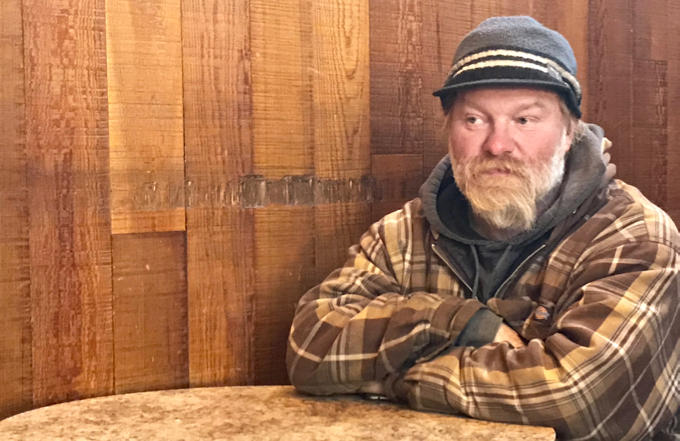
Even though it has been below freezing every night for weeks, Rich Barkley lives in the woods in Stateline. Photo/Kathryn Reed

Finding his way in Lake Tahoe

Barkley was in Lakeside Inn at Stateline on Thursday, trying desperately not to fall asleep. They don’t take kindly to vagrants using their establishment as a warm room, so to speak.

“Lakeside doesn’t give me crap if I’m not sleeping,” he says. It’s a place to hang when he has nowhere else to be and the daytime high is hovering at freezing.

While the hotel-casino doesn’t have a homeless policy per se, it doesn’t tolerate loitering.

“Anyone who makes our guests uncomfortable is asked to leave,” Stacy Noyes with Lakeside told Lake Tahoe News.

Barkley lives in the woods not far from the casino. His two sleeping bags keep him warm, though there are nights he has sought out public places to give him a little shelter, a little break from the bone-chilling wind.

Snow he can handle. It’s the rain, when everything is soaked that makes life difficult. It is impossible to get warm. He insists he doesn’t start fires.

Barkley packs his stuff up every day, putting it in a garbage bag and then placing it in a ditch. He doesn’t want the little that he has to be stolen or thrown away.

He carries a small backpack with him. Some of what he has is how he is able to eat. He’s a harmonica player with a fairly regular gig at Base Camp Pizza in Heavenly Village. Owner Ted Kennedy gives him food credit for his playing.

“We helped him because he’s a friend. The Bible calls on us to do that. In fact, Christ said, you guys didn’t feed or shelter me when I needed it. The folks said – wait, we never saw you hungry. Christ said when you didn’t do those things for the most needy among you, then you didn’t do it for me,” Kennedy told Lake Tahoe News. “Rich is also a hell of a harmonica player and we love his music.”

Barkley has seven harmonicas; using them to join other musicians who are at the restaurant.

Barkley has been in the area for more than seven years, having come from San Diego. Like so many who call Lake Tahoe home, he saw that lake in pictures and wanted to be here. It’s what keeps him here.

He secured a seasonal job right away at Kirkwood Mountain Resort. At Heavenly Mountain Resort he’s taught skiing, at various hotels he has done maintenance. Today he is working at the snowplay area across from MontBleu.

He doesn’t explain what happened to his vehicle. He doesn’t explain why it’s been so hard to keep a traditional roof over his head. He’s had roommates, even places to himself. He admits he doesn’t like living with other people. Friends let him stay on occasion, or just come in to shower. He does work for them in exchange. The recreation center in South Lake Tahoe is a place to get clean as well.

Barkley won’t use the warm room, saying he can fend for himself.

Hanging out at the South Lake Tahoe Library is common, as it is for others who are homeless. It’s easier to get to compared to the library in Zephyr Cove.

“I actually enjoy not being in a fixed location,” he said.

What Barkley would really like is to save money for an old truck to fill it with tools so he could drive around fixing things for people. An RV would do, too, so then he has that roof.

“My goal is to save money to get my electrician’s license,” he tells Lake Tahoe News in between bites of a hot meal at Lakeside.
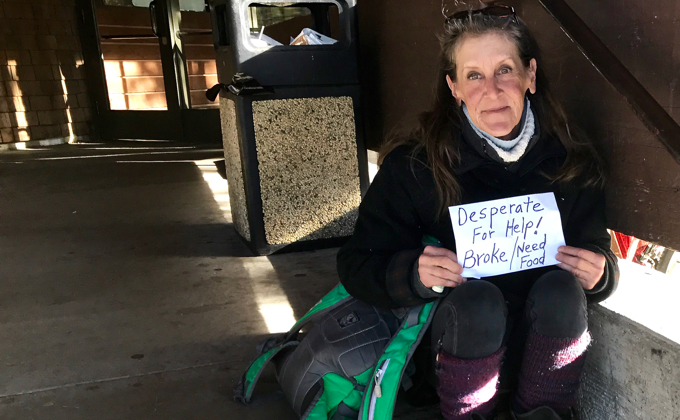
Health issues keep Laurie from having steady work; begging puts food on the table and heats her trailer. Photo/Kathryn Reed

A life of uncertainty

Laurie is a bit of a fixture at the main post in South Lake Tahoe where she sits on the steps with a sign saying she needs work. On this particular day her quest is to collect $25 from strangers so she can fill her propane tank. This will last five to seven days.

She’ been begging there on and off since 2014.

She doesn’t want her last name used because of legal reasons. When her daughter was with her, she was getting welfare checks. While her daughter is still in her life, she isn’t living with her. It was illegal to keep the money even though some of the money was spent on the 17-year-old. Laurie is willing to pay the money back, but the payments have to work for her.

Her court date is set for late January.

“I can’t be locked up. I wouldn’t have this trailer,” Laurie tells Lake Tahoe News through tears.

While this felony lingers, it’s makes getting a job difficult.

Health issues are what led her to unemployment. She said she’s been diagnosed with Crohn’s disease, which she said is not on the list of maladies to trigger disability.

Calling in sick one too many times forced her to lose her jobs at Jamba Juice and Doc’s Cottages.

She doesn’t like to beg, but doesn’t know what else to do. A regular job is hard to commit to. And right now a bike is her main means of transportation.

“There are some angels out there and some haters,” she says of the people she encounters. Laurie says she is the example where drugs, alcohol and mental health issues are not the cause of her problems.

She’s had an array of jobs – clerical, retail, cleaning, even topless dancing. Laurie says she wants to work.

A friend may be giving the 59-year-old a car after the first of the year so then she could work for a cleaning agency that said it would hire her.

Her daughter’s father has never been part of her life. The South Tahoe High School senior is living with a friend and her mom. She has plans to go to college, with the hopes of going into the medical profession.

“Her happiness is the reason I breath every day,” Laurie says of her daughter. They see each other nearly every day.

On Friday they celebrated Christmas with a few gifts exchanged.

Laurie has been in Tahoe for 25 years. Her illness has been part of her life since her daughter was 5. It’s been a struggle ever since, with living conditions for the two of them that have included hotel rooms and a shed.

Sitting in Laurie’s trailer near the Y it’s cold even with a jacket on. It’s never more than 65 degrees inside. Blankets cover the windows. A picture of her daughter is on the table, one of the few items that makes it look like a home rather than an ordinary travel trailer.

Laurie has been at this location since the summer. She does work for the landlord in exchange for the trailer.

She is able to get food at Bread & Broth once a week, and when she’s able to transport the goods Christmas Cheer is also a resource.

“Cash goes to things I run out of – propane, soap, laundry detergent,” Laurie said. “Asking for help is really hard.”



Road salt still used, despite negative impacts

Brine leaves streaks on the road at the end of North Upper Truckee Road toward Highway 50. Photo/John Adamski

By Jamie Summers and Robin Valleau, The Conversation

Marshes, streams and lakes lie alongside many of the roads and highways that zigzag across North America. Plants and animals inhabit these water bodies and can be exposed to many of the substances we put on those roads, including road salt.

Rock salt helps keep roads safe when winter storms hit, reducing winter road accidents. But it can also have serious, negative effects on aquatic ecosystems.

At high concentrations, salt can be fatal to some aquatic animals. Salt can also change the way the water mixes and lead to the formation of salty pockets near the bottom of lakes, creating biological dead zones.

When the weather takes a wintry turn, many cities and municipalities in North America rely on salt to deice their roads. This rock salt is similar to table salt, made up of sodium and chloride, but coarser. It dissolves quickly on the road, leaving the chloride to enter nearby waters through runoff and leaching. In fact, almost all chloride ions from the road salt eventually find their way into waterways downstream.

At low concentrations, chloride is relatively benign but as concentrations rise, it can be toxic to aquatic wildlife, including the plankton and fish that inhabit inland lakes. These ecological changes affect water quality.

In salt water

One study of North American lakes found that as little as one per cent of the land area within 500 meters of the lake had to be paved (or otherwise impervious) for there to be an increased risk of becoming saltier over the long term.

Basically, a little development can lead to a lot of salt entering a water body. About 27 per cent of large lakes in the United States are at least one per cent developed along their shores.

A recent study suggests that salt concentrations in many U.S. lakes will fall outside the bounds necessary for healthy aquatic plants, animals and microorganisms — and for good-tasting drinking water — by 2050.

Canada will likely face the same issues. Depending on the severity of the winter, approximately five million tonnes of road salt are applied annually to Canadian roads. Many municipalities in southern Ontario use more than 100,000 tonnes per year.

Road salt applications in Canada began in the 1950s. To fully understand how these increasing chloride concentrations have affected lake ecosystems, we must look back in time. But there’s little long-term data about these lakes for us to look at.

Instead, we examine past environmental conditions by coring into the lake bottoms and using the information preserved in the lake sediments.

A window into the past

Clay, silt, sand, pollen, chemicals and other substances from the surrounding environment accumulate slowly — and continuously — in layers at the bottom of lakes. That sediment provides a natural archive of past conditions. For example, a layer with a lot of charcoal may indicate increased forest fires in the region.

Scientists use the information preserved in this archive to understand how environmental conditions have changed over long periods of time — from years to centuries.

The Muskoka region of central Ontario — known for its lakes, rivers and cottages — has been applying road salt since the 1950s. The remains of algae and microscopic animals (called zooplankton) contained within the region’s lake sediments show us that changes have occurred in these lakes, coinciding with the onset of road salt applications in the region.

There are more salt-tolerant zooplankton species now than there were before road salt was widely used. The effect of that shift isn’t fully understood. But we do know that when things change at the lower levels of the food web, the effects may be felt through the whole ecosystem.

Consider, for example, a fish that has become adapted to eating one type of zooplankton. If all of a sudden it is replaced by another type — perhaps one that is larger — it may run into trouble.

Chloride can be toxic to zooplankton. At lower concentrations it can have sub-lethal effects — weakening individuals and raising rates of egg mortality. Fish are generally more tolerant to increasing salt concentrations, but the longer they are exposed to high chloride levels, the more toxic it is. Many young fish feed on plankton and if they lose their food source, they will not thrive.

Brine alternatives

Some communities in North America are looking for environmentally safe alternatives to road salt.

Beet wastewater — left over from sugar beet processing — cheese brine, pickle juice and potato juice are some of the unconventional deicers being tested.

The carbohydrates or sugars in beet wastewater make it more effective at lower temperatures than salt water or brine alone, lowering the melting point of the ice to below -20℃ from -10℃ — and reducing the amount of chloride applied to the road.

But there are downsides. Some communities dislike the smell of the beet wastewater, which people have likened to soy sauce, molasses or stale coffee. It also adds sugar to aquatic ecosystems, which may encourage bacterial growth.

Instead of using salt and salt additives, some engineers are experimenting with roads that clear themselves of snow and ice. Early tests have suggested that solar panels could replace asphalt to melt ice and eliminate the need for road salt, by heating water in pipes embedded in the road.

Others are looking for more effective ways to use rock salt — and reduce the amount that enters water ecosystems. A significant portion of rock salt bounces off the road when it’s applied so trucks tend to apply more than necessary. Wetting the pavement and applying brine solutions help the salt adhere to the road, meaning cities and municipalities can cut back on how much they use.

Scientists are also helping to figure out how much salt our lakes can handle, which species are at risk and which lakes are most sensitive to road salt exposure to find a way to keep humans safe on the road and plants and animals safe in our lakes, streams and wetlands.


SLT halfpipe skier Smaine healthy and confident

Kyle Smaine is hoping for a spot on the 2018 Olympic team. Photo/Sarah Brunson/USSA

By Becky Wright, Tahoe Quarterly

Kyle Smaine spent the better part of last season “crutching [his] way through the seemingly endless snowbanks” in his native South Lake Tahoe.

Now, with a surgically repaired anterior cruciate ligament and meniscus, the Sierra-at-Tahoe halfpipe skier feels healthy and motivated to make a run at the 2018 Olympic Winter Games. But with a stacked field of talented U.S. athletes, he knowns it won’t be easy.

“With my injury last January, I haven’t had the luxury of doing any on-snow training leading into this winter. I have spent a ton of time in the gym this summer, as well as taking a step back and working on my mental game and mindset,” Smaine said. “I really feel like I’m heading into this winter as physically strong as I have ever been. I have learned over the years that I ski the best when I’m enjoying myself, so I haven’t really been putting any pressure on myself heading into this winter. I have set goals, and every day I have done what I was able to in order to set myself up for success, but I’m just taking it day by day.”

Read the whole story


Sierra: Come for the skiing, stay for the food

Eric Sorensen is a master at the “pour over” coffee venue at Sierra. Photo/Kathryn Reed

By Susan Wood

TWIN BRIDGES – Sierra-at-Tahoe has lunged to the top of its game as being a foodie destination this winter.

Four years on the job as food and beverage director, Scott Justice has upped his game at the ski resort’s restaurants, small eateries and satellite food stations.

He’s essentially traded the team sports arenas for playing in a team environment at the slopes for a different sport. Justice came from Center Plate, a concessionaire company that furnishes ballparks with stadium and arena food, having traveled from the Cajun country of New Orleans to the East Coast culinary flair of Washington, D.C.

Solstice is focusing on Asian flavors like noodle bowls with ahi. Photo/Kathryn Reed

Justice has revamped or tweaked the menus at Sierra Pub, Mama’s Kitchen, Solstice, Aspen Grill, 360 Smokehouse BBQ, 360 Grab n’ Go, Golden Bear Terrace Grill, Baja Grill, Nacho Mama’s, Treehouse Donuts and Java Junction.

He follows trends, keeps an eye on what works and comes up with the food offerings. He has also hired the right people to prepare, cook and serve the items. Sierra-at-Tahoe has long been revered for its community-minded, “get real” philosophy. Now the real deal is its culinary acumen.

Sierra General Manager John Rice and Pub manager Belen Urrutia talk about elevating the food scene. Photo/Kathryn Reed

“You’ll be excited about what we have,” Pub restaurant manager Belen Urrutia said, whipping out a menu she’s proud to have helped contribute to. That’s the forget-the-hierarchy thing with Sierra. Everyone has a role, and good ideas can come from anywhere. Urrutia’s are far reaching geographically, as she hails from Argentina.

Urrutia is especially enthusiastic about the chimichurri steak sandwich on the Pub menu. This diner can see why. A staple in Argentina, the sauce resembles an explosion of flavor. Surprisingly, it’s simple – parsley, olive oil, cilantro, pepper and salt in the unbelievably tasty concoction. Next to the red meat and provolone cheese and red peppers, it’s a complete meal except one needs to make room for the variety of fries, soup or kettle chips it comes with. (Note: you won’t need to eat for the rest of the day and night.)

The chimichurri steak sandwich is inspired by the Pub manager’s native Argentina. Photo/Kathryn Reed

What makes working with ski food challenging is catering to that balance between providing the common staples expected at the slopes by thousands of guests while dipping into creative territory. It’s also not easy to be efficient and fresh when serving food in bulk. 

“We’re trying to find that sweet spot in volume,” Justice said.

He compliments food supplier Sysco for going out of its way to accommodate the resort, including providing ingredients from the region so it’s as local as possible when appropriate.

Susan Wood cuts into chicken and waffles, a first for her. Photo/Kathryn Reed

With all the rage being sustainable, local food, Justice started receiving his barbecue meat for the 360 Smokehouse at the Grandview Lodge from Sonny’s BBQ in South Lake Tahoe, where the pork simmers for 14 hours.  

As far as the ski area’s target audience, the San Francisco Bay Area still rules as the lake region’s feeder market. From the Bay comes a large Asian demographic seeking a bit of its home cuisine.

That’s why Justice took aim at its latest restaurant on the plaza. Solstice has become enlightened in a big way to serve up dishes that may rival any Asian eatery on the South Shore.

It’s one thing to have a Thai chicken lettuce wrap, it’s quite another to serve up ahi chunks atop of a noodle bowl complemented nicely with green onions and carrots. It’s best served alongside a Banh Mi sandwich served with gulf coast shrimp, teriyaki beef or tofu (intended as a nod to vegetarians) – an exquisite combination national park-traveling cook Nathan Vandenberg said he whipped up in about five minutes. Aiming to further impress, the Solstice staff hopes to add a miso salmon sandwich.

Scott Justice, who is in charge of all food and beverage operations at Sierra, is able to be more creative at a resort that isn’t overly corporate. Photo/Kathryn Reed

Overall, Justice has found the appeal widespread.

“Americans as a whole are getting more adventurous,” he told Lake Tahoe News on tour of the resort’s restaurants.

And the ski area known for its seasoned athletes has expanded its repertoire of seasonings in the kitchen.

“I believe part of the difference (with ski resort food) runs parallel to food service at stadiums,” said Justice, who grew up skiing at the Pocono Mountains in Pennsylvania.

It used to be stadium food’s reputation rested with hot dogs, chicken tenders, pizza, burgers and fries – which all have a place with “a captive audience” associated with sporting events.  

Shrimp and grits represents the Southern flare at Sierra. Photo/Kathryn Reed

“Today, it’s sushi,” he said. “Anything you want is there. We’re fortunate enough to see that progression.”

Justice would even like to expand into North African flavors in his offerings and beef up the Indian cuisine in the near future.

“Those spices are so different,” he said.

Beyond the flavor, much can be said for style at the Baja Grill. Also in respect to the Bay Area, Justice’s team will summon the Mission-style burrito named after the renowned Mexican food district in The City.

The snow beach outpost at the West Bowl section is extremely popular with the afternoon crowd. Also from the west side, street tacos will round out the menu there by transporting a hungry patron to Mexico. For veggie lovers, Sierra has added a chili relleno burrito there.

Old standbys like chicken tenders and burgers, albeit the latter is grass fed, are still available at Sierra. Photo/Kathryn Reed

Carnivores can order Mama’s mainstay item at the base to start the day – the breakfast “bro-rito,” which is heavy with carnitas, scrambled eggs, shredded cheese and tater tots wrapped in a tortilla. The all-in-one meal satisfies the no-plate-necessary guest – another trend Justice has noticed.

Justice’s staff has even brought a new flair to the mysteriously popular chicken and waffles dish at Mama’s. The fried chicken, albeit doused with syrup, comes with a slightly healthy hint of kale slaw.

For other breakfast offerings, the shrimp and grits will take your taste buds away as a unique, New Orleans-inspired dish that will prompt anyone to give up cereal and oatmeal.  

Even the presentation matches, if not exceeds, most lake-level restaurants.

“Presentation is all a part of the food. People eat with their eyes,” Justice said.

Indeed, this foodie who admits to cooking at home is a visionary and passes that on to the 120 employees he manages. The team at Mama’s on the first floor of the main lodge is usually teeming and bustling with skiers and boarders trying to prepare and fill up for a hardy day on the slopes.  

“Teamwork – you can accomplish so much firing on all cylinders,” he said.

Most of the food venues are at the base area, giving those who are not skiing or snowboarding an opportunity to eat well, too. Dishes are reasonably priced, and portions ample.

Craft beer is what most people choose to drink at Sierra. Photo/Kathryn Reed

The beverage brigade

Sierra’s servings don’t just translate to the food. Pairing food with a beverage is all part of the experience.

Forget your grandmother’s Folgers. Skiers and boarders can jumpstart the day with a “pour over” coffee blend handcrafted by barista Eric Sorensen. Just smell the Ethiopia Harrar Golecha Natural eight feet away, and your taste buds will want to follow.

Even coffee addicts who junk up their mugs won’t want to do that. Drinking it black helps to pick up the mere hints of blueberry.

At the Sierra Pub by midday, it’s hard to find a barstool empty on a busy ski day – with riders lined up for rounds of craft beers.

By the end of the day, even visitors streaming into Tahoe up Highway 50 may want to stop in to get a box dinner for those seeking convenience before landing in town. Sierra understands this and aims to accommodate that at Solstice. Bottles of wine with the Sierra label are available, too — a Zinfandel blend resort staff made with the help of Madroña Vineyards.


Nevada lawmakers eyeing traffic law reforms

By James DeHaven, Reno Gazette-Journal

Nevada leaders looking to decriminalize traffic tickets are hoping the third time’s the charm.

Fierce resistance from cops, courts and local governments scuttled two past efforts, in 2013 and 2015, to halt arrests over small-time offenses such as an expired driver’s license, vehicle registration or car insurance policy.

Not everyone can cough up the cash to take care of those tickets, which can mean jail time for violations as minor as a speeding or fix-it ticket.

Read the whole story


California’s population doubled since 1970

By Melody Gutierrez, San Francisco Chronicle

If it seems more crowded in California, that’s because it is.

California’s population is nearly 40 million, a number that has steadily grown despite birth rates declining to the fourth-lowest level in more than a century, according to state estimates released Thursday.

State Department of Finance data showed that between July 1, 2016, and July 1, 2017, California’s population grew by 301,000 people to 39.6 million, a growth rate of nearly 1 percent. That’s an increase of 2.4 million people since 2010 and double the number of residents who lived in California in 1970.

Read the whole story


Douglas County struggles with Master Plan update

Douglas County commissioners disagree about the Master Plan process and its contents. Photo/LTN

By Kathryn Reed

STATELINE – For those hoping Douglas County’s Master Plan update was going to be certified by the Board of Commissioners this week, just the opposite and then some occurred.

Not only did the electeds not vote on the update Dec. 21, they chose to methodically go through each of the remaining elements in late January and then will schedule a joint meeting with the planning commissioners to tell them what to do. By that time, though, there are likely to be three new planning commissioners who have had nothing to do with this update.

The current plan was adopted in April 1996 and was last updated in 2011.

It is state law that dictates some of the process. Counties with more than 45,000 residents are mandated to have a planning commission. That entity is tasked with preparing a master plan that must be updated every five years.

The seven-member Planning Commission, which is appointed by the Board of Commissioners, has conducted multiple meetings in this two-year update process, gathered public input at the meetings and via a survey.

The two bodies met together at the beginning of the year with the purpose of making sure they were on the same page. That didn’t last long.

All changes the electeds make must go back to the Planning Commission for approval, with the Board of Commissioners having the ultimate say.

A change to this year’s document is there was more supporting material to explain how they came to their conclusions

Not all of the electeds believe that much detail should be part of the Master Plan. Some want to revamp the entire process, while others said that should be done prior to the next update.

Others don’t like that the plan is presented as a wish list instead of being more concrete. Others see this as an umbrella document, with the master plan as a guiding document from which precise code can be written. Others questioned if the electeds are going to have this much input, then what is the purpose of the Planning Commission? Others don’t want to be a rubber stamp.

Of the 11 elements in the Master Plan, housing and agriculture have been vetted, with proposed changes to go back to the Planning Commission. The remaining elements are conservation, economic development, growth management, historic preservation, land use, parks and recreation, public facilities and services, public safety, and implementation.

At this rate, adoption of the Master Plan is not expected until spring at the earliest.


Enough snow in Tahoe for Christmas skiing

By Benjamin Spillman, Reno Gazette-Journal

Winter is off to a slow start, especially in the Lake Tahoe Basin, with snow totals well below normal for late December.

But a recent shot of snow and mild holiday forecast spell good news for conditions at Sierra Nevada resorts.

In the Tahoe Basin the snowpack is just 35 percent of normal while the Truckee, Carson and Walker river basins are at 68, 54 and 62 percent of normal, respectively.

Read the whole story


Wildfire recovery legislation aims to protect Californians

By Michael Livingston, Los Angeles Times
 
As one of California’s largest wildfires in modern history stretches into its third week, state Sen. Ricardo Lara, D-Bell Gardens, has introduced legislation to protect residents from canceled insurance policies.

Lara announced the Wildfire Safety and Recovery Act on Wednesday morning. The senator said he hopes that, after going through the legislative process, his proposal could become law by 2019.

The act would require companies to offer mitigation discounts to homeowners who invested in fire-resistant materials and seek approval from the Department of Insurance before reducing policies in high-risk areas.

Read the whole story


Truckee going from 2 to 5 grocery stores

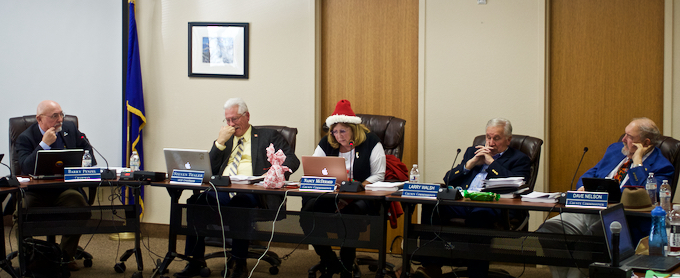
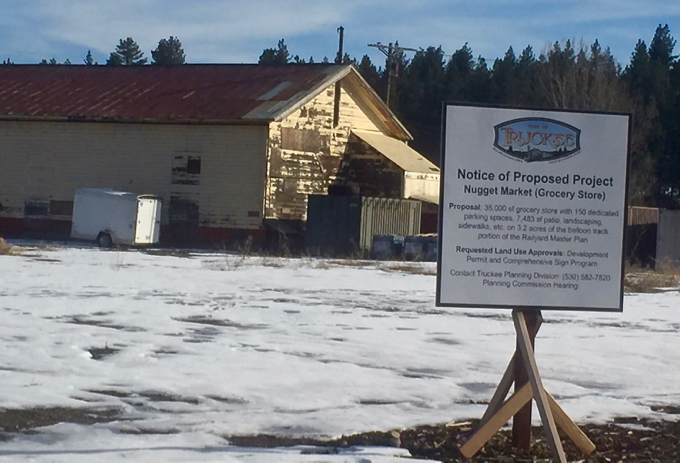
The Nugget grocery store plan received land-use approval from Truckee Planning Commission this week. Photo/Susan Wood

By Susan Wood

TRUCKEE – The number of grocery stores in Truckee is going to mushroom in the near future.

Plans are under way for the town to add three stores to the existing Safeway on Donner Pass Road and Save Mart on Deerfield Drive. From land use and landscaping to architecture and traffic, Truckee is chipping away at the planning intricacies involved with the additions.

In the coming months, the Truckee Planning Commission will bring proposals for a Raley’s to the airport area, a grocer like Whole Foods or Grocery Outlet across from Safeway, and a Nugget Market to the massive downtown Railyard Master Plan that has been in the works for decades.

The Planning Commission this week approved the development permit with revised and added conditions to construct the 34,483-square-foot Nugget Market on a 3.2-acre site where the railyard is located next to downtown. Union Pacific owns the property.

Part of the land use proposal calls for 149 parking spaces built by the Nugget and a 7,500-square-foot plaza to be maintained by the store. The plaza is intended to serve as a gathering place, a growing trend in the supermarket world.

Supplementary improvements include additional pay-to-park spaces agreed to by Truckee Development Associates as well as landscaping, sidewalk and street improvements. The project will even change Donner Pass Road in that area to a new street – Truckee Way.

Phase 1, located on the western side of the Railyard Master Plan, has already been approved.

“This is a big task to do for something requiring a lot of infrastructure to happen to get the project rolling,” town planner Denyelle Nishimori told commissioners Tuesday night.

Phase 2 of the project also lists an extension of Church Street. Concerns, issues, revisions and added changes were discussed Dec. 19, including road access, utilities, the store loading dock, snow on the store roof, parking – including 30 spots agreed to for bicycles — and affordable housing. To mitigate the proposal, 10 housing units are required. Much dialogue centered on architecture and landscaping.  

During public comment, many speakers expressed favorable opinions about the project, especially since it runs adjacent to old town. The notion that store customers would venture into the smaller shops downtown was a given.

More on the grocery store project is expected to come before the commission in February.

“Staff focused on a handful of issues relative to the overall project,” planner Kirk Skierski told Lake Tahoe News.

And more work needs to be done, as the conversation about grocery stores doesn’t end with the Nugget.

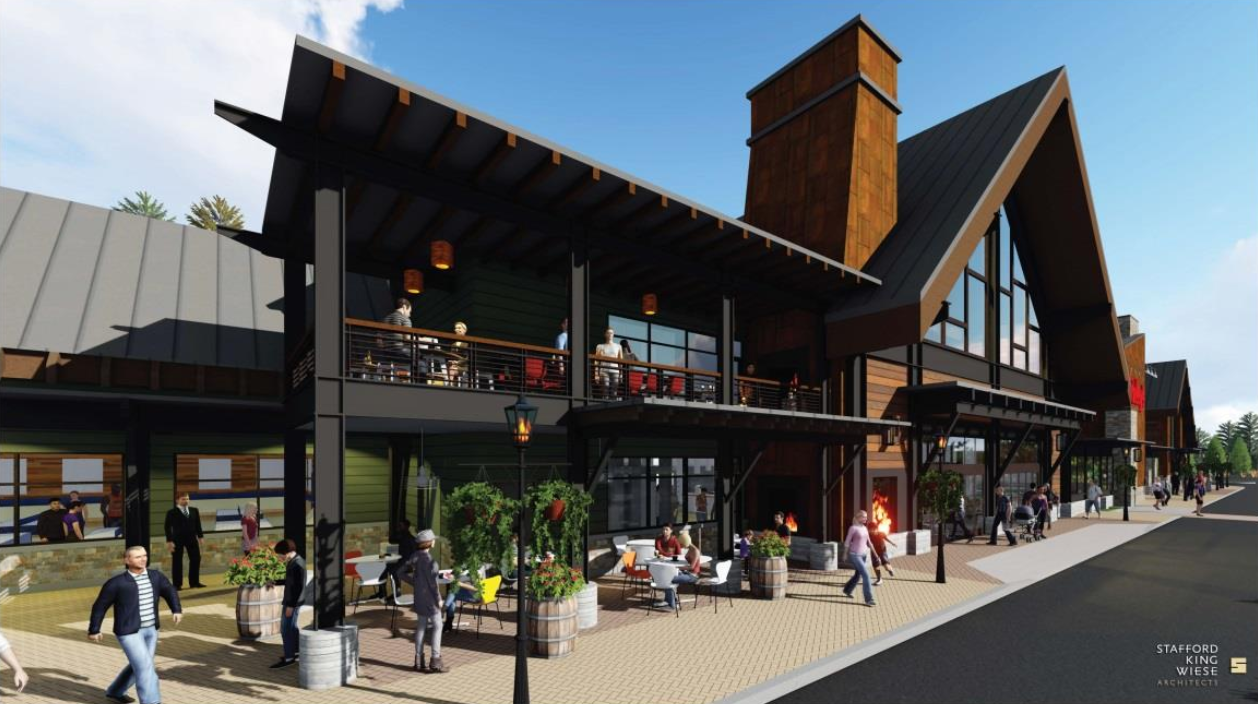
This is what the Raley’s Truckee could look like. Rendering/Stafford-King-Wiese

From railroad to Raley’s

Plans have also been in the works for years for a 40,000-square-foot Raley’s to be built on a 5.5-acre parcel off Highway 267 at Soaring Way and Joerger Drive near Truckee Airport. JMA Ventures, which owns Homewood Mountain Resort, owns the land.

The Joerger Ranch plan also calls for 19,000 total square feet of retail space and 224 parking spaces on the vacant lot. With more traffic expected, infrastructure improvements will involve a widening of the highway at that intersection, along with multi-use, paved trails, sidewalks and landscaping. 

As part of its real estate strategy, Raley’s seeks expansion in regions it’s a little familiar with. For example, two exist in South Lake Tahoe on opposite ends of the South Shore. Now it hopes to hit Truckee north off Interstate 80, after having given the Sacramento region a large presence.

“There’s a lot of excitement around that,” corporate spokeswoman Chelsea Minor said, adding the store is ready to go once all land-use permits are finalized. This project is estimated to go before the Planning Commission in January.

“The growth on the parcel of land makes it exciting,” Minor told Lake Tahoe News.

The Raley’s executive believes there’s enough of a market in different sections of town to support a city of 16,000-plus permanent residents. It swells to more than 40,000 on ski holiday weekends.

“All of us are being realistic and thoughtful in designing the stores,” she said.

Minor agreed that the latest supermarket trends involve making them a gathering place. Each time her company remodels or builds a supermarket, seating is a usual component along with other amenities. A bar was just put in to the new Santa Clara store. Truckee’s may bring a mezzanine-level with seating for small gatherings.

“You may get your book club meeting there,” she said. 

Truckee’s Raley’s-anchored proposal spelled music to the ears of Kings Beach resident Shari Wade. For her, it’s all about location, location, location.

“That’s a good location near the airport for working people,” Wade told LTN, while recently shopping at Save Mart. She works in an office building near the airport and admitted to avoiding Safeway in her hometown and work town based on “the lines being so long.”

At the outset, Wade believes five grocery stores “seems like a bit much” but takes solace in the fact that they’re spread out.

Another Save Mart shopper agreed to a certain degree.

“Truckee could probably sustain one more,” Peter Henry of Tahoe City said. “Yes, Safeway and Save Mart are busy – especially on Friday. They’re jam-packed. But Sunday’s a ghost town.”

Henry looked a little further to perhaps Truckee needing more stores to support more residential development with the upcoming Martis Creek project.

Even Placer County Supervisor Jennifer Montgomery welcomed the new additions, as she shops outside her jurisdiction in Truckee.

“People like me are looking for new choices. Safeway is crazy on the ski weekends. I try not to shop there at all then,” Montgomery told Lake Tahoe News. “I’m not sure if we need three, but definitely there’s a need for more.”

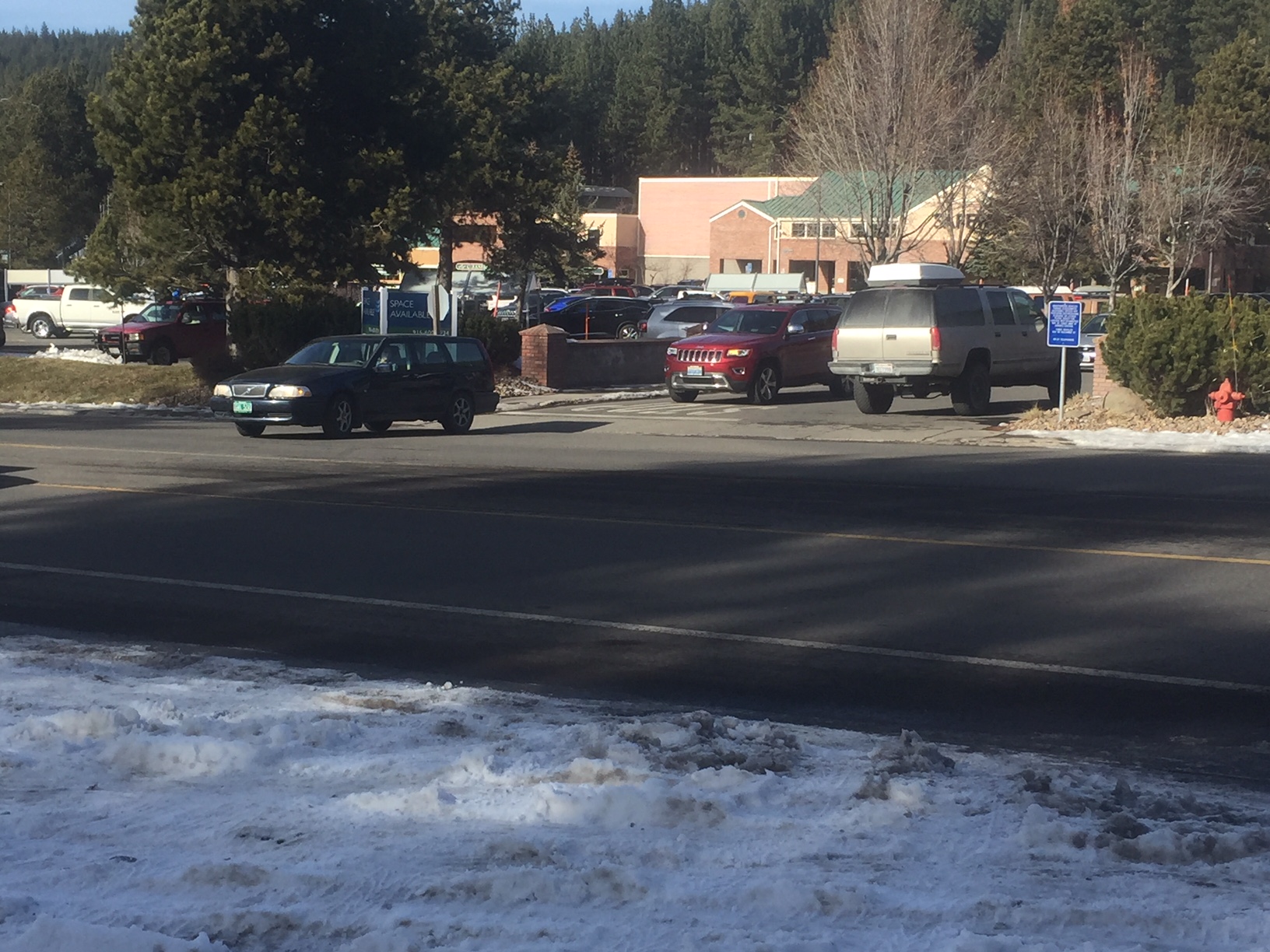
A boutique grocery story will go here, with the Truckee Safeway across the street. Photo/Susan Wood

And yet there is more

Another market – boutique in nature – is planned to go in across the very busy Donner Pass Road from Safeway. The store will be announced at a later date, but the Capitol Avenue Development Grocery Store project will involve a 17,568-square-foot store over 1.54 acres. The project will include two residential rental apartments as part of the deal and 44 on-site parking spaces.

Are five stores too much of a good thing?

Town Manager Jeff Loux said staff is used to hearing that question because upon initial mention the number sounds high. Government cannot turn down a project if it meets the land use and zoning qualifications just because there’s competition.

Loux did point out that economically-astute grocers such as Raley’s and the Nugget wouldn’t be interested if they didn’t do their homework. Both chains have discussed their concepts for several years.

“I believe they’ve done their marketing,” Loux told LTN.

Michelle Willard of the Greater Sacramento Area Economic Council agreed.

“Unless they have done the analytics, they wouldn’t be interested,” Willard said.

From a personal standpoint, Willard said when she enters a ski town one of her first stops is the grocery store.

The real challenge lies in traffic control as growth continues and motorists running errands try to get through town.

That’s why the locations of the projects are so important to the Truckee Chamber of Commerce.

“Not only is it sustainable (to have more), it’s necessary to decentralize the traffic congestion,” chamber spokeswoman Colleen Dalton said. “We needed to have a grocery store on the eastern side of town.

Dalton said the business community gives a “thumbs up” to adding a variety of stores in its 11 commercial districts at different sites selling unique food items at varying prices.

The food itself also appears to be changing.

“The next five years in grocery will be more transformative than the last 50,” spokesman Dave Heinzinger for inMarket, a company that develops supermarket technology, told Epicurious.

The food magazine also pointed out that the new supermarket won’t just lure people with products – but will give shoppers a pleasurable experience while there.

So, the idea is to take the dread out of grocery shopping – especially around the busy holiday season.