Judge refuses to expand sports betting

By David Porter, AP

NEWARK, N.J. — A federal judge upheld a 21-year-old law prohibiting sports betting in all but four states, dealing a setback to New Jersey’s attempts to revive its struggling casino industry by grabbing a piece of what has become a multibillion-dollar industry, both legal and illegal.

sports bettingThe ruling published late Thursday night marked the second defeat for New Jersey in a lawsuit filed last year by the four major professional sports leagues and the NCAA. In a December ruling, U.S. District Judge Michael Shipp denied the state’s claim that the leagues and the NCAA didn’t have standing to bring the suit because they couldn’t demonstrate tangible harm to their products if New Jersey were to allow sports betting.

“We believe firmly in the principles of our position on sports betting and that the federal ban is inequitable, violates New Jersey’s rights as a state and is unconstitutional,” Gov. Chris Christie said.

State Sen. Ray Lesniak, the prime sponsor of the sports betting bill, said New Jersey would appeal Shipp’s “patent misinterpretation of the Constitution.”

This week, Christie signed a bill making the state the third in the nation to allow gambling over the Internet. New Jersey’s casino industry has seen revenues decline steadily over the last several years in the face of competition from neighboring states. Atlantic City’s newest casino, Revel, announced last week that it will file for Chapter 11 bankruptcy protection next month, about a year after it opened.

New Jersey voters passed a sports betting referendum in 2011, and last year the Legislature enacted a sports betting law that limited bets to the Atlantic City casinos and the state’s horse racing tracks. Bets wouldn’t be taken on games involving New Jersey colleges or college games played in the state.

The NFL, NHL, NBA, Major League Baseball and the NCAA sued the state last year, and the NCAA has moved several of its championship events out of New Jersey because of the sports betting law.

New Jersey, represented by former U.S. Solicitor General Theodore Olson, among others, had attacked the 1992 Professional and Amateur Sports Protection Act, or PASPA, on several constitutional levels. In filings, the state argued the law unfairly “grandfathered” Nevada, Oregon, Montana and Delaware, which already have some form of sports gambling.

On Thursday, Shipp said that although some of the questions raised in the case were novel, “judicial intervention is generally unwarranted no matter how unwise a court considers a policy decision of the legislative branch. As such, to the extent the people of New Jersey disagree with PASPA, their remedy is not through passage of a state law or through the judiciary, but through the repeal or amendment of PASPA in Congress.”


Gaines, Bigelow bring no new taxes message to Tahoe

By Kathryn Reed

A unified anti-tax voice permeated the room as state Sen. Ted Gaines and Assemblyman Frank Bigelow spoke Friday to their constituents in South Lake Tahoe.

The two Republican legislators meandered through the crowd at Riva Grill before each addressed the assembled guests.

“We don’t need additional taxes, what we need is to streamline government,” Gaines said March 1 in response to a question by South Lake Tahoe City Councilwoman Angela Swanson.

State Sen. Ted Gaines and Assemblyman Frank Bigelow talk March 1 in South Lake Tahoe. Photo/Kathryn Reed

State Sen. Ted Gaines and Assemblyman Frank Bigelow talk March 1 in South Lake Tahoe. Photo/Kathryn Reed

She asked about whether the two men favored changing the current two-thirds requirement to raise taxes to be lowered to 55 percent.

“We have a problem in the system. There are a number of items that are bloated. We need to fix that before we ask anyone to step up and pay more,” Bigelow said.

Gaines touched on a few bills he is working on. From the get-go Gaines opposed the governor’s fire fee; instead calling it a tax. Senate Bill 17 would repeal the $150 fee CalFire levies on buildings in State Responsibility Areas (SRA). Senate Bill 125 exempts a property owner of a structure that is located both within an SRA and within the boundaries of a local fire protection district from paying the $150 tax. Senate Bill 147 exempts any property owner located within an SRA who has an income of less than 200 percent of the federal poverty level from paying the $150 fire tax.

He also talked about the state Board of Equalization on Feb. 28 voting to raise the excise tax on gasoline by 3.5 cents per gallon, which will be effective July 1.

Gaines also said he is working with Lake Tahoe Community College on a bill that would allow Nevada residents to attend the two-year institution at the rate Californians pay.

He tiptoed around the loop road controversy, saying it’s a “local decision.” While that is true, it is also a state issue because it involves a state highway.

This was Bigelow’s first public meeting on the South Shore since he was elected in November.

While the legislators said they are not anti-regulation, they agree it needs to be logical and reasonable. Considering the Lake Tahoe Basin is often touted as one of the most regulated regions in the country, the people listening are constantly facing layers of rules not often found elsewhere.

Both men represent a large swath of the state.

Gaines, who is from the Roseville area, is in a district that goes from Alpine County to the Oregon border. The 11 counties it encompasses is larger than 10 U.S. states. Bigelow’s Fifth District, which is newly realigned, takes in nine counties from El Dorado to Madera, where he is from.

Note:

Gaines is hosting a March 12 open house at his El Dorado Hills office that opened last month. It is from 6-8pm at 4359 Town Center Blvd., Ste. 112, El Dorado Hills.


Concord’s Tahoe camp expected to be repaired before summer

By David DeBolt, Contra Costa Times

The Concord City Council voted unanimously Tuesday to support emergency repairs at Camp Concord, avoiding a possible delay in the opening of the city-operated camp.

The 5-0 vote declared an emergency at the Lake Tahoe facility and allowed interim City Manager Valerie Barone to execute a no-bid construction contract to speed up repairs.

The camp opens in May each year and runs until September, but copper thefts threatened to delay the opening.

During a security check Dec. 20, a camp seasonal employee found that all the copper pipe plumping had been removed from the family camp bathhouse, and that more copper was stolen from a maintenance shed, according to a city staff report.

A subsequent visit on Jan. 15 revealed that copper piping had been stripped from six additional buildings.

The camp is closed during the winter months, and is patrolled by security checks. The thefts are now under investigation by the El Dorado County Sheriff’s Department.

In a city report, interim City Engineer Jon Crawford said the usual bidding process, which can take up to three months, could mean a delay in opening the spring and summer programs at the camp. Any delay, he told the council Tuesday, could result in the loss of customers, and, in turn, revenue.

The city has already rented out the site to two groups in May, and some 60 families have registered to attend during the family camp season, according to the report.

City officials initially estimated the total damage at $70,000 to $80,000.

The city has leased the 29-acre site in the Lake Tahoe Basin from the federal government since 1967. Concord’s permit to run the camp expires in 2025.

The camp faced closure during the 2012 city budget talks, but was saved by overwhelming community support.

Earlier in Tuesday’s meeting, Public Works Director Justin Ezell said more than $1 million has been spent since 2007 to replace stolen copper wiring on city properties.


Truckee snowboarder redefines extreme

By Max Klinger, New York Times

TRUCKEE — The snowboarder Jeremy Jones arrived at the Atomfjella Mountains on Svalbard, an island above the Arctic Circle, after 30 hours of tundra crossing on a rattling snowmobile convoy in April 2011. He had invited Terje Haakonsen, known in the snowboarding world for his ability to ride almost anything, any style, to attempt the summit and first descent of a set of precipitously icy couloirs.

Jones, 38, spends years scouting locations and assessing risks. “He walks away from stuff all the time,” his brother Steve said. “He’s incredibly patient.”
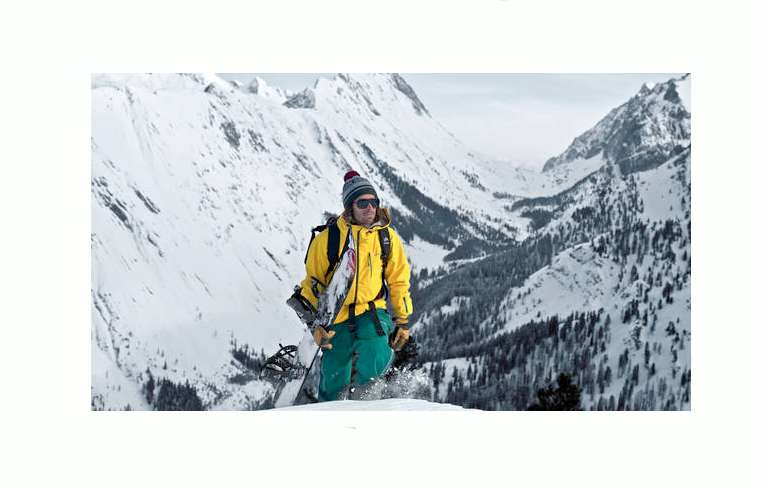
Jeremy Jones making snowboard history. Photo/New York Times

Jeremy Jones of Truckee is making snowboard history. Photo/New York Times

As the men arrived at midnight to get their first look at the steep chutes they would be climbing, the skies were still filled with endless sunlight, and something occurred to Jones that he had not anticipated, despite years of diligent planning.

“Man, I hope Terje’s even up for this,” he thought, signaling just how daring his snowboarding exploits had become.

Haakonsen grew up a three-hour flight from Svalbard but never knew it held mountains as impressive as the Atomfjella. “My first reaction was ‘Wow,’” he said.

He eventually accepted the challenge, riding his lines with his usual brio, but said that hiking up those sheer walls had gripped him more than he could remember.

The same might be said about many of the partners Jones invites on his backcountry adventures, because for the past few years, he has committed himself to summits and descents around the world that are groundbreaking in size, scope and degree of vertical exposure.

“He’s pushing technical snowboarding, meaning very critical turns on really steep terrain, and executing like no one else,” said Lucas Debari, another expedition partner and a freeriding standout from the state of Washington. “Other guys are going bigger off cliffs, or going faster, but no one is pushing technical snowboarding on lines of consequence like he is.”

The precedence of these feats is largely the product of Jones’s unconventional methods, which incorporate splitboarding, mountaineering techniques and multiweek approaches, and have allowed him to access mountain ranges and massifs that were previously considered untouchable, if charted at all.

At a local restaurant here in his hometown, Jones does not look like one of the world’s most radical snowboarders. A 38-year-old father of two, he is soft-spoken and friendly, an outlier in a sport known more for brazenness than modesty. But for more than two decades, as snowboarders have started trends and realized Olympic ambitions, Jones has pursued a singular dream: riding some of the biggest, significant mountains in the world.

Over a veggie burger stacked with bacon, he traced his evolution from an Alpine racer from Cape Cod, Mass., to an elder statesman of snowboarding in Lake Tahoe. Jones followed his two older brothers to Jackson, Wyo., when he was 16. Soon after, he took his first trip to Alaska, where, he said, he lived in his car for months.

Jones met his wife, Tiffany, a former competitive snowboarder, in Lake Tahoe. She knows the risks and long absences associated with the profession.

“I watch all his movies,” she said in a telephone interview, “and if he does something unnecessarily dangerous, I’ll call him on it. But he’s a very calm person, not ego-driven, and he always has a thought process for every decision, and he can always walk me through it.”

Jones’s position on snowboarding’s hierarchy is hard to calibrate if only because he nearly predates the sport. In the 1990s, he began pushing big-mountain freeriding and exploring Alaska’s varied and challenging terrain by helicopter. This year, he was voted Snowboarder magazine’s big-mountain rider of the year for the 10th time.

Jim Zellers, a snowboarding pioneer in Alaska in the 1980s, recalled the first time he met Jones, in Squaw Valley, in the mid-1990s.

“I was following him down this really steep, technical line, and I remember thinking, ‘This guy is special,’” Zellers said. “To this day, there’s no one who looks at the landform, the geomorphology, like him and thinks about what would be the most interesting part of the mountain to be involved in.”

But at a certain point, Jones felt limited by the helicopter exploration as it became as popular and predictable as resort riding.

“It’d be the best day of the year,” he said, “and I’m standing on top of the best line in the best heli zone in the world, and I realize that I’m riding it for the third time and it’s already been in multiple movies and magazines. Where’s the progression or adventure in that?”

He added: “You eventually discover that with a heli and snowmobile, you can only access about 5 percent of the mountain range. To keep the adventure alive, we had to turn to something else.”

He turned to the splitboard, a snowboard that separates into two touring skis, which allowed him a new way to get around the backcountry and ascend mountains. The splitboard had been around since the 1980s in Europe, but the crude initial designs never caught on. As Jones began approaching these mountains from the bottom, he also began borrowing equipment from traditional Alpinism like ice axes, crampons and climbing ropes.

Conrad Anker, a leading mountaineer, climber and skier from Montana, compared Jones’s feats to the rock climber Alex Honnold’s free climbing.

“It’s really high stakes, the hardest level of technicality and difficulty,” Anker said. “You take that human-power element and the solid mountaineering, and you see why he’s so well-respected in the mountaineering community.”

In many cases, this self-ascent ethos has allowed Jones to outperform helicopters in traveling deeper into mountain ranges, waiting out bad weather and finding steeper lines to ride. As he approached these mountains from below, his knowledge of snow and avalanche conditions grew, and his understanding of a mountain’s features expanded the types of lines he was willing to attempt.

After failing to persuade his longtime sponsor, Rossignol, and several other companies to produce a splitboard for him, he started making his own. Then in 2010, Teton Gravity Research, his brothers’ production company, released the first of a planned trilogy of backcountry snowboarding movies, “Deeper,” which in Jones’s words “threw a bunch of gas on the backcountry fire that had been developing for years.”

Despite a decline in overall sales of snowboards, splitboarding has become the fastest-growing segment in the sport, rising about 32 percent so far this season compared with the same period last season. (Three companies that refused to make Jones a splitboard are now producing them.) One effect has been to move snowboarding from the resorts to the off piste, where the sport was conceived.

But with freedom comes risk. In the winter of 2010-11, 16 skiers or snowboarders died as a result of backcountry avalanches in the United States, according to the American Avalanche Association. During 2011-12, the number of deaths climbed to 20, as advancements in equipment made backcountry riding more accessible.

“You look at Europe and what the standard is for a technical mountaineering background for their winter athletes; it far surpasses the United States,” Anker said. “I see it all the time: seasoned skiers who get themselves into these avalanche situations, making preventable and sometimes fatal mistakes.”

Even Jones’s expeditions have had close calls. During the filming of “Further,” released in September as the second part in the trilogy, the snowboarder Forrest Shearer was knocked off balance by a batch of slough — a small surface-level slide — near the top of a steep, narrow chute in Japan and fell 1,200 feet before he recovered. In Austria, the husband-and-wife team Mitch Tölderer and Bibi Pekarek were feet from the summit of a giant peak when a slab they were standing on broke and slid. In each case, the riders were largely unscathed.

Jones tries to avoid these pitfalls with methodical research and planning.

“A lot of climbing has to do with ethics, and the style and manner in which you do things, in which you make decisions,” said Debari, the standout freerider. “He definitely brings that mind-set into snowboarding.”

Jones spends years scouting locations, gathering data on weather and snow, and talking to local guides before he selects a destination. On the mountain, the talk revolves around “slough management” and limiting “secondary exposure,” meaning avoiding areas that put his fall line above dangerous obstacles like cliffs, rocks, trees or gullies.

“He walks away from stuff all the time,” said Steve Jones, Jeremy’s oldest brother and longtime expedition partner, and a principal in Teton Gravity Research. “He’s incredibly patient, and that’s a big part of the unspoken trust that our family puts into what he does.”

Jones has learned to look for ranges where the predominant weather has a heavy maritime influence, generally meaning heavier snow that is less likely to form layers that can fracture and slide. He also searches for mountains that rise out of large, flat glaciers and ice fields, creating shallow avalanche run-outs instead of deep, obstacle-filled terrain traps.

In perhaps his most risky expedition, Jones traveled to the Wrangell-St. Elias Mountains in southeast Alaska. They sit in America’s largest and least explored national park, a mountainous zone larger than Switzerland. These ranges have achieved a high profile among climbers, skiers and snowboarders who consider them the tallest in the world, not in altitude, but in the sheer vertical relief with which they rise from flat ground.

In an email, the veteran Alaskan bush pilot Paul Claus wrote, “The St. Elias also have probably the hardest conditions found anywhere: the coldest temps, very bad weather, unfathomable amounts of snow and extreme remoteness.”

Jones had avoided the Wrangells after a friend, Aaron Martin, disappeared in 2002 while skiing down a mountain there. After years of tracking the Wrangells’ weather, he thought it was time to go last April.

Jones planned to fly to Bagley Ice Field and set up camp for a month to get to know the weather, the snowpack and the best lines. He invited his longtime riding partner Ryland Bell and Debari.

They discovered some of the most complex and technical walls, spines and couloirs they had ever seen. But at the base of most of the walls were bergschrunds — gaping, 40-foot-deep crevasses. Everything they were going to ride had extreme secondary exposure, so one slip could be fatal.

“We’re talking about things that most people wouldn’t even consider being on,” Claus said. “Even if you were actually climbing the mountain with the goal of getting to the summit, you would not go where he went.”

Nonetheless, Jones, Bell and Debari tackled five major first descents, with names like the Tooth and West Wall, in 30 days. After pushing his partners to their limits, Jones said he had one final goal: a “cherry line” in the middle of a “no man’s land” peak. He named it Space Needle, and hiked there alone at 7pm, carving a gutsy 1,400-foot line on one of the trip’s nonpareil descents.

“The pitch of what he was riding — that was incomprehensible,”Debari said. “Not just steep and technical, but mentally so challenging. You have to be the most calculated snowboarder in the world to do what he does over and over again and survive.”

Even at 38, Jones says he has no plans to slow down.

“It’s funny,” he said. “With splitboarding, I have less pain than I’ve ever had. I spend more of my day hiking and getting a good full-body workout, and less time on high-impact descents.”

When asked about his next movie and his plans to top his previous feats, he turned philosophical, saying, “In 12 hours, we go out and experience nearly every emotion in the human range: physical strain, frustration, pain, anxiety, fear, calculation, the joy of making it to the top, the beauty of your surroundings, camaraderie, then the 60 seconds of adrenaline-filled activity.”

He added: “If it was all about the adrenaline and the descent, you wouldn’t last doing the style of riding I do. It’s about a much wider experience. But, yes, we’ve got some pretty amazing stuff planned.”



El Dorado County Grand Jury disbanded

By Kathryn Reed

El Dorado County no longer has a grand jury.

Steve Bailey, the Superior Court judge who oversees the volunteer board, signed a court order Feb. 22 dissolving this year’s jury. The document says the reason is because the grand jury numbers dropped below the minimum of 12 and “that due to the lateness of the year, alternate jurors cannot be sworn in and trained and thereafter conduct meaningful investigations before the statutory discharge of the jury in June 2013 ….”

grand juryBailey is out of town this week at a conference and could not be reached.

He oversees the grand jury that looks into county matters, even though he is married into a politically charged family with deep roots on the West Slope.

There had been 19 active grand jury members, with 14 of them resigning this year.

Sources close to the situation told Lake Tahoe News one member of the grand jury was regularly meeting with former El Dorado County Supervisor Jack Sweeney to tell him what the grand jury was doing. This violates state Penal Code.

That individual essentially became a poison pill within the group, creating distrust and disharmony, and prevented others from doing the job they were tasked with.

Sweeney is good friends with Supervisor Ron Briggs. On Dec. 18, 2012, John Briggs, father of the supervisor, was before the Board of Supervisors representing the Briggs Family Trust. On a 4-0 vote, with Supervisor Briggs recusing himself, the others agreed to purchase 5.2 acres from the trust on which a future courthouse is likely to be built.

Judge Bailey is the brother-in-law of the supervisor and son-in-law to the elder Briggs. And it is Bailey who watches over the grand jury, which looks into county matters, of which his in-laws are intricately involved in.

Judges receive regular training on ethics and are charged with determining whether a matter they are assigned creates an impermissible conflict of interest per the Code of Civil Procedure.

Ray Van Asten, who was foreman of the 2012-13 grand jury, told Lake Tahoe News he is one of the jurors who quit. But he would neither say why, nor talk about what led to others quitting.

“We are unable to say what happens inside the jury room,” Van Asten said.

It is not known what the grand jury was investigating.

“What they are looking at or not is not something I could talk about if I knew,” Suzanne Kingsbury, presiding judge of the El Dorado County Superior Court, told Lake Tahoe News.

She said in the 28 years she has lived in the county (she has been on the bench 17 of those years) she does not know of a time when a grand jury was discharged midterm.

“The purpose of the civil grand jury is to act as a public watchdog and examine the operations of cities, counties and special districts. I think that the role of the grand jury in our state is a critical one,” Kingsbury said.

Even so, there will be no grand jury report in June. It is possible that whatever this term’s jury was investigating could be taken up by the next grand jury that is seated.


Resolution for some of Lane’s troubled South Shore land deals

By Kathryn Reed

Randy Lane, the developer of the would-be convention center in South Lake Tahoe that is a pile of rebar and concrete after his Lake Tahoe Development Company filed for bankruptcy on that project, is making news on both sides of the state line.

Regarding the property in South Tahoe, Owens Financial has filed a foreclosure notice on the remaining properties that were owned by Lane. If the trustee sale goes through on March 20, then Owens Financial will own those properties and Lane will not have any interest in the 11-acre site, South Lake Tahoe City Attorney Patrick Enright told Lake Tahoe News.

Lake Vista Apartments in Stateline.

Lake Vista Apartments in Stateline.

A portion of the project is going forward on land that Bill Owens already owns. His proposed retail development along six parcels that front Highway 50 is in the design review stage with the city. While he wants to start the project this building season, a performance bond and consolidation of the properties must be done first. He does not need a new building permit, just to tweak what was approved to allow for the project to go forward in stages. The proposal should be before the city Planning Commission in April or May.

In Douglas County, officials have worked out a settlement with the now-defunct Falcon Capital LCC that Lane once owned and ran.

The county filed a claim against Falcon Capital for breach of contract and misrepresentation. Falcon Capital was supposed to maintain the water quality improvements at Kahle Drive in Stateline after the county put them in. The construction of these improvements was a condition of approval imposed by the Tahoe Regional Planning Agency.

“When Falcon Capital did not perform its obligations under its contract with the county, the county filed suit and obtained a judgment against Falcon Capital on the breach of contract claim in the amount of $439,205.32,” County Manager Steve Mokrohisky told Lake Tahoe News. “Falcon Capital is now out-of-business and transferred its remaining assets, three parcels of undeveloped land located in Incline Village, to the county. The core claims against Meadow Brook Associates and Lake Vista Apartments are for unjust enrichment and equitable relief. Lake Vista is the managing partner for Meadow Brook Associates. These defendants were able to construct low-income housing on property formerly held by Falcon Capital.”

Douglas County commissioners at a meeting this month approved a 10-year settlement agreement that brings to a close the claims against Falcon Capital.

Mokrohisky said the only significant asset held by Meadow Brook and Lake Vista is the low-income housing project at 129 Market St. in Stateline. But, he added, it has been losing money for several years.

“The property is worth less than the amount due to the holder of the first deed of trust,” Mokrohisky said. “To settle the case, these defendants have agreed to perform maintenance for the county at a cost of $5,000 per year. Because the county wants to encourage affordable housing at Lake Tahoe, the county is willing to work to reach a settlement.”


Dry January-February sets records

By Kathryn Reed

It’s another record snow year in Lake Tahoe and the greater Sierra Nevada. It’s just not the kind of record anyone wants to brag about.

Graphic/National Weather Service Reno

Graphic/National Weather Service Reno

The National Weather Service in Reno has been collecting data from a station in Tahoe City since 1910. And with a matter of hours to go and no precipitation in sight for the rest of February, the first two months of 2013 will go down as the driest (0.76 inches) since stats have been collected there. The record was 1.34 inches in 1991, while the average is 11.24 inches. (See graphic to left.)

Snow surveyors across the Sierra found the same thing Feb. 28 as the water content was tabulated at various spots. Normally the reading this time of year builds on the totals from the previous two months. Not the case on Thursday.

Statewide, the snowpack water content is at 66 percent of average. It’s even worse at the Echo Summit location near Sierra-at-Tahoe where it came in at 54 percent of average. The snow measured 29 inches deep with 12.4 inches of water content at Phillips Station.

The Department of Water Resources, which conducts the snow surveys, has data dating to 1920. The driest January-February was in 1991, when 4 inches of precip fell from the mountainous area near Shasta Lake to the American River basin. For 2013, 2.2 inches of rain has fallen since December.

There is no substantial precipitation in the forecast to turn the tide. Reno weather officials say a small storm will move into the Lake Tahoe Basin on Saturday night, with another one rolling in Wednesday. But they said the snow totals are not expected to amount to much.

Despite the dismal snowpack, Lake Oroville in Butte County, the State Water Project’s principal storage reservoir, is at 113 percent of average and Lake Shasta by Redding, the federal Central Valley Project’s largest reservoir, is at 108 percent of its normal storage level.

The snow survey measurements by the Department of Water Resources determine how much water is released from Northern California reservoirs to irrigate crops and provide potable water for Southern California. Estimates by DWR are that it will be able to deliver 40 percent of the slightly more than 4 million acre-feet of State Water Project water requested for this calendar year by the 29 public agencies that supply more than 25 million Californians and nearly a million acres of irrigated farmland.


Crash-course in dancing has Tahoe-ites ready for the stage

By Kathryn Reed

Smiles are scarce. Concentration levels are at their peak. Counting to four keeps being repeated. Bodies are being twisted in ways they aren’t used to moving.

Today will be the last of four practice sessions for the six South Shore residents who will take the stage March 1 with professional dancers as their partners. Dancing with Your Stars is a take-off of the wildly successful “Dancing with the Stars” television show.

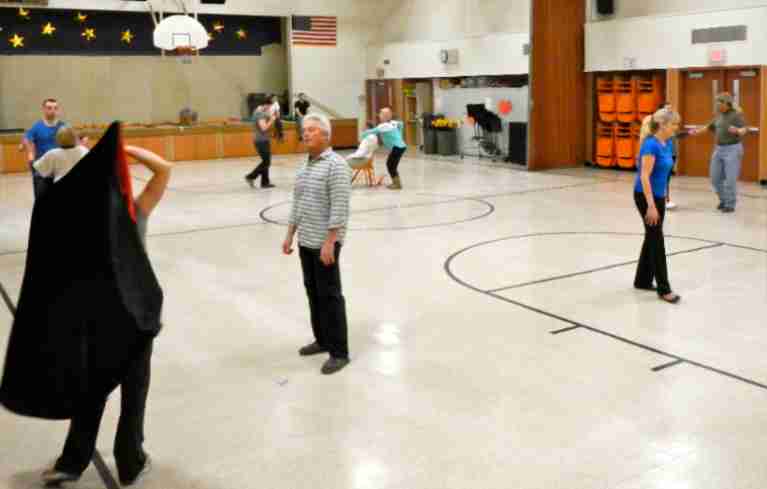
Six Tahoe-ites will perform with professionals March 1 in Dancing with Your Stars. Photos/Kathryn Reed

Six Tahoe-ites will perform with professionals March 1 in Dancing with Your Stars. Photos/Kathryn Reed

Wendy David has a perplexed look as she asks Andrew Blackburn, “What are we doing now?”

The Lake Tahoe Unified School District board member is paired with a tall partner. She stretches to put her arm around Blackburn’s neck. As Tuesday’s rehearsal progresses, she is bending and turning with more ease.

Lake Tahoe Visitors Authority Executive Director Carol Chaplin quips, “The fact someone can flip me … I’m thrilled.”

Chaplin and Joey Williams are taking up a good portion of the width of the multipurpose room at Sierra House Elementary School as they work on a two-step.

The guy from Tahoe, Curtis Fong, is more stationary in his area of the room. At one point it looks like he is proposing to Sarah Najdek, but then she tells him he’s supposed to be facing the “audience” and not her.

Joel Dameral, South Tahoe High teacher, doesn’t seem to be having fun until near the end of the second day. By then he is spinning Jen Hayes like they have been dancing together for weeks and not just hours.

Bert’s Café owner Bueno Ketelsen is like a matador as he spins a black and red cape to the beat of the music. A smile crosses his face when partner Casey Bartlemay tells him he got it.

The sixth local competitor is Deb Howard, but she missed Tuesday’s session.

“We prefer when they don’t have a ton of training. Then it’s like a fresh canvas for us,” Jesse Maher, assistant director for the Utah Ballroom Dance Company, tells Lake Tahoe News.

Just like the TV show, video and interviews are being shot during the rehearsals that will be played during the performance. And just like the TV show, the contestants will be all decked out in fancy clothes and makeup.

Each duo will perform one dance routine. Each is a different type of dance like the Waltz or jitterbug. During the intermission the audience will pick their favorite. That score will be combined with the judges’ (Marcia Sarosik, Pat Ronan and Paul Middlebrook) score to crown the winner.

The second half of the show is all about the professionals, of which there are about 20 who will be on the stage.

The money raised goes to Tahoe Arts Project, the local organization that brings performing arts to South Shore schools. (One program was cut this year because donations to TAP have dwindled.) The six dancers who have been practicing with locals all week have also been working with students all week.

Note:

• Dancing with Your Stars – March 1, 7pm

• MontBleu casino in Stateline

• Tickets are $10 for adults and $5 for children.

ngg_shortcode_0_placeholder (Click on photos to enlarge.)


WHS students selected as pillars of their class

Sarah Tencher, Emily Harris, Amanda Harris, Nicki Simon and Sierra Forvilly

Sarah Tencher, Emily Harris, Amanda Harris, Nicki Simon and Sierra Forvilly

Publisher’s note: Five Whittell High School seniors were honored Feb. 27 by Soroptimist International South Lake Tahoe as young women of distinction. The following is what counselor Estela Gerlinger said about them at the lunch at Harrah’s Lake Tahoe.

By Estela Gerlinger

Sarah Tencher

Sarah has always been dedicated to her academic endeavors. She will be graduating with an honor’s diploma and a GPA of 4.21. During her high school career, Sarah has consistently found her place on the honor roll for her academic achievements. Sarah enjoys being challenged and she has a real thirst for knowledge. Her favorite subject is math because it is not subjective and it’s based on facts. And although Sarah hasn’t decided on a specific career or major to focus on in college, she knows she would very much like to study something that involves math and science.

What makes Sarah a great individual is that she is not only a great scholar, but she has also learned how to balance a rigorous class schedule with extracurricular activities. Sarah has participated on the volleyball and softball teams and in cheerleading. In addition, Sarah belongs to the Key Club and the National Honor’s Society where she has learned leadership skills that will translate well into college. Last but not least, Sarah enjoys serving her school as our current senior class vice president and class treasurer.

As well as being an exemplary student at Whittell High School with excellent grades and citizenship, Sarah has dedicated much of her free time to community service. Sarah understands the importance of giving back and has enjoyed doing so by participating in causes that are near and dear to her heart; Breast Cancer Awareness, Nevada Humane Society, Relay for Life, and Special Olympics.

When I asked Sarah who has had the most influence on her, she quickly responded that both her parents have had the most influence on her. She admires her mother for being caring and empathetic, and her father for being motivated and hardworking. This response was not surprising as Sarah is an individual who has cultivated all of these great qualities within herself.

Amanda Harris

As her new counselor, I have gotten to know Amanda for the well-rounded student that she is. Amanda is a great example of the complete George Whittell High School Student. I say this because Amanda has managed to be involved in our school across all areas.

As part of our Executive Student Council, she is always looking to improve school spirit on campus not only by planning events that encourage school involvement but by leading by example. Amanda is a member of the school’s Black and White Choir, Christian Club, National Honor Society, Academic Team, and Youth Group. As a natural athlete, she is involved in sports and this year was awarded division MVP in volleyball and All Team League in basketball. Amanda has carried the determination, enthusiasm, and focus she has for athletics into the classroom by challenging herself academically and enrolling in AP and honors courses.

Amanda learned from a young age to fight for what she wants when her father was diagnosed with lymphoma. Watching him fight for his life and turning to her faith, instilled in Amanda a determined work ethic and a need to want to help others. Growing up, Amanda also learned to admire her mother for being the person who has always held the family together and keeps it running like a smooth machine.

No matter how demanding her school obligations are, Amanda still has been heavily involved in community service dedicating her little free time to causes that are near and dear to her such as the annual Relay for Life, helping out at her church, and mentoring younger children through athletics and contests. That is why it’s not surprising that Amanda after graduating from George Whittell High School with an honor’s diploma and a GPA of 4.16 is excited to begin her path to becoming a high school English teacher. A career that will give her the opportunity to marry the two things she loves, English because she believes there are no definite answers, and teaching which gives her the opportunity to help others. Amanda is well on her way to achieving her goal and her next step will be to pick between McDaniel College in Maryland or Coker College in South Carolina, as they’ve both offered her a scholarship and the opportunity to play volleyball.

Sierra Forvilly

I have gotten to know Sierra for the dedicated and all-around great individual that she is.

Sierra has always been dedicated to her academic endeavors. She currently is on track to graduate with an honor’s diploma and she has a GPA of 3.94. During her high school career, Sierra has consistently found her place on the honor roll as well.

Like her peers, Sierra has learned how to balance a rigorous class schedule with extracurricular activities. Sierra has a deep passion for athletics that was instilled in her by her father, a former USC athlete. She credits her father for teaching her work ethic and giving her the tools to become the strong and independent young lady that she is. Sierra’s first sport of choice is track. Because we live in a small community that lacks coaches, she’s had to rely on her father for guidance. But it was Sierra who took the initiative and dedicated long hours to practicing so that she could compete at a high level. Her dedication paid off, as last year, Sierra led her team to the state championship title and Sierra broke and set a new record in the 300-meter hurdle. This fall, Sierra as team captain led the varsity soccer team to the state runner-up title for the first time in 15 years. Sierra was able to accomplish all of this all while participating in cheerleading.

Off the field, Sierra’s other love is singing. As a member of our Black and White Choir, she truly enjoys any the opportunity she gets to perform. Sierra is also our school newspaper and yearbook editor. This is a huge responsibility for Sierra as she has had to learn how to manage her time and balance her schedule between her academic obligations, athletics, cheerleading, and choir all while ensuring that her classmates are on task so that she can meet her deadlines.

As well as being an exemplary student involved in all aspects at Whittell High School with excellent grades and citizenship, Sierra has dedicated what little free time she has left to community service. Sierra understands the importance of giving back and she has enjoyed doing so by volunteering her free time to mentoring younger students and coaching them in track and soccer.

In speaking with Sierra, I asked her how is she able to manage to get everything done in addition to working part time for her family’s business. Her response is that she has always liked to keep busy. It isn’t always easy, but as she has learned in track, life will always have hurdles and it is all in how you approach those hurdles. With this attitude, I have no doubt that Sierra will achieve her goal of someday becoming a doctor.

Emily Harris

As her new counselor, I have gotten to know Emily for the well-rounded student that she is. Emily, like her twin Amanda, is a great example of the complete George Whittell High School Student. I say this because Emily’s school involvement spans across all facets. She is an honor student and a member of our Black and White Choir, Christian Club, National Honor Society, Academic Team, and Youth Groups. In addition, Emily continues to dedicate much of her free time to serving others in the community.

At a young age, Emily’s father was diagnosed with lymphoma. This diagnosis and seeing her father fight for his life had a great impact on Emily. She didn’t completely understand the details of his diagnosis; all Emily knew was that he was going to fight it. The other person Emily truly admires is her grandfather. Listening to him proudly speak of the time he served in the navy and his stories about Vietnam and Korea have truly inspired her. Both her father’s determination and her grandfather’s service have made her equally determined to win every challenge that comes her way.

Therefore, it is not surprising that Emily has immersed herself in sports and she has relied on her faith and close family bonds to help her become the strongest student athlete she can be. Whenever she is faced with an obstacle, she tells herself that like her father and grandfather, she must continue to fight and give her best. Due to this drive, Emily has earned numerous athletic awards and honors including First Team All League in both basketball and volleyball this year.

Emily’s enthusiasm for athletics has carried over into the classroom where she has challenged herself academically by enrolling in AP and honors courses. Emily will be graduating in June from George Whittell High School with an honor’s diploma and a GPA of 4.21. Emily is excited to continue on her path and like her sister, Amanda, Emily has been offered scholarships and the opportunity to play volleyball both at McDaniel College in Maryland, and Coker College in South Carolina. Emily looks forward to the small college atmosphere these schools have to offer and embarking on a new experience. Although Emily is undecided as to what specific career she is interested in pursuing, Emily does know that no matter what challenges she is faced with she will fight through and land in a profession where she will help others.

Nicki Simon

Nicki Simon will also be graduating with an honor’s diploma and she has a GPA of 3.96. Nicki credits her mother as the person who has influenced her the most. Watching her mother go back to school later in life and start a career in nursing has been very inspiring to Nicki.

Like her peers here today, Nicki is not only a great scholar, but she has also learned how to balance academics with extracurricular activities. She has been playing basketball, varsity softball, and varsity soccer since her freshman year. Nicki credits these experiences for teaching her the importance of hard work and dedication, and how to become the senior and the captain that she is today. This fall Nicki was awarded the Coach’s Award for her participation in soccer.

In addition to athletics, Nicki is the Key Club president, executive vice president, a member of the National Honor Society and a senior class representative. With these credentials it is no surprise that Nicki’s favorite class is American Government as she finds learning about laws and how they affect our society very interesting. Nicki is grateful to have attended a small high school, because by having had the opportunity to be involved in athletics, academics, and numerous other activities including the Black and White Choir, it has given her the ability to grasp what she enjoys doing most.

Nicki really enjoys being a part of humanitarian efforts, she has volunteered for numerous causes including Relay for Life, Special Olympics, and Breast Cancer Awareness to name a few. But it was an organization called Invisible Children that really caught her attention in the eighth grade. She learned how the organization was about ending the war in Central Africa and bringing peace back to the affected communities and this really had an impact on Nicki. She spent the next four years of her life supporting Invisible Children by participating in awareness events and raising money for their cause. It was these experiences that gave Nicki feelings of satisfaction and self-worth that she could only find by giving of herself.

After graduation, Nicki will be traveling to Africa for three months in the fall to work in underdeveloped communities where she will learn about the local culture and people. Some of the work she will be doing includes tracking and rehabilitating rhinos in Uganda, teaching English at an all girls academy in Kenya, and working in a medical clinic in Tanzania. Nicki is excited for her trip and hopes to come back with a better idea of what type of education she would like to pursue, one thing she does know for sure is that helping others will be a lifelong mission for her.


Lake Tahoe clarity increases 6.4 feet

By Kathryn Reed

For the second year in a row the water in Lake Tahoe is clearer than the preceding year.

As noted last year by the UC Davis scientists who take the measurements, the lake’s clarity has been stable for the last decade. Still, the last time the white dinner plate looking Secchi dish could be seen more than 70 feet below the surface was in 2007.

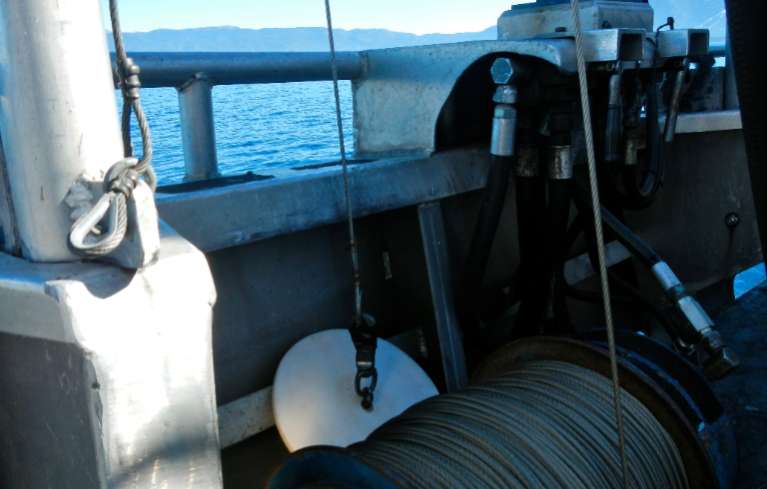
The Secchi disc is ready to be used to test Tahoe's clarity. Photo/LTN

The Secchi disc is ready to be used to test Tahoe’s clarity. Photo/LTN

The 2012 reading of 75.3 feet is a 6.4-foot improvement from 2011. The disc is dropped over the side of a boat and eyeballed by the scientists on deck. Twenty-two readings are taken throughout the year to come up with the average clarity figure. In 2012, 107 feet was the best reading and 57 feet the worst.

“We are very excited about the results from 2012, especially within the context of the long-term record for annual and winter clarity,” John Reuter, associate director of the UC Davis Tahoe Environmental Research Center, said in a statement. “It is particularly encouraging to see clarity improve during wet years when the amount of fine sediments and nutrients going into the lake is high.”

In the world of science a trend is established at about the five-year mark, according to Kristi Boosman with the Tahoe Regional Planning Agency.

Lake Tahoe clarity readings
• 2012: 75.3 feet
• 2011: 68.9 feet
• 2010: 64.4 feet
• 2009: 68.1 feet
• 2008: 69.6 feet
• 2007: 70.1 feet
• 2006: 67.7 feet
• 2005: 72.4 feet
• 2004: 73.6 feet
• 2003: 71 feet
• 2002: 78 feet
• 2001: 73.6 feet
• 2000: 67.3 feet
— Source: UC Davis

A concerted effort has been under way since 1997, when then President Bill Clinton visited Lake Tahoe for the first environmental summit, to restore the lake’s clarity. That summit led to the environmental improvement program being created and the Lake Tahoe Restoration Act providing money for the program. In the past 15 years more than $1 billion has been spent on various projects in the basin with the primary focus of reducing sediment that clouds the waters of Tahoe.

While monitoring is in place at many of the projects to test what is reaching the lake, it is not possible at this time to point to one thing that is responsible for the improvements.

Researchers say they need more data on stormwater to make more definitive conclusions about why the numbers are changing. Another troubling thing to scientists is the summer clarity numbers continue to decline and they don’t know why.

The Secchi disc has been used since 1968, when the apparatus could be seen to an average depth of 102.4 feet.