Californians flock to Nevada to buy guns

By Cynthia Hubert and Phillip Reese, Sacramento Bee

RENO – They stood in the crisp morning air clutching Red Bulls and bearing arms: Bushmaster rifles poking from backpacks, HK pistols nestled in cases, Colt semi-automatics propped on shoulders.

Thousands of people, many from California and some toting unloaded guns for sale, waited in line for nearly two hours across from Reno’s glitzy Atlantis Hotel on a recent Saturday for the chance to buy and sell weapons. It is a right, they insisted, that never has been in greater jeopardy in America.

The crowd was the largest in memory for the Crossroads of the West gun show in Reno, organizers said, and the reason was hardly a mystery. Gun advocates are nervous amid talk of proposed laws that could restrict their ability to buy and sell weapons and ammunition. Already, several noted, gun shops across the country are reporting shortages.

guns“Why are there so many people here today?” asked Ellis Davis of Susanville, just west of the Nevada border, marveling at a line that stretched a quarter of a mile around the convention center. “Because they want to take away our gun rights.”

The push for federal gun legislation is designed in part to deal with disparities among states with stricter gun laws and those that allow for purchase of a wider array of weapons with far less scrutiny.

Disparate gun laws make it easier for residents of California, for example, to travel to Nevada to buy just about any weapon they choose without undergoing background checks. The issue is a topic of discussion in Congress and among state lawmakers across the country.

California’s laws are among the most stringent in the country. Only seven states, including California, ban the sale of large-capacity magazines. Eleven states, California included, require waiting periods of up to two weeks between the purchase of a gun and the transfer of the gun. The other 39 have no waiting periods.

President Obama and the Congressional Gun Violence Prevention Task Force are calling for, among other things, requiring background checks for every gun sale. Today, many people buying firearms do not undergo such checks because federal law requires them only when someone buys a gun from a licensed dealer.

Obama’s team also is calling for legislation that would crack down on illegal gun trafficking and “straw purchasing,” in which a man or woman with no criminal history buys guns for someone who is barred from owning them. Lawmakers have yet to lay out specifically what type of legislation might be effective in stopping the practice.

And they are pressing to reinstate and strengthen a federal ban on assault weapons that can fire many shots in a short time. That ban expired in 2004, and efforts to revive it have failed repeatedly.

Leading the charge on Obama’s behalf is Rep. Mike Thompson, a St. Helena Democrat and gun owner who is a former co-chair of the Congressional Sportsman Caucus.

Thompson, a hunter and combat veteran who carried an assault rifle in Vietnam, argues that tough restrictions in individual states are not enough to prevent criminals from getting guns. Californians flock to gun shows in Nevada, he said, where in private sales background checks are not required. He contends some of those guns turn up at crime scenes.

Statistics from the Bureau of Alcohol, Tobacco, Firearms and Explosives back him up. The federal agency traced the source of 50,000 weapons used in California during crimes from 2009 to 2011 and found that roughly a fourth of those guns came from outside the state. Nevada and Arizona were, by far, the leading suppliers, accounting for roughly a third of out-of-state weapons used in crimes.

National background checks and other federal restrictions, Thompson said, would “make it real tough” for criminals, people with documented mental problems or anyone else to procure weapons outside their home states.

But not everyone is supportive. Historically, Nevada residents and their leaders, particularly those outside of Las Vegas, have resisted gun control efforts.

In response to fears that Obama will unilaterally dictate who can own a gun, Jim Wheeler, a Republican Nevada assemblyman from Gardnerville, has introduced a bill that says the state attorney general must defend anyone arrested as a result of a presidential executive order that violates the Second Amendment.

“To me, about any law is too many laws,” Wheeler said.

Stockton killings spurred action

Before Sandy Hook Elementary in Connecticut there was Cleveland Elementary in Stockton.

In 1989, a drifter who had attended school in South Lake Tahoe armed himself with an AK-47 rifle and peppered Cleveland Elementary with bullets that killed five children and wounded 30 others. A year later, California passed its ban on possession of semi-automatic assault weapons. Since then, state lawmakers have tightened restrictions in a range of areas, from who can buy guns to how and where they can be purchased.

In California, gun buyers must obtain their weapons from a licensed dealer and wait 10 days to get them. That “cooling off” period helps prevent gun violence committed in the heat of emotion, advocates argue.

In addition, names of gun buyers in California are checked against the National Instant Criminal Background Check System database. Federal law bars various people, including felons and those with documented mental illness, from buying weapons.

Serial numbers of guns purchased in California are registered with the Department of Justice, which allows police to trace them if they are used in crimes.

On the heels of the Sandy Hook shootings late last year, some state legislators want to get even tougher on gun owners.

Sen. Leland Yee, D-San Francisco, is carrying a bill that would make it harder to alter military-style weapons to be loaded with high-capacity magazines.

Other proposed measures include a tax on ammunition sales, an expansion of the definition of banned assault weapons, and a requirement that residents obtain a permit before buying ammunition.

The permit proposal, which police argue could help lead them to illegal weapons, is among the most controversial. Currently, only Sacramento and Los Angeles have ordinances barring ammunition sales to people with criminal records.

Yee cited studies showing that states with the toughest gun laws, including California, have the lowest per-capita rates of gun-related deaths.

“It’s a fact that gun laws work and weak laws result in the loss of innocent lives,” he said. “Clearly, there is a direct correlation between common-sense gun laws and fewer gun-related homicides.”

A different mind-set has set the standard for gun ownership in California’s neighbor to the east, where Nevada residents are governed by some of the most liberal weapons laws in the nation.

There, private citizens can go to gun shows and yard sales and legally buy and sell weapons to other state residents. No background checks are required, nor are guns registered with the state, with the exception of Clark County, which includes Las Vegas.

And unlike California, Nevadans can buy and sell machine guns capable of firing a large number of shots in rapid succession.

As in California, the loss of 20 young children in the Sandy Hook shooting has prompted some Nevada lawmakers to call for stricter regulations. The proposals making their way through the state Legislature include requirements for statewide gun registration and an excise tax on guns and ammunition that would fund mental health treatment.

But in Nevada, such measures are anything but slam dunks.

Wheeler, the Gardnerville assemblyman, said he doubts stricter gun laws will pass in Nevada anytime soon, noting that a law streamlining who can carry a concealed weapon just cleared a state Senate committee.

“The culture is different,” he said, describing an independent streak that drives Nevadans to find their own way. Most gun control efforts, he noted, originate in urban areas.

“I grew up in L.A. In California, you have a lot of huge cities. We don’t. We have one huge city, one medium-sized city and the rest are small.”

Californians flock to Reno show

Outside the Reno Convention Center, where dozens of gun and ammunition dealers hawked their wares at the Crossroads of the West gun show last month, the buzz also was about laws.

Waiting for the doors to open, Ellis Davis, the Susanville resident, sported a baseball cap with the words, “Keep Guns In The Right Hands: YOURS.” He opined that the nation has more laws than it needs, especially with regard to guns.

“It’s not me shooting and robbing people,” said Davis, a retired corrections officer. “It’s the criminals. We’ve got a right to protect our homes and our families.”

Based on attendance at the Reno show, many Californians share his view. At least a third of the cars parked around the convention center carried California plates.

Californians can buy weapons from dealers at such events, but by law are supposed to have them shipped across state lines, where the guns are processed through registered dealers. In private transactions, Nevada sellers by law cannot knowingly sell guns to Californians.

But many at the Reno event acknowledged that, especially in private transactions, both parties sometimes look the other way.

“There’s no law that tells me I can’t sell to someone from California,” said one Nevada resident hoping to pick up some cash for a semi-automatic weapon he carried in his backpack. “It’s not on me if they drive over to the communist side with this thing. It’s on them.” He declined to give his name.

By noon on the first Saturday of the Reno gun show, about 5,000 people had purchased tickets – more patrons than typically show up over the entire two-day event, said organizer Todd Johns.

“This is about the busiest show we’ve ever had,” Johns said. At other shows in the Western United States, “attendance has doubled and even tripled” in recent months, he said.

Despite the large crowds, the scene was calm as patrons filed into the convention hall. Those carrying guns turned them over to security personnel, who checked to see they were unloaded and disabled the triggers with plastic attachments.

Once inside, many gun owners bolted for the ammunition lines, while others perused dozens of tables featuring new and used guns, antique knives and gun-themed T-shirts and jewelry. Cowboy hats, camouflage wear and NRA caps were in abundance, along with $7 beers sold just outside the room.

Private sellers huddled, trading information about weapons and exchanging cash, while more than two dozen licensed dealers did a brisk business selling shotguns, handguns and semi-automatic rifles. Routinely, the licensed dealers asked for proof of Nevada residency.

Nevada resident Joe Potseaga was among those trying to cut a private deal. Like others, he worked the room with a semi-automatic rifle slung around his back and a cardboard sign advertising it for sale.

Potseaga, who said he takes part in sanctioned shooting competitions, sold a pistol to a fellow Nevadan. He said he respects the law when conducting private sales, and believes most others do the same.

“I wouldn’t just hand it over for cash to someone from California,” even if the price were right, he said.

Potseaga said his pistol buyer produced identification and “compelling proof that he is not a criminal and could lawfully own a weapon.” The compelling proof? “His word,” Potseaga said.

Prosecutions can be challenge

Graham Barlowe has spent a career enforcing California’s gun laws as an agent for the federal Bureau of Alcohol, Tobacco, Firearms and Explosives. He contends the controls break down if California residents can drive a few hours and flout the state’s gun laws.

“Different states have different standards,” said Barlowe, Sacramento’s agent in charge for the ATF. “It’s impossible for the states with more restrictive standards to maintain them if someone can get around them by going to another jurisdiction.”

Some California residents use creative methods to buy guns and avoid processing delays, including procuring fraudulent Nevada driver’s licenses, he said.

In one pending federal case, a San Bernardino County resident is accused of buying 22 handguns at pawn shops in Las Vegas over a year using a fraudulent Nevada identification card. The man was caught after he listed his California address when registering the gun.

In another case, a woman working for a Carson City brothel bought four identical handguns in Nevada then drove to Sacramento, where she reported them stolen.

“The guns started turning up in the hands of gang members,” Barlowe said.

Prosecuting illegal gun cases can be a challenge, said Barlowe, because of limited resources in district attorneys’ offices and the conservative bent of juries in states where gun laws are more lenient.

“The jury of their peers is in Nevada,” where the sales take place, he said, and most likely would have differing views about guns than Californians.

“It’s very hard. You are just not going to see a large number of prosecutions.”

Benjamin Wagner, U.S. attorney for the Eastern District of California, said his office has recently prosecuted cases involving “straw buyers” purchasing guns for criminals.

“We are very much aware that there are firearms that flow from Nevada to California in violation of federal law,” Wagner said. But his office mostly focuses on major gun traffickers.

In recent weeks, Thompson has been busy selling his package of gun measures to constituents and news media in California and colleagues in Washington. He said he believes Americans are ready for tightening laws that curb gun violence while “protecting the Second Amendment right to own firearms.”

“I am working to make sure Congress acts, and I am confident we will act,” he said.

Yet he knows the proposals will be a tough sell to many around the country.

“If you do a lot of background checks, a lot of this stuff will take care of itself,” Thompson said. But, he added, “I’m not going to give up my guns, and I’m not expecting anyone else to give up theirs.”

Joe Potseaga and his cousin Andrew aren’t buying it.

Like many at the Reno show, they said they resent politicians who want to intrude into matters they feel are already addressed by the Constitution.

“We love our country dearly,” said Andrew Potseaga. “But it’s none of the federal government’s business knowing what kinds of guns people have.”



South Shore trying to unchain itself from economic blight

By Kathryn Reed

For years, people on the South Shore have gathered to give voice to what they want their community to evolve into. Tuesday night was another opportunity to do more of the same.

But it was also a chance to hear from a diverse group about how some of those ideas are now projects in the ground – like Lakeview Commons and Van Sickle Bi-State Park.

Shawn Butler with the California Tahoe Conservancy talks about the bike trails his agency is working on, as well as how Van Sickle Bi-State Park provides easy access to the outdoors to the main bed base on the South Shore. Photo/LTN

Shawn Butler with the California Tahoe Conservancy talks about the bike trails his agency is working on, as well as how Van Sickle Bi-State Park provides easy access to the outdoors to the main bed base on the South Shore. Photo/LTN

A slew of speakers on March 5 updated the nearly 200 people gathered at Embassy Suites South Lake Tahoe about the completed projects, those that are about to begin, what is in the planning stages and what is in the visioning stage. They included:

• B Gorman – Lake Tahoe South Shore Chamber of Commerce

• Joanne Marchetta – Tahoe Regional Planning Agency

• Nancy Kerry – South Lake Tahoe

• Kim Kerr – El Dorado County

• Brandy McMahon – Douglas County

• Russ Pecoraro – Vail Resorts

• Shawn Butler – California Tahoe Conservancy

• Patrick Rhamey – Edgewood Companies

• Lew Feldman – Feldman McLaughlin Thiel (law firm)

• Christian Strobel – Basecamp Hotel

• Chris Proctor – Barton Health (physical therapist)

• Bob Sullivan – South Tahoe High School

• Karen Borges – Lake Tahoe Community College

• Carl Hasty – Tahoe Transportation District

• David Zehnder – Economic & Planning Systems (Sacramento consultant who did loop road financial study).

Their topics ranged from the South Lake Tahoe-El Dorado County recreation plan that is in its infancy, to the two area plans for the South Shore on the respective state line that are on the fast track, to Heavenly ski resort turning the mountain into a year-round playground, to retail being built at the hole this summer with a design that will complement Heavenly Village, to Barton Health eyeing property in Douglas County for a center for orthopedics, to South Tahoe High and Lake Tahoe Community College elevating K-14 education to a level not seen here before.

The overwhelming message was that the South Shore needs to embrace that it is one community and one economy with a focus on recreation.

Collaboration – public and private – was stressed. What that looks like and how much compromise will be necessary in the name of the greater good is a discussion for another night.

The underlying theme is the South Shore is failing – economically and environmentally – and something (or several things) need to change to make the area vibrant.

With the fall being beautiful and snow coming early, people have been coming to Tahoe in greater numbers than they did a year ago. South Lake Tahoe’s transient occupancy tax is up 25 percent from October 2012 through January 2013 compared to the same four months a year ago. And the number of room nights rented in January was up nearly 40 percent compared to 2012.

But as was noted at the October forum, the South Shore is losing market share to other entities.

When it was time for each of the 18 tables full of residents, business owners and interested South Shore-ites to talk among themselves they were tasked with coming up with an idea or concept of utmost importance, explain why and how it will have an economic impact on the region.

They ranged from:

• All parties need to be accountable

• More than one project every 10 years must to be completed

• Establish an outdoor music festival that isn’t in a parking lot

• Increase transportation beyond Stateline to the Y

• Create year-round employment for college educated people

• Bridge the divide between the various areas of the South Shore

• Find money for projects

• Increase community pride

• Get more people involved

• More trails and make them useable year-round

• Connect to the outside world – nationally and internationally – to get people here

• Become an arts and culture center

• Create a dynamic draw based on what Tahoe already has to bring people here.

This was the second economic forum in five months. Organizers – the Tahoe Prosperity Center, Lake Tahoe Chamber of Commerce and South Lake Tahoe – plan to have more in the near future.


Tahoe slow to memorialize Olympic history

By Sam McManis, Sacramento Bee

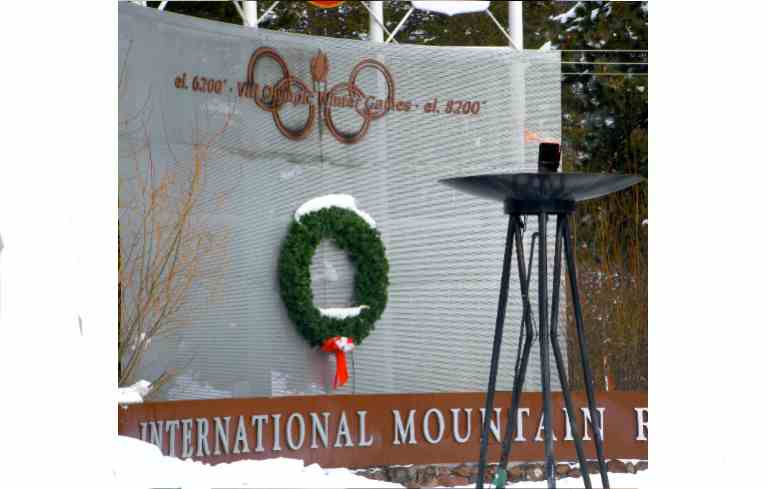
TAHOE CITY – Flames lick the crisp morning sky, as they’ve done for decades from two cauldrons along Highway 89, midway between Truckee and Tahoe City. They don’t quite reach the Olympic rings looming from the twin-towered entrance to Squaw Valley USA, but their symbolism burns strongly. Once, these flames announce, something extraordinary happened here.

But that’s it, ladies and gentlemen. There is your Squaw Valley 1960 Winter Olympic Games history, in toto.

Move along, now. Go hit the slopes.

Nothing else to see here.

The Olympic flame at the entrance to Squaw Valley. Photo/LTN file

The Olympic flame at the entrance to Squaw Valley. Photo/LTN file

Actually, there is plenty of history to be cataloged and relished about Squaw Valley’s brief and unlikely period on the world stage. But you’d almost have to embark on an archaeological dig to unearth it.

There is no permanent museum documenting Northern California’s lone flickering fortnight of Olympic glory. No repository for keepsakes and mementos. No place to educate youngsters who consider the X Games the pinnacle of snow-sports achievement.

It’s not for a lack of trying. For five years, a group of avid skiers and history buffs has been trying to rectify this gross slight, in a curvy giant slalom of an effort.

The Squaw Valley Ski Museum Foundation has doggedly drawn up plans, redrawn them a few times, chatted up Placer County politicos, elicited public donations of funds and memorabilia, yet it still has not yet reached the finishing chute to actually break ground on a facility.

So, until a permanent museum can be erected – Lake Placid, N.Y., by the way, boasts an Olympic museum that draws 35,000 tourists annually – what we’ll have to settle for is a four-panel display hanging in the Boatworks Mall in Tahoe City.

Yet even on such a small scale, the array of artifacts from the 1960 Games is impressive.

Programs, pins and pennants. Photos from official Olympic photographer Bill Briner. Promotional material, such as an “Olympic Survival Kit” from Harrah’s Club, and a jaunty felt Nordic hat with an “Olympic VIII Winter Games” logo ironed on. Magazine covers, from Time, Newsweek, Sports Illustrated. A red bib number worn by a downhill competitor.

Best of all is a sign posted in the window of a nearby boarded-up bookstore, reading: “Future Site of the North Tahoe 1960 Winter Olympics Museum, coming April 2, 2013.”

So, history will finally get its due?

Sort of.

Consider the future Boatworks Mall site a temporary home, said David Antonucci, the force behind the mall effort. An author and Squaw Valley Olympics historian, Antonucci has teamed with the Baptiste family of Granite Bay, which has an extensive collection of Squaw Valley Games memorabilia, to give the public a taste of what a larger, permanent facility might offer.

“The history is totally underappreciated,” Antonucci says. “In the aftermath of the Olympics, it was like people walked away from their heritage. Now, 50 years later, people are saying, ‘Gee, we should be preserving and honoring our Olympic and skiing heritages.'”

For the past six months, Antonucci has cataloged Stan and Maryann Baptiste’s more than 200 artifacts and sent out the word that they are looking for other items residents may have kept from the Games.

He said he sees the Boatworks site as an acceptable temporary home until the “world-class museum” the Squaw Valley Ski Museum Foundation plans can be approved. Antonucci said he and the Baptistes had no plans beyond the four-panel display, but added that the mall’s owners offered the empty space rent-free after “they saw what kind of artifacts we had.”

Ideally, Antonucci says, the Baptiste artifacts will be combined with a big collection of non-Olympic but historical ski memorabilia held by the Auburn Ski Club, and housed at the foundation’s proposed permanent site at the entrance to Squaw Valley USA.

What’s the holdup with the “real” museum?

Bill Clark, head of the foundation’s board of directors, said museum consultants they hired in 2009 to do a site selection determined that the best spot for the museum was at the county-owned park at the base of Squaw Valley USA – near those dueling Olympic flames.

“It makes so much sense to put it there it’s mind- boggling,” Clark says. “(But) there were some folks who didn’t think that was the greatest idea, mostly because our consulting architects threw out conceptual plans that showed this enormous building. It originally looked like it was going to overwhelm the park.

“But if it’s properly sized and sited within that park, and if we can work with (Placer County) with the operation, we think it’s a win-win. We’ve done a revised concept and been sharing it with different supervisors in the county. But we have not gotten to the point where we’ve had any formal sort of evaluation.”

In other words, don’t expect a swift, luge-run type of approval any time soon.

But Clark is optimistic. He thinks it’s important to preserve Squaw Valley’s history, and he’s excited about some of the items his group has stumbled upon.

“Every day, we hear of things hiding in people’s closets,” Clark says. “We know where the scoreboard from the Olympic ice arena is hiding. I just got an email from a guy the other day who (said) his brother had purchased the downhill skis from the giant slalom winner. He walked up to (the winner, Roger Staub of Switzerland) in the finish corral and said, ‘I’ll give you $20 for the skis.’ He’s going to donate them. We have the winning hockey puck from when the USA beat the Russians. A guy from Rocklin ran out on the ice and grabbed it.

“There’s some great stuff.”

Until then, if you want history, nod to the flames but head to the mall.


Drug Store Project — 10 years of anti-drug message

Publisher’s note: This is first of a few articles about the Drug Store Project. This marks the 10-year anniversary of the program. This year’s event will be April 2 at Lake Tahoe Community College. For more info about volunteering, donating or if you have questions, email Lisa Huard at lhuard@ymail.com.

By Lisa Huard

The Drug Store Project is a reality-based depiction produced each year for the sixth-graders in the South Lake Tahoe area. We strive to show our youth the possible consequences one can experience with drug and alcohol use.

The research out there is mind-boggling even for those of us who regularly use it. There are endless studies and just as many interpretations of the data, but one thing continues to stand out amongst all the information; the sooner we can deter a youth from experimenting with drugs and alcohol, the better the chance they will not use drugs as an adult.

It's not real here -- but the consequences of drug use and abuse could result in death. Photo/LTN file

It’s not real in this scene from Drug Store Project — but the consequences of drug use and abuse could result in death. Photo/LTN file

Going from childhood to adolescence is the tightrope our kids walk every day and learning “who they are” and “what they believe to be true about themselves” is their individual challenge.

Yes we can teach them the information, providing we’ve taken the time to understand it ourselves. But when the rubber hits the road it will be the individual themselves who makes the final decision.

“Choices, what are yours” is a reminder to our kids that they are truly the one making decisions about their health and future.

This day-long event isn’t the answer, but it is an opportunity for all involved to learn factual information and to step out of the “me zone” and learn about how our behaviors affect all of those who love and care for us. Tobacco, alcohol, marijuana and other drug use/abuse has an enormous negative ripple effect on family members, friends, communities, and our nation. It costs us in lives and it’s financially costing our nation more and more.

The National Institute on Drug Abuse conducts a yearly survey that focuses on the nation’s eighth-, 10th-, and 12th-grade students from 395 public and private schools accounting for approximately 50,000 students. Students are surveyed as teenagers and followed subsequently for many years on an individual basis. The 2012 Monitoring the Future survey is comprehensive and one conclusion drawn shows a continued high use of marijuana by our kids.

Our local California Healthy Kids Survey mirrors that concern. The survey also showed that teens’ perception of marijuana’s harmfulness is on the decline; they believe that it’s not such a big deal. This in itself could be the reason of increased experimentation/use of marijuana use amongst our youth.

NIDA sites a 38-year funded study which was published this year in the Proceedings of the National Academy of Sciences which showed a significant drop in IQ (8-points) between the ages of 13 and 38 of people who were cannabis dependent. Those using cannabis heavily before age 18 showed impaired mental abilities even after they stopped using. Their findings, as many others, show a link between prolonged marijuana use and cognitive impairment.

I’d love to say that our educational system provided for drug prevention and violence prevention education beginning in grade K and throughout a child’s learning career, but it doesn’t. If it did, if the money and time were spent, I do believe our children would do better as students, be more successful meandering through adolescence, and would be happier and more thriving adults. I also venture to say that with consistent and accurate information in school and at home, we’d have less of a demand for drugs therefore we’d see less deaths, less health issues, less health costs, and more productive citizens.

As I indicated earlier, the Drug Store Project isn’t a cure, but it does provide all involved with information to consider and a platform to begin the discussion. We can all do our part by becoming more knowledgeable, more aware, and more approachable in speaking and supporting our youth.

If you’d like to see a bit more about our program, go online.

Lisa Huard is a safe schools consultant who lives in South Lake Tahoe.


Embassy Suites South Lake Tahoe being rebranded

By Kathryn Reed

The days are numbered for Embassy Suites South Lake Tahoe – the largest hotel in the city limits.

In a statement to Lake Tahoe News from Hilton Corp., the parent company of Embassy, it says the owners of the hotel “decided to terminate its management agreement with Hilton Worldwide.”

It goes on to say, “The resort will continue its day to day operations without disruption of service under the terms of the management agreement with Hilton Worldwide until March 31 or a date to be determined by the owner.”

Embassy Suites South Lake Tahoe will soon have a new name. Photo/LTN file

Embassy Suites South Lake Tahoe will soon have a new name. Photo/LTN file

It will be called Lake Tahoe Resort Hotel. All 220 employees will keep their job. PHR Management Inc., an affiliate of Ken Corp., will be operating the hotel.

The hotel has been an Embassy Suites since it opened in December 1991. And it has been in and out of financial trouble for those 21 years.

Bill Cottrill, director of sales and marketing for the local Embassy Suites, did not return multiple phones. Dominic Acolino has been replaced by former General Manager John Steinbach to operate the nearly 400-room hotel.

When calling March 4 to inquire about booking a room in April, the reservation’s employee knew nothing about the change in hotel management. He also said the signature breakfast and manager’s cocktail receptions would be available. Whether this is true next month and beyond remains to be seen.

Hilton PR deferred comments to Masaru Saito with Roppongi-Tahoe Lp. Saito never picked up his phone and voicemail was not available. Max Saito with Ken Corp. did not return multiple calls.

Roppongi-Tahoe Lp, a subsidiary of Ken Corp., has owned the property since 2000. Ken Corp. bought the property in a bankruptcy deal. KOAR-Tahoe Partners was unable to keep up with it payments to Mitsui Trust & Banking Co. The firm had a $53 million seven-year construction loan because it was trying to convert 188 of the rooms to time-shares.

Ken Corp. in February 2012 defaulted on a bond payment and later in the year faced foreclosure. How the finances have been restructured for this ownership group to retain the hotel is not known. Nor is it known where the $5 million to $7 million in upgrades that are expected to start this summer will come from. In December 2006, the hotel underwent $3 million in renovations and has often been recognized for its environmental innovation.

While the owners struggle under debt, the hotel itself has been profitable. Embassy Suites generates the largest percentage of hotel tax on an annual basis of all South Shore properties.


Arts scene in Tahoe thriving

By Robert Schimmel

I’ve been involved with and in the arts for too many years to put up with the complaints regarding “there’s nothing to do in Tahoe”.

Sure, this isn’t New York, San Francisco, Chicago, Santa Fe, Jackson Hole or even Vegas, which may just be why you are here. This is beautifully and uniquely Tahoe, small and spectacular in myriad ways. And trust me, in case you haven’t been to the other places, they don’t have Big Blue, snowcapped skiable peaks, hiking, camping, boating, fishing, stage shows, five-star dining, etc., all at their fingertips. Nope, they have to drive for hours to find views that can’t even match our repetitiously scenic shots or to breathe air they can’t see.

Robert Schimmel

Robert Schimmel

So when someone moans about his or her boredom or lack of stimulating cultural activity, do us all a favor and encourage a return ticket, a Google search class at Lake Tahoe Community College, or getting involved with solutions rather than complaints. Then mention this sampling of events to see if there’s any real heart behind the whining as Tahoe’s vibrant community of amazing artists and organizations step up to make this as unique and fulfilling a place to live as any traffic congested or glamour saturated, billboard lined boulevard in this country.

Sure, Tahoe has challenges regarding sustaining and growing the arts like any city, and I fully intend to keep you as aware of them as I can and to offer solutions or involvement opportunities. Meanwhile, let’s get a grip and appreciate this sliver of great offerings.

January began with Lake Tahoe Community College’s opening of three stimulating and distinct exhibits. This art department holds a candle to no one and seeks the finest nationally known or academically accomplished artists to take part in its Haldan Gallery shows. The “Cadre Show” — Laboratory for new Media at San Jose State University — shook the usual parameters of simple viewing. I loved it once the artists explained their interactive concepts. In The Foyer Gallery, Suzanne Roberts presents her “The World of Streets” photo exhibit that opens ones eyes to just that. And in The Commons Gallery the South Tahoe High School Student Exhibition amazes and encourages anyone regarding creativity in our young people.

All exhibits are up through mid-March.

Shifting to classical music and choral performance, Tahoe Symphony Orchestra and Chorus (TOCCATA) had its eighth winter MusicFest Jan. 19-20 with nationally known violinist Elizabeth Pitcairn performing Prokofiev’s Concerto in D major on the legendary red Stradivarius violin in South Lake Tahoe and Incline Village. Trust me, again, this was fabulous and a must-hear when she returns in September.

A similar and equally elegant performance I missed came Jan. 31 — W’intermezzo at Edgewood in Stateline presented by Soroptimist International of South Lake Tahoe. It featured the internationally acclaimed classical duo of American pianist Deborah Dewey and Icelandic violinist Elfa Run Kristinsdottir performing a selection of works by Telemann, Schubert and others.

And for the second straight year, Rotary’s classy and intimate Off the Wall fine art auction on Feb. 9 at Inn by the Lake in the South Lake Tahoe was a resounding success. Notable artists and guests partook in the social benefit and excitement of the live auction, tasty hors d’oeuvres and Champagne. This small, but warm venue seems to fit perfectly, but I hope over the next few years we will see a larger scale fine art affair developing with the community’s support for scholarships made possible by Rotary.

Oh, whispers have it that just maybe LTCC, who partnered a bit this year, will continue and even increase its support. Some of us recall the elegant Art from the Heart events years ago.

Bert’s Café owner Bueno Ketelsen and Casey Bartlemay perform the Paso Doble dance March 1. Photo/Kathryn Reed

Bueno Ketelsen, Bert’s Cafe owner, and Casey Bartlemay perform the Paso Doble dance March 1. Photo/Kathryn Reed

On March 1 a full house resulted at Dancing with the Stars, presented by Tahoe Arts Project at MontBleu casino, with more buzz and excitement than I’ve seen in quite awhile for an informal, non-auction, no freebies event. In this case, the visiting artists were the Utah Ballroom Dance Company that makes their shows unique with an adaptation of the popular TV series “Dancing with the Stars” format in their week-ending public performance. The kids, parents, and entire audience loved the experience, and this particular formula, to me, is a grand slam as it also brought divergent elements of the community into the mix and expanded appreciation for the arts all the more. Thank you, TAP and UBDC. Are we thinking annual event?

The full list of happenings is lengthy and may or may not fit ones taste or daily needs, but Tahoe’s “got game” and don’t let anyone tell you differently unless they can buy your ticket, too.

Robert Schimmel is a professional artist and teacher in South Lake Tahoe as well as host of “Lake Tahoe Art Scene” on KTHO radio on Thursdays at 5:15pm.


Douglas County plotting course to be recreation oriented community at Tahoe

By Kathryn Reed

STATELINE – Outdoor fun and buildings that match the natural beauty are the goals of Douglas County’s South Shore Area Plan.

“Our overall objective is to transform the casino area to recreation,” Brandy McMahon, senior planner with Douglas County, said at a meeting March 1. “We want to provide a wide-range of recreation in walking distance.”

It means making a seamless connection between Van Sickle Bi-State Park to the Stateline-to-Stateline bike route that is partially built at Rabe Meadow and will extend to Round Hill Pines later this year, to providing beach access via Edgewood when the lodge is developed, to getting people to Kahle Community Center.

Rabe Meadow in Stateline is part of vision to develop a more recreation-focused community. Photo/LTN file

Rabe Meadow in Stateline is part of the vision to develop a more recreation-focused community. Photo/LTN file

While the vision for the South Shore from Kahle Drive in Stateline to Ski Run Boulevard in South Lake Tahoe has been the subject of many intense discussions for more than a year, each jurisdiction must define its own vision. While they do so, the respective planning departments are conferring with each other to create similar design standards.

Douglas County has three community plans and 30 residential plan areas on the books. With the adoption in December of the Regional Plan by the Governing Board of the Tahoe Regional Planning Agency, the five counties and one city in the Lake Tahoe Basin are tasked with creating area plans. In many ways they are like the community plans, but updated.

The South Shore plan for Douglas combines what was the Casino Core and Lower Kingsbury community plans.

A change for Douglas County is that the commissioners at a meeting in February agreed to take over permitting for residential construction. As of 2012, at the lake Douglas County has 102 vacant parcels. If nine building allocations are give out annually by the TRPA, this would mean those lots could be built out in a dozen years.

Only two single-family residences have been identified in the South Shore Area Plan. Those are on the Edgewood site. Today no one resides in them. And they are slated to be demolished when the lodge is built in the coming years.

This means it is commercial, recreation, public lands and multifamily housing units that will be affected by the South Shore Area Plan.

Paying attention to the various thresholds within the TRPA guidelines is critical to all the area plans, as well as looking at ways to reduce pollutants reaching Lake Tahoe.

Today, the Stateline area has not attained the scenic threshold because of its outdated built environment.

Douglas County contributes a negligible amount of fine sediment into Lake Tahoe – 3 percent of the total – or 125,000 pounds per year, according to the Lake Tahoe Total Maximum Daily Load Technical Report.

The mandate is to reduce that amount by 10 percent by 2016.

All documents related to the South Shore Area Plan are expected to be put on the county’s website as they become available. Comments are being sought and should be sent to Brandy McMahon at mbcmahon@co.douglas.nv.us.

Dates to know:

• March 12, 5:30-8pm South Shore Area Plan workshop at TRPA, 128 Market St., Stateline.

• March 20, 6-9pm South Lake Tahoe is hosting a public workshop on the Tourist Core Area Plan, formerly known as the Stateline/Ski Run Community Plan, at Lake Tahoe Airport.

• April 9, 1pm Douglas County Planning Commission meeting in Minden. All documents related to the South Shore Area Plan area expected to be discussed, with action likely.

• May, Douglas County commissioners expected to vote on plan.

• June, TRPA Governing Board may hear Douglas’ plan.


Easy to escape the masses at snowshoe park atop Colorado ski resort

By Kathryn Reed

BEAVER CREEK – Debris is falling from high up in the tree, creating a mess of sorts at the base. That was the work of a porcupine, that while not easily seen, was obviously sitting high atop a branch in what she thought was an isolated spot.

On this particular Friday a group of snowshoers is taking in a small slice of the 32 kilometers of trails through Beaver Creek’s McCoy Park Nordic Center. We don’t seem to interrupt the chomping above us.

Guide Laurie Hardmeyer points out other signs of wildlife.

Naked aspens provide a surreal landscape at Beaver Creek on a cloudy day. Photos/Kathryn Reed

Naked aspens provide a surreal landscape at Beaver Creek on a cloudy day. Photos/Kathryn Reed

Coyotes, fox and black bears call this terrain at 10,000 feet home. So do ermine, which are part of the weasel family. We see their tracks in the couple inches of fresh snow that has fallen overnight.

“They dive under the snow and eat their weight in mice and voles every day,” Hardmeyer says. “Under the snowfall there is this ecosystem.”

Our leader says she saw eight ptarmigan (a medium-size bird) on the trail earlier in the season, which she said was unusual.

Elk chew on the aspens that fill the landscape. It’s a natural analgesic. She jokes that if we get sore on our trek, we can start gnawing on one of the trees. No one tries. After all, we know soon enough there will be plenty of wine to be had to ease any aches.

This excursion is part of the annual Beaver Creek Food + Wine event. (Alex Seidel was the featured chef with Grouse Mountain Grill Executive Chef Gutowski at the Snowshoe & Gourmet Lunch at Gutowski’s restaurant inside the Pines Lodge.)

This land wasn’t always about luxury. Early settlers grew vegetables in the mountains. McCoy, after whom the park is named, was a lettuce grower.

The Nordic center is all about getting people on snowshoes, cross country skis or skate skis. Equipment may be rented, lessons taken or day passes bought for those who come equipped. The trails are accessed via Beaver Creek’s Strawberry Park Express chairlift.

Hardmeyer talks about the views that a sunny day would provide. But there is no evidence of the Sawatch Range, Gore Range or back bowls of Vail. Instead, we are treated to what appears to be a mystic fog that floats through the barren aspens.

Besides the aspens, groves of mostly lodgepole pine dot the landscape. Colorado blue spruce and Engelmann spruce are part of the mix.

“When you need peace and quiet, this is the place to come,” Hardmeyer says.

ngg_shortcode_0_placeholder (Click on photos to enlarge.)


Dry West spurs worries of drought, wildfires

tahoe

Snow has been scarce in the Lake Tahoe Basin in 2013. Photo/Kathryn Reed

By Jack Healy, New York Times

DENVER — After enduring last summer’s destructive drought, farmers, ranchers and officials across the parched Western states had hoped that plentiful winter snows would replenish the ground and refill their rivers, breaking the grip of one of the worst dry spells in American history. No such luck.

Lakes are half full and mountain snows are thin, omens of another summer of drought and wildfire. Complicating matters, many of the worst-hit states have even less water on hand than a year ago, raising the specter of shortages and rationing that could inflict another year of losses on struggling farms.

Reservoir levels have fallen sharply in Arizona, Colorado, New Mexico and Nevada. The soil is drier than normal. And while a few recent snowstorms have cheered skiers, the snowpack is so thin in parts of Colorado that the government has declared an “extreme drought” around the ski havens of Vail and Aspen.

“We’re worse off than we were a year ago,” said Brian Fuchs, a climatologist at the National Drought Mitigation Center.

Last week’s blizzard brought a measure of relief to the Plains when it dumped more than a foot of snow. But it did not change the basic calculus for forecasters and officials in the drought-scarred West. Ranchers are straining to find hay — it is scarce and expensive — to feed cattle. And farmers are fretting about whether they will have enough water to irrigate their fields.

“It’s approaching a critical situation,” said Mike Hungenberg, who grows carrots and cabbage on a 3,000-acre farm in northern Colorado. There is so little water available this year, he said, that he may scale back his planting by a third, and sow less thirsty crops, like beans.

“A year ago we went into the spring season with most of the reservoirs full,” Hungenberg said. “This year, you’re going in with basically everything empty.”

National and state forecasters — some of whom now end phone calls by saying, “Pray for snow” — do have some hope. An especially wet springtime could still spare the Western plains and mountains and prime the soil for planting. But forecasts are murky: They predict warmer weather and less precipitation across the West over the next three months but say the Midwest could see more rain than usual.

Water experts get more nervous with each passing day.

“We’re running out of time,” said Andy Pineda of the Northern Colorado Water Conservancy District. “We only have a month or two, and we are so far behind it’s going to take storms of epic amounts just to get us back to what we would think of as normal.”

Parts of Montana, the Pacific Northwest and Utah have benefited from a snowy winter. But across Colorado, the snowpack was just 72 percent of average as of Feb. 1, which means less water to dampen hillsides and mountains vulnerable to fire, less water for farms to use on early season crops, and less to fill lakes and reservoirs that ultimately trickle down into millions of toilets, taps and swimming pools across the state.

Heavy rains and snow have recently brought some hope to the parched states of Iowa, Minnesota and Missouri, where the drought is easing. But 55.8 percent of the United States remains locked in drought, according to the government’s latest assessments. And states like Nebraska and Oklahoma are facing precipitation deficits of as much as 16 inches.

Without damp soil, many wheat crops will have trouble growing come March and April when they should be in full bloom, and corn and soybeans could be stunted after they are planted this spring. In a year when farmers are planning another record planting, some might be forced to sow fewer seeds because there is not enough soil moisture to go around.

In southwestern Kansas, Gary Millershaski said the wheat on his 3,000 acres was as dry as it had ever been after two years of drought. But as snow fell around him, he was smiling, a guarded optimist for this year’s planting. “If we get above average rainfall from here on, we’re going to raise a wheat crop,” he said. “But what are the odds of that?”

Sen. Mark Udall, Democrat of Colorado, put it this way: “Mother Nature is testing us.”

But Washington is also posing a challenge.

Udall, Sen. Michael Bennet, a Democrat, and other members of Colorado’s Congressional delegation are seeking $20 million in emergency funds to help restore watersheds in Colorado ravaged by last year’s wildfires. So far, there has been little action on the measure. Western politicians are also urging the Forest Service to move more quickly to modernize the shrinking and aging fleet of tanker planes it uses to douse wildfires.

With the across-the-board budget cuts taking effect March 1, financing for the Forest Service’s Wildland Fire Management program was be cut by $134 million. As many as 200,000 acres — an area about the size of Kansas City, Mo. — will not be treated to remove dry brush, dead wood and other tinder for wildfires.

In dry states like Colorado, officials are already preparing for the worst. Wildfires did $538 million in damage last year, burning hundreds of homes and driving away summer tourists. As late as December, when the high country should be blanketed by snow, a 4,000-acre fire continued to burn in Rocky Mountain National Park. To some officials, it was a harbinger of longer, fiercer fire seasons that may come with climate change. “It’s just so dry here,” said Tom Grady, the emergency manager in Aspen and the surrounding county, which is already meeting to fine-tune its fire plans for the summer.

Denver Water, which serves 1.3 million people, depleted many of its reservoirs after last year’s dry winter and an unrelenting spree of 90- and 100-degree summer days. Those basins never fully recovered, and are now an average of 63 percent full. The agency has already idled one water treatment plant to conserve its reservoir supplies, and officials say they are likely to declare a Stage 2 drought, limiting when people can water their lawns.

In northern Colorado, a combination of drought and wildfire is shutting off the spigot for scores of farmers. Cities are worried about ash and sediment flowing from the burn areas into the rivers that supply their water, so they are holding onto every drop possible this year and not selling any water to local farmers.

In 2011, the northern Colorado city of Greeley alone leased enough water to irrigate 13,000 acres of farmland — representing millions of dollars in wages for farmhands, seed money, fertilizer sales and profits for farmers. Every year, just after midnight on Jan. 1, farmers start calling the city to sign up to lease the surplus water. This year, Greeley had to call them all back to say there was none to be had.

Eldon Ackerman, who grows sugar beets, pinto beans and alfalfa on his farm in Wellington, said he had water supplies for only about one-third of his fields. He was praying the spring snow and rains would come to save him. If they do not, he said he might have to let 1,000 acres lie fallow this year.

“There isn’t any more water to get,” Ackerman said.


GoPro changes how people document their lives

By Kathryn Reed

STATELINE – GoPro is a storyteller. No words needed. Sometimes not even sound is necessary. It’s all about motion evoking and provoking emotion.

The little silver cameras are changing the way people participate in sports, view their lives and socialize with family and friends. It’s impossible to visit a Tahoe ski resort without seeing them used as a helmet-cam. And now snowboarders are putting them at the end of what looks like a ski pole, but is more like a tripod, to allow for more than helmet angles.

There’s even an app people can use to see what the camera is seeing so the person knows if they would want to adjust the camera wherever it’s mounted.

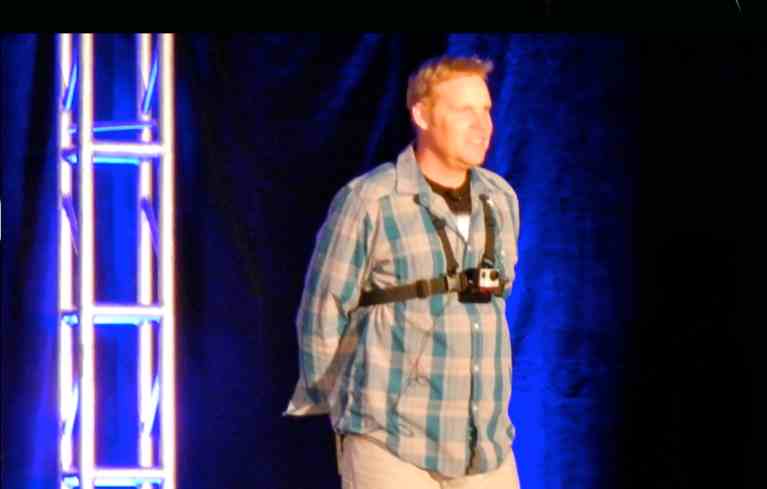
GoPro Marketing Vice President Paul Crandell speaks Feb. 28 at Haveys during Tahoe Snowcial. Photo/Kathryn Reed

GoPro Marketing Vice President Paul Crandell speaks Feb. 28 at Harveys during Tahoe Snowcial. Photo/Kathryn Reed

GoPro founder Nick Woodman is a 36-year-old billionaire. The humble beginnings of the company started somewhat by accident. Woodman wanted to document his buddies catching waves so he mounted a disposable camera to a surf leash. That led to what consumers know today as GoPro.

“GoPro enables people to self-document moments during their favorite activities,” Paul Crandell said.

Crandell, vice president of marketing for GoPro, spoke Feb. 28 on the first full day of the four-day Tahoe Snowcial confab at Harveys.

The fifth annual South Shore event sponsored by Heavenly Mountain Resort, and Harrah’s and Harveys Lake Tahoe is designed to bring together technology, social media and snowsports enthusiasts who are looking to increase their knowledge base and connect with other brands in the digital world.

“We’ve democratized content capture. We want to capture content sharing,” Crandell said. That is the company’s next goal. What that will look like Crandell would not divulge. But he did say there is enough innovation at the San Mateo-based company to keep their product fresh for the next three to four years.

Crandell, who came to GoPro from Red Bull, said what the two companies have in common is a focus on athletes and passion for the outdoor lifestyle.

“We built the brand through athletes. It took a lot of relationship building and working with these athletes. That’s the commonality between Red Bull and GoPro,” Crandell said. He said Red Bull’s approach was to be a sponsor to anything a bank wouldn’t. The energy drink company has risen to the top of its industry in short order.

Much of the video Crandell showed involved the use of more than one GoPro camera. This ensures not just your friends are in the final product, but so are you. It also allows for more angles, more footage – and more editing at the end of the day.

“We are becoming a media company by default,” Crandell said.

GoPro sends video press releases that media outlets are using in newscasts.

Five years ago companies were creating social network teams. Now they are putting together video teams to share their story. And GoPro, naturally, wants the story told with their product.

Crandell had a camera strapped to his chest while he was on the stage. The red light was a clear indicator everyone in the audience was being filmed. While it would be boring to watch the group taking notes on their various devices, it showed that the GoPro camera can be a business tool beyond action sports.