Local governments pay big to influence Sacramento

By Anthony York, Los Angeles Times

SACRAMENTO — Although many of California’s cities and counties have been struggling financially, putting off road repairs, cutting back library hours and reducing police patrols, there is one way in which they have not held back: hiring Sacramento lobbyists.

Local governments’ spending on advocacy in the Capitol has surged in recent years, topping $96 million during the two-year legislative session that ended last fall — an increase of nearly 50 percent from a decade ago.

The sum dwarfs the lobbying bills of the state’s largest labor unions, big oil companies and other energy interests combined, according to the California secretary of state’s office. No sector spends nearly as much trying to influence government in California as government.

One reason is more than two decades of term limits. Turnover in the Capitol and in some local offices has weakened relationships between state and local officials. Many lobbyists work in Sacramento for decades, are more knowledgeable about policy details and intricate funding formulas than sitting lawmakers, and have long-standing relationships with Capitol staffers.

Another is the state budget crises of the last decade, which have taken an ever larger bite out of allocations to local governments, putting municipal and state leaders at loggerheads.

With tens of millions of local dollars going to capital insiders “at a time when cities and counties are cutting back essential services, it’s worth asking whether this spending is the best use of taxpayer money,” said Phillip Ung, a spokesman for the watchdog group California Common Cause.

Local officials say the lobbying expenses are a small price to pay to protect their share of exponentially larger state dollars. The right advocate can steer some state funds in one direction or another, and these days, a lobbyist’s blessing for a policy proposal can carry more weight in the Capitol than a legislator’s endorsement.

Lobbyists may be retained as a defensive measure against decisions made in the Capitol that could adversely affect local communities. They may be asked to help secure state contracts or bond money, or to arrange meetings with leaders of the Legislature and other top government officials.

Orange County officials credited their Sacramento lobbyists, Platinum Advisors, for arranging a meeting last summer with Assembly Speaker John Pérez, D-Los Angeles, that led to last-minute legislation restoring $48 million to the county budget.

The city and county of Los Angeles both have full-time staffs dedicated to monitoring the Capitol, but they seek additional help from several Sacramento-based firms. The two entities paid external lobbyists a combined $5.3 million over the last two years, according to spending reports filed with the state.

The city of Los Angeles paid the Sacramento firm of Shaw/Yoder/Antwih more than $251,000 in 2011 and 2012 combined — part of the more than $3.3 million spent on outside lobbying during those two years. The firm helped secure millions of state bond dollars for city projects and helped defeat legislation that could have required the city to spend as much as $2 billion to repair damaged sidewalks, said Juan Rodriguez, director of state relations for the city.

Other big spenders include the counties of Alameda, San Bernardino and Orange, which each devote more than $1 million annually on outside advocates. But some of the big money comes from small cities.

Anthony Gonsalves, the son of a former assemblyman, runs a lobbying firm with his two sons that specializes in representing cities with populations of 50,000 to 100,000 and budgets to match.

The firm’s three Sacramento lobbyists did nearly $5 million in business during the last two-year session of the Legislature, according to records that lobbyists must file with the state. Most of that business came from the 60 municipalities on its roster.

The cities paid the firm as much as $8,000 per month, often to lobby on legislation that Gonsalves was being paid to address by other clients as well, according to his firm’s state filings. Such fees can be hefty for a small municipality, but the cost of not having such a lobbyist can be much higher, said Alan Kapanicas, city manager of Beaumont in Riverside County, which Gonsalves represents.

Like much municipal funding, most of the city’s budget passes through Sacramento, Kapanicas said, and lawmakers have cut those funds deeply over the last decade. The elimination of redevelopment agencies, for example, deducted billions of dollars from city budgets. The governor and Legislature also transferred responsibility for many low-level criminals from prisons to local jails, straining county budgets.

“The state is always coming up with new ways to take money away from us,” he said. “We need to have some protection” in Sacramento against those efforts.

The city, with slightly more than 16,000 residents and an annual budget of $28.7 million, paid Gonsalves more than $73,000 over the last two years to “be our eyes and ears in Sacramento,” Kapanicas said.

Gonsalves said he offers connections that local officials need in the Capitol and may not be able to make through the legislators from their area. “We are a conduit,” he said. “We have the relationships.”

Many contracts are approved with little or no public scrutiny. Some are arranged by city managers and approved pro forma by council members, without public discussion. Some have come under criticism.

A January report from City Controller Wendy Greuel found that the Los Angeles Department of Water and Power approved four no-bid contracts totaling $480,000 to Sacramento advocacy firms. None of the contracts had been advertised publicly or required regular updates from the lobbyists on their work.

In Malibu, officials raised concerns about potential conflicts of interest in the way their work was being handled by a firm called California Strategies, which the city has paid $150,000 a year since 2004 for state government advocacy. The firm simultaneously represented U2 guitarist David Evans, better known as the Edge, in his 2009 quest to build five homes on the bluffs overlooking the Malibu coastline — an effort some members of the City Council opposed.

“It made me uneasy, because the lobbying firm [was] representing something the city may not be happy with,” said Jefferson Wagner, who sat on the City Council from 2008 until mid-2012. Wagner was opposed to the development and told the city’s advocate, California Strategies’ Ted Harris, that the firm’s work on the project “made it awkward for me.”

Jason Kinney, a spokesman for the firm, said its partners determined there was no conflict in accepting Evans as a client because the necessary permits were dispensed by the California Coastal Commission, not the Malibu City Council. The Coastal Commission ultimately rejected the project.

Sometimes there are personal ties between local governments and their lobbyists. The Yucaipa Valley Water District paid more than $110,000 to Platinum Advisors during the last two-year legislative session. One of the firm’s lobbyists, Brett Granlund, is the brother of district board member Bruce Granlund and ex-husband of another member, Lonni Granlund.

Joseph Zoba, general manager of the Yucaipa Valley Water District, said the Granlunds recused themselves from the vote on hiring a lobbyist.

“Brett is a former city councilman and assemblyman from Yucaipa. He has a great working knowledge of Yucaipa,” Zoba said. “Most people don’t even know where we are on the map. Having someone like Brett really helps out.”


League brings awareness to Tahoe storm pipes

By Kathryn Reed

A whole lot of brown gunk is coming out of storm pipes that flow into Lake Tahoe. While that isn’t news, greater awareness is being brought to the issue.

The League to Save Lake Tahoe has identified 50 pipes in the basin carrying runoff water, but believes there are more. One of the problems is there is not just one agency responsible for knowing where the pipes are, what is coming through them and where that water originated from.

Most of the identified pipes go into the lake, with a couple taking water to the Upper Truckee River.

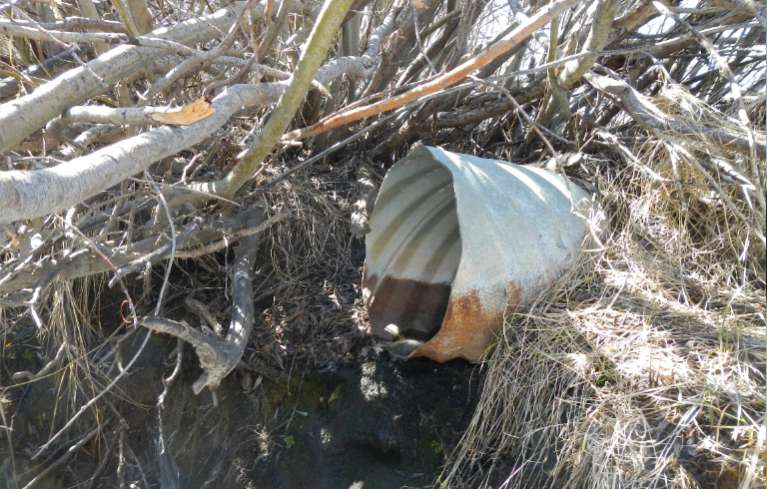
The Venice Drive pipe on the edge of the Upper Truckee River is dry March 17, but that is likely to change when the storm roles through the basin this week. Photo/Kathryn Reed

The Venice Drive pipe on the edge of the Upper Truckee River is dry March 17, but that is likely to change when the storm rolls through the basin this week. Photo/Kathryn Reed

It is hard to identify pipes in Nevada because of the different rules when it comes to public-private property at the water’s edge.

In October, the League implemented a pilot program where nine volunteers adopted a pipe. Their job is to get samples of water during storm events, take pictures and write notes of what they see. To date, 250 water samples have been collected.

“We wanted to create a program where the community could do something and get dirty. Something so they could take the issue into their own hands,” explained Darcie Goodman Collins, executive director of the League. “The key message is get involved.”

A couple dozen people attended a meeting last week at Lake Tahoe Community College to learn more about the Pipe Keepers and to hear what the results were of the initial data collection.

“We just want to know if the pipe is a problem and if it’s being taken care of,” explained Nicole Gergans of the League.

Turbidity, or the cloudiness of water, is measured in NTUs, which stands for nephelometric turbidity unit. For Lake Tahoe, the NTU in shallow water is supposed to be no more than 1 NTU or up to 3 NTU near a drain, according to the League.

Here are the average measurements as of mid-March since the program started for this rain-snow season:

• Kaspian Point Pipe – 181 NTU

• Lardin Avenue Pipe – 170 NTU (On Jan. 21, the water was too turbid to measure, which means it was more than 1,000 NTU, the League reported.)

• Meeks Bay Pipe – 21.6 NTU

• Venice Drive Pipe – 181 NTU

• Sunnyside Pipe – 59 NTU

• Upper Truckee River-Highway 50 Pipe – 500 NTU

• Fremont Avenue Pipe – 63.4 NTU.

Besides the League giving out info, Lahontan Regional Water Quality Control Board, Tahoe Regional Planning Agency, Tahoe Resource Conservation District and the Environmental Protection Agency had folks in the room as members of the audience.

Bob Larsen with Lahontan spoke a bit to the group; in large part about how fine sediment is clouding the lake.

“Go upstream of the pipe. That’s where a lot of solutions lie,” Larsen said.

Kristi Boosman with TRPA said collaboration is good and so is identifying all of the pipes.

The League is looking for more people to be part of the Pipe Keepers. For more information, call (530) 541.5388 or email Emily@keeptahoeblue.org.


A burger isn’t just a burger

By Susan Wood

BEAVER CREEK – One of the most traditional foods at a ski area may be the most memorable when it breaks tradition.

Much of the hamburger’s success is contingent on a number of factors ranging from the ingredients to the side dishes and even the value of the meal.

Take a recent Beaver Creek Food + Wine Festival après ski party, where celebrity chefs lined up their concoctions on the patio of the Park Hyatt. While the perfect complement — beer, was flowing from Stella and Leffe Belgium taps, Texas grill master Tim Love and BRAVO’s Top Chef Spike Mendelsohn wowed hundreds of hungry party attendees with their versions of the ultimate American staple that dates back thousands of years to the ancient Egyptians.

Burgers are anything but ordinary at the Beaver Creek Food + Wine event. Photos/Kathryn Reed

Burgers are anything but ordinary at the Beaver Creek Food + Wine event. Photos/Kathryn Reed

So what are their secrets?

“There are no secrets except good meat and good salt,” Love said. “And you can’t beat a good bacon cheeseburger.”

He made the simple ensemble on the grill, a place this immensely confident chef is very comfortable. Even his three adolescent children have become grill masters.

After sampling an assortment at the après ski party and other Tahoe ski resort burgers, I couldn’t have agreed more with Love’s assessment. I do like something I can’t get everywhere.

His special sauce, tomato and roasted red pepper didn’t overpower the meat.

Love seemed to relish the heated challenge. He and Mendelsohn are quite comfortable in the spotlight, even when they’re under fire.

For Love, it was the Food Network challenge in which he was criticized by the judges for “just making a salad” with kale as an ingredient, then turning around and using it again. He brushed off the criticism and told Lake Tahoe News he was “happy to be beating” other cooks in Iron Chef challenges.

For Mendelsohn, his brush with another panel of judges came when he plated his dishes with another chef, “his bro.” He was eliminated on that round, but he also told LTN he was proud of what he served and thought the maneuver was legal.

Television competitions aside, the two top chefs ran a no-holds-barred contest of their best burgers and the partygoers were more than happy to take part.

“When he cooks, he absolutely has it down. And it doesn’t hurt that he’s cute,” said Stephanie Eubanks of Orange, as her husband stood close by. Eubanks attended the Food + Wine magazine event the previous year as well.

They weren’t the only ones thoroughly enjoying themselves.

Even the après ski party Brendan McKinney band appreciated the crowd’s enthusiasm, and the foursome was more than happy to stay longer than scheduled.

Suzie Reid and Holly Douple of Centerville, Ohio, try to make it to the event every year.

As she roamed between the beer taps and the grills, Douple said she likes to follow Love because “he’s got attitude,” and it comes across in his dishes.

“We stalk the chefs at the ‘meet and greet’,” Reid said, giggling.

Celebrity chefs have become the new sex symbol. They may have found another way to a woman’s heart.

Dressed in blue jeans and a hoodie, Mendelsohn added a little flirtation to the diners sampling his wild boar burgers. The small burgers were topped with smoked cheddar, barbecue sauce, pickles and chipotle because the rebel chef “likes heat.”

As it turned out, these celeb chefs weren’t the only ones dishing up their competitive best.

Beaver Creek Chophouse Executive Chef Jay McCarthy put on his creative hat for a grilled ensemble worth returning for more. He combined pickled red onions, rosemary, pesto and roasted garlic for a magnificent explosion of flavor on his lamb sliders. Grab the French fries in the cones, and it’s burger heaven.

McCarthy appeared competitive and cooperative.

As a host chef to the visiting celebs, he noted how enjoyable it was to share the stage and limelight. He and Mendelsohn chatted at length at the festival’s “meet and greet” event and insisted “you’ll like the buns I brought out.”

He did let Lake Tahoe News in on a little secret of the perfect bun.

“There’s a little extra sugar in them, so they melt in your mouth,” he said.

Sometimes sharing is the name of the game.

“This whole event is fun. We’re a small town, and we all know each other,” Black Diamond Bistro head chef Andy Buechl said of his fellow restaurateur chefs at the “meet and greet.”

Park Hyatt sous chef Nathan Trap agreed on the opinion of the event involving six local restaurants. Normally, the competition is high in a tourist-rich environment.

“It’s fun to work with all the chefs. We’ve been sharing the kitchen and agreeing on what to serve,” Trapp said, as servers ran in and out of the busy kitchen.

Perhaps, Lake Tahoe ski resorts could follow the example – especially since three of the mountains are owned by the same company, Vail Resorts.

Tasting Tahoe burgers

In this season’s burger sampling, it was the independent Sierra-at-Tahoe smokehouse burger that tantalized my taste buds and wallet the most.

• Sierra’s 360 Smokehouse at the Grand View grill at the resort’s summit serves up a burger as superior as the view. The bacon burger, which was remarkably seared on the edges from the smoker, is scrumptious, spicy and tangy. And for $14.99, it comes with a choice of side dish. I chose the sweet potato fries because they’re always fantastic at Sierra. To think I couldn’t even finish the two dishes and really wanted to.

• For those really watching a budget, the family-friendly Aspen Lounge at Sierra’s base lodge provides a burger bar where the diner chooses the assortment to put on a $7 cheeseburger. French fries are a mere $3. Vegetarians may opt for a grilled cheese for $5. The bread is made locally. The burger fixings are vast, including: lettuce, grated cheese, peppers, tomatoes, onions and various sauces such as teriyaki, barbecue, mustard, ketchup and mayonnaise. One can also add grilled mushrooms, onions and even bacon for $1. The place is an ideal inexpensive option. And, I love the toasted bun around the half-pound burger.

• For a really big burger, Vail introduced the Epic burger at its fleet of resorts a few years ago. At Lake Tahoe, a hungry diner may order it at Kirkwood, Northstar and Heavenly. I chose the latter at the top of the tram restaurant. The double patty priced at $12.95 offers a diner a full meal, but at least mine was a little on the messy side. Of course, judging from Carl’s Junior burger joint commercials – some may prefer that. Along those lines, the Epic burger sounds like a Big Mac in terms of ingredients except for the bread — two all-beef patties, special (Thousand Island) sauce, lettuce, cheese, pickles, onions on a (special) bun.

• I actually enjoyed the Zephyr burger more at Northstar’s new mid-mountain Zephyr Lodge. It wasn’t wet, so the bun wasn’t soggy. The pepper jack cheese, along with the certified Angus beef that Vail uses, represents a great combo. The aioli adds to the flavor-filled burger, and the onion brings out a welcome crunch on every bite.

• In the category of “it’s all about the meat,” I thoroughly relished Sugar Bowl’s $11 cheeseburger made with Painted Hills beef at the Belt Room Bar. The meat’s name comes from ranching families in Wheeler County, Ore., who agreed to take the initiative to produce better quality beef. There are no added hormones, antibiotics, and the cows are pasture-raised on a vegetarian diet. This care reflects in the taste of the burger, which I completely finished. I received a generous portion of French fries with it and garnished the burger with Swiss cheese, tomato, lettuce and a dash of ketchup. The perfect complement was Sugar Bowl’s Pale Ale, which the waitress declared is “popular.” I could see why. (Note: she didn’t however know what the significance of the Painted Hills meat was.) Ignorance aside, the Belt Room Bar provides an ideal atmosphere for those wanting to sit inside or out of the village main lodge. Warm and satisfied, I almost fell asleep in the sun.

• Kirkwood provides a good version of its outside-grilled burger at the backside of the ski resort. The Out Mountain cheeseburger at the snack shop cabin near the Sunrise chairlift runs $10.25 and comes with accessories the diner may add on. I opted for my mainstay tomato and lettuce and threw on barbecue sauce for good measure. The toasted bun is definitely a nice touch but the burger was a tad overdone.

A burger’s past

• 1209: Mongolian Emperor Genghis Khan dined on ground meat when his cavalry traveled.

• 1600s: Ships from the German port of Hamburg began returning with Russian steak tartar.

• 1802: The Oxford English dictionary defined hamburg steak as salt beef.

• 1900: Louis Lassen of Louis Lunch in New Haven, Conn., laid claim to the invention of the hamburger when he ground up lean beef, broiled it and served it between toast.

• 1921: Real estate insurance agent Edgar Waldo “Billy” Ingram teams up with cook Walter Anderson to open the first White Castle hamburger stand in Wichita, Kan. The small burgers were served off the grill with a lot of onion and soft yeast buns. They sold for 5 cents each

• Today, millions of restaurants, burger joints and fast-food stands provide the hand-to-mouth dish.

ngg_shortcode_0_placeholder (Click on photos to enlarge.)


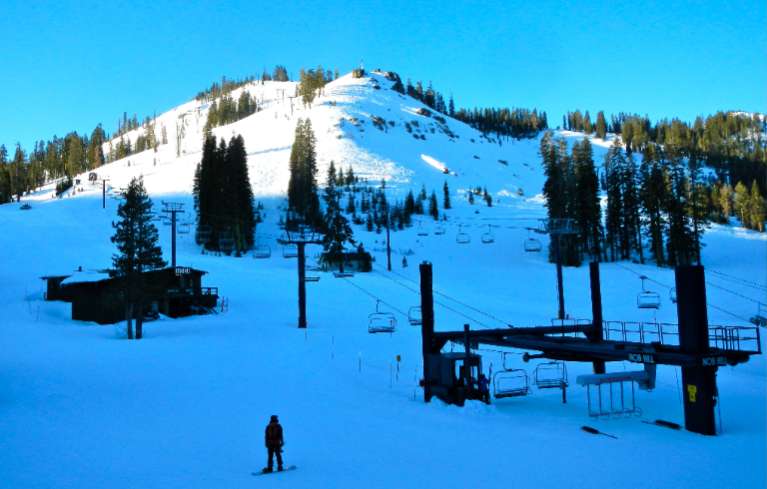
Sugar Bowl — laid back charm, rugged terrain

By Kathryn Reed

NORDEN – Old. It’s what Sugar Bowl is all about. And, yet, it feels so incredibly modern.

Disney isn’t just the name of a chairlift at this resort tucked off Interstate 80. It’s the last name of one of the founders – as in Walt Disney. Near the top of that lift are remnants from California’s first chairlift that was built in 1939.

Going into the Sugar Bowl Lodge black and white photos are everywhere you look. One even shows a woman decades ago as part of the ski patrol.

Workers start at day break to get Sugar Bowl ready for the day. Photos/Kathryn Reed

Workers start at day break to get Sugar Bowl ready. Photos/Kathryn Reed

The lodge is a mix of rustic and contemporary. The upstairs rooms are not fancy, but they have what a skier needs – comfortable bed, hot shower and view of the mountain to get you going, and plenty of space to put the trappings of a winter getaway. Downstairs are the lockers for skis and boots.

It didn’t matter that the wireless didn’t extend upstairs. Working in front of the roaring fire in a comfortable chair or on the couch made it feel less like work. This lounge area is only for hotel guests or homeowners.

The exclusivity of it makes us feel a bit like it’s our living room – with a few friends over for the weekend. No TV made it even more relaxing. Games are being played, books being read, people sipping Mt. Vernon wines on Saturday night (throughout the season different vintners sponsor tastings), some people are having a meal.

The dining room is adjacent the lounge. And it’s not typical ski resort fare. This is fine dining. We weren’t super hungry, so one night Sue and I opted for appetizers as our meal. I had the Baked Polenta and Brussel Sprouts: Gratineed with Blue cheese and toasted pine nuts finished with white truffle oil ($11) and a cup of the special mushroom soup ($5). Both were outrageously good. Sue had the French Onion Soup: Flavored with Port wine, and fresh thyme with a French bread crouton and Gruyere cheese ($9) and Pan Seared Diver Scallops: Garnished with Pancetta crumbles on a butternut squash mash with a beurre noisette, ($12). Both were so rich and yummy that she didn’t even look at the dessert menu.

On the other side of the lounge is the Belt Room Bar. I highly recommend the mixed green salad ($9) and jalapeno fries ($6) – best to share the fries. Sue barely spoke between bites of her cheeseburger ($11.50).

It requires a gondola ride to get to the lodge. During the season it runs 24 hours a day to accommodate guests and residents. When the resort closes, access is through the Judah parking area.

Both routes are the main ways to access the mountain.

Sugar Bowl calls itself the only snowbound village in the United States. It is definitely ski-in, ski-out.

Sugar Bowl’s future

The foundation has been poured for the Sugar Bowl Ski Academy that will house 70 athletes. It will be the only ski-in, ski-out academy on the West Coast. Some of those skiers and boarders have the Olympics as a goal.

With Daron Rahlves calling Sugar Bowl home and often seen on the slopes, they know this resort has what it takes to make an Olympian.

The academy building is part of the $7 million in improvements the resort plans to make in the next few years.

Crows Peak is a new lift that will likely go in the ground this summer. This will give riders a bit more vertical in the Disney area.

A sport house is in the design phase. It will be a fitness and aquatic center for hotel guests, academy students and homeowners. It will include weights, sauna and a lap pool.

The Summit Chair near the top of Mt. Judah opened in 2009. This lift accesses the backcountry. With it the resort opened a backcountry center to take people into the remote terrain and teach them how to ride it safely – including avalanche rescue training.

ngg_shortcode_1_placeholder (Click on photos to enlarge.)


California may extend last call for alcohol

By Patrick McGreevy, Los Angeles Times

If Los Angeles ever wants to join the ranks of Las Vegas or Miami in attracting tourists who want to party, it needs to free its night spots from having to make the last call for alcohol by 2am, according to one state lawmaker.

State Sen. Mark Leno, D-San Francisco, has introduced legislation that would allow California cities to seek permission from the state Department of Alcoholic Beverage Control to allow their nightclubs, restaurants and bars to sell drinks until 4a,.

“Many cities in California have dynamic social activities that are vital to their economies, but they lack the flexibility to expand their businesses,” Leno said. “This legislation would allow destination cities like San Francisco, Los Angeles and San Diego to start local conversations about the possibility of expanding nightlife and the benefits it could provide the community by boosting jobs, tourism and local tax revenue.”

A bill would allow alcohol sales until 4am in California. Photo/LTN

A bill would allow alcohol sales until 4am in California. Photo/LTN

Currently, the state allows the sale of alcohol between 6am and 2am for bars, nightclubs and restaurants.

The top 100 grossing social and nightlife venues in the country last year generated $1.5 billion, and 15 of them are in the Los Angeles area, according to Leno’s office.

But all of the top 10 venues are in cities that have extended hours, including Las Vegas, New York and Miami, the senator noted.

Senate Republican leader Robert Huff of Diamond Bar said Leno’s proposal raises a lot of questions and needs more study.

“What impact will this have on families who live around these establishments?’’ Huff asked. “Will changing the time impact drunk driving rates? These are the questions I would ask before coming to a decision.”

Some of the same concerns explain the initial opposition by Los Angeles County Sheriff Lee Baca, according to spokesman Steve Whitmore. People, he said, “don’t need to have two more hours for drinking.”

SB635 is supported by industry groups including the California Restaurant Association and the San Francisco Council of District Merchants.


LTCC president balancing state regs, community desires

By Kathryn Reed

STATELINE – Vision. It’s what has kept Lake Tahoe Community College going for nearly 40 years.

President Kindred Murillo credits those who four decades ago created the college – which started in a motel on Highway 50 – as well as those who brought it to its current location off Al Tahoe Boulevard. But she is well aware the work is not done if the college is to be operating in another 40 years.

In a talk March 13 to Soroptimist International South Lake Tahoe at Harrah’s Lake Tahoe, Murillo spoke of the challenges facing the two-year college that are being handed down by Sacramento as well as the vision she, the board, staff and the community have for the next 40 years and beyond.

Online classes, aka distance education, are a double-edged sword for LTCC. With 22 percent of the enrollment last year coming from this segment of the population, it helped LTCC. But with a bill introduced into the Legislature last month, it would alter distance ed. It could hurt institutions and help students based on mandating California’s public colleges and universities accept faculty-approved online college courses for credit.

LTCC President Kindred Murillo is plotting the college's future. Photo/Kathryn Reed

LTCC President Kindred Murillo is plotting the college’s future. Photo/Kathryn Reed

The other issue on the horizon is what’s called “massive online open course” where students don’t have to be enrolled at a university but can take an online course and other institutions must accept those credits.

“That could flip our world upside down,” Murillo said.

Another issue affecting LTCC is the state limiting how many times a student may take a class. For an area like South Lake Tahoe, many people in the community repeat physical education, art and culinary classes.

The state wants community colleges to focus on getting students to transfer to a four-year college, training them for a job or helping them with basic skills.

The life-long learning classes that community colleges came to be known for are going by the wayside. LTCC, though, is trying to keep many of them alive through Connect Ed. No grades are given, but some classes are more expensive than what they would have been through LTCC.

“It’s feeling like the state of California is raining down challenges on us. It’s harder on a small, rural college,” Murillo said.

Gov. Jerry Brown also wants to limit the total number of credits a community college student can obtain. So instead of floundering to find themselves, they’ll need direction faster.

Another issue for all colleges is that the high school population across the country is declining. Murillo said looking farther down the education chain there is good news with growth in grades 1-3 in Lake Tahoe Unified School District.

A bill introduced by state Sen. Ted Gaines, R-Roseville, would allow Whittell High School students to attend LTCC at the California rate. This would be a pilot program just for LTCC.

Sacramento is also likely to change how community colleges are funded. Now it is based on full-time equivalent students. There is talk of it changing in the next five years to be based on the number of students who complete a program.

“LTCC is going to have to make choices in the next two years,” Murillo said. And she isn’t shy about saying the community is going to like all of them.

Class sizes are likely to grow. Her goal is to be effective and efficient.

Murillo and the board are setting a path for LTCC to be a four-year college, a destination college, creating an international program, erecting student housing.

In the next two years, Murillo said LTCC needs to turn around the declining enrollment, deal with repeatability of classes and work with South Tahoe High on matching curriculum.

In May, the college will be inviting the community to give input about it envisions for the future.


X Games drops snowmobile, motocross best tricks

By Jason Blevins, Denver Post

ESPN on Tuesday announced it was ending best trick contests for motocross and snowmobile disciplines at the Summer and Winter X Games.

“This change reflects our decision to focus on motor sports disciplines which feature athletes who also compete in multiple, world-class competitions (e.g. professional events and tours) reflecting the highest degree of athlete participation, competitive development and the global nature of our X Games franchise,” read a statement from ESPN.

ESPN, which created and hosts the X Games events, has made more than 60 changes to competition disciplines over the X Games’ 18-year history. The network said Tuesday that dropping motorcycle and snowmobile best trick contests would continue the growth of the games and were designed “to capture the evolution of the sport.”

Snowmobiler Caleb Moore practices during the Winter X Games on Jan. 24 in Aspen. Later that day in competition, Moore suffered a crash that would lead to his death one week later. (RJ Sangosti, The Denver Post) Read more: ESPN drops X Games snowmobile, motocross best trick events - The Denver Post http://www.denverpost.com/sports/ci_22773543/espn-drops-x-games-snowmobile-motocross-best-trick#ixzz2NMUeRrMB Read The Denver Post's Terms of Use of its content: http://www.denverpost.com/termsofuse Follow us: @Denverpost on Twitter | Denverpost on Facebook

Snowmobiler Caleb Moore practices during the Winter X Games on Jan. 24 in Aspen. Photo/RJ Sangosti/Denver Post)

The decision comes as ESPN is reviewing its Winter X Games freestyle snowmobile contests following the first X Games death of a snowmobile athlete and four-time X Games medalist Caleb Moore. Moore, 25, of Texas, under-rotated a backflip during the Winter X Games snowmobile freestyle competition at Aspen’s Buttermilk ski area on Jan. 24, and snagged the skis of his sled on the landing ramp.

The 450-pound machine struck him as he tumbled down the ramp. After he was helicoptered to Grand Junction’s St. Mary Hospital, he developed brain complications following heart surgery to address a cardiac contusion. He died a week after the accident.

The day Moore passed, Scott Guglielmino, ESPN’s senior vice president of programming and global X events, said in an interview on the network’s “Outside the Lines” show that X organizers would conduct a “thorough review” of all snowmobiling events.

Guglielmino said he would enlist athletes and course designers in an effort “to make sure that we take as much risk as we can out of (freestyle snowmobiling).”

He said he was most concerned with stunts where athletes briefly leave the machine, spinning in the air before mounting the sled and landing. Those body-variation backflips are common during X Games, moto X and snowmobile freestyle contests.

“We are certainly interested in when they become separated from the snowmobile and they go downhill after that — such as Caleb’s crash,” Guglielmino said during the ESPN show. “We do not want to see snowmobiles landing on athletes, so that is something that is going to be very much the focus of our review in this instance.”

ESPN spokesman Danny Chi said the removal of “best trick” contests was under consideration before the Winter X Games in January in Aspen and the network’s review of snowmobile freestyle continues.


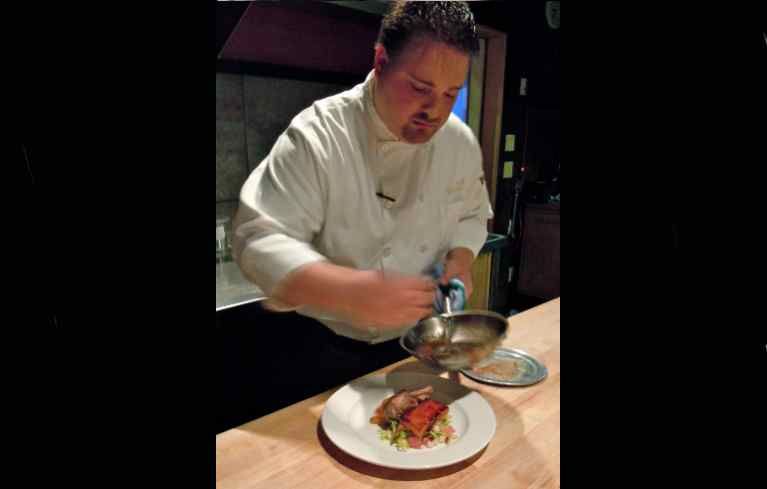
Truckee chef one of the best in U.S.

By Kathryn Reed

Jacob Burton thought taking a chef’s job in the mountains would take him off the grid in terms of mainstream exposure. He didn’t care. Growing up in the foothills (Cool in El Dorado County) he knew he wanted pines over cement.

But then the chef at Stella in Truckee got a call last month from Food + Wine magazine. He has been nominated as one of the People’s Best New Chefs.

“I was surprised to be honest with you. Just the fact that Truckee is on Food + Wine’s radar was a surprise,” Burton told Lake Tahoe News. “I cut my teeth in San Francisco, but I love Truckee. I knew I could be sacrificing big time awards that are saved for bigger area restaurants.”

Jacob Burton of Stella in Truckee is considered on the country's top young chefs. Photo/LTN file

Jacob Burton of Stella in Truckee is considered one of the country’s top new chefs. Photo/LTN file

Whether he wins is up to the public. Voting is open online through 2pm March 18. The country is divided into 10 regions, with Burton in the California section.

The California chefs are:

• Matthew Accarrino (SPQR, San Francisco)

• Kim Alter (Haven, Oakland)

• Jacob Burton (Stella, Truckee)

• Justin Cogley (Aubergine, Carmel)

• Jordan Kahn (Red Medicine, Los Angeles)

• Thomas McNaughton (Flour + Water, San Francisco)

• Evan & Sarah Rich (Rich Table, San Francisco)

• Ari Taymor (Alma, Los Angeles)

• Michael Voltaggio (Ink, Los Angeles)

• Kris Yenbamroong (Night+Market at Talésai, Los Angeles).

One of Burton’s nominators said, “The young chef is doing some of the most inventive yet simple and delicious food I’ve had in a long time.”

Food + Wine gathers the list of nominees from our national network of trusted food insiders – other journalists, chefs and local experts around the country – and we’re always on the lookout for innovative chefs who are pushing culinary boundaries,” magazine spokeswoman Erika Gable told Lake Tahoe News.

Burton said he is humbled to be on the list with the other nominees.

“Those two guys in San Francisco are easily two of the hottest chefs on the West Coast,” Burton said of Accarrino and McNaughton. He’s eaten at both restaurants.

The 29-year-old Burton is a graduate of the California Culinary Academy in San Francisco. For the past three years he has been cooking at Stella, which is part of the Cedar House Sport Hotel.

His concept is to use as much locally sourced food as possible.

“Gardening is a large part of what we do. It’s great to grab fresh herbs,” Burton said. “You can run a quick special with a squash harvest. But (the garden is) not big enough to grow squash or tomatoes all summer long to sustain the restaurant.”

If Burton wins, he’s well on his way to being a celebrity chef. And those chefs are often featured at the various events the magazine sponsors. Burton isn’t sure he’s ready for that. He doesn’t have a large staff, and every day Stella has been open he has been on the line cooking.

“For me, Stella always comes first. My job is to ensure the ongoing success of Stella,” Burton said. But if he could find a way to balance the restaurant work with promoting Stella and Truckee on the road, he would give it a-go.

The chef with the most votes in each region will be named a finalist and the finalist with the most votes overall will be named The People’s Best New Chef. The People’s Best New Chef finalists and winner will be revealed on March 19 online. The winner will be featured in the July issue of Food + Wine.


S. Lake Tahoe, Tahoe City set record highs

Lake Tahoe’s seesaw weather pattern will continue. Last week it was snow. Now there are record highs. Next week plan for rain and snow.

South Lake Tahoe on Wednesday and Thursday hit record highs. On March 13 the high was 69, while the previous record of 64 was set in 2007. On March 14 the mercury hit 66. The previous record was 62, also set in 2007.

Flowers are already blooming on the South Shore. Photo/LTN

Flowers are already blooming on the South Shore. Photo/LTN

Tahoe City also hit a record on Wednesday at 63. The previous high was 58 from 2005. The March 14 high is 63 from 2007. But with the temps not called into the National Weather Service in Reno until the morning, it’s not known if Tahoe City hit a high Thursday. The forecast, though, called for a high of 64.

Reno on Wednesday broke a long-standing record with its 77 degrees. The previous high of 76 was set in 1888. Cloud cover prevented Reno from hitting consecutive highs.

The normal high for South Lake Tahoe this time of year is 48 degrees.

“We’re going to see the ridge flatten by the weekend and see a cooling trend,” Jessica Kilhorn, meteorologist technician, with the National Weather Service in Reno, told Lake Tahoe News.

Rain is expected to roll into the basin on Tuesday night, with snow dropping to lake level on Wednesday.

While the Weather Service isn’t predicting precipitation amounts at this point, Kilhorn said, “It could be very moist.”

— Lake Tahoe News staff report


U.S. trying to lure foreign tourists

By Kevin Sullivan, Washington Post

The Obama administration, along with the U.S. travel and tourism industry, is spending millions of dollars this year to lure foreign visitors. A “Discover America” campaign includes television commercials in nine nations; ads on the Tokyo subway; banners in London and Vancouver, B.C.; Facebook pages in Portuguese and German; and Tweets about the charms of the Dakotas.

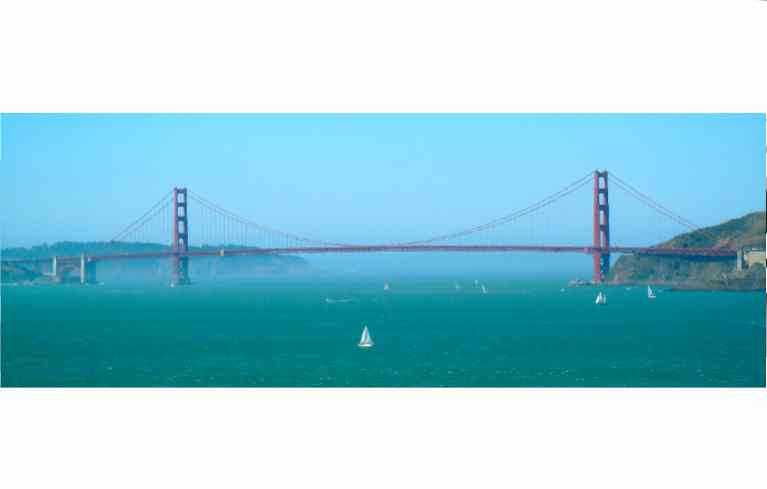
The United States has Hollywood, the Grand Canyon, the Statue of Liberty, Hawaiian surf, Maine lobsters, Florida beaches and the neon dreams of Las Vegas. We have Graceland, the Golden Gate Bridge, Disney World and the bright lights of Broadway.

The Golden Gate Bridge is a huge draw for foreign visitors. Photo/LTN file

The Golden Gate Bridge is a huge draw for foreign visitors. Photo/LTN file

But as global travel and tourism has boomed to historic levels, tourism industry officials said the U.S. share of those visitors has shrunk by almost a third in the past decade. That’s partly because of increased U.S. security after the Sept. 11, 2001, attacks, but industry analysts say it’s also because China, Turkey and other nations have become huge tourist magnets.

So the United States is now doing what once seemed profoundly unnecessary: shelling out millions of dollars to promote America as an international travel destination. It’s an investment, U.S. officials said, in growing the economy and creating jobs in hotels, restaurants, stores and anywhere else where tourists spend money.

“The more folks who visit America, the more Americans we get back to work,” President Obama said last year in announcing an executive order designed to increase visitors by marketing America abroad and cutting red tape for tourists seeking visas.

The Obama administration, in partnership with the travel and tourism industry, is spending $150 million this year on its promotional effort. Part of it is a “Discover America” campaign that includes television commercials in nine nations, ads on the Tokyo subway, banners in London and Vancouver, Facebook pages in Portuguese and German, and tweets about the charms of the Dakotas.

U.S. officials also have added to staff and offices in China and Brazil to speed the visa process for millions of new visitors.

Some Republican members of Congress have criticized Brand USA, the partnership between the federal government and the travel industry that is coordinating the effort, as a waste of taxpayer dollars that benefits mainly wealthy companies in the travel business. But supporters say that promoting tourism benefits the U.S. economy as a whole.

“Travel and tourism is the quickest way back to economic development and jobs,” said Christopher Thompson, chief executive of Brand USA. “9/11 changed the world and changed the way people look at us, so we had to up our game.”

Record numbers of tourists are coming to America; last year more than 66 million came, and they spent more than $168 billion here, according to the Commerce Department. But tourism officials said those statistics mask the fact that growth in tourism to the United States has not kept pace with growth in global tourism.

Officials at the U.S. Travel Association, a private industry group, said that a more revealing look at the state of U.S. tourism comes when visitors from Canada and Mexico are removed from the statistics. That leaves “long-haul” tourists, those who travel from one world region to another — say, Europe to Asia or the United States. Those tourists are the most sought-after: They tend to invest more to get here and spend more when they arrive, so they are widely considered a better indicator of the strength of the U.S. market.

Geoff Freeman, a top executive at U.S. Travel, said the number of long-haul travelers to the United States has grown 1 percent in the past 10 years, while long-haul travelers globally are up 40 percent. So the U.S. share of the global market has sharply decreased.

Freeman describes a “lost decade” after 9/11: Long-haul tourists in America did not return to their 2000 levels until 2010. In that decade, the nation lost 460,000 jobs and more than $600 billion in total travel-related spending by foreign tourists, his group estimates.

“There was a perception that America didn’t want their business,” Freeman said, noting that heightened security and stricter visa laws created a “Fortress America” image that deterred many potential tourists.

Other countries have flung open their doors. From Southeast Asia to South America to Eastern Europe, countries have pumped up their tourism marketing budgets. Some, including Australia and Mexico, are spending more than $100 million a year promoting themselves, according to the United Nations World Tourism Organization.

Brand USA is quickly expanding its marketing campaign. It began last year with advertising blitzes in Britain, Canada and Japan. In the coming months, it will restart ads in those countries and add Mexico, Brazil, South Korea, Germany, Australia and China.

“Those nine markets represent 75 percent of all inbound travel to the United States,” said Anne Madison, a Brand USA spokeswoman. “We want to fish where the fish are biting.”

She said that Brand USA has offices in nine countries to pitch U.S. travel to tour operators and the travel press, and it is about to open six more, including ones in China and India.

The marketing campaign features TV ads with a tune called “Land of Dreams,” written and performed by singer Rosanne Cash, and inviting scenes of American life — picnics, beaches, weddings, ballroom dancing. There also are ads in the Tokyo subway, billboards in Vancouver and even a banner near London Bridge.

On Twitter, Brand USA staffers Tweet about everything from Zion National Park in Utah to “the gentle rumbles of the Old South at the Mississippi Delta.” Brand USA also is about to launch a partnership with ESPN to deliver advertising and promotional programming to TV viewers and Web users in Britain.

In October, DeMint and Sen. Tom Coburn, R-Okla., issued a report accusing Brand USA of waste and political patronage. The report said Brand USA threw an needlessly lavish launch party in London last year and has a board stocked with major Democratic donors.

Brand USA officials said the launch was held at the world’s largest English-speaking travel trade show and made “good business sense.” They said all board members are experienced travel industry leaders appointed by the secretary of commerce in a “politically neutral process.”

The report criticized what Brand USA was claiming as “in-kind” contributions when seeking matching federal funds. It said Brand USA had claimed that newspaper stories or television interviews about Brand USA’s activities had a value that could be used to claim matching funds. For example, it said, Brand USA claimed a segment on Travel Channel International had an in-kind value of $4.9 million.

Madison, the Brand USA spokeswoman, said all such in-kind contribution requests have been withdrawn. She said Brand USA officials are working with the Commerce Department, which approves the organization’s requests for matching funds, to create clearer guidelines for in-kind contributions.

“I think clearly there are hiccups that the Brand USA team went through in the early stages,” Sorenson said. “I think if we could start the whole thing all over, some of those hiccups would have been avoided. I don’t think they’re monumental.”

Beyond Brand USA’s activities, the State Department is spending millions of dollars to make the visa process easier for foreign tourists, especially in China and Brazil, where demand is growing fastest. It has added two consulates in Brazil and one in China, and several more are planned. Others are being renovated and expanded, and the department has added more staff to process visas.

Edward Ramotowski, the State Department official in charge of visa services, said improving services in Brazil and China was the best way to get “bang for our buck.”

U.S. officials said that in 2011, the number of Brazilian tourists increased 26 percent, to 1.5 million, and that they spent and estimated $8.5 billion. The number of Chinese tourists increased 36 percent, to nearly 1.1 million, and they spent an estimated $7.7 billion. The average tourist from Brazil or China spends more per visit than tourists from any other nation, industry officials said.

A visa process that often took just days before 9/11 took weeks or months after the attacks when Congress mandated that almost all foreigners applying for visas be interviewed personally by U.S. consular officials abroad.

Average waiting times have now been cut from almost five months to less than a week in Brazil and from 72 days to less than three weeks in China, Ramotowski said.