Businesses see dollar signs if Nevada reverses gay marriage ban

By Andrea Domanick, Las Vegas Sun

“Loosen his bow tie and snuggle up, you two,” says Las Vegas photographer Linda Quackenboss, directing a camera-shy couple sitting for portraits in her studio.

Reaching out, Phil Pineda does as he’s told and loosens Mel Cole’s bow tie. “There’s my GQ smile!” the 53-year-old tells the couple, who will be celebrating their fifth anniversary this fall. “Maybe I can shoot your wedding soon.”

For Quackenboss, who estimates that 30 percent of her clientele are members of the lesbian, gay, bisexual and transgender community, the suggestion is more than friendly conversation. It’s marketing.

Gay marriage is on the horizon in Nevada. A bill was introduced last week in the Nevada Senate that would begin to clear the way for legalizing gay marriage in Nevada. That news came just days before the U.S. Supreme Court is scheduled to hear oral arguments in a pair of cases challenging California’s ban on gay marriage and the federal Defense of Marriage Act. Polling suggests a majority of Nevadans support gay marriage.

That shift, in Nevada and nationwide, is being noticed by wedding industry professionals like Quackenboss, who is among local business owners positioning themselves for the opportunities that will come with legal gay marriage in the Wedding Capital of the World.

“With the economic climate the way it is, people are watching what’s happening around the country with a careful eye and will open up as soon as business demands it,” Quackenboss said.

According to economist M.V. Lee Badgett, research director of the Williams Institute for Sexual Orientation Law and Public Policy at UCLA, legalizing gay marriage would generate $23 million to $52 million in business revenue and $1.8 million to $4.2 million in tax revenue over the next three years in Nevada.

The brunt of the revenue impact from gay marriages, however, would come from out-of-state couples bringing their ceremonies and celebrations to Las Vegas: Eighty-five percent of the 86,203 marriage licenses issued in Clark County in 2012 were to couples from outside Southern Nevada.

“Vegas’ strengths lie in the fact that it is an event town,” said Kathryn Hamm, president of GayWeddings.com. “It has a vibrant collection of wedding chapels, it’s a destination location for many, can serve bachelor and bachelorette parties and honeymoons alike, and has featured on its stages every gay icon who has ever electrified and unified and entertained our community.”

The same-sex marriage industry in New York offers some inkling of what to expect in Las Vegas. In 2011, the first year gay couples could legally wed in New York state, marriage license fees, celebrations and wedding-related purchases helped shore up New York City’s economy by $259 million, according to the New York City Clerk’s Office and NYC & Company, the city’s tourism and marketing bureau.

Dianne Schiller, owner of Renta-Dress and Tux Shop in Las Vegas, said she can hardly wait. “It would definitely increase my business and add another dimension to it,” said Schiller, whose shop presented a fashion show at last month’s LGBT Wedding Expo at Circus Circus and has been marketing to gay couples for years. “If we really want to sell ourselves as the Wedding Capital of the World, we need to open the doors and embrace everyone.”

Same-sex marriage ceremonies would come at an otherwise dour time for the wedding business. Marriage licenses issued in Clark County are down 21 percent from 2007, and Schiller’s sales have dropped 20 percent this quarter.

“The last place people are spending their money now is on vacations and big weddings,” she said. “But generally speaking, gay couples do tend to have more disposable income and are higher up on the earning bracket. They have the dollars, and if they could spend it on weddings, I think they would love it.”

For Angie Kelly, owner of Peachy Keen Unions, a Las Vegas-based wedding officiant service that bills itself as a provider of “ceremonies for unique and eclectic couples,” the anticipated boost in revenue would be less important than the level playing field that would come with the legalization of gay marriage. She’s one of the few officiants in town who openly advertises as serving LGBT couples, and she acknowledged that she may be losing business by doing so.

“I think officiants have a tricky spot with same-sex marriages. If you advertise to same-sex marriages, there’s a chance you’re losing your highly religious couples, as well. It doesn’t matter to me, but it is a risk that I take,” she said of the 200 ceremonies she performs per year, a handful of which are for same-sex couples. She explained that while many other ministers and officiants won’t advertise to same-sex couples, they may still perform commitment ceremonies if asked. “I think there will be a big sense of relief that they can just breathe easy and serve this market. A lot of us are gunning for it be legalized.”

For other local businesses, welcoming gay marriage is a natural next step in their marketing efforts to the LGBT community. Caesars Entertainment is one of a number of resort companies already offering commitment ceremony packages at its properties, including planning services, floral design, photo shoots and commitment certificates. The company has helped attract such popular LGBT events as Dinah Vegas, or Girl Bar Dinah Shore Weekend, an offshoot of the long-running Dinah Shore Weekend in Palm Springs, and is among the businesses that signed an amicus brief on Feb. 27 urging the U.S. Supreme Court to strike down the Defense of Marriage Act and recognize gay marriages.

MGM Resorts International, which in 2004 became the first company in the gaming and hospitality industry to offer health benefits to gay employees’ partners, similarly anticipates gay marriage in Nevada with open arms.

“Legalization in Nevada would be a significant step forward in leveling the playing field, as we’d be in a better position to compete with destinations where same-sex marriage is legal,” said Alan Feldman, MGM Resorts senior vice president of public affairs.

The Las Vegas Convention and Visitors Authority, which launched its LGBT marketing campaign in the mid-2000s, declined to comment for this story.

Although many local businesses are primed to take advantage of the potential revenue boost, others, including Las Vegas’ numerous faith-based chapels, do not serve same-sex couples for religious reasons. They say that probably won’t change, even if the law does.

“I have gay people who work for me and I love them dearly and I have nothing against them. But we’re a Bible-based chapel, and we go according to the word of God and what he says in his word,” said Charolette Richards, the Christian owner of the Little White Wedding Chapel, which does not offer commitment ceremonies for gay couples. “If the law changed, I’m not saying that I would or that I wouldn’t either, but it’s against my religion. I’d have to pray hard to find what God would have me to do.”

Chapels that cater to same-sex couples say that just means more business for them — but that any economic gains are ancillary to the reason many of them began serving the LGBT community in the first place.

Just two doors up from the Little White Wedding Chapel is the Viva Las Vegas Wedding Chapel, which performs more than 5,000 weddings, vow renewals and commitment ceremonies each year, and is perhaps known best for its campy, Elvis-emblazoned neon sign beckoning visitors on the north end of the Strip. The chapel’s owners are gay, and they also operate under the name of Gay Chapel of Las Vegas. As one of the first wedding chapels in Las Vegas to cater to gay couples — it began performing commitment ceremonies more than 15 years ago — being able to perform legal marriages for the LGBT community is a long time coming.

“For us it’s a big deal. It would not only be a chance for us to provide more weddings and beautiful ceremonies, but also a chance for customers who are gay to have the same legal rights,” said Brian Mills, the chapel’s general manager and an Elvis wedding performer. “This being Vegas, all of us who work here are performers and have friends and people we know who would be affected by the social impact. And it’s about that more than anything.”

USFS firefighting budget cut despite dry terrain

By Chuck Raasch, USA Today

Dry conditions have persisted in many of the areas ravaged by fires last year and bark beetles have invaded millions of acres in western forests, creating a tinderbox of dead wood.

Persistent drought and an infestation of tree-killing insects have left broad swaths of the United States vulnerable to unusually fierce wildfires for the second straight year just as the U.S. Forest Service is dealing with cuts in its fire-fighting budget.

Areas most at risk include Southern California, Arizona, New Mexico, the eastern Rockies and Florida, according to the federal government’s most recent fire analysis.

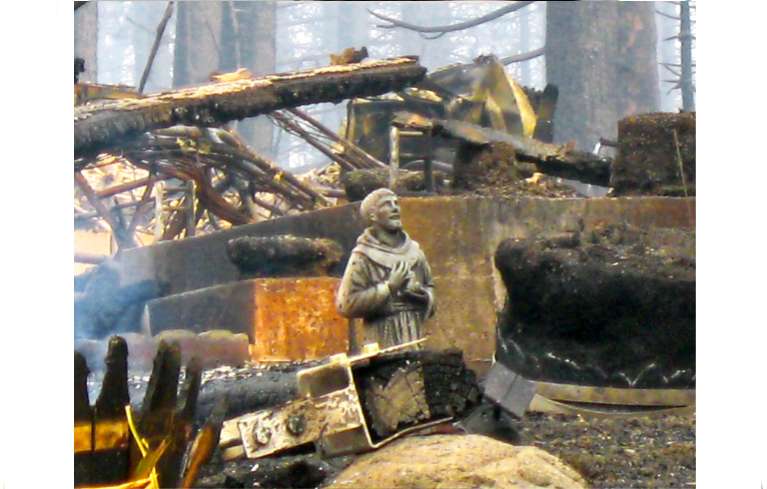
In 2007, 254 houses burned and bout 3,100 acres -- mostly USFS land -- on the South Shore of Lake Tahoe. Photo/Lake Valley Fire

In 2007, 254 houses burned and about 3,100 acres — mostly USFS land — on the South Shore. Photo/Lake Valley Fire

More than 9.3 million acres of public and private land — an area larger than Maryland — burned in 2012, the third most-active wildfire season since 1960, according to the Forest Service. The agency spent $1.4 billion fighting them.

Mega-fires from Oregon to New Mexico made headlines from Father’s Day to Halloween. Dry conditions have persisted in many of the fire-ravaged areas. Bark beetles also have invaded an estimated 46 million acres in western forests, creating an additional tinderbox of dead wood over an area bigger than Missouri.

“Our predictions for this incoming fire season are almost identical to where we were a year ago at this time,” said Tom Tidwell, the chief of the U.S. Forest Service, whose agency manages 193 million acres.

Tidwell said that spending cuts imposed by Congress and the White House will force his agency to hire about 500 fewer firefighters than the 10,000-10,500 it normally employs. He said the Forest Service will “mitigate the impact” by pre-positioning firefighters in vulnerable areas and moving them around more rapidly when outbreaks occur.

Fires are burning hotter and faster than a decade ago, a condition Tidwell attributes to warmer, drier weather. That creates drier vegetation and better fuel for fires.

Last year was the warmest on record for the continental United States, according to the National Oceanic and Atmospheric Administration.

“There is no question we are seeing these large fires become established more quickly, and at times they are almost explosive,” he said.

A fire near Los Alamos, N.M., two years ago burned 40,000 acres in its first 12 hours, Tidwell said. A decade earlier, a fire in virtually the same location took seven days to reach 40,000 acres.

He also said that over the past decade, warmer weather has extended wildfire seasons by 60-70 days a year.

The fire season normally begins this month in the East and progresses westward.

Areas of the Southeast, particularly Florida, are also coming off a drier than normal winter, raising concerns there, too. A fire in St. Lucie County over the weekend forced the evacuation of about 2,500 people, said James Karels, director of the Florida Forest Service.

Karels said he is worried about federal cuts on top of already stretched state firefighting budgets.

The feds “are partners in this kind of fire business, especially (in fighting) the big wildfires,” Karels said. “There isn’t anyone that can do it alone, and when we see further cuts in the federal end, that is a partner that is not going to be able to come to the table as strong as in the past. And that is a concern.”


Liberty Utilities’ N. Shore system inadequate

By Kathryn Reed

Liberty Utilities’ plans to upgrade the power supply to the North Shore are not moving forward as quickly as the company had hoped.

The U.S. Forest Service wants more detail than what the company had originally provided. Much of the land that would be affected belongs to the USFS.

Originally the power company thought it would be in the permitting phase by now, with construction starting this year. Now the company hopes all the paperwork will be in place by the end of the year.

“In general the two existing lines we are upgrading are following a similar path to what exists today, with minor variations,” Sam Rohn, the environmental, health, safety and security manager for Liberty in California, told Lake Tahoe News.

One issue the Forest Service wants more clarity on is how many trees the company plans to fell.

“Presently, the north Lake Tahoe transmission system does not have adequate single contingency reliability, meaning, if one of several critical lines is lost as a result of an intense storm event, fire, or downed trees, a severe and sustained power outage could occur in the system service area,” the scoping document says.

The project calls for lines going from the Kings Beach generation site to Tahoe City and one to Truckee. The plan is to upgrade the substations from 60 kilovolt (kV) to 120kV to allow the entire transmission loop to operate at 120 kV.

“We are strengthening the reliability on the North Shore. We will increase what the voltage lines are able to carry, handle additional load build-out at Martis Camp, Squaw Valley and Northstar, and other infrastructure that is going in on the North Shore,” Rohn said.

liberty map

Proposed route changes to Liberty Utilities’ North Shore lines.

All of the areas Rohn mentioned are either building now or have plans in the works. And they will all need more power in the future than they do today.

Plans call for replacing existing wood poles with steel, which are more reliable and apt to survive a wildfire.

Liberty on Jan. 1, 2011, took over NV Energy customers on the California side of the Lake Tahoe Basin, Truckee and Alpine County.

And while rate increase took effect Jan. 1, 2013, it wasn’t to pay for the North Shore project. Once that’s in the ground and online, Liberty can go back to the California Public Utility Commission and ask ratepayers to write bigger monthly checks.

Every three years public utility companies must file a rate increase or decrease with the CPUC.


El Dorado County supervisor subject of DA probe

By Noel Stack, Village Life

El Dorado County Supervisor Ray Nutting is being investigated for how he used state grant money, according to, El Dorado County District Attorney Vern Pierson.

Through the years Nutting has received more than $74,000 in state Proposition 40 grants to complete fuel reduction projects on his Happy Valley property, according to grant documents. Invoices provided to the Sierra Coordinated Resource Management Council, CalFire’s partner agency that contracts with private landowners who complete fuel reductions projects within the parameters of Proposition 40, are being questioned.

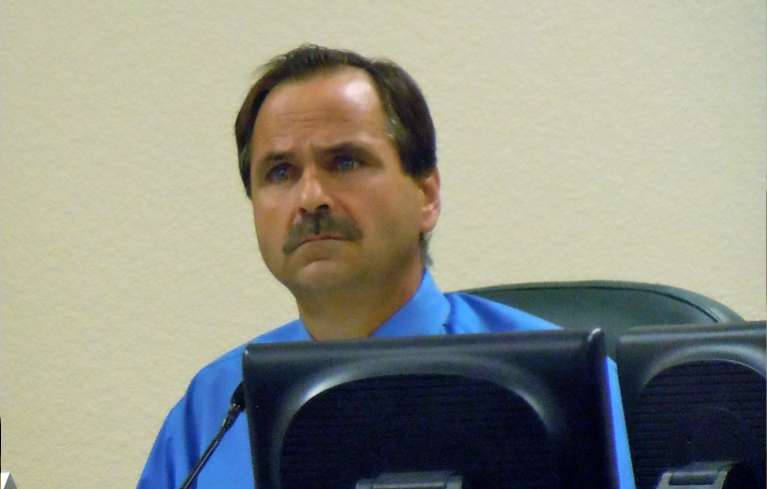
El Dorado County Supervisor Ray Nutting is under investigation. Photo/LTN file

El Dorado County Supervisor Ray Nutting is under investigation. Photo/LTN file

“We are aware of it and we are looking into it,” Pierson said in a telephone interview. “Beyond that, I can’t comment.”

Nutting, who contacted Village Life while working on another major Propositions 40 fuels reduction project on 37 of his 340 acres, said he’s aware of the investigation. The current project will result in a $49,348 grant.

“If I’d done something wrong, I’d know it,” Nutting said.

“I am highly scrutinized by registered forest professionals (hired to oversee the projects) and I’m highly scrutinized by CalFire,” the District 2 supervisor explained. “I have no latitude on Prop. 40. I have to do exactly what the grant documents say.”

CalFire offers grant opportunities to small forest landowners funded by Proposition 40, the California Clean Water, Clean Air, Safe Neighborhood Parks and Coastal Protection Act of 2002, according to the CalFire website.

“The goal of the Proposition 40 Fuels Management Program, or Prop. 40 program, is to contract with private landowners for mutually beneficial forest improvement and wildfire hazard reduction projects designed to reduce fuel loadings that pose a threat to watershed resources and water quality,” the website states.

Landowners in 15 Sierra Nevada counties — Butte, Plumas, Sierra, Yuba, Nevada, Placer, El Dorado, Amador, Alpine, Calaveras, Tuolumne, Madera, Mariposa, Fresno and Tulare — may participate. CalFire’s website explains, “The Prop 40 Program generally pays 75 percent of the costs and the landowners share is the remaining 25 percent. Landowner management plans, which are required for Prop. 40 program grants, will be paid 90 percent by Prop. 40 program and 10 percent by landowners.”

Since its inception, the Proposition 40 program has granted landowners more than $2.5 million.

In 2009 Nutting received $24,893 after three invoices were submitted — project management and addendum invoices in the amount of $3,137.50 on behalf of Stewart Forestry LLC and a $27,395 invoice on behalf of Nutting Brush Clearing, which shares Nutting’s home address in Somerset. A representative of the El Dorado County Treasurer-Tax Collector’s Office said they had no record of any business license under that name.

Nutting said interpreting Nutting Brush Clearing as a business is incorrect. The name on the top of the invoice, which was submitted by his registered professional forester, is the project name, not a business name.

“It’s a description of the job,” he explained. “My forester knows that, CalFire knows that … everybody knows that.”

The Nutting Brush Clearing invoice included a cost breakdown — $6,000 for 15 acres of thinning, $4,125 for 15 acres of pruning, $5,250 for 15 acres of slash disposal and $12,020 for 60.1 acres of herbicide treatment. No additional statements were submitted with the invoice but, Nutting said, the rates used to determine the totals for each portion of the job come from the state.

A Proposition 40 grant program audit released by the California Department of Finance’s Office of State Audits and Evaluations in 2009 questioned this lack of documentation.

“Without proof of actual costs by landowners (in the form of cancelled checks or information from bank statements), grant funds could be used for purposes not allowed by the program,” the audit noted.

Auditors recommended requiring proof of actual costs prior to authorizing payment.

Nutting said he agrees with the auditors findings and will provide additional documentation when submitting invoices related to his latest Prop. 40 grant project, which, he said, he’s been working on for more than a year.

“It’s back-breaking work,” Nutting said.

Nutting and his brother, Tom, each have 340 acres in southern El Dorado County. Nutting said the two have been trying to reduce fire fuels since inheriting the land after their parents died. Tom Nutting has also receive Proposition 40 grants. Ray Nutting noted that a few of his neighbors participate in federal fuel reduction programs.

Fire crews have twice come out to his property to douse flames, Nutting said.

“The easier thing to do would have been to do nothing and let it burn,” Nutting said. “I chose to work with the state and spend the years of my life doing these projects … making (the land) fire safe.”

The DA’s Office, which has requested documents and information from other public agencies, hopes to conclude its investigation within 30 to 60 days, Pierson said. If any wrongdoing is confirmed, Nutting could face charges related to presenting false claims and falsifying records submitted to state agencies, both felonies.


STHS grad retells near-death experience to help others

Publisher’s note: This is one of a few articles about the Drug Store Project. This marks the 10-year anniversary of the program. This year’s event will be April 2 at Lake Tahoe Community College. For more info about volunteering, donating or if you have questions, email Lisa Huard at lhuard@ymail.com.

By Molly Cocking Lovell

I was your regular 15-year-old kid. I thought I was untouchable, nothing could ever happen to me. Yes, I had those people come talk to us in health class about bad things that had happened to them because of drugs or alcohol, but it could never happen to me.

That all changed the summer after my freshman year in high school. I had just finished my first year at South Tahoe High School, excelling in my studies, completing my reign as class president, and creating great memories with a wonderful group of friends. I went out to a party for my first time that summer, lying to my parents, telling them I was going to a friend’s house to watch movies. The last thing I remember from that night was drinking my first beer; the next thing I remember was waking up in the intensive care unit at Barton Memorial Hospital with a tube down my throat breathing for me.

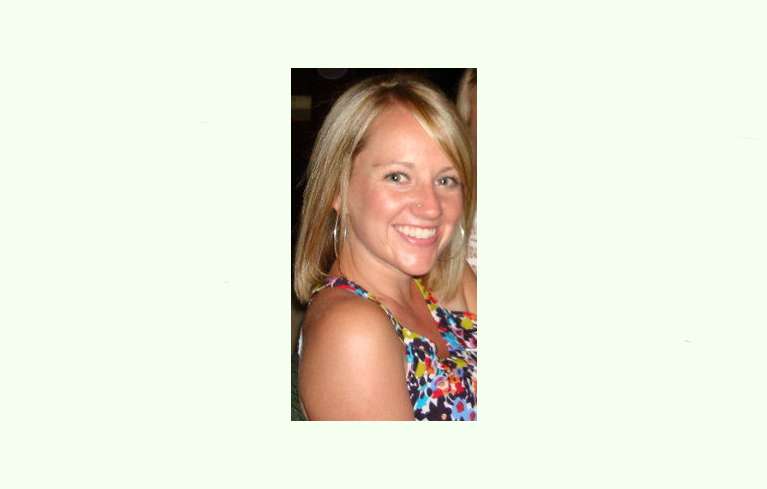
Molly Cocking

Molly Cocking Lovell

The rest of the night has had to be retold to me by friends and family who were there to witness the worse night of my life, all due to the choices I decided to make.

After my first beer I started drinking hard alcohol like it was lemonade. At that point I was so intoxicated I had no gag reflex telling me what I was ingesting was toxic. I woke up in the morning with cuts, bruises and aches everywhere, which was explained to me that there was a group of guys at the party I didn’t know holding me up and taking bets on how long it would take for me to fall over once they let go of me. I also fell down a flight of concrete stairs, which ended in a very expensive CAT scan of my head when I arrived at the hospital.

My friends I was with started to get concerned when I was in the bathroom vomiting blood and they couldn’t get me to respond to them. My friends wanted to call 911, but people at the party didn’t want to get in trouble and told them to just let me sleep it off in the back room; “I’d be fine.”

To this day I owe my life to my friends who didn’t listen and called 911, because when I arrived at the hospital the emergency room physician said if I had gotten there 15 minutes later, I might have not been able to be resuscitated. My friends, in a panic, started driving me to the hospital instead of waiting for an ambulance. In route a friend put her hand over my mouth and realized I had stopped breathing. When we arrived in the ambulance bay my parents were there and started CPR on me on the pavement until a gurney came. Inside the ER a tube was placed down into my lungs to breath for me because I was so intoxicated I had lost the drive to breath. IVs were started, my stomach was pumped, a catheter was placed into my bladder and a diaper was put on me because I had lost control of my bowel movements.

My blood alcohol came back at 0.25, with the added suspicion that some sort of synthetic medication might have also been put in my drink due to my unresponsiveness.

I was moved to the intensive care unit where the doctor told my parents they had done everything they could, but there was a chance I wouldn’t make it through the night. I had drunk in one night what many adults might drink in a month or two. The doctor informed them my organs had begun to shut down and time would only tell if I came out intact.

I woke up the next morning still not remembering anything from the night before, but as soon as I opened my eyes and saw my mom next to my bed I knew what I had done and what I had put my family and friends through.

They extubated me that morning from the machine breathing for me and started to pull tubes and lines, which was all very unpleasant. I was discharged later in the afternoon to go home very banged up and possessing the worst hangover anyone could ever imagine.

For less than 24 hours in the hospital the bill my parents were hit with was more than $20,000. This was more than 10 years ago, so the bill today would be at least double.

I had weekly appointments with my primary care doctor to check on my liver and kidney functions to make sure everything was still functioning correctly. I’m very lucky to say I walked away physically unscathed after my wounds healed and the weeklong hangover ran its course.

My emotional wellbeing took some time to get back. I had done something horrible to my family that no one ever wishes to do. I had made my parents face potentially having to bury their child and my brothers to go on without a big sister. I had put all my friends who had stuck their necks out for me in a bad position with their parents and the law. But those friends are why I’m alive. If they hadn’t been watching out for me, I would not be here today to tell my story, and hopefully prevent other people from making the same mistakes I did.

I speak every year at the Drug Store Project not so much telling kids “don’t drink” but instead “to make smart choices”. The easiest way to not get yourself into a situation like mine is to abstain from drinking. But if it’s something that is decided must be tried, you need to have people around you who care about you and have your best interest in mind if something were to happen.

I also caution students about the ever evolving date rape drugs, and the importance of never leaving your drink (alcoholic or non-alcoholic) unattended. This too was very likely what I ran into that night as well. In the years that I have done Drug Store, if I have even touched one kid, I’ve done what I set out to do. If I prevent one person and their family and friends from going though what we all went through that night, this whole project has been worth it!

Molly Cocking Lovell is an emergency room nurse at Carson Tahoe Regional Medical Center.


Sierra salsa winners not divulging ingredients

By Kathryn Reed

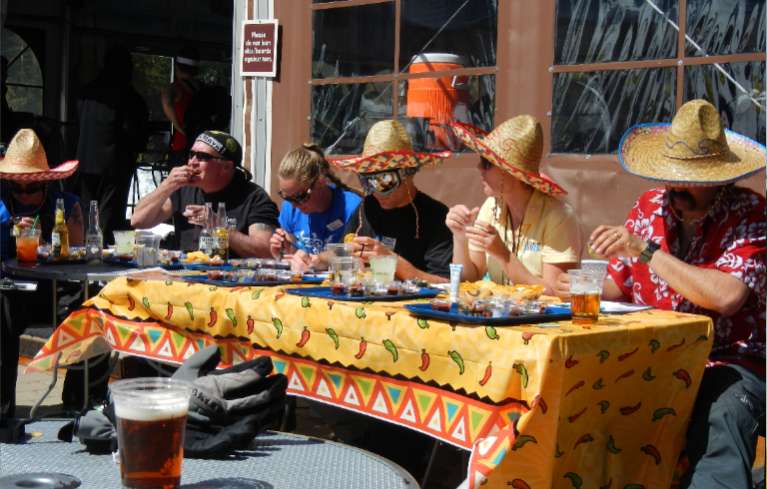
TWIN BRIDGES – Sierra’s Salsa Showdown is shrouded in secrecy. The winners are not revealing their recipes. And the judges need more to eat than just a tiny tasting cup in order to dissect the edibles.

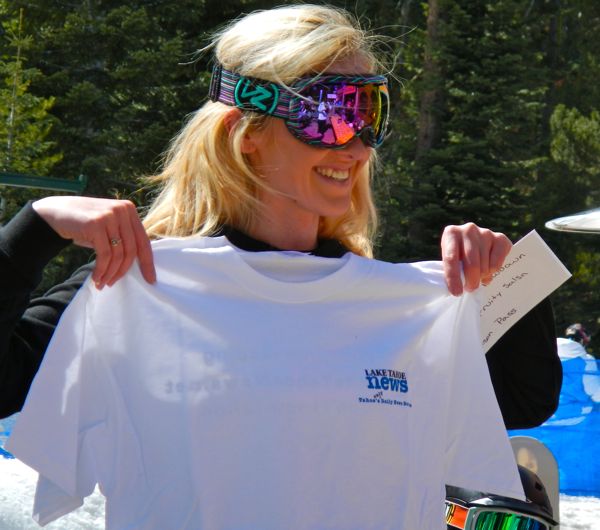
Lara Weiss of Incline made the best fruit salsa. Photo/Kathryn Reed

Lara Weiss of Incline made the best fruit salsa in the March 24 competition at Sierra. Photo/Kathryn Reed

“I can’t share all the secret ingredients,” Lara Weiss of Incline Village told Lake Tahoe News on Sunday after winning the fruit contest.

She is no rookie to this sixth annual competition. Three years ago she also won. Her efforts earned her a season pass to Sierra-at-Tahoe for 2013-14.

Weiss did reveal that grilled pineapple, mango, habaneros and jalapeños go into her award-winning salsa.

Judges in both categories rated each salsa from 1 – being weak to 5 – being bomb-diggity! Each was judged on appearance-color, aroma, flavor-taste, spice blend, originality and overall impression.

Marking the judge’s sheet on March 24 were this reporter, Mike from Lake Tahoe TV, Dennis the lift operations supervisor, Munchie who is the on mountain food and beverage manager, Jeff who supervises security (and is a past salsa winner), and Evan the risk manager.

I gave Weiss the most number of points out of any contestant for her Fire Fruit Fusion. I kept wanting more. From the start it was great – the aroma, look and then that kick of spice at the end blended perfectly with the fruits.

Kopa’s Fruit Salad, which came in second on my scorecard and with all the judges, was named after Sierra’s avalanche dog. It’s hard to know if that may have won over some of the Sierra judges.

It was a tough day of work for the judges of the Sierra Salsa Showdown. Photo/Susan Wood

It was a tough day of work for the judges of the Sierra Salsa Showdown. Photo/Susan Wood

The concoction was definitely the prettiest of all submitted. The strawberries added a great sweetness. Another nice thing about this fruit salsa is that is had no spice – just fruit to make it so yummy.

I was not in sync with my fellow judges when it came to the traditional category.

The Gringo came in third, but was first with my taste buds. The smoky aroma was unique and the avocado brought balance.

The judges, though, awarded the season pass to No BPA made by Allen Evangelista of Antioch. This was the first time he has competed in this contest.

“It’s all fresh ingredients … cilantro, onions, tomatoes, garlic,” he said. The recipe is his mother-in-law’s and because Evangelista wants to stay on her good side, he’s not giving out any more details.

This was my No. 3 pick in this category.

Later there was a taco eating contest. Aaron Hughes of Manteca won a Burton Bud Light snowboard for being the fastest to finish the five spicy tacos.

A couple contestants walked away from the table shaking their heads about how spicy the tacos were. Hughes was just all smiles and didn’t care that sauce covered his cheeks.


Report: South Shore transit reliable, financially stable

By Kathryn Reed

STATELINE – Buses are in better shape, they run on time more often, the yard is cleaned up, and the whole system is operating in the black. Those are the changes to BlueGo since the Tahoe Transportation District took over in November 2010.

And today, not a dime of the budget is coming from the casinos.

Curtis Garner, who is charge of the transit system on the South Shore, updated the TTD board March 22 about what has happened in the two plus years since the change in operator.

“The baseline is improving. We project to have the highest level of ridership since the 2009-10 season,” Garner said. Projections are for the non-skier rides to top 500,000 this fiscal year.

This is what the fare cards will look like.

This is what the fare cards will look like.

Weather plays a large role in BlueGo’s numbers because many of those on board are headed to Heavenly Mountain Resort. The ridership was up significantly in 2010-11 on the ski shuttles because that was the winter that would never end.

When BlueGo offered free rides on its main Highway 50 route during the Christmas-New Year’s span the ridership spiked.

Angela Swanson, who is South Lake Tahoe’s rep to the TTD board, said she would like staff to show what it would take to offer free ridership year-round.

Because a free bus system isn’t likely to happen any time soon, BlueGo staff is going forward with creating six magnetic passes that will be used by riders in lieu of cash. As soon as the devices are installed on the entire fleet, the cards will be sold to riders.

Garner said the big thing Tahoe needs to do is create a regional transit system. He added, that until it does so, bringing in events like the X Games or the Olympics would not be possible.

TTD board chairman Steve Teshera said funding is the big stumbling block when it comes to that regionwide system.

The next goals, Garner said, are to conduct a travel impact study of people going from the Bay Area to the Lake Tahoe Basin, a regional facilities alternatives analysis and long-range transit plan, and define a preferred local alternative for a passenger ferry.


Royal Gorge ready to return to its glory days

By Kathryn Reed

NORDEN – First impression – a muddy parking lot and tired looking lodge – is not the lasting image of Royal Gorge.

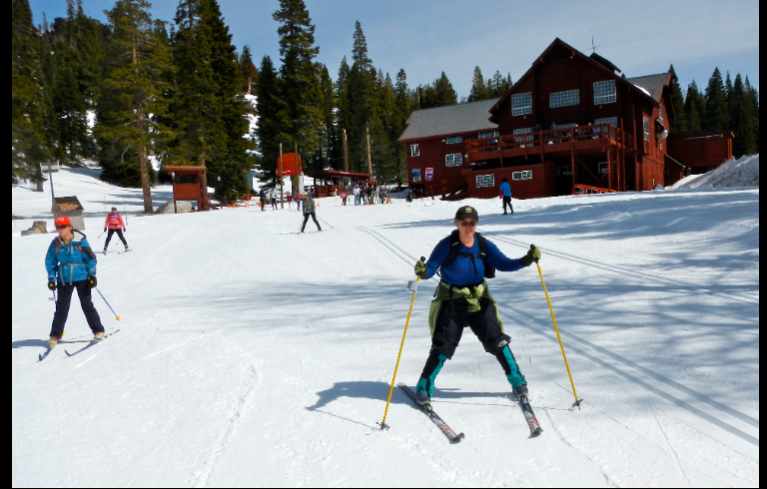
Endless open terrain. Rolling hills. Pines scratching the sky that is as blue as Lake Tahoe. Sun beaming down to where short-sleeves are all that’s needed. A choice of skiing in tracks or skating outside of them. A bit of exhaustion from not being accustomed to this much skiing.

Those are the lingering memories of Royal Gorge.

At 6,000 acres, it is the largest cross country ski area in the United States. With routes for all ability levels, it is seemingly an endless network of trails near Donner Summit. Some are nestled among the pines, others take skiers to otherwise hidden alpine lakes and then there is the 4,414-foot deep Royal Gorge that is due east of Summit Station – the starting point.

Trails go in nearly every direction from the Summit Station Lodge at Royal Gorge. Photos/Kathryn Reed

Trails go in nearly every direction from the Summit Station Lodge at Royal Gorge. Photos/Kathryn Reed

Royal Gorge had fallen on rough times. Owners changed. Money was scarce. Development proposed. The Wilderness Lodge was completely destroyed by fire in 2004 and never rebuilt.

Then came a massive fund-raising campaign led by the Truckee Donner Land Trust. In December, the property changed hands again – this time with the trust taking over.

Six leases are involved in the whole trail system, with the trust having control of 3,000 – or half – of the acres. There are 200 kilometers of groomed trails, with some loops allowing dogs.

It cost $11.2 million for the trust to buy Royal Gorge. Armed Forces Bank had taken over when the previous owners defaulted. With about $13 million being raised, it means there is money leftover for improvements.

And while $700,000 was spent at the start of the season on wayfinding signs, grooming machines and cleaning up the lodge, more improvements are in the works.

They are needed. At least one warming hut looks unstable. Signs are broken off. Employees of the base lodge couldn’t say if the upstairs bar would open any time soon.

The amenities at Royal Gorge are anything but royal. But that is destined to change as a recreation and forest management plans are created.

Sugar Bowl, which by vehicle is just down the road, but on a map is the Nordic center’s next-door neighbor, is operating the cross country area. And talks are under way for the downhill company to take over operation of the lodge.

Royal Gorge has never been available to the public for summer use. That is about to change.

“We could do cross country biking. We are looking at a mix (of ideas),” John Monson, spokesman for Sugar Bowl, told Lake Tahoe News. A network of bike trails created mostly by locals already exists.

When the Crows Peak lift at Sugar Bowl goes in – which could be this summer – it will “bridge the gap between Sugar Bowl and Royal Gorge,” Monson said.

Today it is possible to ski across the Van Norden meadow to get from one ski area to the other.

Also new this season, Truckee has added a bus stop at Summit Station at Royal Gorge so people don’t have to drive.

ngg_shortcode_0_placeholder (Click on photos to enlarge.)


Bowers Mansion earns national significance

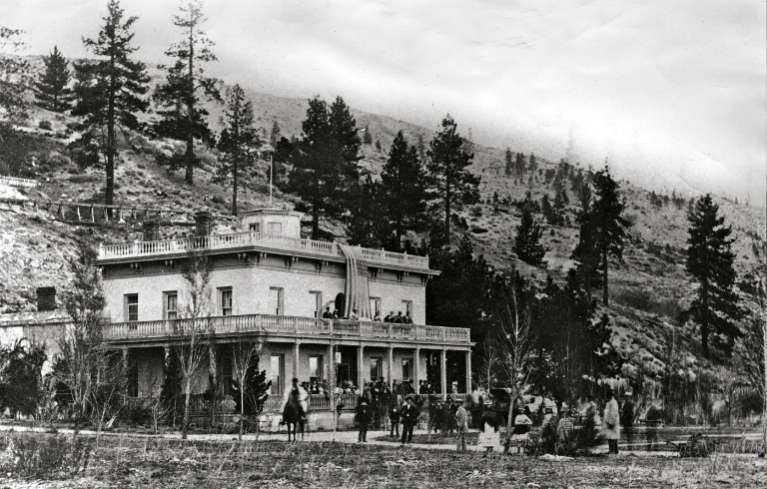
Bowers Mansion in the Washoe Valley is now on the National Register of Historic Places.

In 1976 it was listed as a local historic place, but this month it was given national significance. The National Register is the nation’s official list of cultural resources worthy of preservation.

Constructed between 1862 and 1863, Bowers Mansion is located on Old Highway 395 in Washoe City. The mansion conveys the story of its owners, Sanford (Sandy) and Eilley Bowers, and the successes and failures associated with the wealth they amassed and lost as the West shifted from placer to hard rock mining. Notably, the Bowers’ home is an early example of how wealth acquired from hard rock mining enabled impressive mansions to be built away from the mine sites.

Bowers Mansion becomes nationally recognized. Photo/Provided

Bowers Mansion becomes nationally recognized. Photo/Provided

The elevated historical recognition provides a national context for hard rock mining as well as an opportunity in the future to evaluate the Mansion as a National Historic Landmark.

Bowers Mansion retains excellent historic integrity in its interior and exterior. Despite changes in ownership and declines in maintenance, the mansion was restored and rehabilitated during the 1960s. Today, the expansive home and grounds are maintained as the Bowers Mansion Regional Park where views both to and from Washoe Valley remain much as they did during the days of the Bowers.

For additional information about Bowers Mansion, go online.


Officials work to make travel in basin more functional

By Kathryn Reed

STATELINE – How to move people around the East and North shores in a more pleasant and manageable manner dominated Friday’s discussion of the Tahoe Transportation District board.

Stephanie Grigsby with Design Workshop presented a video of Highway 28 showing how it could be possible to make parking less treacherous while at the same time providing information for people who are new to the area.

Although this stretch of East Shore roadway from the junction of Highway 50 at Spooner Summit to Crystal Bay was designated a National Scenic Byway in 1996, improvements have been lacking. At that time it was called America’s Most Beautiful Drive. Efforts are under way to make the drive complement the natural beauty.

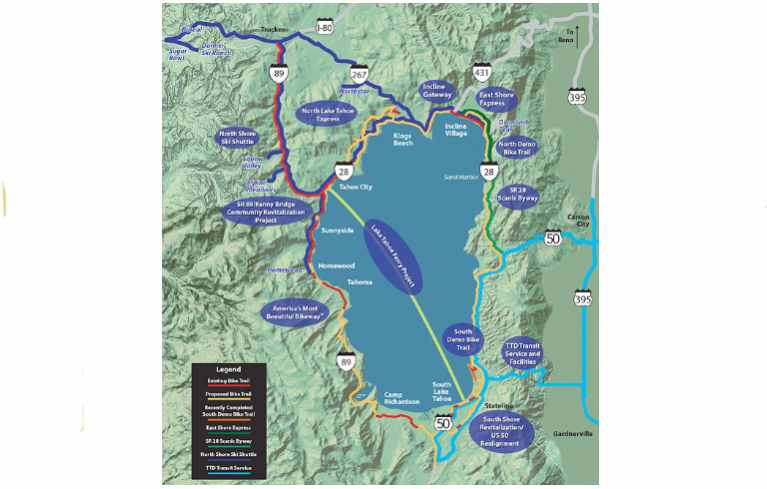
This shows Tahoe Transportation District projects throughout the basin.

This shows Tahoe Transportation District projects throughout the basin.

Access to the lake is also a big goal of the project. This should eliminate people needing or wanting to climb over guardrails and walking down steep embankments to reach Lake Tahoe.

Plans came about after the public gave input last fall. Safety, transportation, environment, recreation, scenic and economic needs are being woven into the plans.

The draft Highway 28 Corridor Management Plan is expected to be finished in the next two weeks. Three alternatives, plus a do nothing, are being created. In May, officials are expected to decide on the environmental review process.

This is a cooperative plan that has buy-in from the Nevada Department of Transportation, state parks, state lands, Nevada Highway Patrol, Incline Village General Improvement District (IVGID), Tahoe Regional Planning Agency, U.S. Forest Service, Federal Highways Administration, Washoe County, Carson City, Douglas County and Washoe Tribe.

“All of the scenarios include shared use paths, emergency pull-outs, vista points, and various levels of transit service providing connectivity between parking nodes and access to recreational areas,” the TTD staff report from March 22 says.

Tied into this is better public transit, which started last summer with the inaugural East Shore Express. More than 12,000 passenger trips between Incline Village and Sand Harbor were tallied. The goal was to eliminate walk-ins at the popular state park beach because of the dangers parked vehicles and pedestrians create in that area.

It is estimated that 2.6 million vehicles are on this highway every year.

While not part of the Corridor Management Plan, the Nevada Stateline to Stateline Bikeway was also on agenda. In some ways it is a companion piece to the greater transit discussion for the area.

TTD and IVGID are looking at whether six miles of the route can be placed on top of the sewer line; some of which is scheduled for replacement.

“If this works, we will be years ahead of where we would have been with the bike trail,” TTD Executive Director Carl Hasty said.

The bikeway when completed will go from Nevada’s two state lines in the Lake Tahoe Basin.

Board member Ron Treabess spoke about the changes that will take place this summer with the North Lake Tahoe Water Shuttle. It’s possible the Hyatt in Incline will be integral in future years as a marina stop; creating another tie-in to the bike route and scenic highway improvements.

This is the second of a three-year pilot program that transports locals and tourists to various marinas – Captain Jon’s Restaurant in Tahoe Vista, Gar Woods in Carnelian Bay, Tahoe City Marina and West Shore Café in Homewood. Captain Jon’s will be substituted for the North Tahoe Marina this summer because it is better protected.

Other changes include charging a flat $10 fee no matter the marina one departs at, allowing walk-on travelers and not just reservations, running from June 27-Sept. 22, and increasing hours to 10am-11:30pm.