Sugar Bowl expanding number of homeowners

By Kathryn Reed

New development at Sugar Bowl is more rare than a powder day has been this ski season.

It was 2005 when the last subdivision sold out.

One day the resort off Interstate 80 expects to have 250 dwelling units. With the recent release of 25 single-family home sites, the privately held company is almost halfway there.

Originally there were 54 homes, which included the 12 Snow White condo-apartments. There are 67 single-family home sites – which includes the 25 just put on the market. And there are 24 townhomes. There are no plans for more townhomes. The Jerome Creek Lodge was of part the Judah expansion. Three more phases are part of that project, for a total of 39 units. With there being no market for condos, there is no time line for when that will be developed.

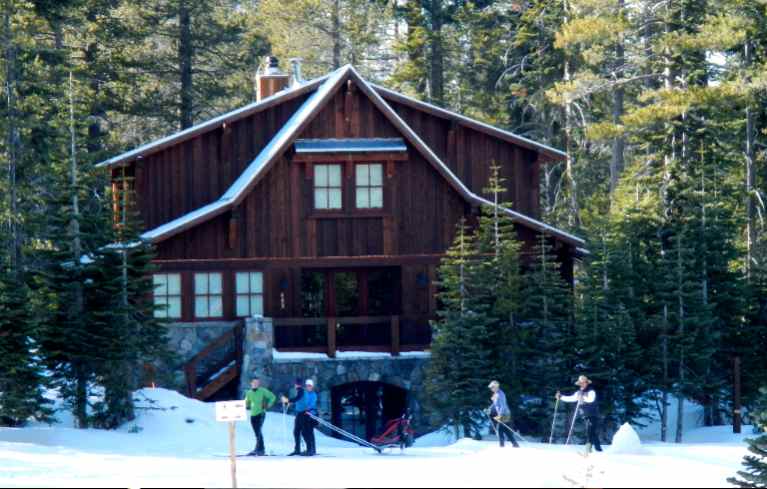
Sugar Bowl homeowners have cross country trails outside their door. Photos/Kathryn Reed

Sugar Bowl homeowners have cross country trails outside their door. Photos/Kathryn Reed

When Sugar Bowl started in the late 1930s the investors had stock. And then the homeowners did. These folks are still responsible for the operation of the resort and the homeowners association.

But a significant difference with the 25 Summit Crossing sites is they don’t come with shares in the corporation.

Of those 25 lots, two are sold, two are in escrow and four are reserved. Lots range from $250,000 to $750,000.

“All have direct access to Royal Gorge. You can step out any home site and be on a Royal Gorge trail,” Rebecca Meyerholz, who is with the resort’s real estate and development team, told Lake Tahoe News.

A lift of some sort, possibly a rope tow, is expected to be put in this summer. That will take residents to the base of Nob Hill and Disney at the downhill resort.

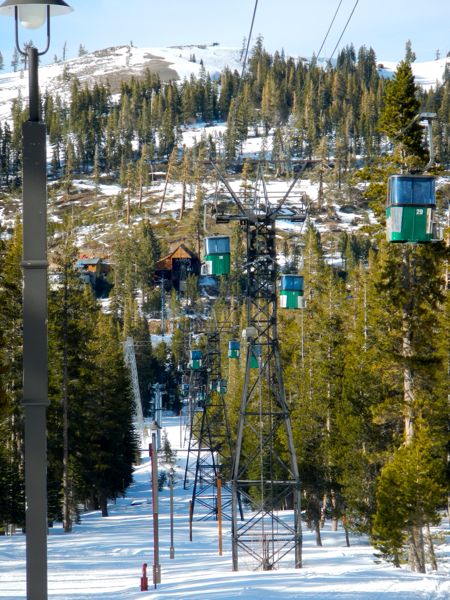
The gondola takes skiers and residents to the slopes or homes.

The gondola takes skiers-residents to the slopes-homes. Lights illuminate the paths.

Signs help trail users be safe.

Signs help trail users be safe.

Throughout this little enclave are paths for people to walk or ski on. Signs clearly delineate the sides for those on snowmobiles and those under human power.

These are second homes. And mostly it’s Bay Area residents buying into this enclave. In fact, some families have multiple houses to accommodate the multiple generations.

“Primarily it’s winter uses,” Meyerholz said. “We are seeing more summer use with more summer amenities.”

With homeownership comes buy-in to Village Services. It means having groceries in the fridge and cupboards before arrival, a spot to park in the garage, and an exclusive line just for them at each chairlift. When the sport house aquatic center is complete, this will be another benefit for residents.

To get to the houses during winter requires taking a gondola across. This runs 24 hours a day during the season. When the lifts close, the homes are accessed via the Judah area.

“It’s a more classic alpine experience. It’s a safe, secure environment where you can let your kids out,” Meyerholz said.


Forest managers told to protect rivers

By Dana M. Nichols, Stockton Record

McCLELLAN — State and federal scientists met here this week to consider something most Californians take for granted: The health of the rivers flowing from the Sierra Nevada.

It may seem obvious that the humans who drink that water and the fish who swim in it benefit if it is clean and plentiful. Yet it is only recently that the officials in charge of the place where those waters are born have had marching orders to make sustained flow of those rivers a priority.

“The national forests are located in the headwaters of the major rivers,” said Barry Hill, a U.S. Forest Service hydrologist who spoke Wednesday during the opening session of a dialogue between government scientists and advocates for various other groups including anglers, conservationists and the residents of rural counties.

The Upper Truckee River is part of the Lake Tahoe Basin Management Unit. Photo/LTN file

The Upper Truckee River is part of the Lake Tahoe Basin Management Unit. Photo/LTN file

Under the new National Forest Service rule for creating forest management plans, the work is being done publicly and is supposed to take into consideration the long-term sustainability of the forests and of the economy.

Last year, the Forest Service adopted a new rule for forest planning that requires forests to make sustainability a priority, and defined that as making sure that the needs of the present generation are met “without compromising the ability of future generations to meet their needs.”

That means that for the first time, forest managers are required to adopt practices intended to ensure just as much clean water for fish and people in the future.

In contrast, the Forest Service previously followed a “multiple use” approach that tried to balance the demands of interests such as logging, ranching, recreation and water, but was not necessarily focused on long-term sustainability.

Also, for the first time, the new rule emphasizes the sustainability of human communities as integral to the health of forests and rivers.

“Who knows it better than the people?” said Jo Ann Fites-Kaufman, an ecologist on the planning team for the Forest Service’s Pacific Southwest Region that serves forests in California.

Forest management has a huge impact on water.

Scientists say many forests are overgrown after decades of fire suppression by humans. That means they tend to burn hotter when they do burn. Hotter fires do more damage to plants and soils, allowing sediment to flow into reservoirs and reducing the ability of soils to hold snowmelt and release it slowly.

Other human activities such as road building, cattle grazing and mining also can pollute rivers or reduce their flows. And then there’s climate change, which scientists say is reducing average snowpack and sending more precipitation as rain.

Yet it was clear during Wednesday’s session that coming to a consensus on what to do about all these changes will be difficult.

One current debate, for example, is whether forest thinning projects should emphasize the use of mechanical cutting by human crews, or instead rely more on periodic fires, whether set naturally by lightning or deliberately by humans.

Conservation groups tend to advocate for more fire and less cutting. Their argument: the road networks required for cutting contribute eroding sediment into rivers and fragmenting habitat for fish and other wildlife. Also, Sierra Nevada plants and wildlife need the periodic fires to replenish nutrients in soils and support many plant life cycles.

“Mechanical treatment alone can not replace the ecological function that fire plays,” said Greg Haller of Pacific Rivers Council, conservation director for Pacific Rivers Council.

Yet there are scientists who say the net benefit of mechanical cutting outweighs the harm done by machines and roads. At the same time, many mountain communities are benefiting from the jobs created by forest thinning projects.

Bill Wickman of the Sustainable Forest Action Coalition advocates on behalf of rural communities seeking to put more people to work restoring forests. Wickman said lighter cutting machines available in recent years do much less damage to forest soils.

Questions remain over the future of cattle grazing in the Sierra. Conservationists at Wednesday’s meeting expressed frustration at spending money to repair mountain meadows only to see those meadows trampled and degraded the following year by cattle.

Forest officials admit that they feel pressure to allow continued grazing despite the problems.

“There are some concerns about grazing,” said Hill, the Forest Service hydrologist. “The status quo is not working very well.”

Inyo, Sequoia and Sierra national forests will be the first three in California to revise their forest management plans under the new rule. Forests farther north, including Stanislaus, will follow suit in coming years.

Fites-Kaufman noted another change under the new planning rule: All the development of the proposed plans is being done publicly and documents in process are posted online.

Previously, forest managers drafted the plans in private and once they were largely finished held public meetings during the environmental review stage.


Uthe turning in his assistant DA badge

By Kathryn Reed

Hans Uthe is good about talking on just about any subject except if the topic is himself.

It took his wife, Beth, to convince him to speak to the media about his retirement. And then in an interview with Lake Tahoe News he spent more time talking about his colleagues, his dad and crime in general than he did his career, the cases he’s tried or his future.

“Humble and unassuming” is how El Dorado County Superior Court Judge Suzanne Kingsbury describes Uthe.

The two worked together in the DA’s office when Jerry Lasarow had the position Uthe now has.

Hans Uthe is closing the door on his tenure as lead prosecutor in the Tahoe office of the El Dorado County District Attorney's Office. Photo/LTN

Hans Uthe is closing the door on his tenure as lead prosecutor in the South Lake Tahoe office of the El Dorado County District Attorney’s Office. Photo/LTN

“I remember a time when we were in the Justice Court, presided over by now retired Judge [Gene] Rasmussen, when a fellow came in for arraignment who was charged with a Fish & Game violation for illegal possession of a kestrel, a small hawk-type bird. Gene looked a little puzzled because the code section wasn’t readily familiar, when Hans launches into a lengthy and detailed explanation about what a kestrel was, its habitat, diet, etc. The judge was getting frustrated because he wanted to move his calendar along, but Hans was so caught up in his story that he didn’t even pause for a breath,” Kingsbury told Lake Tahoe News.

Uthe is known for having a breadth of knowledge about an array of topics. One of those is substance abuse.

He estimates at least 80 percent of the crimes in South Lake Tahoe have a substance abuse component – outright drug use or sales, burglaries to pay for drugs or an argument that escalated into battery because of being under the influence. Most of the DUIs also involve locals.

“The percentage of crimes by locals is higher than you’d think,” Uthe said.

He points to the casinos, the 24-hour community being a huge factor. When talking to his counterparts on the North Shore they don’t experience the crime rate South Lake Tahoe does.

“I’ve always thought we generate more crime than a community this size should,” Uthe said. “This community was leading the state last year in heroin seizures.”

South Lake El Dorado Narcotics Enforcement Team leader Jeff Catchings said he regularly works with Uthe to make sure the prosecution team has what it needs to obtain a conviction.

“He was very, very easy to work with,” Catchings said. “He’s a very smart attorney.”

That respect also comes from those on the other side of the aisle.

“Hans and I have worked together for several years, always on opposing sides of criminal cases. While I congratulate him on his retirement, he will be sorely missed in the criminal courtrooms of South Lake Tahoe. Hans brings decades of experience into the courtroom and always acts in a dignified and respectful manner,” attorney Rob Woelfel said. “Hans has dedicated himself to public service and to protecting the citizens of El Dorado County. He is also very generous with his time, volunteering for activities such as mentoring teens through the teen court program and helping those struggling with drug addiction through the court.”

It’s the Roberson case that Uthe says he is most proud of, even though as he describes it, he played a minor role. He credits colleague Trish Kelliher, now retired South Tahoe police Capt. Martin Hewlett and FBI Agent Chris Campion for putting Ulysses Roberson behind bars.

“Roberson is pure evil. I don’t think he has a single redeeming quality,” Uthe said.

Roberson in December 2009 was convicted of second-degree murder in the death of his son.

“Our job is to exonerate those who are falsely accused and convict those who are guilty of crimes,” Uthe said.

Uthe’s boss, Vern Pierson, said, “Because of Hans’s hard work, dedication and compassion, many victims and citizens of El Dorado County have seen justice served. Hans will be greatly missed by the office and the law enforcement community. We wish him all the best in his retirement.”

With only one week left in the El Dorado County District Attorney’s Office, the top prosecutor in the South Lake Tahoe office will be leaving a huge void. He’s been the assistant district attorney since July 4, 1998. April 5 is his last day.

“He has been a supportive boss for his troops, not only backing them up, but providing assistance anywhere it was needed. If one of his support staff was out, leaving the others short handed, he would sit down and churn out clerical work. He never hesitated to pick up a case or a calendar for the attorneys in the office,” Kingsbury said.

There are no plans to replace him. It means an office that is already lacking personnel will be even more comprised.

“I’m concerned,” Uthe said of his position not being filled. “You always have to have leadership in an office.”

The 58-year-old plans to spend more time with his wife – who he says has supportively understood his job has been his priority. While he hasn’t gotten on the slopes this year, he intends to. If he doesn’t, it will be the first year he hasn’t skied. After all, he spent 10 years on the Bear Valley ski patrol.

Mountain biking, hiking and fly fishing are the other outdoor endeavors he enjoys.

The Uthes moved out of Tahoe several years ago after people with access to a police scanner heard he had been called out to a crime scene. They took the opportunity to throw rocks through windows at his home. That was enough of being so close to the bad guys.

And while he can see doing some pro bono legal work, Uthe said he has no intention of being in the private sector for compensation.

“I gave everything I had,” Uthe said of his time in El Dorado County. Now he wants a little time for himself.


Google kills print edition of Frommer’s travel guides

By Verne Kopytoff, CNN-Money

Spotting a tourist used to be easy. Just look for someone toting around a travel guide. Today, vacationers are organizing their trips entirely online. All they need to carry with them is a smartphone to occasionally look up tourist attractions and navigate around town.

Travel guide publishers are in upheaval amid this new reality. Sales of guidebooks are down sharply as people instead turn to sites like TripAdvisor for hotel and restaurant reviews. The industry’s decline was hammered home recently with two big developments.

The latest came Thursday with word that Google planned to kill the print edition of Frommer’s, the travel guide giant it acquired last year. Google declined to comment, although Skift, a travel news site, reported that Google’s editors had already broken the news to authors of some upcoming titles. Frommer’s has long been a bible for globetrotters, and its extinction in print, at least, would be a big loss for the travel guide industry. Google could continue to publish digital books under the Frommer’s name and keep Frommer’s website alive, however.

The second development, the BBC’s sale of Lonely Planet, happened earlier this month. The British broadcaster disclosed plans to sell the guide-book publisher for $78 million, far less than the nearly $200 million it had originally paid. The buyer, NC2 Media, a Nashville-based media company controlled by reclusive billionaire Brad Kelley, promises to continue publishing travel guides. But the huge loss the BBC took on the sale highlights the difficulty travel guide businesses face in the digital age.

“If you go back 15 or 20 years, a guidebook was the only source of information for a traveler to go on,” said Stephen Palmer, managing director for Lonely Planet. “Now people are using six to eight different sources of information to plan that trip. We believe the guidebook still has a role in that mix.”

The decline in guidebook sales started with the recession, which decimated leisure travel. The influx of mobile devices compounded the problem. Bookstores like Borders, a big source of travel guide sales, shut down en masse. Free online travel information became more readily available, further eliminating the need to pay $30 for a guidebook.

Major travel booking engines like Expedia, Orbitz and TripAdvisor all make hotel reviews from users available to people deciding where to stay, for example. AirBnB and VRBO.com, which focus on private vacation rentals, have similar critiques. You’d have to go pretty far off the beaten path to find a hotel, restaurant, or bar that hasn’t been praised or panned somewhere online. The question is whether anonymous critics are as trustworthy as professional travel writers.

Travel guides must also compete against free open source guides, which are written by volunteers. Wikitravel and Wikivoyage, a branch of Wikipedia, offer free online travel tips for cities and countries around the world. Their prose tends to be utilitarian compared with some of the professionally written guides. But they generally give a decent overview, with the usual details about hotels, tourist sites, and how to get around.

Google’s brief history with travel guides started when it acquired Frommer’s along with the Unofficial Guide series from John Wiley & Sons for $22 million. It wasn’t Google first foray into print, however. A year earlier, it had bought Zagat Survey, best known for its restaurant ratings. Google planned to incorporate both Frommer’s and Zagat reviews into its online products. The rise of Yelp and TripAdvisor had showed that reviews could be valuable.

What Google would do with Frommer’s print business was always a question, however. The match between the online Goliath and an older school publisher seemed odd. A number of Frommer’s titles scheduled for release in February and earlier this month are now overdue. The most recent titles published focusing on Napa and Sonoma along with Banff and the Canadian Rockies, may be the last to be printed with Frommer’s name.

Palmer, from Lonely Planet, said that the demise of Frommer’s print guides would be an opportunity for his business to gain market share. But he’s still waiting to see how the situation plays out. Lonely Planet sells about 5 million guidebooks annually, Palmer said. But sales are lower than they were before the recession.

U.S. guidebook sales are down 10 percent to 20 percent since 2008, he said. Recently, sales have stabilized, providing a glimmer of hope. To reach a bigger audience, Lonely Planet has started a new series of books, Discover, that are for more mainstream travelers who must make due with shorter vacations. “I don’t think anyone is pretending that sales of travel guides aren’t down,” Palmer said. “But they aren’t off a cliff. What we’re seeing now is a level of stability.”

Like many travel guide publishers, Lonely Planet is investing in its online business. And like many media companies, news included, the transition is difficult. Lonely Planet, of course, uses its website to sell print guidebooks along with pushing digital copies. It also makes money from online advertising and for connecting visitors with hotel reservations and insurance, among other things.

In five years, Palmer said that even more people will use tablets and smartphones to plan their vacations. But some travelers will still prefer analog over digital, contrary to predictions about travel guides heading for a quick extinction. “I think there will be a place for books,” Palmer said.


Millions to be spent in South Lake Tahoe upgrading infrastructure

Publisher’s note: This is the first of a few stories about road construction planned for the Lake Tahoe Basin this summer.

By Kathryn Reed

Advice – set the alarm clock even earlier. That may be necessary to make it to your destination on time with the projected delays throughout the Lake Tahoe Basin from roadwork that is about to begin.

It’s not just the highways that will be torn up, but city and county streets, too. Some of this is because of repaving jobs, part has to do with sidewalks, scenic improvements are another factor. Utility crews are also upgrading their infrastructure – much of which is below ground and requires a jackhammer to get to.

“Everything we are doing this year will impact the public,” Jim Marino told Lake Tahoe News. Marino is South Lake Tahoe’s go-to guy when it comes to all things road related.

This are proposed projects for this construction season in South Lake Tahoe for all agencies. Map/South Lake Tahoe

These are proposed projects for this construction season in South Lake Tahoe for all agencies. Map/South Lake Tahoe

If all projects the city is involved with go forward this building season, it means about $17 million in improvements.

Sidewalks along Pioneer Trail between Highway 50 near Stateline and Larch Avenue will be put in starting mid-June. The $1.17 million contract is expected to be awarded at the April 16 City Council meeting.

South Tahoe Public Utility District must do some work in this area before the city begins its project.

The 5-foot wide sidewalks on both sides of the street will be traditional in design – nothing meandering or fancy.

“They will keep the baby carriages out of the roadway,” is how Marino described them.

This residential area has people walking and biking along the edge of the road at all times of day and night, as well as year-round. It can be difficult to see people because of how dark it is. And when the snow piles up, people are forced to walk in the road where drivers often whiz by at a high rate of speed.

Improvements will include lighting that is similar in design to what has been put in along Highway 50 where Caltrans made improvements for the last two years. All of these lights are expected to be operational by the end of the building season, Marino said.

Part of the bid process included having to specify traffic plans. The city will insist one lane of Pioneer Trail be open at all times.

Night work won’t be possible because of the proximity to residents.

This work is entirely funded by the feds through congestion mitigation air quality (CMAQ) funds.

Marino anticipates if the loop road ever gets built, it will take out some of the improvements being made this summer. But the rationale is do the work now and not wait for something that may never occur or could be a reality 10 years from now.

Plus, the city doesn’t have the luxury to let grant funds earn interest. Most are a “use it or lose it” scenario.


Heavenly fined for hazardous waste infraction

By Kathryn Reed

A 2010 state inspection of Heavenly Mountain Resort’s upper shop facilities determined the ski resort was not in compliance with hazardous waste regulations.

“There was no accident, spill or release that triggered this. It was about the containment facility not being up to code,” Russ Pecoraro, spokesman for Heavenly, told Lake Tahoe News.

Violations included:

• Lack of controls to prevent spillage and overflow of the used-oil tank.

• Failure to have a tank holding used oil assessed and inspected.

• Failure to provide refresher training to the emergency coordinator managing hazardous waste.

• Failure to maintain secondary containment for the used oil tank, and failure to provide secondary containment to pipes connected to the tank.

At no time was Lake Tahoe threatened or any other water source on the mountain, according to Pecoraro.

The infractions resulted in the resort paying the Department of Toxic Substance Control $94,000 in fines and $26,000 to reimburse the state for its costs.

Prior to the fall 2010 inspection Heavenly had not been advised that it needed to make changes to the waste oil containment section of the site. The other part of this site is a fuel station. But the two have different overseers from the state.

“We did not know we were out of compliance,” Pecoraro said.

When the facility was built in the early 1990s it met the regulations of the day set by El Dorado County, Lahontan Regional Water Quality Control Board and the U.S. Forest Service.

But rules change.

Besides now being in compliance, Heavenly says it has a better, open dialog with the state so something like this should not happen in the future.

—-

Here is a copy of the Heavenly settlement.


Barely any snow to measure in Sierra

By Kathryn Reed

PHILLIPS STATION – No snowshoes or skis needed. Unable to make the final measurement because the snow stopped and the stream began. Dirt and grass.

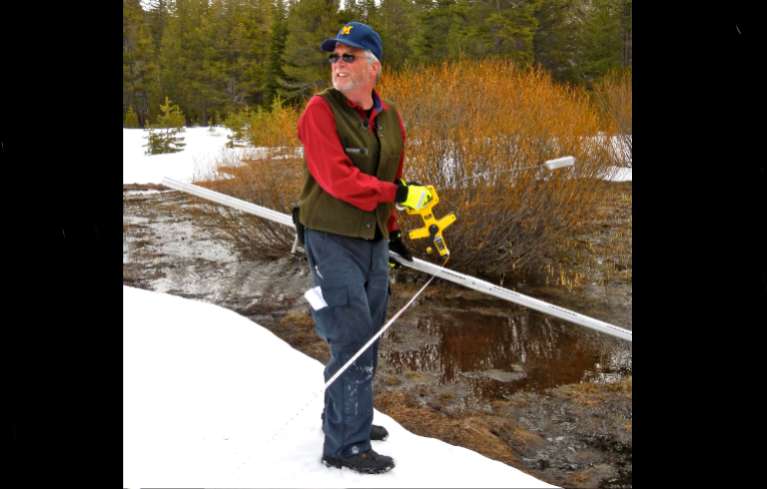
The combination of the above conditions made the results of Thursday’s snow survey near Echo Summit anticlimactic. Frank Gehrke with the state Department of Water Resources walked through the snowfield that in places didn’t contain snow.

He came up with an average snow depth of 13 inches that accounted for 6.1 inches of water content. This makes it 32 percent of average for this time of year.

Frank Gehrke runs out of snow to measure on March 28 near the entrance of Sierra-at-Tahoe. Photo/Kathryn Reed

Frank Gehrke runs out of snow to measure on March 28 along Highway 50 just west of Echo Summit. Photo/Kathryn Reed

Statewide, the snowpack is 52 percent of normal.

Snowpack is supposed to be at its peak right now. Instead, it has been diminishing since the December storms.

Holes from last month’s survey of where the metal device is plunged into the snow were still evident.

With the lack of precipitation throughout the state, this makes for the driest first quarter on record. And while it’s not unusual to have one month that is dry, to have three consecutive months is what is alarming.

“We can’t rule out there will be a good April. But it would have to be a deluge,” Gehrke said.

And to get the numbers to historic averages, it would mean 22 inches of rain for April. This equates to about 220 inches of snow.

“You probably don’t want that to happen,” Gehrke said.

The dim bright spot in news coming out March 28 is that the reservoirs on average are 95 to 97 percent full.

Most water users – ag and domestic purveyors – look two years out when it comes to figuring out how to meet their needs. These users were notified last week that their deliveries would be cut.

The runoff from the Sierra snowpack is what fills the reservoirs around the state. That water is then sent downstream to be used as irrigation for crops and drinking water for others.

And reservoirs that aren’t full impact recreation as well as fisheries.


Slice of land near Death Valley kept in private hands

By Tom Knudson, Sacramento Bee

DEATH VALLEY NATIONAL PARK – The first sign says: “Private Road – Authorized Vehicles Only.” A short distance later, at a locked white gate, another reads: “Borax – Do Not Enter.”

Ahead, less than a mile from Death Valley National Park, is one of the most well-preserved historic mining camps in America: Ryan, California.

Here, for select tour groups, scientists and guests, history comes alive. At a one-room schoolhouse, you can ring a bell that called students to class 90 years ago. Near the dining hall, you can step into a meat locker and, in the thick wooden walls, smell the slabs of beef that fed miners in the 1920s.
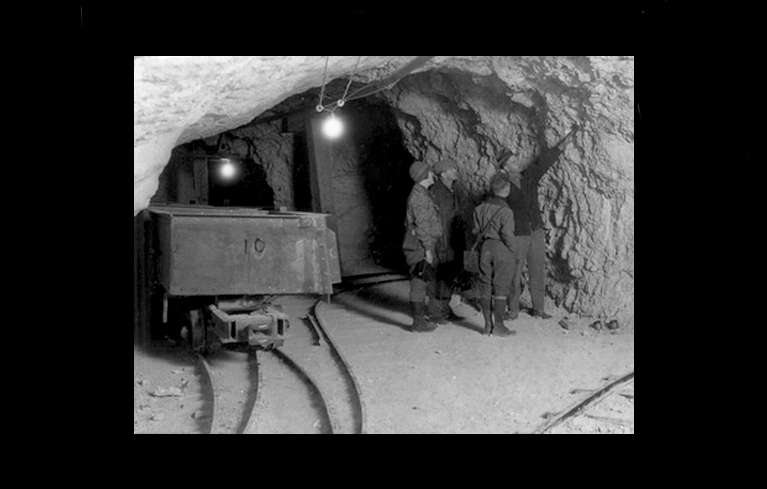
Pacific Coast Borax Widow Mine, Ryan, California,  Burton Frasher, 1928

Pacific Coast Borax Widow Mine in Ryan, circa 1928. Photo/Burton Frasher

In dorm rooms, you can peer through cracked, tattered window shades that have held back the sun for generations. Outside, you walk by rusty ore carts, wheelbarrows, picks, shovels and other relics. Up a steep hill is a rare treasure: a much-weathered weather vane once photographed by Ansel Adams.

Four years ago, all of this nearly became part of Death Valley National Park as a gift from London-based Rio Tinto, the third-largest mining company in the world.

But in a surprising turnabout, Rio Tinto chose instead to give Ryan to an entity it felt could better care for the site: a fledgling nonprofit – the Death Valley Conservancy – headed by one of the company’s own executives.

Park visitors who long had dreamed of touring Ryan were dismayed. So, too, were park managers.

“I was very disappointed,” said J.T. Reynolds, a former Death Valley superintendent who worked with Rio Tinto in 2007 to make Ryan part of the park. “It would have served many people, many organizations and the best interests of historic preservation.”

What’s unfolding here is more than a story about the curious fate of a remote mining camp in the hottest, driest corner of America. It is part of a wider debate about how best to protect historic resources across the West in an era of limited and declining government resources.

Already much has been lost. One example lies inside Death Valley National Park, where someone has chiseled into a rock wall in an attempt to steal American Indian petroglyphs, defacing the area forever.

In one of the most brazen cases, thieves used power saws, ladders and generators last year to steal centuries-old petroglyphs from federal land north of Bishop. Although the rock art has been recovered, no arrests have been made.

“It’s akin to someone defacing part of the Vatican or damaging an important artistic piece, like the Mona Lisa,” said Greg Haverstock, an archaeologist with the U.S. Bureau of Land Management. “A few greedy, self-minded individuals destroyed an amazing, finite resource.”

His budget to monitor and protect such sites across 750,000 acres of public land is $52,000 – seven cents an acre. “It is just not a lot of money,” Haverstock said. “It forces me to seek outside sources of funding.”

Many historic mining sites are at risk, too – and that’s one reason Preston Chiaro, president of the Death Valley Conservancy, cited in explaining why he believes Ryan should remain private.

“The fact that it’s been in private hands rather than part of the national park has been one of the things that has helped to preserve it,” said Chiaro, Rio Tinto’s group leader for technology and innovation. “There is a proven model here. It works. Why would you want to change it?”

But private ownership of historic treasures also raises questions: Who will have access? Under what conditions? What will it cost? How will tax-deductible contributions be spent?

“Once a site gets into private hands, there is really no control of it,” said Michael Newland, past president of the Society for California Archaeology. “You are at the good graces of the (owners). Some people are fantastic. Some may not be.”

As the donation nears completion, some have asked the conservancy tough questions, in writing, about its budget, management and plans. They have learned little.

“I got one reply to four letters saying they have every right to do with this property whatever they want to do and furthermore, they have no time to talk to me,” said Steve Bruce, member of a group called Save Ryan.

“As a public charity taking public money, they have a responsibility to respond to the public,” Bruce added. “It’s very frustrating.”

An outpost in the wilderness

There is one thing on which all agree: In a region peppered with old mine shafts, shacks and diggings, Ryan is a remarkable place, an outpost of culture and rustic comfort in a harsh, unforgiving wilderness.

It began humbly, with a cluster of cabins, lean-tos and dugouts at the base of a dark cliff overlooking Death Valley. “A stranger would have been amused to see the heads pop up all over the place like prairie dogs when the warning whistle blew before breakfast,” wrote mine superintendent Harry Gower in a memoir: “50 Years in Death Valley – Memoirs of a Borax Man.”

But like the cactus that clings to canyon walls, Ryan would blossom into something special.

Down a narrow, winding rail line came the heavy timber, wood stoves, concrete, bed frames, mattresses, wash basins, electrical wire, tools, windows, medical supplies and other building blocks of civilization.

Ryan was never large – just a few dozen buildings that housed 150 to 200 people, including some wives and children. But for a company town – it was owned by Pacific Coast Borax – it was surprisingly well furnished.

There was a hospital, schoolhouse, post office, general store, two bunkhouses, even a community hall where residents gathered to watch silent movies – a vast improvement from the early days when miners scraped borax off the Death Valley floor and hauled it to market in mule-drawn wagons.

After mining stopped in 1928, Pacific Coast Borax retooled Ryan into a tourist attraction: the Death Valley View Hotel. Visitors rented rooms, played tennis and rode the “baby-gauge” rail with its jaw-dropping views of the valley.

Pacific Coast Borax didn’t just promote Ryan, it protected the site with a full-time caretaker, a practice continued by U.S. Borax and Rio Tinto. Though some buildings are deteriorating, others are in great shape. Even the train engine that once carried tourists is kept in working order, though it is no longer used.

“It’s just like going back in time,” said Linda Greene-Smith, former chief of resources management at Death Valley National Park. “This place has really been lovingly cared for. It’s a treasure.”

Two Pacific Coast Borax executives, Stephen Mather and Horace Albright, even joined the National Park Service. As its first two directors from 1917 to 1933, they called for protection of Death Valley, which was declared a national monument by President Herbert Hoover in 1933. It became a national park in 1994.

Albright’s daughter, 91-year-old Marian Schenck, said that before her father died in 1987, he told her he felt Ryan belonged in the park.

“It would be ridiculous not to bring it in,” Schenck said. “The whole (park) concept came from borax. When you don’t include Ryan, it’s eliminating a big part of it.”

Decision stunned park officials

In 2008-09, a donation to the park was close. Rio Tinto officials met with Death Valley officials. Park officials prepared planning documents and a legislative plan for Sen. Dianne Feinstein, D-Calif.

Rio Tinto put together a color fact sheet titled “Public benefits of the Ryan Camp donation.”

“Donating Ryan Camp is a natural step in the long partnership between Death Valley National Park and the company who was instrumental in its creation,” the fact sheet reads.

“With the addition of Ryan Camp … the complete historic continuum of borax mining within Death Valley would be preserved.”

But in 2009, the plan was dropped after Chiaro met with Rio Tinto officials, including its CEO, and persuaded them to donate Ryan to the Death Valley Conservancy.

“We believe that the DVC shares our vision to preserve this unique facility,” said Rio Tinto’s spokesman, David Outhwaite, by email from London.

Asked recently about the decision, Death Valley spokesperson Cheryl Chipman said by email: “It is always up to the property owner whether they want to donate property to the park.”

At the time, though, officials were stunned.

“Very disappointing,” wrote Sarah Craighead, then superintendent of Death Valley, in a July 2009 email. “Lots of people, including the folks at Rio Tinto, worked a long time to get Ryan to the park service.”

Since then, the park and Rio Tinto have remained quiet, kindling interest, speculation and numerous requests for information from the conservancy.

“If you go to them asking for details, asking for facts – one of my questions is, where is their money actually coming from? – their response is ‘we don’t have the time to deal with you,’ ” said Bruce with the Save Ryan group.

Chiaro said his organization’s reticence is rooted in online speculation and criticism from Bruce and others that he feels are ungrounded.

“The human reaction when you are being attacked is to defend yourself,” Chiaro said. “I suppose we did some of that. That’s not maybe our proudest moment. But I think that’s a bit of human nature.”

The real reason for keeping Ryan private, Chiaro said, is that he believes the conservancy can better protect it.

“It’s not that the Park Service wouldn’t care about the site and treat it with respect,” he said. “I don’t think they have the vision for it. I don’t think they have the money.”

Reynolds, the former superintendent, disagreed.

“The Park Service is the caretaker of the country’s cultural history,” he said.

“You could have had a world-class historic preservation training program,” Reynolds said. “We could have employees in historic and period dress. It was endless. You could have that whole area as your classroom.”

Chiaro said the conservancy has similar goals and plans to work with the Park Service on ways to achieve them.

“We want more people to be able to share in this incredible piece of history that’s been preserved at Ryan, but we don’t want to damage it,” he said.

For now, Ryan remains closed to the public. And for Kathleen Knowler – whose grandfathers were Harry Gower, the man who helped carve Ryan out of bare rock, and Horace Albright, who was director of the National Park Service from 1929 to 1933 – that is unfortunate.

She recalled visiting Death Valley a few years ago with her daughter, hoping to see Ryan, only to discover it was off-limits.

“It was very disappointing not to be able to get there,” said Knowler, a first-grade teacher in Arizona. “That’s family history we can’t appreciate. It’s a really neat little mining town that should be part of the park service.”


LTUSD has multiple principal openings

By Kathryn Reed

Lake Tahoe Unified School District on Monday will be posting jobs for three principals, a vice principal and instructor to oversee the Sports Medicine Academy at South Tahoe High School.

The school board created the vacancy at Bijou Community School Tuesday night when the five unanimously agreed to move Karen Tinlin to Mount Tallac High School as principal.

Karen Tinlin is moving from Bijou to Mount Tallac starting in the 2013-14 school year.

Karen Tinlin is moving from Bijou to Mount Tallac starting in the 2013-14 school year. Photo/LTN

The Tallac opening is because longtime Principal Susan Baker is retiring at the end of the school year. She is responsible for creating the Young Parents Program at the continuation school, which provides a nursery-day care for the children of students.

Other openings:

• Mark Romagnolo, principal at Tahoe Valley Elementary School, is retiring.

• Superintendent Jim Tarwater is giving up his principal duties at the environmental magnet school. He is also in charge of human resources for the district.

• Pat Hartnett is going from South Tahoe Middle School to South Tahoe High School as vice principal.

• The sports medicine job is new. The facility will open in August for the 2013-14 school year.

The district will be looking for someone who is bilingual to lead Bijou. The hope is this will make the 6-year-old Two-Way Immersion program even stronger.

While STHS chemistry teacher Joel Dameral has been an administrative intern at the Meyers elementary school, he must apply for that principalship like everyone else.

At Tahoe Valley, the candidate for the top job must have a performing arts background because in the 2014-15 school year it will have that as its focus.

Tinlin’s move to Tallac is not completely voluntary. Bijou per the federal No Child Left Behind Act became a program improvement school in 2004-05, having been put on notice two years prior.

While significant gains were made in test scores in 2010, they reversed course for the last two years. The rule makers say move the principal if things aren’t working.

Tarwater said he would not have made the change if not forced to by the state.

“The system and structure created this type of situation,” Tarwater told Lake Tahoe News after the March 26 school board meeting.

He has long been vocal in his dislike for the Academic Performance Index standardized test because it compares one grade level to another instead of calculating if a class is improving or not from year to year. Special ed and English learners are given the same test as everyone else and expected to know just as much.

With more than 60 percent of LTUSD’s students on free or reduced lunches, it proves people are struggling. And studies have shown students from poor families don’t have the academic success middle class families have.

Time will tell if moving the principal will change the test scores.

In the meantime, Tinlin told Lake Tahoe News she is excited about the challenges and changes coming her way. This will be her fourth school in the 37 years she’s been with LTUSD. She was also principal of what was Meyers Elementary School and the now closed Al Tahoe Elementary. She also taught at Meyers and Bijou. She has been principal at Bijou for the last eight years.

“I think it’s an advantage to have contacts and connections. It will help with the transition,” Tinlin responded when asked if she or someone new to the district might have an easier time taking over from Baker, who has been entrenched at the Gardner Mountain site for years.

She’s worked with many of the agencies that are involved with Tallac students. And Tinlin is bound to know some of the students, which she believes will help her. And while her career has not been with this age group, she has raised four children and many of their friends call her mom.

“I think change is good,” Tinlin said. She is looking forward to finishing her career – which will probably be after two more years – at Mount Tallac.


Growing dome at SHES on shaky ground

By Kathryn Reed

Advocates for a growing dome at Sierra House Elementary School have discovered they need to nurture their idea a bit more for it to sprout into a reality.

This means learning that permits are needed, a thing called coverage is an issue in the Lake Tahoe Basin, that the school board needs to OK something like this and the state gets a say, too. It also means finally admitting the Truckee dome that has been highly touted as a model is not on a school site – that it is actually on private property.

People have been working on this greenhouse of sorts for a year and just now came to the school board. But it was only on presentation Tuesday night and not something to vote on.

What the dome at Sierra House might look like.

What the dome at Sierra House might look like.

Soroptimist International South Lake Tahoe was under the impression the school had all the necessary permits and approvals in place to erect the dome on the South Shore campus. Wrong.

And because the Lake Tahoe Unified School District board has yet to approve the structure, let alone the Division of State Architect signing off on the project, the Soroptimist will not be handing over the $25,000 check at lunch today as was expected.

Based on SHES Principal Ryan Galles’ presentation to the school board on March 26, the dome advocates’ input and board member Sue Novasel’s comments, today’s action will come as a surprise. And Novasel is the incoming president of Soroptimist.

Soroptimist told Lake Tahoe News prior to the school board meeting that its board would discuss at its meeting next week how to proceed. It’s possible the money could be set aside for one fiscal year with the anticipation the dome people will get the necessary approvals. It’s also possible the Soroptimist board will distribute the money to another organization.

While the school board said it likes the concept of the greenhouse, the members all want more info before saying build it.

Galles told the board how the dome would have multiple educational purposes. For one, it would be a hands-on science lab where students would be growing vegetables year-round. It would complement the composting program that was started this year. It would show kids that food comes from someplace else before it reaches a grocery story. And it will give them something healthy to eat. The state has curriculum in its Garden in Every School program that could be used.

“It will build lifelong healthy habits, not just with kids, but with families,” Galles said.

About one-third of the full boardroom was comprised of people who were there solely to show their support for the dome.

School district officials said the Tahoe Regional Planning Agency supports the dome project.

TRPA told Lake Tahoe News planners have gone over drawings and specs with the dome people, and told them what to include with their application. But no application has been submitted.

A soil analysis needs to be done, still.

Steve Morales, LTUSD facilities director, said even though Sierra House is out of coverage, that issue can be resolved. But he said the board would need to consider what the future for the school is in terms of coverage for other structures.

He explained to the advocates how the state works. And with the millions of dollars LTUSD has put into facilities in the last few years Morales is intimately familiar with the process.

And while the advocates said they know politicians who are on their side, they seemed to forget they were addressing five elected officials. Morales and other staff pointed out the state Division of State Architect doesn’t bend to political pressure, but instead follows stringent guidelines.

Morales will be working with the advocates to get the state what it needs.

The dome group has revised its budget to be close to $100,000 for permitting and to meet the state’s needs. Of the $36,500 Galles told the board is in the bank, the reality is $25,000 of that is from the Soroptimist. And now that is on hold.

So, even if the district and state give a green thumbs up to the dome, the money to build it, operate it and maintain it still needs to be secured.