McClintock against expanding Yosemite

By Michael Doyle, Fresno Bee

WASHINGTON — A bill to expand Yosemite National Park has won the support of California’s senators, but there’s apparent skepticism from the conservative congressman who now represents the park region.

The Capitol Hill split could hinder the park expansion legislation that lawmakers will soon re-introduce. More broadly, it underscores the challenges looming as Yosemite aficionados and Rep. Tom McClintock get to know one another, like partners in an arranged marriage.

“We look forward to working with the congressman so he understands the issues,” Mariposa County Supervisor Kevin Cann said.
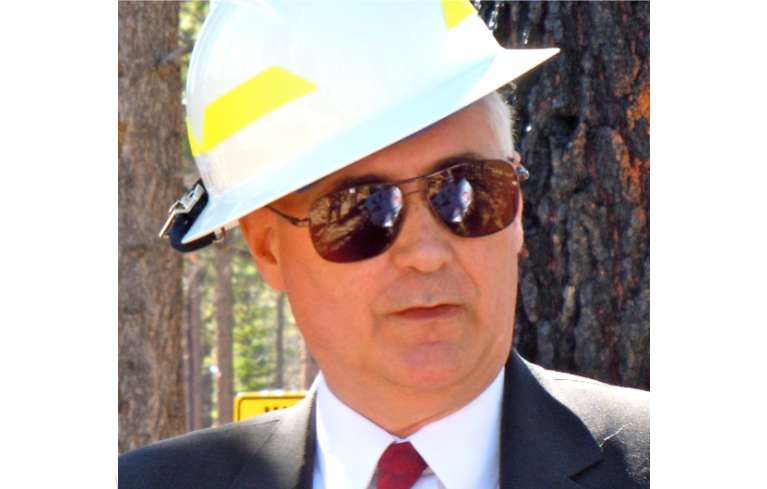
Yosemite National Park only recently became part of Rep. Tom McClintock's district. Photo/LTN file

Yosemite National Park only recently became part of Rep. Tom McClintock’s district. Photo/LTN file

McClintock, R-Elk Grove, visited Yosemite this week for his first time as the park’s congressman. The 56-year-old career lawmaker met with park officials for about two hours before attending a Mariposa town hall meeting Tuesday night.

The world famous park fell into McClintock’s 4th Congressional District when a state commission redrew legislative lines last year. The district now includes a big sweep of the Sierra Nevada mountains, from Lake Tahoe in the north to Sequoia National Park in the south. Yosemite is the district’s crown jewel, one that repeatedly invites political intervention.

Last Congress, for instance, the lawmaker who represented Yosemite at the time — Rep. Jeff Denham, R-Turlock — introduced a bill to authorize the park service to acquire 18 acres for a new Yosemite visitors center in Mariposa.

McClintock didn’t like that proposal. A member of the House Natural Resources Committee, he argued at a hearing last June that the park service would be better off using existing vacant buildings in Mariposa, and he asserted a new Mariposa center would put gateway communities in Madera and Tuolumne counties at a disadvantage.

“Why would we be having the federal government build yet another office facility?” McClintock asked, adding that “this is a plan that picks one winner out of many losers.”

A member of the Mariposa Tea Party Patriots shared McClintock’s skepticism and testified against the bill at the House hearing. The legislation died, and it has not been re-introduced.

McClintock did not respond to multiple requests for an interview or information over the past week.

He told Mariposa County supervisors on Tuesday that he would seek an investigation “to fully expose” a Yosemite plan that restricts certain commercial operations.

The congressman’s staff has reportedly already communicated to park advocates that he won’t support a separate Yosemite bill that will resurface in a few days.

The legislation, to be introduced by Rep. Jim Costa, D-Fresno, in the House and by California Democratic Sen. Dianne Feinstein in the Senate will OK buying about 1,600 acres in Mariposa County for an addition to the park. The land is near a development called Yosemite West, and was reportedly part of naturalist John Muir’s original plan for Yosemite.

“We haven’t made an expansion to the park in over 85 years,” said Laurie Wayburn, president of the Pacific Forest Trust. “I think this would be an extraordinary opportunity to get ready for the 2016 celebration of the park’s centennial.”

The Pacific Forest Trust owns about half of the land covered by the bill, and a partnership of medical professionals owns the other half. The bill authorizes the land purchase by the park service, but does not mandate it.

“This has been something that has been discussed for some time,” Costa said, “and it’s got bipartisan support.”

Costa added that “it would be very good” if McClintock supported the bill, which has been backed by Mariposa County supervisors. Wayburn, though, said McClintock’s staff has indicated he doesn’t support the park expansion.

In general, McClintock believes the federal government is too big. He is also critical of park service officials, as when he denounced Lassen Volcanic National Park wildland fire managers last year as “people who lack the simple common sense that God gave a squirrel,” following a blaze that blew out of control.

McClintock, without fanfare, introduced his own initial Yosemite-related bill last month. The measure would rename Mammoth Peak as Mount Jessie Benton Fremont. The mountain re-naming bill, which does not have any co-sponsors, would honor the 19th century woman whose writings helped inspire Yosemite protection efforts.

A 12,117-foot landmark near Kuna Lake, Mammoth is Yosemite’s sixth-highest peak. It’s been officially called Mammoth Peak since 1932, according to the Board on Geographic Names’ records.

McClintock publicly articulated some other intentions at the town meeting, including possible legislation blocking the park’s Merced River plan. The plan calls for the elimination of some Yosemite Valley commercial ventures, including an ice rink and bike rental operations.

“I want to sound the alarm over proposals for Yosemite from the National Park Service,” McClintock told Mariposa County supervisors Tuesday. “Yosemite belongs to the American people, and the park service’s job is to welcome and accommodate them, not to restrict and harass them.”



Vibrant colors decorate Northern California

By Kathryn Reed

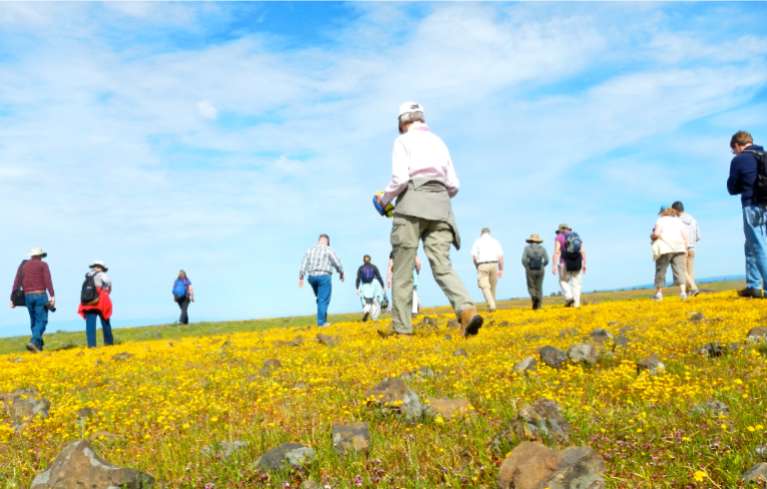
OROVILLE – It was like walking on a carpet of tiny wildflowers. And, yet, looking in the distance it was like a watercolor.

Table Mountain is usually awash in color this time of year. And while the flora is more robust compared to anyplace in Tahoe now, the lack of rain in the North State is making this wildflower season a bit lackluster compared to some years.

Still, the array of flowers last weekend on this 3,400-acre ecological preserve owned by the state Department of Fish and Game was well worth the trek. The state acquired the land from cattle ranchers in two purchases – one in 1992, the other 1997.

It's wildflower season on Table Mountain in Oroville. Photos/Kathryn Reed

It’s wildflower season on Table Mountain in Oroville. Photos/Kathryn Reed

Cattle still graze on this expanse of land. This, according to the two leaders of the hike, is a good thing because it keeps the non-native grasses “plowed” which allows the wildflowers to prosper.

Individuals, families and organized groups are scouring the landscape. Heads are bent down looking at the various flowers that create a mosaic. With this being lava country, the terrain is uneven – another good reason to keep looking down.

What keeps looking like a yellow carpet is actually various species of flowers. California gold fields is the most popular.

This area is also home to the Montana state flower – the Montana bitter root.

Brian Gilmore, who led this Fish and Game trek, said the Lewis and Clark expedition ate the bulb of this plant and that it has a succulent leaf.

Many of the plant species thrive in vernal pools. And while there are spots of water, where we walked last Saturday was dry and should have been under water in a normal March.

Table Mountain meadow foam, white tipped clover, cow bag clover, coyote thistle, butter and eggs, poppy, lupine, dwarf stone, blue-eyed gilia, California buttercup, jewel flower, purple owl’s clover, valley man-root, Larkspur delphinium – those are just some of the flowers we learn about.

A California horn lark could be heard nearby.

We catch a garter snake snacking on a Pacific chorus frog. This is a terrestrial snake – so after it swallows it needs to hang out on rock, which helps with its digestion.

In the nearby creek, Gilmore plucks a newt from the water. He enlightens the group that normally picking up bright colored amphibians is a bad idea because the color indicates it is poisonous.

Normally this time of year the six waterfalls in the preserve are flowing – not so now.

While Table Mountain is free to the public to access, to roam, to picnic, to fly kites, for those who don’t know their flowers, a guided hike is highly recommended.

—-

Note:

More info about Table Mountain, including tours, is online.

ngg_shortcode_0_placeholder (Click on photos to enlarge.)


NV Energy moving from coal to renewables

By Andrew Doughman, Las Vegas Sun

CARSON CITY — NV Energy rolled out a major policy initiative Wednesday, announcing that it will shutter its coal-fired plants, increase investment in renewable energy and create thousands of construction jobs over the next 12 years.

Under the plan, Nevada’s coal plants would begin closing by the end of next year, and the company would accelerate investment in wind, solar, geothermal and natural gas to replace the coal energy going offline. The company estimates the plan could result in a nearly 4 percent increase in rates over the next 20 years, and the proposed legislation would limit the Public Utilities Commission’s ability to approve the increases.

The utility unveiled the proposal it’s calling “NVision” on Wednesday at the Legislature as an amendment to Senate Bill 123.

 Sam Morris The coal-fired Reid Gardner Generating Station near Moapa is shown April 5, 2007. The spots near the smokestacks are “ghost” reflections of the lights on the plant, which can occur in digital cameras while shooting a point light source.

The coal-fired Reid Gardner Generating Station near Moapa. Photo/Sam Morris/Las Vegas Sun

“This does three things: it retires coal from Nevada, builds renewables, and it creates jobs,” said Tony Sanchez, NV Energy senior vice president.

The amendment calls for the accelerated closing of three of the four units at Reid Gardner, the controversial 553 megawatt coal plant in Moapa, by 2014. It leaves the fourth unit operating until 2017, after which the utility would have no coal plants operating in Southern Nevada.

Sen. Harry Reid, D-Nev., has relentlessly called for the closing of the plant, most recently during an address to the Nevada Legislature last month.

(Under the plan, the utility would not divest from its share of ownership in the Navajo and Valmy coal plants until 2017 and 2025, respectively.)

A state legislator familiar with the proposed amendment said NV Energy’s plan could position Nevada as a leader in renewable energy development in the wake of its divestment from coal.

“I applaud the utility in having the foresight and the courage to try to answer the questions about the future of coal in Nevada and their willingness to recognize that coal needs to be exiting stage left,” said Assemblyman David Bobzien, D-Reno, who chairs the Assembly Commerce and Labor Committee that could hear the bill if it passes the Senate.

Bobzien tempered his praise of the proposal with a cautionary note that legislators still need time to investigate the plan to see how the Legislature can achieve the goals of getting Nevada out of the coal business and firmly into the renewable energy business without adversely affecting industry and consumer interests.

“In the coming weeks the Legislature is going to have some questions about how we get there so that it’s done in a way that’s going to be predictable and stable for ratepayers,” he said.

In place of coal, NV Energy wants to invest in a 60-40 split of natural gas and renewables.

NV Energy would construct, acquire or contract for 600 megawatts of renewable energy in Nevada during the next five years.

The bill mandates that the utility own or operate 25 percent of that renewable energy.

This would be the first time the utility would own and operate renewable energy power plants, Sanchez said.

The company would also construct or acquire and own 1,000 megawatts of natural gas during the next five years and 1,000 more megawatts in the next 10 years with construction or acquisition intended to be in-state.

The amendment also calls for the construction of natural gas pipelines and transmission lines to hook the new power plants into the grid.

The construction projects would bring about 4,700 construction jobs to Nevada and would result in about 200 permanent operations and maintenance jobs at the facilities.

NV Energy said it does not anticipate any layoffs from Reid Gardner because employees will be involved in ramping down the plant and could transition to new jobs at new facilities, said Rob Stillwell, spokesman for NV Energy.

All this comes at a cost to the ratepayer.

“NVision has an estimated compound annual growth rate in electricity prices of 1.65 percent, which includes the effects of inflation,” according to an NV Energy statement released to the Las Vegas Sun on Tuesday.

The utility’s amendment would call for the Public Utilities Commission of Nevada to review the plan upon legislative approval. The commission would have 210 days to review the plan, considering among other things that the cost is “just and reasonable in light of the elements of the plan,” according to a copy of the amendment obtained by the Las Vegas Sun.

The commission does not appear to have the ability to reject the plan; the amendment instructs the commission to “approve or modify” the utility’s proposal.

The utility would also charge ratepayers to recover all “just and reasonable” costs of renewable energy construction, maintenance, and operation.

NV Energy would also be able to recover costs for closing coal plants, including charging for unused coal inventory, contract termination, and decommissioning and remediation costs.

Such rate hikes would automatically begin on the first day of the next financial quarter after they were enacted.

The Public Utilities Commission could retroactively review rate hikes permissible under the plan during the next general rate case, a reversal of the current practice in which it reviews such rate increases before they take effect.

The wide-ranging amendment also covers several significant changes to the state’s Renewable Portfolio Standard, its renewable demonstrations programs and its net metering program.

The bill also mandates that the Nevada Department of Environmental Protection oversee the closure and remediation of its coal plants, a job that would have gone to the Southern Nevada Health District under current law.


Chateau project team being reassembled

By Kathryn Reed

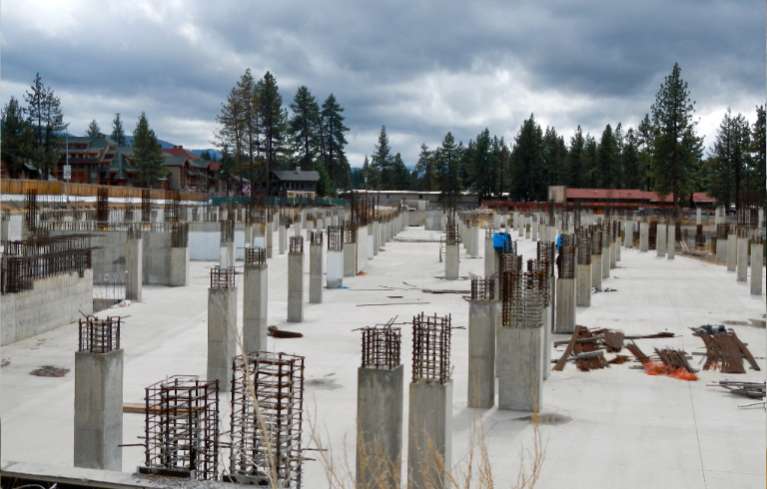
Joe Stewart with SMC Contracting put in the concrete and rebar at the convention center project in South Lake Tahoe. His crew is ready to resume work.

Pete Joseph was ready six years ago to move his McP’s Pub into a much larger building that would sit near the corner of Highway 50 and Stateline Avenue. He’s still ready to move.

MBA Architecture and Design in Reno came up with the original plans for what is still being called the Chateau project and they are back in the game today figuring out what the next phase will look like.

Randy Lane with the now bankrupt Lake Tahoe Development Company was to develop the $400 million project. Today he is offering advice to Bill Owens, who now owns the majority of the 29 parcels that make up the nearly 11-acre site.

The original rendering of the Chateau project by MBA Architecture and Design.

The original rendering of the Chateau project by MBA Architecture and Design.

Lew Feldman, the attorney who represented Lane, is now advising Owens.

It was the South Lake Tahoe City Council of Hal Cole (he was mayor), John Upton, Mike Weber, Ted Long and Kathay Lovell who on July 11, 2006, approved the owner participation agreement. This was the contract for what was to be the largest development in the city limits. It included two condo-hotels, a 93,000-square-foot convention center and about 57,000-square-feet of retail space.

Next week city officials and the latest project proponents are going to have a sit-down about the next steps. The Owens group has submitted plans the city keeps calling incomplete.

While council members would not normally have to sign off on modifying the number of phases when a permit has already been issued for a project, they have requested to do so after the planning commission takes action. Cole will get to vote again. Joining him are electeds Tom Davis and Brooke Laine, who with their pasts, are well versed on projects in that area. New to voting on items in this location are Councilwomen Angela Swanson and JoAnn Conner.

The plan is to develop about 20,000-square-feet of retail and 9,000-square-feet of food and beverage that will mostly span Highway 50, but will go down Stateline Avenue a bit, too. The section is a bit triangular, with the point being at the west side before McP’s Pub. It will be divided on the highway by a driveway that will access the underground parking.

The concrete that is there is the floor of the garage. While the original plan never had enough parking spaces for the entire project, a bit of irony is that this phase being proposed would have more parking than should ever be needed.

Back in the day, Jim Marino who is now capital improvements project manager for the city, and Hilary Roverud, who now runs the planning department, told the council it should not approve the project because the parking plan was inadequate. The electeds ignored the professional advice.

On the day the OPA was signed then Redevelopment Agency Manager Gene Palazzo said a performance bond was still needed.

The official city minutes from that meeting say, “Palazzo explained that in the event the developer were unable to finish the project, the performance, labor and materials bond provide the ability for the city to step in and get the project completed. Palazzo noted that this item was not included in the agreement and required resolution.”

Someone dropped that ball and was never held accountable for never securing that performance bond.

Also in the minutes from that meeting is talk about the Highway 50 tunnel.

The minutes say, “Palazzo remarked that per the OPA, the developer was required to construct the underpass tunnel connecting Project 3 to the Park Avenue Project; however the OPA only required that the developer maintain onsite improvements, of which the tunnel was not a part. Palazzo noted that this item was not included in the agreement and required resolution.”

Promises evaporate with redevelopment agency

While the OPA is a rather thick document, it is now useless. City Manager Nancy Kerry explained because it was an agreement between the developer and the city’s Redevelopment Agency it ceased to exist as a legally binding document when the state dissolved the Redevelopment Agency.

So, while the permits from the city and Tahoe Regional Planning Agency are in effect, there is no contract. This means inadequate parking will be an issue at full build-out and that there is no way other than crosswalks at Stateline and Friday avenues to get from the Chateau site to Heavenly Village. This means crossing a five-lane state highway.

Work on the hole could begin in three months. Photo/LTN

Work on the hole could begin in three months. Photo/LTN

It also means what was supposed to become a city-owned convention center is now likely to be a privately operated conference center. Through the Redevelopment Agency and tax increment the city was going to have money invested in the original Chateau project. It was guaranteed to have access to the convention center for a predetermined number of days. That is out the window even though Kerry would like it to be a negotiating point when appropriate.

She doesn’t understand “how any city manager could allow this to get to the condition it is because a consolidated parcel map would have been standard.” (Dave Jinkens was city manager when the OPA was signed, when construction began, when work ceased and when LTDC filed bankruptcy.)

Going forward

Construction is expected to begin in July, sources told Lake Tahoe News.

Before any of that happens, though, the city needs to receive a plan from the developer that is complete.

Kerry said she isn’t going to cut corners. She isn’t going to let work resume without these seven affected parcels being consolidated into one map. She is going to insist on a performance bond.

“Nothing occurs until we see documents of ownership,” Kerry told Lake Tahoe News.

Stewart, the contractor, has been talking with Owens, but as of today a contract has not been signed. That would be a bit premature without having received the city’s OK to start again.

“Rumors have been going on since the day they shut that down. I’ve never felt very confident anything would happen on that job until now,” Stewart told Lake Tahoe News.

In addition to putting in the foundation for the Chateau project, SMC built most of the retail at Heavenly Village as well as the transit center next door. SMC also built the Tamarack Lodge at Heavenly, Zephyr Lodge at Northstar and all of the new buildings at South Tahoe High School.

Stewart said it wouldn’t be weird to work on a small portion of what will be a larger project. He likes the idea of having a large area for staging.

“The hardest will be along Highway 50 that we would be doing this year. Being able to focus just on that is nice from a contractor’s standpoint,” Stewart said.

McP’s also doesn’t have a signed contract in place. But Joseph said he’s been in touch with Feldman about his continued desire to occupy a much larger plot of real estate.

The two-story building that is proposed would be on the street level and below ground.

Joseph is familiar with change. Eminent domain forced him out of his spot across the street to make way for Heavenly Village. He was ready to move into the same spot that could be under construction this summer, but instead has been operating on an island of sorts for six years. McP’s is at the west end of the fence that surrounds the concrete and rebar.

He’s been in business for 10 years and wants to stay in Tahoe. If he isn’t part of the Chateau project as originally planned, he told Lake Tahoe News he doesn’t know what the future holds for him.

Joseph is banking on another move – just down the street.

“The building would have a lot more character and that would be helpful. There would be outdoor dining, fire pits, sliding windows from indoors to out,” Joseph said.

The roof design makes it look like a freestanding building.

In addition to the city, the developer needs to work out issues with Caltrans still.

Sidewalks and a streetscape that match what is at Heavenly Village are planned.

The city is going to insist the entrance from Cedar Avenue be more than driving through a construction site. It must be a safe, finished driveway.

“As you pull in off Cedar there will be some sort of wall treatment. You won’t have the sense you’ve been turned loose in an underground construction site,” Feldman said. Improvements to Cedar Avenue will also be made.

Feldman would not disclose the amount of investment Owens plans to make in this initial restart phase, but said it would be eight figures.

The theory is having something usable in the ground will spur someone to come in to develop the rest of the project.

The original project was supposed to be a hotel-condo project, but condos are not a sellable product today. But what the market may bear when someone comes in to build future phases remains to be seen; as well as what that person would want to do.

“There may be plan revisions. That’s not uncommon for a larger scale project to amend the permit to reflect changes in the marketplace,” Feldman said.

While there are ideas about the types of businesses that might occupy the retail, negotiations will not begin until the green light for construction is given. Nor is it being disclosed how many storefronts there might be.


Tahoe a hot ticket for second homeowners

By Lauren Schuker Blum, Atthew Dolan and Candace Jackson, Wall Street Journal

The hottest new tech-industry accessory? A house in Tahoe.

Venture capitalist Steven Stull recently paid $11.875 million for a 10,000-square-foot waterfront estate on Lake Tahoe in Incline Village. David Duffield, co-founder of Workday, paid $25.5 million for another Incline Village estate, according to public records. It was the largest sale on the Sierra Nevada lake since 2008, says listing broker Kerry Donovan.

Brokers in towns surrounding Tahoe, say sales have picked up dramatically in the last six months, as spillover from the Bay Area’s exuberant housing market has finally reached the area. The Nevada side of the lake has gotten an additional boost since California passed Proposition 30, hiking income taxes on the wealthy and increasing the appeal of owning on the zero-income-tax Nevada side.

Tahoe's second home market is resurrected. Photo/LTN file

Tahoe’s second home market is resurrected. Photo/LTN file

Brokers say sales are surging on both sides of the lake. “December was the strongest December we’ve ever seen in the business,” says Susan Lowe, the corporate broker for Chase International, pointing to data that stretch back to 1990. According to the agency, the first quarter of 2013 saw $246.4 million home and condo sales in the area, up more than 70 percent from the first quarter of 2012.

Jim Telling, a partner at East West Partners, which developed the Village at Northstar, says the company has seen a 72 percent increase in the number of home sales since 2011. Average prices rose to $869,000 from $531,000, spurred by a large number of $1 million-plus sales.

Kate Wormington, a 17-year Apple veteran who left in 2010 to raise money for an education nonprofit, and her husband, Dan, a current Apple employee, recently snapped up a fully furnished, four-bedroom home that was listed for $2.1 million. The ski-in/ski-out property is at Constellation Residences at Northstar.

Wormington, a mother of two, says she liked the area’s friendly vibe as well as its amenities, such as ski valets and a chef-run s’mores bar.

“It is amazing to me how many people you run into,” she says, adding that they frequently see friends from the tech world and their hometown of San Carlos on weekends. “It feels like home.”

The change in the area’s fortunes has been swift and dramatic. Though the housing market in the Bay Area has been one of the strongest in the country, Lake Tahoe long struggled to recover from the downturn, with homes frequently sitting on the market for many months and selling well below asking price.

Despite the recent boom, prices still have yet to recover to their pre-downturn heights. Lowe says pricing generally dropped about 35 percent from the peak and is coming back slowly.

Martis Camp, a golf and ski community in Truckee that began construction in 2006, has sold 52 lots and homes since the start of January, says Brian Hull, director of sales, up from 27 at this point last year. Prices for lots range from the mid-$600,000s to $2 million and 108 homes have been completed so far.

Hull says the influx of younger families from the tech industry has resulted in a number of contemporary-style mountain homes with glass-filled architecture.

“Silicon Valley is at the cutting edge of changing the way we live with tech,” he says. “They’re really doing that with interesting homes from a design standpoint.”

Donovan, a broker with Chase International in Incline Village, the Nevada town where Oracle billionaire Larry Ellison has assembled a 7.6-acre lakefront compound, says Proposition 30 has had a positive impact on sales on the Nevada side. Though several high-profile sales have gone to tech-industry people, she says, the typical buyer is a wealthy baby boomer in finance or other industry from Northern or Southern California looking to relocate.

“People are thinking, ‘OK, I’d better just do it now,'” she says.

But Tahoe is not the only spot on the map seeing resurgence in high-end property transactions.

After a series of sluggish years, Miami’s luxury condo market is reviving, thanks in part to help from an unexpected source: New Yorkers.

Although buyers from Latin America and Europe have been lauded for helping to revive the city’s property prices, developers and real-estate agents now say it’s a new crop of Americans, mostly second-home buyers from New York, that has pushed luxury prices in Miami to a new level—and stirred a buying frenzy.

“A lot of them are buying now because Miami has really changed over the last couple of years, with a ton of New York restaurants and hotels opening up, with new development, and that has really made New Yorkers more comfortable with purchasing,” says Vanessa Grout, chief executive of Douglas Elliman’s Florida brokerage.

She estimates that about 60 percent of her firm’s luxury buyers are from New York, about double the percentage of a year ago.

Edgardo Defortuna, president and founder of Fortune International, a Miami development firm, says New Yorkers now make up about 25 percent of all luxury buyers, compared with around 10 percent a year ago.

The Hamptons of the Midwest is what Chicago is being called.

Straight across Lake Michigan from the Chicago Loop is a ribbon of tucked-away beach towns. On the Michigan side, this region is called Harbor Country. Elsewhere, it’s known as the “Hamptons of the Midwest.”

Now, after a slowdown, Chicago’s luxury buyers are returning to Second City’s longtime second home. Roughly 80 percent of its vacation properties are owned by residents of the Chicago area, according to real-estate agents, including such high-power figures as the Daley family, Mayor Rahm Emanuel and former Obama adviser David Axelrod.

“There aren’t six degrees of separation here,” says Kim Pruitt with the Harbor Country Chamber of Commerce. “It’s usually less than two, because it seems like everyone came from Chicago.”

While the real-estate slump hit both sides of the lake hard — some estimate that lakefront prices fell 25 percent to 35 percent during the worst of the recession—luxury buyers began returning to Harbor Country last year. Now brokers say high-end inventory is running low. Last year, 25 beachfront properties sold, five times the amount in an average year, brokers say.

In January and February, seven properties priced above $1 million sold or went into contract, says Dan Coffey, a broker with RE/MAX Harbor Country in Union Pier. One sale — a 6,000-square-foot, six-bedroom, six-full-bathroom, shingle-style beach house on 2 acres, with 200 feet of lakefront—topped $4 million, a level not seen since 2005.


S. Tahoe revamps city lease agreement policy

By Kathryn Reed

South Lake Tahoe this week revised its policy for how contracts are awarded, and then later revised the lease with the restaurateur at Lake Tahoe Airport.

The overall contract issue keeps rearing its head. There are multiple multi-decade agreements in place or ones done decades ago that have not been enforced. The parking agreement with Heavenly Mountain Resort would be an example of the latter.

Then there’s the 30-year lease with Mountain West Aviation to operate the airport. It in large part favors the lessee and not the city.

Flight Deck restaurant has a year to pay off its debt to South Lake Tahoe. Photo/LTN file

The owners of Flight Deck restaurant have a year to pay off their debt to South Lake Tahoe. Photo/LTN file

The council asked for a more stringent policy when last year it came to light the electeds had not been notified of the multi-year agreement a now fired employee entered into with a nonprofit for it to lease a city-owned building.

While the city owns more than 200 parcels, this includes things like retention basins. Council asked staff in the future to provide a list of amenities people might actually want to rent or lease.

A request for proposal must be used when the amount is $30,000 or greater or the length of the contract is more than six months.

“We want to make sure the lessee can run a business and that the benefits to the public are maximized,” Deputy City Attorney Nira Feeley told the council April 2.

While rent is supposed to be charged at fair market, that isn’t happening at the airport.

The council agreed to alter the agreement with Tom and Diane Miller who own and operate the Flight Deck restaurant. The base rent is now $700. It had been $600 when the contract was signed in April 2010. It increased based on inflation so they were most recently supposed to be paying $631.

In addition to that $631, the Millers were supposed to be paying 5 percent of gross revenues less than $15,000 per month or 7 percent of gross revenues above $30,000. This included alcohol sales.

Instead, they chose not to pay anything. They were $40,000 in arrears as of March 1.

With the Alcoholic Beverage Control looking into how the city collects rent at the ice arena in terms of alcohol being part of gross sales, the city is amending most of its agreements.

The Millers took issue with the alcohol sales being part of gross revenues even though it’s in the original the contract. (This is per staff. The Millers did not attend the meeting.)

It was agreed the Millers back rent would be reduced to $22,500. They have one year to pay it — interest free. If the restaurant, which is on the market, sells, then the debt would be tied to the sale.

Rent is now a flat $700 month with the city not collecting any percentage of any sales.

Councilwoman Brooke Laine brought up how this site has a history of losing money, and how former Councilman Mike Weber “walked away from considerable debt” when he owned Chase’s restaurant at the airport.

Mayor Tom Davis tried to defend his former colleague, saying that wasn’t true. But the airport manager said Laine’s memory was more accurate.

(Weber didn’t pay the debt until the next owner came along to give him some cash. City Clerk Suzie Alessi later wrote Lake Tahoe News to say, “Mike Weber’s profit from the sale of the restaurant was reduced to pay off the debt he owed the city.”)

Laine reluctantly voted for the revised agreement with the Millers.

“I want it to work, but I’m concerned,” Laine said.


Massive South Tahoe erosion project delayed

Publisher’s note: This is one of a few stories about construction planned for the Lake Tahoe Basin this summer.

By Kathryn Reed

An $11 million erosion control project in South Lake Tahoe has been delayed for at least one month because on Wednesday at a special meeting the City Council threw out all bids and will start the process all over.

Staff recommended this course of action because Disney Construction, the low bidder, had so many errors in its documents that other bidders protested the bid process. The next bid was $4 million higher. Only three bids were submitted.

“Disney during the council meeting (April 3) said they stand by their bid. I told them I appreciate that and that I expect to see the same bid, but cleaned up,” City Manager Nancy Kerry told Lake Tahoe News.

Disney said its numbers are spot on, but admitted the documents were a mess.

Other bids were so much higher because of the requirement to treat water during construction. But this is standard policy when working in the Lake Tahoe Basin. The city will spend time revising the bid docs to explain more thoroughly what this means so contractors understand the particulars.

The city expected the three-year project to be under way May 1. Now it won’t start until at least June. The bulk of the work was to happen this year. How the rebidding process will impact the actual work remains to be seen.

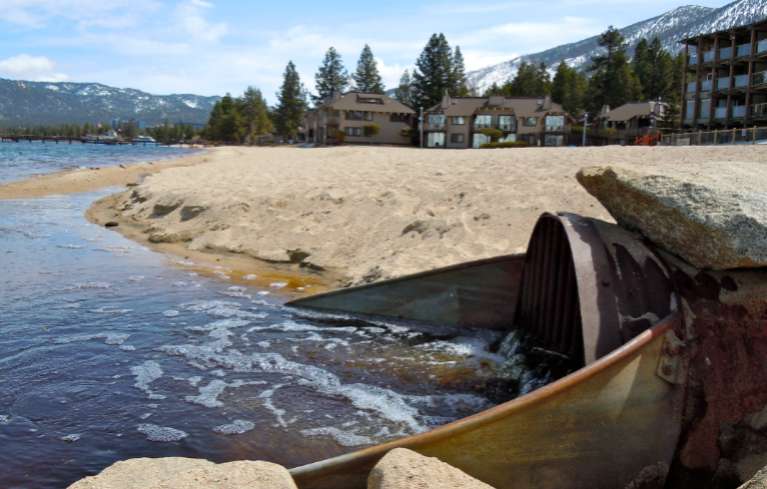
This storm pipe near Lakeshore Lodge and Spa in South Lake Tahoe is expected to be replace in the Bijou erosion control project. Photo/LTN file

This storm pipe near Lakeshore Lodge and Spa in South Lake Tahoe will be replaced in the Bijou erosion control project. Photo/LTN file

This year the work will be most visible to the public, with minor work in the commercial area in year two because most will be done in the meadow, and the final year will be establishing the vegetation and other work.

“This is the first pump and treat system in the basin,” Jim Marino, capital improvements project manager for the city, told Lake Tahoe News. “Normally it’s collected, treated and gravitationally goes to the lake.”

The project will collect the water flowing down from the 1,300-acre Bijou Creek watershed, treat it, pump it to sediment basins in the meadow off Glenwood Way, have sediment settle out there, so then the only thing being released into the lake is clean water.

The existing filtration system is 50-years-old and is ineffective in keeping sediment from the lake. This fine sediment is what scientists say is the primary reason the lake’s clarity has decreased.

With the Bijou area so developed, it’s not possible to build a detention basin in the commercial area to collect the water to filter out the fine sediment before it reaches Lake Tahoe.

Today water comes out of the meadow, crosses Highway 50, goes under the parking lot between CVS and Heidi’s restaurant and flows into the lake.

“We will remove that storm pipe. There will be a new headwall there. It will be a much nicer structure,” Marino said. “There will always be water going into the lake, but it will be treated.”

When Caltrans was doing work last year on the highway the city went forward with putting in its infrastructure so the road would not have to be dug up this year.

Still, this project is going to affect that area once works begins. Not only will the commercial area be impacted, but motorists driving through this section of town, as well as side streets will have experience traffic delays.


Big casinos want legislators to curtail slot arcades, sports betting kiosks

By Anjeanette Damon, Las Vegas Sun

CARSON CITY — Nevada’s biggest gaming companies went to the Legislature on Wednesday to ask lawmakers to protect them from strip mall slot machine parlors and barroom sports betting kiosks.

It’s a Goliath vs. David image.

But the big gamers say they need legislative intervention now to protect the state’s largest industry from a looming rock between the eyes.

Through a series of administrative decisions, the Nevada Gaming Control Board has allowed sports betting kiosks to creep into restricted gaming license establishments — taverns, slot parlors, sports bars.

Of the $170 million in sports pool win last year, the kiosks accounted for $600,000 — less than a third of a percent.

But that dollar figure should grow over time, and the Nevada Resort Association doesn’t want restricted license establishments to benefit.

“We’ve heard over the last few days: ‘What’s the harm, it’s only a $600,000 handle. We only have a few kiosks. We’re not hurting them,’” lobbyist Pete Ernaut told the Senate Judiciary Committee on Wednesday.

“Think about that for a second. You think these people go into this building to only drive $600,000 worth of sports book handle? Their entire business model is based on the proliferation of kiosks.”

Senate Bill 416 brought forward by the Nevada Resort Association calls into question the Legislature’s role as either field-leveler or industry protector.

It does two things aimed at restricted license establishments:

• Outlaws sports betting kiosks — and other sports betting activities;

• Implements new standards for “slot arcades” such as Dotty’s, which offer slot play but little other business activity.

Establishments such as Dotty’s proliferated in the wake of the statewide indoor smoking ban. One opened recently in Stateline. Critics argue they take advantage of restricted licenses available to businesses such as taverns, gas stations and grocery stores that want to offer slot machines as an ancillary activity to their main business.

Restrictions proposed by the Nevada Resort Association go beyond those passed by the Nevada Gaming Commission in 2011. They would require slot arcades to embed slot machines in standard bars, build larger kitchen and restaurant areas and take away the ability for slot arcades to apply for a waiver.

The NRA fully admits that its proposed legislation is protectionist. Ernaut argued protecting gaming is not just the Legislature’s job, but should be its highest priority.

“Protection of this industry: There can’t be a higher priority of this body than getting the No. 1 industry in this state right,” Ernaut said.

He stressed that Nevada law is designed to prevent competition among non-restricted licensees — the big casinos that are required, among other things, to build 200 hotel rooms — and the smaller restricted license operations that don’t need any comparable capital investment.

But tavern owners, bookmakers and kiosk companies scoffed at the idea their small slice of the market could pose a threat to Nevada’s casino resorts — both big and small.

“It doesn’t exist,” Joe Asher of William Hill, which operates 82 kiosks in Nevada, said of the contention kiosks are eating into the bottom lines of bigger casinos. “There is not one single shred of evidence that it does exist.”

In an ironic twist, kiosk sports betting evolved within what is supposed to be the state’s most regulated industry without any specific approval by the Nevada Gaming Commission.

Instead, the Gaming Control Board administratively approved the emerging technology step-by-step — from kiosks used simply as an information tool all the way to accepting wagers — under a provision that allows the board oversight over ancillary equipment.

Neither lawmakers nor gaming commissioners have had a say in whether taverns and other restricted licensees should be allowed to operate as sports books.

But is the Nevada Legislature really being asked to step in between Goliath and David?

The companies running small gaming operations aren’t exactly small companies.

William Hill is, according to the company’s website, “the world’s largest bookmaker,” employing more than 17,000 in eight countries.

Golden Gaming is Nevada’s largest slot route operator, with 8,500 machines in more than 600 locations. It also is the state’s largest tavern operator and owns three casinos in Pahrump.

Still, Golden is a far cry from the multinational corporations running casino resorts on the Las Vegas Strip.

On the other hand, the emerging kiosk industry plays an important role in Nevada’s economy, its lobbyists argued.

“When you become successful, you wind up on someone’s radar screen, and when you’re on the radar screen, you wind up here (at the Legislature) with people trying to stifle competition,” said Sean Higgins, lobbyist for Golden Gaming. “I guess the message is, ‘Be successful, but not too successful. Because if you’re too successful, we’ll try to push you back down.’”

Asher brought a human prop with him.

“Mark Keller, will you stand up please?” Asher said midway through his testimony. From the audience, Keller obliged. “This is a real kiosk man. He has a family. He has 3-year-old. If you kill kiosks, you take this man’s job away.”


William Scott served longest as Placer County sheriff

By Robert D. Dávila, Sacramento Bee

William “Bill” Scott, an innovative lawman who was Placer County’s longest-serving sheriff, died March 27 of lung cancer, his family said. He was 88.

Sheriff Scott was a war hero and Auburn police chief when he ran for Placer County’s top law enforcement job in 1954. At 29, he became the youngest elected sheriff in California history. He was re-elected five times before retiring from office in 1979.

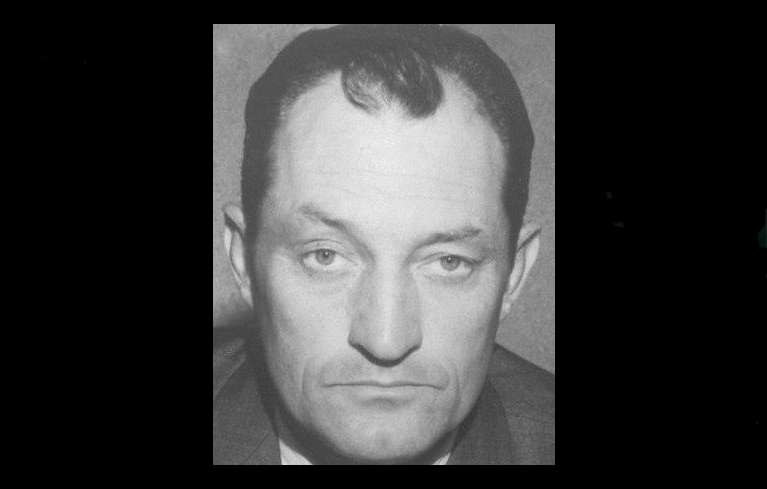
William Scott served at Placer County's sheriff. Photo/Sacramento Bee

William Scott served at Placer County’s sheriff. Photo/Sacramento Bee

He modernized the sheriff’s department, which was closed at night and had only 11 sworn officers and no patrols or in-house communications when he took office in 1955. He organized patrol beats, introduced radio communications and improved training for detectives. He added the coroner’s duties and introduced forensic pathology to the sheriff’s department.

In 1960, Sheriff Scott was in charge of security for the Winter Olympics at Squaw Valley. He established patrols in unincorporated communities and a substation in Tahoe City.

“That really opened up the mountains to skiing,” Placer County Sheriff Ed Bonner said. “They used to have just constables up there.”

Sheriff Scott, who helped arrest one of the FBI’s 10 “most wanted” suspects near Colfax, was widely known in law enforcement. In 1965, he was elected president of the California State Sheriffs’ Association. He belonged to the California Peace Officers Association and the California State Coroners’ Association.

“Sheriff Scott wasn’t provincial,” Bonner said. “He was always out meeting with law enforcement officials around the state for ideas and best practices to bring to Placer County.”

William Alexander Scott was born in 1924 in Auburn. He was the second of four children born to Ethe and Robert Scott, an opera tenor who gave up a performing career in the Bay Area to sell cars and raise a family in Auburn.

William Scott graduated from Placer High School in 1942 and served in the Army in France, Luxembourg and Belgium in World War II. Injured in the siege of Bastogne during the Battle of the Bulge, he received two Purple Hearts and two Bronze Stars.

He attended Placer Junior College and became an Auburn police officer in 1946. He joined the Placer County Sheriff’s Department as a criminal investigator in 1951 but returned to the Auburn Police Department as chief in 1953.

He lived in Auburn and had four children from two marriages. His 47-year marriage to his second wife, Jean, ended with her death in 1999.

Sheriff Scott “loved the men and women of law enforcement for their dedication and sacrifice,” son-in-law Jim Lott said. He was believed to be the only California sheriff to be photographed by the Soviet TASS news agency.

“During the Olympics, they wanted a picture of the head of security,” Lott said. “Bill didn’t wear a uniform. So he had to go out and get a plaid shirt and cowboy hat, and he stuck a couple of revolvers in his belt, so they’d have a photo of a real Western sheriff.”

He was born June 14, 1924.

Sheriff Scott is survived by children, Sharon Lott of Placerville, Richard of Pocatello, Idaho, Kim of Sacramento, and William Jr. of Antelope; 13 grandchildren; nine great-grandchildren.

Services will be at 10am April 12 at Parkside Church of the Nazarene, 3885 Richardson Drive, Auburn.

Donations may be made to the American Cancer Society or to the Placer County 10-35 Foundation, a nonprofit assistance group for law enforcement officers.


Uphill climb to allow mountain bikes on PCT

By Jessie Marchesseau

You could walk or ride a horse the 2,650 miles from Mexico to Canada along the Pacific Crest Trail, but don’t try to ride your bike.

Prohibited since 1988, riding a bicycle on the Pacific Crest Trail could cost you as much as $5,000 and six months in jail, though tickets normally run between $50 and $150.

The Pacific Crest Trail Reassessment Initiative is trying to change that. Since 2010, the group has been working to get the U.S. Forest Service to reconsider the ban on bicycles. It contends that the trail was never meant to be a foot- and equestrian-only trail, but mountain biking, which began to gain popularity in the 1980s, simply did not exist when the trail was originally developed.

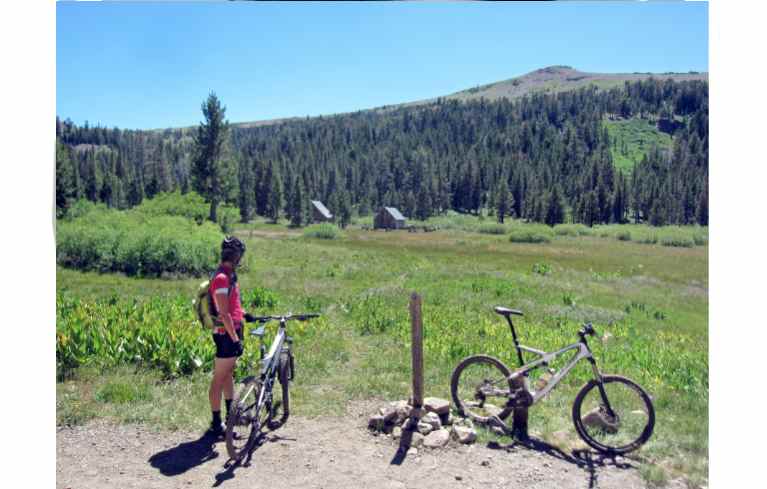
The junction of the Tahoe Rim Trail and Pacific Crest Trail at Meiss Meadow. Photo/Ben Fish

The junction of the Tahoe Rim Trail and Pacific Crest Trail at Meiss Meadow. Photo/Ben Fish

The PCT has been around since the 1930s and stretches through California, Oregon and Washington. In 1968, it was designated a National Scenic Trail by the National Trails System Act. It was not until 1988 that the PCT Advisory Council unanimously agreed to ban bicycles on the entire trail.

Bicycles are already prohibited in all National Wilderness Areas, and the PCT runs through more designated wilderness areas than any other National Scenic Trail. About 46 percent of it is in wilderness areas. This includes the Desolation and Granite Chief wilderness areas near the Lake Tahoe Basin. Of the nearly 50 miles of the PCT within the Lake Tahoe Basin Management Unit, 21.8 are in designated wilderness areas. It is the other 26.7 miles that the PCTRI is trying to gain access to, along with the rest of the non-wilderness portions of the PCT.

Part of that mileage is the Tahoe Rim Trail. As a multi-use trail, the Rim Trail allows bicycles on most non-wilderness sections, but it also shares part of its route with the PCT. As a result, the West Shore section of the Rim Trail is essentially a bicycle-free zone.

In the Lake Tahoe area, several popular mountain bike trails also intersect or run into the PCT. Having access to the trail, especially in the non-wilderness area between Meiss Meadow and Echo Lake, would allow riders to easily transition from one trail to another.

“As a local mountain biker in South Lake Tahoe, I can attest that having some sections open to bikes on the PCT in non-wilderness areas would greatly improve connectivity of some trails such as Hawley Grade, Round Lake, Sayles Canyon, Brian Meadow and Pony Express,” said Ben Fish, an avid South Shore mountain biker.

However, Beth Boyst, PCT program manager with the USFS, said that even opening small sections to allow access between popular mountain bike trails is unlikely.

“When you start changing things a little bit, you get a slippery slope of changing the trail experience,” she told Lake Tahoe News.

This idea of “changing the trail experience” is a big part of why some people, hikers and USFS officials alike, are opposed to the idea of bicycles on the trail. Online forums reveal that some users believe mountain bikes would disturb the overall serenity of the trail. Others fear bicycles would frighten horses.

“This experience is about being able to commune with nature in a peaceful environment, away from the trappings of civilization,” said Mark Larabee, spokesman for the Pacific Crest Trail Association. “PCTA holds that trail experience in the highest regard.”

The PCTA is a nonprofit organization whose mission is to “protect, preserve and promote the Pacific Crest National Scenic Trail as an internationally significant resource for the enjoyment of hikers and equestrians, and for the value that wild and scenic lands provide to all people.” It is the USFS’s primary provider of trail maintenance for the trail. Last year, PCTA volunteers contributed more than 92,000 hours.

This is one area the PCTRI suggests that mountain bikers could benefit the trail. In 2011, International Mountain Bicycling Association-affiliated organizations across the U.S. collectively put in more than 700,000 volunteer hours maintaining public bicycle trails.

“They’re always struggling to find more volunteers and funding,” Jeff Barker, a PCTRI supporter and advocate, told Lake Tahoe News. “The mountain bike community could bring a lot of people and money to the cause. Bikers are a community that is enthusiastic about trail maintenance.”

Lake Tahoe has one of the largest networks of mountain bike trails in the state. The Tahoe Area Mountain Biking Association alone put in about 2,000 volunteer hours of trail maintenance in 2012.

“It is obviously a passionate issue for many and TAMBA is maintaining a neutral approach to it for now,” said TAMBA President Kevin Joell of the PCT initiative. “I can say that if sections are ever opened to bikes in our area, that we would be happy to assist with maintenance as we have on many other trails around the lake.”

However, it does not look like that will be any time soon. On Feb. 5, Randy Moore, Pacific Southwest regional forester for the USFS, issued a letter to the PCTRI stating that the Forest Service will not be pursuing a termination of the bicycle closure or any amendments to the PCT management plan.

There is more to it than just changing the rules, Boyst pointed out. Studies would have to be done to determine the ramifications of a different use and increased usage. Bicycle trails must take different erosion issues into consideration than footpaths, and the PCT was originally designed for foot and horse traffic.

Moore and Boyst insist the trail was always intended to be exclusively a footpath and equestrian trail. Supporters of the PCTRI insist it was intended for all non-motorized use, bicycles included. Both groups cite the National Trails System Act and the PCT Comprehensive Management Plan to support their respective positions.

So while the two sides continue to hash out the semantics of the governing documents, outdoorsmen can still enjoy the splendor of the Pacific Crest Trail … on foot or horseback.

—-

For more info, on the Pacific Crest Trail — go online.

For more info, on the Pacific Crest Trail Reassessment Initiative, go online.