Nevada defends tourism slogan

By Richard N. Velotta

The director of the state Tourism Commission said that while many critics have pounced on Nevada’s new tagline, she’s confident the slogan will be embraced by residents and help attract tourists and businesses to the state.

Gov. Brian Sandoval unveiled “Nevada: A World Within. A State Apart” Tuesday.

“People are saying they like what the brand says about Nevada, and, for the most part, they’re saying, ‘Let’s give this the time it requires to really take a strong foothold and to grow,’” tourism executive Claudia Vecchio said.

Vecchio said she anticipated some criticism.

“There will always be detractors,” she said. “The moment you start a brand process, you know there are going to be people who don’t like it or for whatever reason think it’s not the right direction. We expect that. I hope we’ll be able to convince people through the way we execute it that it’s worth considering and it will become a brand that really does signify what Nevada is all about and drive business.”
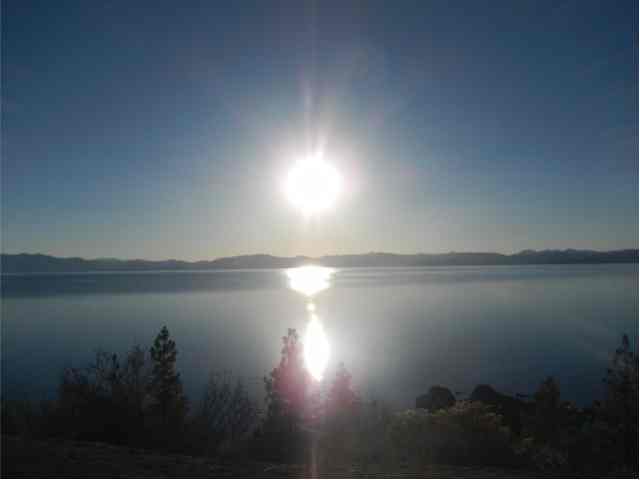
Nevada is trying to embrace all segments of the Silver State. Photo/LTN file

Nevada is trying to embrace all segments of the Silver State. Photo/LTN file

In addition to the slogan, the state created a new tourism website and mobile application. Budget Travel praised the site last week.

“TravelNevada.com sets a new standard for state tourism sites and will certainly enjoy the sincerest form of flattery in the coming months and years as other states learn to package their travel and hospitality assets in beautiful and engaging new ways,” magazine editors wrote. “Visitors can assemble their own vacations, learn about destinations and share their findings via social media. The site also puts an emphasis on accessing partner sites for additional information, travel deals and even trip booking.”

Critics, however, ripped both the slogan and the cost of developing the brand and campaign.

The state paid $218,000 of a $250,000 two-year contract to Seattle-based GreenRubino, the first firm hired to research and develop a tag line for the state. That was in 2011.

The company failed to deliver a slogan the Tourism Commission liked.

Then New York-based Berson-Marsteller was hired to rebuild the state’s website, develop a mobile app and do public relations for the tourism campaign as part of a two-year, $3.2 million deal.

Berson-Marsteller decided to develop its own tag line, Vecchio said. The result was “A World Within. A State Apart.”

“Their contract was to do public relations, the website and new creative materials,” Vecchio said. “It was a fully integrated marketing program. And they said, ‘Because we’re committed to this state, we will do the branding also.’”

Television ads featuring the new tag line will begin airing Monday in Los Angeles, San Francisco and Phoenix. The ads include a soundtrack from Las Vegas rock band the Killers singing “Don’t Fence Me In” by Cole Porter.

The state budgeted $2.4 million for commercials during its summer campaign and $1.5 million for commercials during its winter campaign. The money comes from room tax paid by tourists.

Vecchio said she expects the marketing plan will have a high return on investment. State officials estimate Nevada generates at least $20 in tax revenue for every dollar it spends on marketing and advertising.

“Everything we do, we do to drive business, and we drive investment back into the state,” she said. “This brand is something that we believe is going to only help to increase that return on investment.”

Vecchio said she hopes to learn from the criticism but isn’t going to let it dampen her enthusiasm for the project.

“I think it’s such an opportunity to celebrate the potential,” she said. “Instead of attacking, we’ll look forward to something that has a possibility to take the state to new heights of success.”

South Shore criminals keep cops busy

By Kathryn Reed

Gangs, drugs, the threat of violence at schools, parents who are not engaged, and a crime rate that is increasing.

Those were some of the topics South Lake Tahoe Police Chief Brian Uhler, El Dorado County sheriff’s Lt. Pete Van Arnum, and Steve Heggen with county probation touched on during this month’s Lake Tahoe Collaborative meeting.

(Lake Tahoe Collaborative was founded in 1992. It is leaders of primarily social service agencies who meet monthly to discuss issues pertaining to the South Shore.)

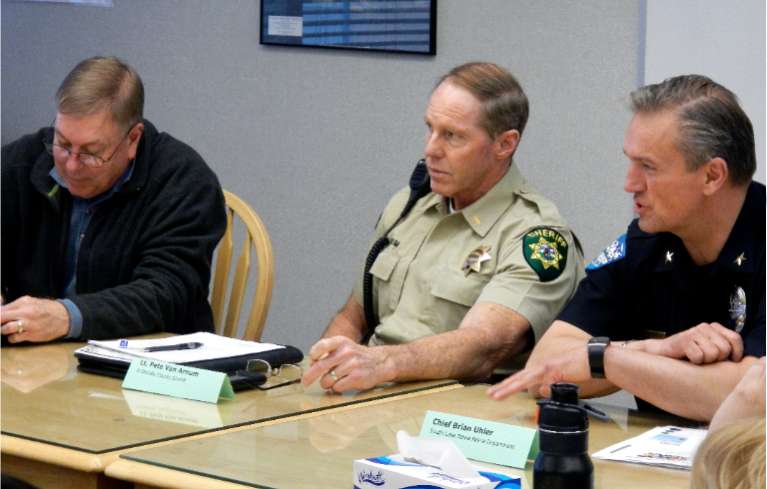
Steve Heggen (probation), Pete Van Arnum (EDSO), and Brian Uhler (SLTPD) talk crime on the South Shore. Photo/Kathryn Reed

Steve Heggen (probation), Pete Van Arnum (EDSO), and Brian Uhler (SLTPD) talk crime on the South Shore. Photo/Kathryn Reed

On Friday, law enforcement used South Tahoe High School as a staging ground for a mock school takeover. This was done while students were on spring break so as not to disrupt classes, but some drama students got to participate.

“We are trying to change the mindset of school administration and teachers (to be more proactive),” Van Arnum said of the meetings he and others have been having with Lake Tahoe Unified School District personnel.  “You look at school shootings across the country and most of the kids talked to someone and they didn’t come forward. We need good relationships with students because they’ll give us information before it happens.”

SLTPD and probation have armed officers at South Tahoe High at various times. But law enforcement does not favor arming school staff. They relayed how as first responders they are going after the person on campus with a gun, and if a teacher or administrator is armed, that person may inadvertently become a victim of law enforcement.

Van Arnum said his experience is that the middle school is where the attention needs to be placed because that age group is most impressionable.

This is evident with the Norteno and Sureno gangs in town tapping into the younger age group.

“One of the more disturbing trends we are noting is those gang bangers are recruiting mentally challenged kids,” Uhler said.

Heggen said parents need to be watching and listening to their kids. He told a story of a mom he knows who didn’t allow her son to buy red shoes because of potential gang affiliation.

“What are we doing to model behavior we want them to model?” Heggen asked.

He sees kids who behave well in the Juvenile Treatment Center, but once released are back in the environment that contributed to their incarceration and the destructive behavior resumes.

Police K-9 units on occasion go to STHS. Uhler said while arrests have been made, this type of action is more preventative in nature. “Leave it alone or leave it at home,” Uhler said is the message officers try to convey.

Throughout the community marijuana and alcohol are the most abused drugs, with more locals being arrested than tourists. Uhler said 90 percent of the arrests his officers make are locals.

He will be making a presentation to the City Council this spring about crime stats from 2012.

“The total number of arrests is down, but we are seeing an increase in crime,” Uhler said. He said the bad guys are getting away with more because of staffing issues. “We are seeing alarming trends. Sexual assault numbers are up and aggravated assault.”


Placer County supes concentrate on fire issues

Fire safety was a predominant theme at this week’s Placer County Board of Supervisors meeting.

In the first action, supervisors approved the permanent expansion of the county’s hazardous vegetation abatement ordinance to all county unincorporated areas. In the second action, the board OK’d an update to the Community Wildfire Protection Plan. And the third action was approving an agreement with CalFire for fire protection and other emergency services.

The pilot vegetation management program started in 2007 in select areas in the Lake Tahoe Basin. It expanded to communities in unincorporated areas on the western side of the county.

With the ordinance now permanently in place, owners of unimproved parcels that have no structures can be required to remove untreated fire fuels that create a hazard to adjacent improved parcels.

The ordinance’s goals are to encourage property owners to meet state and county requirements through the use of inspections, public education and cooperation. Before compulsory abatement is ordered and billed to a property owner, the ordinance has a process involving inspections and cooperative efforts. The ordinance provides for a formal action to ensure removal of the fire hazard.

“The board’s action to approve the HVA ordinance countywide gives our unincorporated fire chiefs a tool to encourage the elimination of hazardous fuels from unimproved parcels when these fuels pose a significant risk to a neighbor’s home,” said Rui Cunha, Placer County Office of Emergency Services program manager, said in a press release.

The Community Wildfire Protection Plan is a collaborative effort between Placer County and federal, state and local partners in fire prevention and mitigation. The plan lists 46 defense zones or urban lot fuel reduction projects, community preparedness and education projects.

The plan defines specific fire hazards in designated areas, assesses the risk and identifies and prioritizes specific projects.

The CalFire contract covers approximately 475 square miles, or nearly one-third of unincorporated Placer County. The contract pays for the equivalent of 66 full-time firefighters operating from eight fire stations around the clock.

— Lake Tahoe News staff report


Helping rehab wild animals — a joy and honor

By Deborah Thompson

I have been an animal lover all my life. I have always had pets and love wildlife. When my husband and I moved to the North Shore a few years ago, we did so for the environment and activities.

In the Lake Tahoe Basin I feel in my element and am often blessed with wildlife sightings, be it lake, land or air. It was only a matter of time before I became aware of Lake Tahoe Wildlife Care, and the fact that I had just missed their scheduled open house to the public. I literally put on my calendar to check the website the following spring for the next scheduled open house so that I would not miss it.

I immediately signed up to participate in the adventures to come.

ltwcThe training

The training was two full days over a weekend in May. When I arrived the first day, I was impressed with how organized the setup was, how friendly the folks were and the baby birds in the back of the room. As we took seats, Cheryl began her lecture with Tom working the video for visual on the overhead screen. I noticed these were folks who enjoyed what they were doing and were ready to educate and welcome us in.

My attention was locked from the start.

Cheryl lectured from both experience and the heart. She spoke of how she started in wildlife rehabilitation and described a person with interests that were not far from my own. She exhibited such knowledge depth and passion that I felt encouragement and excitement about my decision to attend. Through the day I learned about LTWC’s mission, how to care for the tiny wildlife, regulations around the larger wildlife, how to create a “bird-purse” to carry hatchlings in for the frequent feedings, and how to make mush-mouse. I was hooked.

The second day was on site at the wildlife center. With the various sessions on rabbits, ducks and procedure on wildlife pick up and transportation, I began to understand that I might get more wildlife volunteer opportunities than I thought possible. Everyone I spoke to assured me that, as a trainee, I’d get out of it what I put into it. Any size commitment was mine to give and no size was too small.

I was afraid of mistakes.

The trainers talked of their own mistakes. It was clear that from both mistakes and successes came knowledge depth. The sign-up sheets went around and my name went on them. I signed up for assisting with fundraising booths at local events, I signed up for on-call transportation out of North Shore. I signed up for cleaning shifts at the center. Eagle flight exercise training.

The experience

Two days later I attended the orientation. That was the first step before I could start shifts. This one was hard as there was a not so healthy resident in a cage in the room where part of the orientation was held. Normally this sight would distress me, but what I learned in the previous week was that the center was the right place for this creature to be, and that we were there to help. I already felt part of a team and that I could get past the hard parts, as the good parts outweigh them.

The orientation session was filled with many process details that, as I look back, are now second nature to me. They walked us through the basics from training, how to log our hours and closed the orientation by simply cutting us loose to sign up for shifts.

I did, but was disappointed to find that the first available shift at the center was a week out. No worries, it was great to see folks eager to help. Although my first center shift was a week away, I was also signed up to work the bike race booth that next weekend. So my experience began right away.

Here is some of what I experienced in my first year:

1. Fundraising booth volunteering – Here I learned how much the community appreciates LTWC and all it stands for. I met board members and other volunteers who share the same passion and had great stories to share. I learned of the Kokanee festival – a wonderful treasure right in my back yard.

2. Many, many evening shifts at the wildlife center. While any number of shifts is appreciated, I got so hooked on what I was learning and participating in each time, that I averaged two, sometimes three shifts a week.

a. I cleaned bear cages and learned how to corral wide-eyed cubs from one den to the other for a dinner of fish and fruit.

b. I cleaned bobcat cages and fed bobcats, not once getting grossed out by what they eat.

c. I cleaned raccoon cages, while they washed their marshmallows in their pool and stared at my every move.

d. I helped teach a river otter to swim and be happy again. She was then transferred to another facility with a lone otter in need of a buddy. She, in turn, taught him to swim.

e. I fed a bat, and wanted to tickle his little head as he was so cute in his own way, but Cheryl said no.

f. I fed swallows mealworm “toothpaste”. Probably not as fresh tasting as it sounds, but a very interesting feeding technique.

g. I held a cottontail rabbit and bottle fed it until it fell asleep on my lap.

h. I hand fed stellar jays in the aviary while their buddies swooped my head to get in line for their turn.

i. I watched and assisted Cheryl in a Canada goose wing repair.

j. I observed up close, with instruction, a feeding of a Saw-whet owl mush-mouse. With a frightened and stubborn owl, feeding can be a negotiation process and Cheryl has the skills for success.

k. I bottle fed baby raccoons that like to hold your hair until you put them down. This is cute until they are bigger.

l. With hands-on training from Tom and Cheryl, I tube-fed a red-tailed hawk that refused to eat.

m. I learned a bit about the center’s on-site policy and procedures, helped organize equipment and was entrusted to come back at the end of the season and help winterize the property.

3. Eagle flight exercise – I held a golden eagle in my arms and tossed it for flight to help exercise its wings. I did the same for a bald eagle. There are no words for this so I will leave it at that.

The joy and honor

If the list above doesn’t illustrate the joy in experience while volunteering at Lake Tahoe Wildlife Care, let me summarize in closing with a story about a house guest I was honored to have. In October after the snow season started, a call came into the wildlife center from my neighborhood on the North Shore. A red tailed hawk had hit a window and was down, but alive. Cheryl called me in for action. I went to the house. With my knowledge that I had gained in the past four months, I was able to handle the hawk, assess its condition and report back to Cheryl my findings. She had determined the hawk simply needed a quiet dark place to rest, as it could not be left out if it was not ready to fly, and shake off its dizzy spell.

The roads were wet so I agreed to secure the hawk at my house. It was then when Cheryl stated to me, “You now have the hawk in your possession on behalf of Lake Tahoe Wildlife for care and recovery.” A chill of went up my spine. I felt privileged.

I felt knowledge in something I respect. I felt confident because of the experiences and training I had received so far. The next morning, with Cheryl’s coaching over the phone, I was able to assess if the hawk could fly adequately, and it was sent flying out my garage and high over my neighbor’s house. There was that chill again. Joy and honor.

For anyone who loves wildlife, appreciates the advocacy behind LTWC’s mission, but is not sure if, or how, to get involved, I invite you to contact the center and talk to any of the volunteers, board members or the Millhams directly. Then, register for training and simply begin.

Deborah Thompson lives in Incline Village and has been an active volunteer with Lake Tahoe Wildlife Care since May 2012.

—-

Note:

LTWC’s next training is May 18-19. More info is online.


5 loop road alternatives to be studied

By Kathryn Reed

STATELINE – With a near unanimous vote, the Tahoe Transportation District on Friday selected five loop road alternatives to study in the environmental documents. But what that assessment will look like is not expected to be released in draft form until January 2015.

Angela Swanson, South Lake Tahoe’s rep to the TTD board, voted the council’s preference April 12 when she was the lone dissenter. While she expressed the city’s desire for a loop road and to work with the partners to make it happen, she said because the majority of the council takes issue with one of the alternatives, she had to vote no.

Fellow TTD board member and Douglas County rep Nancy McDermid gave her a bit of schooling in policy and procedure; saying how it’s normal to not like all alternatives in any document, but that this is the democratic practice and it’s how prejudices get ironed out.

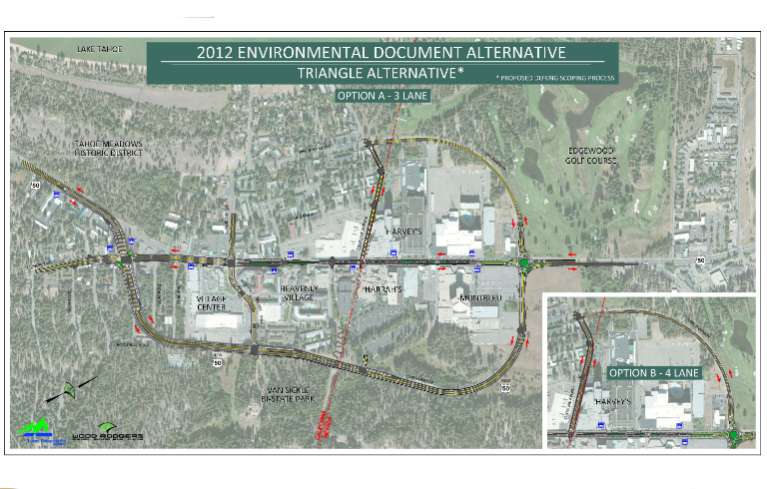
This triangle alternative is the preferred route for the loop road on the South Shore.

This triangle alternative is the preferred route for the loop road on the South Shore.

But McDermid doesn’t attend South Tahoe council meetings to know that this board wants to act united and not fractionalized. It also has no problems telling other entities how to do their job.

The Tahoe Transportation District – not the city, not Caltrans, not NDOT – drives the loop road.

This summer fieldwork will be done to help gather information that will be used for the environmental analysis. Then in 2014 the analysis will be done, with a draft coming out in early 2015.

The contentious alternative for the city is what is now called Alternative 2 with options. It would still take out the buildings to the west of the intersection of Highway 50 and Pioneer Trail near the state line.

The triangle alternative is deemed the preferred alternative. It would start about 500 feet west of that intersection at the two vacant lots on the highway that the city owns. Fewer businesses are likely to be demolished with this scenario.

Both of these alternatives require right-of-way acquisitions and displacement of businesses and residents.

The differences and impacts will be part of the environmental analysis, which looks at the environmental, social and economic effects of each alternative.

Both of these routes have Highway 50 going behind the Village Center, Harrah’s and MontBleu, with a two-lane roundabout at the intersection where it connects with present-day Highway 50 on the eastern side in Stateline.

In the analysis consultants will look at how narrow the current highway through the casino corridor could be, how wide sidewalks could be, and what median landscaping would work. That road would then be a city street – maintained by South Lake Tahoe and Douglas County where applicable.

The goal of the loop road is to create a complete street design to replace today’s highway, move the highway out of what proponents want to become a more pedestrian friendly area, create an area where events could be staged, and have an aesthetically pleasing area for locals and tourists.

McDermid said she would like planners to look at the possibility of separating cyclists from motorists as is done in many parts of the world, but is not common in the United States. This would mean a lane of car traffic, then a curb, then a bike lane, then another curb with sidewalk, and the businesses.

The other alternatives include a skyway that would be an elevated area near the casinos. This was included to show a route with less right-of-way needed to be secured.

McDermid asked about clearing snow and where the run-off would go. The concept was not taken seriously by the consultant or those in the room, as laughter accompanied any talk of this suggestion. Still, though, what the board voted on was that the alternatives were worth studying and represented diversity and input from the public via a series of meetings.

Another alternative is the one-way triangle that has traffic going in a circle, but creates more state highway coverage and does not create much of a streetscape.

As is customary, a do nothing alternative is included.

Having the loop road go on the lake side is not being considered, nor was it part of the economic analysis.

A business group was convened to study that economic report. It was originally tasked with providing peer review, but that did not happen. Instead, the outcome was the parroting of the project’s goals – create a more walkable, bikeable community, where people want to linger, spend money and events can be put on.

Going forward a citizens’ committee will be created with the preliminary desire to get input from people not just in the state line area. This is because whatever does or does not happen with the loop road will impact everyone who lives on the South Shore in terms of driving through the area, shopping, dining, increased-decreased tax dollars, construction delays, and the overall future of that section of the community.


Nevada contemplating redefining marriage

By Cy Ryan, Las Vegas Sun

CARSON CITY — By a party-line vote, the Senate Committee on Legislative Operations and Elections has approved a proposed constitutional amendment to permit same-sex couples to marry.

The resolution passed April 11 would repeal the state’s ban on gay marriage and sets out that Nevada would recognize marriages, regardless of gender.

The resolution would have to be approved by this session of the Legislature and again in 2015 before the proposed change could placed on the 2016 election ballot for voters to decide. It now goes to the full Senate.

“All people in Nevada deserve the freedom to marry,” said Laura Martin with Progressive Leadership Alliance of Nevada.

The original proposal sought only to repeal language in the state constitution that defines marriage as between a man and a woman. But a late amendment adopted by the committee adds that the state “shall recognize marriages and issue marriage licenses, regardless of gender.”

“We felt it would be cleaner to both eliminate the current prohibition and make it clear Nevada does not discriminate in any way,” said state Sen. Tick Segerblom, D-Las Vegas, who introduced the bill.

The amendment drew opposition from Republican Sen. James Settelmeyer of Minden. Settelmeyer said he gave Segerblom his word that he would vote for the original bill, but withdrew his support because of the new wording.

“I don’t think the subject of marriage should be in the Constitution,” Settelmeyer said. “This is adding something else in, and I can’t support that.”

He was joined by state Sen. Barbara Cegavske, R-Las Vegas, in opposing the measure, SJR13.

In support were Las Vegas Democrats Patricia Spearman, the committee chairwoman, and Mark Manendo and North Las Vegas Democrat Kelvin Atkinson.

Voters in 2002 approved an amendment to the Constitution that “only a marriage between a male and female person shall be recognized and given effect in this state.” The vote was 337,197 to 164,573.

The Legislature later approved a law allowing same-sex couple to register as domestic partners with the Secretary of State’s Office but did not convey the full benefits of marriage.

As of April 1, there were 4,157 registered domestic partners in Nevada, but a spokeswoman for the office said some of them were male-female couples.

Janine Hansen, president of the conservative group Nevada Families for Freedom, called the committee’s vote a “kick in the teeth” of voters who approved the Protection of Marriage Act in 2000 and 2002, defining marriage as between a man and a woman.

“It makes same-sex marriage the standard in Nevada,” she said.

The Associated Press contributed to this report.


Sequestration impacts Donner, Truckee area projects

By Sara Schrichte

Donner Summit, like other areas, is seeing some trickle down effects of sequestration. In March, the Balanced Budget and Emergency Deficit Control Act mandated budget reductions totaling $85 billion across the federal government for fiscal year 2013. These mandated cuts, known as sequester, impact a number of federal programs including the Secure Rural Schools legislation.

Under this legislation, counties or the National Forest receive funding in several different titles, including Title II funding which goes to support projects that benefit National Forests; and Title III is slated for fire and emergency service projects.

In order to spend the funds, a Resource Advisory Committee has been established jointly for Nevada and Placer counties. The purpose of the RAC is to recommend funding for projects that benefit National Forest according to the legislation’s requirements.

The Judah Loop trailhead at Lake Mary may not get upgrades because of the federal government. Photo/Provided

The Judah Loop trailhead at Lake Mary may not get upgrades because of the federal government. Photo/Provided

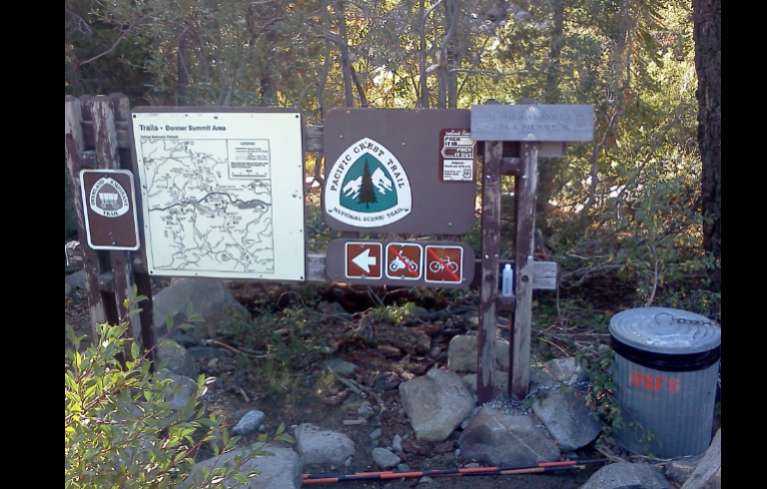
Several Donner Summit projects were granted Title II funds by the RAC, but are now subject to a sequestration mandated 5.1 percent reduction. The Donner Summit Area Association (DSAA) was granted $1.300 for a bear-proof trash container at the Judah Loop trailhead at Lake Mary as part of a local effort to provide restroom and trash facilities to reduce trash and waste on and near the trails.

A portion of the Serene Lakes Property Association’s (SLPOA) $15,000 Donner Summit Fuels Reduction project for 2013-14 was to be funded by Title II funds. The project aims to reduce the threat of wildfire in National Forest service areas and complements the defensible space efforts made by owners of adjacent properties.

This summer’s trail maintenance and reconstruction along the Donner Lake Rim Trail and Summit Lake Trail were to be partially funded by Title II funds via the RAC. The project addresses repair of washed-out erosion control structures, reconstruction of “failing” sections of trail and improvement of drainage and sediment discharge. Included in this project are several Truckee Trail Foundation “Good Dirty Fun” volunteer maintenance projects and the replacement of a trail bridge along a portion of the Donner Lake Rim Trail.

Sugar Bowl Corporation’s Van Norden and South Yuba River Headwaters Enhancement and Forest Health Project began in 2012 and was funded, in part, by Title II funds. The project is designed to enhance the forest ecosystem, restore and improve land health, and restore water quality.

Although carryover funds from previous years can be spent, RAC grantees have been asked to stop spending current Title II funds until the state clarifies what funds will be available. That clarification will likely come before the end of April.

Sara Schrichte is with the Donner Summit Area Association.


Swanson’s ethics still being questioned

By Kathryn Reed

Even with Gino DiMatteo being formally sentenced April 10 to five years in federal prison, the case is not completely closed.

Still blowing in the wind is Angela Swanson. The South Lake Tahoe City Councilwoman was caught up in the DiMatteo mess in August when she was questioned, had her house searched and electronic devices confiscated because at the time DiMatteo was suspected of bribing her.

The state bribery charge against the 43-year-old DiMatteo was dropped when the feds took over. The feds only leveled drug charges against the South Lake Tahoe resident. Earlier this year he pleaded guilty to all charges.

Angela Swanson -- Vern Pierson -- Gino Dimatteo

Angela Swanson — Vern Pierson — Gino DiMatteo

No charges have ever been brought against Swanson, but she is still under suspicion.

“We are not making any comments on the Angela Swanson matter at this time,” Nancy Anderson, secretary to El Dorado County District Attorney Vern Pierson, told Lake Tahoe News this week.

Swanson and DiMatteo knew each other because he at one time ran the City of Angels II medical marijuana dispensary in town and several times had business before the City Council.

Swanson along with Nancy Rollston, the head of the Lake Tahoe Educational Foundation, accepted more than $1,000 in cash for the foundation from DiMatteo that was delivered in an unmarked brown bag. (Despite its being drug money, the foundation has never returned it. Swanson is on the nonprofit’s board.)

Swanson told Lake Tahoe News she has had one phone conversation with the district attorney since August. That, she said, was not recent and it was to clarify paperwork.

“Nothing new is happening with me,” Swanson said on April 11. “I’m not accused of anything at this point.”

She is seeking from the Fair Political Practices Commission a written opinion exonerating her of any ethics violation. She said early on she received a verbal opinion saying she did nothing unethical.

Multiple phone calls to the FPPC were not returned.

Swanson said if ethics charges were filed against her by the district attorney, she would fight them.

People have told Lake Tahoe News that Swanson has a legal defense fund going to fight what they have been told will be an ethics case. As an elected official, Swanson must report all of those dollars and disclose donors’ names.


Nevada close to opening medicinal pot shops

By Cy Ryan, Las Vegas Sun

CARSON CITY — A Senate committee has cleared a bill to permit a network of medical marijuana dispensaries, but those who sell the drug will have to pay a $20,000 licensing fee.

In 2000, voters approved a constitutional amendment to allow possession of medical marijuana if prescribed by a physician. But the law did not permit for dispensaries to distribute it.

State Sen. Mark Hutchinson, R-Las Vegas, said the initial fee for licensing a clinic will be $20,000 with an annual renewal of $5,000. The fees would give the state Health Division money to regulate dispensaries, and any excess would go to aid to public schools, he said.

The Senate Judiciary Committee on April 11 endorsed the bill, which would permit 40 dispensaries in Clark County and fewer in other counties.

Under the bill a lottery will be set up if applications exceed the limit. Nevada companies would receive preference.

Hutchinson said Senate Bill 374 establishes a system of “tight controls” to track the marijuana from seed to sale.

State Sen. Greg Bower, R-Reno, said there was a “disconnect” between the federal law that prohibits the sale of marijuana and the proposed state law. But he called allowing dispensaries the “next logical step” in carrying out Nevada’s constitutional amendment to allow medical marijuana.

Committee Chairman state Sen. Tick Segerblom, sponsor of the bill, said he has seen press reports that the governor would be open to considering the measure, which now goes to the full Senate.

The bill originally suggested dispensaries be non-profit organizations, but that was changed to allow for-profit groups to run them. The initial bill also called for a $5,000 license fee, which was raised to $20,000 by an amendment adopted by the committee today.

Besides the authorized 40 clinics in Clark County, there would be a maximum of ten allowed in Washoe County, two in Carson City and one each in rural counties.


NV TRPA board member’s lobbying work questioned

By Anjeanette Damon, Las Vegas Sun

CARSON CITY — At a legislative hearing this month on a controversial bill that could determine the future of the bi-state agency tasked with protecting the Lake Tahoe environment, Tahoe Regional Planning Agency board member Steve Robinson urged the committee to preserve Nevada’s ability to abolish the agency altogether.

In his view as a board member, the threat that Nevada could pull out of the agency was the catalyst for recent progress toward fixing the dysfunctional agency in charge of overseeing development and environmental protection in the Lake Tahoe Basin.

Politics cast more clouds over Lake Tahoe than Mother Nature. Photo/LTN file

Politics cast more clouds over Lake Tahoe than Mother Nature. Photo/LTN file

But Robinson, who represents Nevada’s Conservation and Natural Resources Department on the TRPA board, never mentioned that he is also a contract lobbyist for a firm that pushed through the state law allowing Nevada to abandon its decades-old compact with California to protect Lake Tahoe in the first place.

Robinson was testifying on Senate Bill 229, a measure backed by environmentalists that would preserve the bi-state Compact by repealing the 2011 law allowing Nevada to withdraw from the TRPA if changes aren’t made to ease development around the lake.

The hearing highlighted Robinson’s dual role as both lobbyist and TRPA board member — a role that environmentalists say represents an inherent conflict of interest when it comes to protecting Lake Tahoe.

Robinson is the former government affairs director for R&R Partners, one of the largest lobbying firms in Nevada that was retained by Tahoe businesses to shepherd through the 2011 law, Senate Bill 271. Robinson is no longer an employee of R&R Partners, but is contracted with them to lobby for two mining companies.

Robinson, and the state official who gave him the job on the TRPA board, say he is able to keep the two roles separate. Robinson said he lobbies only on mining issues, not any Tahoe-related legislation.

“I was a bureaucrat for 30 years, both at the federal level and the state level,” Robinson said. “I think I know what conflicts are, and this ain’t one of them.”

But critics argue it’s impossible to dismiss R&R Partners’ role as chief cheerleader for SB271.

“Given the role R&R played in passing SB271, it certainly concerns me,” said Kyle Davis, political director for the Nevada Conservation League, of Robinson’s dual role. “He’s been very good at making it clear when he’s working on TRPA issues and when he’s working on R&R issues. But the TRPA issues are completely intertwined with what R&R does. I don’t know how you keep the two separate.”

Leo Drozdoff, director of the Nevada Department of Conservation and Natural Resources, appointed Robinson to the TRPA board in January 2011. Typically, Robinson’s seat on the board is held by the director of the department.

But Drozdoff said he wanted someone with more expertise on Tahoe issues, as well as the time to be a truly engaged board member. He selected Robinson, who has worked as a senior staff member for three Nevada governors and is the former deputy director of the U.S. Fish and Wildlife Department.

“We don’t see it as a conflict,” said Pete Ernaut, president of R&R Partners. “He asked if he could be on the board and given Steve’s background, this is an appointment that is well in keeping with his area of expertise.”

Drozdoff said he “made no bones about” the fact Robinson worked for R&R Partners, even including that fact in the press release announcing his appointment to the TRPA board.

But Robinson’s association with the lobbying firm didn’t become relevant until R&R Partners took the lead role in ushering SB271 through the Legislature in 2011.

“When all this stuff came about with 271, I talked to Steve at length about it,” Drozdoff said. “He said they have various firewalls in place and he’s not involved in any lobbying efforts.

“But I won’t disagree that it does create a bit of a conundrum.”

Robinson has been heavily involved in working on the measure now before the Legislature to repeal the 2011 law. He meets informally and formally with lobbyists on both sides of the issue.

But Drozdoff said he would expect nothing less from his appointee to the board, saying the DCNR wants to broker a compromise on the issue. And he has no concerns about Robinson’s private employment.

“Yes, I am confident that when he is taking a position at the Legislature, that position is consistent with mine,” Drozdoff said.

But environmental groups pushing to protect the compact aren’t so sure.

They point to Robinson’s testimony this month, when he took the microphone as a “neutral” witness on the bill to repeal the 2011 law but then advocated to preserve it.

“The specter of the possibility of Nevada’s withdrawal was absolutely essential to changing the hearts and the minds of those on both sides,” Robinson said of the recent collaborative effort from California and Nevada officials to fix inherent problems at the TRPA.

“While that legislation certainly has some faults, the option to withdraw should remain.”

Darcie Goodman Collins, executive director for the League to Save Lake Tahoe, said Robinson’s testimony as a TRPA board member was “inappropriate,” given his business interest with R&R.

“He works for R&R lobbying firm, which represents a lot of special interests,” Collins said. “In my opinion, he’s not adequately and honestly representing the (state) department.”

On the point of allowing Nevada to withdraw from the Compact, however, Drozdoff and Gov. Brian Sandoval tend to agree with R&R’s position.

Sandoval signed SB271 in 2011, and according to Robinson, does not support the law’s repeal this year. Nor does Drozdoff, who echoed R&R’s argument that more time is needed to change the direction of the TRPA.

Sandoval was non-committal when asked if he is concerned about Robinson’s dual role.

“I’ll have to think about that,” Sandoval said. “I’ll chat with Leo about that.”

Potential conflicts of interest abound at the Legislature, where lawmakers hold regular “day jobs” and meet only every other year. Some lawmakers work for lobbying firms, labor unions, or other companies that have business before the Legislature.

In that environment, some didn’t blink an eye at Robinson’s dual role.

“I hadn’t really thought about it and I wasn’t aware of it,” said Sen. Aaron Ford, D-Las Vegas, the chairman of the Senate Natural Resources Committee that heard the repeal measure. “It doesn’t sway me one way or the other, the fact he works for R&R and is also a board member. I am able to compartmentalize people’s roles in certain things, but also give credence to the position stated.”

But Robinson said he is confident the two roles don’t conflict, particularly since he is not retained by R&R to lobby Tahoe issues.

“I know what’s in my mind and my heart,” Robinson said. “There are a lot of people at the Legislature involved in a lot of things, including legislators. I just don’t see this as a conflict.”