Lake Tahoe Basin lacks policy about beavers

Kathryn Reed

No one is counting the beavers in the Lake Tahoe Basin. No one knows if the population is growing, decreasing or has stayed stagnant through the decades. No one is even managing them.

But anyone who wants to touch the beavers’ habitat or potentially do anything to the water they are building dams in, well, there are plenty of agencies to take your money, delay your desires and bog down the process with paperwork.

While the meeting on April 19 hosted by the Lahontan Water Quality Control Board in South Lake Tahoe was civil, the message was – don’t mess with beaver habitat without first asking. Who to ask, well, that is a bit murky. The overriding response: Start with Lahontan.

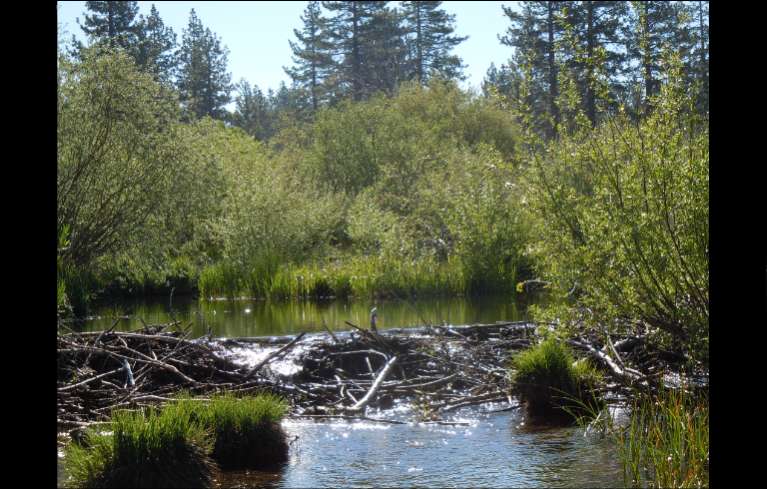
Beavers create dams like this one in Taylor Creek which then prevent the free flow of water. Photo/LTN file

Beavers create dams like this one in Taylor Creek which then prevent the free flow of water. Photo/LTN file

It was also abundantly clear that the officials – U.S. Forest Service, Lahontan, California Department of Fish and Wildlife, Tahoe Regional Planning Agency and U.S. Army Corp of Engineers – are not all on the same page as to what people should do, what the most effective means of dealing with problematic beavers is, and what can be done.

Data about beavers along the Upper Truckee River go back to the 1970s, Sarah Muskopf with the USFS said. But she didn’t provide any of that data.

“Regarding specific policies (for beavers), we don’t have any,” she said.

Muskopf said the Forest Service mostly cares about beavers in terms of public safety and infrastructure.

Sue Novasel, who has lived on the shores of the river for decades, said she has noticed a lot more beaver activity lately.

“I don’t want these beautiful animals harmed. I want more education,” she told the group.

Shelly Blair with Fish and Wildlife said, “We don’t have a formal outreach program.”

The Sierra Wildlife Coalition was in the audience and provided advice the panel didn’t have. Abrasive paint the color of a particular tree can thwart beavers from chewing it down. Sometimes wire-mesh fencing works. Removing dams is a short-term fix. Installing flow devices can get the water moving.

But those devices might require a permit from one or more of the agencies at the meeting – and maybe others.

It was pointed out it’s easier to get a permit to kill a beaver than it is to get a permit to extract a dam or put in a device that would alter the flow of the waterway. Blair with Fish and Wildlife agreed, but said all she can do is follow the law.

Edwin James with the Carson Water Subconservancy District was one of nearly 40 people at the Friday meeting. He lamented that maybe he should not have attended the discussion because now he knows he’s supposed to have a permit to remove a dam.

What he took issue with is that a dam could be discovered one day, needs to be taken out immediately, but permitting could take months. The water he is dealing with is going to farmers and ranchers in the Carson Valley. (Lahontan has jurisdiction there.)

Alan Miller with Lahontan said it’s possible a more general permit could be issued from his agency instead of needing one for each dam. No time line was provided.

Patrick Stone, senior wildlife and fisheries biologist with TRPA, admitted the fastest a permit would be issued is three months, but it’s likely an 18-month process.

The cows would have died of thirst by then, so it’s good cattle don’t graze in the basin any more.

Kris Hansen with the U.S. Army Corps of Engineers said her agency is looking into regional permits regarding beavers, but none would be available this summer.

Several people at the meeting wanted solutions for how to deal with beavers – something other than killing them.

Brendan Ferry with the El Dorado County Department of Transportation said beavers caused problems after his agency restored part of Angora Creek.

“We were forced into killing it. A lot of us in the office didn’t want to go that way. But we felt we had to,” Ferry said.

Blair with the state said relocation is not an option because of “biological reasons.”

TRPA’s Stone said putting a beaver in another habitat would be like dropping one of the people in the room in the middle of China. (This reporter has been to China, did fine, came back to the U.S. healthy, and still doesn’t understand his analogy.)

Stone said there is evidence beavers were native to the basin, were trapped to the point of not existing, and then intentionally re-introduced.


Tahoe building featured in green building book

When the Tahoe Center for Environmental Sciences building opened a few years ago at Sierra Nevada College it was immediately heralded as being extremely green.

The accolades for the Incline Village school continue with it being featured in the recently released book “The World’s Greenest Buildings” by Jerry Yudelson and Ulf Meyer.

book“(The book) provides the very first large-scale study comparing building performance data worldwide from the highest-rated large green buildings of the past 10 years, using actual energy and water operating data from 57 projects in 18 countries. It offers architects, engineers and project developers a new way to understand how high-performance buildings can be designed and constructed,” is how the authors describe their work.

TERC is a platinum LEED certified building from the U.S. Green Building Council. To achieve this designation, the project design had to achieve more than 52 credits in:

• Sustainable sites

• Energy and atmosphere

• Water efficiency

• Materials and resources

• Indoor environmental quality

• Innovation and design process.

The green building experts choose the Tahoe school as one of 16 buildings to include in the book. It was singled out for its high performance and energy efficiency. Collaborative Design Studio was the architect for the project.

In the six years it has been open, the building has used 9.6 kWh per square foot per year. This is less than one-tenth of the national average of about 100 kWh.

It also has a rainwater storage system, photovoltaics, solar thermal hot water, cogeneration, low flow fixtures and concrete with 25 percent fly-ash content.

— Lake Tahoe News staff report


EPA: California not complying with Clean Water Act

By Matt Weiser, Sacramento Bee

California today was declared to be out of compliance with the federal Clean Water Act because it is sitting on $455 million that should be spent to improve local drinking water systems.

The U.S. Environmental Protection Agency submitted the notice after years of fruitless efforts to get the state to document its spending under the program, said Jared Blumenfeld, regional administrator for the agency.

The program is administered on behalf of the EPA by the California Department of Public Health, using funds allocated by Congress. Typically the money is used by cities, counties and other local agencies to improve drinking water treatment systems, usually to remove harmful chemicals or seek a cleaner supply.

“We certainly hear from communities that they need the money and they are not being able to access it,” Blumenfeld said. “The facts speak for themselves. The money is not going out the door as quickly as it should be.”

Blumenfeld said the problem is not unique to California, but the scope of the problem is far larger in California than elsewhere. As an example, he noted the second largest similar problem exists in Texas, which sits on $310 million in Clean Water Act funds. But Texas has provided the EPA with a satisfactory accounting of its spending under the program, unlike California.

A second problem, Blumenfeld said, is that when California does spend the money, it often chooses projects that are not “shovel ready.” So the money is allocated for a project, but it remains parked for years.

“If you had reprogrammed (the money) more effectively, there could be short-term projects that are ready now that could already be funded, as opposed to funding projects that are not ready to start,” he said.

The Department of Public Health did not respond immediately to a request for comment.

The EPA is giving the state 60 days to submit a corrective action plan. If the state does not or the plan is not acceptable, the EPA may suspend payments to the state under the program.


Ski resorts would sue USFS for water rights

By Anne Knowles

Only a handful of people showed up for a local open house conducted this week by the U.S. Forest Service to get feedback on its controversial stance on water rights for ski resorts.

The Thursday afternoon meeting in the Forest Service office in South Lake Tahoe followed earlier and similarly attended meetings this week in Denver and Salt Lake City. A fourth open house is scheduled next week in Washington, D.C.

The water rights issue came to a head last year in Colorado after the National Ski Areas Association filed suit against the federal agency, saying that a clause in its permits to operate ski resorts on Forest Service land resulted in an unconstitutional seizure of property.

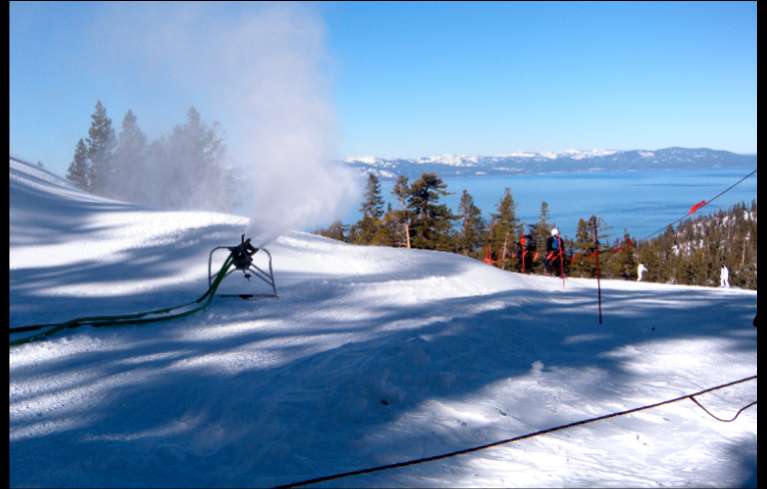
Heavenly's robust snowmaking requires several acre-feet of water each year. Photo/LTN file

Heavenly’s robust snowmaking requires several acre-feet of water each year. Photo/LTN file

The clause requires that water rights acquired by the business to operate the ski resort to be held in the name of the United States.

“The industry says water rights are a state issue and a significant asset,” Jim Pena, associate deputy chief with the Forest Service, told Lake Tahoe News at the open house. “We see it as an issue of permit compliance.”

In December, the U.S. District Court in Colorado decided the case and threw out clauses included in 2011 and 2012 permits, saying the Forest Service failed to follow administrative procedure while developing them, which requires a public comment process.

Those permit clauses follow a series of evolving provisions starting in 1982 that have resulted in a mishmash of water rights – 168 owned by the ski resort operators, 65 owned by the Forest Service and 10 owned jointly — throughout the 116 Western ski resorts located on Forest Service land.

The issue is most significant in Colorado where 22 ski resorts own 112 water rights. In California, 25 resorts own three water rights, the Forest Service owns 14 and one is jointly owned. In Nevada, there are three resorts with one right each owned by the ski resorts and Forest Service, according to the USFS.

So the Forest Service is now trying to follow procedure and craft a new clause that would still require water rights to be placed under Forest Service control because the agency says it’s important to keep the water connected to the land.

“Our objective is to find a way to make sure that the water is available through the life of the permit,” said Pena. “The local community is dependent on the ski area and we want to make sure they are viable.”

The agency’s concern is if ski resorts change hands or go bankrupt, the water rights, which can be sold separately and may not be available for future operators.

The NSAA says those concerns can be addressed without transferring water rights to the government.

“First, the ski area can be required for any future project to demonstrate it has sufficient water or will obtain sufficient water,” said Geraldine Link, director of public policy for the Lakewood, Colo., association. “Second, upon sale, the current owner would offer an option that water rights would go to the buyer.”

The option, the exact details of which is to be determined, would provide that the resort buyer have the first shot at buying the seller’s water rights at fair market value. In the case of a bankruptcy or liquidation of the business, the option would be offered first to the local community or government and if it declined then to the USFS.

“That’s the way to keep water with ski resort without taking property,” said Link.

The ski resorts, which are affected in varying ways, are standing with the NSAA.

“We’ve been following the lead of the NSAA,” said John Rice, general manager at Sierra-at-Tahoe, which is located on Forest Service land. “It isn’t a big issue for us. We have the right for recreational use and for fire protection and domestic use. We have three wells. … We don’t have much of a snowmaking operation so it’s just not much of an issue here.”

Representatives from Vail Resorts and Squaw-Alpine did not return phone calls.

The USFS is taking public comment now via email at skiareawaterrights@fs.fed.us. The agency plans to publish a proposed clause in the Federal Register in August, followed by a 60-day public comment period. A final clause will be published in February 2014 and included in permits thereafter.

“I’m optimistic we’ll craft a proposal that’s different and clear and easy to implement,” said Pena.

But if it still requires water rights to be acquired in the name of the United States, the industry won’t be happy.

“If the Forest Service issues a clause that requires giving up water rights, the association will challenge it in court,” said Link.


Both Boston bombing suspects in custody

By Katharine Q. Seely, William K. Rashbaum and Michael Cooper, New York Times

BOSTON — The teenage suspect in the marathon bombings, whose flight from the police after a furious gunfight early Friday morning sparked an intense manhunt that virtually shut down the entire Boston metropolitan area all day, was taken into custody Friday night after the police found him hiding in a boat in the backyard of a house in Watertown, Mass., a senior law enforcement official said.

Two law enforcement officials said that the suspect, Dzhokhar A. Tsarnaev, 19, was found in a boat parked behind a house there. It was not immediately clear what condition he was in.

A police officer at the scene said that the man was covered in blood when he was captured. An ambulance was already there. The Boston Police Department announced on Twitter: “Suspect in custody. Officers sweeping the area.”

Police officers guard the entrance to Franklin Street where there was an active crime scene search for the suspect in the Boston Marathon bombings. Photo/Matt Rourke/Associated Press

Police guard the entrance to Franklin Street where there was an active search for the suspect in the Boston Marathon bombings. Photo/Matt Rourke/Associated Press

And Mayor Thomas M. Menino posted, “We got him.”

As around 30 law enforcement officers — wearing helmets — walked away from the scene of what had been a tense standoff only minutes earlier, neighbors who had gathered on an adjacent street applauded and shouted, “Thank you! Thank you!”

The apparent discovery of Dzhokhar Tsarnaev came just over 26 hours after the FBI circulated pictures of him and his brother and called them suspects in Monday’s bombings, which killed three people and wounded more than 170. The case unfolded quickly — and lethally — after that. Law-enforcement officials said that within hours of the release of the pictures, the two men shot and killed a campus police officer at the Massachusetts Institute of Technology, carjacked a sport utility vehicle, and led police on a chase, tossing several pipe bombs from their vehicle.

Then, early Friday morning, the men got into a pitched gun battle with the police in Watertown in which more than 200 rounds were fired, and a transit police officer was critically wounded. When the shootout ended one of the suspects, Tamerlan Tsarnaev, 26, a former boxer, had been shot and fatally wounded. He was wearing explosives when he was killed, several law enforcement officials said. But his younger brother, Dzhokhar Tsarnaev, managed to escape — running over his brother as he sped away, the officials said.

The disappearance of Dzhokhar Tsarnaev, and fears that he could be armed with more explosives, set off one of the most intense manhunts in recent memory. Swat teams and Humvees rolled through quiet residential streets. Military helicopters hovered overhead. Bomb squads were called to several locations. And Boston — New England’s largest city — was essentially shut down.

Transit service was suspended all day. Classes at Harvard University, the Massachusetts Institute of Technology, Boston University and other area colleges were canceled. Amtrak canceled service into Boston. The Red Sox game at Fenway Park was postponed, as was a concert at Symphony Hall. Gov. Deval Patrick of Massachusetts urged residents to stay behind locked doors all day — not lifting the request until shortly after 6pm, when transit service in the shaken, seemingly deserted region was finally restored.

As the hundreds of police officers fanned out across New England looking for Dzhokhar Tsarnaev, investigators tried to piece together a fuller picture of the two brothers, to determine more about the bombing at the Boston marathon.

The older brother, Tamerlan Tsarnaev, was interviewed by the FBI in 2011 when a foreign government asked the bureau to determine whether he had extremist ties, according to a senior law enforcement official. The government knew that he was planning to travel there and was afraid that he might be a risk, the official said.

The official would not say which government made the request, but his father said that he had traveled to Russia in 2012.

“They had something on him and were concerned about him and him traveling to their region,” said the official. The F.B.I. conducted a review, examining Web sites that he had visited, trying to determine whether he was spending time with extremists and ultimately interviewing him. The FBI concluded that he was not a threat. “We didn’t find anything on him that was derogatory,” the official said.

Now officials are scrutinizing that trip, to see if he might have met with extremists while abroad.

The rapid developments began Thursday night, when the two men, of Chechen background, are believed to have fatally shot a Massachusetts Institute of Technology police officer, Sean Collier, 26, in his patrol car, the Middlesex County district attorney’s office said. Soon after that, a man was carjacked nearby by two armed men; when he was released he told investigators that the men who took his vehicle said they were responsible for marathon bombings, a law enforcement official said. The police went off in search of his car, and a frenzied chase began.

The police and the suspects traded gunfire and “explosive devices were reportedly thrown” from the car by the suspects, the district attorney’s office said. A transit police officer, Richard H. Donohue, was shot and critically wounded. After a pitched gun battle with the police, the older brother, Tamerlan Tsarnaev, was fatally shot; the younger brother, Dzhokhar, managed to get away.

One law enforcement official said Dzhokhar Tsarnaev was wounded, and two other officials said the authorities had tracked him at some point during the manhunt by his blood trail.

An uncle of the men, Ruslan Tsarni, who lives in Montgomery Village, Md., told reporters that he was ashamed of their actions, bitterly calling them “losers” and sternly denouncing the bombings. And he urged the surviving brother to turn himself into the authorities.

“I say Dzhokhar, if you’re alive, turn yourself in and ask for forgiveness,” said Tsarni, who said that his family had been estranged from theirs, and that their father, who recently moved back to Russia, had worked “fixing cars” in America.

Tsarni said that the family had moved to Cambridge in 2003 from Kyrgyzstan.

For much of Friday a virtual army of heavily armed law enforcement officers went through houses in Watertown, outside of Boston, one by one in a search for Dzhokhar Tsarnaev. The police had blocked off a 20-block residential area and emphatically urged people there to stay inside their homes and not answer their doors.

The Boston police commissioner, Edward Davis, said, “We believe this to be a man who’s come here to kill people, and we need to get him in custody.”

In Washington, as well as in the Boston area, law enforcement and counterterrorism officials were struggling to determine whether the two brothers had any accomplices still at large and whether they had any connections to foreign or domestic terrorist organizations. One law enforcement official said that the FBI and police were seeking “a number of people with whom we would like to speak in furtherance of the investigation.” Asked if any were suspected accomplices or co-conspirators, the official would say only that investigators were “not ready to classify anyone yet.”

Several law-enforcement officials, asked about the tactics apparently employed by the brothers, said that despite the devastation they are suspected of causing at the marathon, the death of one police officer and grievous wounding of another, their planning appeared, at least at this point, to be flawed. “They didn’t practice tradecraft,” said one official, a veteran counterterrorism investigator who has been briefed on the case. “Listen, I just don’t understand how anybody could do something like that and basically go home and expect that they wouldn’t get caught.”

As the manhunt grew in intensity, law enforcement officials throughout New England tried to chase down leads. After the authorities in Boston notified transit police officials that there was a possibility that Dzhokhar Tsarnaev had boarded the last Amtrak train from Boston bound for New York City early Friday, the train was searched between stations in Connecticut, according to an official with knowledge of the matter. Investigators reviewed video surveillance footage from the stations in Providence, R.I., New Haven and New London, Conn., to make sure that he had not gotten off the train before it was stopped.

The last place he was seen was Watertown, where the two men got into a pitched gun battle with the police.

During that exchange, a transit police officer was shot and critically wounded. The injured officer, identified as Richard H. Donohue, was taken to Mount Auburn Hospital, where he was listed in critical condition Friday morning.

When he arrived at the hospital, the officer had nearly bled to death from a gunshot wound to his right leg, said a person familiar with his treatment. The hospital’s trauma team gave him a blood transfusion and cardiopulmonary resuscitation, and got his blood pressure back up, but he was still on a ventilator, the person said.

A Watertown resident, Andrew Kitzenberg, 29, said he had looked out his third-floor window to see two young men of slight build in jackets engaged in “constant gunfire” with police officers. A police S.U.V. “drove towards the shooters,” he said, and was shot at until it was severely damaged. It rolled out of control, Mr. Kitzenberg said, and crashed into two cars in his driveway.

The two shooters, he said, had a large, unwieldy bomb that he said looked “like a pressure cooker.”

“They lit it, still in the middle of the gunfire, and threw it,” he said. “But it went 20 yards at most.” It exploded, he said, and one man ran toward the gathered police officers. He was tackled, but it was not clear if he was shot, Kitzenberg said.

The explosions, said another resident, Loretta Kehayias, 65, “lit up the whole house.” She said, “I screamed. I’ve never seen anything like this, never, never, never.”

Meanwhile, Kitzenberg said the other man got back into his car, turned it toward officers and “put the pedal to the metal.” The car “went right through the cops, broke right through and continued west.”

The two men left “a few backpacks right by the car, and there is a bomb robot out there now,” he said.

Tamerlan Tsarnaev was critically injured with multiple gunshot wounds and taken to Beth Israel Deaconess hospital in Boston, where he was pronounced dead at 1:35am, officials said.


Whales play to the tune of human chorus

By Robert S. Wood

BAJA, Mexico – Do whales seek human playmates?

The adventure company brochure didn’t quite claim they did, but it intriguingly reported that many a mama gray whale saw fit to bring her newborn 1 ton baby up to visit small open boats in a Mexican lagoon, even sometimes allowing the babies to be “petted.”

My wife, Deanne, and I had been in the ocean with dolphins and swam with sharks, manta rays, seals, turtles and schools of friendly toe-nibbling fish. So why not whales? We signed up.

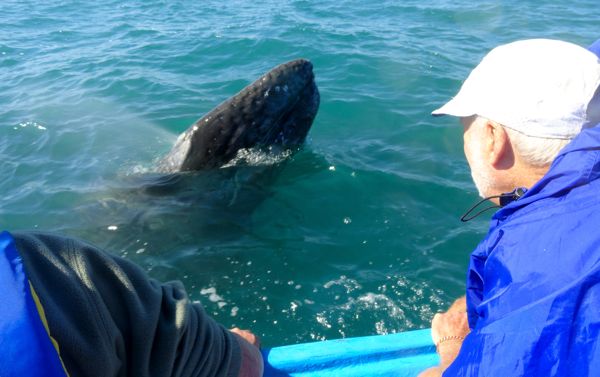
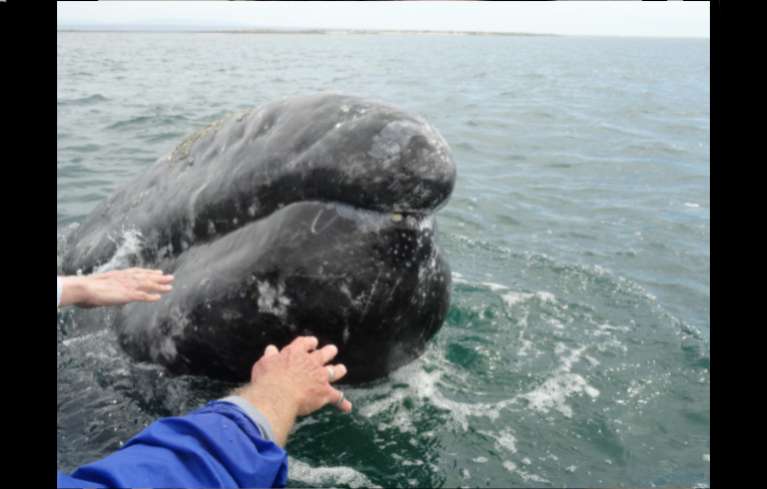
Reaching to touch whales near Baja, Mexico. Photos/Robert S. Wood

Reaching to touch whales near Baja. Photos/Robert S. Wood

After departing from San Diego, it took our old Mexican bus two days to descend the Baja peninsula of Mexico 500 miles to the salt company mining town of Guerrero Negro near Scammon’s Lagoon, halfway down Baja. The next morning we drove on roads paved with salt past evaporating salt ponds to the waiting boats. Twenty-four of us piled out of the bus, donned life jackets and climbed into two 18-foot open fishing boats called pangas, powered by big outboard motors. We then set off at high speed to look for playful whales, feeling a little silly about what we were doing.

The lagoon was nothing like I’d imagined. There wasn’t so much as a cactus in sight, never mind grass or trees, just salt, sea and gleaming white sand dunes sandwiched between blue water and sky. The glare was terrific. When we reached the whale watching grounds, the lagoon looked more like open ocean with only one distant shoreline in sight. But the whales were there – 1,600 of them had been counted the previous week, including a white whale, great-grandson of Moby. They were peacefully cruising at a respectable half-mile distance. We saw their spouts, we saw sleek black backs emerge for a few seconds when they came up for air. But the closest was probably 300 yards away. Big deal.

After two hours of bobbing, waiting and watching — our allotted viewing time almost up — some of us in frustration began to jokingly call out to them, “Come on, whaleys. Don’t be afraid. We’re your friends. We won’t bite. Look, no harpoons. Bring us your pretty babies!” We were feeling more foolish by the minute.

Then suddenly a huge black streaming back, twice the size of the boat, reared up from the deep, not 10 feet away, and looked us over. We gasped in awe. It was as big as our bus. As we gaped, the Mexican captain beside me tapped my shoulder, pointing down and said “Baby! Mama and baby.”

Not 3 feet from the boat lay the head of a 2-ton “baby” whale, also bigger than the boat.

I lunged to the rail, dropping to my knees, yelled “Baby here!” and reached out as far as I could. Incredibly, I touched smooth, soft wet whale forehead. It felt like hard wet rubber. Immediately, my 11 companions joined me at the rail, which tipped the boat alarmingly and we shipped a little water. I glanced at the captain but he just smiled and started bailing.

About half of us had touched at least once before the whales moved away and it was time to go. We rocketed back to the dock and our bus. The other boat, it turned out, had not even seen a whale up close, but its envious grumbling occupants admitted they hadn’t resorted to calling for them.

After a night in the date palm oasis of the nearby village of San Ignacio, we set forth for another lagoon favored by calving grays. This time conditions were less inviting. We rose in the chilly dark and rode the bus on a bumpy dirt road to San Ignacio Lagoon, a hundred miles south of Scammon’s. It was barely light when we reached the end of the road at a lonely shell beach. The sky was solid cloud and windy. There was no boat ramp or dock. The tide was out and there were white caps. Pangas were bobbing in the shallows a hundred yards offshore. So we rolled up our pants and waded out to the boats to begin another high-speed ride to the whales.

When we stopped, there wasn’t a whale in sight and our boat was lurching uncomfortably, so we promptly proceeded to get silly. We chanted nursery rhymes, sang songs from kindergarten, substituting whale lyrics. We rendered rounds of “Row, row, row your boat, gently down the lagoon.” We yelled, we begged, we laughed at each others puns and entreaties, we flattered and pleaded, called out endearing terms. Deanne in the bow delivered a continuous stream of melodious welcome. Even the Mexican captain, smiling at our antics, sang a whale song in Spanish.

This time we didn’t have to wait. Whales have good hearing and they quickly appeared around us. Always mamas with babies, never males. It was a clear case of, “If you call, they will come.”

Before our two hours were up, three mama whales had brought us their babies, one brought a pair. Though we couldn’t help ridiculously personifying and judging their actions and intent, it seemed clear that the mamas somehow wanted their babies to meet us, to connect, to be touched, strange as that seemed.

Though these huge creatures often touched the boat, it was never more than a gentle nudge. They could easily have turned us over or sunk us with ease, with a flick of that gigantic tail, as the whalers of yesteryear well knew when their boats were smashed to splinters. I asked the captain if that ever happened. “Nunca” (never) he assured me.

When our time was up and we returned to shore, we again found the other boat had had only one brief encounter and were even more envious, vowing that tomorrow they were going with Deanne. Someone called her the Whale Whisperer.

For our third and final voyage we returned to Scammon’s Lagoon. On the way a lively young Mexican guide named Edgar verified our growing suspicions that whales wanted to interact with us but were highly sensitive to vibes given off by boaters, dependably drawn to the happy ones.

“Otherwise, why would they come to us?” he asked, “They seem to like excited children best, then expressive women. They seem to prefer higher voices. I’ve come to believe they love open, free independent creatures like themselves. Remember, they’re wild and unspoiled, unrestrained even joyful.

“So your best chance of making contact is to be happy like them. You can attract them from far away with a simpatico frequency of happy vibrations. I find they stay away from people who are angry, rigid or unhappy. Can you blame them? I often see the mamas actually push their babies up to the boats they like. They seem to want their calves to make human contact before they leave the lagoon to begin that 4,000-mile swim to the arctic to feed. Don’t ask me why.”

Whales come to boats -- once beckoned to do so.

Whales come to boats — once beckoned to do so.

He added, “But one thing I do know, if they didn’t want our company, you’d never see more than a distant spout. ”

Remembering that last voyage brings tears to my eyes, not just for the whales but for the wonderful group camaraderie that developed. Everyone wanted to be in the boat with Deanne who outdid herself in a continuous welcoming, loving out reach to the whales. Now that we knew how to attract them, they quickly came. Boy, did they come! We soon lost count of the numbers of touches we enjoyed. Baby whales were with us for most of our two hours.

Thirty-five ton mothers the size of locomotives swam directly at us and smoothly dove beneath the boat, missing it by inches, coming up on the other side, but we felt no anxiety. Instead we felt a wonderful sense of harmony, wellbeing, even love freely exchanged with our massive fellow creatures. Whales stood on their tails, 10 feet of their heads sticking out of water, in an amusing pose called “spyhopping,” recalling sentinel Meer cats or lookout prairie dogs. It was thrilling to make eye contact with a whale eye the size of a bowling ball.

In the course of two hours I looked down into blowholes, marveling at the workings of that intricate dinner plate sized muscle. Babies teased us by spouting in our faces. Mothers blew from just underwater, sending up gushing fountains of seawater. More than once a whale blew within 3 feet, sending rainbows of spray over us, wetting us and our cameras with an earthy smelling warm whale exhaust. But we didn’t care.

Everyone was laughing, exclaiming at the miracle taking place. We were torn between the desire to touch and rub and stroke — and taking pictures. Since whale movements were sudden and unpredictable, good pictures were rare. Before we were done I shook hands with a baby whale fluke the size of a car door, caressed soft whale lips, stroked whale backs, rubbed the rough looking but smooth rings of barnacles that already decorated the backs of two ton babies. I held my hand above a blowhole to feel the heat before it closed, all the while jabbering my appreciation of what was happening.

The whales seemed to reciprocate our glee. They seemed to be playing with us, teasing us, sometimes holding themselves 2 or 3 inches beyond our reach, as though laughing at us. I countered this gambit by reaching about 6 inches short of full extension to foil the tease, then suddenly extending to make contact, laughing when I succeeded. You could feel the mutual trust and deep enjoyment. It was a high-energy orgy of physical and emotional connection between two not so distant species. It was like playing with giant kittens or puppies. It was thrilling in ways hard to understand, much less convey. And we weren’t the only lucky ones. From a passing boat, a woman jubilantly called out, “I kissed a whale!”

Then suddenly it was time to go. We called and waved goodbye to our wild friends from the deep who promptly sank out of sight. Back in the bus for the long drive home — still high — we compared impressions. Even the most skeptical agreed the whales had indeed been playful, apparently enjoying themselves as much as we did. I found myself imagining them discussing the welcoming siren song of Deanne.

Looking back as we drove north we had come to them and reached out, and they had responded. They came to us because they wanted to, for whatever reason. Perhaps they had some dim racial memory of that distant time when they walked the land on legs and interacted with other creatures. Maybe that somehow stirred in them an urge to connect. Whatever it was, we were deeply grateful for the chance to frolic with descendents of our common ancestors, gaining a wider perspective on the kinship of life on earth.

Robert S. Wood and his wife spend half the year in Lake Tahoe and the other half in Sedona. He is the author of a dozen books, including the original trail guide to Desolation Wilderness.


Lake Tahoe needs work to lure foreign travelers

By Kathryn Reed

STATELINE – Tahoe doesn’t have it. It could. But it’s going to take a concerted effort for that to happen.

That was the message delivered Thursday by two women who know tourism.

The it is what it takes to be on the list of places foreign visitors want to travel to.

Caroline Beteta, CEO of Visit California and chairwoman of Brand USA, along with Denise Pirrotti Hummell, CEO and founder of Universal Consensus, delivered their views about the future of tourism and what Lake Tahoe must do to capture a greater share of the market.

Lake Tahoe continues to struggle to be a destination that has it all. Photo/LTN file

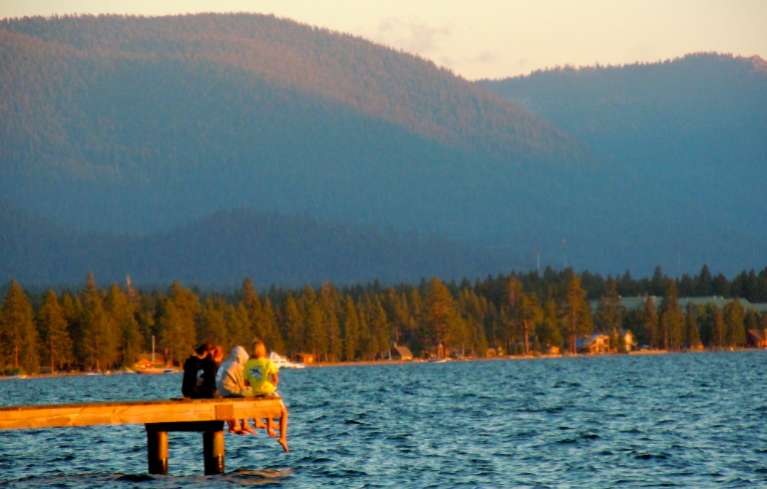
Lake Tahoe continues to struggle to be a tourist destination that has it all. Photo/LTN file

In particular, the two spoke of the growing international market. Much of the focus was on China, where Beteta just returned. She was there with Gov. Jerry Brown on a mission to lure Chinese to the Golden State.

In 2012, Chinese travelers made more trips than people from any other country – 83 million. They spent $102 billion abroad last year.

Beteta said with the United States finally focusing on tourism, this should bode well for everyone. It used to take about 45 days for someone in China to secure a U.S. visa. Now it’s about five days.

But more needs to be done. Nikki Ekstein of Travel + Leisure magazine recently wrote, “According to a new survey conducted by the U.S. Travel Association, 43 percent of foreign travelers will tell their friends to avoid coming to the States. But it’s not cultural, culinary, or political differences that are turning off the international crowds—it’s our customs entry process, which 84 percent of visitors complain about and believe could be vastly improved. The survey polled 1,200 non-U.S. resident overseas travelers — of whom 1 in 7 missed a connection because of long customs lines.”

Even Beteta commented on how her travel plans were disrupted this week when American Airlines had to ground all of its planes because of a computer glitch.

For Tahoe, though, the advice is much simpler.

Hummell said how the sign Chocolate Nugget Factory would be confusing for the average international traveler. What’s a nugget? And how would they know shopping of some sort is available through those doors?

She showed pictures of the casino corridor and Park City.

“The center of town is not what I’m used to in mountain towns,” Hummell said of the South Shore.

The consultant suggested harmony with colors, installing quaint signs – even ones that are in English, Spanish and Mandarin, and putting in more lighting.

Guest relations need a drastic improvement, too, based on Hummell’s experience.

The speakers on April 18 also commented on how tourists want a locale where shopping is abundant – and that doesn’t mean multiple T-shirt shops. All one has to do is look at Las Vegas to see how shopping on The Strip is an activity unto itself.

The creation this summer of 20,000-square-feet of retail along Highway 50 as part of the stalled Chateau project is reportedly being marketed to businesses that would bring a different mix to the area compared to what exists today.

The state tourism agency is focusing on what it calls pillars. The five are: family fun, culinary, culture-entertainment, outdoor-adventure-recreation, and luxury-indulgence.

A series of commercials were shown, including the one filmed in 2011 featuring Olympians Julia Mancuso of Squaw Valley and Shannon Bahkre who grew up in Tahoe City.

“We should ride the coattails of outdoor adventure,” South Lake Tahoe City Manger Nancy Kerry told Lake Tahoe News after the forum. “When spending money on tourists you get a direct investment return.”

At the City Council’s first meeting in May the strategic plan will be discussed, which will include the topic of whether the city is doing its part to draw tourists to the area and working enough with the Lake Tahoe Visitors Authority.

“We know more tourists means more jobs,” Kerry said.

Hotel taxes in the city are up 26 percent from October through February compared to the previous year and sales tax for the last quarter of 2012 is up 13 percent from 2011.

The former number is definitely because of tourists, and the latter is partially tourists.

“Our job is to create a desire for the California experience,” Beteta told the group at Harveys.

After that, well, it’s up to the respective destinations to make it an experience people want to have again and one they want tell their friends about – in a good way. After all, word of mouth is still the best (or worst, depending on the message,) form of marketing.


Auditor: Specialty license plate money not collected, misspent

By Torey Van Oot, Sacramento Bee

California’s state auditor has found shortcomings in management and oversight of special license plate programs meant to provide funding for causes like Lake Tahoe, anti-terrorism efforts and state parks.

The report, released today, found that the state has failed to collect more than $22 million in revenue that should be generated by the special plate holders in the 2010-11 and 2011-12 fiscal years. In some cases, agencies appeared to spend the money they did receive on “unallowable or unsupported” expenditures.

California motorists can elect to order special plates benefiting one of 11 causes. Revenue from the sales are supposed to go to state-run accounts like the Yosemite Fund, the California Arts Council, and a fund intended to “fight threats of terrorism in the Golden State.”

But that hasn’t always happened. The audit found cases where money generated by the special plates was not used for the designated purposes.

Fixing the problems, the Department of Motor Vehicles responded, may require such a costly computer upgrade that the program may not be financially viable.

The Department of Agriculture, for example, spent nearly $900,000 generated by one plate fund for expenses like employee compensation and building leases that they could not justify. The California Emergency Management Agency was unable to show that employees paid from funds generated by a special plate were working on the intended goal of preventing terrorism. In other instances, agencies failed to submit required reports on the funds to state lawmakers.

In some cases, the money was never collected in the first place. The audit found that the Department of Motor Vehicles, which issues the plates, missed out on $12 million in renewal fees it should have collected in the 2010-11 and 2011-12 fiscal years. The motorists who did pay were undercharged by an estimated $10 million. The DMV also overcharged Environmental Plate Fund more than $2 million to cover administrative costs.

The California Tahoe Conservancy collects about $1.2 million a year from the specialty Lake Tahoe plate. That money is then used on trails and other projects in the basin.

The audit, available here, calls on DMV to do a better job collecting and administering the funds and recommends a series of steps to increase monitoring and documentation of the spending.

In its response to the audit, the DMV pledged to conduct a review of whether it is charging the correct amounts for the plates. But the agency said efforts to do a better job tracking and collecting renewal fees could require a costly upgrade to its database systems.

“The costs associated with such an effort could be substantial and likely would result in severely reducing any net proceeds to the special plate funds or even eliminating the programs’ viability altogether,” Chief Deputy Director Jean Shiomoto wrote in a letter. “As a result, further study is warranted to identify alternatives and determine the true cost to implement necessary changes before a final decision can be made as to what is the most appropriate course of action for the State, taxpayers and special fund stakeholders.”


Lesson from Placer fire — don’t play with incendiary devices

By Ed Fletcher, Sacramento Bee

In a scene that might have made Smokey Bear cringe, on a 100-degree day last July, a Sacramento man – in full view of his family and other witnesses – tossed a 2-inch diameter firework into a remote Placer County swimming hole.

An ember from the explosion shot 25 feet into the air, beyond a sheer rock face around the swimming hole on Shirttail Creek, and ignited the 2012 Robbers Fire, court documents show. The fire engulfed 2,630 acres, injured an inmate firefighter and destroyed four structures.

Bryon Craig Mason, 28, admitted to throwing the illegal firework, but his lawyer successfully argued during Mason’s preliminary hearing that Mason wasn’t guilty of arson because the fire wasn’t started willfully and maliciously.

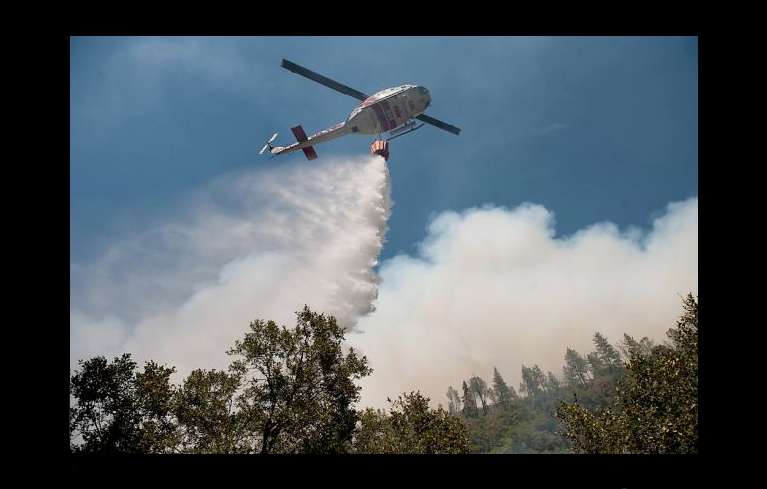
The 2012 Robbers Fire in Placer County is reminder of how dry conditions can rapidly ignite. Photo/Randy Pench/AP

The 2012 Robbers Fire in Placer County is a reminder how dry conditions can rapidly ignite. Photo/Randy Pench/AP

“There is no evidence to support the conclusion that a reasonable person would find it highly probable that the firework would explode in the water” clear a 25 feet high rock face and ignite a fire, said Placer Superior Court Judge Colleen Nichols in her ruling releasing Mason from custody earlier this month.

In her ruling, Nichols cited concerns about the credibility of the California Department of Forestry and Fire Prevention’s investigation of the fire.

The Placer County District Attorney’s Office has said it disagrees with the ruling but has not said whether it will make further efforts to prosecute the case. The District Attorney’s Office did not return calls for comment.

While prosecution of the incident may be in limbo, it does serve as a cautionary tale as fire season in Northern California approaches.

The region saw heavy precipitation early in the season but has been exceptionally dry since. Snowmelt is also ahead of schedule, pointing to an early start to fire season, said Tom Dang, a meteorologist with the National Weather Service.

“That basically prolongs the fire season for a month,” Dang said. “If we don’t see any precipitation between now and the end of the summer, fuels are going to be at exceptionally dry levels.”

He said the region may well see another storm before the end of May, but there are no significant storms on the immediate horizon.

Rui Cunha, assistant director of emergency services for Placer County, called for extra vigilance this summer.

“There is no question about it. The forest fuels are not getting the normal range of moisture. We are definitely going to feel the impact from that,” Cunha said. “It’s going to be even more important that we keep fire out of our forest land.”

Daniel Berlant, spokesman for CalFire, echoed the call for fire safety, saying: “We need to practice extra precaution.” He declined to talk about the case against Mason.

Placer County Supervisor Jim Holmes said the start of the Robbers Fire provides a fine example of why people shouldn’t play with matches. He said he could see how someone might think throwing fireworks into water was safe.

“I wouldn’t have done it, but I would have assumed it would be safe,” Holmes said. “It’s an unfortunate incident. I’m sure the gentleman had no malice. He wasn’t trying to set a fire. He was just trying to show off.”


El Dorado County wine sales increasing

By Kathryn Reed

PLACERVILLE – Based on the number of cases leaving wineries and headed for vehicles, wine sales in El Dorado County are doing well.

Granted, buyers could have been lured by last weekend being the first of two weekends of the annual Passport where there are some special deals going on that aren’t seen the rest of the year. Still, winery officials told Lake Tahoe News that people are buying wine year-round.

The Wine Institute earlier this month said wine sales in the United States hit a record in 2012. The 360.1 million cases sold was an increase of 2 percent from 2011. The retail value of that wine was $34.6 billion.

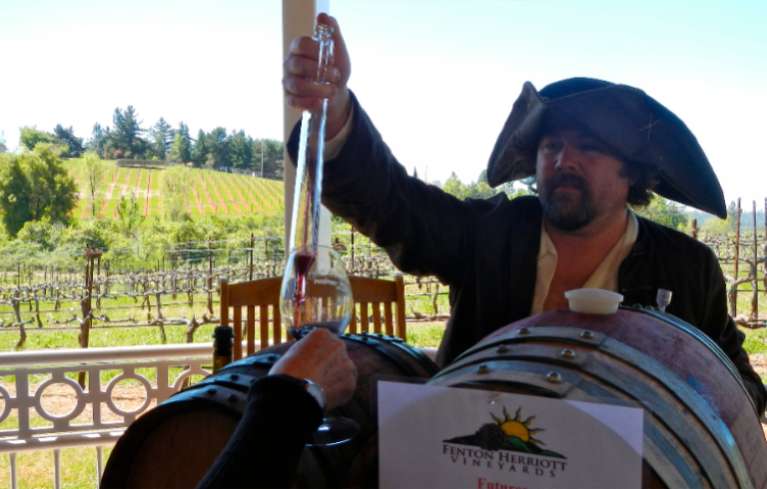
Guy Herriott of Fenton Herriott provides a sample of the 2010 Merlot. Photos/Kathryn Reed

Guy Herriott of Fenton Herriott provides a sample of the 2010 Merlot. Photos/Kathryn Reed

California wineries sold 207.7 million cases – which accounts for 58 percent of the U.S. wine market.

“In the last six months there has been more of an uptick in wine sales,” Justin Boeger with Boeger Winery in Placerville told Lake Tahoe News. His parents opened the winery in 1974.

The lower priced wines continue to be the better sellers Boeger said, admitting this is an indication the economy has not completely turned around. His philosophy is to charge an appropriate price – not inflate the value.

Boeger said he likes to shop in the $20 bottle range so he tries to have many of the wines he sells be in that price point.

He is seeing a growth in Barbera sales.

“I think the Barbera grape is particularly situated to the foothills because of its natural acidity (in the soil),” Boeger said.

Fenton Herriott Vineyards has been seeing steady growth in its sales since opening in 2006.

Winemaker and owner Guy Herriott said one key to being successful is having a variety of wines for people to taste.

On this particular weekend he is pouring the 2009 Merlot from bottles and samples of the 2010 Merlot from barrels. This is not a varietal found in the foothills with regularity or one that is memorable. Fenton Herriott is proving Merlot and El Dorado County go together.

Herriott said with people forgetting the movie “Sideways” that dissed Merlot, the varietal is making a comeback.

To make sure his wines don’t sit in a warehouse, Steve Grace of Grace Patriot Wines recently hired two people who are savvy in social media and other marketing techniques that aren’t necessarily traditional for the wine industry.

Even so, the former plastic surgeon from Reno told Lake Tahoe News, “Direct sales are the best.” This means no middleman – instead putting the wines in customers’ hands as they leave the tasting room.

Their first vintage was 2004, with the tasting room opening in January 2011. As one of the newer wineries, Grace Patriot has not had to weather the farming and economic cycles like some of its neighbors.

Since the first crush in 2000, Aaron Hill – owner and winemaker at Illuminare – says sales have increased by the same percentage each year. The Petit Verdot is his best seller.

Illuminare produces almost 2,700 cases a year, with that number increasing a little each year.

Hill attributes the growth to having affordable wines, people choosing to take trips closer to home and wine tasting along the way, and people not wanting to give up wine no matter the economy.

At Jodar Vineyards, which has been bottling wine since 1990, the predominant change over the past few years is the age of the person visiting the winery. It’s people over 40.

This is particularly evident with the Passport crowd, which in years past was full of twentysomethings who rented limos and acted more like they were out to get drunk than on an outing to discover a new wine for the cellar.

Last weekend for Passport it was less party atmosphere and more talk of the wines and food being paired at the various stations. It was about buying something for down the road and not how much could be consumed that day.

It was about wine sales.

Notes:

• El Dorado County Passport Weekend continues April 20-21. Tickets and information are available online.

• Many of the winemakers praised the 2012 crop, saying what’s in the bottles could be outstanding.

ngg_shortcode_0_placeholder (Click on photos to enlarge.)