Caesars restructuring operations to stay solvent

By Devin Banerjee and James Callan, Bloomberg

Caesars Entertainment Corp., the largest owner of U.S. casinos, said it’s creating a venture that will raise as much as $1.2 billion to finance growth investments and bolster the parent company’s balance sheet.

The venture, Caesars Growth Partners LLC, intends to buy a stake in Planet Hollywood Resort & Casino in Las Vegas and interests in the Horseshoe Baltimore casino project currently under development, according to a statement released April 23. Apollo Global Management LLC and TPG Capital plan to invest $500 million in the entity, combining the new investment with well-performing holdings in a structure less constrained by debt. Caesars said it expects to own a stake of at least 57 percent in the venture’s earnings.

Caesars Entertainment Corp. Chief Executive Officer Gary Loveman said, “The transaction is an important step in our ongoing efforts to improve the company’s balance sheet and position ourselves to make strategic investments.”

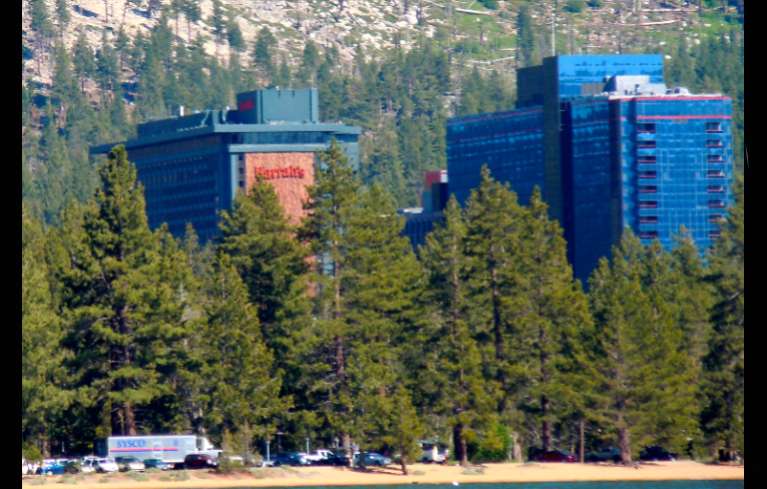
Caesars Entertainment, which owns two properties in Stateline, has had financial problems for years. Photo/LTN file

Caesars Entertainment, which owns two Statelin properties, has had financial problems for years. Photo/LTN file

Caesars is the parent company of Harrah’s Lake Tahoe and Harveys in Stateline.

Caesars, burdened by more than $20 billion in debt after the 2008 leveraged buyout by Apollo and TPG, has considered moves to strengthen its capital structure for the past five years. The Las Vegas-based company, which went public in 2012, didn’t want to sell more stock because it would dilute shareholders’ interests, and instead decided to sell growth-oriented holdings to raise immediate cash while still retaining a stake in those assets.

“The transaction is an important step in our ongoing efforts to improve the company’s balance sheet and position ourselves to make strategic investments,” Loveman said in the statement.

Caesars stock has more than doubled in value this year.

Caesars, bought by Apollo and TPG for $30.7 billion, has been losing money since the global credit crisis as a glut of hotel rooms led to the biggest Las Vegas gambling slump on record. The company earlier this year had its debt rating cut by Moody’s Investors Service to Caa2, as little as two levels above default. The casino operator may seek to extend its maturities at the expense of lenders, the ratings company said, giving some creditors a choice of immediate losses or the risk of default.

The company said in February that its fourth-quarter loss more than doubled because of costs related to Hurricane Sandy and a write-off at an Atlantic City property. In Atlantic City, where the company is the largest owner of casinos, gambling revenue fell 28 percent in November after Sandy forced casinos in the seaside resort to close for six days.

The new investment in the growth venture may increase to $1.2 billion if Caesars stockholders opt to buy a stake in the entity overseeing it, Caesars said. The company will receive the option to buy back all of the venture’s assets in the future, according to the statement.

Caesars was one of several jumbo-sized deals struck during a debt-fueled buyout spree from 2004 to 2007. Many of them, including Caesars, Texas utility Energy Future Holdings Corp. and media company Clear Channel Communications Inc., struggled with high debt and depressed earnings in the aftermath of the financial crisis. Some, including hospital chain HCA Holdings Inc. and retailer Dollar General Corp., have registered big gains for the buyout firms.

Apollo’s sixth flagship fund was carrying Caesars at one-fifth of its $1.34 billion investment as of Sept. 30, according to a marketing document obtained by Bloomberg News. Caesars had returned $158.8 million to the private-equity firm, the document shows.

While Caesars has dedicated $1.1 billion this year to sprucing up its properties, including the construction of the world’s second-biggest Ferris wheel, the payroll tax increase felt by many U.S. consumers is contributing to an estimated $300 million cash burn before capital expenditures, Moody’s said in an April 5 statement.

A business in which Caesars stands to benefit is Internet gambling, which was legalized in New Jersey, Delaware and Nevada in the last two years. Online gaming could generate as much as $210 million in revenue for the company and $84 million in earnings before interest, taxes, depreciation and amortization, according to Susan Berliner, an analyst at JPMorgan Chase & Co.

Mitch Garber, CEO of Caesars’s online gaming business, will be CEO of the new growth venture.


Non-locals deciding what is best for Tahoe

By Kathryn Reed

Politics vs. policy. Silver State vs. Golden State. Environment vs. economics. Control vs. compromise. Locals vs. outsiders.

Pick a battle. Pick a side. That’s what lawmakers in Sacramento and Carson City are doing. The prize – control of Lake Tahoe. The winners – hard to say. The losers – likely the people who call Lake Tahoe home.

Bills floating in the California and Nevada legislatures could dictate the future of Lake Tahoe, with the locals having less of a say in what goes on.

“I hope leadership and statesmanship will prevail over brinkmanship. Withdrawal is not in anyone’s interest,” Steve Teshara told Lake Tahoe News. He heads Sustainable Community Advocates and represents a number of clients in the basin.

The state line is evident at Van Sickle Bi-state Park, but the environment doesn't come with a line. Photo/LTN

The state line is evident at Van Sickle Bi-state Park, but the environment doesn’t come with a line. Photo/LTN

Teshara does not want either state to withdraw from the bi-state Compact that created the Tahoe Regional Planning Agency. But both states are threatening to do just that.

Nevada threw the first volley with Senate Bill 271. As originally written, it would have meant pulling out of the Compact by 2015 and returning matters at the lake to the Nevada Tahoe Regional Planning Agency, which still exists. It came with some other threats/mandates to California, too, like changing the voting structure of the Governing Board.

What SB271 ultimately did was get both states to start to talk about the region. It inspired both governors to be at the August 2012 annual environmental summit. It spurred the TRPA’s updated Regional Plan to be finalized and then adopted in December 2012.

Many thought SB271 would be repealed.

Senate Bill 229 has been introduced to do just that. But Gov. Brian Sandoval has vowed to veto it, saying he wants to see how the Sierra Club’s lawsuit against the Regional Plan shakes out and if California will compromise on some other issues. (The Senate on April 22 approved SB229 on an 11-10 vote. It now goes to the Assembly.)

Winding its ways through the halls of Sacramento is Senate Bill 630 that is authored by Sens. Fran Pavley, D-Agoura Hills, and Sen. President Pro Tem Darrel Steinberg, D-Sacramento.

(It moved to a state of suspension on April 22, which happens when a bill costs more than $100,000 to implement. Appropriations will study the fiscal implications.)

Pavley, in a statement provided to Lake Tahoe News, said, “I am pleased by the Nevada Senate’s vote to remain a part of the Tahoe Regional Planning Agency, but it’s important that we continue with a backup plan to protect Lake Tahoe until a bi-state agreement is reached.”

The question to her was: “What do you hope to accomplish with SB630?”

Without being allowed to speak with the senator directly it’s not known why she thinks a bi-state agreement doesn’t exist, when in fact it does. Nor could she be asked to actually answer the question.

Components of SB630

The bill when first introduced earlier this year was intended to provide California with a contingency plan if Nevada were to withdraw from the Compact. It would re-establish the California Tahoe Regional Planning Agency, which was dissolved in favor of the bi-state TRPA.

But then came amendments that have local representatives coming unglued.

The CTRPA board would be made up of nine people – all appointed by the governor of California, with approval by the Senate. One person would come from South Lake Tahoe, one from either El Dorado or Placer counties.

“We oppose that because the city should be able to maintain the right to self-governance,” South Lake Tahoe City Manager Nancy Kerry said.

As it stands now, all three local jurisdictions have a representative on the TRPA board. While that person does not have to be an elected official, such as Placer County has done with Larry Sevinson, it is the elected body that appoints the person.

Kerry was in Sacramento earlier this month with three councilmembers, Teshara and Carl Hasty of Tahoe Transportation District to speak out against SB630.

“First of all, it disenfranchises local governments and the people they represent,” Teshara said of the bill. “I lived here in the days with CTRPA in place. They didn’t solve any environmental problems. They irritated people and that is putting it mildly. This version of CTRPA would be more Draconian because it basically goes back to the old adage that local government and local people cannot be stewards of Lake Tahoe.”

Teshara went on to say, “I have said 630 creates Lake Tahoe on the California side as a ward of the state. Look at what the state has done. State Parks is a ward of the state and look how well they’ve done with that. It’s a very dark future for Lake Tahoe.”

LTN posed this question to Pavley: “Why would you want to create a government body where the locals don’t have a voice?”

Her response: “Local residents should have a say, which is why my bill includes a county supervisor and a member of the South Lake Tahoe City Council the governing body. I would [be] willing to include more local voices in the process, but it is also important to include input from other stakeholders.”

Again, there was no opportunity for follow-up questions.

But the Governing Board today has outside reps who are appointed by leaders in the two state Capitols. The latest appointment is by Steinberg, co-author of SB630, who named attorney Bill Yeates. (Yeates won’t be at today’s TRPA Governing Board meeting and has not said when he will actually be able to attend his first meeting.) Yeates has done extensive work for the Sierra Club, the same group suing the TRPA over the Regional Plan.

Steinberg’s office was asked why this appointment was made and why the senator likes SB630. No answers were provided.

State Sen. Ted Gaines, R-Rocklin, represents Lake Tahoe in California. He didn’t mince words when talking to Lake Tahoe News about his opposition to SB630. And he for years has been a staunch critic of TRPA.

“I’m in opposition because it’s a power grab by state government,” Gaines said. “It takes away local power and puts it in the hands of bureaucracies. I would argue we are in a much better situation in terms of the status quo than in terms of what SB630 would offer.”

He doesn’t like that the bill would give more power to the California Tahoe Conservancy.

(Pavley chairs the Senate Committee on Natural Resources. Bill Craven, consultant to that committee, did not return Lake Tahoe News’ call. Todd Ferrara, deputy secretary for external affairs for California Natural Resources, sits on the CTC board as Secretary John Laird’s representative. Ferrara did not return a phone call, either.)

Gaines said he has been speaking with his counterparts in Nevada and that he sees compromise as being possible. He said not to compromise is “unacceptable.”

“We ought to be looking at what is the best for the community at large, not what is best for a narrow special interest,” Gaines said. “We need to change the matrix of how TRPA functions. You’ve got to get cooler minds who will prevail on both sides of the border and political spectrum.”

Another amendment to SB630 is that is has California withdrawing from the Compact on Jan. 1, 2014.

Pavley’s office was asked why this was going to happen when Nevada has a trigger date of 2015. No answer was provided.

South Shore attorney Lew Feldman wrote a letter to Pavley opposing her bill as amended. He wrote, “While it is evident California has taken offense at Nevada’s adoption of SB271, SB630 punishes Californians by diminishing democratic representation without local voice, reducing incentives to redevelop the plethora of blight, jeopardizing TRPA’s attainment of thresholds, and eroding the region’s ability to compete for much needed dollars for regional transportation solutions and water quality projects necessary to meet the recently adopted (by both states) total maximum daily load requirements.”

SB630 as amended would prevent any redevelopment or development from occurring, would require a whole new Regional Plan or the like to be created. It would potentially mean the loss of federal money and would cost California possibly millions of dollars to start things from scratch.

Darcy Goodman Collins, executive director of the League to Save Lake Tahoe, was at the April 9 hearing in support of the bill. She deferred comment to the No. 2 in charge of the conservation group.

“Our team has spent dozens of hours at the Nevada Legislature this year advocating to overturn SB271 because we believe a unified bi-state agency is the best thing for Lake Tahoe. At the same time, we are supporting SB630 because California must have a backup plan in case the Compact dissolves,” Jesse Patterson, the League’s deputy director, said.

Dan Siegel has long been a supporter of the League and Sierra Club, often sitting with their reps at TRPA meetings, as well as eating lunch with them during breaks at those meeting.

Siegel is a supervising deputy attorney general for California.

At the April 26, 2012, TRPA meeting that dealt with the Regional Plan update, Siegel said, “I believe the draft has serious legal defects.” In particular he took issue with delegating authority to local jurisdictions, coverage rules, and the allowance of new development.

While today he is toeing the company line, so to speak, since he is not actually the attorney general, he is not showing his true colors. Those were more on display earlier this month at the Senate hearing where he was cozy with the League and the lobbyist from the Sierra Club who was in attendance.

This week he told LTN, “We support (SB630) in concept. We have no position on the details at this point. We only support it as a backup plan. We strongly support the bi-state Compact between California and Nevada. We feel that is the best approach to protect Lake Tahoe.”

Siegel added that he hopes SB630 never takes effect, that instead Nevada takes SB271 off the table.

But people who spoke to LTN off the record said Siegel’s comments after this month’s hearing were disturbing. In the halls of the Capitol he was not parroting his department’s stance, but instead that of conservation groups.

Siegel has been a party to lawsuits against TRPA.

TRPA reps opted to watch this month’s hearing from their offices.

“The agency is officially neutral on the two states’ legislation. We remain committed to the partners of both states,” Julie Regan, who handles external affairs for the bi-state regulatory agency, told Lake Tahoe News. “We believe the health of the lake is best with a functioning bi-state Compact.”

The future

Some say what is going on is all political gamesmanship with the people of Lake Tahoe as the muted pawns.

Others call it a power grab.

Today Sandoval will be in Sacramento to discuss a variety of matters with Gov. Jerry Brown. Those in the know have told Lake Tahoe News that Lake Tahoe and the bills swirling around the two legislatures are now on the agenda for the states’ leaders.

Another issue Nevada has is all the litigation that goes on at the lake. Legislators would like some sort of criteria in place that if all sides are at the bargaining table when a resolution is agreed to, then a lawsuit is not an option.

“If you have the Sierra Club at the table and they are negotiating and all parties are working together to achieve a solution, that decision should stand and you don’t get a second bite at the apple with litigation,” Gaines said. “That is working in bad faith.”

While regional government such as TRPA has often been criticized, the general consensus is that today it is the correct structure of governance.

Teshara equated the situation to an old married couple – that it’s time the two states renew their vows.

It’s too soon to know if the August environmental summit will delve into today’s issues. By then Nevada legislators should have adjourned for two years and the California delegates should be on their long summer recess.

Sen. Harry Reid, D-Nev., is the host of this year’s summit and he gets to set the agenda. It’s possible a compromise to today’s issues could be showcased at the event. And if there is no resolution in four months, it could be swept under the table.

Those who were asked to look into their crystal balls did not see clarity – at least when it comes to Lake Tahoe politics.




South Tahoe women change lives in Kenya

By Jen Gurecki

NAIROBI, Kenya – “This is the most dangerous thing you’ll do all day,” I said to the group as we crossed the road.

No lions or machine guns, just cars, motorbikes and matatus. The traffic lights function, but most people are color blind to the red, green and yellow. Crosswalks should be called crossruns.

And Americans make driving through roundabouts look easy.

These are just a few of the realities of Nairobi, Kenya, that turn every single day into an adventure. In January, eight Lake Tahoe women made the 26-hour journey to Nairobi to experience this.

When they stepped onto Kenyan soil, they knew they would be exploring one tiny corner of a vast continent, immersing themselves in a culture far different than their own, and witnessing the work of the Zawadisha Fund. What they didn’t realize is that when they returned home, they would have a new lease on life, inspired to make change locally based on what they saw was possible in a place where most people think everything is impossible.

Julie Lowe of South Lake Tahoe works with the children of Kenya. Photos/Provided

Julie Lowe of South Lake Tahoe works with the children of Kenya. Photos/Provided

These eight women — Wendy David, Hannah Greenstreet, Doris Groelz, Betsy Williams, Teresa Bertrand, Julie Lowe, Angela Swanson and Pat Papp — are the same women you see in Lake Tahoe at school board and City Council meetings, and contributing to the local economy through their thriving businesses. They are activists building a healthy and vibrant community we call home.

What became clear during our two weeks together is that they had a keen ability to find connections with one another, despite race, class, political affiliation, or location. They were able to hold a space in their hearts and in their heads for those whom they thought they would never meet. And they refused to accept the inequality that other women face simply because of where they were born.

It was the latter that sparked the creation of the Zawadisha Fund, a micro-credit organization started in Lake Tahoe, whose mission is to empower, entrust, and expand opportunities for women in Kenya. Through an intelligent approach to micro-lending, we are improving the quality of life of women through small business loans, savings, education, and preventative health care. For as little as $60, we can vastly improve a woman’s life, granting her the opportunity to enter the job market and provide for her family. It seems nothing short of a miracle, and this is what has drawn so many people to this part of the world.

On the first day of our two weeks together, I shared “How to Write About Africa,” a scathing satirical essay by the highly acclaimed Kenyan author Binyavanga Wainaina. He has said that when writing about Africa, sunsets and starvation are solid starting points. Broad brush strokes to define a continent made up of 54 countries, 900 million people.

Africa is: poverty, HIV, conflict, diamonds.

Africans are: corrupt, destitute, infected, hungry.

The story has been told a thousand times over, fact woven with fiction. When we think about people living in poverty on the continent of Africa these are the images we see in our minds. Yet these sorts of images evoke pity, and pity is an incredibly unproductive and disempowering agent of change.

Enter Winnie and Duncan, the founders of Dolphin Anti-Rape & AIDS Control Outreach. Their energy and passion for ending violence against women through self-defense workshops is contagious and completely shifts pity into power. Zawadisha’s collaboration with Dolphin is rooted in our belief that business loans alone cannot empower women. If we truly want to increase their quality of life, we need to look at poverty through a wider lens. Violence is an issue that affects women’s status in society, and through Dolphin’s workshops they not only learn how to protect themselves, but how to have a stronger voice. In a world where exploding violence against women has threatened the very fabric of many societies, Dolphin has inspired the women and children of Kenya — and South Lake Tahoe — to reclaim their bodies, their homes, their schools, and their communities.

The Zawadisha Fund is helping to provide a better life for the women and children of Kenya.

The Zawadisha Fund is helping to provide a better life for the women and children of Kenya.

Our group spent three days with Dolphin, first being trained on the self-defense skills and then two days in schools working with children.

“I have never taken self-defense training. So actually running through the training and cultural curriculum with the Dolphin team in the Kolping House garden was gift enough. But then we had the opportunity to go with Dolphin into two Nairobi schools and see how they connect, and practice and sing and touch the lives of these boys and girls of all ages,” Julie Lowe said. “It brought tears to my eyes to see how culturally-relevant rape prevention coming from the minds and mouths of smart, energetic Kenyan women and men could transform the culture from the little ones on up.”

Zawadisha’s two-week Service Adventure Tour was designed to provide an experience where people could connect to one another, people whom we often believe are fundamentally different than ourselves. These perceived differences faded away during our two-day financial literacy workshop with Tuinuane Lending Circle. Tuinuane is Swahili for “to lift up,” and that is the name this group of women from Eldoret, Kenya gave themselves nearly two years ago as Zawadisha’s first group of borrowers.

“I loved every part of this travel adventure, however, the 2½ days that I spent with the Kenyan women was a life changing event for me. Seventeen women arrived at 4 in the afternoon and by 7 that evening they were joyfully singing to us and soon we were all singing and dancing together with the camaraderie of being women that truly cared about each other,” Wendy David said. “I was transformed by their warmth, their attitude of joy, their stories of creating small businesses to support their children’s education or to feed their families. I felt proud to be a woman walking, singing, teaching, learning, laughing and weeping with these strong beautiful women. I look at life through a different lens now, a lens that focuses even more on where real joy is lives. It is in the heart.”

Our time with Dolphin and the Tuinuane women were unforgettable, but the three-day safari in the Maasai Mara was unmatched in beauty and excitement. We found ourselves surrounded by animals most people only see in a zoo: elephants, giraffes, lions, zebras, cheetahs, hippos and even a leopard.

“We discovered the connection between power and harmony in the vast and animal-rich Maasai Mara. The sheer beauty of the giraffes, cheetahs, leopards and lions brought us a deep understanding of the circle of life,” Hannah Greenstreet said.

It was during the safari that our group took on the moniker “Bahati Dumas” or “lucky cheetahs” after witnessing a mother cheetah and her two cubs hunt, kill and feast on a Thompson gazelle.

They made a significant mark on the individuals they encountered, and they too were deeply transformed by their experiences.

Jen Gurecki is a Lake Tahoe resident and the founder of the Zawadisha Fund.

Note:

The Zawadisha Fund is organizing the next Service Adventure Tour to Kenya on Feb. 1-16, 2014. If you would stare in amazement at elephants, cheetahs, lions and giraffes; walk in humble appreciation through the slums; marvel at the resiliency and grit of our micro-loan recipients; find courage as we assisted Dolphin in teaching self-defense skills to children; and embrace our new friendships, email jen@zawadisha.org or go online to learn more.


Nevada on path to repeal gay marriage ban

By Anjeanette Damon, Las Vegas Sun

CARSON CITY — Following more than an hour of riveting and personal floor speeches — during which one state senator publicly announced for the first time he is gay — the Nevada Senate voted 12-9 to begin the process of repealing the gay marriage ban from the state Constitution.

Only one Republican, Sen. Ben Kieckhefer, joined with Democrats to vote in favor of Senate Joint Resolution 13, which would repeal the ban on gay marriage and replace it with a requirement that the state recognize all marriages regardless of gender.

The late night vote came after more than an hour of emotional floor debate, during which opponents of the measure decried efforts to label them as “insensitive and unenlightened,” and supporters argued marriage equality should be extended to all regardless of gender.

In a particularly emotional moment, Sen. Kelvin Atkinson, D-North Las Vegas, publicly declared for the first time that he is gay.

“I’m black. I’m gay,” Atkinson said in a trembling voice after describing his father’s interracial re-marriage that would have been banned earlier in American history. “I know this is the first time many of you have heard me say that I am a black, gay male.”

Atkinson went on to rebut the argument that gay marriage threatens any other definition of marriage.

“If this hurts your marriage, then your marriage was in trouble in the first place,” he said.

Both Democrats and Republicans sought to balance religious convictions with their stance on public policy. Both came down on different sides of the issue.

“I don’t know if I’ll be allowed in church on Sunday,” said Sen. Ruben Kihuen, a Catholic, who said his “more progressive” girlfriend often berated him for resisting gay marriage rights. He ultimately voted in favor of SJR13.

Sen. Justin Jones, a Mormon, said he sees his gay brother-in-law each Sunday at church and couldn’t bring himself to vote against extending him marriage rights despite a threat from one of the earliest proponents of the gay marriage ban.

“I would rather lose an election than look my brother-in-law in the eye every Sunday and tell him he doesn’t have the same rights as I do,” Jones said.

Sen. Joe Hardy, also a Mormon, took a different tact, saying marriage is “ordained of God” and that such relationships “perpetuate beyond the grave.”

“I do not believe this measure will strengthen the family as the fundamental unit of society,” he said.

Sen. Mark Hutchison, also a Mormon, decried efforts to paint those who oppose gay marriage as intolerant.

“Until about a year ago this was the view of the president of the United States,” Hutchison said of President Obama’s initial opposition to gay marriage on religious grounds. “I do not recall his supporters labeling him as intolerant, or insensitive or hypocritical or unenlightened. He had a different view than others.”

Republicans largely objected to a late amendment to SJR13, which would require not just the repeal of the gay marriage ban, but also inserting into the constitution a requirement that the state recognize such unions.

“Process is important,” said Senate Minority Leader Michael Roberson, who supported the original version of SJR13, which simply repealed the ban. “The better course of action was and is to pass the original SJR13.”

Kieckhefer, who uttered not a word on the Senate floor, was the only senator to buck his caucus on the vote.

In 2000 and again in 2002, Nevada voters approved a constitutional amendment defining marriage as between a man and woman. Proponents of SJR13 note a shift in public opinion away from that sentiment.

If SJR13 passes, the Legislature would have to approve it again in 2015. The measure would then be placed on the 2016 ballot.

“This is a vote to let the people vote for equality,” said Sen. Pat Spearman, D-North Las Vegas.


Weather, climate factor into winemaking

By Kathryn Reed

PLACERVILLE – Like all farmers, grape growers have a precarious relationship with Mother Nature.

“In 2011 we never picked the Merlot. If the birds won’t eat it, you can’t make wine,” Vaughn Jodar of Jodar Vineyards in Placerville told Lake Tahoe News. “2012 was beautiful. People are thrilled with the wines out of 2012.”

Vineyard managers and winemakers can work their magic each season, but ultimately the water content of the soil, the outside temperatures once the buds break, a hard freeze when the vines are no longer dormant, or prolonged heat beating down on the grapes – these are factors that are beyond the control of those in the wine business.

And those are issues on an annual basis.

Then there are the long-term consequences of climate change.

The Sierra, in the distance, provides water for many of the El Dorado County vineyards. Photos/Kathryn Reed

The Sierra, in the distance, provides water for many of the El Dorado County vineyards. Photos/Kathryn Reed

With how El Dorado County is situated and its various elevations throughout the region, wineries are less worried than their brethren in lower lying areas.

Pinot Noir, Chardonnay and some other white varietals are definitely more temperamental.

Justin Boeger with Boeger Winery said an issue winemakers will have to pay attention to is whether certain varietals that have done well might not grow so well in that particular location in the future.

“Average temperature is very important. It’s very critical to grape growing,” Boeger said.

But he said it’s not something he is worried about at the 110 acres at his four vineyard sites.

Looking out at the 70 acres from where Boeger is sitting there is a 300-foot elevation difference between the varietals. This in itself gives his family winery flexibility.

Jodar said it’s counties that are warmer than El Dorado that are likely to have trouble in the future. While it may reach 90 degrees where he is, it’s not that temperature all day. It starts off relatively cool most mornings and the evenings cool down.

It’s the scorching temps throughout the day in other wine regions of California that are likely to be detrimental to certain varietals as increased temperatures become the new norm.

Buds are coming out on vines throughout El Dorado County.

Buds are coming out on vines throughout El Dorado County.

When it comes to year in, year out farming, water can be an issue. In dry years sometimes drip irrigation is needed. Boeger gets its water from Eldorado Irrigation District.

Steve Grace at Grace Patriot Wines says water-stressing grapes can be a good thing. He tapped into EID’s system three times last year.

“We could go a whole season without water and produce a good fruit,” Grace said.

Being so close to the source of water also helps El Dorado County. EID gets much of its water from Desolation Wilderness, with a dam at Aloha Lake, as well as at Caples Lake on Highway 88.

And for the growers on well water, getting some snow each winter helps replenish the groundwater.

“We have everything in small blocks so the wells can handle it,” Guy Herriott of Fenton Herriott Vineyards said.


Vail Resorts ends season with strong numbers

By Mark Harden, Denver Business Journal

With a boost from ample late-season snow, Vail Resorts said today that skier visits at its seven mountain resorts in Lake Tahoe and Colorado rose 5.5 percent for the 2012-13 ski season through April 14 over its results the previous season.

That marked a distinct improvement from the company’s numbers earlier in the season. Through January, skier visits at Vail Resorts ski areas were up 2.9 percent from the same period a year earlier.

Also, lift ticket revenue — including the applicable portion of season pass revenue — was up 10.2 percent at the seven ski and snowboard areas this season.

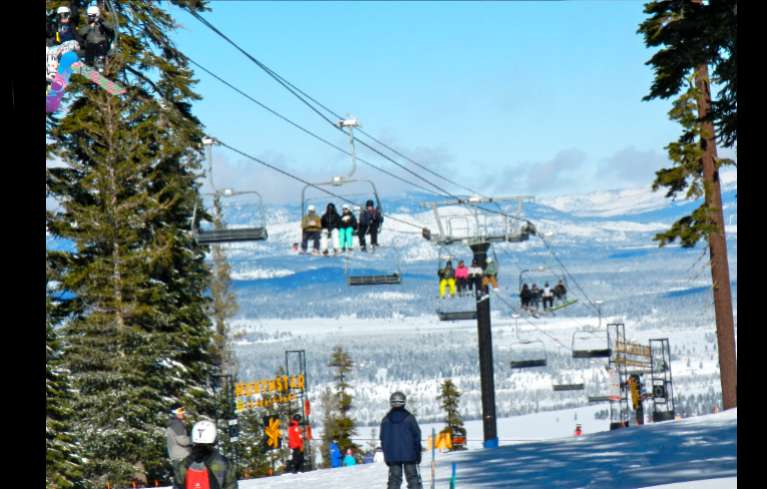
Early snow helped California resorts like Northstar, while snow in Colorado prolonged the season there. Photo/LTN file

Early snow helped California resorts like Northstar, while snow in Colorado prolonged the season there. Photo/LTN file

The figures apply to Colorado’s Vail, Beaver Creek, Breckenridge and Keystone resorts and Heavenly, Northstar and Kirkwood resorts in the Lake Tahoe area.

Kirkwood was included although Vail Resorts closed on its purchase of the resort last April.

But the numbers do not include the company’s newly acquired Afton Alps resort in Minnesota and Mount Brighton in Michigan, which it bought last December.

The 2012-13 figures are through April 14 and do not include numbers from the April 19-21 period. Vail and Breckenridge were among the Colorado resorts that temporarily reopened over that period because of heavy April snow.

Other season-to-season comparisons released by Vail Resorts on April 22: Dining revenue rose 13.1 percent, ski school revenue was up 11.6 percent, and retail/rental revenue climbed 8.9 percent from the same point of last season.

Rob Katz, Vail Resorts CEO, said the company is “very pleased with the strong results this season. The growth in skier visitation continued to accelerate through Spring Break and the Easter holiday which contributed to our double-digit growth in lift ticket, dining and ski school revenues compared to the same period last year, offset by somewhat slower momentum at our Tahoe resorts and our retail business.”


Internet sales may soon be taxed

By Jia Lynn Yang, Washington Post

The days of tax-free online shopping could finally be numbered.

The Senate is planning to vote on a bill as soon as this week that would give states the authority to collect sales taxes on all Internet purchases, handing local governments as much as $11 billion per year in added revenue that they are legally owed — but that hasn’t been paid to them for years.

Since before the dawn of Internet shopping, the basic rule was that as long as a retailer didn’t have a physical presence in the state where the consumer was shopping, the company wouldn’t have to collect a sales tax. Technically, shoppers are supposed to track these purchases and then pay the taxes owed in their annual tax filings. Few people, however, do this or are even aware of it.

The result: Online retailers have been able to undercut the prices of their non-Internet competitors for years. Over time, shoppers learned that they could browse products in the aisles of a Best Buy, only to click “purchase” on their smartphones for a tax-free deal from an Internet retailer.

As states have become more strapped for cash since the recession, local officials have fought back. New York passed an “Amazon tax” in 2008 that forced the giant online retailer to collect sales taxes from shoppers who live in the state, even though Amazon didn’t have a brick-and-mortar presence there.

Others followed suit. Nine states require Amazon to collect sales taxes, including California, Pennsylvania and Texas.

The bill introduced by Sen. Mike Enzi, R-Wyo., called the Marketplace Fairness Act, would grant all states the power to collect taxes from out-of-state vendors selling goods to their residents.

States are so eager to see the funds that some have already passed legislation that counts on Congress approving the new law.

The Maryland state legislature passed a measure this year that raises the gas tax to help pay for transportation projects. The bill calls for raising the gas tax even more — unless Congress passes some version of the Marketplace Fairness Act.

Likewise, Virginia passed a transportation funding bill that relies on money from a tax on Internet sales.

Enzi’s bill technically would not add a new tax liability because these purchases are already supposed to be taxed. It also would not require states to collect the money; it would simply give them the authority. Companies with out-of-state revenue of less than $1 million would be exempt from the provision.

The measure appears likely to win a filibuster-proof majority in the Senate because members approved the idea in March in a 75 to 24 symbolic vote.

Support does not fall along partisan lines, according to those who have followed the debate. A number of senators in both parties are former governors who understand the fiscal woes of local governments.

But there remains some resistance. Sen. Max Baucus, D-Mont., chairman of the Finance Committee, opposes the bill because he argues that it would force businesses to keep track of far too many different tax codes. (Montana does not have a sales tax.)

Observers say there may also be some Republican House members who balk at the idea of the government collecting more revenue. Grover Norquist, founder of Americans for Tax Reform, which is influential among Republicans, has raised concerns about the new bill, saying it essentially adds a new tax to consumers.

The legislation also seeks to simplify the process by helping states make their tax laws more uniform. Enzi argues that there’s a way to make the process easier for retailers so that the added work of collecting the tax doesn’t become a costly burden.

A spokesman for Enzi pointed to the senator’s recent comments on the floor of the Senate.

“Do not let the critics get away with saying this kind of simplification cannot be done,” Enzi said in March. “The different tax rates and jurisdictions are no problem for today’s software programs.”

Enzi’s bill is garnering strong support from brick-and-mortar retailers.

“The Marketplace Fairness Act is a commonsense piece of legislation necessary to modernize our federal and state understanding of sales tax laws so that they can keep current with real-world changes in the marketplace,” said David French, senior vice president for government relations at the National Retail Federation, in a letter to members of the Senate last week.

The NRF represents companies such as Wal-Mart, which have lobbied for years to get a law like the one proposed by Enzi.


El Dorado keeping ’13 roadwork to a minimum

Publisher’s note: This is one of a few stories about construction planned for the Lake Tahoe Basin this summer.

By Kathryn Reed

El Dorado County planners are busy plotting what will be happening in the basin for the next few years. And while improvements to roads and bike trails could happen this year, 2014 will be super busy when at least six projects are expected to go in the ground.

For this building season, which officially starts May 1, things are still a bit up in the air.

The county is nearing completion to acquire the right-of-way on Sawmill Road to be able to finish the bike trail so it connects with the bridge at Highway 50 that takes cyclists into Meyers. All the environmental documents are in place.

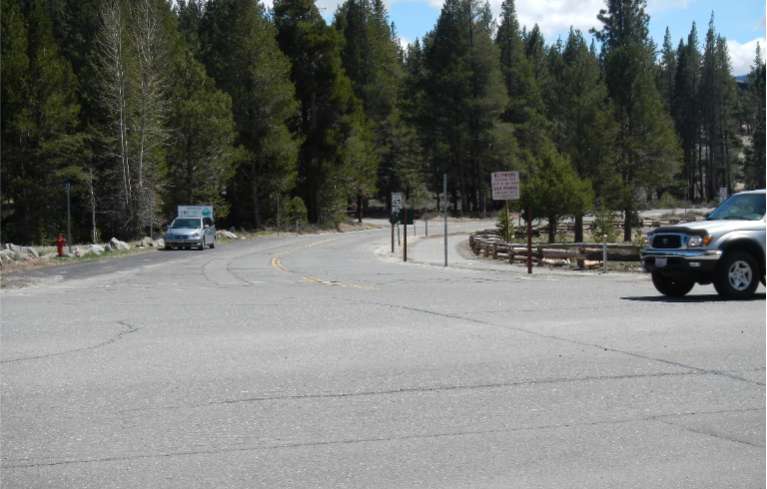
The intersection of Sawmill Road and Lake Tahoe Boulevard will be upgraded by the end of 2015. Photos/LTN

The intersection of Sawmill Road and Lake Tahoe Boulevard will be upgraded by the end of 2015. Photos/LTN

If everything comes together as the county wants, it’s possible finishing that segment of trail could begin this summer. Right now the trail meanders close to the northern side of Sawmill from Lake Tahoe Boulevard halfway down the street before it dead ends.

Connecting Sawmill to a future path on Lake Tahoe Boulevard has an outside chance of beginning late in the season. That trail will roughly follow the U.S. Forest Service dirt path that starts at Viking Way and goes into the Upper Truckee neighborhood.

This is part of a larger project to narrow Lake Tahoe Boulevard. Comments on the CEQA documents for the roadwork are being taken until April 24.

“The plans are nearly done for the bike trail portion. The plan is to split that job into two where the road improvements happen separate from the class 1 bike paths,” Brendan Ferry, senior planner with the El Dorado County Department of Transportation, told Lake Tahoe News. “We are focusing on the bike portion. That is the most important piece as we see it.”

The trail will be built to American Association of State Highway Transportation Officials (AASHTO) standards, which means 10-feet wide, plus 2-foot shoulders, meeting American with Disabilities Act requirements and limitations on the grade.

It will connect riders with the class 2 bike trail at the top of Clearview Drive.

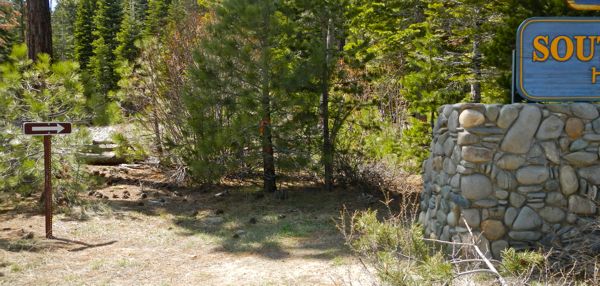
The trail sign to the left indicates where one end of the new paved bike trail will go, with the STHS sign to the right.

The trail sign to the left indicates where one end of the new paved bike trail will go, with the STHS sign to the right.

A crosswalk will be installed at Viking Way-D Street so cyclists can more safely connect with the trail on the other side of the street that leads into the city limits along Lake Tahoe Boulevard.

Lake Tahoe Boulevard was built decades ago with the anticipation of larger subdivisions being developed that would require that much asphalt. Those are off the books and now the roadway is more than what is needed, according to numerous traffic studies.

“There used to be a river running through that corridor. Now it’s a large roadway,” Ferry said.

Downsizing Lake Tahoe Boulevard from Sawmill to about Tahoe Mountain Road from four lanes to two will remove pavement in a stream environmental zone and make travel safer, Ferry said.

“A single lane with a guard rail will be safer,” Ferry said in regards to the sharp curve on the road.

The road will be restriped, pavement removed and improvements made to the intersection at Sawmill and Lake Tahoe Boulevard.

During construction one lane of travel will always be open, Ferry said.

Based on the various funding sources for the project, the work must be done by 2015 or the county would have to forfeit those dollars.

Other projects for 2013:

• One of the first items on the list is to finish the Christmas Valley Erosion control project.

• Boulder Mountain will be paved. This will likely start in July.

• An erosion control project in Montgomery Estates is slated to begin at the end of August.


Power shortages possible in California this summer

By Naureen S. Malik and Lynn Doan, Bloomberg

California may face the biggest regional power shortages in more than a decade this summer, sending wholesale prices higher, as idled nuclear reactors and low hydroelectric output cut generating capacity.

The California Independent System Operator Corp. said last month that managing the state grid, especially in parts of Southern California, will prove “difficult” because the system will be operating without Edison International’s San Onofre nuclear power plant and two natural gas-fired units, while hydroelectric output will be at a three-year low.

The nuclear plant, California’s single largest source of base-load power, accounts for 3.7 percent of the state’s capacity.

Lake of snow in the Sierra this winter, as evidenced by the March snow survey, will impact hydro-electric power in California. Photo/LTN file

Lake of snow in the Sierra this winter, as evidenced during the March snow survey, will impact hydropower in California. Photo/LTN file

Southern California wholesale electricity for July through September already is at the highest price for this season since 2008 on the expectation of a shift to costlier, more volatile fossil fuels. A strain on the grid could lead to power failures reminiscent of the state’s worst energy crisis in 2000 and 2001, when generation shortfalls and market manipulation by traders at companies including Enron Corp. sent prices to record highs and triggered blackouts that affected millions of customers.

“California may see the biggest test since Enron manipulated the market,” said Stephen Schork, president of Schork Group, an energy consulting group in Villanova, Pa.

“If you have a reactor down and you don’t have as much hydro, your fuel for air conditioning is going to have to come from gas.”

Electricity at Southern California’s SP15 hub for July through September rose $1.40, or 2.3 percent, to $61.25 per megawatt-hour this week, a five-year seasonal high.

Electricity at the SP15 hub for next-day delivery has averaged $49.70 per megawatt-hour this year through Thursday on the Intercontinental Exchange, the most for the period in five years. Northern California’s NP15 hub has averaged $41.99 this year, the most since 2010.

The shutdown of the San Onofre reactors boosted prices at the southern hub to an average premium of $7.81 per megawatt-hour over the northern hub, the most in 12 years. The five-year average is 95.6 cents.

Abundant hydroelectric generation made up for the lost nuclear output in the Los Angeles basin last year, said Michael Blaha, the principal analyst of North American power at Wood Mackenzie in Houston.

“There is always a threat of brownouts and blackouts, and I think it’s higher this summer because of San Onofre being out and you’re not putting hydro into the basin,” he said.

Final snowpack measurements, which are used to predict the output at hydropower dams, will be 45 to 50 percent of normal, according to Maurice Roos, chief hydrologist with the state’s Department of Water Resources in Sacramento. Only six years in the past 60 have been that low, he said.

Low water levels in the Pacific Northwest may also cut electricity exports to California this summer, according to the Bonneville Power Administration, a federal agency that manages Columbia River basin power supplies.

Transmission lines across the Oregon-California border have a combined capacity of 7,500 megawatts.

The snow-water equivalent in the region was 89 percent of normal this week, the lowest level for the time of the year since 2010, U.S. Agriculture Department data show.

Unless there is a surge in precipitation in April through June, the amount of water available for hydro in the Pacific Northwest will be lower than it has been in the past two years, said Doug Johnson, a spokesman for the BPA in Portland, Ore. Water levels exceeded historical norms by 30 percent in 2011 and 20 percent last year, he said.

California, with a population of 38 million, struggled with similar hydropower shortages during the electricity crisis of 2000 and 2001.

The state, the world’s ninth-largest economy, was also dealing with unplanned power-plant shutdowns, a natural-gas pipeline rupture, unseasonably high temperatures and price manipulation by Enron and other companies.

The shortages prompted regulators to overhaul state energy policy, which now requires utilities to show they’ve contracted enough power to meet demand.


Complexity of South Shore water issue growing

By Kathryn Reed

While a definite solution has not been decided upon, most of the talk at last week’s South Tahoe Public Utility District meeting centered on having an intertie be the solution to the water issue for the T.J. Maxx building.

That building at the Y is owned by the Garfinkles and is serviced by Lukins Brothers Water. But the water pressure is not sufficient to put out a fire so STPUD’s help is needed.

A temporary solution was found last fall, but a permanent one is still being negotiated.

For decades there has been a link between two the water companies so water can flow back and forth as needed. But that valve must be manually turned. This has been done less than a half dozen times in the last 30 years, according to Lukins.

Water pressure have yet to be resolved at the T.J. Maxx building in South Lake Tahoe. Photo/LTN file

Water pressure issues have yet to be resolved at the T.J. Maxx building in South Lake Tahoe. Photo/LTN file

What is being proposed is an automatic valve or pressure trip device. This would allow water to flow into Lukins’ 8-inch pipe if the pressure got to a predesignated point.

Danny and Jennifer Lukins, the father-daughter duo who run the company, said they are waiting to hear from the state Public Utilities Commission as to the cost of the connection fee that could be passed on to ratepayers. STPUD would require a fee of about $150,000.

Before South Tahoe PUD says yes to the pressure valve, they want confirmation from the city fire chief about what is required. When the store opened it was Lake Valley’s chief who signed off on the paperwork.

While it’s state regulations that dictate fire flow, fire chiefs and marshals interpret things differently. South Tahoe PUD therefore likes things in writing because its jurisdiction involves more than one fire agency.

Another issue brought up at the April 18 meeting was whether the Gardner Mountain tank could keep enough pressure to service STPUD customers in the event Lukins needs water.

Another piece of the puzzle is now that the Chateau project near state line is likely to go forward, at least in small phases starting this summer, water is an issue there. STPUD had an agreement with Lakeside Water Company, but that needs to be reworked. The water intended for that area from STPUD has been flowing down Highway 50 and used near the Y.

The other thing STPUD needs to figure out is what type of contract to come up with because nothing like what Lukins is asking for — just emergency supply water services — exists.

More talking is planned, with no date for a resolution.

Another factor in all of this is that the Garfinkles have people interested in leasing the building next to T.J. Maxx, but no contracts can be signed because the building doesn’t have an adequate supply of water to fight a fire.