Interest groups often write legislation

By Laurel Rosenhall, Sacramento Bee

At first glance, the role interest groups play in crafting laws in California seems easy to spot.

Unlike in many states, legislative analyses list “sponsors” for many bills, indicating that a lobbyist suggested – perhaps even wrote – and martialed forces for the measure.

But a Bee review of sponsored bills found that the forces behind legislation are often masked, leaving the public in the dark about the interests driving the creation of some new laws.

No rule requires disclosing when a bill is sponsored. Legislative committees are inconsistent about listing sponsors in legislative reports. Lobbyists and lawmakers decide privately whether to highlight or hide an interest group’s involvement.

“If the firefighters or the nurses or small-business owners support your bill, then you trumpet that support,” said Dan Schnur, director of the Unruh Institute of Politics at USC.

“If it’s tobacco companies, probably less so.”

The Bee worked with Capitol Track, a company that monitors legislation, to assess how pervasive sponsorship is in California’s Legislature. The organizations analyzed data from the 2011-12 legislative session – the most recent completed session – and found that 27 percent of the roughly 4,800 bills introduced list a sponsoring interest group.

In the Democrat-controlled Legislature, labor unions and liberal public interest groups, such as those that advocate for the poor, civil liberties, gay rights or animal welfare, are most commonly identified as bill sponsors. Local governments, state agencies and trade associations also appear frequently.

But the number of bills written by lobbyists, or at their request, is higher than the data reflects. Some bills do not show up because legislative staff did not flag them as sponsored when writing bill analyses, or because lawmakers completely rewrote the bill in the final days of the session. Some lawmakers are reluctant to describe the bills they carry as sponsored by outside interests.

A bill making its way through the Legislature illustrates the confusing state of sponsorship. Senate Bill 598 by Sen. Jerry Hill, D-San Mateo, establishes a protocol for dispensing a new type of drugs called “biosimilars” once they are approved by the federal government.

Unlike generic cold medicine or pain relievers, biosimilars are not identical to the brand-name drug they replace. Already used in Europe, they are substitutes for more complex medications that are injected into the body, such as those used in treating cancer.

A legislative analysis says the bill is supported by several drug companies, including Amgen and Merck, and opposed by pharmacies and makers of generic drugs. It also says the bill is not sponsored by any interest group, a point Hill reiterated in an interview with the Bee.

“I’ve certainly met with Genentech. I’ve met with Amgen. I’ve met with many drug companies, and they all have some input into this process,” Hill said.

“But I don’t take sponsored bills.”

Yet California’s SB598 contains several key paragraphs that are almost identical to passages in similar bills introduced this year in Indiana, North Dakota and Virginia. Lawmakers in those states told the New York Times that Genentech and Amgen brought them the bills.

Across the country, bills about biosimilars have pitted drug companies against makers of generic drugs.

At a hearing earlier this month on the California bill, an Amgen representative and Genentech lobbyist flanked Hill as the three answered questions from lawmakers on the Senate’s Business and Professions Committee.

The drug companies argued that the bill would protect consumers who receive biosimilars, while makers of generic drugs said it would make it harder for patients to get the lower-cost replacements.

In the last election cycle, Hill received almost $55,000 in campaign contributions from pharmaceutical companies and their industry groups. He told the Bee that SB598 stems from his experience on the Assembly Committee on Biotechnology and knowledge gained through representing South San Francisco, a biotech industry hub where Genentech is headquartered.

The bill was written by California’s legislative counsel’s office, Hill said, adding that any similarities to bills in other states come from a desire to be consistent in crafting health policy.

“I’ve never seen a bill from Amgen or Genentech,” he said. “Nobody handed me a bill and said, ‘Here.'”

One interest group is trying to do just that with another piece of legislation. The San Manuel Indian tribe is drafting an Internet poker bill it expects to be carried by Sen. Lou Correa, D-Santa Ana.

Look in the Legislature’s public record for Senate Bill 678 and you’ll find a “spot bill” just five sentences long. No mention is made of a sponsoring interest group, nor is there any detail on how a legal Internet poker system would work.

The gambling interests that want Internet poker to become legal, however, have plenty of proposed content. In April, a representative of the California Nations Indian Gaming Association sent an email to member tribes containing a draft of SB678. It is 53 pages long.

“The San Manuel Band of Mission Indians is asking California’s Tribal Governments to review the attached working draft for an Internet Poker bill and provide comment as soon as possible,” said the April 4 email from Susan Jensen, the group’s director of communications.

“Please note that the proposed language has not been submitted to the Legislature. This is purely a working draft.”

Correa declined to talk to the Bee about the bill.

Whether or not it’s disclosed, sponsoring bills is big business in the capital city, where there are more than 10 registered lobbyists for every state lawmaker.

When a group sponsors a bill, its lobbyists frequently serve as pseudo-staff to legislators – drafting bill language, researching issues and rounding up people to testify at hearings. Many times, the sponsoring interest group has drafted a bill before a lawmaker has even signed on.

“We write a fact sheet, we go knocking door to door to legislators, to those we think might have an interest in the issue – committee chairs if possible,” said Michelle Castro, a lobbyist for the Service Employees International Union. “If they don’t want to be associated with a union bill, then they decline, they don’t do our bill.”

SEIU was listed in legislative records as sponsoring two dozen bills last session, more than any other interest group. They included measures to take away fingerprinting requirements for recipients of in-home care and a resolution creating a special day honoring “justice for janitors.”

Lobbyists sometimes know the bills they sponsor better than lawmakers do. It is not uncommon for legislators to send out news releases directing media to call a sponsoring interest group for more information on a bill.

One example: A news release about a bill by Sen. Kevin de León, D-Los Angeles, that would put new breastfeeding protocols in place at hospitals that deliver babies lists the sponsoring interest group, the California WIC Association, as a resource for reporters seeking interviews and information.

But political need, more than the public’s right to know, guides how much lawmakers say about the interest groups for whom they carry legislation.

Earlier this year, Correa called a news conference to tout his Senate Bill 289, which would make it easier to prosecute people who drive under the influence of drugs. The event put Correa, who is raising money for a 2018 run for attorney general, on the podium alongside the police chiefs, sheriffs and narcotics officers sponsoring the bill.

He allowed them to answer questions from a reporter who asked how the measure proposed to punish drivers under the influence of drugs.

“It will be very similar, on par, with drunk driving,” Scott Seaman, president of the California Police Chiefs Association, said from the stage.

“There will be actions against your license, there will be criminal prosecution.”

“And treatment programs,” the group’s lobbyist, John Lovell, called out from the audience.

In an interview afterward, Correa said the bill’s sponsors help boost its odds of success.

“Carrying a bill like this is going to be a heavy lift. And by myself I think it would be very difficult to do it,” he said. “But having sponsors such as these individuals really gives the effort credibility.”

The Bee‘s analysis supports the contention that sponsored bills are more likely to become law. During the 2011-12 session, about 60 percent of the bills identified as having sponsors were signed into law, roughly double the success rate of bills without interest group sponsorship.

Sen. Mark Leno, a San Francisco Democrat, said politicians who have already written bills sometimes seek sponsors to increase the likelihood it will be signed into law.

For example, he said, a current bill that would reduce punishment for drug possession addresses an issue that heavily affects black and Latino communities.

For that reason, Leno said he asked the NAACP to sign on as a sponsor. The group is one of seven sponsoring organizations touted on a news release for SB649.

Although Democrats dominate the Legislature, they are not the only ones who carry bills sponsored by groups popular with their constituencies.

Last August, as the Senate prepared to vote on a bill to extend the length of race car-carrying trucks permissible on state roads, two GOP senators ribbed each other about their ties to the racing industry.

“I wondered how you got this bill, because I’m the NASCAR guy,” then-Sen. Doug La Malfa, a Richvale Republican, said to Sen. Mimi Walters, who was carrying the bill sponsored by the National Hot Rod Association and two other motorsports groups.

Walters, R-Laguna Niguel, smiled across the chamber and replied: “Well, I hate to break the news to you, but the NASCAR people like me better.”

The Senate approved SB1174 without a single “no” vote, and Gov. Jerry Brown signed it into law less than three weeks later.

California’s culture of listing interest-group sponsors in bill analyses is rare among statehouses nationwide, said Brenda Erickson, a senior research analyst at the National Conference of State Legislatures.

Most states do not ask lawmakers to disclose who wrote the bills they introduce, though some provide a place for them to say who requested the legislation.

“But that’s only in a few states and a few occasions where they do that,” Erickson said. “The majority of bills, you don’t know.”

Still, California should do a better job of informing the public about the interest groups backing legislation, said Phillip Ung, an advocate with California Common Cause, a government watchdog group that also sponsors bills.

Ung said lobbyists should be required to disclose bills they sponsor in the quarterly reports they file with the secretary of state. He said legislative staff should be required to list sponsors in the bill analyses they write, eliminating inconsistencies among committees.

“Being able to get that disclosure helps bring some transparency to the sponsorship process,” he said.

But lawmakers seem disinterested in changing.

Three years ago, after the San Jose Mercury News wrote a series of stories about sponsored bills, legislators discussed ideas to both limit the practice and require more disclosure.

Nothing came of it in the end.

“People have the right to advocate their position,” said Senate President Pro Tem Darrell Steinberg, D-Sacramento.

“Where they give money to candidates, where they give money to a ballot measure, where they provide any kind of support to an elected or appointed official – all that must be reported. But beyond that, I don’t know how you regulate the fact that some company or entity might be gathering a group of like-minded entities to talk about what their position may be on a bill.”

Veteran lobbyist Jim Gross, who represents Genentech as well as other health industry clients, said labeling a bill “sponsored” is more of an advocacy tool than a technical definition.

“Here’s the thing about sponsorship: It’s a term that has no legal meaning,” Gross said. “An author can say, ‘I want to call somebody a sponsor,’ or ‘I don’t.'”

California redefines ‘temporary’ when it comes to fees

By Jim Sanders, Sacramento Bee

Californians have paid tens of millions of dollars the past three years in state fees that had been scheduled to die – but never did.

The Legislature routinely has adopted fees as temporary but quietly extended them as expiration dates neared.

Nearly two of every three state fees scheduled to end between 2010 and 2012 have been kept alive for years to come, according to state records.

Thirteen of 21 fees received extensions, cumulatively raising more than $70 million annually for programs ranging from a missing persons database to an effort to fight auto insurance fraud.

Unlike general taxes paid by nearly all Californians, fees are targeted assessments to people who participate or benefit from a state program for the purpose of funding that service.

Perhaps the oddest Capitol trail left by a single fee involved five bills over the past decade to raise millions for California courts.

What is now a $40 court fee tacked onto all criminal convictions, including traffic violations, began as a $20 charge in 2003. It later was raised to $30, then to $40, then expiration dates were eliminated, leaving the charge permanent.

Republican Sen. Jim Nielsen of Gerber said that Democrats who dominate the Legislature routinely allow fees to go “on and on and on, particularly now when the call is out to fund government by every way that you possibly can.”

“The taxpayers, the citizens, deserve that there be certainty,” Nielsen said. “If fees are to end, they should end.”

But Sen. Mark Leno, a San Francisco Democrat who chairs the Senate Budget Committee, said that placing an expiration date – or “sunset” – on a newly adopted fee does not necessarily mean that legislators intend the charge to die automatically.

“Sunsetting” provides a mechanism for weeding out ineffective programs by creating a deadline for lawmakers to review the impacts of a fee and to keep it alive if they decide the public is getting its money’s worth, he said.

Democratic Assemblyman Bob Blumenfield of Los Angeles, chairman of the Assembly Budget Committee, said the state would be well served by placing sunsets on tax deductions and tax credits, too. Once signed into law, perhaps in a budget compromise, they become virtually impossible to remove, he said.

But Jon Coupal, president of the Howard Jarvis Taxpayers Association, said attaching sunsets to new fees tends to be more of a political gesture – a “legislative two-step” – than a genuine commitment to review.

“Sometimes legislators know that going for a permanent fee right out of the box is not politically palatable, so they say, ‘You know, it’s just temporary.’ And later, ‘Oh, now you’re used to paying it, so let’s make it permanent,'” Coupal said.

Nielsen said that extending a fee should spark substantive discussion but seldom does.

A check by the Bee of written legislative policy committee analyses of the 13 bills that have extended fees the past three years show they typically detail the origin and purpose of a fee, but not how funds have been spent, or drawbacks, or unintended consequences.

Nielsen also complained that it is not unusual for lawmakers to expand permissible uses when extending a fee’s life.

The $40 court fee, for example, began as a charge to support court security but now can be spent on court operations.

A fee on grape growers to fight Pierce’s disease and the glassy-winged sharpshooter – a leaf-eating insect – was changed in 2009 to be used against other grape diseases and pests, too.

Programs to protect the Dungeness crab population, oversee certified farmers markets, provide safety training to the food industry and handle consumer auto insurance complaints are among the beneficiaries of fees extended since 2010.

Several of the extensions involved fees that were more than a decade old and have been saved at least once in years past.

A fee on steelhead fishermen to restore and protect that trout population was extended in 2011 for the fourth time since its inception in 1991. The annual fee, initially $3.15 but now $7.05, has been given yet another date for expiration: July 2017.

Not included in the tally of extended fees was a law providing state authority for an administrative fee to oversee animal rendering and the transporting of inedible grease. It died, but quickly was revived by lawmakers.

Of the eight fees allowed to die the past three years, at least one is targeted for revival, though in slightly different form: Gov. Jerry Brown’s budget proposes a fee of up to 15 cents per homeowner’s insurance policy to help fund the state’s Seismic Safety Commission.

Passage of Proposition 26 in 2010 broadened the definition of taxes in a way that now requires a two-thirds vote of the Legislature to extend some assessments that were approved as fees years ago by a simple majority.

Jack Pitney, political science professor at Claremont McKenna College, said state government was mired in budget crisis for years so “it’s not surprising that most of the fees remain in place.”

Pitney said fees represent a logical way to support state services by targeting only users, not all families.

“Expecting a fee to go away is like expecting a warm day in Seattle – it happens, but it’s not the norm,” Pitney said.


Frozen oasis — just a helicopter ride away

By Kathryn Reed

Hover. Just hover. Go back. Lower, please. And then it was all over – and way too quickly.

If only I had been able to commandeer the helicopter or shout commands.

But the memory of flying over Emerald Bay and near Desolation Wilderness, that will last forever even if the 30-minute flight wasn’t long enough. (I’m not really sure how many hours would have been required before I would have been satiated.)

Three of the area’s most iconic waterfalls – Eagle, Cascade and Horsetail – at the same time lost a bit of their majesty and gained even more. All of this because of a helicopter ride.

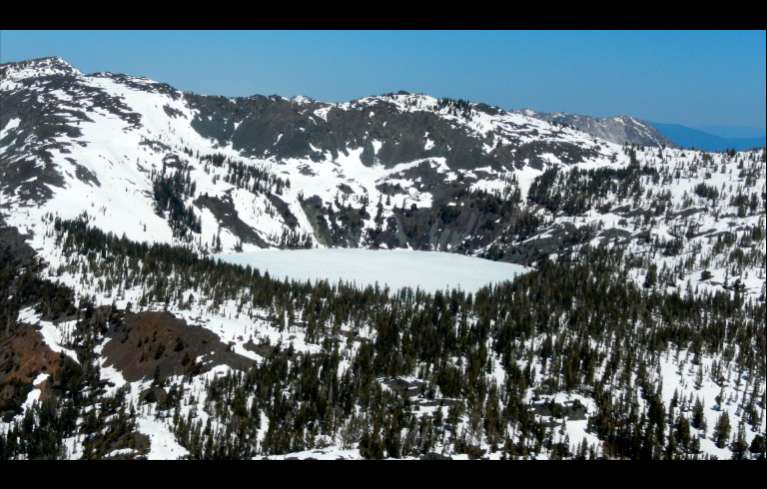
Helicopter tours reveal a frozen back country lake west of Lake Tahoe. Photos/Kathryn Reed

A helicopter tour reveals a frozen backcountry lake west of Lake Tahoe. Photos/Kathryn Reed

They were magnificent, but something about hiking to them – the time that it takes, the views, the sound – is such a classic way of viewing them. But this eagle’s view, well, it gives a different perspective to all that rushing water.

Water is flowing strong now down the falls. The whir of the blade replaces the thunder of the water.

The waterfall tour is one of six that Reno Tahoe Helicopters provides for those who want to see the Lake Tahoe area from a different perspective.

“I would have never known all of those lakes were there,” Cheryl Johnston of Atlanta said when touching down at Lake Tahoe Airport. The ride was one of the highlights of her first vacation to the area.

The pilot says there are about three dozen lakes to see on this trip. Some are recognizable to a local – Eagle, Echo, Cascade, Fallen Leaf.

Others are ones found on summer hikes – the Velmas, Susie, Heather, Aloha.

Oh, those frozen ones. That is a sight not seen on a hike. The icy blue looks like something out of Alaska. Mesmerizing, chilling, spectacular, otherworldly – find a superlative and it’s bound to fit.

With snow in abundance in the higher elevations, much of the terrain was a winter wonderland last Monday.

This is the slow season for the helicopter company, despite its being the height of waterfall season. Though, the waterfall tour is the most popular right now.

On a busy summer Saturday they could make 20 tours.

The pilot said there is no rule about how high they must be, but they are usually at 8,200 feet. The reason is to not be a noise polluter, so to speak, for those who are on the ground.

Claudio Bellotto, who has been flying out of the South Shore since 2005, gives a bit of history while flying over the Tahoe Keys, then Emerald Bay and beyond into the backcountry.

The Bell Long Ranger IV has a window seat for the five passengers it can seat. Three helicopters are in the South Tahoe fleet, with two others now operating out of the Truckee airport.

A fly fishing guide out of Truckee arranges for helicopter rides for his clients – landing at a resort near Markleeville so they can cast along the Carson River.

It’s not just tourists – or the occasional local – who buckle into the bird. Pilots have taken film crews around the area for various shoots. This winter a helicopter was in the air for five hours to film the Freeride ski event at Kirkwood. A cineflex was attached to the nose.

Range Rover hired a pilot to shoot aerial shots for a commercial. Boeing is coming up soon – but the helicopter company hasn’t been told the exact assignment. National Geographic has been a repeat client.

After the 2007 Angora Fire, a pilot took a crew up with infrared devices to look for smoldering hot spots.

In addition to the scenic and commercial flights, Bellotto operates a helicopter flight school. It’s the highest elevation flight school in North America.

More information about Reno Tahoe Helicopters may be found online.

ngg_shortcode_0_placeholder (Click on photos to enlarge.)


Feds involved in Nevada patient-dumping case

By Lee Romney, Los Angeles Times

SAN FRANCISCO — Following state Senate President Pro Tem Darrell Steinberg’s call for an investigation, federal authorities have taken disciplinary action against a Nevada hospital in an alleged case of “patient dumping” in California.

In a letter dated Thursday, the Centers for Medicare & Medicaid Services gave Nevada 10 days to correct problems at Rawson-Neal Psychiatric Hospital following reports it may have improperly discharged patients and bused them out of state.

“If we do not receive an acceptable, timely submission, or if a resurvey finds that the hospital is not complying with any [conditions of participation], we will notify you that we are initiating action to terminate the facility’s Medicare provider agreement,” the letter stated.

Steinberg’s concern was prompted by a Sacramento Bee story about Flavy Coy Brown, who was discharged from the Las Vegas hospital with a one-way Greyhound bus ticket to Sacramento and a three-day supply of medication.

When he arrived at a Sacramento homeless shelter Feb. 13, staff described Brown as confused and scared. They said he had no money, medication or understanding of why he was sent to Sacramento.

The Bee followed with an investigative report that said Rawson-Neal had purchased one-way bus tickets for 1,500 discharged patients over five years, some of whom had been sent to locations where they had no contacts.

The revelations prompted the city attorneys of Los Angeles and San Francisco to announce probes into the matter earlier this week. Rawson-Neal patients were bused to both cities, according to the Bee’s findings.

Nevada Gov. Brian Sandoval said in a statement that his office had launched three separate investigations and that disciplinary actions had been taken. The governor’s office determined that policies were not followed in at least one instance. The new policy, he said, provides “additional oversight” to ensure the hospital follows proper discharge procedures.

“I take the concerns regarding Rawson-Neal Psychiatric Hospital very seriously and it is not the policy of the state of Nevada to engage in ‘patient dumping,'” he said in a statement.

The director of Nevada’s Department of Health and Human Services also issued a statement saying the problems were not systemic.

On Friday, Steinberg, D-Sacramento, said that Rawson-Neal’s administration and the state of Nevada “must be held accountable by federal regulators.”

“People with mental health disorders can recover with access to prevention, early intervention and treatment,” he wrote in a statement. “Instead, this man being treated for schizophrenia and depression was given a one-way ticket to a place he’d never been. Such actions are tantamount to abuse, and I’m relieved that CMS is taking action.”


South Shore ready to play new game — one focused on recreation, collaboration

By Kathryn Reed

STATELINE – Want to bring a sporting event to the South Shore? Then plan to make multiple calls to South Lake Tahoe, Douglas County, El Dorado County and Lake Tahoe Unified School District. And that’s just for starters.

A permit from the Tahoe Regional Planning Agency is needed for many things. If it were a water event, other entities would likely be involved.

Need roads to be closed? There’s Caltrans, NDOT, city and county departments of transportation, plus CHP, NHP, city cops and county sheriff’s departments.

And if you want a sign put up somewhere to advertise the event, more paperwork and not just one entity in most cases to get that done.

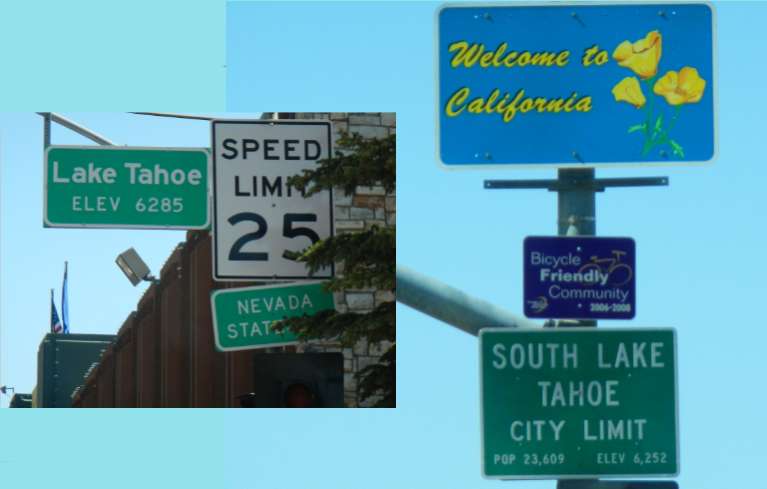
Signs at the state line welcome people to Nevada and California, respectively, but officials would like to focus on this being one community, one economy. Photo/LTN

Signs at the state line welcome people to Nevada and California, respectively, but officials would like to focus on this being one community, one economy. Photo/LTN

There is no one place to go to make it easy for locals or outsiders to attract athletic events to the region. But that is likely to change.

Through the recreation master plan that is being developed by the city and El Dorado County, a one-stop center could be a reality. It might even involve having a true visitors center in the area that would be operated by staff who is supported by various jurisdictions. Now that Douglas County is at the table and wants to be a player, it could make the rec plan a truly cohesive enterprise.

Recreation will be one of the main topics of discussion at the April 29 joint South Lake Tahoe City Council-Douglas County Commission meeting.

South Lake Tahoe City Manager Nancy Kerry and Douglas County Manger Steve Mokrohisky spoke with Lake Tahoe News at length Friday about how far the two jurisdictions have come since the inaugural joint meeting in November 2011. They also delved into the particulars about Monday’s agenda.

While Mokrohisky said the county’s recreation facilities exceed the basic standards, he added, “But we need better coordination with the city. We don’t do a good job of coordinating events. We need more event planning.”

When the consultant who is hired to do the rec plan comes for a visit, the team will spend multiple days on the South Shore experiencing the facilities. A rep from the firm will be at the April 29 meeting.

“I think the debate is long over. We are a tourist economy. Recreation is our economy,” Kerry said. “If we don’t invest, we don’t have anything to compete with.”

Mokrohisky described the South Shore as once being gaming dominant, with recreation as an amenity, now recreation is the dominant economic driver and gaming is an amenity.

Besides recreation, the area plans each body is creating for their respective sections of the state line will be discussed. Both are proceeding, with the electeds likely to vote on the respective plans later this spring or early summer before the TRPA Governing Board hears them later in the summer.

In some ways, this is an extension of the first joint meeting where much of the talk was about the South Shore Vision Plan. City and county staffs have been coordinating so design elements are similar and each knows what the other is working on.

This is one more way the state line is being blurred – by creating a visual connection between the areas.

Collaboration was the one word that was repeated most often by Kerry and Mokrohisky. While they, staff and local electeds are on the same page when it comes to wanting to focus on recreation and one economy, those in Sacramento and Carson City don’t see it that way.

The three bills floating around the two legislatures that could bring the dissolution of TRPA are on Monday’s agenda.

“It’s like an Old West standoff between the two states,” Mokrohisky said. “Our goal is to bring civility to the discussion. It is absolutely high stakes.”

It doesn’t mean everyone sees eye-to-eye on every detail, but locally compromise was found by being able to adopt the TRPA Regional Plan in December. No one got everything they wanted, but the outcome was something everyone but the Sierra Club, which has sued to stop the implementation of the plan, says they can live with.

Kerry and Mokrohisky say it is imperative locals move forward no matter what is going on around them.

“We plan in a state of ambiguity all the time,” Kerry said.

Mokrohisky added, “We are not going to cower in fear of the threat of a lawsuit.”

In the desire to work more closely, it’s possible the governments will share services. Douglas does this with its neighbors in Nevada. The city is looking at cooperative agreements with El Dorado County.

“You start by forming relationships, seeing what you have in common and who does what well,” Mokrohisky said.

Kerry added, “The movement is toward sharing resources instead of siloing.”

No action is expected by the electeds on Monday, though direction to staff of some sort is possible. Future joint meetings are likely.

—–

Note:

The South Lake Tahoe City Council-Douglas County Commission meeting is open to the public. It is April 29 at 1pm at Lake Tahoe Resort Hotel – the old Embassy Suites.


Endurance events not all fun and games

By Luna Shyr, National Geographic News

The first fatality in a Tough Mudder endurance event this past weekend raises a dire prospect that’s typically far from the minds of participants or buried in the fine print of contracts.

Such extreme activities, with names like Rugged Maniac and Warrior Dash, have surged in popularity. Their novelty challenges include crawling under live wires, plunging into an icy dumpster, and dangling from monkey bars coated with butter and mud.

At best, such obstacle courses push mental and physical stamina and build teamwork; at worst, people get injured or even die.

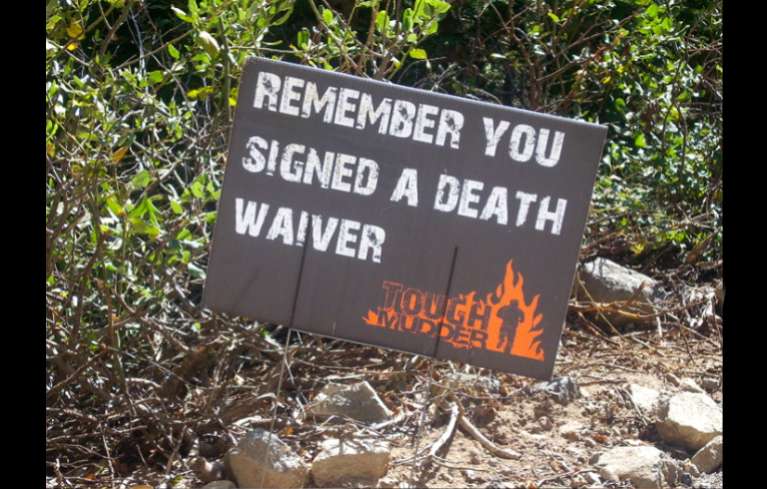
Tough Mudder may reconsider posting signs like this one that was on the Northstar course in 2012. Photo/Jessie Marchesseau

Tough Mudder may want to reconsider using signs like this one that was on the Northstar course in September. The event returns to the Truckee ski resort July 13-14 and Sept. 28-29. Photo/Jessie Marchesseau

After the Tough Mudder in Gerrardstown, W. Va., this past weekend, 20 participants were treated at the local hospital, including two people with heart attacks and several people with hypothermia, head injuries, and orthopedic injuries. Avishek Sengupta, a 28-year-old from Maryland, drowned. His death has been ruled an accident after he jumped from a plank into a pool of muddy water during the race.

In April 2012, a 30-year-old man died in Texas after a similar event called the Warrior Dash. Two men died in another Warrior Dash in Missouri later that summer.

Tough Mudder is a nine- to 12-mile (14- to 19-kilometer) endurance challenge that bills itself as “probably the toughest event on the planet.” An estimated 750,000 people have participated in Tough Mudder courses since 2010, running through mud and over obstacles. There are more than 50 Tough Mudder events planned for the rest of this year in the U.S., Australia, Japan, South Africa, and Europe. The company that puts on the events says that its courses are designed with safety experts, and that emergency personnel are present.

To reduce risk of competing in such events, sport psychologists and physicians emphasize preparation and awareness. We asked two experts—Justin Anderson of Premier Sport Psychology in Minneapolis/St. Paul and Dave Olson, a team physician for the Minnesota Vikings — to share their insights on extreme activities.

Justin Anderson, a sport psychologist, on extreme endurance events:

The term “extreme” has been applied to everything from Tough Mudder to Ironman to things like heli-skiing or BASE jumping. What makes a sport extreme?

It depends on whom you ask, but I think “extreme sports” include anything that’s on the fringe of the mainstream and can be incredibly grueling or incredibly dangerous. All of those activities fit those categories.

Why do you think endurance events like Tough Mudder have become so popular?

Humans always want to continue to push the envelope. People tend to feel most content when they’re growing and hitting or exceeding goals. Then there are additional gains like triggering dopamine in the brain—it acts as a natural high, and we can feel euphoric once we’ve completed one of these things.

There’s also this identity factor of being someone who’s tough and a go-getter. Finally there’s the community; we get to interact with folks like ourselves who are high achievers, and that can be a really attractive thing.

What should anyone who participates in an extreme activity consider before they go out there?

It’s important to be mindful of why we’re getting into these activities and see if it’s really worth it. When our dopamine levels get triggered, it becomes a natural high. What tends to happen is it takes more and more to get that psychological and biochemical effect, so we push and say we can go to this next level.

Also be careful not to be too caught up in the “rah rah” of the event. Once you jump into these things, it can be really seductive — that social persuasion of “let’s go,” even though your body and mind might be saying to slow down or take it back a notch.

Do people tend to overestimate their ability to do these endurance events? Underestimate the risks?

It depends on the person. Certainly a lot of people overestimate their ability. Ask yourself what you’re doing to get your body prepared. Pay attention to your body and mind, especially when it’s telling you to stop. That’s the beauty of endurance sports like Ironman — the athletes are incredibly tough and they’ve learned in training how to focus on other things when they’re running through cramps or their body wants to stop.

But the key is knowing which signals to pay attention to and which ones not to, and that comes from years of experience of knowing your body and its limits.

When you talk about the difference between pros and amateurs, we say pros practice far, far more than they play, and amateurs play far more than they practice. In the case of high-level athletes, they do a lot of training and understand what the extremes are. They know they have to build up to them. I recommend getting to know the process because these things are much more challenging than they appear, both mentally and physically.

Dave Olson, a team physician for the Minnesota Vikings, on preparedness:

What’s the minimum training you would recommend for an event like Tough Mudder?

These events are tricky for sports medicine doctors. With sports teams we really get to see the athletes and review their histories. With mass events like Tough Mudder or a marathon, pretty much the only requirement is to sign up and think you’re ready to do it.

Train smart for an event, ideally over a series of months to ramp up your activity, and get a medical checkup to make sure it’s safe for you to do so. Tough Mudder events can be tricky because with, say, marathons, people go online and can read about how to train. But with events like Tough Mudder being new and different, a lot of times we see people going because friends say, “You should come do this.” They may do some runs but often they don’t end up doing the training they need to prepare. People have to be realistic and look at their medical background.

How do you best avoid injury on the day of the event?

Hydration is big, and equipment — making sure you’re dressed properly and have good shoes that have been worn before so you don’t get blisters, that kind of thing. If it’s 100°F (38°C) out, have the proper shirt. And have an extra set of clothes for when you’re done — something warm to put on in case you’ve been through an icy stretch. Dress smartly, look at the weather, and plan ahead.

To Justin’s point about knowing which body signals to pay attention to and which to plow through, how do you know when you should stop?

It can be really tricky. I think it’s hard for an athlete who hasn’t been doing a lot of training — the first signal like chest pain might already be too late. You have to really listen to early signals like dizziness, cramping, and listen to them as warning signs. It’s hard in those events because it’s a group event — there’s a lot of cheering and pushing through — but you really have to be smart about it, especially if you’re not well trained.


Kirkwood in no hurry to be more than it is

By Jessie Marchesseau

KIRKWOOD – When Vail Resorts bought Kirkwood in April 2012, the company did not get all of Kirkwood. What the Colorado-based company bought were the rights to run the actual ski resort, the associated restaurants and retail, and the overnight lodging. Kirkwood Mountain Development retained all real estate development rights.

What this means for Kirkwood is there is one entity, Vail Resorts, completely focused on improving the skiing experience. While the other one, Kirkwood Mountain Development, is completely focused on the real estate side of things. If each of these entities can allocate 100 percent of its time and money to its respective area of expertise, Kirkwood, in theory, should reap the benefits.

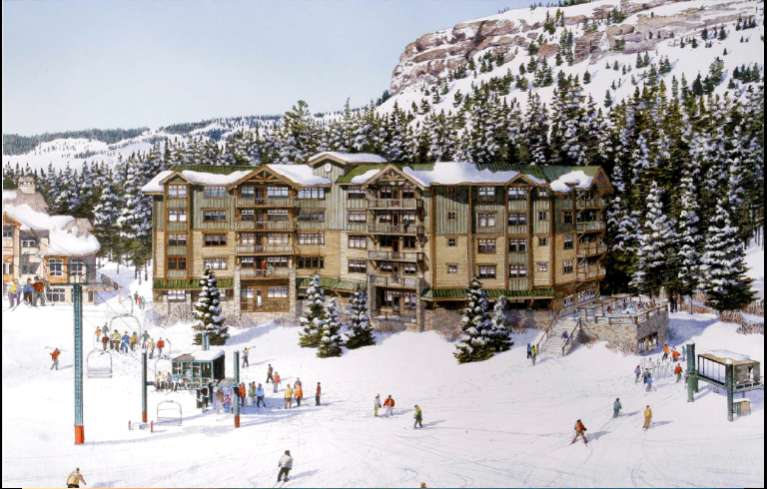
Rendering of Expedition Lodge, the project in the center of the village at base of Chair 11 currently soliciting investors to develop the project.

This is a rendering of Expedition Lodge, the project in the center of the village at base of Chair 11.

With April being the one-year anniversary of Vail’s involvement with Kirkwood, here are a few highlights of what changes The Wood has seen so far, and what is coming up from both sides.

In real estate

This season, Kirkwood has seen an upswing in real estate that nearly rivals 2006. The average transaction price is up more than 35 percent from last season. Nate Whaley, managing broker for Kirkwood Mountain Realty and president of Kirkwood Resort Development, said he is seeing an increase in real estate demand especially in the high-end. Two $1 million-plus homes have sold this year, one of them the fourth highest sale in Kirkwood history.

Whaley attributes this partly to improvements in the economy as a whole, and partly to people seeing the success of other Vail resorts such as Northstar and its nearby Martis Camp development. Buyers see an opportunity to own at what is already a great mountain, and, under Vail’s direction, stands to become a world-class resort.

So is Kirkwood going to turn into another Northstar?

“No,” Whaley tells Lake Tahoe News. “Kirkwood is a very different experience from Northstar. The mountain is very different, and the village experience is very different. It will always be a much more intimate village than Northstar.”

This increased demand is not driving any immediate real estate development either. KMD has had a Mountain Master Development Plan in place for years, including a complete redevelopment of the Red Cliffs area and the new Expedition Lodge at the base of Chair 11. However, they have few building plans in the very near future. Currently, just one project is in the pipeline that could start as early as the end of this summer or summer 2014.

What that project is, well, they aren’t saying at this time.

Regardless of Vail’s involvement, Kirkwood will still max out at 1,400 residential units, about half of which are already built. That number was reaffirmed in 2003, but was set long before then. All of the remaining development at Kirkwood will be what Whaley calls “right in Times Square,” meaning it will be ski in, ski out slated for the base of the mountain.

As far as commercial development, a lot of skiers are anticipating the “tent” at Timber Creek coming down and a more permanent structure taking its place. This is entirely up to Vail, as they own the development rights for that area. However, there are currently no plans for that happening. Many assume the empty foundation sitting next door to the temporary building is the unfinished attempt at a lodge. In reality, that foundation is the beginning of 67-unit condominium project by a private developer.

Real estate in a place like Kirkwood is closely tied to mountain operations. If a new lodge goes in at Timber Creek, chances are, residences will too.

On the mountain

Vail Resorts recently announced it would be spending a record amount of money on ski resort improvements for the 2013-14 season: $140 million across all of its resorts. How much of that money is Kirkwood getting? They won’t say.

What they will say is Kirkwood will not be seeing any new chairlifts or new lodges just yet. Kirkwood Vice President and General Manager Casey Blann said Vail is still feeling Kirkwood out, learning how the mountain works and what it needs. A few things were obvious right off the bat: snow safety, customer service, food and bathrooms.

These four items received most of the attention this last year and will continue to eat up most of the capital improvement dollars for next season. These types of changes are not as sexy as new chairlifts, and new visitors may not even notice the changes, but long-time passholders will, and have.

“It’s been fun to have those folks that were fearful and turn them into supporters,” Blann told Lake Tahoe News.

Time and again Kirkwood locals noted the lifts opening on time this year, even on storm days. They also noticed shorter lift lines and more on-mountain security.

“There were less crowds,” commented Doug Severn, who has been skiing and driving a snowcat at Kirkwood for more than a decade, “but that’s not good either. They scared everybody away!”

The two security guards at the bottom of Chair 6 on closing day did look like they might arrest someone at any moment.

Snow safety, on the other hand, is less visible to the public. A new avalanche bomb launching device makes shooting the bombs faster and more accurate, allowing ski patrol to open areas for skiing quicker on storm days. Also helping chairlifts open earlier will be the new patrol shack/snowcat garage at the top of Chair 10.

While this may not seem important to the average skier, Severn calls this plan “brilliant.”

“It’s one of the best things Kirkwood could do for itself. The reason they can’t get 10 open is they don’t have a working cat up there,” he said.

Currently, Blann explained, during storm cycles, a ski patroller will spend the night in the patrol shack at the top of Chair 10, getting up every few hours to start up the snow cat and clear the snow away from the top of the lift. The problem is, the cat gets frozen, full of snow and breaks down. If the top of the chair is not clear, other patrollers cannot get up there in the morning to start snow safety measures. A working cat equals an open Chair 10.

In addition to the new structure at the top of 10 for next season, Vail will be putting in a new bar in the Mountain Club plaza, adding more bathrooms, increasing food and beverage options, and expanding the Expedition Kirkwood program with a new snowcat for backcountry tours.

When asked what changes they would like to see for next season, Kirkwood skiers requested everything from new chairlifts and the opening of the Cirque to cheaper food and paved parking lots.

For South Lake Tahoe resident and Kirkwood skier and snowskater Ryan Palmer, the answer is simple: “Doughnuts.”

—-

This is a map from 2007 that has some of Kirkwood’s future plans on it, though some of the items are already in the ground.


Pyramid Lake fishing stories getting bigger

By Nate Schweber, New York Times

PYRAMID LAKE — For most fishermen a 20-pound trout is a trophy, but for Paiute tribe members and fish biologists here the one Matt Ceccarelli caught was a victory.

That Lahontan cutthroat trout he caught last year, a remnant of a strain that is possibly the largest native trout in North America, is the first confirmed catch of a fish that was once believed to have gone extinct. The fish has been the focus of an intense and improbable federal and tribal effort to restore it to its home waters.

“I was in awe,” said Ceccarelli, 32, an engineer from Sparks, of the speckled trout with hues of olive and rose.

Early settlers told stories of Pyramid Lake Lahontan cutthroats that weighed more than 60 pounds, though the official world record was a 41-pounder caught by a Paiute man in 1925. The explorer who discovered this electric-blue oasis in 1844, John Fremont, called them “salmon trout.” Mark Twain raved about their flavor. Clark Gable, the actor, chased them. President Bill Clinton and tribe members called for their restoration.

“When I heard about them I was like, man, I want to see these guys,” said Desmond Mitchell, 40, a fish supervisor for the Pyramid Lake Paiute Tribe.

Lahontan cutthroats, Nevada’s state fish, evolved in the Great Basin, which was flooded under a giant inland sea called Lake Lahontan during the last ice age. Pyramid Lake, which today lies on a Paiute Indian reservation, was part of that ancient lake, and inside its unique inland water system, which includes the Truckee River and Lake Tahoe, a giant strain of trout evolved.

“Our fish have deep meaning for us, spiritually,” said Albert John, executive director of fisheries for the tribe. “And if they could get to 40 pounds again, whoa, that’d be awesome.”

In the late 19th and early 20th centuries, fishermen netted scores of Lahontan cutthroats to feed miners and loggers gnawing at the Sierra Nevada Mountains. But the Truckee River, where the fish spawned, was dammed, and its level dropped as water was taken for irrigation. It was also polluted with chemicals and sawdust. And Lake Tahoe was stocked with a nonnative char called lake trout, which gobble baby cutthroat. By the mid-1940s, all the native trout in Pyramid Lake and Lake Tahoe were dead and the strain was declared extinct.

“They never should have gone in the first place,” said Fred Crosby, 66, owner of Crosby Lodge, the only bar, restaurant, gas station and tackle shop in tiny Sutcliffe, a poor reservation town on the west shore of Pyramid Lake.

In the mid-1970s, the Paiute Tribe opened a fish hatchery in Sutcliffe and stocked Pyramid Lake with strains of Lahontan cutthroat from nearby lakes. The water in Pyramid Lake is saltier than Lake Tahoe, and that kept out the lake trout. The tribe re-established a Lahontan cutthroat sport fishery and saved Pyramid Lake’s endangered Cui-ui sucker from extinction. Anglers bought tribal licenses, hauled ladders out into the lake’s bracing water and considered any catch that weighed 10 pounds or more a trophy.

In the late 1970s, a fish biologist identified what he thought were surviving specimens of the vanished Pyramid Lake strain of Lahontan cutthroat in a small creek near a 10,000-foot mountain on the border of Nevada and Utah called Pilot Peak. A Utah man used buckets to stock the rugged stream with trout in the early 1900s, but made no record, federal biologists say. Geneticists recently compared cutthroats from the Pilot Peak stream with mounts of giant Pyramid Lake trout and discovered an exact DNA match.

“They are the originals,” said Corene Jones, 39, the broodstock coordinator for the Lahontan National Fish Hatchery in Gardnerville.

In 1995, United States Fish and Wildlife Service biologists harvested cutthroat eggs from Pilot Peak and brought them to the Gardnerville hatchery, just a few years before a devastating wildfire scorched the mountain and killed off the creek. In 2006 federal officials, in cooperation with the tribe, began stocking Pyramid Lake with what many now call Pilot Peak cutthroats. They waited to see how the fish might readapt to its ancestral home.

The answer came from ecstatic anglers. Late last year, a Reno man caught and released a 24-pounder. David Hamel, 27, of Reno, just did the same with a pair of 20-pound cutthroats.

“Biggest fish of my life,” he said. “Amazing.”

Since November, dozens of anglers have reported catching Pilot Peak cutthroats weighing 15 pounds or more. Biologists are astounded because inside Pyramid Lake these powerful fish, now adolescents, grew five times as fast as other trout species and are only a third of the way through their expected life span.

Around this arid reservation of burnt sienna mountains and sagebrush tufts, workers from the gas station clerk in the windblown town of Nixon to the bartender who sells fishing licenses in Sutcliffe say they have seen a spike in revenue because of the big fish.

“The lake is basically the bread and butter for the tribe,” said Elwood Lowery, the tribal chairman. The reservation has no casinos because of competition from nearby Reno, he said.

Biologists and Paiute officials are calling the return of Pyramid Lake’s original cutthroats a rare win-win-win for native wildlife restoration, the tribe’s economy and anglers.

“The fish is now telling its own story,” said Lisa Heki, 51, complex manager at the Lahontan National Fish Hatchery. “Along with the fishermen who get to catch them.”


Bid docs force STPUD to delay water line work

Publisher’s note: This is one of a few stories about construction planned for the Lake Tahoe Basin this summer.

By Kathryn Reed

Inadequate bids are forcing the state streets water project in South Lake Tahoe to be delayed for what will probably be at least until 2014.

While it’s possible the South Tahoe Public Utility District board and staff could decide to do some of the work this building season, it’s doubtful. At a meeting last week the board agreed with staff that it was best to reject all bids. (Board member Kelly Sheehan was absent.)

Two of the three bids did not adequately comply with the disadvantaged business enterprises clause that requires the general contractor to contact a certain class of subcontractor. It doesn’t say they have to hire them, just reach out to see if they could do the work.

stpudThe third bid was $1 million higher than the other two.

“In all of our bid documents its says we reserve right to withdraw the bid. That is basically what happened,” South Tahoe PUD spokesman Dennis Cocking told Lake Tahoe News after the meeting.

It is possible STPUD crews could work on some of the area this summer, but that is dependent on where crews are needed for everyday work.

With the city pushing back its overlay project in this area to probably 2015, the water district is not feeling the pressure to get its work done this season.

What will be done at some point is putting in a 12-inch water line down Tahoe Keys Boulevard. The side streets – known as the state streets because most are named after a state – are to have 8- and 10-inch water lines installed. Most of what is in the ground is 6-inch lines.

Hydrants will also be installed at 500-foot intervals for better fire protection.

Where there are dead-end lines, those will be converted to loops. When the South Shore was full of tiny water districts the norm was to cap a water line. Now standard practice is to have the system loop, which provides for better water quality.

One aspect of the project that was included in the bid documents was work on Pioneer Trail. That is still going to be done this summer, but now by district employees.

“We knew we couldn’t go out to bid again and get it done this year,” Cocking said.

Timing is critical to replace that undersized water line before the city begins its sidewalk project in the same location.

It’s likely water will be shut off for a time in that area. Water customers will be notified 24 hours in advance.


LTCC has momentum to alter tuition rates

By Kathryn Reed

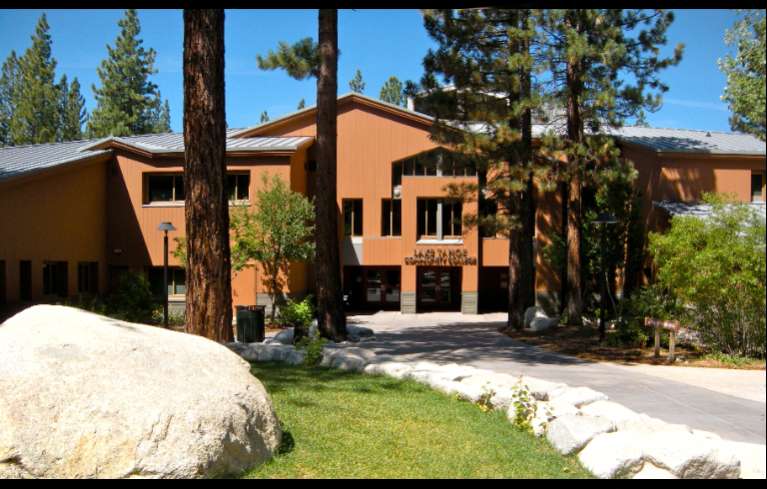
Lake Tahoe Community College officials have one week to come up with ideas that would satisfy the state Senate Committee on Education’s concerns regarding the college’s quest to allow some Nevada students to pay tuition at California rates.

The first hearing before the senate committee was April 24, with a return trip to Sacramento planned for May 1.

“I am encouraged that the Senate Committee on Education is willing to work with me on this important issue and will look forward to exploring legislative and non-legislative options for extending in-state tuition costs to all Lake Tahoe Community College District students in the Lake Tahoe Basin,” state Sen. Ted Gaines, R-Rocklin, told Lake Tahoe News. “I will do all I can to work on a bipartisan basis to satisfy my colleagues’ concerns when Senate Bill 329 is up for a vote next week.”

Lake Tahoe Community College would like to create a good neighbor tuition policy for Nevadans at Lake Tahoe. Photo/LTN file

Lake Tahoe Community College would like to create a good neighbor tuition policy for Nevadans at Lake Tahoe. Photo/LTN file

Gaines authored the legislation.

This all came about when in June 2011 Nevada’s board of regents rescinded the good neighbor policy that allowed some California students not to pay out of state tuition. They did this because it was determined it was costing Nevada $6 million a year.

California then said no discounts for Nevada students.

A full-time student at LTCC pays about $1,370 a year, while a non-California resident pays $7,600 for that same education. While it’s normal for all institutions to charge more for out-of-state or foreign students, the problem comes when colleges are in border towns like South Lake Tahoe.

The state line is 3.2 miles from LTCC and Whittell High School in Zephyr Cove is about eight miles away. For an area that keeps touting itself as one community, one economy, the varied education expenses for the local college contradict those beliefs.

“They understand Tahoe is a unique community and we want to educate our citizenry,” LTCC President Kindred Murillo said of the lawmakers. “We want fairness.”

Only Nevada students living inside the Lake Tahoe Basin would be allowed the discounted rated. And the legislation is specific to LTCC.

Murillo told Lake Tahoe News she hopes to get SB329 through the Legislature so on July 1 the college would have new rates for some Nevada students.