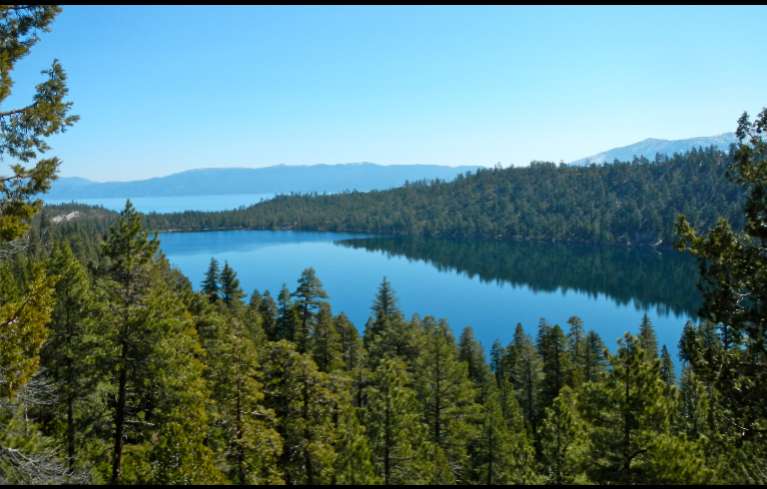
No more free beach parking in South Tahoe

By Kathryn Reed

While paid parking has been a reality in some areas of the South Shore for decades, it will be coming to new locations in mid-June.

It was a fairly hostile crowd that gathered Monday night at the South Lake Tahoe Senior Center to hear the city’s plans. The few who are fine with paid parking could barely be heard because others were disrespectful by talking over them.

The nearly 80 people in attendance were mostly well older than 50, completely resistant to change, and believe because the majority in the room were against paid parking that the other 20,000 people who live in South Lake Tahoe must be on their side and therefore the city should do as they say. Many believe the amount of revenue is not worth the angst.

South Lake Tahoe City Manager Nancy Kerry addresses a question from resident John Cefalu at the May 6 parking meeting at the senior center. Photo/Kathryn Reed

South Lake Tahoe City Manager Nancy Kerry addresses a question from resident John Cefalu at the May 6 parking meeting at the senior center. Photo/Kathryn Reed

City Manager Nancy Kerry made it clear no one is a cheerleader for paid parking, but the reality is this could be a revenue stream for the city. Projections are the sites where paid parking will go in will net $150,000 a year. This is from the fee and tickets given to those who don’t comply with the regulations.

Kiosks – which are how meters are now installed instead of a stand at each parking spot – are slated to go in on Venice Drive and near Lakeside Beach. Based on feedback from the May 6 meeting Kerry is going to propose to the City Council on May 21 that instead of meters at Regan Beach they go in at the Lakeview Commons area. Venice will be free in the winter.

While all the money had been designated to go in the general fund, meaning the cash could be spent on anything the city desires, that would not be true of money collected at Lakeview Commons. State Boating and Waterways mandates that parking money be reinvested in that area. That could mean improvements to the boat ramp, putting in a viable pier and other upgrades.

It will cost $2 an hour, with a maximum of $10 a day. The fee will be seven days a week from 8am to 10pm. It is possible holidays will be more expensive. Altering the rates or waiving the fee during special events like Live at Lakeview concerts on Thursdays is being talked about.

Some people think parking is a new topic around city hall. They are wrong. Parking has been on a City Council agenda four times since Nov. 20, 2012.

This is from an Oct. 22, 2010, Lake Tahoe News story:

“Metered street parking, parking garages, reconfiguring streets, changing public perception about paid parking, paying attention to public transit-walkers-cyclists, and approving future projects with adequate parking were all broached in the daytime meeting.

“Most in the audience agreed more parking and paid parking are likely to be more prevalent in South Tahoe in the near future. And they agreed it would be the locals, who are used to free parking, who will probably be the hardest to convince this is what’s needed.

“The consultants started work in July by speaking with nearly 300 people to gather their thoughts on parking in the city. They also have read the 10 or so parking studies the city has commissioned over the years.

“In the in-person survey, which mostly tourists answered, about 70 percent said they would be willing to pay for parking.”

This is from a March 2, 2011, Lake Tahoe News story:

“The other new source of revenue is via metered parking, especially near beaches. [City Attorney Tony] O’Rourke said most waterfront communities charge to park close to that body of water. The anticipation is this could bring in $450,000 a year.”

The projected revenue has been scaled back immensely because no longer is the city going to charge people for their permits – permanent ones or for guests. And the number of locations is not as great as once anticipated.

Residents on streets in about a two block area of where the kiosks will be located will be given free permits for their vehicles to let parking enforcement officers know they are allowed to park there.

Much of Monday’s meeting centered on people saying how they have all these friends who stop by, come to visit for days on end – and they need a place to park. Residents fear they won’t be able to get enough guest permits.

People believe the city will be limiting their guests’ activities. The city’s intent is to guarantee locals a place to park on their streets with the permits. If it were permit-only parking, then those who are looking to avoid using the kiosks would have to go several streets from the beaches to do so.

Other places that charge, usually on a seasonal basis, are the U.S. Forest Service beaches, California State Parks, Beacon Restaurant, Tahoe Keys Marina and Ski Run Marina.


‘Motherhood Out Loud’ — a play uniting generations

By Ginger Nicolay-Davis

Two years ago, my mother-in-law, Joanne, called me from the East Coast to tell me about a new play that had just debuted in Hartford, Conn., called “Motherhood Out Loud”. She told me that I really needed to read it and that I would love it.

Like all difficult daughter-in-laws, I had to question the advice of my mother-in-law. After all, I have read many more scripts than she has, seen many more plays than she will ever see, and have studied acting for years. But I figured since she was not giving me advice on how to raise her grandchildren, maybe I should flatter her a bit, and find out more about play.

I learned that it was written by 13 women, including Beth Henley, one of my favorite Southern writers, and decided maybe Joanne was right. I should at least read it. I emailed the writers to ask for a copy of the script. I found out it was not available at the time.

Michelle Hirschfield, from left, Pam Taylor and Ginger Nicolay-Davis star in "Motherhood Out Loud" at MontBleu. Photo/Provided

Michelle Hirschfield, from left, Pam Taylor and Ginger Nicolay-Davis star in “Motherhood Out Loud” at MontBleu. Photo/Provided

Over the next couple years I kept my eye out for the script, and it finally became available in manuscript form last fall. I ordered a copy and read it no less than 15 times. I laughed, I cried and I called my mother-in-law to thank her for suggesting it to me. (She was shocked I called. I probably should call my mother-in-law more often.)

I called some of my favorite actor friends in town and invited them to do a reading of the script over a bottle of wine — the offer of wine will always get actors to a table reading. We read the script, laughed, cried, and discussed all of the amazing aspects of motherhood this play touches upon.

My friend, Michelle, without hesitation said, “We have to do this show.”

They were hooked on the script the way I was the first time I read it. The day the rights became available I snatched them up, making us the first theater group in Northern California to produce this important and relevant piece of work about motherhood. My theatre partner-in-crime, Diana Evans, decided we should try to find a space to do this show over Mother’s Day weekend. MontBleu agreed and we were on our way!

Through the rehearsal process we have had many discussions about parenting, our own parents, our grandparents and stepparents and how they have made us who we are. It has been a project of love. This play touches upon every aspect of motherhood – from birth to adulthood, the challenges of raising children and being a child, the challenges of raising teenagers and then watching them leave the home, seeing the adult child get married, go off to war, and, finally, being an adult child taking care of a sick parent.

“Motherhood Out Loud” reveals many of the raw emotions and rocky roads we experience in life.

“Motherhood Out Loud” is sure to challenge traditional norms and unite generations with its unpredictable comedy.

Notes:

• “Motherhood Out Loud” will be at MontBleu in Stateline on May 9 and 10 at 7:30pm and May 12 at 3pm.

• For tickets, go online, call (530) 541. 4975 or stop by the MontBleu box office.

• The proceeds from the shows will go to the nonprofit Tahoe Tallac Association that produces the annual summer Valhalla Arts & Music Festival.

Ginger Nicolay-Davis is president of the Tahoe Tallac Association.


Court: Cities don’t have to allow pot shops

By Howard Mintz, San Jose Mercury News

SAN FRANCISCO — The California Supreme Court on Monday upheld the right of local governments to ban medical marijuana dispensaries, leaving intact a growing movement by political officials to outlaw the pot businesses despite a 1996 state law that permits the use of weed for medical purposes.

In a 7-0 decision, the state’s high court concluded that cities and counties have a right to restrict the dispensaries within their boundaries, rejecting the arguments of medical marijuana advocates who maintain local governments cannot bar activity that is legal in California. The ruling could now be used to further bolster local efforts to place stricter regulatory rules on medical pot dispensaries that are allowed to operate.

“Nothing in the (1996 law) expressly or impliedly limits the inherent authority of a local jurisdiction, by its own ordinances, to regulate the use of its land, including the authority to provide that facilities for the distribution of medical marijuana will not be permitted to operate within its borders,” Justice Marvin Baxter wrote for the court.

At least 180 cities across the state and Bay Area have enacted bans in recent years, from Hollister to Petaluma to Moraga. But the region’s largest cities, San Jose, San Francisco and Oakland, have permitted the dispensaries, taxing the revenues while communities in-between increasingly become dispensary-free zones.

South Lake Tahoe limits dispensaries to three at any one time, but any new ones beyond the one pot shop that exists must have City Council approval.

Many local governments have opted to ban the dispensaries

due to worries about problems surrounding them, such as lax control over the distribution of a drug that remains illegal under federal law. The Supreme Court case is the latest legal struggle over the issue, which has repeatedly tested the limits of the voter-approved law that allows the use of marijuana to treat illnesses such as cancer, glaucoma and AIDS.

The Supreme Court decision came in a challenge to Riverside’s dispensary ban. Riverside, backed by groups such as the League of California Cities, argued that local governments have strong rights to regulate land uses within their boundaries, particularly an unusual land use such as a medical pot dispensary.

Medical marijuana advocates, however, say the bans undermine the intent of the state law, which they argue was meant to provide uniform access to medical cannabis across the state for patients who need it most. With the bans in place, many patients are forced to drive long distances to obtain the drug — for example, Peninsula patients now for the most part must travel to either San Jose or San Francisco to get to a dispensary.

The Supreme Court’s decision was not unexpected. Legal experts have predicted the justices would be reluctant to strip cities of the right to enact the bans.


TV series delves into the world of terrain parks

By Kathryn Reed

It’s easy to name athletes who make doing tricks on skis and snowboards seem either like child’s play or death defying feats depending on one’s perspective. But how did the terrain park or half pipe come to be?

There’s a good chance Chris Gunnarson had something to do with it. Better known as Gunny, he’s been leaving his mark on the industry for more than 17 years.

It was 17 years ago that Snow Summit in Big Bear in Southern California hosted the first Winter X Games. Gunnarson designed that park and has done so for each X Games since then. His company also does work on the summer games.

“I guess I had all the right skill sets and the right kind of passion and enthusiasm. They put me in charge of the terrain park at Snow Summit. I was right there on the forefront of this whole niche industry as it was being developed,” Gunnarson told Lake Tahoe News.

Chris "Gunny" Gunnarson is the man behind the X Games parks. Photo/Provided

Chris “Gunny” Gunnarson is the man behind the X Games terrain parks as well as many of Lake Tahoe’s parks. Photo/Provided

His story and that of his company Snow Park Technologies will be the subject of an eight-part series to air on the National Geographic channel starting May 9.

He says the episodes are designed to appeal to people who’ve never been in a terrain park or might not even know what one is. Five are in the can, with three still needing final edits.

The show was Gunnarson’s idea. Not one to watch much reality TV, he had the television on to something he wouldn’t name and said how bogus it was.

“I thought what we do is more interesting, more different, it’s in remote locations, and with elite athletes,” Gunnarson said. He started talking to people, the shows got taped and the network secured to air them.

Filming started in mid-October and ended in mid-March.

Tahoe connection

Gunnarson is well known around Lake Tahoe. He has close partnerships with Squaw Valley, Alpine Meadows, Northstar, Heavenly Mountain Resort, and Sierra-at-Tahoe.

For the TV series, Squaw, Alpine and Sierra will be featured. One episode involves Jaime Anderson who is from South Lake Tahoe and rides at Sierra.

Gunnarson says Anderson is “unequivocally the best female freestyle snowboarder on the planet.”

Like Shaun White, who rides at Northstar and has a half pipe built for him each season, Gunnarson grew up skateboarding and then took up snowboarding.

“I would love to see the X Games come to Tahoe. So many resorts are doing a great job embracing the action sports culture,” he said.

While Gunnarson has not worked for the Olympics, he looks forward to 2014 being the first time slopestyle will be a medal event – and not just because it was his sport.

“Slopestyle is a condensed terrain park being judged,” Gunnarson said. “Kids relate more to slopestyle than pipe.”

The average athlete

But parks that Gunnarson designs are not all for the elite athlete.

“I get to create very unique fields of play out of nature,” Gunnarson said.

Gunnarson has noticed it’s not just twentysomething males in the parks. It’s skiers and boarders, guys and gals, and parents of those twentysomethings.

“First and foremost it starts with creating something that is appropriate for that particular resort,” he said.

Terrain, snow conditions and natural features all play a role. But who the customer is is even more important. Resorts attracting families wouldn’t want the gnarly terrain park, while the resort attracting adrenaline junkies would want some extreme features.

“Most conventional sports are very fixed. With terrain parks, it is very much open to interpretation,” Gunnarson said. “We can try to dictate a line, but everyone interprets it differently. Only they can experience it personally.”

Notes:

• Here is a little video teaser for the show.

• “Mountain Movers” begins May 9, 8pm on National Geographic channel.


Bulletproof whiteboards and marketing school safety

By Liz Halloran, NPR

A recent news item out of Minnesota: “Bulletproof Whiteboards Unveiled at Rocori Schools.”

Bulletproof what? Where?

That would be whiteboards, at the small central Minnesota Rocori School District, which will spend upward of $25,000 for the protective devices produced by a company better known for its military armor products.

“The timing was right,” Rocori school board Chairwoman Nadine Schnettler tells us. “The company is making these in response to the Newtown shooting, and has been making similar products for our soldiers in Iraq and Afghanistan.”

The $300, 18-by-20-inch whiteboards, produced by Maryland-based Hardwire LLC, “will be an additional layer of protection” for students and teachers, she says.

Cold Spring, Minn., Police Chief Phil Jones (left) and Rocori School District Superintendent Scott Staska hold bulletproof whiteboards in April while announcing the school system's $25,000 investment in the shields.

Cold Spring, Minn., Police Chief Phil Jones, left, and Rocori School District Superintendent Scott Staska hold bulletproof whiteboards. Photo/Hardwire

It’s not just the conversation about guns and school safety that’s changed since Adam Lanza gunned down 20 students and six adult staff members at Sandy Hook Elementary School in Newtown, Conn., in December. It’s also the plethora of products, including training programs that in some instances advocate fighting back, that are being marketed to school districts that are typically cash-strapped but desperate to prove they’re doing something to provide better security.

Bulletproof whiteboards and clipboards. Bulletproof wall panels. Bulletproof backpack inserts. Bullet “resistant” window film. Specialized locks. Training that turns the emergency lockdown, “shelter in place” response on its head.

While proponents of the school safety items and training say their products provide more than just a psychological fix, critics say they need a lot more persuading.

“After every high-profile school shooting, we have an explosion of gadgets, gurus and charlatans,” says Kenneth Trump, who is openly disdainful of the bulletproof items, but more so of training programs that advocate confrontation. “Corporations see dollar signs,” he says, “and believe that schools have huge budgets to buy new products and services.”

But school budgets are far tighter now than in recent memory, he says, with precious little to spend for whiteboards or training.

“Federal and state school safety grants have been hacked at, if not eliminated,” Trump says. “The pool of dollars that many vendors envision doesn’t really exist.”

His unvarnished take: “The vendors may be opportunistic, but the people on the purchasing end aren’t thinking it through, either.”

A post-Newtown measure that will be considered by the U.S. Senate would authorize $40 million in grants that must be matched by local school systems for improving security with measures including lights, locks and surveillance equipment, as well as for security training for teachers and administrators.

The U.S. Education Department is also developing an emergency guide for schools, and the Department of Homeland Security is writing a similar one on securing school buildings. The Education Department’s Readiness and Emergency Management for Schools has been a victim of budget cuts, unfunded since 2011.

When Hardwire LLC, traditionally a manufacturer of armor and shields for the military and law enforcement, wanted some attention for its new bulletproof school products, it’s not surprising it zeroed in on Rocori.

A decade ago at Rocori High School in Cold Spring, Minn., 15-year-old John Jason McLaughlin to kill two fellow students.

And Hardwire already had a working relationship with a local company, Cold Spring Granite, which provides material that the armor company uses in its products for bridge and building infrastructure protection.

The town’s police chief made the whiteboard pitch to the school board, says Schnettler. And members were pressed to act quickly, she says, to take advantage of a special offer: The granite company would donate 75 whiteboards to the district’s public and parochial schools if the board agreed to match the purchase.

“It wasn’t a unanimous vote,” Schnettler says, “primarily because Hardwire had a bit of a sense of urgency. They wanted Rocori to be the first district to have these, and if we didn’t take the offer, they were going to move on.”

Schnettler, who voted in favor of using $25,000 from a capital improvement fund to purchase the whiteboards, says that in hindsight she would still do the same.

“I don’t believe it’s a waste of money,” she says. “The chief showed us how to use it offensively — to block penetration of bullets through door windows, or to knock the gun out of the intruder’s hands.

“It buys time for your local law enforcement to get there,” she says.

Emily Heinauer, senior director of advanced programs for Hardwire, agrees that the whiteboards should be viewed as tools to buy time before help arrives.

“During the Virginia Tech shootings and at Sandy Hook, people were throwing themselves in front of their students to protect them,” she says. “The whiteboard is meant to be defensive,” used by teachers potentially in the line of fire.

Hardwire has created a nonprofit “adopt-a-school” organization through which tax-deductable donations may be made for the purchase of the bulletproof products. Heinauer says that the parents of the students killed at Rocori High School a decade ago also donated money to purchase additional whiteboards.

Schools Superintendent Scott Staska did not return calls for comment.

Cathy Paine speaks with authority about school security, and with good reason.

She was the school psychologist at Thurston High School in Springfield, Ore., when in 1998 student Kip Kinkel and wounded 25 others.

Paine, still a school psychologist in Springfield, is chairwoman of the National Association of School Psychologists’ emergency assistance team.

She says that though she understands the fear that is driving the school security market, she views bulletproof whiteboards and the like as “a knee-jerk reaction to a problem that doesn’t exist.”

“It’s such a rare event that an armed intruder will come in — there’s a 1 in 2.5 million chance it will happen,” she says. “We want to have comprehensive safety programs, we want to be prepared, but we should be looking at what are the likely crises.”

Her tack is to encourage school districts to balance the physical safety of their campuses with what she called the “psychological safety of the campus.” A bigger risk to safety in schools is kids being bullied and harassed, she says.

After the shooting at her school, there was a push by some for metal detectors, which the school ended up not installing. But the district did receive a federal grant through a program called the , which was used for crisis planning, looking at physical safety and the school environment.

The school system installed perimeter fencing, she says, redesigned some school entrances, and closed up others. The high school already had security cameras, which documented the shooter, gun hidden, as he approached the school.

That money, however, has dried up, Paine says, as has much of the other federal money once available for school safety measures, including school resource officers.

Paine and Trump, the school security expert, say they are particularly concerned with training programs that encourage, in certain circumstances, confronting armed intruders.

One of the programs receiving the most attention is known as, for Alert, Lockdown, Inform, Counter, Evacuate. It’s not a new concept, Trump says, and is similar to other training — except for elements that encourage students to “distract” and “confuse” an armed suspect by throwing things at him or her, and then potentially launching a physical attack.

“You put lipstick on a pig, but you still have a pig,” Trump says of the training, which he and some school experts argue has been discredited before in K-12 situations, and could place children in more danger both physically and psychologically.

Says Paine: “The main thing that’s disturbing about it is trying to have our children understand and execute this kind of a plan. I don’t think that’s a situation we want them in. … We’re better off teaching our kids to evacuate quickly and safely, or to shelter in place.”

ALiCE and programs like it have supporters — many of whom use the example of the passengers who fought back against hijackers on Sept. 11.

One of its advocates is Ridgemont, Ohio, schools Superintendent Emmy Davis, featured on the website of Response Options, which came up with the training program. She says it provides a “proactive approach, rather than hiding or waiting” when there’s a gunman in a school building.

Rob Slattery, a retired police officer who is director of operations at in Ohio, says the school protection products they make (including bulletproof whiteboards and backpack inserts) are just tools.

“I wish there wasn’t a need for this product,” he says. “And by no means are we saying this is a solution to the problem. This is an option. To have something between you and an assailant? Anything is a positive.”

He says he sees it as akin to the auto industry coming up with air bags.

His company has done a lot of business with lawyers, providing bulletproof clipboards and briefcases, but school products are now about 65 percent of its market.

Trump, who argues that the best practices in place at Sandy Hook got a lot of children out of the building safely, says he advises schools not to waste money on whiteboards or ALiCE, but rather to invest money on resource officers, counselors, radios and cameras.

“Focus on fundamentals and get back to the basics,” he says. “There is a security product for every possible need that your budget will buy. The question is, is that the best use of limited resources?”

But in Cold Spring, Minn., Schnettler, the school board president, says that the district was responding to parents who were concerned after Newtown.

“We installed a buzzer system and locks in the elementary schools that we didn’t have before,” she says. “And we looked at our other security measures and other things that had to be tightened up.”

And they purchased the whiteboards, which will be hung on the walls, the superintendent says, if or until they are needed.


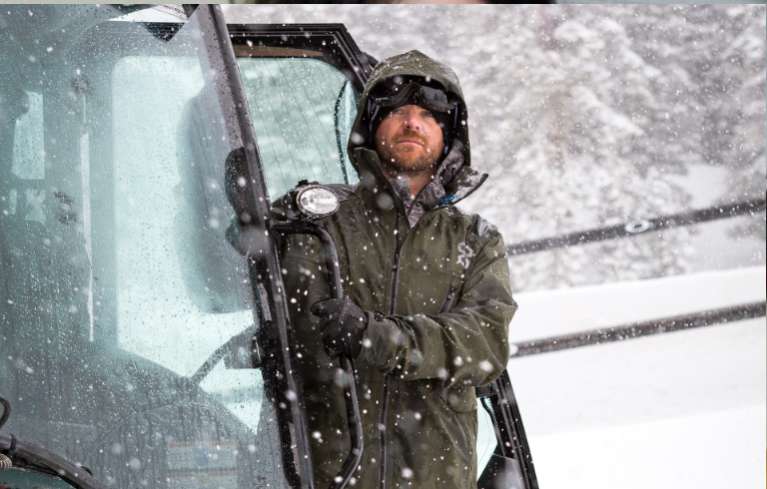

Calif. monastery — a link between old and new

By Kathryn Reed

VINA – Wine and religion have long been partners. One only needs to think of the Last Supper or today’s communion. Franciscan monks have been cultivating grapes in California since the 1800s. But it’s the Trappist monks who are the newcomers to the wine business – at least in California.

New Clairvaux Winery first planted grapes in 1990. However, the 580-acre spread north of Chico has some famous names associated with the land and structures on it – like those of Leland Stanford, Peter Lassen and William Randolph Hearst.

It was Lassen who in 1846 first planted grapes here. Stanford bought the land in 1881 and then turned it into the world’s largest winery and vineyard at 4,000 acres of wine grapes and 55,000 acres in total. In 1919, 23 years after Stanford’s death, the Great Vina Ranch was sold.

The Chapter House at the Abbey of New Clairvaux is a window to from the old world to the new world. Photos/Kathryn Reed

The Chapter House at the Abbey of New Clairvaux is a window from the old world to the new world. Photos/Kathryn Reed

The Abbey of New Clairvaux started in 1955.

The monks and their winemaker use the 100-year-old brick wine cellar today.

New Clairvaux winemaker Aimee Sunseri comes from some impressive pedigree. Her family’s Nichelini Winery in St. Helena is the oldest family-owned winery in Napa County. She is also the winemaker there; making her the fifth generation to be part of Nichelini.

Sunseri has roots in El Dorado County, too, having worked at Boeger Winery in Placerville.

(Besides wine, the monastery also has a partnership with nearby Sierra Nevada Brewery to produce Ovila beer in the Belgian tradition.)

While the winery is a draw for many, the entire monastery is worth a visit even if one is not religious or is of a different faith. The Ovila Chapter House is being constructed from stones from the Ovila monastery in Spain. Hearst bought the Spanish Chapter House in 1931 with plans to use the stones at his property in Wyntoon. That never happened and he eventually gave the stones to the city of San Francisco with the intent the Chapter House would be reconstructed in Golden Gate Park. That also never happened.

The Abbey of New Clairvaux was given the stones in 1994 by the Fine Arts Museums of San Francisco with the agreement they only be used for a Chapter House.

It is now a work in progress. The Ovila Chapter House is the only place to see Cistercian-Gothic architecture in the United States.

Walking through the vacant structure under construction it’s like being transported back in time. The craftsmanship of the hand-carved stone is exquisite, the arches providing views onto vineyards and open space, the nuances of light and space creating a sense of serenity.

It is purely spiritual.

Notes:

• More info about the abbey may be found online.

• New Clairvaux Vineyard info is also online.

• The winery is open seven days a week from 11am-5pm except for holy days.

• This is a link to directions. Vina is 20 miles north of Chico and 20 miles south of Red Bluff.

ngg_shortcode_0_placeholder (Click on photos to enlarge.)


USFS, states fighting over millions of dollars

By Richard Lardner, AP

WASHINGTON — The U.S. Forest Service is in the business of preventing fires, not starting them.

Yet the agency set off alarms in Congress and state capitols across the West by citing the automatic spending cuts as the basis for demanding that dozens of states return $17.9 million in federal subsidies. And it’s all come down to a bureaucratic squabble over whether the money is subject to so-called sequestration because of the year it was paid – 2013 – as the Obama administration contends, or exempt from the cuts because of the year it was generated – 2012 – as the states insist.

Right now, it’s a standoff heightened by history and hard fiscal realities. But with taxpayer cash scarce, both sides are digging in: The Forest Service has to slash 5 percent of its budget under sequestration. The states, meanwhile, have depended for decades on a share of revenue from timber cut on federal land. Perhaps least willing to compromise are members of Congress who are up for re-election next year and are loath to let go of money that benefits potential voters back home.

U.S. Forest Service Chief Tom Tidwell wants states to return federal subsidies.

U.S. Forest Service Chief Tom Tidwell wants states to return federal subsidies.

It’s not clear who gets to decide or whether the question ends up in court. But lines have been drawn.

“We regret having to take this action, but we have no alternative under sequestration,” Forest Service Chief Tom Tidwell wrote in March to governors in 41 states, explaining that since the payments were issued in the 2013 budget year, the money would be subject to sequestration.

Infuriated, Republicans and Democrats from Capitol Hill to the governor’s offices banded together to fight back, arguing the money was paid to the states well before the spending reductions went into effect. The governors of Alaska and Wyoming have flat out refused to send the money back.

“The frustration level is off the charts on this,” said Sen. Ron Wyden, D-Ore., whose timber-rich state is the top recipient of the Forest Service payments and stands to lose nearly $3.6 million.

Wyden, chairman of the Senate Energy and Natural Resources Committee, said he and Alaska Sen. Lisa Murkowski, the panel’s top Republican, are working together to “turn this around” so their states and others are not forced to return any money to the federal government.

“This is slap-your-forehead-in-disbelief kind of stuff,” Wyden said.

At issue are so-called county payments, a revenue sharing plan that’s existed since President Teddy Roosevelt created the national forests to protect timber reserves from the cut-and-run logging going on at the time. For nearly a century, hundreds of counties received a quarter of the revenue from the timber sold on federal land. The money is being used for roads, schools and emergency services and is a welcome addition to cash-strapped county coffers, especially in the Northwest. In recent years, the law has acted as a subsidy for states and counties hard hit by logging declines triggered by measures to protect threatened species.

Idaho’s Valley County, for example, would have to return more than $128,000 from its budget of $2.5 million for roads and schools. That leaves Gordon Cruickshank, chairman of the Valley County commission, in a no-win position. Should he forgo the repaving of even a single mile of the county’s 300 miles of paved roads, defer maintenance on a bridge or lay off two county employees?

“We are struggling really hard now to figure out what to do,” Cruickshank said. “It’s a tough pill to swallow that they sent these payments out just a few months before sequestration, and now they want them back.”

The Forest Service has paid billions of dollars to counties over the decades, but the receipts dwindled as logging on national forests dropped precipitously in the 1990s – first in the Northwest to protect the northern spotted owl and salmon, and then later across the country as concerns grew over the impact of clear-cut logging on wildlife and clean water.

In 2000, Wyden led the charge for a new law, called the Secure Rural Schools Act, a way for the government to pay counties that no longer could depend on revenue from logging in federal forests. But the law has expired, and the last payments went out in January. Wyden and other lawmakers are pushing to renew the subsidy.

The Forest Service issue provides one look at the real-world fallout of sequestration, which began March 1 after Congress and President Obama failed to agree on a deficit-cutting plan. Forced to find the required savings in the wobbly aftermath of recession, federal officials are getting creative – reducing hours at courthouses, furloughing employees and cutting back services. The full impact of sequestration remains unclear because most of the reductions have yet to take effect.

Ryan Yates of the National Association of Counties said state and local officials understand that sequestration is the law of the land and that future cuts to scores of federal programs are inevitable. But there is widespread concern that the Forest Service’s action means that the sequestration’s reach is far greater than they anticipated.

“This retroactive move by the administration to squeeze more money from rural forest communities is not only legally questionable, but insults the longstanding relationship between counties and the federal government,” Yates said.

Tidwell’s March letters to the governors incited lawmakers and state officials, who said the payments came from revenues generated in the 2012 budget year and were therefore not subject to sequestration.

The National Governors’ Association advised governors to consult closely with their legal staffs before making a decision.

“No one has ever heard of an agency demanding money back that they have already spent,” said NGA Deputy Director Barry Anderson.

In a letter sent to senior Obama administration officials in late March, four House Democrats joined 27 House Republicans in assailing the Forest Service’s demand, calling it an “obvious attempt by President Obama’s administration to make the sequester cuts as painful as possible.” The Forest Service was aware for months that sequestration was a possibility, they said. Yet even after it went into effect, the agency waited for several weeks before informing states that payments would have to be returned.

“We request that this action be halted,” the House members wrote.


U.N. seeks protection of journalists

By Australia Network News

On World Press Freedom Day, U.N. Secretary-General Ban Ki-moon says press freedom “does not happen automatically,” but requires the creation of a safe environment for dialogue, where journalists can do their jobs without fear of reprisal.

“Every day, freedom of expression faces new threats. Because they help ensure transparency and accountability in public affairs, journalists are frequent targets of violence,” Ban said in a joint statement with Irina Bokova, director-general of the U.N. Educational, Scientific and Cultural Organization (UNESCO).

The camera of an injured photographer is covered with blood in 2003. Photo/AFP/Getty Images

The camera of an injured photographer is covered with blood in 2003. Photo/AFP/Getty Images

They say action must encompass both traditional media as well as digital mediums.

“Bloggers, citizen reporters and social media producers, as well as their sources, face increasing threats to their safety,” they said.

According to UNESCO, more than 600 journalists have been killed in the past ten years, many while reporting in non-conflict situations.

Impunity is also widespread as nine out of 10 cases of killings of journalists go unpunished.

In addition to physical dangers, journalists are being targeted with psychological and emotional violence through cyber-attacks, data breaches, intimidation, undue surveillance and invasions of privacy.

World Press Freedom Day is observed each year on May 3.

Pacific media leaders have used World Press Freedom Day to call for greater media self-regulation in the region.

Solomon Islands has hosted an event to mark the day, attended by a core group of media managers from around the region who are working towards a standards process.

A key part of this concept is a regional Pacific media ombudsman, who would implement policies to make newsrooms more accountable and help media outlets handle complaints better.

Jason Brown, coordinator at the Pacific Freedom Forum, has been helping to draft the ombudsman plan.

He has told Radio Australia’s Pacific Beat that media organizations’ limited resources often mean there is no one to monitor regional media or oversee a complaints process.

“We’re meant to be the Fourth Estate, but our funding levels are more like the 40th Estate,” he said.

“So mistakes do happen, and the idea of the ombudsman is that if concerns can not be resolved locally – either through the media organization itself or any existing mechanisms in country.

“Then there’s a regional body that complainants, or indeed the media itself, can kick an issue upwards and get input from around the region and from the ombudsman’s office.”


Roar of Cascade Falls lures hikers in

By Kathryn Reed

Songbirds sing a tune that seems to say, “Welcome to our little piece of paradise.”

We smile as we enter their world.

Soon the roar of Cascade Falls fills our ears.

In the distance we see it cascading into its namesake.

A lone fishing boat is on the glass-like water of Cascade Lake.

Hiking to Cascade Falls provides stunning views of Cascade Lake with Lake Tahoe behind it. Photos/Kathryn Reed

Hiking to Cascade Falls provides stunning views of Cascade Lake with Lake Tahoe behind it. Photos/Kathryn Reed

It’s only April and the trail to Cascade Falls is clear. We start at a reasonable hour on April 20 and nearly have the path to our ourselves – except for the birds flitting about. Coming back, well, the route was a bit more crowded.

One guy in a party of two couples was carrying a mini music device. How annoying. Why pollute the outdoors with “unnatural” sounds? Why hinder communication with friends?

Glad he was not where we chose to soak up the sun on sprawling slabs of granite. The cadence of the water on the rocks was music to our ears.

Not a cloud in the sky.

Summer in Tahoe in April? We smiled again. The views of Cascade Lake and Lake Tahoe are fabulous on this jaunt.

With the lack of snow this winter it will mean waterfall season will come early and be bit short-lived. Driving down Highway 50 the previous weekend gave us a glimpse of the always-mesmerizing Horsetail Falls. It made us realize we better start getting in our waterfall hikes now.

It’s a relatively short hike to Cascade Falls. Beauty is everywhere. What can be challenging is having a dog on a leash who wants to go faster than you over the rocks because it tests your balance. It’s the up and down over the rocks that can provide some difficulty.

Many people on the trail who were a decade or two older than us had poles. I would recommend using them to anyone who likes a bit more stability.

This is definitely a hike to do this time of year, early on a weekend day and take water – it’s exposed.

Getting there:

From South Lake Tahoe, go north on Highway 89 through all the hairpin turns. Before Emerald Bay, park to the left at the Bayview Trailhead. The campground is not open yet, so parking is near the gate.

The trailhead is at the far end of the campground. A sign points left to Cascade Falls and right to Desolation Wilderness.

ngg_shortcode_1_placeholder (Click on photos to enlarge.)


Boxer not in lockstep with environmentalists

By Richard Simon, Los Angeles Times

WASHINGTON — Barbara Boxer has long been one of the Senate’s environmental champions, racking up perfect scores for each of the last five years on the League of Conservation Voters’ report card on key votes.

But the Californian now finds herself on the opposite side of an issue from her usual environmental allies and some of her fellow Democrats. Environmentalists are upset because she is pushing legislation that would impose deadlines for environmental reviews of water projects, a move they see as “tilting the scales” toward rushed approvals.

“It’s difficult to have one of your stalwart environmental champions working to undermine one of the bedrock environmental laws,” said Friends of the Earth President Erich Pica, who, like other environmentalists, was conflicted about publicly taking on a powerful longtime ally.

Barbara Boxer's moves are not sitting well with environmentalists.

Barbara Boxer’s moves are not sitting well with environmentalists.

“I say to my friends in the environmental movement, we can’t agree 100 percent of the time,” Boxer said.

At issue is the $12-billion Water Resources Development Act. The measure, coming before the Senate this week, is a rarity on hyper-partisan Capitol Hill: It was passed unanimously out of the Boxer-chaired Environment and Public Works Committee.

Boxer disputed any effort to weaken environmental laws but acknowledged that she was seeking to end delays to crucial projects, such as those needed to protect communities from flooding.

“The environmentalists don’t like to have any deadlines set so that they can stall projects forever,” Boxer said. “I think it’s wrong, and I have many cases in California where absolutely necessary flood control projects have been held up for so long that people are suffering from the adverse impacts of flooding.”

Although she said she was open to listening to the environmentalists’ concerns, in this case, “I don’t think this is legitimate.”

Boxer’s support for the bill puts her in a tough spot, trying to balance her devotion to environmental groups with her desire to attract Republican votes for a bill she considers important to the economy and the environment.

The measure would authorize not only flood protection projects that have gained urgency after Superstorm Sandy, but also coastal restoration in the Florida Everglades and the Gulf Coast and projects aimed at promoting commerce on waterways. The bill is also expected to bring more money to Los Angeles and Long Beach for maintenance of their ports.

“It’s always hard for us to go after one of our champions, particularly someone like Sen. Boxer,” said Scott Slesinger, legislative director of the Natural Resources Defense Council. “We’re going to have to fight our normal allies if they’re going to be attacking what we think is one of the most important environmental statutes.” He referred to the National Environmental Policy Act, which requires extensive reviews of projects that could affect the environment.

Slesinger said Boxer’s legislation would establish deadlines for project reviews, leading to a “rush to judgment” on development that could cause significant environmental damage. Government agencies would face fines of up to $20,000 for failing to meet deadlines for project reviews, a requirement that he warned could lead to “slapdash” reviews.

“If the agencies are pressured into making decisions quickly, we will end up with projects that cause more harm than good,” said Melissa Samet, senior water resources counsel for the National Wildlife Federation.

Two of Boxer’s Democratic colleagues, Sens. John D. Rockfeller IV of West Virginia and Ron Wyden of Oregon, also have expressed concern about the “project acceleration” provisions.

But the senator says she is only seeking to end needless delays.

It’s not the first time Boxer has surprised her allies.

A few years ago, the stalwart liberal and frequent antagonist of big business sided with Republicans to champion a tax break for multinational corporations. She also defied the majority of her own party.

At the time, she was pushing a measure eagerly sought by California’s high-tech industry.