TRPA allocations quashing residential building

By Anne Knowles

Now that the economy is picking up, local jurisdictions and the building industry are counting on the Tahoe Regional Planning Agency to revamp its controversial system for doling out residential building allocations.

Architects and builders says business is beginning to rebound, and local officials say demand for the allocations needed to build on vacant lots is back after languishing for the last four or five years.

At the same time, though, TRPA has cut its maximum allotment of allocations by more than half as part of the many changes made in the Regional Plan update last year.

The contentious topic will get another airing next week when the agency’s Governing Board takes it up again at a public meeting in the Chateau at Incline Village.
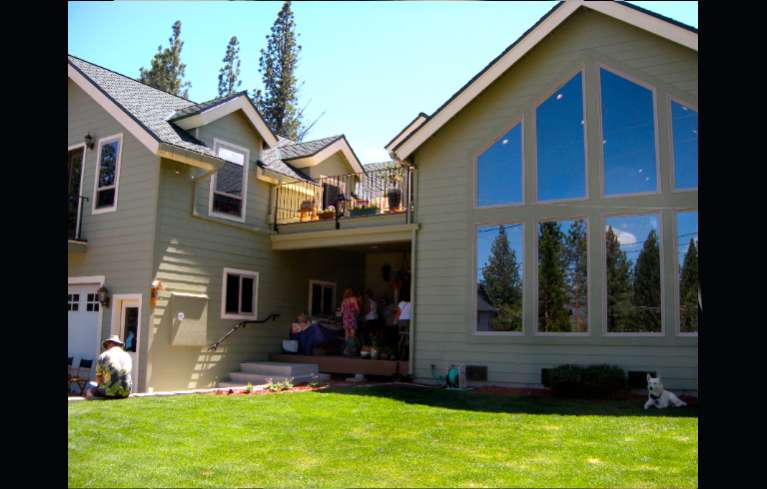
One of El Dorado County's biggest building seasons was just after the 2007 Angora Fire. Photo/LTN file

One of El Dorado County’s biggest building seasons was just after the 2007 Angora Fire. Photo/LTN file

“That May 22 meeting is pretty important,” said Pat Davison, executive director of the Contractors Association of Tahoe Truckee in Truckee.

Davison and others hope to convince the TRPA that tests used to determine how many allocations the five counties and city of South Lake Tahoe receive is unfair and is keeping the area from getting the economic shot in the arm it needs.

“The frustration is the economy is showing signs of recovery,” Davison told Lake Tahoe News. “The building industry was hit so hard and not to see the full release (of allocations) was surprising and disappointing.”

Last month the board approved the 2013 allocations; the first set since the RPU became official in December. Previously, the TRPA gave out a maximum of 300 annual allocations to the jurisdictions, but this year that was cut by 55 percent to 130.

And the TRPA ended up releasing only 86 of those 130 based on the same system of environmental benchmarks it has used in the past.

“We didn’t get any allocations on our EIP (environmental improvement program) compliance or transit level of service. It’s very difficult to increase that number,” Mimi Moss, community development director for Douglas County, told Lake Tahoe News. “The TRPA needs to revisit the allocation process. We’ve all done so much over the year and we’re still penalized.”

The jurisdictions are scored by the TRPA based on four criteria: permit issuance and compliance, best management practices retrofit, EIP implementation and increase in transit level of service.

Douglas County, for example, has a base allocation of five and can receive as many as nine by earning up to four additional enhancement allocations by scoring well on the four criteria. For 2013, the county received six allocations, garnering just one extra for permit compliance.

Douglas isn’t alone, though. All the jurisdictions exceeded their base allocations through permit compliance, but only Washoe County earned allocations in another category, BMP retrofit. None received bonuses for EIP or local transit improvements.

Douglas County’s Moss would like to see the counties and city assessed based on other measurements.

“If the jurisdiction is meeting the total daily maximum load, then we should be getting credit of lake clarity,” she said.

Davison, the builders’ representative, is hoping to convince the board to release all of the allocations and even to consider an advance on next year’s pool.

Jeff Cowen, TRPA public information officer, said under the RPU, “We are still on an annual cycle of allocation distribution and do not have any rules that we could distribute in larger amounts or periods.”

The performance review system is likely to be re-evaluated next year.

The TRPA, which is dealing with a number of other matters including a lawsuit filed over the RPU, has a long to-do list.

“I know how the bureaucracy works,” said Roger Trout, development services division director with El Dorado County. “I’m all behind getting the process updated to be, I wouldn’t call it more fair, but maybe more streamlined.”

Trout said El Dorado County probably has as many people waiting for allocations as the county received, which is 32. But he, like others, said demand is starting to tick up.

“The economy is changing so I’m sure that list will get longer,” he said.

Douglas County in the early 2000s issued an average of 500 building permits a year countywide, said Moss. That dropped dramatically during the recession, and was down to two or three allocation applications at the lake for the last few years. Last year, 40 permits were issued for the entire county, she said, and 48 have been given out this year, with another six weeks left in its fiscal year.

Moss said there are 57 people on the waiting list for lake allocations.

South Lake Tahoe, which received 13 allocations out of a possible 21, did not respond to a request for a comment. But at last week’s City Council meeting, Nancy Kerry, city manager, said there was a waiting list of about 100 for the allocations.

“A couple of years ago you could not give them away,” she said.

Demand won’t be letting up if architects are a harbinger. Dan Munsterman, with the Munsterman Group LLC in Tahoe Vista, said work is definitely returning, mostly on higher-end, lakefront properties, but it is starting to trickle down, too.

“The jobs I’m getting are tear downs. I don’t have one single job on a vacant lot,” said Munsterman. “I’m busier than I’ve been in eight to 10 years.”

Calif., Nev. governors make peace regarding TRPA

By Kathryn Reed

California and Nevada had decided to play nice and stop with the talk of withdrawing from the Tahoe Regional Planning Agency.

Near identical press releases were sent out from both governors’ offices Tuesday afternoon saying they have reached a compromise.

“This agreement renews our commitment to work together to do what’s best for the environment and economy of the Lake Tahoe region. We urge state legislators and Congress to help us protect Tahoe’s future by taking action,” Govs. Jerry Brown and Brian Sandoval said in the May 14 statement.

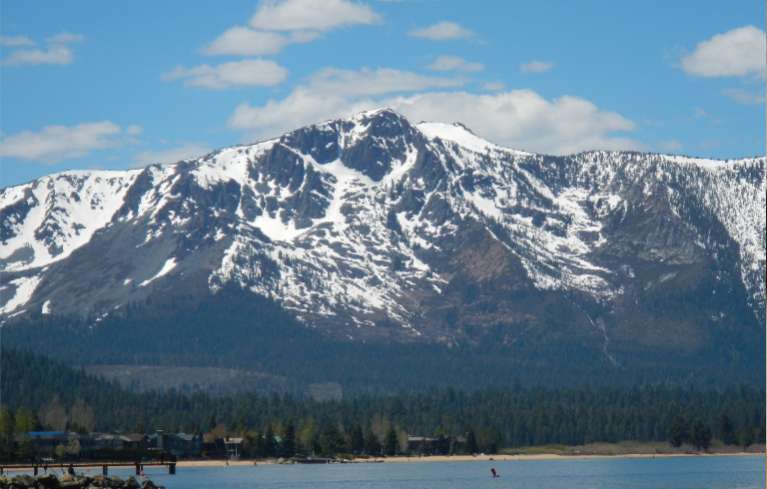
Mount Tallac winter thaw is symbolic of tensions between California and Nevada easing. Photo/Kathryn Reed

Mount Tallac’s winter thaw is symbolic of tensions between California and Nevada easing. Photo/Kathryn Reed

The tussle began when Nevada threatened to pull out of the bi-state Compact if certain concessions were not made on the part of California as well as if a Regional Plan could not be ratified. The latter was done in December. Concessions had been harder to achieve. The voting structure of the Governing Board is one of the more contentious items.

Then the respective legislatures started getting nasty and threatening. That is when the leaders of the two states said settle down, we’ll figure this out.

Both press releases say, “Under the agreement, developed with legislative leadership from both states, amendments will be introduced to bills in the Nevada and California state legislatures that repeal Nevada’s planned withdrawal from the Tahoe Regional Planning Compact in 2015 and California’s proposal to re-establish a California Tahoe Regional Planning Agency in 2014.”

Some of the wording in the agreement will require congressional approval because Congress formed TRPA.

The governors want economics to play a role in decisions made by the Governing Board.

Criticism has been leveled against the TRPA that the Regional Plan that had been in place stifled redevelopment, which in turn led to property owners letting their buildings deteriorate. That in turn made Lake Tahoe not a pretty place to visit at least in terms of the built environment.

TRPA embraces what the governors are doing.

“This is a historic moment for Lake Tahoe. Over the years, the states have had disagreements but have always found a way to work things out. Today there has been a commitment to renew the partnership. This renewal will be important to help Lake Tahoe face the challenges ahead,” TRPA Executive Director Joanne Marchetta told Lake Tahoe News. “We still have a lot of work to do to implement the new Regional Plan. We are pleased by this announcement because through the partnership of two states and many other organizations and agencies, we have accomplished much and can continue working together to fulfill our shared restoration goals.”

The agreement also will add language to the Compact that establishes a burden of proof for challenging decisions.

Many of the Governing Board’s decisions are met with a lawsuit.

And while the additional language seems like a compromise, the burden of proof is already the plaintiff’s responsibility in a court of law, so this addition is more like window dressing than substance.

The League to Save Lake Tahoe sent out a press release saying the governors have done the right thing. While this South Lake Tahoe-based conservation group has often been the one to sue TRPA, when it comes to the lawsuit challenging the 5-month-old Regional Plan, that is the doing of the Sierra Club. Today’s decision has no bearing on that lawsuit.


Slot machines resemble video games

By Ed Komenda, Las Vegas Sun

Ask Bill Wadleigh about serendipity in the slot business, and he’ll say it’s sometimes as simple as spinning the wheel of a toy car.

That’s how the game designer came up with a spinning bonus graphic for his forthcoming NASCAR game.

“We’ll just make a tire a wheel,” Wadleigh recalled thinking. “Wheels are very attune to gambling.”

But he’ll also tell you his NASCAR game is much more than just wheels and reels.

Slot machines are no longer as simple as lining up 7s. Photo/Bally's

Slot machines are no longer as simple as lining up 7s. Photo/Bally’s

“It is a video game,” Wadleigh said.

Wadleigh, a transplant from the video game industry and head of development at Bally Technologies, has found himself moving closer and closer to his roots these days. Bally and many other slot machine makers are beginning to bridge the gap between traditional spin slots and immersive video games.

“From a technological standpoint, on a slot machine, it’s pretty insane,” Wadleigh said. “Insane in a good way.”

The most immersive slot machines, such as NASCAR, have gone beyond simple player-character interaction. Equipped with complex math, high-quality video cards and 3D engines, the machines put gamblers in scenarios they can control, much like the video games made popular by Sony’s Playstation and Microsoft’s Xbox.

Tap the spin button on NASCAR and strike the “U-Race” bonus, and suddenly you’re transported to the first lap of a three-lap race at Daytona. The character you chose at the beginning of the game — either Dale Earnhardt Jr., Jeff Gordon, Jimmie Johnson or Kevin Harvick — sits in the driver’s seat, but you’re in control.

A cluster of arrows pops up on the screen: left, right or straight ahead. Your choice dictates the driver’s decision.

Tap the right arrow, and the voice of your driver responds: “I can pass on the high side!” And that’s what he does.

Tap the forward arrow, and the driver confidently pipes up, “I’m going for the lead!” The car pulls ahead, taking the lead.

When your car crosses the finish line, the driver thanks you. “Couldn’t have done it without you!” he says.

It’s not always that easy, of course. You don’t win every race. But with every choice, there’s money to be made. That’s the beauty of a bonus.

Wadleigh says the possibility of landing in a race or other high-quality bonus scenario keeps players interested and coming back for more — a slot machine’s ultimate goal and measure of success.

“We’re out to find something that’s compelling to a player,” Wadleigh said. “And not just compelling once, but a repeatable event that has a lot of different variety in it.”

There are more than 853,000 electronic gaming machines in the United States, according to the American Gaming Association. Nevada has the most, more than 178,000. Nationally, the casino industry makes 62 percent of its revenue from slot machines.

Slot makers spend a lot of money — sometimes millions — paying for licensing fees and developing character-driven games based on pop stars, movies and television shows.

“(We want to) bring something new and exciting,” Wadleigh said. “It can be a subtle or incremental change, or it could be a vastly radical one.”

Take Pawn Stars, for example.

The Bally game offers players a chance to virtually do business with the characters made famous by the History Channel show.

Roll the Rick bonus, and up pops the show’s deal-savvy leader, Rick Harrison. The game gives you a chance to sell him a rare gas pump from the 1930s.

The item intrigues Rick, and he offers an interesting fact: it was invented in 1885.

But Rick is skeptical. He doesn’t know if the item is authentic, so he asks if you’d like him to call an expert. You tap the “Call an Expert” option, and Rick calls.

After a beat, you have your answer: “Sorry, my expert said it’s a reproduction. … Thanks for stopping by my shop.”

And you’re bum out of luck.

Roll the Old Man bonus, and Richard Harrison appears: “So, what do we have here?”

In this case, it’s an acoustic guitar from the 1970s. The old man takes a moment to examine it. You make him an offer, he counters and you accept. You win the amount he offered — $170.

One of IGT’s most innovative games is CSI.

Cari Bloomquit, the game’s lead producer, started pondering the mechanics of the game shortly after the license landed on her desk.

After two years of development with a team of 15 people, including engineers, 3D artists and mathematicians, the CSI slot machine moved to the casino floor. It’s now one of the most successful slots in the company’s repertoire.

Players first choose one of three cities: Miami, New York or Las Vegas.

If you sit long enough to hit a crime scene bonus, you’re transported to a murder scene where a lifeless body is spread across the floor. Glowing dots are strung across the scene, marking different clues, such as a bloody hand print. You get to pick five, each attached to bonus payout. The game analyzes the clue and reveals how much you’ve won.

“They’re looking for a suspect,” said Bloomquist, who has been working in the slot business for 18 years. “Slots have changed a lot since I came to the business.”

While slot players ultimately want to make money, experts say video game technology has made losing more fun.

“It’s all just a dressing for a traditional slot machine,” said Daniel Sahl, a sociology instructor at UNLV who has been studying the connection between slot machines and video games for the past three years. “People are still playing to win money. … The immersive elements make it more meaningful.”

The math behind the games hasn’t changed much. If they play long enough, gamblers typically can earn an 88 to 98 percent return on their money. So, for every $100 a player pumps into a machine, they’d lose between $2 and $12.

The real reward comes with winning a bonus. But players have to sit at a machine long enough to earn the chance to race a stock car, investigate a crime scene or sell an item to the Pawn Stars. That chance doesn’t come every round.

Sahl said immersive bonuses have helped improve the image of slot machines, which more than half of all gamblers call their favorite form of gaming.

“Some people think slots are these devious machines designed to inflict suffering,” Sahl said. “Players now want to use that virtual world as a conduit for play.”

Some bonuses are much more simple.

In the Queen of Hearts bonus in WMS’ Alice In Wonderland, a queen pops on screen to turn a losing bet into a winning one or a weaker bet into a stronger one.

The Smooth Criminal bonus of Bally’s Michael Jackson slot gives players a virtual concert experience. The chair is equipped with surround sound that pumps Jackson’s famous tunes as a digital image of the singer moonwalks across the screen.

“It’s so much more than hitting 7-7-7,” Sahl said. “(Manufacturers) are doing an amazing job tapping into the cultures people love.”


SLTPD to honor citizen who played critical role in 2012 DUI bike-vehicle accident

By Kathryn Reed

One of the people to be honored this week at the annual South Lake Tahoe police awards ceremony is the man who was instrumental in helping save the life of Adam Rose and apprehend Christine Whalen.

Rose continues to struggle to heal from the devastating August 2012 accident in which he was struck by a vehicle while riding his bike. He keeps having surgeries. He has no insurance. And he is not able to work. And whatever money he may get from Whalen has not come through.

On May 10 his right leg and left arm were operated on — again.

Nine months after being hit by a drunken driver, Adam Rose of South Lake Tahoe keeps needing surgeries. Photo/Provided

Nine months after being hit by a drunken driver, Adam Rose of South Lake Tahoe keeps needing surgeries. Photo/Provided

“Adam had what is known as non-union of the bones in his arm and leg. The bones were about five-eighths of an inch apart on each of the fractures in his arm and leg,” Terry Soule, Rose’s mom, told Lake Tahoe News. “This was due to the severity and location of the fractures. The surgeries addressed these issues, and we are hopeful that this will really move Adam along on his road to recovery. The surgeons installed new hardware in his leg and arm and did bone grafts.”

But the surgeries won’t end there.

“Adam found out about two months ago that he will need spinal surgery, due to the trauma of being hit by the vehicle, carried on her car and then thrown off onto the highway,” Soule said. “This will be happening in the next few months, after his leg and arm are doing better.”

Rose is still living in South Lake Tahoe and plans to be at the May 15 ceremony.

Whalen is in prison.

More than one person nominated Rudy Pakes II for the citizen award of merit.

This is what police Lt. Brian Williams wrote in his nomination:

On August 21st, 2012 at about 5:00 pm, South Lake Tahoe Police Officers responded to SR 89 and 12th Street regarding a hit and run traffic collision. A white Subaru station wagon struck a bicyclist traveling in the northbound bicycle lane. The bicyclist, 38-year-old Adam Rose, was riding his bicycle when the Subaru, also traveling northbound, swerved to the right and struck him. Mr. Rose was left gravely injured and bleeding at the roadside.

After striking Adam Rose the suspect driver of the Subaru fled eastbound on 12th Street. Rudy Pakes II was in his truck with his adult son Tyler Pakes and had witnessed the collision. Rudy Pakes made some immediate and critical decisions which helped the victim to survive and also helped the police to capture the suspect. Rudy Pakes dropped his adult son Tyler off with Mr. Rose to offer help, comfort and safety while awaiting medical personnel. Mr. Pakes then called 911 while following the suspect away from the scene. Mr. Pakes gave the police a description of the suspect vehicle and kept them updated on its location and direction of travel as officers responded into the area. While fleeing the scene, the suspect driver was involved in a second collision, striking tree stumps off the side of the road near Tahoe Island and Tahoe Vista Avenues. As police were coming into the area, and the suspect vehicle continued to drive in a reckless manner, Mr. Pakes lost sight of the suspect and wisely stopped following.

When police officers arrived in the area they attempted to stop the vehicle by activating their red lights and sirens, but the suspect driver attempted to evade them until eventually becoming involved in yet a third collision at 2070 James, Bi-State Petroleum. The vehicle was finally forced to stop when it collided with, and impaled itself upon, steel and concrete posts in front of the petroleum warehouse. Not yet ready to give up, the driver of the Subaru, later identified as 54-year-old local resident Christine Whalen, tried to run on foot, but was apprehended by our pursuing police officers.

Other citizens who witnessed the collisions were also helpful in assisting police officers in locating the suspect, pointing out the directions of travel, and making positive identifications of the driver. Mr. Pakes however used particularly sound judgment and acted swiftly to render aid, compassion and comfort to the victim through his son Tyler, and then stayed engaged in order to prevent the escape of a dangerous felony suspect by following the fleeing vehicle and calling the police with a description and direction of travel. The suspect was captured and booked into the El Dorado County Jail on two felonies and three misdemeanor charges, including felony driving while under the influence, felony hit and run, misdemeanor hit and run, misdemeanor evading police officers, and misdemeanor obstructing, delaying or resisting arrest. Mr. Pakes demonstrated an admirable example for his fellow citizens by the manner in which he conducted himself, under circumstances of significant stress, offering help to the injured and attempting to safeguard others who may have become additional victims.

Among other criteria, the SLTPD Citizen’s Award of Merit is given to recognize the demonstration of bravery, sound judgment, compassion, comfort and encouragement to this Department or community, displayed in a situation of great stress, danger or other jeopardy to members of this Department, the community and/or the citizen themselves at the time of taking the action in the service of others. There are other criteria for consideration as well. These items are NOT required, but may be considered by the Awards Committee:

• Innocent person(s) are safeguarded

• A suspect is apprehended or identified

• Citizenship

• Sacrificial giving of self and abilities

• Communication skills

• Professional skills

• Rescue Skills

• Citizen saved someone’s life

• Nominee demonstrated in this act extraordinary personal character

• Courage

• Endurance

• Calm in the face of danger

I would like to nominate Mr. Rudy Pakes II to the SLTPD Awards Committee for consideration of presenting him The Citizen’s Award of Merit.

The ceremony is Wednesday at 4pm at the police department, 1352 Johnson Blvd.

Others receiving awards are:

• Officer Angie Kallstrom — Meritorious Service

• Officer Barret Rider — Meritorious Service

• Officer Nick Carlquist — Meritorious Service

• Dispatcher Linda Clark — Distinguished Service,

• Peggy Goularte — Citizen Award of Merit.


S. Tahoe trying to not default on parking garage

By Kathryn Reed

South Lake Tahoe is about to extend how long it will take to pay off the parking garage debt at Heavenly Village as it attempts to refinance the bonds so the overall payment is less.

It’s not a straightforward transaction because the state Department of Finance is involved because the garage is in part an asset of the now-defunct city Redevelopment Agency. The garage had been owned by the city and RDA, while the land is the city’s. The revenue goes to the bondholders. With the state dissolving RDAs, the successor agency is the partner with the city in owning the garage.

The original bond was for $9 million. There are 14 years left to pay off the debt, which today is $7.3 million. That’s just the principal.

The parking garage at Heavenly Village is saddled with debt. Photo/LTN file

The parking garage at Heavenly Village is saddled with debt. Photo/LTN file

“It will likely have a longer life. Part of what we will try to do is not extend it any longer than is necessary even though the rates are low,” Bob Gamble told Lake Tahoe News. He estimates seven to 10 years will be added to the life of the bond.

Gamble works for PFM Group in San Francisco, the entity handling the refinancing of the bond. He was at last week’s City Council meeting to get that group’s approval to go forward. Councilwoman Brooke Laine was the lone vote against the plan. She preferred an option that would have the bond paid off sooner.

“We are trying to avoid defaulting or a general fund subsidy,” Gamble told the council as to why refinancing is necessary.

In 2007, the 2001 special tax bonds were refinanced. That five-year subsidy has run its course and is creating a greater urgency to finance the main bonds.

While the interest rates will be lower, to what extent remains to be seen. The overriding need to do this is to keep from defaulting on the loan.

The garage has been in technical default since Day 1 because there was never enough income to pay the debt.

The bond payment is about $550,000 a year. While the garage is taking in approximately $650,000 a year, it costs about $200,000 to manage and operate it. This means there is a gap of $100,000.

The community facility district, better known as PADMA, is mostly responsible for that shortfall. Park Avenue Development Maintenance Association is the organization formed in 2002 to maintain Heavenly Village. The two Marriott properties pay 55 percent collectively, Heavenly Mountain Resort 20 percent, South Lake Tahoe 20 percent, Trans Sierra Investments 2.5 percent, and Cecil’s 2.5 percent for the upkeep for the entire center.

However, according to the city staff report from May 7, projections are that without refinancing the bonds revenues would be short $200,000 to pay the debt.

One day all the debt will be paid. But no one knows who will own the garage because of the dissolution of the Redevelopment Agency.

“Statewide there are a lot of those assets in that situation,” Gamble said.


Nevada looks at naming mountain after Fremont

By Martin Griffith, AP

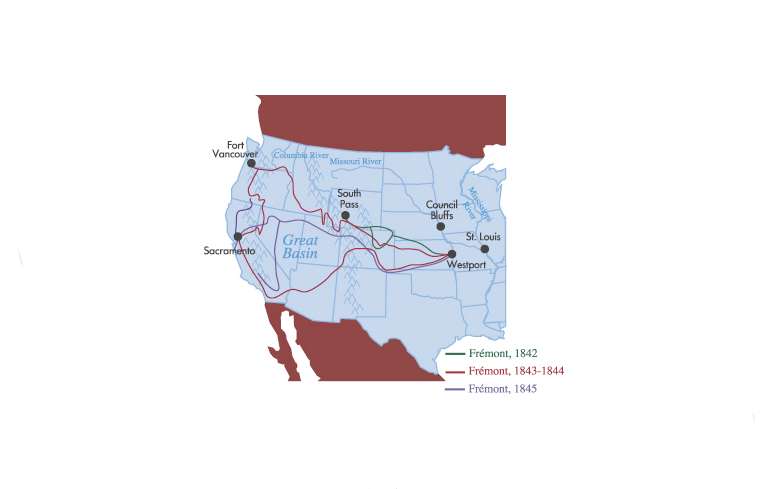
On his historic 1843-44 expedition across the West, John Fremont named some prominent features in what became Nevada, including Pyramid Lake and the Humboldt and Walker rivers.

Now the explorer known as the Pathfinder could have his first geographic feature in the state named after him.

The Historical Society of Dayton Valley is asking the Nevada State Board on Geographic Names to designate a low mountain along the Carson River about 25 miles east of Carson City as Fremont Lookout.

The routes of some of Fremont's expeditions. Map/Kansas Historical Foundation

The routes of some of Fremont’s expeditions. Map/Kansas Historical Foundation

Society members Guy Rocha and Stony Tennant said extensive research shows Fremont stood atop the mountain on Jan. 20, 1844, to gain a view west of the Dayton Valley and the Carson Range above Carson City.

Hoping to find less snow to the south, Fremont and his California-bound group then headed on a more indirect route to the Walker River near what is now Yerington before crossing the snowbound Sierra Nevada near Carson Pass a month later.

Rocha said while Nevada has streets and schools named after Fremont, a geographic feature that bears the adventurer’s name is long overdue.

In addition to leading several expeditions that helped pave the way for the West’s settlement, Fremont was one of the first two U.S. senators from California, the first presidential candidate of the Republican Party and a Union major general in the Civil War. Still, he’s viewed as a controversial figure by historians.

“I’m personally not a big fan of John C. Fremont,” said Rocha, Nevada’s former state archivist. “But he was bigger than life and quite the early explorer in American history.

“To come into the American Great Basin under some pretty tough conditions and survive that expedition (of 1843-44) is impressive. Despite how I feel personally, he deserves his rightful place in history,” he added.

Jack Hursh, executive secretary of the state board on geographic names, said he expects the request to win approval at the panel’s May 14 meeting. Before the name becomes official, it would have to be approved again at a subsequent board meeting and then by the U.S. Board on Geographic Names.

“I can’t imagine anyone opposing this,” Hursh said. “That’s a very appropriate spot to name after him because he stood at that location.”

The state board seeks to honor people who have had a significant impact on Nevada history, Hursh said, and Fremont qualifies as an early explorer who named so many prominent features. Fremont also came up with the name Great Basin for the vast region of interior drainage that includes most of Nevada and much of Utah.

Rocha and Tennant used mileages in Fremont’s journal and satellite imagery to locate the mountain that Fremont climbed. Tennant also climbed every mountain along a 12-mile section of the Carson River to pinpoint its location. Both the mountain and Fremont’s 1844 camp are located on the south side of the river, just west of Susan’s Bluff.

“I didn’t know what to expect when I walked up there, but the view from the top was identical to what he described in his diary,” Tennant said. “You can see the Carson River going out to a broad valley (around Dayton) and the Carson Range, which he described as the Sierra.

“I knew I was standing exactly in the spot where he stood and I felt a chill down my neck. There’s absolutely no doubt this is the right location,” he added.

The mountain is actually an ancient 5,003-foot volcanic cone at the northeastern end of the Pine Nut Mountains, Tennant said.


Truckee embracing its roots with restoration

By Shanna Kuhlemier

During the late 19th century and with the completion of the transcontinental railroad, new local industries started to emerge in Truckee.

At this time, the local dairy industry was established due to the ease of transporting products to lucrative markets. This area in the Sierra was a dairyman’s heaven. The region provided summer pasture for herds brought in from Central California, and in earlier years, there were reportedly 15 to 20 dairy farms close to Truckee that yielded enormous quantities (60,000 pounds) of “premium quality” butter that, in turn, was sold at “premium” prices throughout the west’s urban markets.

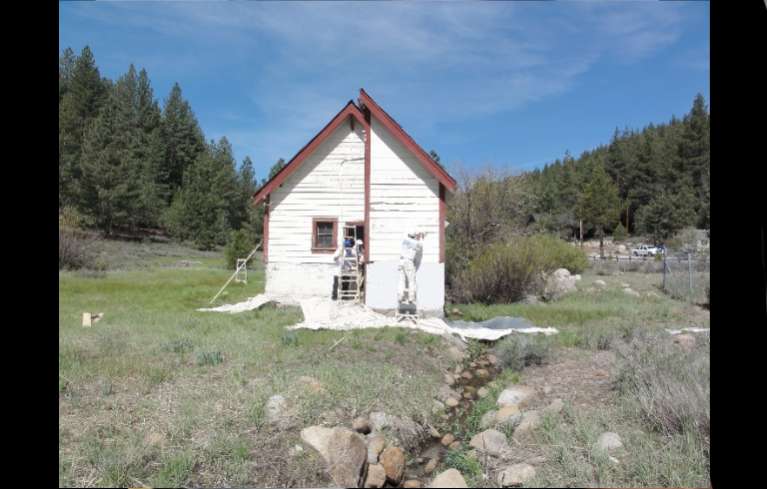
The McIver dairy in Truckee is getting new paint. Photo/Provided

The McIver dairy in Truckee is getting new paint. Photo/Provided

Two dairies are occasionally alluded to around historic Truckee. The Von Flue dairy was originally located on the south side of the Truckee River, occupying the lands around present-day River Street. The McIver Dairy was located along Donner Pass Road just north of Interstate 80. Both were significant contributors to early community development and the economic growth of our region.

In 1998 Truckee purchased the McIver property. A year later, the Town Council approved “Paint the Dairy Day” — a collaborative project between the Contractors Association of Truckee Tahoe Community Project, the Truckee Donner Historical Society and the town. The project provided for the repair and painting of all three of the historical buildings.

In 2013, CATT Community Project has been kind enough to grant the project another painting and repair. Project leaders include Mike Nethersole, MD Construction, Kelly Brothers Painting, Kelly Moore, and Josh Root, Root Design Electric.

The interpretive sign is being developed by the Sierra Expeditionary Learning School, 4th- and 5th-grade crew and the Brisbin Crew as part of their history learning curriculum and as a service learning project. And the Donner Summit Historical Society (Bill Oudegeest) is building the sign as part of their Highway 40 Scenic Bypass Project.

On May 24 at 1pm will be the unveiling of the interpretive sign.

Other community partners include: Rotary of Truckee, Village Nursery, and the Truckee Donner Historical Society.

Shanna Kuhlemier works for the town of Truckee.


Pinnacle Peak — more than a walk in the desert

By Kathryn Reed

SCOTTSDALE – It’s a bit of a freeway as people zip past us. They are running. Sweat drips. And the sun hasn’t been up long on this last Monday in April.

Hiking in the desert this time of year means getting an early start. Temps are in the triple digits and there are no towering pine trees to provide shade. And even though some of the trail is in the shade, it’s still hot.

My friend Penny lives near Phoenix and makes the decision about our start time. I whine. I don’t do mornings well on a good day and I really don’t relish a 6:15 start while on vacation.

It didn’t take long before I was thanking her. I was hot before 7am. And to think I used to live in Vegas and loved, loved, loved the heat. Not so much anymore. I’m kind of wimpy. (It’s so hot in Scottsdale now that on May 19 the park will open at 5am.)

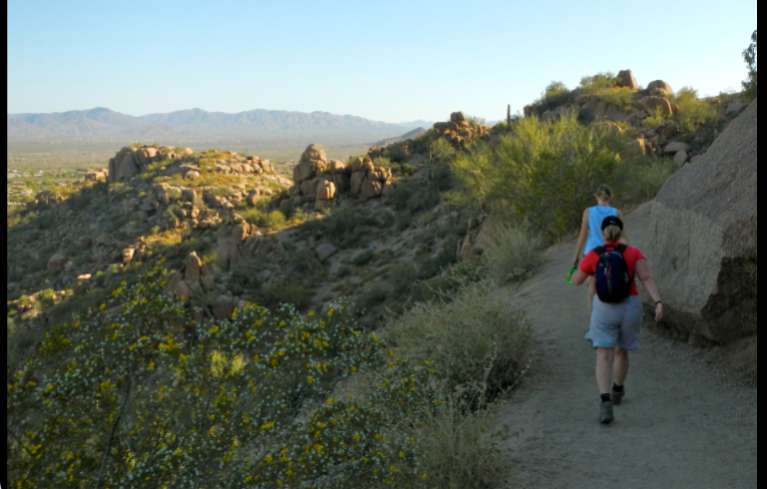
Penny and Sue lead the way hiking Pinnacle Peak. Photos/Kathryn Reed

Penny and Sue lead the way hiking Pinnacle Peak. Photos/Kathryn Reed

But the hike was worth it – even with all the people – even with feeling the heat so early in the day.

The 150-acre Pinnacle Peak Park is run by the city of Scottsdale. While the starting point is at 2,570 feet, the low point is actually 2,366 feet. The highest point is 2,889 feet. But with all the up and down of the trail, the elevation gain is about 1,300 feet.

Day hikers never actually reach the summit. Rock climbers with the appropriate gear may access it.

The Sierra Club rates this a moderate hike. If it weren’t for all the stair stepping, it would probably get a lower rating.

It is 3.5 miles out and back.

The trail winds around, providing an expansive view that goes for miles and miles. At the base of the peak are massive houses. Close by are lush golf courses. Farther out are the McDowell Mountains, Four Peaks and Granite Mountain.

One of the great things about the hike is all the signage on the plants. In some ways it’s like being at a botanical garden.

While much of it is cactus; they are all so different. And the blooms are as stunning as the wildflowers found on a Sierra hike – just in a different way.

With all the people on the trail, the critters were hiding. But animals that have been seen along this trek include desert tortoises, rattlesnakes, gila monsters, coyotes, grey foxes, mule deer, javelina, bobcats and mountain lions. It is considered a wildlife sanctuary.

We were fortunate to have seen a javelina earlier on the Troon North Golf Course. Pinnacle Peak is a constant fixture when walking the course. The flowers and variety of cacti and other plants on the golf course are reasons to play a round – or just rent a condo and walk it with a glass of wine after the golfers have all left for the day.

ngg_shortcode_0_placeholder (Click on photos to enlarge.)


S. Tahoe man credits CalStar with saving his life

By Mike Nichols

If anyone wants to know the benefit of the CalStar Membership Program, all they have to do is talk to longtime members Mike and Sally Neitling of South Lake Tahoe. Mike Neitling used CalStar’s services twice in 2012, perhaps saving his life, and his membership saved him from any out-of-pocket costs associated with the two flights.

Neitling, 61, was finishing up his vacation on Nov. 2, 2012, and wanted to complete some chores at his home before returning to work. One of those chores was to wash the outside windows of his house. Home alone at the time, he grabbed a ladder, along with some cleaning materials, and climbed up to the second floor of the three-story home. In an instant, the bottom of the ladder slipped and Neitling was abruptly heading for the cement driveway below.

“I didn’t want to land on my head, so I sort of twisted around and I ended up landing on my backside,” he said. “I knew I was in trouble because I was in excruciating pain and although I could move around a bit, I couldn’t stand.”

Pilot Kris Hunt, Flight Nurse Ted Langevin, Mike Neitling and Flight Nurse Stephen Poehls

CalStar pilot Kris Hunt, from left, flight nurse Ted Langevin, Mike Neitling and flight nurse Stephen Poehls. Photo/Provided

Neitling yelled out, but no one could hear him. Finally after about 10 minutes, several public utility workers came to his aid. They quickly called 911 and within minutes a ground ambulance took Neitling to Barton Memorial Hospital. His physicians quickly diagnosed Neitling with a broken pelvis, and even worse he had severed an artery inside the pelvis and he was bleeding heavily internally.

“My blood pressure dropped to 50 over 30,” he said. “I asked a physician if I was bleeding out, and he didn’t answer me. I think I already knew the answer.”

Neitling was given four pints of blood at Barton and a call was put into to CalStar 6 in South Lake Tahoe to transport him to Renown Medical Center in Reno.

The CalStar flight crew, including pilot Kris Hunt and flight nurses Ted Langevin and Stephen Poehls, arrived within minutes and loaded Neitling into the helicopter. During the flight to Renown, Langevin and Poehls gave Neitling an additional two pints of blood.

“The flight crew was terrific,” he said. “They kept me updated all the way to Renown. It was very clear to me that they were not only very caring people, but also people who truly knew what they were doing.”

Neitling reflects today that had it not been for CalStar, he may not have survived.

“If I would have had to be transported by ground ambulance, it would have taken about an hour and 15 or 20 minutes and I probably would not have made it.”

The CalStar flight from Barton to Renown took 20 minutes.

Once at Renown, Neitling was given two more pints of blood and physicians worked to fix the ruptured artery. They were successful in stopping the bleeding, and the next day Neitling was in surgery to have a metal plate inserted to secure his pelvis.

After recovering from surgery, Neitling spent a week at Carson Tahoe Regional Medical Center for physical therapy.

“They predicted I would be in a wheelchair for about 45 days, and they wanted to make sure I would be able to handle it. I was supposed to be at the center for two weeks, but I worked hard and was out in a week.”

Neitling has now returned to work as a surveillance supervisor at Harrah’s and Harveys Lake Tahoe.

“If it were not for CalStar, along with some excellent medical care, I probably wouldn’t be here today,” he said.

This was the second time in a year that Neitling was flown by CalStar. In July 2012 he was camping with friends and family on the North Shore of Lake Tahoe when his heart rate suddenly jumped to about 180 beats per minute. Because he had experienced previous heart issues, he was transported by ground ambulance to Barton Memorial Hospital, and subsequently taken by CalStar to Carson Tahoe Regional Medical Center for observation. He was subsequently released with no serious health ramifications.

Neitling and his wife, Sally, have lived in South Lake Tahoe for 40 years.

“About 10 years ago, we knew we wanted to become CalStar members,” Neitling said. “I ski, I golf and I love the outdoors,” he said. Among other things, he is a part-time ski instructor at Heavenly Mountain Resort. “The membership seemed to be an excellent investment.”

Sally Neitling expressed her appreciation to CalStar as well. “Please know that we are so grateful for your skill and knowledge in saving [Mike],” she said. “I want to offer many thanks to all of you for the flight and for being here in Tahoe.”

Mike Nichols is the director of Development and Outreach for CalStar.


DCSO keeps track of bad guys despite cutbacks

By Kathryn Reed

STATELINE – Looking at the tools Douglas County sheriff’s officials have for dealing with bad guys, it’s a wonder anyone challenges them.

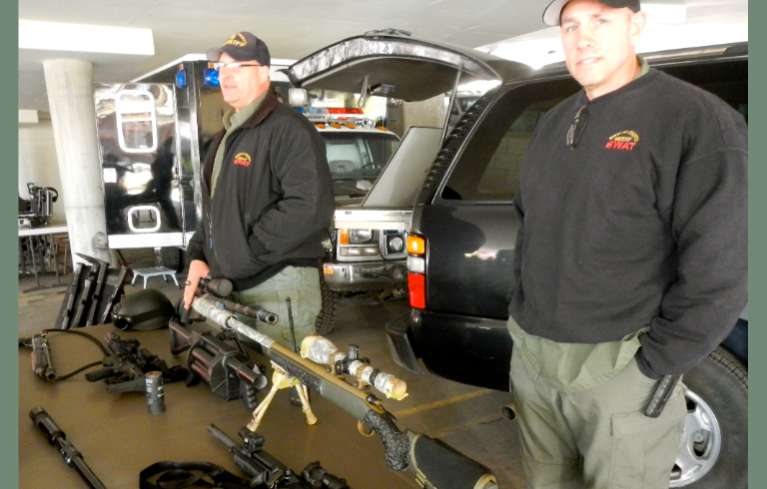
A .50-caliber rifle and machine gun are some of the weapons on the table in front of two members of the SWAT team. The crisis negotiation team has a high-tech van to operate out of. The boat patrol is ready for action on the lake. Search and rescue is talking about what it takes to find people.

The men and women and the tools they use in their jobs were incorporated into an open house May 8 outside the sheriff’s substation in Stateline.

Douglas County sheriff's Capt. Dave Aymami, left, and Sgt. Ron Elges talk about what the SWAT team does. Photos/Kathryn Reed

Douglas County sheriff’s Capt. Dave Aymami, left, and Sgt. Ron Elges talk about what the SWAT team does. Photos/Kathryn Reed

Kids were able to climb onto the motorcycle as if they were about to take off down Highway 50 to get the speeder. The bomb squad robot, which Tahoe Douglas fire brings out when DCSO needs it, is ready to spring into action.

The goal was to show the community the technology officers have at their disposal, build relationships and explain to residents how crime in the county is being handled. A similar event occurred in the valley last week. The plan is to do this at the lake about every three years.

Sheriff Ron Pierini has seen Douglas County, and Lake Tahoe in particular, change since he started with DCSO in 1976. He was a captain at the Tahoe substation until 1992, then undersheriff and now sheriff.

“The community has changed. Second homes have changed community involvement,” Pierini told Lake Tahoe News.

In the last three years the sheriff’s department’s budget has been cut by $2 million and 10 positions have been eliminated.

Still, the department’s arrest to prosecution rate is 38 percent. Nationwide that average is 22 percent.

Sgt. Ron Elges with the SWAT team said his unit has not been responding to as many calls in the last few years because of the shrinking population.

The three main reasons the SWAT guys are called are for high-risk search warrants, barricaded subjects, and people who have taken off into the woods to avoid capture.

Those barricaded calls also will involve the crisis negotiating team.

“We give them better alternatives than what they’ve chosen,” Deputy Eric Schinzing explained. “Usually it’s domestic issues. Someone thinks about suicide and may have someone with them.”

Pierini said traffic is the No. 1 issue for deputies. He’d like more deputies on the street, but budget constraints prohibit that from happening.

“We couldn’t function at the level we do today without (volunteers).” -- Sheriff Ron Pieirini

“We couldn’t function at the level we do today without (volunteers).” — Sheriff Ron Pieirini

Deputies respond to about 40,000 calls a year. (There are about 50,000 residents in the county.) The 750-square-miles are divided into three areas – Lake Tahoe, Carson Valley and Topaz.

Pierini credits the nonprofit sheriff’s association with keeping the department flush with the necessary tools. He said that group has spent about $600,000 in the last seven years on equipment.

A cadre of volunteers also helps the sheriff’s department. Between search and rescue, boat patrol and citizens patrol about 300 people volunteer with DCSO.

“If you added up the hours the volunteers put in, it would be a huge amount of money to have to replace them with paid staff,” Pierini said. He said some people put in 200 hours a year. “We couldn’t function at the level we do today without them.”